


The tomahawk, from its American Indian origins to its modern renaissance as a highly sought-after custom-forged tool and defensive weapon.
Arnold M. Chernoff offered a wide-ranging review of the American Indian tomahawk in the November-December 1975 issue of The American Blade.
As Arnold pointed out in “Tomahawk!” the hawk was a weapon and tool used to maximum effect as the former by both American Indians and American colonists, often more savagely by the early colonists than the Indians. Arnold outlined a plethora of hawk designs with roots in the American West, from stone-headed war clubs of the Crow, Sioux and Cheyenne to metal-bladed models used by the Crow, Sioux, Blackfoot, Osage and Canadian Cree.
Examples included everything from the foregoing stone-headed versions to fancier ceremonial types.

The Indians were not limited to using the stone-headed versions exclusively early on when English settlers first landed at Jamestown in 1607. As the settlers learned to their chagrin, the Indians had metal hatchets, probably French trade goods that had filtered south. In fact, Chernoff wrote, Capt. John Smith, Jamestown’s “noted chronicler,” was credited with introducing the word tomahawk, gleaned from the Indian vocabulary.
As time passed, the hawk evolved from hammer poll to spike heads, and eventually the pipe hawk, the latter of which Chernoff stated had an English origin around 1700. Some presentation pieces were for important chiefs, including one made for Tecumseh by the British, sporting a gold-inlaid panel in the blade with his name in script.
Later in the 19th century, the pipe hawk began to lose its practical function among Indians and assumed more of a ceremonial role as a “scepter, mace or badge of authority.” In recent years, though, the tomahawk has enjoyed a renaissance in both the custom and factory knife industries, with some of the finest examples fetching top dollar among users and collectors.
More Knife History:
- Walter “Blackie” Collins: Applying The Edge To BLADE Magazine
- American Knives: Legendary Designs From The Land Of The Free
- Antique Switchblades: World War II And Beyond
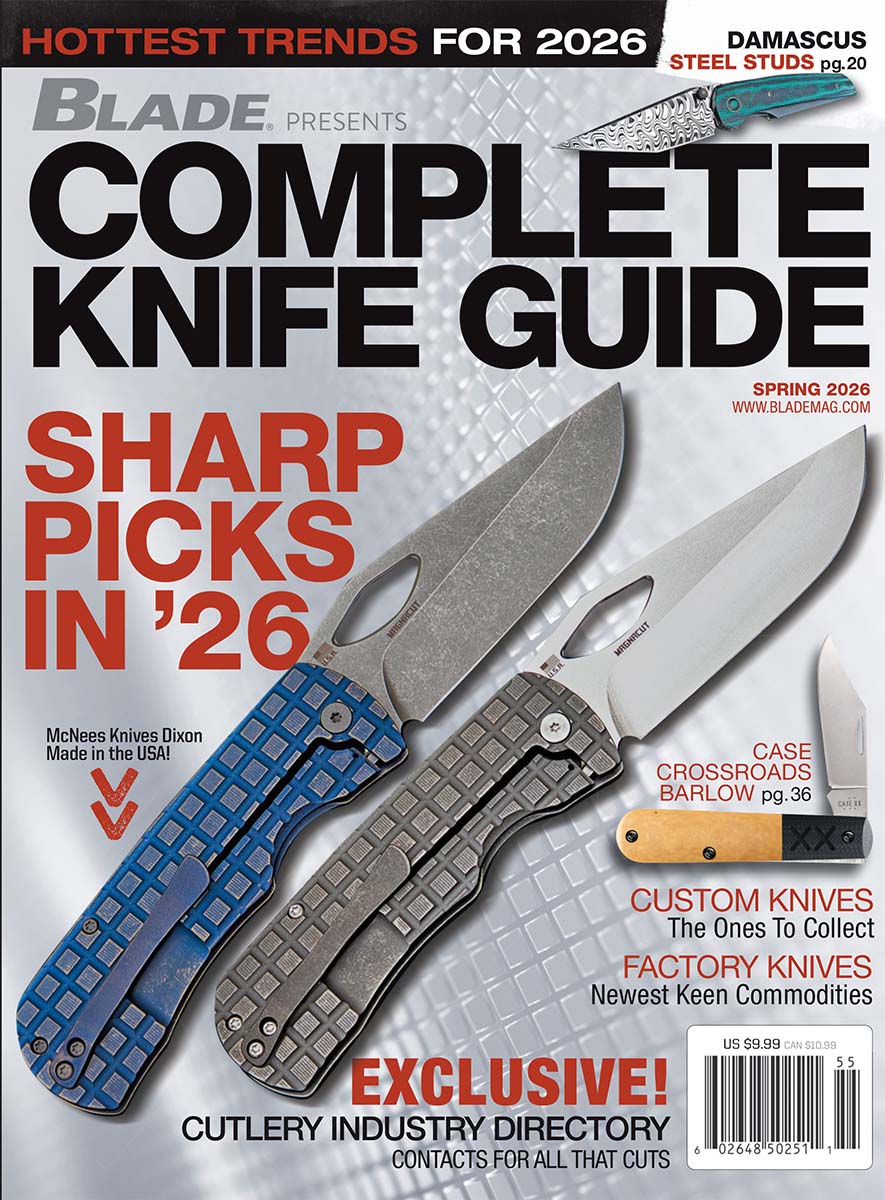 NEXT STEP: Download Your Free KNIFE GUIDE Issue of BLADE Magazine
BLADE’s annual Knife Guide Issue features the newest knives and sharpeners, plus knife and axe reviews, knife sheaths, kit knives and a Knife Industry Directory.Get your FREE digital PDF instant download of the annual Knife Guide. No, really! We will email it to you right now when you subscribe to the BLADE email newsletter.





