

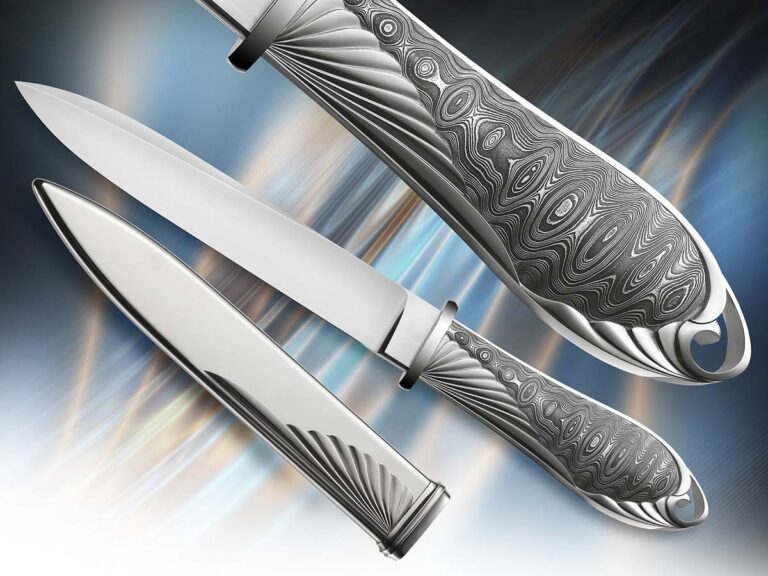
A veteran maker shares timeless advice on commissions, design, and running a successful craft business.
I rarely do commissions. It’s difficult to keep some clients from wanting to take part in the process. Their job is to tell you how much they like the piece when it is finished and gather the money to cover their overextended budgets. In your role as crafter/knifemaker, don’t let them bully you. There are no grounds for complaints if you give them what they originally approached you about.
The most difficult part of doing commissions, aka taking orders, is keeping everything on schedule. A delivery date is just that. Even if it’s a couple of years out, don’t wait until the end to go looking for materials and services. Casters work better with a heads-up beforehand and engravers may need a year to get past what they are working on. As a result, get your name on the list with others waiting for a bit of the crafters’ time to cast your pieces and for the engraver to work out a design for your project.
I run on satisfied customers. One black mark cancels out a slew of gold stars. I’ve never had a customer who wasn’t satisfied, period. I give even my smallest work the same close attention to detail as the larger and more standout ones. Every piece deserves the most attention I can give it to bring it to the right state of finish when everything is done.
I don’t spend time debating how much it costs if they are paying up front. It’s out of your hands at that point. If they insist and it does make for a tighter presentation, I have no complaints—if I’m still doing it my way.
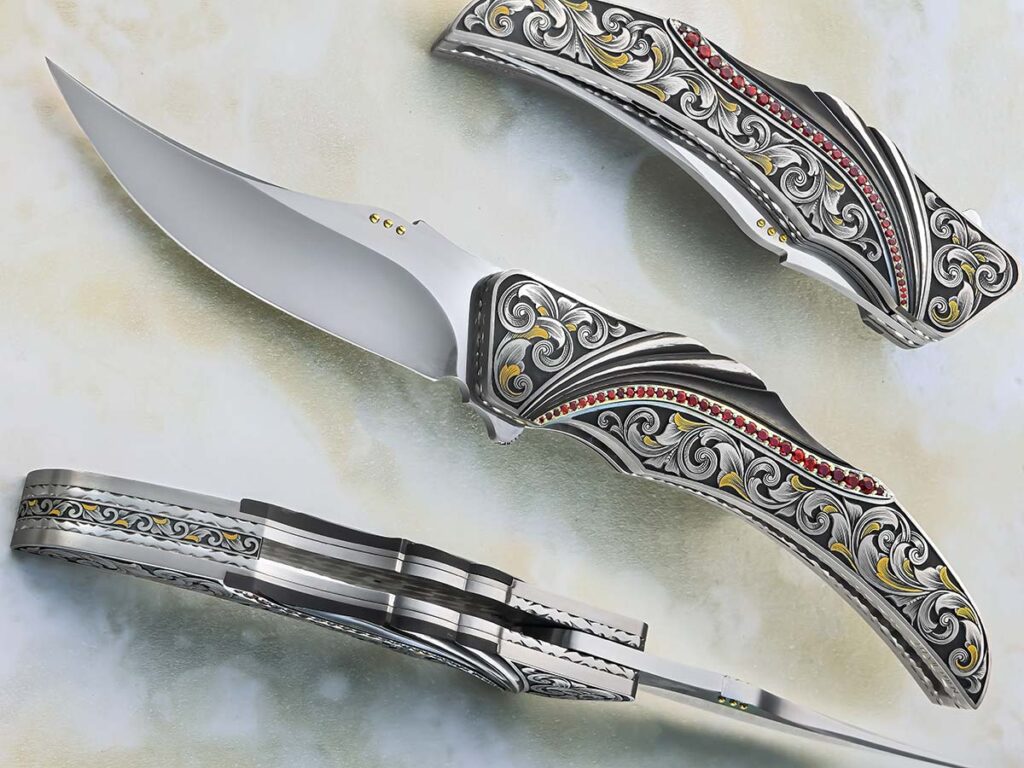
One time I had a 36-carat uncut ruby for a specific part of a presentation. The clients changed that out and added another $10,000 to the materials list. Put a pound of 24k gold in the mix, two feet of AAA lapis lazuli and another pound of silver and you have nearly a year of work making it all look like something that befits the materials. There is nothing finer than 24k gold and large ruby star sapphires set in deep blue AAA lapis lazuli.
Of course, there is the matter of it not existing until you do it. That part can be intimidating at times. Then there are the occasions when the client goes well over the beginning budget. If this happens, you must deal with the backlash from him blaming you, when all was done at his request.
Maintain Your Health
People were making wondrous things with simple ingredients 4,000 years ago, without the benefit of dental care, bifocals and electric lights and on a diet that barely sustained them most of the time. They died by 45 usually, so had only the time between when they were 9 or 10 until their eyes began to fail them by 40 or so. I have been making and selling my work for more than 50 years with all the benefits living in a civilized time can bring. I am still excited about projects, no matter the size. I still eat lots of fruits and greens and shredded wheat large biscuits.
If you want to do your best work, you must stay healthy. Like any other working mechanism, your body tissues need the time to relax and rejuvenate. For example, if you don’t give the fingers in your hand enough time off, they will give you problems later in your career. The cartilage in your joints will only take so much punishment, so give the muscle tissues in these areas time to relax a bit before moving onto your next project.
Sometimes it may take a few days for an overworked appendage to return to normal if you’ve stressed it in some way. Always protect your eyes and ears from foreign objects and stressful sounds. I finally took the large subwoofer out of my studio because it was leaving me partially deaf by the end of the day, even more so than most of my tools.
Design Process
Design is where you make your identity come to life with a few pencil marks and colored markers. You want to present a consistent image that people will remember and that you can live with in the future.
The most important thing to know when you begin making anything is what it’s supposed to look like when it’s finished. That’s where those blank sheets of paper and erasures come into play.
Make your design mistakes on paper. Don’t wait until you’re well into something before admitting to there being some mystery grey areas concerning how it’s supposed to work. Wait to start something until you have a good idea as to how to feasibly do it. The sketches are just that; they allow you to put a bunch of feasible ideas down on paper next to each other and put big X’s on the ones that don’t work with the others. It may take a few tries to get what you’re looking for down, but now you can start thinking about materials, colors, etc., and establish the theme of the drawing. This will help you decide the things needed to make it real.
Once you’re working, don’t deviate from the drawings unless it will make it a stronger presentation. I always try and give the piece the best ideas I can to make it able to stand with the other things I have made, and give the customer the best I can do at the time. It makes for more hours but also gives a much stronger presentation.
Money Matters
All crafters have money fixed firmly in their minds. If you can just get the circumstances right, you know people will like your work and you will sell it.
As a group, crafters are undercapitalized and have no backup cash for when calamity strikes. Until you can show a profit and can pay your suppliers, you don’t have enough funds to sustain your business when the bottom falls out of your market, either locally or globally. All of today’s crafters have experienced this. I wish I had an answer—I wish someone had an answer.
Maintaining Materials
Materials are “the paint” of my work: silver for white, gold for yellow of differing shades, bronze for brown gold, jade for green, emeralds for green, Nigerian green tourmaline for green, rubies for red, carnelian for orange/red, lapis lazuli for blue, etc. Your stockpile of materials controls the variables in your work. Where would Van Gogh have been without yellow, orange and electric blues on his pallet?
It has always been considered easier to do color photography than black and white photography. I think there is a correlation in craft. The simpler the design, the more important it is not to deviate from the original line. A fine example of this is the work of Wolfgang Loerchner; it is so clean and simple in design, with wonderful materials, and no room for any deviation in the completed piece. That’s difficult for me. His work is spotlessly fine while I spend part of my time trying to make it look like I didn’t have any difficulties in the making.
If your budget allows it, always stockpile unusual materials that are necessary in your work so there are no down times while you wait for four feet of Madagascar ebony, or a pallet of clay to be dropped at your step. If you already have it on hand, there are no delays.
Buy quality materials. You don’t want your turned goblet to twist and crack and eventually fall apart because the wood wasn’t properly dried or treated after it was done. Most natural materials will take no heat because they were created at normal earth temperatures. Too much heat and anything will crack—if not today, weeks or years later. Epoxies usually give way at anything over 150° F. Buffers will bring the temperature up to that point quickly, making the epoxy no more than a filler rather than bonding the materials together.
Knifemaking Tools
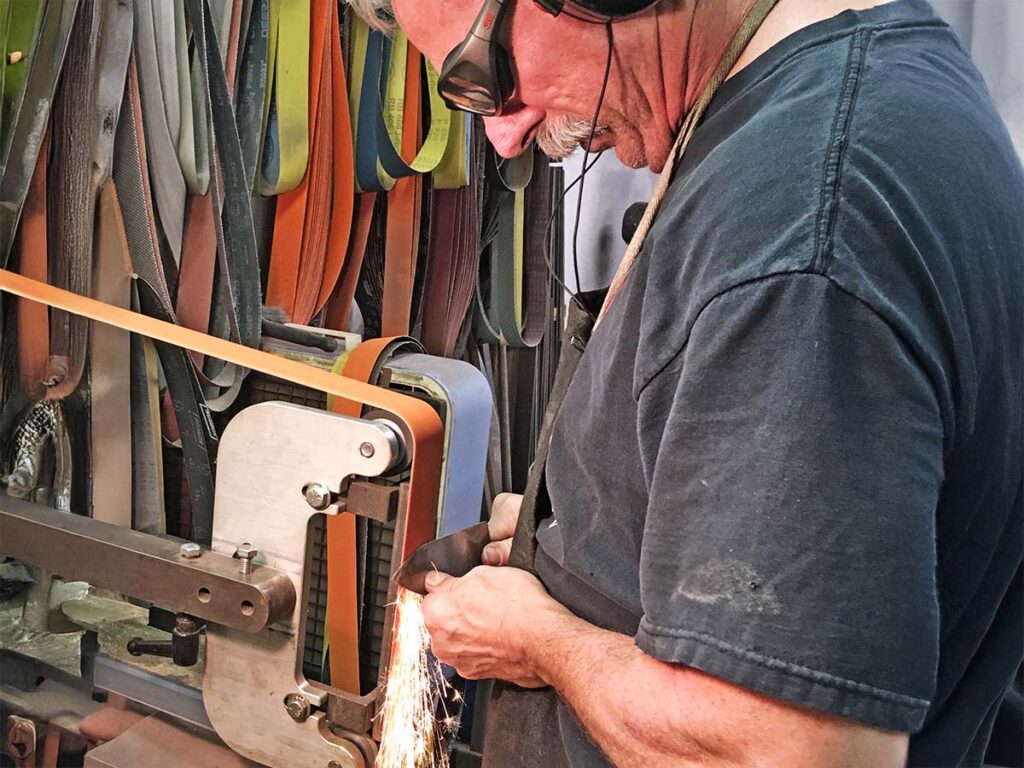
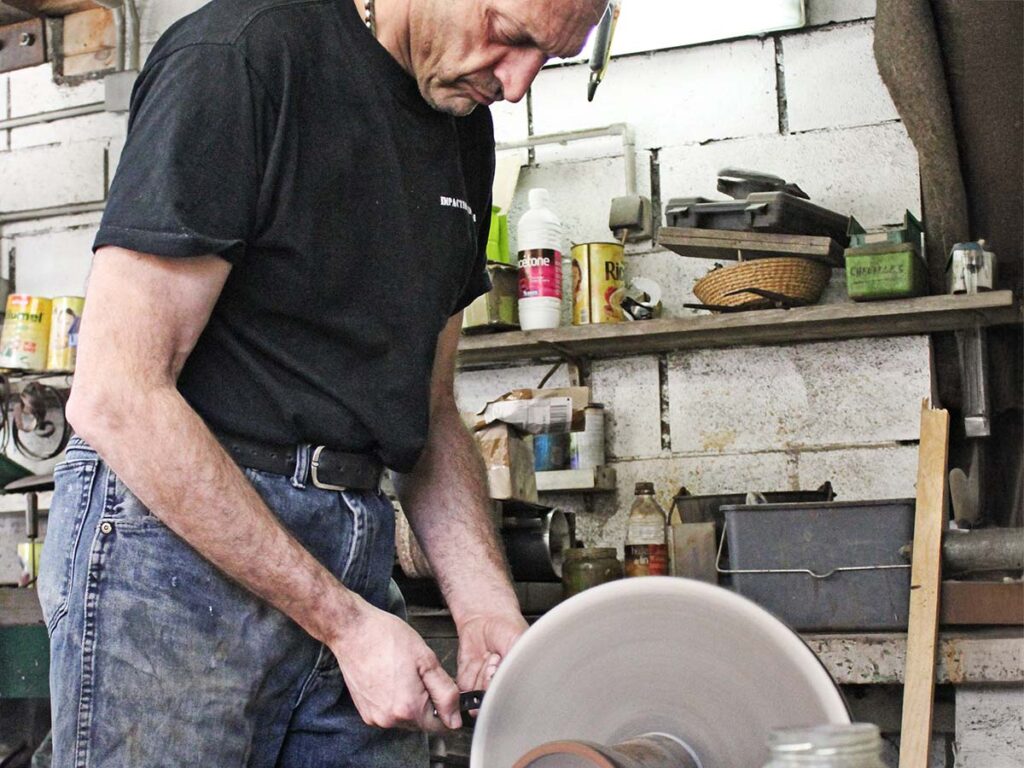
Every craft has its list of necessary items you need to do it well. When you’re buying those things think on the longevity of the tool—good tools last, cheap ones don’t. I’m still using items I purchased in the early ’70s on a regular basis. They don’t always have to be “show dog quality” in appearance if they still work well.
Conclusion
To you out there who have jumped on the craft wagon: always think things all the way through beforehand. It will make your landing much more enjoyable. I know I have given you a list of things that is larger than you want to deal with, but if you want to see your name in lights someday, you must follow the simple rules every business must have to survive or you will only make it more difficult for yourself, your career as a crafter, and, most of all, your family standing behind you.
It’s always a swim against the current for all of us.
More On Knife Marketing:
- How To: Custom Knife Sales And Marketing
- Knife Steel After Crucible Industries LLC
- Tariffs & Knife Prices In 2025
- Collaboration Knives: How Do They Come Together?
- How To: Marketing Knives On Social Media
 NEXT STEP: Download Your Free KNIFE GUIDE Issue of BLADE Magazine
BLADE’s annual Knife Guide Issue features the newest knives and sharpeners, plus knife and axe reviews, knife sheaths, kit knives and a Knife Industry Directory.Get your FREE digital PDF instant download of the annual Knife Guide. No, really! We will email it to you right now when you subscribe to the BLADE email newsletter.





