Home Authors Posts by Virgil England

Virgil England

Knifemaking Business: Commission Knives, Designs And More

0

A veteran maker shares timeless advice on commissions, design, and running a successful craft business.

I rarely do commissions. It’s difficult to keep some clients from wanting to take part in the process. Their job is to tell you how much they like the piece when it is finished and gather the money to cover their overextended budgets. In your role as crafter/knifemaker, don’t let them bully you. There are no grounds for complaints if you give them what they originally approached you about.

The most difficult part of doing commissions, aka taking orders, is keeping everything on schedule. A delivery date is just that. Even if it’s a couple of years out, don’t wait until the end to go looking for materials and services. Casters work better with a heads-up beforehand and engravers may need a year to get past what they are working on. As a result, get your name on the list with others waiting for a bit of the crafters’ time to cast your pieces and for the engraver to work out a design for your project.

I run on satisfied customers. One black mark cancels out a slew of gold stars. I’ve never had a customer who wasn’t satisfied, period. I give even my smallest work the same close attention to detail as the larger and more standout ones. Every piece deserves the most attention I can give it to bring it to the right state of finish when everything is done.

I don’t spend time debating how much it costs if they are paying up front. It’s out of your hands at that point. If they insist and it does make for a tighter presentation, I have no complaints—if I’m still doing it my way.
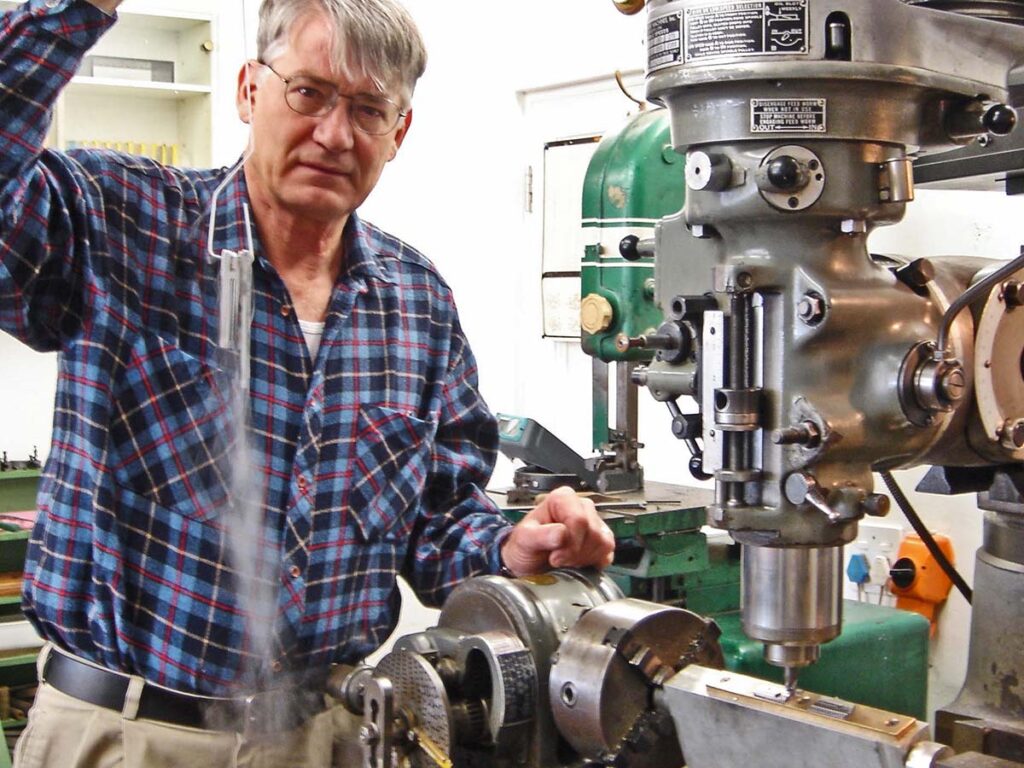
When buying tools think about their longevity—good ones last, cheap ones don’t. South African knifemaker Des Horn’s Bridgeport milling machine is one of the good ones. (Des Horn image)

One time I had a 36-carat uncut ruby for a specific part of a presentation. The clients changed that out and added another $10,000 to the materials list. Put a pound of 24k gold in the mix, two feet of AAA lapis lazuli and another pound of silver and you have nearly a year of work making it all look like something that befits the materials. There is nothing finer than 24k gold and large ruby star sapphires set in deep blue AAA lapis lazuli.

Of course, there is the matter of it not existing until you do it. That part can be intimidating at times. Then there are the occasions when the client goes well over the beginning budget. If this happens, you must deal with the backlash from him blaming you, when all was done at his request.

Maintain Your Health

People were making wondrous things with simple ingredients 4,000 years ago, without the benefit of dental care, bifocals and electric lights and on a diet that barely sustained them most of the time. They died by 45 usually, so had only the time between when they were 9 or 10 until their eyes began to fail them by 40 or so. I have been making and selling my work for more than 50 years with all the benefits living in a civilized time can bring. I am still excited about projects, no matter the size. I still eat lots of fruits and greens and shredded wheat large biscuits.

If you want to do your best work, you must stay healthy. Like any other working mechanism, your body tissues need the time to relax and rejuvenate. For example, if you don’t give the fingers in your hand enough time off, they will give you problems later in your career. The cartilage in your joints will only take so much punishment, so give the muscle tissues in these areas time to relax a bit before moving onto your next project.
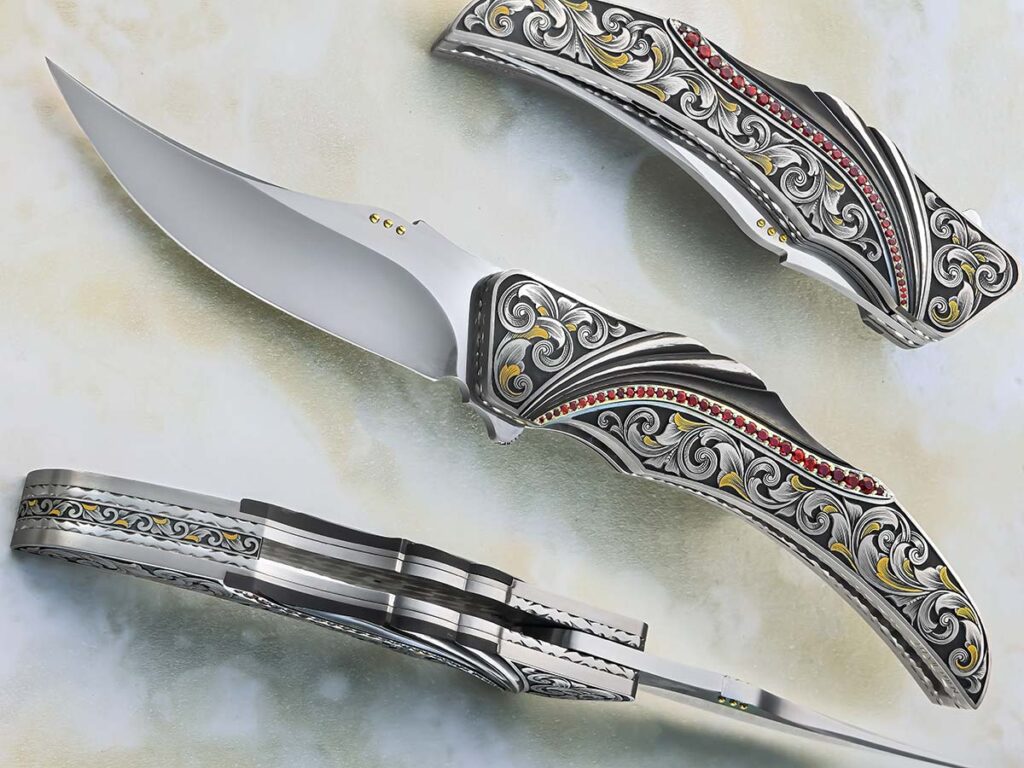
Engravers may need a year to finish an ongoing project before they can accept your order. As a result, get your name on the list with others waiting for an engraver to work out a design for your project. The engraving on a Herucus Blomerus folder is by Henk Viljoen. (SharpByCoop image)

Sometimes it may take a few days for an overworked appendage to return to normal if you’ve stressed it in some way. Always protect your eyes and ears from foreign objects and stressful sounds. I finally took the large subwoofer out of my studio because it was leaving me partially deaf by the end of the day, even more so than most of my tools.

Design Process

Design is where you make your identity come to life with a few pencil marks and colored markers. You want to present a consistent image that people will remember and that you can live with in the future.

The most important thing to know when you begin making anything is what it’s supposed to look like when it’s finished. That’s where those blank sheets of paper and erasures come into play.

Make your design mistakes on paper. Don’t wait until you’re well into something before admitting to there being some mystery grey areas concerning how it’s supposed to work. Wait to start something until you have a good idea as to how to feasibly do it. The sketches are just that; they allow you to put a bunch of feasible ideas down on paper next to each other and put big X’s on the ones that don’t work with the others. It may take a few tries to get what you’re looking for down, but now you can start thinking about materials, colors, etc., and establish the theme of the drawing. This will help you decide the things needed to make it real.
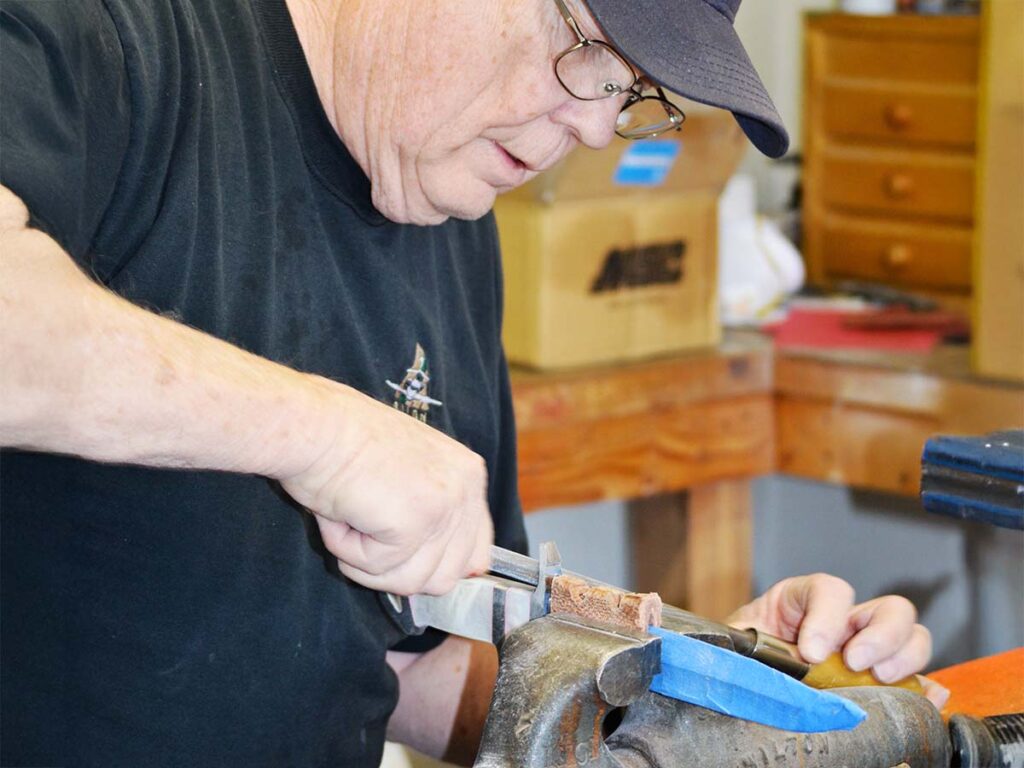
Your body needs time to relax and rejuvenate. For example, if you don’t give your fingers enough time off, they will give you problems later in your career. Steve Johnson files a guard in his shop. (Steve Johnson image)

Once you’re working, don’t deviate from the drawings unless it will make it a stronger presentation. I always try and give the piece the best ideas I can to make it able to stand with the other things I have made, and give the customer the best I can do at the time. It makes for more hours but also gives a much stronger presentation.

Money Matters

All crafters have money fixed firmly in their minds. If you can just get the circumstances right, you know people will like your work and you will sell it.

As a group, crafters are undercapitalized and have no backup cash for when calamity strikes. Until you can show a profit and can pay your suppliers, you don’t have enough funds to sustain your business when the bottom falls out of your market, either locally or globally. All of today’s crafters have experienced this. I wish I had an answer—I wish someone had an answer.

Maintaining Materials

Materials are “the paint” of my work: silver for white, gold for yellow of differing shades, bronze for brown gold, jade for green, emeralds for green, Nigerian green tourmaline for green, rubies for red, carnelian for orange/red, lapis lazuli for blue, etc. Your stockpile of materials controls the variables in your work. Where would Van Gogh have been without yellow, orange and electric blues on his pallet?
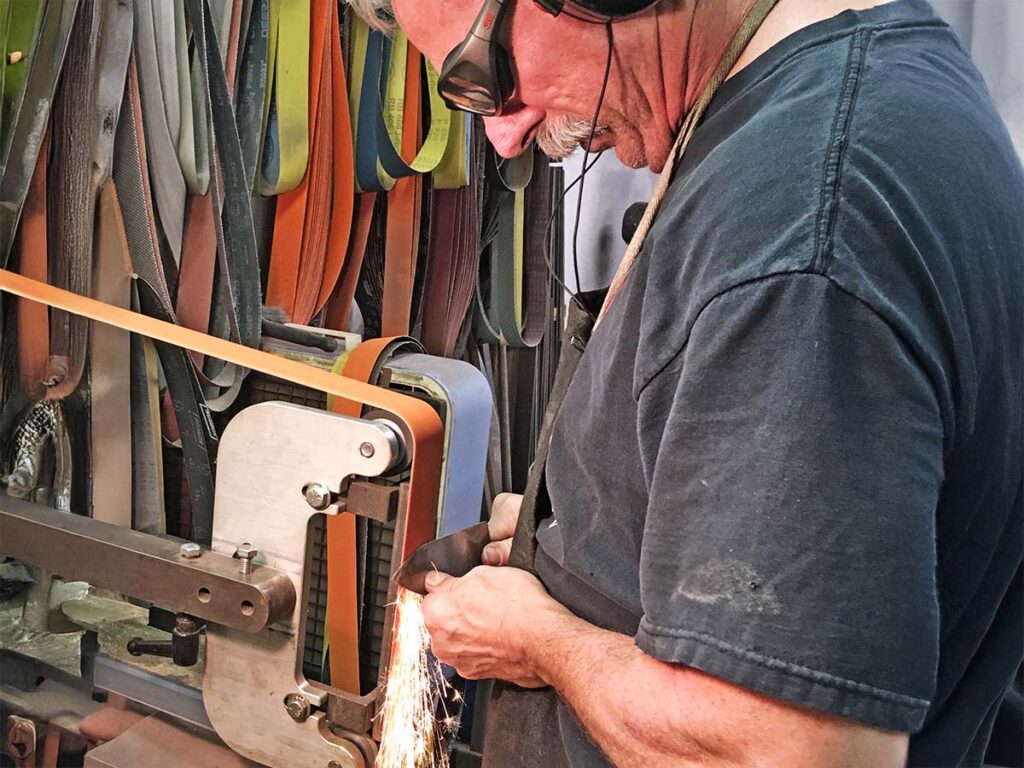
Always protect your eyes and ears from foreign objects and stressful sounds. ABS master smith Steve Randall shows how it’s done. (Steve Randall image)

It has always been considered easier to do color photography than black and white photography. I think there is a correlation in craft. The simpler the design, the more important it is not to deviate from the original line. A fine example of this is the work of Wolfgang Loerchner; it is so clean and simple in design, with wonderful materials, and no room for any deviation in the completed piece. That’s difficult for me. His work is spotlessly fine while I spend part of my time trying to make it look like I didn’t have any difficulties in the making.

If your budget allows it, always stockpile unusual materials that are necessary in your work so there are no down times while you wait for four feet of Madagascar ebony, or a pallet of clay to be dropped at your step. If you already have it on hand, there are no delays.

Buy quality materials. You don’t want your turned goblet to twist and crack and eventually fall apart because the wood wasn’t properly dried or treated after it was done. Most natural materials will take no heat because they were created at normal earth temperatures. Too much heat and anything will crack—if not today, weeks or years later. Epoxies usually give way at anything over 150° F. Buffers will bring the temperature up to that point quickly, making the epoxy no more than a filler rather than bonding the materials together.

Knifemaking Tools

Every craft has its list of necessary items you need to do it well. When you’re buying those things think on the longevity of the tool—good tools last, cheap ones don’t. I’m still using items I purchased in the early ’70s on a regular basis. They don’t always have to be “show dog quality” in appearance if they still work well.

Conclusion
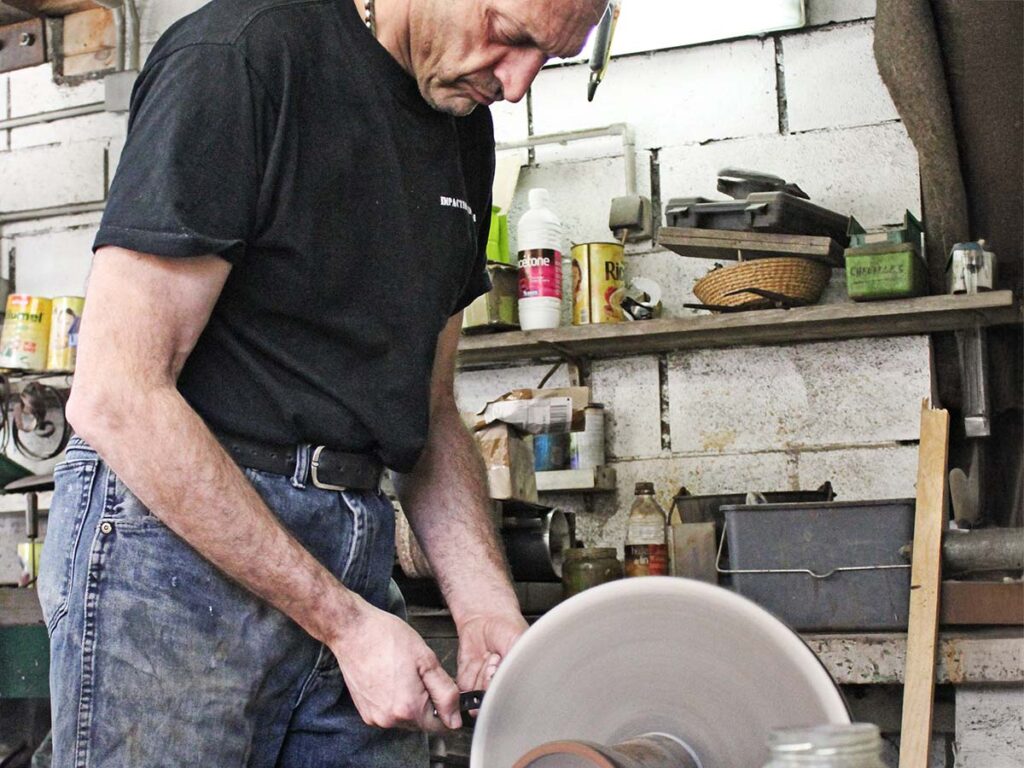
Too much heat and anything will crack—if not today, weeks or years later. Epoxies usually give way at anything over 150° F. Buffers will bring the temperature up to that point quickly, making the epoxy no more than a filler rather than bonding the materials together. Veteran French knifemaker Fred Perrin polishes a knife on an old-school buffing wheel in his shop. (image courtesy of Michael Janich)

To you out there who have jumped on the craft wagon: always think things all the way through beforehand. It will make your landing much more enjoyable. I know I have given you a list of things that is larger than you want to deal with, but if you want to see your name in lights someday, you must follow the simple rules every business must have to survive or you will only make it more difficult for yourself, your career as a crafter, and, most of all, your family standing behind you.

It’s always a swim against the current for all of us.

More On Knife Marketing:

Knife Show Success: Pricing, Conduct & Collector Trust

0

Selling knives takes more than a sharp edge—professionalism, fair pricing and trust are key to long-term success on the show floor.

How you conduct yourself and your knifemaking business when you’re on the selling floor of a knife show is critical. If word comes down the aisle there is a well-known collector in the room, don’t go over and interrupt the business between the collector and crafter by waving your work in front of them, or stepping into the customer’s space.

I’ve seen this too many times over the years. Such crafters are an embarrassment to all who draw from the same collector pool. Stay in your space, behave in a professional manner and wait for the customer to come to you.

The last thing any craft needs is for a crafter to double his prices when a particular collector approaches. As a result, the collector immediately assumes all crafters are a pack of thieves, taking advantage of him. Those who are at the top of their trade will tell you what a bad move this is for any crafter. Such things travel through the collector network worldwide in hours.

Pricing Custom Knives

Sales are the toughest part of the business. Pricing their work is difficult for all crafters. To take some of the mystery out of trying to maintain control of my cash-poor studio, I’ve always gone by the following simple formula.

Work out the minimum amount per month you must earn to eat and pay your bills. Whether you’re paying all or a portion of your bills, it’s the same. How much is the total amount? You can’t drop below netting the figure from your studio. If you spend more than you make, your approach is not working and you need to change something.

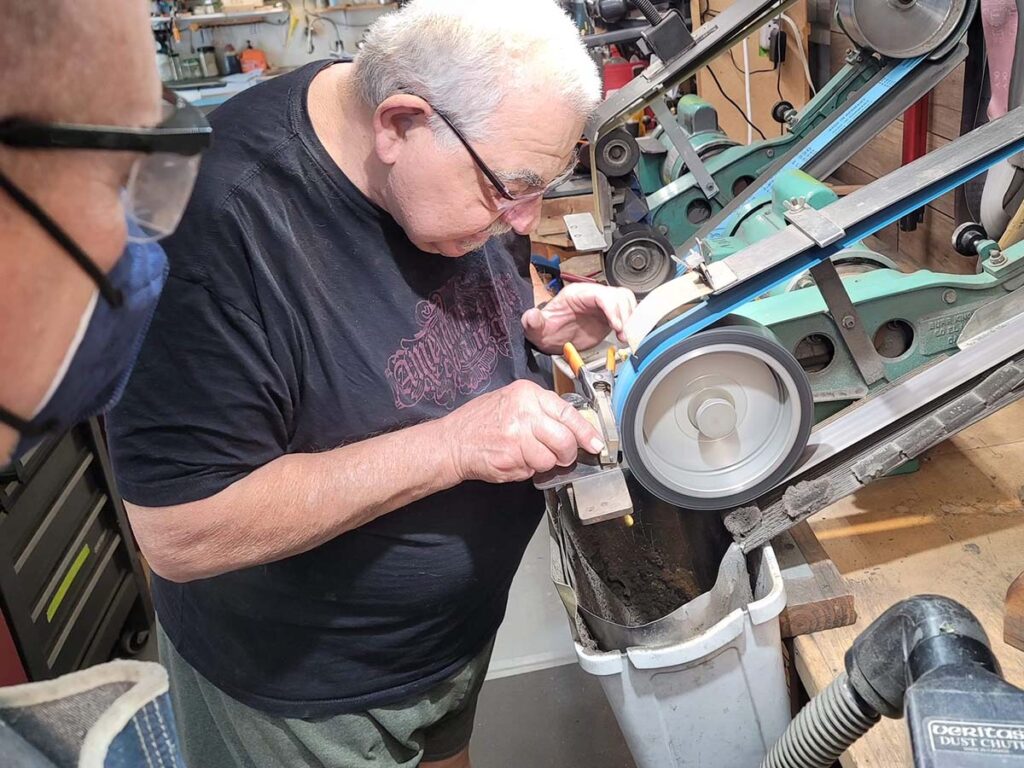
Doing things by hand takes time, especially when you start trying to extend your boundaries. BLADE Magazine Cutlery Hall-of-Fame® member Bob Terzuola has been extending his boundaries a long time, including at the belt grinder. Collector Chris Schluter watches at left.

I triple my base material and labor figures. This must cover everything and very often doesn’t work out as hoped. Throw in costly materials and things soon get out of balance, not to mention foundry fees and shipping.

Paying Yourself

Pay yourself. It doesn’t matter if it’s only a little bit, there is still the psychological impact of being paid something for your efforts. Don’t work for free. No one likes not being rewarded for his efforts.

I’ve been on a schedule of seven 10-hour days a week for most of my career. If I don’t work those kinds of hours the pieces won’t get done, and the bills won’t get paid. There has never been a lot of time for doing Alaska kinds of things, be it hiking or fishing, or just sitting and doing nothing. If I’m home, I had better be in my studio working. Welcome to the world of the full-time crafter. Your family is in the wings, waiting for you to finish up so everyone can go out for pizza.

Most of the time, workers in fast food restaurants make more per hour than crafters. That’s a basic fact. Doing things by hand takes time, especially when you start trying to extend your boundaries.

Developing Your Talent As A Smith

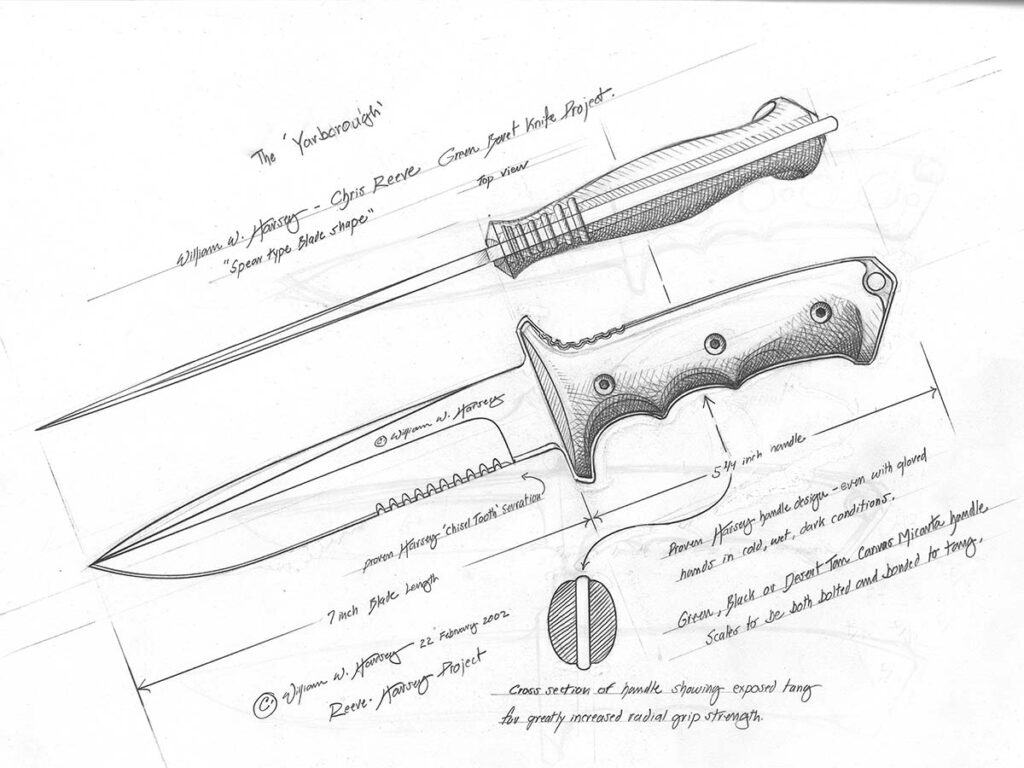
There are very talented people who can’t freehand a drawing of something in their imagination, but give them a clear idea and they can do it with a dedication to detail few ever achieve. Cutlery Hall-of-Famer Bill Harsey’s drawing in 2002 of the “Yarborough” for the Reeve-Harsey Green Beret Knife Project reflects his prodigious artistic talent. (image courtesy of Bill Harsey)

The artisan/crafter who drops the Saturday mall hobby artist status to get into the shows of a size to make the dream of becoming a full-time working artisan/crafter possible must make some adjustments. You will encounter a couple of stumbling blocks along the way. They are big ones and never really go away completely, no matter how much experience you might have.

One is talent—you can’t have enough of it. But the strings attached to it require endless dedication to sometimes crazy rules. There are very talented people who can’t freehand a drawing of something in their imagination, but give them a clear idea and they can do it with a dedication to detail few ever achieve.

Most people with raw talent show it early in life, from the 10-year-old piano protégé and 11-year-old symphonic composer to the ones who talk of space as something tangible to them, to the hands of a 12-year-old who carves hardwoods like the elders around him. They say the spirits of a great carver have moved into his hands. (That’s what I need.)

What do you do if you don’t come loaded down with the skills necessary to get your ideas on paper where you can see them? You don’t have the ability yet to create new and innovative ideas but really like crafting.

Get a pack of white paper, some pink erasers and a pencil sharpener that attaches to your table or bench. Have sufficient light; don’t work in the dark. Try and get the bulk of your idea down the first time, then let it sit and simmer while you look at the rough and try to come up with a direction to take your drawing to next.

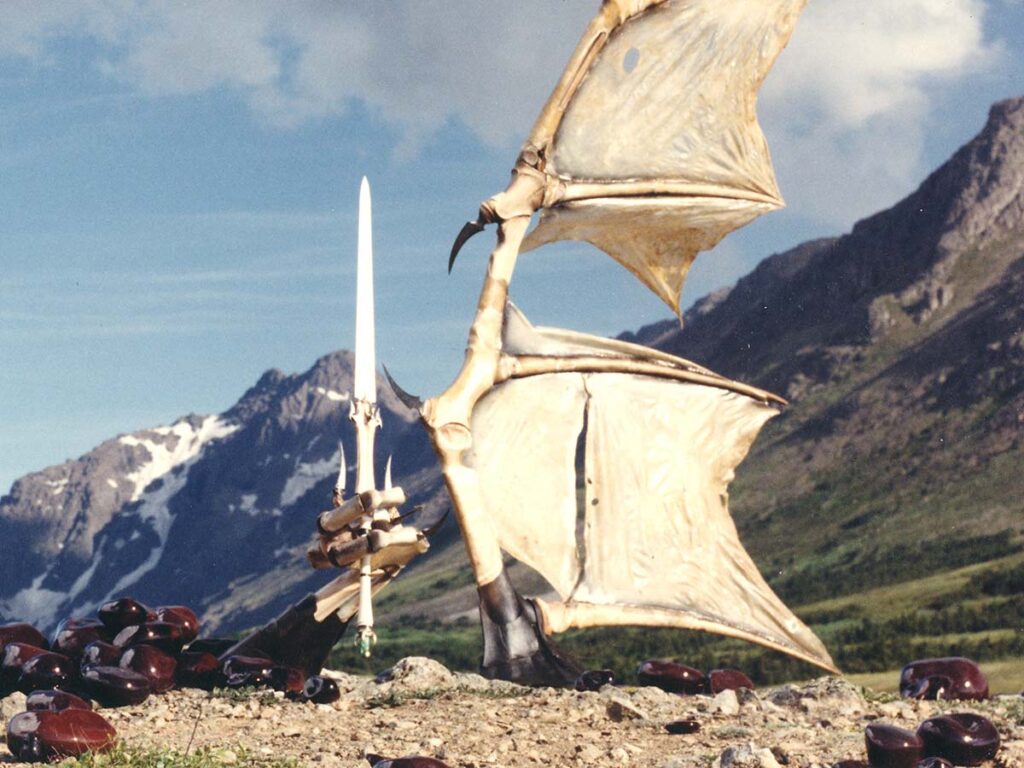
For a project that may take months or years to complete, be sure you cover the bases as much as you think is possible. One of the author’s longer-term projects is his famed Chugach Dragon. Commissioned to make a sword “capable of slaying a dragon,” he not only built the sword, he also made a "dragon" from whalebones and caribou hides. (Weyer International image)
For a project that may take months or years to complete, be sure you cover the bases as much as you think is possible. One of the author’s longer-term projects is his famed Chugach Dragon. Commissioned to make a sword “capable of slaying a dragon,” he not only built the sword, he also made a “dragon” from whalebones and caribou hides. (Weyer International image)

Work with small thumbnail-size sketches. They can be quick and you can do a number till you find something that appeals to you in a short time. Scan it and blow it up to the size it needs to be when finished. Instant gratification art!

Don’t design far beyond your skill sets; keep them in mind when you begin drawing.

I look on my sketches as my guidelines for the final finished piece. I work out the design issues on paper until I’m satisfied. I don’t begin anything until I have a possible route to take to achieve the end product I want. I’m not locked into it but I know there is at least one way that my chances are good, or there’s a reasonable risk, of me pulling something off. When you’re working on something that may take months or years to complete, make sure you have covered the bases as much as you think is possible.

Skills come from continual practice. You don’t have to be Picasso to make a raku* tea bowl. It may not be your original idea but the joy available just in doing the more mundane tasks is tangible. Being able to do raku means you have acquired a new skill set that will tweak your craft view a bit, that will give you the view from another craft’s perspective.

The more skills you can master, the broader your creative strokes can be. It’s not necessary that you learn every technique to the level of a master, only that you can do it without issue the few times it is required.

Ray Appleton’s IQ folders are famous for being difficult to figure out how to open and close, but one (though not one of those shown below) he put on the author’s table at a Solvang Knife Show may have been the most difficult ever.

Sales Presentation

A good idea poorly presented has no positive aspects. Keep it under the table until you work out the kinks at some later date.

Twenty years ago, celebrated knifemaker Ray Appleton came to the Solvang Knife Show. He is well known for his IQ folders, so named because it takes some thinking to work out how they open and close.

He didn’t have an exhibitor table, so he didn’t have anything to sell. He laid a small, leather-slip-covered folder on my table and stepped away. Ray was very tall, so he walked over by the show entrance and stood there to watch what happened. Someone had spotted him putting the knife down and was at my table immediately. The person asked for permission to look at it, which I gave, as Ray had asked.

The man fiddled with the folder for five minutes, then handed it off to someone else. It went through the hands of at least 20 people in an hour. Then Ray came back over to my table. He picked the knife up and slipped it in his denim shirt pocket.

“Did anyone open it?”

“Not as far as I could tell,” I said.

“Neither can I,” he said with the usual twinkle of the jokester in his eye, a man who saw enough humor in life to drive from central Colorado to Solvang on the California coast just to play a 20-minute joke. Ray was someone who knew the joys available in life for an eternal prankster.

The point here is don’t send customers photos of unfinished projects. Their imaginations aren’t usually up to your level, so it is easy for them to misinterpret something by a large margin. When you show up with the final, they will be expecting something different.

*Editor’s Note: Raku is a low-fire process of making pottery.

More On Knife Marketing:

How To: Custom Knife Sales And Marketing

0

Get the ins and out of custom knife marketing and learn how to improve profits from a maker with years of experience slinging blades.

The most difficult part for crafters is turning themselves into efficient sales and marketing people when they’d rather be throwing pots, building furniture, making knives, blowing glass, sewing moccasins and parkas and the myriads of other craft items people make. Marketing and sales present two different issues; both are necessary for the business to succeed.

Yes, it is a business.

The minute you start working for yourself, full or part time, you no longer have the umbrella of the company you’ve worked for. Now all the financial decisions are on you. Steel or groceries? Both require you to show a profit to draw money from to maintain your materials supply, pay the electric and gas bills, and get your kid’s braces. Paying these expenses is up to your fledgling business. If you have other money coming in from your spouse working, etc., stay out of it. The business needs to support itself. Don’t cut back on the family dog’s food because you need some paint brushes. So, it’s up to you to make it work.

Custom Knife Marketing

Shows are crucial to a knifemaker’s success but involve an investment of money. Table fees can easily be over a thousand dollars each. Add another table as the author often does for his huge pieces and things get expensive quick. Add a plane ticket to that, the cost of the hotel and food, and you’re close to $5,000 per show.

Marketing is about getting your name and your work out there for people to see. This is not an overnight happening. It is something you will need to pay attention to throughout your whole career if you want to maintain a public image that helps you sell.

The best venue for your work is shows, books and magazines specific to your genre.

Show promoters take out large ads in magazines. These usually list the names of the crafters participating. Name recognition is important, especially if you wish to draw collectors.

Advertising

For a show I did at the Hyatt Regency in Beverly Hills, the gallery that was representing four of us took out a full-page ad in the magazine that was putting on the show. Those magazines are kept and float around doctor and dental office waiting rooms for years. I had a small ad in Alaska Magazine that I was still getting inquiries from 10 years after the ad was pulled. I worked out the ad wasn’t bringing in enough money to pay for itself, even after 10 years.

Be aware of how much advertising costs you against how much real return you get from it. Maybe it’s better to save those monthly charges and put them toward doing actual shows where people have a face to put with a name.

Photos

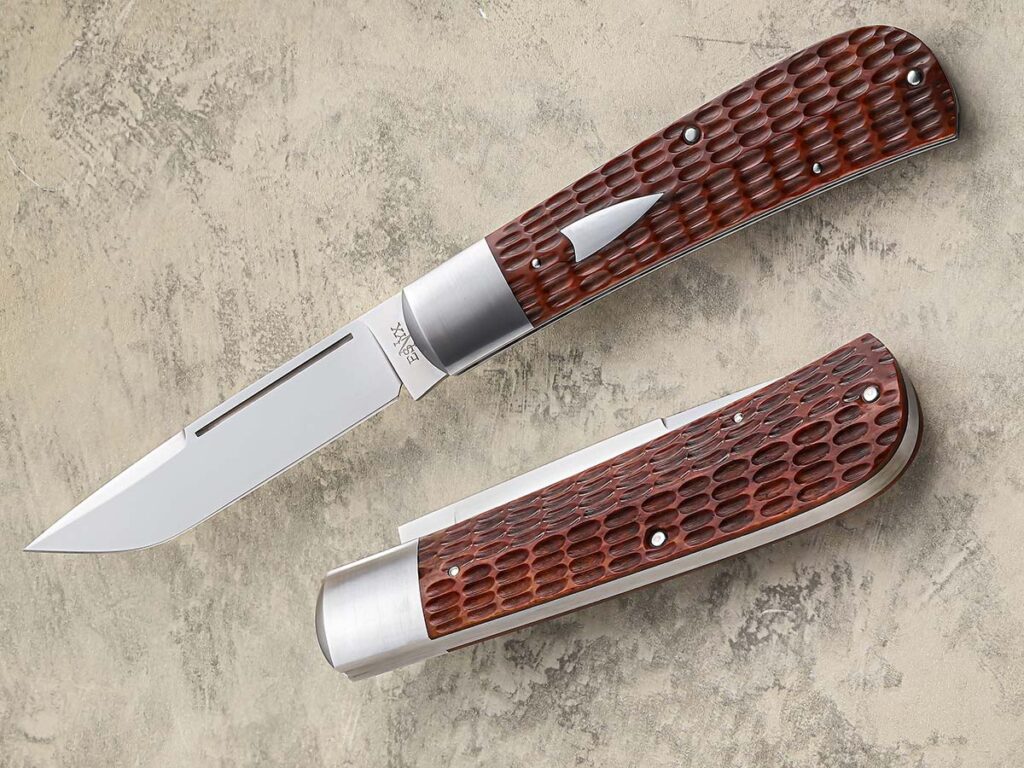
The rules for good photos are simple: it’s about your work, not the killer props it’s set up with. A top example of an uncluttered image is this one by Mitchell Cohen of an Evan Nicolaides slipjoint. (Cohen image)

Magazines don’t usually send out letters asking you to send them photos of your knives. You need to send them on your own. Don’t inundate them with dozens of photos. Make your choices very carefully. Check with the publication to see what form or format photos need to be in. These need to be high quality and/or high resolution for the magazines to print them or put them on electronic media.

If you’re not a photographer find someone who is, because these photos are the only way the public can see your work, other than shows. So be sure to have them taken or take them yourself. I have taken my own photos for the past 35 years. The rules for good photos are simple. Remember, it’s about your work, not the killer props it’s set up with.

Beware the dangers of Photoshop. The item has to look as good in real time as it does in the photo the magazine prints. If there are flaws, don’t let the customer be the one to point them out. (There is nothing wrong with selling something that isn’t up to your usual standard as long as you’re up front with the customer, and the selling price reflects these issues.)

Knife Shows

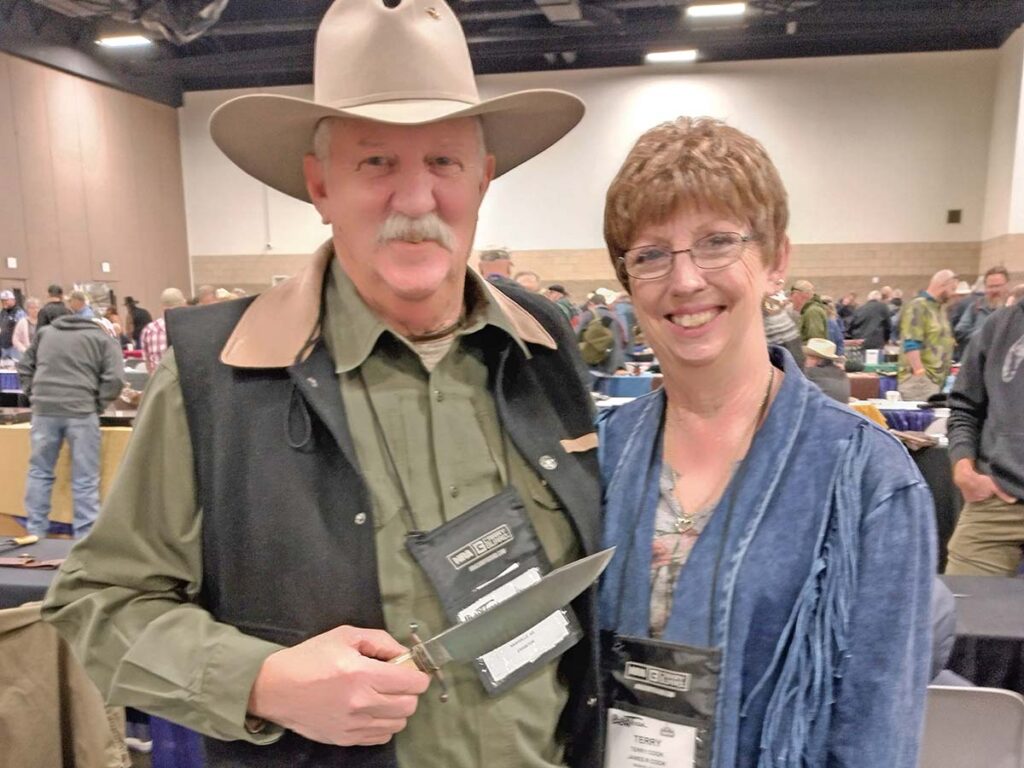
Your spouse is good to have with you at shows for both physical and emotional support. ABS master smith James Cook enjoyed the support of his wife Terry at a past BLADE Show Texas.

Shows can be good, just pick them wisely. If you can sell everything you need to sell by doing only local venues, that’s good. In Alaska I’d be fortunate to sell one piece a year after my prices went up to cover my costs in the late 1980s. I had to do shows to meet the people who would form my future collector base.

On average a well-known show is expensive for most people. Table fees can easily be over a thousand dollars each. Due to the sizes of some of my pieces, I always must have at least two tables because some of the bigger ones are too long to fit on one table. Add a plane ticket to that, the cost of the hotel and food, and you’re close to $5,000. If you’re doing a show in Manhattan, more if you plan on marketing in Europe or Asia.

I have done a lot of shows. I have never done one I could drive to. There’s always a plane ticket involved, the shortest flight being Anchorage, Alaska to Seattle. After that, things can get expensive. Overweight, oversize, extra, etc., those all have costs attached to them. I have traveled with as many as five large aluminum boxes (with snap-off wheels). It does no good if I reach my destination but don’t have anything to sell, so keeping my work safe in transit is very important.

This is a partial list of where I have attended shows, some annually for many years: Manhattan; Meadowlands; Atlanta; Las Vegas; Jersey City; Miami; Orlando; Dallas; St. Louis; Dallas; Denver; Nashville; Scottsdale; San Diego; Anaheim; Santa Barbara; Solvang; San Francisco; Seattle; Tokyo; Milan; Paris; Munich; Solingen; Helsinki; Belgium; and Memphis.

Every year I have attended four or five shows globally traveling from Anchorage. Now I need $20,000 just to cover basic show costs. Multiply that by three and that is where your profit starts. From the beginning I know I have to do at least $60,000 to cover the basic costs of being in business. It is closer to $7,500 in months when my materials are drawing a lot of money from my account.

The one common denominator in all shows is how tired you are when you arrive, and how tired you are when you finally get back home. There is a lot of stress in doing this. A mistake you shouldn’t make is thinking it can be used as a family holiday. This usually ends up with the kids up in your room with a movie menu for the TV, and your spouse right next to you waiting for the sales to show up. It’s better to leave the children at home.

Rolling With The Market

Ron Lake once said, “Some people keep making the same weak design every year, they just make it better. In the end it will always be a weak design.” Avoid this pitfall by looking at your work realistically. Just because it is bright and shiny doesn’t make it craft or art.

Your spouse is good to have with you for both physical and emotional support. When things aren’t selling because someone just plugged the Suez Canal for the umpteenth time, and that’s 10,000 miles away from you, there is no snappy comeback. When 9/11 took place it killed the New York Show, which was the most profitable show I attended annually. You could roll bowling balls down the aisles the following year. You have just been had by chance and circumstance, two things you have no control over as a speculation-oriented crafter. (A speculation crafter—that’s me—is one who builds something hoping to find a customer when it is finished.)

Moving Forward

If it isn’t selling, make it better next time. The customer is out there, you just need to get this little beauty in front of them. Long-time knife artisan and BLADE Magazine Cutlery Hall-of-Fame® member Ron Lake once said, “Some people keep making the same weak design every year, they just make it better. In the end it will always be a weak design.” Avoid this pitfall by looking at your work realistically. Just because it is bright and shiny doesn’t make it craft or art. The quality of the work and the attendant aesthetics are what customers look to before digging in their pockets.

More On Knife Marketing:

Advertisement

Must Read Articles

Read this before you make a knife

Knifemaking 101 – Read This Before You Make a Knife

  by Wayne Goddard My experience has taught me that there's nothing like digging in and getting started. I've often said the hardest part of the...
how to forge damascus steel

How to Forge Damascus

Advertisement
Advertisement