

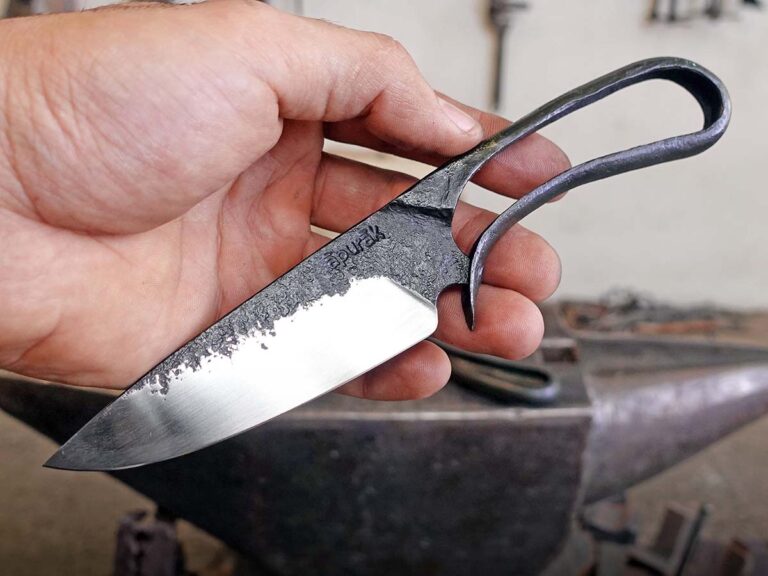
Follow the journey of Iranian bladesmith Masoud Hashemabadi, AKA Apurak, as he masters the art of the X-Rhea knife.
In February 2020, after months of contemplation and with the support of my wife, Maryam, I embarked on my journey in bladesmithing here in Iran. And I finally answered a long-standing urge within me—to delve into the world of forging and knifemaking. I was drawn not simply to the act of shaping steel but to the intricate, multifaceted craft of bladesmithing. Bladesmithing demands a convergence of skills: precise forging, material management, heat treatment, bevel grinding, understanding edge geometry, honing razor-sharp edges and more. Handmade knives, though ancient tools, continue to captivate enthusiasts today, representing a connection to human history.
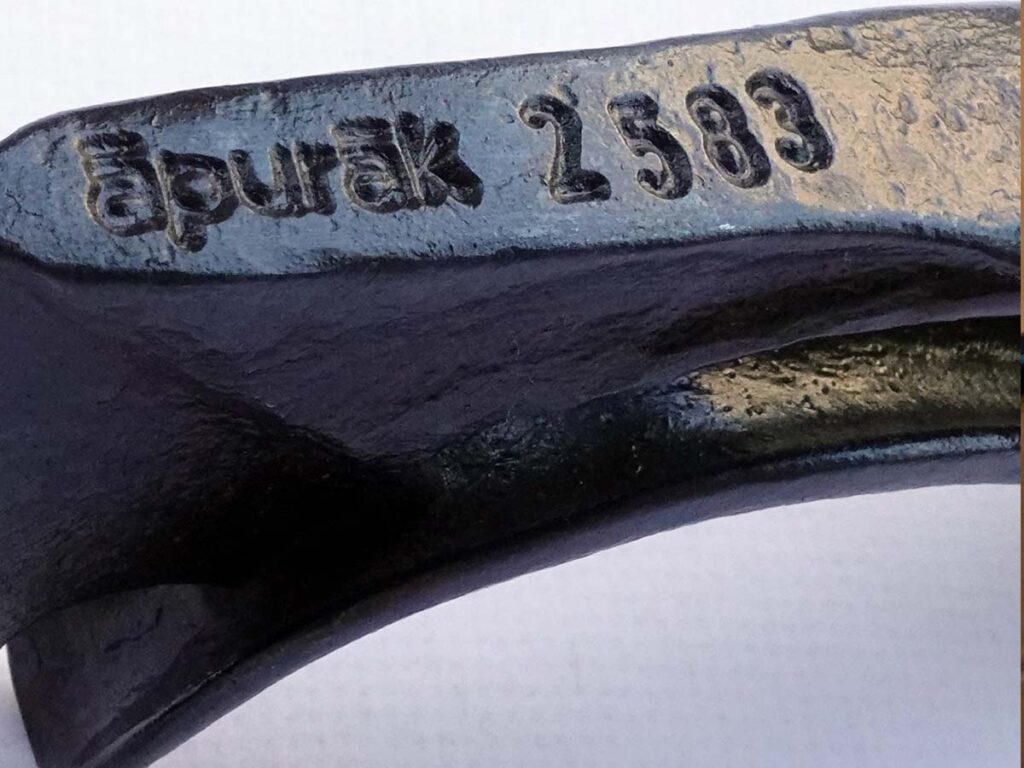
Each of my works bears the mark Apurak, also my handle on Instagram where I go by apurak.co. The word translates to “The Maker” in Pahlavi or the Middle Persian language—an ancient language.
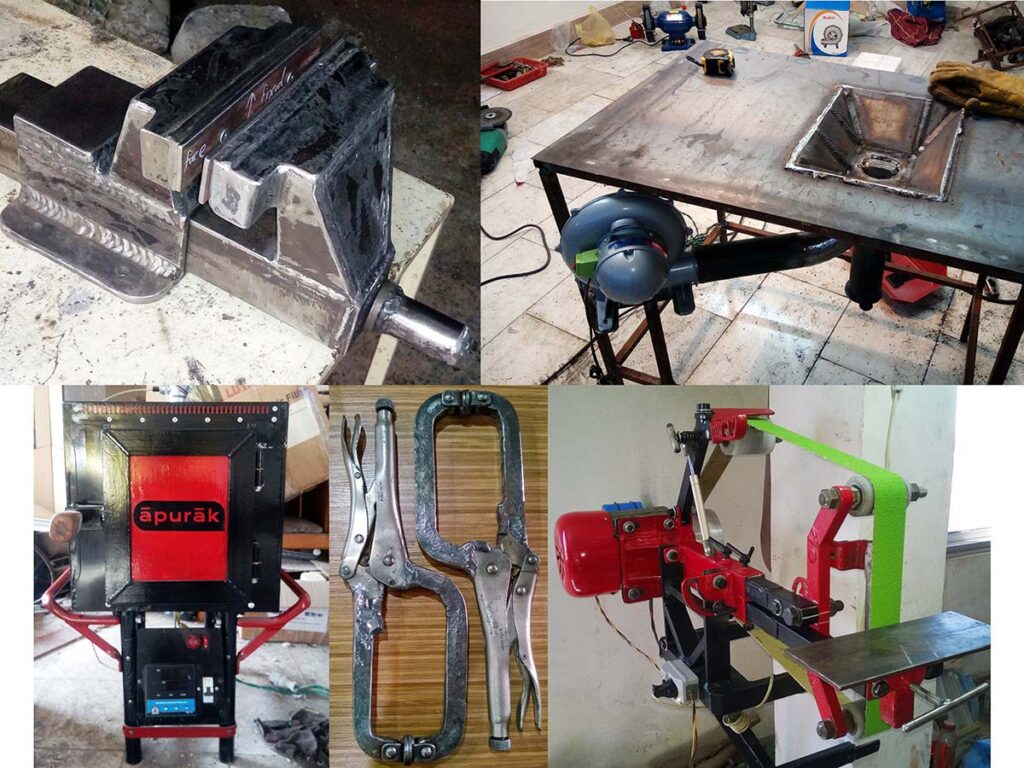
I began forging with basic tools: a steel block as an anvil, a simple hammer, a homemade coal forge, an angle grinder, a hand drill and a welding machine. I spent six months making additional tools and immersed myself in every piece of content I could find on forging. My first knives were rudimentary—simple full-tang and hidden-tang fixed blades. They were decent, but they didn’t fully satisfy me. During this time, I experimented with different designs, including the old blacksmith’s knife (sometimes known as the Viking knife). None of them quite captured my imagination.
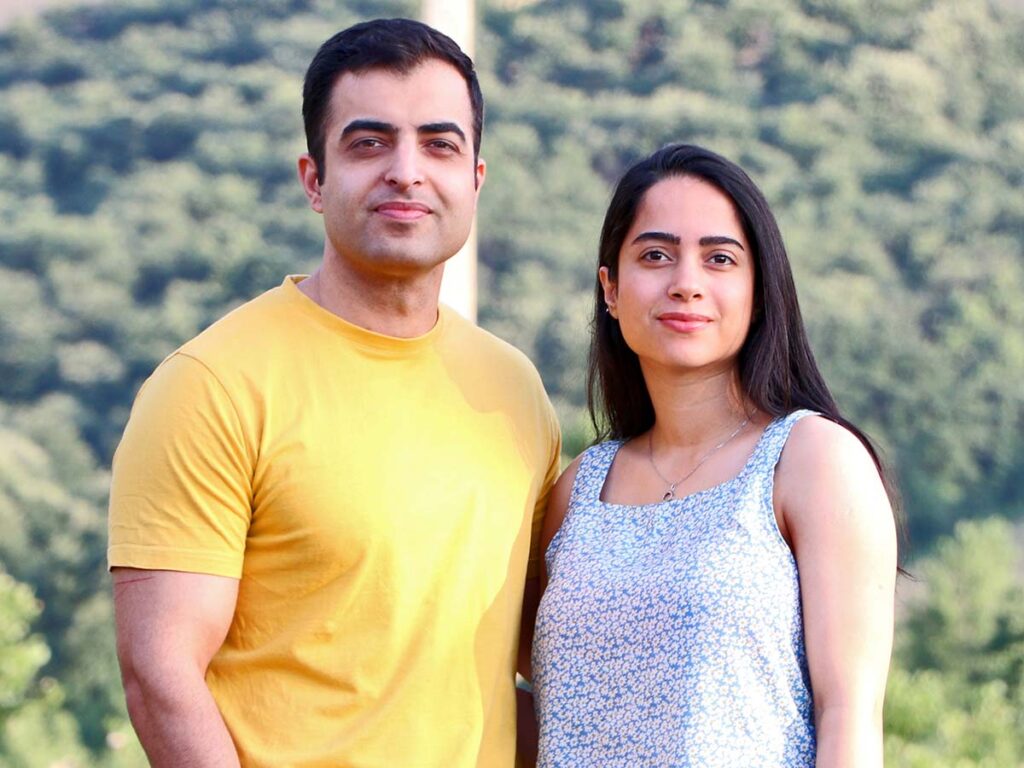
Then, about a year into my journey, I came across ABS master smith Lin Rhea’s X-Rhea design on his Instagram account. This design—seamless, balanced and powerful—struck a deep chord within me. I knew I had to learn to forge this knife, so I respectfully reached out to Lin for permission. I watched his videos, analyzed every detail and eventually began my own attempts at creating an X-Rhea. This journey marked a new chapter in my life.
From Inspiration To Learning
No one can create a truly unique knife design early in their career. We all start by holding onto something, following established paths until we understand our own direction in the field. For me, the X-Rhea was this guidepost. My early attempts were crude and far from perfect—out of proportion and visibly flawed. But I was thrilled to make progress. With each X-Rhea, I learned more, not only about the design but about the fundamental techniques of forging. This process fulfilled me in ways I hadn’t anticipated.
Regular feedback from Lin himself was invaluable. We communicated frequently through Whats-App and Instagram, discussing various approaches to forging, hammer techniques, and the finer points of knife-making. Lin became more than a mentor; he became a friend, generously sharing his knowledge and guiding me through my early missteps.
X-Rhea Process
The X-Rhea has a unique shape, but the process of creating it is what makes it truly special. Unlike most designs, which often involve templates or precise measurements to envision the final product, the X-Rhea requires a different approach. You start with a rough sketch and rely on imagination, skill and a sense of flow to bring the knife to life. Each hammer strike must be deliberate and you visualize the end result throughout. This approach makes the final product feel like a true reward, a direct extension of the maker’s vision and hand.
For me, the X-Rhea became more than a knife—it became a pathway toward mastering my craft. Unlike conventional knives, which can incorporate multiple materials like wood, Micarta or stag, the X-Rhea is a single piece of steel. This simplicity, however, does not mean it’s easy to make. Achieving a knife that is functional, strong, ergonomic and aesthetically pleasing in a single piece requires foresight, skill and an understanding of the material’s properties.
Lin and I often spoke about this unique forging process. He explained how the X-Rhea or one-piece concept demands a cohesive flow of thought, a continuity that aligns with the uninterrupted structure of the knife itself. “There’s no breaking point,” he said. His words perfectly captured what I was experiencing in practice. This concept aligned with my personal philosophy: as makers, we should focus more on our skills and presence than on the tools themselves.
X-Rhea Of Tradition
Throughout history, craftsmen have created extraordinary works with simple tools. When we look at the objects in museums, we see artifacts made with skills and techniques that, even today, seem nearly impossible to replicate. These craftsmen weren’t limited by the tools of their time. They relied on their presence, creativity and mastery, developing techniques that allowed them to reach incredible levels of precision and artistry. With the X-Rhea, I felt a connection to this tradition. Using only the most essential tools, I was able to engage deeply with each piece I crafted.
In today’s world, technology allows us to create faster and with greater efficiency, but it also risks overshadowing the maker’s role. Many makers, when faced with limited tools, may consider certain tasks impossible. Yet through my experience with X-Rhea knives, I found that fewer tools could offer a sense of creative freedom, encouraging me to explore what’s possible with technique alone. Each knife became a unique testament to the skill, discipline and power of traditional craftsmanship.
Working with Lin, I learned to view knifemaking through a different lens. He encouraged me to see the X-Rhea as an art form that goes beyond simple functionality. In his words, this process is like “a physical manifestation of a simple musical tune.” It became a flowing, intuitive rhythm rather than a rigid sequence of steps.
Editor’s Note: This is the first part of a two-part article. The second part of the article will be added to this story once it runs in the May 2026 issue of BLADE Magazine.
Read More:
- Japanese War Swords Part
- Scottish Swords: Cold Steel And CAS Iberia’s Tartan Edge
- Scissor Sword: Scissor Maven Grace Horne’s Prized Collectable
- Master Bladesmiths Showcase Their Best Long Swords





