Custom knifemakers can use any steels they like. However, some steels continue to see use year after year. Here are a few great examples.
CPM 154
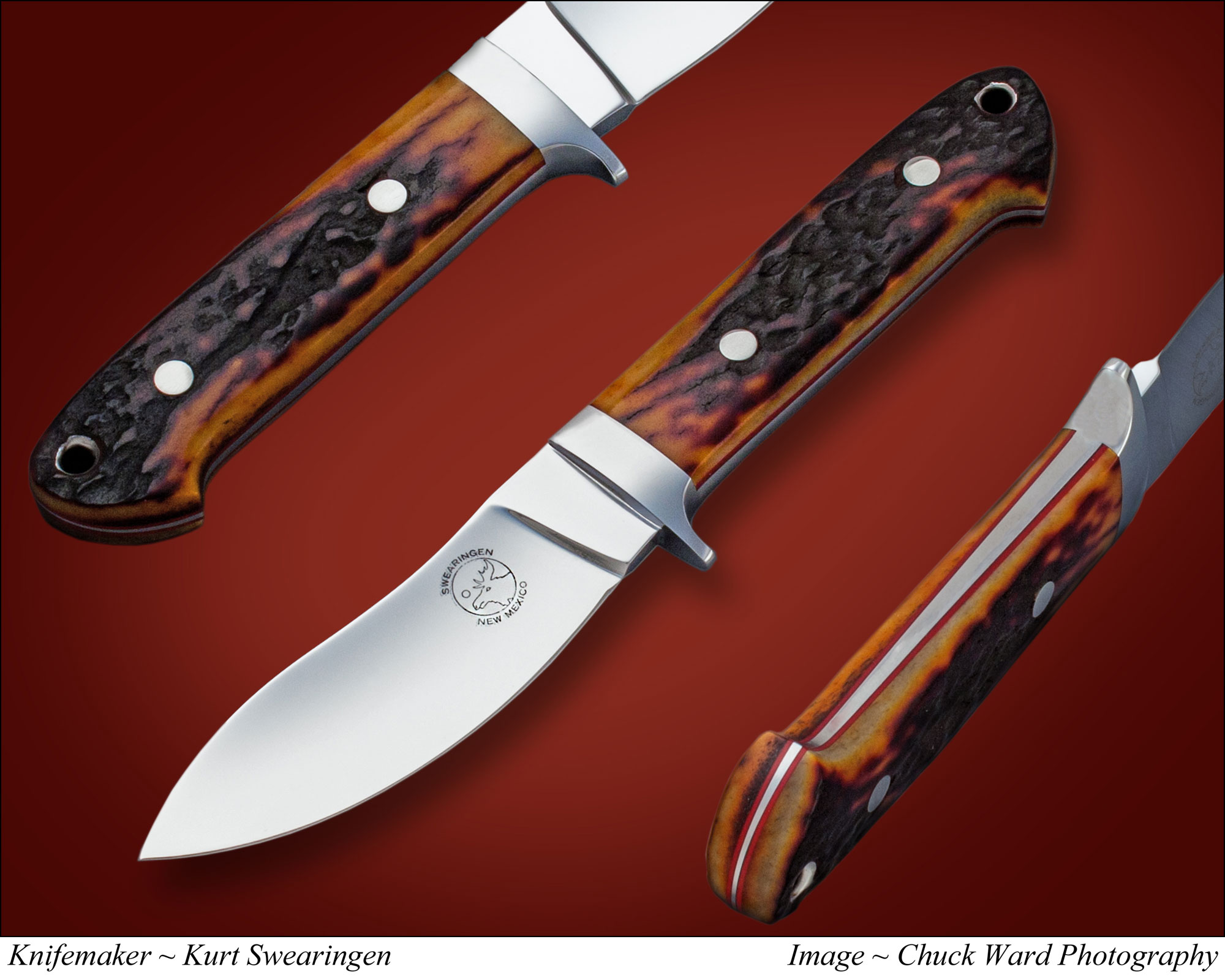
CPM 154 stainless is the blade steel Kurt Swearingen selected for his deep-bellied semi-skinner with a tapered tang and single guard. The handle is amber elk. Overall length: 8.25 inches.
1084 & 15n20
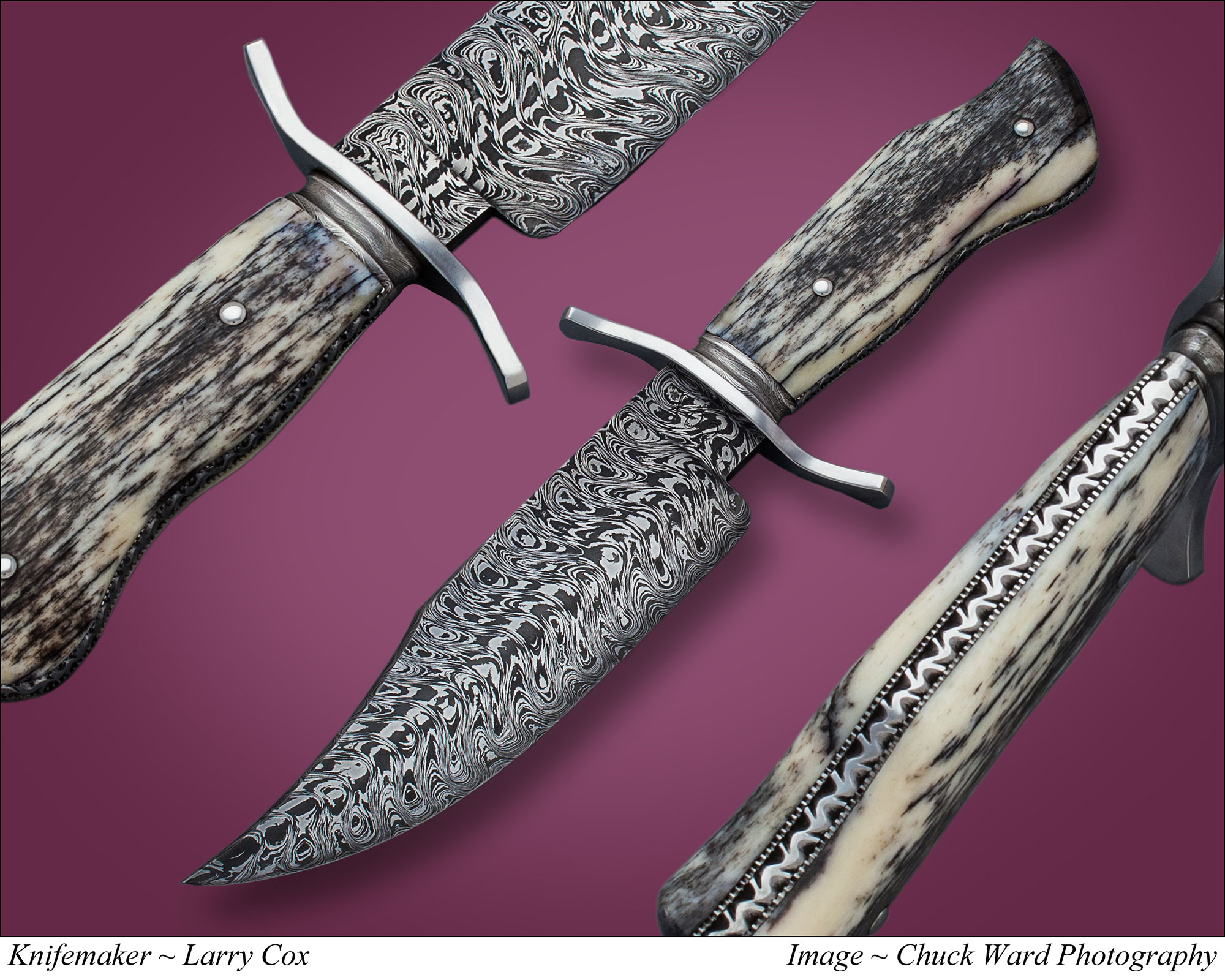
A pattern weld of 1084 and 15n20 comprises the 6 7/8-inch clip-point blade of the 385 Damascus Bowie by Larry Cox. The handle is giraffe bone and the guard is 416 stainless steel.
5160
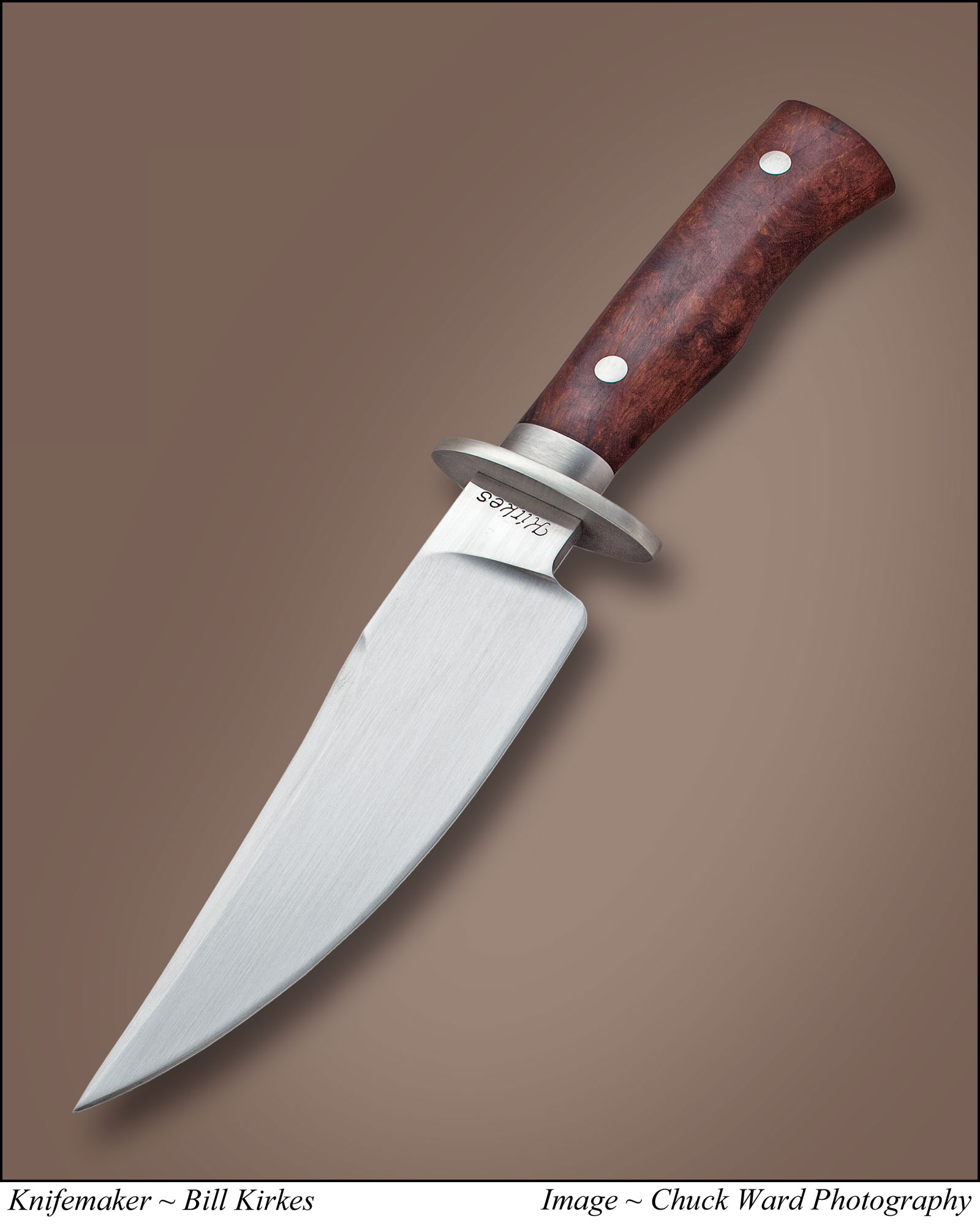
Tried-and-true 5160 carbon steel is the blade material for Bill Kirkes’ small bowie with a long swedge and oval double guard. The handle is ironwood. Overall length: 12 inches.
W2
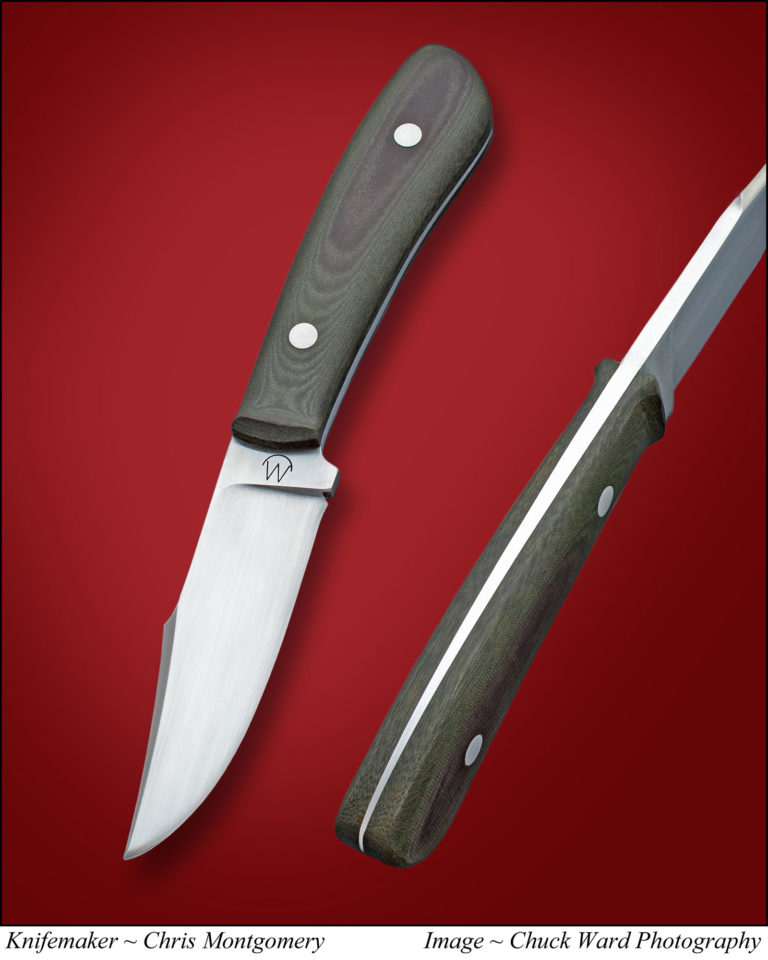
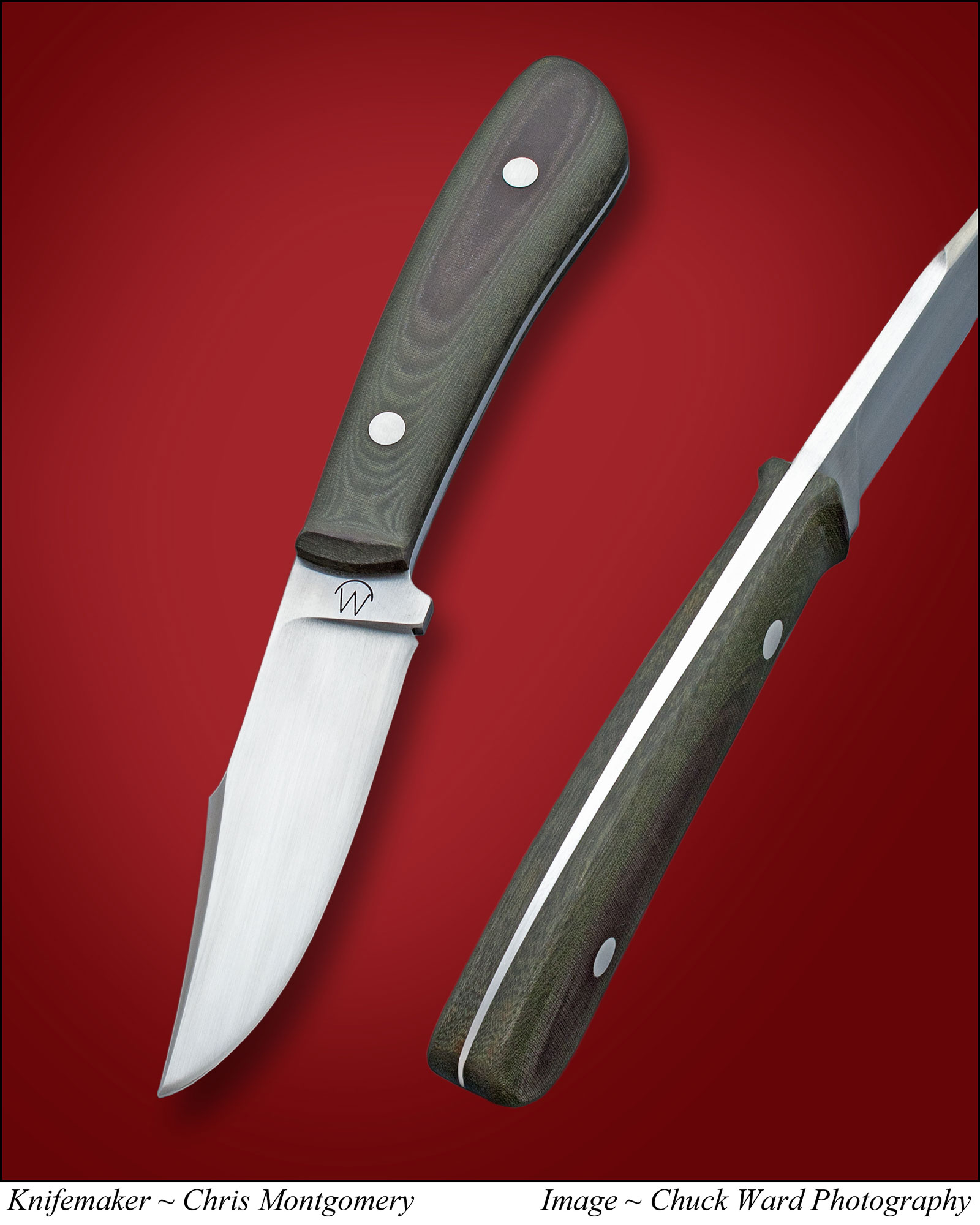
W2 tool steel comprises the clip-point blade of Chris Montgomery’s tapered-tang utility hunter. The handle is the Bob Loveless favorite—green Micarta®. Overall length: 8.25 inches.
154CM
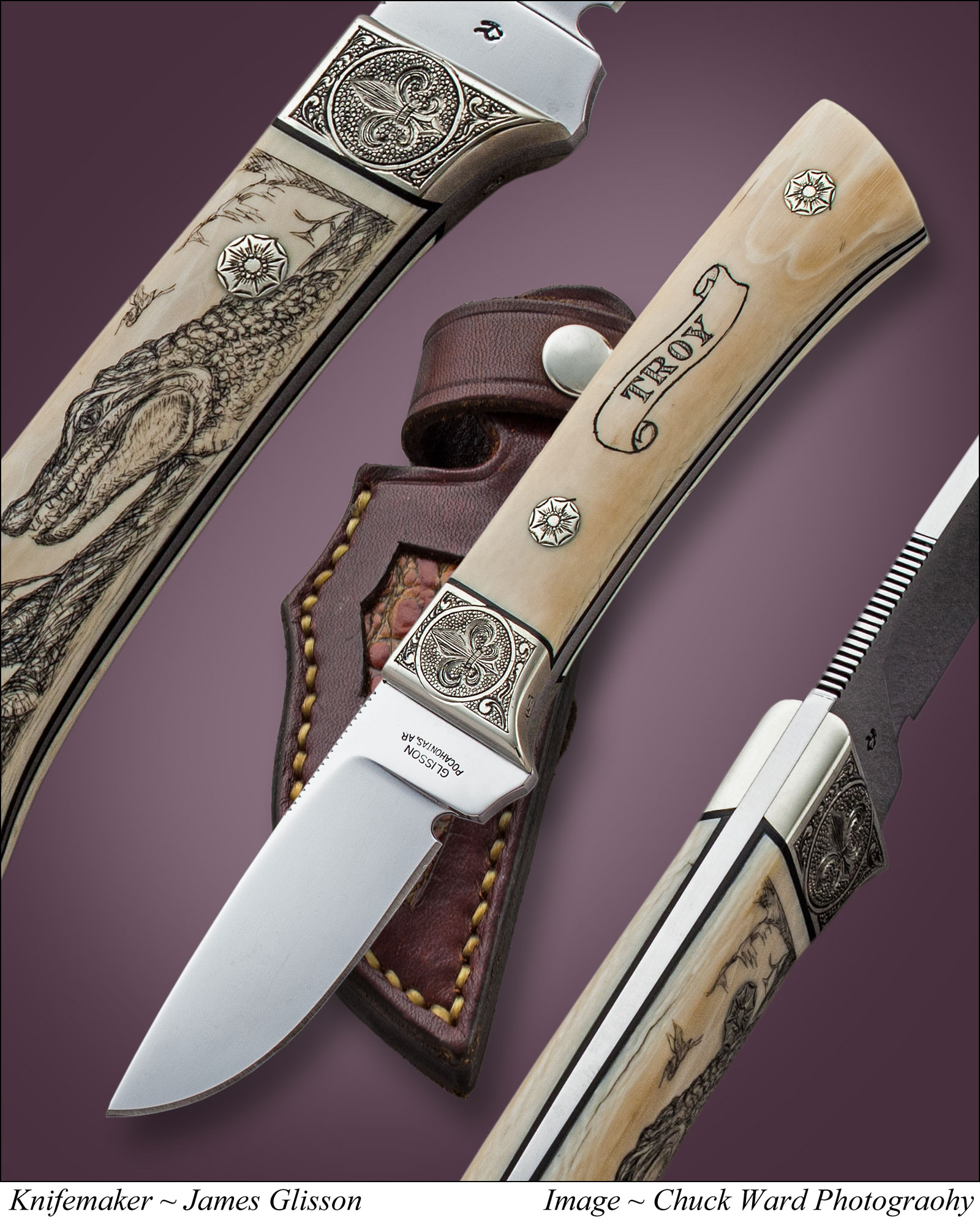
A 3.25-inch blade of 154CM stainless—another Bob Loveless staple—anchors James Glisson’s drop-point skinner in mammoth ivory. The scrim is by Kurtz Miller and the engraving by Pierre Le Blanc.
D2
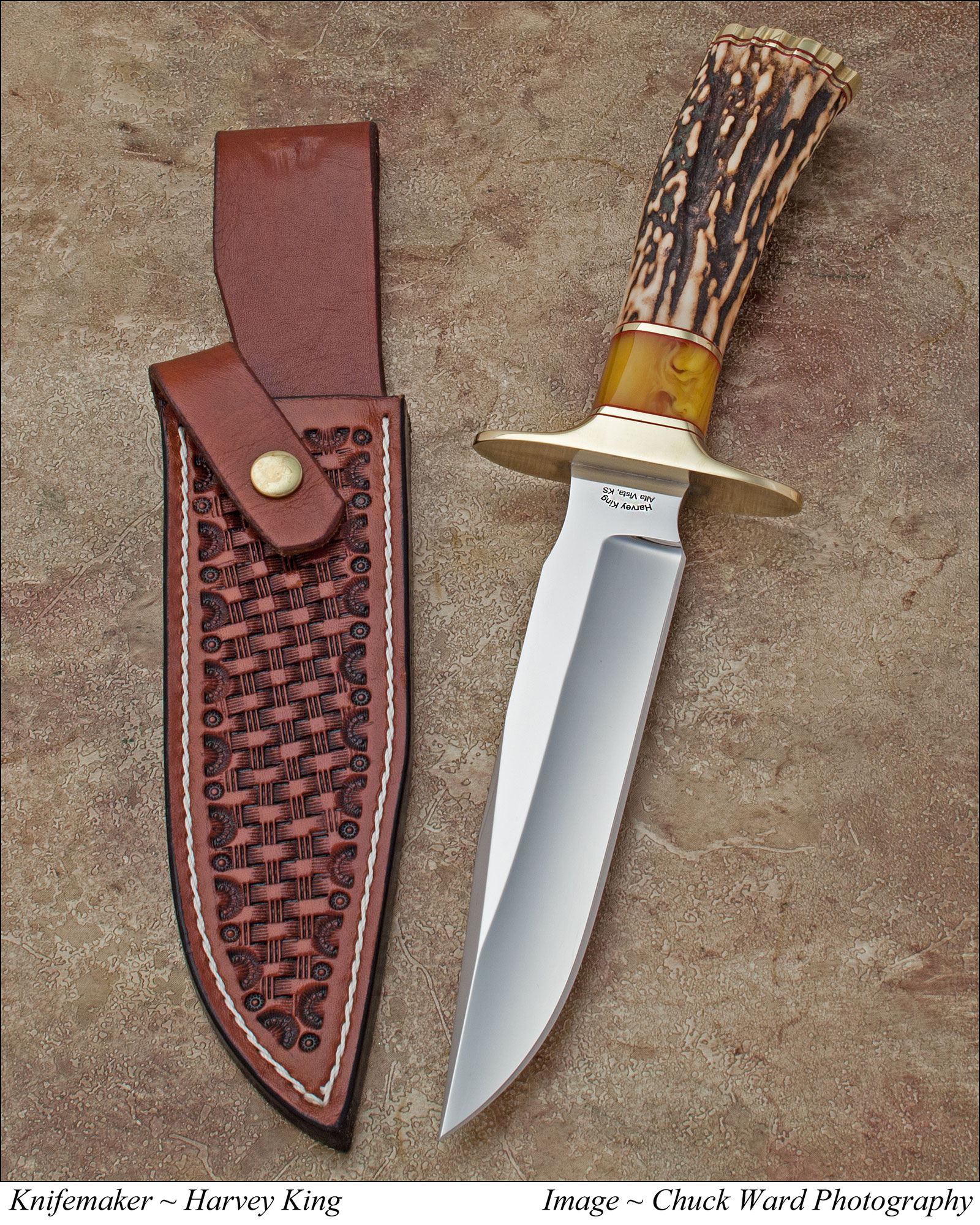
D2 tool steel is the material for the 7-inch hollow-ground blade of Harvey King’s fighter. The handle is stag with a brass double guard and buttcap. The spacer is amber.
440C
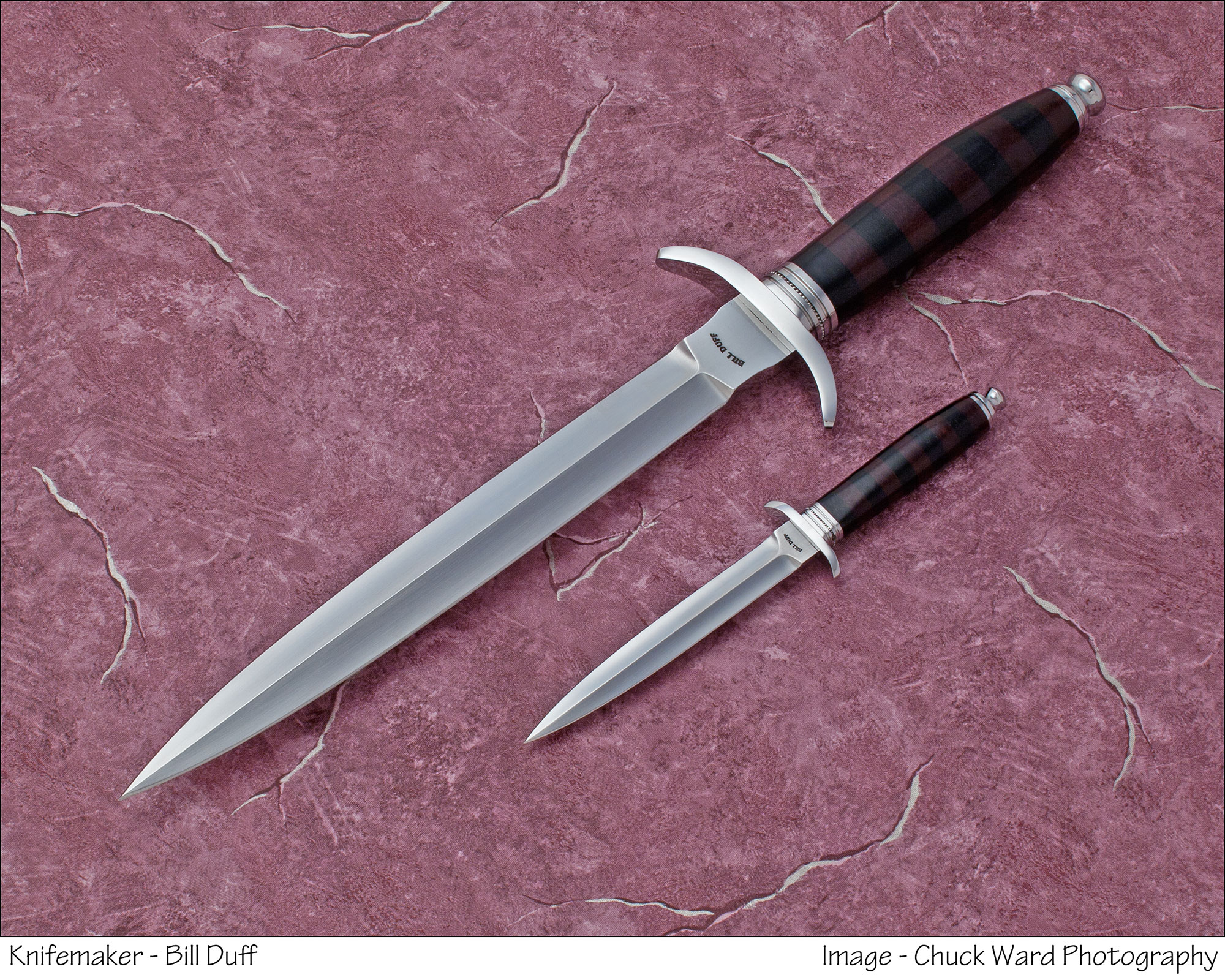
Bill Duff no doubt has used 440C stainless scores of times in his many years of knifemaking—and he does so here again on his large dagger with a black and maroon Micarta® handle. Overall length: 12.75 inches.
The owner of a local tactical gear store says her business is being harmed by the Canadian Border Services Agency decision to reclassify some folding knives as prohibited weapons in spite of them being legal to possess in Canada.
“It’s absolutely a misinterpretation of the Criminal Code,” said Sarah Jorgensen, owner of Lethbridge Tactical Supply.
This isn’t, as many knife laws are, being framed as a safety or crime issue. It’s strictly a bureaucratic move, one so ham-handed that it doesn’t exempt first responders. They’re on their last knives.
Jorgensen continues:
“The majority of my customers are first responders,” Jorgensen said. “And now I can’t even sell them knives.”
Here’s the money quote:
She said she has spoken to CBSA [Canada Border Services Agency] agents who claim to carry these knives themselves.
“Now they have to seize the knives that they themselves carry at work,” she said.
In an emergency situation, a knife that can open with one hand can literally mean the difference between life and death. Here are several stories detailing exactly that. First responders, of all people, should have options to make their critical work as effective as possible.
Newton “Newt” Martin, one half of the team behind Martin Knives, passed away on Feb. 26, 2018. BLADE‘s source for the news reveals he was, “a hell of a guy and a talented knifemaker.”
In addition to making knives with Ed Martin, Newt produced tutorials about knifemaking. Here’s one of them, where he hosts a shop tour.
BLADE expresses its condolences to the Martin family.
Cold Steel Transitions to CPM-S35VN
In a Facebook post, Cold Steel announced it will transition to using CPM-S35VN steel instead of the CTS®XHP it’s used in the past. Supply issues are apparently the issue.
HBO’s Vice News Covers New York Gravity Knife Laws
If there’s one issue in the world of knife laws that transcends the knife community, it’s the way New York handles illegal “gravity knives.”
The state’s generous definition of what qualifies as a gravity knife lands thousands of New Yorkers in hot water each year. Were they in the act of committing a crime, that’d be one thing. However, those most affected by these laws are people who use knives for work, like construction workers and chefs.
In New York City, that is especially true for people of color, as documented here. One minute they’re trying to do their jobs, the next minute they’re looking at felony charges.
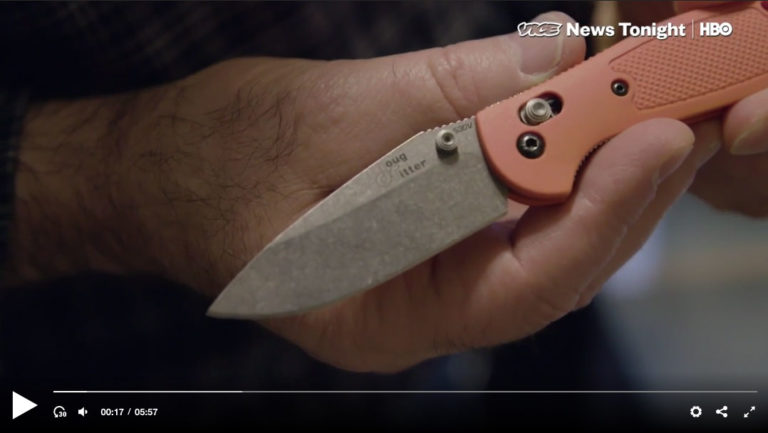
It’s outrageous, and it caught the attention of Vice News. The producers tapped Doug Ritter of Knife Rights for putting this into context. Ritter does a great job explaining the situation. Here’s the clip:
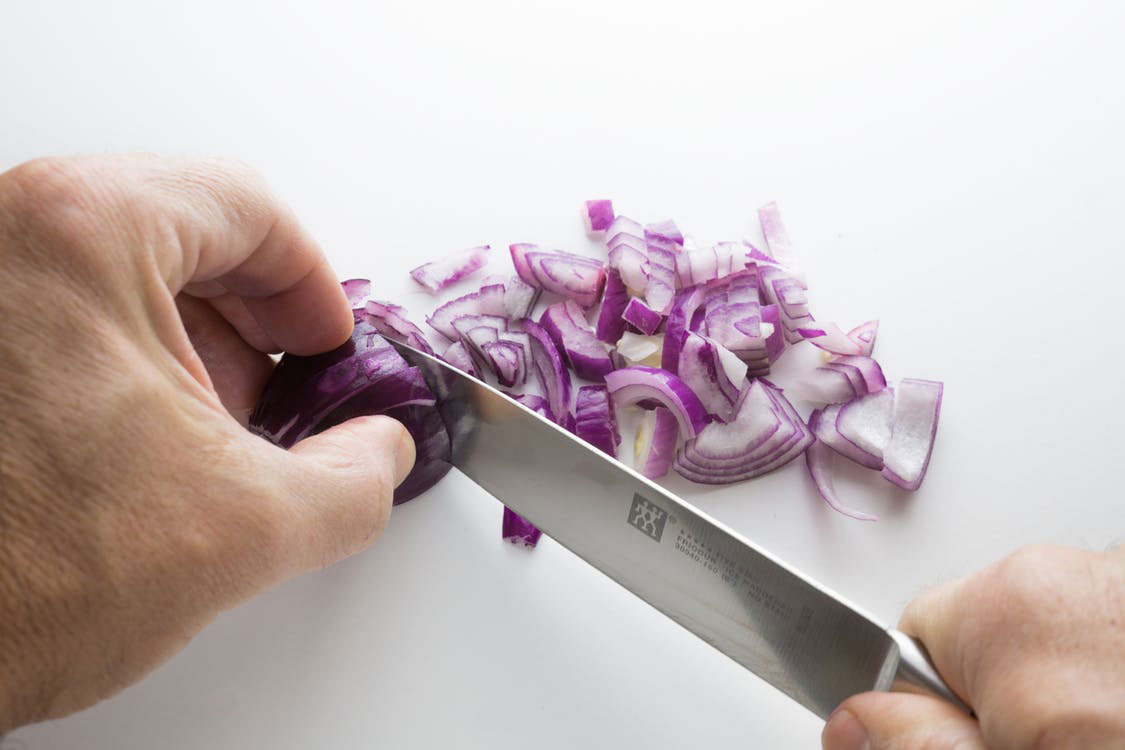
“Many home cooks stand side-on to a chopping board,” when they should “stand front on, with a good stance,” about five centimetres from the chopping board, Gonsalves says.
The article also features another good tip: forget about how much a knife costs. What’s important is the feel. An inexpensive yet comfortable knife is better than an awkward high-end blade.
Yes, You Can Survive a Stab in the Back (Warning: Graphic Images)
A man in Brazil stabbed in the back with a kitchen knife survived long enough to make it to the hospital for treatment, as the Daily Mail reported. Not only that, he walked around with the handle sticking out of him for some time, acting cool and calm despite the gruesome injury.
BLADE won’t post images here, but you can see more in the article if you’re morbidly curious.
Thankfully, the knife was removed and the man survived. Your lunch, on the other hand, may not.
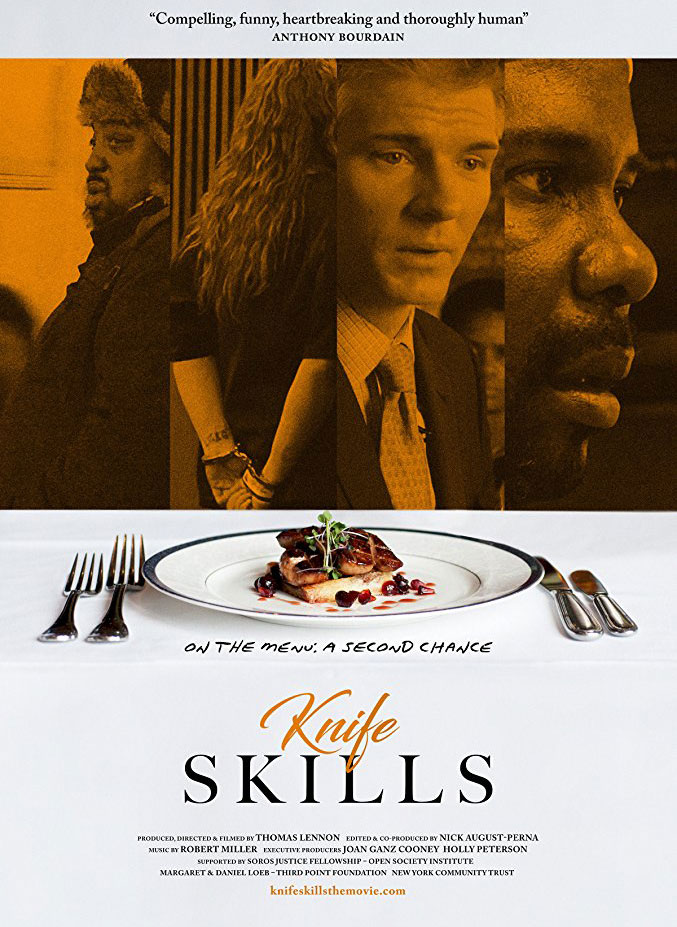
On the knife front, the larger point to be made is about the intentions behind the use of a knife. Here is a group of people with serious criminal records. In another context, that could be dicey, but here it isn’t. It takes the air out of arguments for regulating knives according to specs.
Knife Skills also shows how knives can create collaborative spaces for the sake of art, business or leisure. Can a restaurant function without knives? Why do the best chefs on Earth also seek the best knives? You can’t separate food and people so long as there is a tool with a cutting edge, and that means knives. The relationship is so essential that even convicts can be trusted to preserve it.
The documentary caught the attention of more than just BLADE, too. It received a 2018 Oscar nomination. We’ll see if a knife movie brings home the big award on March 4, when the awards ceremony takes place.
Knife Skills didn’t hit theaters in a wide release, but you can stream it on Amazon Prime for a couple bucks.
Heads up: The trailer above contains some coarse language.
Happy 30th Birthday, Outdoor Edge
Denver-based Outdoor Edge turned 30 years old last month, which means it’s still clinging to the spirit of its 20s but contemplating middle age while holding down a mortgage and a couple kids. (In lieu of a birthday card, BLADE respectfully submits that joke.)
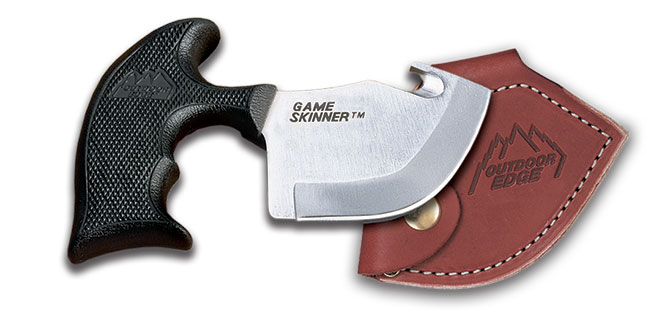
Outdoor Edge won a BLADE Magazine Knife Of The Year® in its debut year at the 1988 BLADE Show in Knoxville, Tennessee, with the Game Skinner. As BLADE‘s Steve Shackleford points out, that went on to be one of the most knocked off knives ever. No good deed goes unpunished, I guess.
Outdoor Edge exploded onto the scene with the Game Skinner. (Outdoor Edge image)
Less copied is the way Outdoor Edge got its start, simply because it’s so challenging to build a knife company from the ground up. From its news release:
From its humble beginnings as a one-man show with four prototype samples, [David] Bloch’s company, Outdoor Edge, has grown significantly in the past thirty years. Currently, the company has 24 employees and offers more than 120 products. Originally based in Boulder, Colorado, the company moved to a larger facility in Denver in 2010.
BLADE wishes Outdoors Edge 30 more great years of success!
Choose a few high-quality knives instead of a knife block set, as sets tend to have a lot of filler knives that you don’t need. Wirecutter suggests three different knives for the average cook: chef’s knife, paring knife and serrated knife.
Who says domestic knife manufacturing is dying? Alabama-based knife company Bear & Son Cutlery will grow its Jacksonville facility and add new jobs. From The Anniston Star:
Bear & Son Cutlery in Jacksonville plans to take a stab at expanding production and adding more jobs.
The knife manufacturer expects to buy equipment and hire around 25 people over the next two years to meet growing customer demand.
Assisting with the expansion is a local tax abatement, as well as a generous knife pun on behalf of the Star.
He’s never done learning. Never done perfecting his craft.
“A simple score in music, right? A simple score is just a few notes and it’s very straightforward. Nothing fancy,” Grosvenor said. “When you get into a forged blade, the score can be Beethoven. I mean, it’s just where do you want it to end?”
In other words, knifemakers don’t know how to stop. An appearance on a popular TV show isn’t the peak. It’s another stop on the journey into the craft of knifemaking.
Grosvenor likely isn’t alone. Contestants, as BLADE reported here, experience a boost in sales after appearing on the show. They don’t rest on their laurels for long.
A Steak Knife that Looks Like a Scalpel
On Feb. 19, new knife company Skalpel will launch a Kickstarter to prime the pump for its steak knife. The twist? It looks like a scalpel.
While some most Kickstarter knives should be taken with a grain of salt, the Skalpel is backed up by an actual knifemaker, Stuart Mitchell, out of Sheffield, England. Each knife is made from “high carbon, surgical grade steel,” per the website.
No word yet on whether there will be a matching fork.
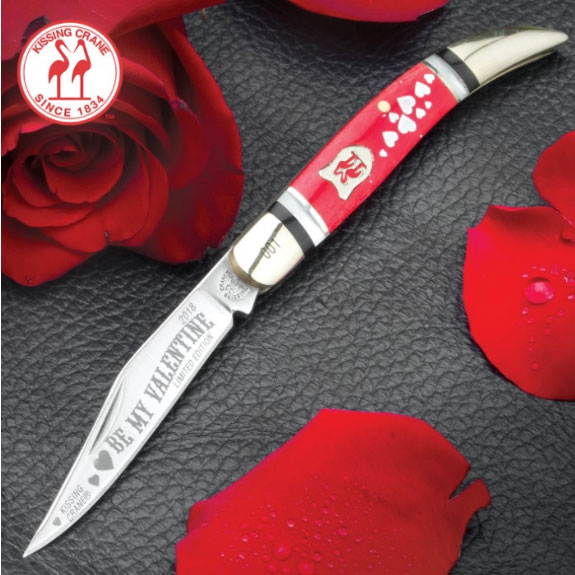
Kissing Crane 2018 Valentine’s Day Toothpick Pocket Knife (image via BudK)
Help celebrate Valentine’s Day by telling BLADE about the knife you love the most. Which knife do you love best? It can be one you carry, one from your past, one you wish you had, one someone used to save a life or otherwise do something significant, etc.
Use the form below to explain why the knife is so special to you. Include a picture if you have one.
BLADE will choose the best stories for a feature here on blademag.com.
Instagram Photos Land Knife Retailer in International Hot Water
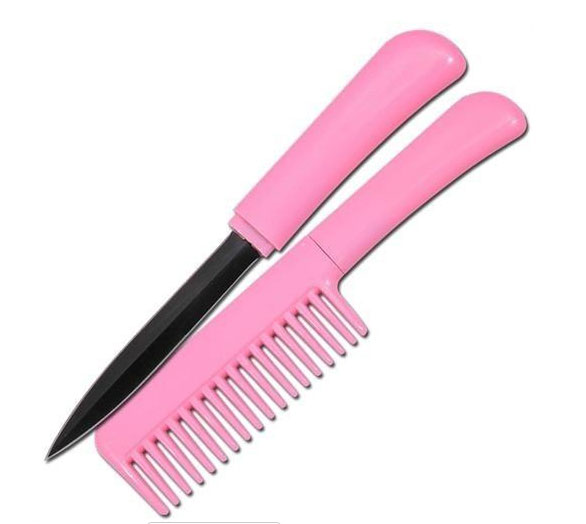
An example of a concealed knife Alien Outfitters sells. (image via Alien Outfitters)
Instagram is a haven for the knife community (follow BLADE‘s account here), but some accounts are under fire for promoting products legal in one country but illegal in another.
Take Alien Outfitter’s Instagram account. Based out of the United States, Alien Outfitters sells knives disguised as mundane objects, such as combs or lipstick. When Instagram users in the United Kingdom followed links to order the knives, they could successfully make a purchase. Such knives, however, are banned from import.
Rather than keeping this a customer service issue, some are attacking Instagram itself for hosting the images in the first place.
The Ben Kinsella Trust, a campaigning charity set up in memory of Ben Kinsella, a 16-year-old stabbed to death in Islington a decade ago, said it was appalling that Instagram was helping promote the US company Alien Outfitters.
“Instagram’s action in hosting this site is reprehensible,” said Patrick Green, the charity’s chief executive. “They are glamorising these knives as fashion accessories. This is a forum where young people openly encourage each other to break the law by buying flick knives and concealed knives which are illegal for any age group.”
BLADE does not condone purchasing knives that are illegal in your area. However, it finds that attacking images of knives posted online that are otherwise illegal is as fruitless as it gets. There are thousands upon thousands of knife-related accounts on Instagram. The Internet at large contains millions of blogs, websites and social media accounts depicting knives.
To that end, Instagram is not in the wrong here. Whether the retailer or customer is more at fault isn’t a question I can answer. Oftentimes, stories like these are how the knife community learns about the hard stops in the patchwork of knife laws around the world.
UK Police Find It “Disappointing” Anyone Would Carry a Knife
Policies discouraging knife ownership in the United Kingdom are often cited in the global knife community, but it can be difficult back up their impact with numbers.
Enter the “Bin a Blade” campaign. It solicits unwanted knives from the public using drop boxes, similar to how people in the United States can dispose of prescription meds at police stations. In Suffolk, England, the campaign took in 20,000 knives.
Likewise, Suffolk’s police and crime commissioner Tim Passmore pledged his support to the initiative.
He said: “To see that over 20,000 blades have been collected since the initiative was launched is excellent.
“We need to do all we can through education, peer pressure, policing and sentencing to make it absolutely clear that it’s never acceptable for a person to carry a knife or weapon.
“I find it really disappointing that anyone carries a blade of any kind.”
Reducing crime is a worthy cause, but one questions the efficacy of such amnesty drives. In 2006, when 90,000 knives were turned in as part of a UK-wide amnesty drive, crime rates changed little.
Further amnesty drives did little to change the upward swing of violence in years since. In England and Wales, last year marked the highest number of crimes involving a knife or sharp instrument since 2011, according to the BBC. Most of these crimes involved robbery or assault.
BLADE is hearing from the hot knife shops in Cape Town under stress due to water restrictions and related pressures. The impacts include the obvious, such as using leftover shower water to flush toilets, to the lesser known, such as the steep opportunity costs of waiting in line for water. The criminal element is also on the rise as people become more desperate.
BLADE will continue to monitor the feedback from knifemakers in the area, and present opportunities for those outside South Africa to help should they arise.