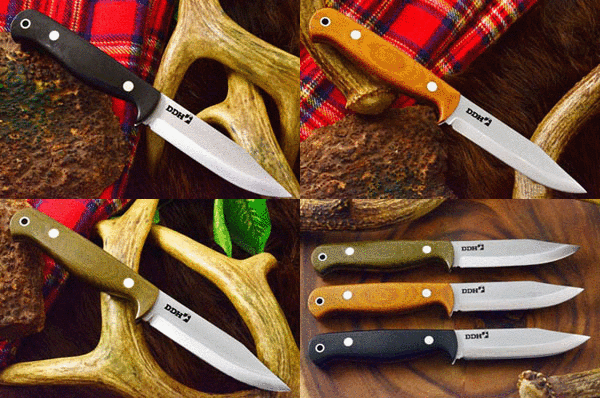
Deer & Deer Hunting knows what makes the best deer hunting knives. When it found one that met the criteria, it put its name on it. Then it made three versions of it.
BLADE‘s media sister over on the deer hunting side is Deer & Deer Hunting, and you can imagine that it knows a thing or two about knives. Deer & Deer Hunting editors recognize how a dependable blade makes all the difference. When you need a knife, you need a knife.
That’s why BLADE was thrilled to hear that Deer & Deer Hunting partnered with the American Knife Company to produce an exclusive line of hunting knives. Here are the must-know details straight from the editors themselves:
Emblazoned with the DDH logo right on the blade, this classic design puts a modern twist on an old favorite of deer camps across North America.
Micarta handles offer a firm grip in slippery conditions common to bad weather, field dressing, butchering and the rugged demands of the hunt. A healthy dose of chromium in the A2 steel blade means it’ll stand up to the worst you can throw at it. The clip point blade design is as versatile as it comes, ready to make any task at deer camp a treat.
That sounds like the makings of the best deer hunting knives around. Whether you’re a collector or a hunter, click here to get the best knife for deer hunting you can shake an antler at.
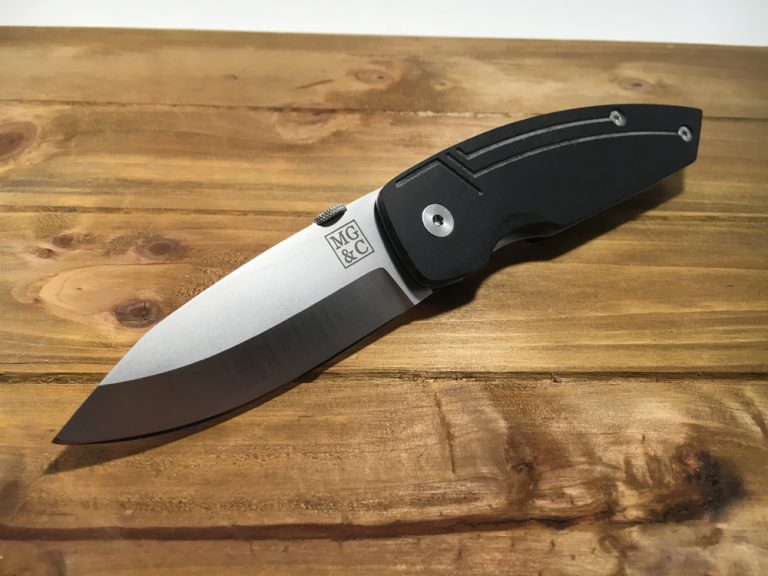
In addition to being a fine example of a modern folder, the Mako Folder from MacGray & Co. is made in the U.S. from domestic materials.
Specs
Company: MacGray & Co.
Knife: Mako Folder
Designer: MacGray & Co.
Length: 8 1/2 inches
Blade: CPM 154, saber grind, modified drop point design
Lock: Titanium Liner Lock
Handle: Black Micarta Handle
Ambidextrous thumbscrew
Stainless steel variable clip
An All-American Knife
The MacGray & Co. Mako Folder knife is made in San Marcos, California, with quality materials from small American suppliers. The frame is milled from Grade 5 titanium for an excellent combination of strength, weight reduction and corrosion resistance.
The Mako sports a tried and true locking liner, which is self-adjusting to wear and prevents the blade from closing on the user’s hand as it grasps durable Micarta or G-10 handles.
The Steel: Two Great Choices
The blade is ground from your choice of two steels.
D2 is a high carbon, high chromium steel that offers excellent resistance to wear and abrasion, holding an edge very well. It is often referred to as “semi-stainless” due to its high resistance to corrosion.
The other option, CPM-154 stainless steel, is created in a process that produces a uniform distribution of the carbides. This provides material consistency, greater resistance to breakage and toughness. It’s an excellent stainless steel with high wear resistance.
The Blade: Strong and Sturdy
The satin-finished blade has a sabre grind for additional strength and sturdiness. MacGray & Co. harden, cryo-quench and temper blades in house.
No Detail Left Untouched
The Mako sports a stainless steel, .25-inch pivot with a bronze pivot bushing. It features a stainless steel pocket clip, hardware and ambidextrous thumb screw.
A Lifetime Guarantee
Each MacGray & Co. knife is made by three guys who love what they do. It’s no surprise that they stand behind their work with a lifetime guarantee and are committed to giving the highest level of service to knife enthusiasts.
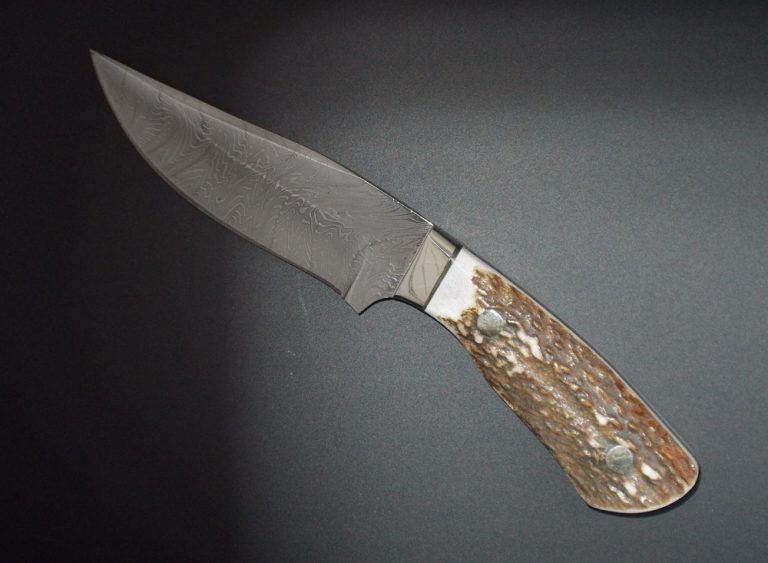
125+ layers of 1095 carbon steel and 15N20 Nickel steel Fold: TWIST Handle Material: STAG / BROWN MICARTA Guard/Butt Cap: NICKEL SILVER Style: DROP POINT
As the creative force behind Oz Custom Knives, Jim Ort made a name for himself with his signature 1095 carbon and 15N20 nickel damascus blades. From tip to pommel, his fixed blade knives offer a classic look that recalls a time when no one left home without a knife. Ort puts his own twist on these timeless favorites by working in modern materials to offer the performance and curb appeal 21st century collectors crave.
Originally hailing from northern Wisconsin, Ort moved into full-time knifemaking in 1996 after retiring to Arizona. In addition to knives, Ort is also an accomplished sheathmaker.
Find more of Ort’s creations at Oz Custom Knives, visit Copper State Cutlery. For direct inquiries, e-mail Ort at ort [at] cox [dot] net.
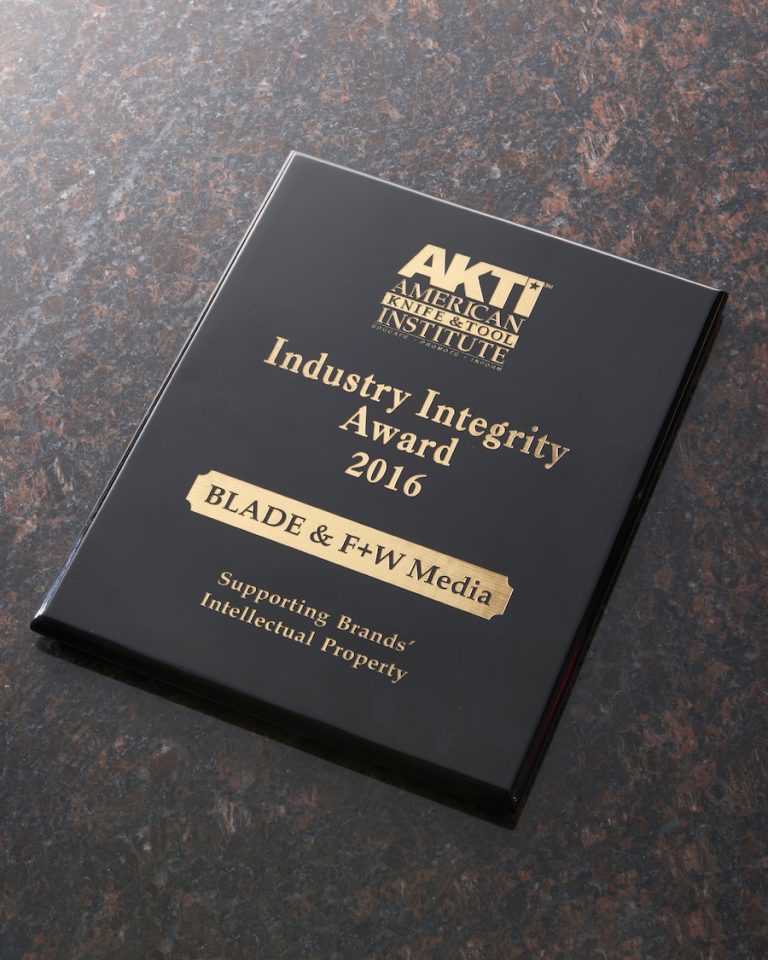
The American Knife & Tool Institute (AKTI) presented its inaugural Integrity Award to BLADE and F+W for contributions to work against counterfeit knives. The presentation took place at the recent BLADE Show awards reception in Atlanta.
The BLADE Show is world’s largest annual knife event; F+W is a media and e-commerce company headquartered in New York City.
Rod Bremer, chair of AKTI’s Anti-Counterfeiting Committee and CEO of CRKT, along with John Sullivan, AKTI Vice President and W.R. Case’s Vice President of Marketing, made the first presentation of the evening to BLADE editor Steve Shackleford.
“AKTI was proud to partner with BLADE to develop a policy to fight the growing number of counterfeit knives damaging our industry,” said Rod Bremer. “The BLADE Show will now be a safer place to display products and for our customers to buy branded knives and tools with confidence they are genuine.”
“BLADE Magazine and F+W are most humbled for being recognized with the first AKTI Integrity Award. The fact that it salutes us for our integrity in fighting the worldwide problem of counterfeit knives and that it’s the inaugural presentation of the honor makes it doubly humbling. On behalf of both BLADE and F+W, I thank you,” said Steve Shackleford.
The BLADE Show policy on counterfeiting, trademark infringement and intellectual property can be seen on their website www.bladeshow.com and is incorporated into the rules for the 2017 show on June 2-4 at the Cobb Galleria Centre in Atlanta, Georgia.
The BLADE Show provides a forum for members of the knife community to gather and focus on knives. Designers, makers and manufacturers can showcase their efforts. Consumers, collectors and users can meet firsthand with those on the supply side and conduct hands-on comparison and evaluation of much of what comprises the knife. The protection of intellectual property, including trademarks and trade dress, is critical to preserving a dynamic and innovative knife industry. The BLADE Show is, accordingly, committed to an anti-piracy policy. Exhibitors who are found to be offering counterfeit or “pirated” knives may be subject to any or all of the following:
Removal by law enforcement of items proven to be counterfeit or pirated.
Legal action by the affected parties, including removal from the Show by law enforcement.
Banned from exhibiting at future BLADE shows.
The BLADE Show will work with law enforcement, private anti-piracy consultants retained by various exhibitors and all involved to arrive at the most equitable solution to issues involving counterfeit and pirated knives. All exhibitors are encouraged to exercise care to avoid counterfeit and pirated knives. Know the source and integrity of the knives you display.
The effects of counterfeits are devastating. In addition to the loss of sales revenue, manufacturers and custom knifemakers incur other costs such as increased customer service issues, legal fees, monitoring counterfeiters, and erosion of their brands.
AKTI works to provide information to the knife community on how to protect their intellectual property, brand and how to fight against counterfeits on the market.
The CRKT Homefront: A Hit Before It’s Even Out the Door
What I enjoy the most about knife shows is the hidden gems I’ll find among the blades. Whether it’s a unique spin on a classic design, a different type of steel or handle material, a peanut-butter-meets-chocolate pairing of knifemaking pros or a radical new approach, nothing beats finding that diamond in the rough. The 2016 BLADE Show was no exception, and that’s where I first encountered this:
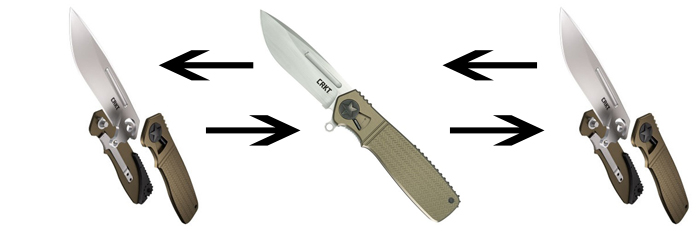
This, ladies and gentlemen, is the new Homefront from Columbia River Knife & Tool (CRKT), and it went down as one of my top finds at the world’s foremost knife event. Straight from the brain of Ken Onion and sporting patent pending features, I could tell this was a game changer right from the beginning. The awards ceremony at the BLADE Show proved me right. The Homefront took home the award for 2016’s Most Innovative Imported Design, and it’s not even on shelves yet.
What Makes the CRKT Homefront Special? Field Strip Technology
“The new Field Strip Technology is great and all, but have you tried NOT burying your knife in mud?” (CRKT photo)
The Homefront is to knives what takedown rifles are to firearms. The Homefront’s wickedly simple Field Strip Technology allows the user to disassemble and reassemble the knife in mere seconds. Just flip a switch and turn a screw as shown in the video above. It’s as simple as that.
That same video shows the knife being cleared of dirt and debris in a stream after use outdoors, which is a great application of the Field Strip Technology. But you know what I’m most excited about? Pocket lint.
“The Easier a Knife is to Clean, the More Likely it is to be Cleaned”
Pocket lint is the bane of my everyday carry folders. The sorcery of fuzz, residual heat and repetitive motion that comes with slipping an EDC into the pocket can form a gooey mess we knife scientists like to call, “gunk.” (I’m sure there’s a Greek root word in there somewhere.) This gunk builds up in hard-to-reach places and eventually requires disassembly, because there’s a limit to what all those gallons of knife oil can do.
With Field Strip Technology, cleaning up no longer requires a set of tools and a magnet to find those tiny screws when they inevitably roll onto the floor. The Homefront comes apart in seconds, then reassembles just as quickly. The result is an simple-to-maintain folding knife that will last. The easier a knife is to clean, the more likely it is to be cleaned.
I fully expect CRKT to use Field Strip Technology on other models in the future. I wouldn’t put it past CRKT to come out with add-ons to the Homefront to take full advantage of this tech, such as alternative blade and handle designs. To that end, the Homefront would be more like the AR-15 of knives, where the appeal is in a platform that allows customization specific to the end user. That level of personalization is obvious in trends outside of knives, too, and the Homefront could mark the beginning of a wider evolution of the consumer knife market. If this is the bandwagon, I’m hopping on.
Where to Get the CRKT Homefront: ShopBlade.com
The CRKT Homefront before and after, and before and after again, and again, and again and again. Click to order yours today from ShopBlade.com.
ShopBlade.com is one of the first outlets anywhere to carry the CRKT Homefront, and it does so with pride. Here are the specs:
Atlanta, Georgia (June 4, 2016) – Awards recognizing the highest achievement in the custom and factory knife industries were bestowed the evening of Saturday, June 4, 2016, at the BLADE Show (www.bladeshow.com) in the Cobb Galleria.
2016 BLADE Show Knife of the Year® Award Winners
Representatives from BLADE Magazine (www.blademag.com) distributed Knife of the Year® awards in 15 categories. Two of the awards—Industry Achievement and Publisher’s—went to a retail knife store and a knife-related organization, respectively, for their contributions to the world of knives.
All entrants in the Knife of the Year® competition were judged on a number of factors, including utility, design, creativity, materials, aesthetics, feel and other traits.
2016 BLADE Show Custom Knife Winners
The 2016 BLADE Show Custom Knife Award Winners were also announced on Saturday, June 4, 2016, at the Cobb Galleria in Atlanta.
Hugh Bartrug Best of Show: Mike Quesenberry and Saign Charleston
Yvon Vachon Best Miniature: Shigeru Tozaki
Best Folder: Gus Cecchini
Best New Maker: Michael Zieba
Best Bowie: Brian Thie
Best Handle Design: Jean-Louis Regel
Best Fighter: Bill Luckett
Best Art Knife: Bertie Rietveld
Best Collaboration: Mike Quesenberry and Saign Charleston
Best Damascus: Dionatam Franco
Best Fixed Blade: David Broadwell
Best Tactical Folder: Kirby Lambert
Best Sword: Ron Chen
Best Utility Hunter: Josh Fisher
Most Innovative Design: Phil Booth
Best of the Rest: CAS
About BLADE Show
The BLADE Show is the world’s largest, most important knife show, and has taken place every year since 1981 and in Atlanta since 1992. Upwards of 1,000 exhibitors from more than 20 countries display their knives and knife-related items over a three-day cutlery celebration that also features BLADE University knife seminars, knife auctions, custom knife awards, celebrity appearances and much more.
About BLADE
BLADE® Magazine (www.blademag.com) is the world’s No.1 knife publication. It is also the world’s oldest knife magazine, publishing its first issue in 1973. In conjunction with the BLADE Show, it has sponsored the Knife of the Year® Awards annually since 1982. The awards are the most coveted honors in the factory knife industry and are voted on by the booth exhibitors at the BLADE Show, who this year number more than 200. Only BLADE Show booth exhibitors are eligible to enter. The People’s Choice Award is open for voting to all visitors of blademag.com.
The BLADE Show and BLADE Magazine are the properties of F+W of Cincinnati, Ohio.
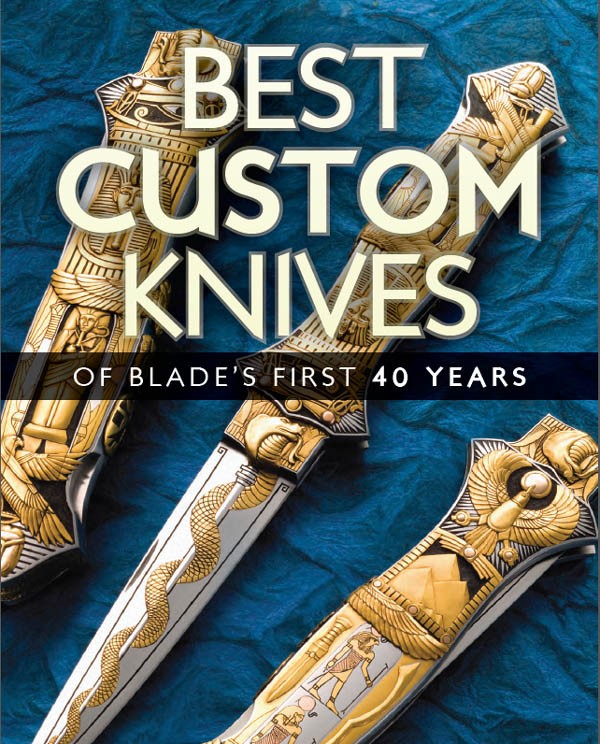
See 40 Years of Knives that Changed the World
BLADE collected the very best factory and custom knives into two digital collections to showcase the blades that changed the edged world forever. Click a cover to grab yours today.
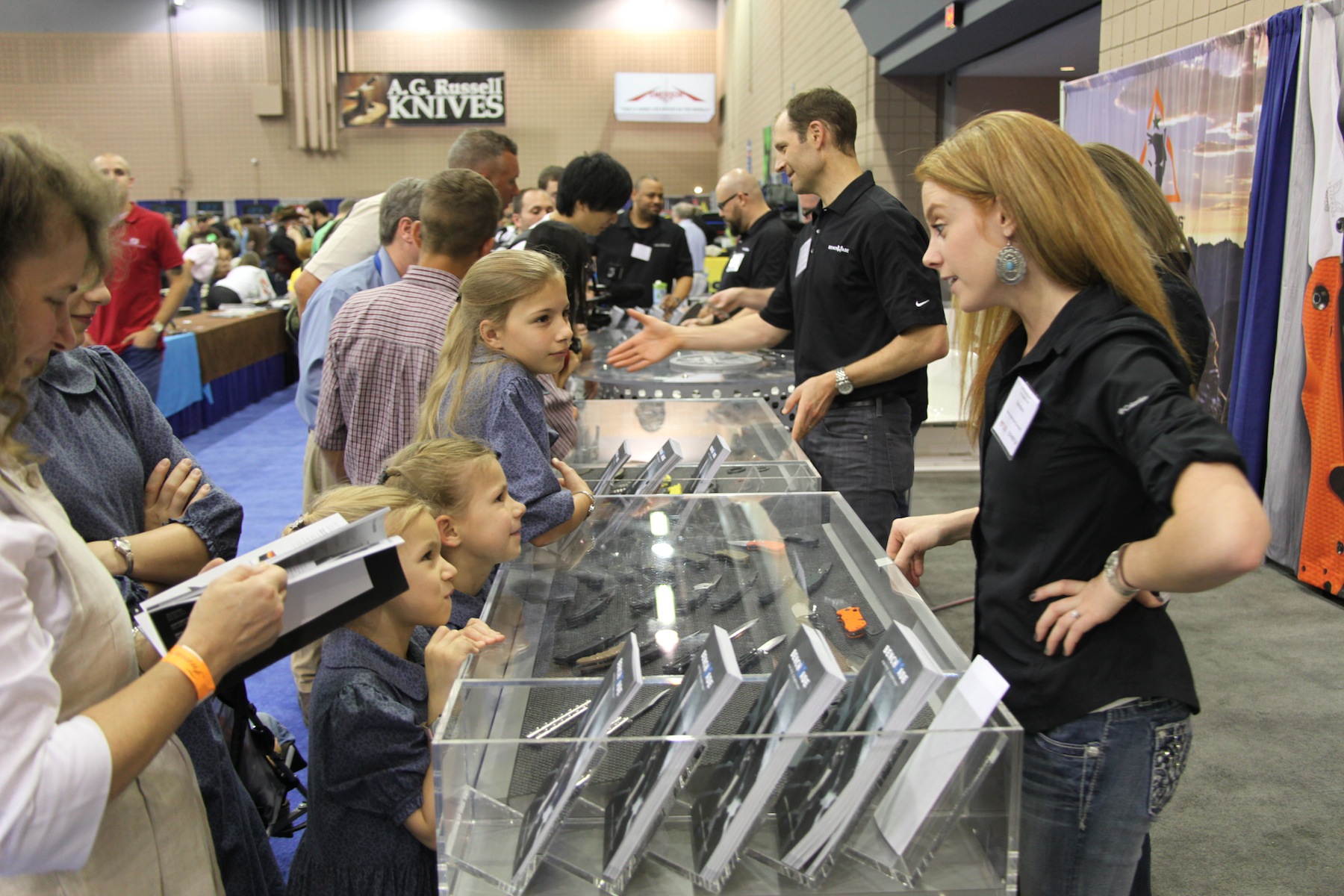
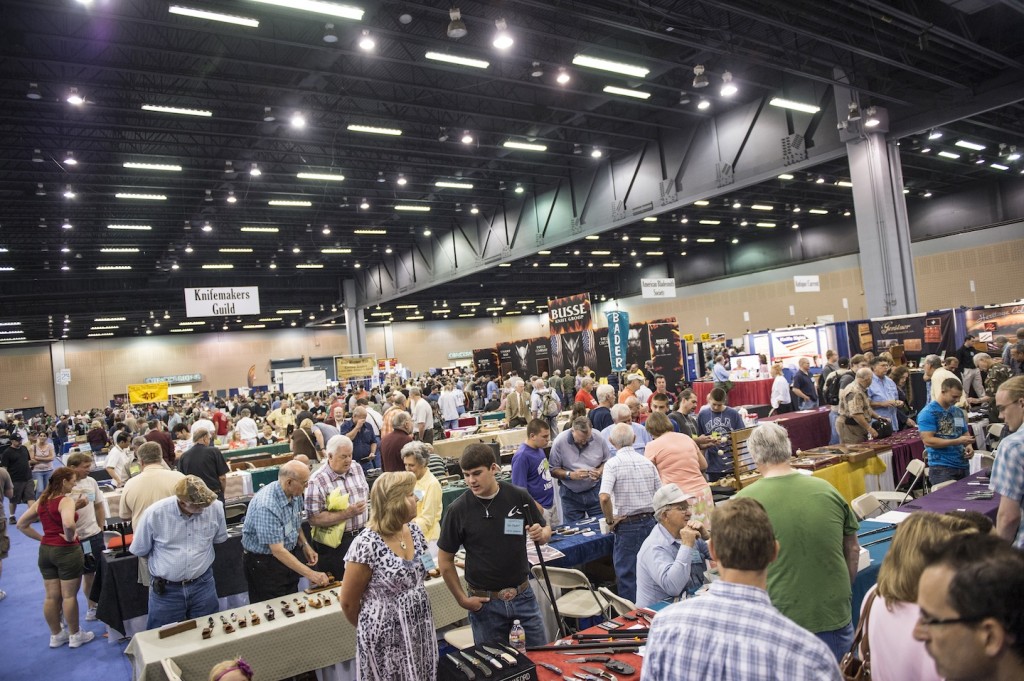
Thousands of knife enthusiasts will visit the Cobb Galleria in Atlanta June 3-5 for the 2016 BLADE Show. (PointSeven image)
The 2016 BLADE Show will be here before you know it. Here are the 10 things you’ll need.
#1 – Tickets
If you don’t have yours already, getting your tickets ahead of time has never been easier. Just click here to handle everything online. You can also purchase tickets at the event, but taking care of this beforehand can only make your experience smoother.
#2 – A Place to Stay
If you’re already in the Atlanta area, you probably don’t need to worry about a place to stay. For everyone else, finding a hotel for a popular event can be challenging. Fortunately, BLADE made the hotel hunt easier by providing this interface to help you book.
Have you heard about the exclusive Chris Reeve Knives Inoksi? To celebrate the 2016 BLADE Show, 25 special edition Inkosi knives were made. Each comes numbered and with the BLADE Show logo on the handle. Click the knife to see specs and learn how to get yours. They’re going fast!
#3 – A Plan
The BLADE Show grows year after year, which means there’s a lot to pack into your visit. While some attendees head to whatever catches their eyes, other knife enthusiasts map out a plan. This exhibitor list will help make those decisions easier.
Anyone playing the knife game long enough develops a comfort zone. It could be collecting knives from only a handful of companies or makers, or turning the nose up to a particular sort of steel. There’s nothing wrong with knowing what you like, but what if you’re missing out?
With so many knifemakers and knife companies coming in from across the country and the planet, the BLADE Show isn’t the place to limit yourself. The entire world of knives is together in one spot. Try something new.
If you need help breaking out your rut, attend a Blade University class, hosted in conjunction with the BLADE Show. These classes are prime opportunities to learn something new.
#5 – A Good Pair of Walking Shoes
You’ll be on your feet all day. Comfortable shoes make a big difference.
#6 – A Keen Sense of Knife Show Etiquette
Exhibitors at the BLADE Show are happy to talk with you about their knives, but there are some unspoken rules to keep in mind.
Unless you’re a local, chances are you’re flying in to attend the BLADE Show. This presents a problem when it comes time to get your knives home. Do you trust your new (and expensive) knives to remain safe in your checked luggage?
A better bet is to ship your knives using a carrier. There is a UPS store in the Waverly Hotel, which is attached to the Cobb Galleria (the site of the BLADE Show). There are other choices in the area, too.
#8 – A Way to Carry Around Knives and Other Materials
This 18-pocket roll from BLADE offers a convenient yet secure way to store your knives.
In the first few hours of the show, carrying around your purchases isn’t that big of a deal. But as time goes on, even the small items feel much larger. Add in a few knife books from BLADE‘s booth by the main entrance, and things get heavy in a hurry.
The BLADE Show takes place in June in Atlanta, so you already know the weather will be warm. Because of the attendance records broken year after year, the show floor demands you not underestimate the necessity of comfortable, warm weather clothes. Time to break out those jorts.
#10 – A Good Attitude
The BLADE Show offers the rare chance to meet the entire gamut of knife enthusiasm. While that does equal opportunity for those buying and selling knives, it can also mean stress.
Don’t lose sight of why you’re at the show in the first place. You love knives as much as the other attendees. A little bit of pressure is OK, but don’t rain on anyone else’s great day. The better your attitude going into the show, the more you’ll get out of it.



 From the