

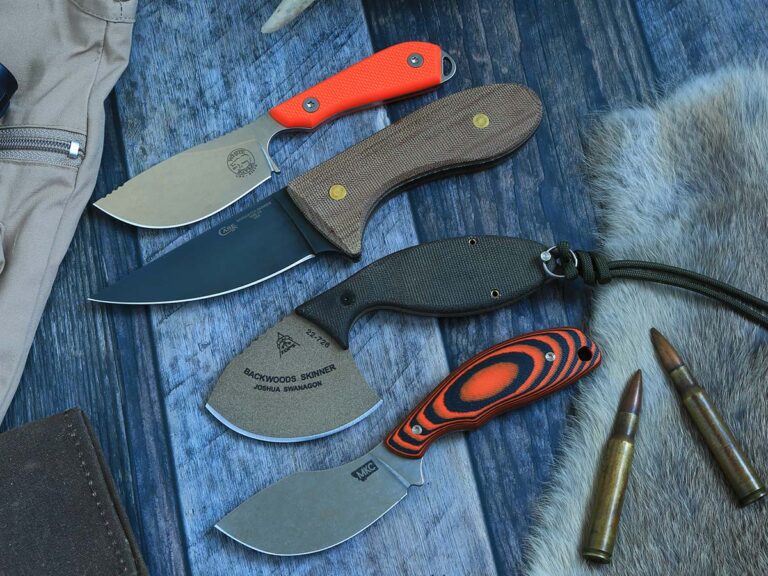
Find the perfect hunting knife with our guide to the best skinners on the market. We review top models from respected makers.
A skinner is a knife purpose-built for the delicate but necessary job of skinning game animals. Its singular mission: separate hide from muscle without causing a mess that makes a taxidermist weep.
Skinning knives serve specific purposes. Primarily, they glide beneath the hide with minimal resistance. This feature allows for a smoother cutting experience, making it easier to separate the skin from the meat.
Skinners also aim to minimize accidental punctures to the underlying meat or organs. This is crucial for preserving the quality of the meat and ensuring that it remains uncontaminated during the skinning process. Finally, skinners offer the control necessary for making fine cuts around joints, facial features and paws. This level of precision is essential for skilled processing, allowing for clean and efficient work.
Good Skinners and Bad
A good skinner slices smoothly without requiring brute force, retaining the cutting edge throughout the job. It cleans easily, especially around the scales, and feels intuitive in your hand, almost as if the knife knows your intentions before you do. Moreover, it keeps the hide intact, avoiding headaches caused by unwanted holes.
A bad skinner features an overly aggressive tip that punctures organs at the slightest touch, slippery scales that become a liability when blood is involved, and poor edge retention that necessitates awkward sharpening breaks. It may possess a clunky balance that makes it feel more like a garden tool than a precision instrument and hard-to-clean crevices that turn into breeding grounds for bacteria.
In short, an effective skinner collaborates with, rather than works against, you; it’s about finesse, not sheer strength, resembling a scalpel instead of a medieval cleaver.
Classic Design Skinners
Classic skinners are all about specific design features as opposed to gimmicks. They typically have a blade with a wide belly and sweeping curve for long, confident strokes that excel at slicing through hide. Most use a drop point or semi-rounded tip to prevent accidental stabbing when dealing with gut sacks.
A flat or convex grind offers a good balance between sharpness and strength, while hollow grinds, though sometimes sharper, can be fragile. Blade lengths usually range from 3 to 4 inches for maneuverability in tight areas like hooves or facial contours. Ergonomics is also crucial, with grippy materials like Micarta® or textured rubber preferred to prevent slippage.
Montana Knife Co. Packout Skinner
Pros
- Top-Tier Steel
- Compact and Maneuverable
- Ergonomic Grip
Cons
- Expensive
Packout Skinner Specs
Blade Length: 3”
Blade @Thickest: .11”
Blade Steel: MagnaCut stainless
Blade Finish: Stonewash
Scales: G-10
Weight: 2.98 ozs.
Overall Length: 7”
Sheath: Kydex
Country of Origin: U.S.A.
MSRP: $300
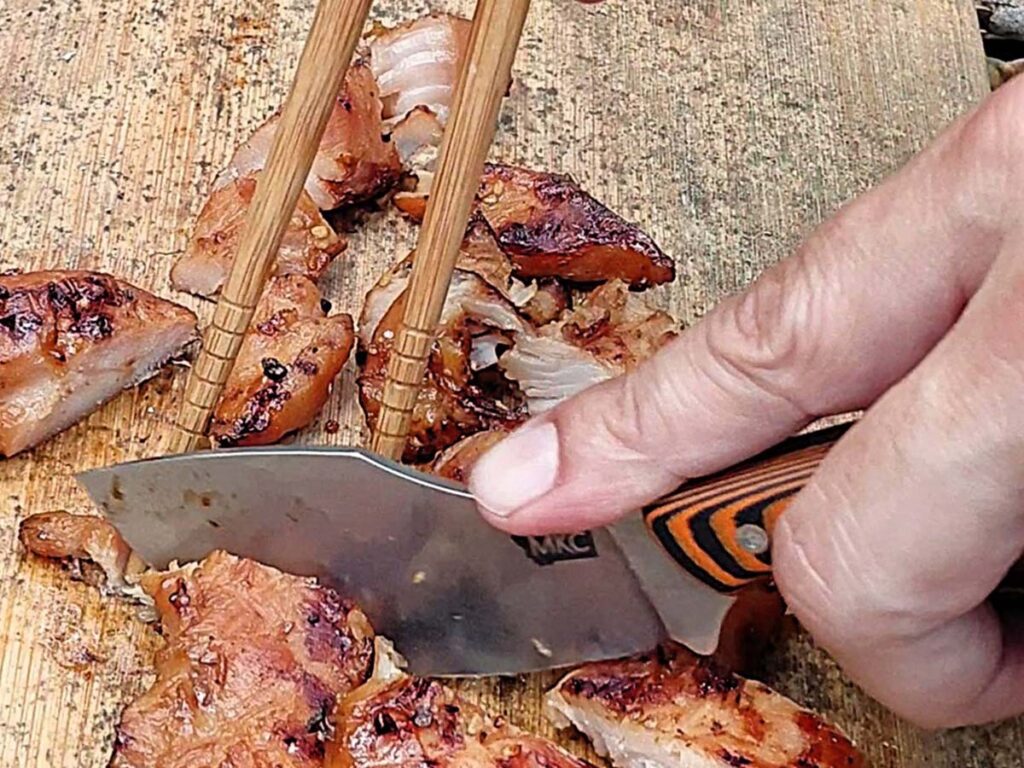
The Montana Knife Co. (MKC) Packout Skinner is a compact powerhouse built for precision in the field. It packs a generous belly into a tight footprint—ideal for long, clean skinning strokes. The blade offers top-tier edge retention, corrosion resistance and toughness that thrives in backcountry conditions. Full-tang construction is paired with a milled handle shaped for a secure, glove-friendly grip that stays comfortable through extended use. The ergonomic palm swell and thoughtful finger ramp give you control whether you’re slicing hide or fleshing out detail work.
A custom-molded sheath complements the package, providing secure retention and versatile carry options: horizontal, vertical or pack-mounted. This knife doesn’t just show up, it works hard—just like the hunters it is built for.
A simple knife test I use is rustic meat cooking and slicing. In my eyes, and according to George Washington Sears, aka Nessmuk, an outdoor knife should be able to skin, butcher and slice. The Packout Skinner would make him proud. It does it all. I had a small summer barbecue with Teriyaki chicken and the skinner sliced it like a champ.
The sheath came in scout carry mode, so that’s how I used it. It carried comfortably. However, bending forward processing meat and camp must-haves made me remove it for a few minutes. On the plus side, it was easy to remove and attach without having to take it off my belt.
W.R. Case & Sons Laramy Miller Sasquatch Skinner
Pros
- Excellent Edge Retention and Durability
- Hidden Utility
- Ergonomic Handle
Cons
- Heavy
Sasquatch Skinner Specs
Blade Length: 3.94”
Blade @Thickest: .125”
Blade Material: 1095 carbon steel
Blade Finish: Caswell™
Scales: Natural Micarta®
Weight: 8.38 ozs.
Overall Length: 8.75”
Sheath: Brown leather
Country of Origin: U.S.A.
MSRP: $196.99
The W.R. Case & Sons Laramy Miller Sasquatch Skinner is a rugged fixed blade fashioned for serious field work. It strikes a balance between reach and control, perfect for skinning game or tackling camp chores. The blade has excellent edge retention and a stealthy, corrosion-resistant surface.
The smooth handle offers a secure, scratch-resistant grip with a soft feel that stays comfortable through prolonged use. The full-tang construction adds durability, while the ergonomic shape keeps your hand locked in when things get messy.
A fitted sheath completes the package, offering classic protection and easy belt carry. This knife is built to perform and last.
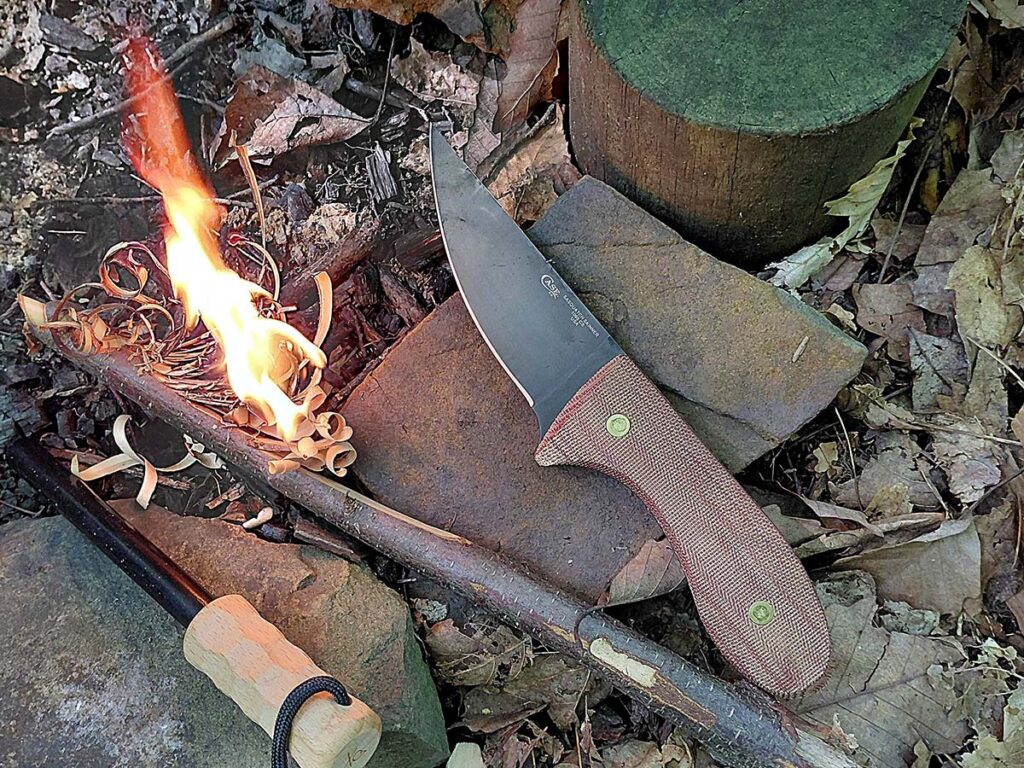
The rugged Sasquatch Skinner feels like a survival knife meant for hard use and skinning. The first thing I did was make a fire. I feathered a dry birch stick and was impressed with the skinner’s edge geometry. I made curls that were thin enough to take a spark via my Uberleben ferro rod and the blade spine. I didn’t read any info on the spine having a 90-degree angle. However, it’s a hidden gem! The second half of the spine—middle to tip—is where it’s sharp.
I employed the Sasquatch to split poplar and maple via a baton with no worries. I found the handle a bit thin for gripping during specific crafts. Maybe that’s why it’s a skinner, not a survival knife.
The edge was sharp and stayed that way. I like the absence of gimping as I don’t use it. However, most knife folks would disagree, especially with a skinner. The knife seemed like a ramped-up skinner, slightly on the heavy side, but then think of survivalist/mountain man Laramy Miller—they don’t call him Sasquatch for nothing!
The sheath carries traditionally on the belt at a medium height. It’s not too much of a rib jabber, nor does it carry too low.
White River Knife & Tool Model 1 Skinner
Pros
- Premium Materials
- Lightweight and Compact
- Controlable
Cons
- Lower Blade Hardness
Model 1 Skinner Specs
Blade Length: 3”
Blade @Thickest: .13”
Blade Steel: CPM S35VN stainless
Rockwell Hardness: 58-60 HRC
Finish: Stonewash
Scales: Textured orange G-10
Weight: 3.5 ozs.
Overall Length: 7”
Sheath: Kydex
Country of Origin: U.S.A.
MSRP: $160
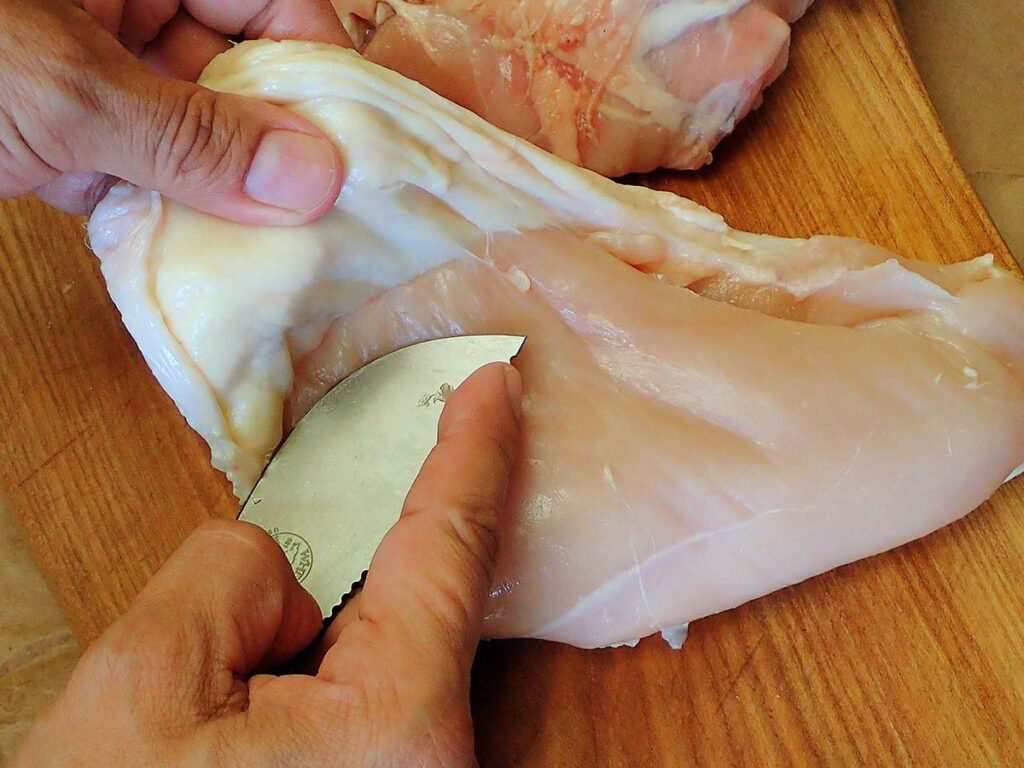
The White River Knife & Tool Model 1 Skinner is a target-constructed field knife that blends compact control with premium materials perfectly sized for precision work without sacrificing reach. The blade has excellent edge retention and corrosion resistance for repeated use in harsh conditions. The textured handle provides a secure, ergonomic grip—wet or gloved—while the large choil and gimping enhance control during delicate skinning tasks. A custom-molded sheath ensures safe carry and quick access, whether belt-mounted or pack-ready. Lightweight and razor sharp, the Model 1 is a reliable companion for hunters who demand performance without bulk.
While there wasn’t a running wild game season in my area of the Northeast when I wrote these words, I stuck with simplicity. One bird always in season is chicken. I buy skin-on, bone-in and prefer to do the preparation. The Model 1 makes for an excellent, nimble butcher knife. I used the little gem to debone split-chicken breasts and skinned them with ease. The grip was never in question and the forward spine gimping proved helpful. I used it for about one hour, skinning and deboning with no complaints. The thin grind glided through the meat with ease and the taper is excellent.
TOPS Knives Backwoods Skinner
Pros
- Versatile and Multi-Purpose
- Unique and Secure Gut Hook
- Excellent Ergonomics
Cons
- Gut Hook Deployment
Backwoods Skinner Specs
Designer: Joshua Swanagon
Blade Length: 3”
Blade @Thickest: .16”
Blade Material: 1095 carbon steel
Blade Finish: Coyote tan coating
Scales: Green canvas Micarta®
Weight: 5.4 ozs.
Overall Length: 6.75”
Sheath: Black leather
Country of Origin: U.S.A.
MSRP: $270
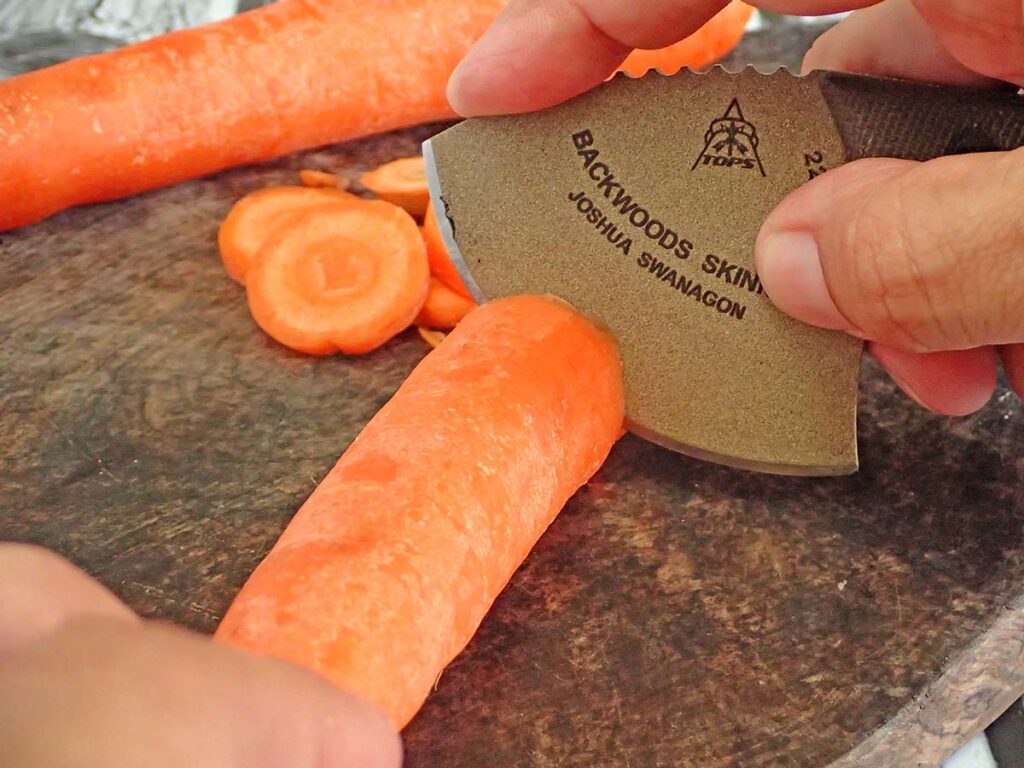
The TOPS Knives Backwoods Skinner is a compact ulu-inspired knife built for precision and endurance. The deep-bellied blade is perfect for slicing through hide and tackling bushcraft tasks without flinching.
The gut hook nestled in the handle is excellent for hunting season. I used it as a cord cutter. The sharp hook is a standard fixture for search-and-rescue personnel to slice cord and rope and to free people from entanglements. Remove the grenade pin and carefully take out the gut hook. Reverse the hook and install it in the proper hole for security. Make sure to put the sheath on to prevent cuts. My gut hook took some working in with another object until it fit. I suggest using leather gloves to avoid cuts from the hook.
The handle features an ovulated grip and deep choil, offering fatigue-free control and a confident hold even in messy conditions. Hidden in the pommel is a clever gut hook, deployable when needed and safely tucked away when not. A sheath combining classic style with belt-loop-carry convenience augment the package. Designed by survival authority Joshua Swanagon, the knife is ready for big game, small game and everything in between.
I remember a video with designer Joshua Swanagon talking about the ulu-shaped blade. I saw the ulu pattern immediately when I first saw the knife. Luckily for me, carrots were in season. I used the Backwoods Skinner as I would an ulu, slicing and dicing. Carrots are more difficult to cut due to their hardness. A dull or too thickly beveled blade will wedge and split the vegetable. However, there was none of that. I used my forefinger on the drop portion of the blade tip as intended for controlled slices. I also used it like a regular kitchen knife, choking up in a chef’s pinch grip. Both worked perfectly fine and were comfortable.
Check Out More Outdoor Knives:
- BEST TOMAHAWKS: OUR TOP HAWKS FOR BACKWOODS TO BATTLEFIELDS
- BEST BUSHCRAFT KNIFE: WHEN STEEL MEETS THE WOODS
- BEST EDC FIXED BLADE KNIFE: A CUT ABOVE THE REST
- BEST CAMP KNIVES: OUTDOORS DO-ALLS
 NEXT STEP: Download Your Free KNIFE GUIDE Issue of BLADE Magazine
BLADE’s annual Knife Guide Issue features the newest knives and sharpeners, plus knife and axe reviews, knife sheaths, kit knives and a Knife Industry Directory.Get your FREE digital PDF instant download of the annual Knife Guide. No, really! We will email it to you right now when you subscribe to the BLADE email newsletter.





