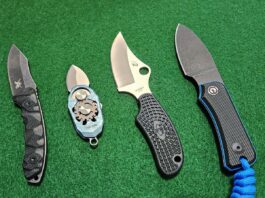
In a short time, Montana Knife Company has become a staple for hunters, outdoorsmen, cooks and skilled tradesmen. The interesting part is that the company has carved its place purely off fixed-blade knives.
This all changed at the beginning of the summer, when MKC introduced its first folding knife—the Montana. The liner lock is certain to grab attention purely off the brand’s current popularity. But a knife only makes it if it’s able to cut it—literally speaking. With that said, let’s see how the Montana is executed and if it holds down its primary job of splitting things asunder.
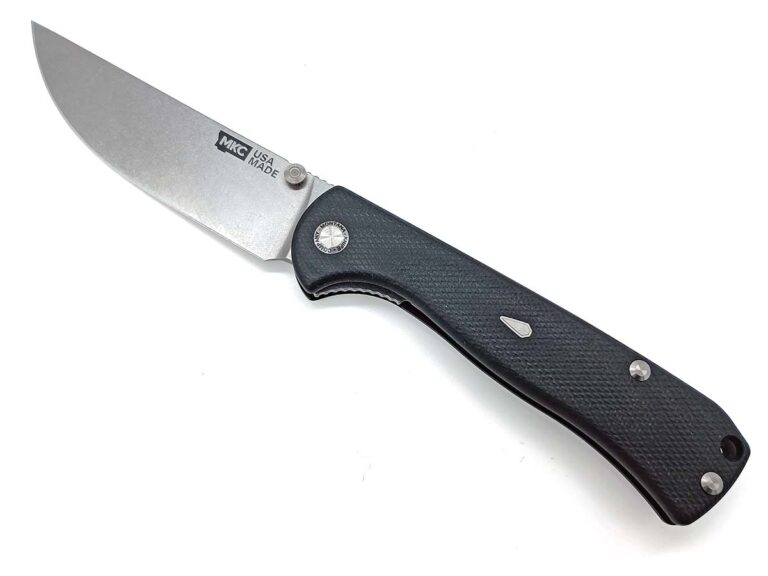
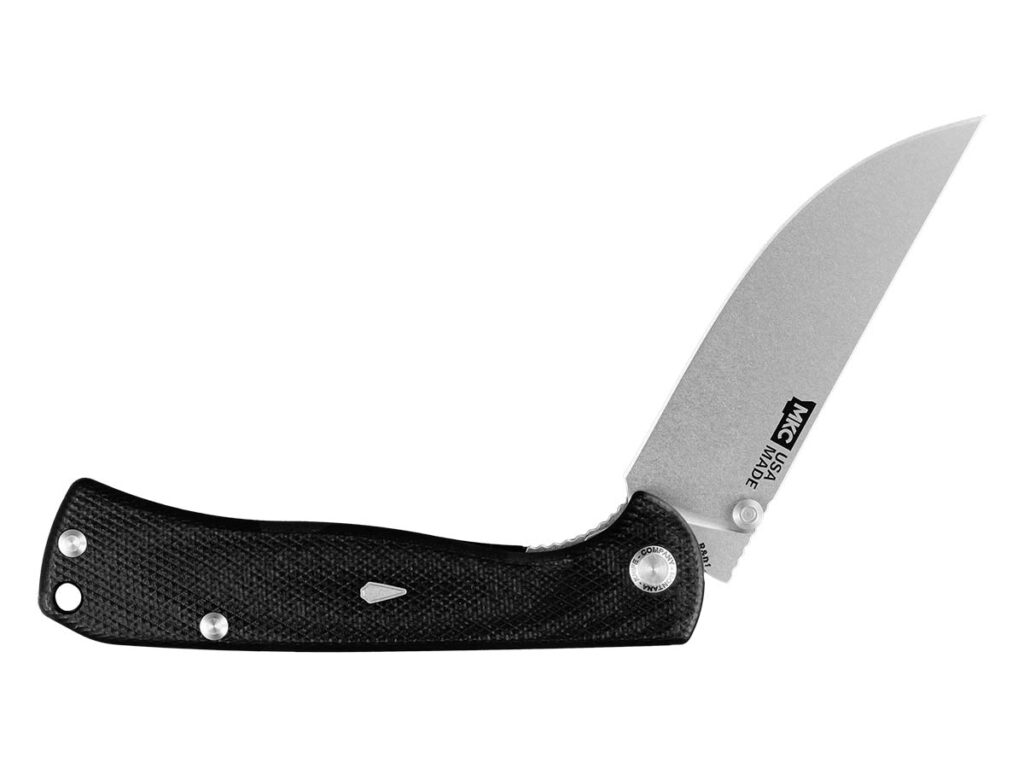
The Montana is positioned as a general, hard-use EDC and is unassuming in looks, cutting a blue-collar profile with a contoured axe-handle-style grip of G10. The scale is checkered, not to the point of creating a hundred little hotspots, but enough to facilitate extra purchase on the knife. The build features 420 liners and pocket clip, and titanium is used for the spacers and hardware.
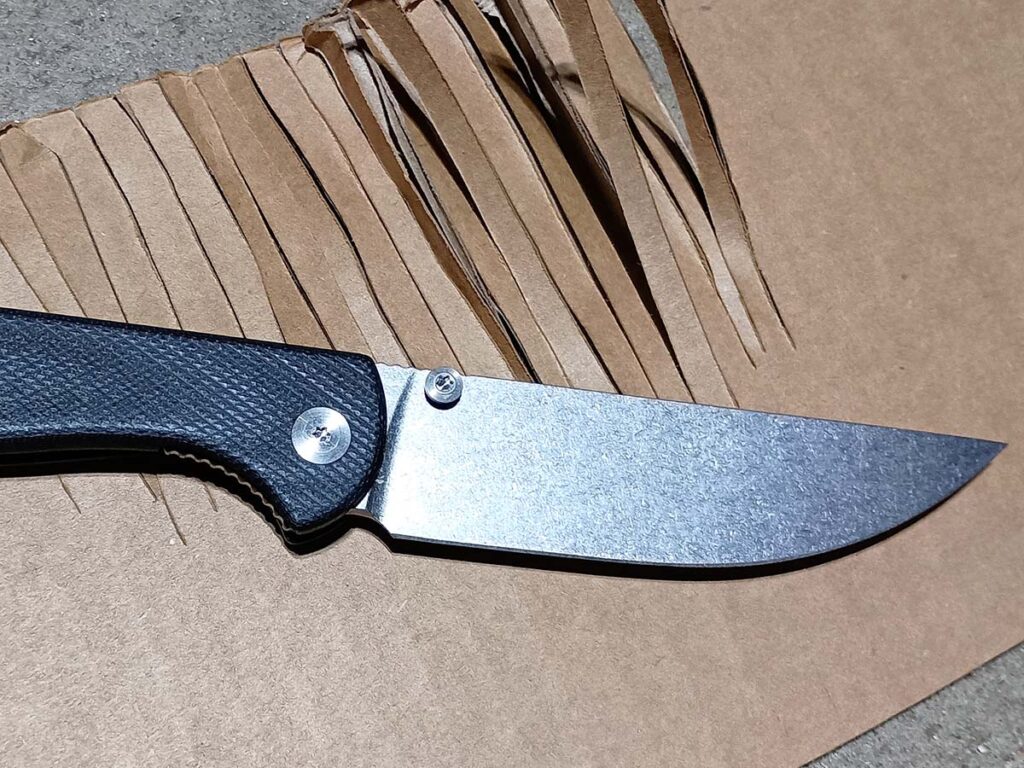
The MKC knife was very aggressive through double-wall cardboard and proved very controllable. The edge almost seemed to get sharper the longer it cut through the material.
The blade deploys via removable thumb studs and to that end, its action initially was the showstopper out of the box. MKC perfectly tuned the detent on the knife and running the blade on ceramic bearings in a bronze ring, deployment is lightning-fast and certain. The blade itself is MagnaCut with a full flat grind, a straight spine and no drop to the tip. The blade has a good belly to it for more delicate slicing chores and the tip is very fine, giving it the likely chops for precise cutting work. Some nice additions to the knife include a small section of jimping at the rear of the spine and a sharpening choil.
To test the keenness out of the box, 20-bond paper was the order of the day. The Montana didn’t disappoint, with an excellent factory edge and smooth stonewashed finish producing fine slices through the paper and a very satisfying cutting sound as it passed through. Upping the ante, the liner lock tackled double-wall cardboard. Here the Montana was very aggressive, splitting off even fingers of the box flap and proving easy to control through the material without losing its edge along the way.
Off To The Woods
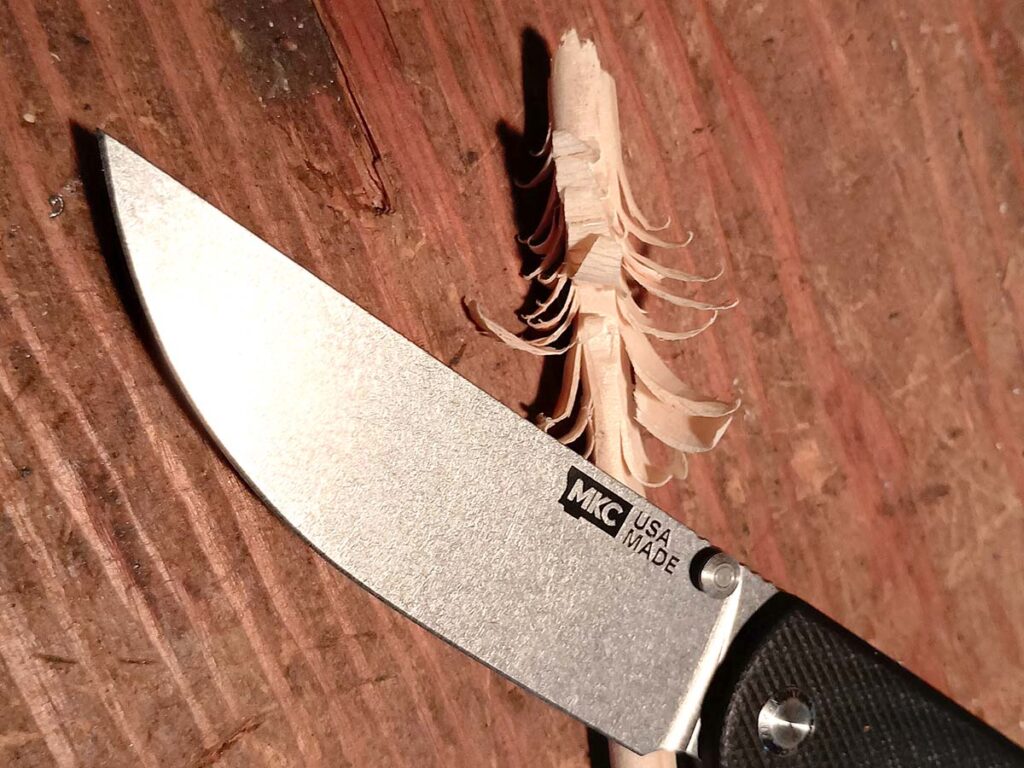
Lighter fare in the books, it was time to see what MKC’s folder could do against some more substantial material that over time tests an edge. Initially, it tackled a piece of pine dowel, which was whittled away at to create a firestick. The knife produced uniform and dainty curlicues and showed restraint when working these more delicate cuts. But it also proved it had bite for deeper cuts and significant material removal. The jimping was a welcome addition to the spine and helped direct the blade in the wood; however, the nearly 90-degree spine of the rest of the blade was a bit harsh on the off-hand thumb. A small price to pay for what is certain to be a solid striking surface for a ferro rod.
An adept whittler, the knife could shave fine and chunky curlicues from a piece of pine dowl. The 90-degree spine did have some bite on the offhand thumb when executing push cuts into the wood.
It was really time to put the edge to the test, hacking through a 1.5-inch furring strip. Even though it was pine again, it’s a worthy measure of an edge and a good replica of field use, such as having to hack down a small piece of timber or through a deer pelvis. The blade performed admirably, but it’s certainly not a duty for which the knife was designed. Light as it is (2.84 ounces), it required more hacks than would be required from a heavier blade.
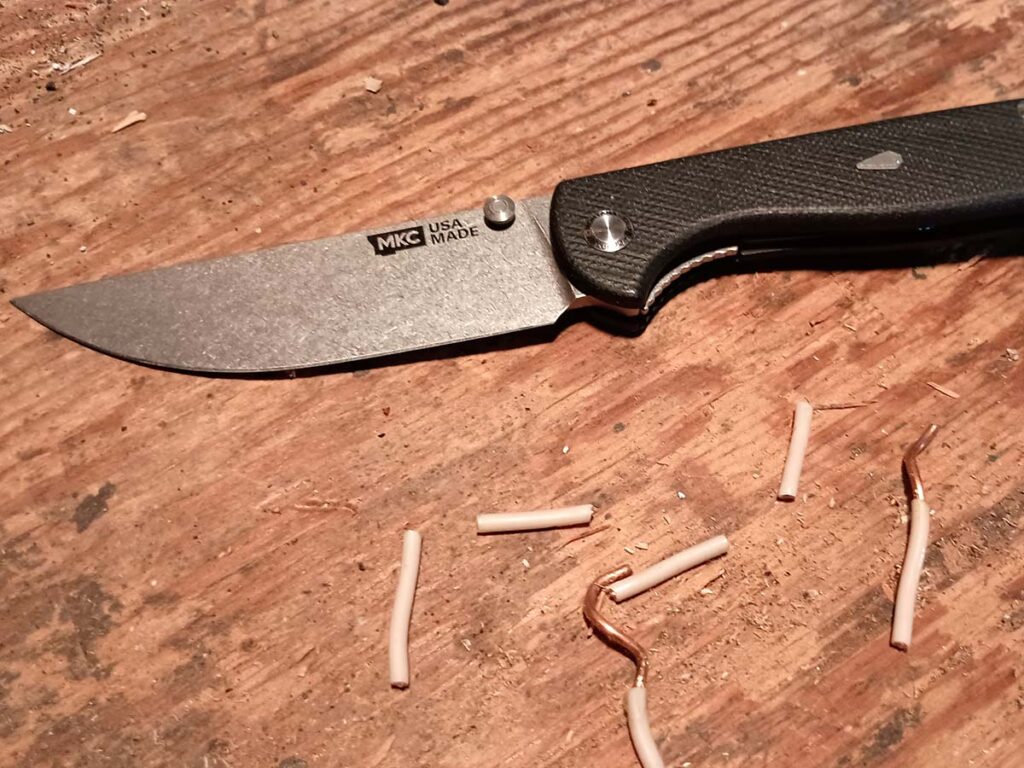
To really give the Montana a run for its money, test the overall blade construction and see if it really cut muster as a hard-use option for a working man, the knife was pitted against insulated 6-gauge solid copper wire—what you’d run into in a lot of residential electrical projects. The knife divided the wire into 10 pieces with ease, each segment coming loose with a single swipe from a rubber mallet.
Rounding everything out, 20-bond paper was again centerstage testing the knife’s edge retention. Overall, there was little difference in the Montana’s cutting prowess from when it was freshly taken out of the box. A pretty solid showing.
Final Cut
The knife made quick work of copper wiring, dividing it with the help of a rubber mallet. The edge was undamaged in clipping the 6-gauge wire and remained sharp enough to shear paper afterward easily.
You never know what chaos an EDC knife might be called to tackle. Thus, it better be designed to withstand the unknown. Overall, it seems MKC has accomplished this with the Montana. The edge showed its worth through general tasks an everyday carry would expect to face. As impressive, after some moderate abuse, the action and lock both were still tight as drums. A bit on the spendy side, yes, but for an electrician, rancher or anyone else that needs a dependable blade, the Montana is likely to prove a value.
Scorching new knives to keep you sharp this summer.
August’s new arrivals spotlight the full spectrum of modern knife making, blending production innovation with hand-crafted custom artistry. This month’s lineup captures everything from precision-engineered factory folders built for everyday carry to one-of-a-kind custom fixed blades tailored for serious collectors. Featuring fresh designs from established industry veterans and rising makers alike, these August 2026 releases highlight the cutting-edge materials, refined edge geometry, and field-ready performance defining today’s cutlery landscape.
Montana Knife Co. The Montana
Knife Type: Folder Blade Length: 3.25” Overall Length: 7.625” Blade Finish: Stonewash Blade Steel: MagnaCut Blade Opener: Thumbstud Handle Material: G10 Lock: Liner Lock Pocket Clip: Tip-up, right-hand Weight: 2.84 oz. Knife To Know: The Montana is the first folding knife from the Montana Knife Company. MSRP: $390 montanaknifecompany.com
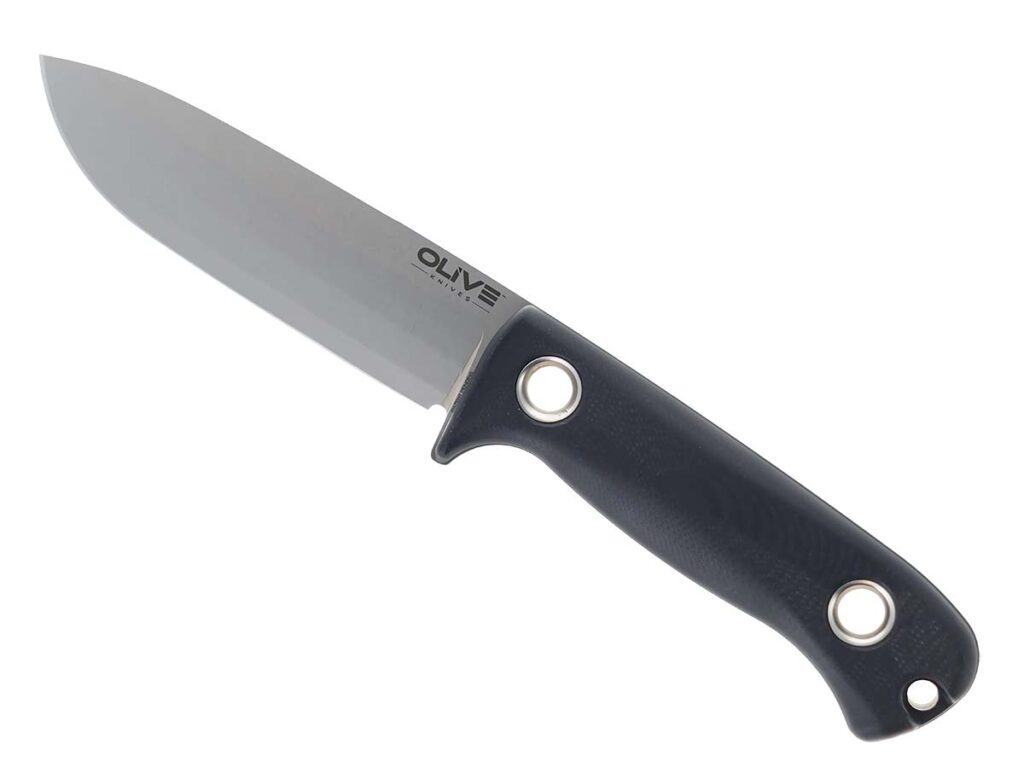
Olive Knives Arbor
Knife Type: Fixed-Blade Blade Length: 4.54” Blade Steel: Elmax Blade Grind: Fibonacci (Proprietary) Blade Finish: Stonewash Blade Profile: Drop Point Handle Material: G10 Weight: 9.14 oz. Knife To Know: Proprietary stepped grind combines convex strength, with sharpening ease of a flat grind. MSRP: $400 oliveknives.com
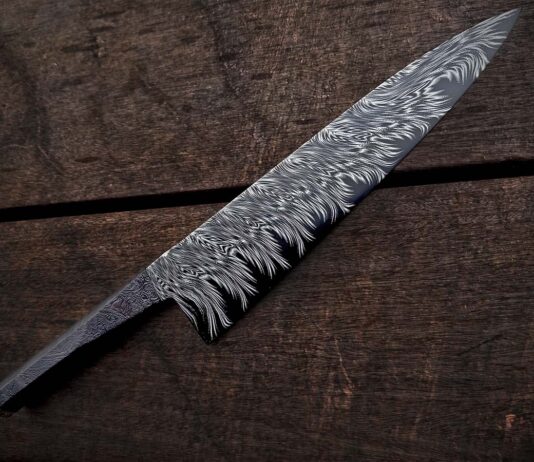
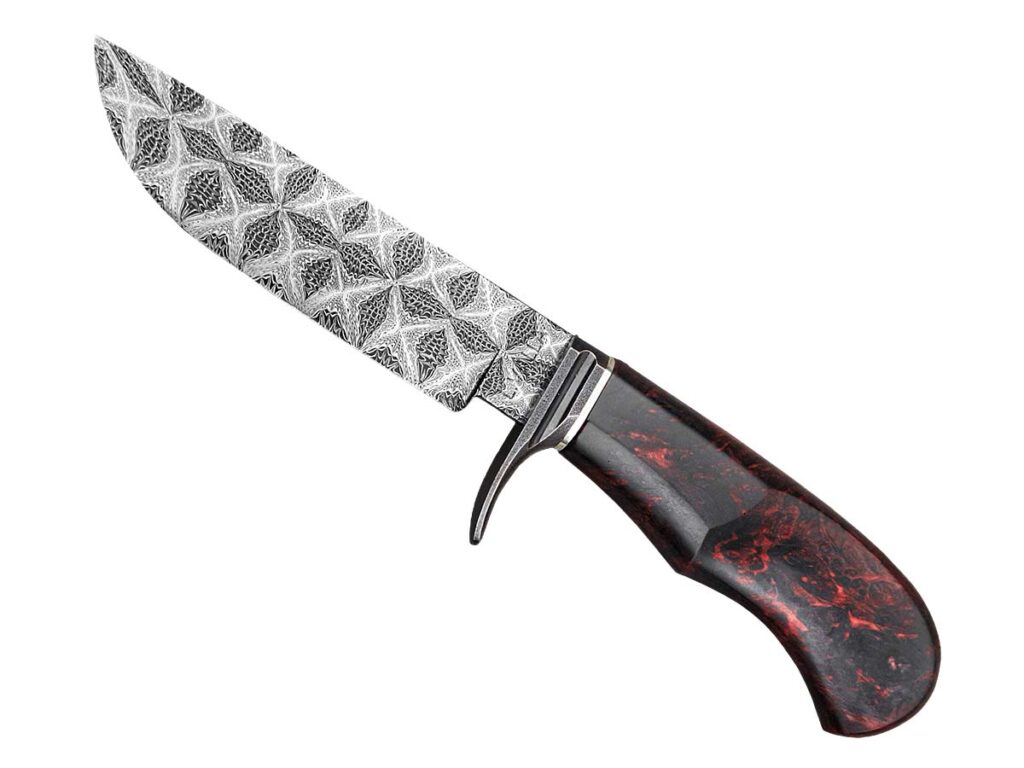
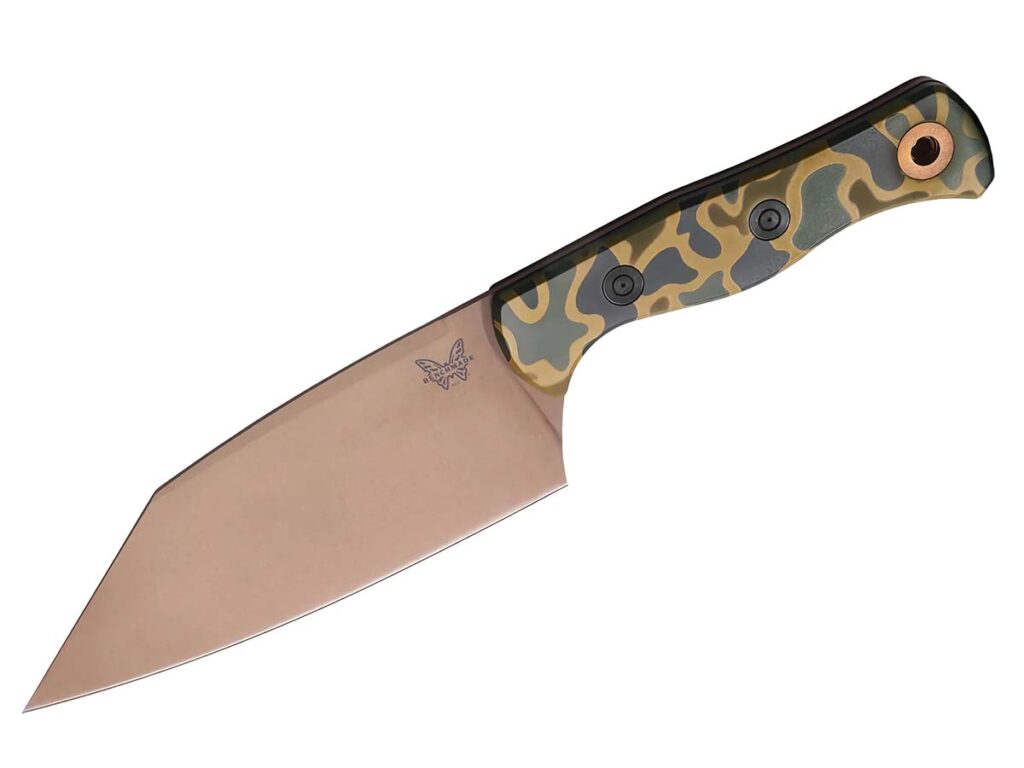
Liam Walle Anthazoa Hunter
Knife Type: Fixed Blade Blade Length: 7.75” Overall Length: 9.75” Blade Steel: 115n20/1084 Gorgon Flower Mosaic Blade Grind: Convex Handle Material: Honduran Rosewood Knife To Know: Bronze Bolster Maker’s Price For A Similar Knife: $2,300 liamvallaknives.com. Jocelyn Frasier image
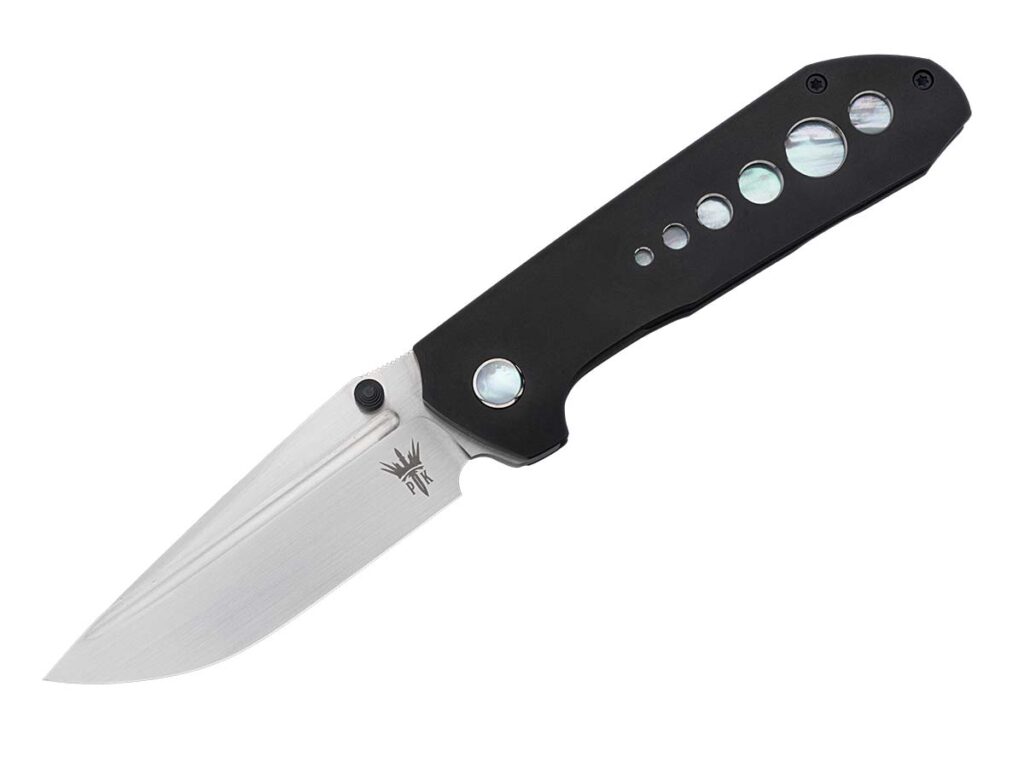
Blake Parthenay Saint
Knife Type: Folder Blade Length: 3.5” Overall Length: 8” Blade Steel: Elmax Blade Opener: Thumstud Handle/Frame Material: Blackened Titanium Knife To Know: Mother of pearl inlay in the handle, ceramic bearings Jocelyn Fraiser image
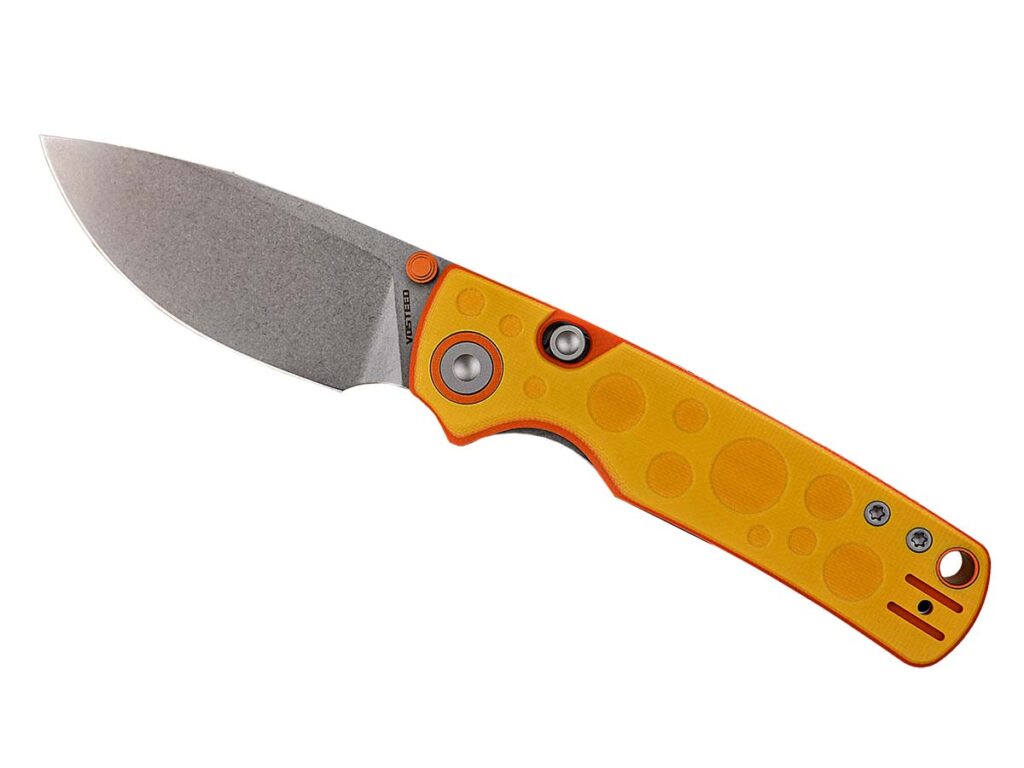
Knife Type: Folder Blade Length: 2.99” Overall Length: 7.16” Blade Steel: 14C28N Blade Profile: Drop Point Blade Opener: Thumbstud Handle Material: G10 Lock: Top Liner Lock Pocket Clip: Tip Up Weight: 3.55 oz. Special Features: Custom cheese-inspired handle. Knife To Know: Vosteed and Blade HQ plan to make a company-funded contribution to support animal rescue efforts All Paws Count from sales. MSRP: $69 vosteed.com
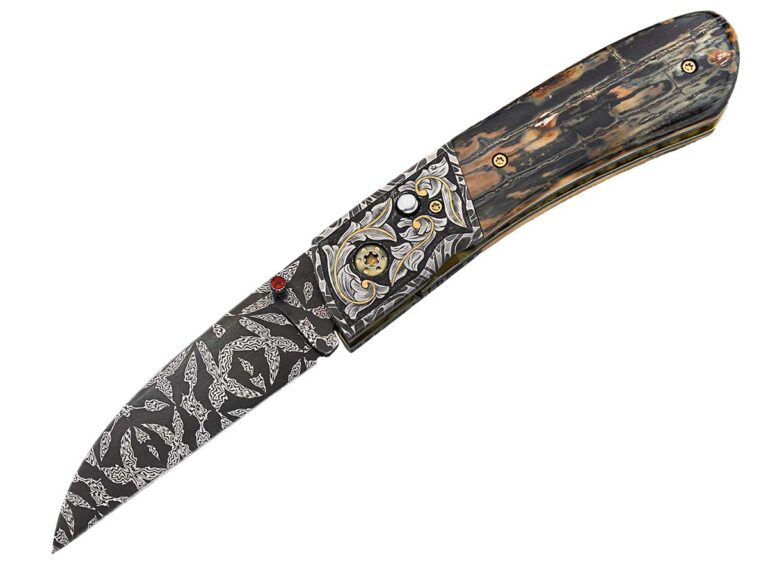
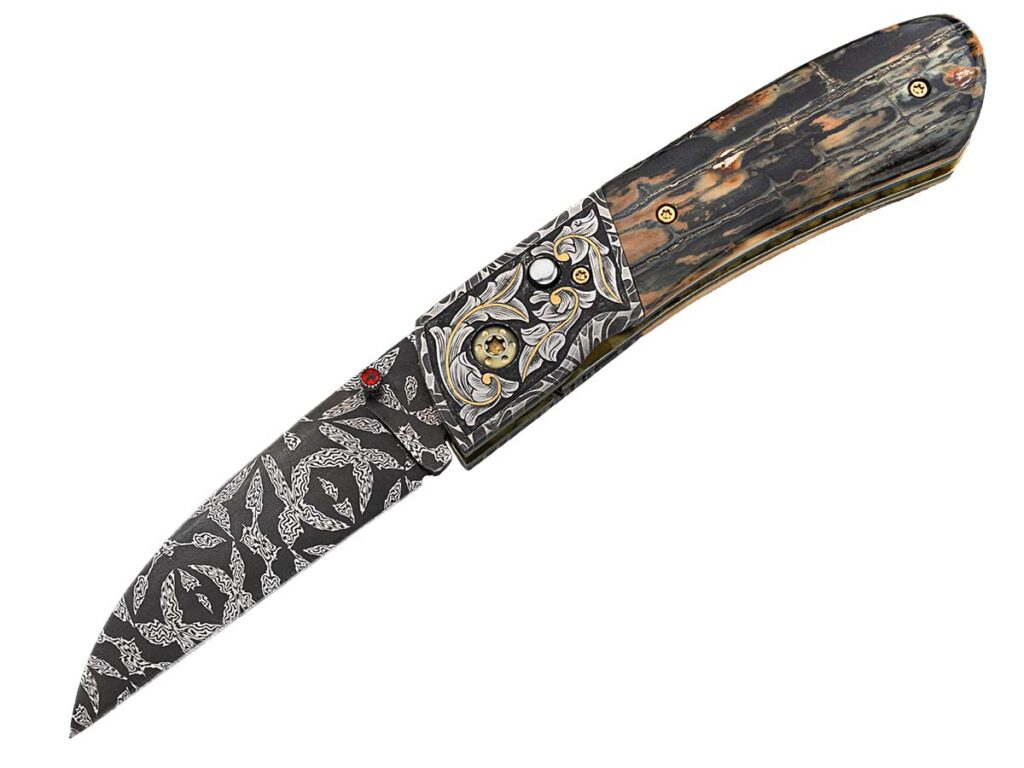
Mike Tyre OTS Automatic
Blade Length: 3.5” Overall Length: 7.25” Blade Steel: 01/L6 damascus Blade Grind: Flat Convex Blade Opener: Button Handle Material: Mammoth Ivory Liners: Ice Finished Gold Anodized Titanium Knife To Know: Bolster engraved by Joe Mason Maker’s Price For A Similar Knife: $4,500 miketyrecustomknives.com. Jocelyn Frasier image
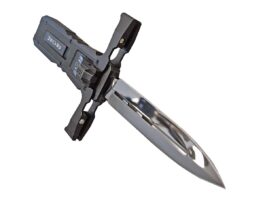
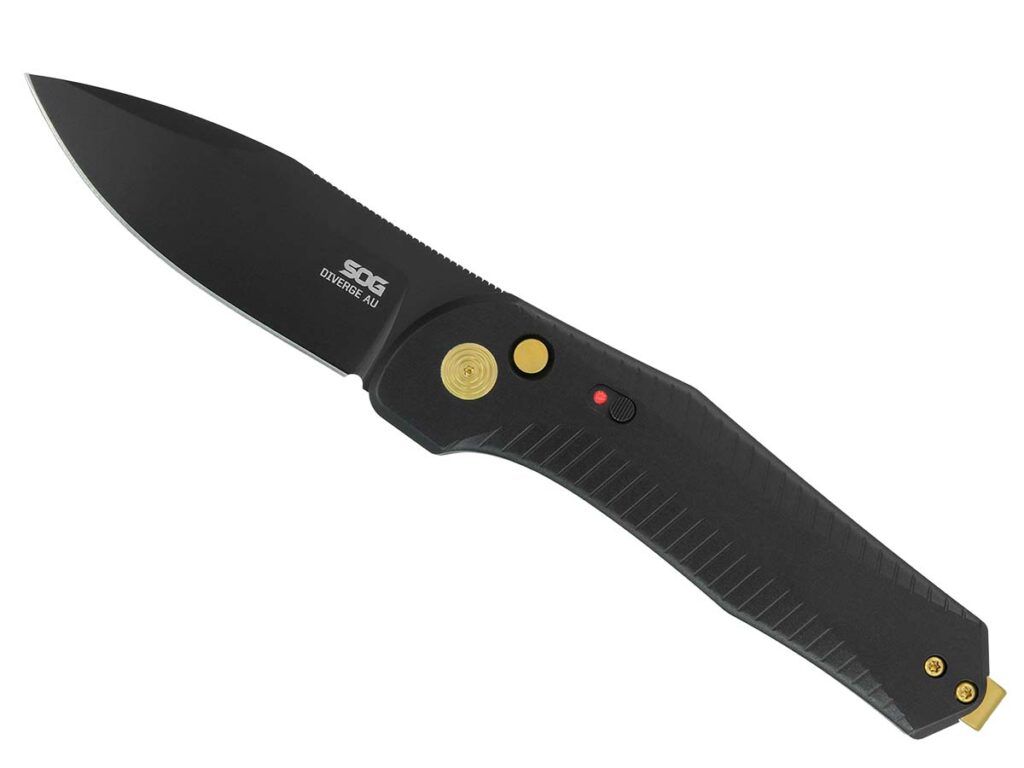
Knife Type: OTS Automatic Blade Length: 3” Overall Length: 7.3” Blade Steel: D2 Blade Profile: Drop Point Handle Material: Aircraft-Grade Aluminum Pocket Clip: Reversible Clip Weight: 3 oz. Knife To Know: Ambidextrous pocket clip and deployment lock. MSRP: $90 sogknives.com
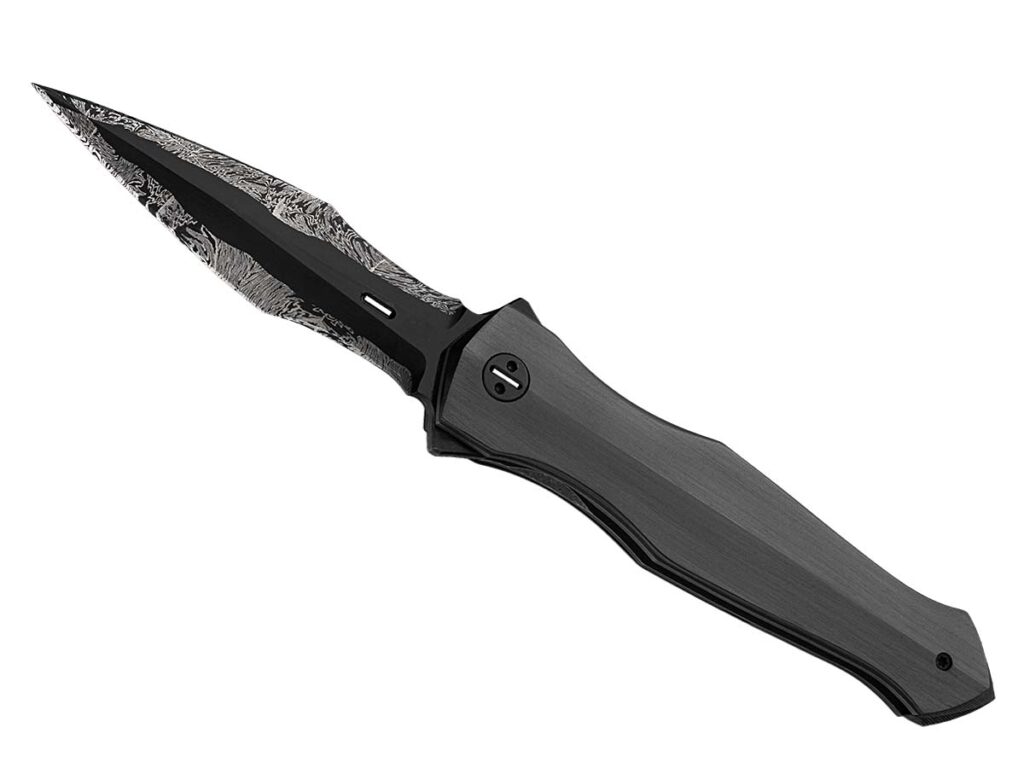
Alex Hossom Collab With Charlie Bridges Void
Knife Type: Folder Blade Length: 3.75” Overall Length: 9” Blade Steel: 1084/1095/80crv2/Procut/15n20 Blade Grind: Symmetrical Hollow Blade Opener: Flipper Handle Material: McLaren Carbon Fiber Liners: Titanium Knife To Know: Titanium inlays in blade and pivot screws Maker’s Price For A Similar Knife: $3,000 brokenanvilknifeworks.com. Jocelyn Frasier image
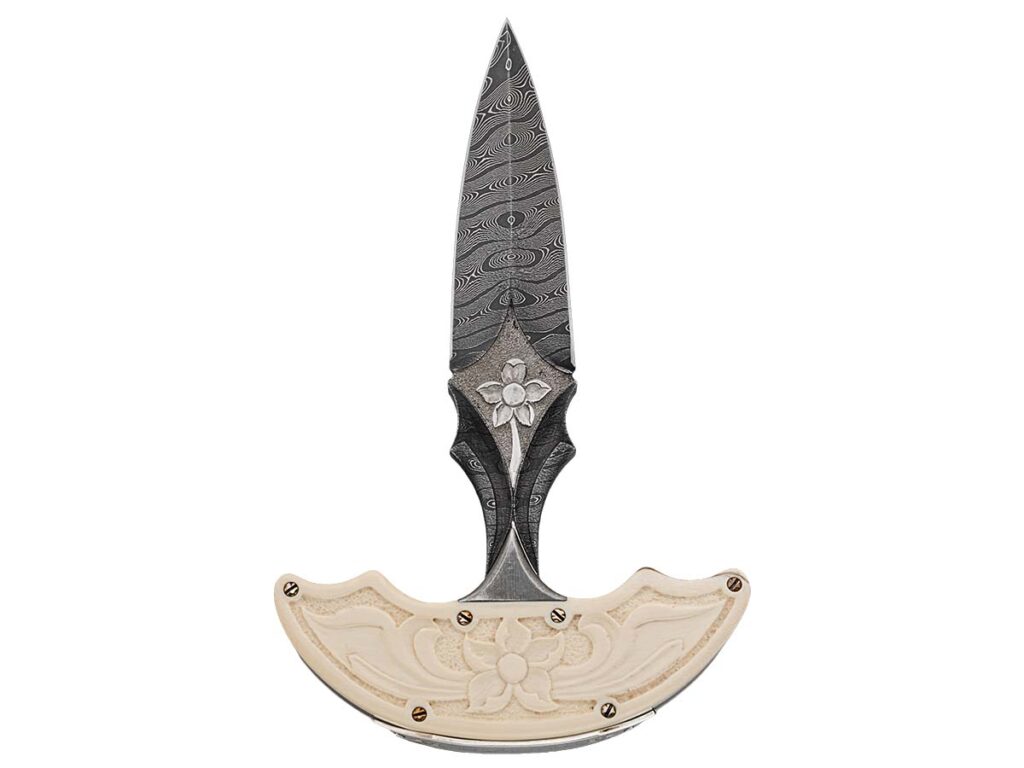
Frank Edwards Push Dagger
Blade Length: 3.25” Overall Length: 6.5” Blade Steel: 1084/15n20 twist Blade Grind: Dagger Handle Material: Mammoth Ivory Special Features: Carved flower on the interior of handle, matched with an engraved flower on blade. Maker’s Price For A Similar Knife: $2,550 Jocelyn Frasier image
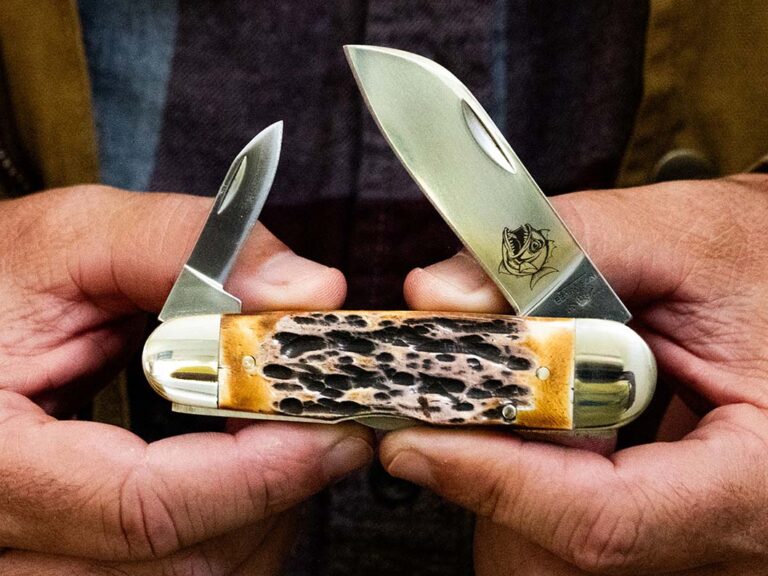
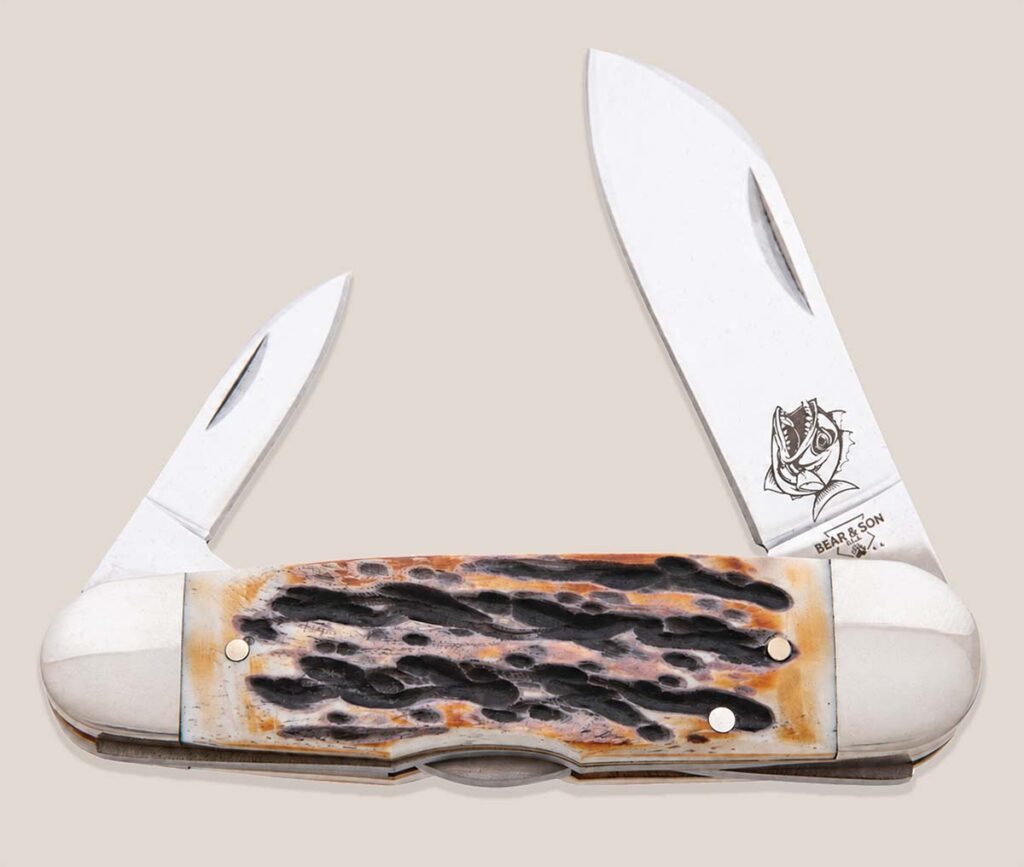
Crafted in Alabama, Bear & Son Cutlery’s Piranha pairs a 440 stainless spear blade and lockback security with classic bone handle options.
Bear & Son Cutlery has introduced a new traditional folder to its lineup with the Piranha series. Manufactured in Jacksonville, Alabama, the two-blade pocketknife combines classic American styling with a lockback mechanism engineered for secure lockup during daily tasks.
Traditional Build, Modern Mechanics
The Piranha centers on a two-blade setup crafted from 440 stainless steel, offering a balance of corrosion resistance, edge retention, and easy field maintenance. The primary cutter is a 2.75-inch spear blade paired with a secondary 1.5-inch pen blade. Measuring 4 inches closed and 6.625 inches overall, the knife delivers a comfortable, familiar in-hand feel designed for general cutting chores.
Unlike many traditional slipjoints, the Piranha incorporates a lockback design to give users extra security when the primary blade is engaged. Hand-finished detailing and polished bolsters complete the traditional pattern.
Piranha Handle Options
Bear & Son offers the Piranha in two distinct handle materials: White Smooth Bone (Model WSB59L) and Genuine India Stag Bone™ (Model 559L). Each piece undergoes individual sanding and polishing, giving every handle its own unique texture and visual character while maintaining standard ergonomic grip properties.
Weighing in at 4.6 ounces, the U.S.-made folder is backed by a limited lifetime warranty and carries an MSRP of $125. Tech Specs
Piranha Specs Manufacturer: Bear & Son Cutlery Overall Length: 6.625″ Closed Length: 4″ Primary Blade Length: 2.75″ (Spear Point) Secondary Blade Length: 1.5″ (Pen Blade) Blade Steel: 440 Stainless Steel Handle Material: White Smooth Bone or Genuine India Stag Bone Locking Mechanism: Lockback Weight: 4.60 oz. Country of Origin: USA MSRP: $125
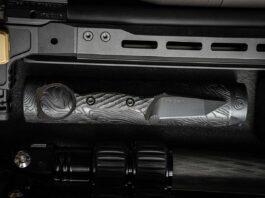
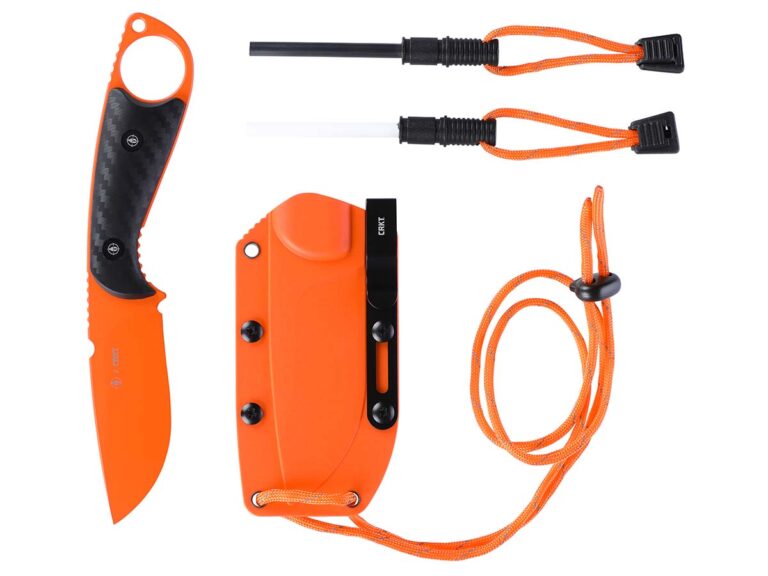
Designed with Spartan Precision Equipment, CRKT’s backcountry-ready Altai pairs 14C28N steel with an integrated fire rod and ceramic sharpener.
CRKT has teamed up with the shooting platform specialists at Spartan Precision Equipment to introduce a new backcountry fixed blade: the Altai. Named after Spartan founder Rob Gearing’s hunting excursions in Mongolia’s Altai Mountains, the knife integrates purpose-built field features directly into the cutting system and sheath setup.
Tailored for Field Processing
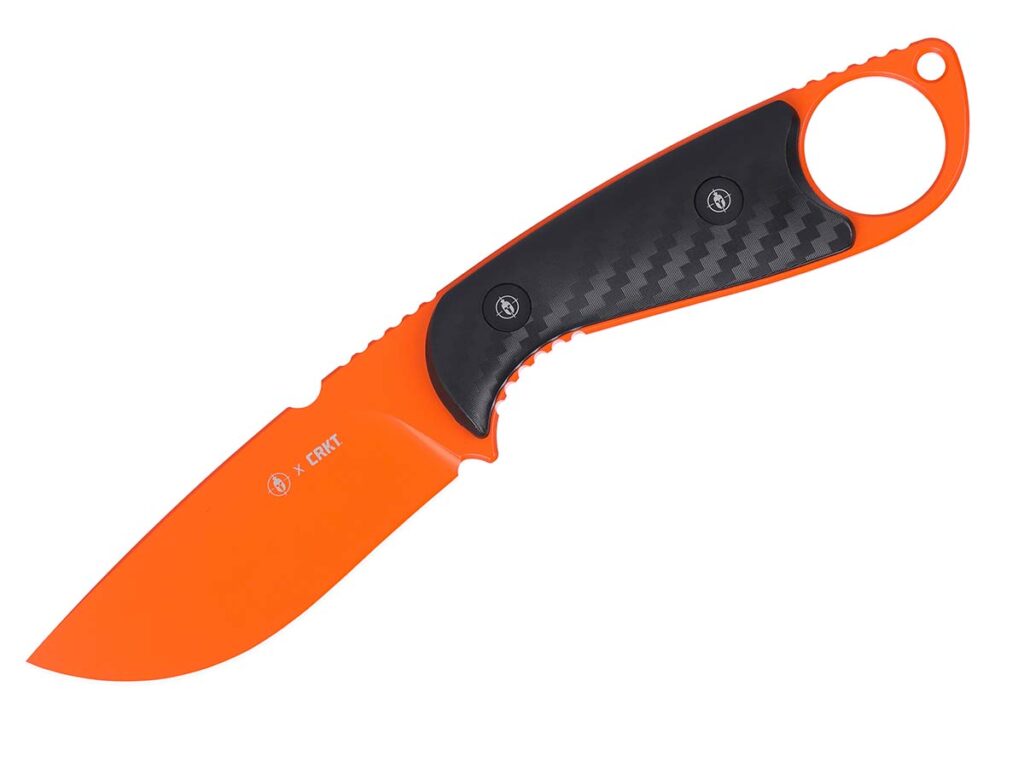
The Altai centers around a 3.53-inch plain-edge blade fashioned from 14C28N stainless steel. To withstand harsh outdoor environments, the steel is treated with a protective ceramic coating designed to bolster toughness and resist corrosion. The 0.13-inch thick blade is sized specifically to maintain maneuverability and control during game dressing, while jimping along the finger choil and spine provides positive tactile traction.
The knife features glass-reinforced nylon (GRN) handle scales textured with a carbon-fiber pattern, secured over custom pins bearing the Spartan head logo. High-visibility orange highlights run along the build, helping users spot the knife easily in dim light or deep cover. At the butt end, a ringed pommel allows for a fast draw—even when wearing thick gloves—and includes a lanyard hole for additional retention options.
Built-In Fire and Maintenance Kit
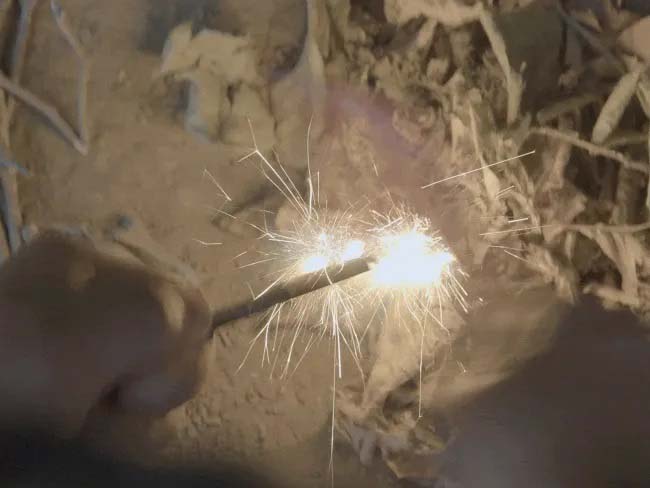
Rather than serving as a standalone cutter, the Altai incorporates essential survival and care tools into its carry rig. The knife’s spine includes a dedicated striking notch configured to work with an included magnesium alloy fire rod. For touch-ups during long trips, a ceramic sharpening rod is also housed directly alongside the blade.
Both maintenance accessories stow in the included molded thermoplastic sheath. Reflective orange paracord is used for the main lanyard as well as the pull tabs on the fire and ceramic rods, ensuring high visibility when working in low-light conditions.
At 8.0 inches in overall length and a weight of 3.6 ounces, the Altai offers a complete backcountry processing and field-maintenance package in a compact carry footprint.
Designed by Allen Elishewitz, KA-BAR’s USA-made drop-forged EPT pairs a 2.5-inch blade with a clip-equipped sheath for easy pocket carry.
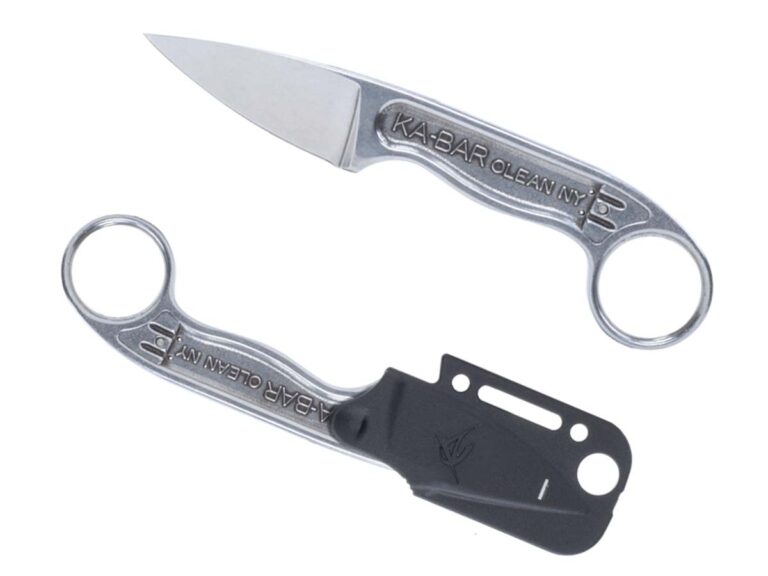
KA-BAR has expanded its line of drop-forged steel tools with the Elishewitz Pocket Tool, or EPT. Designed by veteran maker and former Force Recon Marine Allen Elishewitz, the compact fixed blade targets the growing daily carry market with a format tailored specifically for pocket carry rather than belt wear.
Built for Daily Duty
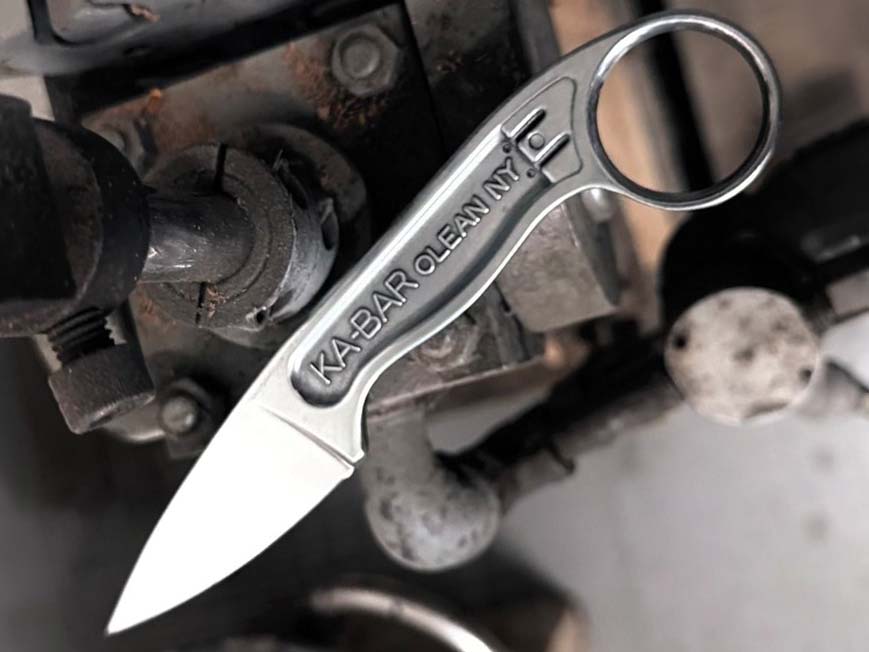
The EPT centers around a short, broad 2.5-inch drop-point blade ground flat to a 20-degree edge per side. KA-BAR crafts the knife from 0.1875-inch thick 425 high-carbon stainless steel, hardened to 56–58 HRC. The stout blade geometry offers plenty of strength for routine cutting tasks while keeping the overall footprint manageable.
Because the knife utilizes a one-piece drop-forged construction, the skeletonized handle is integral to the blade. A finger ring integrated into the butt end assists with control during use while serving as a quick-draw indexing point when pulling the knife from a pocket.
Pocket-Friendly Carry
Rather than relying on a traditional belt sheath, the EPT comes equipped with a custom USA-made sheath featuring a reversible, loop-over wire pocket clip. This setup allows the fixed blade to ride deep inside a pocket in much the same manner as a standard folding knife.
At 6.75 inches in overall length and weighing 3.2 ounces (0.2 lbs for the knife alone), the U.S.-manufactured piece delivers the structural integrity of a fixed blade without adding unnecessary bulk to a daily kit.
Elishewitz Pocket Tool (EPT) Specs Designer: Allen Elishewitz Overall Length: 6.75 in. Blade Length: 2.50 in. Blade Width: 1.70 in. Blade Thickness: 0.1875 in. Blade Steel: 425 High Carbon Stainless (56–58 HRC) Blade Type/Grind: Drop Point, Flat Grind Edge Angle: 20 degrees per side Construction: Integral drop-forged 425 stainless steel Weight: 3.2 oz. total (2.24 oz. knife weight) Sheath: USA-made sheath with reversible wire pocket clip MSRP: $78
Three options to stay keen when you’re out and about.
Active lifestyles often need specialized tools. Out hiking, camping or hunting, a workbench instrument is out of place. This is especially true for one of the most vital pieces of knife kit—sharpeners.
In recent years, the market has trended toward larger bench-mounted sharpeners that, while dynamite at extracting a precise edge, are all but impractical in the field. Out and about, a solid portable sharpener is more than worth its weight in gold. Even better, for those who take a more minimalist approach to edge-maintenance equipment, most mobile sharpeners are more than capable of serving as primary tools for bringing a knife back to life.
Given this isn’t the time of Charlemagne, this class of sharpeners should have an angle guide integral to their design, eliminating guesswork. And since they’re less elaborate, portable sharpeners should be cost-effective, as well. You do not want to spend a ton on something that might be lost. Most of all, these options should prove easy to tote around, be it in a pocket, tool pouch, vehicle glove compartment, backpack or anywhere else you want to cram one.
There are plenty of portable sharpeners available today, but in our trials, we found the following a cut above the rest.
Wicked Edge Venture Pro WE26
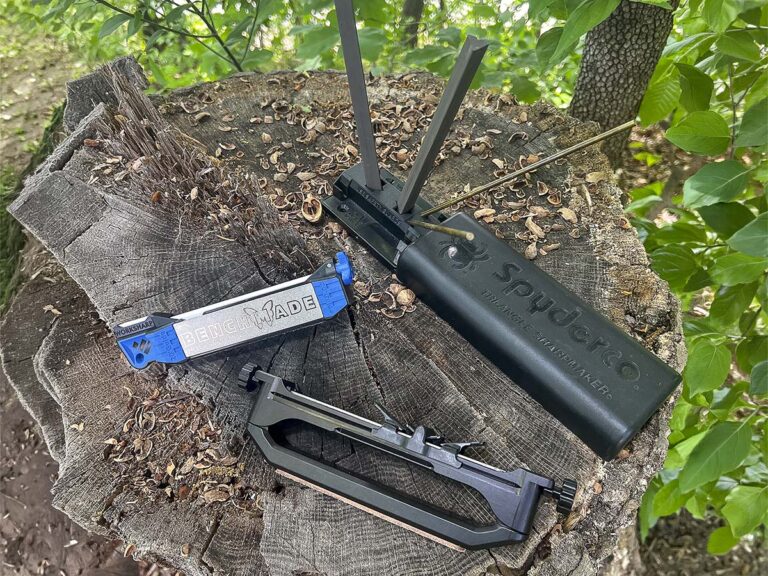
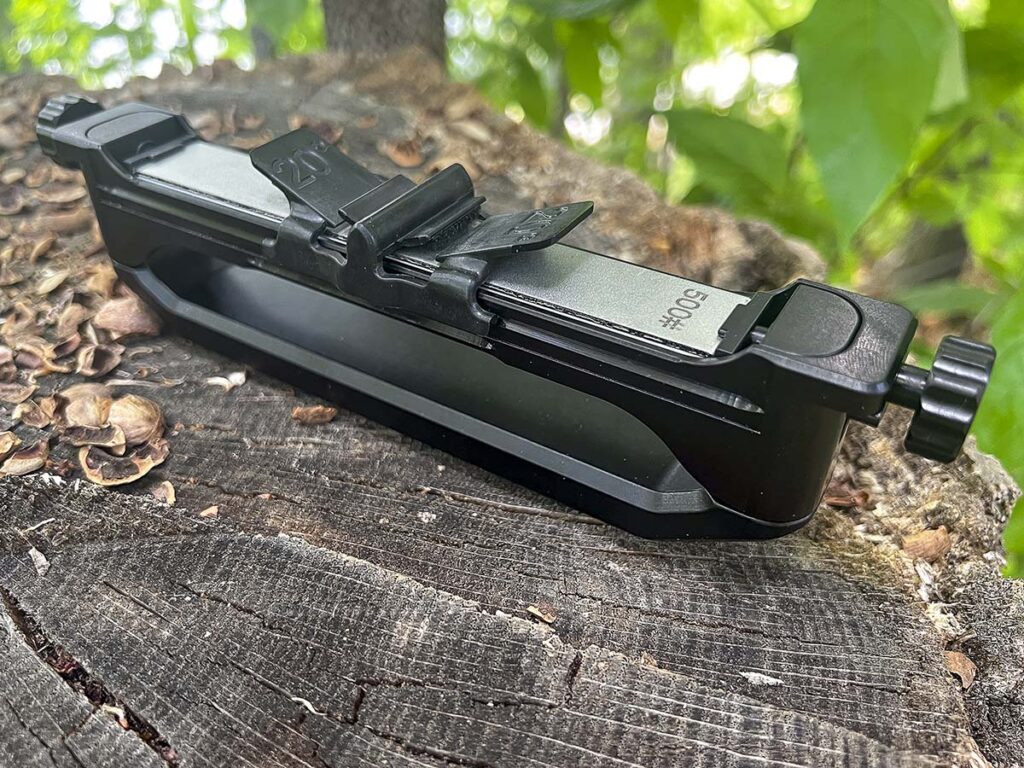
The Wicked Edge Venture Pro features a movable 20-degree angle guide that helps to keep your angle consistent, so that even beginners can achieve desirable results. And while not quite pocket sized, the until is perfectly proportioned for sharpening on the go.
Wicked Edge, primarily known for its high-end guide-honing systems, has recently turned its discerning eye to mobile sharpening. The result is the Venture Pro WE26. While more compact than most everything else the company offers, it is no less effective.
Starting with the build quality, Wicked Edge has constructed a system built to last. The Venture Pro’s frame is sturdy T6-6061 aluminum alloy, keeping the unit relatively light, yet extremely durable. The company holds the system together with stainless steel screws and a tension spring. And the honing surface is a double-sided diamond-coated steel plate—if you drop one, you don’t have to sweat it shattering. A cam system holds it in place and allows a painless switch between sides and grit size—500-grit diamond and a fine-grit ceramic. A plus. Yet this is only part of the sharpener’s selling points.
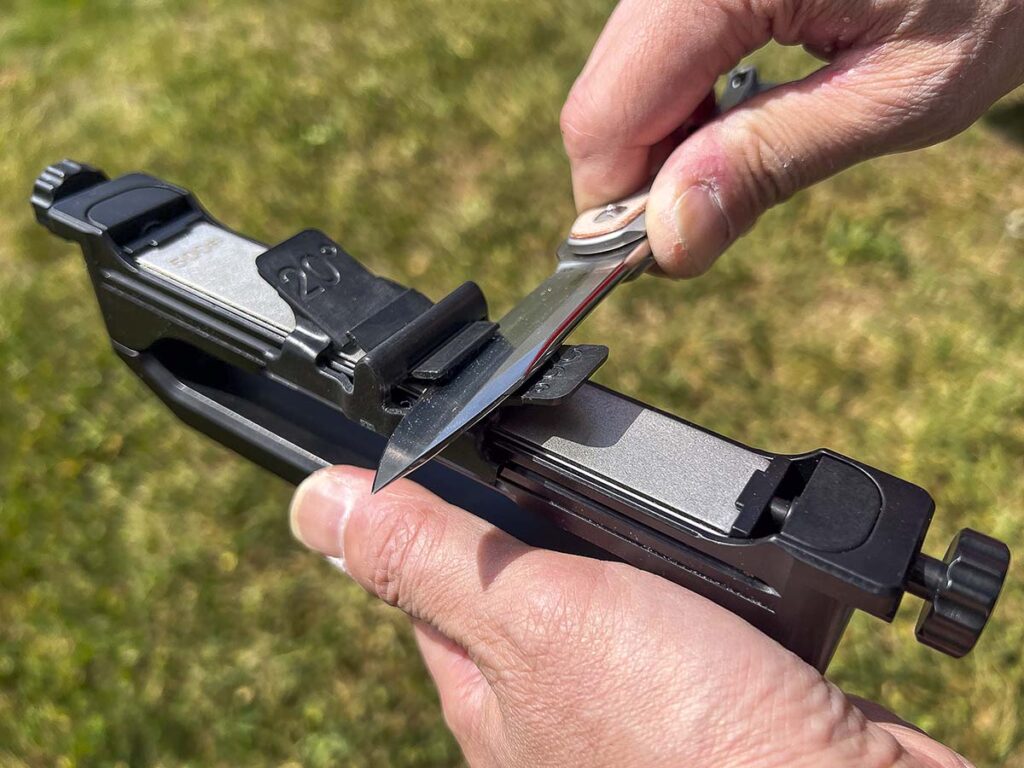
What really grabs attention is that the Venture Pro is a railed angle guide. The system is slick, essentially allowing you to pull your knife through, while the guide maintains a consistent 20-degree angle over the entirety of the sharpening surface. This element of the system deserves mention in and of itself. It is molded from a thermoplastic blend of POM (Delrin) and PTFE (Teflon), the result is a slick surface that all but guarantees a smooth stroke on each pass. The guide is removable and has a storage position on the rear of the sharpener for easy storage in a more compact configuration. The final perk, the unit includes a leather strop and a built-in guide on the rear side, so you can hone a blade to a mirror finish.
The Venture Pro features both 500-grit diamond stone and ceramic honing surface, as well as a leather strop. Wicked Edge sells other grits and different angled guides, to tailor the system to your knives.
The Venture Pro definitely isn’t pocket-sized, but it is small enough to be considered portable. Its size is a plus in this respect; it’s large enough to tackle a wide range of knife types and sizes. I found the system easy to master over the course of several sharpening sessions with pocketknives, tactical folders, kitchen knives and even scissors. The routine is simple: place the blade into the guide as far up to the tang as possible, draw the knife through while moving forward and repeat on the other side. The angle guide slides so easily across the frame of the sharpener that it almost feels like it’s not even there.
Given that the 500-grit side is diamond, I did not have to apply a ton of pressure to achieve the desired results. And, if you’re sure of your freehand skills, the guide can be removed to speed up the process.
At home, at camp or anywhere, the Venture Pro works every time to provide you with a guaranteed sharp edge. As a bonus, several other plates with different grit sizes are available as well as different angle guides (15, 17 and 25 degrees), in case you have a particular system you want to adhere to. No matter what, this made-in-the-U.S.A. sharpener has an edge.
Venture Pro Specs Frame Material: T6-6061 Aluminum Alloy Sharpening Material: 500-grit diamond stone, ceramic hone and leather strop Weight: 10 oz. Sharpening Surface: 8.25” Features: Continuous 20-degree angle guide, integral handle Country Of Origin: U.S.A. MSRP: $189
Spyderco Sharpmaker
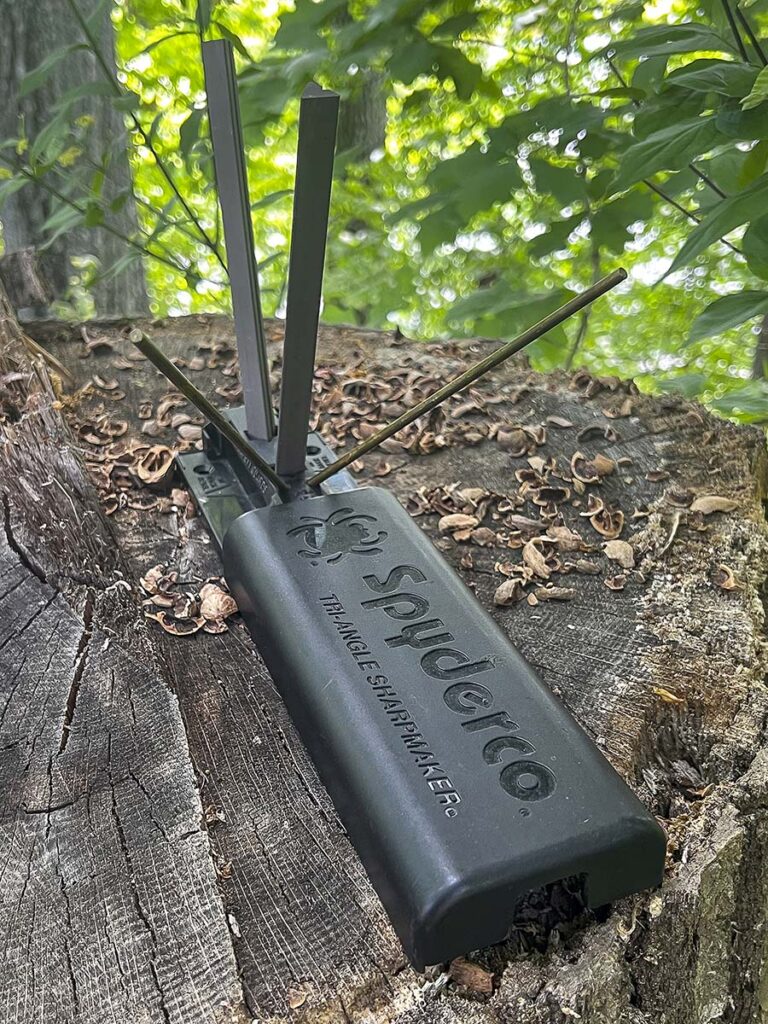
Absolutely time tested, the Sharpmaker has been a honing mainstay for a spell—namely because it works so well. Very simple in design, the portable sharpener features course and fine grain sharpening rods that can be set for a 20-degree edge and simply requires a downward stroke to do their business.
Spyderco’s model 204 Sharpmaker is a versatile, made in the U.S.A. sharpener and could be a primary sharpener on its own. But it’s how it breaks down, with all its hones nestled in the base, and the cover snaps over all of it, fully encasing the stowed sharpener that makes it a top choice for a portable sharpener.
The Sharpmaker utilizes two pairs of alumina ceramic rods—medium grit (brown) and fine grit (white)—held in the plastic base at a 20-degree angle, forming a “V” shape. The proper way to use this is to hold your knife to where the blade is perpendicular to the tabletop and then, starting at the blade tang end, place the blade onto the home and, in one motion, travel down the hone and at the same time pull the blade toward you. Gentle pressure is generally all that is required to achieve a sharp edge. As an added safety precaution, Spyderco includes two brass protection rods that prevent cutting your hand while holding the base.
The Sharpmaker’s design allows you to sharpen on any flat surface—tabletop, workbench, desk or even the tailgate of a pickup truck. Making the tool extremely convenient, the alumina ceramic rods do not require lubrication with oil or water. Though they do require occasional cleaning. The rods darken over time due to swarf collecting on the surface. Scotch-Brite pads and powder sink cleaner make quick work of this fouling and restore the sharpening surface. Another cool feature of the Sharpmaker is the two grooves on the bottom of the base. This allows you to set any two matching hones into the base, with their flat sides up for a makeshift bench stone.
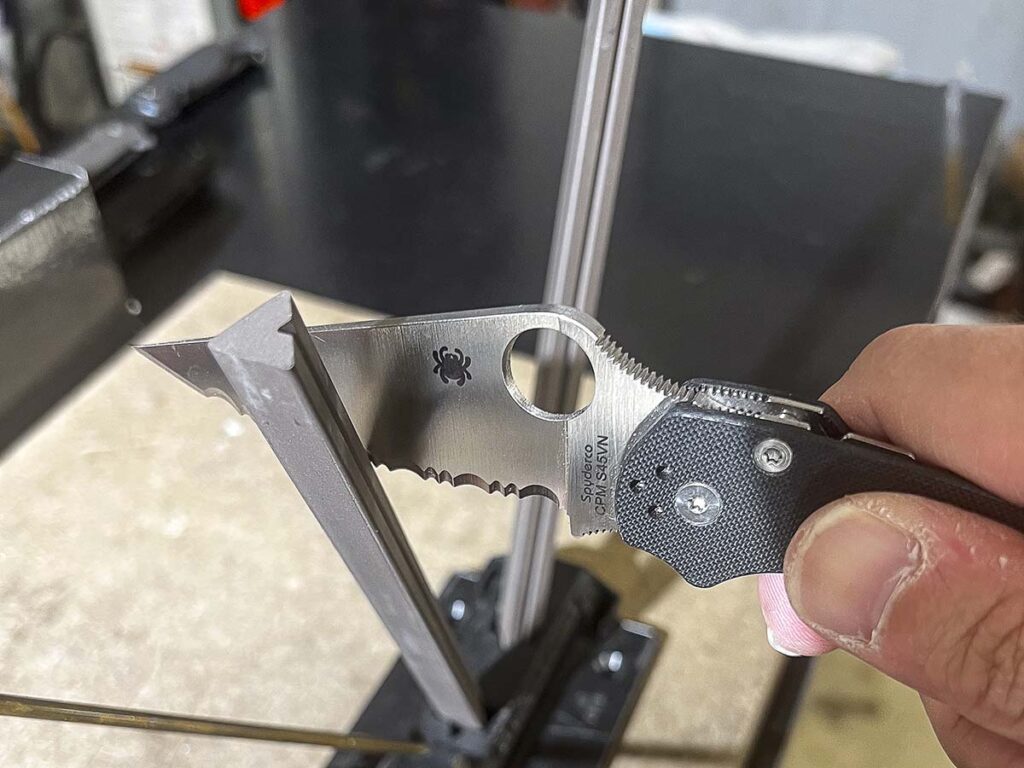
The Spyderco Sharpmaker 204 is the best sharpener to use with serrated knives, as it is easy to set up, easy to use and doesn’t use oil or water for lubrication. The points of the triangular-shaped hones capture each tooth in the serration pattern effectively.
The triangular shape of the hones was done on purpose and is a brilliant design. When you set up the honing where the flat sides face each other, the Sharpmaker effectively sharpens plain-edge blades. Rotate the hones so that the points face each other, and the Sharpmaker easily addresses serrated knives.
How well does the Sharpmaker work? Simply put—very well. It’s a must-have if you own any serrated knives, but as I said earlier, it will work just as well on plain-edge blades. The sharpener is easy to set up and easy to use. There’s no mess since you don’t use fluid for lubrication, and it breaks down into an ultra-compact form factor that stows easily.
Sharpmaker Specs Frame Material: ABS plastic base Sharpening Material: Alumina ceramic stones Weight: 1.4 lbs. Sharpening Surface: 7” Features: Plain edge and serrated sharpening surfaces Country Of Origin: U.S.A. MSRP: $127
Benchmade Guided Field Sharpener
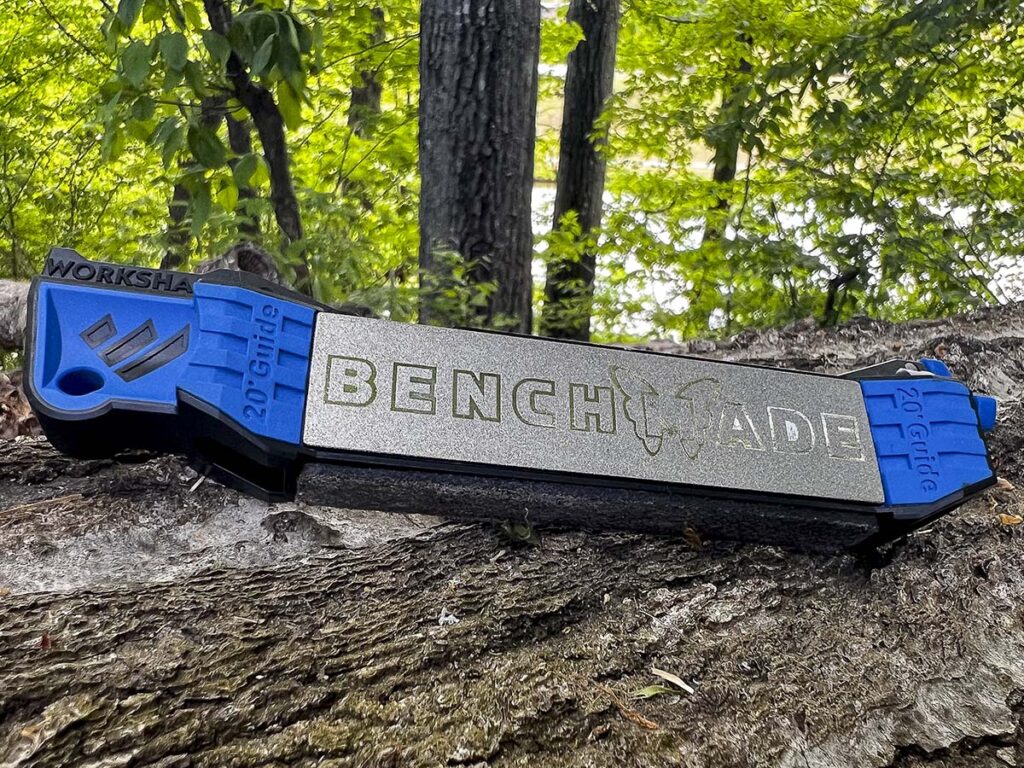
The Benchmade Guided Field Sharpener packs a lot into a small and affordable system. In addition to an integral angle guide, the system includes a diamond-infused sharpening plate, ceramic honing rods and a leather strop.
The Benchmade Guided Field Sharpener is the ultimate compact sharpener that is packed with so many features that you must use it to believe it. The unit is manufactured for Benchmade by Work Sharp, so it comes with a pedigree of a company that knows a thing or two about sharp cutting edges.
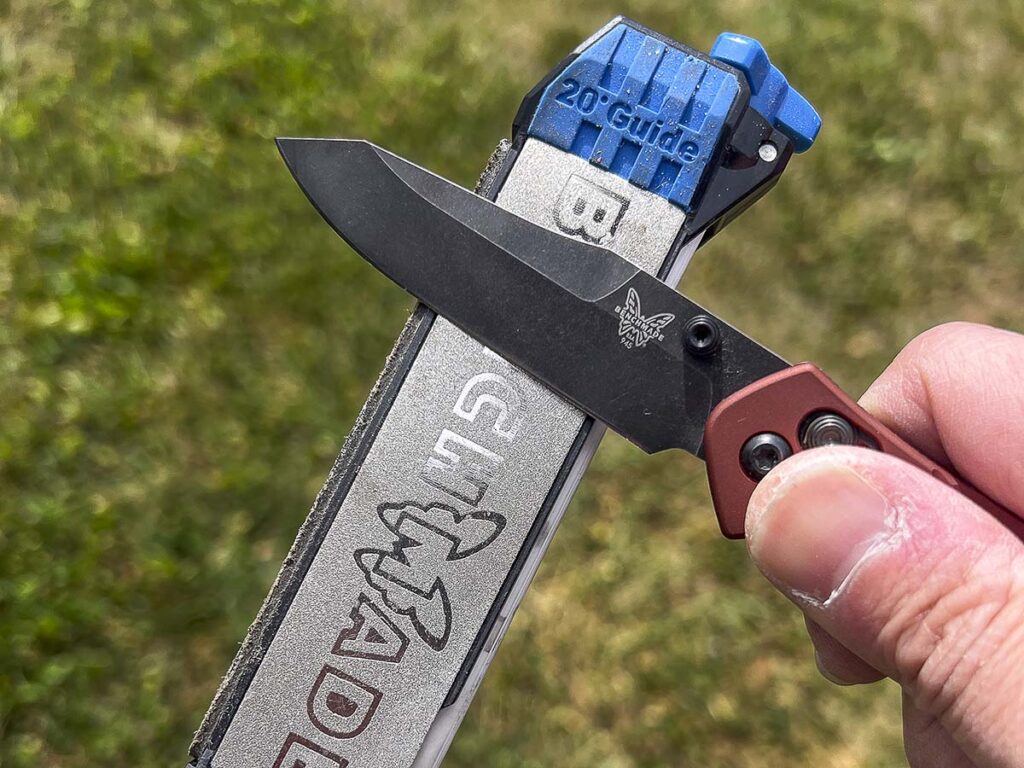
What you get with the Guided Field Sharpener (GFS) are coarse and fine diamond-coated sharpening plates held onto the body using rare-earth magnets. You also get a fine-grit ceramic rod for quick touch-ups. This rod has two sharpening surfaces—regular and ribbed, which are for more aggressive honing. You also get a smaller diameter ceramic rod, which addresses serrations. On top of all this, the unit has two sets of integral angle guides set permanently at 20 degrees. Finally, at one end of the sharpener frame is a leather strip for the final polishing of your edge. Folks, what you have right here is a comprehensive sharpening system in a pocket-sized form factor.
While the Guided Field Sharpener works very well on folding hunters, tactical folders, multi-bladed pocketknives and some smaller fixed blades, it also handles larger blades, such as kitchen knives, as well. You must be mindful when working with a larger blade on a smaller sharpener and move the blade more efficiently to cover the entire cutting edge in one stroke.
The Benchmade Guided Field Sharpener is made by Work Sharp and was designed as a comprehensive compact sharpener to take with everywhere. Aside from its accoutrements, one of the more desirable features of the tool is its lightweight, coming in at less than 5 ounces.
Using GFS is simple, you lay your blade onto the angle guide, then hold the handle steady and move the blade across the surface of the plate. You do need to remain conscious of your angle, as the guide only starts you at the right incline. Generally, you’ll start with the diamond hone to establish the edge, followed by the fine grit to define it. Finally, a few swipes on the ceramic rod, along with a finish on the leather strip, result in a hair-popping sharp edge.
Overall, the Benchmade sharpener is sized perfectly for everything from a rucksack to a coat pocket. It’s a powerful tool in a compact package, and a value. To this, it’s worth noting that the GFS is assembled in the U.S.A. from foreign and domestic components.
Guided Field Sharpener Specs Frame Material: Polymer Sharpening Material: Diamond plates, ceramic rods and leather strop Weight: 4.7 oz. Sharpening Surface: 6.87” Features: Integral 20-degree angle guide Country Of Origin: Assembled in U.S.A. from domestic and foreign components MSRP: $50
SOG marks four decades with a limited, 500-piece run honoring its original MACV-SOG combat bowie root.
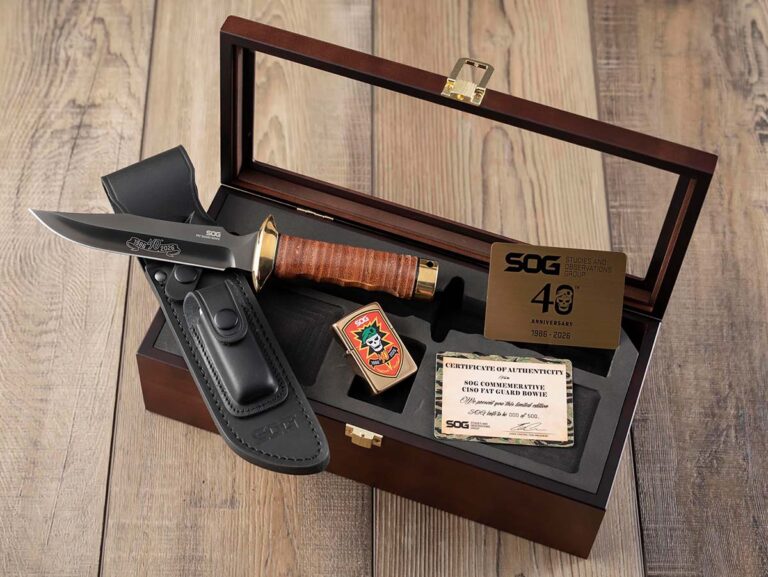
To mark four decades in business, SOG Knives has released a limited-edition homage to the blade that started it all: the 40th Anniversary Fat Guard Bowie. Drawing direct design cues from the original S1 Bowie introduced in 1986, the new release pays tribute to the covert fighting knives carried by MACV-SOG personnel during the Vietnam War.
Historical Roots, Modern Production
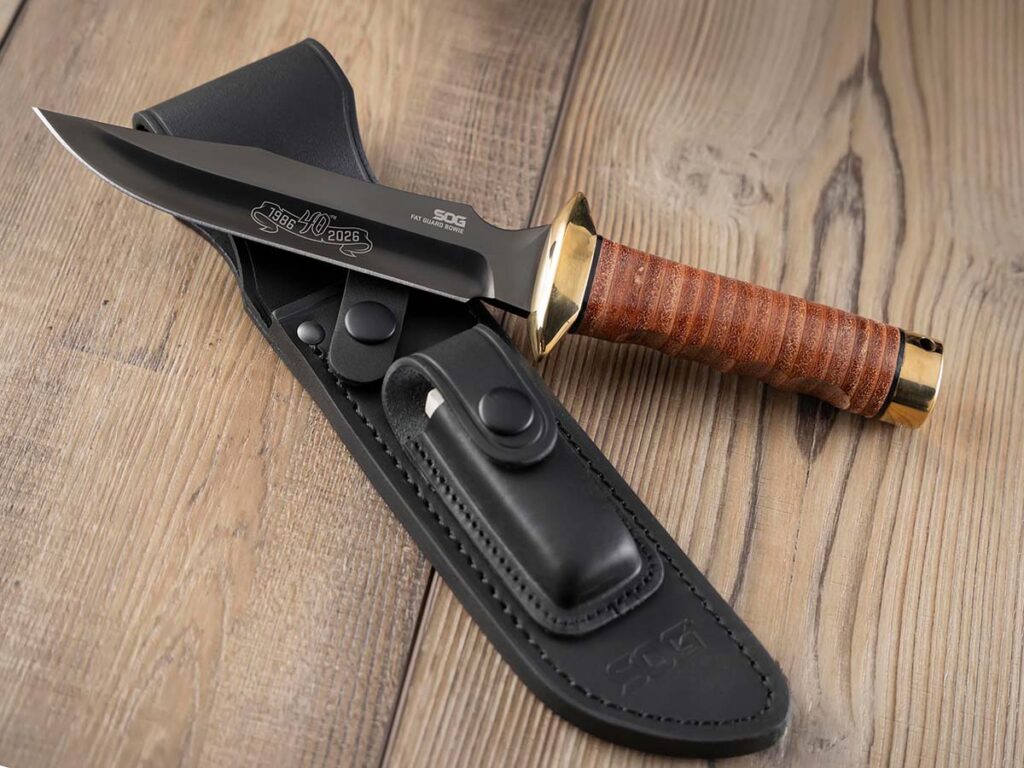
The 40th Anniversary model centers around a 6.1-inch clip-point blade forged from AUS-8 stainless steel. SOG finished the steel with a black PVD coating for added corrosion resistance and reduced reflection.
True to the traditional combat bowie silhouette, the handle is built from stacked leather, offering a classic aesthetic alongside a contoured grip. A substantial brass guard and matching butt cap frame the handle assembly. Production is strictly capped at 500 individually serialized units, with each knife’s specific number etched directly into the pommel.
Commemorative Display Package
Rather than shipping as a standalone tool, SOG packaged the anniversary Bowie as a complete collector’s set. The knife sits inside a handcrafted pine display case outfitted with a clear glass viewing lid and an engraved anniversary plaque.
Accompanying the fixed blade inside the presentation box is a custom SOG 40th anniversary Zippo lighter and a signed certificate of authenticity. For field carry or storage, the set includes a heavy-duty black leather belt sheath, complete with a front-mounted snap pocket containing a touch-up sharpening stone.
The 40th Anniversary Fat Guard Bowie package is available directly through SOG’s website while supplies last.