


In this look at dagger design, we move beyond history and symbolism to the structural realities of geometry and construction. From the curve of the edge to the presence—or deliberate absence—of a fuller, each feature serves the dagger’s singular purpose: to deliver a clean, decisive thrust and to endure long enough to do so again.
Dagger Profile & Point Geometry

A dagger’s profile is its outline when viewed from the flat side; its point geometry is the shape of its cross-section near the tip. Mastery in dagger design comes when the two elements merge into a seamless conduit for force, guiding energy from the wielder’s hand into the target.
One guiding principle is to avoid parallel edges along the portion of the blade intended for penetration. On utility knives, parallel edges are excellent for long, slicing cuts, but in a dagger they can create excessive suction and drag during withdrawal. They also represent a missed opportunity to enlarge the wound. A blade with gently convex curves tends to create a wound tract that widens as it penetrates, then releases more easily on the way out. The effect is twofold: the strike inflicts substantial damage on entry, and the blade slips back out with minimal resistance. In a fight where fractions of a second matter, ease of withdrawal could determine whether the wielder stays alive.

Cross-sectional design reinforces how a dagger behaves in the hand. The Roman pugio often carried a pronounced central ridge that gave it a triangular cross-section, lending the blade excellent stiffness. Later European daggers frequently adopted a diamond-shaped section that struck a balance between rigidity and lighter mass. In practice, triangular sections feel solid and grounded, with the ridge channeling force straight to the point. Diamond sections distribute the force across four bevels, trimming weight just enough to make the blade a touch quicker, though sometimes at the cost of absolute stiffness.
Experimental archaeology adds nuance to this comparison. Triangular sections resist torsional stress more effectively, while diamond sections tend to slip more cleanly into soft targets. Renaissance arms rooms often contained both forms, chosen with intent: defense versus assassination, battlefield versus court intrigue.
Dagger Ergonomics & Balance

Even the finest blade geometry falters without a grip that enables control. Here, ergonomics and balance determine the dagger’s effectiveness.
Early medieval daggers often featured grips as short as 3-to-4 inches. This compact length forced the hand into a firm grasp close to the guard, a practical safety measure when blood, rain or sweat made surfaces treacherous. Fourteenth-century Germanic examples show how a modest flared guard and compact handle could prevent slippage while preserving agility.
Balance points were just as carefully managed. In many 16th-century Italian stilettos, the center of gravity sits just ahead of the guard, giving the weapon a stab-ready steadiness. The narrow, edgeless blade minimizes rotational drag. Highland dirks, by contrast, often used teardrop pommels to counterweight the blade, shifting balance closer to the hand and allowing forceful thrusts whether on horseback or on foot.

Makers sometimes introduced subtle refinements. A ricasso notch carved two or three centimeters from the guard ensured that the user’s thumb returned to the same anchor point every time. A shallow fuller reduced forward weight, so that an 8-inch stiletto might balance almost identically to a heavier 10-inch combat dagger. These small calibrations transformed the blade from a piece of steel into an extension of muscle and bone.
Dagger Strength Features

The dagger’s tip, however slender, must withstand resistance from mail, bone or even poorly placed strikes. European smiths between the 14th and 17th centuries developed several overlapping solutions that remain relevant today. Fuller placement was one of the most important: a carefully cut longitudinal groove reduced weight while preserving stiffness, as seen in 16th-century Venetian stilettos where the fuller often ran from just below the guard almost to the point.
Ricasso thickness was another safeguard. A blade too thin at the base was liable to flex and buckle under pressure, and even worse, a weak ricasso translated into a fragile point once the final bevels were ground. By keeping this area stout, smiths not only gave the blade strength but also provided a tactile zone of unsharpened steel where the thumb or index finger could anchor securely.

Hardening practices added a third layer of reliability. Most European daggers were quenched and tempered uniformly to a Rockwell hardness in the neighborhood of 48-to-52 HRC. A few Italian masters appear to have experimented with clay tempering to leave the ricasso slightly softer, but this might also have been accidental. In any case, the visible temper lines familiar in Japanese blades were rare. What mattered was consistency: a uniform temper that balanced edge retention with toughness made it so the dagger could survive repeated thrusts against armor and bone alike.
Avoid Feature Creep

Through all the refinement, one lesson emerged repeatedly: every extra feature risked undermining the dagger’s true purpose. Serrations, pry tips and decorative piercings might look clever but each introduced problems. Serrations can snag on clothing and tear rather than pierce. Pry tips disrupt the straight thrusting line. Even ornate cut-outs, while attractive, create weak points that could split under stress.
Historical makers knew better. Even the most extravagant Renaissance daggers—with gilded hilts, inlaid gems or etched scrollwork—maintained an unbroken distal taper from guard to tip. Embellishment was typically reserved for the surfaces, not the structure. However adorned, the dagger kept faith with its defining role: the straight, unyielding line of the thrust.
Conclusion

From the Roman pugio to the Renaissance stiletto, the dagger’s identity rests not in ornament but in discipline: geometry over gimmicks, strength over flourish, function over feature creep. Clear profiles, rigid spines and balanced grips remain the hallmarks of a true dagger. These principles are as relevant to the modern craftsman as they were to the smiths of Venice, Florence or Solingen. A dagger’s promise, after all, is measured not by extravagance but by the sharp integrity of its point.
More On Daggers:
- Dagger Design: The Geometry of Penetration
- Dagger Design: Fundamentals Of Dagger Construction
- Best Daggers: Top Options That Get To The Point
- Best Push Dagger: Background And Buyer’s Guide
- Custom Dagger: Double-Edged Gems That Get To The Point
- Cool Custom: Ryan Breuer’s Relic Dagger
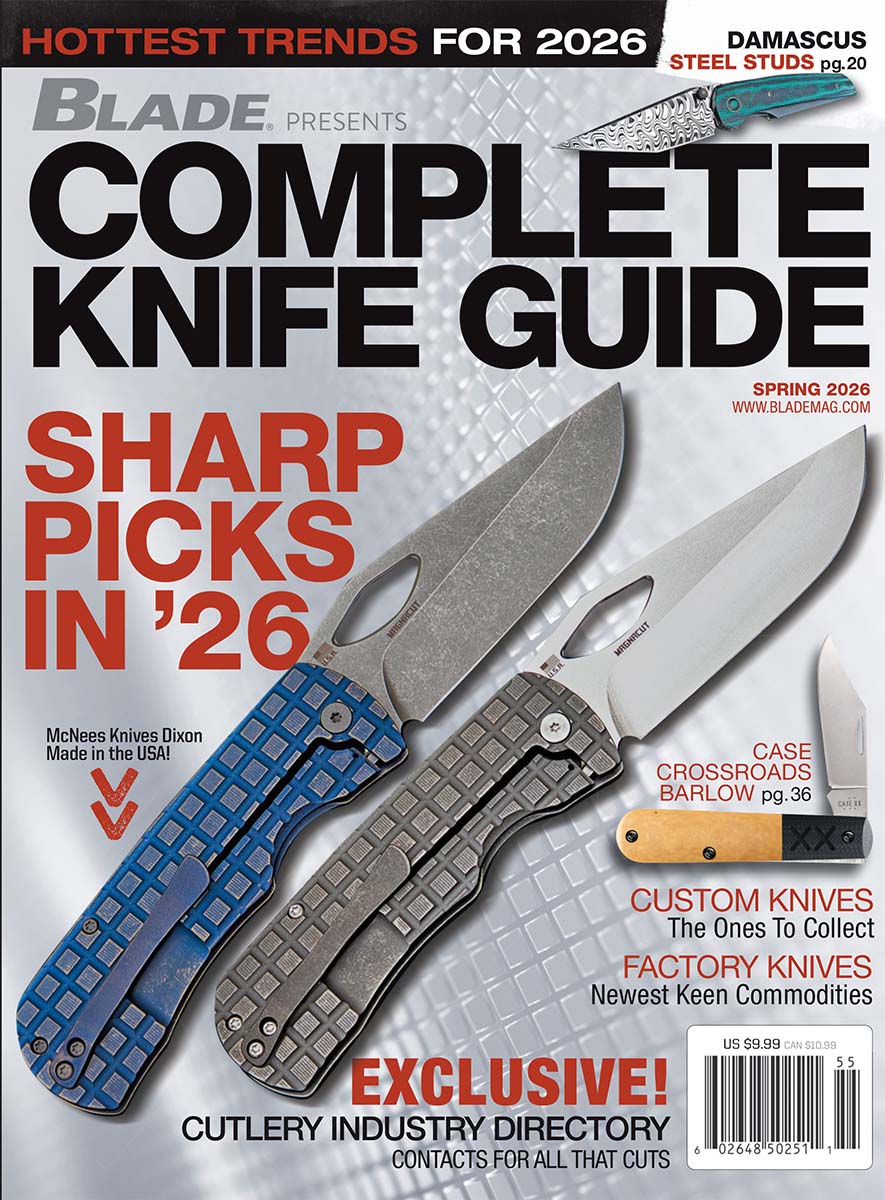 NEXT STEP: Download Your Free KNIFE GUIDE Issue of BLADE Magazine
BLADE’s annual Knife Guide Issue features the newest knives and sharpeners, plus knife and axe reviews, knife sheaths, kit knives and a Knife Industry Directory.Get your FREE digital PDF instant download of the annual Knife Guide. No, really! We will email it to you right now when you subscribe to the BLADE email newsletter.





