

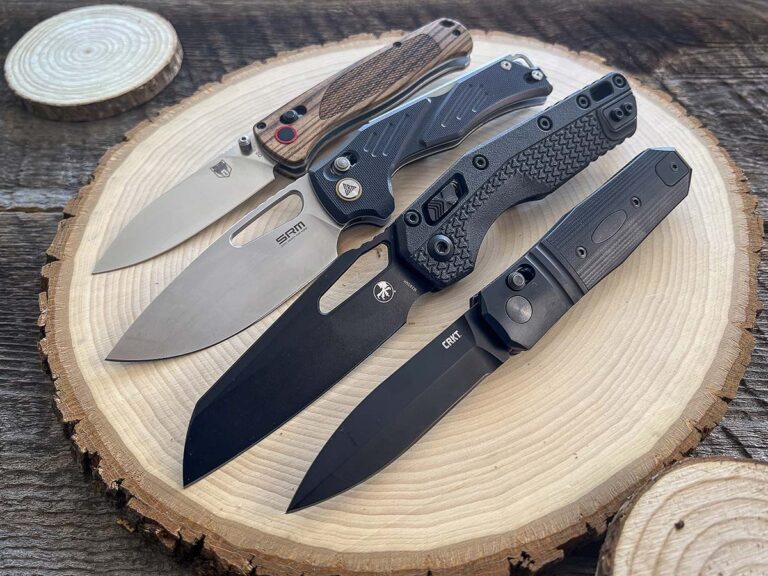
Since its advent in the 1990s, the crossbar lock has taken the knife world by storm. We look at a few top picks from this class of knives.
The crossbar lock has taken the folding knife industry by storm. Originally designed by knifemakers William McHenry and Jason Williams in the 1990s and released in 2000 by Benchmade Knife Co. as the Axis Lock, the mechanism offers strength and ease of ambidextrous operation. It is also safer to operate because you do not have to place your thumb or finger in the radial path of the closing blade to unlock it as with most other lock types.
Benchmade incorporated the Axis Lock in many of its folders that spanned the tactical, hunting, outdoor and EDC knife markets from the turn of the century forward. Finally, two decades after the patent was issued, it expired. This opened the door for many production knife companies to bring about their own versions of the Axis, now referred to generically as a crossbar lock, though it goes by other company-specific names as well.
Microtech RAM-LOK
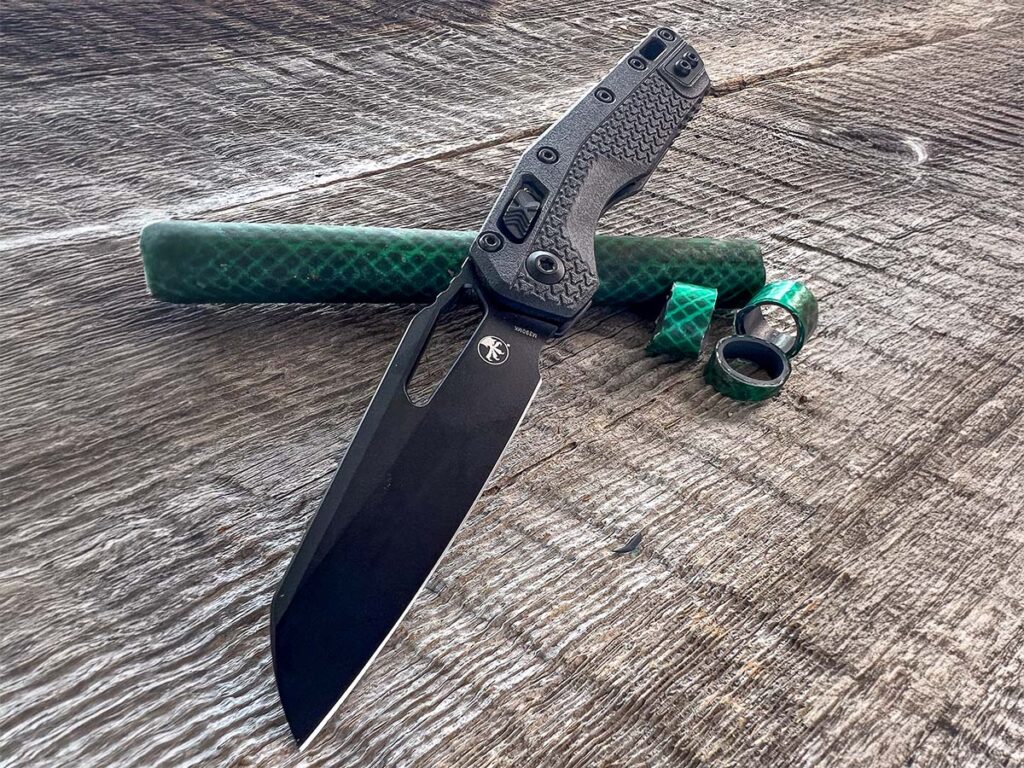
Microtech dubs its adaptation the RAM-LOK. The company ups the ante by using a rectangular-shaped lockbar as opposed to a round one, one of the major differences between Microtech’s version of the crossbar lock and others. The RAM-LOK is available only in such Microtech manual folders as the Stitch RAM-LOK, Amphibian RAM-LOK and the test knife: the MSI (Microtech Standard Issue).
One look at the MSI and you can tell it was designed and built for work. It is available in several different handle materials and colors, including the test knife’s polymer version in a molded thermoplastic.
The reverse tanto blade is 3.8 inches of flat-ground Bohler M390MK stainless steel, a special formulation of Bohler’s standard M390 available on Microtech knives only. The M390 was tweaked to get a bit more toughness and edge retention to arrive at the M390MK.
The straight-line cutting edge makes the MSI an excellent worker. Edge formats come in plain, part serrated and fully serrated. Blade finishes range from the basic stonewashed to the apocalyptic (acid wash), and Cerakote® available in an array of colors and, of course, black tactical. An oblong blade hole permits easy ambidextrous deployment.
Featuring all-Torx-screw construction, the handle has all the right contours and chamfers, making the knife very comfortable to hold and work with for extended periods. The gripping surface has what Microtech calls Tri-Grip texturing. The handle spacer is titanium. A fold-over deep-carry clip attaches the closed knife tip up.
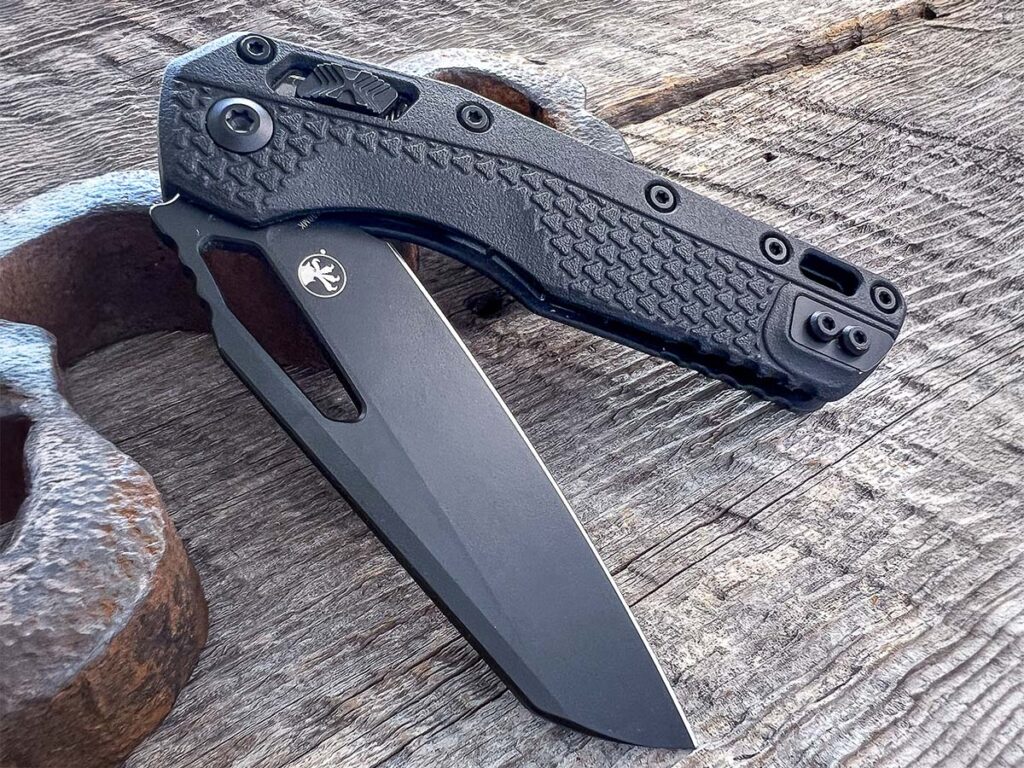
The RAM-LOK is extremely smooth and strong. The release buttons have an “X” stepped machining pattern found on all Microtech OTF autos. The machining helps you grip the lock button easily and pull it back to release and close the blade. The RAM-LOK also differs from other crossbar locks in that a coil spring provides the lock tension. Many other crossbar locks use a pair of Omega-shaped springs affixed to either end of the lockbar concealed beneath the handle. The coil spring is more durable than the Omegas. You can see the spring by looking down on the handle spine.
For integrity, within the scales are dual stainless steel partial liners. They are minimum sized to conserve weight. The polymer scales are unlike those on many lightweight folders. They have a high degree of rigidity so that flex is kept to an absolute minimum. For those of you who dislike thermoplastic-molded scales because they flex too much, the MSI polymer may change your mind.
At 5.1 inches closed the MSI is a formidable folder ready for most any cutting task. Pull cuts seem to fit the reverse tanto blade shape best, though it makes standard push cuts simple as well. The traction notches on the blade spine accept an index finger or thumb to put more pressure into the cut. The blade opens and closes very easily thanks to the pivot bearings, which facilitate inertia openings, too—simply hold the handle securely, pull back on the RAM-LOK release buttons, flick your wrist and the blade rotates out smoothly. It closes in the same manner so deployment and closing can happen seamlessly.
I like how well the MSI performs overall. It is a solid cutting tool that withstands the heavy use and abuse knife guys dish out. You can’t tell a difference performance wise between M390MK and M390, but if you are familiar with M390 you pretty much know what to expect—edge holding that goes the distance and a steel that nails heavy-duty cutting tasks.
For a great value in a USA-made folder, consider the MSI polymer. With an MSRP of $211, it is an excellent opportunity to dive into Microtech precision and reliability at a lower price point.
SRM Knives Mirage 239X-GB
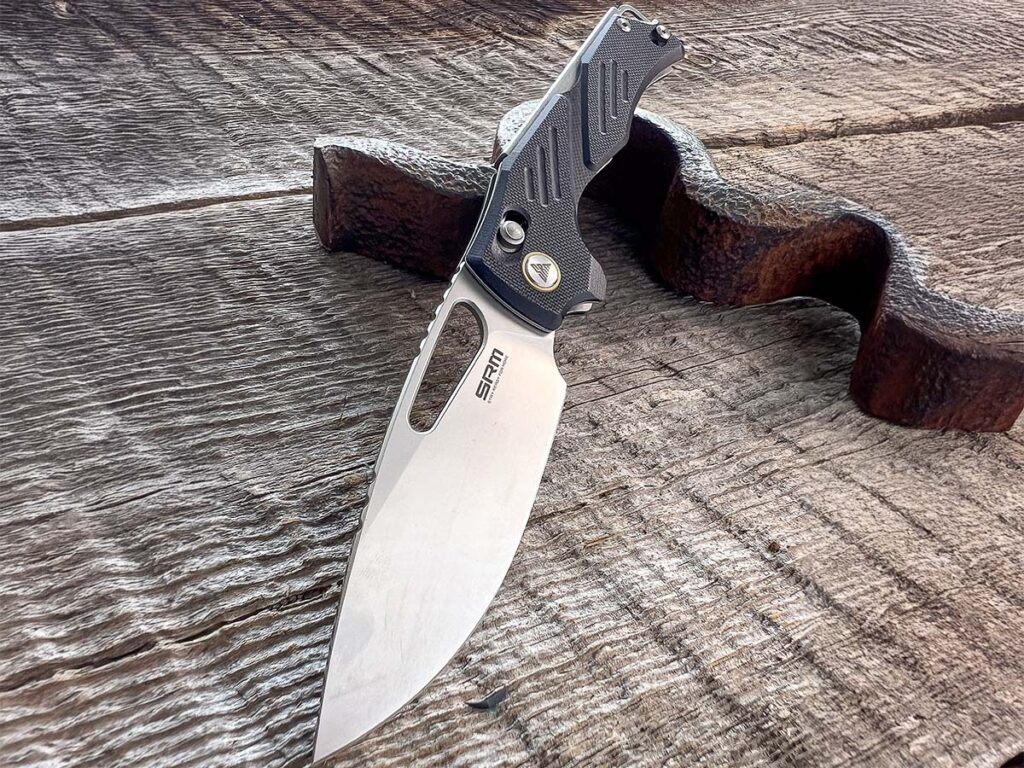
The SRM Knives Mirage 239X-GB folding hunter is designed to be a high-tech knife that isn’t afraid to work. It incorporates some interesting technology I’ve never seen on a folder before.
The heart and soul of the Mirage is a 3.6-inch drop-point blade flat ground from Sandvik 14C28N stainless steel. It’s a steel known for excellent edge holding as well as fairly affordable cost, which is why it is a favorite among entry-level-to-mid-range knives. An oblong blade hole permits easy ambidextrous deployment. Each blade comes in a fine ceramic bead-blast finish. Out of the box the edge is shaving sharp and ready to work immediately. The blade deploys smoothly on pivot bearings.
The handle features stainless steel liners and black G-10 scales. The G-10 has milled-in grooves and a prominent center channel for grip enhancement, along with the texture for which the popular synthetic handle material is known.
With the knife open, part of the tang and the front end of the handle form a finger groove for choking up for extra control. An integral guard prevents your hand from sliding forward during use.
SRM calls its crossbar variant the Ambi Lock. I like the extra relief milling on the G-10 around the lock-release buttons to promote a better grip when locking the blade.
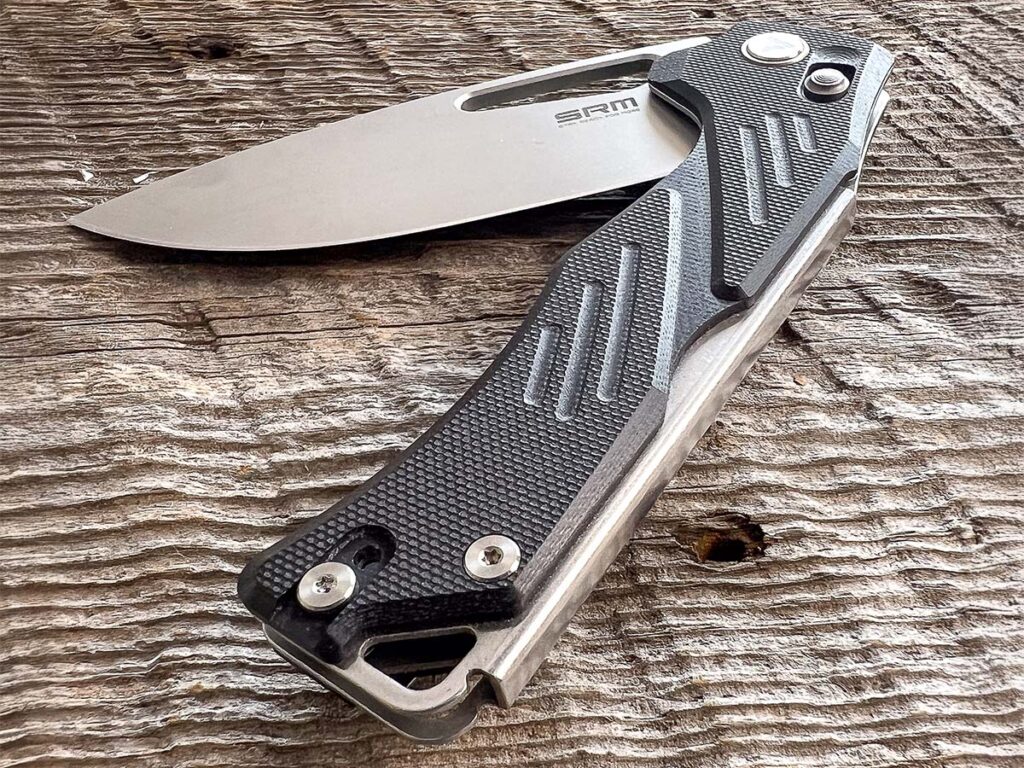
The steel liners comprise one of the more interesting aspects. Normally on a crossbar lock folder the liners are two separate plates joined together by a handle spacer and screws. On the Mirage, SRM uses what it calls a Mono Chassis design. Basically, the liners are integral. The handle spacer is created when the two halves of the liners are bent and formed. No assembly screws are used to hold the handle together. The SRM literature indicates the Mono Chassis results in a stronger handle design that better supports the Ambi Lock and makes it more stable. I have never seen this done on any folder before and must admit it does look cool. The almost full-length spacer also makes the Mirage feel more comfortable for prolonged use. This is pretty trick and impressive! I wish the innovation were used in more knives.
Country of origin: China. MSRP: $49.95. Built to go the distance, the Mirage is a highly useful folder for a plethora of cutting chores.
CobraTec Zebrawood Crossbar Lock Folder
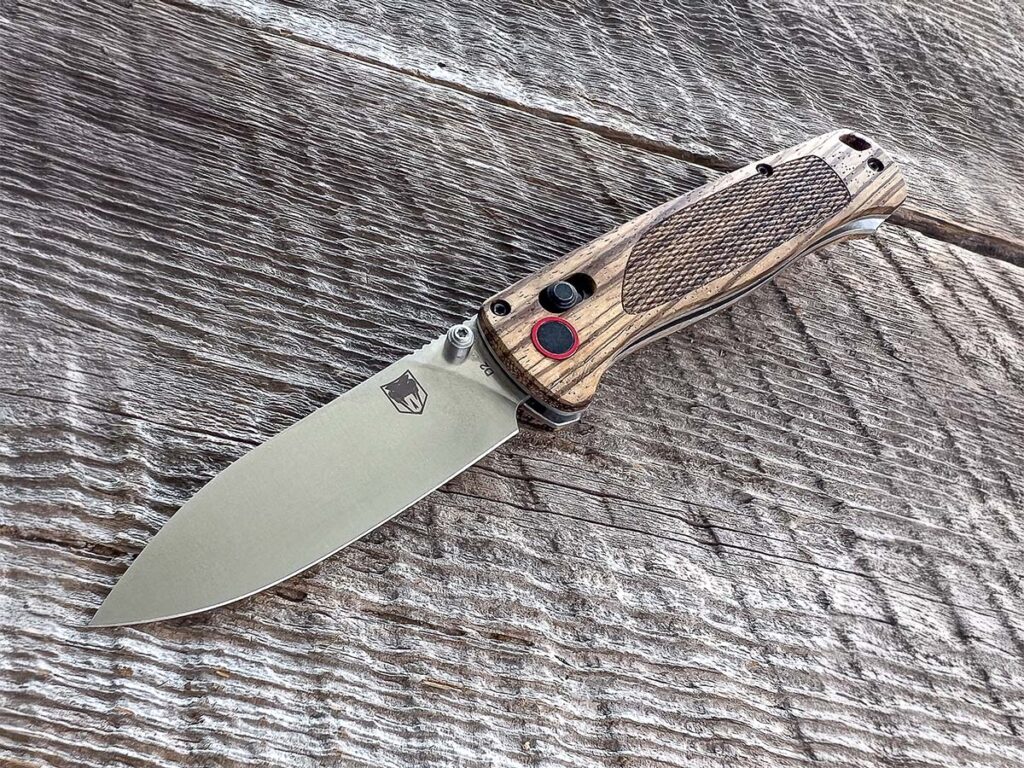
Known for its budget-friendly OTF autos, CobraTec also makes manual folders and the Zebrawood Crossbar Lock Folder is one of the latest.
The EDC knife is as elegant as it is useful, sporting a 3-inch drop-point blade of D2 tool steel and a striking zebrawood handle. D2 addresses both cost and performance issues, being relatively inexpensive and offering well-documented edge-holding performance and impact resistance. Though not fully stainless, D2 has a bit more stain resistance than most carbon steels. It’s also easy to sharpen. Ambidextrous thumb studs open the blade quickly and easily. The blade shape is great overall, utilitarian and easily adaptable to a wide range of cutting tasks.
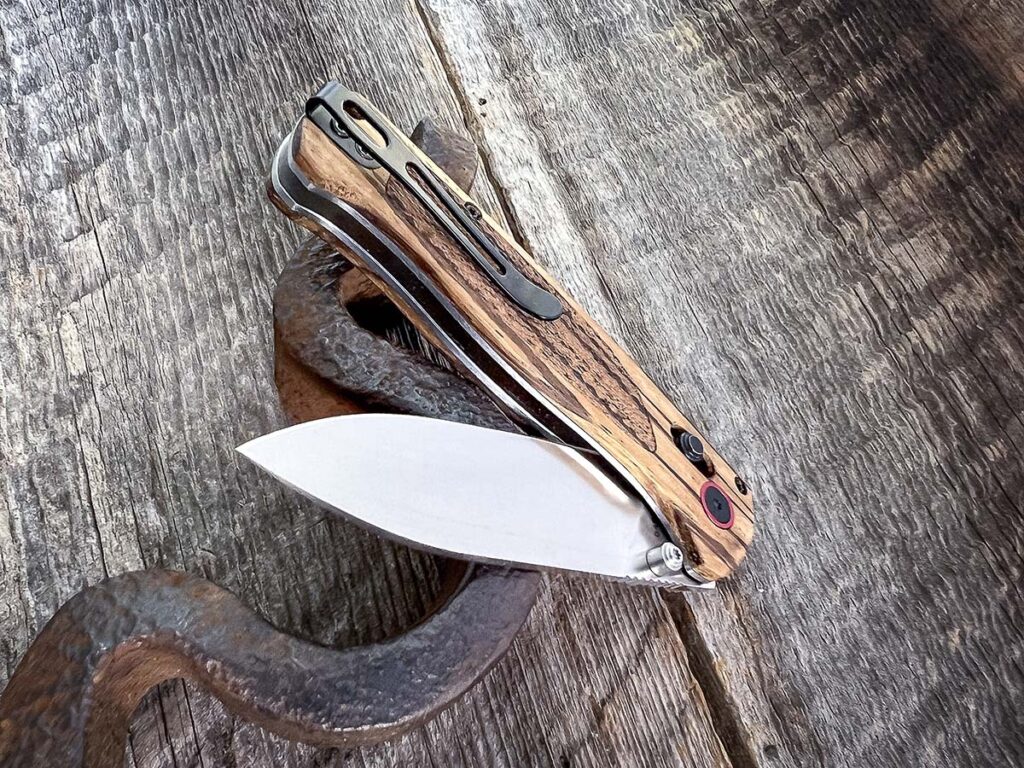
The handle has double stainless-steel liners skeletonized to lighten the load. Laser-engraved checkering promotes a nonslip grip. The zebrawood not only looks good but like most woods is warm to the touch and has an organic feel. The blade rides on a pair of caged bearings for ultra-smooth opening and closing. It is a great EDC folder that won’t weigh you down nor break your budget.
Considering the straightforward design, the knife carries very comfortably. It is assembled in the USA with overseas parts. MSRP: $59.99.
CRKT Redemption Compact
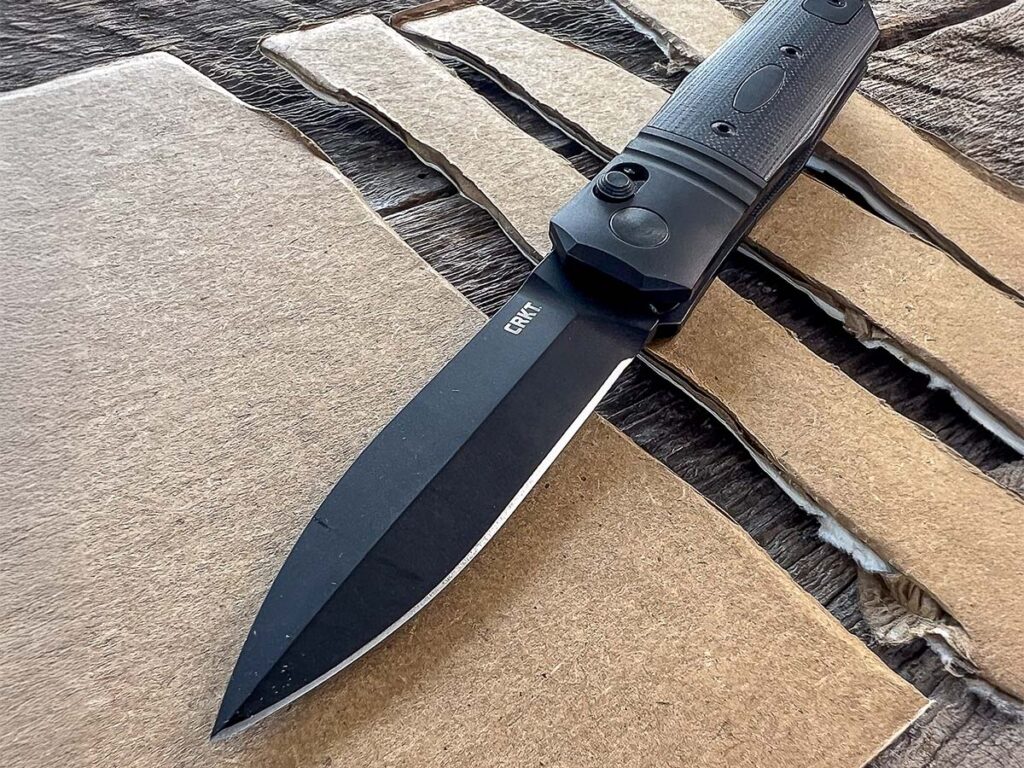
The CRKT Redemption Compact is a production version of BLADE Magazine Cutlery Hall-of-Fame® member Ken Onion’s Dead Man’s Hand custom folder. It emulates knives carried by Wild West outlaws—easily concealed and fast on the draw.
The Redemption Compact scales things down to a much more EDC-friendly 3.2-inch blade. The knife is sized right and still packs a punch. The dagger-style blade is CPM MagnaCut stainless steel and sharpened on one side only to remain legal in most jurisdictions. The coffin-shaped handle is accented by a double-fluted steel bolster and a deep-carry pocket clip. The scales are smooth black G-10.
Manufactured in the USA for CRKT by Hogue Knives, the knife boasts a crossbar lock that holds the blade open quite securely. The closed blade sits so deep in the handle that it’s almost impossible to attach thumb studs or a thumb disk to the blade to facilitate easy one-hand opening. To open, hold the knife in your dominant hand, pull back on the lock and use a circular motion to rotate the blade out from the handle. The blade rides on a pair of caged bearings that prompts ultra-smooth rotation open and closed. With a bit of practice you will get the hang of how far back to pull the lock to get the blade to swing out freely.
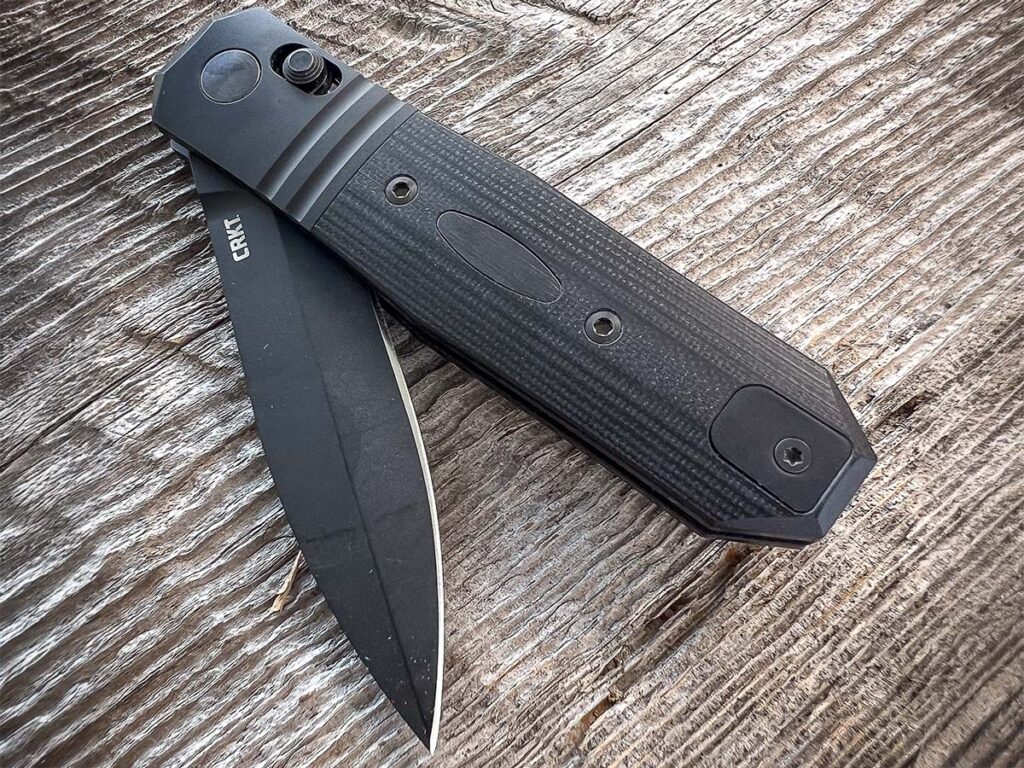
Carry wise, the Redemption Compact packs a lot of utility and character. Thanks to the deep-carry clip, the closed knife rides very low in the pocket; some might even complain there’s not enough handle sticking out to grab onto. That’s the trade out with deep-carry clips—you get the low visibility but some also have a degree of difficulty in retrieving the knife.
The double-ground dagger-style blade affords easy penetration, even with the single edge. The spear-point shape tackles most cutting chores with ease. The look plays into this particular design as it is nearly symmetrical in both handle and blade—sleek, compact and loads of character. MagnaCut is regarded by many as today’s best high-performance stainless. It holds an edge so you will be resharpening less and using the knife more. MSRP: $250.
More Knife Reviews:
- Sharps Bros. Meanstreak Review: Keen, Mean Cutting Machine
- Relentless Knives Curved Fillet Knife Review
- Cold Steel Finn Bear Review: Light, Sharp And Up To Snuff
- Spartan Blades Clandestina Review: 2024 Blade Knife of the Year
 NEXT STEP: Download Your Free KNIFE GUIDE Issue of BLADE Magazine
BLADE’s annual Knife Guide Issue features the newest knives and sharpeners, plus knife and axe reviews, knife sheaths, kit knives and a Knife Industry Directory.Get your FREE digital PDF instant download of the annual Knife Guide. No, really! We will email it to you right now when you subscribe to the BLADE email newsletter.





