

Tips and tricks to get the most out of attending a knife show.
Magazines, websites, and social media only give you a two-dimensional look at a knife. Nothing replaces the experience of handling a knife in person. While the internet is convenient, it cannot match the visceral sensation of holding a knife at a show.
There are many knife shows across America. Some are big, like the BLADE Show, while others are smaller, regional events. All shows have one thing in common: custom knives. Makers offer blades in many styles, materials and price ranges. No matter the show’s size, you can gain an advantage—and get the knife or knives you want—by research.
Today, even smaller shows have websites or social media pages listing exhibitors. The exhibitor list will help you identify who will be at the show. Before every show I attend or consider attending, I go through this list, looking for both familiar makers and those of whom I am unfamiliar. In particular, I look for makers from outside the U.S. From this, I create my own list.
For unfamiliar makers, I visit their websites or social media pages to explore their knives. This research allows me to refine my list and home in on those I’m truly interested in. Once my list is complete, I prioritize the makers whose knives I want to see and handle.
The floor map is another invaluable tool for show planning. As its name implies, it is a map showing the location of each maker’s table or booth. The combination of the exhibitor list and the floorplan provides me with the first advantage of my show game plan—time management. The other aspect it helps with is money management; researching gives me an idea of how much a specific maker’s knives will cost. I adjust my priorities accordingly.
Bargain Hunting
Knowing who’s at a show out of the way, the next step is to use the various social media platforms again to discover what the makers are bringing to the show. Many show off the knives they are planning on displaying and selling well before the actual event. This helps me identify style, materials and prices of which I’m interested. Often, this information also further helps prioritize my list.
Note, due to constraints imposed by some social media platforms, pricing is not always included in knife descriptions on these platforms. There’s an easy way around this, given that there is nothing wrong with sending the maker a message asking for the price. Realize, for many makers, pricing the knife can be as challenging as making the knife. But knowing the price allows you to compare other makers’ prices for similar work.
Becoming familiar with pricing across the spectrum of a particular knife sector—say, bowies, EDC or hunting knives—ultimately helps you get the best knife for your money. And the best value often is a new maker discovered during list research. I make it one of my goals to find a new maker whose work I am unfamiliar with at every show I attend. While I am not successful every time, many of the makers I work with today I found exactly through this method.
Personal Logistics
Research shouldn’t solely focus on the who and what at a show’s tables and booths. There is also a bevy of other factors to consider beforehand to make a show more pleasant.
It might sound obvious, but know where the show is located. Some smaller shows I have attended have been off the beaten path and difficult to find. I personally get frustrated having to hunt around for a venue, only to end up there after it’s already open.
Identifying the show hours is also crucial, as is understanding how most events organize their hours of operation. Most shows open earlier on the first day than on the second or third day. The inverse is generally true for closing—the last day usually ends earlier, especially for three-day shows.
It’s a good idea to also consider the restaurants you’ll eat at and the hotels you’ll stay in. The larger the show, the more crowded the restaurants and hotels. This is especially true with a large group; heading to a show with friends, plan on reservations for both room and board.
Don’t assume parking is right outside of the show’s location. That’s a recipe for trouble. Do your research and see if there is plenty of parking, where it’s located and, at some venues, how much it costs.
The final consideration is actually getting into the show—your tickets. If the show offers advance tickets, I recommend you purchase them before you arrive. You don’t want to be standing in line when the doors open.
Show Etiquette
It should come as no surprise that those attending a show are focused on the knives they came there to see. But don’t let your focus make you into a poor or even rude show attendee. Here are some recommendations to keep in mind while at the maker’s tables.
When in doubt, ask for permission to handle a knife. Makers want you to; they just want you to do so respectfully.
If you have children with you, watch their little hands. They want to grab the knives just like everyone else.
Replace the knife where you found it. Set the knife down and don’t just drop it on the table.
For those knife fighters out there, limit your moves at the table. Those knives are sharp!
Don’t put your drinks, backpacks, bags, etc., on the maker’s table. Accidents happen, and no one wants a knife scratched or damaged.
Wait for your turn. At a crowded table, more than one person has been cut trying to grab a knife.
Take your non-knife-related conversation away from the front of the table. Don’t block the table from potential customers.
Everyone loves a deal, but no one wants to be insulted by a lowball price. Makers may adjust their price, but ultimately, that is their decision. That said, cash can tip the negotiation in your favor.
Ask as many questions as you like. Education directly from the maker is part of your admission price.
Here’s The Deal
Like the makers, dealers range from brand new to very experienced. Also, like makers, many have specialties. Unlike makers, they deal in the aftermarket. The prices they ask for knives, and are willing to pay for knives, are based on current market prices. Like many collectibles, those prices fluctuate based on several factors.
Additionally, keep in mind that when trying to sell knives to a dealer, you walked up to their table. The price they offer you may not be what you were hoping for. There is no reason to swear at them, call them names or accuse them of low-balling you. I have turned down thousands of knives because I didn’t think I could resell them. It was as simple as that.
Plan For Success
Even with a three-day show like the BLADE Show, time quickly slips away. Having a plan to get into the event and to the makers, in turn, the knives you’re interested in ensures you’ll have a good experience. In essence, it comes down to time and money—be sure to get the most out of each!
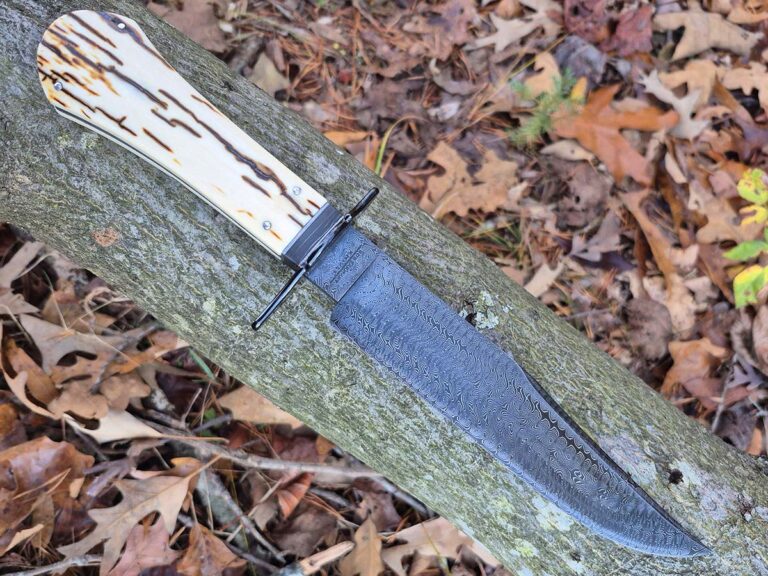
Maker: Bob Earhart
Model: Frame Handle Fighter
Blade Length: 7.5”
Overall Length: 12.3”
Blade Steel: 5-bar Turkish twist damascus
Guard Material: Blued 1018 Steel
Handle Material: Mammoth ivory
Leather Sheath: Custom-made by the maker
Comments: The knife has excellent balance and handle ergonomics. The frame handle is forged to shape, revealing the pattern. Bob is an ABS master smith. His BLADE Show Table Number is 19S.
Price: $1,700
Email Address: [email protected]
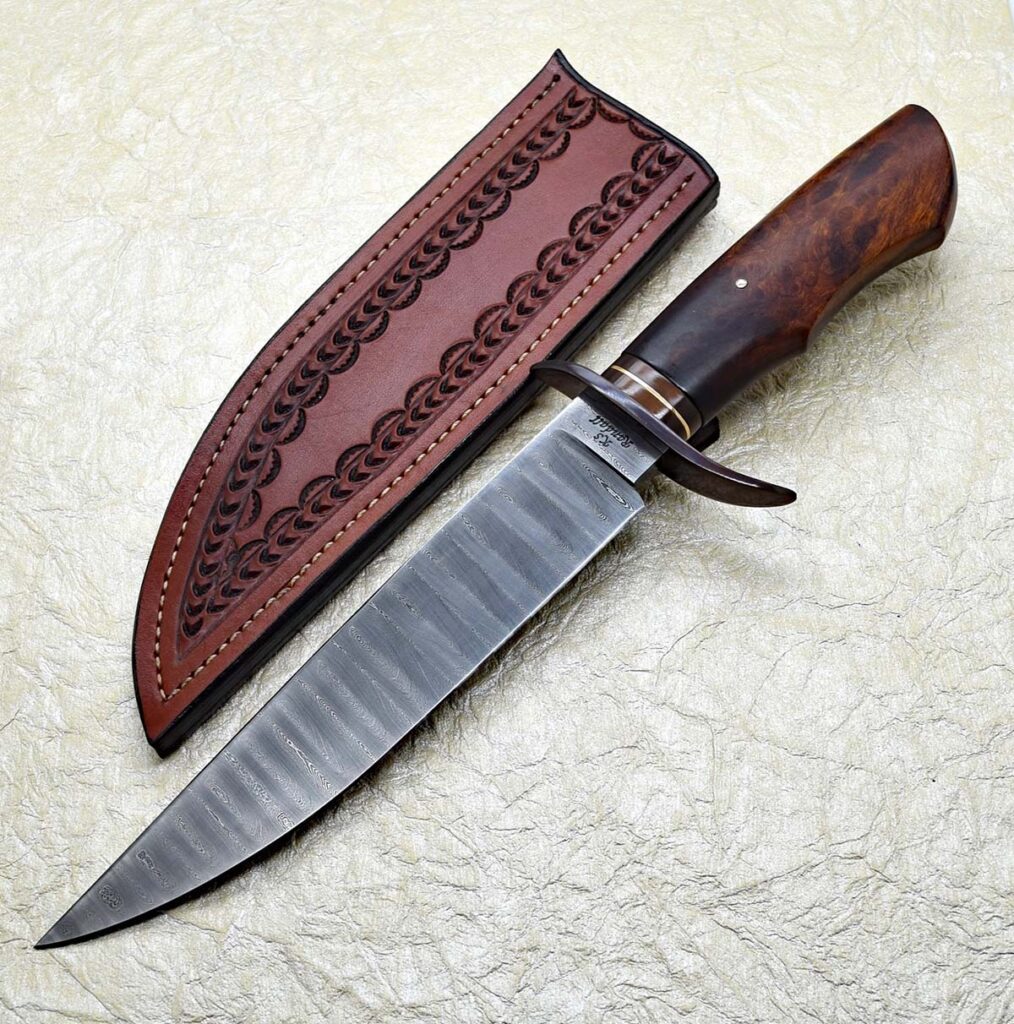
Maker: Steve Randall
Model: Damascus Fighter
Blade Length: 8”
Overall Length: 13”
Blade Steel: Ladder pattern Damascus
Guard Material: Browned carbon steel
Handle Material: Desert Ironwood
Leather Sheath: Custom-made by the maker.
Comments: Contoured guard and handle create a knife with excellent balance and comfort in the hand. Precise ladder pattern damascus, competent work from an ABS master smith. BLADE Show Table Number is 3R.
Price: $1,800
Email Address: [email protected]
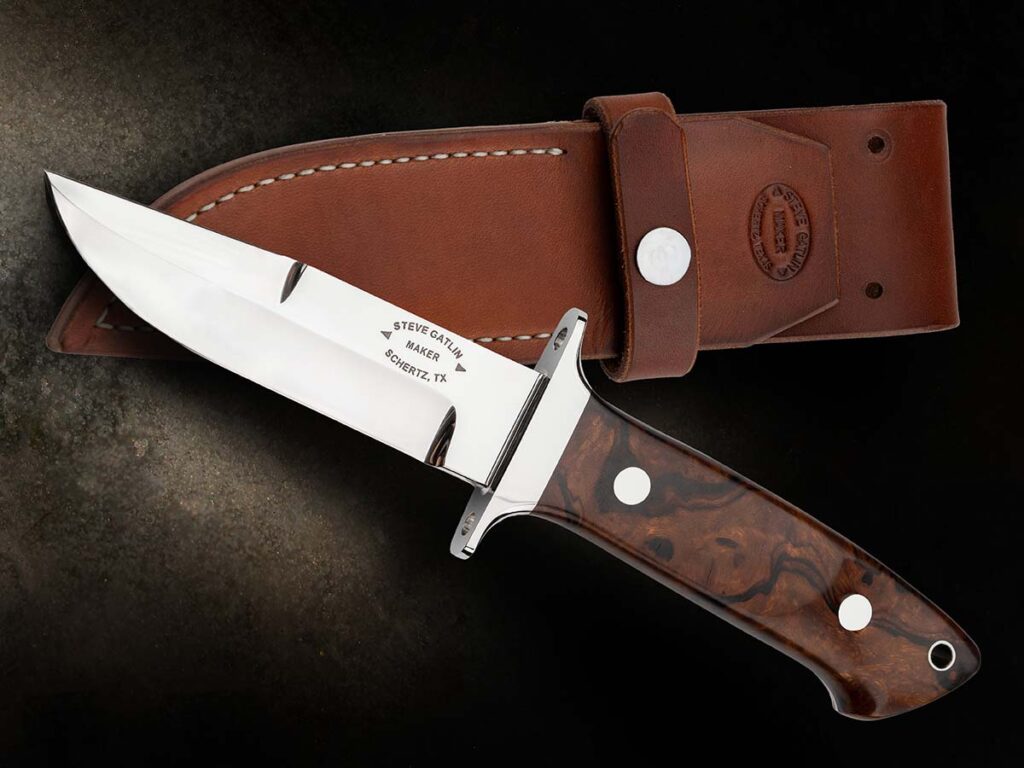
Maker: Steve Gatlin
Model: Loveless Style Chute Knife
Blade Length: 4.5″
Overall Length: 9.25″
Blade Steel: CPM 154
Guard Material: Stainless steel
Handle Material: Exhibition-grade Desert Ironwood
Leather Sheath: Custom-made by the maker
Comments: Steve’s exceptional version of the classic Loveless Chute. Light and quick in the hand. BLADE Show Table Number is 7E.
Price: $1,400
Email Address: [email protected]
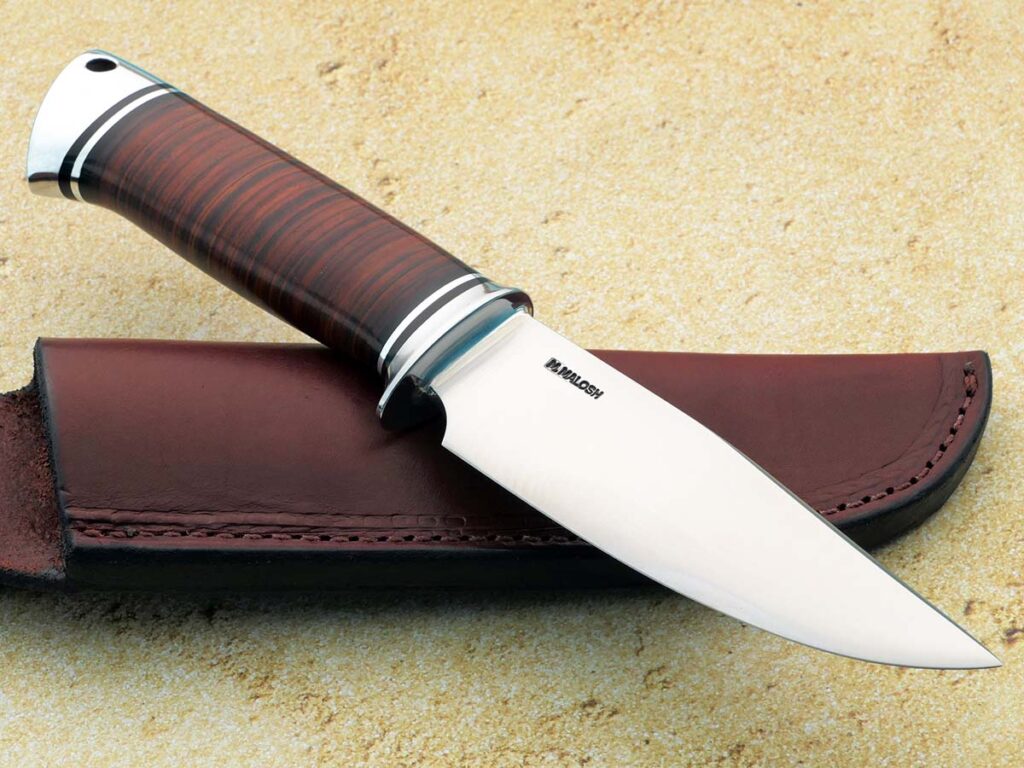
Maker: Mike Malosh
Model: Bear Hunter II
Blade Length: 4.5”
Overall Length: 9 1/8”
Blade Steel: W-2
Guard Material: Stainless steel
Handle Material: Leather
Leather Sheath: Custom-made by the maker
Comments: Excellent balance and handle ergonomics. Classic look. It is built for serious work. BLADE Show Table Number 6O.
Price: $425
Email Address: [email protected]
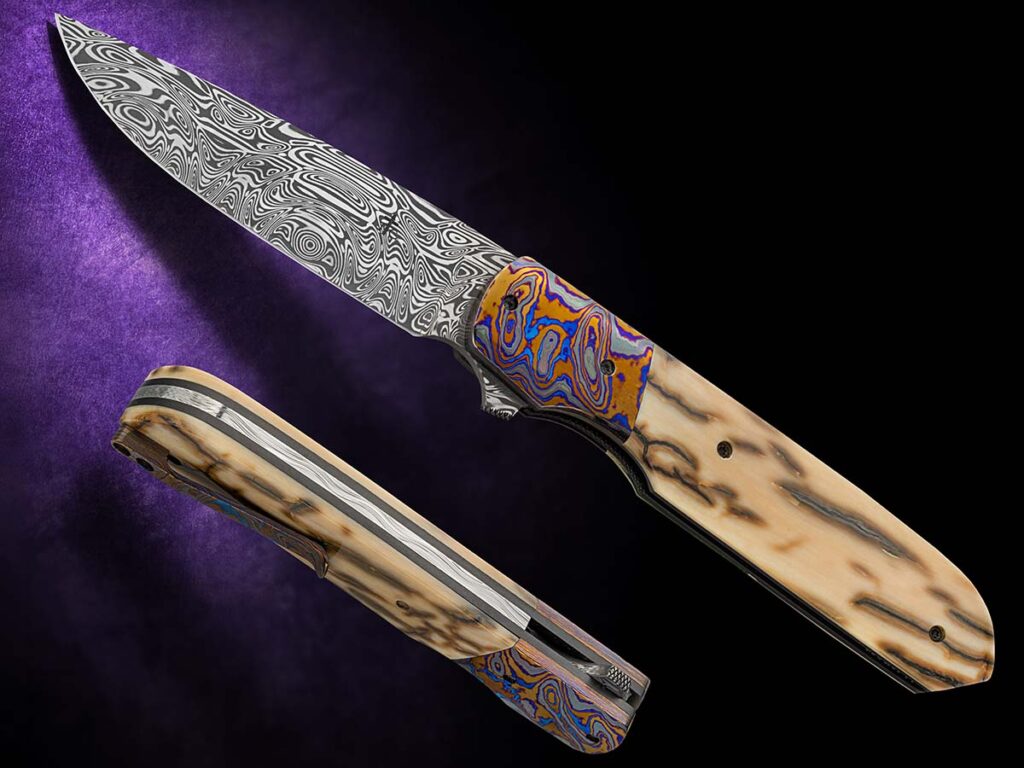
Maker: Jason Clark
Model: 77 Liner Lock
Blade Length: 3.5”
Overall Length: 8.12
Closed Length: 4.5”
Blade Steel: Damasteel
Bolster Material: Black Timascus
Handle Material: Mammoth Ivory
Opener: Flipper
Lock: Liner
Clip: Black Timascus tip up
Comments: Sleek and smooth. Great lock up! BLADE Show Table Number is 12E.
Price: $1,550
Email Address: [email protected]
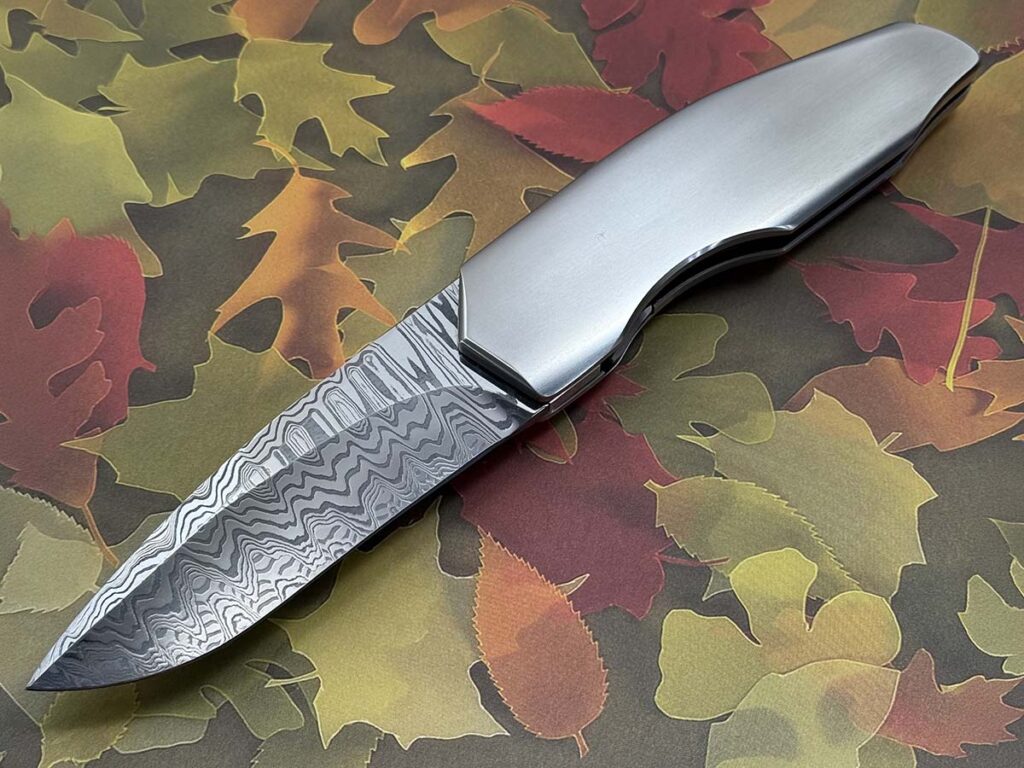
Maker: GTC Knives
Model: Enigma
Blade Length: 4″
Overall Length: 9
Closed Length: 4.5″
Blade Steel: Stainless steel Damascus
Handle Material: Titanium
Opener: SLT (spring-loaded tab)
Lock: Inset liner
Clip: Titanium tip up
Comments: Slick and smooth. Next-level construction and precision. This knife features screwless and toolless construction. WOW. Blade Show Table Number 19A.
Price: $3,500
Email Address: [email protected]
BLADE Show Info:
- BLADE University : Knife Knowledge Honed
- 7 Join BLADE Magazine Cutlery Hall of Fame®
- Photo Gallery: BLADE Show 2025 in Pictures
- 2025 BLADE Show Recap: What Happened At The Edge-Stravaganza
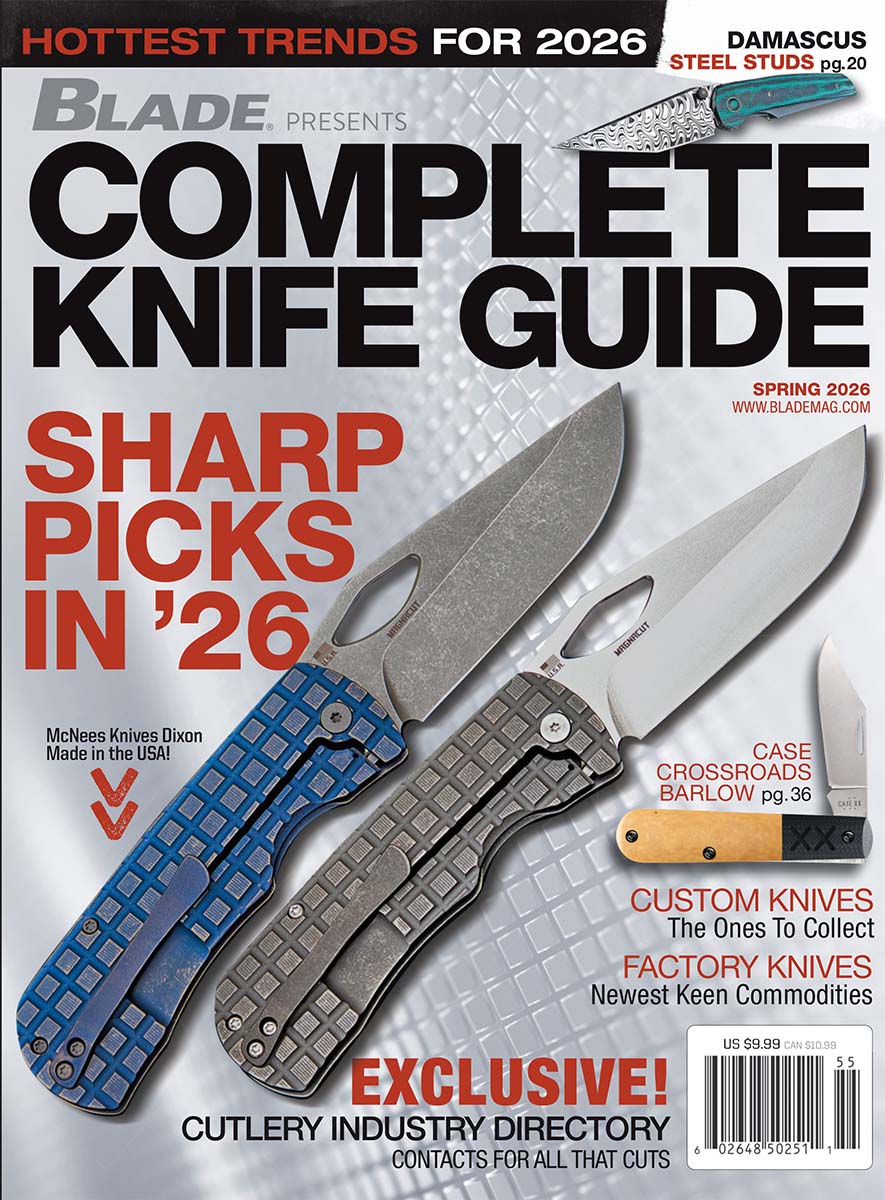 NEXT STEP: Download Your Free KNIFE GUIDE Issue of BLADE Magazine
BLADE’s annual Knife Guide Issue features the newest knives and sharpeners, plus knife and axe reviews, knife sheaths, kit knives and a Knife Industry Directory.Get your FREE digital PDF instant download of the annual Knife Guide. No, really! We will email it to you right now when you subscribe to the BLADE email newsletter.





