
The master smith shares tips for making twist patterns pop.
From the battlefield, as a member of the Army’s elite 75th Ranger Regiment, to bladesmithing, law enforcement and firefighting, John Horrigan’s life has truly been forged under fire. Having lost his twin brother Robert while serving with Delta Force in Iraq, John has dedicated his work to the memory of Bob’s legacy.
Specializing today in exquisitely executed forged fine-art knives, John completed his first knife in 1982. Evolving his processes as a master smith, one of John’s specialties deals with forging Turkish twist blades.
Twisting Steel
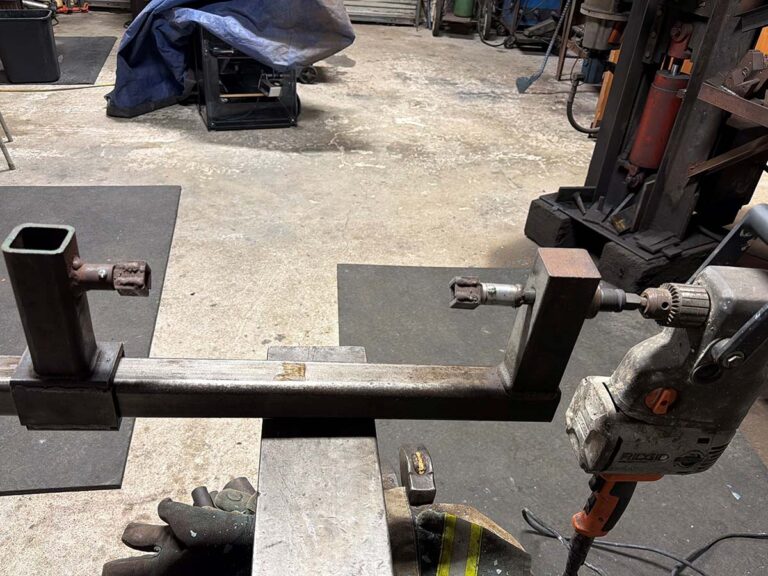
The Turkish twist is a technically demanding pattern requiring precision and patience. John uses a right-angle drill in a jig to provide the torque necessary for consistent twisting. His process for the creating and layout the pattern are as follows:
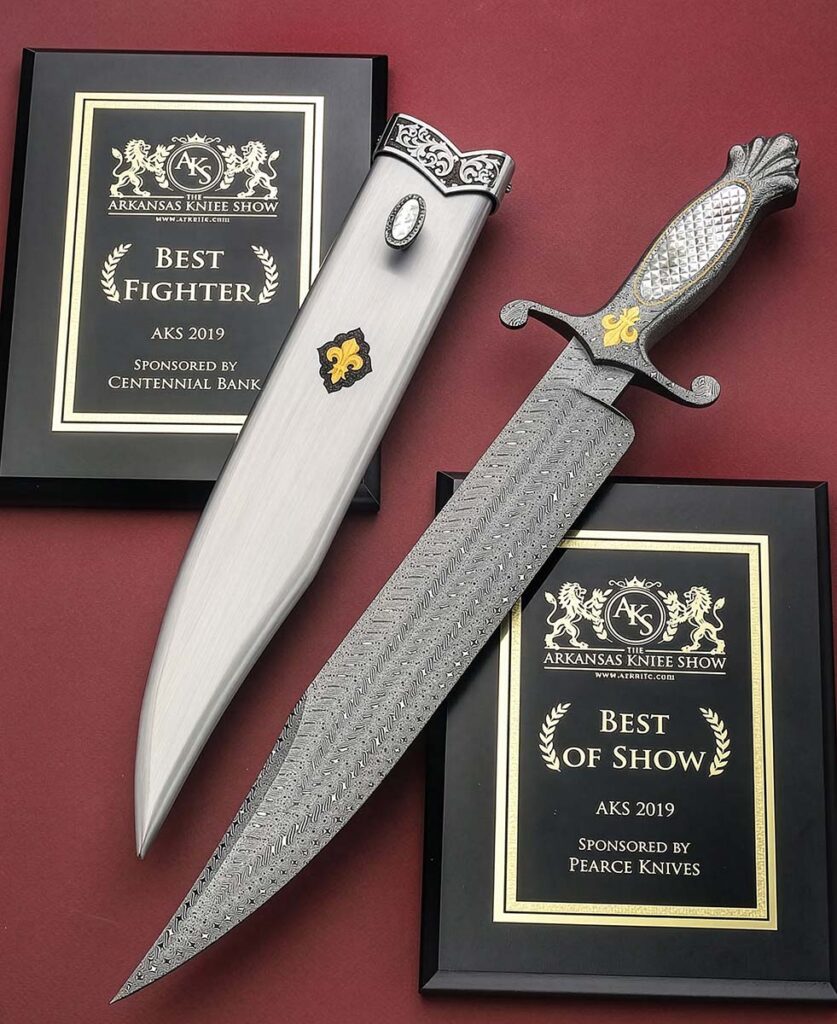
- The Billet: Typically using ½-inch bars of 1084 and 15N20 steel, John stacks and forge-welds them into a drawn billet.
- The Twist: To achieve the star effect, the bars must be twisted in opposite directions (e.g., bars 1 and 3 clockwise [CW]; bars 2 and 4 counterclockwise [CCW]).
- Consistency: He maintains a high number of twists per inch. Cool spots in the steel create lazy corkscrews, while uneven heat ruins the pattern’s symmetry.
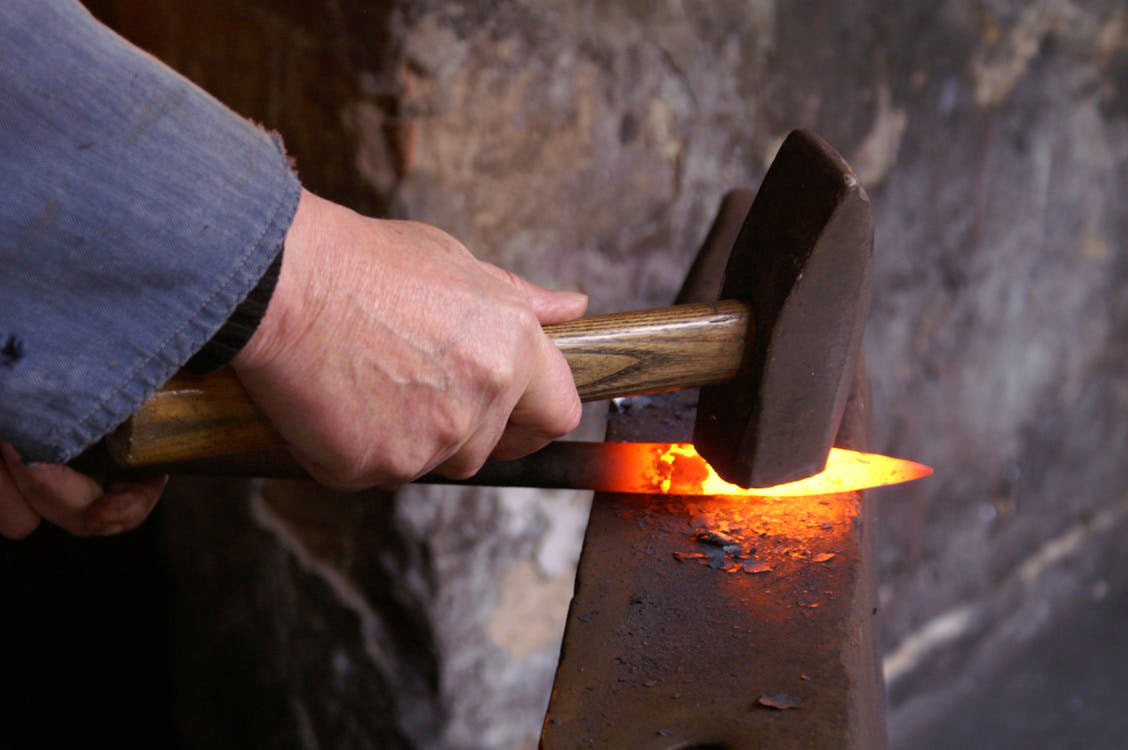
- The Multi-Bar Weld: First, arrange bars in an alternating sequence: CW / CCW / CW / CCW. Next, surface grind the opposing faces for a clean fit and tack-weld the ends. Finally, soak at welding temperature and set the weld using a press or power hammer, working from the center out to expel flux.
Making Patterns Pop
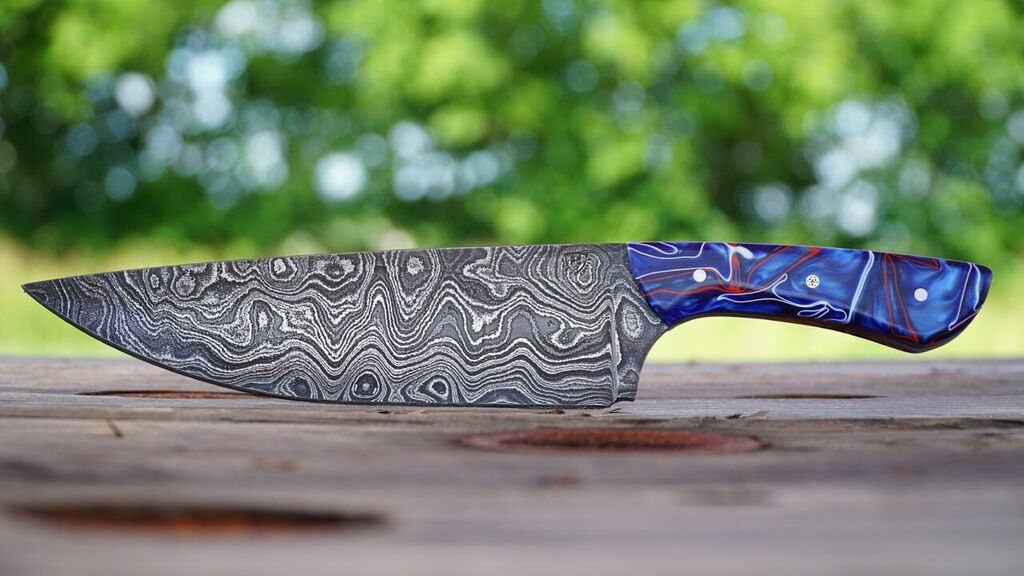
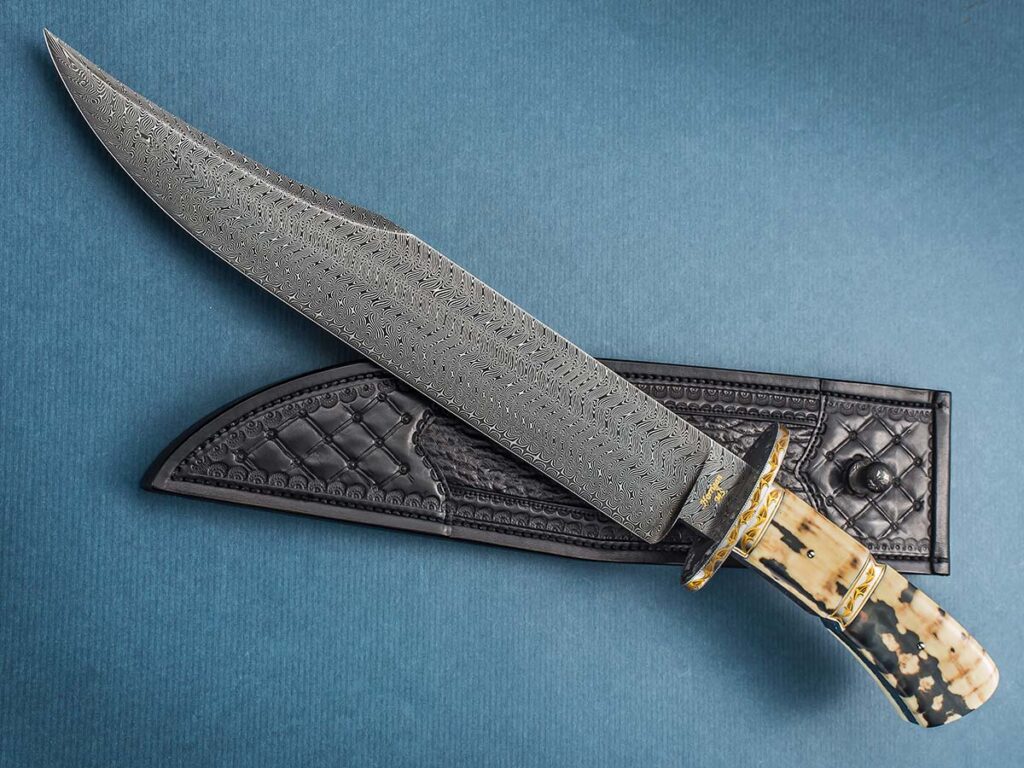
When forging the blade from the multi-bar billet, a careful touch is required to not distort the twist pattern. At the tip, you want those layers to come together by forging it for the proper grain appearance rather than by simply grinding or bandsawing away the profile. In revealing the pattern, the deeper the grind, the more intricate the stars become. The steels’ contrast comes out with an acid etch, revealing the luminant’s beauty—the nickel-rich 15N20 remains bright, while the 1084 darkens.
Recipe For Success
First and foremost, respect your mentors; if a maker allows you into their shop, show gratitude and don’t overstay your welcome. Next, understand the financial reality of becoming a knifemaker. This means don’t quit your day job immediately, it often takes three years of learning and networking before a maker sees real profit. You can’t be shy as a maker either, customers invest in the maker as much as the knife. Staying visible ensures you aren’t forgotten. And the bottom line of knifemaking to be a success, you’ve got to love it.
Read More:
- Japanese War Swords Part
- Scottish Swords: Cold Steel And CAS Iberia’s Tartan Edge
- Scissor Sword: Scissor Maven Grace Horne’s Prized Collectable
- Master Bladesmiths Showcase Their Best Long Swords
 NEXT STEP: Download Your Free KNIFE GUIDE Issue of BLADE Magazine
BLADE’s annual Knife Guide Issue features the newest knives and sharpeners, plus knife and axe reviews, knife sheaths, kit knives and a Knife Industry Directory.Get your FREE digital PDF instant download of the annual Knife Guide. No, really! We will email it to you right now when you subscribe to the BLADE email newsletter.