

The CBC’s Duncan McCue profiles Canada’s first Sikh commanding officer.
Knife news, people, top picks and patterns



The CBC’s Duncan McCue profiles Canada’s first Sikh commanding officer.
When a Merchant Marine named R.W. “Bob” Loveless walked into Abercrombie & Fitch—a retail sporting goods store—in downtown Manhattan, New York, he was looking for a Randall knife. But Randall knives were out of stock, and the waiting period was too long, so Bob decided to make a knife on his own. When he returned to Abercrombie & Fitch with a knife he had built, the store manager liked it well enough to order four more just like it.
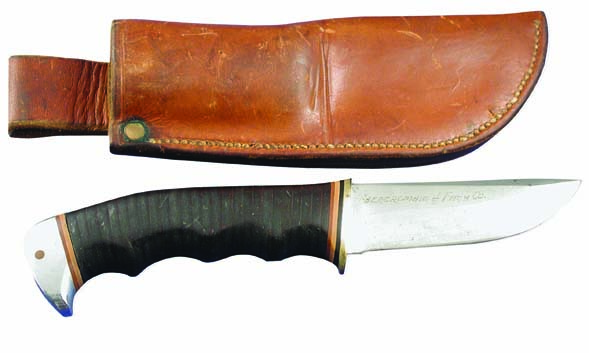
This is one of Loveless’ first knives made for Abercrombie & Fitch during the early 1950’s. The photo is courtesy of John Denton, and the image ran in the book Knifemaking With Bob Loveless.
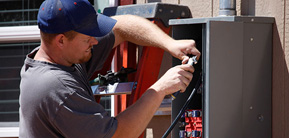
Sometimes we get so carried away talking about the coolest new knives, the hottest tactical folders, the neatest mechanisms, latest locks and hottest handle materials, we forget about the average knife user, the end user, the guy or gal who carries and uses a knife everyday as a tool. That person might or might not be interested in the most state-of-the-art steels and most wicked blade grinds. Few of their knives are probably embellished with scrimshaw, engraving or jewel inlays. Even fewer probably have gold, silver, diamond or precious stone inlays.
AKTI—the American Knife & tool Institute, a knife legislative body fighting for our knife rights—has a cool link on its homepage titled “Everyday People Use Knives Every Day.” Clicking the link, web browsers land on a page that says “We’re your neighbors. We use knives every day in our work or carry them for other activities,” and it lists jobs and occupations in which people employed in those areas use knives every day. The page also has a query, simply reaching out with “Let us know if you’re not on the list.”
So, BladeMag.com visitors, please let us know if you’re not on the following list (from the AKTI website [and click here for more everyday using knives]):
Accountants
Adventure Racers
Advocate (for homeless)
Aircraft Mechanic
Antique Collectors
Archeologists
Architects
Artists
Armorer
Attorney
Automotive Technicians
Backpackers
Bakers
Basket Weavers
Beekeepers
Bicycle Repairmen
Bicyclists
Big Game Hunters
Bioscience / Biomedical Workers
Bloggers
Boaters
Book Binders
Bow Hunters
Boy Scouts
Business Executives
Butchers
Cable Installers
Campers
Canoeists
Carpenters
Carpet Installers
Carvers
Citizens Emergency Response Team
Chefs
Christmas Tree Dealers
Clammers
Clothing Designers
Cobblers (Shoe Makers)
Knife Collectors
Computer Technicians
Construction Workers
Cross Country Skiers
Curriers
Dairy Farmers
Deep Sea Fishermen
Deli Workers
Doctors
Downhill Skiers
Editor
Education Aministrator
Electricians
Emergency Medical Technicians (EMTs)
Engineers
Factory Workers
Farmers
Firemen
Fish Farmers
Fish Mongers
Fishermen
Floor Layers
Florists
Forensic Investigators
Forest Rangers
Four-Wheelers
Furniture Makers
Furriers
Game & Fish Rangers
Gardeners / Horticulturists
Garment Workers
Girl Scouts
Glaziers
Geocache Hunter
Greenhouse Worker
Gunsmith
Helicopter Pilots
Highland Game Participants
Hikers
Historical Re-enactors
Horse Breeders
Horse Drawn Carriage Drivers
Horseback Riders
Hunters
Ice Fishermen
Industrial Workers
Information Techs
Investigators
Janitors
Jewelers
Kayakers
Knifemakers
Landscapers
Leather Workers
Legislators
Licensed Firearms Dealers
Line Workers
Locksmiths
Loggers
Machinists
Mechanics
Metal Casters
Military Personnel
Miners
Milliners
Model Makers
Mold Makers
Moms
Motorcyclists
Mountain Climbers
Movers
Museum Curators
Musicians
Nurses
Nursery Workers
Office Workers
Outdoorsmen
Paramedics
Park Rangers
Photographers
Physical Therapists
Physicians
Plumbers
Police Officers
Potters (ceramic workers)
Precious Stone Setters
Printers
Private Pilots
Probation / Parole Officers
Project Managers
Railway Workers
Ranchers
Retired People
Roofers
Sailors
Salespeople
Scouts
Scout Leaders
Scuba Divers
Sculptors
Seamstresses
Search & Rescue Teams
Security Guards
Sheriffs
Shipping Clerks
Short Order Cooks
Sky Divers
Snowboarders
Snowmobilers
Sporting Goods Dealers
Stage Hands
Stone Workers / Masons
Surgeons
Survival Instructors
Tailors
Taxidermists
Teachers / Instructors
Telephone Repairmen
Television Repairmen
Tile Workers
Tow Truck Drivers
Tower (Cell/Phone/Radio) Climbers
Tractor Trailer Drivers or Commercial Truck Drivers
Trail Runners
Trappers
Veterinarians / Vet Techs
Warehouse Workers
Watchmen
Watchmakers / Horologists
Water Skiers
Weavers
Welders
Wood Workers
Kai USA returned home from the Blade Show with four Blade Magazine Knife-Of-The-Year® awards. Considered the Oscars of the knife industry, BLADE’s Knife-Of-The-Year Awards are the most sought-after honors in the industry, with winning knives and accessories chosen and voted upon by industry peers with booths at the Blade Show. Winners are judged on a range of criteria, from design, innovation and function to craftsmanship and quality.
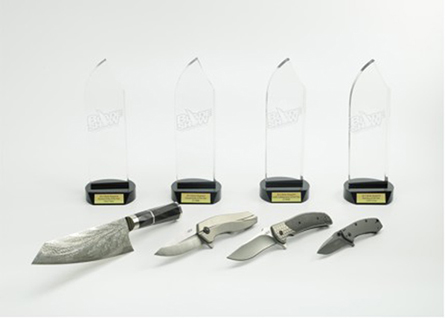 “We are very proud to be recognized by our respected peers in the knife industry for our ability to create top-quality knives and innovative designs,” said Jack Igarashi, chief of North American operations, Kai USA Ltd., and managing director of Kai Corporation.
Here’s a brief rundown on the winning entries:
Zero Tolerance 0888—2012’s Overall Knife Of The Year®
Blade Show judges were impressed by the clean, bold looks and advanced materials Zero Tolerance used to build the new 0888. The knife was designed to show off the metal—a Composite Blade of high-performance S110V and 14C28N stainless steel and a titanium handle. Except for the decorative pivot, there’s no visible hardware on the front side of the knife to interrupt the visual flow. To ensure the pivot aligned perfectly with the deep groove in both blade and handle, Zero Tolerance used an eccentric (off-centered) pivot shaft. The blade opens smoothly and easily with a flipper. Visually integrated into the design, the unusual pocket clip slides left or right for the user’s choice of carry options.
“Everybody here is pretty excited about the 0888 and it was great to discover that the rest of the industry shared our excitement,” said Thomas Welk, director of sales & marketing, Sporting and Professional Divisions.
Zero Tolerance & RJ Martin ZT 0600—2012’s Collaboration Of The Year®
Zero Tolerance collaborated with custom knifemaker R.J. Martin to bring a version of his award-winning Q36 to the public. The ZT 0600 features a B75P stainless steel blade and a titanium and carbon fiber handle. B75P is the new powder metallurgy version of the near-legendary BG42. For the award-winning knife, ZT thickened the blade stock to 3/16 inch, and gave it a handsome, stone-washed finish. The titanium pocketclip carries right or left, and a recessed lanyard attachment point means nothing interrupts the great look of the knife.
“Our goal is to create products that are handsome, functional, and innovative. Whether it’s an in-house design or collaboration with a custom knifemaker, our R&D team works hard to make these designs become reality. We’re lucky to have such a talented group of people, and I believe the extra effort they put in can be seen in the finished product,” said design engineer Jim McNair.
The Kershaw Cryo—2012’s Best Buy Of The Year®
The Blade Show judges chose the Kershaw Cryo, model 1555TI as the year’s Best Buy. The Cryo is a classic Rick Hinderer design, but built in stainless steel with matte-grey titanium carbo-nitride coating on both handle and blade. It opens quickly with either flipper or thumb stud, and has a sturdy frame lock with lock stabilization. With a manufacturer’s suggested retail price of just $49.95, the Cryo is indeed an excellent buy.
“With Hinderer design’s hard to get, and Kershaw is proud to be able to create a Rick Hinderer design at a price almost everyone can afford,” Welk said.
Shun Cutlery Taiyo—2012’s Kitchen Knife Of The Year®
Taiyo means “sunrise” in Japanese, and Shun named this limited-edition kitchen knife “Taiyo” for the sunrise-like rays that illuminate the blade surface of this spectacular knife. “We aspired to the highest level of quality on the Taiyo,” said Steve Grutbo, vice president of sales and marketing, Housewares Division. “Absolutely nothing was left undone on this superb knife.”
The Taiyo’s blade is a traditional Japanese kiritsuki blade. Japanese master chefs favor this multi-purpose blade shape and use it in ways similar to the European chef’s knife. The Taiyo’s blade has a cutting core of SG2 “micro carbide” steel. With SG2’s incredibly dense and pure grain structure, it takes and holds a fine edge with unparalleled durability. 160 layers (80 on each side) of damascus cladding support the SG2 core, add beauty, and are part of the sunrise pattern. The handle is a traditional Japanese octagonal shape, but it twists and becomes rounder as it nears the bolster in order to provide a comfortable grip.
“We have challenged ourselves to be the one knife maker that stands out in the minds of the consumer for quality, design and value,” said Igarashi. “Our ultimate goal is to create a deep connection with the knife user and a sense of pride in owning a Kershaw, Shun or Zero Tolerance product.”
A short clip showing the beginning of the process of forging a round bar into a knife blade.
Read this before deciding whether to change the types of knives you collect. (Written by Mike Haskew and excerpted from the March 2013 issue of BLADE®).
You may face a crossroads, a time of decision involving the realization that interests, tastes and possibly buying power change. In such situations, you may decide to begin collecting a different genre of knives, departing from what you have collected. If and when that time comes, evaluating your situation and making informed decisions is crucial.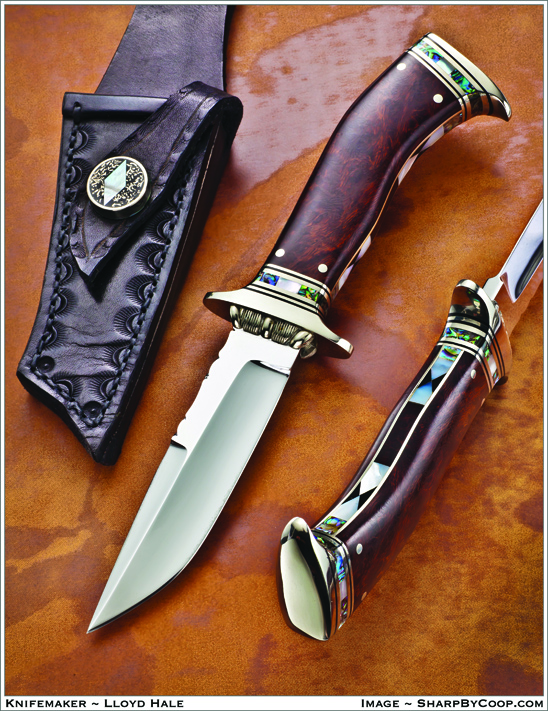
Well-made vintage knives by legendary makers can be very attractive to collect. Lloyd Hale does the honors here in a chute knife sporting an ironwood handle with pearl and abalone inlay. (SharpByCoop.com photo)
Some basic questions loom large, from deciding what to collect to getting the best education on what is available, selling or retaining an existing collection, and, if the choice is to sell, then maximizing the revenue generated.
First, the decision to make a change deserves due consideration. “You should have a very good reason for it,” remarked Peter Gill, who has been collecting knives for 15 years, “no whims.”
While some are into knife collecting for profit, it is always prudent to collect what you like. After all, you may own it for a lifetime.
“I believe a collector who is going to start collecting another type of knife should buy and collect what he’s attracted to,” reasoned Ken Potolicchio, who bought his first handmade tactical folder, a large Tighe Pan by Brian Tighe, in the fall of 2001. “In other words, buy something you would like to own, handle or even use. Research the new type of knife to be collected and be comfortable with the effort and costs to start a new or additional collection.
“If you’re going to start collecting another type of knife, buy and collect what you’re attracted to,” reasoned Ken Potolicchio, who bought his first handmade tactical folder, a large Tighe Pan (above) by Brian Tighe, in the fall of 2001. “In other words, buy something you would like to own, handle or even use.” (Brian Tighe photo)
“Ask yourself why you want to collect the new type of knife,” Ken continued. “Is it simply to make money, to carry and use the new knives, or is it in the pursuit of desirable knives of a new type? What if you change your mind? You need to be very sure, especially if the sale of your current collection is a factor.
“As to resources, I would recommend reading the magazines and contacting purveyors you may have dealt with, trust and have a relationship with, or that deal in the type of knives you’re planning to collect. Direct contact with the makers of the knives to be collected is a good idea. I’ve found that most are willing to talk about all aspects of their knives.”
Though you may be financially capable of retaining your current collection, you may have to liquidate your existing holdings to be able to afford to collect something new. Opinions vary on the best way to sell, and some experts tend to think that holding on to what you have already collected is the best of all options.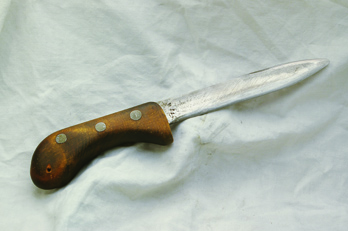
“Don’t buy knives that are damaged or of poor condition unless they are very old and rare, such as [antique] bowies, Civil-War-era knives, and rare military knives,” Marvin Clyncke commented. Ed Fowler’s dad carried this World War II-era Ek Model 3 during World War II. (Fowler photo)
“If you decide to shift gears and like another kind of knife, you might consider the following,” advised Pete Cohan, a serious collector since the early 1960s. “Trade the knives you have for those you now wish you had, but be sure you know who you are trading with and be firm when it comes down to the final details. You could try to sell your old collection to somebody you know, but don’t let anyone talk you out of a few pieces. You may be left with the rest and can’t hardly give them away.”
If you are an informed collector, you have a solid sense of what your collection is worth and what you will take for it. Unless such a solid base is in place, the hazards of selling or trading are substantial. Tactics also will vary depending on your motivation—simply to recover your initial investment or to make as much profit as possible to plow into the acquisition of your newfound favorite knives.
Though selling your knives as a collection may move the transition process forward more rapidly than selling in ones or twos, there is a trade-off. Marvin Clyncke’s father worked for Western Cutlery in the late 1930s, and Marvin has been a collector for more than half a century.
“If you want to sell your existing collection, you should sell on eBay, as you reach the whole world there,” he recommended. “Selling as a collection is not a good idea unless you have a specific buyer who is willing to pay a good price. Selling as a collection, you are essentially eliminating a lot of folks who may have some of the same knives and don’t want to buy a whole collection just to get a few that they need. Also, the price of the whole collection could eliminate many buyers, especially if the collection is large. Selling individually definitely would realize top dollar for each piece.”
Cardinal Rules
• Collect what you like or even use;
• Chasing trends is a fool’s errand;
• Collecting knives that are hot now means paying top dollar now as well;
• Know which knives are collectible in specific geographic locations of the country;
• Inexpensive, low-end knives will never appreciate to any degree;
• Well-made, fine-condition knives should not lose you any money;
• Don’t buy damaged/poor condition knives unless they are very old and collectible, such as antique bowies and rare military knives.
A FOOL’S ERRAND
In the continuing debate of present vs. future value, collectors heading down a new road are regularly challenged with a values proposition. Collecting what is hot today by no means ensures an appreciation in price down the road, while collecting something that is under the radar now provides no assurances on an increase either.
“A collector should only collect what pleases him or her,” reiterated Gill. “Chasing trends is a fool’s errand.”
Cohan advised, “What is hot now and what will be hot in the future is the classic question asked by every stock market trader. The question and its answer in the case of pocketknives or knives in general is further complicated by such things as the geographic location of the collector. What is hot on the West Coast and what is hot in the South are often very different. This can provide opportunity as well as risk for the collector who is starting in another direction. It is still, in my opinion, better to collect knives that you like for whatever reason. The collectibility of knives and their ‘rarity’ at some future date remains an elusive projection.”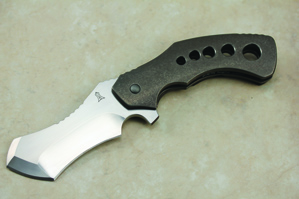
Potolicchio leans toward the long view and collecting for the future rather than some notion of today’s “hot” commodity. He provides an illustration of future value with a firearm that he bought some years ago. “I gave my son a Ruger 10/22 rifle that currently [fetches] about $275, and I have the original receipt for the rifle when I bought it new for $38.50,” he laughed.
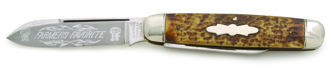
What’s hot in the West and South are often very different, Pete Cohan observed. This can provide opportunity as well as risk if you’re starting over. For instance, at the G4 Show in Las Vegas, tactical folders such as those by Jeremy Marsh (including the one at top just above photographed by Mike Searson) turned heads. In the South, antique pocketknives such as those by New York Knife Co. (immediately above) remain collectible.
According to Clyncke, collecting knives that are hot now means paying top dollar now as well. Whether such knives will even hold their value or simply become yesterday’s fad is anybody’s guess. He does, however, see the thrill and allure of collecting something reasonably priced today that may in fact appreciate in the days to come.
“It is a guessing game,” Marvin warns, “but quality is everything. Cheap-made, low-end knives will never appreciate to any degree. Well-made, fine-condition knives will surely not lose you any money. Again, research is a big help.”
Sources To Use
• Read knife publications and websites you trust;
• Contact purveyors with whom you have dealt, trust and deal in the types of knives in question;
• Have direct contact with the makers of the knives in question;
• Let as many people as possible know what new collectible you want;
• Ask your friends to be on the lookout for examples.
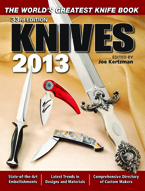
One of the best ways to research what is best to collect is to read publications you trust, such as the new KNIVES 2013.
Experienced collectors may already have a feel for the do’s and don’ts of collecting a new style of knife. However, it pays to remember lessons learned and to benefit from the experiences of others.
“Don’t buy knives that are damaged or of poor condition unless they are very old and rare, such as [antique] bowies, Civil-War-era knives, and rare military knives,” Clyncke commented. “Junkers are a dime a dozen and will sell for a dime a dozen in 10 years. I would let as many folks know as possible what you’re looking for. Never tell them what you will pay, just what type of knives you want. If you tell them what you will pay and they’re surprised at the price, they may just keep the knives as an investment. Some good ones may pop up right away. It never hurts to have friends looking for you.”
Potolicchio added that research is a key element before the final decision to switch the type of knife being collected. Without investing enough time to understand the market for the new type of knife, you may never find your comfort zone, particularly if you have liquidated your existing collection in the process.
For Cohan, the collecting transition should be something of a soul-searching process. He advises considering several aspects of embarking on a new frontier in collecting.
“How available are the knives that you now fancy, and are they of recent vintage?” he asks. “Are they still in production or are they a ‘short run,’ which may or may not permit a wide distribution of the knives, directly affecting their collectibility? If the knives are antique, where will they be found and can they be found without undue cost? What are the prices typically asked for these knives in collectible condition? Are you going to collect only the mint or near mint/excellent examples, and can you afford to pay premium prices for this type of knife?”
Questions YOU NEED ANSWERED
• Do you have a very good reason for starting over?
• Are you comfortable with the effort and costs it will take to build a new collection?
• Do you want to make money or collect, carry or use the knives?
• What knives should you collect, and how do you best research them?
• How available are they and are they of recent vintage?
• Are they still in production or limited in distribution, both of which influence collectibility?
• If antiques, where can they be found and can they be found without undue cost?
• What are the prices typically asked for the knives in collectible condition?
• Are you going to collect only mint or near-mint examples, and can you afford to pay premium prices for them?
HAVE/EXECUTE A PLAN
Early in the collecting transition process, there may actually be more questions than answers. Nonetheless, if you plan appropriately and execute the plan, you continue to find your passion for knives rewarding, whatever type you seek.
Spending a day with the Loveless-Parke drop point would be like spending a day in the park. What I love about this knife is that it is a drop-point hunter, but it has that high grind and skinner-like hump along the blade spine toward the tip.
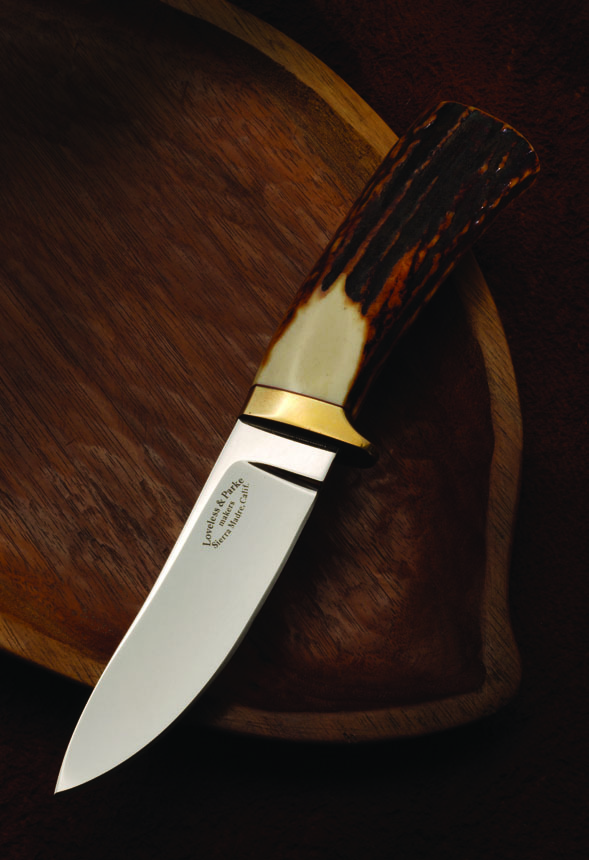
Only 36 knives bearing the Loveless-Parke logo were ever produced (Parke was an investor in Loveless’s knifemaking business for a short period of time.) This knife, made in 1967, is an example of that effort. It features a brass singe guard and stag handle with a hidden tang. And because I was born in 1967, it’s all that more sweet to me.
The knife photo is by Hiro Soga, the knife is from the John Denton collection, and it was featured in the book Knifemaking With Bob Loveless.





