


Joe Kertzman's Blog

Knife news, people, top picks and patterns

Knives Save Lives, Period.

The following is written by Jenn Coffey and is excerpted from the June 2013 issue of BLADE, which hit newsstands and subscribers’ doorsteps on March 26th, 2013.

About two years ago many of you read a story about a baby who was sadly lost in a traffic accident. The added pain of the story was that they had tried to save the child, who was trapped by a seatbelt, but no one had a knife. This simple tool, if present, would have allowed the child to be cut free from the seatbelt, able to survive another day.jenn coffey at 2010 BS banquet
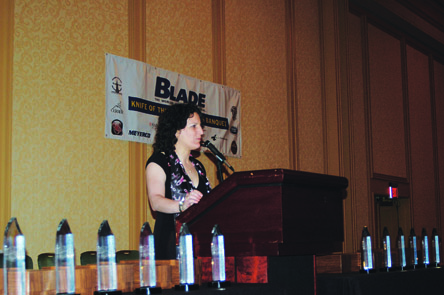
This is the story that I just cannot get out of my mind. Now, two years later, I continue working to raise awareness. I hope that when you finish reading this you will share my passion and belief.

This is something all of us can do. It does not matter if you are a collector, a manufacturer or, like me, an EMT who uses knives on the job to save lives. The simple fact is if you use, make or just appreciate knives, you should work to educate and help others avoid similar tragedies.

Not long ago I took some time out of a very busy week to drive to the New Hampshire Auto Dealers Association’s annual event. I met a huge number of folks from the industry, many of them business owners. We spoke about many things, but I always went back to the story of the child trapped in a seat for lack of something to cut away the restraints. I discovered the auto dealers had never considered a seatbelt cutter as a safety promotional item to give away with every vehicle purchase. I heard the phrase “I’d never thought about that” in almost every conversation.

Now, we all know that even if new ideas are well received, implementation of anything new does not happen quickly. It takes repeated exposure and many people to agree that a change is positive and worth making. It is difficult to get people who are accustomed to and comfortable with a current standard to accept change.

My pitch to dealers of both new and used vehicles in the auto industry was simple: include a knife designed to release a restraint when the circumstances require quick and definitive action. All customers appreciate trinkets like the little ice scrapers with the dealership name and phone number. For most people, however, the trinkets end up in the glove box or trunk, unused and forgotten. Until folks find themselves in an icy parking lot with a broken scraper, they do not think of or even see it again. But showing the car dealers how they could put a potentially lifesaving tool, with their company logo, on the sun visor, the dash, or attached right to the seatbelt received a great deal of interest. The reason was simple: the customer would be driving around with the dealer’s logo in plain view.

In Praise of the Exitool 

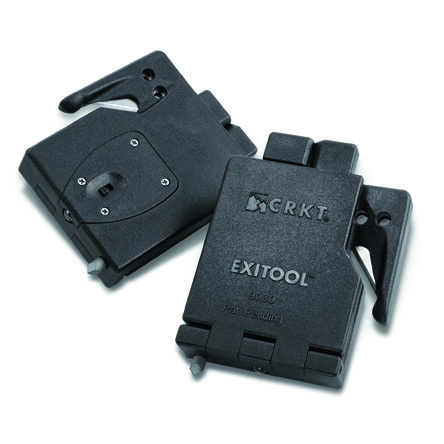
I am impressed with the fact that CRKT’s Exitool fits right onto my seatbelt. It is easy to put on and take off with a simple click. It is compact and contains lifesaving tools. I have had one in my vehicle now for about a year and no matter what I am wearing—be it jeans and T-shirt or a fancy silk dress—it has never snagged on my clothing, which is a major plus in my book.

The CRKT Exitool comes with a shrouded seatbelt cutter, L.E.D. flashlight and tungsten carbide window breaker and, perhaps best of all, attaches directly to your seatbelt where it is handy at a moment’s notice. MSRP: $26.99. For more info visit www.crkt.com or call 800-891-3100.  
9030_duo

Now I am known for having knives just about everywhere, and I do—guilty as charged! But here is the thing: I am an EMT. I have handled countless patients involved in vehicle crashes that left them upside down trapped in a car. When your vehicle goes upside down or flips, everything goes flying. The Exitool will still be on your seatbelt easy for you to access and simple to use. Within moments you can cut yourself free, break your window open and even have the use of a flashlight to help you see your way to safety. The flashlight batteries can be replaced and are widely available for just a couple of dollars, enabling the tool to have a long life and be well worth the buy. The blade is shrouded and will not cut you or get caught on clothing, and the window break is perfectly placed for ease of use.

It is not expensive—and who can put a price on survival? Everyone I care about is getting an Exitool in their vehicle.—by Jenn Coffey

If you add to sales or advertising incentives just one news report of a person saved by that tool, it would have a ripple effect. One of the major selling points for vehicle sales is safety. What better way to show your customers you care about their safety than replacing the little ice scraper with a small, inexpensive safety tool? For me, using the promotional ice scraper meant reaching across the windshield to add winter salt to my brand new black dress coat! OK, maybe not all of you are as short as me and do not have that issue. But I know I found it amusing when they gave me one of those little scrapers when I bought my SUV. I would have had better luck driving around in a circle, hoping the wind would blow off the ice, rather than trying to reach more than 2 inches of the windshield with that silly piece of plastic.

A LITTLE GRASSROOTS WORK

I can tell you it was worth my time to reach out to the auto industry. I did a short presentation, opening a channel of communication with a little grassroots work. Now consider the fact that every state has an auto dealers’ association, which means each one has a central marketing staff that bulk-buys promotional items, and adds the individual dealer logos with either stickers or special-order engraving. If this is explained properly to these folks, we can help change the image of our tools and gain many new networks not there before, bringing the knife industry into new avenues.

If we all share the same message of safety and logo recognition to our respective locations, it will have a positive effect. With time, promotionally marked seatbelt cutters can grow to the level of a “must have” for auto dealers and repair services, and it will be serving a purpose that is good for people.

As a state representative serving as vice-chair of our Commerce and Consumer Affairs committee, I acquired knowledge of various businesses, and had a lot of contact with the auto dealers. Like many of you, they strive to earn a positive image. They fare much better in the public eye with stories of survival instead of tragedy. I found the dealers to be very receptive to the idea of adding safety tools, but I lacked the ability to close the deal by myself. I need help from those of you in the promotional field to show them what is possible from an advertising and sales point of view. Though the products they are likely to seek are on the lower end of the price scale, the quantity would surely make all the difference, and you just cannot put a price on what effect it would have on public perception. Think about just one life saved through this effort, and what effect that would have not only on a single business, but on the entire industry.

This simple idea, to reach out to auto dealers and sell them a product that is better than what they have now, can save lives and help both the knife and auto dealer industries. That’s a win-win situation. Time is precious to us all; most of us have many things going on in our day-to-day lives. Our jobs, our families, and our familiar pastimes usually fill up our days and weeks. But this volunteer project was well worth the time I made for it, and it can be the same for each of you; you have the same ability.

Now, stop for a moment and think: If even a few of the people who subscribe to BLADE® took just a fraction of their normal day-to-day activity to work on this, it would accomplish awareness, change the perspective of the public on our tools and, most importantly, save lives. I hope you agree to work on it or help those who are willing, maybe by just writing a letter to your local auto dealer. Perhaps you can write a letter to the editor of your local paper, or work with a cohesive team to help educate on the positives, both safety and business-promotion related.

I hope to be reading about your efforts in BLADE.

Editor’s note: The author is a former New Hampshire state representative who championed the passage of knife law pre-emption in her state, author of Knives, Lipstick and Liberty: One Woman’s Journey, and winner of the Blade Magazine 2011 Publisher’s Award for her efforts on behalf of knife enthusiasts in her state and for being an inspiration to knife enthusiasts everywhere. Her website is www.kniveslipstickandliberty.com. She is also on Facebook.

 

American Bladesmith Society Announces 2014 Hammer-In Schedule

One of the things that makes the knife industry such a pleasure to be involved with is artisans, bladesmiths and knifemakers in general sharing their knowledge, teaching people their craft and passing down the handcraft from generation to generation. 2

Some of the best at this are the members of the American Bladesmith Society, as well, of course, as those in the Knifemakers’ Guild and countless other knife clubs and organizations. The ABS claims to have had record attendance at its hammer-ins across the country in 2013, and has already announced its 2014 Hammer-In Schedule. Click here for a Complete Knifemaking Collection of books and digital downloads to get you started in your knifemaking endeavors. And without further ado:

ABS Hammer In Schedule for 2014

March 7, 8, and 9, 2014
Spring Great Smoky Mountain Hammer-In
Haywood Community College, Clyde, North Carolina
ABS Contact – Bill Wiggins (828) 226-2551 or Email [email protected]

April 26 and 27, 2014
Spring Piney Woods Hammer In
Texarkana College – Moran School of Bladesmithing, Washington, Arkansas
ABS Contact – BR Hughes (903) 838-0134 or Email [email protected]

June 2014
ABS Youth Hammer-In
Smoky Mountain Knife Works, Sevierville, Tennessee
ABS Contact – Houston Price (865) 397-0053 or Email [email protected]

July 11, 12, and 13, 2014
New England Hammer-In
New England School of Metalwork, Auburn, Maine
ABS Contact – Mace Vitale (203) 457-5591 or Email [email protected]

August 22, 23, and 24, 2014
Mid America Hammer-In
Miami County Fairgrounds, Troy, Ohio
ABS Contact – Butch Sheely (419) 832-5801 or Email [email protected]

September 13 and 14, 2014
Fall Piney Woods Hammer-In
Texarkana College – Moran School of Bladesmithing, Washington, Arkansas
ABS Contact – BR Hughes (903) 838-0134 or Email [email protected]

October 4 and 5, 2014
Heartland Hammer-In
Washburn Institute of Technology, Topeka, Kansas
ABS Contact – Steve Culver (785) 484-0146 or Email [email protected]

October 2014
California Hammer-In
College of the Sequoias, Tulare, California
ABS Contact – Mike Vagnino (559) 636-0501 or Email [email protected]

October 18 and 19, 2014
Smoky Mountain Fall Hammer-In
Haywood Community College, Clyde, North Carolina
ABS Contact – Bill Wiggins (828) 226-2551 or Email [email protected]

DMT Brings You: Two Ways to Sharpen Your Hunting Knife

As every hunter knows, a hunting knife needs proper care, and there are countless methods for sharpening a hunting blade, depending on how the knife is used in the field or on the trail. The experts at Diamond Machining Technology (DMT) have composed a “how to” article below to help knife users understand which sharpening techniques are best for different hunting-knife tasks. If you enjoy the below, you’re also certain to like: “Sharpen a Knife & Care For Your Collection.”

Two Ways to Sharpen Your Hunting Knife

By Stan Watson

The hunting knife, whether the folding or fixed-blade type, is an invaluable tool for hunters since its hard, strong steel blade is made for cleaning and butchering game. But, truth be told, many outdoorsmen like to carry a hunting knife as an all-purpose cutting tool. So, when you think about the best way to sharpen your hunting knife, first think about how it will be used.

If you plan on using the blade for gutting and field dressing animals, you need a razor sharp blade. The hide of an animal is tough and you want your knife to make easy, smooth cuts through the skin and muscle. To get that result you want to sharpen at a shallower angle.

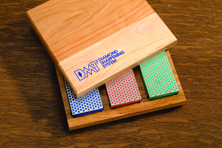
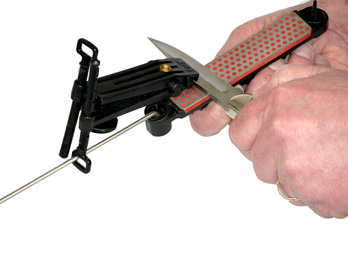
I always recommend manual sharpening on a diamond stone, because it removes only the necessary amount of metal—protecting your knife and prolonging its life. With diamond stones from DMT Diamond Machining Technology, you never need oil. If you want to moisten the stone, you can use water, but it’s not necessary. Start with a coarse grit diamond stone and, holding the knife so the blade meets the stone at a 20- to 22-degree angle, stroke the blade with modest pressure across the stone six or eight times; then change direction (if you began by stroking away from you, switch and carefully stroke the blade towards you using the same motion). Diamond stones sharpen blades quickly, so there’s no need to rush your strokes. Take the time to handle your blades and edges in a safe manner.

Once you’ve finished with the coarse grit, move on to a fine grit and repeat the process. Then, to get the razor edge you need, give the blade a few strokes along an extra-fine grit. Remember, the finer the grit, the lighter your strokes should be. The result will be a blade that has a straight, true sharp edge for cleaner cutting and dressing.

For those of you who like the feel and performance of a hunting knife, but want to use it as an all-purpose cutter, you don’t need the razor sharpness that comes with an extra-fine grit stone and a shallow sharpening angle. It’s better to have a micro-serration on the blade.

To get that result, use just a coarse grit diamond stone and hold the knife so the blade is at a steeper angle, about 24 to 28 degrees. This will give your blade greater strength to stand up to tough cutting tasks. A surface with tiny serrations allows the blade to work in a sawing motion—unlike the straight razor-sharp cuts you need when gutting a deer, for example.

Whether you’re a pro or novice hunter, it can be hard to maintain a precise and consistent angle throughout the sharpening process. One solution is DMT’s Aligner Blade Clamp, which provides for guided sharpening to help you set and keep the correct angle for the task at hand. The Aligner is easy to use, offers seven-angle adjustability and accommodates wider and thicker blades. Plus, the clamp won’t damage your blades.

A well-made hunting knife can last for years, especially if you keep it sharp. With diamond sharpening stones from DMT, you will be able to quickly, simply and safely get the edge that keeps your knife working to its fullest potential.

Stan Watson is the technical director for Diamond Machining Technology, manufacturer of a full line of Made in the USA diamond sharpening tools for use in woodworking, camping, fishing, hunting, outdoor and winter sports, culinary arts, gardening, police/security and industrial applications. He is the holder of 11 engineering patents in the sharpening industry. He can be reached at [email protected].

If you enjoyed the above, you’re also certain to appreciate: “Sharpen a Knife & Care For Your Collection.”

How to Sharpen a Knife

It doesn’t matter if you’re a hunter, outdoorsman, knife enthusiast, collector or even an experienced survivalist or do-it-yourselfer, learning the basics of knife sharpening often takes a backseat to more pressing matters. It’s a question on everyone’s mind—What’s the fastest, easiest way for me to sharpen a knife, and what’s the best sharpener on the market? Unfortunately, there’s no one right answer, but through researched and developed, step-by-step articles on knife sharpening, we’ve made it easy for anyone to learn the basics, and even some of the more involved methods of honing blades.V8724

The “Sharpen A Knife & Care For A Collection” digital download is an easy-to-navigate, read and enjoy eBook.  This digital guide is a PDF file you download and access with any home computer, lap top or digital device with the Adobe Reader program installed. In this guide you’ll find 11 chapters covering various facets of knife care and sharpening, written by noted knife industry experts, including Dexter Ewing, Durwood Hollis and James Morgan Ayres.

Here’s an excerpt:

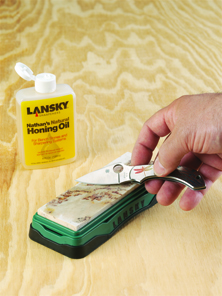
It’s one of the oldest methods of honing a blade bevel, the most traditional, conjuring up images of ancestors, grandparents, even Japanese bladesmiths working edges on whetstones or oilstones, fingers blackened from the grit. Stone remains a popular sharpening medium. It might not be the Stone Age, but you would hardly know it by perusing the rock-hard offerings of knife or knife sharpener and accessory companies.Sharpener01

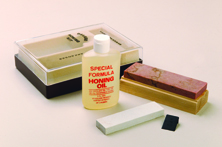
Unlike traditional stones bought for pennies apiece at the old hardware store, the Smith’s 2-Stone Sharpening Kit (www.smithsproducts.com) comes with a 5-inch, medium-grit stone, a 4-inch fine Arkansas stone, honing solution and a sharpening guide. The medium-grit stone, meant for quickly setting an edge, comes mounted on a molded-plastic base that features a built-in storage area at the bottom for holding the fine Arkansas stone, the latter of which is ideal for finishing or polishing an edge. The manufacturer’s suggested retail price (MSRP): $15.99.

“It is everything you need to put a razor-sharp edge on your large or small knives and tools,” Richard Smith says. “The neat thing about this kit is that, although you get two stones, they only take up the space of one bench-mounted stone. I never lose the fine stone because it’s always stored in the base, and it allows me to take the fine stone into the field with me if needed.”DMT-W6EFC

Click here for more, and enjoy!


Art Knife vs. Cutting Tool Debate

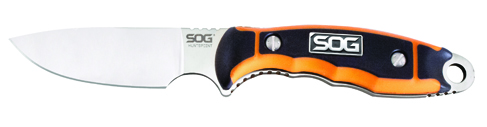
SOG_HT011L

The art knife versus cutting tool debate of whether knives are, or should be, works of art or cutting tools has always intrigued me. There are those who are a bit “put off” by art knives because they prefer utilitarian knives made to be used and employed when needed. That is certainly understandable, and thank goodness there are companies and makers out there fashioning good, sturdy, sharp serviceable fixed blades and folders.

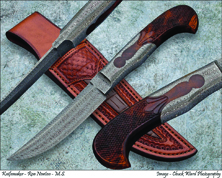
But the notion that art knives are a modern phenomenon ignores the countless officers of world armies who historically carried dress daggers, kings and queens of countries gifted with jewel-encrusted, gold-inlaid, sculpted and carved swords and other edged weaponry, and the “average joe” who saved his pennies in the 1960s and ’70s to buy a Buster Warenski, Bill Moran, Jim Schmidt or even Bob Loveless (many considered him a maker of art knives on occasion) art knife. newton knife

And one other argument I’d make is this—the debate doesn’t need to be debated at all. There is plenty of room in the knife industry for both art knives and more utilitarian hunters, soldiers’ knives, blue-collar fixed blades and folders, and many more. Look at it this way, just because one guy prefers his three-blade stockman for ranch work doesn’t mean he shouldn’t welcome the collector of high-end art knives into the industry and market with open arms. Collectors who appreciate that artistic nature and handcraft of knives help drive the industry forward and ultimately expand its offerings. And that’s just good for knives and knife enthusiasts in general!

To see and read about as many well-crafted custom knives, both utilitarian and artistic, as humanly possible, the Knives 2014 book is a must-have for your library. To keep updated on factory, custom and semi-production knives 13 times a year, subscribe to BLADE now!

8 Amazing Additions To Any Knife Book Library

One thing that humble knifemakers find difficult to do at times is to express pride in their work. It’s the same thing with we knife editors and publishers. But when you look at these eight knife books that F&W Media has put out over the past few years, they’re not only impressive as a whole, but each individual title is clearly an example of quality work.

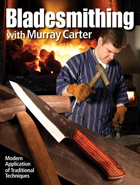
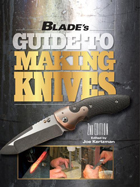
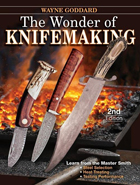
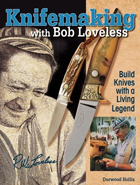
If you were interested in knifemaking and started with the two books Bladesmithing With Murray Carter and Knifemaking With Bob Loveless, you’d be well ahead of the game and your peers. Add in BLADE’s Guide To Making Knives, 2nd Edition, and suddenly you’re learning the craft from such knifemakers as Don Fogg, John Lewis Jensen, Tim Zowada, Allen Elishewitz, Vince Evans, Rick Dunkerley and Kevin Hoffman. Are you kidding me?! And how many of you have NOT heard of Wayne Goddard? His book The Wonder Of Knifemaking, 2nd Edition is a must-have for any knife book library.u1059_500px_72dpi_1 v0802 W1852 W5865 X3269 Z4387 Z7240 Z7241


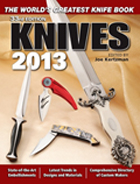
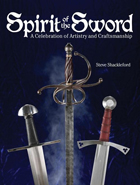
If custom or handmade knives are your thing, the 33rd Edition of the Knives annual book, Knives 2013, will blow you away with full-color photography, feature articles written by the world’s best knife writers and a complete directory of custom knifemakers. Another sweet, full-color, gorgeous coffee-table book is Spirit Of The Sword by Steve Shackleford. It takes you on a trip from historic to modern swords and back again.

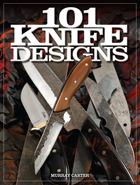
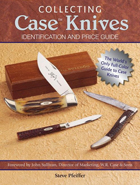
For knife collectors, you can’t go wrong with a book devoted entirely to Case Knives, the most collected brand in the world. Check out Collecting Case Knives by long-time collector, expert, accumulator and investor in everything Case, Steve Pfeiffer. And if after all that, you’re ready to design your own knives, or just need inspiration from over 100 classic knife designs, be sure to put in your pre-order for the brand-new, soon to hit bookshelves and stores everywhere 101 Knife Designs by none other than Murray Carter.

Admittedly, that’s one impressive knife book lineup, and would make any knife enthusiast’s library complete!

Advertisement

Must Read Articles

Read this before you make a knife

Knifemaking 101 – Read This Before You Make a Knife

  by Wayne Goddard My experience has taught me that there's nothing like digging in and getting started. I've often said the hardest part of the...
how to forge damascus steel

How to Forge Damascus

Advertisement
Advertisement