

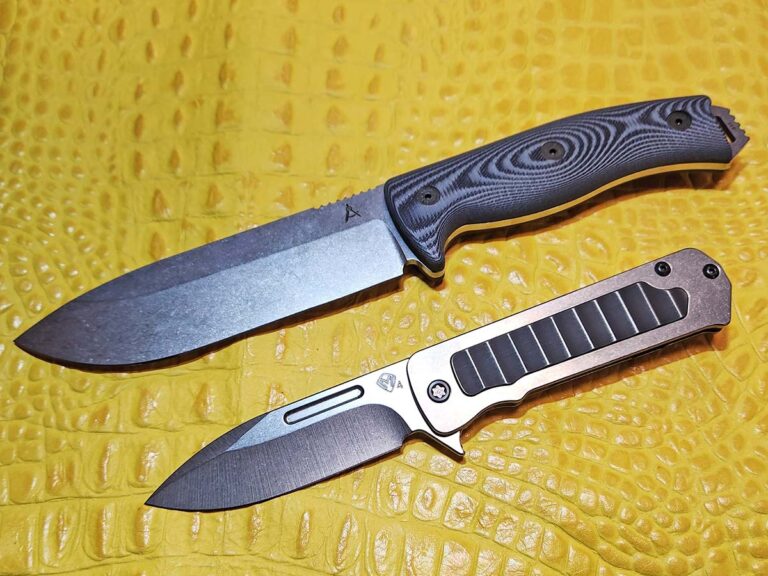
Explore the world of build-your-own knives with firsthand reviews of Medford’s TFF-4 folder and Architect’s AK 5.5 fixed blade.
In my early days of being a knifemaker, the internet played a factor in my business, largely in getting me exposure on various knife forums. As the years passed, it helped grow my enterprise, making international sales possible. These days, you can hardly imagine a knife business without the ’net.
One of the greatest challenges was helping customers decide on their orders. I had a “record” exchange with one customer of 51 emails to nail down the order. Needless to say, I later deleted the customer’s email from my files.
One way for knife enthusiasts and makers to avoid such kerfuffles is for the customer to “build” his or her knife on the company’s site and get the price, all in real time. Enter two of the outfits that provide that service today: Medford Knife & Tool and Architect Knives (there are others as well).
I went to both sites, followed their processes and “assembled” my knives. Following are the results.
MEDFORD TFF-4 Build
If you’ve read my articles over time, you know I have a thing for knife names. While TFF-4 (starting MSRP $550) doesn’t stand out, I must start cutting companies some slack as the sheer number of manufacturers makes giving a model a name that’s not already taken nearly impossible.
Anyway, back to the build.
Go to the Medford site and make your way to the “build your own knife now” button. You have three choices: folder, fixed blade or auto. Each of the applicable website pages gives you an overview of the models available. I chose folders and the TFF-4.
It couldn’t be much simpler. Follow the process starting with blade type. As you make each choice, the knife evolves and you start to see it develop. For instance, if you choose the bronze finish the color changes to match your choice. Keep in mind the devil is in the details, so play around a little bit. Either you can have everything match or you can play with contrast.
There were only a couple of cons with the build. Granted, this is my opinion. The example knife was at the top of the page, so as I scrolled down to make my selections, I was constantly scrolling back up to see the result. Secondly, there is no visual representation of the inlay until you choose it. You select your inlay from a pull-down menu and then color options for the inlay from a second pull down. Small things, I know, but they aren’t hard knocks for me. The process still went slick as goose droppings on ice. Part of the fun is going through a number of variations. I just wish I had the money to order all the ones I like.
Medford Results
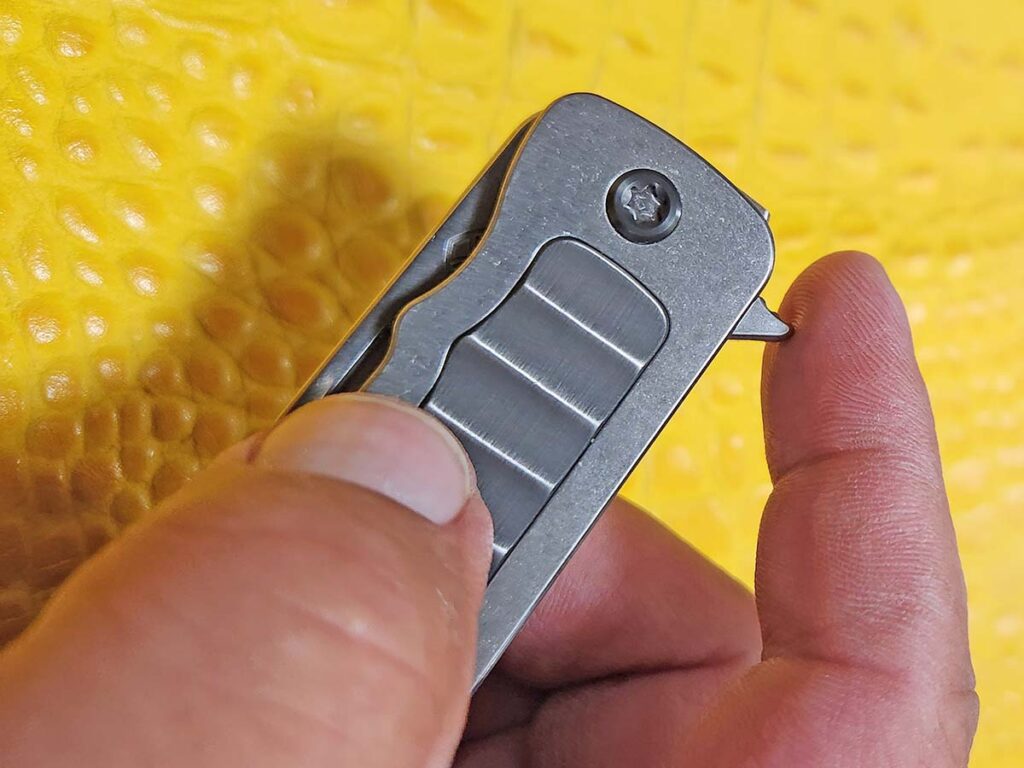
Tank best describes the resulting TFF-4. If Gucci made a tank, this would be it. I mean this in a nice way. It has style and is built solidly—think a Chris Reeve Sebenza on steroids. It’s clean and the finish is impeccable. It is a framelock design built to point. Lock up is solid and it releases smoothly with no sticking.
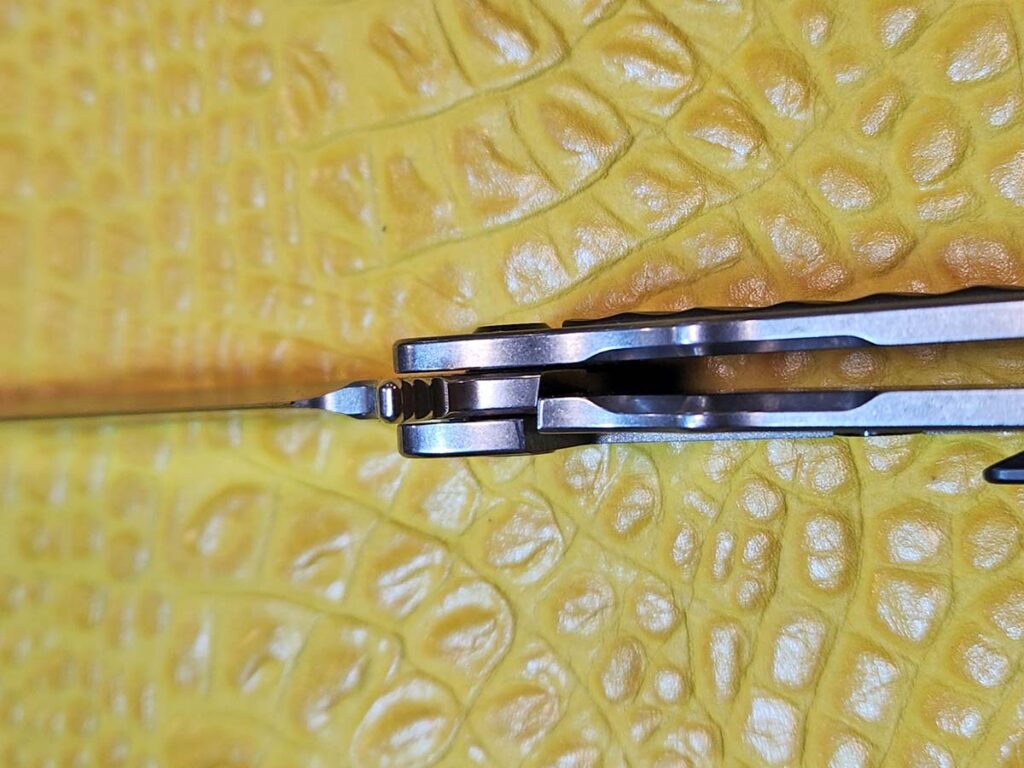
The blade is hollow ground from S45VN stainless. Keep in mind, you don’t have a choice of steels. Medford leaves grind lines on the hollow grind and a false grind to contrast the flat. I enjoy a hollow grind on my folders, as they are easy to get razor sharp due to the fine edge. The TFF-4 is a flipper design and opens lightning fast.
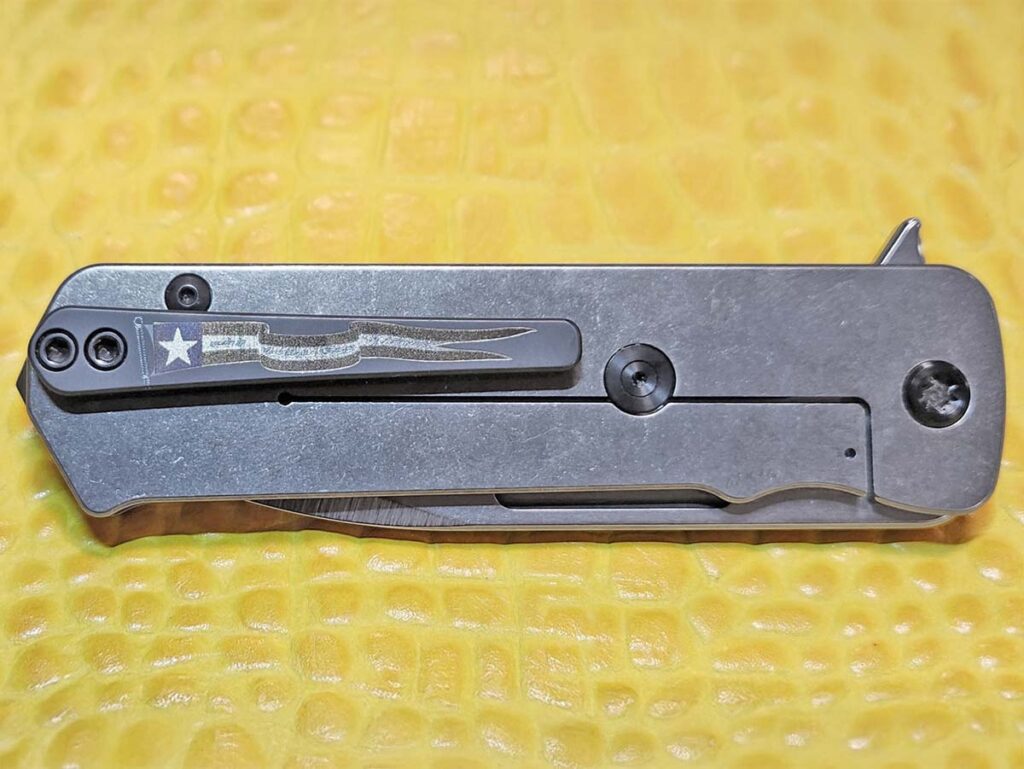
For carry, it has a robust designer clip. A downside to a sturdy clip can be that it’s difficult to attach to some pockets. The TFF-4 clip being so tight with a small opening angle makes it a bit difficult to capture some pocket rims.
Medford provides a solid user with its build-it-yourself folder. I like the clean presentation and have enjoyed carrying it. My experience with its one-handed operation has guaranteed it’s going to be riding in my pocket regularly.
ARCHITECT AK 5.5 Build
In the AK 5.5 (MSRP $285), Architect Knives offers a build-it-yourself EDC fixed blade. The blade lengths range from 3 to 8 inches in half-inch increments. At first, I saw what I thought would make an excellent bushcraft camp knife. I chose the AK 5.5 for the aesthetics and larger outdoor chores. Had I wanted an urban EDC, I would have gone with the 3-inch blade; in fact, I might still do that.
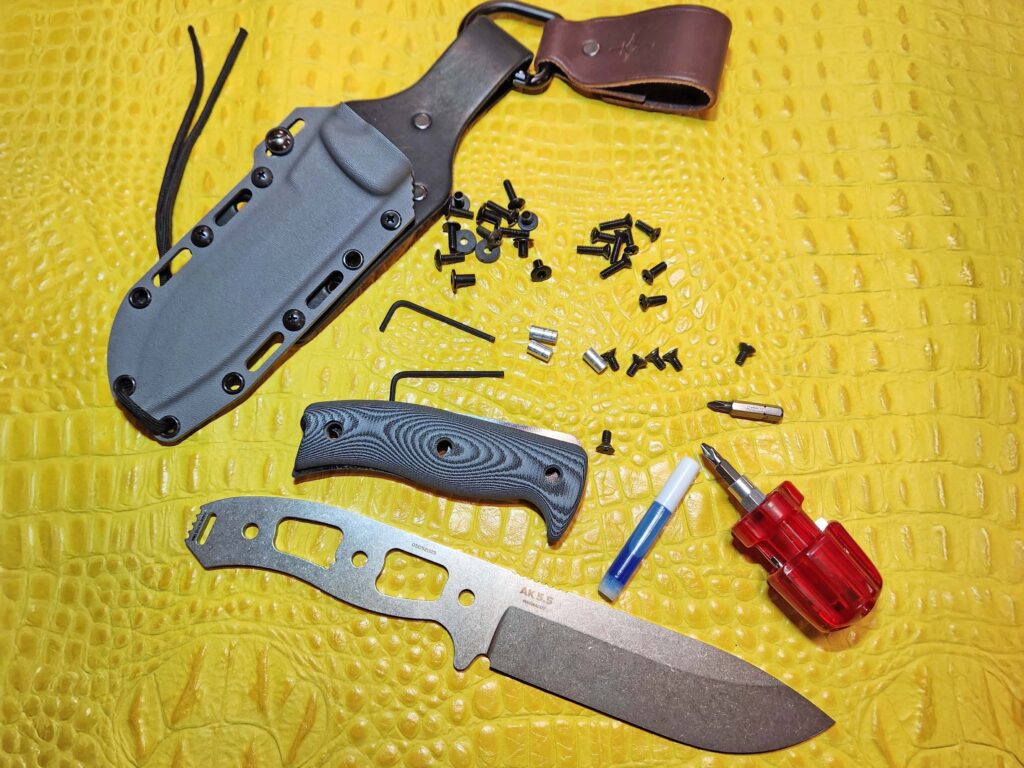
To start the build process, Architect provides an icon-driven selection menu to the left and you get to see your knife develop to the right. From mine, I chose MagnaCut stainless steel, Midnite 1×1 layer G-10, and a gun-metal grey Kydex sheath with leather backer and a dangler attachment.
Operating the site was a breeze. Navigating the plethora of choices was what took time. There are too many to list here. Let’s just say if you can’t find a carry style you like with all the options Architect provides, a paper bag is your only choice. It truly was a breeze to design my AK 5.5. Each icon activates a pull-down menu of options you can choose from while still viewing your example.
ARCHITECT Results
Architect sends you a knife but it is more like you receive a kit. The knife shows up with some assembly required. You get your blade, all the hardware (plus extras) and all your options. The company provides some thread-lock epoxy and two Allen keys for the handle hardware. You will need a slotted screwdriver and a Phillips to assemble the sheath. It wasn’t much work and everything went together in a matter of minutes. I assembled mine in the front seat of my truck in the parking lot. Yes, I carry tools with me.
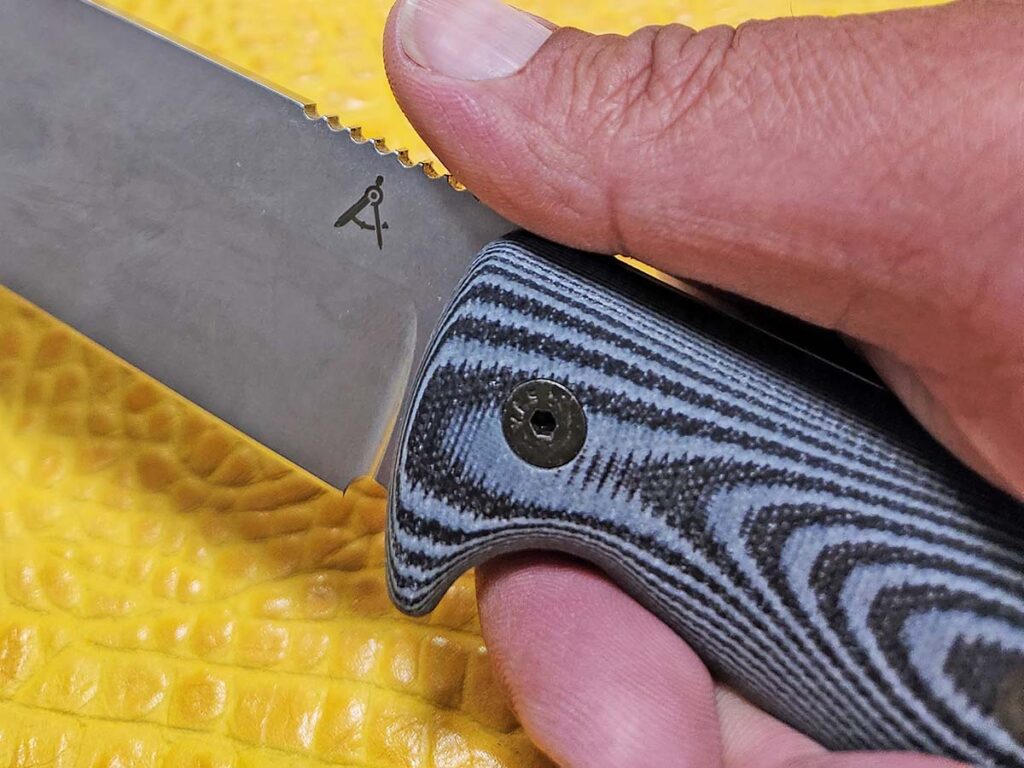
My AK 5.5 came shaving sharp out of the box. I was immediately impressed with the ergonomics of the handle. It has an extended tang with gimping and the extension has a lanyard hole. There are a number of carry options, as mentioned. I chose the Kydex with leather belt loop. The Kydex has a tension-adjustment screw and I customized the tension to my liking. As an extra I got the dangler option, which Architect gets from Casstrom with the “D” carabiner.
The blade sports a high saber grind and the spine has gimping for a thumb rest. I found the gimping a tad crisp on my thumb. It’s a sturdy knife and definitely a cutter. At the rear of the edge is a micro choil. I often find micro choils get caught up on things. The blade carves well but, as to be expected with its 1.5-inch width, it doesn’t excel at detail work. Overall, I am very pleased with the knife and would have no issue taking it on an adventure.
No Downsides
As a maker, I see no downside to building a knife online. As a customer, I see no downside, either. For both parties it streamlines the design processes and allows instant generation of information. Best of all, for the customer it eliminates a lot of the guesswork and stress associated with ordering.
More Knife Reviews:
- Sharps Bros. Meanstreak Review: Keen, Mean Cutting Machine
- Relentless Knives Curved Fillet Knife Review
- Cold Steel Finn Bear Review: Light, Sharp And Up To Snuff
- Spartan Blades Clandestina Review: 2024 Blade Knife of the Year
 NEXT STEP: Download Your Free KNIFE GUIDE Issue of BLADE Magazine
BLADE’s annual Knife Guide Issue features the newest knives and sharpeners, plus knife and axe reviews, knife sheaths, kit knives and a Knife Industry Directory.Get your FREE digital PDF instant download of the annual Knife Guide. No, really! We will email it to you right now when you subscribe to the BLADE email newsletter.





