

Folder features evolve at a fast clip.
Today’s knife market is a dynamic mix of time-tested traditions, evolving design applications and cutting-edge innovations. Designs are as varied as the people who carry them, and what someone chooses as an everyday carry (EDC) knife can be a cultural marker as much as a cutting tool. One of the key features of EDC knives is their mechanical operation. In this article, we will explore the fascinating realm of folding knives, examining the influence of knife mechanisms on consumer preference, the evolution of some of the most iconic designs and whether today’s emerging ideas are gimmicks or game changers.
Old Is New Again
The folding knife industry is often associated with mechanical innovation. However, according to industry experts, there is a notable trend regarding classic slip-joint knives. The traditional non-locking folder, often affectionately called a pocketknife, is experiencing a demand revival.
“I’d go out on a limb and say that slip-joint knives are having a moment right now,” said Doug Flagg, former vice president of marketing and innovation at Columbia River Knife & Tool (CRKT). “Innovation will never go out of style, but in a lot of ways, what’s old is new again.” Flagg added that CRKT recognized this slip-joint revival and has already developed recent models to answer consumer demand, including the Symmetry and Venandi models, designed by Richard Rogers, and the Darriel Caston-designed, double-bladed Forebear.
Regarding specializing in traditional folders, W.R. Case & Sons is arguably second to none. On the topic of slip joints, Tony DiFonzo, director of engineering at Case Knives, acknowledged that many people prefer the look and feel of tried-and-true knife designs, like Case’s Sod Buster, Trapper and Stockman. He added that their less-intricate designs imply greater reliability.
“Sometimes, it’s better to simplify and have something that you know is going to work repeatedly,” DiFonzo said. “The influence of debris and the wear and tear of repeated real-world use can cause a knife with complex components to not fire or lock up like it should. We don’t want it to look cool on a shelf; we want it in people’s pockets to use every day.”
According to DiFonzo, Case continues to meet their customers’ demand for traditional knives by producing about 6,000 slip-joint knives daily, contrasting them with their locking knife line, which accounts for only about 20 percent of Case’s overall consumer line.
Mechanical Evolution
These days, many of the mechanisms we take for granted were once novel inventions conceived by imaginative innovators. For example, an assisted-opening knife didn’t exist before Blackie Collins bringing his design to market, famously inspired by the single-strut suspension on his Ducati motorcycle. Before Michael Walker’s revolutionary LinerLock design, closing a locked folding knife was virtually always a two-handed job. In subsequent years, variations and often improvements of both innovations began to proliferate in the industry and become all but ubiquitous. These are only two examples of numerous similar evolutions.
Time makes it easy for innovators who changed the industry to be forgotten after expired patents, as their inventions become “democratized,” as Michael Janich, special projects coordinator at Spyderco, characterized it. He drew careful attention to the importance of these noteworthy creation stories: “It’s counterproductive when it comes to promoting industry education and a sense of history,” Janich said. “People new to knives don’t understand the origin of the mechanism or appreciate its history.”
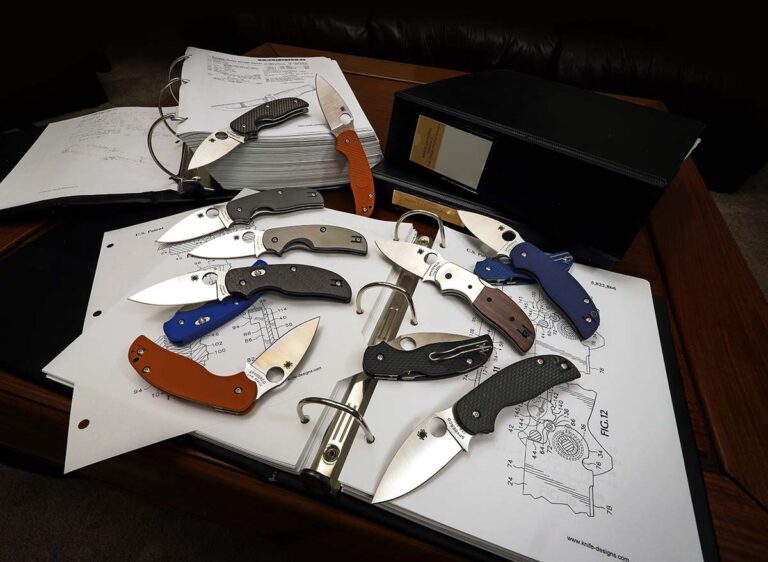
In 2008, Spyderco created the ongoing Sage Series to draw a historical line between pioneering locking mechanisms and the makers who created or popularized them to assign credit where credit is due. To accomplish this, each Sage Series model features a different key advancement. The Sage 1 incorporates two Michael Walker mechanisms: the LinerLock and the ball bearing detent. The Sage 2 features Chris Reeve’s RIL (Reeve Integral Lock), a.k.a. the frame lock. Sage 3 features Blackie Collins’ Bolt Action Lock, improved by Spyderco with easy-to-operate ambidextrous release buttons. Sage 4 pays tribute to Al Mar by integrating a mid-back lock, a signature element of Al Mar Knives. Completing the series, thus far, the Sage 5 and Sage 5 Lightweight models feature the Compression Lock designed by Spyderco Founder Sal Glesser.
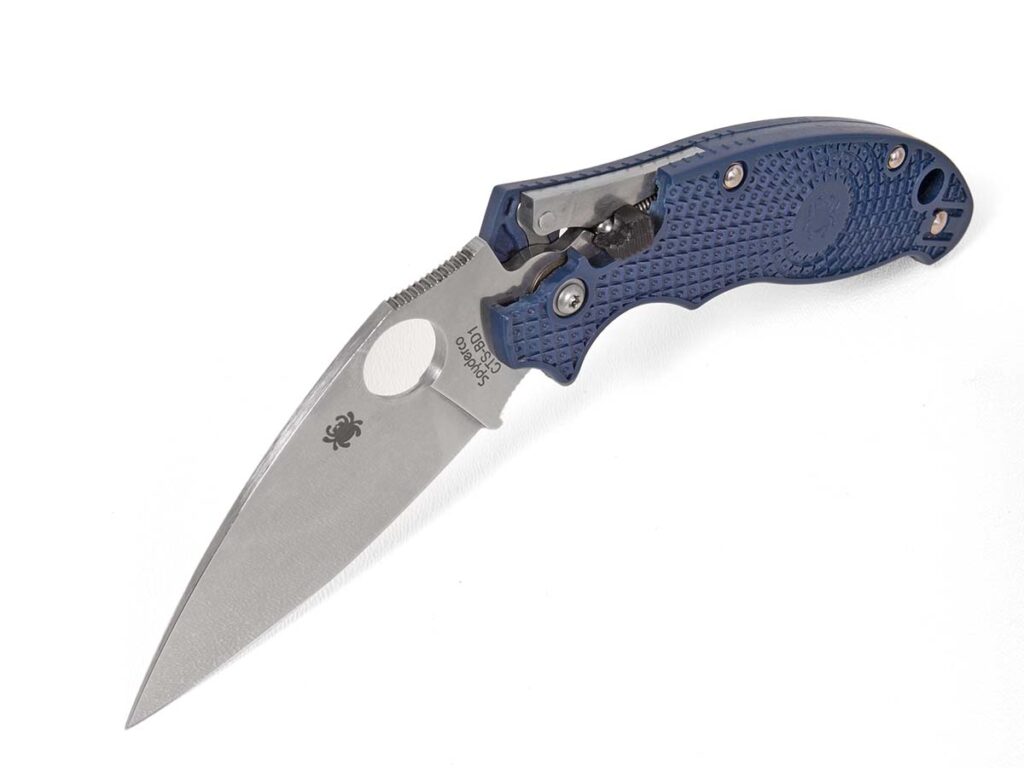
Many folders included in Spyderco’s current line-up feature the company’s proprietary locks, such as the Para 3, a compact version of the popular Paramilitary 2 folder, featuring Glesser’s Compression Lock, and the Manix 2 Lightweight, featuring a Ball Bearing Lock invented by Sal’s son, Eric. Both locking mechanism patents have now expired.
Historical context intact or not, widespread adoption and adaptation of mechanisms due to patent expiration play a significant role in today’s popular trends. Like any other patent, a knife mechanism patent expires after 20 years, after which the design enters the public domain. Then, anyone can legally manufacture and sell products incorporating that mechanism without requiring permission from the original patent holder. Along with Spyderco’s recent expirations, the Benchmade Axis Lock patent also recently expired, which has been felt across the industry.
Versions Of Their Own
“You’ll note an uptick in knives featuring what was originally called the Axis Lock, now commonly referred to as the Crossbar Lock,” Flagg said. “Now that it’s available to the industry at large, many manufacturers, including CRKT, are coming to market with versions of their own.”
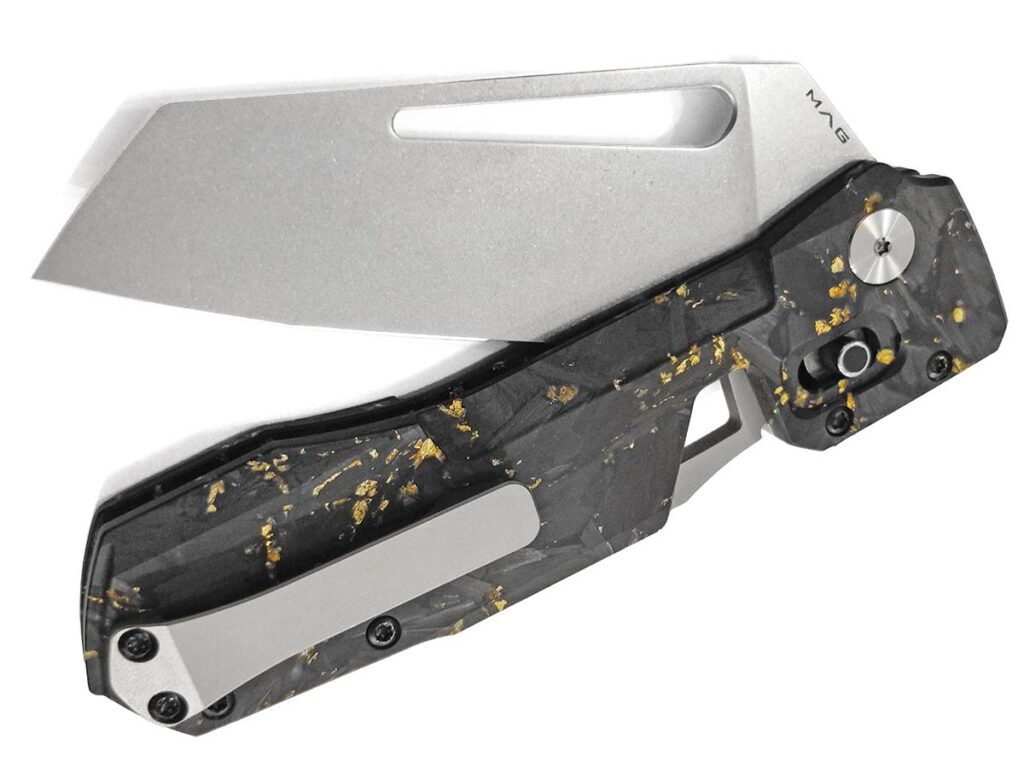
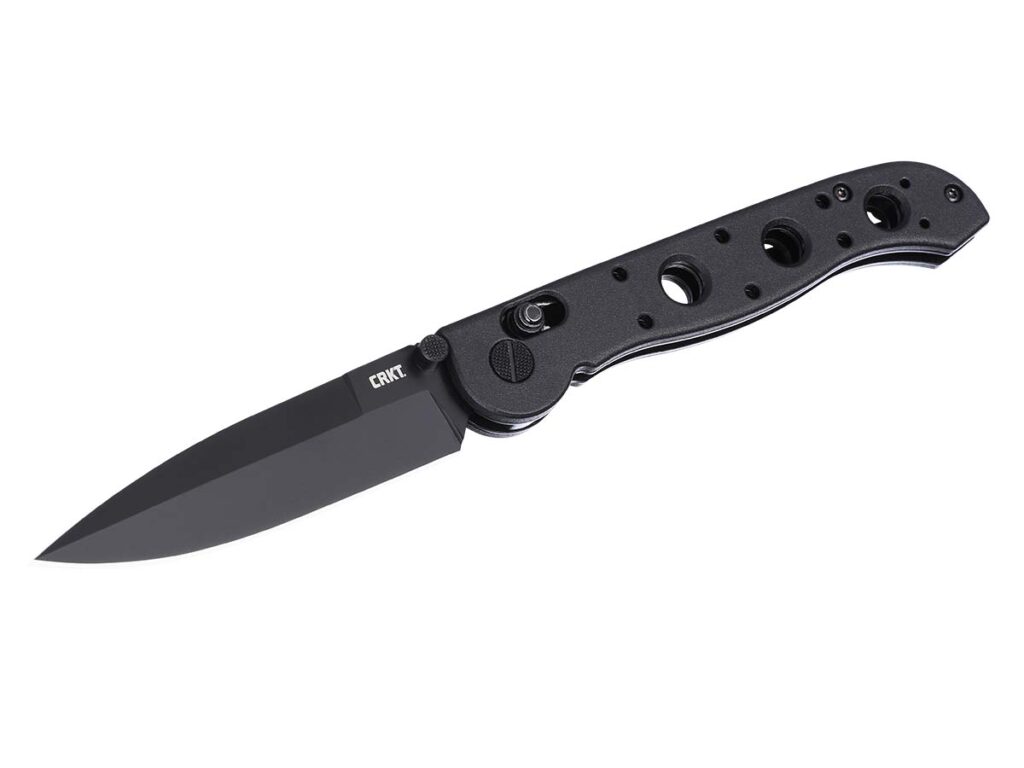
CRKT began using the Crossbar Lock in 2024 and is now carrying it forward into the iconic Kit Carson-designed M16 collection. “It’s got a fluidity and ease of use that consumers seem to gravitate toward, and I think you’ll see more knives using the technology coming out each year,” Flagg said.
Indeed, many other knife companies produce similar bar-style locks, often under different names, including Hogue’s ABLE Lock, SOG’s XR Lock and Civivi’s Superlock. Patent expiration also levels the playing field for smaller manufacturers by allowing them to use popular mechanisms without the cost or hassle of licensing, which is a game-changer.
Janich says that many of the hot new locks are subtle mechanical variations of the original Blackie Collins Bolt Action Lock from the 1970s, which, he added, never received the recognition it deserved. “The Bolt Action Lock was, to my knowledge, the first to be based on the mechanics of creating a ramp on the back of the blade and wedging a locking device between that ramp and the stop pin or backspacer.”
As an in-line mechanism, he says, the wedge concept became the basis for the Axis Lock, Ball Bearing Lock, Arc Lock and Stop Lock, among others, and it continues to be the basis for many of today’s most popular locks, including the Shark Lock, Atlas Lock and Superlock. “The in-house production secret is making the mechanics just different enough to convince the USPTO [United States Patent and Trademark Office] that it’s unique.”
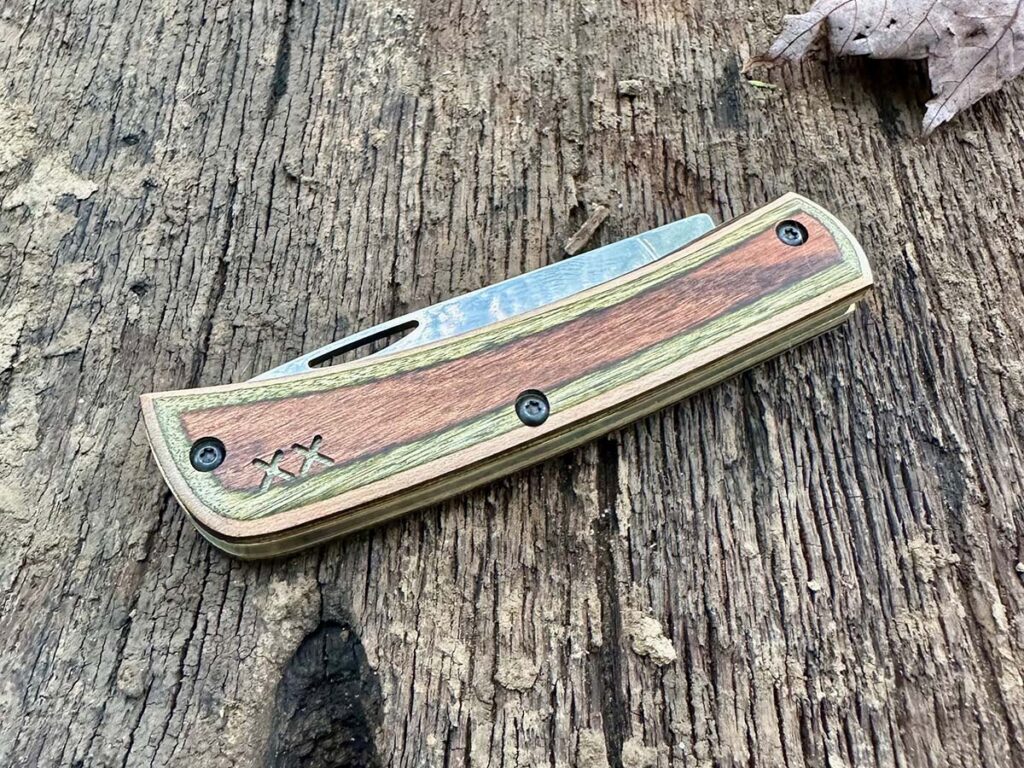
Janich said he doesn’t foresee any locks disappearing completely as new ones join the market. He mentioned that the classic back lock mechanism is still the bread and butter of many Spyderco designs. Though he acknowledges it’s an old-school design, he attributes its continued popularity to seasoned knife users who, he said, tend to have strong preferences, especially when lock failure could result in bloodshed.
Gimmicks Or Game Changers?
On one side of the demographics spectrum are seasoned knife users who field dress game and integrate EDC knives into their self-defense strategies. On the other side is the next generation of knife customers, whose industry knowledge mainly comes from YouTube influencers posting POV (point of view) knife reviews. The latter customer base is often mainly drawn to what is widely regarded as the “fidget factor,” where interest and excitement are focused primarily on knives with intriguing opening, closing and locking mechanisms. Smooth, snappy action is in demand, and the more intricate, the better.
“There are lots of younger knife users who have never had to use a knife hard,” Janich said. “In many cases, they like fidget-friendly designs that open and close easily and are entertaining.”
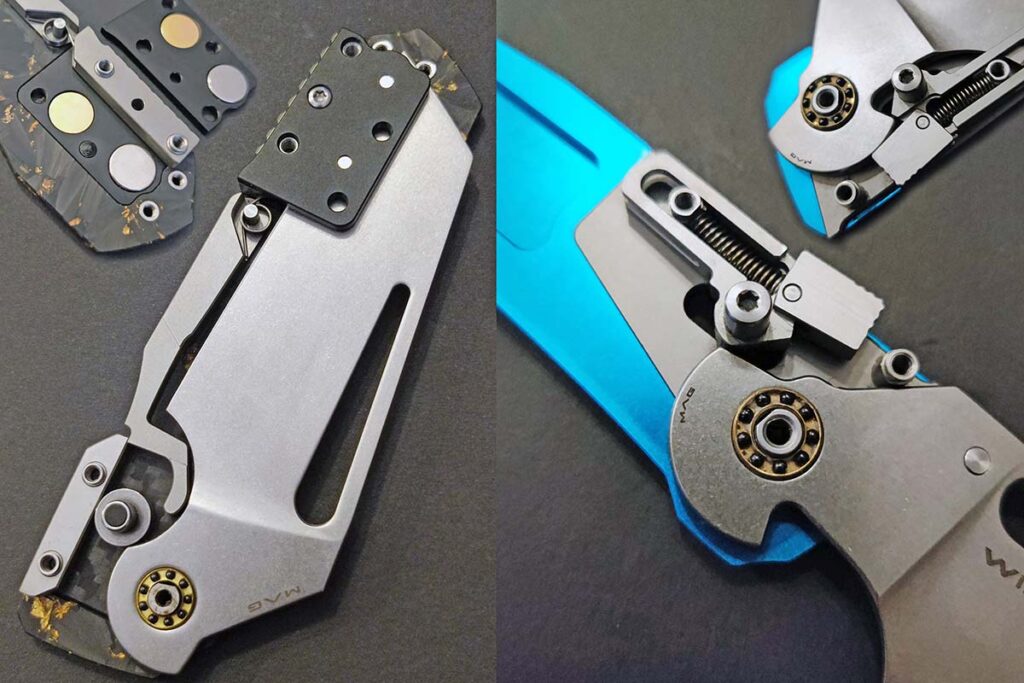
Bryan Winters, owner of Winterblade Knives and a relative newcomer to the knife industry, doesn’t have concerns about “fidget factor” characterizations, despite his knives being on the cutting edge of fidget-ry. He captures his philosophy by saying, “We can’t spell function without fun.” Winters started making his earliest creations in his modest shop in 2019, but 2022 was the year he launched his flagship design, the Factor, a stout, legitimately dependable folder, featuring cutting-edge new mechanisms that integrate magnets into the locking and deployment systems.
“I’ve never set out to design a knife just because I think it will sell well or because it’s a certain gimmick,” Winters said. “I’ll use magnets, but if I think springs are better suited for that particular mechanism, I’ll use springs, or maybe I’ll need some sort of lever or gears, whatever the case may be.”
He explained that, in the Factor, and later incarnations like the Factor 8ight, the detent magnets “suck the blade in” and keep it securely closed. An added benefit is alleviating the contact point of friction with a typical detent ball, allowing for noticeably smoother deployment. A benefit of the neodymium magnets is that they retain their power for almost a century, whereas springs fatigue or wear out much more quickly through continued use.
“My point with the people who say that magnets are gimmicks is, you can do things with magnets, physically speaking, that you cannot do with springs.”
Radical Reimagination
Another novel Winters creation is his radical reimagination of a double-action firing mechanism on the Darkfire OTF. Instead of a typical fixed slider, the blade is propelled in and out via a large blade guard that acts as a lever. The stylized blade guard is part of an overall design aesthetic inspired by the Mandalorian Darksaber from “Star Wars.” Inside, the brilliantly reimagined, simplified mechanism is powered by a single compression spring, again departing from traditional designs.
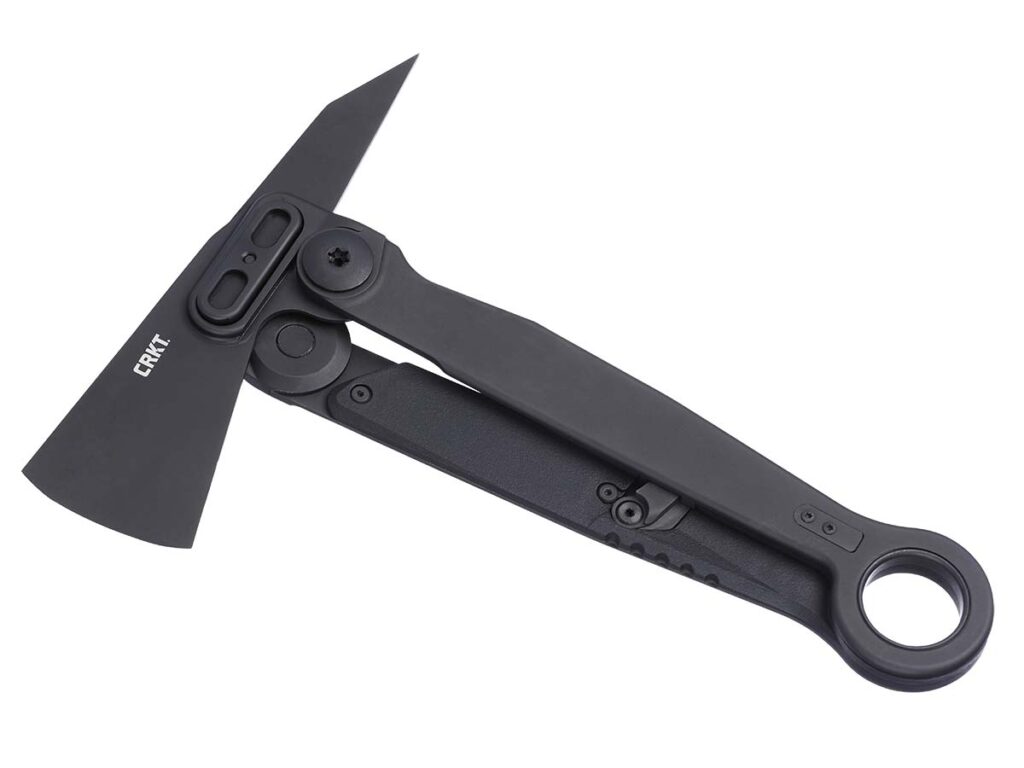
Whether one prefers the simplicity of a traditional slip joint, the fidget-friendly nature of modern deployment and locking systems, or the cutting-edge ingenuity of truly novel mechanisms, one requirement for success is that function meets the real-world needs of end users. Examples that Flagg pointed out in the current CRKT line are Flavio Ikoma’s proprietary Deadbolt Lock design, featured on several of the company’s knives since its creation five years ago, and Joe Caswell’s Kinematic opening system, which Flagg characterized as “a true innovation marker.” The Kinematic mechanism has several pivot points and linkage arms that “morph” into the opened knife when manually actuated.
“Joe is a bit of a mad scientist, in the best sense of that term, and his Provoke knife, with its Kinematic opening technology, was an instant bestseller for us,” Flagg says of its 2019 release. “Now, we’ve taken it to the next level and brought this innovation into our Provoke X, a morphing tactical axe that combines Kinematic opening with the Deadbolt Lock to create an EDC axe unlike anything the industry has seen before.”
The knife industry has a long legacy of benefiting from an enduring heritage while enabling innovators to push boundaries. It engages a wide variety of collectors and enthusiasts by offering as many knife designs as there are preferences and needs, whether nostalgic, futuristic or anywhere in between. Today’s trends show no indication of that dynamic subsiding in the foreseeable future. As such, all indicators point to an industry that will remain both reassuring and exciting.
More Reviews:
- Mike Bradshaw’s Large Hunter Review: Large And In Charge
- Pepperwool Merino MM Review [Field Tested]
- KSW Custom Knives Bushcrafter Review: Upcycled Edge
- Hults Bruk Spika Review: Backwoods Beast
 NEXT STEP: Download Your Free KNIFE GUIDE Issue of BLADE Magazine
BLADE’s annual Knife Guide Issue features the newest knives and sharpeners, plus knife and axe reviews, knife sheaths, kit knives and a Knife Industry Directory.Get your FREE digital PDF instant download of the annual Knife Guide. No, really! We will email it to you right now when you subscribe to the BLADE email newsletter.





