
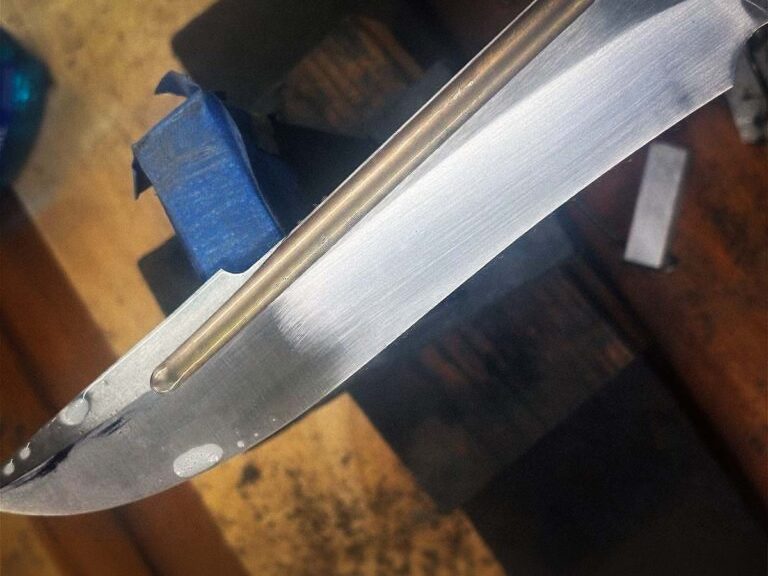
Broadwell gets to the nitty-gritty of hand finishes.
Renowned for knives with sculptural flair, David Broadwell is widely regarded as a master of the art-tactical hybrid knife—a seamless blend of artistic design and functional form that emphasizes the human touch.
Often regarded as the signature of custom quality, a hand-sanded blade is a defining element for a high-end custom knife. It is a labor-intensive process that moves beyond the mechanical look of a machine finish, achieving an elegance that is both aesthetically superior and functionally refined.
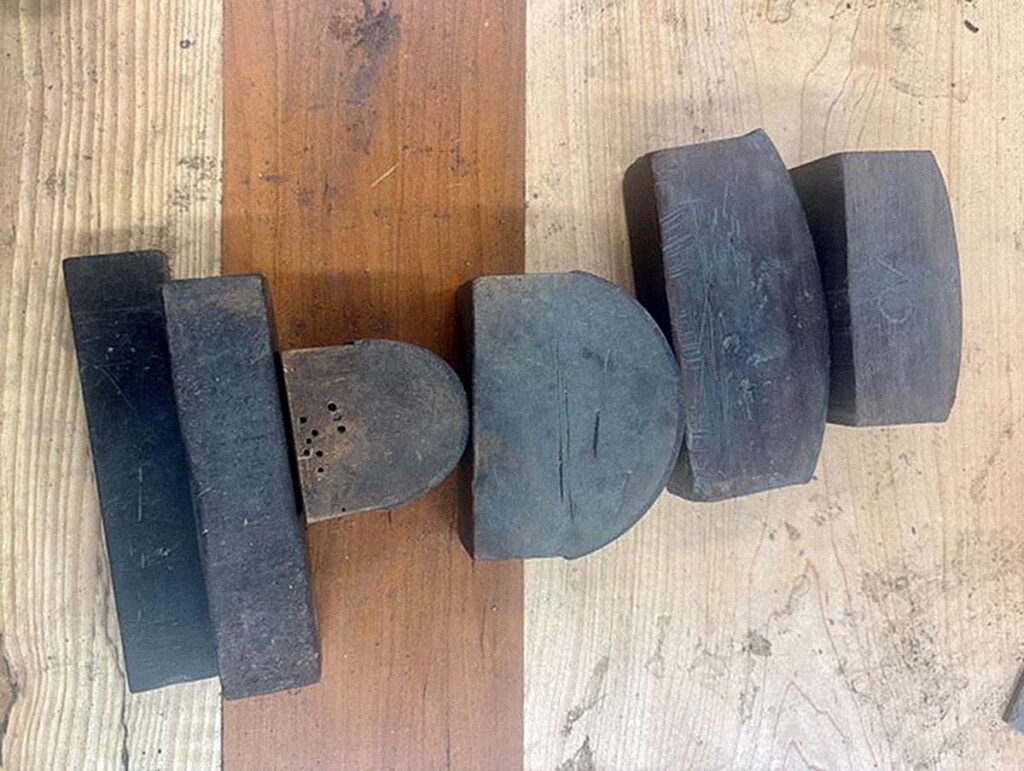
Broadwell finishes his grinding with 400 grit; he typically hand-finishes at 600 grit for his 154CM blades. He uses leather-faced wooden blocks matching the contours of his grinds. The leather provides a slight cushion while the wood ensures the backing remains firm, maintaining crisp lines. For the abrasive, he uses 1-inch strips of silicon-carbide sandpaper. His process is as follows:
- Stroke: With the point facing away, always sand following the edge-line profile. Start at the plunge (the transition from the flat ricasso to the bevel), angle the block back slightly, then lower it fully as you transition into the bevels.
- Consistency: Make each stroke one continuous pass. Count the strokes to ensure the finish is identical on both sides.
- Windex Trick: Use window cleaner as a lubricant to enhance the final aesthetic of the finish.
- Zones: Sand the bevels and flats as two separate zones to maintain crispness. Avoid washout by not overrunning the grind lines.
One With The Blade
Broadwell emphasizes getting into the groove—what he calls “rocking and rolling”—when grinding. This is the mind-and-body, hands-to-blade connection. A frame of mind that lets you feel what you’re doing. Be in touch with yourself at a minute level and with total engagement. He points to the Taoist tradition of Wu Wei—“effortless action”—as the goal. Being aligned with the natural flow of the situation, like sailing versus rowing. Be in the zone while one with the blade. When grinding, David applies lateral body movements, pivoting at the elbows left and right, twisting his wrists, with arms tucked into the body for a solid frame—remaining rigid yet fluid.
For New Makers
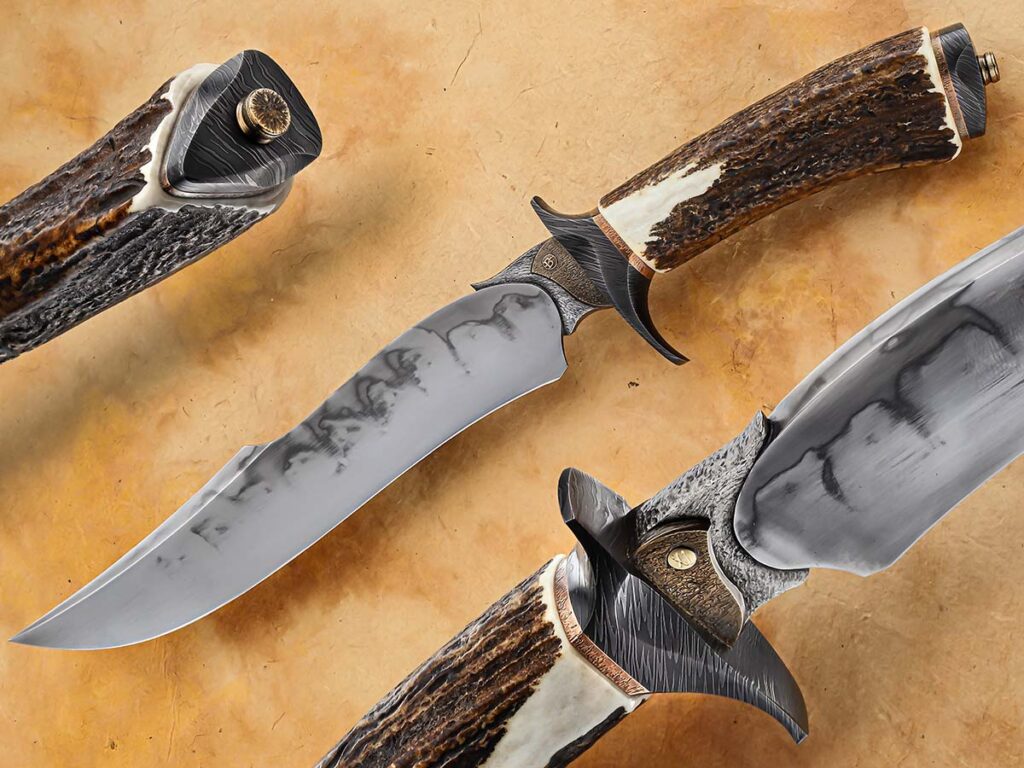
David encourages new makers to grind freehand first. A jig limits what they can do. Become more well-rounded in the craft. He points out, “Yes, you’ll waste steel—that’s what the landfill is for.” Further, he preaches honesty in describing what you create, saying, “Don’t use CNC equipment and tell people you make handmade knives—handmade is not hand-loaded into a machine.”
Read More:
- Japanese War Swords Part
- Scottish Swords: Cold Steel And CAS Iberia’s Tartan Edge
- Scissor Sword: Scissor Maven Grace Horne’s Prized Collectable
- Master Bladesmiths Showcase Their Best Long Swords
 NEXT STEP: Download Your Free KNIFE GUIDE Issue of BLADE Magazine
BLADE’s annual Knife Guide Issue features the newest knives and sharpeners, plus knife and axe reviews, knife sheaths, kit knives and a Knife Industry Directory.Get your FREE digital PDF instant download of the annual Knife Guide. No, really! We will email it to you right now when you subscribe to the BLADE email newsletter.