

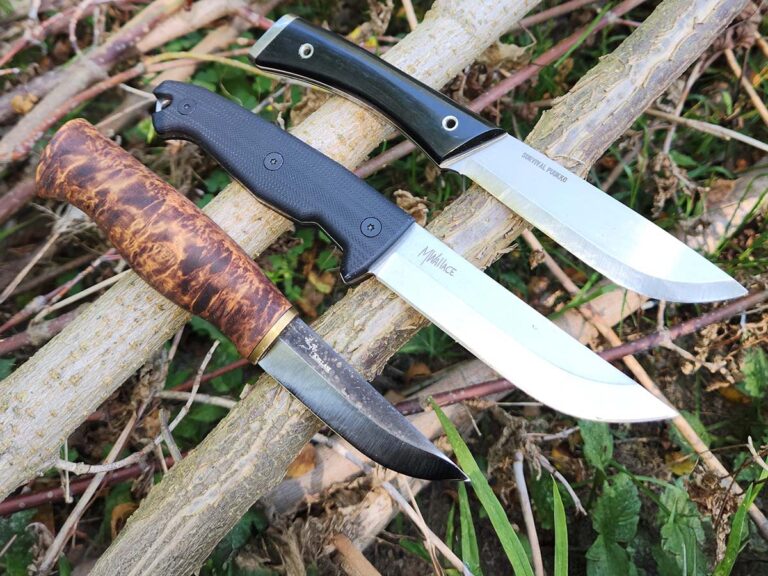
Today’s puukkos are knives you can trust in the great outdoors.
It’s a crisp, early winter morning. You wake and need to start a fire to get breakfast underway. As you exit your hut, your warm breath clouds the air. While you gather wood, you gaze out over your reindeer herd.
At least this story would be yours if you were a Sami, a traditional reindeer herder of Finland’s Lapland region. And a traditional Sami tool is the Finnish puukko-style knife, three versions of which are our test subjects this time.
Puukko Specs Comparison
| Kellam Hawk | APOC Wallace Large Puukko | Condor Tool & Knife Survival Puukko | |
|---|---|---|---|
| Overall length (inches) | 7.5″ | 9.25″ | 8.5″ |
| Blade length (inches) | 3″ | 4.25″ | 3.9″ |
| Blade material | Carbon steel | 7Cr15MoV stainless | 1095 carbon |
| Handle material | Quilted birch burl | G-10 | Black paper Micarta® |
| Sheath | Leather | Leather | Kydex |
| MSRP | $106.88 | $123.53 | $79 |
| Finland | China | El Salvador |
Condor Tool & Knife Survival Puukko
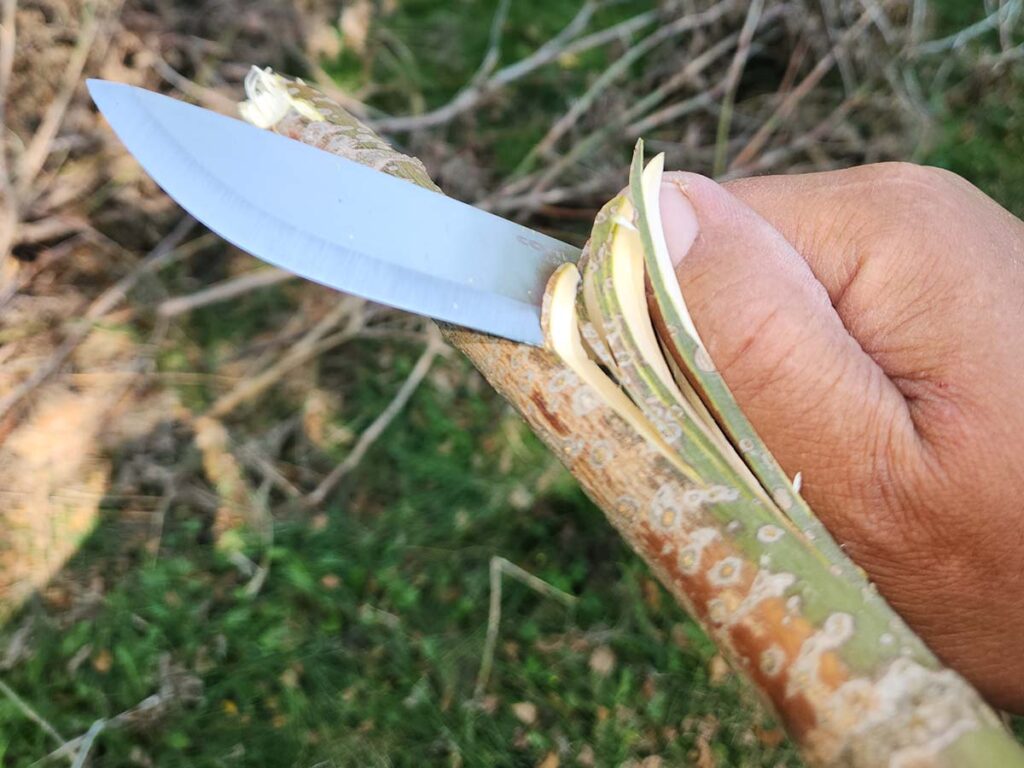
Though called a puukko, the blade profile of the Condor Tool & Knife Survival Puukko follows more the pattern of a leuku, a bigger Scandinavian chopper. The grind is a stout Scandi and it arrived work ready right out of the box. While it cut very well, I would have liked to see it come with a bit more of a traditional higher grind.
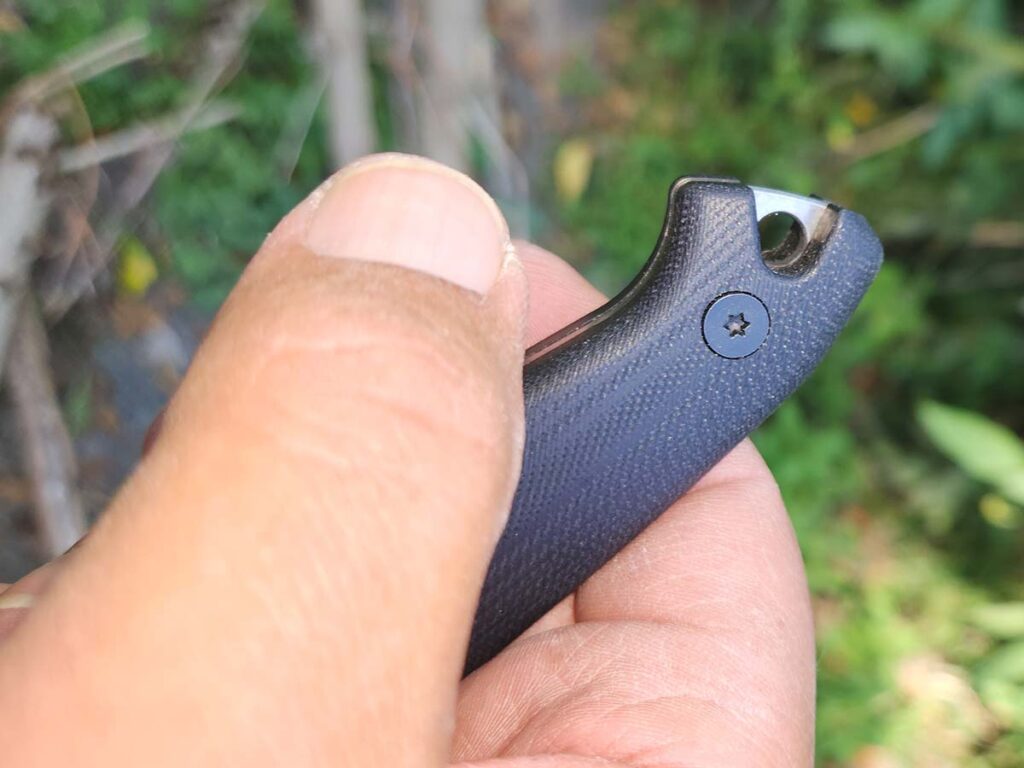
An interesting feature is that the steel pommel is attached to the tang. I would say that would come from a Mors Kochanski* influence as he promoted such a design aspect as a striker plate. The blade is 1095 carbon steel, which will hold an edge well when heat treated properly. The scales are polished black paper Micarta® accented with white liners.

I found the handle a bit small for my bear paw hands. The grip’s inward curved profile tends to bunch my fingers together. Add a smallish handle and it started crowding my grip, causing discomfort. (Keep in mind, my hand is over 4.5 inches wide.) Two stainless steel pins affix the scales to the tang, with the lanyard hole a bit too small for a paracord. The full leather pouch sheath is well made.
Designed by Joe Flowers, the Survival Puukko is a good, serviceable cutting tool. It is a clean knife design with tight fit and finish. One thing: before you buy it, be sure it fits your hand.
APOC Wallace Large Puukko
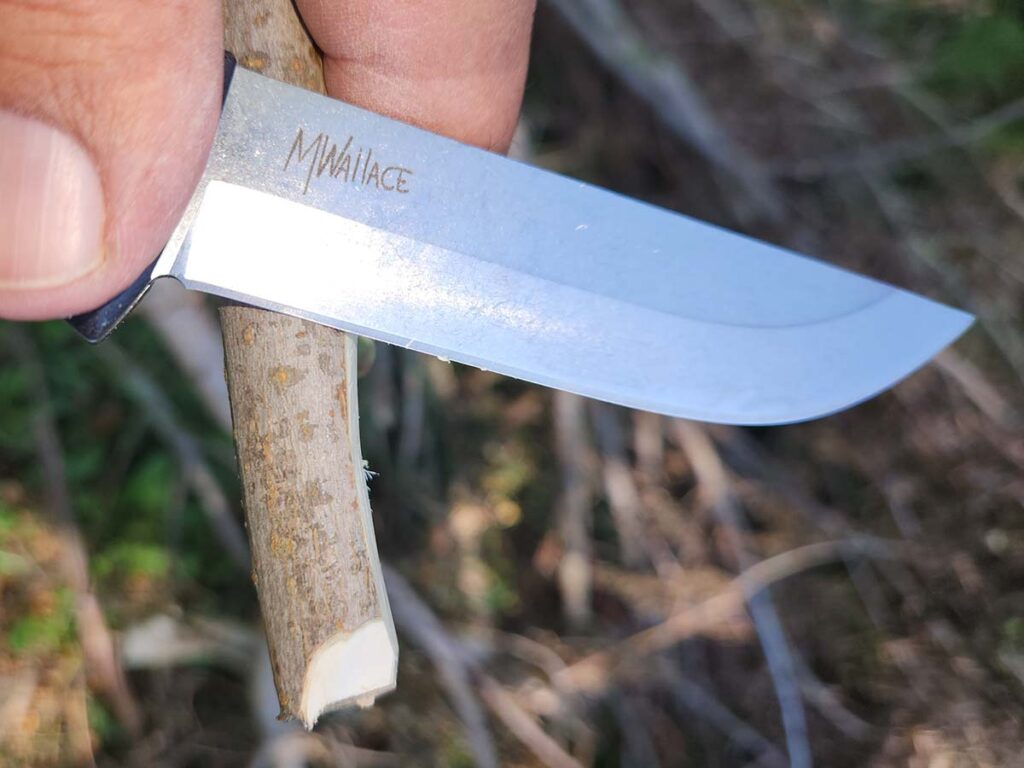
Right out of the gate, I must say you get a lot for the price with the APOC Wallace Large Puukko. I would have expected a higher MSRP on this package. Having said that, let me roll out the high points.
Designed by Mike Wallace, the knife is a good size for bushcraft. Handle ergonomics aren’t amazing but are pretty darn good. The textured black scales are trim so it’s a nice, nimble cutter. As profiles go, it is a dead-on use of the puukko. On the grind end of things, it is not a Scandi. The blade actually has a secondary bevel. However, since it has a high grind it remains an effective cutter.
The sheath is molded Kydex and then some, including a fire steel and a striking plate on the side. In testing the striking plate I found the belt clip gets in the way, and I could get sparks just fine using the blade spine. You have the choice of horizontal or vertical carry with the G-style belt clip.
If I had to pick a downside, I would go with the belt clip. For a bushcraft knife, you want more mobility and accommodation from your sheath if you’re wearing a backpack, getting in and out of a canoe or kayak, even something as simple as bending over. In the vertical position, I find the knife rides too high. To make carrying it easier I would add a belt loop or even a dangler, allowing the knife to ride lower.
As a cutting tool, it works and works well. I would have no problem putting the Wallace Large Puukko on my side for a walk into the woods.
Kellam Hawk Puukko
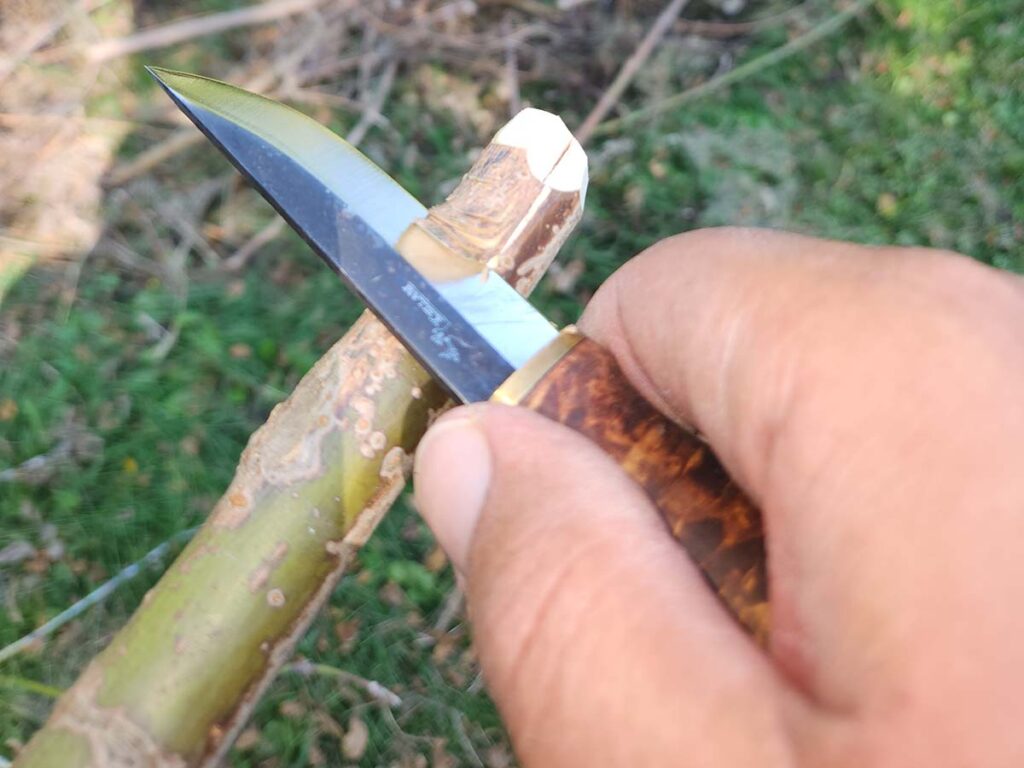
The Kellam Hawk is a perfect example of the traditional puukko design. A full leather pouch sheath with dangler loop makes it easy to carry. Scales are a quilted birch burl that has a dark stain to it. The handle is not polished, which leaves a nice textured matte finish that adds to the knife’s value. Because the Hawk is a stick-tang design, Kellam could shape the handle to perfection, and it did. As I write these words, I can’t resist just holding the knife for the feel of the handle. Then again, stick and hidden tangs are advantageous in that they are constructions that make it easier to fully sculpt a handle.
The blade is a carbon steel with a forged finish on the flats and a Scandi grind. Performance wise it is a capable cutter. Scandi edges excel at cutting wood but can have issues with other tasks. Cleaning an animal is one. If you bump a piece of bone with a Scandi edge, chances are the edge will chip.
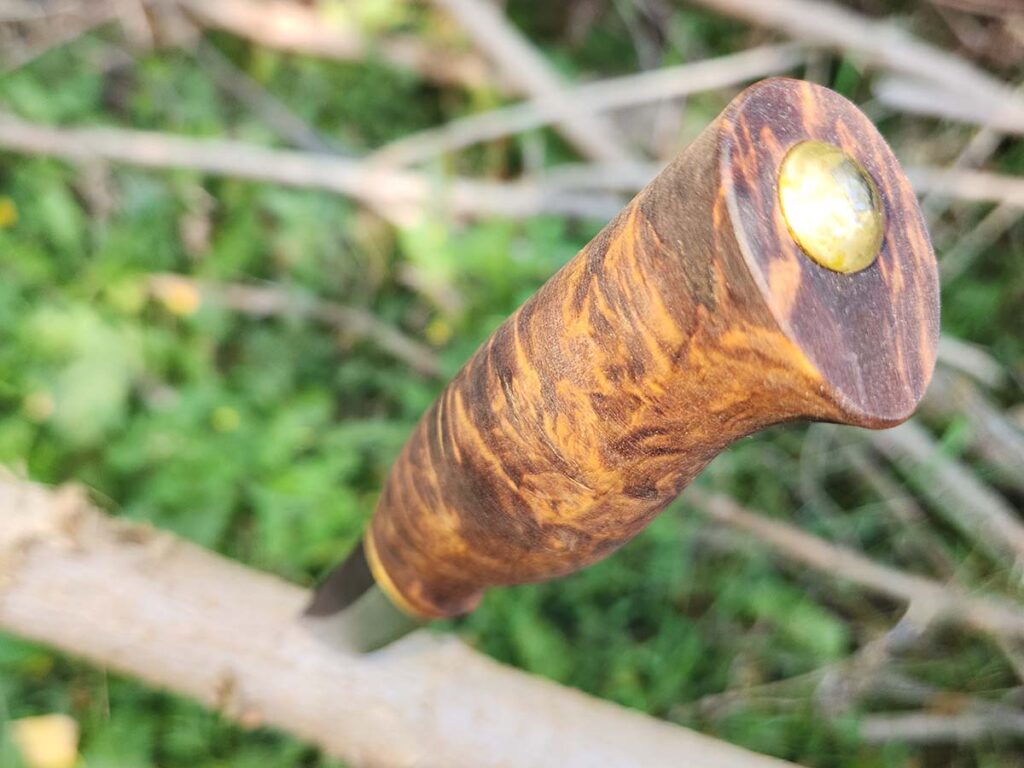
Light and quick, the Hawk will help you craft many things around the camp, making your time in the woods easier. Over my 23 years of writing reviews for knife magazines, I have never met a Kellam I didn’t like.
*An international bushcraft legend, Mors Kochanski (1940-2019) was an outdoor educator and survival instructor for almost half a century and is recognized by many as the godfather of modern bushcraft.
Check Out More Outdoor Knives:
- BEST TOMAHAWKS: OUR TOP HAWKS FOR BACKWOODS TO BATTLEFIELDS
- BEST BUSHCRAFT KNIFE: WHEN STEEL MEETS THE WOODS
- BEST EDC FIXED BLADE KNIFE: A CUT ABOVE THE REST
- BEST CAMP KNIVES: OUTDOORS DO-ALLS
 NEXT STEP: Download Your Free KNIFE GUIDE Issue of BLADE Magazine
BLADE’s annual Knife Guide Issue features the newest knives and sharpeners, plus knife and axe reviews, knife sheaths, kit knives and a Knife Industry Directory.Get your FREE digital PDF instant download of the annual Knife Guide. No, really! We will email it to you right now when you subscribe to the BLADE email newsletter.





