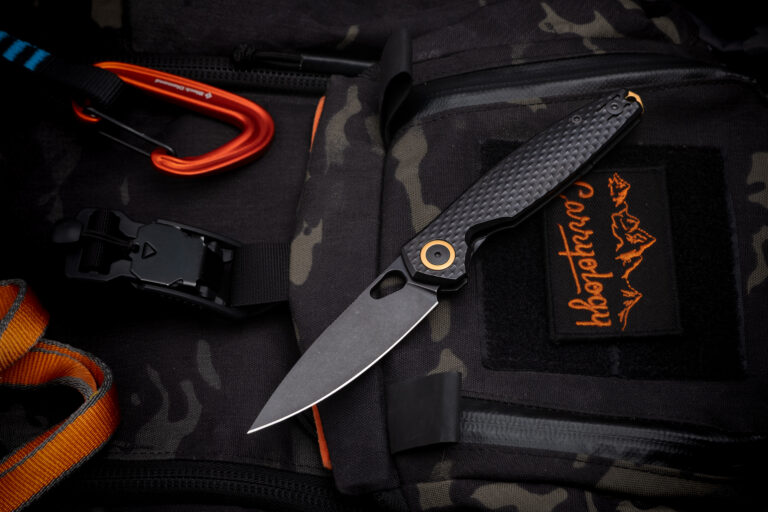
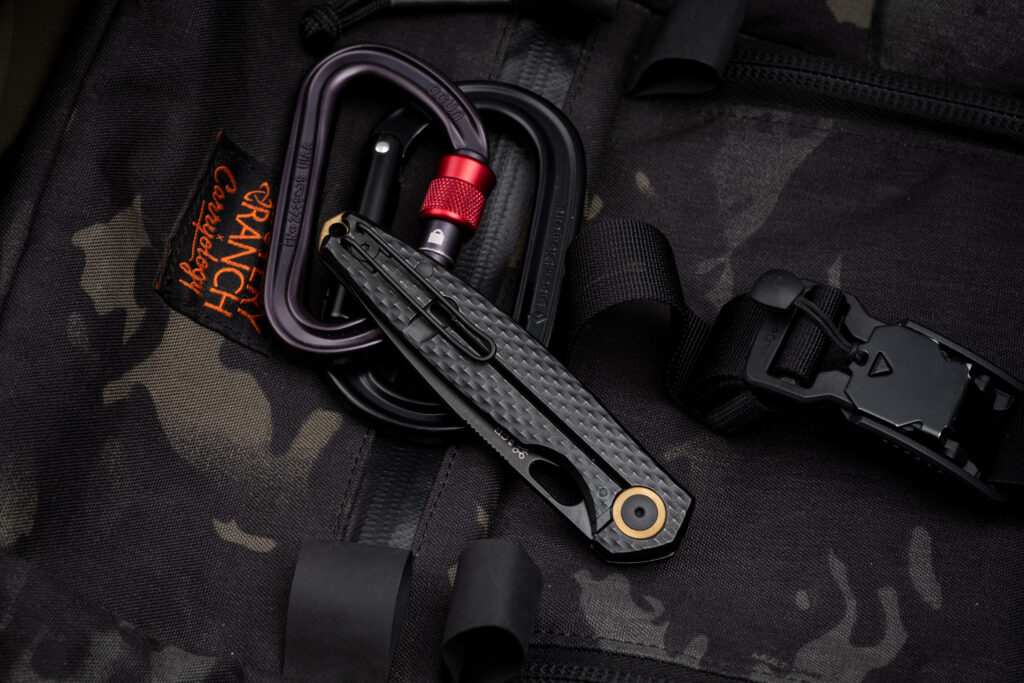
James Brand evolves the Ellis into an ultra-thin, minimalist slip joint multitool.
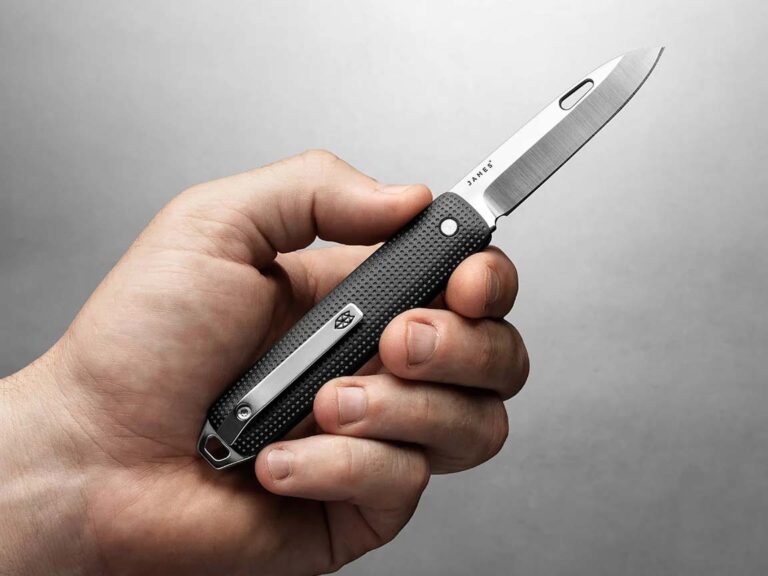
When The James Brand first introduced the Ellis, it occupied a specific niche: a knife for people who needed a bit more utility than a single blade provides, but who didn’t want the bulk of a traditional multi-tool. This latest iteration takes that minimalism to its logical conclusion. By rethinking the architecture of the handle and the clip, the Portland-based design team has produced their thinnest knife to date—a tool that literally measures in thinner than a standard pack of gum.
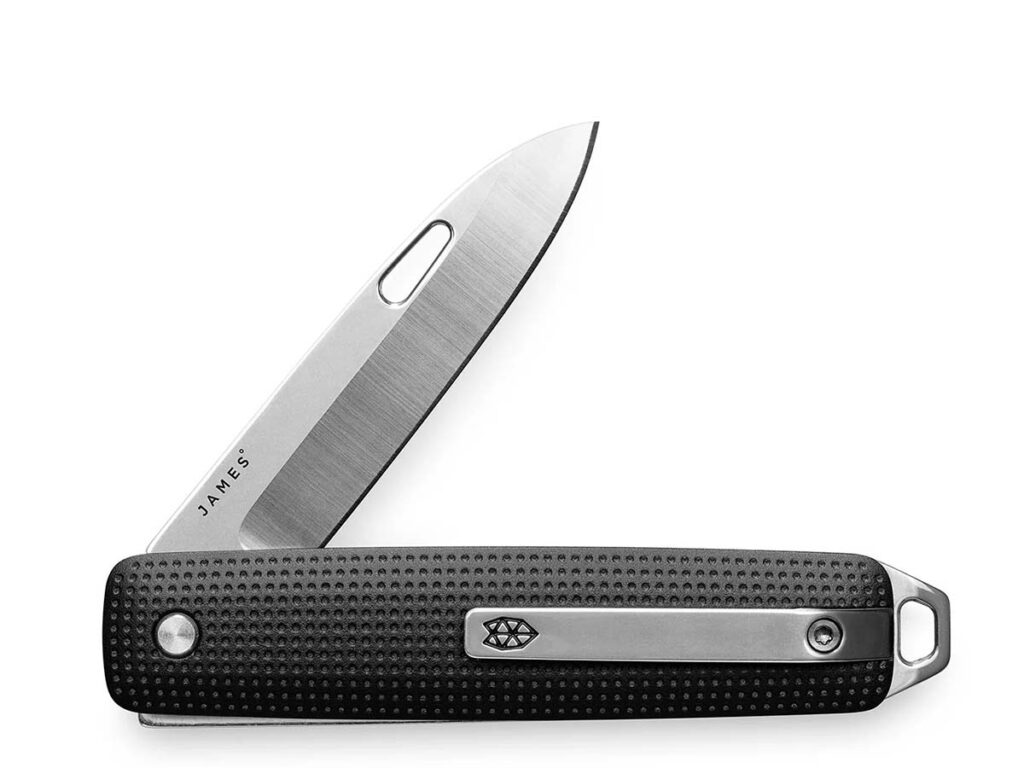
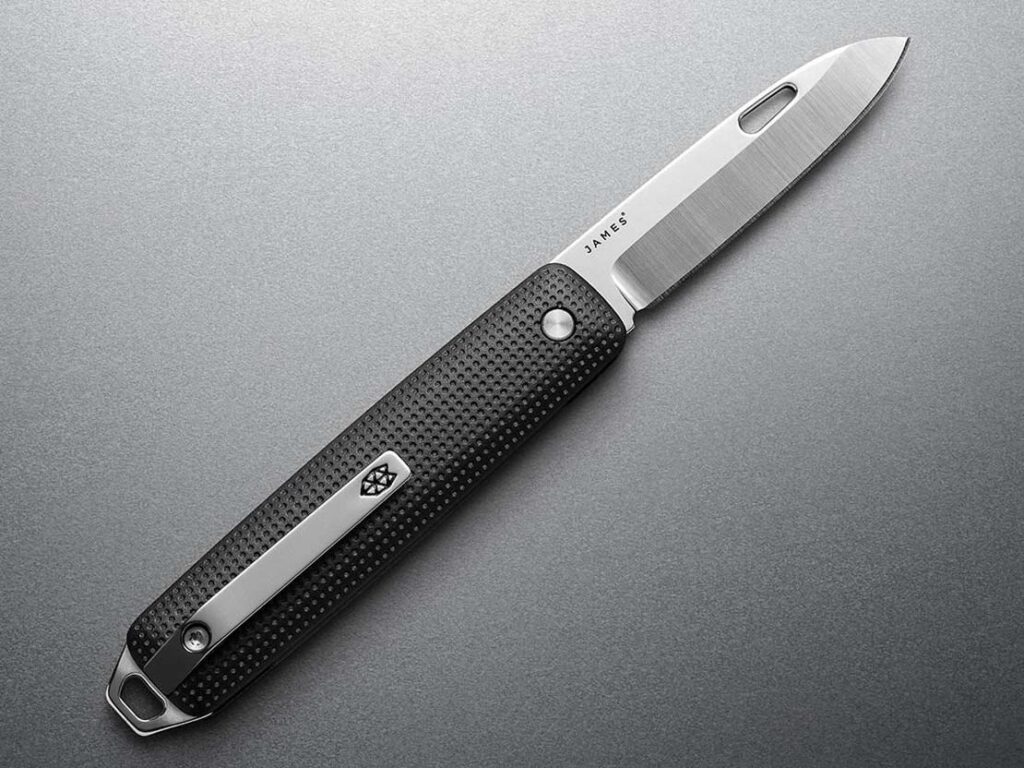
The core of the redesign centers on the handle and carry system. Moving to 6061 aircraft-grade aluminum scales has allowed for a sleeker, more ergonomic profile that maintains structural integrity while shedding unnecessary width. Perhaps the most significant change is the move to a pen-style pocket clip. This low-profile stainless steel clip mimics the deep-carry nature of a high-end writing instrument, allowing the 0.4-inch thick frame to disappear against the pocket seam.
Functionally, the Ellis remains a versatile companion for the modern EDC enthusiast. The 2.6-inch drop point blade is ground from Sandvik 12C27 stainless steel, a Swedish alloy prized for its corrosion resistance and ease of sharpening. Because it utilizes a non-locking slip joint mechanism and a machined nail slot for two-handed opening, it is a globally-friendly option, compliant with strict carry laws.
Beyond the primary edge, the Ellis features what the company calls its “All Things” pry bar and scraper integrated into the backspacer. This secondary tool is robust enough to handle the tasks that usually ruin a knife tip—turning screws, scraping labels or prying open a cold beverage at the end of the day. Riding on phosphor bronze washers, the deployment is smooth and deliberate, reinforcing the brand’s reputation for clean, intentional industrial design.
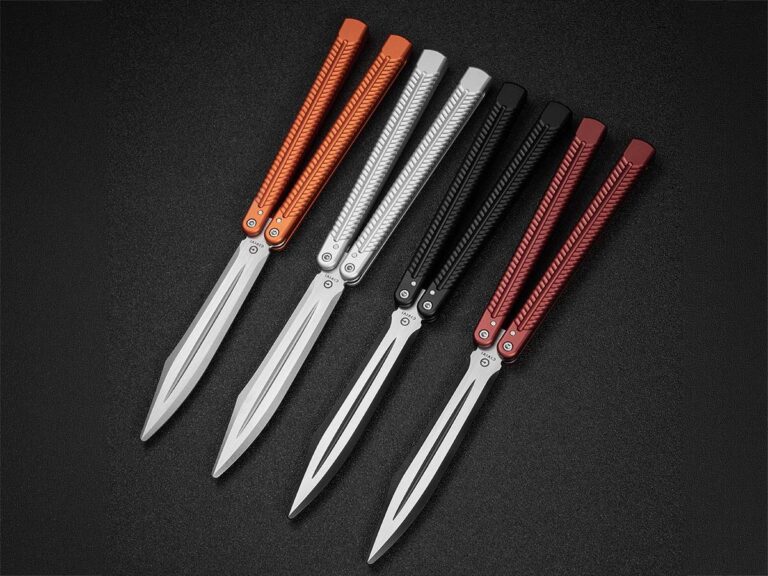
CIVIVI Dracolisk aims to help you master the balisong flip without the sting.
Balisong flipping has evolved from a niche martial art into a high-speed skill sport, where the fluid motion of the handles is just as important as the steel between them. For those looking to enter the world of butterfly knives, the barrier to entry is often the steep learning curve—and the inevitable nicks that come with it. CIVIVI is addressing this head-on with the Dracolisk, a dedicated trainer designed to offer a authentic flipping experience without the risk of a live edge.
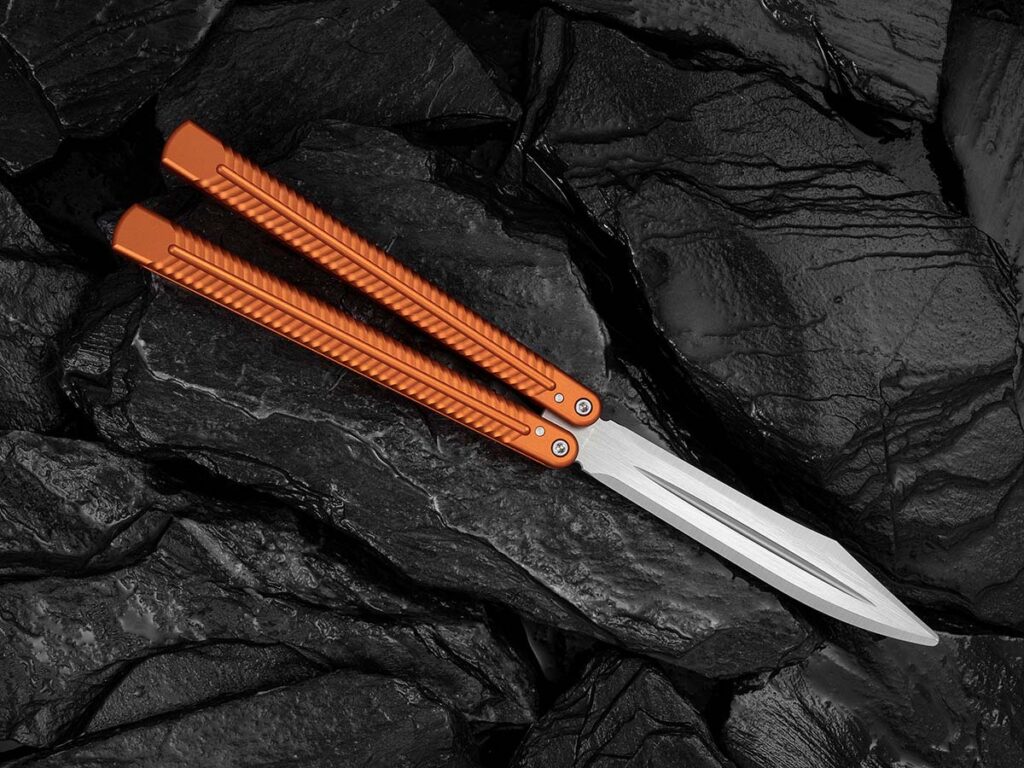
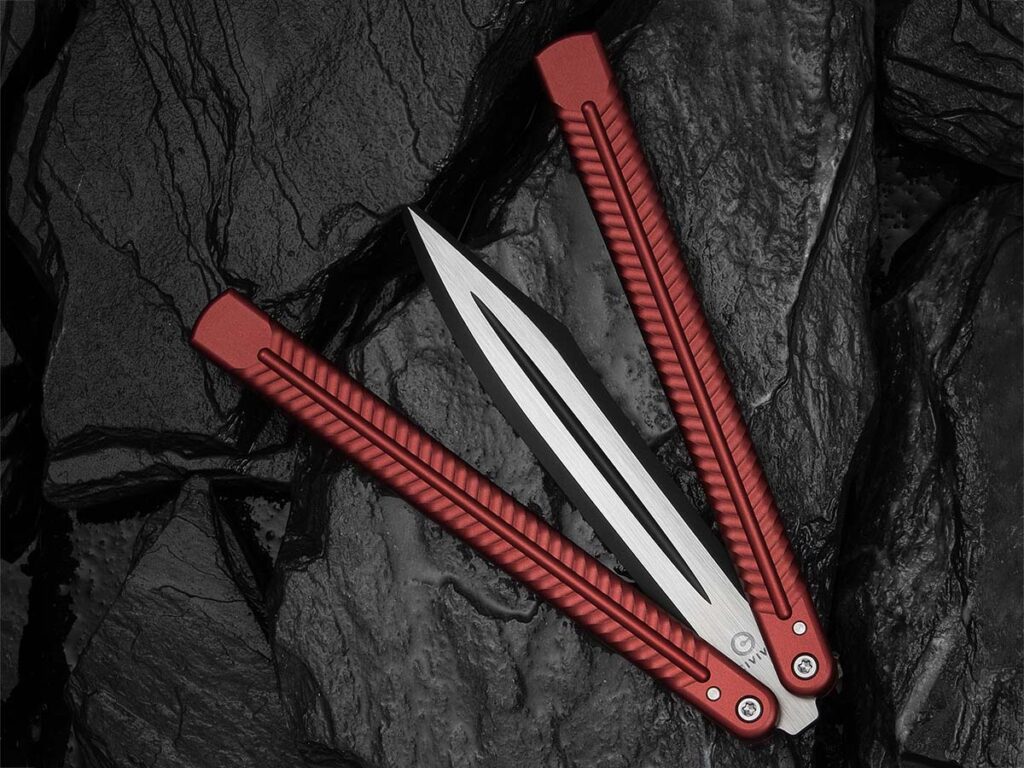
The Dracolisk represents CIVIVI’s first foray into the balisong market, and they have chosen to focus exclusively on the practice-friendly format. The 4.57-inch blade is crafted from 9Cr18MoV stainless steel, featuring a stonewashed finish and a dramatic clip point profile. While the “edge” is completely dull, the blade is ground and weighted to mimic the physics of a live blade, ensuring that the muscle memory developed during practice translates accurately to a real knife later on.
Mechanical simplicity is a hallmark of a good trainer, and the Dracolisk delivers with a latch-less construction. This design choice provides clean lines and eliminates the common annoyance of a latch interfering with handles during complex aerials or rollovers. The handles themselves are machined from lightweight aluminum with a 3D anti-slip texture, providing a secure grip even during high-intensity sessions.
Under the hood, CIVIVI opted for bronze washers at the pivots. While many modern folders utilize ball bearings, washers are often preferred in the balisong community for their predictable, smooth drag and long-term durability under the constant impact of flipping. At 4.18 ounces, the Dracolisk sits in the “sweet spot” for many flippers—heavy enough to carry momentum through transitions, but light enough to avoid fatigue.
Whether you are a seasoned flipper looking for a safe way to test new combos or a beginner starting from scratch, the Dracolisk provides a professional-grade platform to hone your skills.
Robin Askew moves on, but her father remains there for her.
The constant, the heart and soul of BLADE Magazine Cutlery Hall-of-Fame® member Bob Loveless, was wrapped up in custom knives. There was little time for anything else and there were only rare occasions that he travelled. Bob and his wife, Yoshi, made a few trips to Japan or to Hawaii, on a rare occasion to Europe, but most often with some business purpose involved as well.
And over time, Robin Askew came to appreciate and understand the singular purpose, laser-like focus and personal intensity that drove her father. He was capable of kindness but often brutally frank. He was willing to entertain young knifemakers, share information and then criticize or dismiss flaws with stark, unvarnished perspective. With patience that was sometimes fleeting, he did not suffer fools gladly.
But then, his personality was a tapestry, like all of us, an amalgam of inherited traits and life experience. His mother and father had sent him to live on a farm with grandparents at a young age. According to Robin, he lived and worked with the hired hands, not as a grandchild. At just 15 years old, he joined the Merchant Marine when his mother told the white lie that he was of age.
In addition to the knife her dad made for her, Robin’s other favorite keepsake is a photo of him, a joyous grin radiating from his face, as a cluster of pigeons lands on his shoulders and arms during a visit to Rome many years ago. “It’s a beautiful picture,” Robin stated, “and I look at it every day.”
It wasn’t easy for Bob Loveless, right from the start. But he made something of his opportunities and his native talents, shared them in the way he knew how, paying the price along the way and leaving a body of work of insight into what is beauty and flow in a handmade knife, like no one else has. For the record, he never billed himself as the world’s best knifemaker. He wasn’t, and he freely acknowledged that others were much more deserving of applause for their skills. It was his eye, perspective and sense of beauty and design that thoroughly set him apart.
Four Careers
When Robin grew up, moved out and moved on, she carried the best and the most worrisome of life experiences with her. She made her own way and has come to understand and appreciate the journey.
“I’ve really had four careers,” she reflected. “I worked 11 years in the banking industry and 20 years as a correctional peace officer at Pelican Bay State Prison in Crescent City, California, with 12 years as a peace officer. Put that together with the work in Dad’s office and then when my husband, Jimmie Askew, and I had a restaurant in Crescent City, California.” When she worked in banking, Robin went to Crescent City on business for her employer. While there she met the most eligible bachelor in town. “It was a 400-mile, eight-hour drive to Crescent City, and I was supposed to be there for a month,” she said. “It became one of those wonderful love stories. Jimmie and I were meant to be together.”
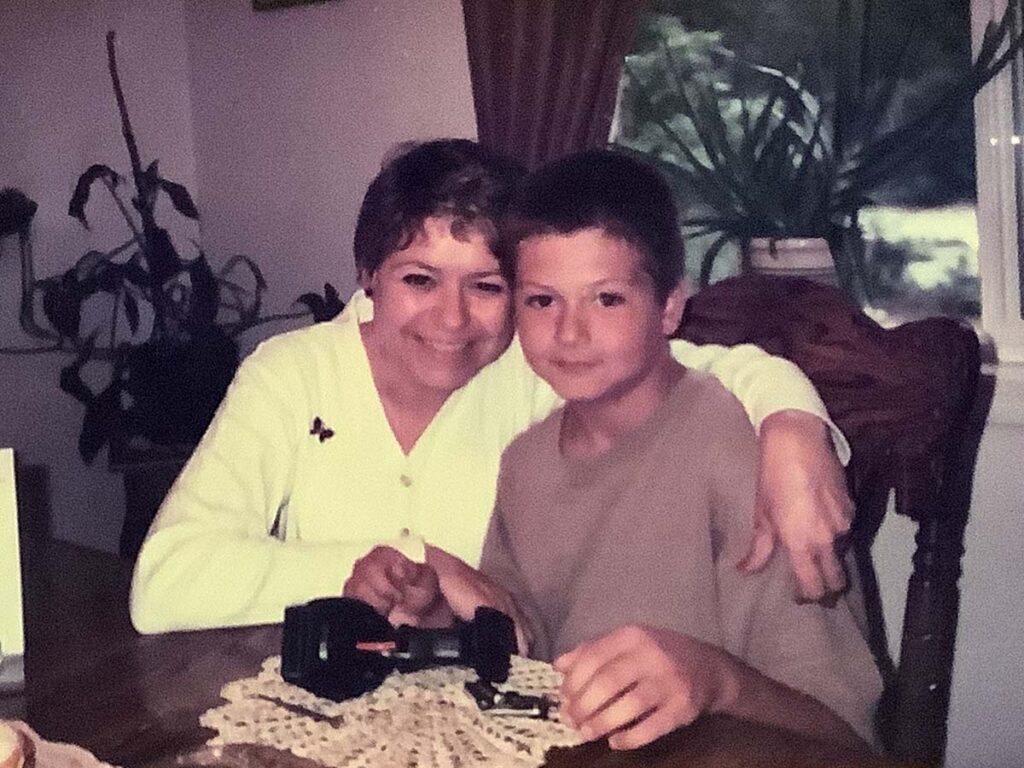
Bob Loveless photographed Robin’s son Nico during a regular visit while they were “out and about.” Nico was 9. The resemblance to his grandfather is striking. (Bob Loveless image)
Jimmie was an award-winning chef, and with Robin’s business background the couple put together a fine restaurant that served a variety of entrees.
“I met Jimmie in 1984,” she recalled wistfully. “We got married the next year, and he passed away 12 years later. He made prime rib, barbecue pork spareribs and fresh seafood. He would go out in the morning on his boat and catch 300 to 400 pounds of rock cod. He would clean the fish and then serve it that night. It was the best seafood in all of Crescent City—wonderful. We also had meat from our mesquite grill, chicken parmesan, grilled Italian sausage, vegetarian dishes and the deep-fried seafood platter.”
Nico
The couple had one son, Nico, who is now 36. When Robin speaks of those days, a tinge of heartache touches her words. But also during that time, she rediscovered the love and care that her father had always had for the family.
Nico and Robin
“Dad came up from Riverside to visit us a month before Jimmie died,” Robin recalled. He had been in touch by telephone continually and made himself the father figure that a 7-year-old boy needed during a tragic time.
“After Jimmie died, Dad would come up regularly,” Robin related. “He took Nico fishing four or five times a year. Grandpa was there for Nico. He taught him how to shoot a gun and would charter a boat on the Chetco River in Oregon and they would fish together. He came up to see Nico play soccer, baseball and football, and he stepped in to take care of my son.”
When Bob wasn’t physically present, he was always in touch with Robin and Nico. He worried that Robin worked in the toughest place at Pelican Bay State Prison. It was called the “shoe,” and he once told Robin how he worried for her safety. Her response was from deep inside, a manifestation of something she learned when her father made the introduction to that Japanese gentleman years earlier: “I told my dad, ‘I show them [the inmates] respect, and they show me respect. It’s really the safest place in the prison to work.’ I told him there were two officers for every inmate and that I really had no qualms about it.”
Bob took this picture when he visited Robin and Nico not long after Jimmie Askew passed away. Nico was 10.
That soft spot in Bob’s heart came through time and again as he cared for his daughter and grandson. “He would call us and say, ‘What’s Nico doing?’ He wrote a check to pay for Nico’s braces. He was there for both of us. Being a widow raising a young boy, I could call him anytime and we would talk. I also started to do that with my mother because I wanted to reach out and make sure that my contact with my family was really strong. Dad was so far away, but I talked to him at least once a week. He became the type of dad that my son needed.”
Traits & Quirks
All the while, the legend of Bob Loveless continued to grow. Tales were told. Knives were made and sold. Stories were swapped, and the maker slowly but surely grasped his own impact on the world of knives. At the same time, his various interests, personality traits and, yes, his quirks made him more than just a knifemaking phenomenon. They made him a marvel, a celebrity and an icon.
Bob always carried a gun. “Even when I was a little girl,” Robin laughed, “I remember that he would hang his gun on the towel rack in the bathroom.” For some time, he enjoyed rabbit hunting in the desert with friends. But then another fork in the road pointed a different direction when it came to outdoor activities.
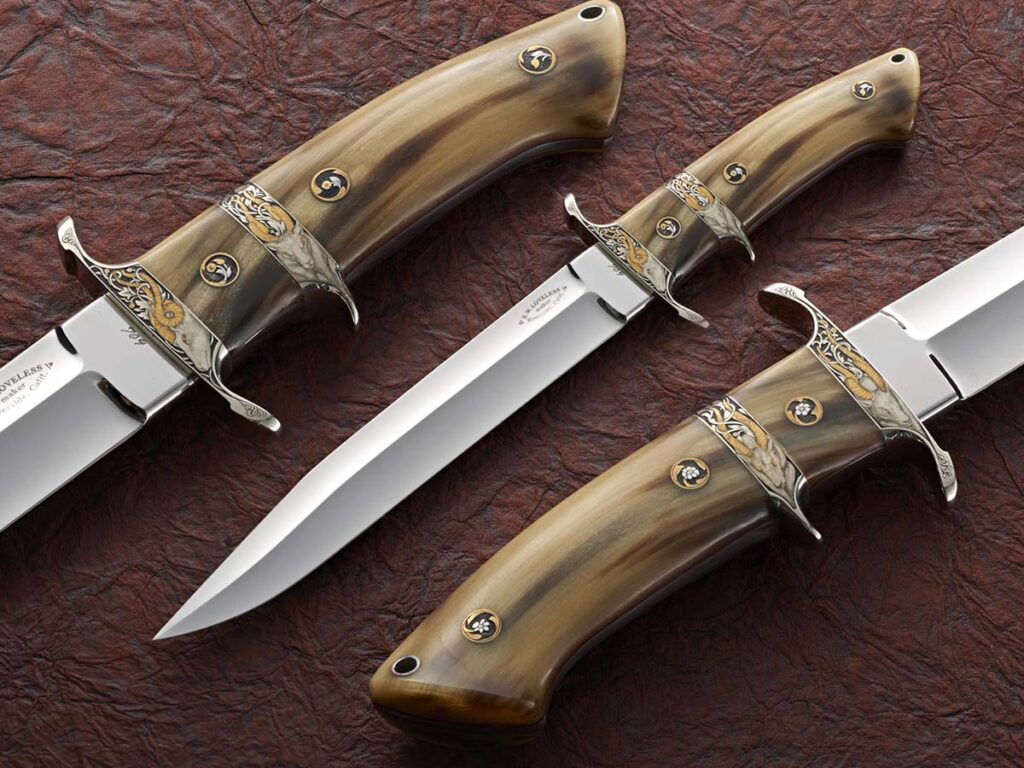
It was his eye, perspective and sense of beauty and design that set Bob Loveless apart. Few if any of his knives capture these traits better than his Big Bear fighter in sheep horn and gold engraving by Dan Wilkerson. (from the John Denton collection; Eric Eggly/PointSeven image)
Robin commented, “They took a lot of hunting trips, and one day Dad decided to stop shooting animals with a gun. He started shooting pictures with a camera. He loved photography, and I have no idea how all that started—but, gosh, I remember when I was a young kid he would take me and Allison on the weekends to camera stores. He would go in and talk for a couple of hours, and we were bored out of our minds. He would take pictures like you wouldn’t believe.”
Adding to Bob’s repertoire of activities, he was also an accomplished gunsmith. If these endeavors sound like a lot to pack into a lifetime, then there is no hesitation in labeling Loveless a true “Renaissance Man.”
Nonetheless, he had pursued his passions, probably without seeking the fame that came along with them. “I do know he never liked living in fancy houses,” Robin remarked. “But he had sports cars, and his favorite car depended on his age bracket. He would drive the back roads to the Chinese restaurant in Riverside and hit 100 miles per hour. At one time, he had three cars and two airplanes. He was a pilot with a lot of camera equipment. He probably got his pilot’s license before he moved to Riverside. I forget what year he got rid of his planes. He had crashed and it was no fault of his own. It happened when a bigger plane was landing and he got banged up. He had a limp after that.”
Keepsakes
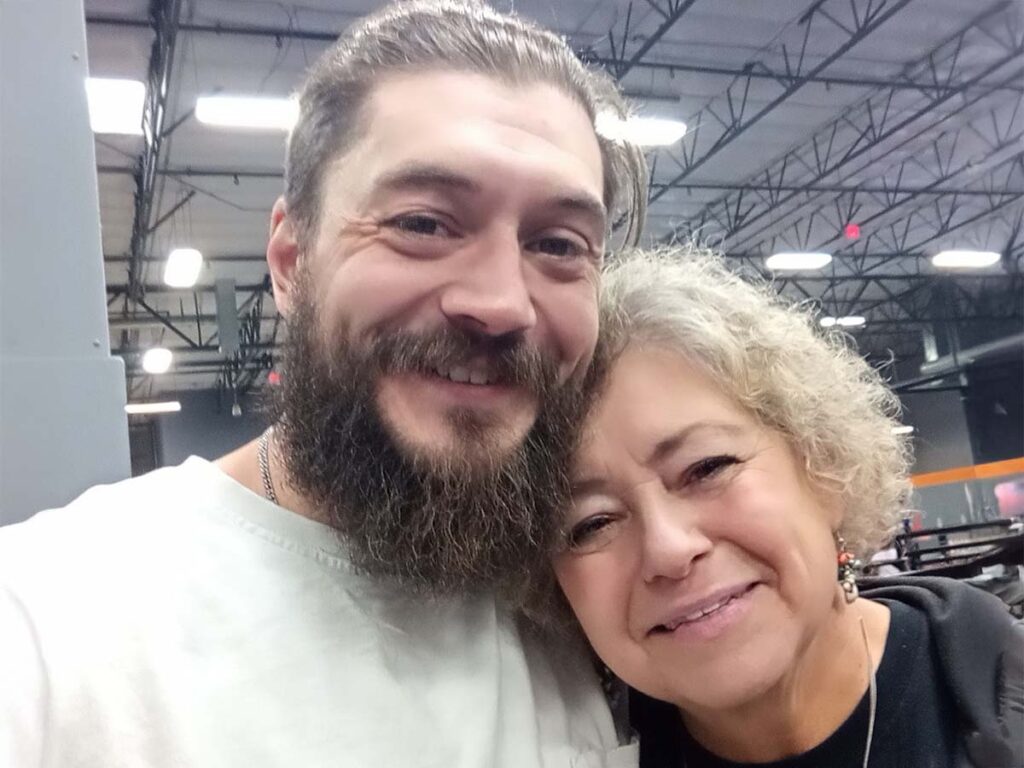
Writes Robin: “My handsome son Nico as he is today, shaggy beard and all. As a mother, I think his eyes and smile show what a kind and good man he is. I know his grandpa would agree with me and like this picture very much.”
Today, Robin’s heart is warmed by her memories, her strong Christian faith, and the knowledge that her dad truly became a father. His life was a mosaic of love and loss, turmoil and moments of calm, fiery and icy emotion, but always with a heart for the good and for his family. She clings to at least a couple of special items that symbolize the tie that binds.
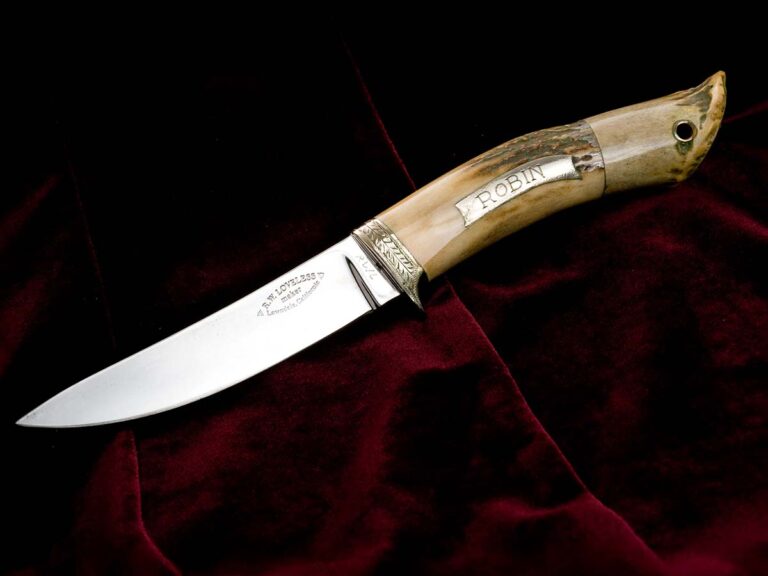
He made a banana skinner for her when she graduated from high school. “It has a stag handle with intricate engraving that he had done by a silversmith,” Robin said, “and I think the handle is at least 6 inches long with the blade about 7 inches. It is absolutely beautiful.”
A few years ago, Steve Johnson cleaned the knife up and put an edge on it. Dave Ellis took photographs of the one-of-a-kind piece, and John Denton, likely the foremost authority on Loveless knives in the world today, offered powerful words and urged her to treasure it always.
His various interests, personality traits and quirks made Bob Loveless more than just a knifemaking phenomenon—they made him a marvel, a celebrity and an icon.
The other keepsake is a photo of Bob, a joyous grin radiating from his face, as a cluster of pigeons lands on his shoulders and arms during a visit to Rome many years ago. It captures a sliver of his enjoyment of life, a glimpse into the heart and soul of just who he was. He was the gruff guy that gave generously to the local animal shelter, the edgy and matter-of-fact curmudgeon who handed substantial financial support to the UPS driver who had served faithfully in the area for years when Bob found out the guy had fallen on hard times. He was simply their quiet benefactor.
“It’s a beautiful picture and I look at it every day,” Robin offered. She ponders exactly where his genius came from and concludes that he inherited it from his mother. She admits that the spark of “genius” has not emerged from any other family member and concludes, “It was meant to be. That kind of genius is created before birth. My father was extremely gifted, and I always knew that.”
True enough, he was gifted, and in some ways that only a relative few others were even aware of.
Growing up Loveless and living within the sphere of influence her famous father created has been an adventure for Robin Askew, a thrill ride that began so many years ago, one that continues well after her dad’s departure from this Earth.
Read More On Bob Loveless:
Bob Loveless: The Icon’s Indelible Mark On The Knife Industry
Remembering Mike “Whiskers” Allen, known for his innovative hidden bolster automatics and collaborations with Pro-Tech Knives.
Mike “Whiskers” Allen, affable award-winning custom knifemaker and knife designer, passed away on November 8 after a short illness.
Nicknamed for his full bushy beard, the Malakoff, Texas, cutler started making knives in 1984. He made folders mostly, specializing in automatics. He suffered a stroke in 2015 that affected his right side and eyesight, so he had to retire from knifemaking. He designed a full line of autos for Pro-Tech Knives, including the BR1.7 LTD “Whiskers” Design, which opens via a nifty hidden bolster release and debuted at BLADE Show 2025.
Whiskers also made miniatures as well as swords. He was known all over the country for his reasonably priced, one-of-a-kind knives. He was a member of The Knifemakers’ Guild and the Professional Knifemakers Association (PKA) and carried Knifemaker’s Emeritus status in the Guild. He also served as PKA president during his last few years of making knives. He won at least one custom knife judging award at the BLADE Show, which he and his wife Denise attended on a regular basis.
Remembering Others The Knife Industry Has Lost:
Betty Dowell, Driving Force Behind Knifemaker Ted Dowell, Passes
B. R. Hughes, Pioneering Writer And Bladesmithing Teacher, Passes Away
A stealthy reimagining of a GiantMouse icon featuring MagnaCut steel and brass accents.
GiantMouse is kicking off the new year by leaning into a darker, more sophisticated aesthetic. The company has announced the next evolution of one of its most popular designs: the ACE REO—Black & Brass. This isn’t just a simple color swap.
The ACE REO has always been a staple for those who appreciate clean, purposeful lines, but this version dials up the contrast. Set to release on January 13th the Black & Brass model is designed to feel solid and intentional from the moment you pick it up.
CPM MagnaCut and PVD Titanium
At the heart of the folder is a blade crafted from CPM MagnaCut. By now, most enthusiasts know MagnaCut is among the gold standards for balancing toughness and corrosion resistance. GiantMouse has finished the blade with a sleek PVD coating, adding an extra layer of durability and a stealthy, non-reflective look.
The handle matches that energy with a PVD-coated titanium frame lock. The result is a monochrome, “blacked-out” profile that serves as the perfect canvas for the knife’s standout hardware.
Brass and Patina
What really makes this version pop is the inclusion of a brass backspacer and pivot collar. The warm gold tones of the brass provide a sharp contrast against the dark PVD titanium. Perhaps more importantly for collectors, the brass is designed to age. Over time, it will develop a natural patina based on how you carry and use it, ensuring that every knife eventually becomes a one-of-a-kind reflection of its owner.
Versatility and Carry
True to the GiantMouse ethos, the ACE REO is built for the pocket. It features a reversible steel wire clip for versatile carry and runs on a smooth bearing pivot for snappy deployment. Manufactured in Maniago, Italy, the craftsmanship is exactly what you’d expect from a collaboration involving Jesper Voxnaes and Ansø.
Don’t overlook small tactical fixed blades for everyday carry.
When most blade fans talk everyday carry (EDC) knives, they usually mean folders. The two main EDC advantages of folding knives are they are convenient to carry and, except for that pesky pocket clip, easy to conceal. Of course, while many overlook the clip, others know it indicates you are carrying a knife.
Folders are designed primarily for smaller everyday chores—opening a box, peeling fruit and so on. This is especially true of slipjoints, which rely on you cutting away from yourself—which you should always do with all knives—and a half-stop as a safety device. Granted, when slipjoints were popularized long ago, lockback, linerlock and framelock folders were unavailable. The problem with both slipjoints and lockbacks is most take two hands to open and close, which, if you are trying to cut something you simultaneously must hold, can be inconvenient at the very least.
The late 20th and early 21st centuries saw a boom in the commercial availability of manual folders that could be opened and closed with one hand. Utilizing the flipper opener and the roller bearing system made the blade deploy quickly and smoothly, often even quicker than an automatic. With the perfection of linerlocks and framelocks, unlocking and closing the manual folder with one hand was no longer a problem.
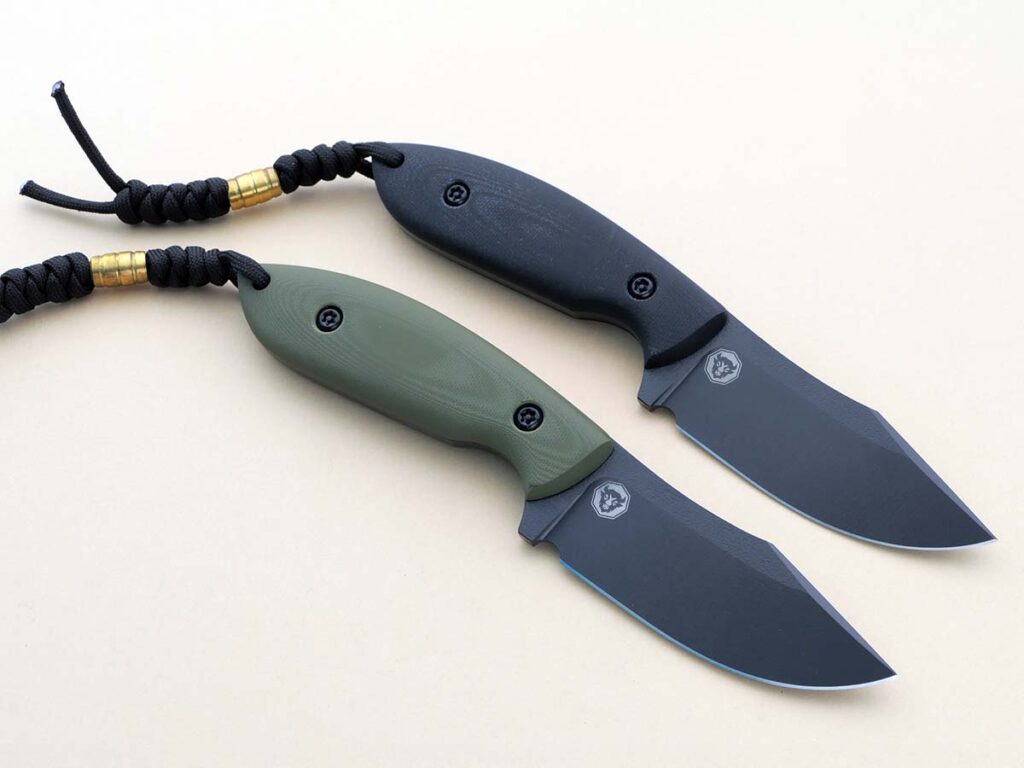
Kydex sheaths can be molded to fit the blade and, over time, will not deform, providing a safer carry option. Rafal Kolakowski uses Kydex® for the sheaths of his Ridgeline set of small tactical EDC fixed blades.
Even with these technical improvements, the folding knife still has its limitations. A small blade can do only so much before it bends or, in some cases, breaks. Some tactical folder makers tried to address this issue by making folders with 5-inch blades of 1/4-inch stock. This was done primarily for cosmetic reasons without addressing the folder’s primary weakness—the pivot. The very nature of the pivot means it must allow some side-to-side movement of the blade, no matter how slight. If the folder is used for an unintended purpose or put under undue force, the blade can be moved off-center.
On top of that, folding knives require more regular maintenance than fixed blades. Locking folders with back straps and slipjoints with backsprings collect dirt, lint, etc., during daily use and must be cleaned. What’s more, using a folding knife beyond its capabilities and failing to perform regular maintenance can affect its opening and closing ability. Lastly, a folder cannot do anything until you first deploy the blade.
Fixed-Blade Pros
Fixed blades, on the other hand, offer several advantages. As already suggested, larger fixed blades can do tasks that smaller blades either can’t perform or do so with difficulty.
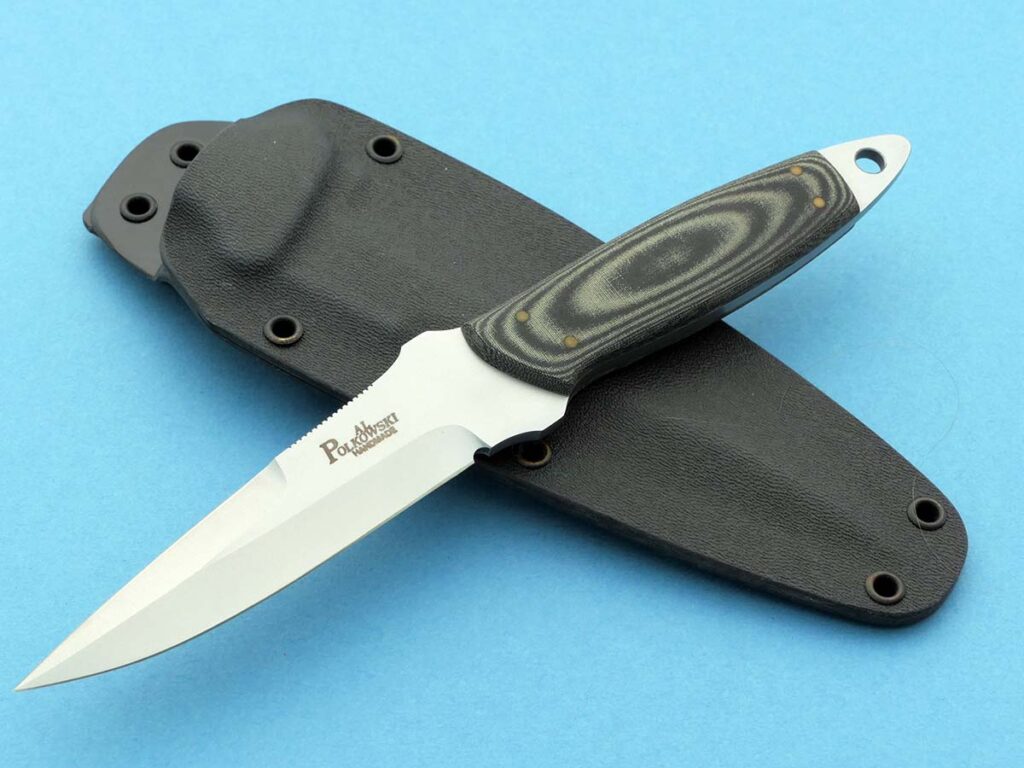
Finger/thumb serrations on the blade spine of Al Polkowski’s Boot Fighter help with controlling the knife in use.
One of the fixed blade’s most significant advantages is full-tang construction, providing added strength and durability. A full-tang fixed blade especially is better suited for heavy cutting and repeated hard use, and safer for use with a heavy load.
A fixed blade also has a superior mechanical advantage. Unlike the folding knife, there is zero chance of mechanical failure under stress. Locks and pivots can fail, especially when using the knife for tasks for which it is not intended.
Another advantage is the style and size of the blade. Fixed blades can feature longer and thicker blades that will perform better under the rigors of hard use.
Full-tang fixed blades such as the Trailhead set by Tomasz Dziubinski are better suited for heavy cutting and repeated hard use, and safer for use with a heavy load.
A fixed blade typically will have better handle ergonomics. Its handle is usually designed for prolonged use, featuring a more comfortable grip that also aids in balance and is ready for immediate deployment. While many folders can be opened with one hand, not so slipjoints. If your hands are cold, wet, injured or gloved it can present a problem as many, if not all, slipjoints require two hands to deploy the blade or blades. On the other hand, with the correct sheath combination, a fixed blade can be rapidly deployed under almost any circumstance.
Sheath Concerns
Top material options for EDC fixed-blade sheaths are leather and Kydex®. Kydex gained popularity because it provides two main advantages over leather.
First, most makers can build at least a rudimentary kydex sheath. Leather sheaths are more of a challenge. Second, Kydex does not hold moisture and does not require tannic acid, which is used in the processing of leather. This is very important for EDC. Tannic acid in the leather can cause carbon steel to discolor. Leather, once wet, can shrink and/or deform, allowing the blade to accidentally cut or poke through it.
Conversely, Kydex does not hold moisture and does not require tannic acid. Kydex can be molded to fit the blade and, over time, will not deform, providing a safer carry option. Finally, the clip attachment on most Kydex sheaths can be adjusted to wear in either a vertical or horizontal position.
They Have The Edge
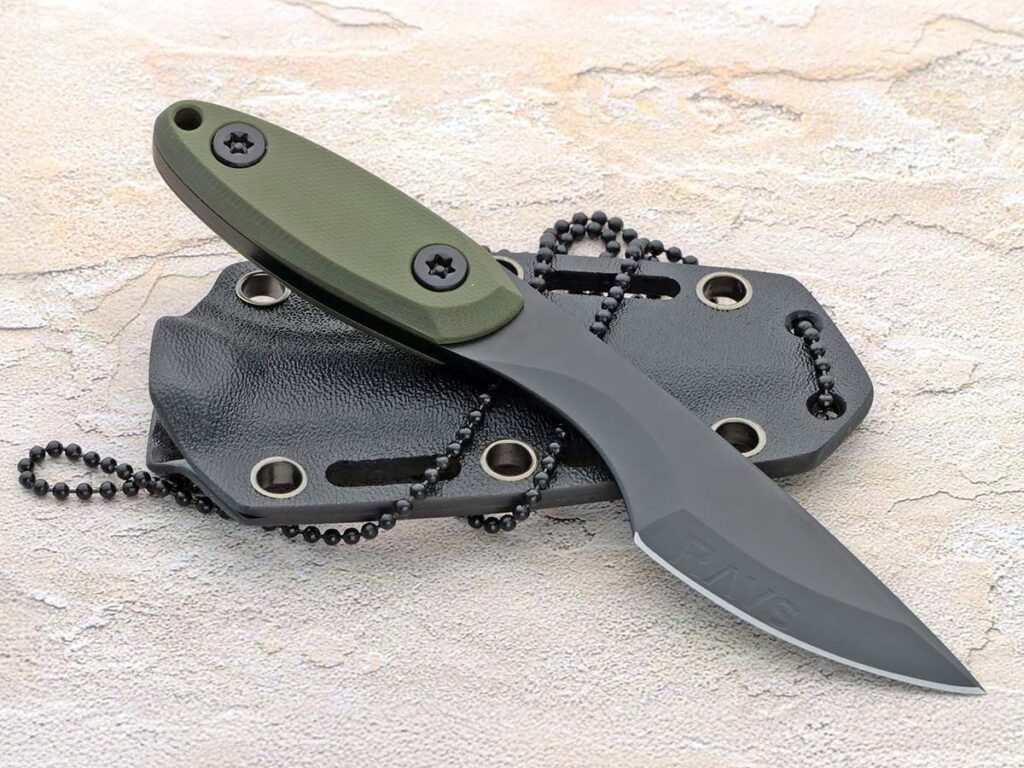
With the right sheath combination, a fixed blade can be rapidly deployed under almost any circumstance. The Street Scalpel by Rafal Kolakowski with Kydex® sheath and breakaway chain is a classic example.
I’m not suggesting that folders do not have advantages as EDC knives; they do. They are usually more comfortable and concealable to carry than fixed blades. They are more socially acceptable and usually have limited legal restrictions. They can provide versatility for light tasks such as opening letters, boxes, cutting cord, etc.
It is in fact the EDC folders’ size that is its biggest disadvantage. The smaller blades and less ergonomic handles limit the number of tasks folding knives can perform. Also, their moving parts provide a mechanical disadvantage when compared to EDC fixed blades.
The majority of this story’s featured tactical fixed EDCs have a 4-inch or shorter blade. Many tactical EDC folders also have 3.75-to-4-inch blades. When open, they are about the same length as the featured fixed blades.
With perhaps the exceptions of concealability and some legal restrictions, fixed blades have the edge. Depending on what you are using it for, you may want to consider a knife that has the mechanical advantage, requires less maintenance, can be easier to deploy in difficult situations or environments, and is more comfortable in the hand: fixed blades, the other EDC!
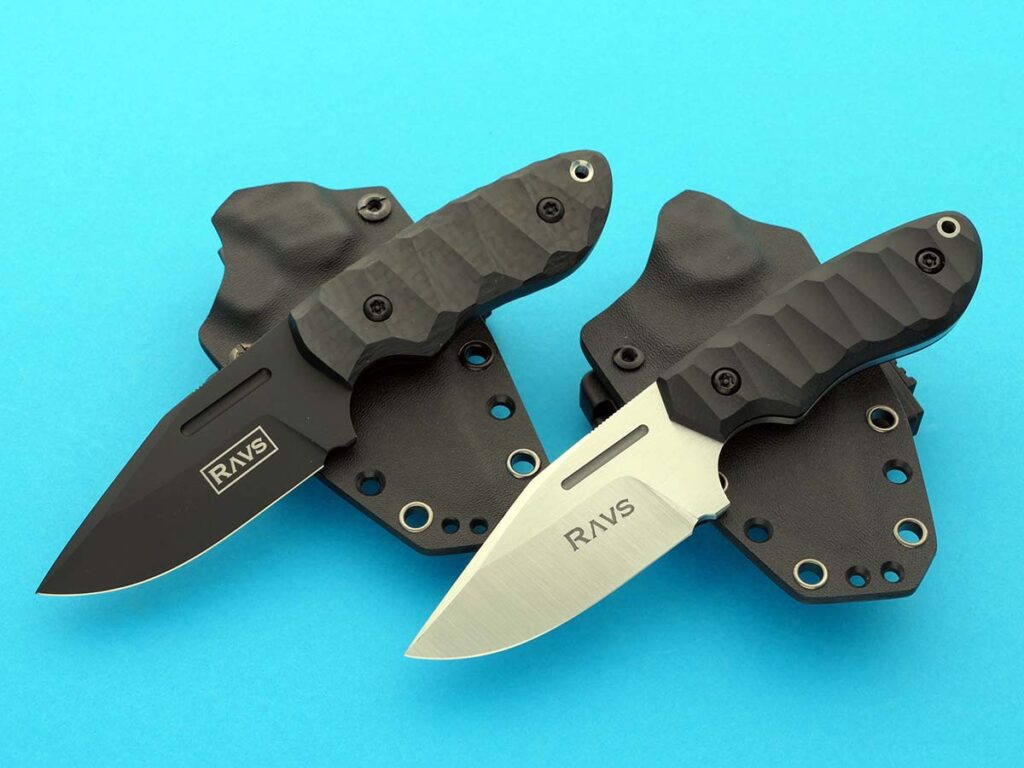
Rebel Specs Knife type: Small tactical EDC fixed blade Blade Length: 4.25” Blade Steel: Elmax stainless Blade Finish: Two-tone satin and bead blast Handle Material: Textured black Micarta® w/OD green Micarta liners Overall Length: 9” Sheath: Custom-built by the maker; Kydex® Author’s Comments: “Excellent all-around knife … the tip is ground to give the knife extra penetration … the texture of the black Micarta on the handle gives the user additional traction … primarily designed for belt wear, the clip can be configured for additional carry options … serrations along the top of the blade enhance the knife’s ability to handle small chores … a great knife that provides lots of user options.” Maker’s price: $430
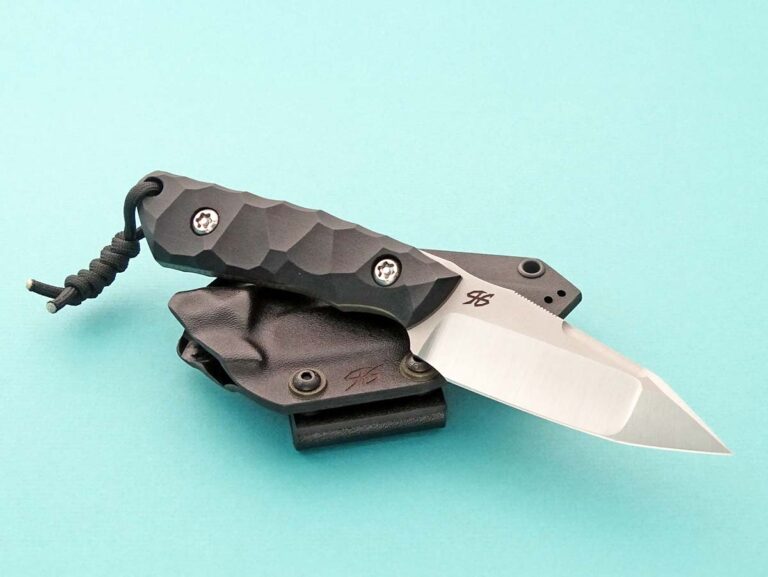
Ridgeline Specs Knife type: Small tactical EDC fixed blade Blade Length: 4” Overall Length: 8.75” Blade Steel: Becut stainless Blade Finish: Satin Handle Material: Black G-10 Sheath: Custom-built by the maker; Kydex® Author’s Comments: “Double-hollow-ground blade with a fuller for added strength … full-tang construction … sculpted handle material for enhanced ergonomics … stainless-steel-tube-lined thong hole.” Maker’s Price: $350 each
Boot Fighter Specs Knife type: Small tactical EDC fixed blade Blade Length: 4” Blade Steel: 154CM stainless Blade Finish: Bead blast Handle Material: Black and green G-10 Overall Length: 8.25” Sheath: Custom-built by the maker; Kydex® Author’s Comments: “Great little back-up knife … it features a double-hollow-ground double edge with an extended tang that features a thong hole … quick and light in the hand.”
Trailhead Specs Knife type: Small tactical EDC fixed blade Blade Length: 3.5” Blade Steel: Sleipner stainless Blade Finish: Black Cerakote® Handle Material: OD green G-10 Overall Length: 8.25” Sheath: Custom-built by the maker; Kydex® Author’s Comments: “Flat-ground, upswept utility-style blade … full-tang construction, excellent handle ergonomics … small knife built for hard work … stainless-steel-tube-lined thong hole … perfect knife for camping, a hike and everyday carry.” Maker’s Price: $280 each
Street Scalpel Specs Pattern: Tactical fixed-blade neck knife Blade Length: 2” Blade Material: 80CrV2 carbon steel Blade Finish: Black Cerakote® Handle Material: OD green G-10 Overall Length: 5.9” Sheath: Custom-made, multi-position in Kydex® by the maker w/ball-bearing breakaway chain Author’s Comments: “Perfect for utility or self-defense … the attachment holes on the sheath allow the knife to be carried however you like.” Maker’s Price: $280
From tactical rings to signature openers: analyzing the practical advantages of negative space in blade engineering.
The hole in the handle or blade, or anywhere in knife construction, has something to tell the user. But what is it trying to say or do?
It is eye-catching but the hole and/or ring and the science that goes along with it complement the visual and the practical in knife use. Aesthetics, mechanics and utility are factors. After all, the essence of the knife is in its use as a tool, and who wouldn’t mind a prettier profile at the same time?
Original Hole
The story of the hole in the blade cannot be told without including Spyderco and its legendary leader, BLADE Magazine Cutlery Hall-of-Fame® member Sal Glesser. In the decades since Spyderco introduced its iconic hole in the blade, the company has produced countless folders that characterize the ease of opening inherent in the hole itself.
The story of the hole in the blade cannot be told without Spyderco and its legendary leader, Sal Glesser. The BLADE Magazine 1990 Overall Knife of the Year®, the blade-hole-opening Endura is one of the company’s longest-running models.
Sal said he well remembers the inspiration to step out with his company’s blades.
“The Buck 110 and Gerber Folding Hunter were the watershed change to locking knives, in my opinion,” he recalled. “I purchased a Buck 110 when they first came out. As a young man I learned to open the Buck and Gerber lockers with one hand using my thumb, pushing on the side of the blade. I was working late in the shop one night, payables, payroll, etc., and I thought to try to figure out a way to modify a folding knife so that anyone could learn to open [it] with one hand more easily and more safely than the way I was doing it.”
From that single thought, Glesser went to work. He experimented with adding to the blade for leverage—studs, discs, hoods and other things—but found they got in the way when cutting or sharpening and could “wave” the knife open unintentionally when deploying.
“So I started taking things away from the blade to create purchase for the thumb,” Sal continued. “I first roughed up the side of the blade, which worked, but not very well. Then I drilled a dent into the blade. A dent on both sides became a hole.”
Eureka!
Sal plowed ahead, making a rough prototype using a Japanese folder and welding a piece of drilling rod to the spine of the blade to add height. He ground it down to the thickness of the blade and then drilled the hole to test his ease-of-opening theory.
“We applied for a patent claiming a ‘ledge’ created by the edge of the hole that could be used by the fleshy part of the thumb to urge the blade open with one hand,” Sal recalled. “I chose to use a round hole because it was easier to make and was easily identifiable.”
The rest, as they say, is history.
From the first blade-hole model in 1981, the Spyderco Worker, the distance from the center of the pivot to the hole was analyzed while the optimal size of the hole for the average thumb was measured. Enhanced trademark work was successful in securing the round shape since copies were notable with different shapes to get around the word “hole” in the original Spyderco patent language. Hence, the company introduced the hole into its fixed blades as an identifier “large enough to be cleaned and small enough to be noticed.”
Perfecting the hole for its primary purpose of easy opening meant leaving a certain amount of steel above the hole to compensate for the space. “Some steels that are more brittle could be broken through the hole if pried with hard enough,” Sal concluded. “But the truth be told, there are millions of Spyderco knives in the marketplace over the past almost 50 years and there have been very few that were broken.”
Where & Why Of Holes
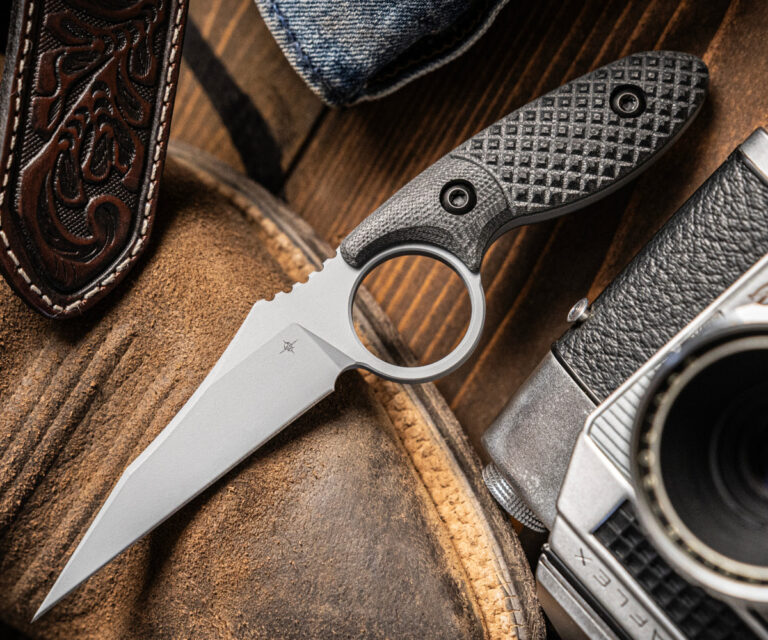
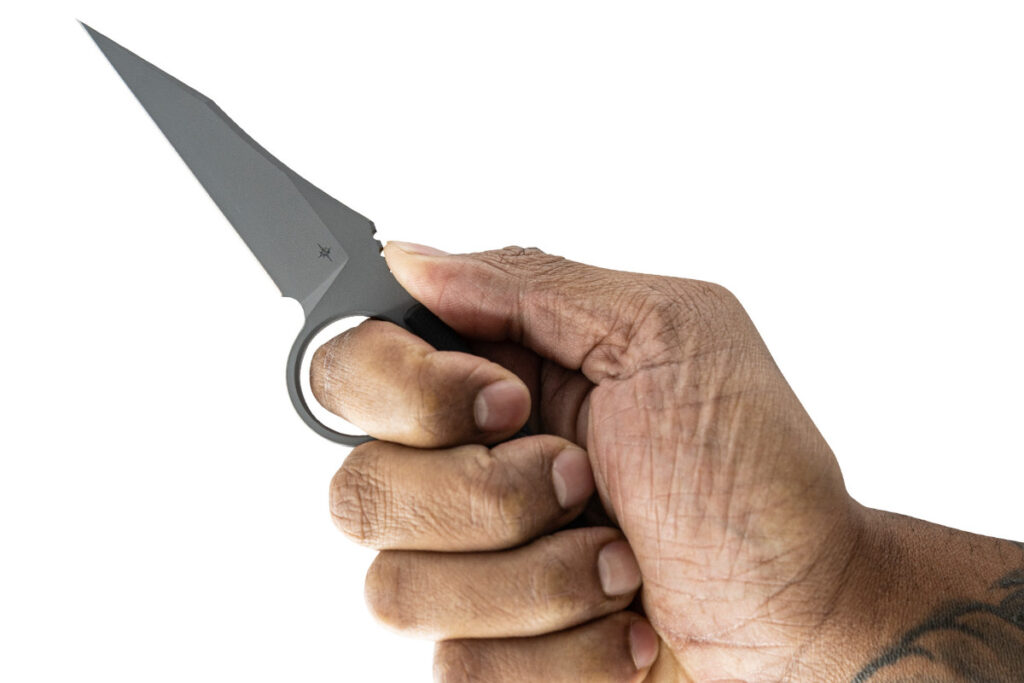
Toor Knives CEO Connor Toor says the hole/ring of the Cortano is between the handle and blade for several reasons, including deployment and retention, a tactile index for consistent hand placement, a lanyard attachment point, and an unmistakable visual signature. Another is the ability to choke up for precise cuts without losing control.
In overall perspective, the hole has its place in the fixed blade as well. The Toor Corporation Cortano sports the hole/ring for a simple reason according to CEO Connor Toor.
“A hole allows fast, ambidextrous one-handed deployment without extra hardware,” he explained, “and it keeps the blade profile clean and snag resistant. It also slightly reduces weight and manufacturing complexity compared with an added stud or thumb disc.”
The hole in the Cortano is located between handle and blade for several reasons, including deployment and retention, a tactile index for consistent hand placement, a lanyard attachment point, and an unmistakable visual signature that differentiates the knife. An added bonus, says Connor, is the ability of the user to choke up for precise cuts without losing positive control.
“We typically call it an ‘index/retention ring’ or simply the ‘deployment hole,’” Toor commented. “The concept is rooted in historic ring knife forms and modern karambit/utility designs more broadly, so while makers like Steve Likarich are part of that lineage, our design pulls from both traditional ring knives and contemporary tactical needs rather than a single source.
“Any aperture introduces stress concentration,” Connor continued, “but proper blade geometry, material selection and heat treatment mitigate that risk. We designed the Cortano so overall material thickness preserves strength around the hole. Real world testing and appropriate use show no practical durability issues when those engineering details are respected.”
Holes For Balance
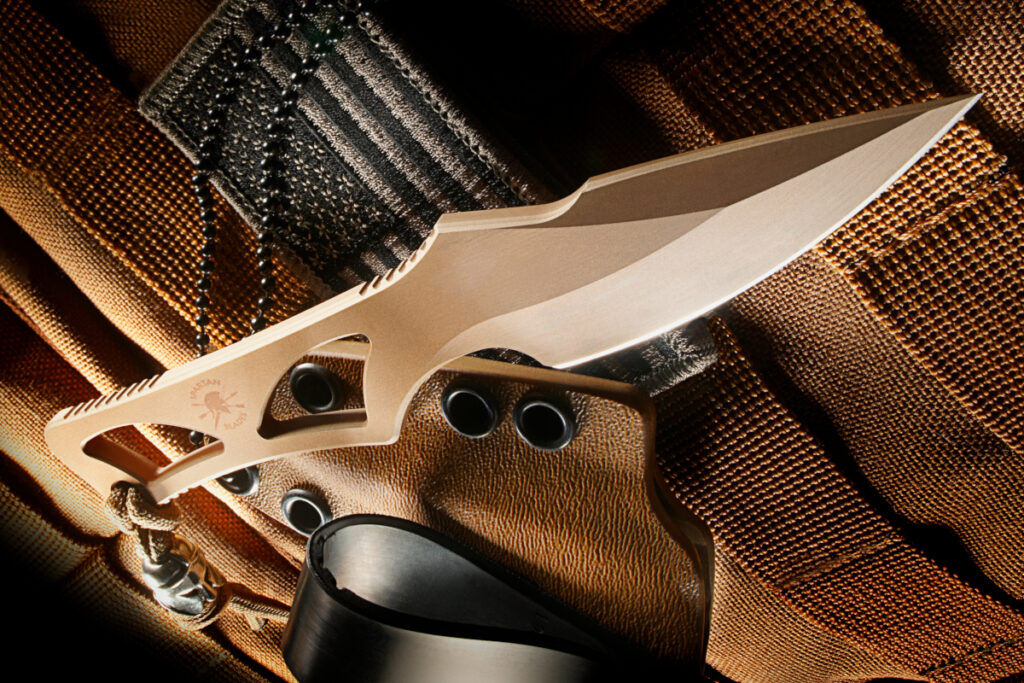
The Formido fixed blade from Spartan Blades comes with a series of grip holes, that, explains company president Curtis Iovito (inset), “primarily tune balance by reducing handle weight.”
The Formido fixed blade from Spartan Blades comes with a series of holes in the handle, and company president Curtis Iovito readily points to the advantages of the design.
“It’s primarily to tune balance by reducing handle weight,” he advised, “often to place the balance over the index finger. We’ll enlarge or shrink hidden holes under the scales to shift weight where it best serves the knife’s purpose. Looks can be a secondary benefit. Along with weight reduction, there are options for lashing or paracord wraps, and added indexing/traction without introducing weak corners. In some cases, they also enable spear mounting or other field attachments.”
Curtis adds that the parameters for the introduction of holes in the blade or body of the knife vary as to the designer’s objectives.
“There is no universal formula,” he related. Holes, however, must measure up to certain standards to “maintain strong ‘webs’ of material around fasteners and stress points, and scales must be clamped well to prevent lifting and contamination. Round holes are favored because they machine easily and avoid sharp internal corners that become stress risers during heat treat. Arched/rounded cutouts can add torsional strength as seen on our Enyo and Formido.”
Holes In Karambit
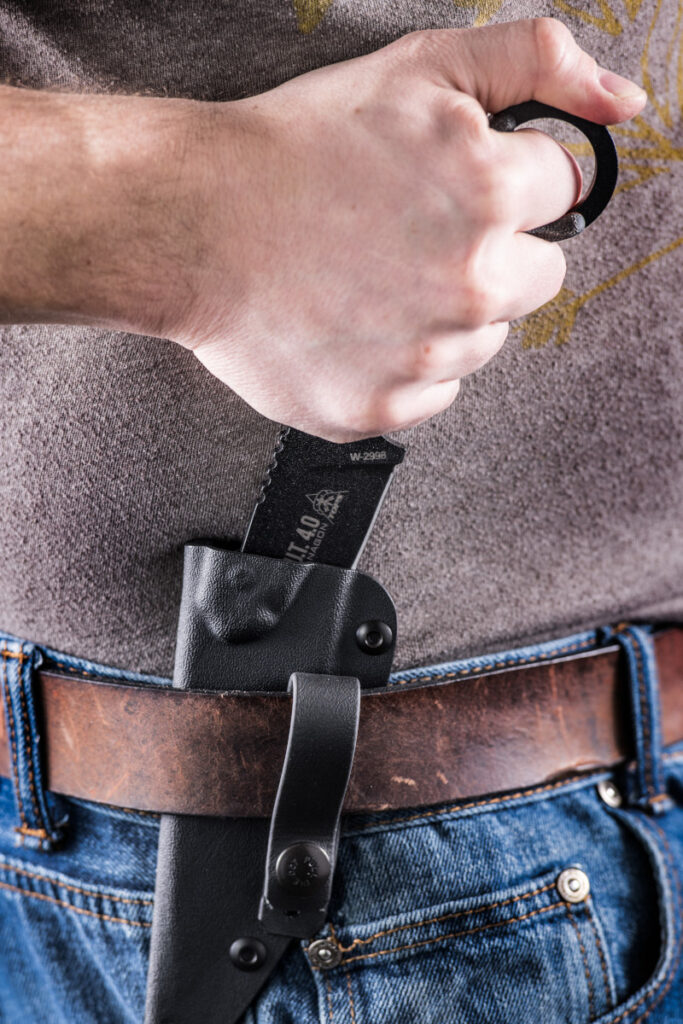
Designed by Joshua Swanagon, the TOPS Knives C.U.T. 4.0 is a hybrid karambit that combines the practicality of a utility knife with the defensive and combat features of a standard karambit. Its ringed handle is common to the pattern’s lineage while the utility drop-point blade is more of a traditional design element.
At TOPS Knives, the C.U.T. 4.0 is a hybrid karambit that combines the practicality of the utility knife with the defensive and combat features of the karambit. Its ringed handle is common to the karambit lineage while the utility drop-point blade is more of a traditional design element. The karambit hole itself is probably a derivative of agricultural use.
“It does seem to be the case that many karambits used in Asia were used as a tool first, cutting cane or other crops” said Craig Powell, TOPS general manager. “As a tool, the pinky is usually in the hole so that the knife can hang down from the hand while the user is picking up the harvest, and then it is swung back into the hand to use the cutting edge.
“I wouldn’t say there is a set rule on the size of the hole,” he added, “but too small makes it easy for fingers to get stuck, which can equal broken fingers or de-gloved fingers in situations where the knife can’t be dropped when needed. Too large makes the knife clunky to use and manipulate properly and too easy to drop. Definitely, there is a balance to be struck. The hole size we use for our karambits does vary somewhat with the overall size of the knife. Typically, the smaller the overall size, the less likely someone is going to use the knife while wearing gloves, so you can use a smaller hole to keep the overall profile of the knife smaller.”
The characteristic ring in the butt of the karambit adds versatility, and Iovito sees advantages in several areas.
“The ring allows rapid grip changes, secure retention of a short blade under stress, and manipulation without dropping the tool. On our CQB Tool, for example, the ring lets a user transition to a pistol grip in a pinch without discarding the blade. We use PEO Soldier [U.S. Army Program Executive Office] data on the average-gloved-finger size for reliable use with gloves. Our research points to about a 1 1/8-inch internal diameter as optimal—big enough for manipulation and glove use without binding, yet not so large that control gets sloppy or the blade flops on the finger. Too small risks pinching, circulation issues, and snagging; too large compromises indexing and retention.”
Michael Janich, special projects coordinator at Spyderco, agrees that the karambit has an agricultural lineage but adds that the island archipelagos of the Pacific, where the design developed, will often provide different cultural backgrounds to its story.
“After harvesting a bundle of vegetables, the handle was released, allowing the knife to hang from the pinky, freeing both hands to tie the bundle,” Janich reasoned. “In contrast, sheathing the knife every time was inefficient and would require the blade to be cleaned to prevent soiling the inside of the sheath. Logically and practically, this makes sense. Some stories of the origin of the karambit, though, suggest that it was developed primarily as a weapon.”
Arched/rounded handle cutouts can add torsional strength as seen on the Enyo by Spartan Blades.
As for the dimensions of the karambit and its characteristic hole, Janich points out that some tools defined as karambits of Southeast Asian origin do not even sport the hole. Nonetheless, the hole defines the karambit today.
“The karambit is not the only historical knife to have a ring,” Michael added. “The Japanese kunai was a trowel-like tool that had a ring at the end of the handle. The ring could be used to enhance grip retention. It also allowed the tool to be hung from a cord for easy transport or for the attachment of a lanyard. The Chinese martial arts also had daggers with butt-mounted rings. In some systems of kung fu, the rings had no specific purpose and only served as pommels. The bird and trout knife, first introduced by Marble’s, also had a pommel ring. Of integral construction, the handle portion of the knife was very narrow, so the ring provided both retention and grip stability.”
Attraction Of The Design
Universally in the world of knives, the hole or ring has its place, its moment, its degree of usefulness. Ultimately, the user chooses the tool that suits the task at hand, and the presence of the hole, for easy opening, control or enhanced utility, is always a candidate for deployment.