

Custom knives came of age as collectables in the ’80s and ’90s.
Custom knives from the 1980s-1990s have become especially collectable, not just because of nostalgia but for specific reasons. To understand why, a trip down memory lane is in order.
The ’80s and ’90s encompass a unique intersection of custom knife history, innovation, craftsmanship and scarcity. In the 1970s, custom knifemaking was mostly hobby-based and regional. The two leading knifemaker organizations were The Knifemakers’ Guild and the American Bladesmith Society (ABS), established in 1970 and 1976, respectively. The latter, in fact, celebrates its 50th anniversary this year. The two organizations helped move knifemaking from a predominantly hobbyist pursuit into the business realm. Custom knifemaking had become a viable full-time option for some custom makers.
The Guild and ABS matured in the 1980s, and knife shows had become a separate venue from the previous gun-and-knife-show format. During the ’80s and ’90s, makers started to intentionally design knives with aesthetics, handle ergonomics and originality in mind. The concept of a custom knife being collectable began in earnest. For many, knifemaking became an art form. Knives were being made that looked like they should be behind glass in a museum and were displayed on tables at knife shows for patrons to observe and handle.
Many of the founding members of the knifemaker organizations were in their prime production years, developing signature styles, techniques and ideas that would influence future generations of makers. Almost all the knives were designed and built entirely by makers standing before machines in their shops. Blades, frames and scales were not laser cut or CNC’d as many are today. Blades were ground freehand. Each knife was individually fit, finished and, in the case of folders, “tuned up.” The tolerances, grinds and finishes required extreme skill and precision by the maker. Most custom makers were personally involved with every aspect of making the knife that came out of the shop.
Tech Boom
It is a natural progression in manufacturing to adopt technology to increase precision and create items that previously could not be made affordably. Some custom makers have adopted this technology and can produce exceptional work with precision that a human cannot replicate. This is especially true among custom folder makers.
This ever-evolving technology was a double-edged sword. The same technology has helped makers create the custom version of a knife, a semi-production version of the same knife, and, in some cases, to sell the design and program for collaboration with a factory. This has allowed even more makers to go full-time.
However, in the ’90s it caused confusion for some buyers. Dealers/purveyors would list the names of five or six well-known makers only to discover the knives were the factory collaborations. The utilization of the technology also allows the maker to produce more knives. Today you can attend knife shows and see tables with 20 or 30 custom knives on them. In the ’80s and ’90s, it was a rare sight to see makers with that many knives on their tables.
Unlike today, information was harder to come by. You had four main sources of information: print publications such as BLADE®, Knife World (today’s Knife Magazine), Knives Illustrated, Fighting Knives, Tactical Knives and, of course, the KNIVES annual. Other sources were dealers/purveyors, fellow collectors and knife shows. It was the shows that provided the most information. You were able to see and handle the knives, compare knives in person and, equally important, talk with makers. Back then, it was face-to-face communication that really helped me to understand what I was buying and why.
Turning Point

In the ’80s, the fixed-blade market was primarily hunting knives and presentation knives. The go-to stainless blade steels included 440C and the new steel, ATS-34. Their high chromium content allowed for an exceptional mirror finish. Coupled with premium wood, Sambar stag and elephant ivory, the fighters, bowies and daggers became works of art that, as a new buyer, I could not afford. As the ’80s ended, the CITES (Convention on International Trade in Endangered Species) treaty made elephant ivory no longer a desired handle material. Elephant ivory was replaced with the mammoth, mastodon and ancient walrus (the latter my favorite) ivories.
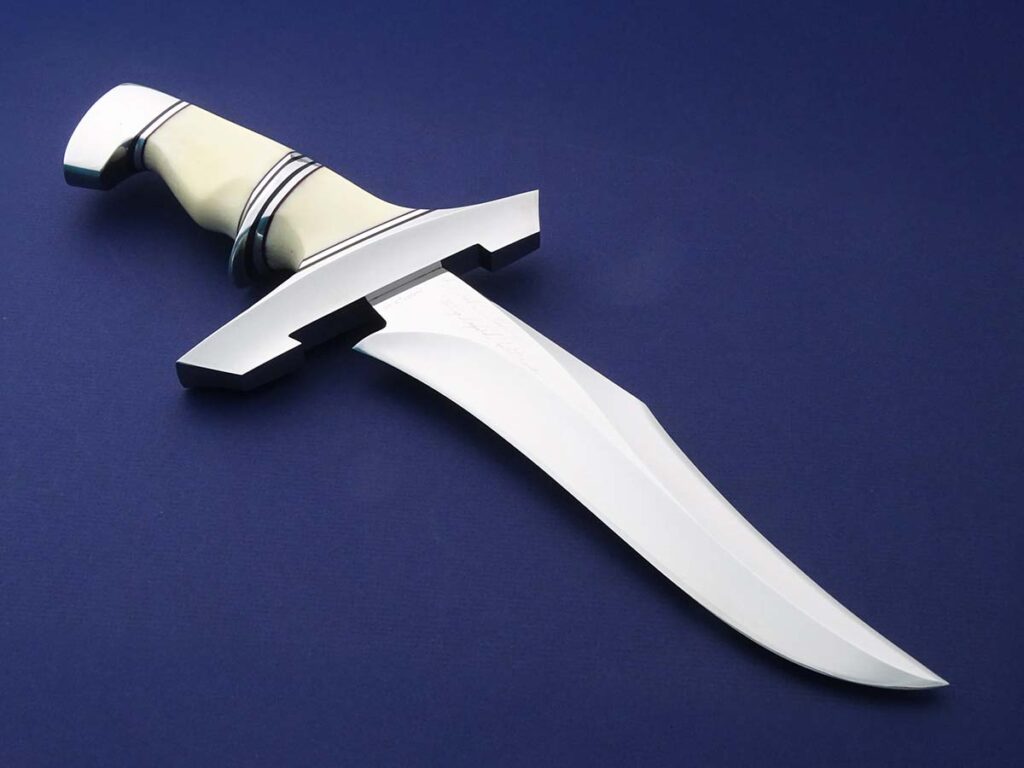
It was in the ’80s and ’90s that custom knives experienced a rapid rise in collectability, and several makers in particular benefited. Rod Chappel was one. His knives often bordered on fantasy. His huge stainless-steel guards and pommels, along with his deep double-hollow grinds, became popular with many makers. Schuyler Lovestrand was another maker whose work never disappointed. He too utilized the deep hollow grinds, while his fit and finish, especially on his sub-hilt fighters, was among the best ever!

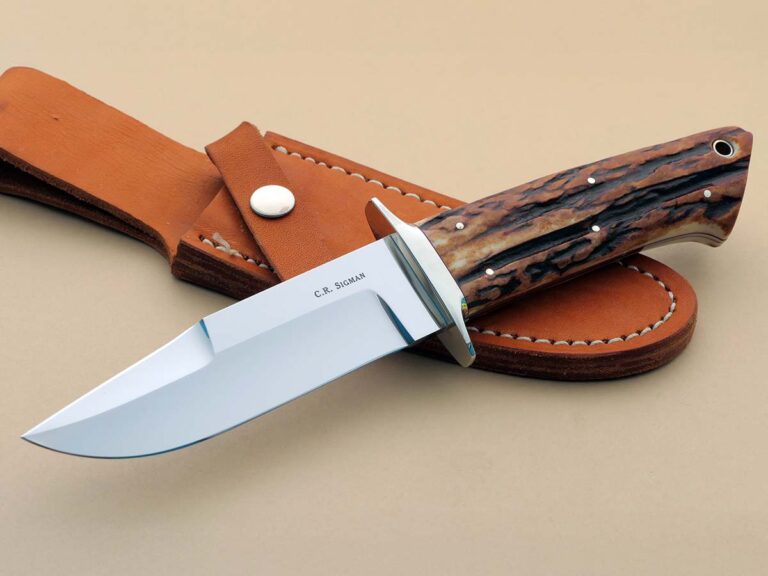
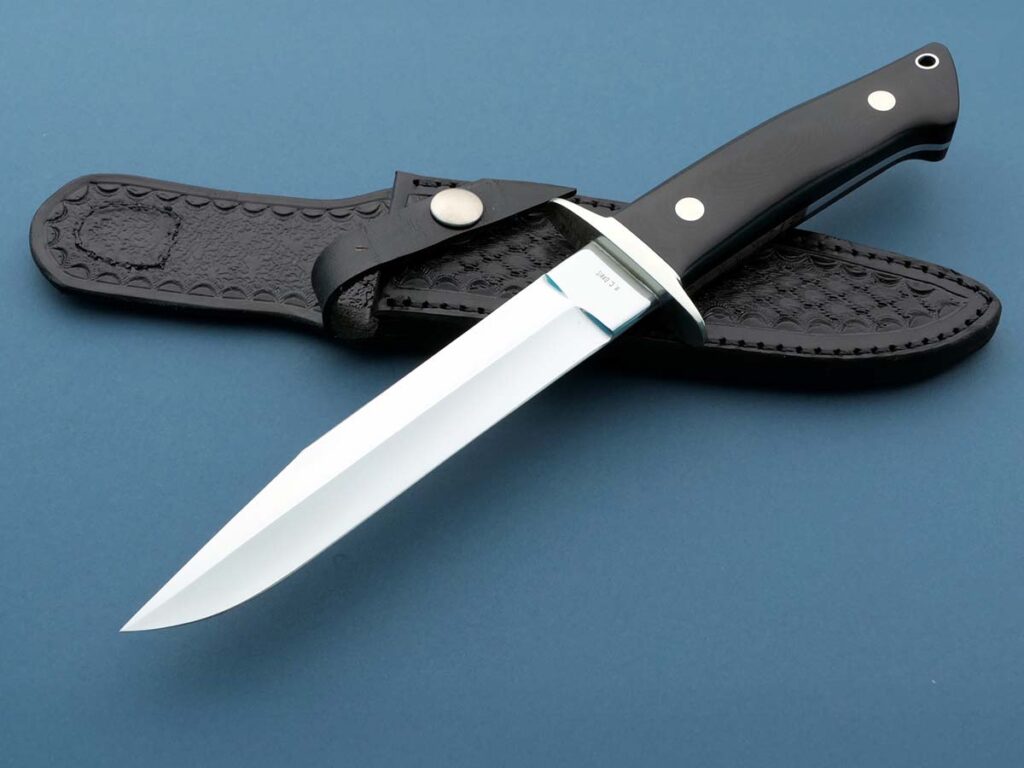
It was also during this time that many of the knife patterns and styles that were to become iconic were developed or refined. The design influence of BLADE Magazine Cutlery Hall-of-Fame® member Bob Loveless was becoming more common. Loveless trained W.C. “Bill” Davis and it shows in W.C.’s version of the Wilderness Fighter. Corbert Sigman was another maker who worked with Loveless designs. His version of the Loveless chute knife is clean and accurate.
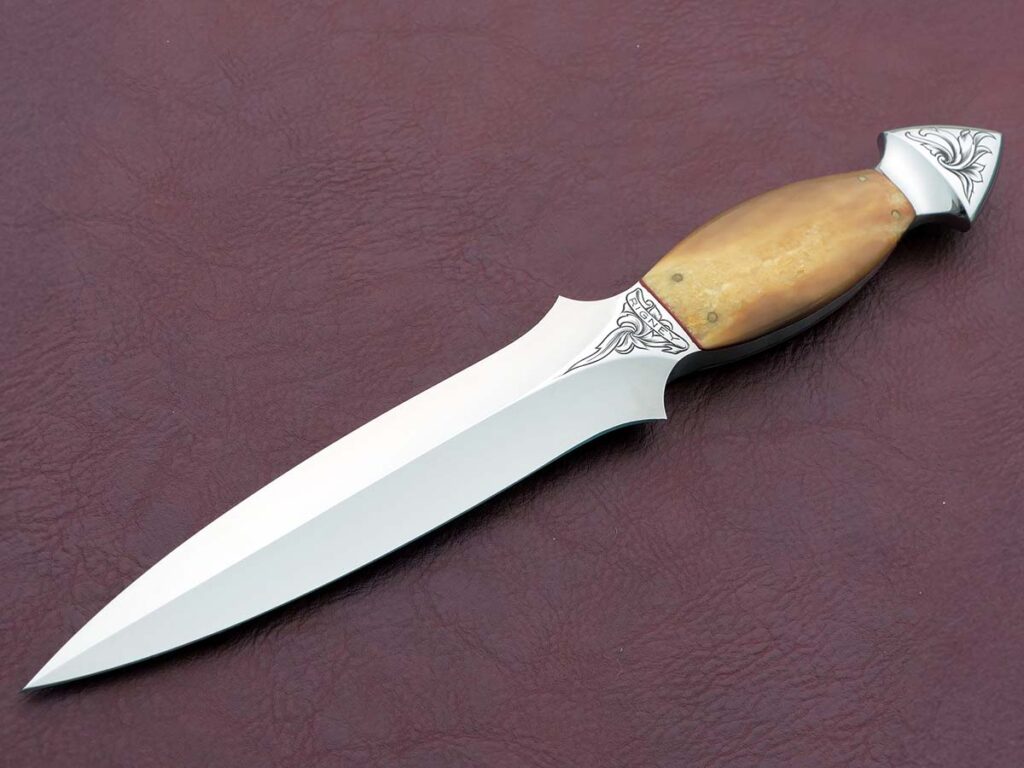
Art knives featuring engraving, gold inlay and, on occasion, gemstones were popular among both fixed blades and folders, as was the case with many of the interframe folders from Jack Busfield. Interframes dominated the custom folder world in the late ’80s. Willie Rigney was known for his fighters and daggers, with the latter usually incorporating engraving by Ron Skaggs.
Meanwhile, the bladesmiths were refining the forging processes and developing new damascus patterns. Perhaps in the ’90s, the knife style that had the most significant influence was the tactical folder, different versions of which were turned out by many makers.
They’re Out There
Like many of you, I was fortunate to be involved in custom knives during the time in question. When many of today’s knifemaking legends were in their prime, they attended shows with knives on their tables for sale. Imagine being at a show and buying a knife from Rod Chappel or Cutlery Hall-of-Famers Bob Loveless, Bill Moran, Jimmy Lile, George Herron, Buster Warenski or Kit Carson. This writer was fortunate enough to do that. Back then, custom knives escaped the social media hype cycle. There were no bubble prices brought on by speculative flipping. Many of the knives were historically foundational, mechanically innovative and truly handmade.
Unfortunately, too many of the makers from the “magical decades” have passed away or have retired. Fortunately, they left a legacy that is waiting for you to explore and learn about, and knives to obtain. These treasures are out there—enjoy the hunt!
Replica Chute Specs
Maker: Corbet Sigman
Blade Length: 4.5”
Blade Steel: 440C stainless
Blade Finish: Mirror polish
Handle Material: Sambar stag
Guard Material: Stainless steel
Overall Length: 9.25”
Author’s comment: “Corbet made a wide variety of excellent knives.”
Integral Boot Dagger Specs
Maker: Willie Rigney
Blade Length: 4.75”
Blade Steel: 440C stainless
Blade Finish: Mirror polish
Handle Material: Ancient walrus ivory
Engraving: Ron Skaggs
Overall Length: 8.75”
Author’s comments: “Willie was an incredibly talented knifemaker with limited output.”
Wilderness Fighter Specs
Maker: W.C. “Bill” Davis
Blade Length: 6”
Blade Steel: 440C stainless
Blade Finish: Mirror polish
Handle Material: Black Micarta®
Guard Material: Stainless steel
Overall Length: 11”
Author’s comments: “Bill was one of the best at reproducing the Loveless style, as well as making one of the more affordable versions of this type of knife. Great guy, great maker.”
Interframe Folder Specs
Maker: Jack Busfield
Blade Length: 2.5”
Blade Steel: 440C stainless
Blade Finish: Mirror polish
Frame Material: Stainless steel
Scales: Jade
Closed Length: 3.5”
Author’s comments: “This impressive folder features engraving and gold inlay by Dan Wilkerson. The knife was initially offered by the-then-premier dealer of interframe folders, Barrett-Smythe.”
F-2 Sub-Hilt Fighter Specs
Maker: Schuyler Lovestrand
Blade Length: 8.5”
Blade Steel: ATS-34 stainless
Blade Finish: Mirror polish
Handle Material: Sambar stag
Guard Material: Stainless steel
Overall Length: 13.5”
Author’s comments: “Schuyler made some of the finest custom knives ever. Clean, crisp lines, the epitome of fit, finish and flow.”
Hunting Leopard Bowie Specs
Maker: Rod Chappel
Blade Length: 10”
Blade Steel: 440C stainless
Blade Finish: Mirror polish
Handle Material: Walrus ivory
Guard Material: Stainless steel
Overall Length: 15”
Author’s comments: “This is Rod’s signature style and one of my favorite knives.”
Knife Reviews:
- Sharps Bros. Meanstreak Review: Keen, Mean Cutting Machine
- Relentless Knives Curved Fillet Knife Review
- Cold Steel Finn Bear Review: Light, Sharp And Up To Snuff
- Spartan Blades Clandestina Review: 2024 Blade Knife of the Year
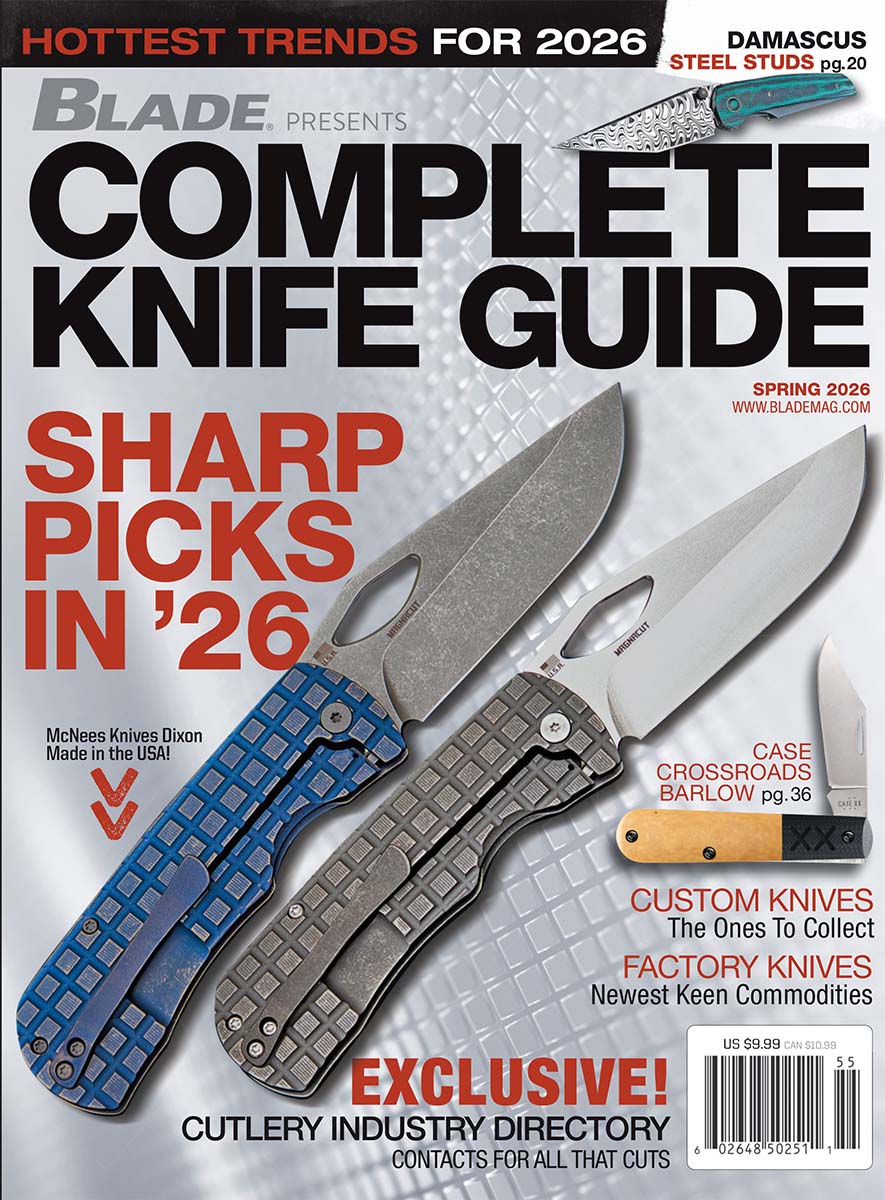 NEXT STEP: Download Your Free KNIFE GUIDE Issue of BLADE Magazine
BLADE’s annual Knife Guide Issue features the newest knives and sharpeners, plus knife and axe reviews, knife sheaths, kit knives and a Knife Industry Directory.Get your FREE digital PDF instant download of the annual Knife Guide. No, really! We will email it to you right now when you subscribe to the BLADE email newsletter.





