
Sharp tips for the best damascus buy.
Delving into damascus is a new frontier for every knife buyer—at least once. Before making that first purchase of a custom knife that sports the timeless and beautiful blade steel, it pays to look at some of the basics that define high-quality damascus.
Those who have made their livelihoods in custom knives, makers and dealers have seen the best and, well, the not-so-great when it comes to steel. Knowing what to look for in the laminate itself, as well as the process in which it came to life, can be critical when it comes to a satisfying transaction and long-term ownership of an investment.
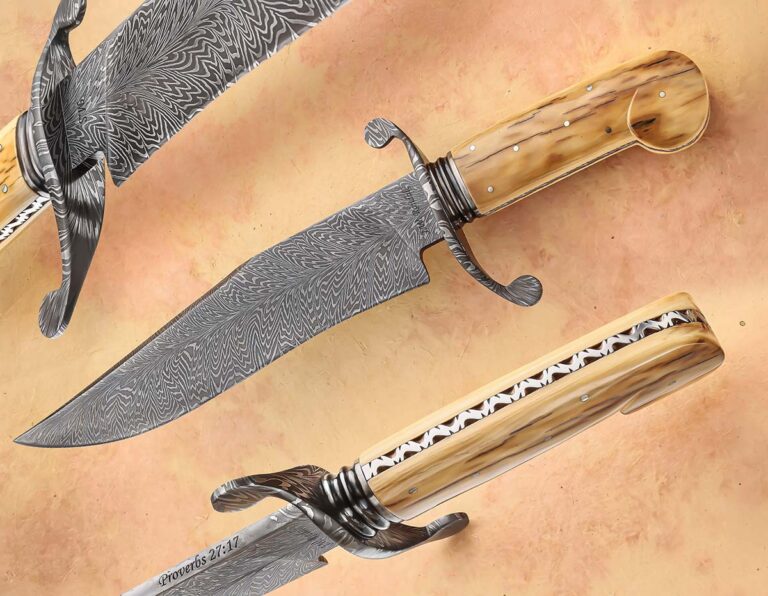
“High quality damascus utilizes high quality carbon steels or tool steels in conjunction with 15N20 (nickel-steel alloy),” advised custom knife entrepreneur Les Robertson. “The steel and nickel complement each other, providing the finished blade with hardness, edge retention and flexibility. Poor-quality damascus is often made from cheap scrap metal, low-grade stainless steel or unknown metals with impurities. Much of this material is incapable of holding an edge.”
The telltale signs or dramatic differences in damascus quality are consistent, according to Robertson. “Poor quality damascus will often show in delamination,” he continued. “This is where the welded layers begin to separate under stress due to poor forge welding. Often, they are not properly heat treated, leaving the blade either too soft—bending easily or dulling instantly—or too brittle, chipping like glass. Cold shunts are another defect to look for. This generally occurs during the forging of the damascus billet. The metal layers are not properly fused, leaving what appears to be a seam, line or crack in the damascus. This creates a weak spot that could cause the blade to fail in use.”
Longtime custom knife dealer Dave Ellis agrees. He added, “Quality damascus steel is being made by most any competent bladesmith. Always look for flaws in the welds as well as separations in the layering. A deep, crisp etch is always a plus. I would ask the smith what steels were used in the damascus. If it was welded in coal or gas, be sure that the maker knows the proper welding temperatures for forge welding.”
Discerning Damascus
From the maker’s perspective, American Bladesmith Society master smith J.W. Randall advised, “Potential buyers should look for clean steel with no flaws … Flaws can show up anywhere in dirty steel. Sometimes along the spine that may not be a flaw, but where the spine was not ground deep enough to remove where the edges of the billet came together, especially when multiple bars are welded together.”
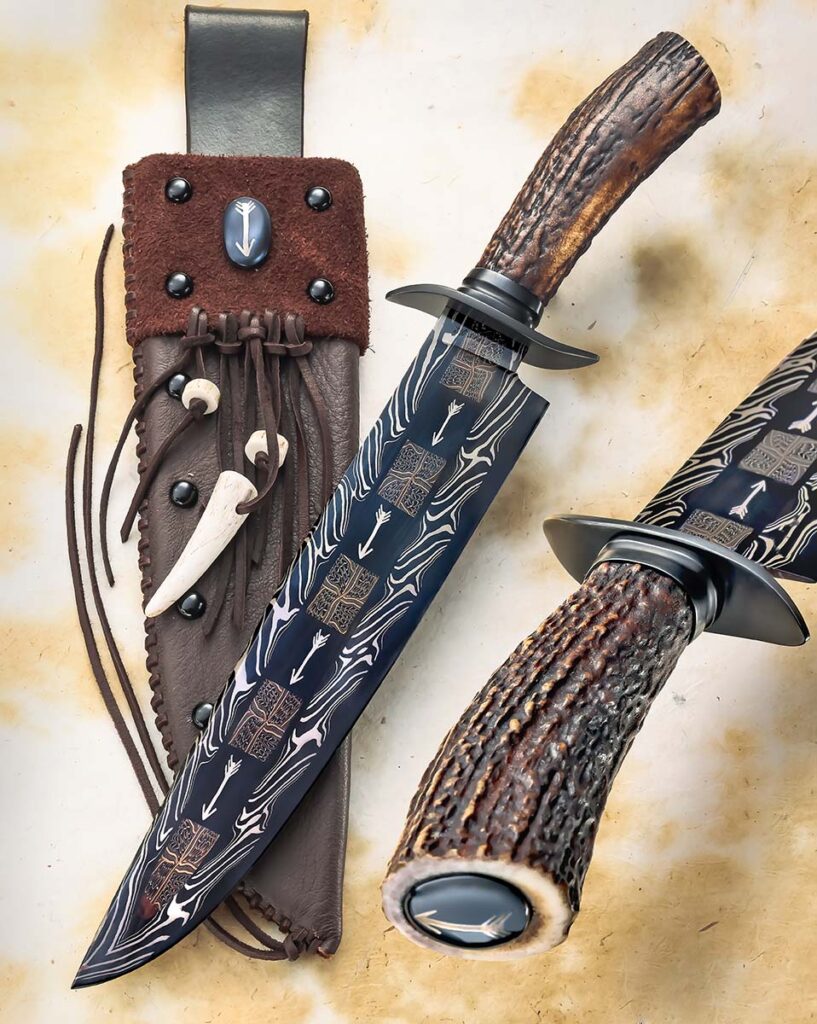
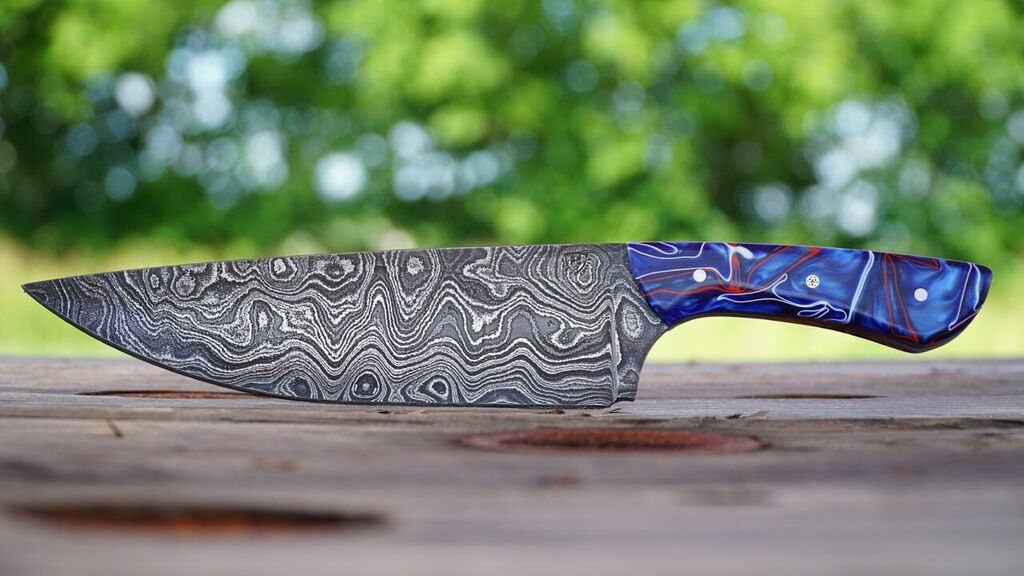
Montana master smith Shane Taylor noted that a good, crisp and clean edge is the hallmark of quality damascus and warned the buyer to take a long look at the mass-produced product. “A lot of that type of European stuff is probably welded too hot or wasn’t ground really good between welds because it looks muddy. The layers kind of bleed into each other, and a lot of times that is from welding at too hot a temperature.
“When they first started doing it, I could spot the factory-made stuff from a mile away because it looked muddy,” he continued. “I haven’t checked lately, and they could be doing better stuff now.”
From his isolated location, Taylor made his first damascus in 1986 and thought he was alone in the undertaking. Soon enough, he became good friends with legendary damascus maker Devin Thomas and confirms, “He helped me out in the late ’80s on better steel than I was using at the time.” Shane further advised that a would-be damascus purchaser should ask a few questions on the front end of the deal. “How did they heat treat the steel?” he said. “That is the soul of the blade, and basic questions will make sure that the guy knows what he is talking about.”
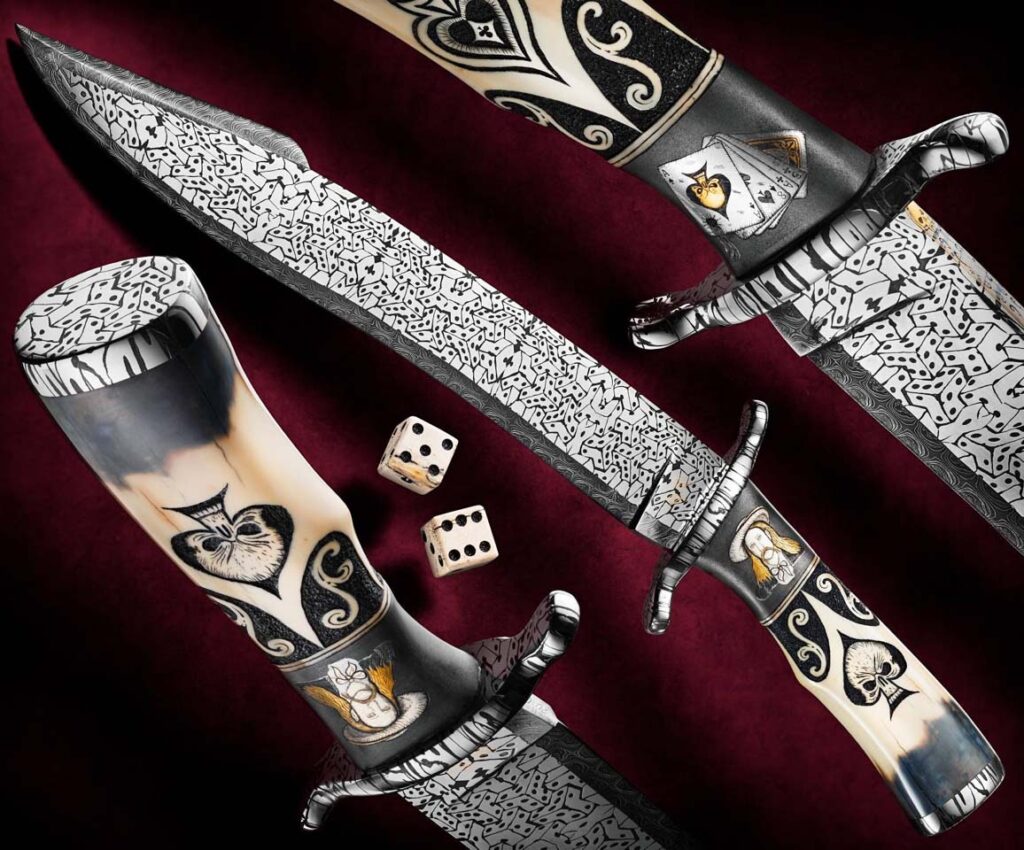
Robertson says the first question to ask a knifemaker is whether they made the damascus. “Members of the American Bladesmith Society are technically not allowed to put their journeyman smith stamp or master smith stamp on their blades unless they made them. If the maker did make the damascus, I would ask them what the configuration of the steel is. If the maker utilized a purchased piece of damascus, I would ask them who made it. The next question would be ‘What is the configuration of the billet?’ as to which steel was used and what type of nickel.
“If the maker did make their own steel,” added Les, “a common question would be ‘Did you hand forge this?’, as in utilizing only a hammer and an anvil, or was the billet made utilizing machine assistance, such as a Little Giant Power Hammer. The end result will be the same, but some collectors prefer one method over the other.”
Steel Homework
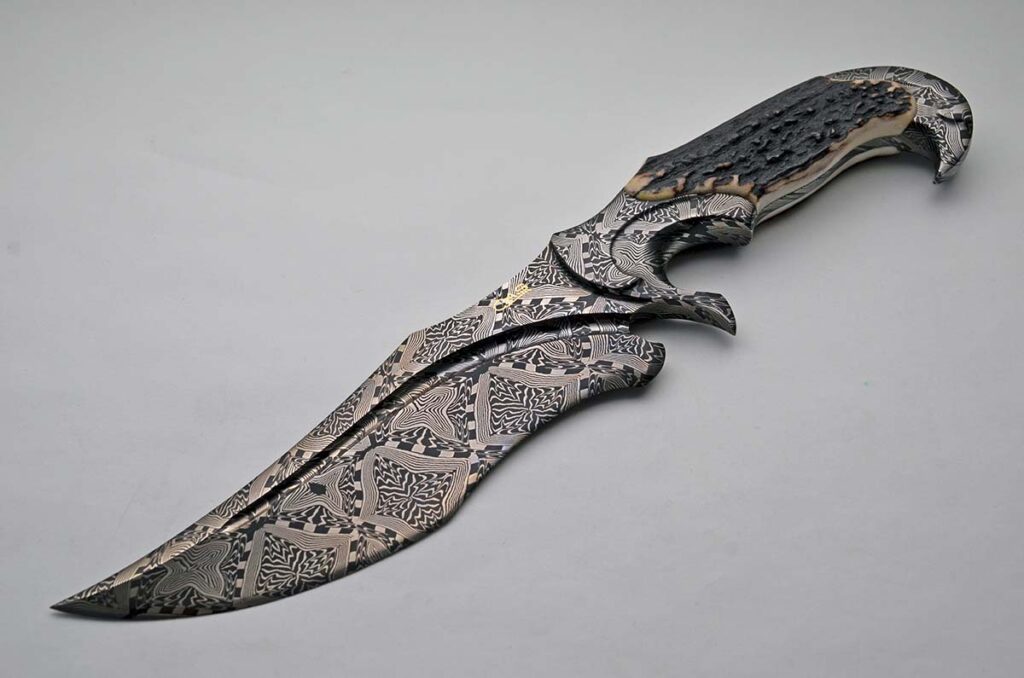
Robertson, however, cautions every damascus purchaser to do some homework before spending their hard-earned money—before choosing a maker or a knife. “The first thing a potential buyer should do is educate themselves on what it takes to create the various damascus patterns,” he reasoned. “Understanding this will help you better understand pricing, as not all damascus is created equally. Random pattern damascus is just that. It’s usually the least expensive.
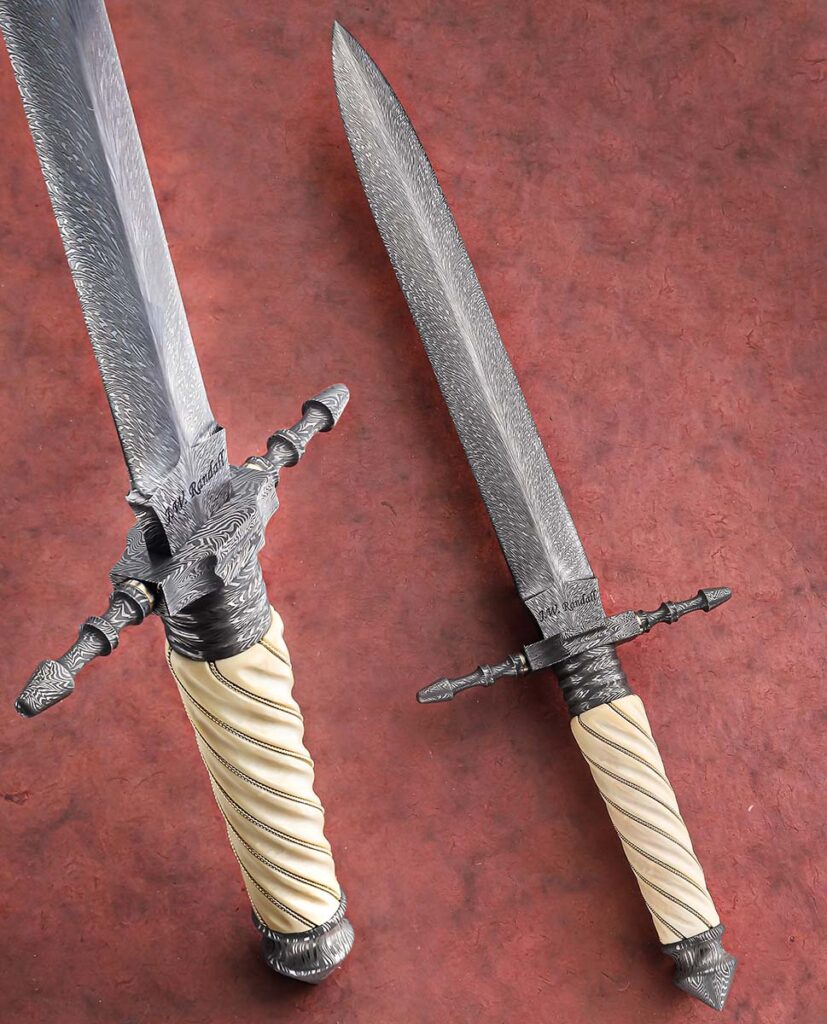
“Basic pattern damascus,” Les added, “such as ladder or twist, is more complicated than random but is less time-consuming than the mosaics. Mosaic damascus is where the knifemaker can really show their skills. I would highly recommend talking to the knifemaker to understand their process. The timeframe for most of these blades is measured in days, not hours. Keep in mind that damascus is only one part of the knife. The pricing will also include the cost of the fittings and handle materials.”
Randall is forthright in comparing the craftsmanship in damascus regarding pricing. He sees the labor and skills required to perfect the process as key drivers. “So, you can start with a basic random damascus that might be used on a utility knife, and that’s fine,” he observed. Next, you may step into face-pattern damascus, which, when done correctly, will be good on both mid-range or high-end pieces. It’s important that these patterns have a crisp, repeatable pattern from tip to ricasso. Mosaic patterns are more complex and labor intensive, which will be a good fit for higher-end pieces.”
Protecting Your Investment
In any case, the damascus blade, like any other, requires a degree of care, maintenance and upkeep. Ellis related, “Damascus steel should be treated like any high-carbon steel unless it is stainless damascus, [it must be] cleaned and either oiled or, as I prefer, [coated with] EDCi Formula. If corrosion is found on a damascus blade, I spray with Breakfree and rub with [No.] 0000 steel wool.”
Routine maintenance isn’t an over-the-top process, but it does preserve and protect an investment. According to Taylor, Renaissance Wax is a top choice. “Rub it in with your finger and make sure not to use a regular paper towel. Use Viva. It won’t scratch anything. Other paper towels can scratch. Before I assemble the knife, I take a paraffin wax to 300 degrees and leave it in there 20 minutes to half an hour to coat the surface and permeate any pores and make the blade rust resistant. Keep the moisture away, just like any other carbon steel, and don’t store in the sheath, especially if the sheath maker used acid-based leather.”
Robertson has cared for many damascus blades through the years and his prohibition against storing blades in sheaths could not be more emphatic. Once rust damage is done, the only real way to correct it, he offers, is sanding and etching. Also, he notes to “keep a light coat of oil on the damascus or use a wax-type product like Renaissance Wax, but if you choose Renaissance Wax, use a very light coat.”
Read More On Damascus:
- Feather Damascus: Blades Forged Light And Airy
- Damascus Steel Quiz: Test Your Knowledge of the Legendary Blade Material
- Damascus Folder: Top Options Straight From The Factory
- Damascus Flaws: How To Spot Imperfections in Custom Knives
 NEXT STEP: Download Your Free KNIFE GUIDE Issue of BLADE Magazine
BLADE’s annual Knife Guide Issue features the newest knives and sharpeners, plus knife and axe reviews, knife sheaths, kit knives and a Knife Industry Directory.Get your FREE digital PDF instant download of the annual Knife Guide. No, really! We will email it to you right now when you subscribe to the BLADE email newsletter.