Home Authors Posts by Pat Covert

Pat Covert

We Test 4 Small Choppers Priced $32-$450

0
 

SMALL HATCHETS, HAWKS AND AXES ARE LIGHTWEIGHT AND VERSATILE
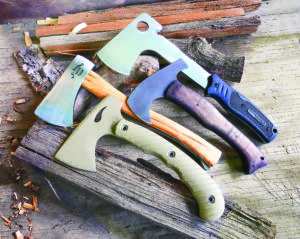
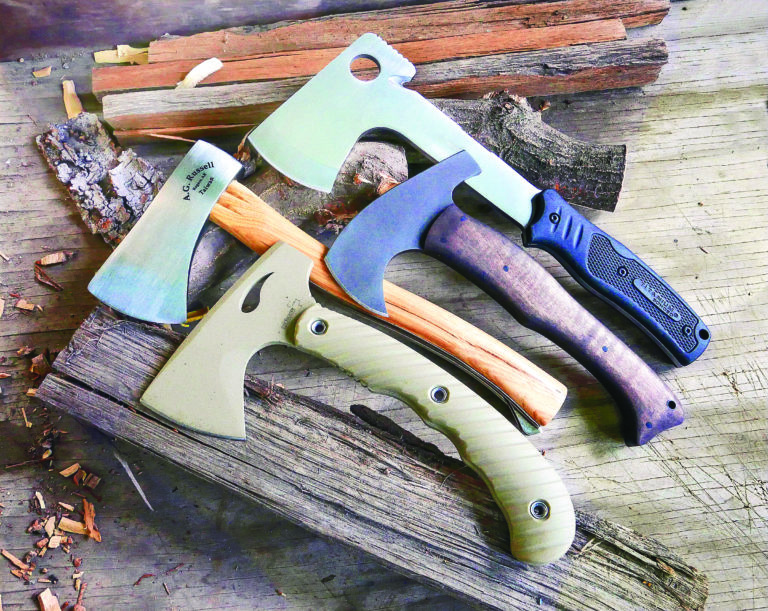
Four small, packable “hack-its” are convenient and can defy their size in terms of performance. Clockwise from top: Camillus/Western Blackriver Long Hatchet, Winkler Hunter Axe LT, Boker Plus Escape Hawk and A.G. Russell Pocket Safety Axe.

By Pat Covert

They’re small choppers that go by the names of hatchets, hawks and axes, so for simplicity’s sake let’s lump them into a group and call them hack-its, because that’s what they do for the most part. They hack.

The small choppers separate themselves from their bigger siblings largely because they are much more portable. Let’s take a look at four of the pint-size hack-its—all under a foot long—and explore their usefulness.

I tested each one on a variety of woods both hard and so, including the dreaded 6-inch privet log I use to gauge a chopper’s ability to bite into tough, seasoned materials. I also used the hack-its to cut 3/8-inch synthetic rope because if they will chop it, they’ll also cut the skin of meat and vegetables.
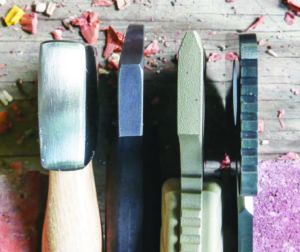
The weight of the chopper’s head and its placement on the handle makes a difference in its “bite-ability.” A big reason the Russell Pocket Safety Axe (left) bit into the privet log so well is because the hack-it simply has more weight at the point of attack.

A.G. Russell Pocket Safety Axe

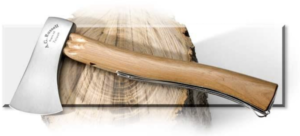
With much of its overall weight in the head, this is a very top-heavy hatchet—which can work to its advantage. Photo from agrussell.com

The A.G. Russell Pocket Safety Axe is a Marble’s design from circa the early 20th century. Marble took a small hatchet, 10.6 inches overall, and designed a fold-out metal shield in the handle to cover the bit in lieu of a sheath. Simply ingenious.  The A.G. Russell version has a 4.5-inch 1070 spring steel head with a 2.4- inch cutting edge, and a typical old-school hammering base at the rear.  The head has a distinctive three-slot mounting system Marble deemed superior to the standard oval style.  The 8.8 inch handle is hickory and the whole kit and caboodle weighs 1 pound. Manufacturer’s suggested retail price: $79.95.
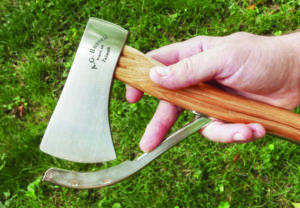
The fold-out blade shield of the Russell Pocket Safety Axe is pure wizardry, especially considering the design is well over 100 years old. You won’t be caught saying “Where did I put the sheath?” with this one.

With much of its overall weight in the head, this is a very top-heavy hatchet—which can work to its advantage. In the bite test on the privet log, the Pocket Safety Axe finished first simply because the business end has a lot more weight (see the side-by-side comparison image on head thicknesses). Consequently, it chopped each test material well.
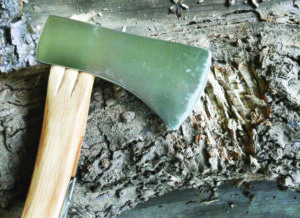
The bite of the A.G. Russell Pocket Safety Axe proved to be exceptional. The traditional, top-heavy hack-it took to the dreaded 6-inch privet log with gusto, sinking its teeth into the seasoned hardwood surprisingly well.

The fold-out bit shield has pluses and minuses. On the upside, it’s very convenient and there’s no sheath to keep up with. On the other hand, you have to pack it since there’s no belt-sheath option. Also, you’ll want to wear gloves for extended use, as the hinge mechanism in the handle can dig into the inner  fingers. All in all, though, the Pocket Safety Axe is a stellar performer.

SPEC CHECK: A.G. RUSSELL POCKET SAFETY AXE
CUTTING EDGE:
2.4”
BLADE MATERIAL: 1070 spring steel
HEAD WIDTH: 4.5”
HEAD THICKNESS: .7” at the thickest
BLADE COATING: None
HANDLE MATERIAL: Hickory
SPECIAL FEATURES: Metal blade cover in handle
CARRY: Pocket or pack
WEIGHT: 16 ozs.
OVERALL LENGTH: 10.6”
COUNTRY OF ORIGIN: Taiwan
MSRP: $79.95

Boker Plus Escape Hawk
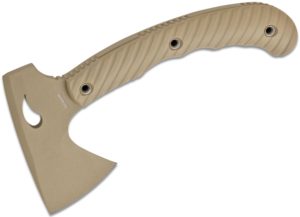
The Boker Escape Hawk is a hawk that thinks it’s a hatchet. Photo from knifecenter.com

Designed by Australian knifemaker/ designer Peter Fegan, the Boker Plus Escape Hawk is tactical in design. Hawks are primarily used for breaching and combat but can full other chores as well. Only 9 inches overall, the Escape Hawk has a 4.75-inch head of quarter inch-thick SK5 tool steel and a 2.56- inch cutting edge.  The head has enough beard to be used for carving, and the curved 7-inch handle is adorned with nicely sculpted, diagonally grooved FRN ( berglass-reinforced nylon) scales.  The butt can be used for hammering.  The steel is protected throughout with a powder coat. A dual-strap Kydex sheath covers the head. MSRP: $189.95.
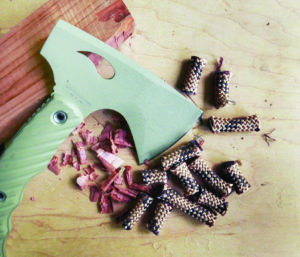
The Boker Plus Escape Hawk is a hatchet in disguise. The small hack-it’s 2.56-inch SK5 tool steel bit chopped rope in nice, clean lops, and hacked off nice-sized cedar tinder chips with ease.

Due to its small size, you won’t be doing much breaching with the Boker Escape Hawk, but the pint-sized hack proved its worth. The SK5 steel had plenty of hack, chopping rope in nice, clean cuts, and knocking out chunks of seasoned cedar for tinder. Though the bearded bit can be used for carving, the inward slant of the handle mounting to the head impedes its effectiveness for the purpose a tad. The handle has full-length scales—a bonus for freedom of grip—and the diagonal grooves afforded it the best purchase of the bunch. The Boker Escape Hawk is a hawk that thinks it’s a hatchet.


SPEC CHECK: BOKER PLUS ESCAPE HAWK
CUTTING EDGE:
2.56”
BLADE MATERIAL: SK5 tool steel
HEAD WIDTH: 4.75”
HEAD THICKNESS: .25”
BLADE FINISH: Powder coating
HANDLE MATERIAL: FRN
SPECIAL FEATURES: Full-length sculpted scales
CARRY: Kydex sheath
WEIGHT: 13.1 ozs.
OVERALL LENGTH: 9”
COUNTRY OF ORIGIN: China
MSRP: $189.95

Camillus Western Blackriver Long Hatchet
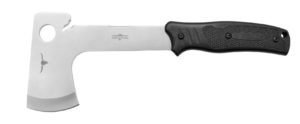
The Blackriver will handle many chores around the camp, and the bonus firesteel and pouch on the sheath add value. Photo from Camillus.com

At 11.5 inches, the Western Blackriver Long Hatchet from Camillus is, indeed, the longest of the test hack-its. It sports a 4.5-inch-wide head with a 2.5-inch chopping edge. On the back side of the head is a gimped flat edge for hammering and a sharpened diagonal slot for cutting cord. The 9.5-inch handle has 5.25-inch black checkered rubber scales, and there is a shaving slot midway between the handle and the head. A ballistic nylon sheath with a firesteel pouch—with firesteel—is included. MSRP: $31.98.
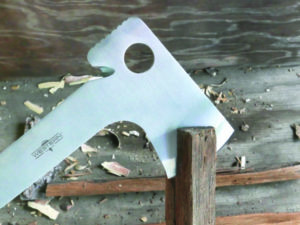
The Western Blackriver Long Hatchet from Camillus is the batonner of the bunch. The thin bit cleaved into the tight hardwood grain like a thief in the night. Once the head was in, the final splitting was done by batonning the upper handle.

The Blackriver has the lightest head of the test group so it didn’t win the chopping wars, but its length and handle design give it a leg up on the others in some functions. The thin head is ideal for batonning, enhanced by the 4 inches of exposed steel below the bit, which can be used as a striking surface. The grip is very comfortable, the rubber scales aiding in impact absorption. The Blackriver will handle many chores around the camp, and the bonus firesteel and pouch on the sheath add value. It’s also by far the most affordable of the group.
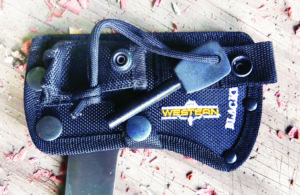
The Camillus/Western Blackriver Long Hatchet has a pouch on its ballistic nylon sheath containing a firesteel. This is a nice added extra on a hack-it that is already able and affordable.

SPEC CHECK: CAMILLUS/WESTERN BLACKRIVER LONG HATCHET
CUTTING EDGE:
2.5”
BLADE STEEL: 420 stainless
HEAD WIDTH: 4.5”
HEAD THICKNESS: .2”
BLADE COATING: Titanium bonded
HANDLE MATERIAL: Rubber
SPECIAL FEATURES: Firesteel included
CARRY: Ballistic nylon belt sheath
WEIGHT: 17 ozs.
OVERALL LENGTH: 11.5”
COUNTRY OF ORIGIN: China
MSRP: $31.98

Winkler Hunter Axe LT
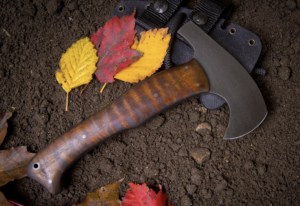
The price is high but the Winkler is as close to a custom as you’ll get—plus, the sheath is a marvel in itself. Photo from WinklerKnives.com. 

At only 9 inches long, the Winkler Hunter Axe LT is a small hack-it, but packs a full 19 ounces of weight—and that’s with a skeletonized handle tang. The Hunter Axe LT has a 3.5-inch-wide, bearded 80CrV2 carbon steel head with 2 inches of cutting edge, and there’s a hammering base out back. The steel thickness is a healthy .25 inch and is coated head to toe in Caswell black oxide. The scales are full-length, highly attractive curly maple. A padded Kydex sheath with nylon belt loops covers the head, and employs a shock-cord retention system for a quick draw. MSRP: $450.
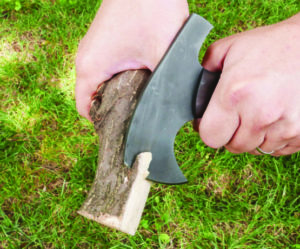
The Winkler Hunter Axe LT turned out to be the best carver of the bunch due in no small part to the handle’s position in relation to the head and beard. The hand- some curly maple handle is comfortable to boot.

The Hunter Axe LT may be short but at 19 ounces is the heaviest of the test hack-its—a full 2 ounces more than its nearest rival. The LT almost won the bite contest but didn’t due in part to its weight being more equally distributed than the top-heavy Russell Pocket Safety Axe. The 80CrV2 steel chops extremely well and the Caswell finish is very tough. Though not a carving axe per se, the LT was our best candidate for the chore and would have performed even better with a lower grind angle on the lead edge. The price is high but the Winkler is as close to a custom as you’ll get—plus, the sheath is a marvel in itself.

SPEC CHECK: WINKLER HUNTER AXE LT 
CUTTING EDGE:
2”
BLADE MATERIAL: 80CrV2 carbon steel
HEAD WIDTH: 3.5”
HEAD THICKNESS: .28”
BLADE COATING: Caswell black oxide
HANDLE MATERIAL: Curly maple
SPECIAL FEATURES: Skeletonized handle
CARRY: Kydex belt sheath w/tension release
WEIGHT: 19 ozs.
OVERALL LENGTH: 9”
COUNTRY OF ORIGIN: USA
MSRP: $450
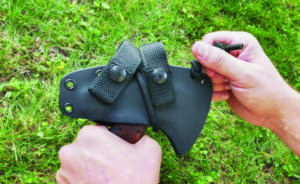
The Winkler Hunter Axe LT’s Kydex sheath has a bungee-style tension cord for quickly releasing the axe from its housing. The sheath as a whole is very well made—a Daniel Winkler trademark.

HAPPY HACKING!

Packable hack-its are limited only by their size. They are capable of building small shelters, chopping and splitting small- sized firewood, cutting rope to size, and a myriad of other small chores around the camp. When buying a small, packable chopper like one of these, first define your intended use for it. As you can see by the test bunch, each has its strong suits, and MSRPs vary widely. Choose wisely and happy hacking!
4 New Karambits That Are Very Different

WELCOME TO THE BRAVE NEW WORLD OF THE KARAMBIT.

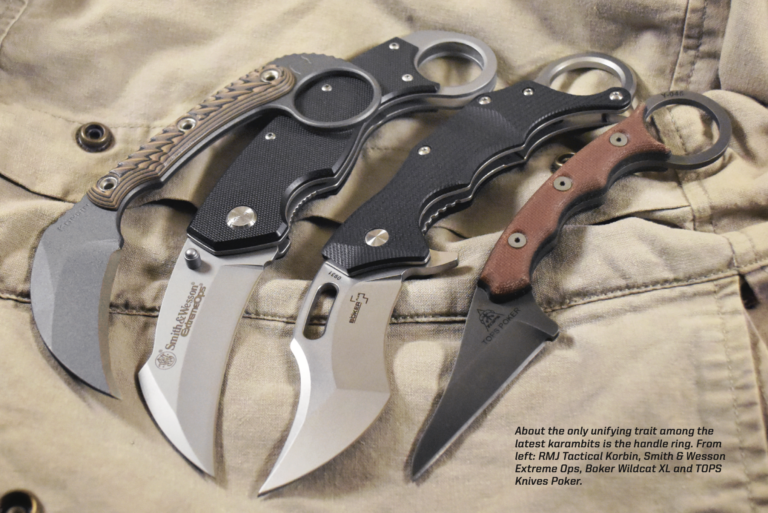
The latest karambits come in an assortment of sizes, shapes, blade patterns, materials, fixed blades and folders, and price ranges. Whether for utility, self-defense or what have you, today’s karambits are ahead of the curve. In fact, some have even eschewed the traditional curved blade cent of that of a Japanese kiridashi, and is for a variety of patterns.

In other words, today’s versions of the knives with the ring in the handle butt have that unfamiliar ring to them.

The karambit traces its roots to Indonesia, where it was first used in agricultural chores such as cutting rice. The original was much larger, but it began to be scaled down as its prowess in self-defense became more prominent. Most, though not all, karambits have the familiar safety ring at the base. They come in both fixed-blade and folder options and, to many users, are just as much for EDC as self-defense.

Karambits typically have a hawkbill blade, but you can’t tell by looking at our featured foursome. Manufacturers have diversified the knives’ blade shapes recently, thus offering something different in order to gain an edge over the competition. My team tested the four blades for cutting performance and tactile characteristics using the two main karambit grips: reverse, which is the main one for combat, and forward, which is more utilitarian.

It should be noted that karambits can be hazardous if you try spinning them as is often portrayed in YouTube videos. I spoke with two prominent edged-weapons combat trainers about spinning the knife. They both affirmed that the practice is useless in combat and is primarily used to perform tricks. Whatever the case, if you use a karambit for self-defense, it’s highly recommended that you seek professional instruction and start off with plastic or rubber training iterations of the knife.

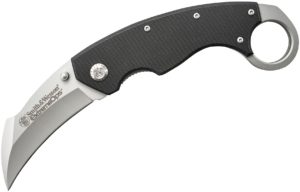
NO LIGHTWEIGHT: The Smith & Wesson Extreme Ops

Image from KnifeCenter.com

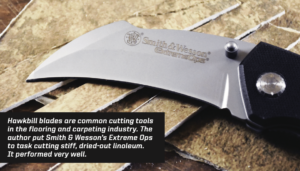
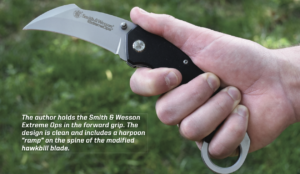
At $24.99, the Smith & Wesson Extreme Ops is by far the most affordable knife of the group. The design is clean and includes a harpoon modification on the spine of the hawkbill blade. At 7.875 inches overall it’s a large folder and also the heaviest (6.1 ounces) of the quartet. The liners are stainless steel. The safety ring is centered at the base. The blade angle is moderately aggressive, allowing the tip to lead when making cuts in the reverse grip. There’s a lot of handle to hold.

Uses for hawkbill blades include cutting carpet and linoleum, and pruning. I took the Extreme Ops to task on straight slices through some stiff, dried-out linoleum and it did an admirable job. Though it took three or four slices using a triangle as a guide, none of the test models made it through the material any quicker.

Due to its size, the Extreme Ops isnot for those with small hands, and it’s a heavy carry in the pocket. The only design flaw I found was in the safety ring, which is actually two thin rings that come off the steel liners. These can cut into the fingers with extended use. I’d like to see a solid spacer fill the gap between the rings. Manufacturer’s suggested retail price (MSRP): $24.99.

Smith & Wesson Extreme Ops Specs
KNIFE TYPE: Folder
BLADE LENGTH: 3 inches
BLADE STEEL: 400 stainless
BLADE PATTERN: Modified hawkbill
HANDLE MATERIAL: Black G-10
LOCK: Linerlock
KNIFE TO KNOW: Offset safety ring
CARRY: Pocket clip, tip up
WEIGHT: 6.1 ounces
OPEN LENGTH: 7.875 inches
CLOSED LENGTH: 4.875 inches
COUNTRY OF ORIGIN: China
MSRP: $24.99

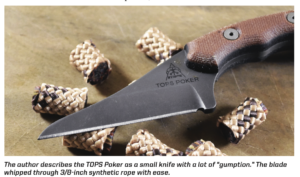
MIXED BREED: The TOPS Knives Poker

Image from TOPS Knives

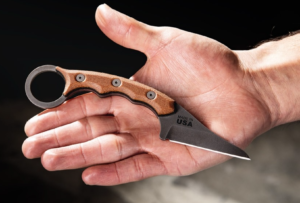
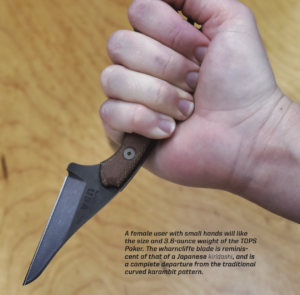
The Poker from TOPS Knives is a mixed-breed karambit. Designed by the company’s marketing director, Craig Powell, the Poker combines a karambit handle with a straight-edge, double- ground-blade hybrid. Reminiscent of that of a Japanese kiridashi, the blade sports TOPS’ Acid Rain finish. The sculpted handle scales terminate at a centered safety ring and the sheath is multi-positional.

A small fixed blade, the Poker is ideal for everyday carry as a neck or belt knife. There’s no angle to the wharncliffe blade—it comes straight off the handle— so, for self-defense using the knife, you’d want to train specifically with a wharncliffe pattern. Wharncliffes are great, all-around workhorse blades that excel at stripping wire, carving wood and making straight cuts.

The Poker is small, easy to conceal* and ideal for those with smaller hands. It did a good job removing strips of corrugated board, and even surprised me a bit because of its ability to cut easily through 3/8-inch synthetic rope. The blade has a lot of gumption! MSRP: $95.

TOPS Knives Poker Specs
KNIFE TYPE: Fixed blade
BLADE LENGTH: 2.5 inches
BLADE STEEL: 1095 carbon
BLADE PATTERN: Wharncliffe
HANDLE MATERIAL: Tan or black canvas Micarta®
WEIGHT: 3.6 ounces
OVERALL LENGTH: 6.88 inches
KNIFE TO KNOW: The blade is somewhat reminiscent of that of a Japanese kiridashi
CARRY: Black Kydex w/belt loop
COUNTRY OF ORIGIN: USA
MSRP: $120

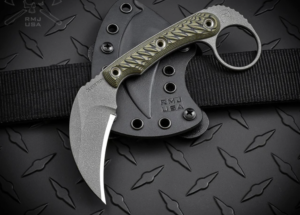
LEAN & UPSCALE: The RMJ Tactical Korbin

Image from RMJ Tactical

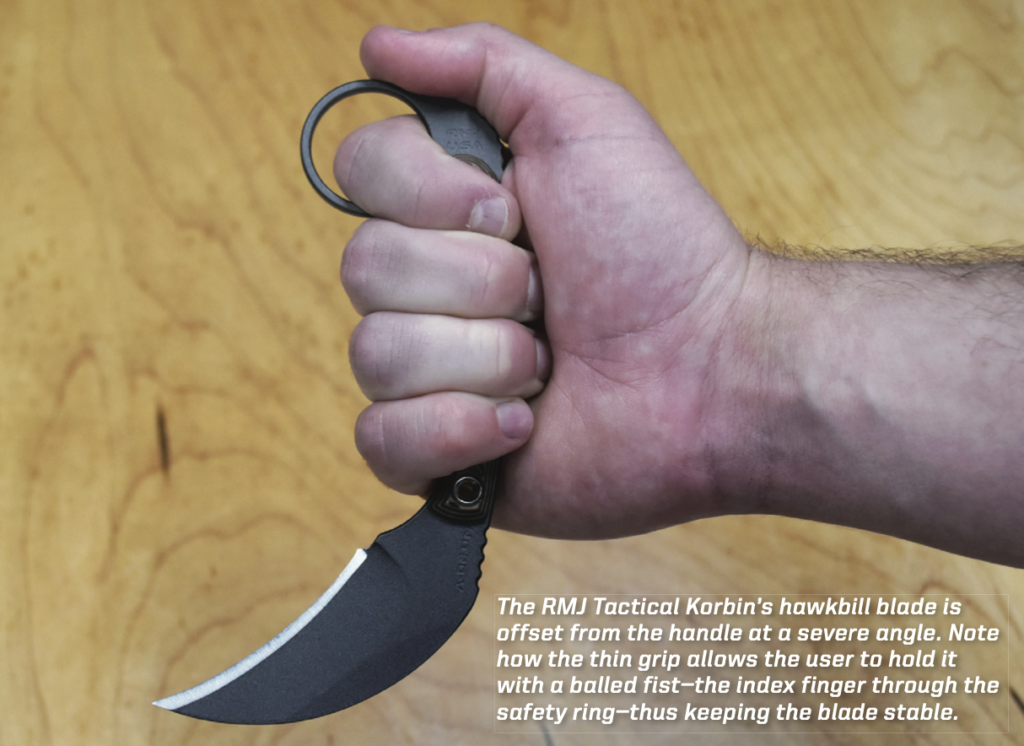
The Korbin fixed blade from RMJ Tactical is easily the most upscale of the test group. The knife has an imposing look thanks to its deep, forward-canted hawkbill blade. Gimping at the blade’s base enhances purchase. The scales have an attractive grooved pattern, and the safety ring is radically offset toward the front of the handle. The sheath includes soft loops.

The knife is a medium-sized karambit with a thin handle. Some prefer a slim profile because gripping it is more like balling a fist, with the index finger keeping the blade stable. I have medium- sized hands, so I found it comfortable and to my liking.

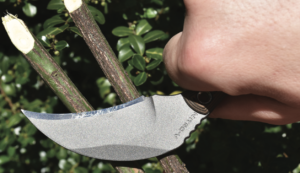
I cut linoleum with the tip and 3-inch rope with the curved edge. I found the Nitro-V stainless blade steel exceptional. I even did a little pruning—a hawkbill favorite. All in all, the knife lived up to its higher price tag. MSRP: $190.

The RMJ Tactical Korbin performs all the functions you’d expect from a hawkbill blade, including pruning shrubs. “If you don’t mind spending a bit more,” the author wrote, “it is well worth the price.”

RMJ Tactical Korbin Specs
KNIFE TYPE: Fixed blade
BLADE LENGTH: 2.875 inches
BLADE STEEL: Nitro-V stainless
BLADE FINISH: Cerakote®
BLADE PATTERN: Hawkbill
HANDLE MATERIAL: G-10
HANDLE LENGTH: 4.25 inches
KNIFE TO KNOW: Offset safety ring
WEIGHT: 2.9 ounces
OVERALL LENGTH: 6.125 inches
CARRY: Kydex 2-way belt sheath
COUNTRY OF ORIGIN: USA
MSRP: $190

CORVETTE OF CUT? The Boker Wildcat XL

Image from Boker USA

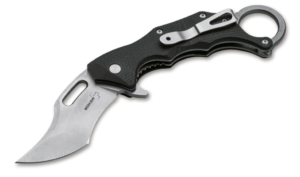
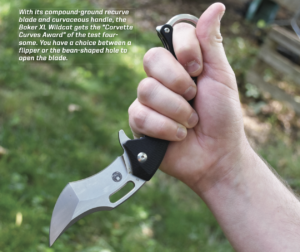
The Boker Wildcat XL Karambit Flipper is the longest (8.5 inches open) in the review stable and has a flipper opener. A Boris Manasherov design, the knife has curves all over—from the handle to the recurve blade—that would make a Corvette blush!

Stainless liners contain a linerlock and the scales flow into a centered safety ring. You can deploy the blade via an elongated, bean-shaped slot on the ricasso. The handle curves make for a very comfortable grip. Since the XL is huge, some might prefer the standard, 7.4-inch Wildcat model. The blade is atypical, though again, it’s not uncommon to find a wide range of blades among the latest karambits.

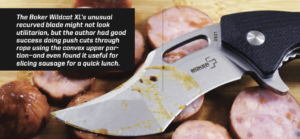
The Wildcat did a great job cutting rope—surprisingly so in push cuts using the blade’s curved front section. I also found it great at slicing grilled sausage Use your imagination with this blade— it’s definitely different. MSRP: $149.95.

Boker Wildcat XL
KNIFE TYPE: Flipper folder
BLADE LENGTH: 3.375 inches
BLADE MATERIAL: D2 tool steel
BLADE PATTERN: Recurve
HANDLE MATERIAL: Black G-10
LOCK: Linerlock
CARRY: Pocket clip, tip down
WEIGHT: 5 ounces
OPEN LENGTH: 8.5 inches
CLOSED LENGTH: 5.125 inches
COUNTRY OF ORIGIN: China
MSRP: $149.95

WIDE SELECTION

There are a couple of prime factors to consider when buying a karambit. First, get one compatible with your hand size. If it’s too large or too small, it won’t serve you well. Second, choose a blade that suits your purposes in both style and angle. Some are better at EDC, while others are meant for self-defense. Whichever your choice, given the competitiveness in the market, you’ll encounter no trouble with selection.

*Be sure to check and conform to laws concerning concealed carry that apply to the areas in which you carry your knife.

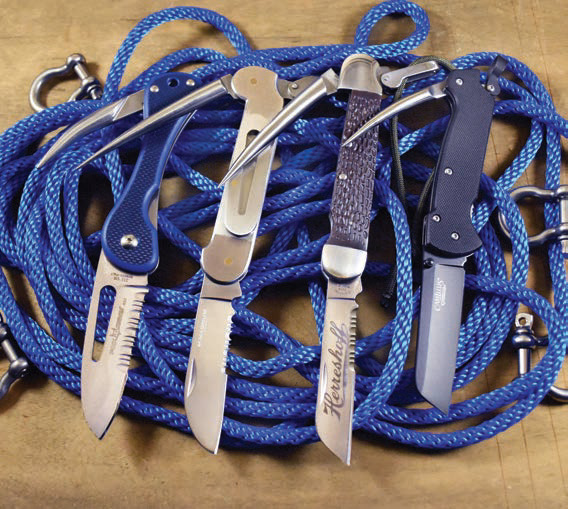
What is a Marlinspike Knife? 4 Examples

Marlinespike Knife: A Definition

One of the more unusual patterns in the long history of folding knives is the marlinespike. It is a blend of the early rope knife—not the sunfish, but the wharncliffe version—and the singular, knitting-needle-like marlinespike.

These were combined into a single folder and have served many a sailor and diver well. The blade is a sure-handed rope cutter, and the spike is made for working with knots and splicing rope. In fact, there is a knot dubbed the marlinespike hitch that serves as a temporary knot for various needs.

Also known as rigging knives, marlinespike knives live today in the form of reproductions of the original folders and thoroughly modern send-ups. Climbers, who use a lot of different knots in their endeavors, also find marlinespike knives useful.

Example 1: Colonial Knife’s Marlin Spike

Knife for knots
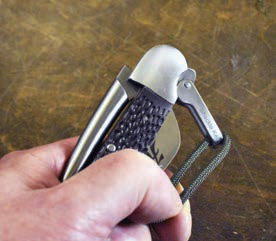
The press-lock is a common blade release for marlinespike folders that dates back to the knife’s early days. However, there’s more here than meets the eye: The Colonial Marlin Spike’s lock also serves as a bail and a shackle opener.

Colonial Knife’s Marlin Spike is a reproduction of the original marlinespike knife issued by the U.S. Navy in World War I—with some modern touches.

The locking, 440C stainless steel spike and partially serrated—a plain-edge version is also available—sheepsfoot slip-joint blade are both 3 inches long. The scales are a simulated brown jigged-bone Zytel and the bolsters are stainless. The spike locks via a press-lock on the base, which also serves as a shackle opener and bail for a lanyard.

Example 2: Boker Magnum Catamaran

Use knife to make knots
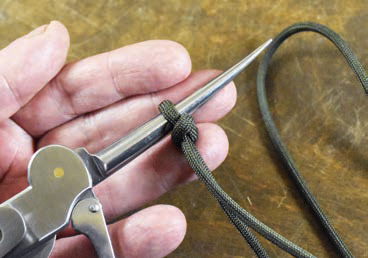
The marlinespike hitch is a simple, temporary knot that can be easily removed once it has served its purpose. The knot is attached to the Boker Magnum Catamaran’s spike in a scenario for which it can serve as a handle.

The Boker Magnum Catamaran has the traditional profile of the old marlinespike folders, replete with a press-lock bail/shackle opener for the spike tool and a 4.375-inch stainless steel frame.

The 3.3-inch spike and 2.75-inch partially serrated sheepsfoot slip-joint blade are 440A stainless steel. You’ll find a nifty shackle opener on the handle, also stainless steel, pinned to the frame.

Example 3: Camillus Marlin Spike

Sailor knives
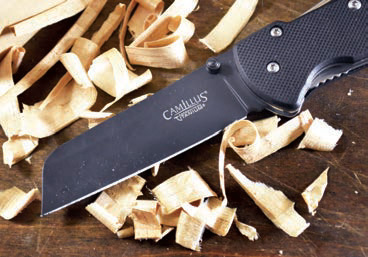
While the plain edge of the Camillus Marlin Spike’s sheepsfoot blade might not quite match the speed of a serrated edge, when it comes to wood it vastly out-carves the rest of the pack. This is a big consideration if you need a knife that will step outside The Rope Zone.

The Camillus Marlin Spike is a modern take on the original. The stylized, 4-inch frame is black G-10 with stainless steel liners. The 2.75-inch sheepsfoot blade—the only one of the test group without serrations—is VG-10 stainless steel with a black, carbonitride titanium coating.

It secures via a linerlock. The folder’s 2.25-inch spike locks via the press-lock/bail and is black coated as well. It is the lightest (3.2 ounces) of the test knives.

Example 4: Fox Sailing Knife

Knives for sailors
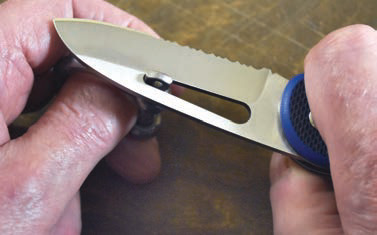
The Fox Sailing Knife has a cutout in the blade that serves as a shackle release. A shackle’s screw tab is caught in the jaws of the blade’s open maw.

The Fox Sailing Knife delivers with a cool, 4-inch handle of textured blue G-10. Stainless liners house linerlock mechanisms for both the 3-inch modified wharncliffe blade of 420 stainless steel and 2.25-inch spike.

The partially serrated blade has a cutout that serves as a shackle opener, along with a hole in the base of the frame that can accept a lanyard.

Knifemaking 101: Why Do Knifemakers Use Titanium?

0

Here’s why knifemakers use titanium:

  • Lightweight and tough
  • Softer than steel
  • It’s a reactive metal

In the knife world, titanium has been at the forefront of space-age metals for well over two decades, due in great part to the boom in the tactical knife genre borne out of the first Gulf War in the early 1990s. Titanium was originally used in the U.S. space program for its weight savings and toughness, and from there bled into military programs for the very same characteristics.

Titanium is also nonmagnetic, proving useful in certain applications. While tough, titanium is softer than steel, and although some knifemakers have used it as blade material, it never quite caught fire like the new exotic stainless steels that dominate the upper end of the market today.

Aluminum is also nonmagnetic and anodizes quite well, but it gets little respect in the knife industry because as an extremely soft metal it’s considered an inexpensive alternative to titanium.

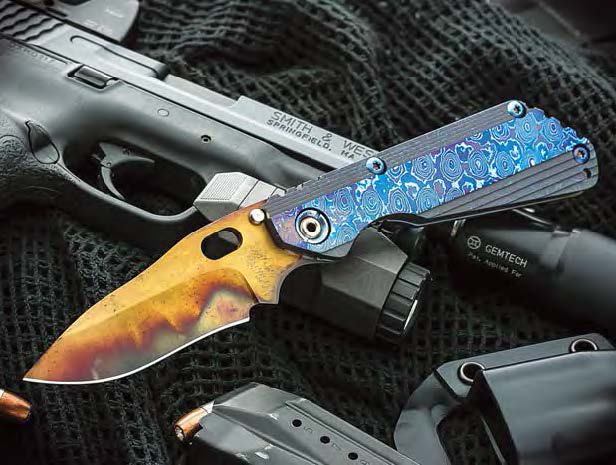
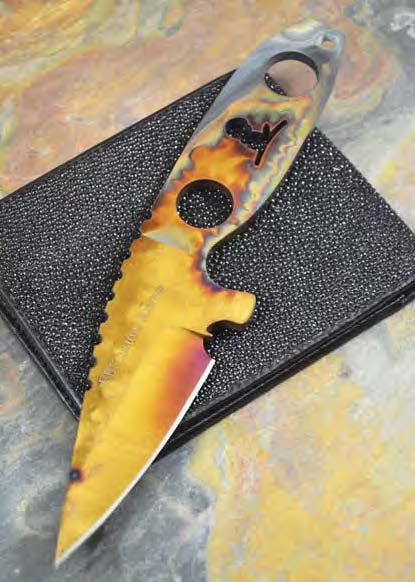
Titanium is a reactive metal—its characteristics can be changed by outside influences. Heat-treating knife handles or dipping them into an electrolyte solution that has been both positively and negatively charged color enhances the metallic surface. The amount of heat or electric charging can be varied by the amount of direct heat or voltage applied, and this determines the color hue that the metal takes.


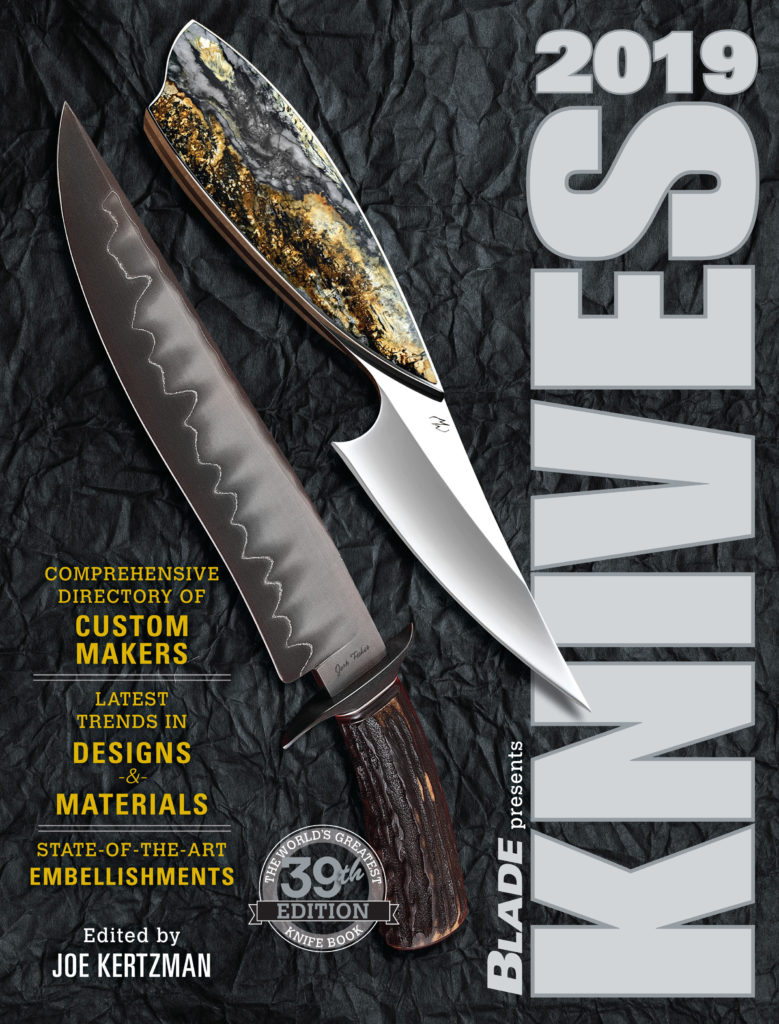
Learn More About Knifemaking in the World’s Greatest Knife Book

Best books about knives

Knifemaking 101: What Is SM-100 (Nitinol)?

The History of Nitinol

Nitinol, also referred to as “Ni-Ti-Nol,” was first discovered back in 1959 by scientists William Buehler and Frederic Wang at the Naval Ordnance Laboratory. The Ni-Ti-Nol acronym stands for “Nickel-Titanium-Naval Ordnance Laboratory.”

Beuhler and Wang were searching for a super-elastic alloy for missile nose cones that would be pliable at extreme heat, yet return to its original shape after cooling. Their efforts were a success, but because the incredibly tough alloy was so difficult to process and machine, it wasn’t used until much later.

Knifemaking Discovers Nitinol a Half-Century Later

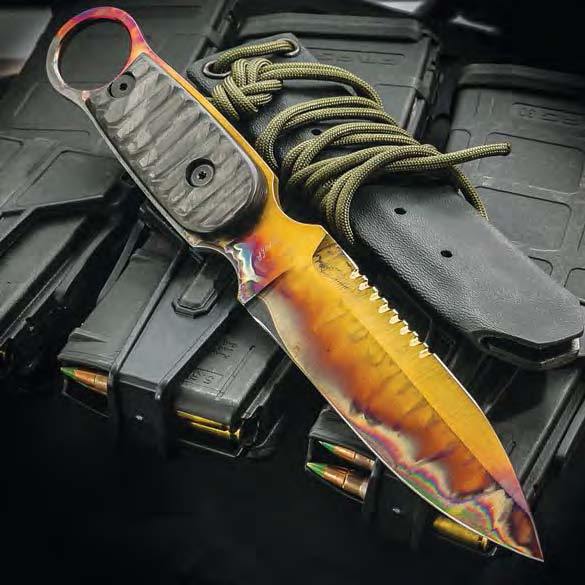
Nitinol custom knives
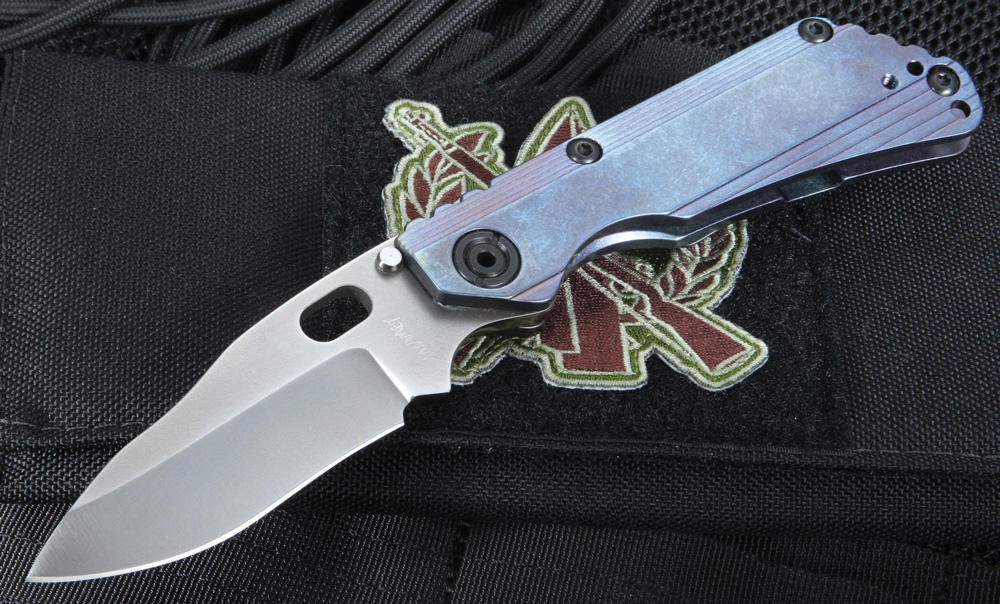
Duane Dwyer of Strider Knives was the main force behind SM-100 (HIPTiNite), and his signed custom Strider MT2 showcases a brilliantly heat-treated SM-100 blade mated to machined carbon fiber handle scales. (Brady Miller image)

Custom knifemaker Duane Dwyer of Strider Knives became interested in Nitinol back in 2005 while searching for a super hard metal alloy that would not rust. He approached metallurgist and friend Scott Devanna, vice president of technology at SB Specialty Metals, and inquired about the possibility of producing Nitinol using the particle metallurgy process, which had never been done.

Shortly afterwards Devanna introduced Dwyer to Eric Bono, a metallurgist and knifemaker who also had an interest in the alloy, and the three men began to explore the possibilities of incorporating the alloy into knives.

Nitinol Becomes SM-100 (HIPTiNite)

Hiptinite custom knives
Duane Dwyer of Strider Knives was the main force behind SM-100 (HIPTiNite), and his signed custom Strider MT2 showcases a brilliantly heat-treated SM-100 blade mated to machined carbon fiber handle scales. (Brady Miller image)

With his metallurgical knowledge and experience, Bono developed a working, powdered metal version of the alloy in 2006, which the partners dubbed “SM-100.” It took several more years to refine the alloy and processes, and in 2009, Bono and business partner Fred Yolton formed a company, Summit Metals LLC, to produce SM-100.

Since that time, SM-100 (60 percent nickel and 40 percent titanium), which the company markets under the name “HIPTiNite,” has garnered interest not only in the knife industry, but also by NASA and the Formula 1 racing industry.

Properties of SM-100

The SM-100 brand of Nitinol, like its forerunner, is extremely tough. While a typical sanding belt can be used to grind several typical, mono-steel knife blades, it requires several belts, in many cases six or more, for the same process using the SM-100 alloy.

Made and sold in small quantities, the cost of SM-100 isn’t cheap. Add to that the cost of belts and additional time to shape and grind the material, and the cost per knife skyrockets.

On the positive side, SM-100 is noncorrosive, and while stainless steel will rust, Devanna says you can throw an SM-100 knife into saltwater for 50 years without the material corroding.

An Explosion of Coloring

Bono discovered during his development of SM-100 that it can be heat colored into an exquisite rainbow of colors. Due to the titanium content, SM-100 oxidizes into a blaze of bright hues just like other alloys incorporating titanium, but the process of achieving the color effects is quite different.

Bono confides that the magic happens during the heat-treating process, in which he allows small pockets of air to leak onto the surface of the knife. Prior to heat treating, the blades are wrapped in foil and small holes are punched into the wrapping.

When heat treated, different colors occur depending on the oxygen content of certain areas of the blade material as the surface oxidizes. The end result is the explosion of color on the SM-100 blades.

The price for bright, eye-popping colors doesn’t come cheap, but then new innovations rarely do.


See More Trends in Knives in This Book

Best books about knives

What You Must Know Before Buying An Automatic Knife Online

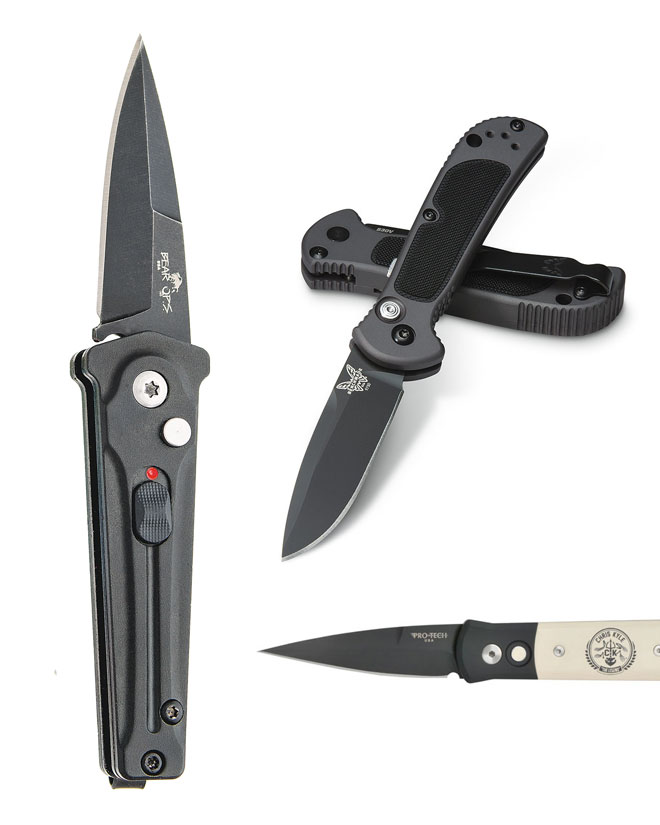
With more and more states decriminalizing automatic knives (aka “switchblades”), knife enthusiasts are more interested than ever before in purchasing one of these knives. They often turn to online retailers, but that presents a sticky situation: federal law prohibits interstate commerce of autos (see a full explainer here).

This leaves many scratching their heads. For instance, if a buyer in Montana places an online order with a seller in New Hampshire, does federal law prohibit the otherwise-legal transaction?

BLADE addressed the issue with an expert team of panelists who have dealt extensively with knife laws. They include Jan Billeb of the American Knife & Tool Institute (AKTI), Doug Ritter of Knife Rights and Evan Nappen, an attorney and author who specializes in knife and gun rights cases.

Question: Doesn’t the Federal Switchblade Act ban the transport of an automatic knife across state lines?

BILLEB: The Federal Switchblade Act is widely misunderstood, as it only applies to interstate commerce—commercially selling automatic knives across state lines. It does not prohibit crossing state lines with an automatic knife. It also does not prohibit traveling by air with an automatic knife in your checked baggage. State law applies to those traveling by surface or air based on your location, which state you depart from, where you might pass through, and you need to be concerned that your knife is legal in any of those locations.

Question: Is legal to ship automatic knives through the mail?

RITTER: Shipping autos, balisongs, gravity knives and ballistic knives via the U.S. Post Office is generally illegal, with some very narrow exceptions—which an individual is unlikely able to take advantage of. You would be subject to fines and up to a year in jail, or both, for breaking this law. Any criminal intent involved ratchets up the penalties. We strongly suggest that individuals use only FedEx or UPS to ship these types of knives.

BILLEB: Never ship an automatic knife using the U.S. Postal Service. Federal law prohibits the shipment of ‘injurious articles’—which includes automatic knives. The penalty for breaking this law is a fine or imprisonment for not more than one year. However, there is no federal restriction on shipment of automatic knives by common/contract carriers, such as FedEx and UPS. When shipping an automatic knife, always use a private carrier such as FedEx and UPS. In fact, the American Knife & Tool Institute recommends that you do not ship knives by the U.S. Postal Service to avoid a possible issue over confusion of whether it is an automatic knife.

NAPPEN: If the law-abiding collector does not give up his or her constitutional rights and has taken the above measures, that person and their knives will have significant added protection from an unjust prosecution and property confiscation. The best way to avoid becoming a victim of anti-knife laws is to avoid being arrested in the first place and being prepared if you are arrested.

Question: Can a city, county or other municipality ban automatic knives even if they are legal at the state level?

BILLEB: There are states where automatics are legal, but city or political sub-division ordinances may provide otherwise and ban or limit autos or other types of knives. That situation can be possible unless the state’s constitution provides otherwise or there is a statewide preemption law. Accordingly, knife owners/users should [know] the laws where they live, work or travel.

RITTER: The better question—with a much shorter list—is: Which states preempt local jurisdictions from regulating knives? If there is no state preemption, then jurisdictions are free to make up their own restrictions. Preemption prevents enforcement of existing local knife ordinances and prohibits new ordinances more restrictive than state laws, which only serve to confuse or entrap law-abiding citizens traveling within or through the state. Preemption ensures residents and travelers can expect consistent enforcement of state knife laws everywhere in a state. In total, 10 states have now enacted preemption bills: Alaska, Arizona, Georgia, Kansas, New Hampshire, Oklahoma, Tennessee, Texas, Utah and Wisconsin. Existing constitutional weapons preemption law covers knives in New Mexico and Wyoming. Elsewhere, there is no preemption covering knives, and owners should be wary of local regulations more restrictive than state law.

For answers to more questions about automatic knives, visit Knife Rights or AKTI.

Are Integral Knives Stronger Than Standard Knives?

1

Integral knife definition
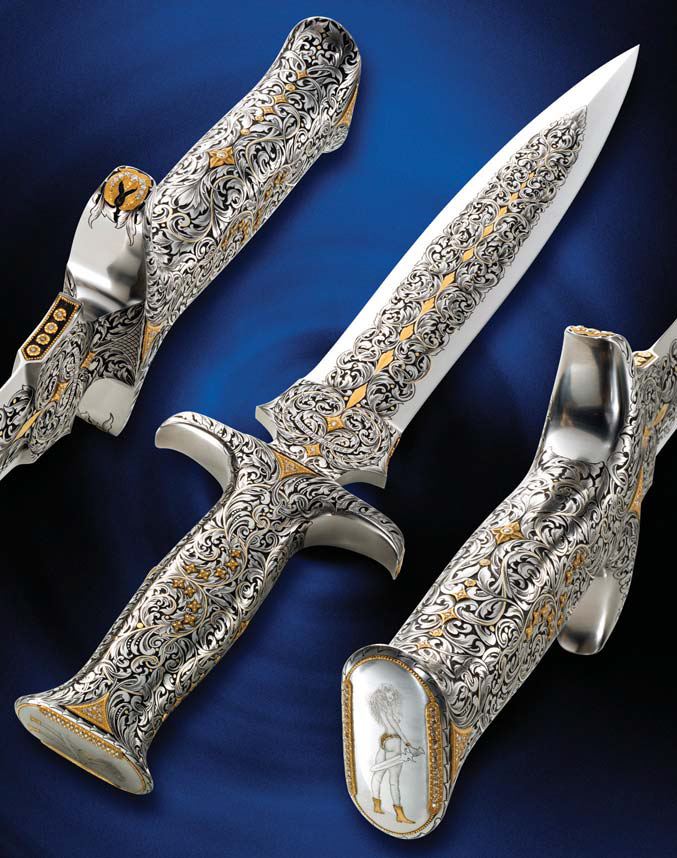
Edmund Davidson’s “Goliath” integral appears here state. The finish is hand rubbed, requiring hours of laborious work. The finished knife weighs in at 6 pounds, a fraction of the original bar’s weight. Jere Davidson did the spectacular engraving. (PointSeven photo)

Are Integral Knives The Strongest Kind of Knife?

Is an integral knife inherently stronger? According to our gurus, strength in numbers—of parts, that is—is not necessarily applicable here.

“The concept is so much different it changes up the whole equation,” knifemaker Edmund Davidson states. “A hard-use integral knife is stronger than a typical fixed blade. There’s nothing to go wrong. That’s not to say some great [non-integral] fixed blades aren’t being made, but you can’t get any stronger than one big chunk of steel.”

“An integral knife is theoretically stronger, but I’ve never had one of my standard knives break at the guard junction through regular use, either,” knifemaker Marcus Lin says. “I destruction-tested one of my Loveless fighter designs several years ago and it took numerous overhead slams from a 50-pound slab of concrete to break it.

“In terms of getting the job done there’s no difference in either method of construction, as both will result in a knife that will last generations. But I can see the allure for the integral knife because of the time and additional skills involved in making it, which some customers can appreciate.”

Integral knife photo examples
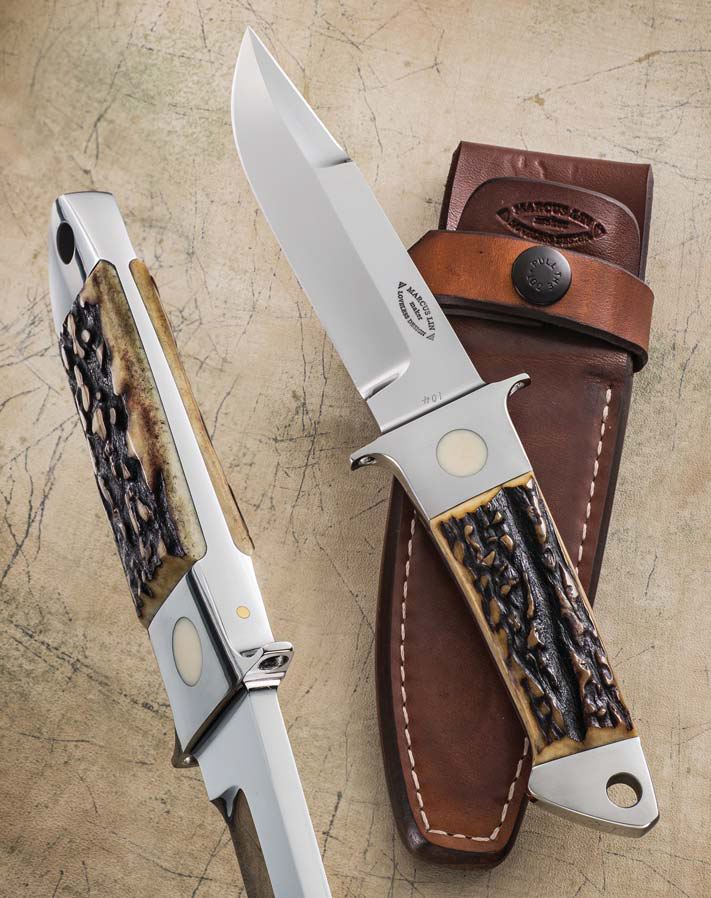
Marcus Lin does the Bob Loveless legend proud with this send-up of the famed integral Loveless Chute Knife. The steel is mirror-polished D2 with a satin finish on the flats of the bolsters. Scales are Sambar stag and a synthetic ivory plug sets off the bolsters. (PointSeven image)

What Is An Integral Knife?

Integral knives, short of the addition of handle scales, are literally sculpted from one piece of steel. Making a knife in this way presents difficult challenges not found in making knives in separate parts, and soldering or screwing them together.

Imagine grinding not only the blade with all its intricacies, but the handle, guard and pommel from one solid piece of steel and sculpting it to perfection. Such a knife is called an integral and any knifemaker who’s ever made one will tell you it’s a whole new ballgame.

How Integral Knives Are Made

“The primary difficulty for me is getting rid of the stock,” Lin relates. “You start out with a couple pounds of tool steel and the finished knife is several ounces. Bob [Loveless]‘s original integrals were made on his horizontal mill. I use a full-size Jet [Bridgeport clone] vertical milling machine, angle grinder, band saw and my 2×72 grinder to make mine. I try to make them as close as possible to Bob’s originals.”

Davidson makes no bones about the difficulty he faces in constructing a one-piece knife.

Integral art knives
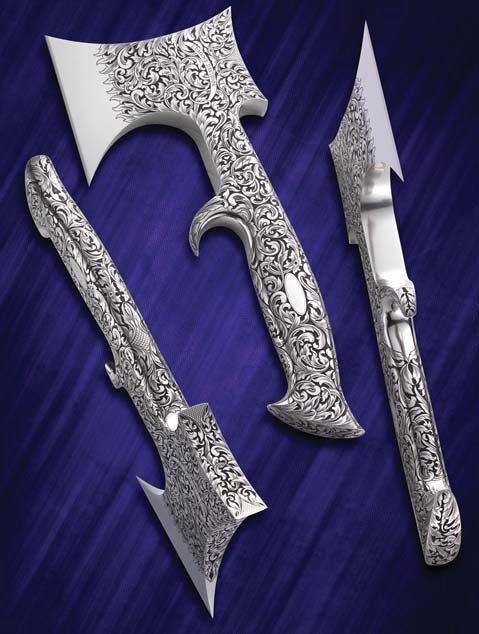
Several views of the “Psycho-Tron” integral hatchet from Edmund Davidson’s Safari Trio appear here. This monster was cut from a 7/8-inch-thick piece of CPM 154 stainless steel. Jere Davidson engraved it. (PointSeven image)

“It takes tenacity to build an integral,” Davidson stresses. “You start with a block of steel instead of a strip. You must have the equipment to saw the knife out and machine it. You’re working with all the basics that go into a complete knife in one single piece of steel. The complexities are physically and mentally demanding, and it’s very labor intensive because of the vast amounts of filing and sanding—not to mention hand rubbing the finish.

“There are so many aspects of making an integral that are not associated with making a standard knife.”


See More Incredible Knives at BLADE Show

BLADE Show tickets online

Join us each June in Atlanta for the world’s largest and best knife show. Go to the BLADE Show website here.

Advertisement

Must Read Articles

Read this before you make a knife

Knifemaking 101 – Read This Before You Make a Knife

  by Wayne Goddard My experience has taught me that there's nothing like digging in and getting started. I've often said the hardest part of the...
how to forge damascus steel

How to Forge Damascus

Advertisement
Advertisement