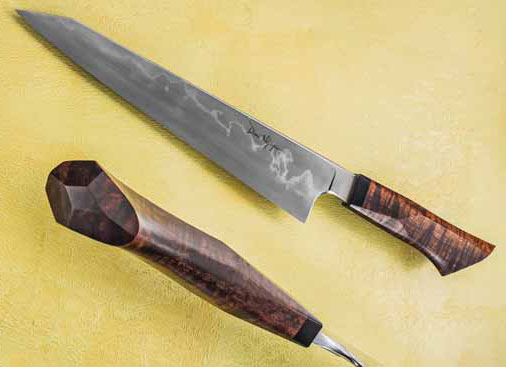
What do professional chefs look for in a chef’s knife? We asked two pro chefs, both fans of knifemaker Don Nguyen. Their answers are instructive not only on Nguyen’s work but chef’s knives in general.
“Thin Behind the Edge to Win”
Kolter Livengood is a chef at Brightwok Kitchen, “a veggie-focused, Asian inspired restaurant” in Chicago. Detail and aesthetics, with an equal emphasis on testing, are some of Livengood’s requirements in a chef ’s knife.
“A great deal of consideration is given to the ‘knife life’ or how the blade will be sharpened away over time,” he observed. “How the knife tapers both from handle to tip and spine to edge give the ability to maintain that geometry for 20 to 30 years depending on use and original blade size, making the appropriately high-priced tool seem very affordable over time.
“Don’s knives tend to be thicker at the spine, yet taper to being extremely thin behind the edge. This seems simple but it’s the subtle convexity from spine to edge that gives the knife its incredible feel when cutting. The thick spine gives the knife weight, a weight that by no means makes the knife heavy, and assists with downward momentum, which makes a huge impact on how the knife feels when cutting. The spine is also perfectly rounded, which, when combined with its thickness, makes it extremely comfortable and less damaging to the hand. The convexity aids in separating the food that’s being cut from the bulk, and since the blade is not flat, foods like potatoes and cucumbers don’t annoyingly suction or stick to the side of the knife when chopping.
“‘Thin to win’ should be amended to ‘thin behind the edge to win,’ as I much prefer a knife with heft and zero spine flex to the chef’s knives with 1-to-2-millimeter spine thicknesses popular from 2009 to 2012.”
Single-Beveled Knives for the Win
Taro Kobayashi, a chef at Mame, a sushi restaurant in Eugene, Oregon, uses Nguyen chef’s knives.
“The short gyuto I have at home for everyday tasks from poultry and fish butchering to dicing vegetables,” Kobayashi noted. “It is just a good, all-around bruiser. It is a bit thicker for a Don knife but I really enjoy it since I can just ‘go ham’ with it. Ha-ha! That almost sounded like a kitchen pun. Sorry.”
Kitchen standup comedy notwithstanding, Kobayashi’s favorite Nguyen chef’s knife is a 240-millimeter model of W2 tool steel and a lightning-strike carbon fiber handle.
“I use it to slice fish and other proteins while making sushi,” the chef noted. “Even though I am a bit old school when it comes to knife use and love single-beveled knives for fish slicing and sushi preparation, I can’t help but use this one sometimes. It’s easy on the hands, easy to sharpen and takes a keen edge. I was a bit worried about the handle shape until I used it. It’s one of the best designs aesthetically, but you would not know how good it feels until you get it in hand and abuse it.”
the expansion to the new John A. Williams Ballroom
the reduction in additional exhibitor badges sold to exhibitors
Let’s examine both.
Expansion
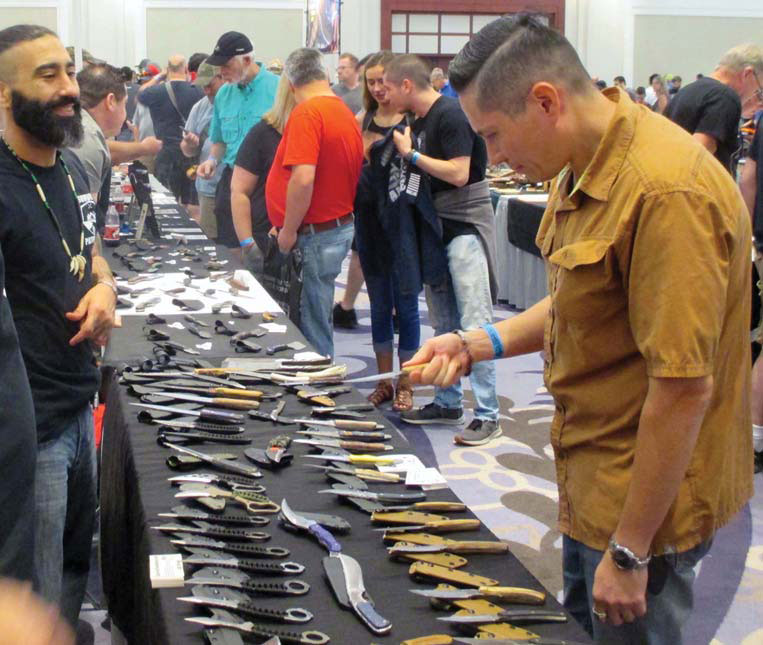
A record number of exhibitors—950+—required an expansion of the show to the adjoining John A. Williams Ballroom, which was abuzz with activity much of show weekend.
With the number of exhibitors growing to a record 950+ this year, the show hall simply ran out of space. Expansion was the most viable option, thus the move to add exhibitors in the adjoining John A. Williams Ballroom. While a number of exhibitors complained about the move due to it separating them from the show hall and how it required more walking for patrons to get to the exhibitors’ tables and booths, the ballroom was extremely busy most of the weekend. Whether it was a real success or not will have to wait between now and next year’s show to see if the ballroom fills up with exhibitors again. The bet here is it will.
Exhibitor Badges
Exhibitors buy additional exhibitor badges to get their helpers that assist them in assembling their booth and table displays, etc., into the exhibitor areas early on Thursday and early Friday morning and early afternoon before the show opens to the general public. Such helpers are crucial to the exhibitors to get their displays ready for the show.
Of course, the exhibitors setting up in the exhibitor areas have their display knives with them. Meanwhile, there is a large number of knife enthusiasts that are not helpers who, one way or another, obtain some of the additional exhibitor badges, get into the exhibitor areas early, and try and buy the best knives before the show opens to the public.
Combined with historically long patron lines, an excess of exhibitor badge holders almost resulted in a delayed opening of BLADE Show 2017.
When the BLADE Show first started selling additional exhibitor badges to exhibitors years ago, not that many exhibitors and others tried to obtain so many of them—particularly not in the numbers in recent years. It was only a matter of time before the buying of the additional exhibitor badges became a problem, and that threshold was reached at BLADE Show 2017.
It was then that so many holders of additional exhibitor badges were in the show hall immediately prior to the show opening to the public that we—by “we” I mean BLADE Show officials—were notified we would have to delay the show opening. Why? Because the hall was so full of people already that the Cobb Galleria Centre fire marshal said to admit the historically long lines of patrons that were waiting to get in would create a fire hazard. In other words, if there were to be some kind of emergency requiring the show hall to be emptied promptly, too many people in the aisles trying to get out could result in injury to them—or worse.
To delay the show opening would cost exhibitors many thousands of dollars in sales and cause a major inconvenience to show patrons that had traveled from all over the world to attend. Luckily, show officials were able to alleviate the situation to where the fire marshal granted permission to open the show on time.
As a result of the near fiasco, show officials had no choice but to reduce the number of people in the show hall—many of whom were holders of the additional exhibitor badges—before the show opens. And the best way to do that was to reduce the number of additional exhibitor badges available for sale for BLADE Show 2018, which we did. The result was the number of people in the show hall was reduced enough so that opening the show on time this year was not an issue.
Does the reduction impair some exhibitors’ ability to set up their displays? Undoubtedly. However, the alternative of having the show opening delayed or the show possibly cancelled altogether would be much worse.
Looking Ahead
Though the changes may seem questionable initially, we believe they will be best for the future growth of the BLADE Show. With the continued growth of the show come new challenges. However, we will continue to strive to make this the best show ever for exhibitors, patrons and knife enthusiasts everywhere.
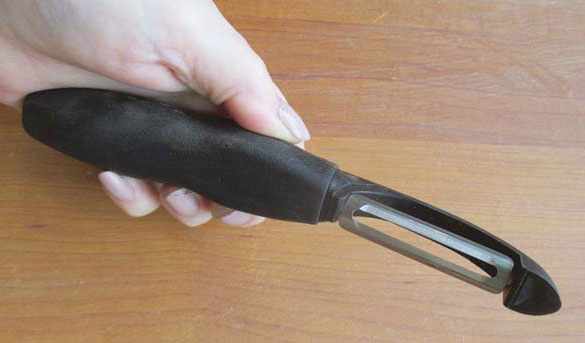
On May 3 in Scotland, a man was arrested for carrying a potato peeler. That’s right, a potato peeler. He was charged for carrying “an article which had a blade or which was sharply pointed, namely a potato peeler.” Maximum penalty: four years imprisonment.
Knife Bans Are About Control
Knife bans, like gun control, are not about saving lives but controlling them—including controlling the economically disadvantaged, people of color or others the state wants to keep “in their place.” (The potato peeler violator, by the way, was said to suffer “from significant learning difficulties.”) More to the point, knife bans are designed to keep the people down.
The inequality of policing and prosecuting for possession of gravity knives by black and Hispanic men is most striking in NYC’s Union Square. There, according to Legal Aid, such men consist of only 11.5 percent of the population but account for a whopping 52 percent of those arrested and prosecuted for gravity knife possession. Moreover, the New York County District Attorney’s Office (DANY) exacerbates things by often classifying gravity knife possession as a felony, a charge that carries up to seven years in prison. From July 1-Dec. 31, 2015, DANY charged 65 Legal Aid clients with felony gravity knife possession—four times more often than all other NYC prosecutors combined!
Magnifying the inequality of the situation is the fact that NYC chain retailers sell folding knives designed and marketed as work tools, yet when Legal Aid clients are found with those knives in their pockets, the knives are suddenly “illegal” and the clients are arrested as criminals. Such inconsistent application of the law ensures a regular money flow to the local big box stores via sales revenues and to government through sales taxes and fines, while simultaneously keeping the victims “in their place.” As Doug Ritter of Knife Rights noted, knife bans help ensure that the circle of inequality remains unbroken.
“Repealing knife bans removes another excuse to engage in such biased arrests and prosecutions for the innocent carry of some otherwise arbitrarily illegal or allegedly illegal knife,” he observed.
Great Britain, Canada Lead the Way on Knife Bans
When knife bans disproportionately impact minority populations, something is wrong.
Meanwhile, despite—or perhaps because of—its long-time ban on guns, for the first time in over 200 years London recently overtook NYC in terms of the murder rate. Though it is currently illegal in Britain to carry a knife longer than 3 inches in public “without good reason,” in early April London Mayor Sadiq Khan infamously said, “No excuses: there is never a reason to carry a knife. Anyone who does will be caught, and they will feel the full force of the law.”
No excuses: there is never a reason to carry a knife. Anyone who does will be caught, and they will feel the full force of the law. https://t.co/XILUvIFLOW
The vast majority of those who will feel the full force of Khan’s edict as well as that of knife bans in general are the economically and other of the disadvantaged, or the simply not quite so advantaged. What better way to keep them all down than to arrest, fine and jail them for carrying knives?
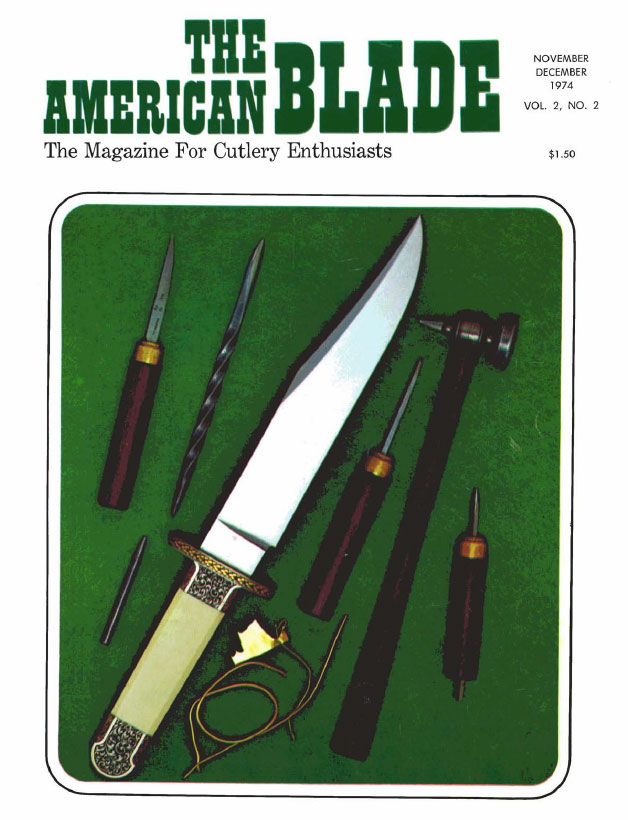
Known as The American Blade at the time, the magazine was traded by then-publisher Jack Marvich to Wally Beinfeld for a racehorse—or at least that’s what Beinfeld reportedly told one of his successors, former BLADE publisher and editor and BLADE Magazine Cutlery Hall-Of-Fame® member Bruce Voyles.
The cover of the November-December 1974 issue of The American Blade.
Beinfeld ran what was probably the country’s premier antique arms show and, in part to help promote it, published a gun magazine called the Arms Gazette. The Gazette had a large editorial, graphics and production staff that was more than big enough to produce a second magazine. Hence, Beinfeld decided to add a knife publication—The American Blade—to his, ahem, stable.
However, there was one problem. Marvich and Beinfeld could not make a deal, even if, apparently, the racehorse was at least part of the payment.
“They were sitting there talking about it one day and the more they talked, the worse it got,” Voyles recalled Beinfeld’s version of what happened.
Beinfeld and Marvich were making no headway at all. Finally, Beinfeld stood to call the whole thing off and leave when in walked Marvich’s wife.
“Marvich looked at her and said, ‘Honey, the deal’s not going to go through, we just can’t come to terms.’ And she looked at him and said, ‘What about my racehorse?’ And in Wally’s words, ‘So I sat back down.’ From what I understand,” Bruce recalled, “I don’t know if the racehorse was just part of the deal or what, but I believe it was the entire deal. That was the way it was told to me.”
And, thus, Beinfeld bought The American Blade. Bruce said he can’t recall the horse’s name, which is understandable considering how long ago it was. Meanwhile, Mr. Beinfeld passed away a few years back, and we don’t know the whereabouts of Mr. and Mrs. Marvich.
As for the horse, here’s hoping he was put out to stud and lived happily ever after. (Insert your impression of a horse whinnying here.)
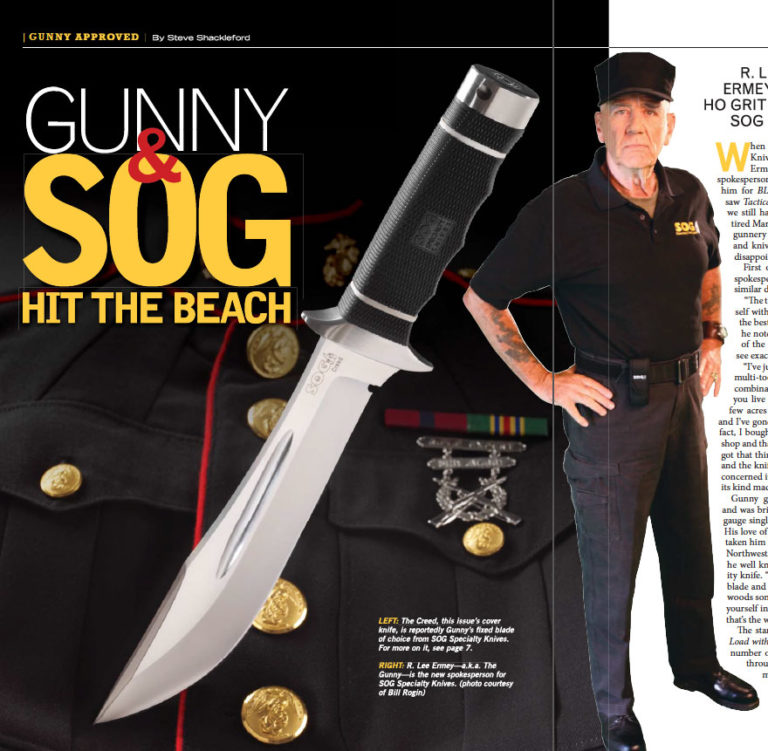
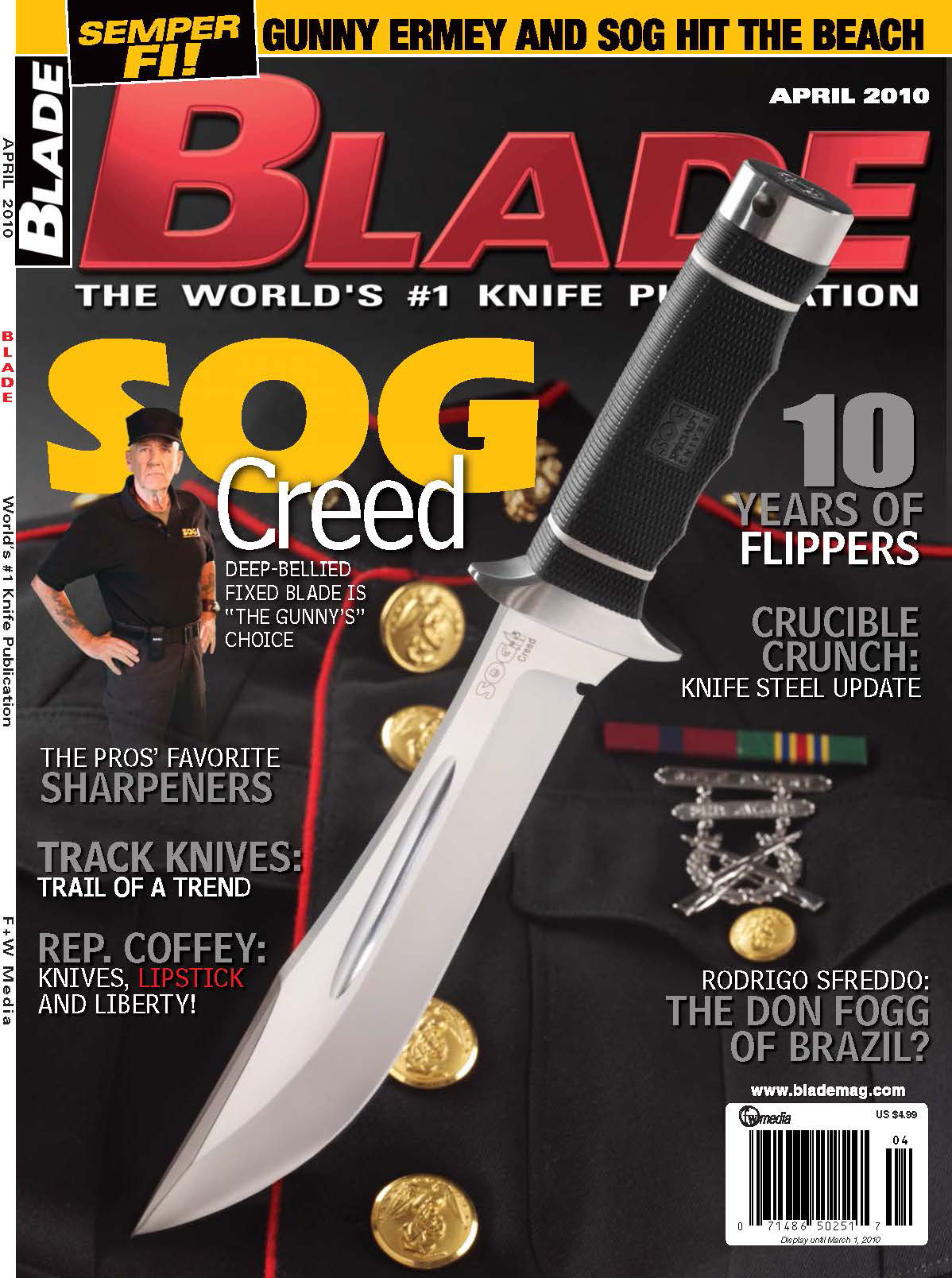
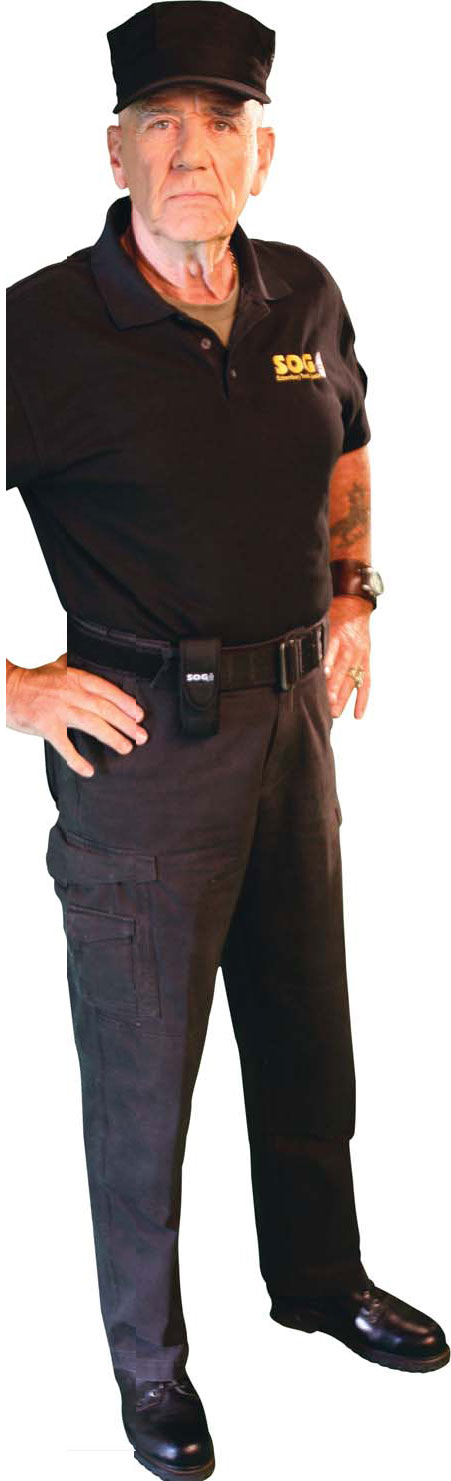
R. Lee “The Gunny” Ermey appeared on the cover of the April 2010 issue of BLADE.
Editor’s note: The following article is from the April 2010 issue of BLADE. At the time, R. Lee “The Gunny” Ermey had signed on as a spokesperson for SOG Specialty Knives & Tools. Here he talks with Steve Shackleford about knives and his career in films.
Ermey, best known for his portrayal as Gunnery Sgt. Hartman in Full Metal Jacket, died April 15, 2018, at age 74.
The Gunny, the Knife Enthusiast
R. Lee “The Gunny” Ermey made frequent appearances at BLADE Show on behalf of knife companies.
Gunny comes by his love of knives honestly. He has over 100 custom and factory pieces in his collection, including his great grandfather’s pocketknife. First and foremost, though, he uses his knives.
“I’m a firm believer that the only thing a dull knife is good for is cutting yourself, because that’s exactly what you do with a dull knife,” he said. “I believe a man ought to be able to shave with that knife and after he shaves with it, he ought to be able to fold it up and then go chop a tree down.”
He also keeps up with the news and is outraged at the way knives are portrayed by the media.
“What really upsets me, I’ve seen this young Eagle Scout [Matthew Whalen],” Gunny began. “Because he had a knife, a little pocketknife in a survival kit in the trunk, they put him out of school. What the hell kind of a survival kit have you got without a knife? You’d be a dead man.
“When I grew up, I was probably 6 years old, I started carrying a pocketknife and I’ve carried one ever since. It’s a tool, you know. I grew up on a farm and I went to school and I can’t ever recall any kid pulling his pocketknife out at school and wanting to do harm to another kid. Times have changed. We need to start taking responsibility for our actions, we need to teach our children a bit of discipline.”
Gunny was just getting warmed up.
“My Swiss Army knife, what, they’re 2 inches long these little guys. I travel constantly, and I’ve had about 20 of those little knives taken away from me at the airport. I finally took one and just broke the knife blade off it and there’s still a big debate if I can go on board because there’s a scissors on it.
There’s a toothpick and a tweezers and I use those tools constantly. After a meal I have to use that toothpick. Society’s gone to the dogs as far as I’m concerned. They need to pull their heads out of their butts and realize that a Boy Scout carrying a pocketknife that’s got a spoon and a fork on it is just a tool, it’s not a weapon.”
A Standup Guy
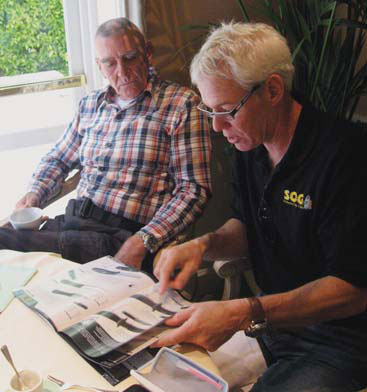
Spencer Frazer (right), SOG founder and president, and Gunny go over the company catalog. (photo courtesy of Bill Rogin)
Gunny enlisted in the Marines in 1961 and was medically retired as a staff sergeant in 1971 for injuries incurred during his tours, which included 14 months active duty in the Vietnam War, and, as you might guess, as a drill instructor (at the Marine Corps Recruit Depot in San Diego and Parris Island, South Carolina). In ’Nam he carried his issued Ka-Bar USMC fighting/utility knife, using it for everything from cutting threads off his uniform to opening “C” rations. He also carried a pocketknife and, of course, his trusty machete.
He said many of his fellow Marines bought their own fixed blades and folders in addition to the issue Ka-Bar.
Did he ever use a knife as a weapon over there?
“No. And I hope I never have to. I would just leave the area,” he laughed. “I would go get my gun. I don’t care for the up-close-and-personal stuff.”
Like most fresh out of the military, Gunny was unsure of what to do after his discharge, so it came as no surprise when he fell back on his Marine background.
“I didn’t have any formal training that would improve my lifestyle and I looked around and thought, what can I do, and I found out,” he recalled. “I was basically pretty much a standup comic when I was in the Marine Corps. I was an instructor, and in order to be a good instructor you have to be able to keep the troops awake. It’s almost like being a standup comic.
Gunny made a number of visits to the troops in Iraq and Afghanistan for the U.S. Navy Department of Morale and Welfare. Here he is with a group of Marines in front of Saddam Hussein’s palace in December 2008. (Rob Scott photo)
“So, when I retired, I wrote a couple of scripts and I went off to Hollywood. I did some of the comedy clubs and was pretty successful at it, and then I found out they were going to start shooting a Vietnam war movie in the Philippine Islands.”
Gunny boarded a military transport, flew to the Philippines where The Boys in Company “C” was being filmed in 1978, landed the part of a Marine drill instructor and his acting career had begun.
However, it was 1987’s Full Metal Jacket that, as Gunny put it, “kicked all the doors open.”
In it he established his onscreen persona as the gung-ho drill instructor, Gunnery Sgt. Hartman.
Not only did the role earn Gunny a nomination for a Golden Globe Award as Best Supporting Actor, it played a key part in his receiving an honorary promotion to gunnery sergeant from the Commandant of the Marine Corps. According to Wikipedia, it made Gunny the first retired military member in the history of the Corps to be promoted. Wikipedia, it seems, needs to check its sources.
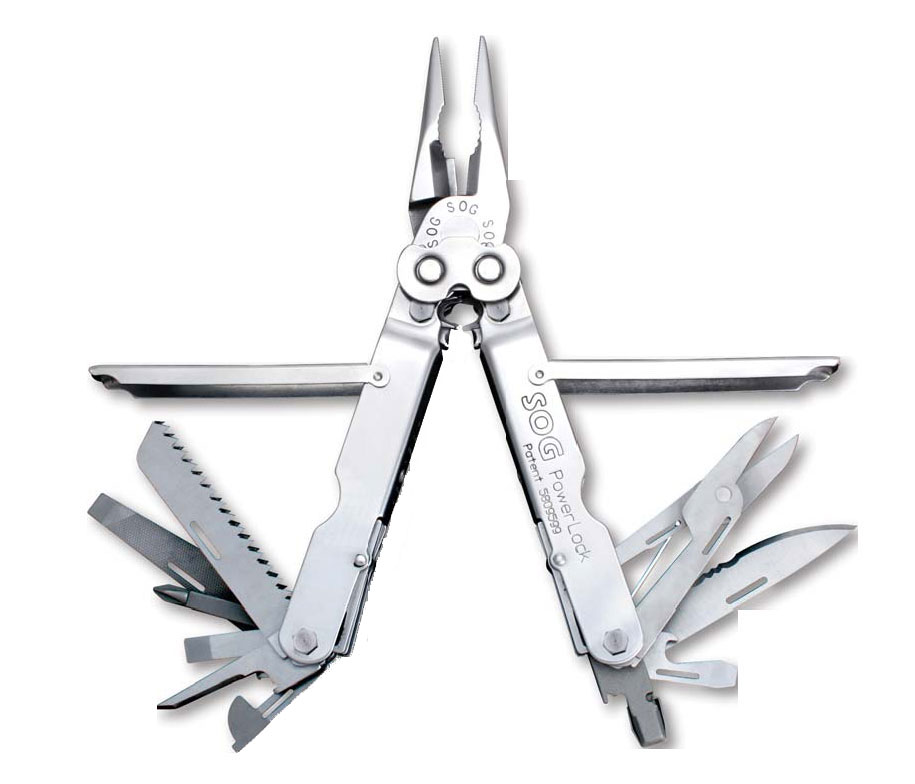
Gunny carries a SOG PowerLock multitool. It includes a pliers/gripper, hard wire cutter, crimper, double-toothed wood saw, a partially serrated blade, three-sided file and more.
“I’m not just the first but the only,” retired member in Corps history to be promoted, Gunny noted with pride.
He continues to be active in supporting young Marines, making morale-building visits to Iraq and Afghanistan when he can, as well as Guantanamo Bay and Okinawa, Japan. In between comes his acting and promotional work.
“I spend 90 percent of my time working with the military,” he said. “The other 10 percent I have to do shows and movies and whatever it takes because I have to support the 90 percent.”
The new SOG spokesman would seem to have his priorities in order. And, luckily for his new employer, SOG is one of them.
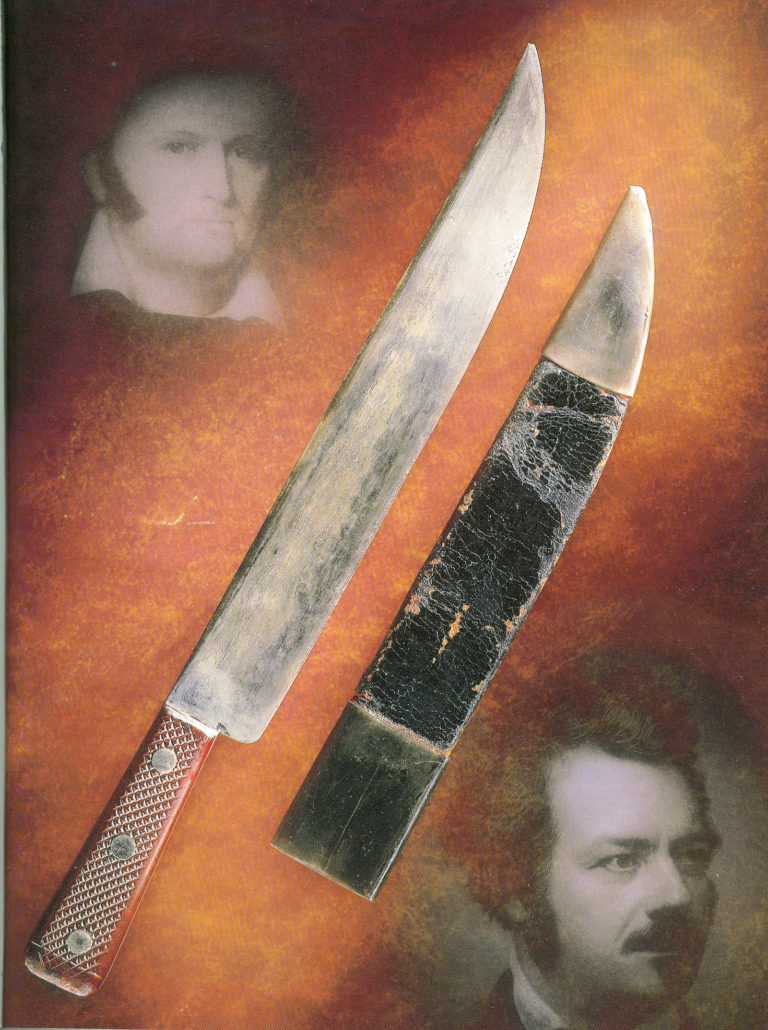
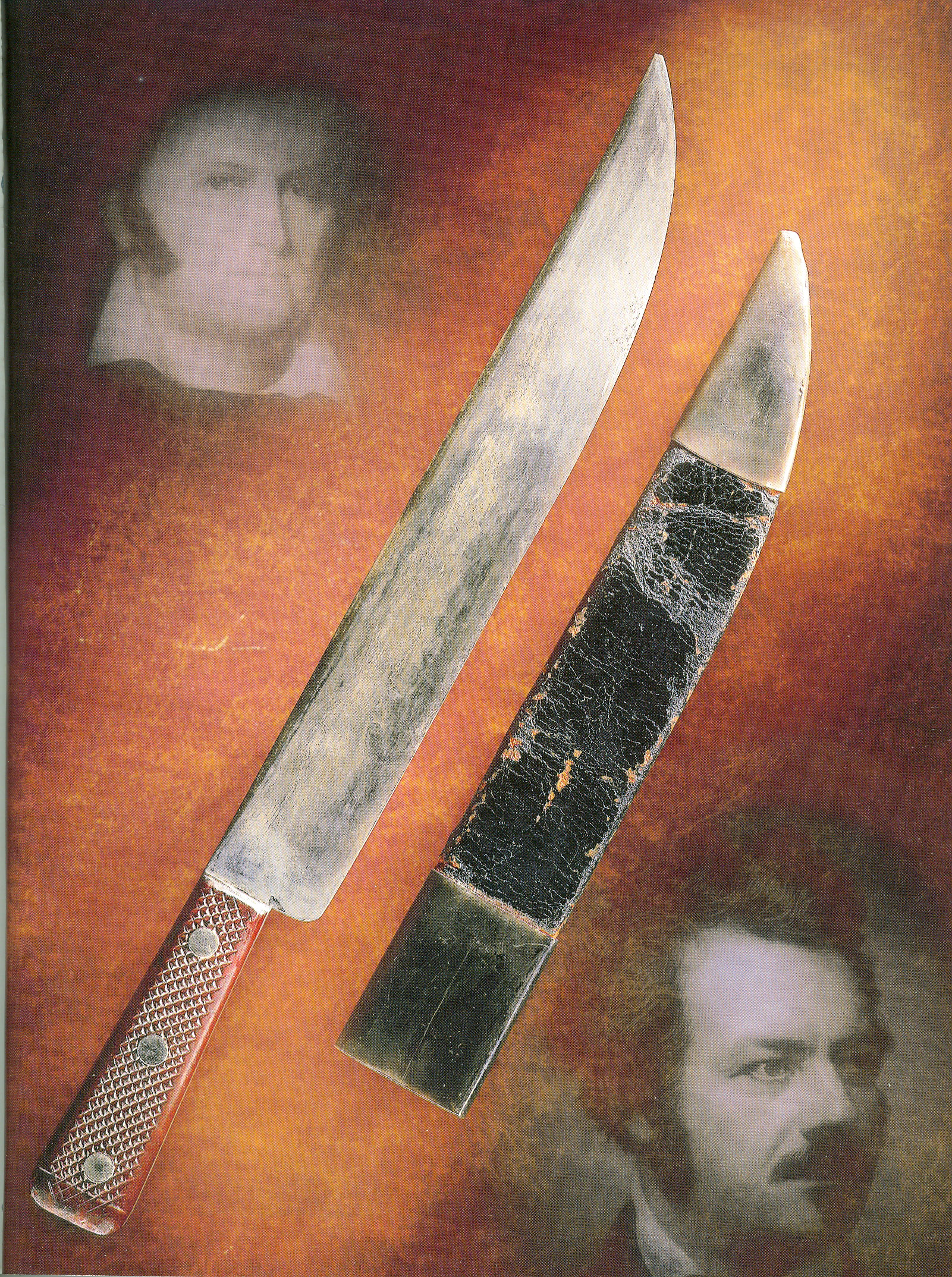
Some say that Jim Bowie (upper left) personally gifted a bowie knife (above) to Edwin Forrest (lower right). Jim Batson, one of the world’s leading bowie knife authorities, shares his findings on the subject.Jim Batson
BLADE recently sat down for an extensive interview with Jim Batson, one of the leading bowie knife researchers in the world. The interview was recorded on video, which can be seen below, and consists of two parts.
Most significantly, Batson reveals what he discovered about the controversial Edwin Forrest bowie knife, claimed to be gifted to the 19th Century actor by James Bowie himself. That can be seen at 25:06 in the video.
Look below the video for further timestamps and summaries.
Batson Looks Back on 30
ABS master smith Jim Batson has been conducting his Batson Bladesmithing Symposium for three decades and just completed the 30th one April 8 at the Tannehill Ironworks near Bessemer, Alabama.
Join us for an exclusive interview with Batson as he talks about those 30 symposiums, the major industry changes he’s seen in his bladesmithing career, his induction into the BLADE Magazine Cutlery Hall of Fame in 2017 and what the future holds for this icon of the forge.
Use these timestamps to help you navigate the video.
ABS master smith Jim Batson has scoured the Bowie Trail from the Southeast USA to Texas for decades, researching anything and everything about James Bowie and bowie knives.
Watch the video above to see Jim recount the highlights of his research, including his book about the Sandbar Fight where the bowie knife legend was born, whether James Black really made bowie knives—including those in the Carrigan style—whether the Edwin Forrest bowie actually belonged to James Bowie and more in this exclusive BLADE® interview.
12:27 Contributions to bowie knife history research
15:01 Surprising finds
15:53 New facts about the 1827 Sandbar Fight
17:57 James Black controversy
23:14 The Carrigan knives 25:06 The Edwin Forrest “Gift” bowie knife 27:22 Where did the Forrest knife come from?
30:47 End
Near-flawless grinds, captivating materials, curvaceous lines, snug fit and finish, and slick mechanisms help ensure today’s hottest makers’ hottest custom knives are cool cutters to covet.
While determining such knives is almost impossible to do without at least a smidgeon of subjectivity, those who sell knives professionally have their finger on the pulse of who some of the makers are and which of their knives is hottest. If the sellers don’t, they won’t be in business for long.
We tapped four of today’s successful knife sales operations—purveyor Daniel O’Malley of Bladegallery.com, purveyor Les Robertson of Robertson’s Custom Cutlery, and Sako Rouchanian, owner of Recon 1, a retailer of knives and gear—for their opinions on the matter.
Meanwhile, don’t be surprised if one or more of the mesmerizing cutters they identify activate your salivary glands. Covet away!
Poison
(Claudio Sobral image)
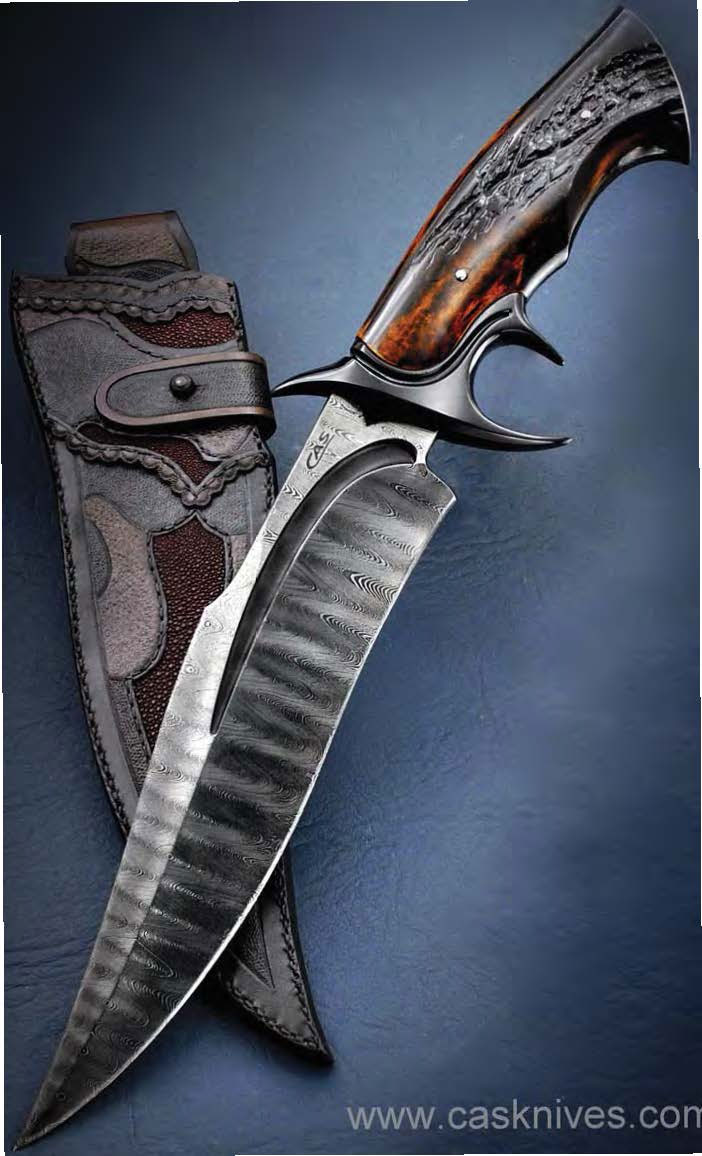
Poison by Claudio and Ariel Sobral of CAS Knives offers up what purveyor Les Robertson calls the Sobrals’ signature style: big, bold and striking! The carved integral guard and sub-hilt are blued carbon steel.
Handle: Amber stag
Blade and overall lengths: 10 and 15.5 inches
Blade steel: Ladder pattern damascus
Maker’s price: $3,000
111
(Recon 1 image)
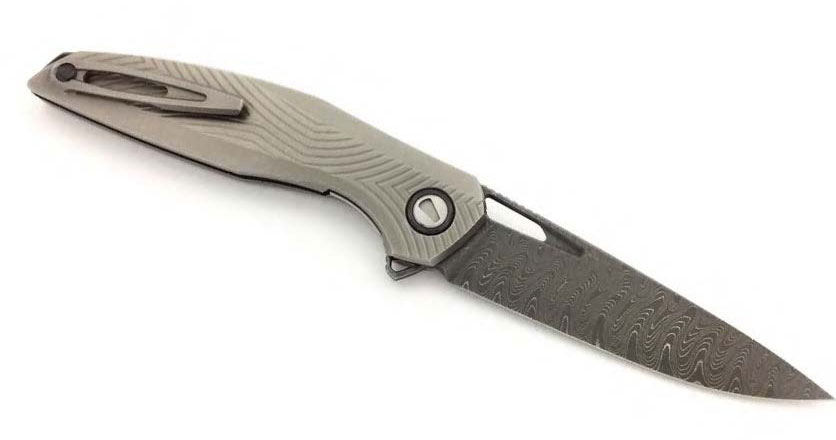
The Double Row Roller Bearing System used exclusively on such custom knives as Sergey Shirogorov’s full custom 111 flipper makes the knife’s action incredibly smooth.
“It flips open like a rocket,” stated Sako Rouchanian of Recon 1.
Blade and closed lengths: 4.37 and 5.25 inches.
Blade steel: Chad Nichols boomerang damascus
Handle: stonewashed titanium
Maker’s price: Auction only
Recon 1’s price: $12,000
Ronin
(Steel Addiction Custom Knives image)
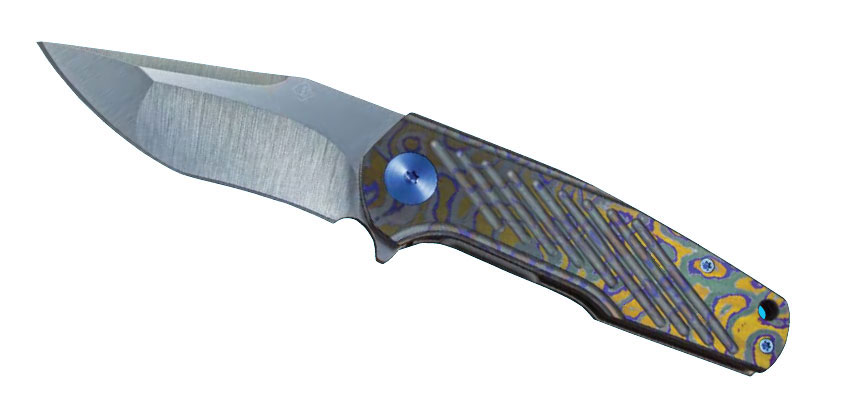
Jim Burke’s Ronin is a compact tactical flipper folder with a unique pocket-friendly footprint. The modified tanto blade is Stellite® and pivots on ceramic bearings. The frame is milled Zircuti—zirconium and Mokuti—with blue anodized hardware. The clip is Zircuti, too.
Weight: 5.5 ounces
Blade and closed lengths: 3.25 and 4.25 inches
Maker’s price: $1,800
L51 Compact
(BladeGallery.com image)
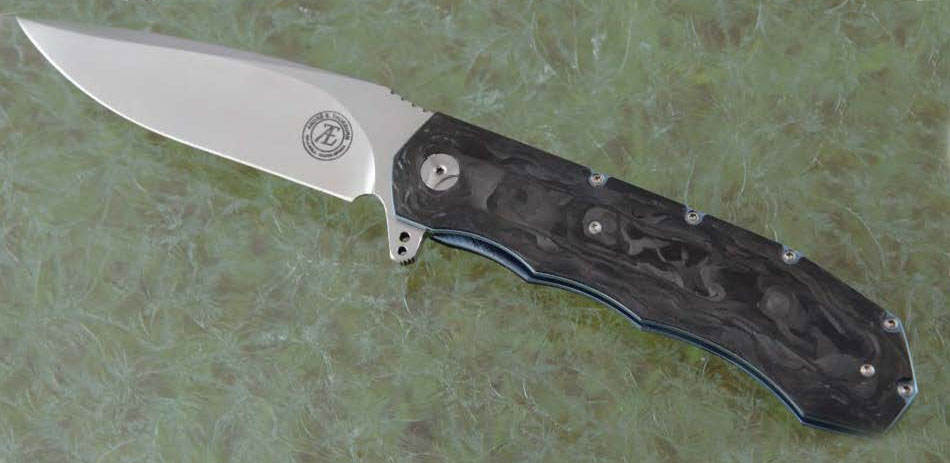
As purveyor Daniel O’Malley observed, over the past couple of years tactical folder collectors who had gone by the creed of “bigger is better” have been opting for sleeker, lighter, thinner and more pocket-friendly versions for their EDCs. The L51 Compact by Andre Van Thorburn is such a knife.
The carbon fiber handle of Ray Laconico’s EZC flipper features a milled “speed hole” pattern.
“When it comes to building a handmade tactical flipper knife for everyday carry, Ray Laconico gets it,” noted Sako Rouchanian of Recon 1.
Blade and closed lengths: 3 and 3.87 inches
Maker’s price: $750
Recon 1’s price: $1,100
A2/A6
(Steel Addiction Custom Knives image)
The A2 framelock folder by South Africans Andre Van Heerden and Andre Thorburn has been hot for well over a year now and shows no signs of cooling off. The A2/A6 is their collaboration with Tashi Bharucha in a blade of polished Damasteel damascus, and hand-rubbed titanium frames in the Omega sign with silver lightning-strike carbon fiber inlays.
Weight: 4.9 ounces. Blade and closed lengths: 3 5/8 and 8 3/8 inches
Makers’ price: $1,500
Model 450 Ultra-Light
(BladeGallery.com image)
South African Des Horn’s Model 450 Ultra-Light gent’s flipper features a 2.75-inch blade of Damasteel stainless pattern-welded steel and a blue/silver carbon handle.
“It’s so slim and light [1.2 ounces] you won’t even know you’ve got it with you,” noted purveyor Daniel O’Malley. “With over 30 years making knives, Des Horn is one of the fathers of the South African knife industry, and his influence can be seen in many other makers’ work.”
Horn’s price: $600
BladeGallery.com’s price: $600
Hokkaido
(Recon 1 image)
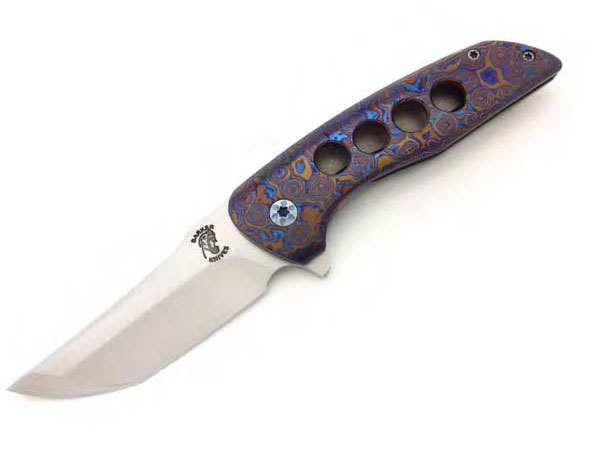
“Arguably [featuring] the best grinds in the tactical market, John Barker’s Hokkaido is the hottest tanto design in the tactical world,” noted Sako Rouchanian of Recon 1.
The Small Hokkaido flipper features a contoured rosebud pattern Timascus handle.
Sault Daug is the latest folder from Lee Williams. Equipped with a linerlock, it comes in both the maker’s Kick Stop and stud opener (pictured) versions. Blade and closed lengths: 3.5 and 4.75 inches.
Blade steel: handrubbed CPM 154
Handle: Carbon fiber scales and titanium standoffs
Weight: 4.7 ounces
Maker’s price: $2,250
Open-bid show price: $7,500
Piuma
(BladeGallery.com image)
The brother of custom knifemaker Willem Steenkamp, Kosie Steenkamp offers up the Piuma flipper in red lightning-strike carbon fiber.
“The blade is perfectly centered with silky smooth action,” noted purveyor Daniel O’Malley, “and easily opened with one hand using the ambidextrous flipper toggle.”
Blade and closed lengths: 3.4 and 5 inches
Liners: Jeweled and anodized titanium
Pocket clip: textured and anodized titanium
Maker’s price: $575
BladeGallery.com’s price: $575
Doctor Death Junior Flipper
(Steel Addiction Custom Knives)
Tom Mayo has been making knives 35 years and all of his anniversary knives have his XXXV anniversary logo.
The Doctor Death Junior Flipper has a 3 5/8-inch blade of handrubbed CPM 154 stainless steel and operates on the Ikoma Korth Bearing System. The framelock folder weighs 4.6 ounces and is 5 inches closed.
Maker’s price: $1,600
See More Photos of Custom Knives
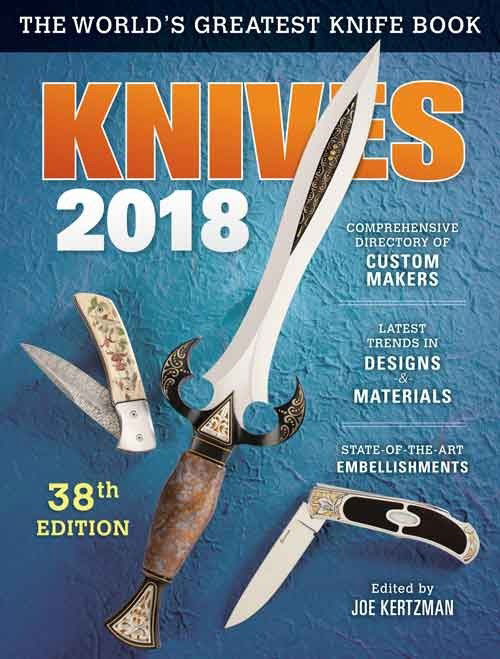
See beautiful, full-color photos of custom knives in Knives 2018.