Home Authors Posts by Steve Shackleford

Steve Shackleford

Tony Bose, Mel Pardue Inducted To BLADE Magazine Cutlery Hall Of Fame®

Two Longtime Knifemakers Join The Elite Of Cut

Tony Bose and Mel Pardue are the latest inductees into the BLADE Magazine Cutlery Hall Of Fame®. The two living legends of the custom knife industry were voted in by sitting members of the Hall Of Fame, and will be formally inducted at the BLADE Magazine Awards reception during the BLADE Show June 7-9 at the Cobb Galleria Centre in Atlanta, Georgia.

TONY BOSE

Tony Bose custom knifemaker
Tony Bose

When Tony Bose first started building knives, he asked a maker to share a knife pattern with him. When the maker refused, Tony decided that whenever anyone asked him for a pattern he would give it to him, and he always has, sending patterns all over the world.

Few have done more in mentoring and teaching their fellow makers through instruction and by example than Tony, who is perhaps the world’s best-known contemporary custom maker of traditional slip joints. It’s never been his mission to simply make knives. Instead, he aspires to “bring knives back from the dead.”

His love of knifemaking began in 1972, when he made his first custom fixed blade from an industrial hack-saw blade. As he put it, “I’ve been trying to make a knife that I’m completely happy with ever since. It hasn’t happened yet.”

He worked for years perfecting his skills before pursuing a full-time custom knifemaking career in 1990. His impact was quickly felt when he won Best Folder at the 1994 East Coast Custom Knife Show and also at the 1995 BLADE Show.

Tony Bose knifemakerIn 1998, Tony began working as a custom collaborator with Case. Since 1999, among the knives he has designed for Case are collaborations of vintage patterns made in limited quantities on an annual basis. One such offering was the Arkansas Hunter, winner of the BLADE Magazine 2008 Collaboration of the Year.

Tony’s a crowd favorite at Case consumer events, knife shows and swap meets across the country, and he willingly shares his techniques with other makers to keep the art of making traditional knives alive for future generations. He’s also taught classes on knives and knifemaking at BLADE University during the BLADE Show, and for many years made and donated knives for silent auctions at BLADE Shows to raise money for the old National Knife Collectors Association.

This past year, Tony was awarded the fourth annual Aldo and Edda Lorenzi Award at the BLADE Show for his many contributions as a mentor to knifemakers worldwide.

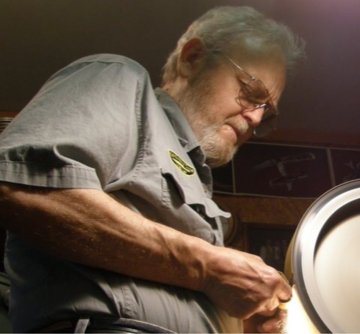
MEL PARDUE

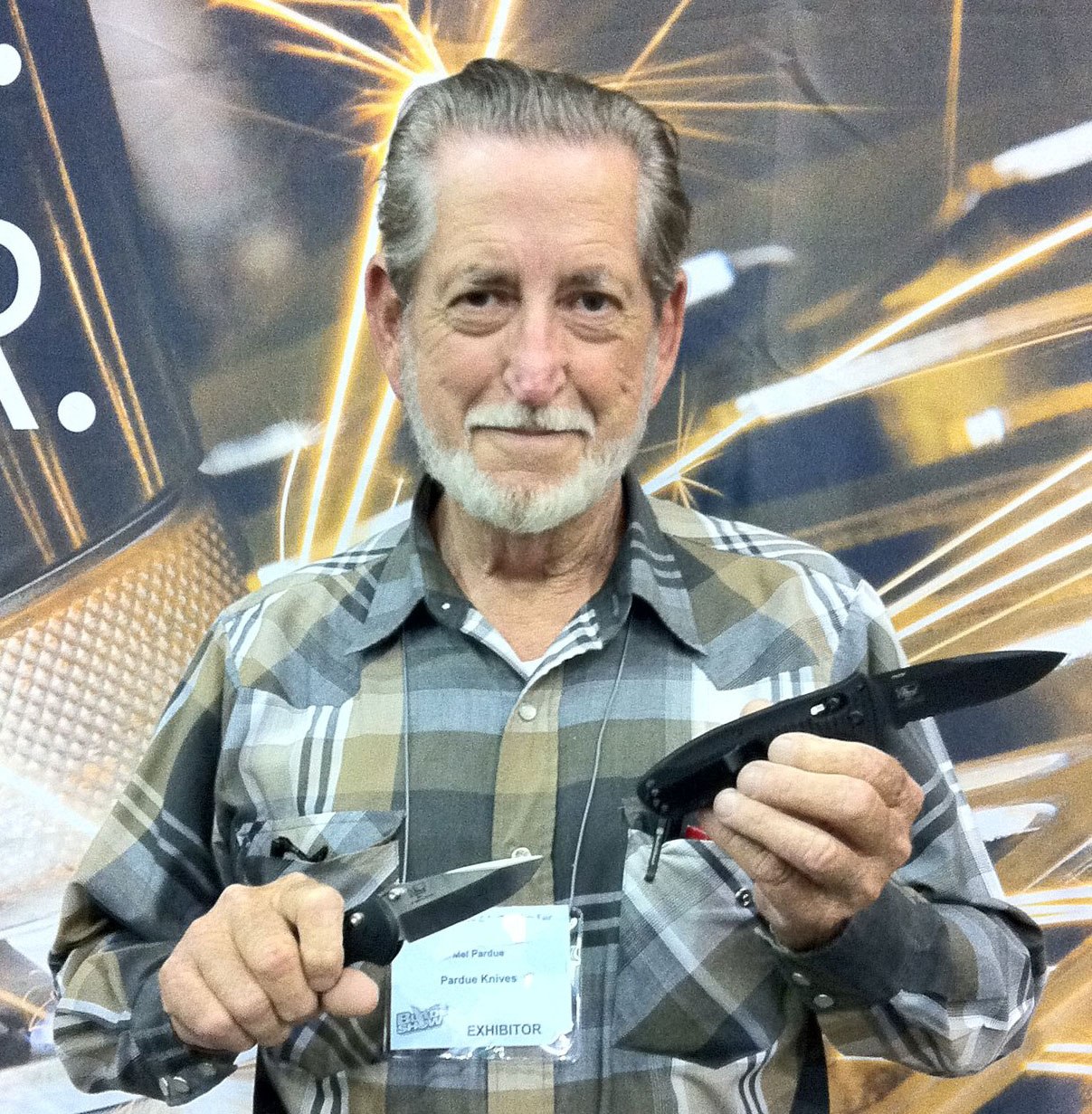
Mel Pardue custom knifemaker
Mel Pardue

Mel Pardue made his first knife in 1952 and has fashioned them on a regular basis since 1956. A voting member of the Knifemakers’ Guild for almost four decades, he served on the Guild’s board of directors in various capacities for 14 of those years, the final 10 as vice president. He received the Ron Little Award in 1992 and is a past winner of the Guild’s Red Watson Friendship Award.

He is the first person without membership in the American Bladesmith Society to teach at the William F. Moran School of Bladesmithing, where he conducted classes on how to make folders. He has taught the same subject at the Batson Bladesmithing Symposium, and has held seminars and classes in the Pardue shop for over 40 years. His numerous designs for Benchmade Knives have been among the company’s most popular and best-selling models for many years.

In 2016, Mel was presented with the BLADE Show’s Aldo and Edda Lorenzi Award for his outstanding work in teaching and mentoring his fellow makers in the art of building knives.

Mel Pardue knifemakerAs one nominator noted, “Mel exemplifies the pure definition of a custom knifemaker. He is a craftsman of the highest caliber who hand makes his world-renowned knives, one by one, without the use of modern technology. He embodies the highest level of personal and professional ethics.

In the nearly four decades I have known Mel, he has demonstrated a true respect for both fellow custom makers and unselfish dedication and love for his craft, sharing hard-gained knowledge and skills. He has helped dozens of up-and-coming knifemakers of all ages.”

A Look Back At BLADE Magazine Cutlery Hall of Fame® History

As these words are written, sitting members of the BLADE Magazine Cutlery Hall Of Fame® are making their nominations for who will be inducted into the Cutlery Hall Of Fame during BLADE Show 2019 on June 7-9 at the Cobb Galleria Centre in Atlanta. When you read these words those nominations will have been completed and the final balloting will be under way.

The entire process rekindles fond memories for this writer, most of which involve the Hall Of Fame ceremony itself that annually occurs during the BLADE Magazine Awards Reception the Saturday night of the BLADE Show.

Cutlery Hall of Fame
Bob Terzuola (left) presents Sal Glesser (right) with his BLADE Magazine Cutlery Hall-Of-Fame® plaque during the Hall-Of-Fame ceremonies 20 years ago at the 1999 BLADE Show.

The first such ceremony that stood out for me was in 1988 when A.G. Russell and Ken Warner inducted each other—with neither knowing at the time the other would be inducted as well! When each inducted the other the expression on the new inductee’s face was priceless, and that ceremony remains like no other before or since.

Hubert Lawell’s induction in 1989 was memorable for his bringing a copy of the old and now defunct EDGES pocketknife newspaper we used to publish up on the stage, holding it high in the air, and praising it and everything it/we did as the greatest thing for the knife industry since sliced bread. Never mind that many in the audience appeared unsure of what Hubert was saying in his low Tennessee drawl, at the end of his speech he had everyone on their feet cheering—though I’m not sure all of them were cheering because of what he said so much as he was finished saying it.

The 1993 inductions of Col. Rex Applegate, B.R. Hughes and Bruce Voyles were unique. They were the only inductions ever held outside the BLADE Show venue, specifically under a big canvas tent at Stone Mountain Park near Atlanta. Bruce became the first-ever member inducted by acclimation of the membership, which was a pleasant surprise to him. Not to be outdone, upon his induction B.R. uttered perhaps the best acceptance line ever.

“I don’t know that I deserve this Hall-Of-Fame plaque,” he deadpanned, “but I’m not giving it back!”

Following it all everyone retired to a giant fireworks presentation courtesy of the park.
Spyderco CEO Sal Glesser’s induction in 1999 was particularly memorable. Not only were we able to keep Sal from knowing until the last minute that he would be inducted, but Mrs. Gail Glesser was able to keep secret from him that she would be there, too.

best knifemakers in the world
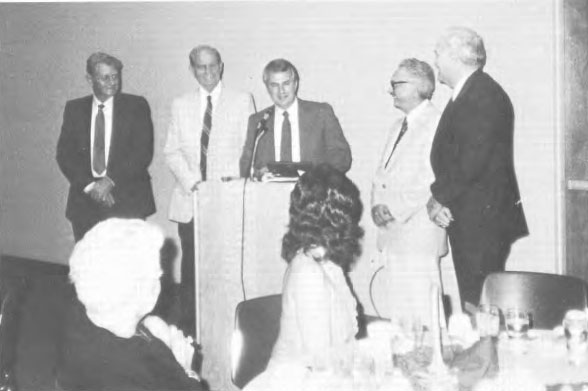
Al Buck, M.H. Cole, Bill Williamson and Jimmy Lile receive their Hall of Fame awards from James F. Parker at the BLADE Show banquet.

Gail was supposed to miss the BLADE Show entirely that year due to a scheduling conflict. However, when we told her Sal was going to be inducted, unbeknownst to him she begged off on her other engagement and arranged to arrive at the show just before the ceremony began. So not only was Sal surprised to be inducted, he was equally tickled to have his wife there to share in the honor with him.

In recent years we’ve had to forego all the cloak-and-dagger stuff involving keeping the inductions secret because we have been announcing the inductions on our website well before the show, which we will do again for this year’s inductions sometime next month. Stay tuned to blademag.com for that announcement.

Meanwhile, visit the list and mini-bios of all our illustrious Cutlery Hall-Of-Fame members. While all of their induction ceremonies are not recounted here, each was special in its own way just the same.

BLADE Show tickets online

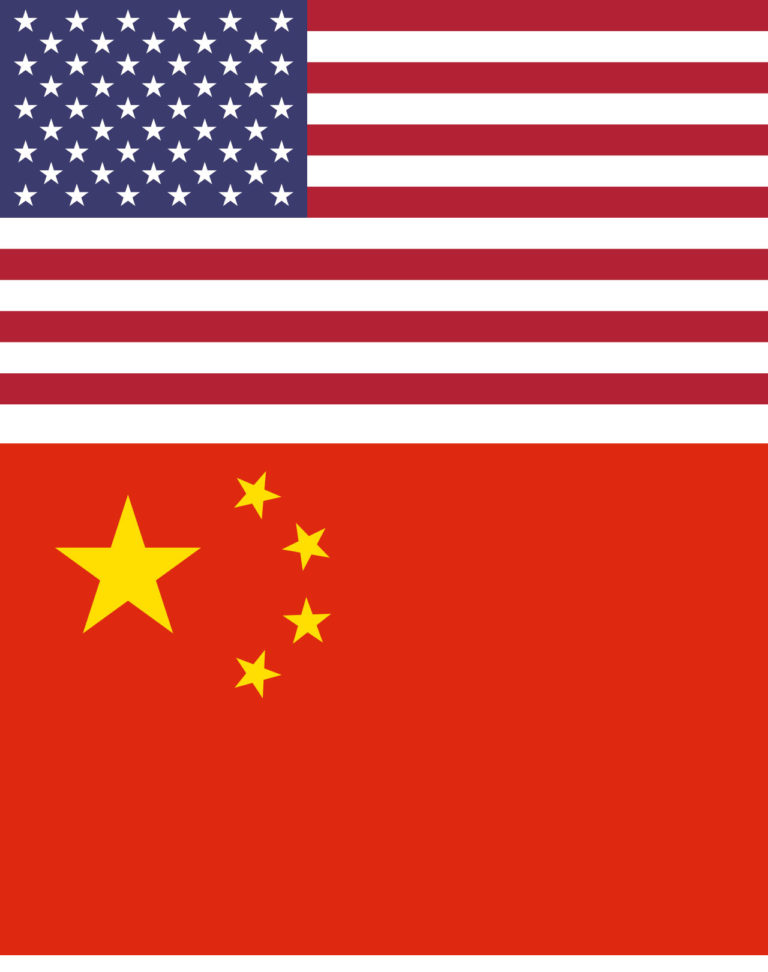
Will the USA Pass China in Making Inexpensive Knives?

us china tariffs
How will tariffs on Chinese products affect the U.S. knife industry? (Pexels photo)

Some in the USA knife industry view tariffs on China-made products as an opportunity to reclaim the market for inexpensive knives. Are they correct?

Much has been written and reported on all fronts—pro and con—about the import tariffs instituted by the administration of President Donald Trump. At the recent BLADE Show West, Mike Vellekamp, head man of V Nives, predicted the tariffs are going to result in a “shift” in the factory knife market that will create a new “made-in-America force.”
Here’s how he sees it going down.

A “Made-in-America Force”

Knives tariffs
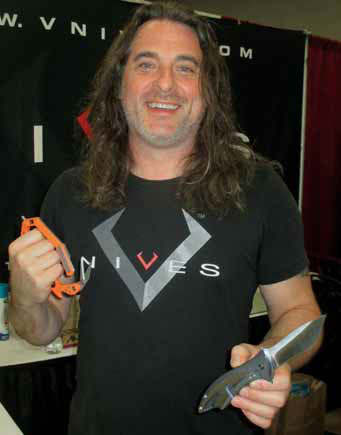
At BLADE Show West, Mike Vellekamp of V Nives holds two of his latest models: the C.R.A.B. (Cut-Rescue-Assist-Break), the BLADE Magazine 2018 Most Innovative Imported Design, in a new orange handle, and the company’s new Deplorable folder designed by Jerry Hossom. (BLADE photo)

Manufacturers in Asia, especially China, have been able to make better inexpensive knives than U.S. manufacturers for years now due in no small part to low labor, advertising and other costs. Largely as a result, Chinese manufacturers have dominated the market for “price-point” or inexpensive knives in America. However, as a result of the tariffs, Mike opined, in order to maintain profits the Chinese will be forced to make more-labor-intensive knives and charge more for them in the USA. The Chinese could continue to make knives in the same way they have been for export to America, but if they do their profits will decrease due to the tariffs.

And the likelihood of the Chinese opting to make less money, the argument goes, is basically nil.

Consequently, in Mike’s scenario U.S. manufacturers will start making price-point knives to fill the niche the Chinese manufacturers will be forced to abandon.

According to Mike, U.S. knife companies will be more able to make price-point knives and/or have them made domestically because they will not have to pass along to consumers the added costs of shipping and importing and getting the knives through U.S. Customs, among other things, that they do now by having their knives made off shore.
Of course, several things must happen in the domestic knife industry for Mike’s scenario to occur, but he indicated he sees those things happening.

“If someone wants to make something in America and compete, they can do so as long as they automate and capitalize on some of our technological resources,” he said. “This will encourage the market for U.S. manufacturing and create a lot more jobs in the process.

“It’s going to make more sense to make knives in the U.S., especially as metal-injection-molding technology takes off better and with some of the 3D printing stuff we’re doing,” he noted. “We’ve got the technology, we’ve already got all the materials, we’ve just got to get the interest. We need to have the confidence of both the consumer and the manufacturer so they’re working together to create a made-in-America force. That’s what we need to be again. We’ve always had that, we’ve always been the pioneers of basically all industry, and we need to have that confidence again and quit being just ‘buy and sell.’ We need to start making stuff again.”

Doubts

Two high-ranking industry officials I spoke to whose companies import knives from Asia expressed doubt that Mike’s scenario will happen. They said they don’t see American knife manufacturing reaching the point Mike foresees any time soon—maybe never—plus the fact that Chinese manufacturers are simply too good at making price-point knives, and will find a way to continue to maintain their dominance in that segment of the U.S. market.

Still, Mike said the new realities that will occur due to the tariffs appear to be bringing some American manufacturers around to his way of thinking.

“I think U.S. knife manufacturers are going to do just what I’m talking about,” he said. “I’m not positive and I won’t name names, but the ones I’ve talked to kind of agree with me that the U.S.-made knife needs to be the price-point type.”

Will that need turn into a real shift in the factory knife market? Stay tuned for further developments.

What Knives Do Professional Chefs Use?

What do professional chefs look for in a chef’s knife? We asked two pro chefs, both fans of knifemaker Don Nguyen. Their answers are instructive not only on Nguyen’s work but chef’s knives in general.

“Thin Behind the Edge to Win”

Kolter Livengood is a chef at Brightwok Kitchen, “a veggie-focused, Asian inspired restaurant” in Chicago. Detail and aesthetics, with an equal emphasis on testing, are some of Livengood’s requirements in a chef ’s knife.

“A great deal of consideration is given to the ‘knife life’ or how the blade will be sharpened away over time,” he observed. “How the knife tapers both from handle to tip and spine to edge give the ability to maintain that geometry for 20 to 30 years depending on use and original blade size, making the appropriately high-priced tool seem very affordable over time.

“Don’s knives tend to be thicker at the spine, yet taper to being extremely thin behind the edge. This seems simple but it’s the subtle convexity from spine to edge that gives the knife its incredible feel when cutting. The thick spine gives the knife weight, a weight that by no means makes the knife heavy, and assists with downward momentum, which makes a huge impact on how the knife feels when cutting. The spine is also perfectly rounded, which, when combined with its thickness, makes it extremely comfortable and less damaging to the hand. The convexity aids in separating the food that’s being cut from the bulk, and since the blade is not flat, foods like potatoes and cucumbers don’t annoyingly suction or stick to the side of the knife when chopping.

“‘Thin to win’ should be amended to ‘thin behind the edge to win,’ as I much prefer a knife with heft and zero spine flex to the chef’s knives with 1-to-2-millimeter spine thicknesses popular from 2009 to 2012.”

Single-Beveled Knives for the Win

Taro Kobayashi, a chef at Mame, a sushi restaurant in Eugene, Oregon, uses Nguyen chef’s knives.

“The short gyuto I have at home for everyday tasks from poultry and fish butchering to dicing vegetables,” Kobayashi noted. “It is just a good, all-around bruiser. It is a bit thicker for a Don knife but I really enjoy it since I can just ‘go ham’ with it. Ha-ha! That almost sounded like a kitchen pun. Sorry.”

Kitchen standup comedy notwithstanding, Kobayashi’s favorite Nguyen chef’s knife is a 240-millimeter model of W2 tool steel and a lightning-strike carbon fiber handle.

“I use it to slice fish and other proteins while making sushi,” the chef noted. “Even though I am a bit old school when it comes to knife use and love single-beveled knives for fish slicing and sushi preparation, I can’t help but use this one sometimes. It’s easy on the hands, easy to sharpen and takes a keen edge. I was a bit worried about the handle shape until I used it. It’s one of the best designs aesthetically, but you would not know how good it feels until you get it in hand and abuse it.”

Learn More About Popular Knives

Best books about knives

You’ll find the latest custom chef’s knives and more in KNIVES 2019, the world’s greatest knife book.

In Review: BLADE Show 2018 Changes

There were two changes of note at BLADE Show 2018:

  1. the expansion to the new John A. Williams Ballroom
  2. the reduction in additional exhibitor badges sold to exhibitors

Let’s examine both.

Expansion

BLADE Show expansion
A record number of exhibitors—950+—required an expansion of the show to the adjoining John A. Williams Ballroom, which was abuzz with activity much of show weekend.

With the number of exhibitors growing to a record 950+ this year, the show hall simply ran out of space. Expansion was the most viable option, thus the move to add exhibitors in the adjoining John A. Williams Ballroom. While a number of exhibitors complained about the move due to it separating them from the show hall and how it required more walking for patrons to get to the exhibitors’ tables and booths, the ballroom was extremely busy most of the weekend. Whether it was a real success or not will have to wait between now and next year’s show to see if the ballroom fills up with exhibitors again. The bet here is it will.

Exhibitor Badges

Exhibitors buy additional exhibitor badges to get their helpers that assist them in assembling their booth and table displays, etc., into the exhibitor areas early on Thursday and early Friday morning and early afternoon before the show opens to the general public. Such helpers are crucial to the exhibitors to get their displays ready for the show.

Of course, the exhibitors setting up in the exhibitor areas have their display knives with them. Meanwhile, there is a large number of knife enthusiasts that are not helpers who, one way or another, obtain some of the additional exhibitor badges, get into the exhibitor areas early, and try and buy the best knives before the show opens to the public.

BLADE Show
Combined with historically long patron lines, an excess of exhibitor badge holders almost
resulted in a delayed opening of BLADE Show 2017.

When the BLADE Show first started selling additional exhibitor badges to exhibitors years ago, not that many exhibitors and others tried to obtain so many of them—particularly not in the numbers in recent years. It was only a matter of time before the buying of the additional exhibitor badges became a problem, and that threshold was reached at BLADE Show 2017.

It was then that so many holders of additional exhibitor badges were in the show hall immediately prior to the show opening to the public that we—by “we” I mean BLADE Show officials—were notified we would have to delay the show opening. Why? Because the hall was so full of people already that the Cobb Galleria Centre fire marshal said to admit the historically long lines of patrons that were waiting to get in would create a fire hazard. In other words, if there were to be some kind of emergency requiring the show hall to be emptied promptly, too many people in the aisles trying to get out could result in injury to them—or worse.

To delay the show opening would cost exhibitors many thousands of dollars in sales and cause a major inconvenience to show patrons that had traveled from all over the world to attend. Luckily, show officials were able to alleviate the situation to where the fire marshal granted permission to open the show on time.

As a result of the near fiasco, show officials had no choice but to reduce the number of people in the show hall—many of whom were holders of the additional exhibitor badges—before the show opens. And the best way to do that was to reduce the number of additional exhibitor badges available for sale for BLADE Show 2018, which we did. The result was the number of people in the show hall was reduced enough so that opening the show on time this year was not an issue.

Does the reduction impair some exhibitors’ ability to set up their displays? Undoubtedly. However, the alternative of having the show opening delayed or the show possibly cancelled altogether would be much worse.

Looking Ahead

blade show westThough the changes may seem questionable initially, we believe they will be best for the future growth of the BLADE Show. With the continued growth of the show come new challenges. However, we will continue to strive to make this the best show ever for exhibitors, patrons and knife enthusiasts everywhere.

And please make plans now to attend BLADE Show West Oct. 5-7 at the Oregon Convention Center in Portland.

Ridiculous, Racist Knife Bans Reinforce Inequality

Knife bans
Pictured: a deadly weapon (if you’re a potato).

On May 3 in Scotland, a man was arrested for carrying a potato peeler. That’s right, a potato peeler. He was charged for carrying “an article which had a blade or which was sharply pointed, namely a potato peeler.” Maximum penalty: four years imprisonment.

Knife Bans Are About Control

Knife bans, like gun control, are not about saving lives but controlling them—including controlling the economically disadvantaged, people of color or others the state wants to keep “in their place.” (The potato peeler violator, by the way, was said to suffer “from significant learning difficulties.”) More to the point, knife bans are designed to keep the people down.

For proof, consider the New York Police Department’s biased enforcement of New York State’s gravity knife statute involving the poor, black and Hispanic. According to The Legal Aid Society of New York City, from July 1 through Dec. 31, 2015, 84 percent of its clients prosecuted for alleged gravity knife possession were black and/or Hispanic. Intent to use a gravity knife unlawfully against another was charged in fewer than 5 percent of gravity knife prosecutions, so it appears the vast majority of the 84 percent did not use the knives as “deadly weapons.”

Knife Bans and Inequality in the Justice System

The inequality of policing and prosecuting for possession of gravity knives by black and Hispanic men is most striking in NYC’s Union Square. There, according to Legal Aid, such men consist of only 11.5 percent of the population but account for a whopping 52 percent of those arrested and prosecuted for gravity knife possession. Moreover, the New York County District Attorney’s Office (DANY) exacerbates things by often classifying gravity knife possession as a felony, a charge that carries up to seven years in prison. From July 1-Dec. 31, 2015, DANY charged 65 Legal Aid clients with felony gravity knife possession—four times more often than all other NYC prosecutors combined!

Magnifying the inequality of the situation is the fact that NYC chain retailers sell folding knives designed and marketed as work tools, yet when Legal Aid clients are found with those knives in their pockets, the knives are suddenly “illegal” and the clients are arrested as criminals. Such inconsistent application of the law ensures a regular money flow to the local big box stores via sales revenues and to government through sales taxes and fines, while simultaneously keeping the victims “in their place.” As Doug Ritter of Knife Rights noted, knife bans help ensure that the circle of inequality remains unbroken.

“Repealing knife bans removes another excuse to engage in such biased arrests and prosecutions for the innocent carry of some otherwise arbitrarily illegal or allegedly illegal knife,” he observed.

Great Britain, Canada Lead the Way on Knife Bans

Racist knife bans
When knife bans disproportionately impact minority populations, something is wrong.

While Knife Rights continues to fight NYC’s inequality of knife law enforcement, knife control has raised its ugly head among the rank-and-file citizenry of London, England, and Canada. In January, the Canadian International Trade Tribunal upheld a Canadian Border Services Agency decision that classified most folding knives as prohibited weapons to import, even though the knives are legal to sell and possess in Canada.

Meanwhile, despite—or perhaps because of—its long-time ban on guns, for the first time in over 200 years London recently overtook NYC in terms of the murder rate. Though it is currently illegal in Britain to carry a knife longer than 3 inches in public “without good reason,” in early April London Mayor Sadiq Khan infamously said, “No excuses: there is never a reason to carry a knife. Anyone who does will be caught, and they will feel the full force of the law.”

The vast majority of those who will feel the full force of Khan’s edict as well as that of knife bans in general are the economically and other of the disadvantaged, or the simply not quite so advantaged. What better way to keep them all down than to arrest, fine and jail them for carrying knives?

That Time that BLADE Magazine was Traded for a Horse

Yep, that’s right—a thoroughbred racehorse.

Known as The American Blade at the time, the magazine was traded by then-publisher Jack Marvich to Wally Beinfeld for a racehorse—or at least that’s what Beinfeld reportedly told one of his successors, former BLADE publisher and editor and BLADE Magazine Cutlery Hall-Of-Fame® member Bruce Voyles.

Marvich was a dentist living in New Orleans. He acquired the magazine and served as publisher beginning with the January-February 1974 issue and ending with the November-December issue of the same year. That’s when Beinfeld assumed the, ahem, reins. But first let’s, ahem, backtrack a bit.

knife magazines of the 1970s
The cover of the November-December 1974 issue of The American Blade.

Beinfeld ran what was probably the country’s premier antique arms show and, in part to help promote it, published a gun magazine called the Arms Gazette. The Gazette had a large editorial, graphics and production staff that was more than big enough to produce a second magazine. Hence, Beinfeld decided to add a knife publication—The American Blade—to his, ahem, stable.

However, there was one problem. Marvich and Beinfeld could not make a deal, even if, apparently, the racehorse was at least part of the payment.

“They were sitting there talking about it one day and the more they talked, the worse it got,” Voyles recalled Beinfeld’s version of what happened.

Beinfeld and Marvich were making no headway at all. Finally, Beinfeld stood to call the whole thing off and leave when in walked Marvich’s wife.

“Marvich looked at her and said, ‘Honey, the deal’s not going to go through, we just can’t come to terms.’ And she looked at him and said, ‘What about my racehorse?’ And in Wally’s words, ‘So I sat back down.’ From what I understand,” Bruce recalled, “I don’t know if the racehorse was just part of the deal or what, but I believe it was the entire deal. That was the way it was told to me.”

And, thus, Beinfeld bought The American Blade. Bruce said he can’t recall the horse’s name, which is understandable considering how long ago it was. Meanwhile, Mr. Beinfeld passed away a few years back, and we don’t know the whereabouts of Mr. and Mrs. Marvich.

As for the horse, here’s hoping he was put out to stud and lived happily ever after. (Insert your impression of a horse whinnying here.)

Subscribe to BLADE Magazine

Sign up for a subscription to the world’s foremost knife magazine here, no horse required.

Advertisement

Must Read Articles

Read this before you make a knife

Knifemaking 101 – Read This Before You Make a Knife

  by Wayne Goddard My experience has taught me that there's nothing like digging in and getting started. I've often said the hardest part of the...
how to forge damascus steel

How to Forge Damascus

Advertisement
Advertisement