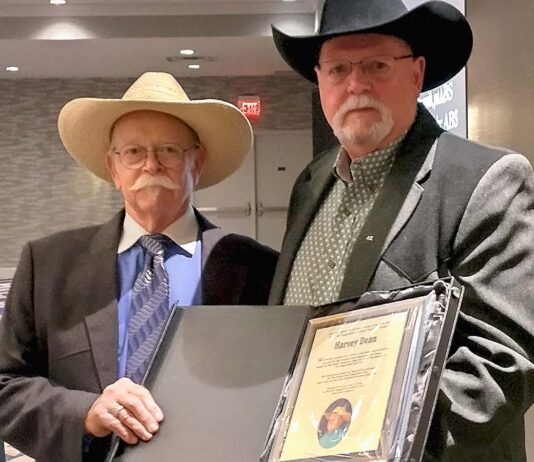
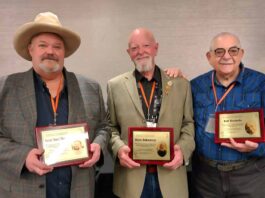
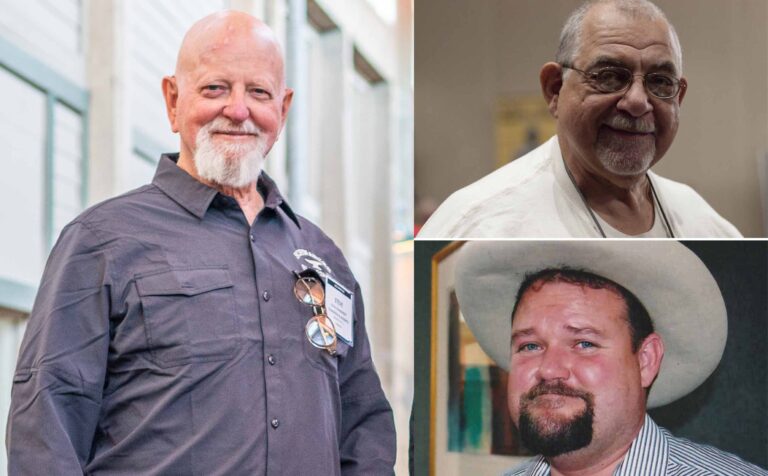
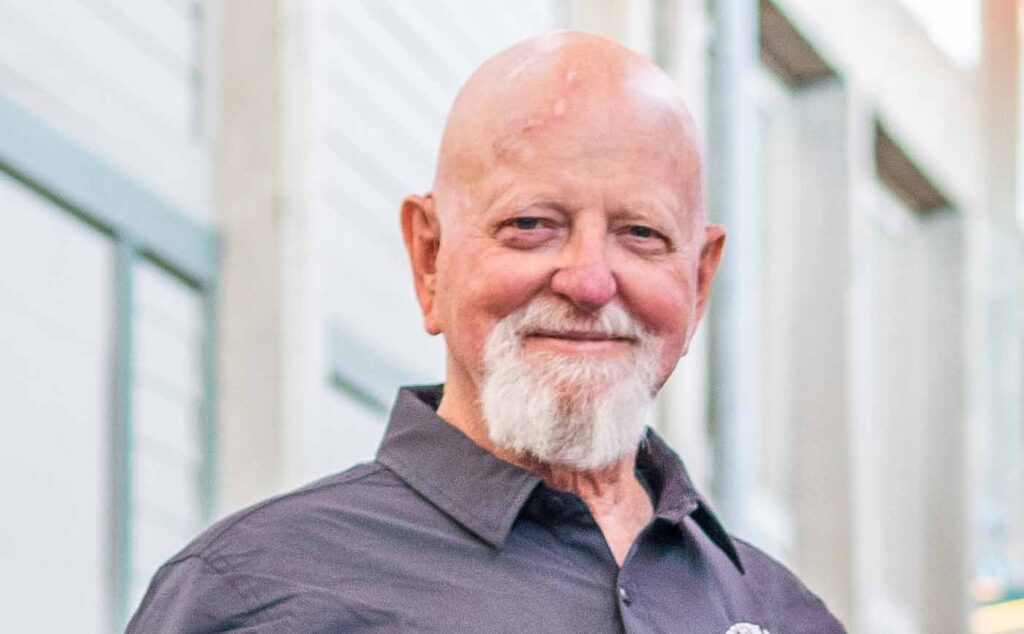
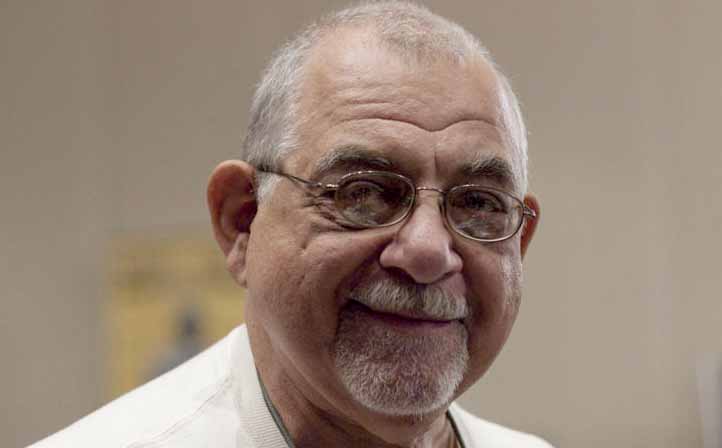
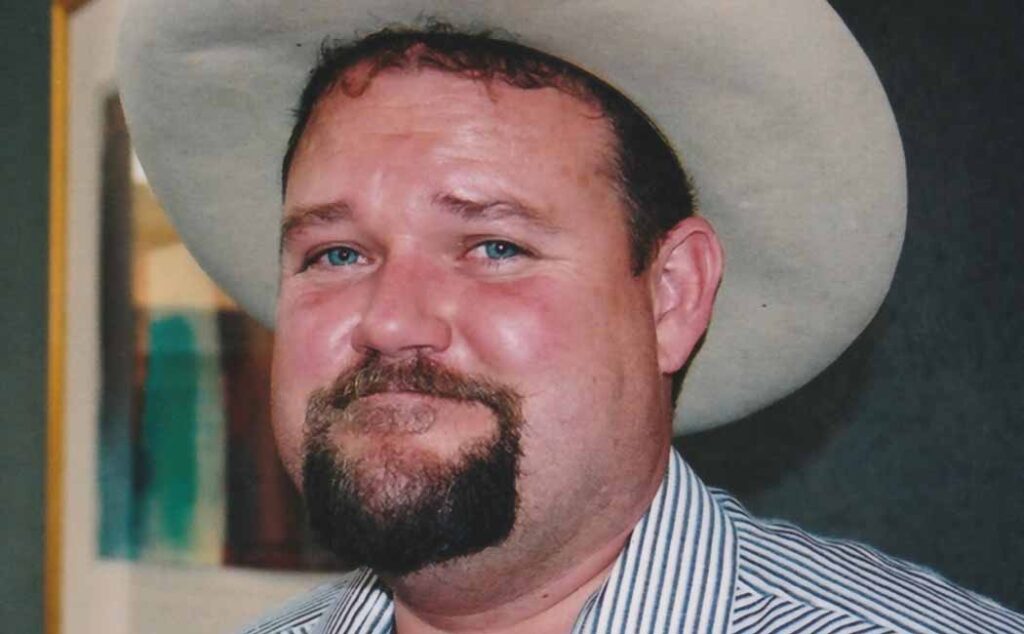
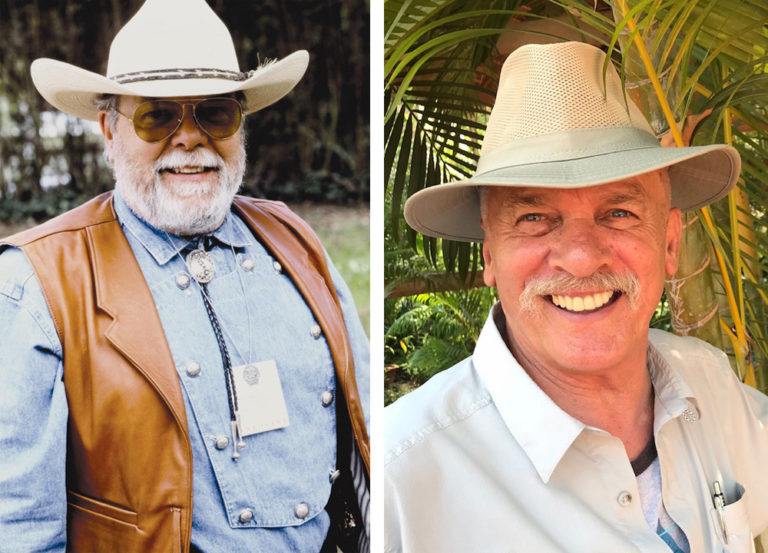
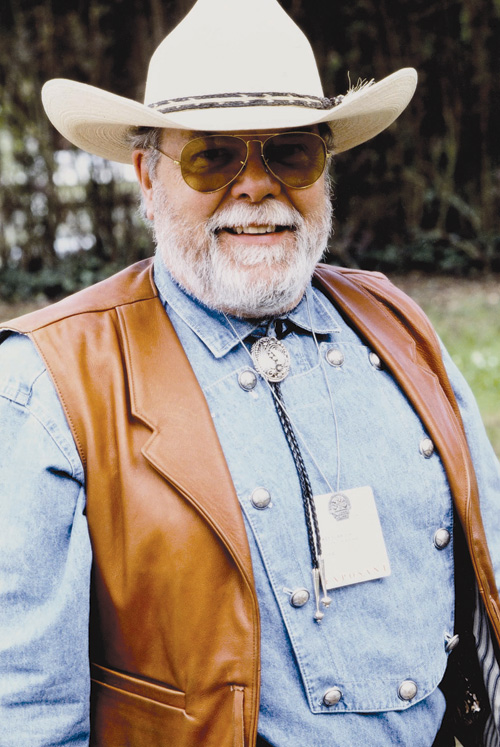
The BLADE Magazine Cutlery Hall Of Fame® is proud to announce three most-deserving inductees for 2023: Steve Schwarzer, Bob Terzuola and Devin “Hoss” Thomas.
Steve Schwarzer, Bob Terzuola and Devin “Hoss” Thomas are the newest members of the BLADE Magazine Cutlery Hall Of Fame®. All three will be formally inducted Saturday morning, June 3, of the BLADE Show at the Cobb Galleria Centre in Atlanta in a special ceremony in the Kennesaw Room of the Renaissance Atlanta Waverly, the show’s host hotel. The ceremony will be a combination breakfast/triple induction and will start at 8:00 a.m. Tickets are required and seating is limited, so the tickets will go fast. For ticket information, email [email protected].
Steve Schwarzer
A veteran ABS master smith, Schwarzer is probably best known for his pioneering work in the canister method of forging mosaic damascus. His hunter and dog scene in mosaic damascus on the blade of one of his hunting knives forged circa the early 1990s was a defining moment for the genre. He is considered one of the finest instructors and ambassadors of the forged blade and of mosaic damascus, teaching at seminars and hammer-ins on the subjects for decades in Europe, South Africa, all over the USA and elsewhere.
Bob Terzuola
Known as a pioneer of tactical knives, especially his ATCF (Advanced Technology Combat Folder), Terzuola started out making fixed-blade combat knives for the CIA, soldiers and security personnel in Central America. In 1984 he began making folders of titanium and Micarta®, which helped set the stage for the tactical folders that dominated the American custom knife scene for decades beginning in the mid-1990s. Aka “Bob T,” he wrote the how-to book, The Tactical Folding Knife, originally published in 2000.
While a fine knifemaker in his own right, Thomas is best known for his pioneering work in forging stainless and carbon damascus, and supplying thousands of knifemakers industry-wide with the material from the 1990s forward. He was one of the first to make quality damascus available for sale to the “average” knifemaker. The damascus patterns he offers are among the most recognizable in the industry and include but are not limited to Raindrop, Spirograph, Basketweave, Herringbone and others.
The new inductees were determined by a combined vote of sitting Hall Of Famers and, for the first time this year, a Panel of Industry Authorities, the latter chosen by the BLADE® staff. The latest inductions bring the total number of members in the Cutlery Hall Of Fame to 71.
See Past BLADE Magazine Cutlery Hall Of Fame® Inductees:
We Take A Look Inside The Shop Of ABS Master Smith Steve Schwarzer And See How He Makes His Mosaic Damascus Wonders
Of all the forgers of mosaic damascus in the knife industry, none stand out any more than American Bladesmith Society Master Smith Steve Schwarzer.
Steve began forging in the early 1970s. In 1981 he received his ABS master smith rating, his papers signed by none other than one of four ABS founders/BLADE Magazine Cutlery Hall-Of-Fame® member Bill Moran, and was officially recognized as an MS in 1983. Steve has an intense passion for forging mosaic damascus and his contribution to this steel niche over the decades has been immeasurable. Unselfish to the extreme, he has forged damascus for many custom makers and tutored many on forging and the making of pattern-welded steel over the years—which he continues to do to this day.
His awards over 50 years of knifemaking are too numerous to name, as have his appearances in BLADE®. BLADE is delighted to feature Steve once again, this time in a supersized edition of “Shop Dump” to give readers a deep dive into the equipment this modern-day master uses to achieve his magical works.
Inside Steve’s Shop
Steve rescued his Kent USA precision surface grinder from a knifemaker friend. In the process of retrieving it, Steve almost destroyed it while loading it. However, another friend restored it to better than new.
As you can imagine, Steve has acquired a lot of equipment over his many years of knifemaking and has honed his shop to perfection. We asked the artisan to give us an extended tour of his digs and he gladly obliged. He kicked the tour off with his forging hammer.
“The Chambersburg 2 Hammer was my first real game changer,” Steve notes. “I had owned several mechanical hammers before I found it. The control in forging set me apart from others. It also allowed me to work much larger masses of damascus. I have trained dozens of the current top makers pattern welding using this machine. I built my second shop around it. It’s now in my home shop.
“Next up is my custom-built 50-ton Coal Works computer-assisted C Frame press. This is a recent acquisition and is also a game changer for controlled forging. It has a return to 1/100 of an inch. Basically, it comes with millions of electronic stop blocks. It has the ability to swap dies to any configuration in minutes. I have built many presses over the years; this one has all the benefits and adaptability afforded by all the others combined. I worked very closely with the crew at Coal Iron to bring this beast to life. I’m still exploring its capabilities.”
Grinders are a must-have of any maker’s shop and Schwarzer has a passel of them.
“I own four Beaumont grinders—one for over 20 years—and they are great machines that track properly,” Steve states. “Three are 2×72 belt grinders, two with controllers. They’re constructed of steel, making it very easy to make tooling and various fixtures for any project. The disc grinder runs perfectly true, making grinding precision angles a breeze.”
Steve Schwarzer’s Forges
Steve’s ribbon burner is one of several forges in his shop. He designed it and a close friend built it. It’s purpose-built for working very large canister damascus.
Steve brings the heat to his steel with a forge of his design.
“My forge is one of several I run in my shop. It’s a ribbon burner designed by me and constructed by a close friend. It’s purpose-built for working very large canister damascus. I have built dozens of forges over the last 40 years. This is the latest version. My previous forges were all versions of a Don Fogg design.”
If you’ve read past installments of “Shop Dump,” you know it’s not at all uncommon for equipment to be passed down from one maker to the next. Such is the case with Steve’s mill and surface grinder.
“My Kent USA knee mill is my go-to for all precision drilling and milling. It was rescued from a retired knifemaker who took excellent care of it,” Steve relates. “It’s variable speed, making it handy for all types of tooling.
“I also rescued my Kent USA precision surface grinder from the same knifemaker. It had a history when I went to retrieve it. I made a rookie mistake loading it. Long story short, I, for all practical purposes, destroyed it. I broke about everything on it. I had in mind to scrap it. I called a friend who owns one and asked if he wanted it for parts. He said, ‘Let me look at it.’ I took it to his shop. He is a true wizard. He totally restored the machine I thought was lost to better than new. He also taught me how to properly grind with it. I will always be grateful.”
If walls could talk there is no telling how many amusing tales Schwarzer’s shop could tell.
“I have a shop full of machines, all with some story attached,” the affable bladesmith said. “My tool rack has dozens of hammers and tongs collected over 40 years. This is my happy place. I love teaching and sharing the stories with students and friends.”
For more information contact Steve Schwarzer through his website at steveschwarzer.com.
The BLADE Magazine Cutlery Hall Of Fame® is proud to announce three most-deserving inductees for 2022: the husband-and-wife team of Mr. and Mrs. Aldo and Edda Lorenzi and Bill Ruple.
All will be formally inducted in a special Cutlery Hall-Of-Fame ceremony and breakfast during BLADE Show 2022 June 3-5 at the Cobb Galleria Centre in Atlanta.
One of the most prolific, long-running supporters of custom knives in modern cutlery history, the Lorenzis forged a name known in knife circles far and wide while operating their G. Lorenzi retail knife store in Milan, Italy, where they sold knives of some of the greatest knifemakers of all time, including Cutlery Hall-Of-Fame members Buster Warenski, Bob Loveless, Michael Walker, Jimmy Lile, Gil Hibben, Ron Lake, Frank Centofante and many more.
Meanwhile, hailing from Pleasonton, Texas, Ruple is one of the most successful slip-joint makers of the 21st century, winning many awards for his traditional pocketknives, and also serving as a teacher and mentor to an entire generation of award-winning slip-joint makers from Texas and elsewhere.
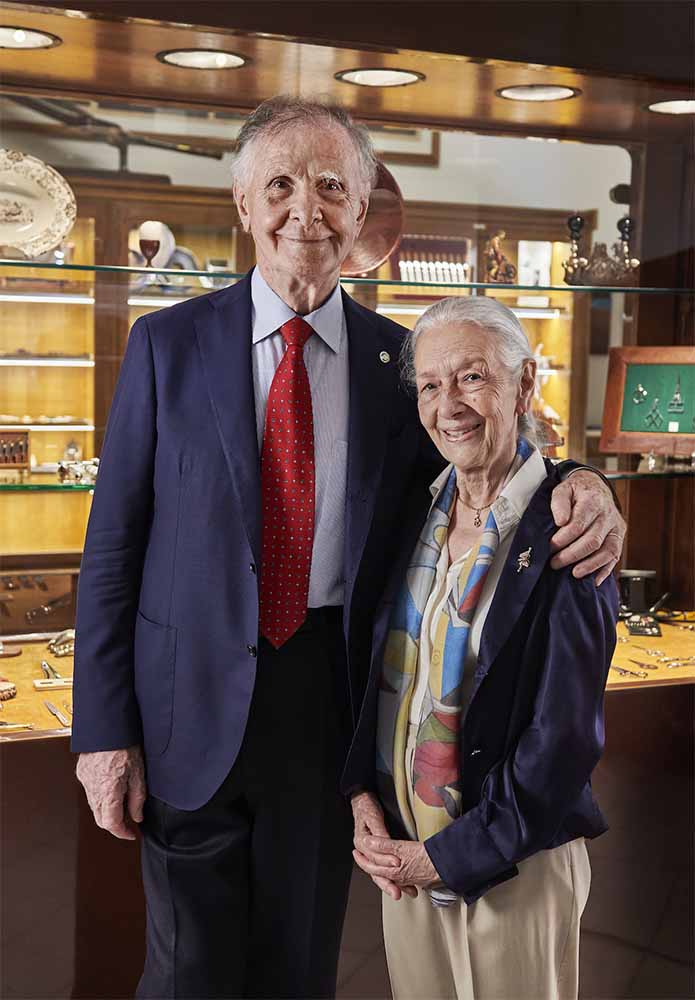
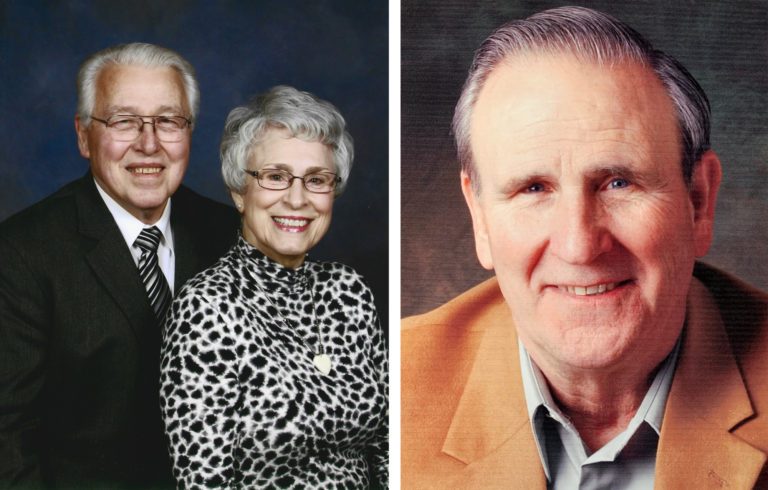
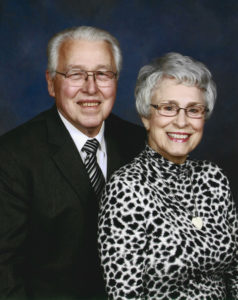
Aldo and Edda Lorenzi (Francesco Pachi image)
Aldo And Edda Lorenzi
Aldo and Edda Lorenzi operated G. Lorenzi retail cutlery store in Milan from 1959 until its close in February 2014. The Lorenzis regularly attended the world’s most important knife shows, buying scores of knives for sale in their shop. They bought so many knives at shows, in fact, that the Lorenzis’ presence often determined a show’s success or failure. The support and exposure they gave to American makers in particular by selling their knives in their store in one of the most exclusive shopping areas in Milan was pivotal in introducing American custom knives to Europe.
In 1995 they won The Knifemakers’ Guild’s prestigious Nate Posner Award “in recognition for outstanding service in the promotion of handcrafted cutlery.” They also won the BLADE Magazine 2014 Industry Achievement Award for their decades of supporting the custom knife industry. For five years ending in 2019, they sponsored the Aldo and Edda Lorenzi Award for the Guild Show and the BLADE Show, with each event’s award-winning maker receiving $1,000 cash and a plaque—10 awards and $10,000 in all. The Lorenzis also are most supportive of the William F. Moran Foundation and are one of the Foundation’s first chartered member couples.
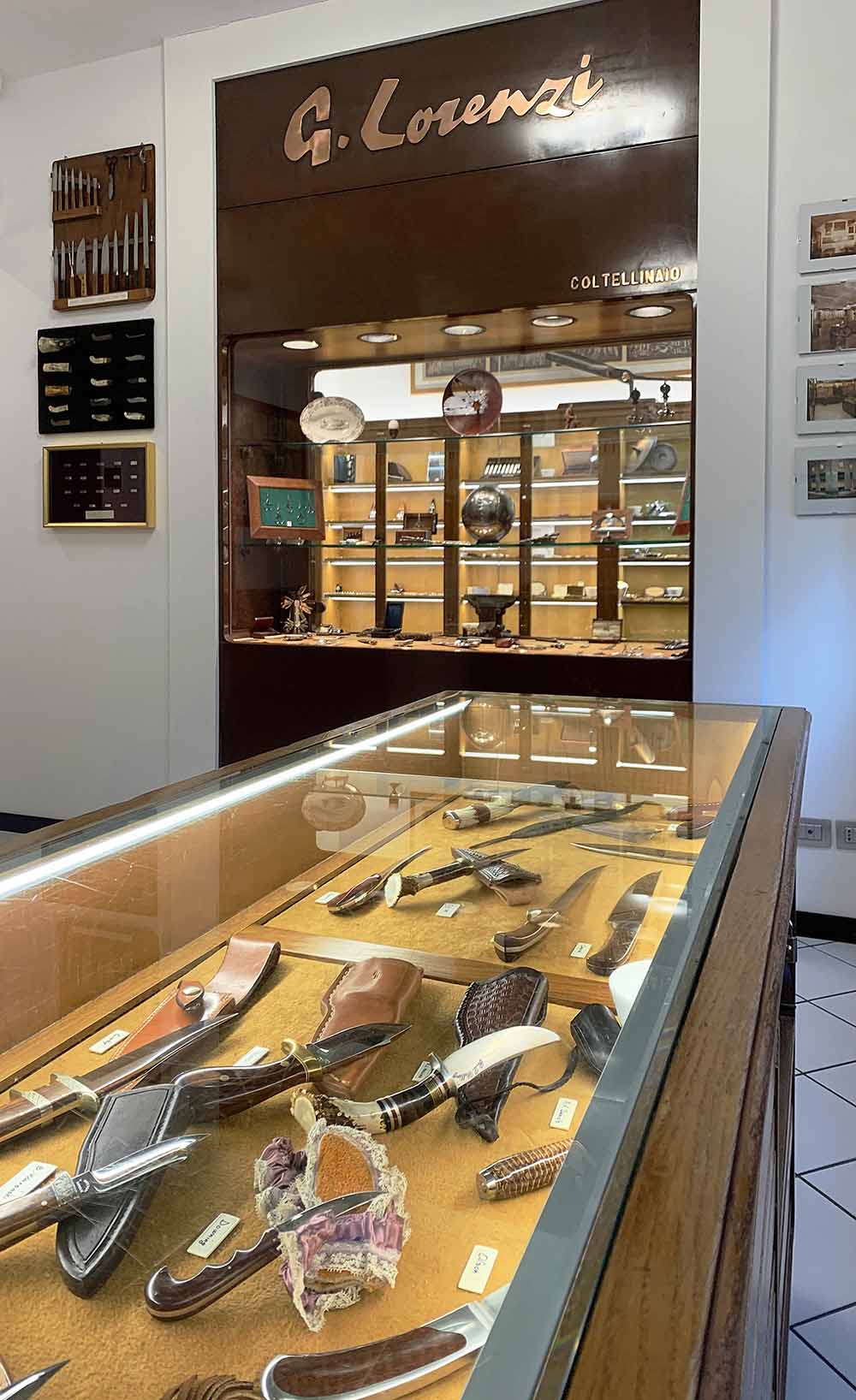
An exterior display window (shown here in the background) from the original G. Lorenzi shop is a centerpiece of the Lorenzis’ new museum. It was one of the store’s six “eyes” that communicated with window shoppers in one of Milan’s most exclusive retail districts, the counters of which, over the years, displayed more than 18,000 types of items. In the foreground is a display case of some of the Lorenzis’ favorite custom knives. (Francesco Pachi image)
“More loyal ambassadors of the art cannot be found,” one sitting Cutlery Hall-Of-Fame member noted of the Lorenzis. “Their store was like a museum, always welcoming visitors and ready to educate them on fine cutlery and custom knives. Several prominent collectors got their start by buying a custom knife at the Lorenzis’ store.”
In fact, the Lorenzis have assembled their massive collection of over 2,000 knives (including 150 custom knives by the world’s best makers spanning the past half century), 700 books, 1,000 magazines and prints, and related items in a new state-of-the-art museum in Milan (December BLADE®, page 60). The museum contains the knives in elegant oak display cases, a recreation of the copper-paneled room that featured the small entrance door to the G. Lorenzi store in Milan, a wooden portable knife grinder used by Aldo’s father and the store’s namesake, Giovanni Lorenzi, almost a century ago, and much more.
Bill Ruple
Bill Ruple
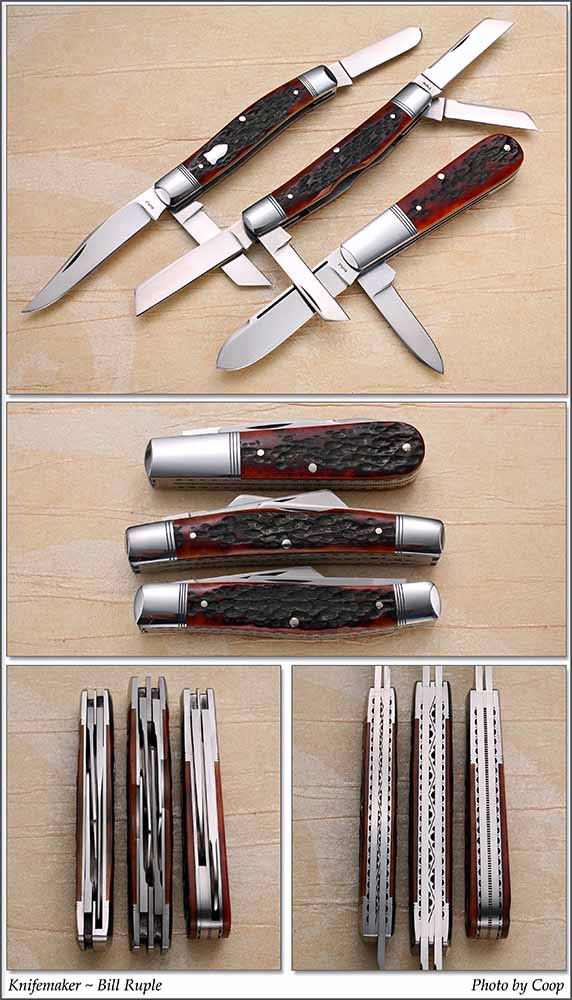
In the eyes of one sitting member of the Cutlery Hall-Of-Fame, Bill Ruple, an award-winning custom knifemaker specializing in traditional pocketknives/slip joints and multi-blades, has done as much as anyone to promote the knife business. Bill served on the board of the Texas Knifemakers Association, taught many how to make traditional knives and is very free with his knowledge. In recognition of this fact, he was presented with the BLADE Show 2019 Aldo and Edda Lorenzi Award. The award went to a knifemaker who excels in terms of teaching and mentoring his or her fellow makers in the art of knifemaking.
Having built knives for 34 years, Ruple is a premier maker of slip joints and possesses a selfless willingness to teach others how to do it, usually in his shop in Pleasanton, Texas, and also at BLADE University, the BLADE Show, BLADE Show West and other venues. He has helped many get started with the slip joint, one of the oldest yet most challenging folders to make. His kindness and patience validates something other makers know all too well—that he is most willing to share knowledge with and encourage, critique and mentor makers everywhere.
A selection of Bill Ruple’s slip joints in an array of open, closed and spine images show Bill’s awesome talent and versatility as a knifemaker. (SharpByCoop image)
Bill has taught quite a few who have become award-winning makers in their own right, including Rusty Preston, Luke Swenson, Tom Ploppert, Phil Jacob, Bubba Crouch, Toby Hill, Enrique Pena and others. A number have gone on to teach also, spreading Ruple’s knowledge to others who no doubt do the same as well. Bill does not limit his shared knowledge to just stock removal makers, receiving the American Bladesmith Society’s President’s Award for teaching ABS members how to make slip joints. Finally, Bill has donated some of his knives to knife shows and other cutlery organizations to raise funds for their various needs.
Hall Of Fame Criteria
Selected by a vote of sitting Cutlery Hall-Of-Fame members, the inductees are selected based on the following criteria: demonstrated extraordinary service to the knife industry; displayed honesty, character and integrity; advanced the industry by the creativity and originality of their works or contributions; as ambassadors or outstanding contributors, have furthered the positive impact of the knife industry on the world at large, and, in summary, have demonstrated a worthiness to be a member of this prestigious group.
The latest inductees exhibit all these qualities and more and represent a most worthy Cutlery Hall-Of-Fame induction class of 2022.
Jay Hendrickson and the husband-and-wife team of Billy and Beverly Mace Imel are the 2021 inductees into the BLADE Magazine Cutlery Hall Of Fame®.
Nominated by, and then elected in a vote of, sitting members of the Cutlery Hall Of Fame, the three comprise the 63rd, 64th and 65th members of the world’s only shrine recognizing all segments of the knife industry.
The Imels are the first-ever husband-and-wife team—or any pair, for that matter—to join the Hall simultaneously. A.G. and Goldie Russell are Hall-Of-Fame members but were inducted in separate years.
Along with the 2020 inductees, Joe Keeslar and Jim Sornberger, the 2021 inductees will be formally enshrined the Saturday of the BLADE Show, June 5, in Atlanta. Joe and Jim could not be formally enshrined last year because the BLADE Show was canceled due to the pandemic.
Jay Hendrickson
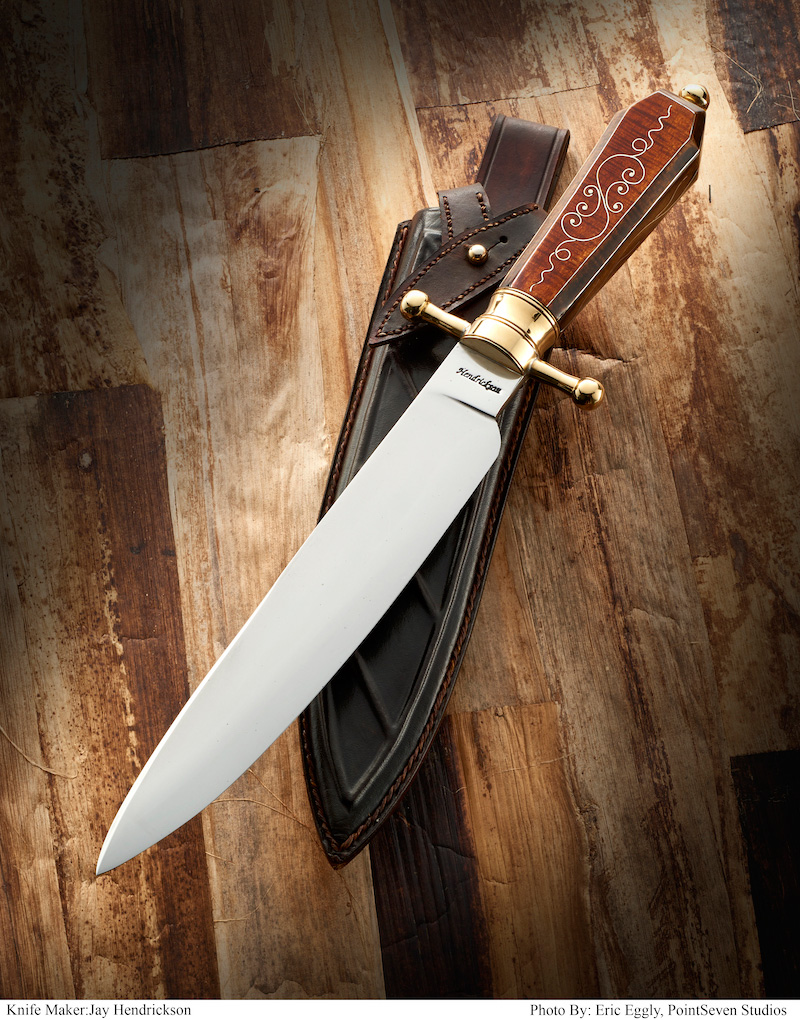
Impeccable fixed blades in the Moran style with matching sheaths are a Jay Hendrickson staple. (Eric Eggly/PointSeven image)
Jay Hendrickson
Jay is an American Bladesmith Society (ABS) master smith who succeeded Cutlery Hall-Of-Fame member Bill Moran as ABS president in 1991—as a nominator noted, “a trying task to be sure, and Jay succeeded Bill very well.” The nominator went on to write Jay is a good bladesmithing teacher who has taught at many venues in the USA and France, and also served as director of the Moran Foundation for 10 years, helping to preserve Bill’s legacy.
Early on, Jay and Bill conducted a forging demonstration that was one of the longest running of all BLADE Show demos. The first installment was in 1987 on the sidewalk outside the show’s former Holiday Inn & Convention Center site in Knoxville, Tennessee, and continued at each succeeding BLADE Show in Knoxville and then at the Cobb Galleria in Atlanta until Bill passed away in 2006. Not only was it one of the BLADE Show’s longest running demos, it was also one of the most popular.
In 1995, Jay was presented with the ABS’s highest honor, the Don Hastings Award. The annual honor goes to an individual “who has performed outstanding service on behalf of the forged blade in the tradition of Don Hastings,” one of the founders of the ABS. In 2004, Jay won the William Wales Scagel Award, presented by the ABS to a bladesmith “for longtime service to promote the forged blade.” Another Cutlery Hall Of Famer, Scagel is considered the grandfather of custom knifemaking.
Jay was voted into the ABS Hall Of Fame in 2006 and a year later wrote the how-to guide, Introduction to Bladesmithing, with tips on how to forge various blade styles “exhibiting balance and aesthetic appeal,” how to understand the basic metallurgy of popular blade steels and more. Concluded the nominator, “Jay is a fine bladesmith, a fine teacher helping to preserve the art of bladesmithing, and a splendid ambassador of knives and knifemakers.”
Last but certainly not least, Jay forges magnificent fixed blades in the classic Moran style, including expertly ground bowies, camp knives, fighters, hunters and more, often in curly maple handles with intricate silver wire inlay, all accompanied by superb leather sheaths.
Beverly and Billy Mace Imel
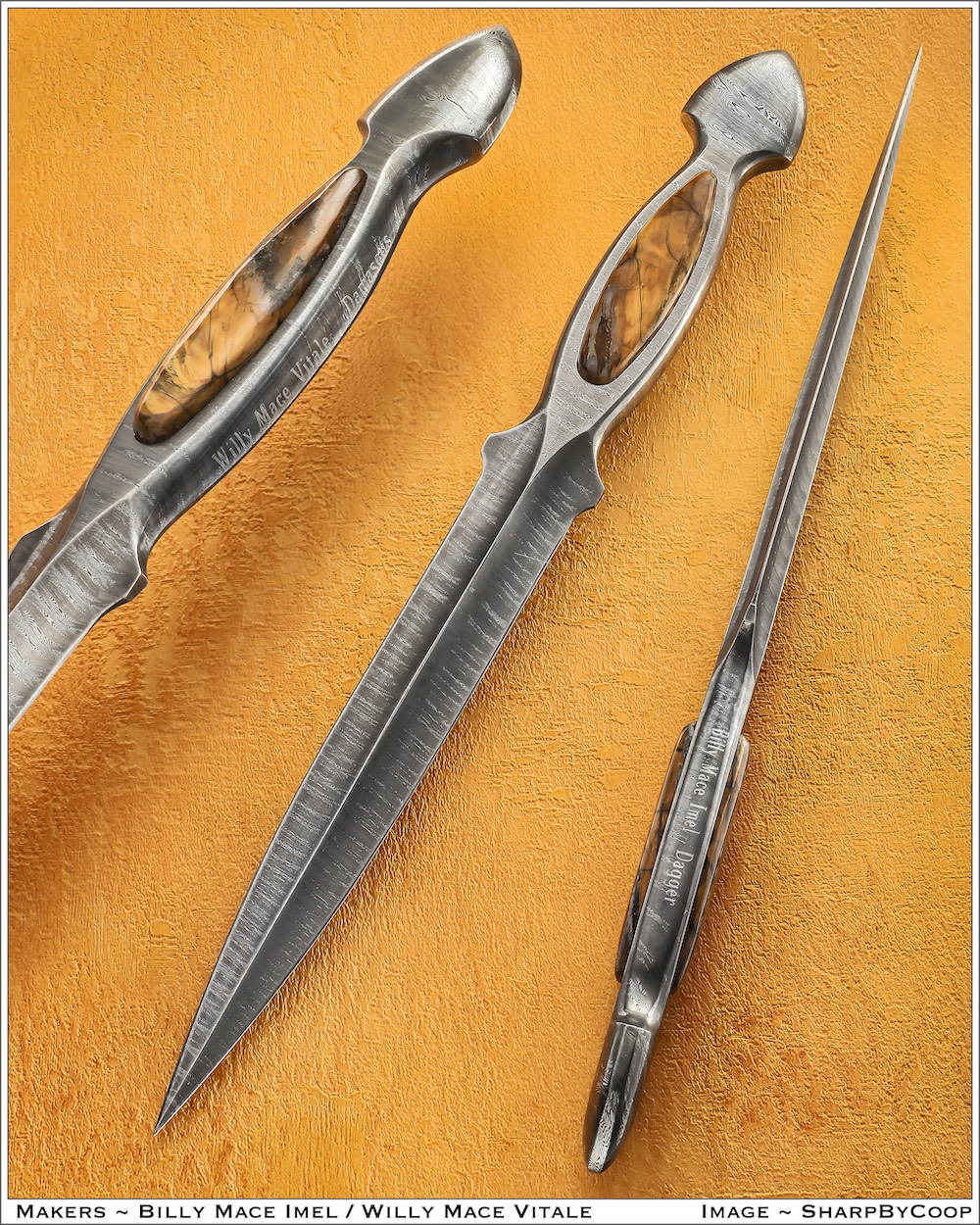
An example of Billy’s premier dagger work is this collaboration with Mace Vitale. (SharpByCoop image)
Beverly and Billy Mace Imel
Beverly and Billy Mace are the first pair of Cutlery Hall-Of-Famers ever to be inducted simultaneously. They also join A.G. and Goldie Russell as the only husband-and-wife team in the Hall.
Billy makes fantastic fixed blades yet is perhaps best known for his sleek daggers with stainless steel blades in clean, crisp grinds and slender handles in a variety of gorgeous materials. To augment that knifemaking talent is his many hours of service to The Knifemakers’ Guild.
“What can you say about those who have worked so many hours and years to help so many?” wrote a nominator. “Billy was the secretary of the Guild during a huge building phase of the longtime maker association. Every year many new applicants had to be processed. Those of us who sat on the Guild’s board of directors during many of those years can testify to the energy and effort Billy put forth. The heavy load of accounting, stopping his own work to help discuss an issue—and those issues were many—and still be able to arrive at the Guild Show venues two days early with his own knives and to help set up each show’s exhibition room was a remarkable achievement. I think Billy is a gold standard for the Cutlery Hall Of Fame in terms of working hard for others.”
Beverly, meanwhile, served with distinction for many years on the Guild board as the organization’s secretary-treasurer.
“You can’t mention Billy’s name without mentioning Beverly’s,” the nominator continued. “The Guild board of directors was a large wheel, with every director a spoke in that wheel, but it was Beverly who kept the wheel’s hub lubricated and in motion. She maintained the Guild’s records in perfect order, and if there was a question about something from the past, she either looked it up or could recall it from memory—often smack dab in the middle of a Guild business meeting.”
Beverly’s familiarity with and recollection of Guild bylaws was legendary. Indeed, anytime a Guild president was asked a question he didn’t know the answer to during a Guild business meeting, he would often turn from the microphone and say, “Beverly, do you know?” Invariably she did and more than a few members in attendance would smile and wink at each other as a result.
The nominator went on to state that he wanted the Cutlery Hall of Fame to step out of the mold and do something different in considering Billy and Beverly for enshrinement. “It would be honorable for us to induct both of the Imels as one,” he wrote. Enough sitting Hall Of Famers agreed and the Imels are now members of their august group.
BLADE’s Cutlery Hall Of Fame Welcomed Five New Members In 2021 At Induction Ceremony In Atlanta.
BLADE Magazine Cutlery Hall-Of-Fame® member B.R. Hughes set a most appropriate tone for the Hall’s 2021 inductions early Saturday morning of the BLADE Show in the Kennesaw Room of the Renaissance Waverly Hotel.
“Over the years I’ve noticed one thing about the man and lady selected for the Cutlery Hall Of Fame,” said one of the co-founders of the American Bladesmith Society in his speech inducting Joe Keeslar. “They are not so interested in themselves so much as they are others.”
In addition to Keeslar, B.R.’s words apply equally well to the four other new inductees: Beverly and Billy Mace Imel, Jay Hendrickson and Jim Sornberger.
Joe Keeslar
Joe Keeslar
Speaking of Keeslar, along with Sornberger, Joe was voted into the Hall last year. However, since the pandemic canceled BLADE Show 2020, it also postponed their formal inductions until this year—none of which dulled Keeslar’s appreciation for B.R.’s speechifying ability.
“[BLADE® editor] Steve Shackleford contacted me last spring and told me I would be inducted into the Hall Of Fame … The first thing I did was call Mr. Hughes and asked him to do my induction speech. You can see why. I asked him to give his best $20 speech,” Joe deadpanned to laughter from the 60-or-so gathering of the inductees’ families and friends. “I think I’m going to have to give him a few dollars to make up for that.”
In his baritone voice and measured manner, B.R. outlined Joe’s early history as a United States Marine Corps veteran of the Vietnam War, marriage to Suzanne, making knives and also fine muzzleloading rifles, and getting his college degree. In 1989 Joe earned his ABS master smith rating and it was also about that time Suzanne, who, in her job as a professor at Murray State University, started taking her students to France in the summer to enhance their French language skills.
“Naturally, Joe had to build a shop over there so he could make knives, and he taught many Frenchmen how to make knives,” B.R. noted. “He also was asked to demonstrate at the Thiers Knife Show, the second largest knife show in France. This practice continued for years. He’s been a wonderful ambassador in preserving the art of bladesmithing.”
Joe went on to become chairman of the ABS, serving in the position longer than all but two others, ABS master smiths Bill Moran and Jim Batson, both members of the Cutlery Hall Of Fame. He’s taught knifemaking at the William F. Moran School of Bladesmithing, Haywood College, hammer-ins in Alabama, Arkansas, North Carolina and Ohio, played a lead role in the rapidly expanding ABS youth program, and taught classes for the first four years of BLADE University. He also authored two how-to books: Handles and Guards and Forging and Finishing the Brut de Forge Knife. Joe thanked three people in particular: Suzanne, their son, Kurt, and B.R.
“Suzanne and Kurt have given me so much over the years in terms of support,” he began, “but the thing they gave me most, they gave me time. Time is a special commodity. You can’t put it in a box or on a shelf and come back in a week and retrieve it. The time is gone. You have to use it when it’s available to you. They gave me time to be me, to do what I wanted to do, in this case the knives and some with the guns, too.”
He also credited B.R. for 30 years of friendship. “I trusted his judgment on the things that came up when I served on the ABS board of directors,” Joe said. “He was there as my mentor and savior, he was helping me decide on the things I needed to be involved in, understanding how the ABS works, what our goals are and all the things I needed to know.”
Jim Sornberger
Jim Sornberger
Cutlery Hall-Of-Famer Ken Onion gave the speech inducting Sornberger and outlined Jim’s pre-knife career, which was pretty impressive in its own right. “Guns, knives and tools were the things that molded Jim,” Onion began. “His grandfather gave him a Rudy Ruana knife when Jim joined the Boy Scouts, and his uncle in Redding, California, owned a gun shop with a large knife display. It was there Jim met Harry Morseth in the mid-fifties.”
Sornberger joined the Army in 1963 and became an advisor in Southeast Asia, moving around Vietnam, Cambodia, Thailand, Laos and other countries. After his discharge he joined law enforcement and shortly thereafter became a deputy with the Santa Clara sheriff’s office. From there he became an agent for a federally funded narcotics task force for several California counties, and later worked as a narcotics intelligence officer for military and other agencies in and out of the state.
Following a work-related injury, Jim focused on one of his lifelong loves—making jewelry—while recovering. One of the places that sold his jewelry asked him to make knives. He became a regular attendee and table holder at the San Jose gun show, where he met such storied knifemakers as D.E. Henry, Dave Pitt, Ron Richards and Bob Holt. They and others started a knife show—the Bay Area Knife Collectors Association Show—for which Jim wrote the bylaws. “BAKCA,” as it was known, enjoyed what Onion called “30 years of great shows and wonderful memories.”
Jim joined the Knifemakers’ Guild in 1976 and served on the board of directors, including a stint as vice president. By the late ’70s he’d won several awards for his knives, including his San Francisco-style dress bowies. In 1981 the industry was having quality control issues with 154CM stainless steel, so Bob Holt and Jim started H&S Supply and sold ATS-34 stainless in large quantities, as Onion noted, “essentially introducing it to the entire knife industry.”
Jim gave thanks to his two grandfathers for the time they spent with him and serving as his role models. “It’s really nice to be rewarded for something you’ve done a good part of your life and still enjoy doing—and I’m not quitting,” the 75-years-young Sornberger reassured the audience. “I’ve still got plenty of years left, I think.”
Indeed, for the man Onion called an encyclopedia of the history of the custom knife world, who continues to write for KNIFE Magazine and other outlets, and who travels worldwide, the best may yet still be to come.
Beverly & Billy Mace Imel
Beverly & Billy Mace Imel
Beverly and Billy Mace Imel served as secretary/treasurer on the Guild board of directors for 15 years and were rocks in terms of doing the behind-the-scenes work that was so important to the running of the organization. In fact, when Billy first started making knives in the early 1970s, Beverly did all the bookkeeping for Billy’s knifemaking operation and has ever since, the two celebrating their 61st wedding anniversary June 11. Notably, they are the first married couple to be inducted simultaneously into the Hall. (Cutlery Hall-Of-Famers, Mr. and Mrs. A.G. and Goldie Russell, were inducted separately.)
A tool-and-die maker by trade, Billy was inspired to make knives in 1972 before going on a hunt. He saw a Ted Dowell integral hunter and decided it would be a good knife for the trip, but it cost $100—too much for him to pay for a knife at the time. One thing led to another and Billy tried his hand at making knives, and soon discovered how much work it took to make a good one. Someone saw them and asked Billy how much he wanted for one. “Bill said he never thought about that but he wasn’t charging a hundred because that damn sure isn’t enough, so he said two hundred,” Jim Sornberger winked in his speech inducting the Imels.
Billy joined the Guild in 1973 and the Imels eventually exhibited at shows in Japan, Europe and elsewhere, basically doing everything together. In the process, Billy became one of the world’s best knifemakers. “In the mid ’70s there were several people I was really fascinated with who did a really good job on their knives, the fit, the finish, the detail and the sharp lines,” Sornberger recalled. “And Billy was No. 1 on my list.” A long-time member of the NRA, Billy also made knives for the speakers at the association’s annual convention, including one each for Presidents Ronald Reagan and George H.W. Bush.
In 1984 the Imels were elected Guild secretary/treasurer and Beverly in particular changed forever how the position would be viewed. “She was unbelievable,” Sornberger stressed. “This was in the day before portable phones and you didn’t have a stenographer to take notes, but no matter what we asked her during business meetings—How much did it cost? How many tables did we have? Who made a motion at this meeting?—Beverly had the answer. She’d just tell ya’, boom, who made the motion and who seconded it, and how she got all that stuff I’ll never know. She was the backbone of the Guild for 15 years.”
Regrettably, the Imels were unable to attend the ceremony but sent a heartfelt written thank you instead.
Jay Hendrickson
Jay Hendrickson
As inductor Johnny Perry noted, when Jay Hendrickson started making knives in Frederick, Maryland, in 1972, it wasn’t long before he learned there was another bladesmith in the neighborhood who just so happened to be the best in the world at it—Bill Moran. Jay met Moran, visited Bill’s shop now and again, and, through practice and dedication, became a bladesmith and joined the ABS.
Jay earned his ABS journeyman smith stamp in 1986—the same year being elected to the ABS board of directors—and his master smith stamp in 1989. Around that time, he was instrumental in establishing the William F. Moran School of Bladesmithing and also taught bladesmithing there, writing and illustrating the manuals used in some of the courses.
He was elected ABS chairman in 1991, succeeding the only chairman the ABS had ever known—Mr. Moran. In all, Jay served on the ABS board of directors from 1986-2018. He and his wife, Nancy, helped develop and coordinate the Bill Moran Hammer-In in 2003 in Frederick and kept it running for two more years before Mr. Moran’s passing in 2006.
Jay was co-chairman of the All-Forged-Blade Expo in Reno from 2003-07 and was instrumental in forming the William F. Moran Jr. Museum and Foundation in Frederick in 2006. He was president of it for 10 years, and today remains on its board of directors. The museum includes a number of Moran’s top knives, “a dressed-up version” of Moran’s knife shop and much more.
“All the effort Jay has put into the museum and foundation is immeasurable,” Johnny noted. “It required years and years of responsibility, but Jay bore it well and got the job done.”
The inductee gave special thanks to his wife, Nancy. “I wanted to thank her for all her help over the years, taking care of all the details, all the flight reservations, all the laundry, all the packing of suitcases. Sometimes when she gets tired she even lets me mow the lawn,” he said to audience laughter.
Jay went on to relate the story of when he was a kid shopping at a sporting goods store with his dad, who told the young Hendrickson to go pick something out for his birthday. Jay went to the magazine rack in the back of the store and saw the Gun Digest Book of Knives.
“I’d been making some knives, nothing big, but I’d been making them since I was a kid, and I looked at the book and it looked interesting,” he recalled. “And I looked down at the bottom and I see the names B.R. Hughes and Jack Lewis. Well, I didn’t know who these characters were but it didn’t matter, so I thumbed through it real quick and said this is a deal!”
Jay’s dad bought the book and Jay read it and told himself, “I can do this.” Looking at B.R. seated in the room, Jay remarked, “B.R., you helped me out a lot with that book and little did I know that one day I would get to meet you, serve on the ABS board with you, and over the years you would help me quite a lot with my knifemaking.
“I remember when B.R. got inducted into the Cutlery Hall Of Fame and he said something like he didn’t think he was worthy of this but he wasn’t going to give it back. Touché—the same with me.”
This year’s two new inductees to the BLADE Magazine Cutlery Hall Of Fame® have a decidedly military connection: ABS master smith Joe Keeslar and knifemaker Jim Sornberger.
Both military veterans—Keeslar in the U.S. Marine Corps and Sornberger in the U.S. Army—were selected in a vote of the sitting members of the Cutlery Hall Of Fame after an extensive nomination and final ballot process.
The two new members are scheduled to be inducted at BLADE Show 2020, Aug. 7-9, at the Cobb Galleria Centre in Atlanta.
In order to qualify for the Cutlery Hall Of Fame, the inductee must have…
demonstrated extraordinary service to the knife industry;
displayed honesty, character and integrity;
advanced the industry by the creativity and originality of their works or contributions;
as ambassadors or outstanding contributors furthered the positive impact of the knife industry on the world at large; and
in summary, demonstrated a worthiness to be a member of such a prestigious group.
The number of votes each new inductee elicited from the sitting Hall-Of-Fame voters would seem to indicate they qualify on all fronts.
Joe Keeslar
Joe Keeslar
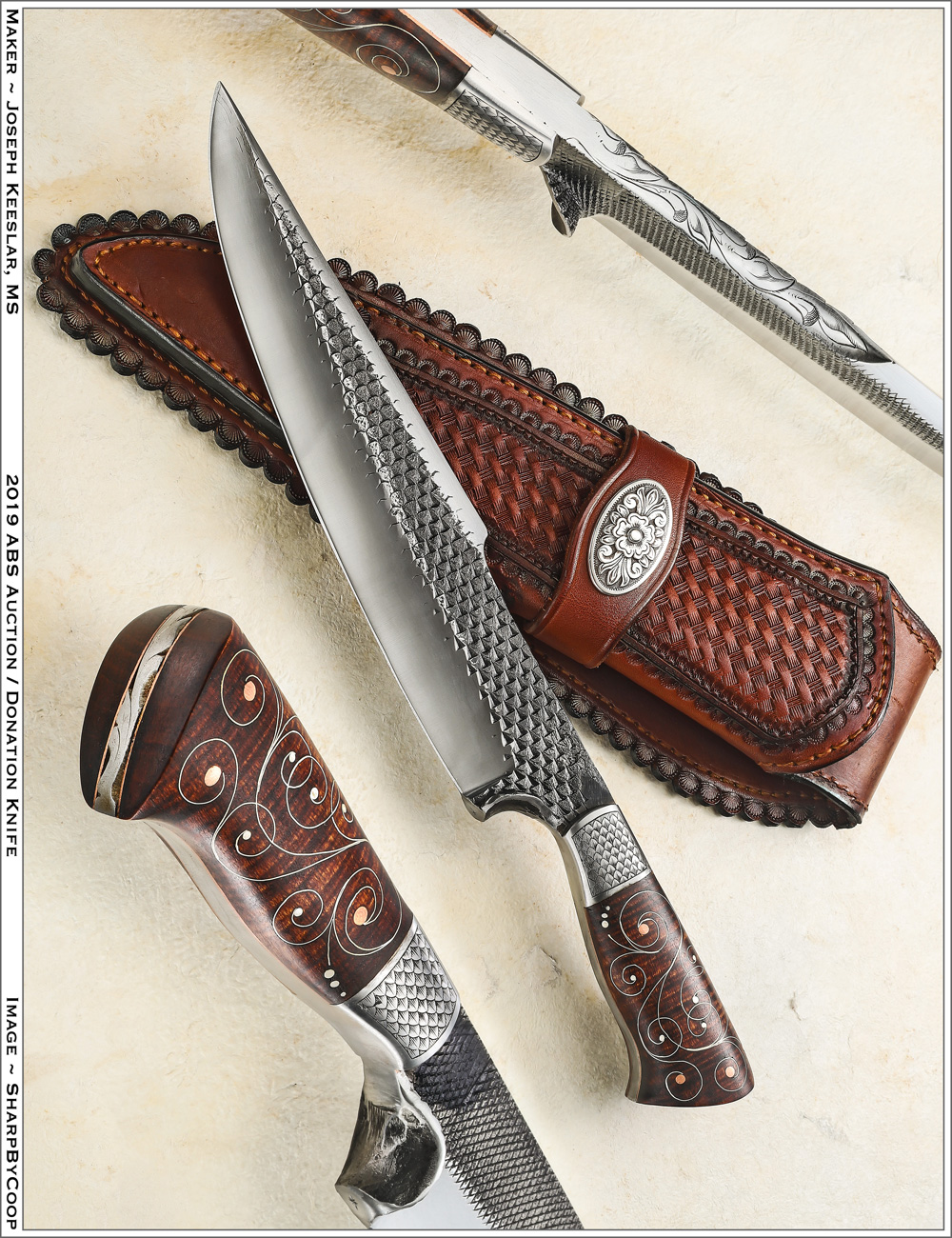
A resident of Almo, Kentucky, Joe has had an extensive, storied career in the American Bladesmith Society, earning his ABS master smith stamp in 1989. Known for his forged fixed blades, many in the brut de forge style, he also is noted for his beautiful handles with silver wire inlay and matching leather sheaths, the latter often adorned with conchos and other rich embellishments.
Joe joined the ABS board of directors in 1991, served as ABS president from 2003-07, and completed his second term as president in 2015. He has had a dramatic influence on bladesmithing in Europe, where he was chiefly responsible for the first modern hammer-in held in France. He is also a frequent demonstrator at the Thiers Knife Show, one of Europe’s largest knife shows, in Thiers, the knifemaking capital of France. He is the only American knifemaker to receive an honorary membership in the Confrerie du Couteau de Thiers, a French knifemaking organization.
Joe Keeslar (inset) is known for his gorgeous brut de forge fixed blades in silver wire inlay and sheaths to match. (SharpByCoop knife image)
As one nominator wrote, Joe is “the most effective maker in the USA to extend forged-blade activity in Europe,” and is the most active in spreading the ABS’s “high level of information.” He has taught knifemaking at the William F. Moran School Of Bladesmithing and at Haywood College, at hammer-ins in Alabama, Arkansas, North Carolina and Ohio, and at the first four renditions of BLADE University at the BLADE Show. He is author of the books Handles and Guards and Forging and Finishing the Brut de Forge Knife. He also is primarily responsible for the rapidly expanding ABS youth program, which holds an annual hammer-in at Smoky Mountain Knife Works.
According to another nominator, Joe “embodies the calm and consistent leadership, knifemaking skills, education and friendship that is so valuable to the entire world of knives.” According to another, “Joe has done more for the ABS than any person besides the late, great W.F. ‘Bill’ Moran.” Lastly, Keeslar was awarded the first annual Aldo and Edda Lorenzi Award at the 2015 BLADE Show for his many contributions as a mentor to bladesmiths worldwide.
Jim Sornberger
Jim Sornberger
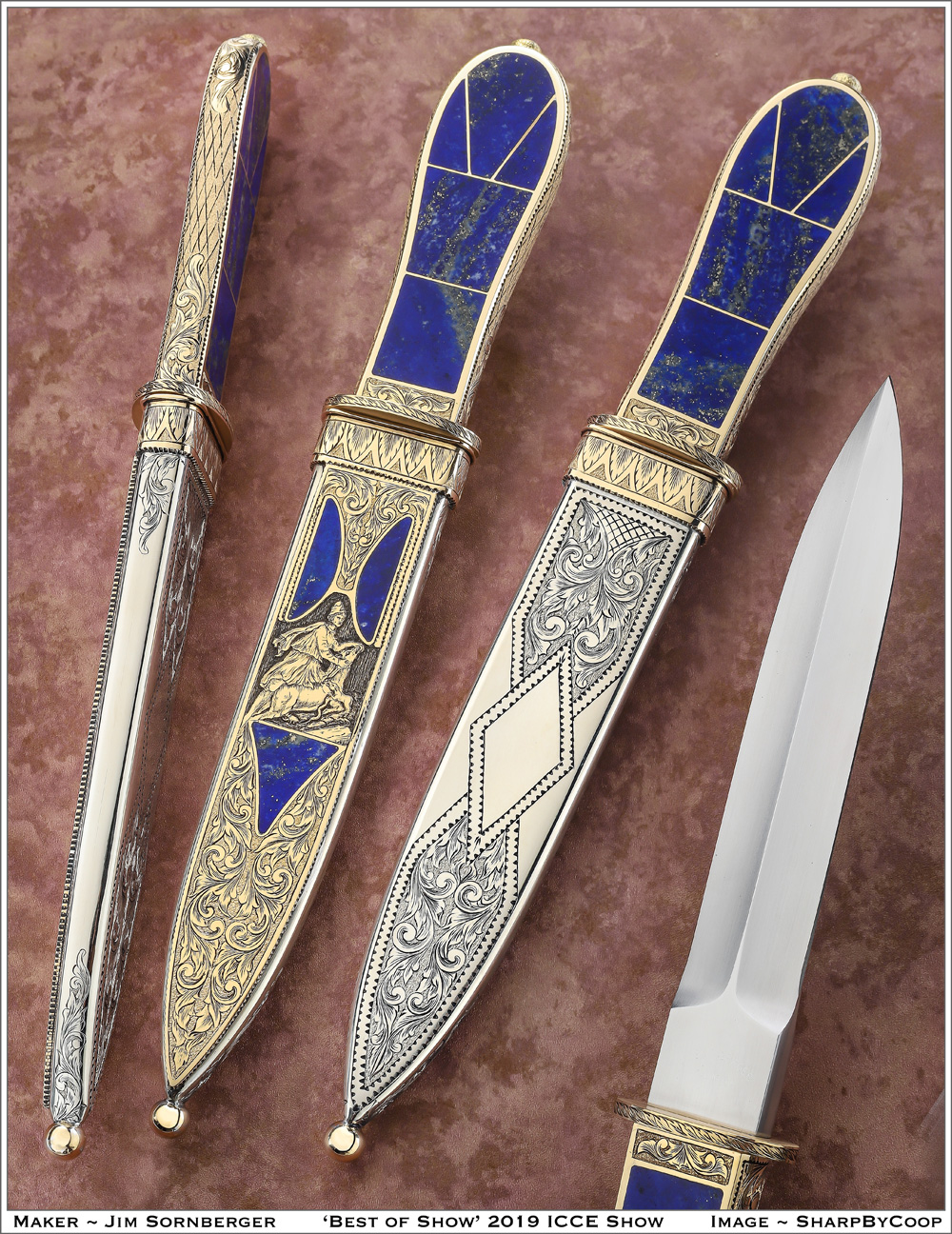
Calling Volcano, California, home, Jim is a veteran stock removal knifemaker known for his award-winning fixed blades and folders, among the former especially his ornate California-style dress bowies in exotic handle materials such as lapis lazuli and gold quartz.
According to a nominator, when Jim started building knives in 1970, there were only a handful of makers in northern California. As more people became interested in knives and Jim’s “knife family” grew, they experienced difficulty buying knifemaking supplies because no one on the West Coast sold them.
As a result, along with Bill Holt, Jim started H&S Supply in 1981. Cutlery Hall-Of-Famer Bob Loveless and Jim made sure H&S had the right-size steel for knifemaking, and when 154CM stainless steel became “unclean,” they helped bring in ATS-34 stainless so many West Coast makers would have it available. Jim and Bill helped support many of the makers who could barely make ends meet by selling them the steel on credit. In fact, Jim still has a bar of 154CM that Loveless gave him many years ago.
Jim Sornberger specializes in 19th-century-style dress bowies such as this San Francisco knife that won Best In Show at the 2019 ICCE. (SharpByCoop knife image)
Circa 1980, along with a few others, Jim sponsored and organized the Bay Area Knife Collectors Association (BAKCA) Show, which went on to become the most successful club show on the West Coast. Jim would generously give up his table space to help makers get started, including his good friend and outstanding knifemaker in his own right, Stan Fujisaka.
In later years, Jim helped bring interest to the California-style dress bowie in gold work and engraving. He shared most everything he learned with other makers, helping many to learn the craft. He writes articles for KNIFE Magazine and has written for BLADE®, and also helped write BAKCA’s by-laws. For a number of years he served on The Knifemakers’ Guild board of directors, including as vice president.
When Tony Bose first started building knives, he asked a maker to share a knife pattern with him. When the maker refused, Tony decided that whenever anyone asked him for a pattern he would give it to him, and he always has, sending patterns all over the world.
Few have done more in mentoring and teaching their fellow makers through instruction and by example than Tony, who is perhaps the world’s best-known contemporary custom maker of traditional slip joints. It’s never been his mission to simply make knives. Instead, he aspires to “bring knives back from the dead.”
His love of knifemaking began in 1972, when he made his first custom fixed blade from an industrial hack-saw blade. As he put it, “I’ve been trying to make a knife that I’m completely happy with ever since. It hasn’t happened yet.”
He worked for years perfecting his skills before pursuing a full-time custom knifemaking career in 1990. His impact was quickly felt when he won Best Folder at the 1994 East Coast Custom Knife Show and also at the 1995 BLADE Show.
In 1998, Tony began working as a custom collaborator with Case. Since 1999, among the knives he has designed for Case are collaborations of vintage patterns made in limited quantities on an annual basis. One such offering was the Arkansas Hunter, winner of the BLADE Magazine 2008 Collaboration of the Year.
Tony’s a crowd favorite at Case consumer events, knife shows and swap meets across the country, and he willingly shares his techniques with other makers to keep the art of making traditional knives alive for future generations. He’s also taught classes on knives and knifemaking at BLADE University during the BLADE Show, and for many years made and donated knives for silent auctions at BLADE Shows to raise money for the old National Knife Collectors Association.
This past year, Tony was awarded the fourth annual Aldo and Edda Lorenzi Award at the BLADE Show for his many contributions as a mentor to knifemakers worldwide.
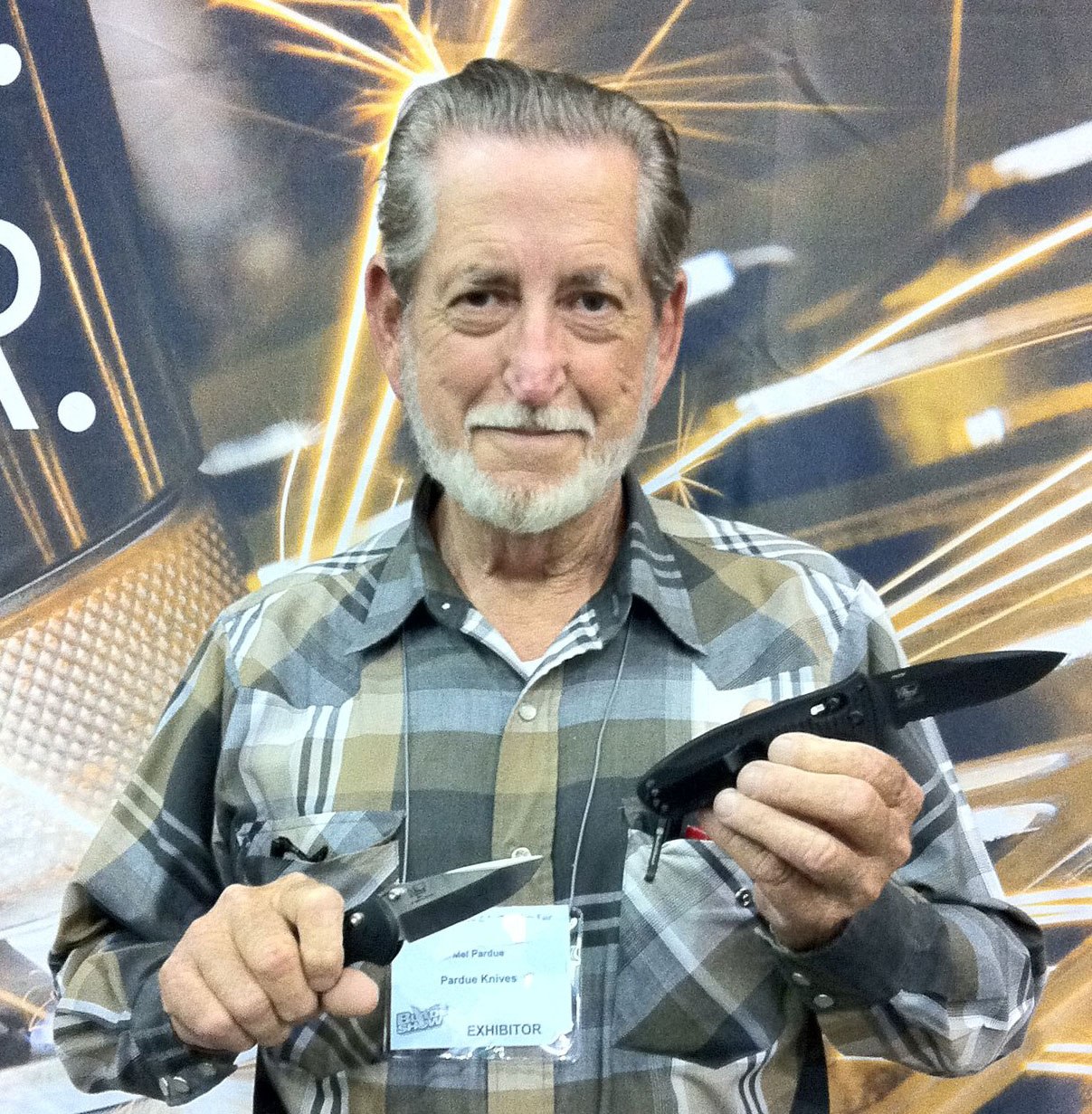
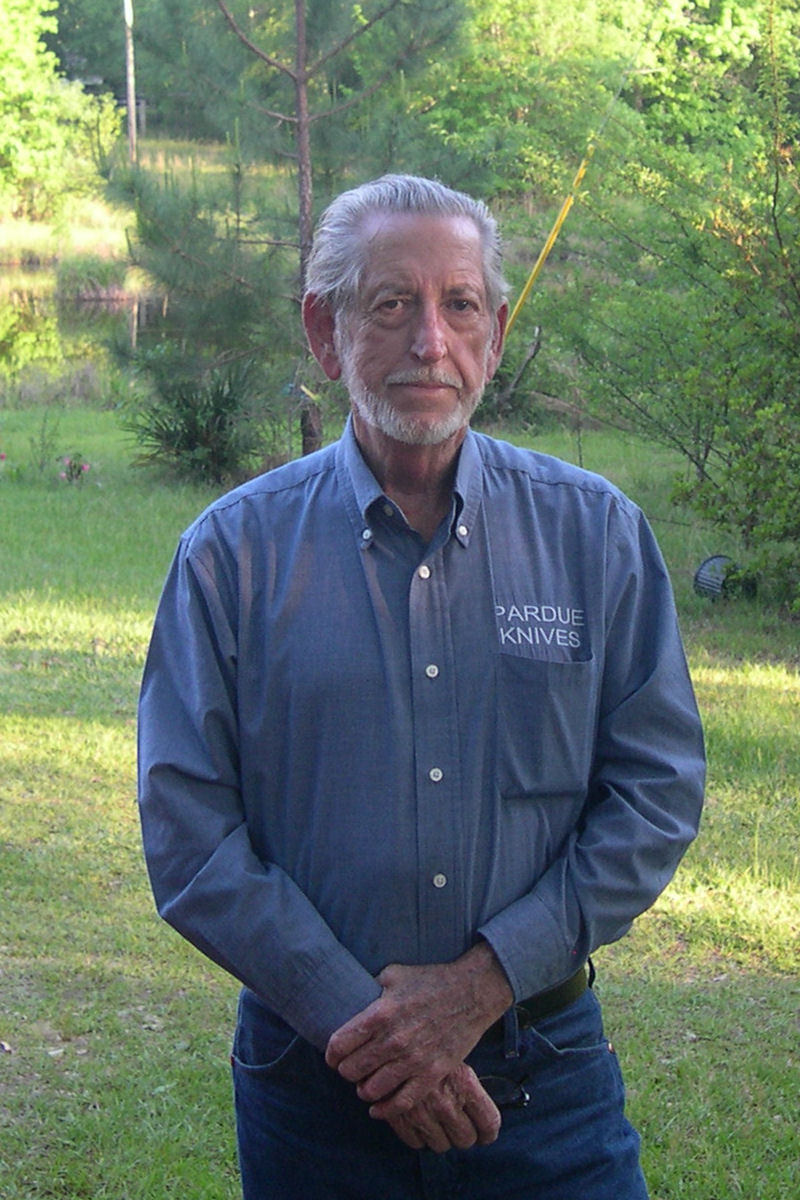
MEL PARDUE
Mel Pardue
Mel Pardue made his first knife in 1952 and has fashioned them on a regular basis since 1956. A voting member of the Knifemakers’ Guild for almost four decades, he served on the Guild’s board of directors in various capacities for 14 of those years, the final 10 as vice president. He received the Ron Little Award in 1992 and is a past winner of the Guild’s Red Watson Friendship Award.
He is the first person without membership in the American Bladesmith Society to teach at the William F. Moran School of Bladesmithing, where he conducted classes on how to make folders. He has taught the same subject at the Batson Bladesmithing Symposium, and has held seminars and classes in the Pardue shop for over 40 years. His numerous designs for Benchmade Knives have been among the company’s most popular and best-selling models for many years.
In 2016, Mel was presented with the BLADE Show’s Aldo and Edda Lorenzi Award for his outstanding work in teaching and mentoring his fellow makers in the art of building knives.
As one nominator noted, “Mel exemplifies the pure definition of a custom knifemaker. He is a craftsman of the highest caliber who hand makes his world-renowned knives, one by one, without the use of modern technology. He embodies the highest level of personal and professional ethics.
In the nearly four decades I have known Mel, he has demonstrated a true respect for both fellow custom makers and unselfish dedication and love for his craft, sharing hard-gained knowledge and skills. He has helped dozens of up-and-coming knifemakers of all ages.”