Home Authors Posts by Steve Shackleford

Steve Shackleford

Hottest Makers’ Hottest Knives

The latest installment of the hottest makers’ hottest knives employs the expertise of leading purveyors who buy custom knives and sell them, and each has been doing it for quite some time. They know what’s hot and what sells. If they didn’t, they would not be in business for so long—and BLADE® would not be asking them what they think are the hottest makers’ hottest knives. In alphabetical order, the purveyors are Larry Brahms of Bladeart.com; Daniel O’Malley of BladeGallery.com; Les Robertson of Robertson’s Custom Cutlery; Paul Shindler of Knife Legends; Dave Stark of Steel Addiction Knives; and Duane Weikum of EDC Knives.

    As with any dynamic category of well-made tools, the custom knife industry continues to evolve—and it must to keep pace with the demands of today’s sophisticated knife buyers. For instance, Stark indicated he deals with two categories that a number of leading makers are gravitating toward: tactical and dress tactical folders. “It’s a new slot for these guys Everybody’s doing both,” Stark said. “The dress tacticals come in Mokuti [a combination of mokume and titanium], mammoth ivory and damascus. Chad Nichols is the man in damascus now. He makes Mokuti and damascus in unique patterns, especially the Mokuti.”

    Robertson seems to agree, though he calls them “hybrid folders” instead of  “dress tacticals.”

    “Tactical folders and hybrid folders are the hottest knives on the market,” Robertson opined. “Hybrid folders start out with a tactical design and then, in lieu of standard blade steels, titanium bolsters and synthetic materials, upgrade the base design with damascus for blades and bolsters, and other materials such as Mokuti and supercollider material for bolsters and frames. Lastly, the handle material is upgraded to high-end natural materials.”

    O’Malley outlined several categories that are extremely hot: production/custom crossover makers (makers that are known both for their production knives and custom knives); art knives, that is, “carved artwork with an edge”; handmade hunting knives; gent’s knives with a tactical edge; and handmade kitchen knives. For Weikum, custom balisongs are gaining traction.

    “The balisong market is heating up in 2012. We have makers who have been making balisongs for years and now produce the best balisongs there are, including Charles Marlowe, Terry Guinn and Chris Olofson of 29 Knives,” he noted. “You also have young makers coming into the market and setting it on fire such as Jeremy Marsh, G.T. Cecchini, Todd Begg, Brad Southard and Sam Eddleman.”

     Robertson indicated specific knives in damascus also are in demand. “Another hot market sector is damascus hunters and damascus bowies—not just any damascus hunters or bowies, but those from the established makers featuring top-quality, natural handle materials,” he observed.

    Shindler said Italian and French makers continue to be red hot on the art-knife side of the ledger, including Charles Bennica, Jean-Pierre Sucheras, Antonio and Salvatore Fogarizzu, Salvatore Puddu, Emmanuel Esposito and Fabrizio Silvestrelli. “This goes along with the usual Art Knife Invitational suspects—Michael Walker, Jurgen Steinau and Wolfgang Loerchner,” he noted.

    “The current economic climate seems to have driven many collectors out of the $1,500-to-$5,000 price range, which is impacting just about nearly every high-quality knifemaker you can think of. The exceptions are the French and Italian makers who fall into this price segment,” Shindler said. “Long-time elite makers in this price range who are coming to shows with new ideas and patterns appear to be fairing much better than top-notch makers who bring the same patterns and models to shows they’ve been selling for the last 10 years. This will most likely change when there is once again an influx of new collectors who don’t already own those patterns—most likely after the economy is on the mend and everyday folks and collectors are back to work.

    “From what I hear, there is no shortage of collectors for knives in the under-$700 price category, and the same may be said of knives in the $7,000-$10,000 category. Collectors are actively buying knives in that price range if you have exactly the knife they are looking for at a very competitive price. I see no change in the over-$15,000-per-knife market, where the same collectors continue to actively buy the best and most-sought-after models of the most elite makers—in the rare instances when knives by those makers become available.

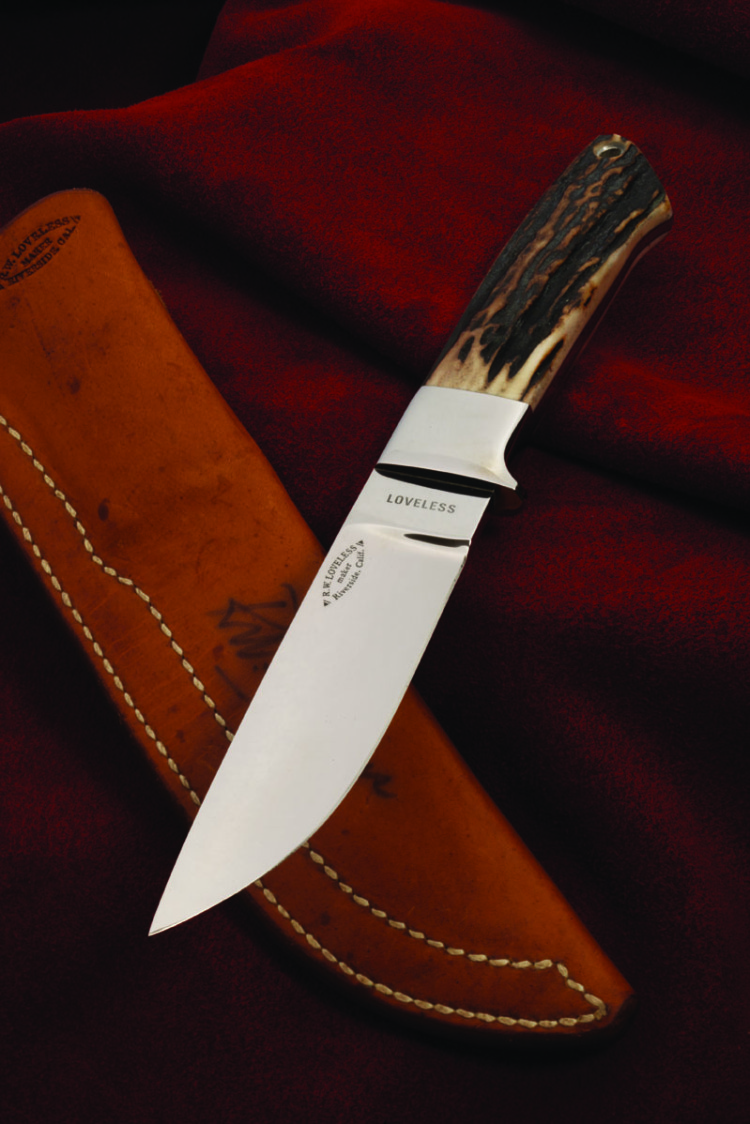
    “Hardly a day seems to pass without the appearance of new slip-joint and Loveless-tribute knifemakers into a market which is currently not growing overall,” Shindler continued. “As a result, more and more makers in these two categories are carving up the business into smaller and smaller pieces, making it tougher for even the best-known and most successful slip-joint and Loveless-tribute makers to do the business of even two or three years ago.”—By Steve Shackleford


 Hottest Makers’ Hottest Knives

Maker                                        Knife List                                        Price*

Jens Anso                                  Model 67                                        $675

Todd Begg                                  Bodega                                          $900+

Tashi Bharucha                          Deep Cover                                   $675

David Broadwell                         Carved art fighter                          $2,000+

Michael Burch                             Platypus                                       $1,000

Jim Burke                                    Crusader                                      $850

Lucas Burnley                             Kawaiken flipper                            $600

G.T. Cecchini                               Anything he makes                       $900+

Brian Fellhoelter                          FLG                                              $500

Jerry Fisk                                    Sendero                                        $2,000+

Les George                                 Rockeye                                       $475

DireWare                                     Solo                                             $500

Allen Elishewitz                           Gordian Knot                                $950

Rick Hinderer                              XM18                                           $400+

Flavio Ikoma                                Harrier                                         $2,000+

Korth                                            Carved Sentry                             $2,400+

Schuyler Lovestrand                    Sub-hilt fighter                             $1,000+

R.J. Martin                                   The Devastator                            $650+

Tom Mayo                                    Persian flipper                             $800

Charles Marlowe                          S1                                               $1,600+

Jeremy Marsh                               Vanquish                                    $1,200+

Scott McGhee                              Mamba                                        $700+

Gerry McGinnis                            Peligro                                         $675

Shawn McIntyre                           Damascus hunter                         $850

Jonathan McNees                        MCK1                                           $170

Fred Ott                                        Stag hamon hunter                       $585

Todd Rexford                                Epicenter                                     $1,000+

Phil Rose                                      Survival/military fixed blade          $475

Sniper Bladeworks                        DH                                                $575

Tim Steingass                               AK Hunter                                      $310

Mick Strider                                  Anything he makes                         $900+

Andre Van Heerden                      M27                                               $1,025

Nick Wheeler                                Fighter                                            $800+

Daniel Winkler                               WK II Belt Knife                             $350

Will Zermeno                                 LR2 Azrael                                    $325

*Prices will vary depending on whether knives are primary or secondary market, materials, configurations, etc., and are subject to change at a moment’s notice.


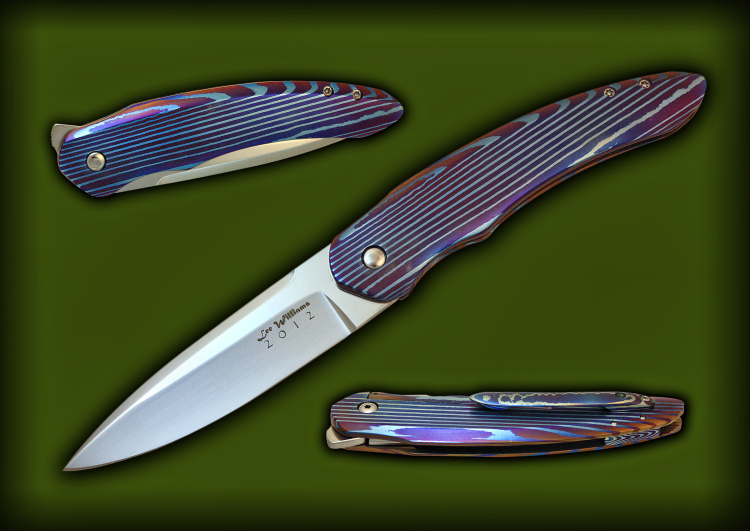
HERE’S THE POOP ON THE KNIFE BY STEEL ADDICTION CUSTOM KNIVES PICTURED AT TOP:

Maker: Lee Williams

Knife: Horizon

Pattern: Dress tactical

Action : Flipper

Blade steel: CPM-154 stainless

Blade length: 3.75”

Handle: Mokuti by Chad Nichols

Special Feature: Bee Line kick stop ensures the flipper tab “disappears” when the knife is open

Insider’s Info: “Lee Williams’ Mokuti piece, the Horizon flipper with the Bee Line kick stop, is about as hot as they come.”—Dave Stark, Steel Addiction Custom Knives

Maker’s List Price: $1,600


For info on how to subscribe to BLADE, click on http://www.shopblade.com/blade-magazine-one-year-subscription-us/?lid=blss090512

Hunter’s Edge: Kutmaster Cutting Combo

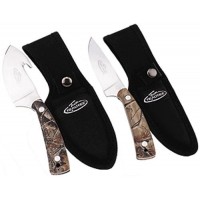
Tackle any number of hunting knife chores with the Kutmaster Team Realtree Field Dress/Caping Combo .

    Outfitted in Team Realtree saw-cut camo handles and 420 stainless blade steel, the set includes a gut-hook skinner and caping knife.

    The full-tang-construction fixed blades are designed for work on both big and small game.

    Nylon belt sheaths complete the cool cutting combo.

    ShopBlade’s price: $29.99.

For more info click on http://www.shopblade.com/kutmaster-team-realtree-field-dress-caping-combo-knives-y7731/?lid=blss090412

Knives Of The Living Dead

Zombies are everywhere you look—movies, TV and sneaking up behind you. Surviving the dreaded zombie apocalypse with creatures running amok eating brains sounds like a great night watching TV. While the knife industry is not immune from following trends, any knife useful in the coming zombie apocalypse also would work great in everyday and survival situations.

Haitian folklore described zombies as individuals drugged into a death-like state, without freewill and controlled by their voodoo masters. Modern zombies had their start with the 1968 cult classic, The Night of the Living Dead, directed by George Romero. The black-and-white horror flick has served as the model and inspiration for movies, literature and more than a few costumes. Forty plus years later, The Walking Deadtelevision series on AMC, inspired by the comic series of the same name, has become a smash hit.

The modern zombie is a dead body infected by an unknown disease that craves human flesh. Zombies seem to have an affinity for brains, though it is hard to imagine what primitive zombie thought process figured that out. It is hard to sit through modern zombie thrillers without jumping in your seat, or stifling a scream when the previously hidden zombie grabs the unsuspecting victim.

“DE-ANIMATING” ZOMBIES

So, what role would a blade have in a zombie apocalypse situation? The rule of thumb for these movies is you are on your own during the disaster and for some time after. Recent natural disasters have shown this to be true in real life as well.

The first thing that comes to mind is you need a gun. That’s fine, except current zombie lore teaches us gunfire attracts zombies—and you will run out of ammunition. As long as you have a knife in your hand, you are armed. Ergo, the first use of a blade is for defense. The politically correct term is “de-animating” the zombie, as you cannot kill what is already dead. Your goal is to make it stop moving, or more specifically, stop moving toward you. This seems to involve destroying or cutting off the zombie’s head. Try not to set the zombie on fire, as the idea of a 6-foot burning match stumbling through your hideout seems a bad idea.

The second need for a knife involves day-to-day survival. This would include preparing food (preferably the kind zombies do not like), preparing wood for fires, and providing shelter. As a serious knife enthusiast you might have a wide range of tools for the job. If not, the knife companies that have embraced the zombie movement have made your job easy.

THE ORIGINAL ZOMBIE KNIVES

KA-BAR has been in business for over 100 years. Its Zombie™ Knife line is hard to miss with its “toxic green” handles. While most knife enthusiasts associate KA-BAR with traditional military issue knives, the Zombie Knife lineup presents new knives for a 21stcentury sub-culture. Paul Tsujimoto, a KA-BAR senior engineer, reports that many zombie enthusiasts were already using knives such as the KA-BAR 1217 USMC fighting/utility knife. Taking that enthusiastic base and providing purpose-built zombie knives involved embracing some basic rules.

“We didn’t have to totally rethink our design philosophy,” Tsujimoto began. “Any knife can be a zombie knife but we prefer it to be a KA-BAR, as we are the original Zombie Knife. But some general guidelines would be: big, strong, simple, capable of multi-tasking, a true wilderness type of knife.”

As mentioned, the KA-BAR Zombie Knife lineup stands out because of the striking green-colored handled. “The Toxic Green handle was one of the ways to keep some distance from our more traditional lines,” Tsujimoto explained. “We wanted to keep it way over the top/tongue–in-cheek. But we added a set of black handles so if people wanted a more conservative look, that could be accomplished. It seems that toxic green is the new blaze orange.”

KA-BAR’s Zombie Knife lineup includes models such as the 5698 “Kharon” Tanto Folder and 3058 “MULE Folder,” both lockbacks, to larger chopping or slashing knives such as the 5701 “War Sword” and 5702 “Pestilence Chopper.” The 5704 Zombie “Chop Stick” would be at home in a campsite chopping wood as well as quelling any zombie uprising. The only model that seems out of place is the small, stealthy 5699BP Zombie “Acheron” Neck Knife. It is a great little knife with an all-black finish; it just lacks the eye-catching green handles.

The future seems bright for KA-BAR’s Zombie Knife lineup. Tsujimoto reports two new models coming that he cannot announce yet and a blunt-nose machete modeled after the World War II USAAF Machete. When asked about any special deals, he stated, “Buy now before they run out. There will be no deals when the apocalypse hits.” How can that not be excellent advice?

THE APOCALYPSE KIT

Gerber Gear, maker of Gerber Legendary Blades, manufactures knives, machetes, saws, axes, flashlights and other survival necessities. The company has introduced The Apocalypse Kit, which is an easily carried roll that opens to provide access to seven razor-sharp cutting tools: the Gator Machete, the Gator Machete Pro, the Camp Axe II, the LMF II Infantry military-style sheath knife, the medium-size DMF folder, the smaller Epic sheath knife, and the highly functional Bear Grylls Parang. This collection of tools made its TV debut on an episode of The Walking Dead. Finding the rolled-up tool cache in the back of a truck, as they did on the TV show, would make any survivor happy. It is hard to imagine needing anything else except for a silencer-equipped chainsaw.

Product placement allows companies to put their product in the movie or TV scene. Sometimes it does not make sense and seems out of place, but with Gerber’s Apocalypse Kit, the company has placed the product in a very logical situation (albeit a little too convenient) where the tools can be featured in use. Though the knives for the action shots have rubber blades, one can get a feel for how they might be used in the unlikely zombie attack. Gerber also had a zombie-themed display at the 2012 SHOT Show, where visitors were invited to pose with the blades from the kit next to a threatening zombie dummy (see picture above).

Gerber has taken on the growing trend toward survival preparedness in the same way it approached wilderness survival with its sponsorship of Bear Grylls (page 30, July 2011 BLADE www.blademag.com). “Gerber doesn’t have any plans to create zombie-specific knives yet,” Gerber’s Andrew Gritzbaugh said, adding, “the current collection of gear is up to the task today.” With an MSRP of $349, the Apocalypse Kit is a collective group survival bargain.

“5 GUYS IN A SHOP”

The folks at Zombie Tools in Missoula, Montana, have a very different approach to the zombie problem. If KA-BAR and Gerber represent the well-established corporate approach, the craftsmen at Zombie Tools represent the barbarians at the castle gate. With roots in the sword enthusiast community, this small company works hard to keep up with demand for its blades. Rather than mass production, the Zombie Tools sales literature proudly states, “Our blades are made with 100 percent American-made materials, and they are made by five guys in a shop in Montana.”

Using 5160 spring steel with aluminum handle slabs wrapped with leather, the blades are built for hard duty, though the makers admit not all of their swords see use. “Our customers seem to break into two camps: those that like our blades for the aesthetics and hang them on the wall, and those that take them out and use them,” the Zombie Tools literature maintains. “Brush clearing and campfire wood splitting seem to be the most common uses.” With a very well-designed website and YouTube videos showing their blades in action, the Zombie Tools crew takes an irreverent look at zombie hunting and the abilities of a well-designed handmade blade.

Examination of the Zombie Tools Vakra, which sports a kukri blade, quickly reveals the care and workmanship that goes into it. With a price of $249.95, the 19-inch-long Vakra has a significant presence when removed from the well-made Kydex® sheath. The quarter-inch thickness does cause the weight to hit 1.75 pounds, but the heavier weight is appropriate for the kukri-inspired design and the knife’s inherent chopping ability. Along with the Vakra, Zombie Tools also makes several swords, including katanas, as well as other zombie-capable slicers.

BRING ON THE APOCALYPSE!

At a recent knife show, dealers were asked, “Who is the typical zombie blade enthusiast?” Several agreed they are mostly, though not exclusively, males of all ages, and definitely viewers of zombie TV shows and movies. The knife companies entering the zombie arena of marketing did so only after significant research. The winners are knife consumers, who benefit from some seriously fun tools that also have a practical purpose.

Should the dreaded zombie apocalypse fail to materialize, you still have some great tools. If it does, game on—you are now prepared!—by David Jung


LEARN MORE ABOUT KNIVES OFF THE BEATEN PATH

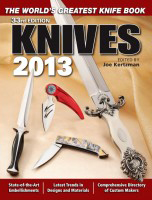
The world of knives is constantly turning out new and different designs that push the envelope. Get an overhead view of this exciting scene with the Knives 2013 book. It’s full of beautiful photos, in-depth features and knifemaker listings.

Click here to order Knives 2013 at a great discount from ShopBlade.com.

Hunter’s Edge: Scagel Knives Medium Hunter

Ready yourself edgewise for the upcoming fall hunting season with a classically designed outdoor knife, the O Style Medium Hunter from Scagel Knives.

    Based on the style of Blade Magazine Cutlery Hall-Of-Fame© member William Scagel, the knife sports a 5.5-inch blade of A-2 tool steel heat treated to 58 HRC to take an edge and hold it for field dressing and other game chores.

    A convex grind—the favorite of another Cutlery Hall Of Famer, Bill Moran—enhances blade geometry, and a spalted maple handle with a single guard completes an attractive, ergonomic handle.

    Weight: 7.5 ounces. Overall length: 10.125 inches.

    For more info click on http://www.shopblade.com/scagel-design-knives-medium-hunter-o/?lid=blss082712

9 Keys To Ordering Custom Knives

Few things are more satisfying than placing a custom order with your favorite knifemaker and then holding the finished knife in your hands.

However, the process from start to finish is not always simple.

If you are thinking about ordering a custom knife, consider a few important points as you pursue the maker and the knife. Simply placing the order may be challenge enough, depending on the maker’s backlog and obligations to others. In fact, some makers do not accept orders. Deciding exactly what you want, preparing to convey that to a prospective maker, and then coming to an agreement on the terms of the deal require thought and planning.

Collectors interested in ordering a custom knife are driven primarily by a desire to own the work of a specific maker, the desire to own a specific style of knife complete with certain favored materials, or a combination of the two. Custom makers regularly do have backlogs, and you may also have to decide how long you are willing to wait. Though the Internet brings a wealth of information to the computer screen, the process of ordering a custom knife remains virtually the same as it has been down through the years.

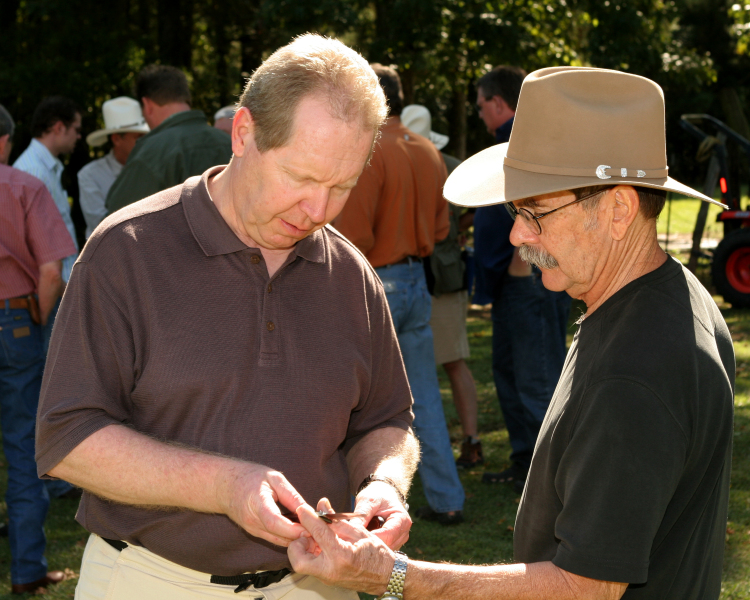
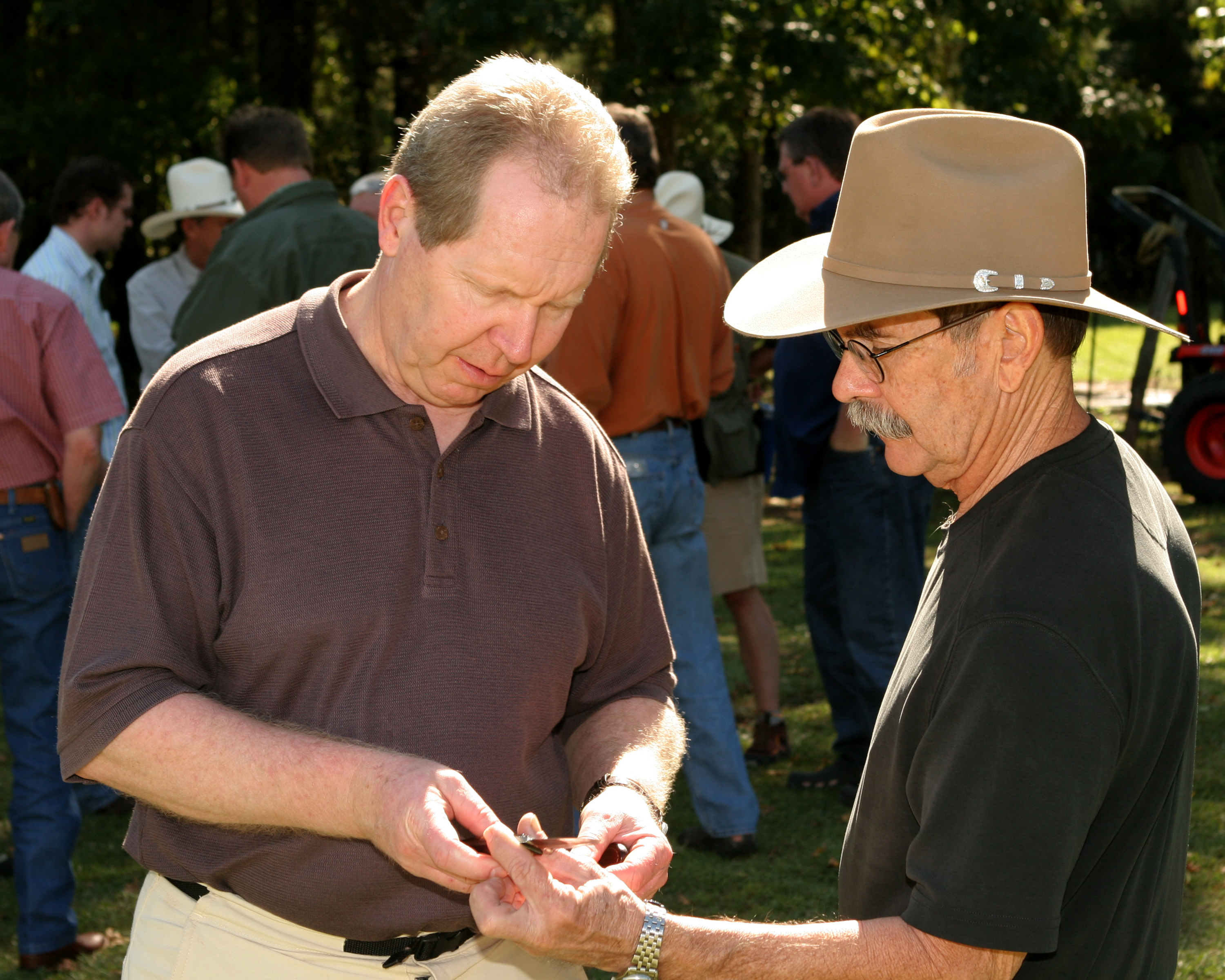
“Other than the fact you can do your homework about a maker in a short period of time [thanks to the Internet], I don’t think the ordering process has changed much,” related veteran collector Paul Kessler, pictured above at left talking knives with ABS master smith John White. “What has changed is how we get to placing that order. My first custom order was from a maker whose work I had seen in an A.G. Russell publication. I wrote that maker and received a reply. Then, there was a return letter from me with $5 in it for a packet of color photographs of the maker’s work, and an explanation of the materials he used in the construction of his knives. Then, of course, came another letter with an order, and then finally the knife.”

The Internet does allow an exchange of information within minutes, while just a few short years ago such a dialogue between maker and collector might take days, even weeks. “The problem with the Internet, however, is that you can’t hold the knife in your hand and feel it,” warned collector Larry Abramson. “I have seen knives and fallen in love with the picture, and then when I handle the knife it just doesn’t fit.”

Phil Lobred has been collecting knives since 1968 and agrees the most significant change in the custom-ordering process is the speed of the computer age. He still recommends the personal approach.

“Usually, I like to talk face-to-face with the maker so he has a better understanding of what I want, and I get a better feel for whether I’m going to get what I want,” Lobred advised. “Simply contact the maker and ask if he’s taking orders. If he is, give him one. If he is several years behind, you may not even need to pick the style of knife at the time you order [but instead pick it] when the maker is ready to make it. You may change your mind several times from when you put the order in and when the knife is to be made. Or, better yet, talk to the maker at a show [see sidebar below] about the knife you want and order it there. Knife shows are a ‘hands-on’ experience as opposed to looking at pictures. You can watch football but it’s a whole other thing to play football.”

LEVELS OF INVOLVEMENT

One aspect sometimes overlooked is the collector’s expectation of direct involvement in the making of the knife itself.

“That is between each maker and collector,” Lobred commented. “Some collectors want to get too involved. I learned a long time ago that I liked to give the maker the style of knife I wanted—upswept hunter, dropped hunter, fighter, bowie, folder, etc., full tang or narrow tang, and handle material preference. If I order something like a San Francisco knife, I tell them the style of knife I want, the handle material, and maybe the metal to use in certain places, especially if you are using gold and silver. Then, I wait like everybody else and hope I like the final result. I choose the makers I use because I like their work, I trust their work, and I like the maker. Most people should leave the actual knife designing to the maker.”

Kessler leans heavily on his knowledge of a custom knifemaker, the maker’s reputation, and the already assessed quality of the maker’s work. Involvement? “Not much more than the choice of materials and input into the basic design,” Paul said. “The orders I place are with makers and the style of knives they’re making that I’m already familiar with.

“Of course,” he continued, “if you’re asking your ‘favorite maker’ to build a style of knife that’s outside the box from what they normally make, then you will of necessity be more involved in the design process, its implementation, and the materials used in making the knife. If I’m ordering a knife with the thought of having it engraved, I will ask the engraver to be involved in the design of the knife itself. If possible, it’s always nice to have a few ‘work-in-progress’ photos from the maker as the work [evolves].”

DEPOSITS: YES OR NO?

When it comes to paying an up-front deposit to the maker, opinions vary. While it may seem practical to pay for high-end materials in the beginning, as a general rule it may be advisable to shy away from a deposit, particularly if the waiting period is lengthy.

“I very rarely pay a deposit,” Lopez explained. “I try very hard not to. I can see a maker’s point of view of making a knife and maybe having the person back out. By the same token, most makers think they will just be able to sell the knife to another person if that person doesn’t want it. I can certainly understand it if it’s a custom order that is out of the maker’s norm, or if it requires a lot of gold or out-of-pocket expense for the maker.”

Lobred added, “You should not pay a deposit until the maker is ready to make your knife. Makers should not accept a deposit until then. If you pay up front, the money gets spent and the maker is in trouble because they need the time to make the knife and the money for the time.

“I used to pay for the knives when I ordered them thinking that would put pressure on the maker to get my knife done. It doesn’t work. It just causes problems down the line.”

PREPARATION & COMMUNICATION

Avoiding problems that occur during the custom-order transaction benefits everyone. If a collector is dissatisfied with the finished product, the conversation that follows may be difficult. Most makers, however, want their customers to be happy and will do their best to work things out.

“Have your maker in mind, and definitely don’t rush because things can pop up,” Abramson concluded. “Make sure everything is communicated on the front end and maybe draw up an order form that both parties can sign so everything is in writing, almost like a contract.”

Trust is the critical element in ordering a custom knife. Both the knifemaker and the collector should be comfortable with one another and willing to communicate. Preparation makes all the difference.—By Mike Haskew

9 Keys To Custom Orders

•First, be sure the maker accepts custom orders;

•Know the maker’s backlog and obligations;

•Decide how long you are willing to wait for the knife to be delivered;

•If possible, talk face-to-face with the maker;

•Be sure you know what you want and convey it well to the maker;

•Except in special situations (see the following bulleted key), leave the actual knife designing to the maker;

•Order a style for which the maker is known; if not, accept more responsibility for the implementation of the knife and the outcome;

•If you must pay a deposit, do not do so until the maker is ready to start making your knife, and;

•Draw up an order form you and the maker can sign so everything is in writing. This protects not only you but the maker as well.

The Knife Show Connection

Attending knife shows is high on the list of the experienced collector in helping to size up options before ordering. “I think everyone who likes and collects custom knives should go to at least one knife show a year,” encouraged collector Carlos Lopez. “It’s the way you get to meet all the makers, dealers and collectors. It’s also one of the ways you realize that this big, diverse group of people share your passion. It’s an incredibly nice group of people overall, and it’s always very fulfilling and fun to attend the different shows.”

In a practical sense, knifemakers and prospective buyers do establish personal contact at shows, providing one another with a connection that eases the ordering process. A discussion about materials, pricing, approximate delivery date, and other details can take place in a comfortable setting. Best of all, the collector can hold an example of the maker’s work in his hands.—by Mike Haskew


For more about custom knives…


Get your copy of Knives 2013. It’s packed with information about hot custom knife trends. It also features an extensive custom knifemaker directory to help you find the perfect talent to bring your vision to life.

Click here to order Knives 2013 from ShopBlade.com for the best price.

Hunter’s Edge: Gerber Metolius

Get twice the cutting versatility in skinning and dressing game for the upcoming fall hunting season with the Gerber Metolius.

    The folder has drop-point and skinning blades, the latter with a safety ball for the tip to prevent accidental puncturing of the organs of the animal while cutting inside it. The drop point works on a lockback mechanism, the skinning blade via a push button. Each blade is 3.2 inches long.

    The knife sports a Gerber Softgrip overmold handle for enhanced purchase. Overall weight: 4.8 ounces. Length open: 7.9 inches.

    An easy-carry ballistic nylon sheath is included.

    ShopBlade’s price to you: $44.99.


For more info click on http://www.shopblade.com/gerber-metolius-2-blade-folding-knife-y6983/?lid=blss082212


Vote For Your Favorite Expendables 2 Knife!

Sylvester Stallone’s Expendables 2 action blockbuster took the box office by storm this past weekend, in no small part thanks to the knives made for the movie by Blade Magazine Cutlery Hall-Of-Fame© member Gil Hibben.

    All of which got us to thinking …

    Which of Hibben’s knives in the movie is your favorite? Is it (starting from top above), the Legion Fighter on the cover of the November BLADE® (on newsstands NOW), the Toothpick, the Alamo Bowie or the Double Shadow?

    Let us know via a post, e-mail or whatever electronic means you need to use in order to vote.

    And please, only one vote per person!

    All of the above pictures except for the cover are by Mike Carter.

For the latest knives, knife trends, knifemakers, what knives to buy and where, knife legislation, knifemaking instruction, and much more, subscribe to BLADE® Magazine, the World’s No. 1 Knife Publication. Click on http://www.shopblade.com/blade-magazine-one-year-subscription-us/?lid=blss082112

Advertisement

Must Read Articles

Read this before you make a knife

Knifemaking 101 – Read This Before You Make a Knife

  by Wayne Goddard My experience has taught me that there's nothing like digging in and getting started. I've often said the hardest part of the...
how to forge damascus steel

How to Forge Damascus

Advertisement
Advertisement