Home Authors Posts by Steve Shackleford

Steve Shackleford

Knife Handles: As Wood As It Gets

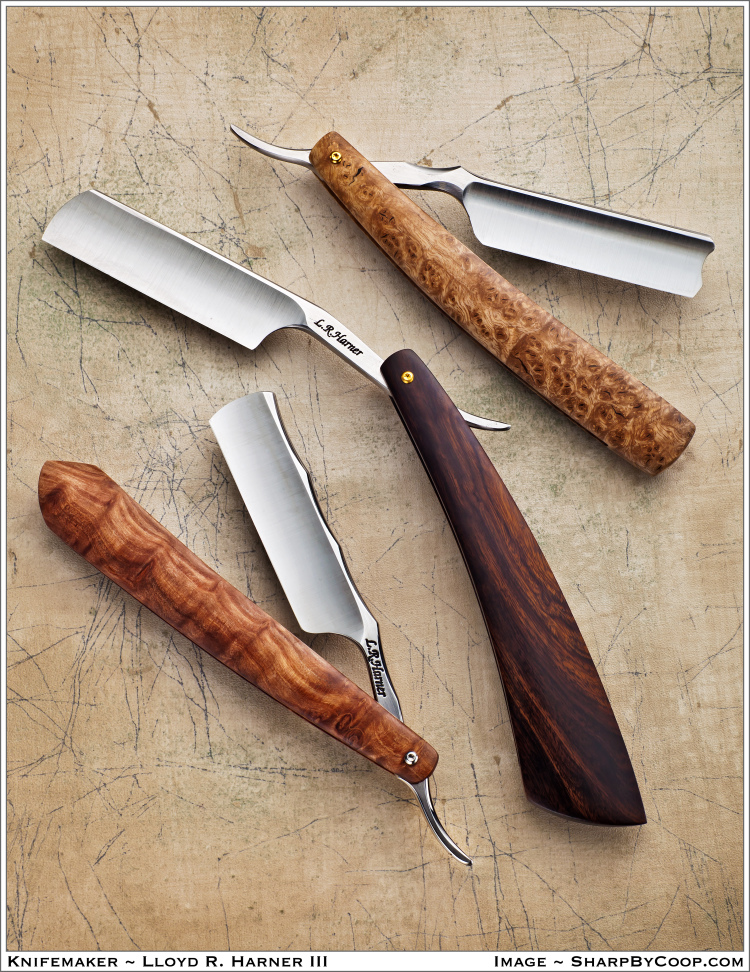
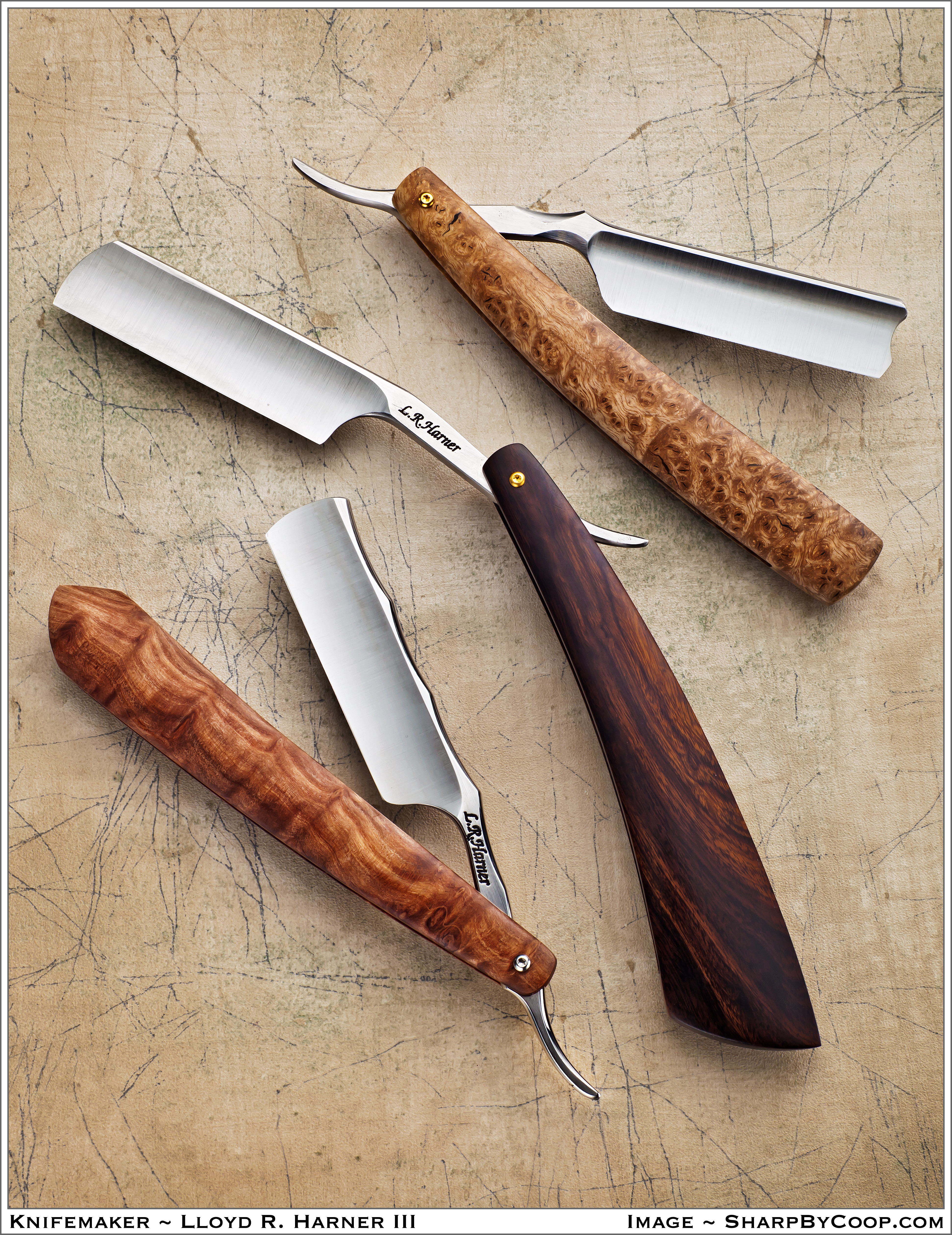
ThereIn the burl category, redwood (left) and black ash (right) are among the more popular woods. Lloyd Harner uses each for the handles of his razors, as well as the most popular of all woods, ironwood (center). The hollow-ground blades are 52100 carbon steel. (SharpByCoop.com photo)

There’s no time like the present to be a stickler for wood knife handles

Curiosity about the wood of choice among makers, users and collectors in terms of utility, user friendliness and good looks gives rise to the obvious question, “Which natural wood handle material is most popular, especially for custom knives?” American Bladesmith Society journeyman smith Peter Bromley and I were discussing the subject over coffee.

    “There are so many types of woods and so many variations within each type that the possibilities are nearly endless,” Bromley said. “You also have to find a piece of wood with a busy grain structure, so when you cut a handle-size piece, then the pattern carries over into the smaller portion.”

    Problem is, sometimes what looks good on a large piece of wood gets lost when you scale it down to handle size.

    “It’s why makers tend to like burl,” Bromley reasoned.  “It’s always busy no matter how small the handle is.”

    Shannon McFall of Knife & Gun Finishing Supplies, Chris Hartman of Masecraft Supply, and Chuck Bybee and his daughter Jessica Bybee Walker of Alpha Knife Supply each responded with two words: desert ironwood.

    “When it’s the highest quality, the most beautiful patterns are ironwood,” McFall said. “It’s still in relatively low supply, but we haven’t had a problem with replacement yet.” The shortage problems result from government regulations regarding the material. “It has become a lot harder to get the nicely figured desert ironwood,” as a result, Walker noted. “If we can’t get it, we switch to walnut. Turkish walnut is extremely dense with high contrast and performs similar to ironwood.” Bybee said he favors the look of highly figured curly koa. For high-end stuff, koa’s deep curls are rich in chatoyance, he opined. Chatoyance is the luster a material—in this case, wood—exhibits when you move it back and forth under a source of light, Bybee explained

    Hartman said ironwood is a favorite in terms of utility, looks and the best combination of both features. However, he questions whether there is a low supply of the material. “Have you ever been to a knife show that didn’t have tables full of ironwood?” he asked. With quality comes price and all those interviewed indicated ironwood is the most expensive of the woods. On the other hand, Walker said maple is probably the least expensive.


WHERE THE BURLS ARE

“Amboyna burl machines well and is a nice wood,” Walker began. She added redwood burl is always very popular—though not with production knife companies because it is more difficult to machine—along with box elder. Hartman agreed. “Amboyna burl has nice, tight patterns and it wears well, plus there seems to be a good, consistent selection available,” he said. “It looks good, feels good and sells well.” McFall cited the popularity of California buckeye, box elder, maple and amboyna burls, all of which are softer woods that must be stabilized to make them suitable for handle use.

    “Maple burl probably was the first wood stabilized successfully, it’s the most readily available and the cheapest, but we don’t sell a lot anymore and it’s not in the top five,” said Mike Ludeman of Wood Stabilizing Specialists International (WSSI). “Box elder burl is the most versatile wood and we double-dye it. Black ash burl and California buckeye burl are popular, and with buckeye each piece has to be graded individually because it can look nice, but have a huge void on the inside, so each piece has to be graded individually and priced accordingly.”

    McFall, whose Knife & Gun Finishing Supplies also provides a stabilization service, echoed Ludeman about the box elder and California burls. “They have the best patterns and finest colors,” she said. “Box elder takes a dye the best in single/double dyed, and you can get the effects of a lot of natural wood with more control over the colors.”

    Along with advances in the stabilization process comes more options. “Something normally bland with a figure can now be dyed to a natural look, rather than staining it as in the past,” McFall noted. “You have more control over the colors.”


“BETTER” OR “JUST NEW”?

Ludeman said stabilization methods are “highly regarded secrets” in a field that is growing.

    “Stabilized is not a word I like to use because it’s thrown around loosely anymore,” he noted. “I achieve 100 percent penetration of an acrylic impregnated wood.” Hartman embellished the point. “I have seen a lot of new ‘stabilizers’ advertised out there, which doesn’t make them ‘better,’ just new,” he offered. “As far as I know, the important part is proper selection and preparation of the wood, and fully understanding the entire stabilization process.” Bybee warned that amidst the growth in companies and individuals offering stabilization services, you should research the subject and exercise caution.

    Factory knives with stabilized wood handles are rare. “Generally, a factory uses stabilized wood, typically U.S. maple or box elder, for a special/limited edition” because of the cost factor, Ludeman said. “It’s not something they make tens of thousands of.” Hartman concurred. “Who can supply 500 pieces of high-quality stabilized woods on a consistent basis for two years?” he asked. “You can do limited-edition runs but it’s very hard to supply quality consistently over long periods of time in that quantity.” Bybee agreed, adding, “Factories have moved almost exclusively to man-made materials, with G-10 and Micarta® dominating now, because they can count on availability and consistency.” 


FUTURE WOODS

What woods will be popular in the future? “It varies because a lot of popular woods are harder to get so they don’t actually show up more,” Walker said. “Turkish walnut has a really rich color, nice dark browns with lighter streaks running through it, and I think it shows promise in gaining popularity.”

    “I would love to see somebody come up with something new made from bamboo,” Hartman stated. “This could be the perfect material, it’s sustainable, has a lot of good qualities, but just not enough character or pattern to become a hot-selling knife material.” He also identified the need for a  “passionate supplier” of exotic woods.

    “There are a lot of ‘suppliers’ of woods, myself included, but no ‘master wood supplier’ that does only exotic woods, stabilizes and does nothing else,” he mused, “a ‘wood crazy’ company that lives and breathes wood dust for knife folks.”

    The complexities involved in natural and stabilized woods make the possibilities, as Bromley noted, “nearly endless.” There is an attraction that cannot be denied. “Wood is naturally, beautifully created,” Hartman said, “and it’s a silly man who thinks he can improve on that kind of art.”—by Stephen Garger


Wood: It’s Not a Wash!


The No. 1 maintenance tip Jessica Bybee Walker offers is to not wash the knife in a dishwasher.

    “A lot of knifemakers use vulcanized fiber liners, which are very susceptible to moisture and can shrink and pull back or swell up in the dishwasher and crack,” she warned. Chuck Bybee recommended putting mineral oil on your hand and rolling the handle around in it. “I also put Renaissance Wax on all my ironwood knives as one of my yearly rituals,” he said.

    “Wood is a natural product so I don’t use a petroleum-based blend. I use a thin coat of olive oil on wood handles. Besides,” Peter Bromley smiled, “I like the smell.”

    Stabilized woods do not require the same amount of care as untreated woods, but that does not translate as “no” care. “Basically, stabilized wood is an enhanced wood—not the cure-all for swelling, shrinking, etc.,” Ludeman noted. “The real purpose stabilization serves is to expand the availability of woods that are otherwise too soft for knife handles.” In other words, stabilized or not, use common sense and do not leave your knife sitting on the dashboard in 90-degree heat.—by Stephen Garger


Woods: Most, Good and Least


MOST POPULAR: Desert Ironwood

MOST EXPENSIVE: Desert Ironwood

GOOD IRONWOOD SUBSTITUTE: Turkish walnut

MOST PLENTIFUL: Maple

LEAST EXPENSIVE: Maple

MOST POPULAR BURLS: Amboyna, redwood, box elder, California buckeye, maple and black ash


For more on the latest knives, knife legislation, knifemaking instruction, knife trends, knifemakers, what knives to buy and where and much more, subscribe to BLADE® Magazine, the World’s No. 1 Knife Publication. Click on http://www.shopblade.com/blade-magazine-one-year-subscription-us/?r+ssfb071212 for more information.


 

Missouri Auto Ban Repeal Is Law

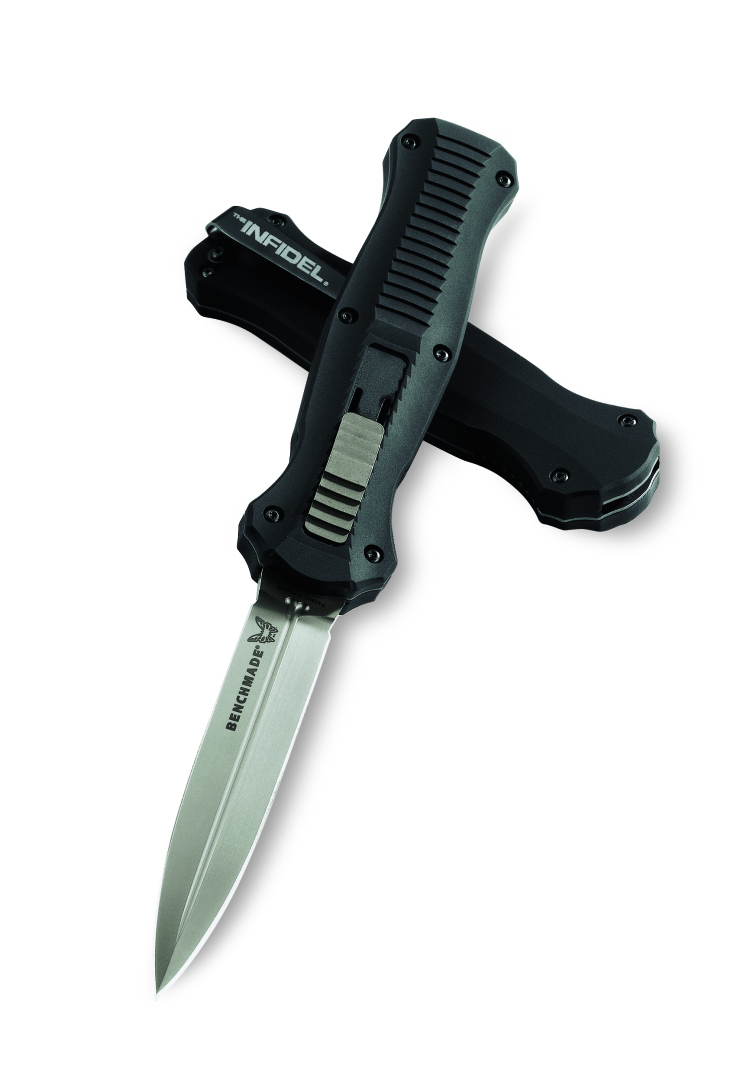
According to Knife Rights, Missouri Governor Jay Nixon has signed legislation repealing the ban on the possession, sale and manufacture of automatics—such as the Benchmade Infidel (pictured above)—in Missouri as long as they are not “in violation of federal law.” In practical terms, it means you cannot do so in interstate commerce, on Indian reservations or wherever federal regulations may prevent such activities.


    Knife Rights officials indicated they worked closely with the National Rifle Association on this important legislation and appreciate the NRA as a strong partner in their second front in defense of the Second Amendment.

    For more info on the bill click on www.KnifeRights.org   

For more on the latest knives, knife legislation, knifemaking instruction, knife trends, knifemakers, what knives to buy and where and much more, subscribe to BLADE® Magazine, the World’s No. 1 Knife Publication. Click on http://www.shopblade.com/blade-magazine-one-year-subscription-us/?r+ssfb071112 for more information.

Knives Of Summer: Knife/Multi-Tool Combo

Whether it’s a standard summer cutting job such as opening a bag of dog food for Fido or something more tool oriented, such as tightening down a nut on junior’s bicycle, the Kutmaster Team Realtree Liner Lock Mini Tool Combo will handle the job.

    The knife sports a one-hand-opening 420 stainless blade and a Realtree camo handle, while the Mini Tool includes a needle-nose pliers, can opener, scissors, medium screwdriver, grippers, small slotted screwdriver and more.

    ShopBlade’s price to you: $19.99.

For more info click on http://www.shopblade.com/kutmaster-team-realtree-liner-lock-mini-tool-combo-y7745 /?r+ssfb071112

Pennsylvania Pro-Knife Measure Pending

According to the American Knife & Tool Institute, a Pennsylvania bill has been introduced to ensure knife liberties for the citizens of the Keystone State. HB 2548 would amend Title 18 (Crimes and Offenses) of the Pennsylvania Consolidated Statutes. If the measure passed, the current definition of “offensive weapon” would be updated, including removing switchblades—such as the Pro-Tech Stinger pictured above—as an offensive weapon.

    For over a year, AKTI officials indicated they have been working with Rep. Marc Gergley (D-35) and Jeff Pyle (R-60), and more recently with Rep. Michelle Brooks (R-17), to add Pennsylvania to the growing number of states that do not restrict knives based on their classification, for mere possession, nor allow cities to enact laws that are stricter than the state’s knife regulations.

    Dan Lawson, AKTI legal contributing counsel, has been committed to seeing his home state remove all prohibitive laws on knives, including switchblades. In proposing an amendment to Title 18 to Rep. Marc Gergley in December 2010, Lawson commented, “It may be interesting to note that there are a number of states which never adopted a switchblade prohibition. These states include Oregon, Idaho, North Dakota and Arizona. I would suggest…that there is no discernible difference in knife crime in states with extremely stringent knife laws and states with relatively lenient or no knife laws.”

    Since Nov. 28, when Rep. Michelle Brooks announced her intention to sponsor knife legislation, several other legislators have agreed to sponsor the bill, including Representatives Gergley, Pyle, Gabler, Cutler, Evankovich, Geist, Grove, Haluska, Harhai, M.K. Keller, Marshall, Metcalf, Perry and Youngblood.

    In explaining the need for the legislation, Rep. Brooks noted, “The intention here is to remove the strict prohibition of switchblades and instead require that the implement must be, ‘for the infliction of serious bodily injury [and] which serves no common lawful purpose.’ In other states where switchblades are not strictly prohibited, these implements are used for various lawful purposes. For instance, many first responders use switchblades so they can open a knife quickly with one hand. This can be critical when trying to save someone’s life by cutting a seat beat or other obstruction to an injured person.”

    For more info on the law click on http://www.akti.org/news/pennsylvania-bill-will-remove-all-knife-restrictions

For more on the latest knives, knife legislation, knifemaking instruction, knife trends, knifemakers, what knives to buy and where and much more, subscribe to BLADE® Magazine, the World’s No. 1 Knife Publication. Click on http://www.shopblade.com/blade-magazine-one-year-subscription-us/?r+ssfb071012 for more information.

Knives Of Summer: Keep Those Puppies Sharp!

When you use one of our “Knives Of Summer,” you will need to sharpen that puppy. In fact, a little edge maintenance after each use—when feasible—is the best way to keep your knife sharp for the next time you need it.

    GATCO’s Natural Arkansas Sharpening Kit is a great way to keep your edges keen at all times. Designed for sporting, kitchen and other knives, it features a novaculite stone mined from Arkansas. The kit includes a block-mounted 5-inch stone for sharpening, a 3-inch stone for final touch-ups, honing oil and a storage case.

For more info click on http://www.shopblade.com/gatco-natural-arkansas-sharpening-kit-80005/?r+ssfb070912.

Build a Knife From The Latest Knife Kits

Knife kits have helped launch more than a few of the careers of today’s custom knifemakers, and have been well-documented in BLADE® (www.blademag.com) and elsewhere. The competition among knife kit companies continues to be keen and, largely as a result, the variety and quality of the kits has never been better.

    The top kits provide most of the components of the folder or sheath knife, including blade, handle materials, pins, springs, bolsters, even glue for the final phase of the construction project. Many knifemaking suppliers offer kits with skill levels ranging from basic to advanced, and shop tool requirements, affordable prices, and even instructions to guide you from start to finish. Blade steels vary from carbon to stainless and damascus options, while handle materials run the gamut from G-10 and other synthetics to various woods, stag or horn.

    “We do our own cryogenic blade treating, and that’s an advantage for our kits,” related Lance Reid, manager of Texas Knifemakers Supply. “We have a lot of kits available, and they’re very popular right now because they allow you to express your own artistic ability and influences. LinerLock™, lockback, slip joint and trapper kits are all selling well, and the tools needed for them are generally a belt sander, drill press, buffer and ball-pein hammer.”

    The Judge’s Favorite hunter kit (pictured above) is one of the hottest at Texas Knifemakers Supply (TKS). Retailing for $36.45, the kit includes a 4-inch blade of cryogenically treated 6A stainless steel, a Dymondwood™ handle in a choice of more than 30 colors, and 30-minute epoxy to set the knife for use. The Sam Houston Skinner kit has an MSRP of $30.45 and comes complete with a 3 5/8-inch blade of 6A stainless with a slightly dropped point, Dymondwood handle, brass pins, and epoxy.

    TKS offers beginner, medium and advanced kits. Beginner kits include premade guards and bolsters, and requirements are simple assembly, grinding and shaping. Medium-skill kits involve the shaping of the guard and bolster, while advanced assembly requires the maker to fabricate the guard and bolster.


BEGINNER TO ADVANCED

Jantz Supply’s latest knife-kit entry is a new line of handles for its U.S.-made pattern blades. The preshaped and contoured handles crafted from G-10, Micarta® and Dymondwood include a variety of textures, and enable enthusiasts at all levels to choose their favorite handle material, color and texture, along with the guards and screws. “Our pattern blades are manufactured from tool steels, including D-2, and stainless steels such as CPM-S30V, 154CM and 440C,” Ken Jantz noted.

    By offering fixed-blade kits, Jantz affords beginners an opportunity to learn the basics of knifemaking without the hassle of moving parts and the requirements of close-tolerance fittings. Kit components require only basic tools such as rasps, files and hammers, and the final knife can be completed with hand sanding and finishing.

    “Beginners like the kit concept because it provides them with a strong foundation and process for creating a solid, high-quality knife they can be proud of when finished,” Jantz said. “Advanced [enthusiasts] like the ability to customize basic knife kits, showing off their personal creativity and ability to take something standard to an entirely different level. In the hands of someone who knows what they are doing, a kit knife can be truly special.”

    Jantz provides beginners and advanced enthusiasts alike many customizable components, unusual materials and opportunities for personal inspiration in the creation and personalization of their fixed kit blades. 

    When asked about his company’s most recent improvements in folder kits, Jantz stated the availability of the thrust ball bearing in 440C stainless designed by custom maker Gustavo T. Cecchini of GTC Knives brings a new level of quality customization options to knife kits. The bearings are built to provide motion with minimal friction and a smoother action.


PERIOD ORIENTED

“Our knife kits are oriented toward the long hunter and pre-1840 style, and we have only fixed-blade kits,” advised Rex Reddick of Texas-based Crazy Crow Trading Post. “We sell a lot of knifemaking supplies and have been importing blades from Solingen, Germany, since about 1980.

    “Our Rocky Mountain Drop Point in either carbon or stainless steel comes with black walnut handle scales and brass rods for rivets,” Rex continued. “It sells for $17.95 and $19.95, depending on the blade steel.”

    Other kits of choice from Crazy Crow include the Green River series, which features seven different combinations ranging in manufacturer’s suggested retail prices (MSRPs) of $14.95 to $20. The bowie kit retails for $56 and includes a 6-inch carbon steel Solingen blade and curly maple handle material. Patch knife kits for muzzleloader enthusiasts retail for $14.95.

    “We are putting bone scales in some of the kits now,” Reddick said, “and the kits are new this year and also available with curly maple or walnut. The kits are pretty simple. Basically, you drill the scales and glue them with epoxy and hammer the rivets in, drilling the countersink. You need basic tools to put them together, something like a coping saw to saw out the blade blanks. The handle scales come in rectangular form, so a rasp might be needed to file them down if you want to put some taper on the edges.”


DRIVING KIT SALES

At Knifekits.com, the designs of Darrel Ralph are driving kit sales, and the company’s hottest folder going is the SS 2.0 Super Squirt (MSRP: $39.95). “This manual button-lock folder can be built as a standard manual release or converted to automatic by simple modification,” explained Steven Andrews, Knifekits.com general manager. “These are very popular for kit builders who like small folders or who reside in automatic-legal areas, especially those who are engaged in jobs that permit or require automatic carry.”

    The AUS8 Super Squirt blade is 2 inches long and available in a black or satin finish. Handle scales are black G-10 or carbon fiber but are not included in the kit. They are premilled and require a simple finish option with basic handwork. The hottest fixed-blade kit from Knifekits.com is the Clip Point Skinner (MSRP: $17.95) available with a stainless or brass guard. The hollow-ground, satin-finished blade is AUS8 stainless. Handle material is not included.

    “Both knives are skill level 1-to-2 for basic construction,” Andrews added. “We would not hesitate to recommend these kits to entry-level builders as well as advanced builders. The fit, finish and precision on these models are unsurpassed in their genre. For the basic build on the SS 2.0 folder kit, the No. 6 and No. 8 Torx wrench tools and medium or fine sandpaper are the only tools required. For a basic build on the fixed blade, a peining hammer, a drill bit for creating the handle recess, and sanding materials are sufficient. Epoxy is also recommended for secure, gap-free handle mounting.”—by Mike Haskew


Editor’s note: In the case of Knifekits.com’s Super Squirt, which can be converted to an automatic by simple modification, be sure to check the laws in your area concerning automatic knives.


 For more on the latest knives, knife legislation, knifemaking instruction, knife trends, knifemakers, what knives to buy and where and much more, subscribe to BLADE® Magazine, the World’s No. 1 Knife Publication. Click on http://www.shopblade.com/blade-magazine-one-year-subscription-us/?r+ssfb070412 for more information.


Knives Of Summer: Make Mine a Machete

Vines, shrubs, leaves, bushes, etc., overgrowing your campsite or just your yard? Check out the Gerber Gator Machete.

    It sports a 15-inch blade and a 15-inch sawback for extra-tough cutting jobs. A rubber grip is designed for control and a nylon sheath is included. Overall length: 25.7 inches. ShopBlade’s price: $19.99.

    For more information click on http://www.shopblade.com/gerber-gator-machete-w-sheath-y6980/?r+ssfb070212

Advertisement

Must Read Articles

Read this before you make a knife

Knifemaking 101 – Read This Before You Make a Knife

  by Wayne Goddard My experience has taught me that there's nothing like digging in and getting started. I've often said the hardest part of the...
how to forge damascus steel

How to Forge Damascus

Advertisement
Advertisement