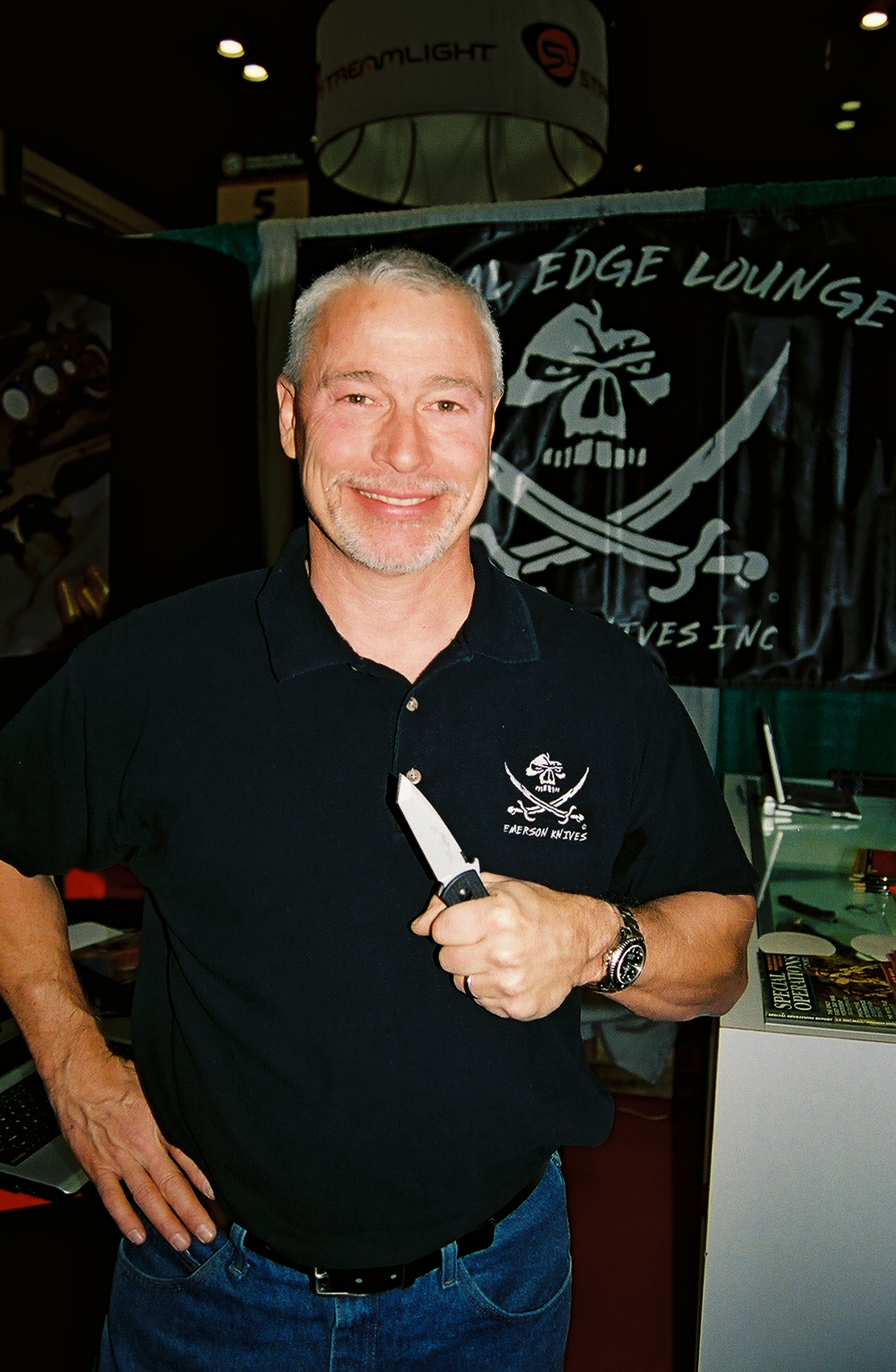
Ernest Emerson, one of the leading names in both custom and factory knives, will conduct another of his always popular seminars at the 2013 BLADE Show and Living Ready Expo at the Cobb Galleria Centre in Atlanta May 31-June 2.
Entitled “Fight Like A Madman,” the seminar will give you the tools to train “your most effective weapon” against violence: your mind. “Train the mind and the body will follow,” Mr. Emerson noted. “Confront evil with the tools to stop it dead in its tracks.”
A pioneer of tactical folders with such pieces as his world-famous CQC-6, Mr. Emerson has been conducting seminars at the BLADE Show (www.bladeshow.com) for many years now. He always delivers in terms of information any and all can use in their daily lives. An accomplished martial artist in addition to being a world-class knifemaker, Mr. Emerson has developed a self-defense regimen called Emerson Combat Systems that has been taught to police officers, military units and civilians. His knives and systems have been celebrated in magazines, books, television, on the Internet and just about every media form known.
Mr. Emerson’s BLADE Show seminars focus more on the mental approach to dealing with outside threats to you, your family, your friends and those around you. As the saying goes, before you do anything well you’ve got to get your mind right, and Mr. Emerson stresses the importance of that in his BLADE Show seminars.
Mr. Emerson will conduct his BLADE Show seminar in the usual place and time: Saturday, June 1, at 1 p.m. in Room 104 of the Cobb Galleria Centre. All BLADE Show ticket holders are admitted free of charge. However, seating is limited, so first come, first served.
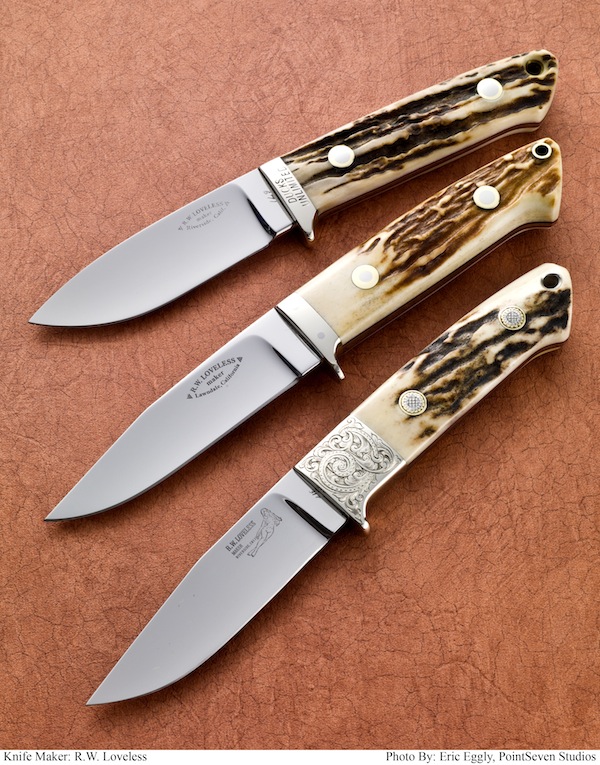
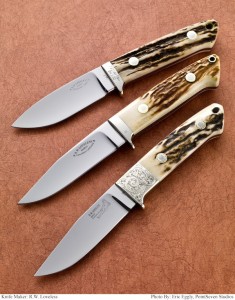
Knife terminology can change with the times. Known by many as the drop point, the knife at top by Bob Loveless originally was called the dropped hunter by Loveless himself. (PointSeven image)
Do you know your knife terminology? Yes, I agree that it probably doesn’t matter much if you do or not as long as you’re into knives and love to use them, collect them and otherwise celebrate your favorite sharp tool. On the other hand, there’s a certain satisfaction in knowing your knife terminology. In other words, it’s nice to be secure in the knowledge that your understanding of knife speak is current and that you can hold your own in conversation with knife aficionados.
Of course gentical is a newer entry in knife speak. There are others, some of which go back years, even decades.
For instance, Cutlery Hall-Of-Famer Bob Loveless is famous for a hunting knife that many call a drop-point hunter or simply a drop point. However, drop point is a misnomer—at least it is in regard to the name Loveless originally gave the design, which was dropped hunter. Both drop point and dropped refer to the point of the blade in the design, which drops or rests below the midpoint of the blade’s plane. Somewhere along the line someone called it a drop point instead of a dropped hunter and the name stuck. In my opinion, drop point is more descriptive of the blade design than dropped—besides, dropped hunter sounds like a knife you dropped and/or lost in the woods somewhere. But I digress.
Then there’s finger choil. Finger guard is another one. The word finger in either is superfluous—in other words, it’s not needed. It’s a guard or it’s a choil, period. Fingergroove or grooves is correct, but not finger guard or finger choil.
The guard is the cross/double guard with two quillons and/or single guard with one quillon—quillon is another entry in knife speak covered below—at the juncture of blade and handle that keeps your fingers/hand from sliding forward onto the blade from the grip.
New from BLADE! Check out the best articles on knife throwing, from the pages of BLADE magazine.
A choil is a small cutout at the base of the edge of the blade. Cutlery Hall-Of-Famer A.G. Russell once said the choil’s original purpose was to indicate where to stop the stroke with the sharpener on the blade during the sharpening process. Some knives have larger cutouts at that juncture for placement of a finger for more detailed-type cuts. However, even then the cutouts are still choils, not finger choils. In addition, some companies and makers put a single groove in the handle just before the guard. Though they may call it a finger choil, it is really nothing more than a finger groove.
Now, for the quillon. According to Websters, a quillon is “either of two transverse projecting members forming the cross guard of the sword.” In other words, a cross or double guard consists of two quillons and a single guard consists of one quillon. The cutlery community uses the term for knife guards as well.
Moreover, you will often hear quillon incorrectly pronounced quill-yun. How the word obtained that pronunciation I do not know, though I suspect it came from someone who saw the word, did not know how to pronounce it, and simply did what many do in such circumstances—took a “stab” (forgive the pun) at saying it and arrived at quill-yun. The correct pronunciation is key-yun (or a reasonable facsimilie. Hey, I’m a writer, not a pronunciation expert). However, many, including a large number in the bladesmithing community, continue to refer to it as a quill-yun. Hence, if you hear that pronunciation, you’ll know what it means. (By the way, I don’t recommend trying to correct bladesmiths on their pronunciation of quill-yun. Trust me on this one.)
There are many knife terminology concepts you might want to know. I will cover them sometime in the future here at blademag.com.
With folks already arriving at the Cobb Galleria Centre in Atlanta for the BLADE Show & Living Ready Expo (www.bladeshow.com), here are some tips to enhance your overall show experience:
•Get there early. The show opens to the public at 2 p.m. Friday and 9 a.m. Saturday and Sunday. The best knives always go first–which means early. Get there then to get the best;
•Stay hydrated. There are water fountains at the show entrances and concession stands in the back of the show hall. Also, apples are a great source of both nourishment and water. Eat one mid-morning and/or mid-afternoon, whichever works best for you.
•Wear comfy shoes. There are almost 1,000 exhibitors to see, and walking and standing can take a toll on your feet. Wear the most comfortable shoes you’ve got. It doesn’t matter what they look like, just be sure they’re comfy. In fact, if you’ve got two such pairs of shoes, bring both. Wear one pair in the morning and the other pair in the afternoon. Also, whenever you get the chance, sit down and rest.
•Wear a small backpack. Carrying stuff gets old in a hurry. A small backpack is a great way to carry knives, knife literature, that extra pair of shoes, etc.
•Dress for warm temperatures. With scores of people jamming the hall in late spring in Atlanta, chances are it will be warm inside, too. Shorts, T-shirts and sandals or tennis shoes are the uniform of the day.
•Study the seminar schedule and attend the ones that interest you most. Not only are there some most entertaining and educational seminars to enjoy, but you can find a seat at all of them (if you get there early enough) and rest for a spell, killing two birds with one stone.
•Follow the pack. The BLADE Show is one of those happenings that has many surprise/spontaneous events within the event. If you hear/see a commotion going on, go to it. You never can tell what kind of cool knives/accessories are being sold or, in some cases, even given away.
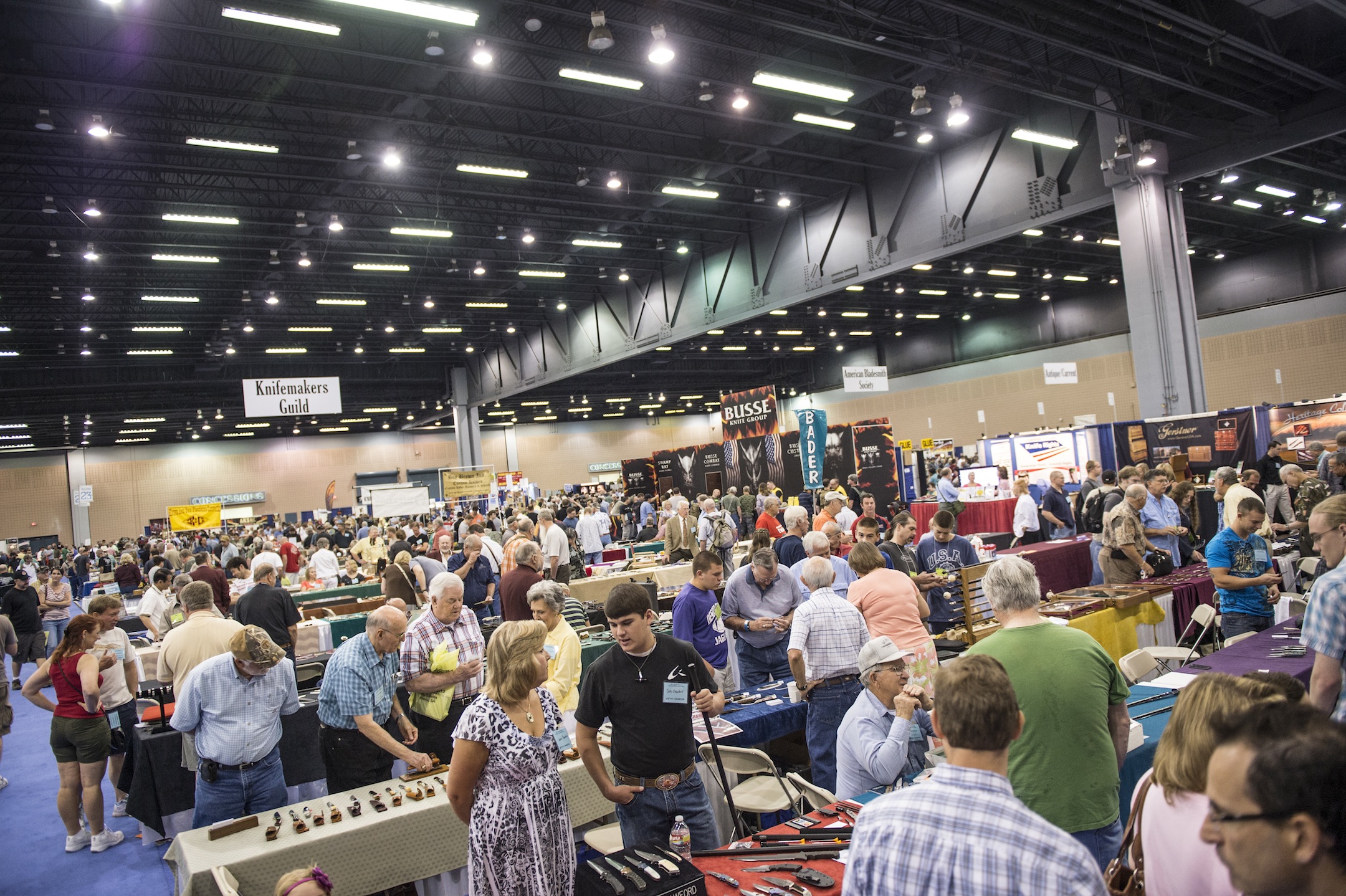
Get the most from your BLADE Show experience with a few insider tips. (Point Seven photo)
The Randall Knife Collectors Club is up and running and wants you to join its ranks today.
The RKCC has been over two years in the making and held its third meeting at the 2014 BLADE Show earlier this month at the Cobb Galleria Centre in Atlanta. “We boast an active membership of over 500 avid Randall Knife Knuts, including 15 percent of that total from our international community,” noted Capt. Chris Stanaback, RKCC founder and authorized dealer of Randall Made Knives. All of the club’s membership recruiting had been done by word of mouth until recently. The club is now running ads in BLADE® to help spread the word, Stanaback added.
The RKCC publishes a club newsletter called “KNIFE NEWS” every four months and also offers authentication and appraisal services of Randall knives. “The club has the blessings of the Randall shop and, if you happen to pay a visit to the shop in Orlando, you can usually pick up our latest issue of KNIFE NEWS,” Stanaback said. Randall Made Knives is owned and operated by Gary Randall, son of BLADE Magazine Cutlery Hall-Of-Fame® member W.D. “Bo” Randall.
The club already has sold its first Randall club knife and “is looking to do nothing but get bigger and better,” Stanaback noted.
The RKCC is the successor to the old Randall Knife Society, which was started by Rhett Stidham. The RKS also had a regular newsletter and sold Randall club knives on an annual basis. Stidham, a long-time knife collector, author and purveyor, passed away a few years ago. With his passing, the RKS was dissolved.
The RKCC’s website address is RKCC-RKCA.com and the e-mail address is [email protected]. Stanaback’s phone number is 352-598-1880.
For the latest knives, knife news, trends and more, keep it honed at blademag.com.
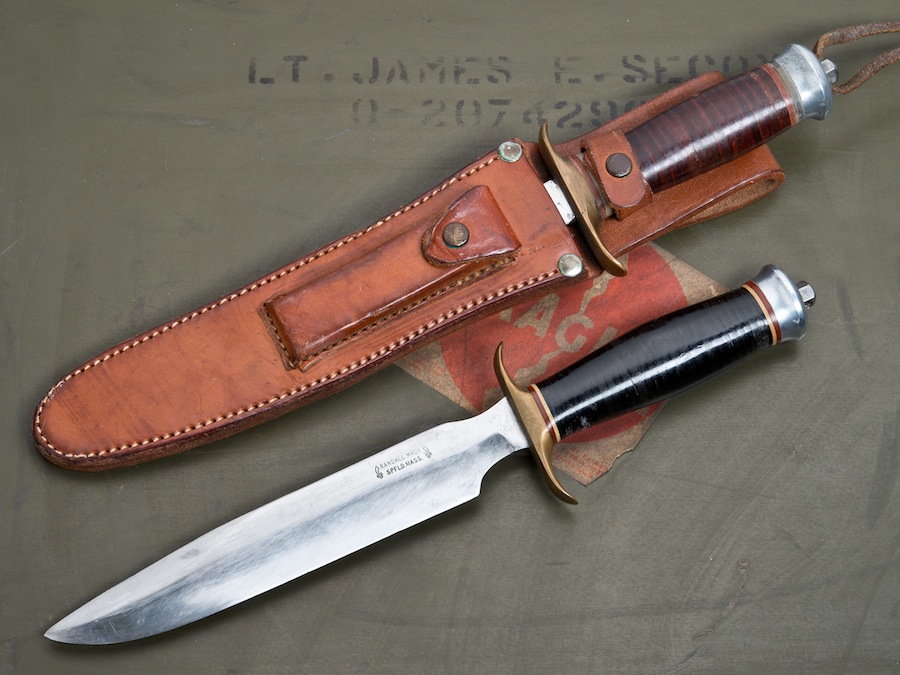
The Randall Knife Collectors Club wants you to join NOW! (image courtesy of Gary Clinton)
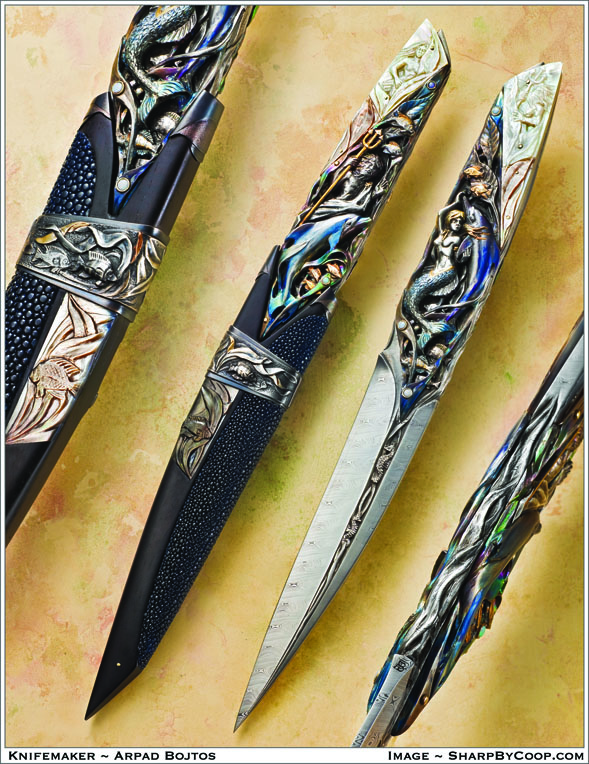
Some of the finest artists in the world would have trouble achieving the mermaid scene carved and sculpted into the titanium grip of the Arpad Bojtos fixed blade. For that reason alone it is one of the “Editors Favorites from the Knives 2013 Book.” The carved and sculpted grip is inlaid with gold, silver and mother-of-pearl, the latter also creatively carved, and attached to a Damasteel blade.
The knife image, by SharpByCoop.com, ran in the “High-Art Handle Work” chapter in the “State Of The Art” section of Knives.
If you’ve been following these posts on the Greatest Bob Loveless Knife Designs, then you knew, didn’t you?, that the Big Bear would rear it’s oversized but beautifully bladed head?
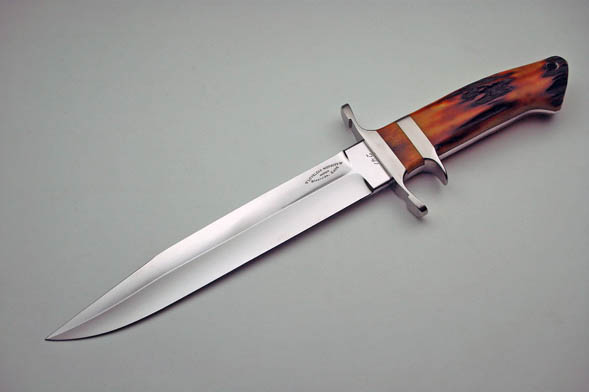
This particular Loveless Big Bear Classic fighter boasts an amber-stag handle, which makes it one of the few made, and no Loveless bolts. Its approximate value, you ask? I’m glad you did—$35,000. That’s a lot of bear bones.