

The BLADE Blog w/Steve Shackleford

Knives, knife people, knife news, knife use, knife collecting, knifemakers, knife events, the BLADE Show, BLADE Magazine, and more.

Maximize Your BLADE Show Experience

Maximize your BLADE Show experience.
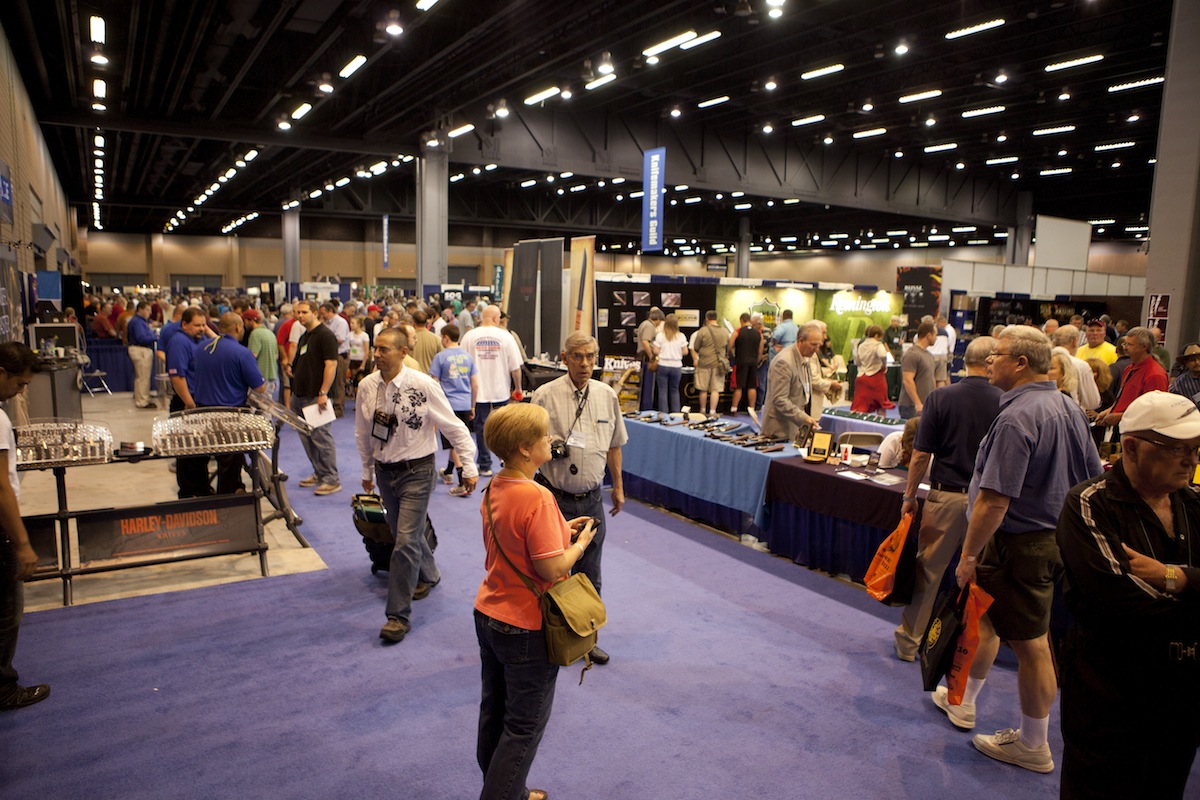
Maximize your BLADE Show experience by knowing what to see and when. (PointSeven image)

The 34th Annual BLADE Show starts this Friday at the Cobb Galleria in Atlanta and you can maximize your experience by knowing what to see and when. But before you do that, be sure you come prepared.

1) Dress appropriately. Comfort is the watchword. Bring two pairs of shoes—one to wear while walking the show in the morning, the other for the afternoon. And be sure they’re well broken in and comfortable! Don’t worry about being a fashion plate. Getting around the 116,000-square-foot hall is a marathon, not a fashion show runway. Leave the spiked heels at home.

2) Carry a small water bottle. The show hall can get humid/hot and you need to stay hydrated.

3) Eat an apple mid-morning and mid-afternoon for energy and to maintain your, ahem, constitution. Apples also are good for hydration.

4) Don’t be afraid to bring a roller case (like the one pictured herein being pulled by award-winning Canadian knifemaker Brent Beshara) or small backpack to carry stuff (including your extra pair of shoes, ball cap and sunglasses [see below]). Carry bags can get hard on your arm after a while.

5) Wear a ball cap and sunglasses—and shorts if you can because Atlanta gets hot in the afternoon in June—in case you want to watch any of the outdoor seminars. The sun can beat down on your head and give you a heckuva headache;

As for stuff to see, the main attraction, of course, is knives and more of them than you will see at any one time under one roof anywhere. There are also other attractions, including:

•On Thursday, the day before the show begins, and Friday the world’s foremost knife authorities will conduct classes on a variety of knife subjects in the 2nd Annual BLADE University. Learn from such world-famous makers as Jerry Fisk, Bill Harsey, Tony Bose, Ed Fowler, Ryan Johnson, Spartan Blades, Case, Joe Keeslar, Murray Carter and many more;

•By noon Friday all entries for the BLADE Magazine Knife Of The Year® Awards sponsored by New Graham Knives must be on display in the Knife Of The Year Display Area, which will have a new location this year—in the show lobby—for your viewing pleasure;

•At 2 p.m. Friday the show opens to the public but you’d better get there well before then because the lines start to form early;

•Friday after high noon, ABS master smith Jason Knight and other world-class smiths will hold an impromptu forging session in The Courtyard, the parking lot of the host Renaissance-Waverly Hotel, until the show closes at 7 p.m. This is a last-minute addition to the show and should be a rare treat;

•Saturday at 10 a.m. the ABS will hold its annual auction of top ABS handforged knives in Room 103;

•Saturday at 12:30 p.m. the ABS forging demonstration returns to The Courtyard with ABS master smith Timothy Potier showing you the ins and outs of how to handforge a knife;

•On Saturday at 4:15 p.m. Jessica Elias, the first-ever female contestant in the 13th Annual BLADE Show World Championship Cutting Competition conducted by BladeSports International, will show her stuff in The Courtyard along with the rest of this year’s qualifiers;

•FREE BLADE Show programs and August/BLADE Show preview issues of BLADE® will be distributed in the show lobby containing complete show schedules, events, exhibitor table and booth numbers and much more.

•After show hours, hit The Pit in the Renaissance-Waverly Hotel lobby to share sharp tales of the day’s events, what you saw, what others saw and more. Things are usually hopping/get hopping by 8 or 8:30 p.m., sometimes earlier.

Come on down and enjoy the show!
Pro-Knife Laws Need Your Help!

Three states are considering pro-knife laws that need your help, Knife Rights reports.

Pending measures in Kansas, Tennessee and Texas have been approved in lower legislative bodies and are moving on for further approval. If you act now, you still have time to help ensure these pro-knife laws will be enacted.

The one in Kansas (HB2033) would enact Knife Law Preemption and repeal the ban on switchblades, dirks, daggers and stilettos. Legislators helping the cause there include Rep. Jim Howell and Rep. Richard Carlson.

Tennessee’s progressive pro-knife law (Senate Bill SB1015) would also enact Knife Law Preemption, repeal the state’s antiquated switchblade ban and repeal the state’s 4-inch blade-length limitation. Sen. Mike Bell has been most helpful in the fight to save the knife rights of those in the great state of Tennessee.

Finally, the Texas law (HB1299) would enact Knife Law Preemption and repeal the state switchblade ban (HB1862). Rep. Harold V. Dutton, Jr., has led the fight in the Lone Star State.

Knife Law Preemption eliminates conflicting knife laws from county to county, city to city and town to town within a state, laws that act as “knife traps” to unjustly snare law-abiding knife users and build tax coffers in the applicable jurisdictions. Blade Magazine Cutlery Hall-Of-Fame© member Bill Adams likes to call the practice “tax farming,” and the term applies in spades in this instance.

According to Knife Rights, Knife Law Preemption has been enacted in Arizona, Utah, New Hampshire and Georgia.

For more information on how you can help visit www.KnifeRights.org.

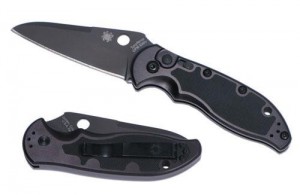
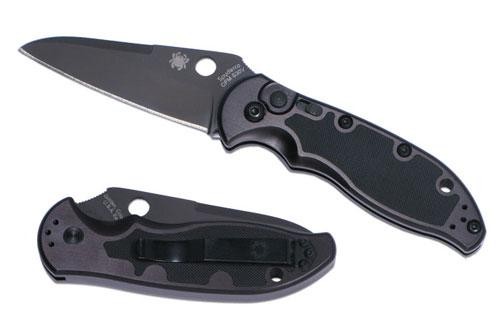
Three states' pro-knife laws need your help. www.shopblade.com/embassy-aluminum-w-black-g-10-inlay-black-blade-combinationedge-w8498?lid=ssfbbl032213
Three states are considering pro-knife laws that need your help. www.shopblade.com/embassy-aluminum-w-black-g-10-inlay-black-blade-combinationedge-w8498?lid=ssfbbl032213

Ivory: Brady Deciphers Final Rule

Final Rule on ivory.
If you collect, make or otherwise deal in knives containing elephant or antique ivory, the final rule concerning the Special Rule on African Elephants is a must read for you.

In case you missed it, this past June 6 the U.S. Fish and Wildlife Service published its final rule concerning the Special Rule on African Elephants. The final rule will go into effect on July 6—just a little over two weeks from now.

As stated in the USFWS press release accompanying the rule’s publication, the USFWS goal is a “near-total elephant ivory ban.”

The final rule is basically the same as what USFWS proposed last year, including banning the international commercial import of antique ivory; shifting the burden from the trade of antique ivory items to the seller to prove the items are over 100 years old, have not been repaired or restored with ivory after Dec. 27, 1973, and, for some items, were imported through an endangered species “antique port”; and making it illegal to trade ivory in interstate commerce if the ivory is less than 100 years old. There is a 200-gram “de minimis” exception to the rule for “Pre-Convention” ivory that is further narrowed by six other criteria. There are also some special provisions for musical instruments.

According to Sandra Brady of the Elephant Protection Association, to qualify for the “de minimis” amount the following criteria must be met:

1) You must be able to prove your ivory component was legally imported either before 1990 or after 1990 with a CITES (the Convention on International Trade in Endangered Species of Wild Fauna and Flora) certificate;

2) The ivory is a fixed or integral component or components of a larger manufactured or handcrafted item and is not in its current form the primary source of the value of the item, that is, the ivory does not account for more than 50 percent of the item’s value;

3) No raw ivory—period;

4) The manufactured or handcrafted item is not made wholly or primarily of ivory, that is, the ivory component or components do not account for more than 50 percent of the item by volume;

5) The total weight of the ivory component or components is less than 200 grams (7.054793 ounces), and;

6) The item was manufactured or handcrafted before the effective date of the rule (July 6, 2016).

“Ignoring the decline in both demand for ivory and poaching trends, the wildlife groups are also ignoring market laws like supply and demand, and past lessons taught by Prohibition [the USA’s failed ban on liquor from 1920-33],” Brady continued. “But to make matters worse for the elephant, they are ignoring the viability and long-term success of sustainable use, which has brought one species of rhino back from the edge of extinction, as well as the Rocky Mountain bighorn sheep of North America.

“The fight is not over and this is but a small portion of a larger agenda, one that will make animal rights trump human rights and will further defray our rights as citizens of this great nation. Please keep passing on the truth, calling your representatives and supporting the Elephant Protection Association.”

In all, the final rule encompasses over 30 pages. For more visit Revisions to the Endangered Species Act (ESA) Special Rule for the African Elephant.

Save

Save

Lee’s Sword Is Returning to Appomattox

The sword Confederate Gen. Robert E. Lee wore when he surrendered to Union Gen. Ulysses S. Grant is returning to a new museum about a mile of where the surrender occurred in Appomattox, Virginia, according to reports.

    Slated to be the centerpiece of the new museum outlining the post-Civil War struggle to heal the nation, Lee’s French-made ceremonial sword is leaving a Richmond museum where it had been for nearly a century.

    The sword is seen at Lee’s side in many paintings of the scene when he met with Grant to sign the document of surrender on April 9, 1865.

    According to reports, it is a myth that Lee offered the sword to Grant as part of the surrender and that Grant subsequently refused the traditional surrender gesture.

    The sword has been “conserved” after years of polishing had erased much of the golden luster from the brass. The nearly 3.5-foot sword now “sparkles,” from the lion-head pommel to the blade’s gilded-relief blade. The hilt is ivory.

    The sword was intended for ceremonial use and there is no evidence Lee used it in battle.

For more on the latest knives, knife legislation, knifemaking instruction, knife trends, knifemakers, what knives to buy and where and much more, subscribe to BLADE Magazine, the World’s No. 1 Knife Publication. For subscription information click on http://www.shopblade.com/product/blade-magazine-one-year-subscripti…?r+ssfb032612#BL1SU.

What’s Your Favorite Pocketknife Pattern?

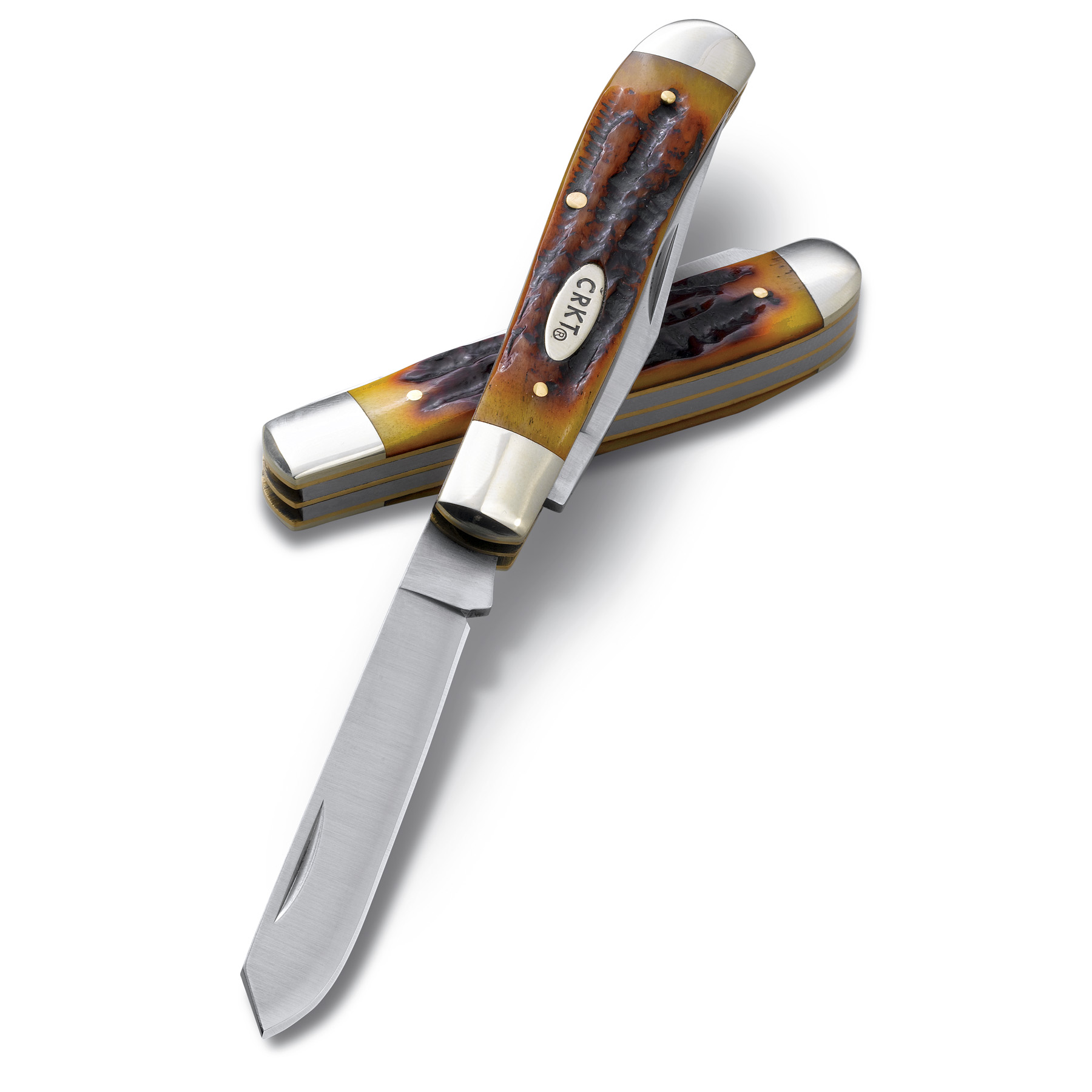
Tell us what your favorite pocketknife pattern is and chances are we will use all or portions of your comments in an upcoming issue of BLADE® Magazine. Is it a trapper like the CRKT Model 6064 shown above? (For more on it, click on http://www.shopblade.com/trapper-pocket-classic-6064.) Or is it a pattern such as a congress, stockman, muskrat, sowbelly, whittler or something else altogether?

    Feel free to include both the pattern and the brand, or just the pattern. And tell us WHY it’s your favorite.

For more on the latest knives, knife legislation, knifemaking instruction, knife trends, knifemakers, what knives to buy and where and much more, subscribe to BLADE Magazine, the World’s No. 1 Knife Publication.

CA Appeals Court Throws Out Anti-Switchblade Ruling

According to Knife Rights, the California Court of Appeals last week reversed a lower court’s ruling that a knife that could be “wrist-flicked” open was a “switchblade.”

The lower court made the faulty ruling despite an explicit provision in California law that distinguishes and protects one-hand opening and assisted-opening knives with a bias towards closure and despite prior Appellate Court rulings upholding that exception. These common folding knives represent over 80 percent of the U.S. market and the California legislature clearly wanted them to be legal when they clarified the original switchblade law as follows:

“‘Switchblade knife’ does not include a knife that opens with one hand utilizing thumb pressure applied solely to the blade of the knife or a thumb stud attached to the blade, provided that the knife has a detent or other mechanism that provides resistance that must be overcome in opening the blade, or that biases the blade back toward its closed position.”

This is essentially the same exemption that was added to the Federal Switchblade Act as a result of the knife industry banning together to help clarify the federal definition in 2009.

“We laud the Appeals Court on its decision and a well-written opinion, but it is unfortunate that the defendant had to undergo the extreme harassment and stress to him and his family and friends that comes with such an experience due to the ignorance and apparent anti-knife bias of the law enforcement officer, prosecutors and the lower court involved,” Knife Rights indicated in a statement. “We’d also like to acknowledge the successful efforts of the defendant’s court appointed lawyer who presented a strong defense. Hopefully, this will be the end of this sordid travesty of justice by the state and there will be no further appeal.”

You can read the Appeals Court opinion here: www.kniferights.org/G045929.pdf

Ivory Ban Worsens Plight Of The Poor

U.S. ivory ban targets the poor.
The U.S. ivory ban not only unjustly targets legal ivory knives but hampers the legal ivory trade on which many poor Zimbabweans depend.

Wildlife administrators in Zimbabwe are asking the U.S. government to lift the ban on ivory imports from the southern African nation immediately due to concerns over how it is worsening the plight of poor Zimbabweans and also other animal species.

Elephant hunting contributes more than $14 million a year to Zimbabwe’s economy, and “not less than 55 percent” of the income from sport hunting goes directly to the poor, rural communities where wildlife is often the only source of income, according to information Zimbabwe’s wildlife administrators supplied to the Department of Parks and Wildlife Management Authority.

The U.S. banned imports of ivory from Zimbabwe and Tanzania, among others, in February over misguided concerns surrounding the preservation of elephant populations. Meanwhile, according to Zimbabwe’s wildlife administrators, the country’s 97,500 elephants destroy food supplies needed for other species. Combined with the adverse affect on Zimbabwe’s poor, the U.S. ivory ban has disastrous implications for the southern African nation.

For more, visit http://www.bloomberg.com/news/2014-07-14/zimbabwe-wants-u-s-to-lift-ivory-import-ban-immediately.html

For information on how you can fight the U.S. ivory ban and at the same time help save the elephant, join the Elephant Protection Association. For more, visit elephantprotection.org.

Advertisement

Must Read Articles

Read this before you make a knife

Knifemaking 101 – Read This Before You Make a Knife

  by Wayne Goddard My experience has taught me that there's nothing like digging in and getting started. I've often said the hardest part of the...
how to forge damascus steel

How to Forge Damascus

Advertisement
Advertisement