Home The BLADE Blogs The BLADE Blog w/Steve Shackleford

The BLADE Blog w/Steve Shackleford

Knives, knife people, knife news, knife use, knife collecting, knifemakers, knife events, the BLADE Show, BLADE Magazine, and more.

Warren Osborne Passes Away

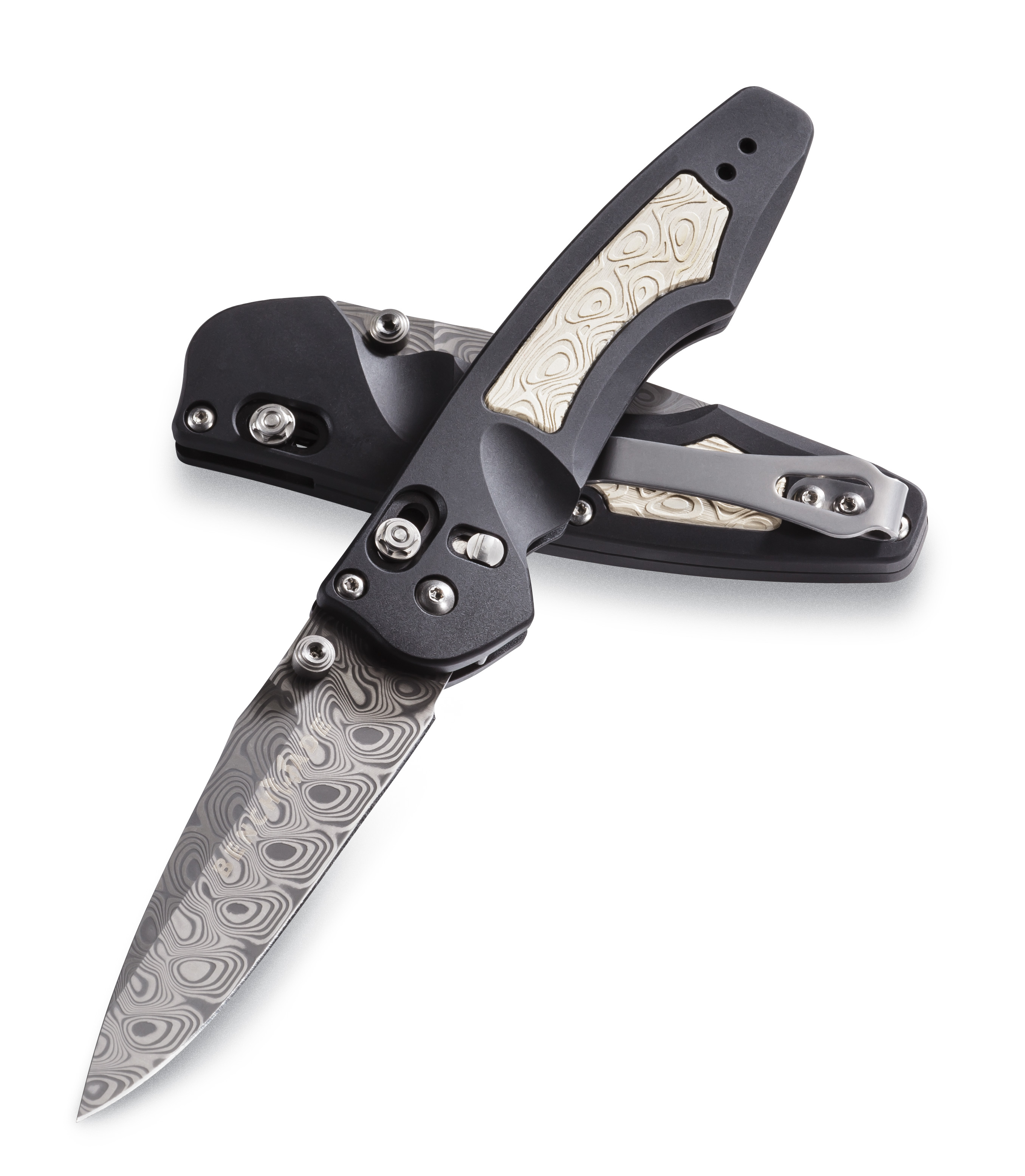
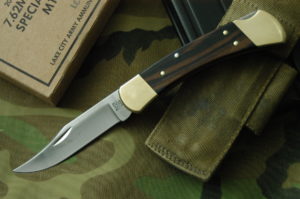
Osborne/Benchmade Emissary.
An example of one of Warren Osborne’s Benchmade collaborations is the Emissary.

Long-time knifemaker Warren Osborne passed away Jan. 4 after a long illness. His death comes almost 13 months to the day after his good friend and fellow maker Joe Kious was killed in a truck accident.

A  native of Australia, Osborne moved to Texas, where he resided in Waxahachie for many years. He was a full-time knifemaker and sold his first custom knife in 1980. In his trademark cowboy hat and cowboy boots, Warren was a fixture at knife shows and BladeSports International (BSI) cutting competitions. Despite failing health, he exhibited at the recent International Custom Cutlery Exposition in Kansas City, the first-ever knife show coordinated by both the Knifemakers’ Guild and the American Bladesmith Society.

He was known for his high-end custom folding knives, many of them interframes ornately engraved by some of the industry’s leading embellishers. He joined the Knifemakers’ Guild as a probationary member in 1985. He later became a voting member and served on the Guild’s board of directors for a number of years. His knife designs may be best known among the largest number of people through his many collaborations with Benchmade Knife Co.

More recently he was instrumental in the founding of BSI, the world’s leading association of those who compete in knife-cutting competitions. He competed successfully on the BSI circuit for several years and designed and made his own competition knives. He was among the first to use CPM M4 carbon steel for the blades of his competition cutters, a steel that takes a great edge and is tough enough so that M4 blades can be ground very thin without damage to the edge or chipping while in use, great traits for competition cutters to have. He was also among the first to use horse-stall-mat rubber for the handle of a competition cutter. The material excels in enhanced purchase and non-slip qualities. His knives were recognized by many BSI observers for high performance in the competitions. The BSI coordinates the BLADE Show World Championship Cutting Competition at the BLADE Show each year. This year’s event will be held during the BLADE Show June 3-5 at the Cobb Galleria Centre in Atlanta, Georgia.

As he noted on his website, Warren was fascinated by “anything with a blade” from early childhood in his native Australia, and made knives from crosscut saws, chainsaw bars and anything else he found “laying around.” “Bladed weapons were a family thing, so between three brothers and myself, we had quite a collection,” he noted. Later on during his work as a ranch hand in Australia and as a horse trainer in the USA, sharpening and making knives became a spare-time endeavor.

In the March 2014 BLADE® he tied for No. 13 with Shane Taylor and Jason Knight among the top custom makers of the years 2001-2012. As Larry Connelley of KnifeArt.com noted in that issue of BLADE, “Warren’s knives exhibit extremely clean workmanship, combined with outstanding design and a solid business ethic.” The story went on to note, “From art knives to utility and higher-end designs to competition cutters, Osborne’s work has covered as many bases as just about any other maker.”

As good friend and fellow award-winning maker Tom Overeynder observed, “What a great friend and craftsman Warren was. He will be missed by all who ever met him.” Added BSI Executive Director Donavon Phillips, “Warren was a friend and mentor to so many. I feel like I should say more but the words won’t come to me right now.”

Funeral services were held Thursday, Jan. 7, at the Wayne Boze Funeral Home on 1826 W. Hwy. 287 in Waxahachie. Instead of flowers, please make any donations to The Wounded Warrior Project.


Knife Handles: As Wood As It Gets

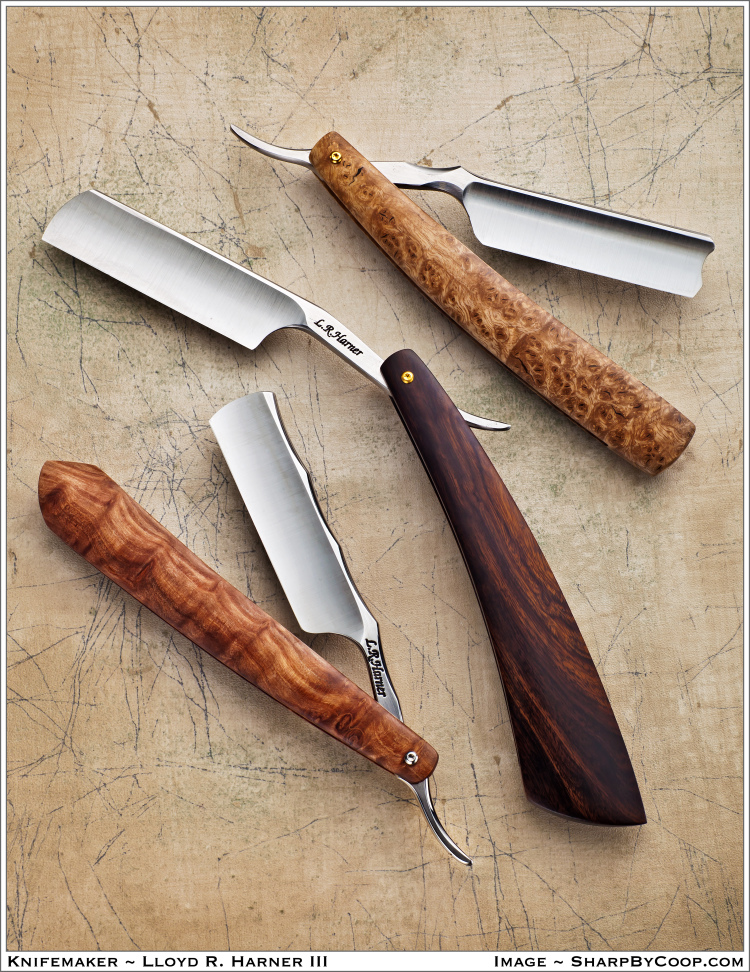
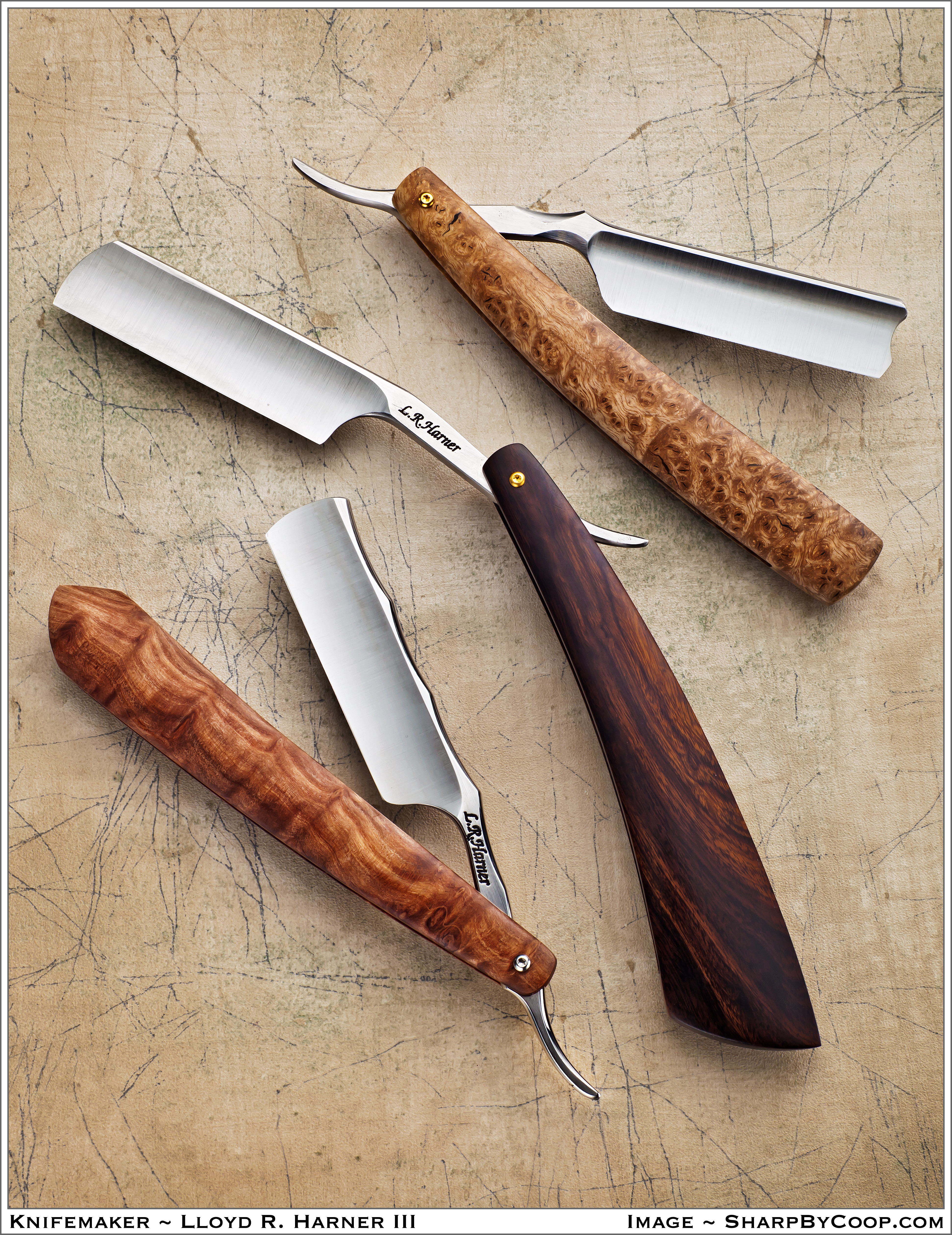
ThereIn the burl category, redwood (left) and black ash (right) are among the more popular woods. Lloyd Harner uses each for the handles of his razors, as well as the most popular of all woods, ironwood (center). The hollow-ground blades are 52100 carbon steel. (SharpByCoop.com photo)

There’s no time like the present to be a stickler for wood knife handles

Curiosity about the wood of choice among makers, users and collectors in terms of utility, user friendliness and good looks gives rise to the obvious question, “Which natural wood handle material is most popular, especially for custom knives?” American Bladesmith Society journeyman smith Peter Bromley and I were discussing the subject over coffee.

    “There are so many types of woods and so many variations within each type that the possibilities are nearly endless,” Bromley said. “You also have to find a piece of wood with a busy grain structure, so when you cut a handle-size piece, then the pattern carries over into the smaller portion.”

    Problem is, sometimes what looks good on a large piece of wood gets lost when you scale it down to handle size.

    “It’s why makers tend to like burl,” Bromley reasoned.  “It’s always busy no matter how small the handle is.”

    Shannon McFall of Knife & Gun Finishing Supplies, Chris Hartman of Masecraft Supply, and Chuck Bybee and his daughter Jessica Bybee Walker of Alpha Knife Supply each responded with two words: desert ironwood.

    “When it’s the highest quality, the most beautiful patterns are ironwood,” McFall said. “It’s still in relatively low supply, but we haven’t had a problem with replacement yet.” The shortage problems result from government regulations regarding the material. “It has become a lot harder to get the nicely figured desert ironwood,” as a result, Walker noted. “If we can’t get it, we switch to walnut. Turkish walnut is extremely dense with high contrast and performs similar to ironwood.” Bybee said he favors the look of highly figured curly koa. For high-end stuff, koa’s deep curls are rich in chatoyance, he opined. Chatoyance is the luster a material—in this case, wood—exhibits when you move it back and forth under a source of light, Bybee explained

    Hartman said ironwood is a favorite in terms of utility, looks and the best combination of both features. However, he questions whether there is a low supply of the material. “Have you ever been to a knife show that didn’t have tables full of ironwood?” he asked. With quality comes price and all those interviewed indicated ironwood is the most expensive of the woods. On the other hand, Walker said maple is probably the least expensive.


WHERE THE BURLS ARE

“Amboyna burl machines well and is a nice wood,” Walker began. She added redwood burl is always very popular—though not with production knife companies because it is more difficult to machine—along with box elder. Hartman agreed. “Amboyna burl has nice, tight patterns and it wears well, plus there seems to be a good, consistent selection available,” he said. “It looks good, feels good and sells well.” McFall cited the popularity of California buckeye, box elder, maple and amboyna burls, all of which are softer woods that must be stabilized to make them suitable for handle use.

    “Maple burl probably was the first wood stabilized successfully, it’s the most readily available and the cheapest, but we don’t sell a lot anymore and it’s not in the top five,” said Mike Ludeman of Wood Stabilizing Specialists International (WSSI). “Box elder burl is the most versatile wood and we double-dye it. Black ash burl and California buckeye burl are popular, and with buckeye each piece has to be graded individually because it can look nice, but have a huge void on the inside, so each piece has to be graded individually and priced accordingly.”

    McFall, whose Knife & Gun Finishing Supplies also provides a stabilization service, echoed Ludeman about the box elder and California burls. “They have the best patterns and finest colors,” she said. “Box elder takes a dye the best in single/double dyed, and you can get the effects of a lot of natural wood with more control over the colors.”

    Along with advances in the stabilization process comes more options. “Something normally bland with a figure can now be dyed to a natural look, rather than staining it as in the past,” McFall noted. “You have more control over the colors.”


“BETTER” OR “JUST NEW”?

Ludeman said stabilization methods are “highly regarded secrets” in a field that is growing.

    “Stabilized is not a word I like to use because it’s thrown around loosely anymore,” he noted. “I achieve 100 percent penetration of an acrylic impregnated wood.” Hartman embellished the point. “I have seen a lot of new ‘stabilizers’ advertised out there, which doesn’t make them ‘better,’ just new,” he offered. “As far as I know, the important part is proper selection and preparation of the wood, and fully understanding the entire stabilization process.” Bybee warned that amidst the growth in companies and individuals offering stabilization services, you should research the subject and exercise caution.

    Factory knives with stabilized wood handles are rare. “Generally, a factory uses stabilized wood, typically U.S. maple or box elder, for a special/limited edition” because of the cost factor, Ludeman said. “It’s not something they make tens of thousands of.” Hartman concurred. “Who can supply 500 pieces of high-quality stabilized woods on a consistent basis for two years?” he asked. “You can do limited-edition runs but it’s very hard to supply quality consistently over long periods of time in that quantity.” Bybee agreed, adding, “Factories have moved almost exclusively to man-made materials, with G-10 and Micarta® dominating now, because they can count on availability and consistency.” 


FUTURE WOODS

What woods will be popular in the future? “It varies because a lot of popular woods are harder to get so they don’t actually show up more,” Walker said. “Turkish walnut has a really rich color, nice dark browns with lighter streaks running through it, and I think it shows promise in gaining popularity.”

    “I would love to see somebody come up with something new made from bamboo,” Hartman stated. “This could be the perfect material, it’s sustainable, has a lot of good qualities, but just not enough character or pattern to become a hot-selling knife material.” He also identified the need for a  “passionate supplier” of exotic woods.

    “There are a lot of ‘suppliers’ of woods, myself included, but no ‘master wood supplier’ that does only exotic woods, stabilizes and does nothing else,” he mused, “a ‘wood crazy’ company that lives and breathes wood dust for knife folks.”

    The complexities involved in natural and stabilized woods make the possibilities, as Bromley noted, “nearly endless.” There is an attraction that cannot be denied. “Wood is naturally, beautifully created,” Hartman said, “and it’s a silly man who thinks he can improve on that kind of art.”—by Stephen Garger


Wood: It’s Not a Wash!


The No. 1 maintenance tip Jessica Bybee Walker offers is to not wash the knife in a dishwasher.

    “A lot of knifemakers use vulcanized fiber liners, which are very susceptible to moisture and can shrink and pull back or swell up in the dishwasher and crack,” she warned. Chuck Bybee recommended putting mineral oil on your hand and rolling the handle around in it. “I also put Renaissance Wax on all my ironwood knives as one of my yearly rituals,” he said.

    “Wood is a natural product so I don’t use a petroleum-based blend. I use a thin coat of olive oil on wood handles. Besides,” Peter Bromley smiled, “I like the smell.”

    Stabilized woods do not require the same amount of care as untreated woods, but that does not translate as “no” care. “Basically, stabilized wood is an enhanced wood—not the cure-all for swelling, shrinking, etc.,” Ludeman noted. “The real purpose stabilization serves is to expand the availability of woods that are otherwise too soft for knife handles.” In other words, stabilized or not, use common sense and do not leave your knife sitting on the dashboard in 90-degree heat.—by Stephen Garger


Woods: Most, Good and Least


MOST POPULAR: Desert Ironwood

MOST EXPENSIVE: Desert Ironwood

GOOD IRONWOOD SUBSTITUTE: Turkish walnut

MOST PLENTIFUL: Maple

LEAST EXPENSIVE: Maple

MOST POPULAR BURLS: Amboyna, redwood, box elder, California buckeye, maple and black ash


For more on the latest knives, knife legislation, knifemaking instruction, knife trends, knifemakers, what knives to buy and where and much more, subscribe to BLADE® Magazine, the World’s No. 1 Knife Publication. Click on http://www.shopblade.com/blade-magazine-one-year-subscription-us/?r+ssfb071212 for more information.


 

First Family of Knives?

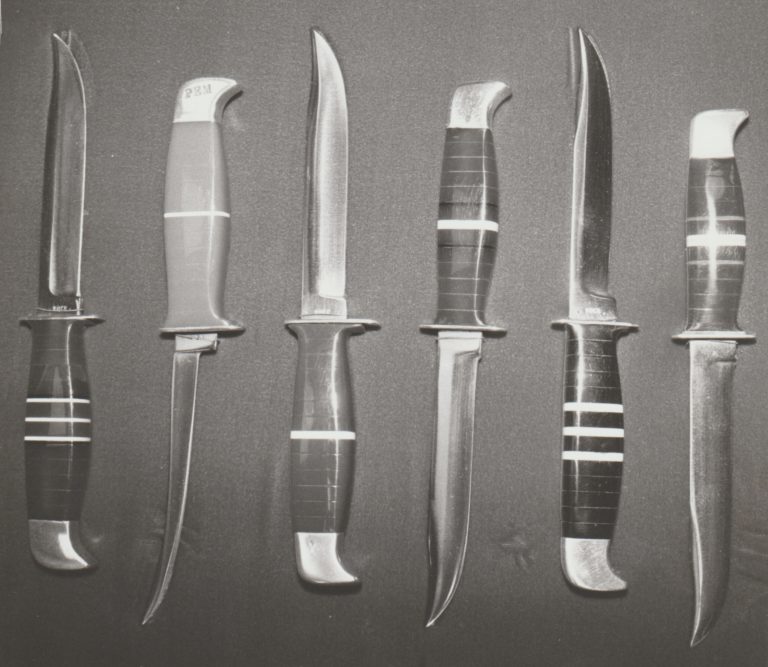
Hoyt Buck knives
These pre-1950 Buck knives handmade by Buck patriarch Hoyt Buck are classic examples of the Buck legacy.
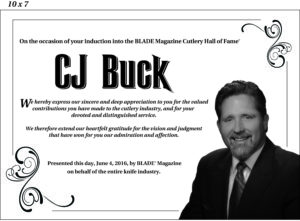
CJ First Family of Knives
CJ Buck was the most recent member of the First Family of Knives to be inducted into the BLADE Magazine Cutlery Hall Of Fame, entering the hall in 2016.
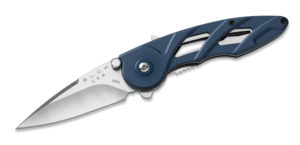
Buck Knives Rush
One of several of Buck’s assisted-opening folding knives is the Rush.
Buck 110
First produced in 1964, the Buck 110 remains one of the most famous modern production knives ever.

If there’s such a thing as the First Family of Knives, the Buck family is it.

Buck Knives has been run by a member of the Buck family—Hoyt, Al, Chuck or CJ—since “H.H. Buck and Son” set up shop in 1945. Since that time, the name Buck has become synonymous with fine hunting, sporting and other knives, and Al, Chuck and CJ help comprise the only family with three members to be inducted into the BLADE Magazine Cutlery Hall Of Fame*.

According to The Story of Buck Knives … A Family Business by Tom Ables, in 1946 “Buck’s knives were all created from used metal files that had been discarded by Consolidated Vultee, the huge aircraft manufacturing plant that later became Convair. These worn-out files, with their heavy carbon content, were perfect for the toughness and edge-holding qualities that Hoyt Buck required in his knives.”

Al joined his father full time in 1947. “[Al] learned how to laminate the thin strips of Lucite plastic used on the handles,” The Story of Buck Knives noted. “He learned how to separate and drill the handles themselves. Later, he learned how to temper the blades so painstakingly sharpened by his dad.”

Sadly, Hoyt learned he had cancer in 1948 and the dreaded disease claimed his life a short year later. He was only 59. Al assumed the company reins and guided it successfully through the 1950s and into the “modern age” of the 1960s. Buck incorporated in 1961, with a young Chuck Buck on the board of directors. The company began making the iconic Buck 110 Folding Hunter on a full production basis in September 1964. The knife’s sales jumped in 1965, increased 63 percent in 1966 and vaulted another 60 percent in 1967.

The knife industry would never be the same again.

Buck flourished under the direction of Al in the 1970s and ’80s, offering the latest in knife designs, materials and more. Along with the legendary Jimmy Lile, Howard Cole and William R. Williamson, Al was inducted into the Cutlery Hall Of Fame at the 1984 BLADE Show.

First Family of Knives Al
In 1984, Al Buck became the initial member of the First Family of Knives to join the Cutlery Hall Of Fame.

As the September/October 1984 issue of BLADE® noted in reference to Al and the 110. “Buck didn’t invent the lockback, but he certainly popularized it, and despite a flood of other lockbacks, the Buck knife still leads the way. If you are carrying a lockback today, you can thank Al Buck for his enduring promotional efforts. You have a safer knife for it.”

Chuck was next in line to be inducted into the Cutlery Hall Of Fame, being inducted along with Blackie Collins in 1996. Chuck was a part of the Buck family business from childhood. By 1970 he was corporate vice president for manufacturing, involved in all aspects of the process, from purchasing to personnel to packaging. In 1979 he became company president. Through Chuck’s leadership, the company completed a modern new plant and corporate headquarters in 1980 with 4.5 acres under one roof.

Under his direction the company grew and prospered, winning several BLADE Magazine Knife-Of-The-Year® Awards. By 2004 he was Buck Knives chairman and helped oversee the company’s historic move to Post Falls, Idaho, from El Cajon, California, in 2005.

First Family of Knives Chuck
Chuck Buck was the second Cutlery Hall Of Fame inductee from the First Family of Knives in 1996.

CJ was inducted into the Hall in 2016 following a career that saw him begin by working on the Buck production line in 1978. For 21 years he handled numerous company promotions and responsibilities. In 1999 he was named president of Buck Knives and, in 2001, CEO. In 2015 he was named Buck chairman of the board. He is a co-founder of the American Knife & Tool Institute (AKTI), serving multiple terms as AKTI president, and is the AKTI’s current CEO. He played a pivotal role in the AKTI’s historic defeat of an attempt by U.S. Customs to classify all one-hand-opening knives as switchblades in 2009. Ironically, today, thanks to the efforts of such organizations as AKTI and Knife Rights, switchblades—better known now as automatics—are being legalized in more and more states, and there’s even an effort under way to repeal the archaic Federal Switchblade Act of 1958. In addition, under CJ’s leadership, Buck has an entire line of automatics, including one of its latest—a version of the iconic 110 in full auto mode, no less.

The only family with three members in the Cutlery Hall Of Fame, the Bucks can legitimately lay claim to being the First Family of Knives. Their contributions speak for themselves.

•Uncle Henry and Al Baer of the original Imperial Schrade and A.G. and Goldie Russell are the only brothers and husband and wife, respectively, to be inducted into the Cutlery Hall Of Fame.


Distinguishing Elephant from Ancient Ivory

Elephant vs. ancient ivories
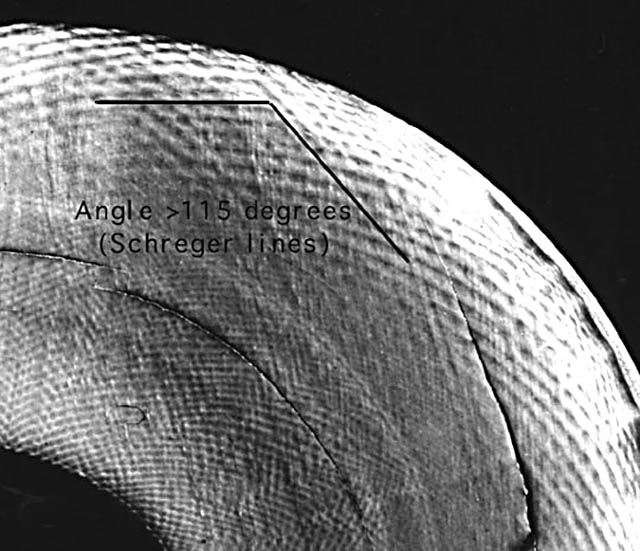
Distinguishing elephant from ancient ivory can be done by the correct reading of the Schreger lines on the surface of the ivory.

Distinguishing elephant from ancient ivory is challenging and becoming more and more important for the owners of knives with handles of ancient ivory. However, there are two reliable keys to make the determination easier.

Polished cross sections of elephant and mastodon/mammoth ivories display stacked chevrons of cross-hatched lines called Schreger lines or Lines of Retzius—incremental lines of rhythmic deposition of successive layers of enamel/dentine matrix during development. The Schreger lines closest to the outer bark of the tusks are the most visible—and the ones to measure—though there are also inner Schreger lines that are less discernible around the nerve cavity. The intersection of Schreger lines form angles, and this is the key—if the average angle is greater than 115 degrees, then it’s elephant ivory; if the average angle is less than 90 degrees, it’s mastodon or mammoth. Variations in the angles can occur in individual tusks, particularly as the patterns tighten more toward the center. Plus, the visible cross section must be cut square to the axis of the tusk—otherwise the chevrons’ angles will be distorted.

Specimens from both extinct and existing animals can show angles between 90 and 115 degrees in the outer Schreger lines, so the differentiation should never be based solely on a single angle measurement when the angles fall in this range. When averages are used, a clear separation between the ivory of existing elephants and extinct mammoths/mastodons exists. Elephant ivory averages above 100 degrees and mammoth/mastodon ivory averages below 100 degrees.

Another I.D. key, though more involved, can also distinguish mammoth or mastodon ivory from elephant. These ancient ivories can often have blue-green or brownish blemishes on the surface produced by an oxidized iron phosphate called vivianite. Even if the discoloration is barely visible, ultra-violet light will make it stand out with a dramatic velvety-purple appearance. Even if elephant ivory were similarly discolored—though in its natural state, elephant ivory will not display the same discoloration—it would not exhibit the characteristic fluoresence of vivianite.

With recent ivory laws handed down by Fish and Wildlife greying the lines between elephant and ancient ivories, it is possible the laws may give federal agents the right to seize knives and materials that cannot be proven as outright ivory but simply have the ivory look. As a result, if you own knives with ancient ivory handles, having an at least a general knowledge of how to differentiate elephant from ancient ivory could save you from having your knives confiscated, from being fined or both.

Hot Knife Deals at ShopBlade.com

Black Friday knife deals

Knifemaker Jack W. Crain Passes Away

Crain/Schwarzenegger
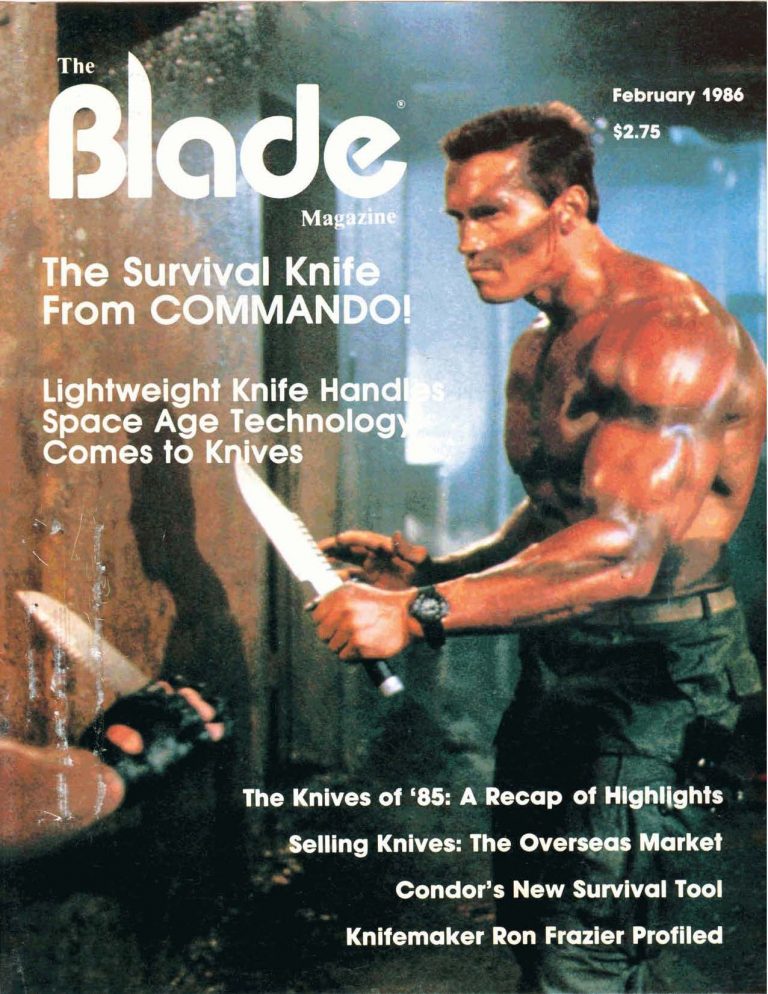
Knifemaker Jack W. Crain designed and made the LS-1 knife used by Arnold Schwarzenegger in the 1980s action flick, Commando.

Knifemaker Jack W. Crain, designer and maker of knives for such action movies as Predator, Commando and others, passed away Sept. 7. He was 70.

Arriving hot on the heels of the Rambo knife phenomenon started by BLADE Magazine Cutlery Hall-Of-Fame© member Jimmy Lile in the early 1980s, Crain also made a hollow-handle survival model with sawteeth on the back a la the Rambo knife. Called the LS-1, the knife appeared in 1985’s Commando. It was the first of several knives Crain would make for the movies, television and books. LS-1 was short for Life Support System 1, a knife Crain originally introduced in 1982. He later made a successor called the LS-2. He also made two other knives for Arnold Schwarzenegger’s character of Matrix in Commando, the Scorpion and Commando. It was the first of two ’80s Schwarzenegger action films for which Crain designed and made knives. The second, Predator, is considered a cult classic. Crain made the knife not only for Schwarzenegger’s character, Dutch, in Predator, but also a big bowie for the character of Billy played by Sonny Landham.

Crain is listed as either weapons master, knife designer and/or manufacturer in such movies as Die Hard, Road House, Die Hard 2, Predator 2, Demolition Man and Executive Decision, among others. He also designed knives for all 22 episodes of the 1988-89 TV series, War of the Worlds.

Of Weatherford, Texas, Crain was one of a generation of knifemakers inspired by 1952’s movie about Jim Bowie and his knife, The Iron Mistress. Since Crain preferred making bowies, he said in a 1985 story in BLADE® Magazine that he assumed the movie influenced him as well. He sold his first knife in 1969 and a decade later became a full-time maker and joined The Knifemakers’ Guild. Initially he forged his blades but later adopted the stock-removal method of knifemaking.

He is survived by his wife, Jane Fritts Crain, sisters, a daughter, niece, great niece and numerous extended family and friends.

Proper Knife Fit and Finish Defined

good and bad plunge cuts
Plunge cuts should reflect each other in terms of symmetry on each side of the knife blade. The plunge cuts at left do so and the ones at right do not. (B.R. Hughes image)
Satin-finish symmetry
Note the symmetry of the satin finish flowing from the plunge cut to the tip of the blade on John W. Smith’s SD-2 tactical knife. (SharpByCoop.com image)
blade centered in handle
The blade should be centered in the handle when the knife is closed, as on Brian Nadeau’s folder. (SharpByCoop.com image)
correspondence of shapes and sizes
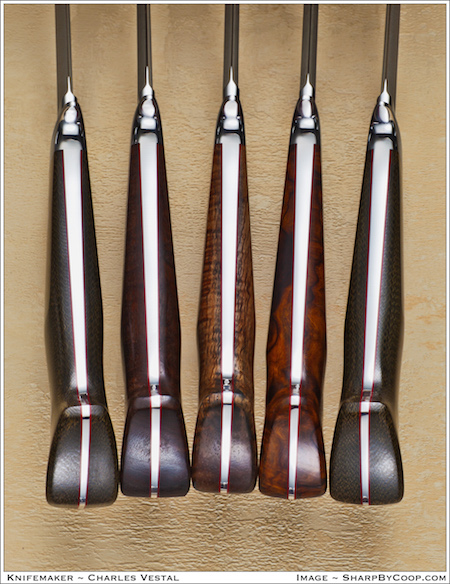
There should be a correspondence in shape, size and lines between both sides of the knife’s blade and handle, as on these fighters made by Charles Vestal for members of the Custom Knife Collectors Association. (SharpByCoop.com photo)

Fit and finish is a term used to identify the earmarks of a quality made knife. In a nutshell, fit and finish is an arrangement of balanced proportions and symmetry in the entire piece.

With the dividing line being the knife’s spine, there should be a correspondence in shape, size and lines between both sides of the blade and handle. The blade tip must be centered, as should the grind as it moves along the blade toward the ricasso. The blade must have no warping, nor should it exhibit bends where there should be none. The entire run of the blade’s bevel lines, whether primary or secondary, must be even and straight. There should be no flaws, imperfections, wrinkles, creases or cracks in the blade’s surface, nor, in the case of a forged blade, can there be any bad welds. The blade’s finish, whether bead blast, satin, mirror polish, stonewash or what have you, must be consistent throughout the area of the blade to which it is applied.

There should be no gaps between the handle material and the bolster, nor the blade and the guard. The handle sides must have equal thickness and be contoured evenly and smoothly. All materials should be rich and vibrant. For example, if ironwood, it must have nice striations instead of just being a blank piece of wood.

In addition to the above, if the knife is a folder there should be no gaps or differences in elevation between the backspring and the blade when the knife is open. There must be smooth opening and closing of the blade, and the blade should snap both open and closed—known as “walk and talk” among old-time pocketknife collectors. The blade must exhibit little to no vertical or horizontal wiggle, ride dead center in the handle when the knife is closed, and, if a multi-blade, the blades should not rub against each other upon opening and closing.

HOW to LOOK for PROPER FIT and FINISH

guard and blade fit
There should be no gaps in the knife’s joints, such as between the guard and blade. Mark Knapp’s fixed hunter exhibits a nice guard-blade fit. (SharpByCoop.com photo)

•A loupe/magnifier is unnecessary. Average eyesight is fine. Check the knife in standard light conditions;

•Rotate the knife slowly and study it from all angles;

•Examine folders with them in both the open and closed positions. Feel how smoothly the blade opens, closes and locks into place;

•Remember, no knife is perfect. Each one will have at least one minor imperfection. Learning to recognize the differences between such a knife and one with poor fit and finish requires attending knife shows and handling and studying as many knives—with each individual maker’s permission, of course—as you can.

Finally, while checking for proper fit and finish is a great way to identify a well-made knife, the fact that a knife has proper fit and finish does not necessarily mean that it will cut, feel right in your hand or even be all that attractive to you. The latter three are things you must be determine for yourself.

Here Are The Top 5 U.S. Military Knives

ATCF and BLADE
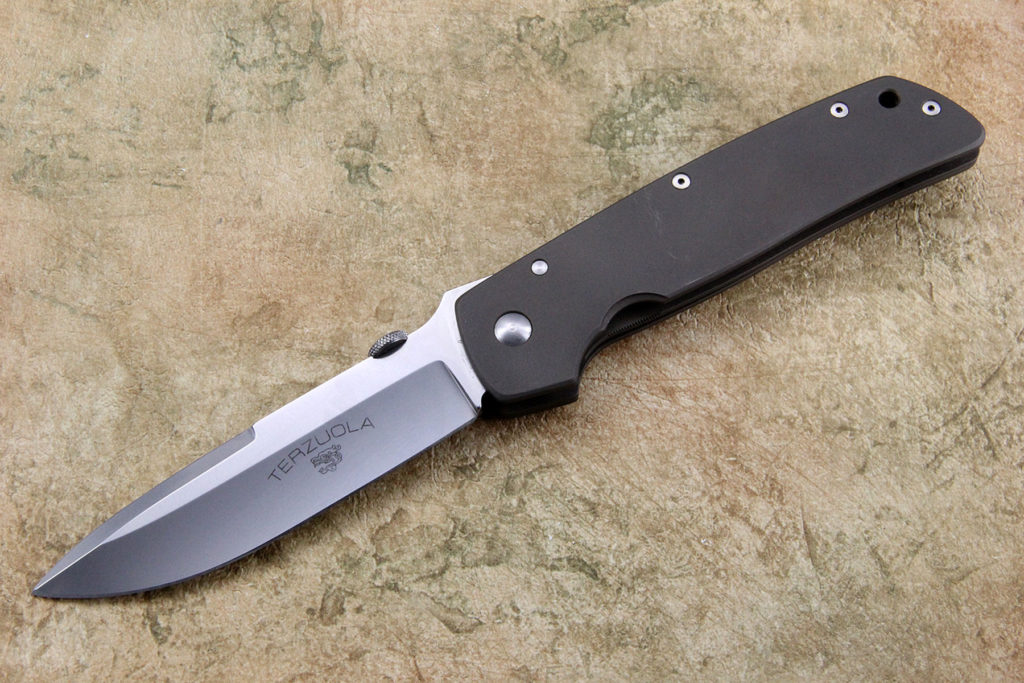
Bob Terzuola’s ATCF remains among the most iconic of tactical folders and is featured in the latest BLADE®.

The Gunny is n BLADE.
The Gunny shares his ample knife knowledge in the special military issue of BLADE®.

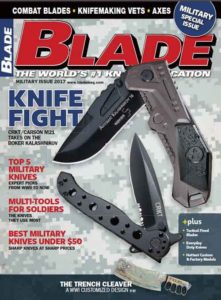
What are the top 5 U.S. military knives of all time? What’s it like to be married to the military, each other and knives all at the same time? Can the modern knife age be divided into two eras—before and after tactical folders? The latest issue of BLADE®, our special annual military issue, answers these questions and more, and is on newsstands and/or available in the digital edition now!

The top 5 U.S. military knives of all time–wow, that covers a lot of ground, don’t you think? BLADE polled such military veterans as USMC Staff Sgt. R. Lee “The Gunny” Ermey, Special Forces MSG/BLADE field editor Kim Breed, Navy EOD Chief Petty Officer Rob Cude, Special Forces/Green Beret Mark Carey, USMC Sgt. Les George and others to determine the elite knife grouping. Find out the results on page 42.

Trench Cleaver and BLADE
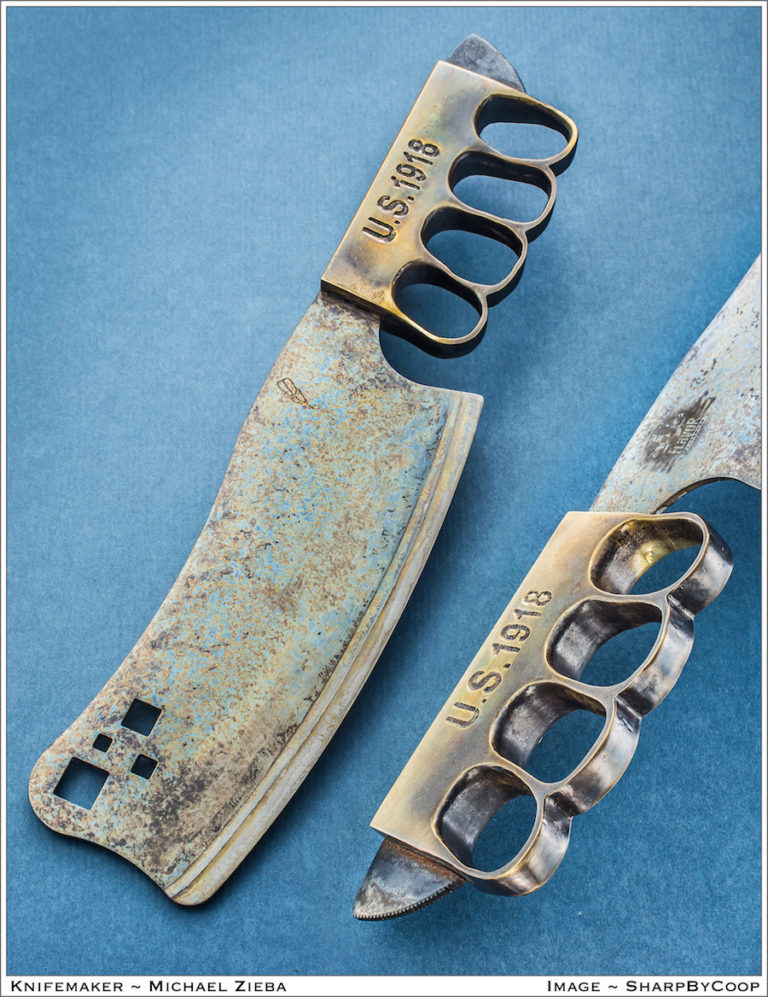
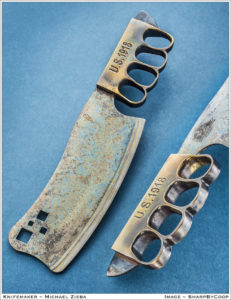
Michael Zieba’s Trench Cleaver includes a handle from the iconic World War I Trench Knife in the latest BLADE®.

Army SFC Michael “Rod” Rodriguez (retired) of the 7th Special Forces Group and SFC Kelly Rodriguez and also CW3 Jeremy Valdez (retired) and Sgt. Rachel Valdez (retired) are respective husband-and-wife teams who saw action in Iraq and Afghanistan, and now design knives for CRKT in the company’s “Forged By War” series. Read how these military heroes served their country above and beyond the call and their connection to knives—including Rod, who forges knives and had his portrait painted by President George W. Bush for Bush’s book, Portraits of Courage: A Commander In Chief’s Tribute To America’s Warriors—and more in Erin Healy’s story, “On-Point With Love & War.”

Ever since tactical folders became the hottest knives of all in the 1990s, knife observers have predicted time and again that the folders had peaked and/or were on their way out. Now, about a quarter of a century later, tactical folders maintain their lofty position as being among the most popular knives anywhere. Get the complete story on the longest-lasting knife trend going in Mike Haskew’s “The Renaissance Knife.”

Top 5 U.S. Military Knives and BLADE
See how many of the Top 5 U.S. Military knives of all time you can pick in the latest BLADE®!

There’s much more in the latest issue but you’re going to have to buy it to find out what all that entails. Get your copy on newsstands or the digital edition, or subscribe to the domestic, Canadian or international print editions, or to the digital edition now!

Advertisement

Must Read Articles

Read this before you make a knife

Knifemaking 101 – Read This Before You Make a Knife

  by Wayne Goddard My experience has taught me that there's nothing like digging in and getting started. I've often said the hardest part of the...
how to forge damascus steel

How to Forge Damascus

Advertisement
Advertisement