
The BLADE Blog w/Steve Shackleford

Knives, knife people, knife news, knife use, knife collecting, knifemakers, knife events, the BLADE Show, BLADE Magazine, and more.

Rebooting Collections Works Wonders

Rebooting collections works wonders. OK, so not everyone does it, but many who have done it one or more times seem to enjoy their collecting more.

Chris Nolen has successfully rebooted his knife collection several times since he started collecting. He began in his pre-teens, fueling his cutlery appetite by mowing lawns, and he even wrote a term paper on hunting knives.
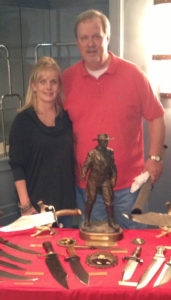
Rebooting collections and Chris Nolan
Rebooting collections has paid dividends for Chris Nolen, here with wife Linda and their bowie knife collection.

ā€œI was married at 24 and started collecting handmade hunting knives. Most were stag drop points or skinners,ā€ Chris recalls. ā€œI met a great local maker named Jerry Berry of Natchitoches, Louisiana, who got me interested in not just the handles, but the steel in the blades. Of course, I would buy BLADEĀ® and other knife magazines, and I would always find myself looking for big bowies.

ā€œOne day I was sitting at my desk and drew out a large, sort of re-curved, stag-handled bowie. I mailed it to Jerry and realized it was time to reboot my collection of maybe 40 knives. And reboot I did! I sold most of the old hunters to make money for my new passion for large bowies.ā€ Nolen is an avid collector of fine bowies to this day and is as enthusiastic as ever.

J.T. Oldham is a long-time folder collector of the modern tactical type and has rebooted his collection on occasion.

ā€œI was a regular customer of the House of Blades in Fort Worth, Texas, where I found many great knives, and also bought up all of the back issues of BLADE I could lay my hands on,ā€ Oldham states. ā€œProduction knives were just a way to whet my appetite, as I soon realized that what I wanted to collect was custom knives—and those knives had to have damascus steel.ā€

As a result, J.T. rebooted and started collecting upscale custom folders—and does to this day.

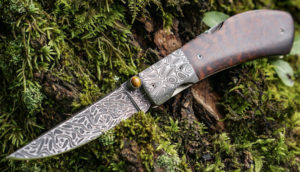
ā€œAt the ICCE [International Custom Cutlery Exposition] show in Kansas City last year, I bought a knife from my No. 1 knife hero, Ralph Turnbull. He was the knifemaker who really started it all for me. I remember looking on his website and in the pages of BLADE Magazine and thinking, ā€˜If I could only someday own one of Ralph’s knives I would really be a true collector.ā€™ā€

Since retiring, however, Oldham has tempered his budget a bit. ā€œI no longer have the disposable liquid capital I once enjoyed, so my purchases are now somewhat limited,ā€ he lamented. ā€œHowever, I follow the custom knife industry with the same interest that I focus on my retirement investments.ā€

Conversely, rebooting collections is something Kevin Jones has never tried.

ā€œMy preference for knives hasn’t changed over the 15 years I’ve been collecting,ā€ Kevin relates. ā€œI started out collecting American Bladesmith Society hunting knives and bowies, and that’s still what interests me. I consider myself a custom knife collector and investor. I’ve found to be successful on the investor side it helps to limit your area of interest so as to become very knowledgeable on both the knives—and the particular knife market—for the knives you collect.ā€

To REBOOT or NOT to REBOOT?

Why should you consider the concept of rebooting collections?

ā€œMany collectors end up rebooting collections early on as a result of buying their first knives on impulse prior to them acquiring the knowledge and exposure to determine what type and style of knives are going to hold their interest long term,ā€ Jones observes.

Before rebooting, you need to answer questions concerning not only your preferences and current status, but outside realities as well.
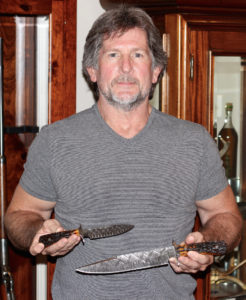
Rebooting collections and Kevin Jones.
Rebooting collections is not for everyone. Kevin Jones has collected ABS hunting knives and bowies and nothing but for 15 years, and has no plans to reboot anytime soon.

ā€œI guess one of the first things to consider is, are you really ready and willing to reboot your collection and take it in an entirely new direction? Has your perspective or your interest changed? Is this an artistic response or a reaction to market trends? For me, a complete reboot means to liquidate your current collection and re-invest in another direction,ā€ Oldham notes. ā€œAre you no longer happy with your knives? Has there been a downturn which has you concerned your collection has lost value? Are you eager to participate in the latest trend?ā€

Rebooting collections also raises questions as to whether you should sell your current knife collection to finance a new one.

ā€œI feel that’s up to the individual collector,ā€ Jones opines. ā€œHowever, many need to sell knives in their current collection to help finance them rebooting. I always recommend that while selling an entire collection through a purveyor or auction may be quicker, selling or liquidating piecemeal via a variety of methods will result in a better return.ā€

Nolen offers a word of caution he discovered after selling off his first collection to reboot.

ā€œBack then I put ads on internet boards and in the newspaper,ā€ he recalls. ā€œI see some knives on eBay that go for hundreds of dollars now that I only paid six to 12 dollars for back in the ’60s and ’70s. I wish now I had most of those back!ā€

BEST WAYS to LIQUIDATE

What is the best way to liquidate knives if you do decide to sell off your current collection to finance your new one?

ā€œI feel it’s best to use a variety of methods in selling custom knives,ā€ Jones advises, ā€œincluding contacting other collectors who are interested in the type knives you are selling, selling some on the better knife purveyor sites, and I’ve been very successful selling knives on my ā€˜collector website.’ It’s very important to have good photos of your knives listed on the internet. You are basically putting your knives out there for the world to see.ā€

Rebooting collections and J.T. Hill.
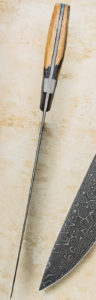
Rebooting collections began for J.T. Oldham when he bought a folder from his hero, custom knifemaker Ralph Turnbull, maker of this damascus linerlock.

ā€œI, for one, would never consider using eBay. Not for my collection,ā€ Oldham states. ā€œAnd there are just too many trolls on the knife forums! I know that there are decent knife forums, but I simply would not regard that as the right place to offer my knives. I would work one-on-one with certain interested parties—and those individuals may be found on forums. This is all said from my perspective and the knowledge I have of certain individuals with whom I have dealt with in the past. I have a rather large and reliable network of purveyors and collectors whom I trust. A good resource for purveyors is BLADE and the KNIVES annual for a comprehensive listing of those who are associated with the knife community.ā€

Studying and researching the professionals who deal in knife sales, and then determining who among them are the most knowledgeable and reliable for advice is a must.

ā€œYour purveyor of choice is your best ally in determining what would be in your best interest,ā€ Oldham continues. ā€œIf this reboot is purely for financial or investment purposes, no one knows the value of knives better than those who actually determine the value of knives on a day-to-day basis. While they may be able to provide a rough ballpark estimate for your collection, values are subject to change. Be prepared to be presented with values which may be far less than you expected or you’re willing to accept. Be willing to make compromises in order to achieve your goal and obtain what you are truly after, as in any business deal.ā€

Also keep in mind that when selling to purveyors it is important to remember they are in the business to make money, so they must have a profit margin built into the knives they buy.

IS IT TIME?

As you can see from the comments of our seasoned aficionados, collectors are a distinctly different lot—but that’s what makes the whole avocation of cutlery collecting interesting. As human beings we all have a level of curiosity to see what’s on the other side of the door. Once we have opened it we can either leave or explore. Keep in mind a reboot does not have to be an overnight decision. You can always wade into another genre or style without a full commitment. Whether you wish to upgrade your collection, totally switch gears or seek an investment, there are fresh new knives out there to satisfy any desire.
10 Family Gift Knives Sport Holiday Spirit

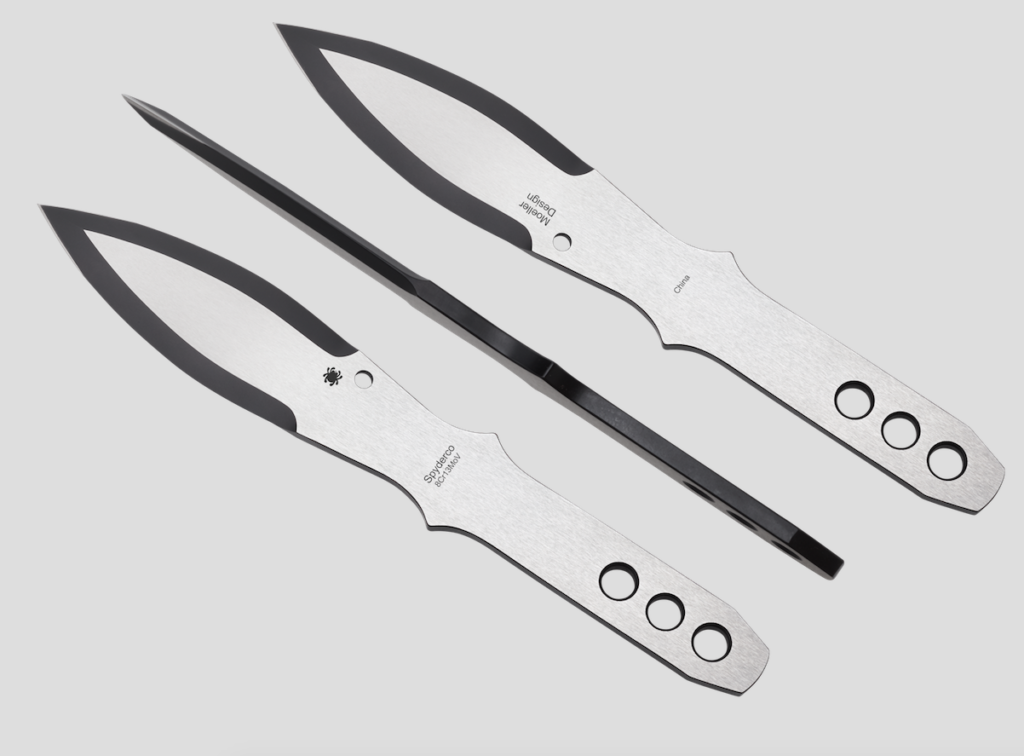
SpyderThrowers from Spyderco
Designed by Harold Moeller, the SpyderThrowers from Spyderco feature 8Cr13MoV stainless steel and carry in a three-tiered sheath.

Whether it’s blood relatives or your inner circle of friends, all of them need family gift knives. Here are 10 examples of some really sharp gifts you can give to those closest to you this holiday season.

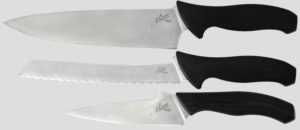
Kitchen knives make good family gift knives for just about any adult who likes to work with food. The three-piece Kershaw-Emerson set includes a chef’s knife, paring knife and bread knife—three of the most used cutting tools in the eating area. Check this great gift out for an MRSP of only $44.99.

Emerson Kershaw
Tactical guru Ernest Emerson designed a new set of kitchen knives—outstanding family gift knives—for Kershaw.

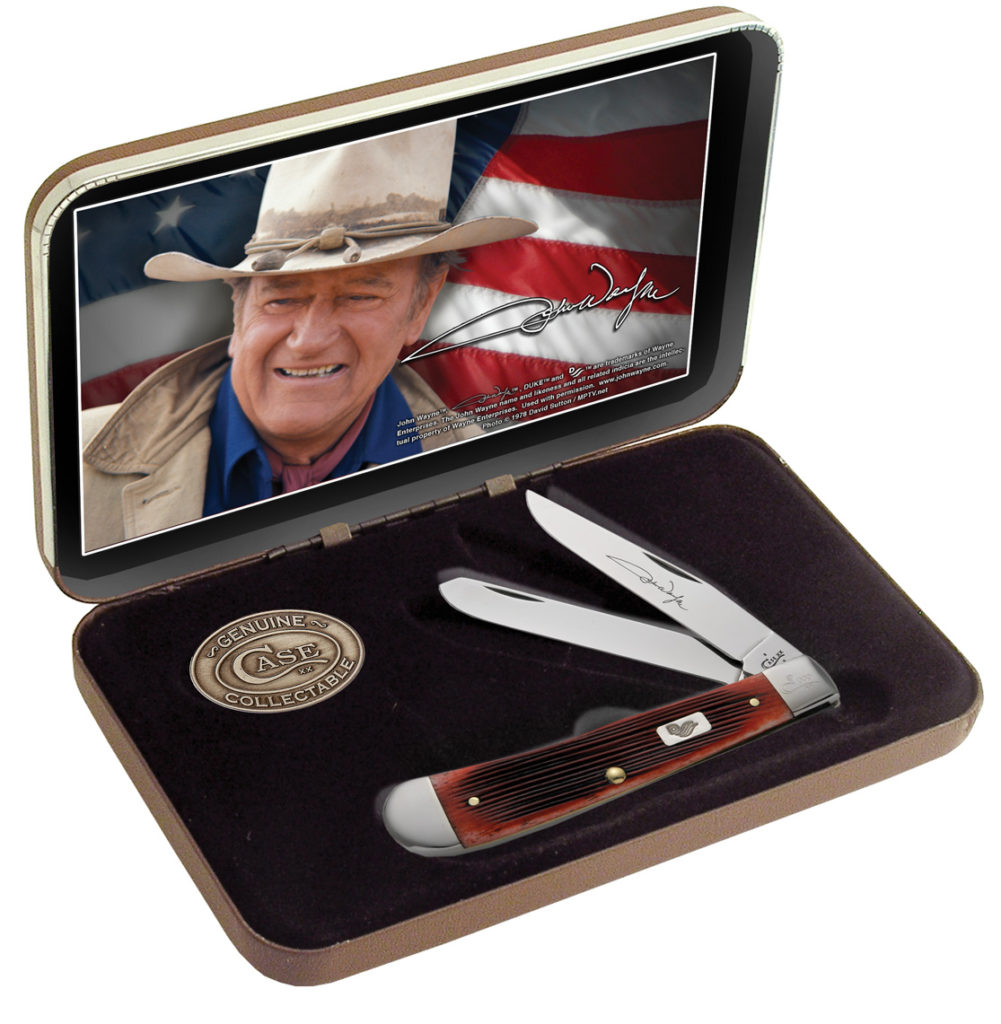
Grandpa loves traditional pocketknives and the Case dark redbone trapper commemorative tin in the motif of

Duke and Case
Grandpa will love the Case Duke knife that includes John Wayne’s signature on the blade and the Red River D shield.

the premier pilgrim of them all, John Wayne, will be sure to fit gramps’ pistol. The shield is the “Red River D,” the ranch brand used by Duke’s character of Tom Dunson in the western movie classic Red River.

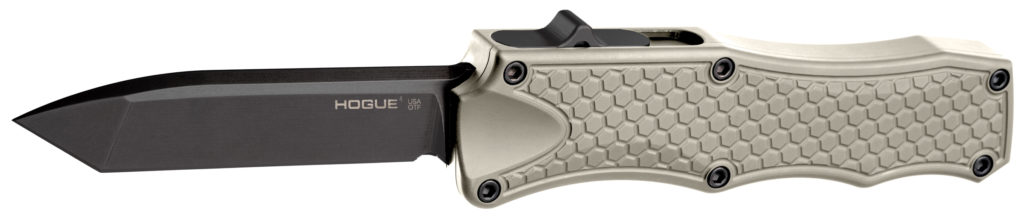
With bans against switchblades being overturned nationwide, it might just be that your state has overturned its ban as well. Check with the American Knife & Tool Institute or Knife Rights to find out. If it has, just about anyone of a proper age in your family will love the out-the-front auto from Hogue.

OTF from Hogue
Hogue’s out-the-front auto sports a tanto blade of CPM 154 stainless steel in a black PVD finish. MSRP: $369.95.

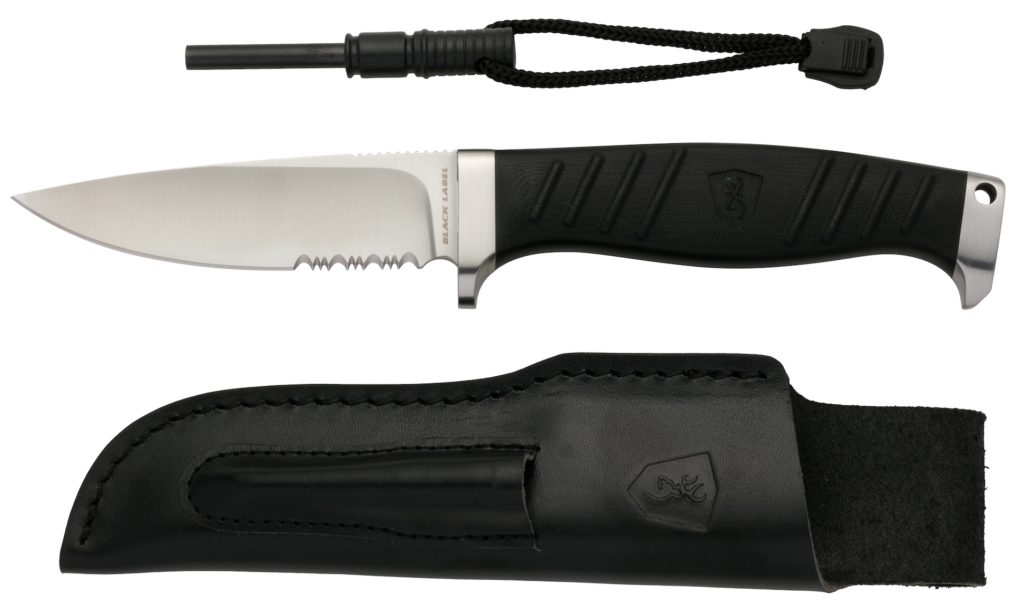
For the bush crafter in your family, check out the Bush Craft Ignite G-10 from Browning. It features a hollow-ground blade of 7Cr17MoV stainless steel and a carbide fire starter with a nylon lanyard that fits in a sheath pocket.

Bush Craft Ignite from Browning
The Bush Craft Ignite G-10 from Browning includes a ribbed black G-10 handle, a partially serrated edge and a fire starter that fits in a sheath pocket. MSRP: $59.99.

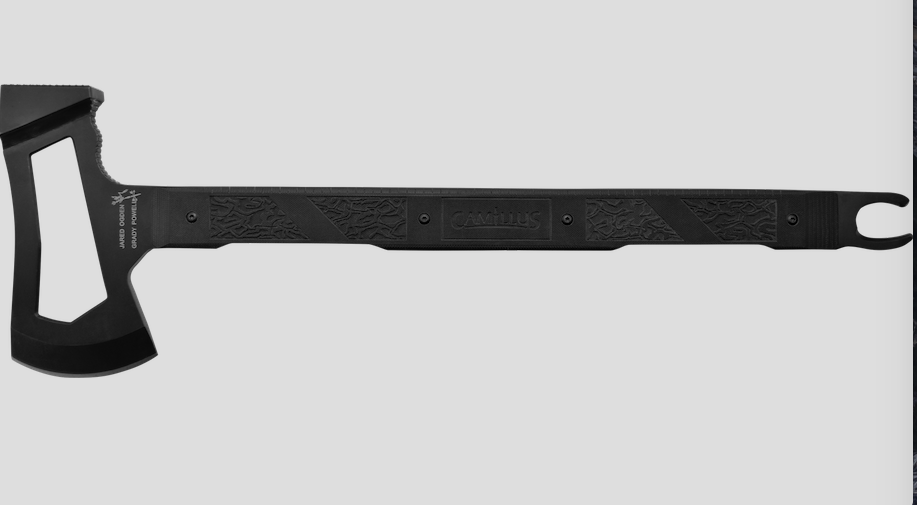
Every family has one–the type who, in an emergency situation where extreme measures must be taken to save someone from a burning building or other disaster, is more than ready to do what needs doing. Such situations can call for breaching tools, and Camillus has such a model with its Crash Breaching Tool. The CBT features titanium stainless steel, full-tang construction, a pry bar and hammer head.

Camillus Breaching Tool
The Camillus Crash Breaching Tool is for the door knocker downer in your family. MSRP: $119.99.

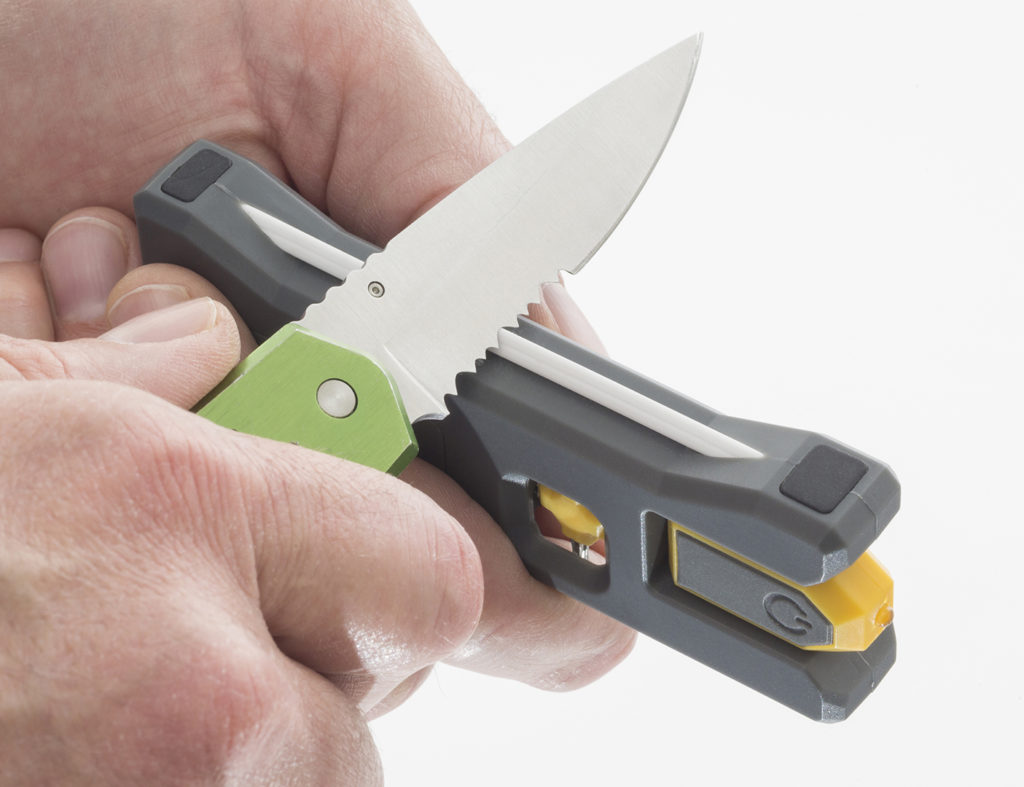
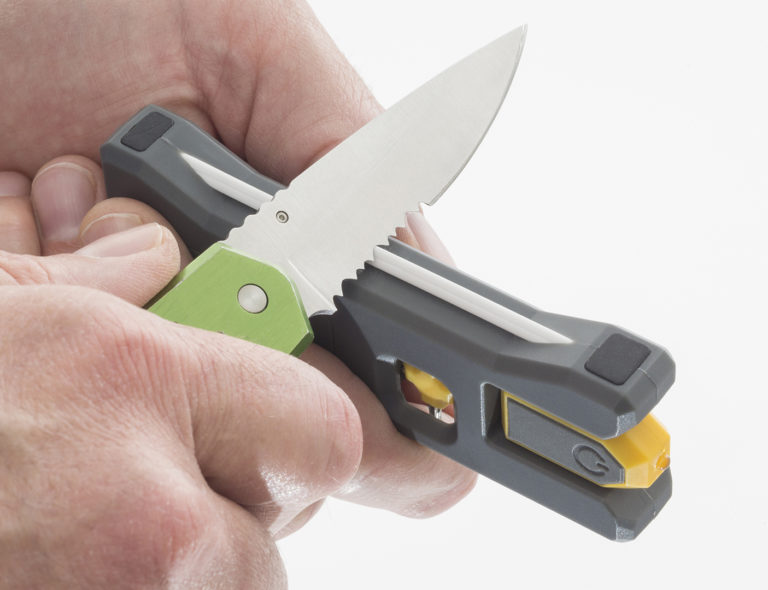
Your family member who likes to sharpen his/her family gift knives or wants to be better at it will love Smith’s Sharpener and Knife Tool. It sharpens both plain and serrated edges and comes in a cool compact carry unit.

Who’s the Zombie fan or fans in your family? KA-BAR‘s Zombie Knives line has just the folder for him, her or them with the Kharon Tanto Folder in the company’s familiar Zombie green handle.

ESEE Wallet Survival Kit
ESEE‘s Izula Gear Wallet Kit has a mini razor blade, kevlar cordage, signal mirror, non-metallic handcuff key, E&E plastic instruction cards, clear plastic survival nav card, fire starter, arrowhead, fish hooks, button compass and more.
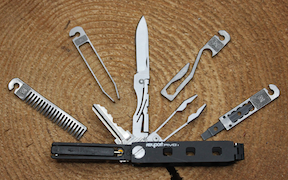
Klecker Stowaway
Knife, wrench, pliers, flashlight, screwdriver, comb, pen and more, the Stowaway Tool from Klecker enables you to load as many or as few of the items on one platform as you like.

No matter your family member’s need, the Klecker Stowaway Tool most likely has a tool for it. Knife, flashlight, screwdriver, pliers, scissors, tweezers, bottle opener, pen, fire starter, comb, wrench, seat belt cutter and straight razor, you have your choice of any of them–and you can install as many or few of them on the Stowaway Tool as you like.

Every family has someone who likes to throw stuff, so why not with family gift knives? Spyderco has a set designed especially for the purpose with its SpyderThrowers. They are designed by Canadian knifemaker/knife-throwing authority Harald Moeller.

Everyone needs a survival kit, and one in wallet form is especially handy. ESEE‘s Izula Gear Wallet Kit has everything a dyed-in-the-wool survivalist needs in a handy carry package 4.25×2.75 inches in size and weighing in at only 4 ounces.

KA-BAR Zombie knife
The Kharon Tanto Folder in KA-BAR‘s Zombie Knives line has a 3.375-inch blade of AUS 8A stainless and a Zombie green synthetic handle. MSRP: $21.05.
Smith's Sharpener and Knife Tool
Sharpen those pesky serrated edges and more with Smith’s Sharpener and Knife Tool.

Distal Taper Means Quick, Lightweight Knives

Distal taper Zieba
Michael Zieba applies distal taper to the blade of his Brooklyn Made folder. (SharpByCoop image)
Distal taper on Swarz-Burt
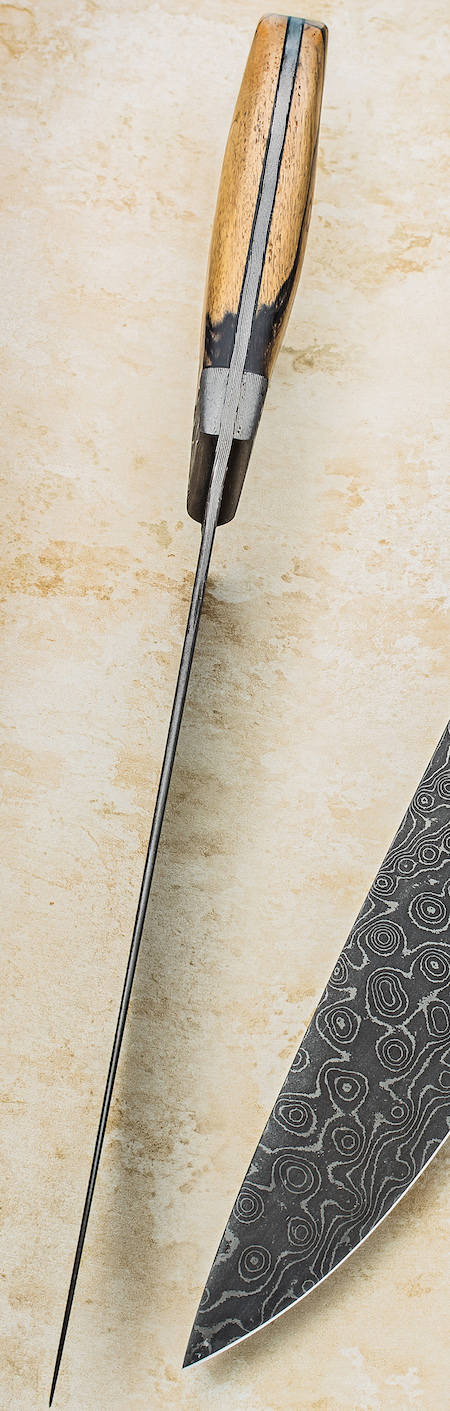
Note the gradual distal taper of the blade from just above the bolster to the blade tip on Peter Swarz-Burt’s chef’s knife. (SharpByCoop image)

Distal taper makes knives feel more lightweight, quicker in the hand and easier to use. However, the concept affects more than just weight. It also distributes balance so the knife feels neither top nor bottom heavy. In other words, the knife is well-balanced so that it goes where you want it to and cuts how you want it to when you want it to. It looks cool, too.

How does distal taper work? It’s pretty simple, really. The maker removes steel, usually by grinding, from each side of the blade beginning at the ricasso, that is, from just forward of where the blade and handle meet, and ending at the blade’s tip. The effect is of the cross-section of the blade gradually thinning, or tapering, toward the tip. Less steel means less weight and, if removed properly, better balance for the knife. Some makers apply taper to the tang as well, beginning the tapering just below where the blade and handle meet and gradually thinning the tang toward the handle butt. However, in general, the concept is identified more with the tapering of the blade than the tang.

Distal taper is not a new concept. “From ancient times it was used to lighten and balance swords,” noted award-winning swordsmith Vince Evans. “If a sword was not distal tapered, all you would have was a crowbar with an edge.” BLADE Magazine Cutlery Hall-Of-FameĀ© member William Scagel, who forged knives during the first six decades of the 20th century, applied the concept to his knives, as did such premier makers as Cutlery Hall-Of-Famers Bob Loveless, Bill Moran and others. Moran was instrumental in making the teaching of bladesmithing the main mission of the American Bladesmith Society, and he made distal taper a focal point in his classes and recommended it to all of his students.

KNIFE TYPES

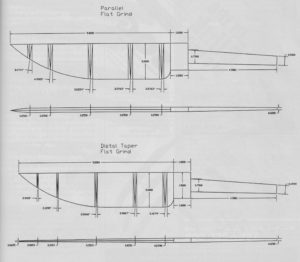
Distal taper drawings
At bottom is the distal taper flat grind and at top is the parallel flat grind. Each image includes both side and overhead views. As you can see, the angle is “blunter” with the parallel spine. The point will be thinner and not as strong with the distal-taper spine. However, unless you simply want to punch holes with your blade, the knife with the distal-taper spine will be more efficient at cutting and chopping (Jim Crowell drawings)

ABS master smith Tim Hancock said tapering is most important on larger, thick blades such as those in the 3/8-inch range that often are heavier and benefit from the weight reduction for quickness and ease of use. “The thinner the blade, the less important distal taper is,” Hancock said. “In fact, full-length distal taper on a bowie blade of a 3/16-inch thickness and an 8-inch length would leave the tip area so thin and weak that, in my opinion, it would be an inferior knife. To me, it’s a process of speed and strength. Some balance between the two must be considered to make a superior knife.” Conversely, ABS master smith Jim Crowell said, if done properly, even a blade with a thin spine can benefit from tapering. “The degree of taper won’t be as much as on a thicker spine—in fact, it will be very subtle—but even then it provides the most efficient cut,” he noted.

Distal taper Buckner
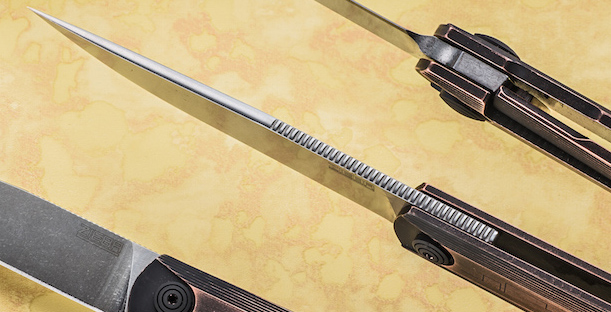
Tom Buckner takes what is already a thin blade and makes it even leaner toward the tip via distal taper. (SharpByCoop image)

Larger hunting knives, camp knives, some bowies, fighters and knives used in cutting competitions where quickness and cutting ability are keys will benefit from being tapered. On the other hand, ABS master smith Mike Williams said he did not think distal taper was important for the rope cutting of the cutting competitions except for the balance of the knife itself. “It’s like using a fillet knife versus a butcher knife,” he continued. “When cutting rope you want the weight forward.” Since tapering removes steel toward the end of the blade, the process does not result in a knife with the weight forward such as a khukuri, for instance. Knives designed for cutting meat and paper will benefit from distal taper because it promotes a thinner edge that produces less drag, he observed.

According to ABS master smith Jarrell Lambert, reduced weight, quickness and balance are not the only benefits of tapering. He adds another: flexibility. He indicated distal taper gives the blade more of it and spreads the stress more evenly throughout the blade than one made of the same material but without distal taper.

Crowell added another benefit of tapering: greater edge penetration. “Distal taper allows the cutting edge to have a smaller degree of angle progressing down the blade, resulting in less drag and producing greater penetration into the medium with a said amount of energy,” he explained. “As a result, a blade with distal taper will always cut more efficiently than the same blade with a parallel spine.

“If you want weight in your blade, maybe for chopping, increase the width of the blade, but have a distal taper. This will provide the weight needed but also a lesser degree of angle on the edge. Consequently, you will have the best of both worlds.”

Knives Of The Year in New BLADE

BLADE MAGAZINE 2014 OVERALL KNIFE OF THE YEAR@ went to the CRKT HI JINX. This flipper folder, designed by Ken Onion, sports a 3.320" blade made of Bohler-Uddeholm Sleipner. Made in a limited edition of 525 in Italy, the knife is already sold out and no more will be made. It had an MSRP of $500.
BLADE MAGAZINE 2014 OVERALL KNIFE OF THE YEAR@ went to the CRKT HI JINX. This flipper folder, designed by Ken Onion, sports a 3.320″ blade made of Bohler-Uddeholm Sleipner. Made in a limited edition of 525 in Italy, the knife is already sold out and no more will be made. It had an MSRP of $500.

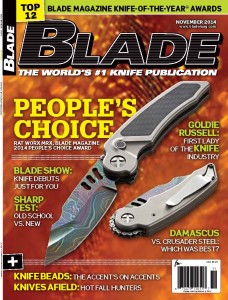
The BLADE Magazine 2014 Knives Of The Year®, the top knives of the BLADE Show, the latest inductee into the BLADE Magazine Cutlery Hall Of Fame© and much more highlight the new BLADE®, on newsstands NOW!

Gracing this issue’s cover is the Rat Worx MRX, winner of the first-ever BLADE Magazine People’s Choice Award, voted on by visitors to the BLADE website, blademag.com.

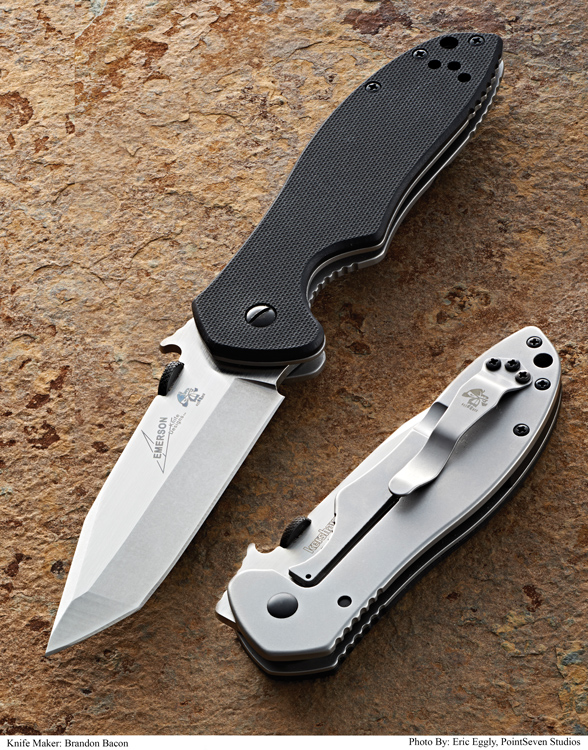
Other top Knife-Of-The-Year winners named at the 2014 BLADE Show include the CRKT/Ken Onion Hi Jinx, Kershaw’s Kershaw/Emerson CQC-7K, Shun Dual Core Kiritsuke and the Zero Tolerance/Rick Hinderer 0562, Spartan Blades’ Les George V1-14 Dagger and Les Halpern Nymph and others.

The BLADE MAGAZINE 2014 BEST BUY OF THE YEAR went to the KERSHAW-EMERSON CQC-7K. The tactical folder has a blade length of 3.25ā€ made of 8Cr13MoV stainless. The wave-shaped feature can be made to catch on the pocket seam as the knife is removed from the pocket, thereby opening the blade. MSRP: $59.99
The BLADE MAGAZINE 2014 BEST BUY OF THE YEAR went to the KERSHAW-EMERSON CQC-7K. The tactical folder has a 3.25″ blade made of 8Cr13MoV stainless. The wave-shaped feature can be made to catch on the pocket seam as the knife is removed from the pocket, thereby opening the blade. MSRP: $59.99

The BLADE Show was one of the most successful in recent memory and, in addition to the Knives Of The Year, also featured the winners of the custom knife judging competition, the introductions of many new factory knives, the first-ever induction of a woman—Goldie Russell—into the Cutlery Hall Of Fame and much more.

In the custom knife judging, the Tembo Bowie by Russ Andrews, David Lisch, Mike Quesenberry, Steven Rapp, Jim Small and Jane Tukarski took home both Best Of Show and Best Collaboration, and was auctioned off to raise money for the Elephant Protection Association.

Other knifemaker winners included Mike Williams, Stephanie Lemelin, Brian Nadeau, John White, Joe Szilaski, RJ Martin and more.

And among the factory knives that debuted at the show were the “Battlechef” from Olamic Cutlery, the Emerson Knives, Inc. “Vindicator,” the Chris Reeve Knives “Impofu,” the Winkler Knives “Operator” and many more.

In one of the more popular inductions ever, Goldie Russell entered the Cutlery Hall Of Fame for her many contributions to the knife industry, including her pivotal role as president of the American Knife & Tool Institute when it helped defeat a U.S. Customs proposal that would have defined all one-hand knives as switchblades/autos, thus making them illegal nationwide.


The latest issue of BLADE is on newsstands now!
The BLADE Magazine 2014 Knives Of The YearĀ® highlight the new BLADEĀ®, on newsstands now!

These stories and many more are all awaiting your perusal in the latest issue of BLADE.

Ray Appleton Passes Away at 88

Ray Appleton, maker of the “I.Q.” and other puzzle-type, “multilock” custom knives, passed away Saturday. He was 88.

The tall, lanky, likable Appleton caused quite a sensation with his puzzle/multilock knives in the late 1980s. Beautifully carved, anodized titanium folders, they were way ahead of their time (see “Ray Appleton Redefines the Folding Knife,” January/February 1988 BLADEĀ®). One of their main endearing features is that Ray would build them with hidden mechanisms, etc., so you had to figure out how to open them.

BLADE field editor Ed Fowler, a long-time acquaintance of Ray’s, had nothing but good things to say about the talented maker. “Ray was my hero when I was a kid in high school and remains a hero to me,” Fowler observed.

According to Ray’s son, Ron, an accomplished maker in his own right who will display his knives at the upcoming Art Knife Invitational, Ray had not been in a knife shop in at least seven years. Ray had moved to Montana to live with his daughter and spend time with his grand kids and play on the computer.

Paul Bos Still Active in Heat Treating

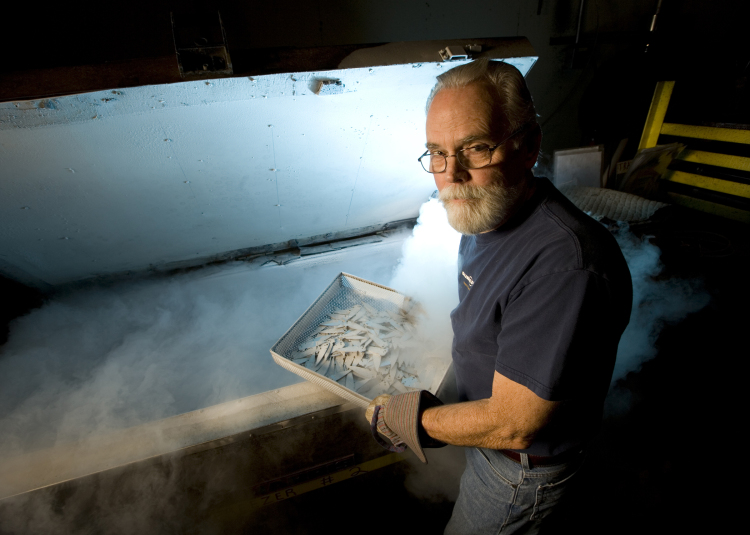
Although formally retired from his full-time role as head of heat treat for Buck Knives, Paul Bos continues to pursue the passion that captivated him as a 9th grader, many years ago.

         The Blade Magazine Cutlery Hall of FameĀ© member still fills an advisory role for Buck, where his protege Paul Farner now directs the daily heat-treat operation at Buck’s Post Falls, Idaho, plant. In addition, Bos still is taking blades for treating from the many knifemakers he’s known and served for as many as 20 to 30 years, and longer.

         ā€œAfter all these years of friendship and working relationships, it’s satisfying to know that we can continue to provide the same specialized heat-treat service custom knifemakers have come to expect,ā€ Bos said. ā€œI’ve heard that my ‘retirement’ misled some, but Paul Bos Heat Treating is very much alive and well.ā€

         For a brochure and price list, call or e-mail Paul Farner: (208) 262-0500, ext. 21; [email protected].

                                                  #       #      #

Photo Attached: Paul Bos

Paul Bos Heat Treating–  Paul Farner, e-mail [email protected] Phone 208-262-0500 Ext.21

                                              Paul Bos e-mail [email protected] Phone 928-237-1656

Colorado Dreamin’: Western Cutlery

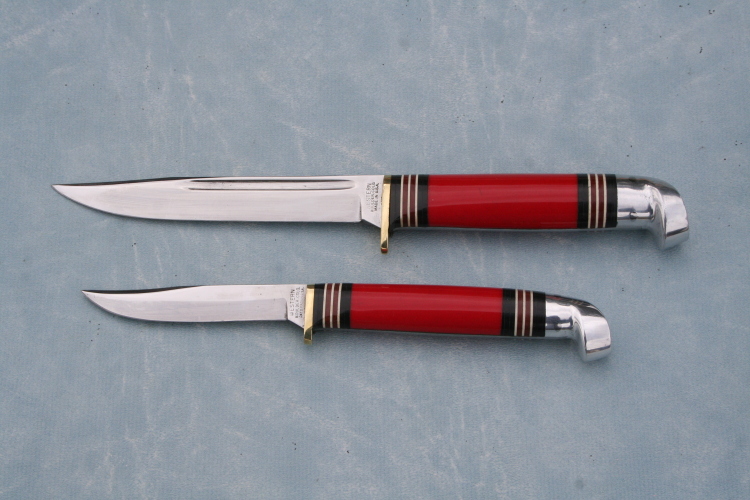
A rare Twin Set of Western Cutlery knives consists of a red-handle P48A (top) and P28 (bottom). The P28 has a sabre-ground blade instead of the standard flat grind. (Clyncke photo)

Knife collectors are dreamers. They dream of finding a Scagel, a fine bowie or an old Case knife at garage and estate sales. They dream of looking through a box of junk at a flea market, spotting an old green-bone Remington whittler, and buying it for five bucks so they can walk around smiling like a Cheshire cat. Most of the time it is just a dream, though once in a while the dream comes true.

Ā Ā Ā  My dad worked at Western Cutlery in Boulder, Colorado, in the late 1930s, and I did concrete contract work for the company after it moved to the outskirts of Boulder on Western Avenue. Dad was good friends with the Harvey Platts family, and I got to know a number of the workers at the plant. I became a part-time custom knifemaker, scrimshander and jewelry maker over the years, and when Western’s plant in Longmont went out of business, I bought a lot of raw material I could use to make my knives and jewelry.

Ā Ā Ā  I never lost my love of Western knives. I have owned a lot of the Boulder models and always enjoy looking for them, finding a good one, removing the dirt from it and cleaning up the sheath. My family had many Western knives on our ranch and farm, where knives were everyday tools. The many different ways of using them resulted in most being heavily abused, overly sharpened on a grindstone, and tossed in a bucket in the old shop when they wore out. I still have some of the old knives with blades that were sharpened so much they resemble toothpicks.

Ā Ā Ā  I am retired now and go to many estate sales and flea markets, hoping for a good find here and there. I always see my collecting friends looking for ā€œthe prize,ā€ too. We have a friendly competition to see who can get that old knife first, then hunt the others up and show what we found.

Ā 

DREAMIN’-TYPE KNIVES

In 2010, a family friend who was 89 passed away and I bought some nice old knives from his family, including five Westerns, a nice old Case Tested XX and several other brands. A couple of the Westerns and the Case are in very good condition—dreamin’-type knives.

Ā Ā Ā  A week later I was at another sale and asked about any Western knives, as another long-time Boulder family was conducting the sale. I was about to leave when a man said he had heard me ask about Westerns. He had one, I looked at it and we exchanged phone numbers. On the way home I started dreaming again about what the man had, hoping it was a rare one, maybe a World War II stiletto or a big, old one-blade folder.

Ā Ā Ā  A few days later I got anxious and phoned him. He said the knives were packed away and he would call me when he found them. I had heard that many times before, so the dreamin’ abruptly stopped.

Ā Ā Ā  Two days later the phone rang and it was the fellow again, telling me to stop by. I arrived and he got out three boxes and put them on a table. Inside were many cloths of different types rolled up in bundles. I picked up the top one, opened it and saw a Western 48A with red handles in mint condition. I nervously started opening more. Not one or two as I had imagined, but 28 pristine Western Boulder knives with sheaths! I was stunned to say the least. This was without a doubt the finest group of knives I had seen since Western closed its doors.

Ā Ā Ā  There were six folders, including a gorgeous 062 two-blade with redbone handles, two yellow-handle trappers, a 441 with cracked-ice scales, a brownbone 426 stockman, and a 656 with beautiful redbone scales. There was an L77A with a sawtooth back, a 539 with very nice stag handles, a rare dark-yellow-handle P48A, four ā€œBlack Beautyā€ knives of varying sizes, an L28, 628 and a P28. As I kept unwrapping I became more stunned at each knife. These all were brand new, never used or handled at all. Luckily, they were not stored in the sheaths but wrapped separate from the corroding leather.

Ā Ā Ā  As I lifted one of the last four and unwrapped it, I know my jaw dropped to my chest. Here was a wonderful white-handle ā€œTwin Setā€ containing a P48A and a P28. I was nervous as a cat in a dog pound! As I unwrapped the last three, again I was stunned. Here were three more Twin Sets, one stacked leather, one white handled and another red. I calmly put them all back as the man inquired which one I would like to buy. I asked which ones were for sale and he said, ā€œWhy don’t you buy ’em all?ā€ We arrived at a price and I paid him.

Ā Ā Ā  I asked where the knives came from and he said they belonged to his brother, who had worked at Western for a while in the leather department. He did not seem to want to talk about it, so I took the knives and left.

Ā 

DREAM, DREAM, DREAM …

When I got home, I carefully unwrapped the knives and sheaths again, lined them up and just stared. One of my dreams had come true for sure.

Ā Ā Ā  It was time to give the knives closer inspection. Most of the brass guards and nickel bolsters were discolored with age, so I took a polishing cloth and carefully brought the new shine back. As I began to polish the stacked leather Twin Set, I got another shock.

Ā Ā Ā  Both knives had a Boy Scout stamp just above the Western Boulder stamp. I had seen 48s with the Boy Scout stamp but never the smaller L48B. Also unusual is that three of the four Twin Set larger knives have sabre blades with no blood grooves. The sheaths were somewhat dry, so I applied leather balm to bring them back to life. I noticed some were not stamped the same as Western did most of its sheaths, particularly the four Twin Sets. Since the knives’ original owner had worked in Western’s leather shop, he may have been just doing what he liked, or he may have been trying new styles. I guess I will never know for sure.

Ā Ā Ā  One thing I do know for sure: I will keep dreaming of finding another great knife or two, and now I can dream of finding another great cache such as this one.—by Marvin Clyncke

Ā 

DREAM KNIFE VALUES*

Ā 

Twin Set w/scout-stamped knives $400

Twin Set w/red tenite handlesĀ Ā  $450

P48A w/yellow handle $375

539 w/stag handle $275

248 w/cracked-ice handle $200

060 Rancher’s two-blade folder $250

L77A w/Finnish-style sheath $250

Twin Set w/white tenite handles $450

Ā 

*The author’s values are for knives in mint condition.

Ā 

For more on the latest knives, knife legislation, knifemaking instruction, knife trends, knifemakers, what knives to buy and where and much more, subscribe to BLADEĀ® Magazine, the World’s No. 1 Knife Publication. Click on http://www.shopblade.com/blade-magazine-one-year-subscription-us/?r+ssfb073112 for more information.

Advertisement

Must Read Articles

Read this before you make a knife

Knifemaking 101 – Read This Before You Make a Knife

  by Wayne Goddard My experience has taught me that there's nothing like digging in and getting started. I've often said the hardest part of the...
how to forge damascus steel

How to Forge Damascus

Advertisement
Advertisement