

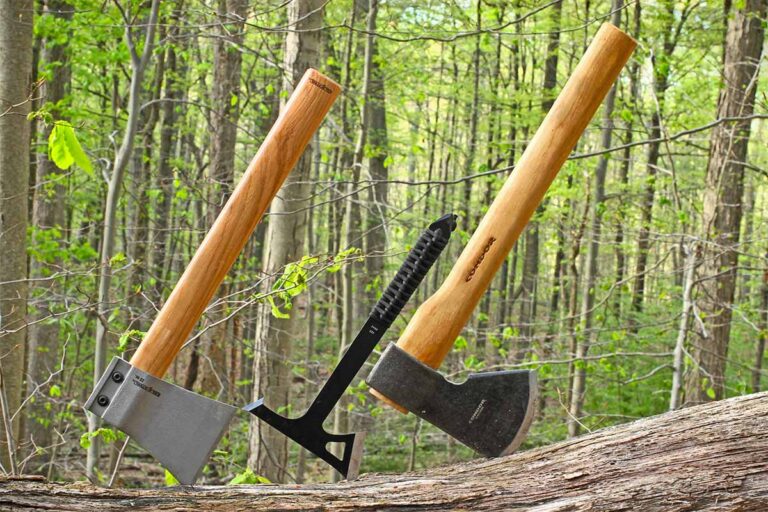
Consider three hot new throwers for an ancient sport gone international.
Once considered a lost pastime, axe throwing has grown in popularity worldwide. With the founding of such organizations as the International Axe Throwing Federation (IATF), the World Axe Throwing League (WATL) and others, and the pursuit’s establishment as a pub sport in the USA, Canada, Belgium, Poland and elsewhere, more people are interested in this thrilling activity. It’s no longer just a lumberjack’s hobby but an exciting sport most anyone can enjoy.
Condor Tool & Knife Cantina Axe

Accompanying axe throwing’s growth in popularity is the demand for high-quality axes. The Cantina Axe from Condor Tool & Knife is an excellent all-purpose tool with features catering to professional axe throwers and seasoned axe users alike. The Cantina is versatile enough for both competition axe throwing and outdoor tasks, making it a valuable addition to any edged-tool array.
Crafted from 1060 high carbon steel, the axe head features a natural darkened finish that adds to its rugged appeal. The 18-inch burnt American hickory handle provides an excellent grip. The 4-inch blade bit weighs about 35 ounces, making it stout enough for outdoor splitting and chopping chores. The design promotes maximum performance, making it an excellent choice for anyone looking for a reliable multi-purpose axe.
Condor Tool & Knife Cantina Axe Specs
Blade Length: 4”
Blade Grind: Convex
Blade Material: 1060 carbon steel
Handle Material: Burnt American hickory
Weight: 35 ozs.
Overall Length: 18”
Sheath: Rubber blade cover
Country of Origin: El Salvador
MSRP: $87.34
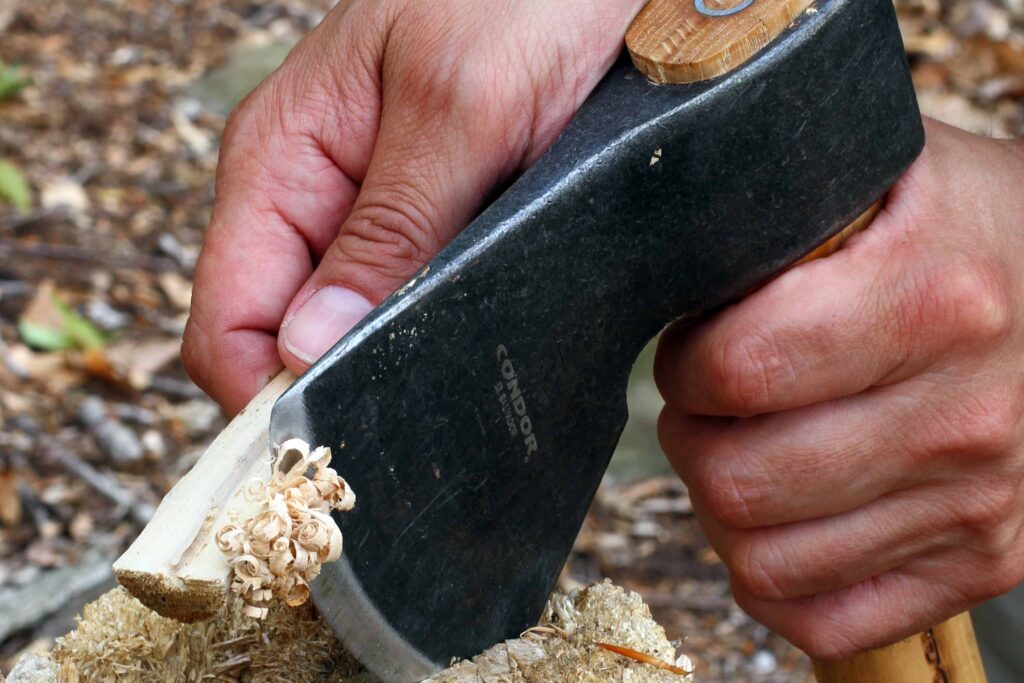
FIELD TEST: The Cantina looks and feels like a small camp axe. The test model came with a good convex edge that stuck in a dead tree target and was camp-use capable out of the box. The head geometry is between a conventional and throwing axe profile. Despite the Cantina being the heaviest of the test bunch, it wasn’t a chore to throw. In fact, the weight helped it stick since the bit isn’t flat like many throwing axes with a pronounced heel and toe.
The handle is straight and burly, with a little more meat at the throat of the axe. It came well-seated and solid. However, after several throws it had a bit of play, though it never came visibly loose. I’m sure a boiled linseed oil bath would remedy this. The straight handle helped propel the axe and elegantly send it into flight.
The Cantina’s distinctive feature is its head shape combined with the convex edge. This makes it a jack of many tasks, easily doubling its duty as a camp axe. I like this aspect the most. The edge shaved fine feathers and chopped and split like a regular axe, with more head weight for its size. If you want to grab one axe and head out covering camp and leisurely axe throwing, the Cantina’s it.
Boker Plus Mohican Throwing Axe
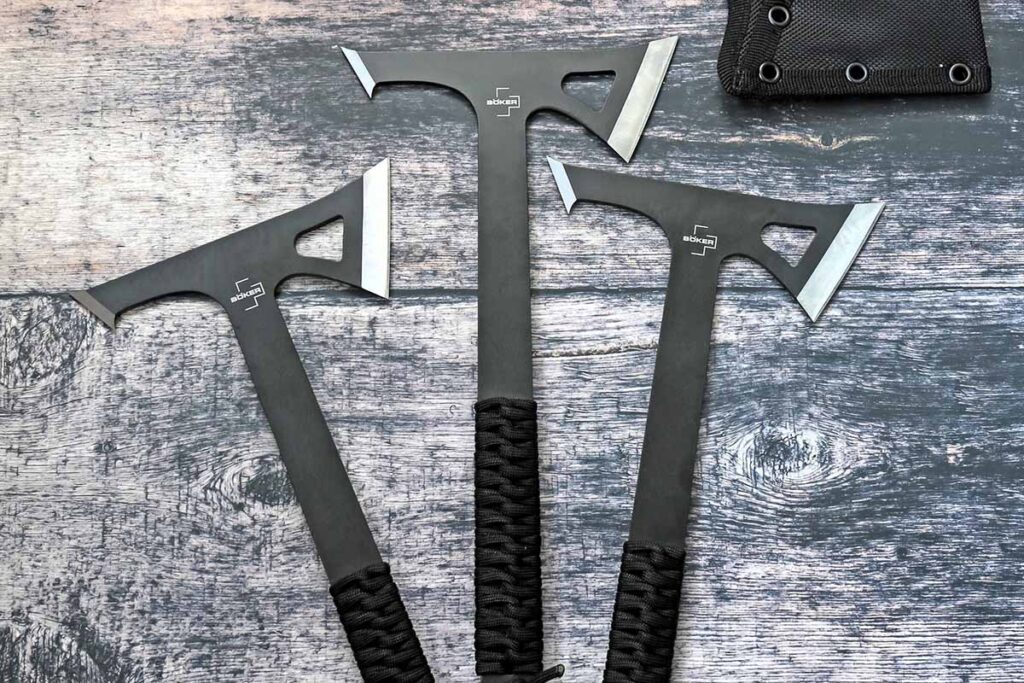
If you’re looking for a reliable and stylish throwing axe outfit, the Boker Plus Mohican Throwing Axe 3-Piece set is worth considering. It is designed for both novice and experienced throwers, offering precision and comfort. Each axe features a 10.94-inch overall length and all-3Cr13-stainless-steel construction, with a black coating that makes it durable and visually appealing.
The design is based on the silhouette of traditional tomahawks of North American indigenous people, with an additional, shorter 2.36-inch cutting-edge blade on the axe head. The paracord-wrapped handle ensures a secure and comfortable grip and precision throwing. A blade recess ensures balance with even rotation for better accuracy. The set has a matching black nylon sheath and printed target overlay, making it perfect for home use. Each axe weighs approximately 8 ounces, making it easy to handle.
Boker Plus Mohican Throwing Axe 3-Piece Specs
Blade Length: 2.36”
Blade Grind: Hollow
Blade Steel: 3Cr13 stainless
Handle Material: Black cord
Weight: 8.18 ozs. (each)
Overall Length: 10.94”
Sheath: Nylon
Origin of Make: Asia
MSRP: $84.95
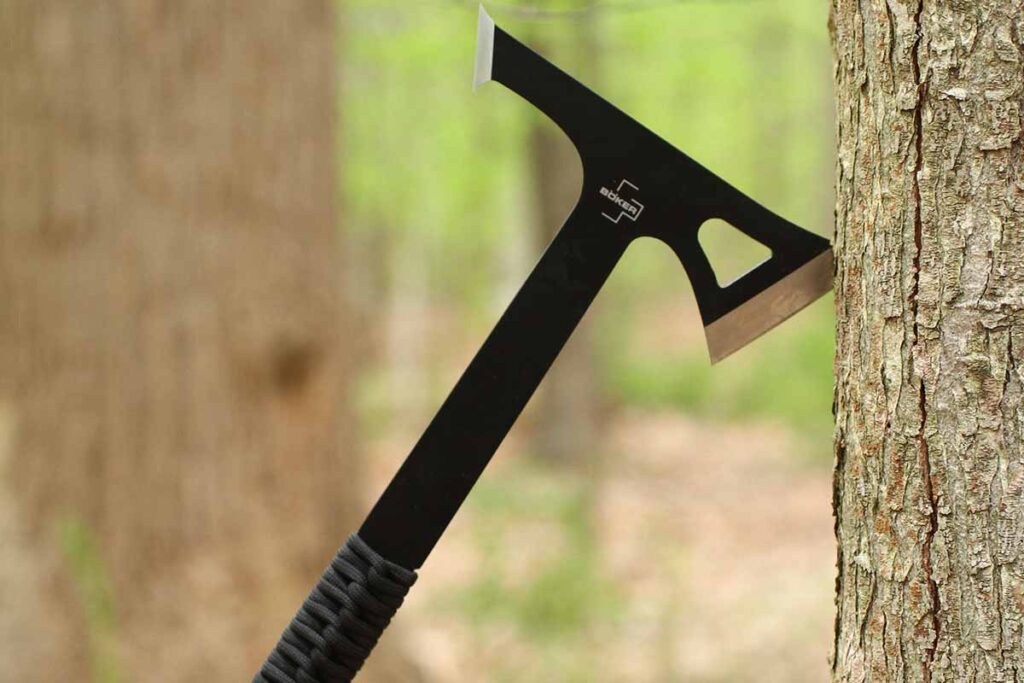
FIELD TEST: The Boker Mohican axes look and handle more like tomahawks than axes. The set is designed for fun rather than competition, so you will get more sticks with these bad boys. The feel of throwing a Mohican is not unlike flinging a knife.
There are two places the hawk can stick—the main bit and the spike, the latter which seems to stick during an overthrow. To fix overthrowing, take a step forward or enjoy making it stick regardless. The edges are sharp and flared to enhance sticking ability.
The Mohicans are lightweight, so they require some getting used to if you’re accustomed to larger throwing axes. The handle is straight with cord wrapping, making the hand adhere to it too well for optimum throwing. However, an easy fix is to remove the wrap or open the hand drastically when throwing the hawk.
The Mohican’s notable features are the double options for sticking the target and the forward-protruding sharp toe. The edge looks cool and improves target penetration. Another outstanding feature is the nylon sheath, which adds safety and value to the overall package. It has fabric fasteners, keeping each hawk individually secure.
The three Bokers get my vote for the most fun of the axes/hawks. They combine the feel of tomahawk and knife throwing. The little gems can also handle light utility work for a day camp or cooking near a small wood stove, as they can shave wood and split light kindling.
Cold Steel Professional Throwing Axe
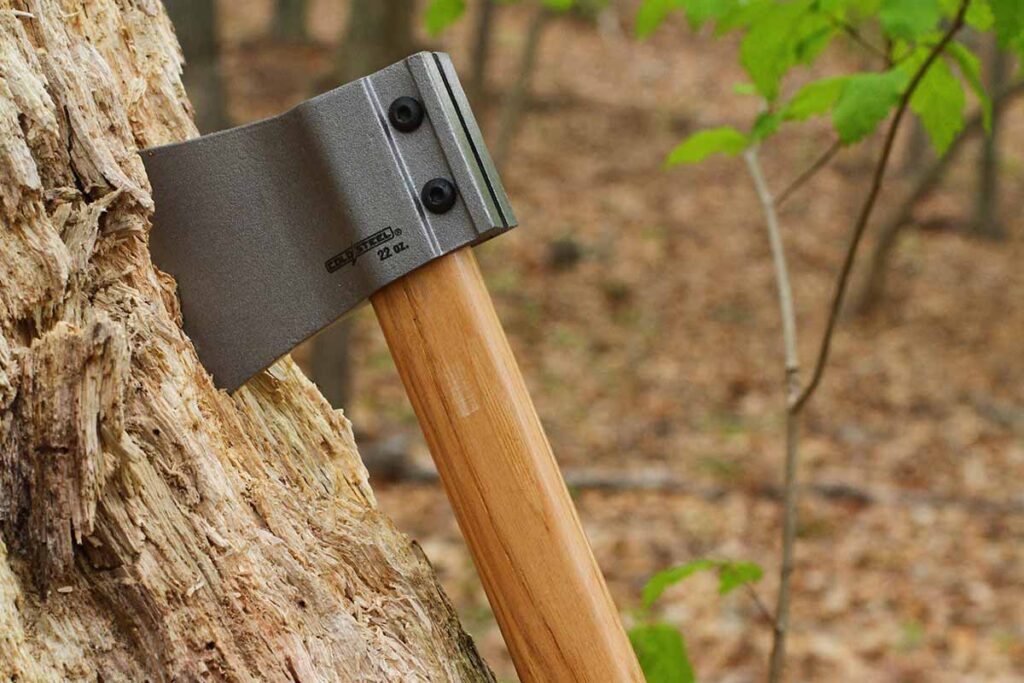
Experienced axe throwers will appreciate the Cold Steel Professional Throwing Axe, an upgraded version of the company’s Competition Throwing Hatchet. It boasts a 4-inch blade of 1055 carbon steel and meets official axe-throwing tournament requirements. The 16-inch American hickory handle provides excellent balance during target practice or competition, while the axe head weight of 22 ounces and overall axe weight of 31 ounces makes it easy to handle.
What sets this axe apart is its patent-pending locking mechanism that enables you to change a worn or damaged handle in under two minutes. Simply loosen two bolts, remove the handle and replace it with a new one. With this axe you can focus on your aim and technique without worrying about lengthy handle replacements.
Cold Steel Professional Throwing Axe Specs
Blade Length: 4”
Blade Material: 1055 carbon steel
Blade Grind: Chisel
Handle Material: American hickory
Weight: 31 ozs.
Overall Length: 16”
Sheath: Rubber blade cover
Country of Origin: Taiwan
MSRP: $59.99
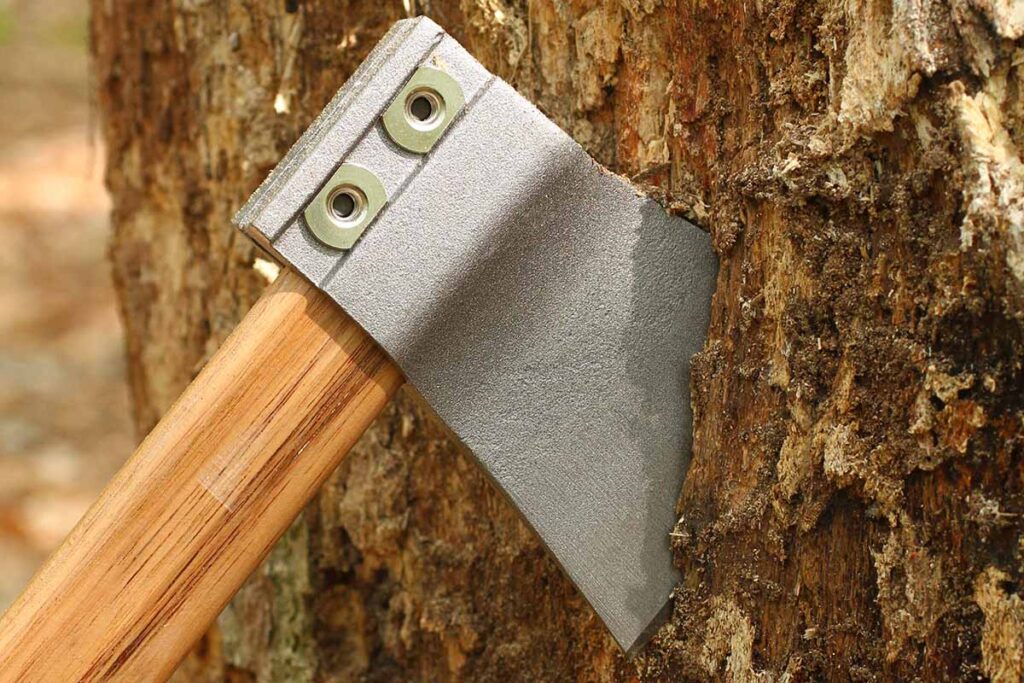
FIELD TEST: The Cold Steel had the best bit of the test bunch for sticking in the target, with a straight edge and slightly flared heel and toe. The blade geometry is thin and narrow as a throwing axe should be. The edge isn’t super sharp for an axe standard but it did well on my target, an old, rotting tree. The overall design definitely presents as a pro thrower.
Weight is a happy medium between a light throwing axe and a heavier one. Unlike conventional axes/hatchets of similar size, the weight is nestled solely in the head, which helps in propulsion.
The hickory handle has a nice grain and stayed robust despite a few blundering throws on my part. The classic straight handle helps the axe release without getting hung up on any design flare in the butt, etc. Besides, it’s not a chopping axe. The ingenious design allows for easy replacement of handles without loosening during testing. In my opinion, this axe is the most unusual of the three.
Instead of a sheath, the axe has a rubber blade guard that feels secure for transport and stays in the included pack while hiking. I like the compact, lightweight Cold Steel, and the MSRP, at $59.99, makes it the best buy of the test group.
More Axes, Hatchets And Tomahawks:
- Bearded Axe: Best Bashers From Here To Valhalla
- Best Tomahawks: Our Top Hawks For Backwoods To Battlefields
- Wicked Breacher: Ben Seward’s SWAT Axe
- Awesome Axes for Chopping Wood Like a True Lumberjack
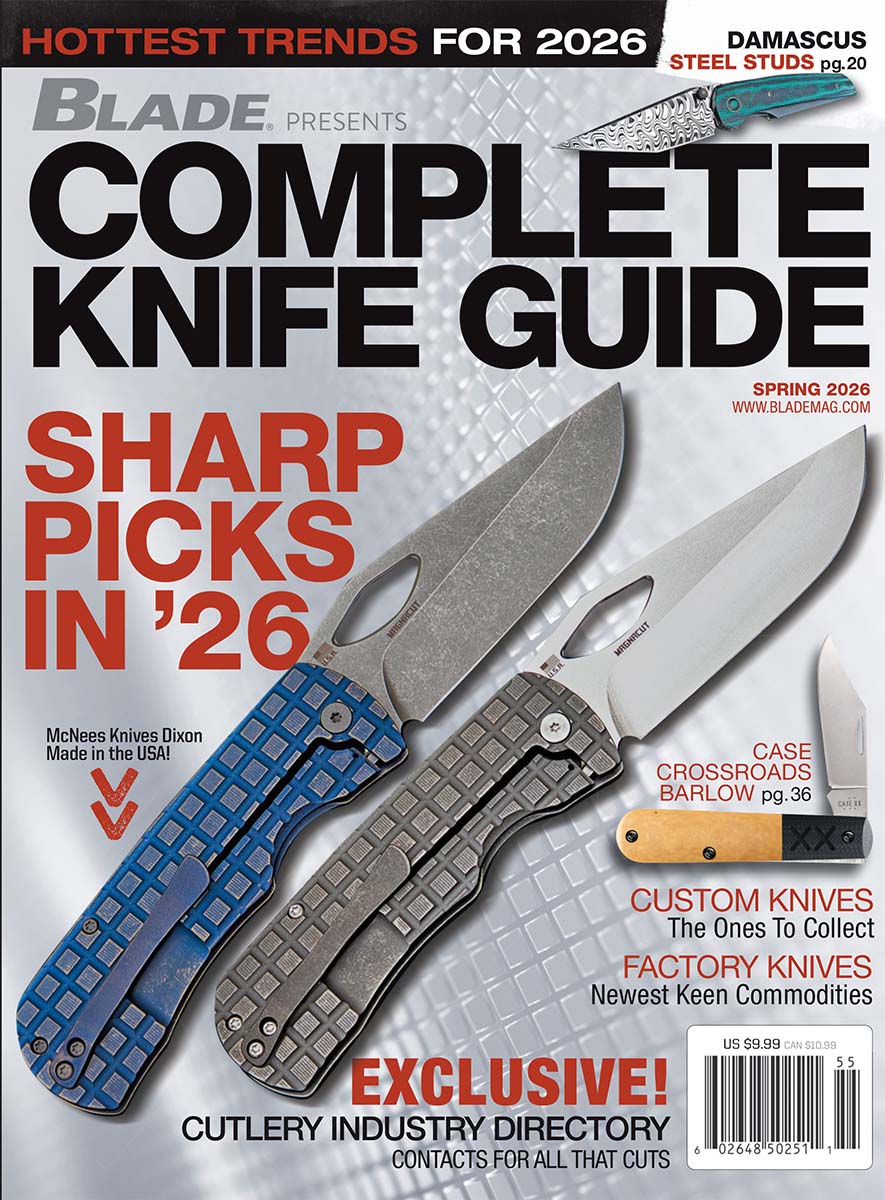 NEXT STEP: Download Your Free KNIFE GUIDE Issue of BLADE Magazine
BLADE’s annual Knife Guide Issue features the newest knives and sharpeners, plus knife and axe reviews, knife sheaths, kit knives and a Knife Industry Directory.Get your FREE digital PDF instant download of the annual Knife Guide. No, really! We will email it to you right now when you subscribe to the BLADE email newsletter.






# How to Choose a Fixed-Blade Hunting Knife for Outdoor Use
Choosing the right hunting knife is an important part of preparing for an outdoor trip. A good knife should be practical, comfortable to handle, easy to maintain, and appropriate for the task at hand. With so many blade shapes, steels, handle materials, and sheath designs available, it can be difficult to know which features actually matter.
For hunters, campers, and outdoor enthusiasts, a fixed-blade knife can be a practical option because the blade and handle form a solid, continuous construction. Compared with folding designs, fixed-blade knives are often chosen when users want a straightforward outdoor tool that is easy to access and maintain.
## What Is a Fixed-Blade Hunting Knife?
A fixed-blade hunting knife has a blade that does not fold into the handle. The blade is secured in place, and many outdoor models use a full-tang construction in which the steel extends through the handle.
This design is commonly associated with hunting, camping, bushcraft, field preparation, and other outdoor activities. The right knife depends on the intended use, blade dimensions, construction, and personal preference.
## Consider the Blade Shape
Blade shape is one of the first things to examine when selecting a hunting knife.
A drop-point blade has a curved spine that lowers toward the tip. This creates a relatively strong point and provides a useful cutting profile for many general outdoor tasks.
A clip-point blade has a more pronounced point and a concave section near the tip. It is often selected by people who prefer a precise point for particular outdoor tasks.
Skinner knives typically have a blade profile designed around controlled cutting during field dressing and skinning. The wider curved portion of a skinner blade can provide a useful cutting surface for this type of work.
There is no single blade shape that is ideal for every outdoor situation. The best choice depends on the task and the user’s experience.
## Look at the Blade Steel
Blade steel affects characteristics such as edge retention, toughness, corrosion resistance, and maintenance requirements.
Stainless steel is often selected by outdoor users who want greater resistance to corrosion and relatively straightforward maintenance. Carbon steel, meanwhile, is valued by many traditional outdoor-tool users for its sharpening characteristics and toughness.
Damascus steel is another popular choice, particularly among people interested in handcrafted knives. Damascus blades are known for their distinctive layered appearance, which makes every blade visually different depending on its forging and finishing process.
Regardless of the steel type, regular cleaning and appropriate maintenance are important for keeping an outdoor knife in good condition.
## Full Tang vs. Partial Tang
Tang construction is another feature worth considering.
With a full-tang knife, the blade steel extends through the handle. This construction is commonly found on outdoor and hunting knives because it provides a continuous piece of steel through the handle area.
Partial-tang designs use steel that extends only partway into the handle. These knives can still be useful depending on their construction and intended purpose, but outdoor users who prioritize a substantial handle-to-blade construction often look specifically for full-tang designs.
## Choose a Comfortable Handle
The handle should provide a secure and comfortable grip appropriate for the intended activity.
Common handle materials include wood, synthetic materials, micarta, and other composites. Natural wood handles can provide a traditional appearance and distinctive grain patterns, while synthetic materials may be selected for their resistance to moisture and environmental conditions.
When choosing a knife for outdoor use, consider how the handle feels in your hand rather than selecting a knife based only on appearance.
## Don’t Forget the Sheath
A suitable sheath is an important part of a fixed-blade knife setup.
Leather sheaths are popular with traditional hunting and bushcraft knives because they complement natural handle materials and provide a classic appearance. A properly fitted sheath should securely hold the knife and make carrying it convenient.
Scout-carry and belt-carry configurations are commonly seen on outdoor knives. The right carrying arrangement depends on personal preference, clothing, and the intended activity.
## Knife Maintenance for Outdoor Use
Even a well-made hunting knife requires regular care.
After use, clean the blade and remove moisture, dirt, or other residue. Dry the knife thoroughly before storage. Carbon steel blades generally require more attention to moisture and corrosion than stainless steel.
Wood handles can also benefit from appropriate care, particularly when exposed to wet outdoor conditions. Store the knife in a dry environment and follow the manufacturer’s care recommendations for the specific materials.
For people interested in handcrafted outdoor knives, collections such as [Haven Forged](https://www.havenforged.com/) offer examples of Damascus hunting knives, fixed-blade designs, skinner knives, and other traditional outdoor styles.
## Final Thoughts
Selecting a hunting knife should start with the job you expect the knife to perform. Consider the blade shape, steel, tang construction, handle material, sheath, and maintenance requirements before making a decision.
A practical fixed-blade hunting knife can be a useful addition to an outdoor kit when it is selected for the intended application and maintained properly. Rather than choosing a knife based solely on appearance, focus on construction, ergonomics, materials, and the tasks you expect it to handle.
With the right combination of features, an outdoor knife can become a dependable part of a hunting, camping, or bushcraft kit.