GiantMouse Releases New Set Of Sleek, Robust Folding Knives–the ACE Corta line–Made From Austrian Steel.
Stylish. Tough. Strong.
Those are just a few words to describe the newest folding knives released by GiantMouse. The ACE Corta Knife comes in three different styles and is as good as it gets when it comes to an EDC folder.
The showpiece is the blade, made of Böhler M390 stainless steel from Austria. Known as one of the ultra-premium stainless steel, martensitic steel is renowned for its and ease of sharpening. Essentially, it’ll take and keep an edge.
At 3.1 inches in length with a flat saber grind, the ACE Corta is a flipper inspired by GiantMouse’s limited-run GM6 knife.
The Natural Canvas version of the ACE Corta
The ACE Corta comes in three styles: a green-canvas-colored Micarta handle and a stonewashed finish on the blade, a natural-canvas-color Micarta handle with a satin finished blade and a black PVD finish blade itself with a black G10 laminate handle.
All three knives have an overall length of 7.3 inches, a handle length of 4.18 inches, and come in between 3.8-4 ounces in weight.
The knives open quickly and smoothly thanks to the ball-bearing pivot. They all have a wire clip so it can slide easily onto a belt, purse, or pocket. And each version of the knife has an MSRP of $195.
Given the engineering that has gone into the ACE Contra, the price should prove a value to most.
Editor’s Note: This article was written by Mike Ableson.
An EDC That Does It All, The Outdoor Edge FieldLite Is An Excellent And Affordable Option That Stands Out From The Pack.
What’s better than a strong, easy-to-use EDC that shines in numerous situations? A knife that does all that and clocks in under $30. Say hello to your new best friend: The FieldLife from Outdoor Edge.
With the DNA of a robust hunting knife flowing through it, the FieldLite stands out in a crowded EDC market thanks to its steel as well as its light and durable handle. The handle is a mix of glass and nylon with rubberized inserts embedded to enhance grip. Coupled with
Outdoor Edge FieldLite
a thumb stud on one side, this knife is fun to hold and fun to open. It also has a clip so it can easily slide onto a belt or purse strap.
The 3.3-inch blade is made from 8Cr13MoV stainless steel. A budget steel that swings above its weight with a Rockwell Hardness of 62, the knife holds an edge well and resists wear and corrosion thank to its high percentage of Chromium.
At just 7.5 inches in total length, and weighing in at only 2.6 ounces, the FieldLite is absolutely worth a look if you are interested in a fairly-priced knife that can handle day-to-day tasks as well as more intense work while out hunting.
With an MSRP of $29.95, the FieldLite can be purchased online or at numerous sporting good retailers.
Editor’s Note: This article was written by Mike Ableson.
The Knife Sharpener Is An Excellent Tool To Have In Your Kitchen. No Matter The Model, They Are Easy To Use And Can Help Revive Your Knives.
I cook daily. I enjoy it. It decompresses me, and I’m able to provide my wife and me with a lovely meal to end our day together. Nothing makes cooking harder than a dull knife.
Beyond increasing the difficulty of easy tasks, dull knives are incredibly unsafe and can cause serious injuries in the kitchen. Knowing how to use a kitchen sharpener can keep your knives like new and, best of all, take just a few minutes to use.
How To Use A Pull Through Knife Sharpener
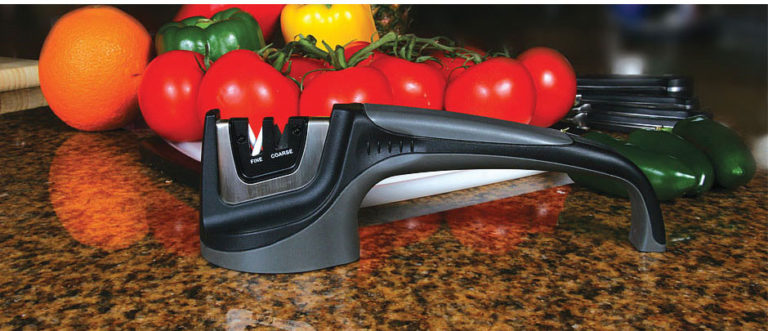
Pull-Through kitchen knife sharpeners come in a variety of prices ranging from $10 all the way up to $100. Regardless of how expensive your sharpener is, they all work in similar ways by removing a small amount of material to renew a knife’s edge.
To show you how to sharpen your knives in numbered easy steps, I pulled out my small sharpener–a Goodcook–I picked up at my local supermarket.
Step 1: Safely Secure The Sharpener To The Surface
My trusty knife sharpener
Yes, it seems straightforward, but always remember to safely secure your knife sharpener to the surface you plan to use. I did this on my dining room table, but a counter or stovetop works just as well.
Some higher-end models may come with a vise, but the majority, like mine, are secured by firmly holding the end of it down onto the surface. The underside of my sharpener came with a channel in it so you could secure it against the edge of a table. This is meant to keep the knife away from you when you pull it through the sharpening stones.
Channel underneath the sharpener for edge use.
Step 2: Pull Your Knife Through The Coarse Side Of The Sharpener
Your sharpener will, at a minimum, have a coarse and fine setting. Start by pulling your blade through the coarse side first. This will remove more material from the edge and get rid of any bigger burrs or imperfections in the knife.
Put light pressure on the knife and gently pull it through. I chose to do three passes, but you can do however many you like. The little bump at the end of each pull is the knife tapping into the base of the sharpener.
Step 3: Do The Same On The Fine Side Of The Sharpener
The fine side is good for refining the edge of the blade and bringing it back to a razor’s edge. You’ll notice that it sounds different as you pull the knife through. I also pulled my paring knife through it three times.
And in three easy steps, in less than two minutes, you’ve sharpened a knife. I try to hone my knives multiple times a week and sharpen them monthly or every other month. By investing just a few minutes at a time into caring for your knives, you’ll extend their life and keep them cutting like new for years to come.
How To Use A Whetstone To Sharpen A Knife
Another, more traditional way of sharpening knives, is with a whetstone. These stones allow you to precisely control what part of your knife is being sharpened and how much material gets removed from your blade. Below are the steps to follow to successfully sharpen your knives on a whetstone.
Step 1: Gather Your Supplies
This means getting your stone, a moderately deep container like a baking dish, deep bowl, or a bucket to soak the stone in water, your knives, a towel to dry them off, and a spoon or small cup to scoop water onto the stone.
Step 2: Soak The Stone
When you place your stone into your container it should be fully submerged under water. You’ll see bubbles start to come up. That’s air getting forced out of the stone. Let it soak for 10-15 minutes or until the bubbles disappear. That’s the sign that your stone is ready to use.
Step 3: Secure Your Stone
Most stones come with a holder. Always use that if available. If there is no holder, a towel wrapped around the base of the stone will work. You always want the stone secured. At best, it could scratch your tabletop if it slides, and at worst you could slice yourself from a knife coming off a sliding stone.
Step 4: Sharpen On The Course Side
The majority of whetstones you can buy online or in stores today will have two sides, one coarse and one fine. The lower the grit number, the more coarse. This means that more material will come off with each pass of the knife.
It’s best to start sharpening your knives on that side. Get your blade to an angle between 20-25 degrees and pass it back and forth against the stone 10-15 times on each side of the blade.
If a dry spot starts appearing on your stone, use your spoon or small cup to pour a little bit of extra water onto the spot to re-wet it.
Step 5: Sharpen On The Fine Side
Now that you’ve removed most of the egregious burrs and nicks from the edge turn your stone over and sharpen the blade against the fine side. This will finish and polish the edge back to razor quality and have your knife like new again.
Again, you’ll stroke the blade 10-15 times at 20-25 degrees, then check the blade for sharpness.
Popular Youtuber, and New York Times bestselling author, Joshua Weissman gives a simple but in-depth tutorial on how to use a whetstone to revive your knives and bring back a razor edge.
How To Use An Electric Sharpener
A more intense version of the handheld kitchen knife sharpener is the electric sharpener. More pricey than a handheld device, electric sharpeners use different types of grinding stones powered by a motor to grind away material and sharpen your knives.
Some models have a single slot where the user will need to toggle between fine and coarse grit stones. Others have multiple stages and multiple stones allowing for more precise sharpening. Regardless of the type of electric sharpener, they operate similarly.
Step 1: Place The Sharpener On A Solid Surface
Always make sure your sharpener is on a table or countertop. Never hold it in your hand while pulling your knives through. That’s a quick way to wind up on your local news for all the wrong reasons.
Step 2: Read Your Sharpener’s Directions
With so many varieties of sharpeners it’s important to know how to correctly use yours, and, just as importantly, what type of knives can be sharpened.
Some can handle serrated knives while others are just good for flat knives. Know this because pulling the wrong type of knife through the sharpener can damage the blade.
Step 3: Sharpen Your Knives As Desired
You gently place your knife into the slot and pull it through at a leisurely pace. Do this 10-15 times for each stage of the sharpener and your knives should be like new.
To get an idea of how easy it truly is to use an electric knife sharpener, the folks at Linkyo show you how to use one of their models. It’s not even two minutes so you can’t afford to miss it.
Editor’s Note: This article was written by Mike Ableson.
Editor’s Note: This article was written by Mike Ableson.
Knowing How To Use A Whetstone, Or Sharpening Stone, Can Restore A Dull Blade And Should Be Part Of Regular Upkeep For Your Knives.
There are many inexpensive ways to sharpen your knives at home, but nothing feels the same as sharpening your knives on a whetstone. Used for centuries around the world to keep an edge on everything from swords to kitchen knives, the whetstone is an intimate, precise way to maintain your knife’s edge and bring it back to life.
The “whet” in whetstone has nothing to do with being wet or any type of moisture. It comes from the Old English term “hwettan” which means “to whet or sharpen.” Coincidentally, most whetstones do need some type of moisture for top performance. In all cases, this means water or oil. However, a majority of stones you’ll find in stores or online–particularly for kitchen use–will be waterstones.
Oil Stone Vs Waterstone
Honestly, in some cases, there is no difference.
The preference of lubrication–water or oil–is left up to the user. Both will do the same job, swarfing the surface of the stone so it does a better job sharpening.
However, there are other cases where one or the other must be used with a particular stone. Natural sharpening stones, for instance, mostly use water. Rub them down with oil and you’ll render them useless.
Manufacturers will spell out whether your particular whetstone is water, oil or both.
The main difference between whetstones that use oil and whetstones that use water is that waterstones are softer so the old abrasive material breaks off faster than an oil stone. This means you’re sharpening on fresh stone material more consistently.
Waterstones are also less messy and easier to clean vs oil stones, which adds another point in the bucket for waterstones. Waterstones also come in more grit varieties than oil stones.
Oil stones, especially those made of novaculite, are a traditional sharpening stone, and many are quarried in America, specifically in Arkansas.
Differences In Grits
You’ll see stones of all types come in a variety of grits. The lower the number, the more coarse the grit. The more coarse the grit, the more material gets removed with each pass of the knife.
For at-home sharpening, grits in the range of 1,000-8,000 should be more than enough. However there are stones that come as coarse as 120 and as fine as 30,000. Consider these specialists and stick to the common grits for most jobs.
Whetstone Accessories
While there are many gizmos and accessories out there to help with your whetstone sharpening, there are two that stand above the rest. You can see them in the photo at the top of this article.
The first is the stand for your whetstone. This should come with the stone when you purchase it. You do not want to lay your stone directly onto your table or countertop. It can slide, and mixing sliding things with sharp knives is a recipe for losing a finger.
The second is that little thing to the right of the stone. It looks like a chip clip, but it’s actually an angle guide. Some will clip onto the top edge of your knife while others might need to be strapped to the stone itself. Either way, the angle guide will help set your sharpening angle and allow you to maximize each pass of the blade across the stone.
I’ve used a 1000/6000 waterstone for years to keep my kitchen knives sharp. You can find plenty of quality 1000/6000 whetstones online for under $40. But having the stone doesn’t account for much if you don’t know how to use it. I pulled out my sharpening set up to help give you a step-by-step breakdown of how to sharpen your knives with a whetstone.
Step 1: Get Your Equipment
Things I use to sharpen on a whetstone
Ready to start sharpening? Hold up a minute. You’ll need more than a whetstone and your knife.
In addition to the obvious tools for the task, I start with a whetstone stand, a container of water and a spoon (you heard right).
There are special notes on a couple of these items.
The water container is to prep the whetstone and should have some specific attributes. I want a deep container so the stone can sit in it and fully soak. These babies are thirsty, so you can’t just dab water on one and expect it to work.
Here I’m using a baking dish, but a plastic tub or kitchen sink work equally as well.
The spoon … no, you’re not taste testing your knife’s edge. It’s there to literally spoonfeed the stone more water during sharpening to clear off the shavings.
Step 2: Soak The Whetstone
Soaking the whetstone
Here’s the speedbump of the process.
As mentioned, whetstones require a good soaking before use. This isn’t a splash-and-go process.
Plan to let your stone sit fully submerged for a good 10 to 20 minutes before it’s primed for use. There’s a simple way to tell it’s good to go.
Plunge that baby into water and you’ll see it bubble like an aquarium aerator. Quite literally, this is the stone drinking up water in its microscopic pores and displacing air in the process.
As time goes on, fewer and fewer bubbles pop out of the whetstone (see the above picture). When it’s none or next to none, you’re good to go.
Step 3: Secure The Stone
OK, this sounds obvious. But it must be said–you must secure your wetstone before sharpening.
Not only does this stave off a tongue lashing from your significant other, ensuring you don’t scratch up the counter or dinner table. It also keeps your digits from getting cut up.
In most cases, you’ll have a holder that, well.. holds the stone. If you don’t, never fear, a towel or rag makes a dandy impromptu stone holder.
Whatever the case may be, make certain your stone isn’t going anywhere before you actually begin sharpening.
Step 4: Determining The Sharpening Angle
Rubber, you’re almost ready to meet the road!
Before you actually start scraping away precious material to create a fresh sharp edge, you need to determine exactly what angle to sharpen at.
Some knives require a somewhat uncommon angle to sharpen. This is spelled out in the owner’s instructions if this is the case. Lose those, check the company’s website, these vital specs are usually there.
However, in most cases–a vast majority–20 to 25 degrees is the best angle to achieve a good cutting edge. And you don’t even need a protractor to determine this pitch.
Think of it this way, the edge pointing straight down at the stone is at 90 degrees. Tilt the blade halfway down, now the blade is at roughly 45 degrees. Tilt the knife halfway again and, there you are about 22.5 degrees–a sweet spot for a good edge.
Or you can go the easy route and use an angle guide, mentioned earlier in the article.
Step 5: Course Sharpening
Start with the lower grit, which in this case is 1,000. It takes off more material and gets the edge almost all of the way back to razor sharpness.
Usually, I do 10 passes on each side of the blade, but I fully sharpened my knives a few weeks ago and just did two here as a demonstration.
Keep the blade angled between 20-25 degrees to get the best possible results.
Step 4: Turn The Stone Over & Sharpen With The Finer Grit
I finish with the fine grit, 6,000 on my whetstone.
You’ll notice each time I pass there’s some new metal shavings on the stone. That’s the swarf. It’s fine for your knives if you leave the swarf on the stone as you sharpen, but you can also wash it away with some extra water.
Again, like the coarse grit, I usually do 10 passes on each side of the knife.
Step 5: Wash Off Your Knives & Clean Up
Once you’re done sharpening you should rinse your blades and wipe them dry with a towel. Once your knives are accounted for, give your water container a thorough cleaning. I used a baking dish, and it’s important to fully clean it so you aren’t ingesting microscopic metal shavings.
For the stone itself, I double check that it’s secure in its holder and leave it out overnight to let the water evaporate out of it. Once it’s completely dry I put it back in its spot in the drawer.
And there you have it, a simple, straightforward guide showing you how to sharpen your knives using a whetstone.
Editor’s Note: This article was written by Mike Ableson.
See Who Took Home Awards For the Best Custom Knives At Blade Show In Atlanta.
An expert panel of judges determined the winner in 17 categories of custom knives that were as diverse as Best Miniature to Best Bowie. Best In Show went to Dionatam Franco.
The largest knife show in the world featured exhibitors and attendees from around the globe showing off the best in all things knives.
Below are this year’s custom knife award winners from this excellent event.
Hugh Bartrug Best In Show & Best Art Knife: Dionatam Franco
Best Art Knife: Dionatam Franco. Franco created this intricate dagger accompanied with a handmade stingray sheath.
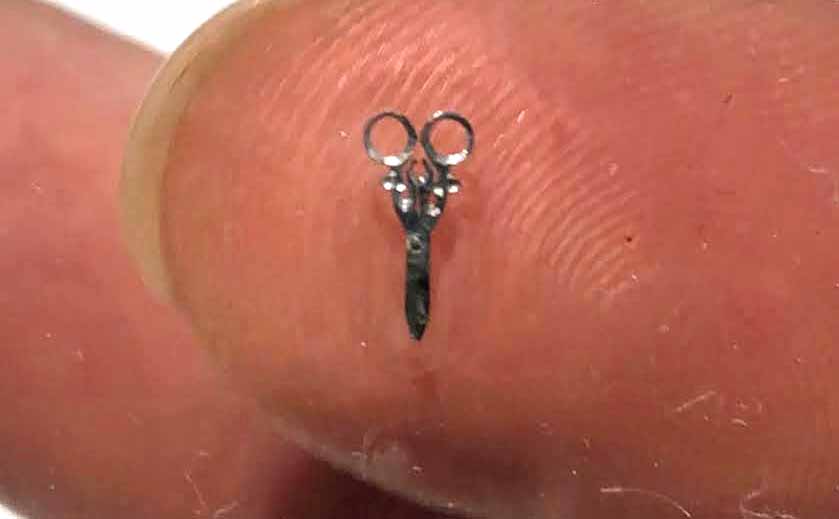
Yvon Vachon Best Miniature: Grace Horne
Best Miniature went to Grace Horne for these full-functioning scissors. They were handmade by her with watchmaker tools underneath a microscope.
Best Tactical Folder: Dmitry Sinkevich
Best Tactical Folder: Dmitry Sinkevich
Most Innovative Design: Walt Halucha
Most Innovative Design: Walt Halucha for this unique locking mechanism on this folding blade.
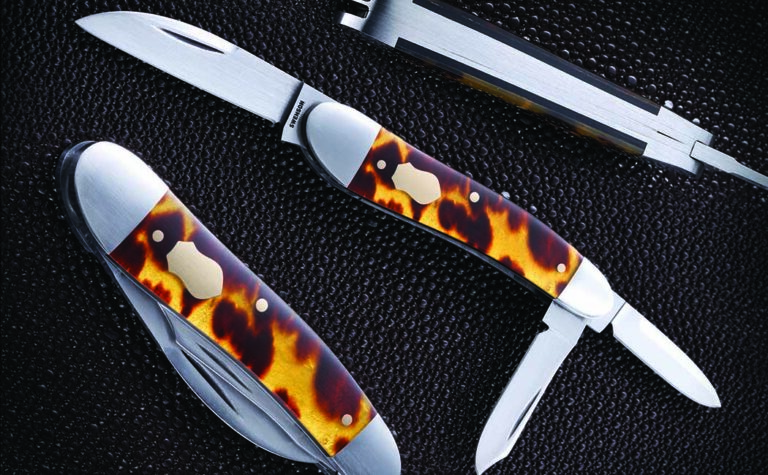
Best Slip Joint: Luke Swenson
Best Slip Joint: Luke Swenson
Best Handle Design: Fabio Barros
Best Handle Design & Best New Maker: Fabio Barros
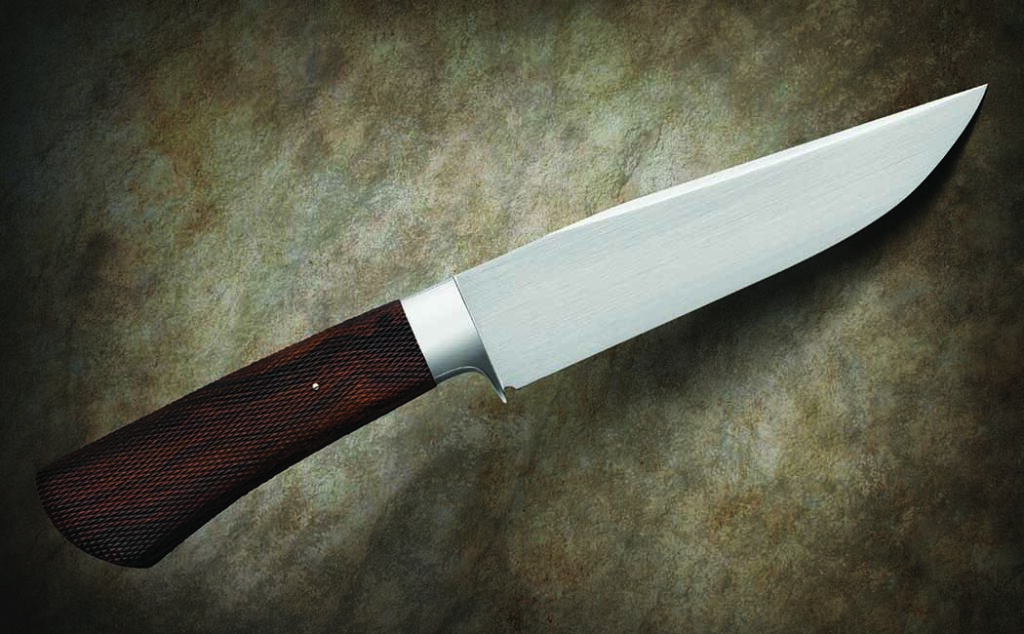
Best Utility Hunter: Ben Pittman
Best Utility Hunter: Ben Pittman
Best Fighter: Henning Wilkinson
Best Fighter: Henning Wilkinson
Best Sword: Vince Evans
Best Sword: Vince Evans
Best Bowie: Tommy Gann
Best Bowie: Tommy Gann
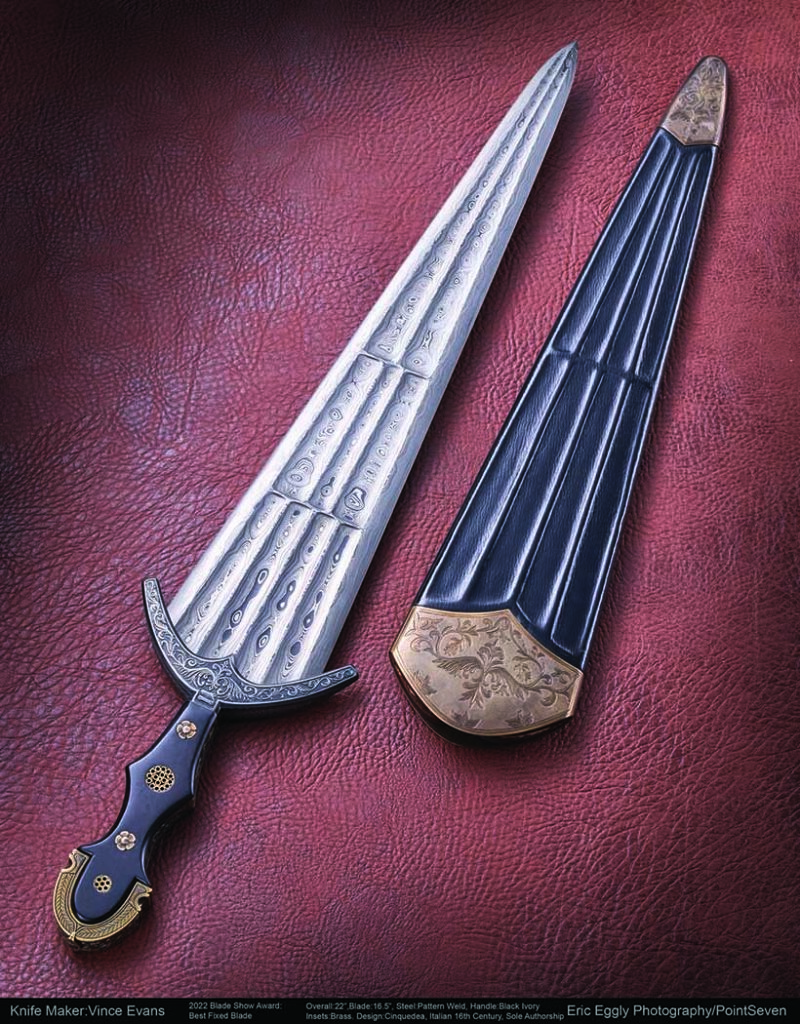
Best Fixed Blade: Vince Evans
Best Fixed Blade: Vince Evans
Best Collaboration: Seth Lopez & Leah Aripotch
Best Collaboration: Seth Lopez & Leah Aripotch. Lopez forged the knife while Aripotch created the stand.
Best Folder: Javier Vogt
Best Damascus: Mike Quesenberry
Best Damascus: Mike Quesenberry
Best New Maker: Fabio Barros
Best New Maker: Fabio Barros
Best Kitchen Knife: Will Stelter
Best Kitchen Knife: Will Stelter
Best Of The Rest: Dmitry Sinkevich
Best Of The Rest: Dmitry Sinkevich. Sinkevich said that the design was inspired by a combination of the ulu knife and watch rotor.
Editor’s Note: This article was written by Mike Ableson.
See who took home the hardware at from the BLADE Show Knife-Of-The Year® Awards.
Winners were determined in 11 categories at BLADE show in Atlanta, by an expert pannel of judges. Awards ranged from Knife Of The Year to Best Kitchen Knife and everything in between.
The 2022 Overall Knife of the Year® was the Pro-Tech Malibu Operator. Pro-Tech would go on to win in two other categories. The world’s largest knife show featured attendees and exhibitors from around the world showing off the best and newest in all things knives.
Below are this year’s factory award winners from this tremendous event.
Overall Knife of the Year®: Pro-Tech Malibu Operator
Pro-Tech Malibu Operator
American-Made Knife Of The Year®: Spyderco Military 2
Spyderco Military 2
Most Innovative American Design: Asheville Steel Warlock
Asheville Steel Warlock
Imported Knife Of The Year®: MKM – Maniago Knife Makers Miura
MKM – Maniago Knife Makers Miura
Most Innovative Import Design: Civivi Orthrus
Civivi Orthrus
Accessory Of The Year: Lionsteel Eggie
Lionsteel Eggie
Best Buy: Sencut Sachse
Sencut Sachse
Investor/Collector Knife Of The Year®: Pro-Tech Ultimate Collection Terzuole ATCF Auto
Pro-Tech Ultimate Collection Terzuole ATCF Auto
Collaboration Of The Year: Pro-Tech Terzuole ATCF Auto
Many Top Knifemakers Are Keeping Historic Styles And Methods Of Making Knives Alive Today.
Historical perspective is a relevant component in just about any undertaking. In the realm of cut, incorporating an appreciation of the past into the work of today brings another dimension to the custom knifemaker’s statement.
Interest in the knifemaking of a bygone era offers a window into the true artistry required to reproduce the knives of yesteryear, particularly with the absence of modern conveniences in the shop. Along with the interest in the historical knife, several custom makers bring famous designs, styles and patterns to life once again in tribute to those who have gone before.
The idea of the period piece blends old and new. “I’ve been making knives seriously since about 2002 when I took a class with the American Bladesmith Society in Washington, Arkansas,” related ABS master smith Lin Rhea. “Joe Keeslar and Greg Neely lit a fire under me and got me on my way. Since then the town of Washington has been like a second home, and I’ve even added to the personal connection between me and the area by interest in one of the town’s historical residents who was also a knifemaker. His name was James Black.”
A resident of Prattsville, Arkansas, Lin gained an appreciation for Black’s distinctive body of work*, using contrasting materials and techniques to create a bold, attractive look. “I’m grateful to get to know Mr. Black by studying his work,” Lin continued. “This intense study
Lin Rhea’s reproduction of the Carrigan Knife is based on a dress bowie James Black is thought to have made in the early 1830s in Washington, Arkansas. The original Carrigan includes a black walnut handle with coin silver pins and trim. The blade is about 6 inches long and the overall length is approximately 10.25 inches. (Whetstone Studio image)
led me to try to recreate one of his knives, the Carrigan Knife. The original knife, a guardless coffin-handled bowie, was made by Mr. Black in the early 1830s in Washington, Arkansas. I chose the Carrigan as my first attempt because of its less intimidating size; however, as is often the case I found it to be just as intimidating once I started into the project.”
The original Carrigan includes a black walnut handle providing a nice contrasting background to the coin silver pins and trim. The blade is about six inches long, and the overall length is approximately 10.25 inches. The full tang is virtually covered entirely by the walnut scales and the silver wrap.
When Rhea undertook his homage to Black and the Carrigan, he chose stabilized walnut, which he harvested himself several years ago, and trim in sterling silver. He forged the blade from 80CrV2 carbon steel and included at least 30 separate parts while attempting the same techniques used by Black nearly two centuries ago in fastening and assembling the finished knife.
“There is so much to be said about not only this knife but also Black’s work,” Lin concluded. “He was able to create a knife design utilizing only three materials yet impacting the knife world as few others could. His ability to arrange these materials into a functional, long-lasting, beautiful tool is only enhanced by the knowledge that he also built in other qualities like moisture resistance, logical assemblage and ergonomics. All of this was done in a historic setting without modern equipment and epoxies. In my opinion, his design is ingenious.”
Gold Rush Knives
Recently inducted into the BLADE Magazine Cutlery Hall of Fame® knifemaker Jim Sornberger has assimilated his gold and silversmith skill sets into custom knifemaking while helping introduce the modern world to the classic design, luster, and embellishment of the Gold Rush era and boomtown San Francisco of the mid-19th century.
Jim Sornberger’s interpretations of the Michael Price San Francisco/small dress bowie have won awards at various venues, including Best of Show at the 2019 International Custom Cutlery Exhibition in Fort Worth, Texas. Jim’s price for a similar knife: $3,500. (SharpByCoop image)
“I’ve been making knives since 1975 with the help of the late Les Berryman, an early Guild member, and with some guidance from Bob Loveless, Herman Schneider and Barry Wood,” Jim recalled. “The last three signed for me to join The Knifemakers’ Guild.”
For Sornberger, the style, embellishment and decoration of the canes, jewelry and knives of the Gold Rush era are most appealing. “San Francisco from 1850 to 1904, the Gold Rush period, was one of the wealthiest cities in the world, attracting some of the greatest artists, jewelers, carvers, and engravers to ply their trade to a wealthy clientele. The work done in that period,” he opined, “rivals the best ever done.”
In the knifemaking genre, Michael Price and Will & Finck were among the most successful and prolific of the Gold Rush. Their work remains emblematic of the great migration to settle the American West, and the riches and ruin that were found with the experience.
“Price was Irish, and both cutlery firms hired workers who were English, German and possibly Scottish,” Sornberger explained. “Their dress knives are probably the most embellished American knives made in the 1800s-1900s. The dress knives had two common handles: an interesting, modified coffin shape and a more rounded, subtle taper shape. The blade shapes are spear-point dagger and San Francisco clip spear point.”
Sornberger is recognized as an authority on original San Francisco knives, as well as the magnificent gold quartz that was used so well by Gold Rush artisans. His modern interpretations of the Michael Price San Francisco/small dress bowie have won awards at various venues, including Best of Show at the 2019 International Custom Cutlery Exhibition in Fort Worth, Texas.
Jim’s dress fixed-blade bowie in the accompanying picture was made with Vegas Forge stainless barstock AEBL and 412 stainless steels, and san-mai damascus steel with a solid core. The guard and wrap handle are in Mike Sakmar mokumé barstock. Jim’s made such handles in gold and silver and nickel silver, also. The inlays are tortoise celluloid and California native gold/gold quartz.
According to Sornberger, the biggest challenge in his stunning creation was grinding the blade to show the distinctive pattern of the shell and the hardened core. The san-mai laminated blade was etched with ferric chloride, rinsed and color set with WD-40®.
The Frog Knife
“The style of Michael Price’s work is a really good canvas with flowing lines, and there is a lot you can do with it,” observed ABS master smith Jon Christensen, who is in his 22nd year of making knives. “I wouldn’t call my San Francisco-style knives replicas. I do like to keep to the original form and honor the style of the maker, though.”
The Frog Knife by Jon Christensen is a San Francisco-style dress bowie with a back story. “I had seen the Poppy Knife that Michael Price made and thought I would do my version,” he related. “I took the knife to the BLADE Show, and it didn’t find its owner. Then, the handle got ruined, and I just took the opportunity to rehandle it with the frogs and lily pads.” Overall length: 10 inches. (SharpByCoop image)
One of Christensen’s most evocative pieces to date is referred to simply as the Frog Knife. However, the piece is far from simple, and Jon manages to convey the spirit of the Michael Price style while also imprinting some of his own personality.
“I built the feathered damascus for the blade with 1080 and 15N20,” he advised. “It’s a canister damascus. I forged the bamboo leaves and placed them in the can, welded it up, reduced it, and feather cut it so it would produce feather-cutting smears and leaves, and form branches to look like a little grove of bamboo leaves.”
The 10-inch knife has a 5.5-inch blade and a frame and sheath incorporating 410 stainless steel. Christensen utilized the “canvas” of the handle to the fullest, carving the mammoth ivory into a pleasing vignette of frogs and lily pads.
“The handle has something of a back story,” he smiled. “I had seen the Poppy Knife that Michael Price made and thought I would do my version. I took the knife to the BLADE Show and it didn’t find its owner. Then, the handle got ruined, and I just took the opportunity to rehandle it with the frogs and lily pads.”
Christensen got his start making stock removal knives after a career as a horticulturist. He learned to forge while working with ABS master smith Ed Caffrey and visited with knifemaker Rick Eaton and ABS master smiths Shane Taylor and Wade Colter. Jon also makes San Francisco folding knives and enjoys swordmaking. Plans for the future include more period pieces.
Kimball Style
ABS master smith Josh Smith owes his little league baseball coach, ABS master smith Rick Dunkerley, credit with getting him started making knives about 30 years ago. From the beginning, Josh has appreciated the thought process and craftsmanship of custom makers from a bygone era.
“There’s something special about reproducing something that was built nearly 200 years ago,” he reasoned. “It’s easy to get lost in your thoughts while working on these knives, wondering what the makers were thinking about at the time. Was the knife going into battle? Was a rich man just wanting something unique? Was the maker just trying to be different and impress people? Were function and effectiveness of use the only factors that mattered? It’s really cool to think about.”
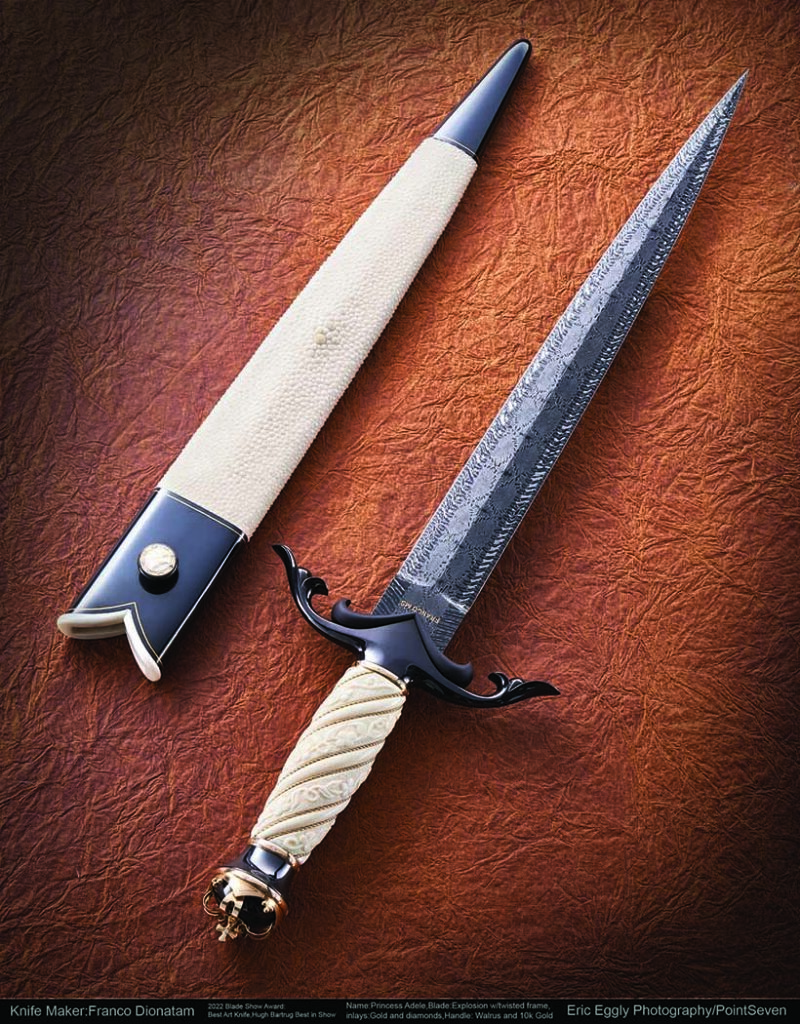
Josh Smith’s dog-bone-handle dagger is a reproduction of a knife owned by Loring Kimball of Vicksburg, Mississippi, in the mid-1800s. The grip gets its name from its shape. Overall length: 14.25 inches. (Eric Eggly/PointSeven image)
Josh has found the opportunity to consider historical context with a dagger in the distinctive dog-bone handle, recalling the mid-1800s when a gentleman named Loring Kimball of Vicksburg, Mississippi, owned several similar original pieces that were probably made by at least two different knifemakers in the New Orleans area. Knives in what many refer to as the Kimball style have been reproduced by a number of modern makers, mostly bladesmiths.
“The distinctive characteristic of the dog bone is clearly the shape of the handle,” Smith said, “but to me it’s more than that. The large domed pins and the flat facets on the handle provide such a neat look. One of the original Kimball daggers from the 1830s had silver wrapped around the butt of the handle and a small, thin silver guard. I never pretend to exactly reproduce these knives. I always put my own spin on the knife, trying to bring some of my style into it.”
Smith’s dog-bone dagger is fashioned from his own ladder pattern “W’s” damascus blade, African blackwood handle and 18k-gold pins and liners. The 9.5-inch blade is forged from 1080 carbon and 15N20 nickel-alloy steels, while a gold collar stretches over the back of the blade and bears the engraved name of the maker. Overall length: 14.25 inches.
“This particular knife was heavily influenced by Tim Hancock,” Josh said. “I feel Tim, Harvey Dean and James Batson are the three men who led the way in bringing these knives back to prominence, and Tim had the most influence on my construction of these knives. I love period pieces and definitely plan on doing more. There are so many incredible weapons from the past that would be fun to recreate.”
*While a number of top industry authorities attribute such original 19th-century pieces as the Carrigan Knife, Bowie No. 1 and others to Black, no knives with Black’s mark are known to exist.






 Best Miniature went to Grace Horne for these full-functioning scissors. They were handmade by her with watchmaker tools underneath a microscope.
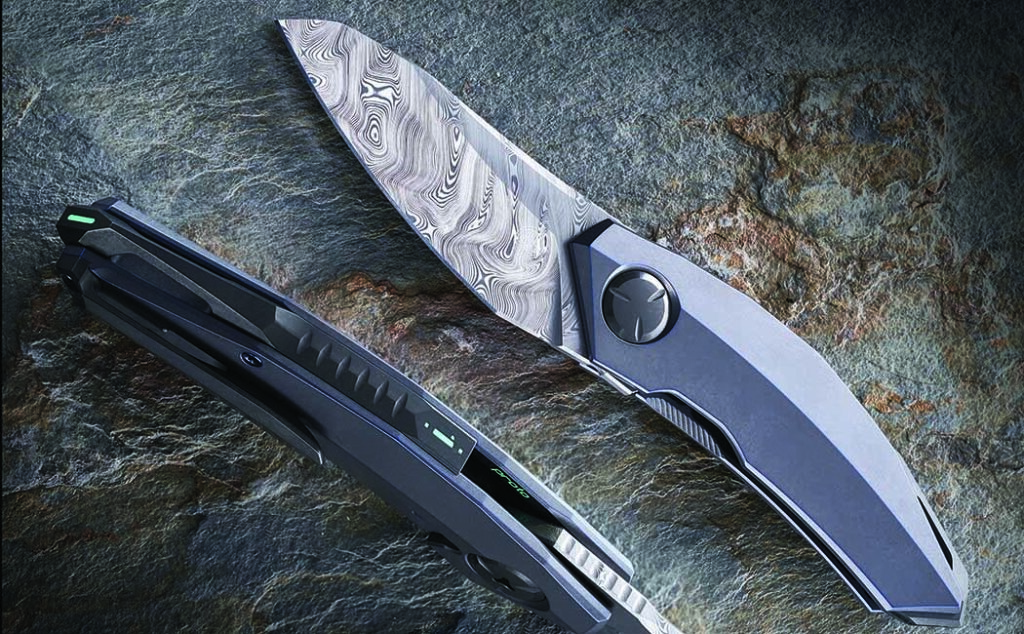 Best Tactical Folder: Dmitry Sinkevich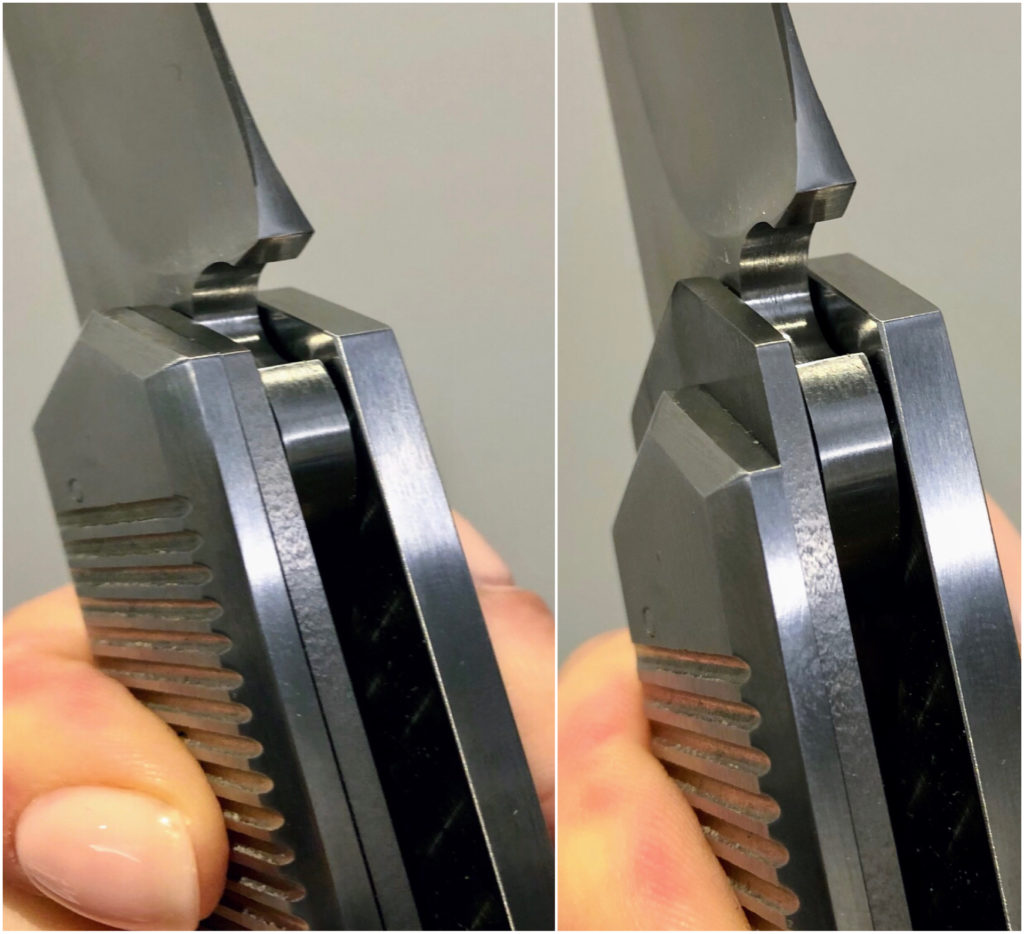
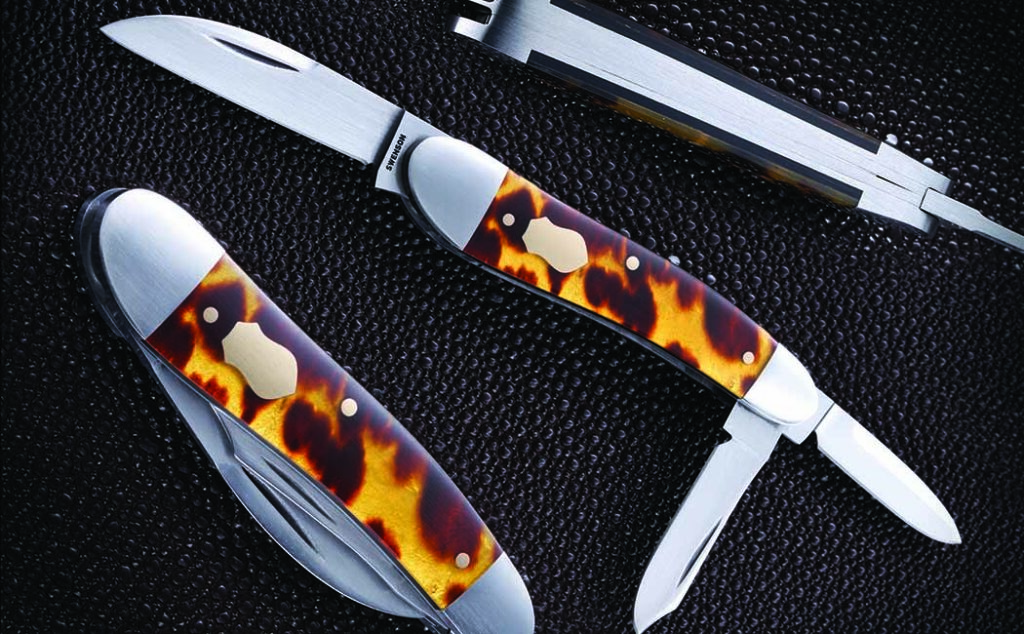 Best Slip Joint: Luke Swenson
 Best Handle Design & Best New Maker: Fabio Barros
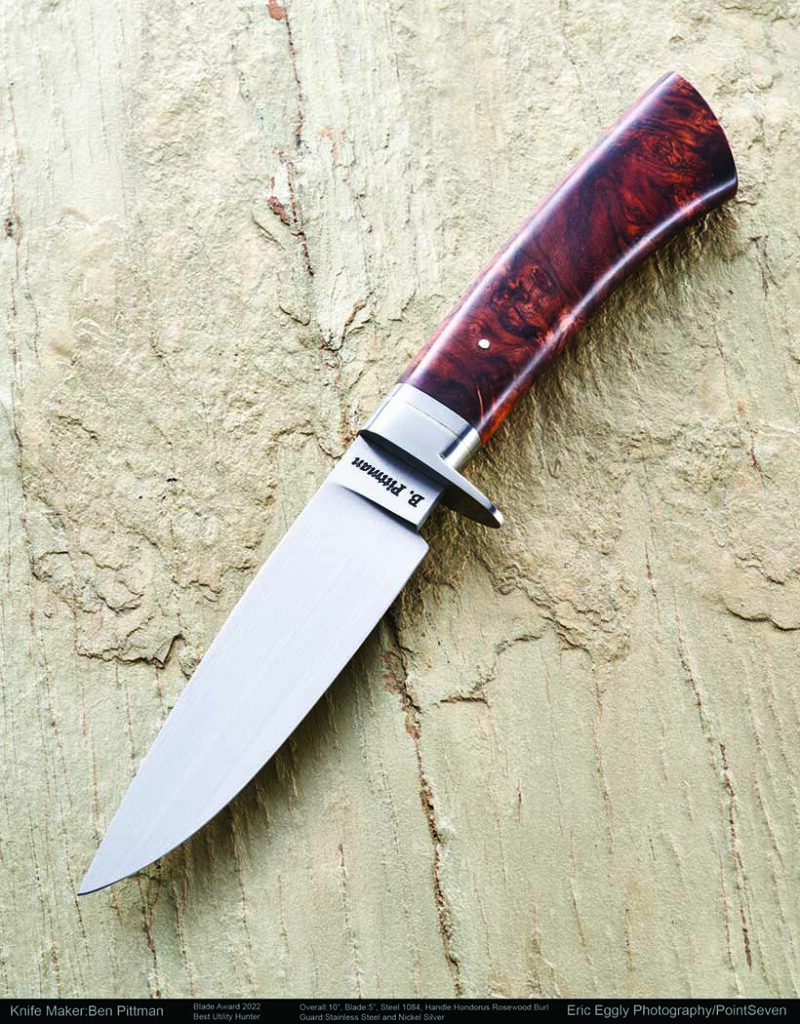 Best Utility Hunter: Ben Pittman
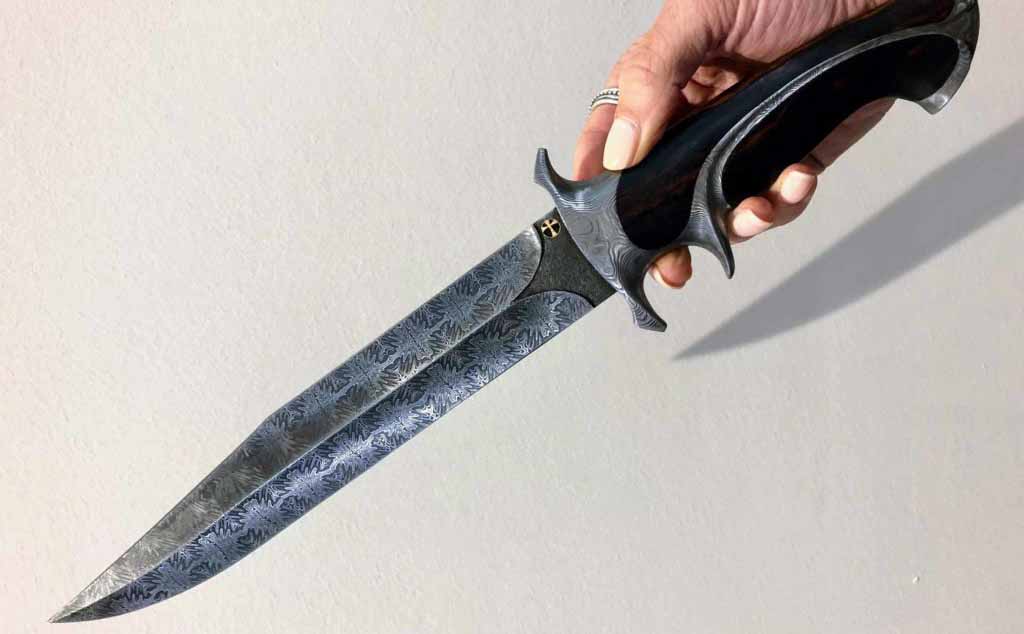 Best Fighter: Henning Wilkinson
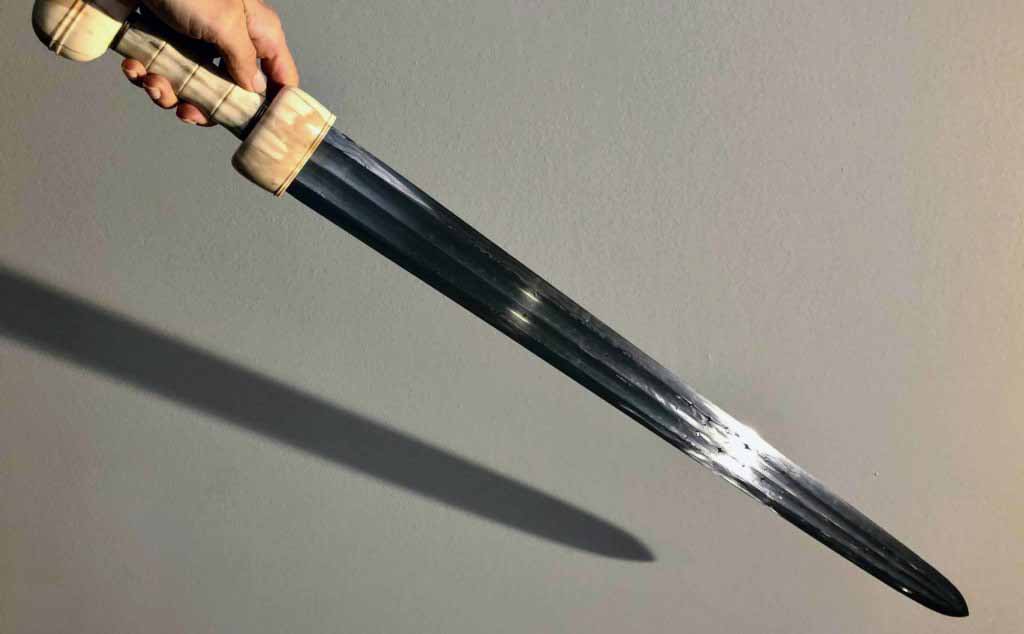 Best Sword: Vince Evans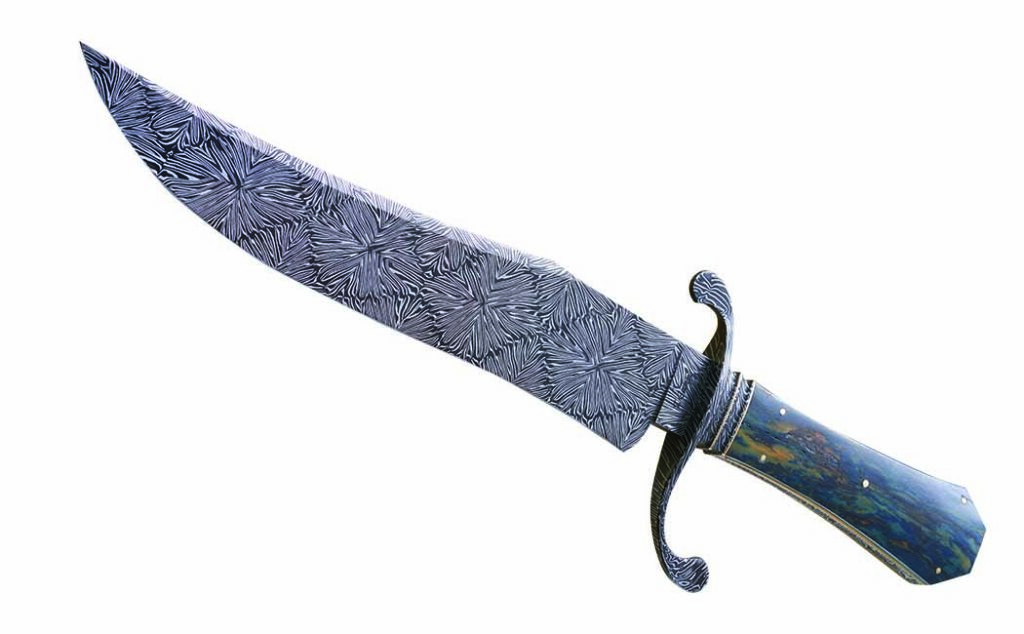
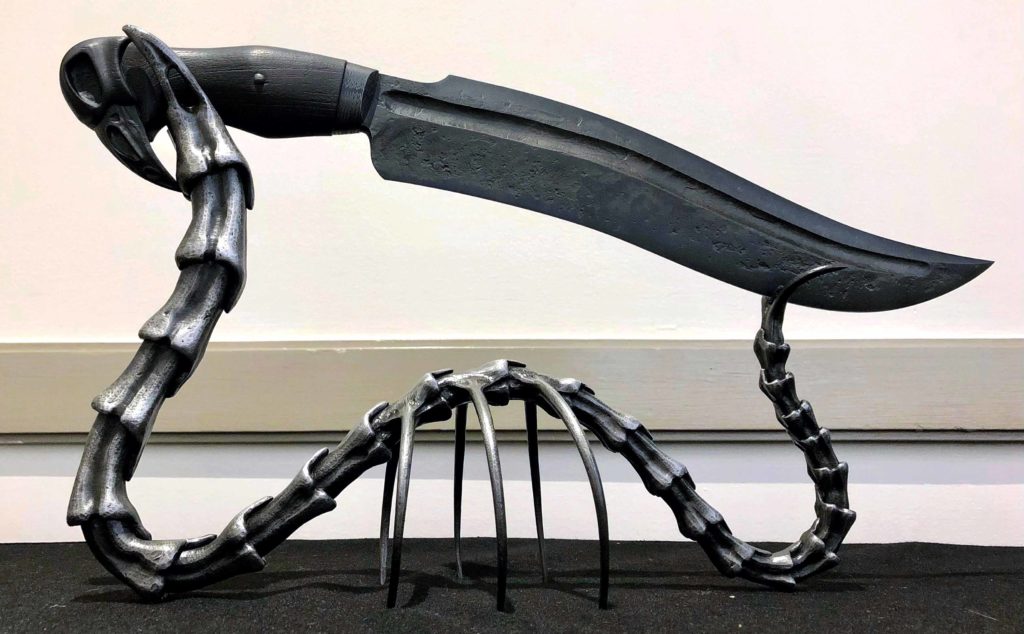 Best Collaboration: Seth Lopez & Leah Aripotch. Lopez forged the knife while Aripotch created the stand.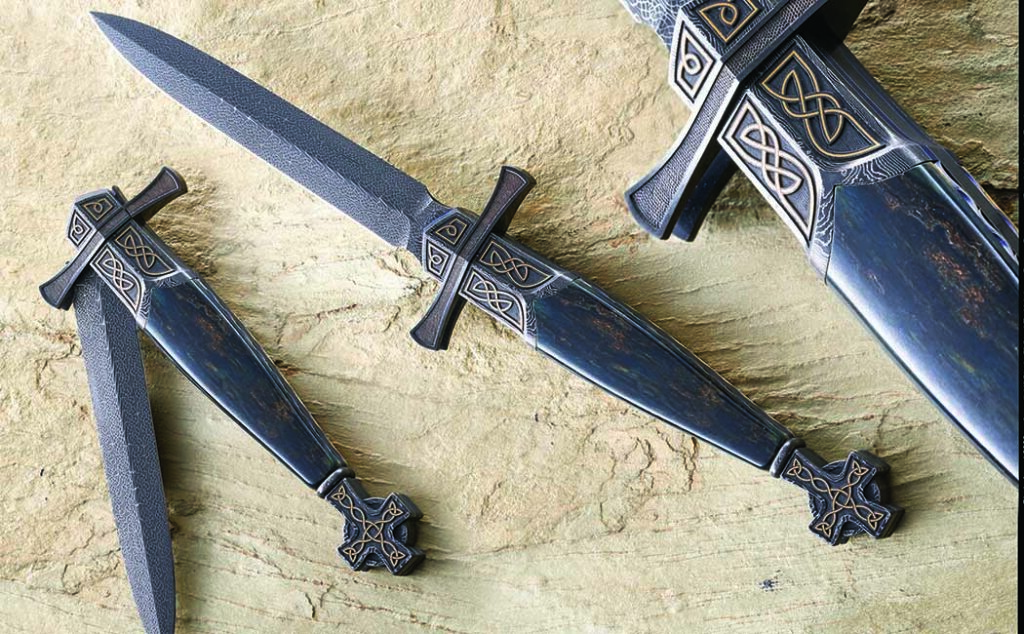
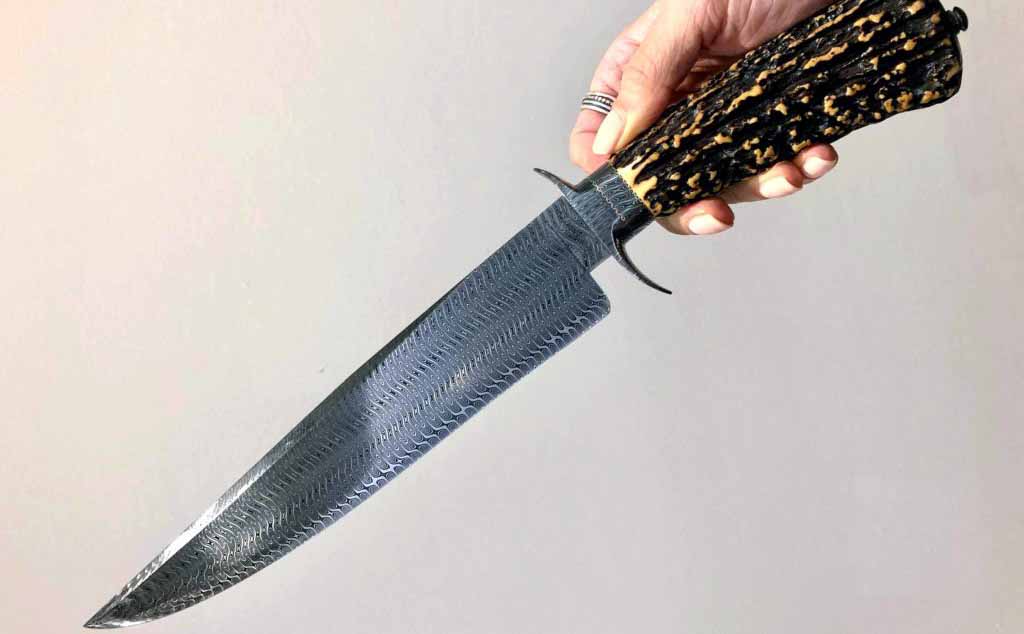 Best Damascus: Mike Quesenberry
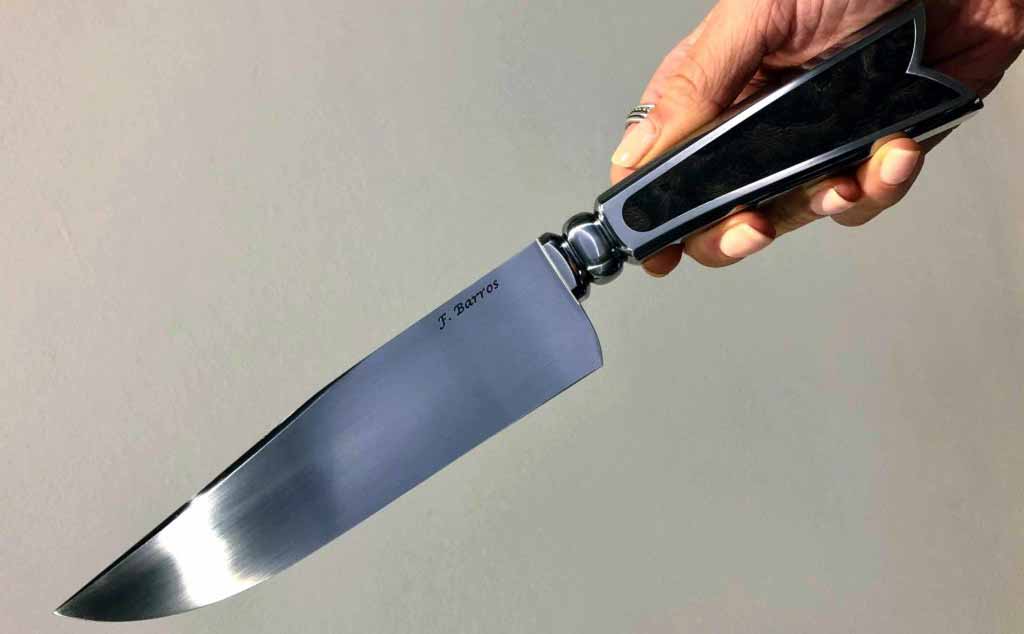 Best New Maker: Fabio Barros
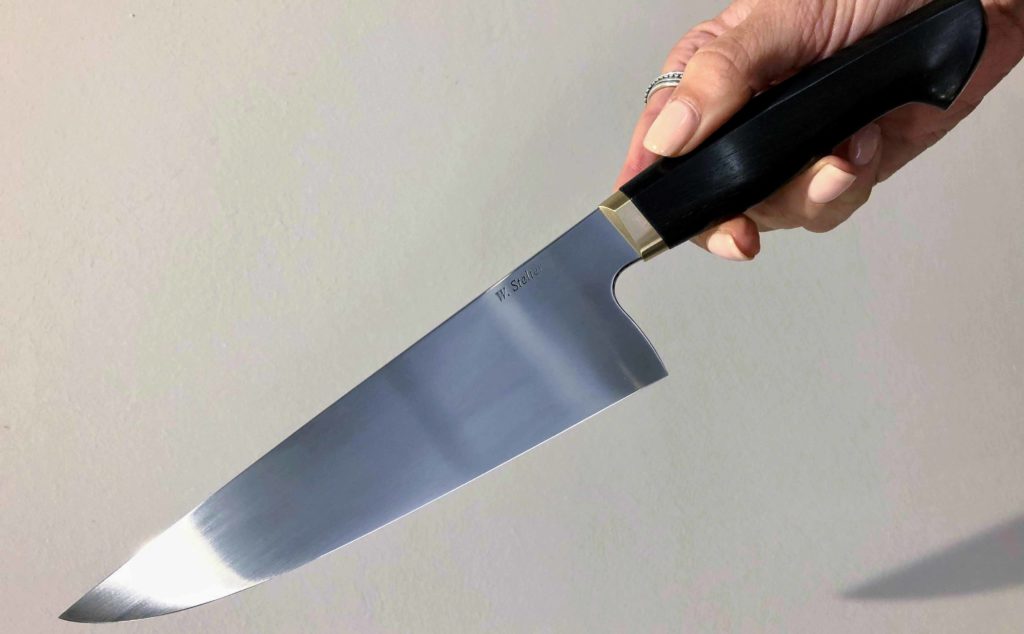 Best Kitchen Knife: Will Stelter
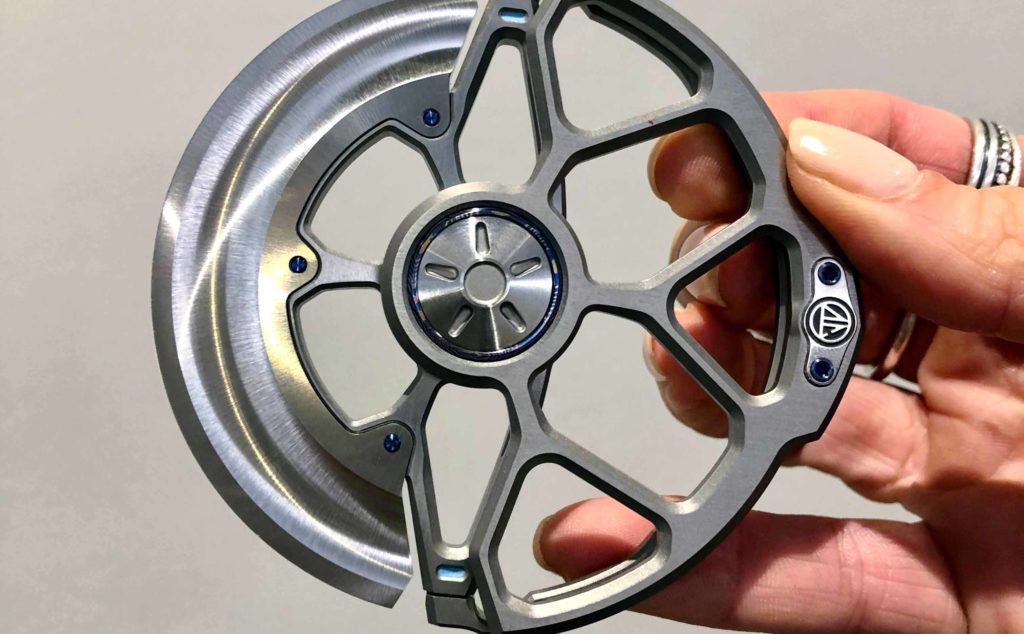 Best Of The Rest: Dmitry Sinkevich. Sinkevich said that the design was inspired by a combination of the ulu knife and watch rotor.
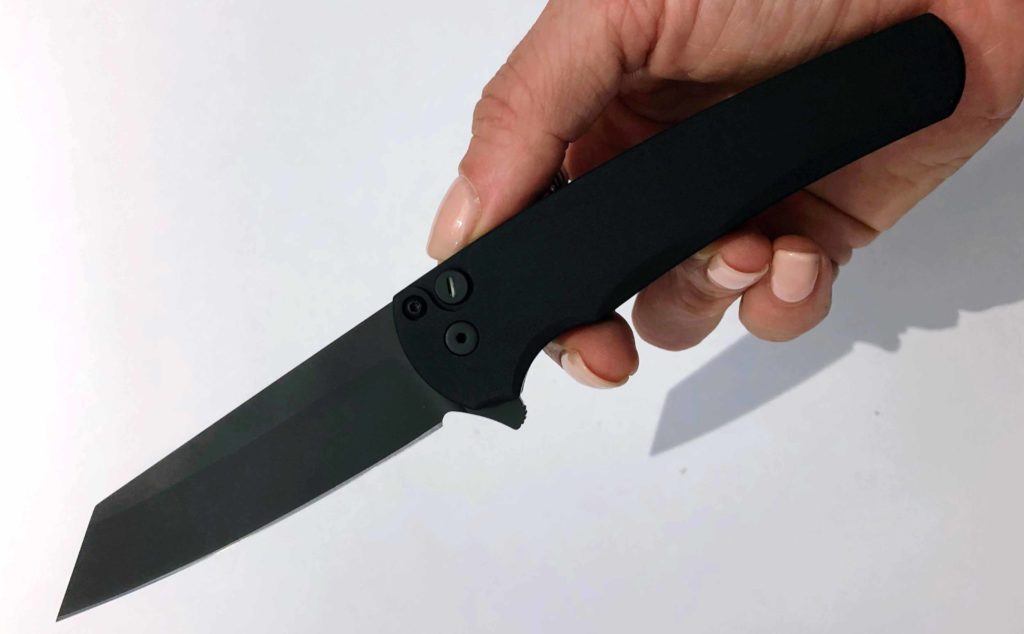
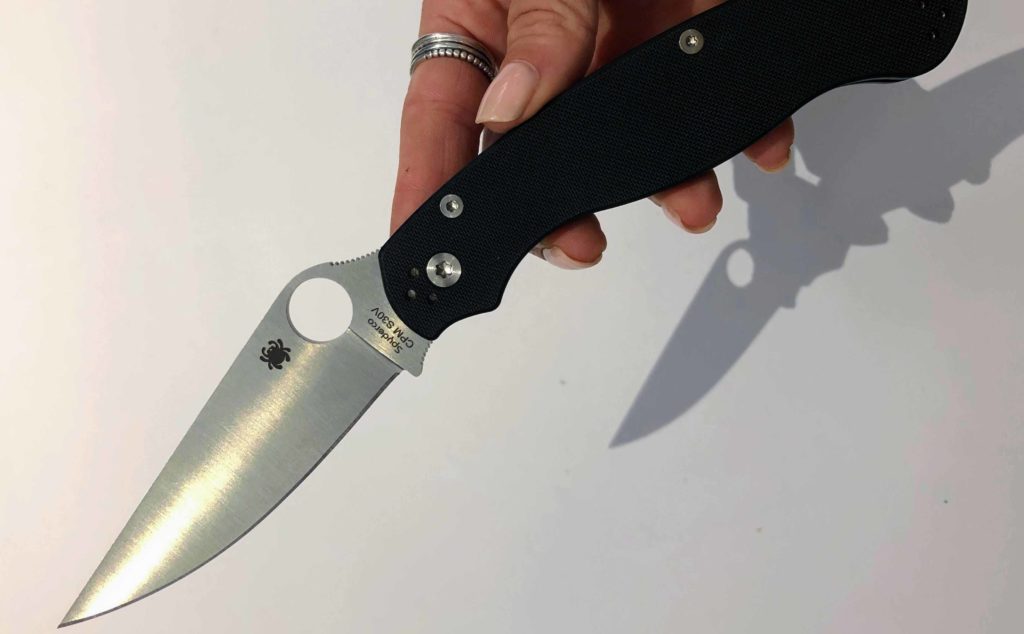 Spyderco Military 2
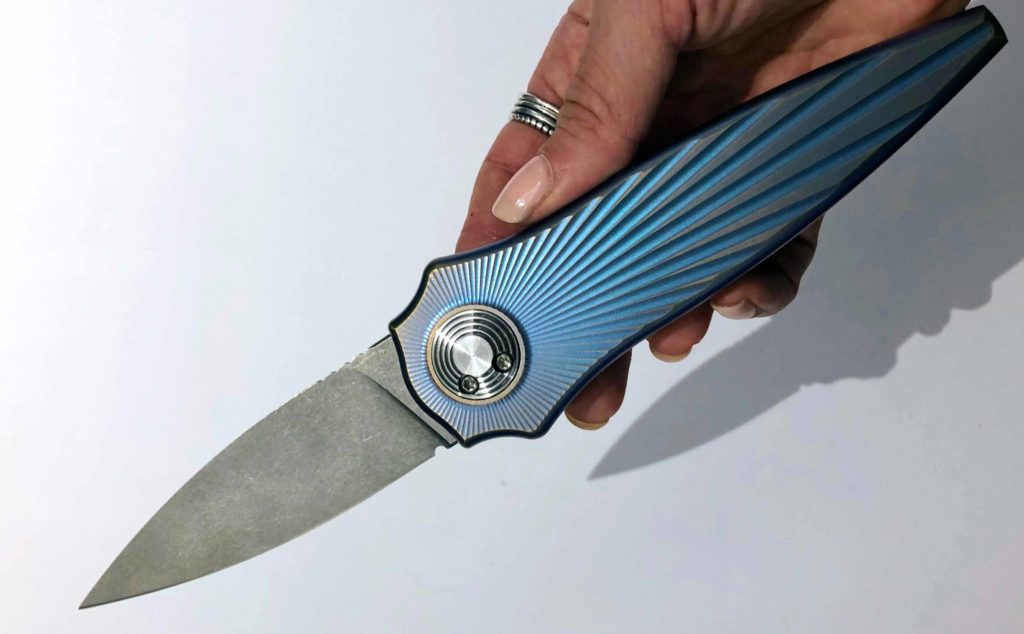 Asheville Steel Warlock
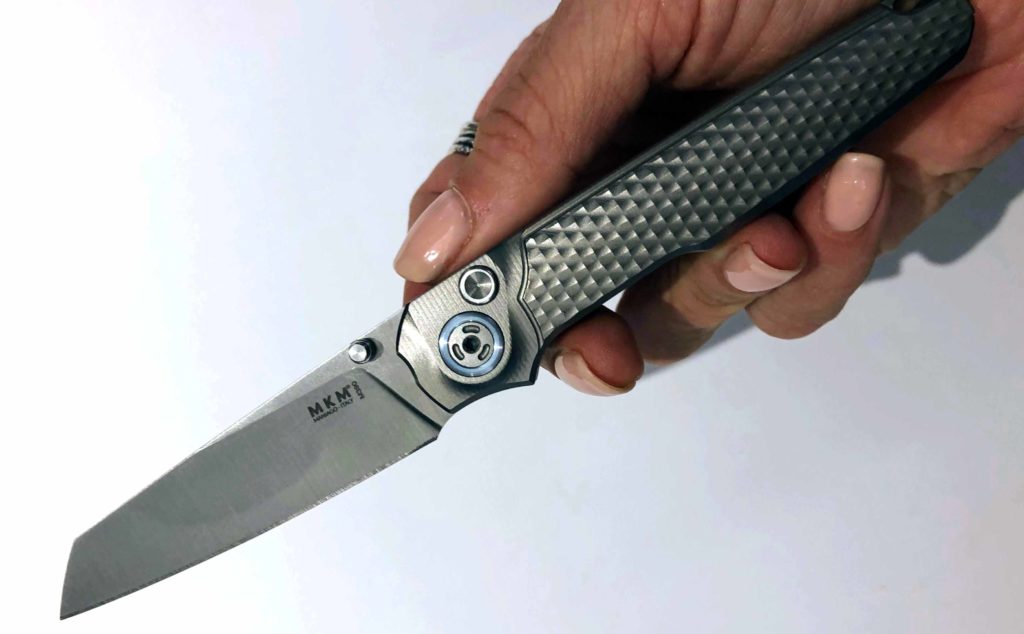 MKM – Maniago Knife Makers Miura
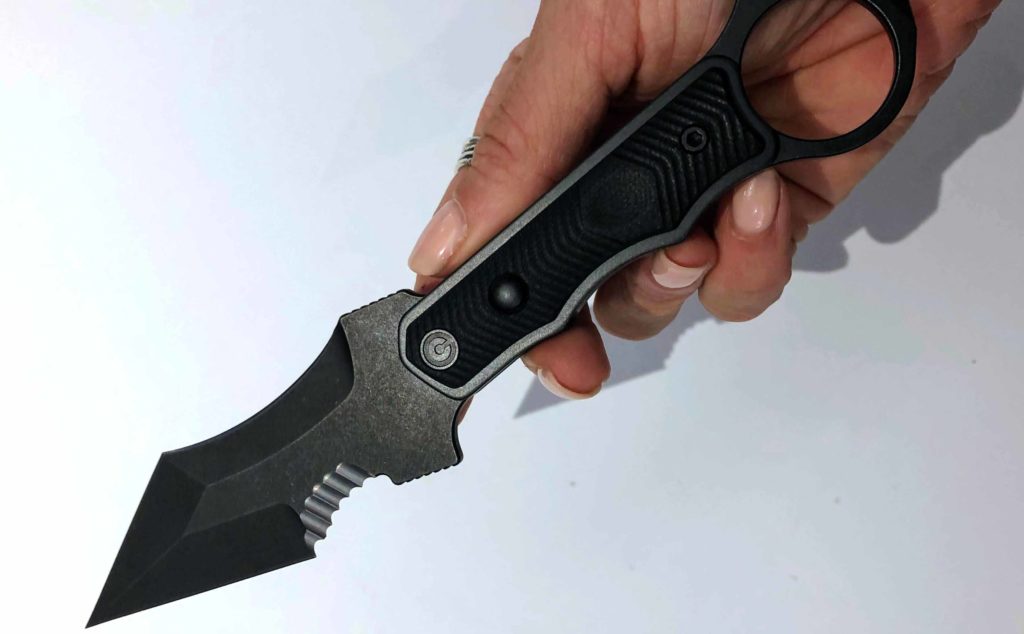 Civivi Orthrus
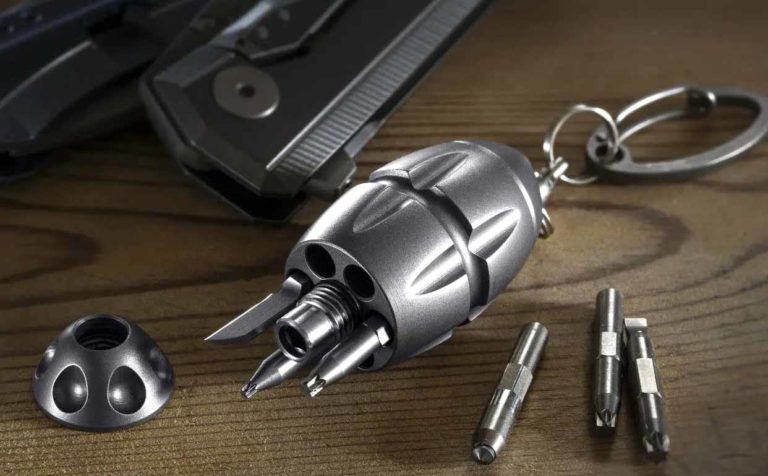 Lionsteel Eggie
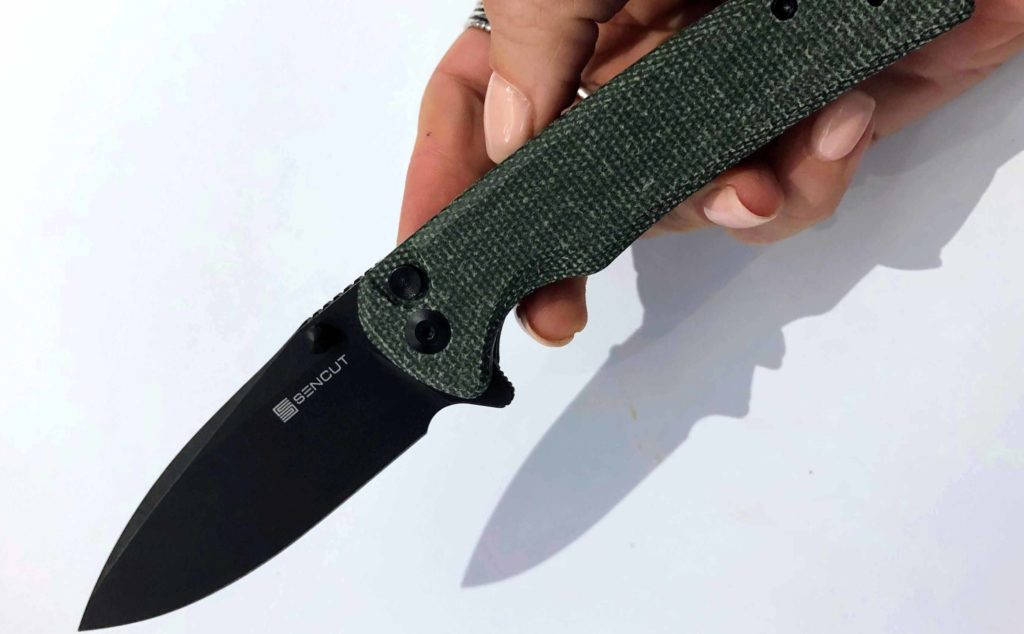 Sencut Sachse
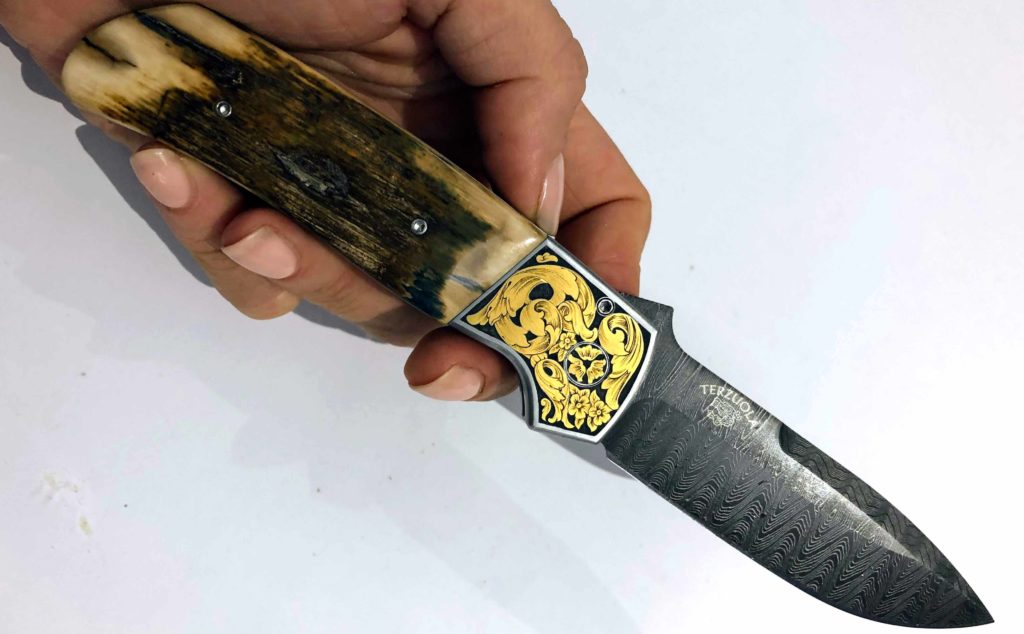 Pro-Tech Ultimate Collection Terzuole ATCF Auto
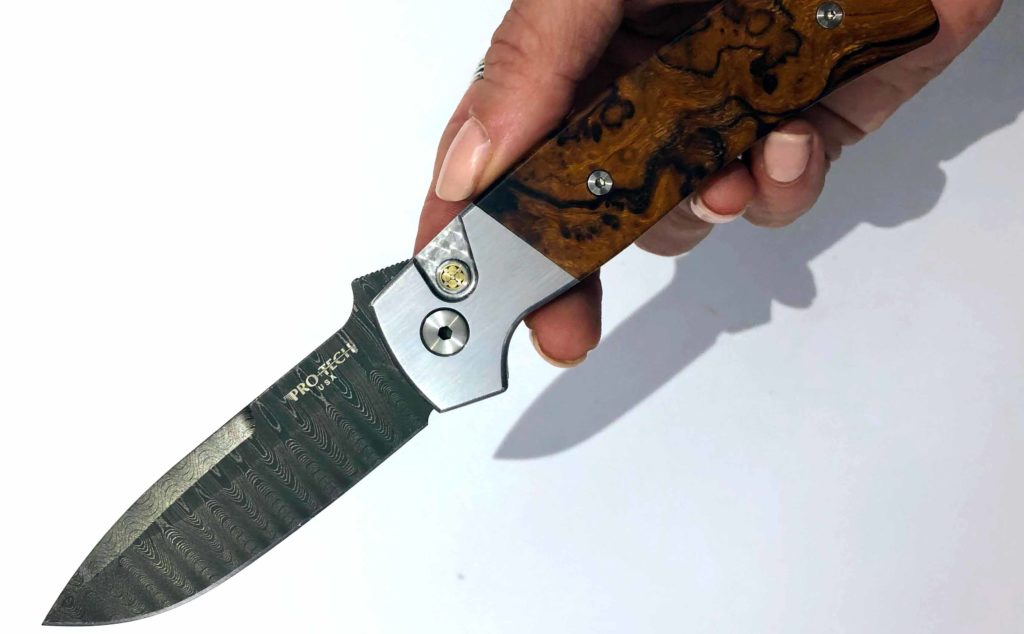 Pro-Tech Terzuole ATCF Auto
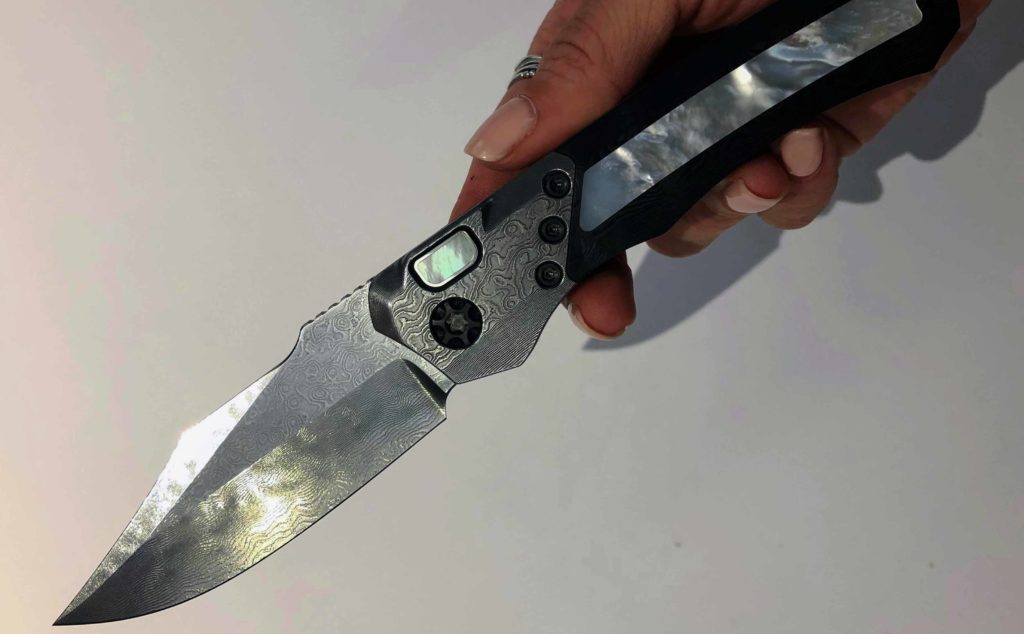 Heretic Wraith Auto
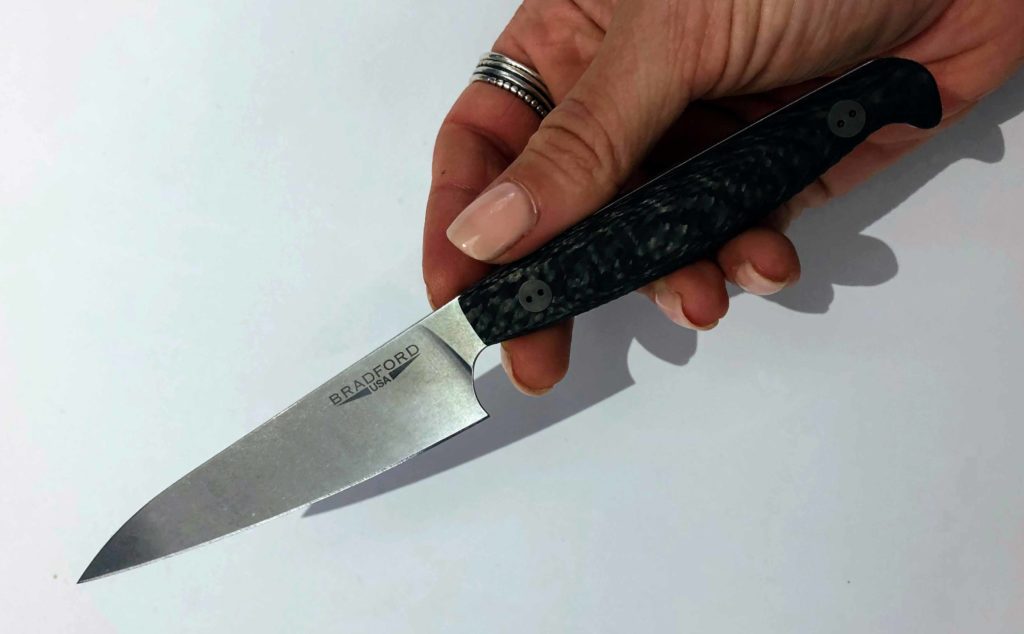 Bradford Paring Knife







