A cool camp cutter is a must to help you fully enjoy the fun and sun of summertime in America. Whether you are wilderness camping or simply spending a leisurely day at the lake, some of the latest models will make your experience easier and more satisfying.
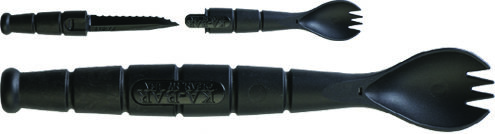
Eating outdoors can be a challenge. Enter the new Tactical Spork from KA-BAR. Featuring the stacked-handle design made famous by KA-BAR’s iconic USMC fighting/utility knife, the Tactical Spork is a fork/spoon combo with a 2.5-inch serrated blade that screws into the handle. The Tactical Spork is made from food- and water-approved Grilamid. MSRP: $8.32.
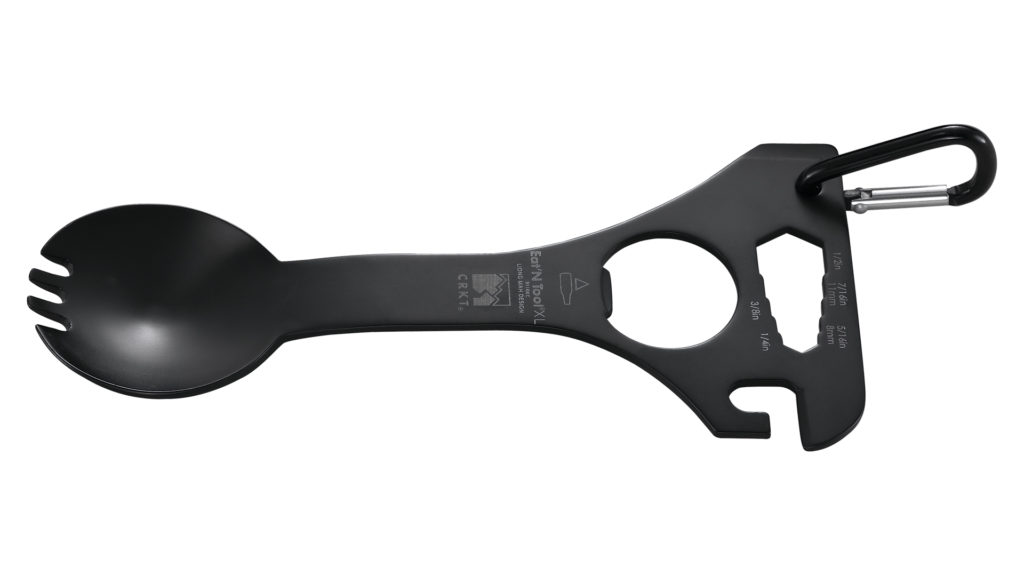
CRKT addresses outdoor dining with the Eat’n Tool XL. Designed by Liong Mah of Palm Bay, Florida, the Eat’n Tool XL consists of a spoon/fork combo and a
lso has a bottle opener, GI-style can opener and a flat screwdriver (6.8.10mm hex), and carries via a non-load-bearing carabiner clip. Made of 3Cr13 stainless steel, it’s 6.13 inches overall and weighs 2.7 ounces. It comes in a choice of silver and black finishes. MSRP: $14.99.
Cool Camp Cutter No. 3: Camp Axe
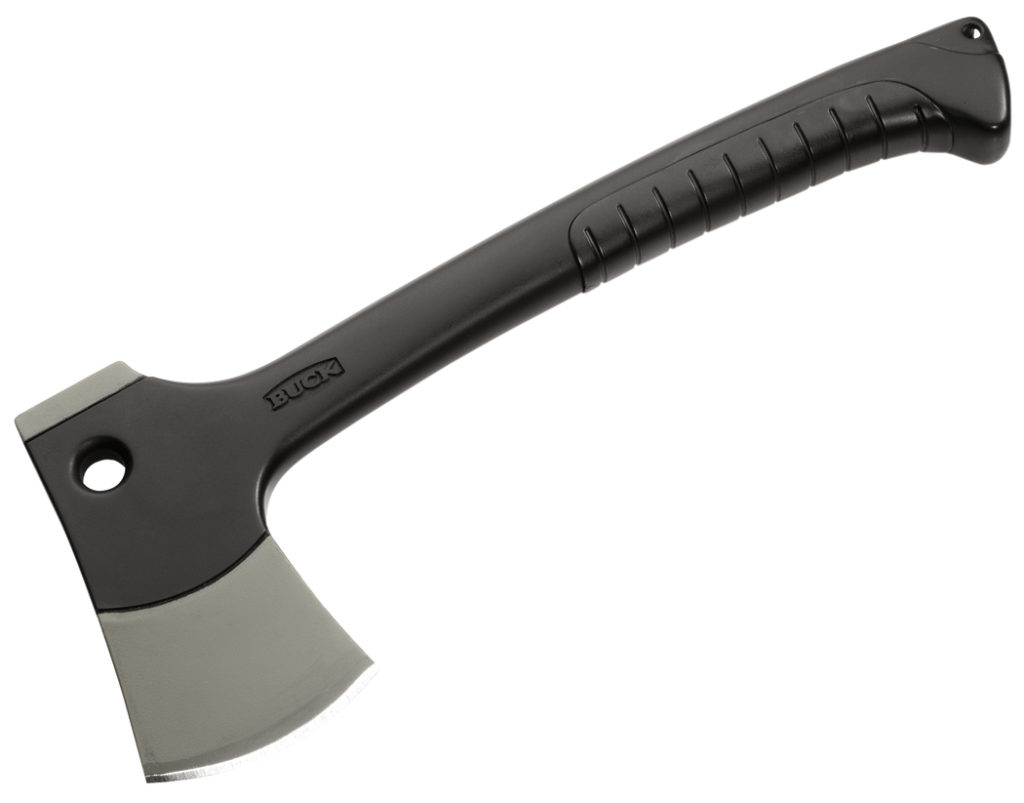
Cool Camp Cutter No. 3: Buck Camp Axe. MSRP: $71.
If you need something a bit more substantial to split kindling, hammer tent stakes or otherwise handle heavier-duty jobs, Buck‘s Camp Axe is the ticket.
At 12.25 inches overall, a weight of 17.2 ounces and including an injection-molded nylon sheath, the Camp Axe is an ideal size for convenient carry and a wide spread of utility jobs. The 3-inch head is forged, powder-coated, high-carbon steel and the ergonomic haft is high-impact plastic. MSRP: $71.
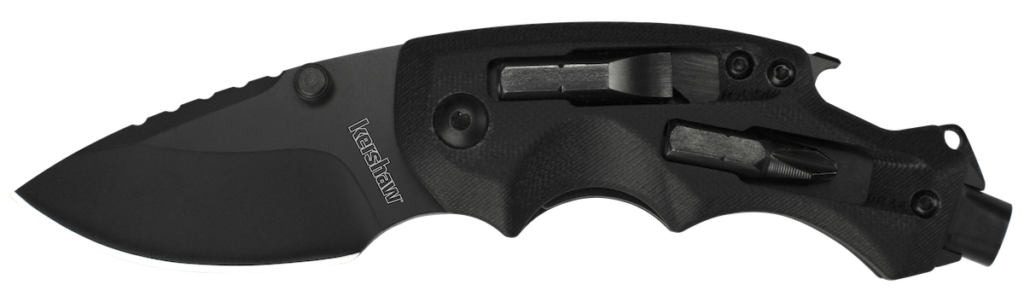
A knife that will cut, double as a screwdriver, comes equipped with a jump ring and also will open a bottle of your favorite beverage is an outdoor necessity, and the Shuffle from Kershaw fills the bill. The short (2.4 inches) but wide blade of 8Cr13MoV stainless steel in a black-oxide coating should be legal in most jurisdictions, and the manual-opening folder features a K-Textured glass-filled nylon handle with a single-position pocket clip. Weight: 3.5 ounces. Closed length: 3.25 inches. MSRP: $34.99.
Cool Camp Cutter No. 5: Hobo
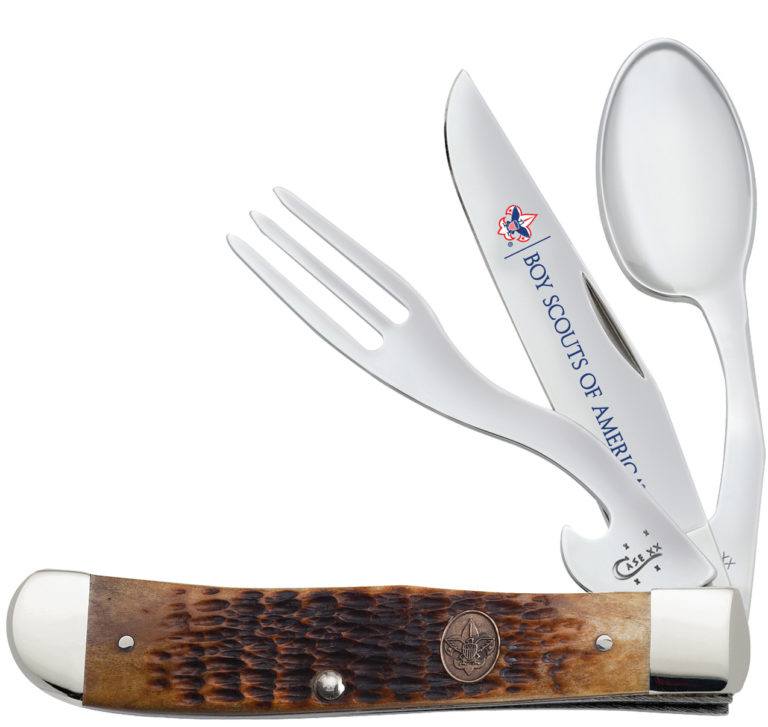
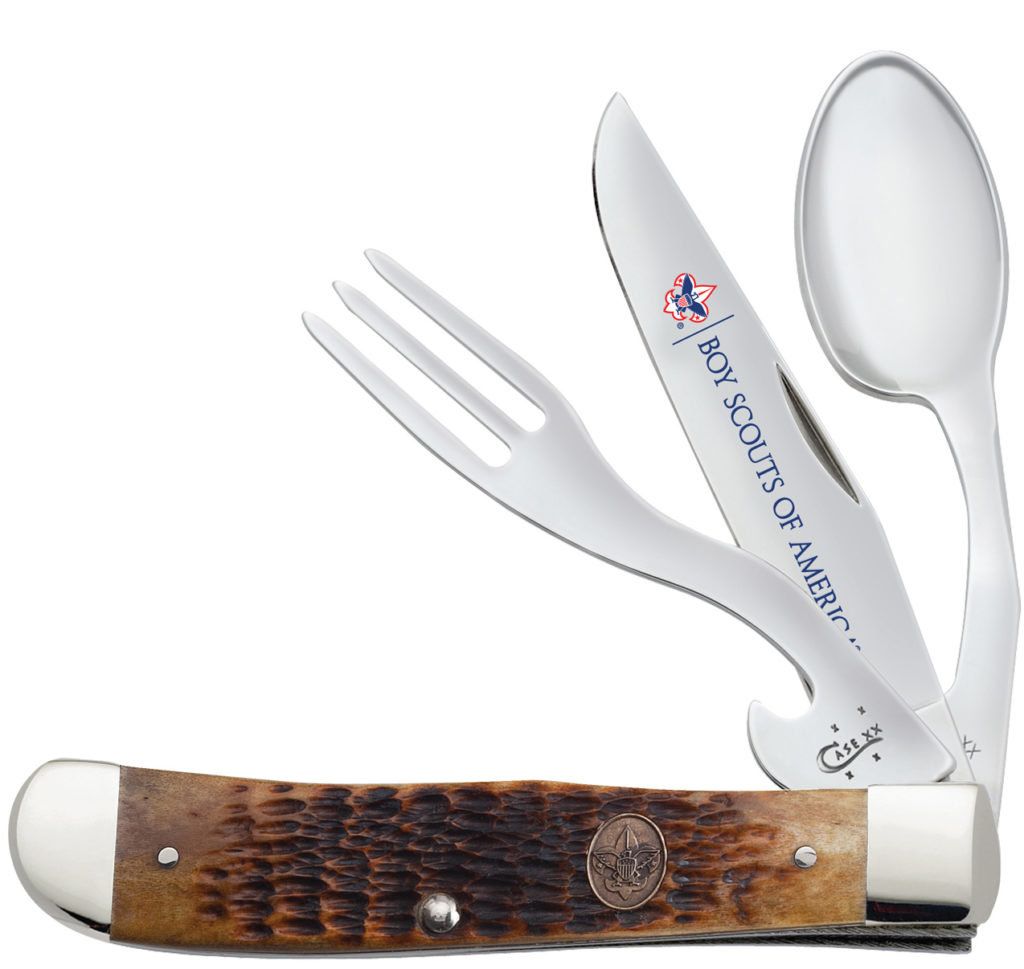
Cool Camp Cutter No. 5: Case Hobo. MSRP: $134.
A traditional pocketknife equipped with a clip blade, fork/can opener and spoon makes the Case Boy Scouts of America Hobo an ideal choice for most any outdoor junket. Stainless steel blades/implements and a natural handle complete this utilitarian classic. Weight: 7.7 ounces. Closed length: 4 1/8 inches.
The knife includes Boy Scouts of America and BSA logo blade etches and a BSA logo shield. MSRP: $134.
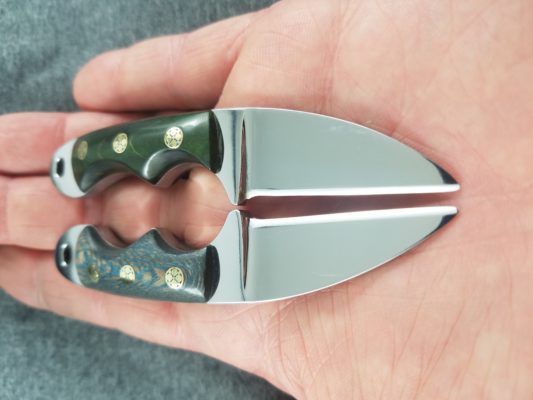
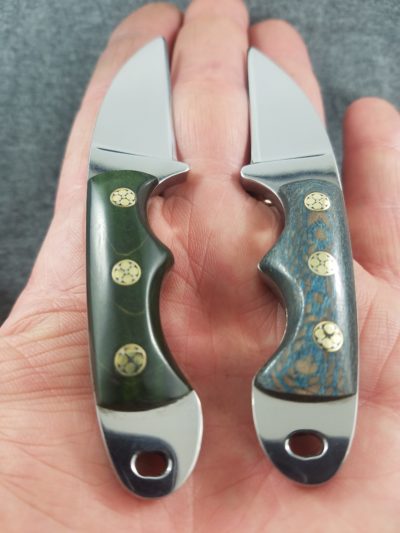
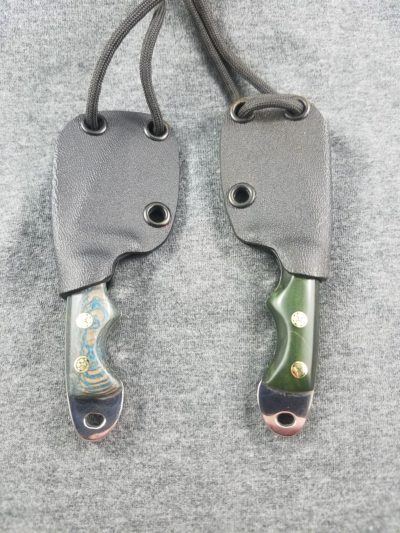
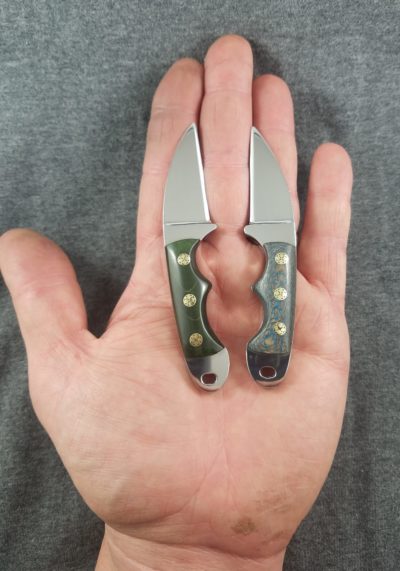
Pete Sloan made two neck knives for the wife and son of his friend and fellow maker Spencer Aplin. He used his daughter’s hand to perfect mini knife’s design, ensuring it fit the tiny hands of Lisa Johnson Aplin and son Alexx who suffer from brittle bone disease.
“One thing that Spencer is very good at is knowing what I’d like,” Lisa Johnson Aplin said. Lisa is the co-founder and chief operating officer of STA Custom Knives out of Brazoria, Texas. She and knifemaker Spencer Aplin were married in 1993, and together they have a son Alexx who will be 24 in a couple of months, a journalist and sometimes quality controller in his father’s shop. Lisa had no idea that a Sloan Custom Knives creation she admired had already been custom-ordered for her by her husband. Lisa suffers from osteogenesis imperfecta, or brittle bone disease, so although she does not have dwarfism and is therefore not a “little person,” she is a very little person. The one thing that Pete Sloan has plenty of access to is little people in the form of children, 9 to be exact. So, he used one daughter’s hand to perfect the mini knife fit and design.
Erin Sloan is 9 now, but she was 5 when her dad, Pete, asked her to help him custom-fit a tiny neck knife. Erin is one of 9 Sloan children.
Lisa’s favorite color is green and Spencer had been admiring a green knife he saw on Facebook that his friend Pete had made. “He asked me if I could make one for his wife,” Pete said. Pete was surprised and honored that Spencer, a maker he greatly admires for his knifemaking in general and blade-carving in particular, would ask him for a knife. Pete told Spencer that he was welcome to make the knife if he wanted, but Spencer said, no, that Pete had a good command of the Wharncliffe design and he wanted Pete to make it.
Pete Sloan started out with an old 4-by-36-inch belt grinder–generally considered underpowered and not ideally configured for knifemaking–and some hand files. “I liked it,” he said.
Humbled, Pete was determined to get it right. But he lived in Medina, Tennessee, and had never met Lisa. He only had Spencer’s description of her size to go on. Lisa is 2 feet, 10 inches tall. Pete’s daughter Erin was 5 at the time. So, he roughed out the 440C stainless steel blades and then with a Sharpie marked the first finger groove using Erin’s grip as a guide, grinding until it was just right for her petite hand. Spencer requested the stainless steel because the Aplins live next to salt water, and he wanted to minimize corrosion. Pete said he mostly gets requests for pattern-welded steel.
Spencer Aplin of STA Custom Knives, standing, took his son, Alexx, and wife and business partner, Lisa, to the 2015 BLADE Show.
If you’ve ever seen the movie “Unbreakable” starring Bruce Willis, you know what osteogenesis imperfecta entails. Mr. Glass’ character, played by Samuel L. Jackson, has a form of the condition that allowed him to grow to full height, but his lifestyle is still hampered by debilitating bone breaks. Lisa and subsequently her son Alexx have Type III OI. A genetic mutation causing a lack of collagen, subsequently prompting connective tissue issues. The result is that bones fracture easily and those with the affliction will be short in stature with a curved spine and barrel-shaped chest. Type I is the most mild form of the condition, Type II and Type VIII the most severe and most often fatal. Types III through VI vary in symptoms and genetic causes. OI has been traced through mummies back to 1000 BC Egypt. Even though the condition has been around a long time, there is still no cure.
Pete Sloan used green-dyed curly maple for the scales on Lisa Aplin’s knife and blue-dyed and natural sycamore for Alexx’s. You can contact Richard Beam on Facebook for such impregnated wood products.
Pete used stabilized curly maple dyed green from Richard Beam at Nicholas Impregnated Woods to make the handle for Lisa’s knife and a combination blue-dyed and natural sycamore for Alexx’s. Each came with a Kydex sheath and cording to wear around the neck. At the 2015 BLADE Show, Lisa finally met Pete in person and he presented her with the knife. She loved it! “Green is my favorite color,” she said. She uses the knife all the time, opening boxes that come to the shop and for everyday uses around the house. Although it can be used for food preparation, Lisa doesn’t cook, she said laughing. Spencer does the cooking. She treasures the knife. “It’s one of my favorite’s in my collection.” She continues to be impressed with the fit and with how Pete obtained it.
Push Kydex sheaths away with your thumb rather than struggling to pull the knife out. If they are too tight, contact the maker. He can heat and loosen the fit while still ensuring the knife does not fall out.
The only thing that Pete could not have accounted for was hand strength or lack thereof. Both Lisa and Alexx had a hard time drawing their knives. Spencer simply heated up the sheaths and worked the knives in them so that they released more easily without falling out. “It not something he could have known about,” Lisa said. “I think he did a great job.”
When asked how she adapts to daily activities in a full-size house at her stature and in a wheelchair, Lisa’s answer was immediate and delivered in as cheery a tone as everything else she talks about. “The great thing about being married to someone who works with his hands,” Lisa explained, “is that Spencer can make me anything I might need customized.” The Sloan Custom Knife was an unexpected surprise, but in hindsight typical of Spencer to have picked out exactly what she would have picked out for herself long beforehand.
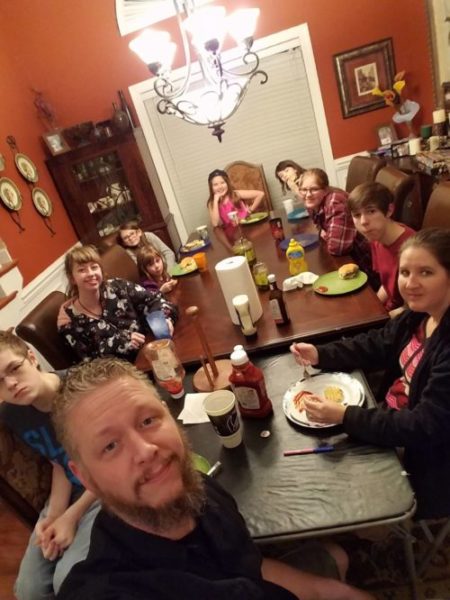
It’s a challenge to get all the Sloans in one place. This is the whole family minus oldest daughter, Becca, who is in the U.S. Air Force.
Pete visited Spencer before the 2017 BLADE Show and the two slept little working hard to finish up knives to sell. Spencer and Pete make knives with similar styles as Spencer shares his knowledge with Pete. And if Pete ever needs another hand model, he can turn to one of his and his wife, Holly’s, nine children, some biological, some adopted, some that came by other means: Becca, 19; Carson, 18; Gage, 15; Brant, 14; Makenzie, 13; Leigha, 10; Erin, 9; Madeline, 8; and Grace, 7. The couple used to be foster parents. “There a story to just about all of them,” Pete noted with a laugh.
Contact Pete Sloan at [email protected] or on Facebook at Sloan Custom Knives.
These mini neckers are 4.25 inches overall. The 440C stainless steel blades are 2 inches. The full-tang construction allows for a lanyard through hole. These were designed for child-sized hands, but come in larger versions. Handle material is impregnated wood from Richard Beam. Maker’s list price: $200 shipped with Kydex sheath.
Are You Looking to Perfect Your Own Everyday Carry?
Another thing you’ll learn more about in Wayne Goddard’s “Making The Everyday Carry Knife” is selecting the right materials for a handle that lasts.
“Making the Everyday Carry Knife” by Wayne Goddard includes information on how to determine the best blade and handle length. You’ll also get tips on how to use your computer to assist you in designing your knife, plus lots more including grinding and tempering techniques and tool suggestions. At only $4.99 in digital format it’s a wealth of information at a steal.
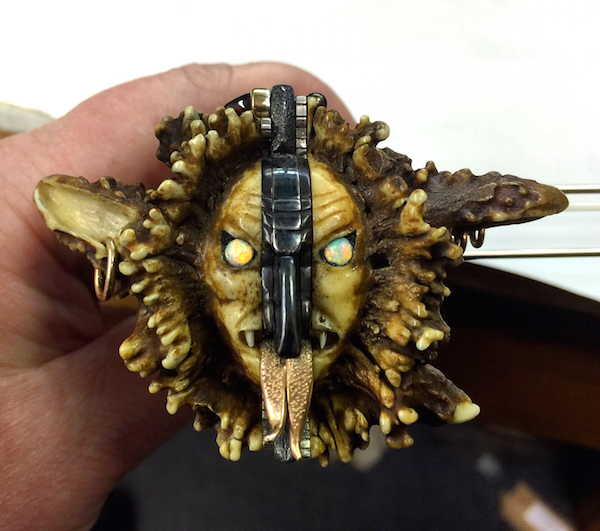
Dellana outlines the challenges of making her first goblin folder, including the goblin face on the butt.Read how Buster Warenski’s King Tut dagger changed the knife industry forever in the latest BLADE®.
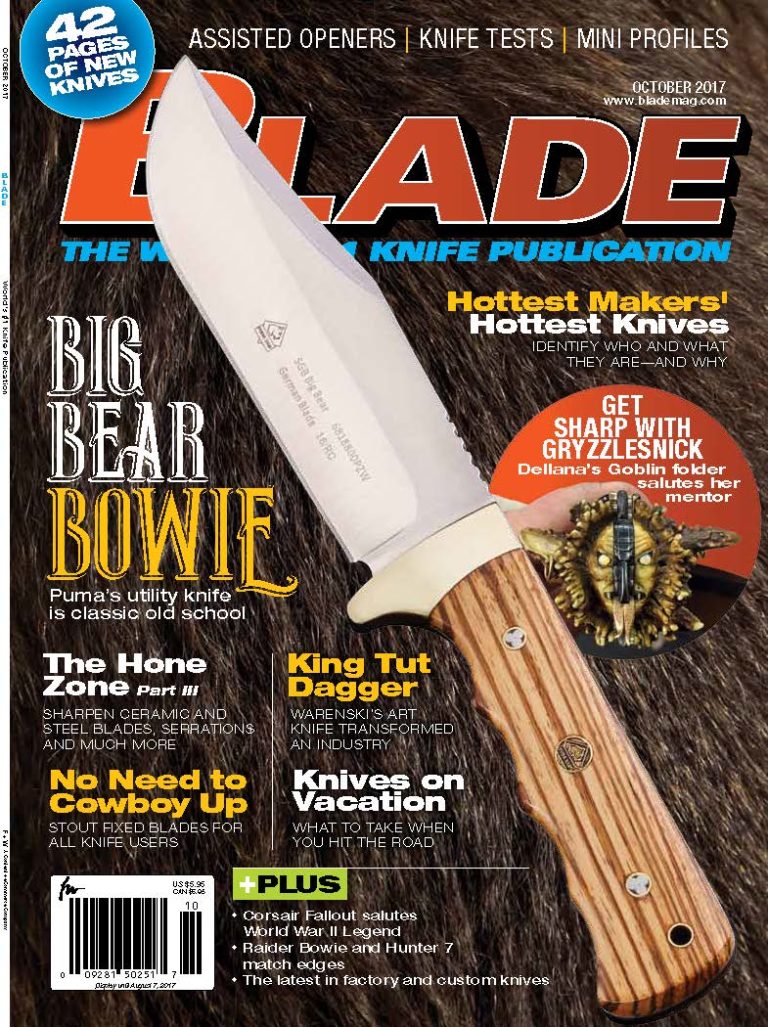
Dellana shows you how she made her first goblin folder, read why Buster Warenski’s King Tut dagger changed knife history, school yourself on the hottest custom makers’ hottest knives and more in the latest issue of BLADE®—on newsstands NOW!
Dellana is known throughout the custom knife industry for her ornate high-end folders and learned a lot under the great ABS master smith Jim Schmidt. Schmidt was known in no small part for his goblin folder, a style Dellana had never tried until approached by collector Larry Marton to complete one Schmidt had planned to before Schmidt passed away. Dellana accepted the daunting assignment. In her two-part story she outlines the challenges she faced in making the goblin folder she christened “Gryzzlesnick,” which includes a stag handle with a butt shaped into the grotesque face of a goblin. Read part one this issue.
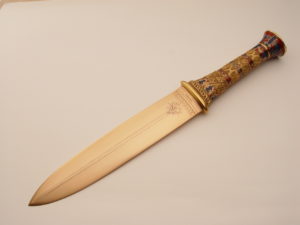
A member of the BLADE Magazine Cutlery Hall Of Fame and the top vote-getter in a poll of veteran industry observers for their “Mount Rushmore of Knifemakers” of the modern era—1960 through the May 2015 BLADE in which the applicable story appeared—Warenski spent five years (1982-87) making the reproduction of the gold dagger found in King Tutankhamen’s tomb. Phil Lobred commissioned Warenski to make the knife and liquidated his entire collection of handmade knives to pay for it. The knife featured 32 ounces of gold, the long-lost technique of granulation to embellish the knife’s handle and has been valued at being worth over $1 million. Get the full story on this landmark knife and the trials and tribulations of Warenski in its making in “A Piece of Buster’s Soul.”
Pinpointing the hottest custom knifemakers’ hottest knives is something all enthusiasts of the genre need to stay on top of, and BLADE helps you in the endeavor with the help of top industry observers in “Compound Your Cutlery Interest.”
Dellana details the making of her first goblin folder and much more in the latest BLADE®, on newsstands NOW!
There’s much more this issue, including:
•BLADE Managing Editor Erin Healy’s story on the period-correct knife-and-tomahawk combos by Don Shipman, “Edged Warrior Sets”;
•The best knives to take on summer vacation;
•Rick Barrett‘s custom folder based on and that salutes the legendary World War II Marine F4U Corsair fighter aircraft made famous by the equally legendary pilot Pappy Boyington of Baa-Baa Black Sheep fame;
•Tests/reviews of four of the latest factory utility fixed blades, four EDCs, three assisted openers and a pair of ample straight knives;
•The conclusion of Dexter Ewing’s three-part series on the latest knife sharpeners in “The Hone Zone.”
And much more, all in the latest BLADE, on newsstands now or subscribe to the print, digital, international or Canadian issues here.
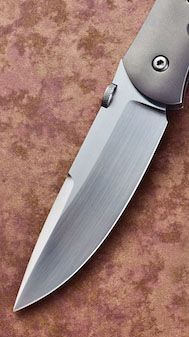
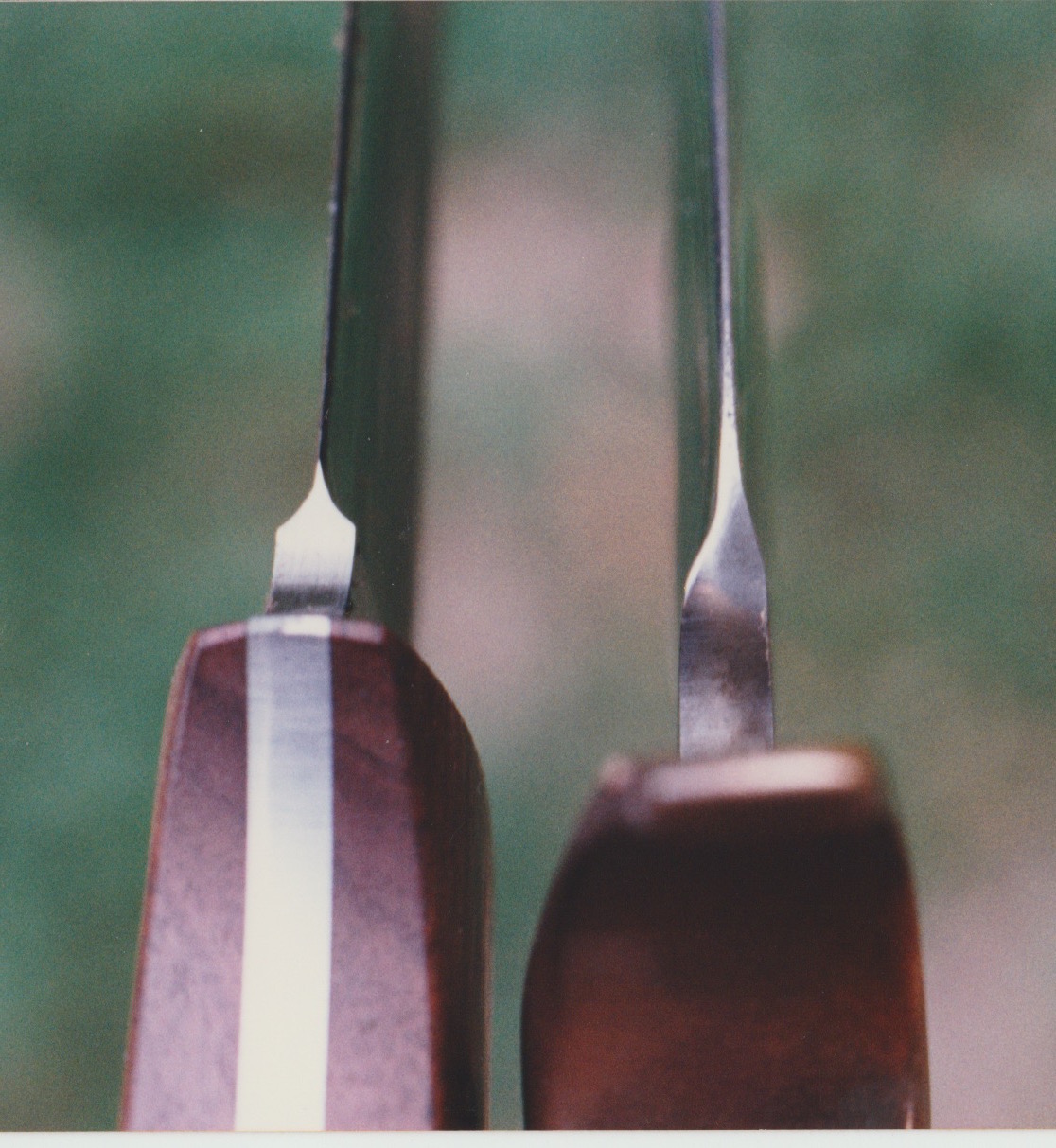
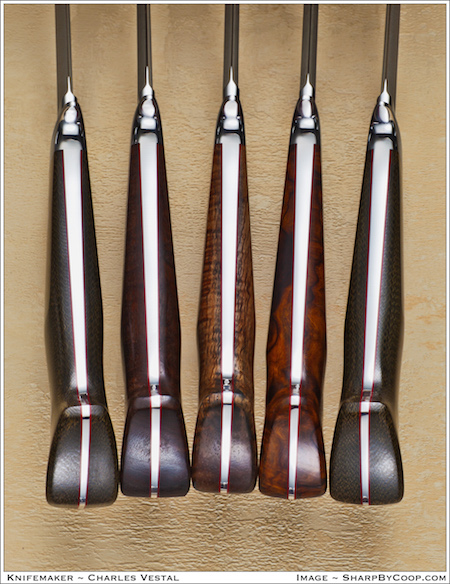
Plunge cuts should reflect each other in terms of symmetry on each side of the knife blade. The plunge cuts at left do so and the ones at right do not. (B.R. Hughes image)Note the symmetry of the satin finish flowing from the plunge cut to the tip of the blade on John W. Smith’s SD-2 tactical knife. (SharpByCoop.com image)The blade should be centered in the handle when the knife is closed, as on Brian Nadeau’s folder. (SharpByCoop.com image)There should be a correspondence in shape, size and lines between both sides of the knife’s blade and handle, as on these fighters made by Charles Vestal for members of the Custom Knife Collectors Association. (SharpByCoop.com photo)
Fit and finish is a term used to identify the earmarks of a quality made knife. In a nutshell, fit and finish is an arrangement of balanced proportions and symmetry in the entire piece.
With the dividing line being the knife’s spine, there should be a correspondence in shape, size and lines between both sides of the blade and handle. The blade tip must be centered, as should the grind as it moves along the blade toward the ricasso. The blade must have no warping, nor should it exhibit bends where there should be none. The entire run of the blade’s bevel lines, whether primary or secondary, must be even and straight. There should be no flaws, imperfections, wrinkles, creases or cracks in the blade’s surface, nor, in the case of a forged blade, can there be any bad welds. The blade’s finish, whether bead blast, satin, mirror polish, stonewash or what have you, must be consistent throughout the area of the blade to which it is applied.
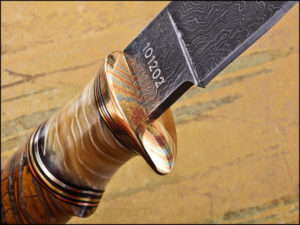
There should be no gaps between the handle material and the bolster, nor the blade and the guard. The handle sides must have equal thickness and be contoured evenly and smoothly. All materials should be rich and vibrant. For example, if ironwood, it must have nice striations instead of just being a blank piece of wood.
In addition to the above, if the knife is a folder there should be no gaps or differences in elevation between the backspring and the blade when the knife is open. There must be smooth opening and closing of the blade, and the blade should snap both open and closed—known as “walk and talk” among old-time pocketknife collectors. The blade must exhibit little to no vertical or horizontal wiggle, ride dead center in the handle when the knife is closed, and, if a multi-blade, the blades should not rub against each other upon opening and closing.
HOW to LOOK for PROPER FIT and FINISH
There should be no gaps in the knife’s joints, such as between the guard and blade. Mark Knapp’s fixed hunter exhibits a nice guard-blade fit. (SharpByCoop.com photo)
•A loupe/magnifier is unnecessary. Average eyesight is fine. Check the knife in standard light conditions;
•Rotate the knife slowly and study it from all angles;
•Examine folders with them in both the open and closed positions. Feel how smoothly the blade opens, closes and locks into place;
•Remember, no knife is perfect. Each one will have at least one minor imperfection. Learning to recognize the differences between such a knife and one with poor fit and finish requires attending knife shows and handling and studying as many knives—with each individual maker’s permission, of course—as you can.
Finally, while checking for proper fit and finish is a great way to identify a well-made knife, the fact that a knife has proper fit and finish does not necessarily mean that it will cut, feel right in your hand or even be all that attractive to you. The latter three are things you must be determine for yourself.
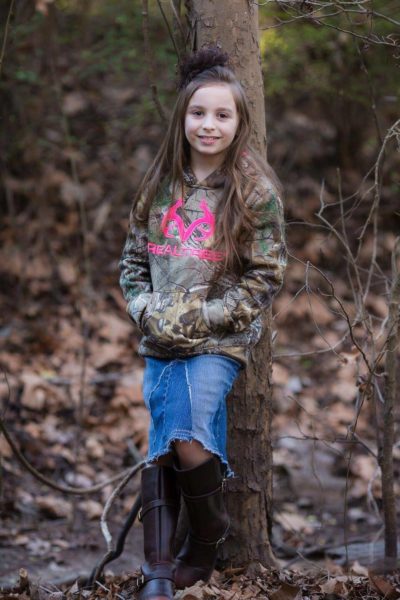
Ten-year-old Jordan Toerck had been pestering her knifemaker father, Bobby Toerck, to make her a knife for a while. But she was still young, so Bobby held her off. He promised to make her a knife when she got her first deer. Well, in January, she did just that and true to his word, Dad made a knife for his deer-hunter daughter.
Ten-year-old Jordan Toerck was in her second season of deer hunting when she got her first deer. As promised, dad made her a knife to mark the occasion.
It was bitterly cold that January day: 14 degrees, which is “almost unheard of in East Texas,” Bobby said. Jordan had been accompanying her father on hunting trips off and on for about four years, since she was 5 or 6. This was her second year of active hunting. It was youth season, which follows the general season. This particular morning father and daughter were set up in a tent blind on the ground half an hour before dawn. By 7:30 Jordan said her feet were cold. Her father admitted his feet were cold too, but if they sat still and were quiet, they’d see something.
They saw a feral hog run through at a high rate of speed, but that was about it. By 9:30, Bobby decided that they could go in. They went back out at 3 p.m. and conditions were much more favorable for father and daughter. The temperature had risen to the upper 30s and there was no wind because they were protected by a wind block. “Around 5:30 Jordan got antsy, as kids do,” Bobby said. He told her to sit still and be quiet and they’d see something.
Sure enough two other does came into view, and then a third and larger one. Jordan sighted through her Leupold 4.5-14x50mm Long Range scope and put the crosshairs where her father told her to aim. Her Remington 700 BDL Custom Deluxe bolt-action rifle was propped up on Jim Shockey-style shooting sticks, which her father had fashioned with ¾-inch dowels and paracord.
“The next thing I know, I hear a bang,” Bobby said. The deer ran off into the brush. Jordan knew she had hit it and so did her father. They waited about 10 minutes for things to calm down then walked to where the deer had been standing. “We found blood and I immediately started teaching Jordan about tracking,” Bobby said. They didn’t go more than 40 yards before they found Jordan’s deer. It was dead and had been hit exactly where she told her dad the crosshairs had been when she pulled the trigger.
On a cold day in January Jordan Toerck tagged her first deer. She aimed where her dad instructed, learned how to track and was so excited when she found her deer that she jumped up and down, whooped and hollered and, of course, texted her mother.
It was a 110-yard shot, according to Bobby’s estimations. “I should also mention that there is a Briley muzzle brake” on that rifle, he added. It brings the kick of a 25-06 caliber rifle down to the approximate equivalent of a .22 magnum, “taking 90 percent of the recoil out of it.” The setup certainly set Jordan up for success. When they found the deer, “she was jumping up and down, screaming and hollering, then she took out her phone and starts texting her momma,” Bobby said.
Ten-year-old Jordan and 5-year-old Morgan both love spending time with their father. Soon Morgan will be accompanying Bobby on hunts. “I don’t know what I’ll do. I can only take one at a time. I’ll let them decide which one’s going to get up early,” he said with a laugh.
Right then and there, they filled out the tag and attached it to the deer’s ear. Bobby got his pickup truck as close as possible and they transported the animal home where they hung it in a tree. “She was hands-on, blood up to her elbows,” Bobby said. Even his 5-year-old daughter, Morgan, wanted in on the action. “I’m not raising girls here; I’m raising boys,” Bobby said with a chuckle. At one point he told his wife Amy, that he didn’t want their girls to “have to depend on some man to clean their animal.”
They gutted, skinned and quartered the deer, packing the sections in ice and switching the ice out for three or four days to get the blood out. Then they processed the meat, grinding some, making steaks, ribs for barbeque, even saving the neck bones for soup, noted Amy.
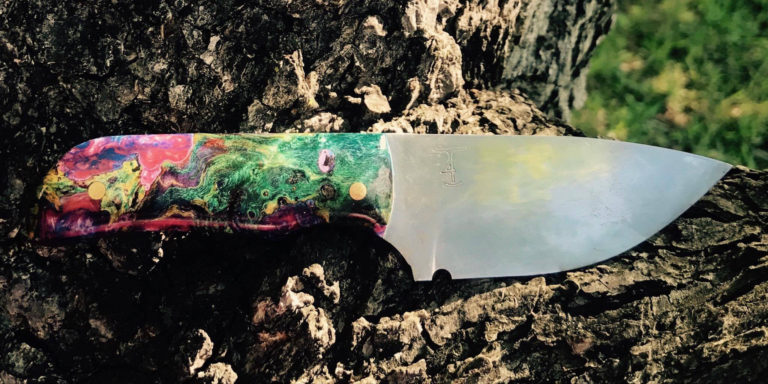
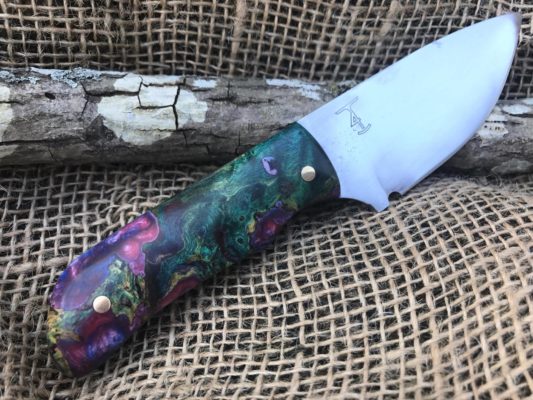
Bobby Toerck made this 6 3/4-inch skinner for his 10-year-old daughter Jordan when she got her first deer. The handle colors, made of triple-dyed box elder by Terry Dunn, reminded him of “mixed up Play-Doh or bubblegum,” and he knew it was perfect for her.
Bobby knew he’d be making a knife for Jordan so when he attended the Long Star Knife Expo in early April he was on the lookout for the exact right handle material. He found it in a triple-dyed box elder offering by Terry Dunn. “The colors in it looked like mixed up Play-Doh, or bubblegum,” Bobby said. It was perfect for Jordan, and the size fit her petite hands.
Visit T4 Custom Knives to see more of Bobby Toerck’s knives. Visit Terry Dunn to check out more handle materials like this.
The full-tang knife is 6 ¾ inches overall with a 3-inch flat-ground drop-point blade made out of 80CrV2 steel. “To me the drop point is the best overall shape for a skinning-gutting knife because you are much less apt to puncture an intestine or stomach with a less pointy front end. And the drop-point will lift the skin slightly before cutting when making the initial cuts up the legs of an animal,” Bobby explained.
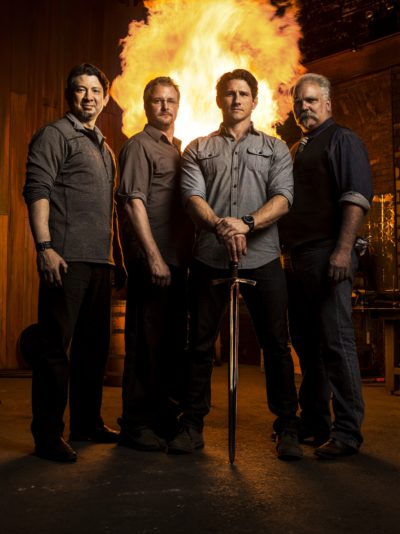
HISTORY’s “Forged in Fire” personalities include from left, Jordan Toerck’s favorite, judge Doug Marcaida; judge J. Neilson, host Wil Willis and judge David Baker. Jason Knight is also a judge. (Image by Miller Mobley/HISTORY)
What did she think when he gave it to her? “She loved it,” Bobby said. “And, of course, she said ‘It will cut,’ because she’s a huge fan of Doug Marcaida in ‘Forged In Fire.’ She loves to watch that show with me,” Bobby said.
Contact Bobby Toerck at T4 Custom Knives on Facebook or at 903-812-1173. Maker’s list price on a knife like the one he made his daughter would be $175 with a Kydex sheath, $275 with a leather sheath.
Help Dad Realize His Knifemaking Workshop
“Wayne Goddard’s $50 Knife Shop” is the perfect Father’s Day gift for the dad who wants to get into knifemaking, but who doesn’t have a lot of flexibility in his budget.
Dad’s money has to cover many expenses, but he should still be able to indulge his knifemaking interests with a modest investment. In “Wayne Goddard’s $50 Knife Shop,” dad can read what’s essential for his work area and what isn’t. This is also a terrific back-to-the-basics read for more established makers. At 50 percent off, it’ll be a $10.99 expenditure that will be referred to again and again.
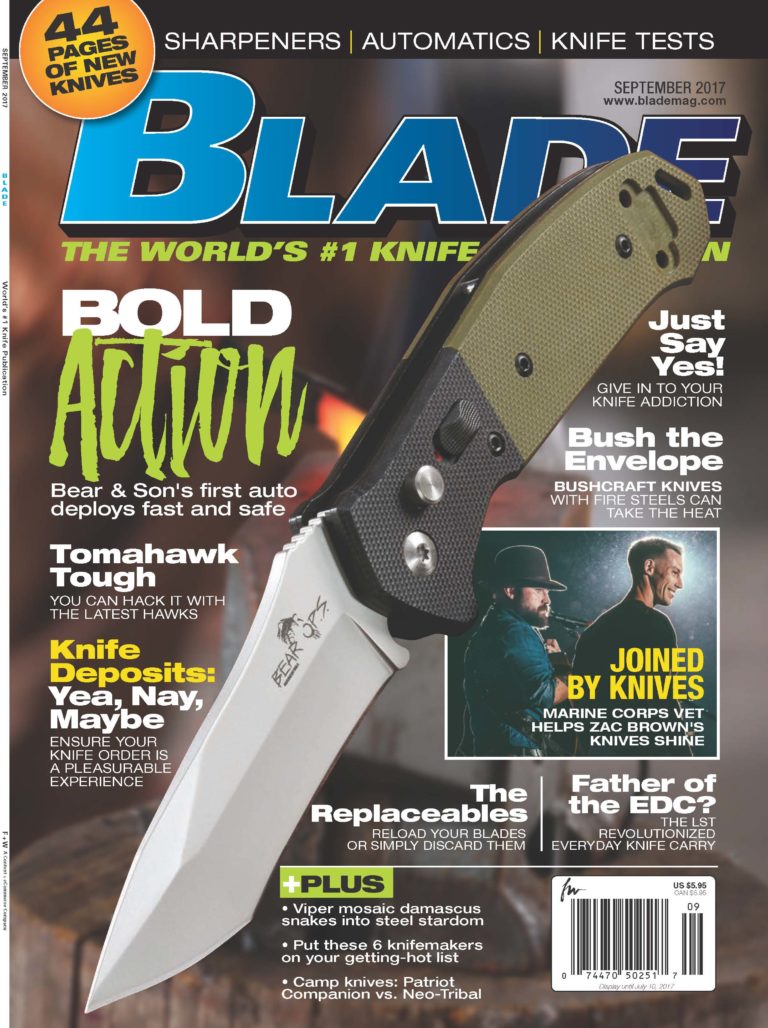
Bear & Son Cutlery’s Bold Action V is the cover knife for the new BLADE®, on newsstands now!
See if bushcraft knives with fire steels can take the heat, meet a Marine Corps vet who helps spread the good word of Zac Brown’s knives, learn whether paying knife deposits on custom knives is for you and more in the latest issue of BLADE®—on newsstands now!
BLADE field editor Abe Elias puts four new bushcraft knives, all equipped with fire steels, through a series of tests and critiques. See how they fare and what makes a good bushcraft knife—not what makes good hype—in “Bush The Envelope.”
Losing both legs from above the knee down would understandably destroy most people, but not veteran Marine Staff Sgt. Joey Jones. Fitted with prosthetic devices after the devastating effects of an IED in Afghanistan, he picked up the pieces in civilian life and has become a powerful motivator for individuals, corporations and charities. He also works with Zac Brown’s Southern Ground, which, in addition to the Southern Grind knife company, funds Camp Southern Ground for children, especially those with neuro-developmental disorders or in families with a parent deployed, wounded or lost. Erin Healy examines Jones and Brown’s Southern Ground in “Joined By Knives.”
Ordering a custom knife from a knifemaker and making a down payment—better known as a deposit—on the knife is something collectors have done for many years. But is paying deposits for you? Custom knife purveyor Les Robertson guides you through the do’s and don’ts of the practice in “Knife Deposits: Yea, Nay, Maybe.”
Can Casstrom’s Woodsman bushcraft knife with fire steel take the heat? Abe Elias shows the way in the latest BLADE®,
Also in this issue of BLADE:
•The latest in factory automatics, including the cover knife, an entry from Bear & Son Cutlery’s first-ever line of autos, the Bold Action V;
•Learn how the super-lightweight Gerber LST folder changed knife history in “Father of the EDC?”;
•MSG Kim Breed, retired 5th Special Forces, puts a couple of heavy-duty camp knives through the ringer in “Is Bigger Better?”;
•James Morgan Ayres tests four of the latest factory tomahawks in “Tomahawk Toughies”;
•BLADE field editor Ed Fowler recounts his lifelong addiction to knives in “Just Say Yes!”;
•In “A Linerlock On Roller Skates,” Leroi Price describes a new approach to the linerlock developed by Jake Hoback;
•BLADE field Dexter Ewing concludes his three-part series on 12 of the newest knife sharpeners in “The Hone Zone”;
•Reload your knife with sharp blades or simply discard them in “The Replaceables” by Pat Covert, and;
•You can almost hear the mosaic damascus “snakes” on Greg Cimms’ chef’s knife blade hiss in “The Dubai Vipers.”
You get all this and much more in the latest BLADE. Click here for the download edition. To subscribe to BLADE, click here for the domestic print edition, here for the international print subscription, here for the Canadian print subscription and here for the digital subscription.
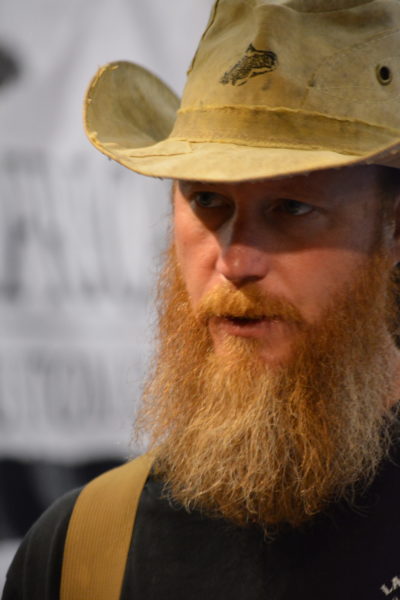
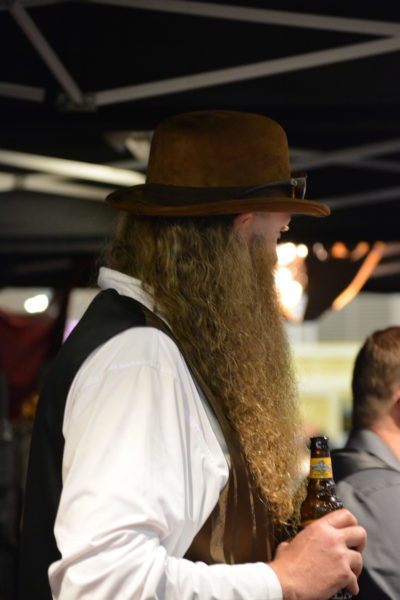
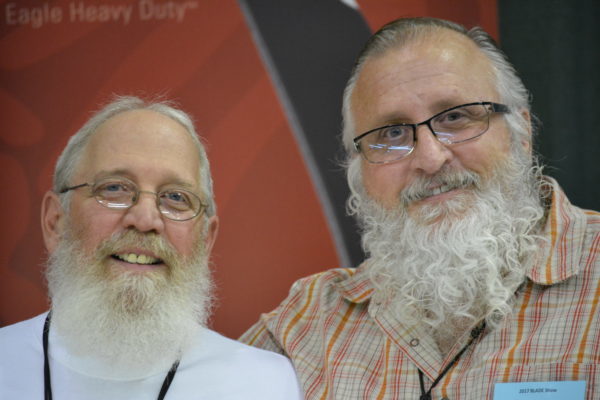
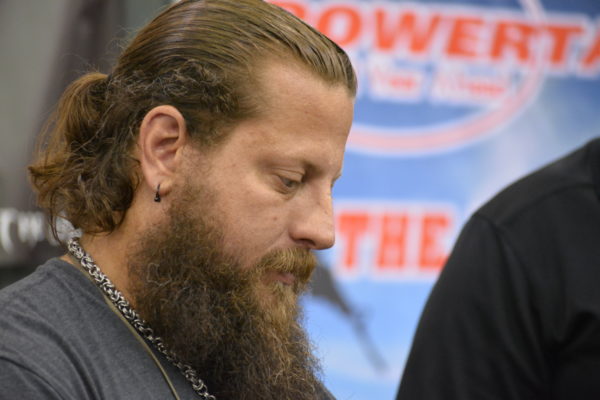
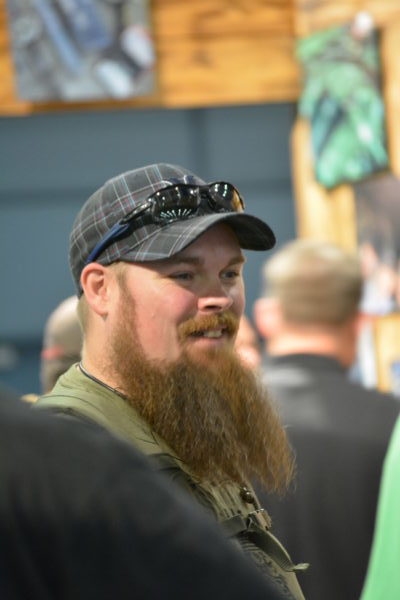
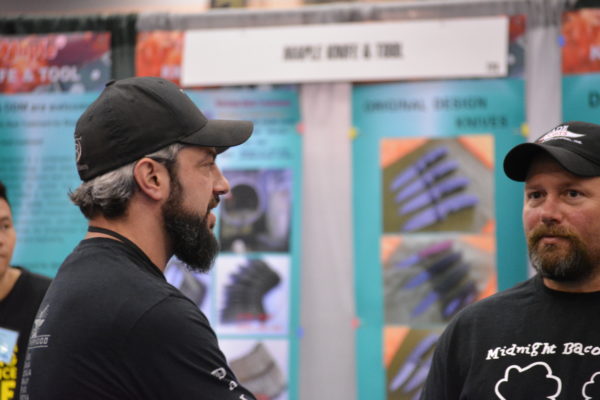
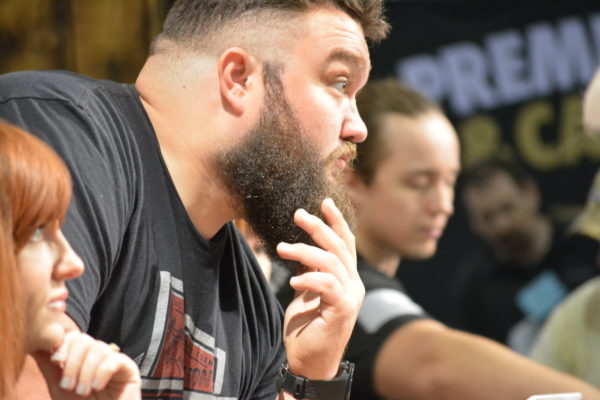
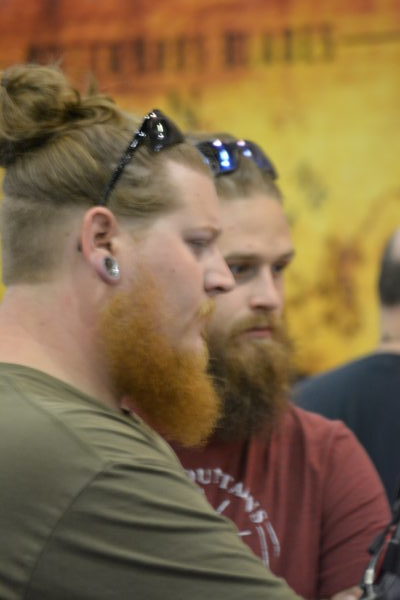
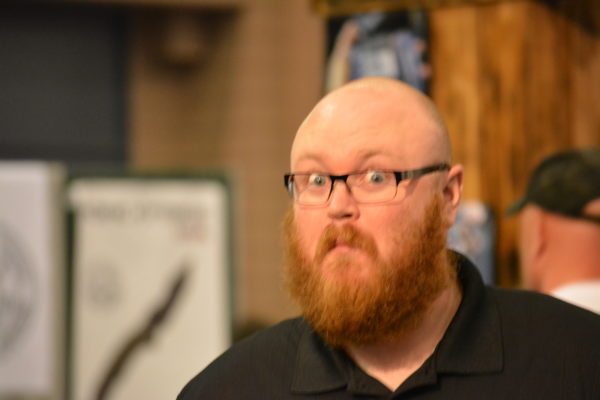
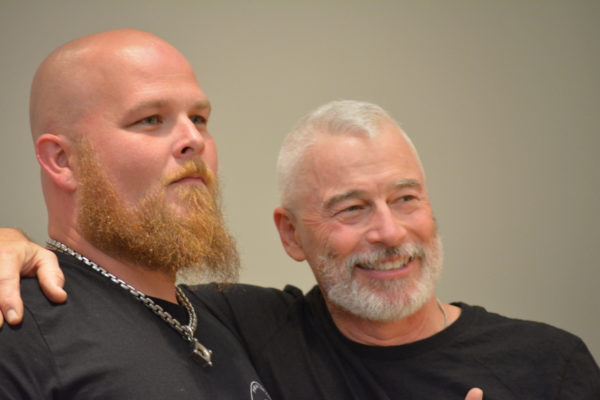
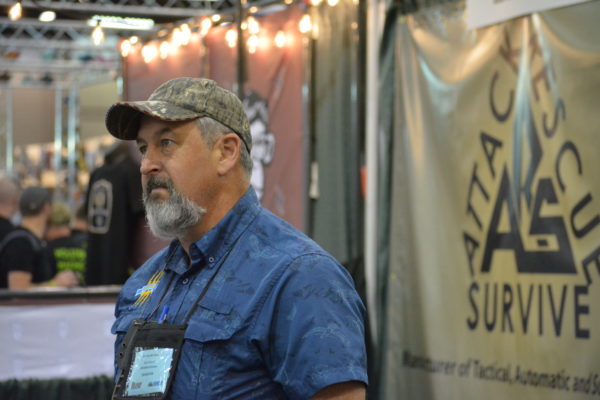
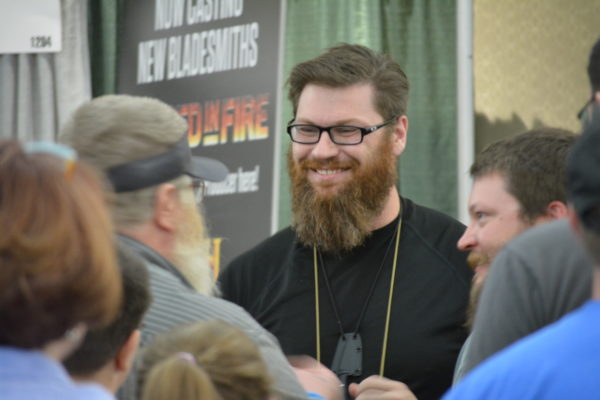
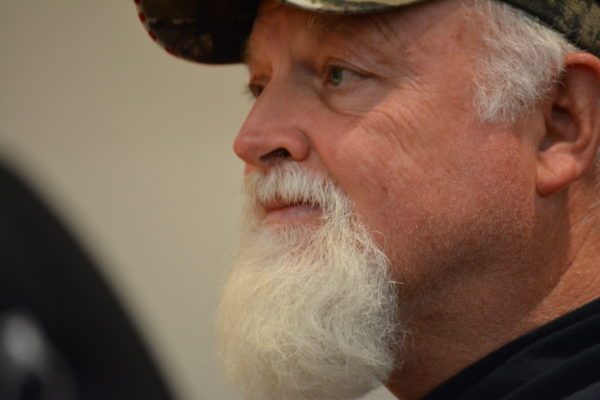
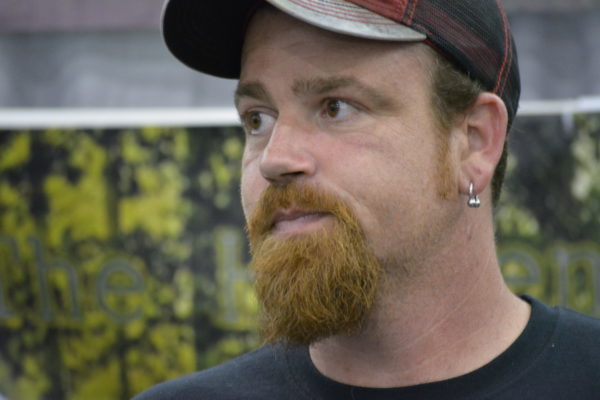
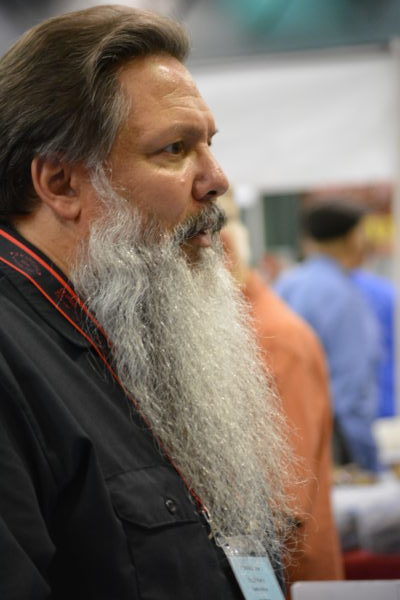
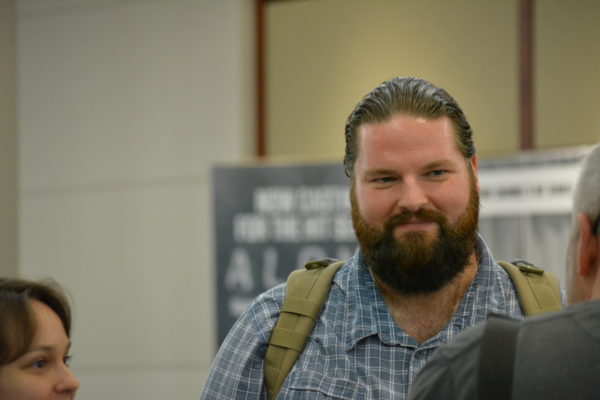
Short, long, thick, thin—and we’re not talking about the wide variety of knives at BLADE Show. No, we’re talking about facial hair that made men nod and women blush. The beards of BLADE Show impressed all! This collection is only a small representation of what we saw at the show. We don’t care about the ebbs and flows of fashion or laboratory tests on what’s found in beards, which frankly only tell us that bearded men live life to the full extent of their whiskers! Here at BLADE, we only hope the tradition continues.
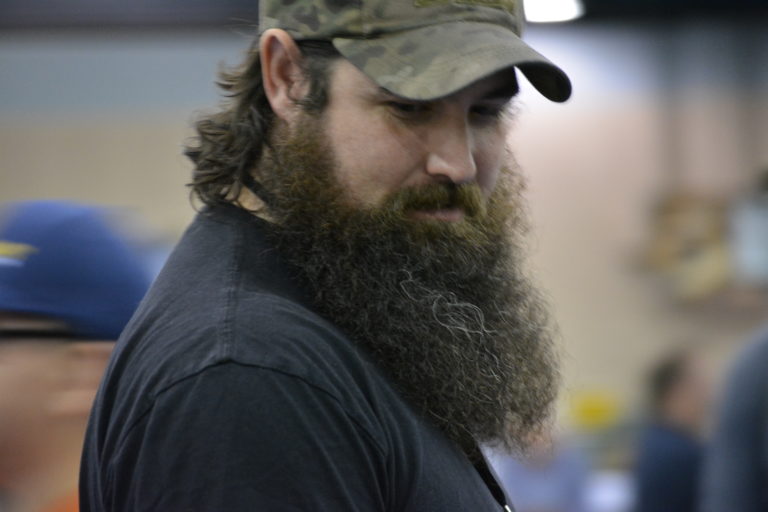
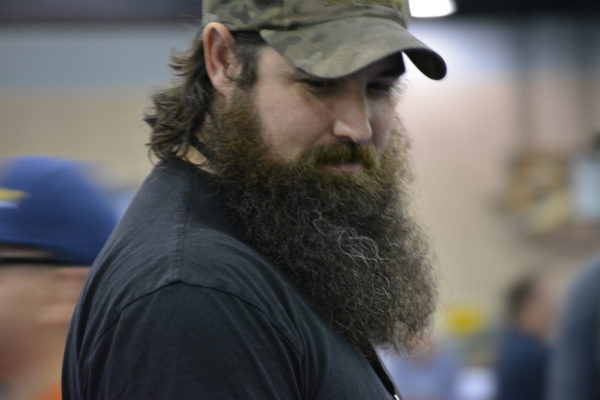
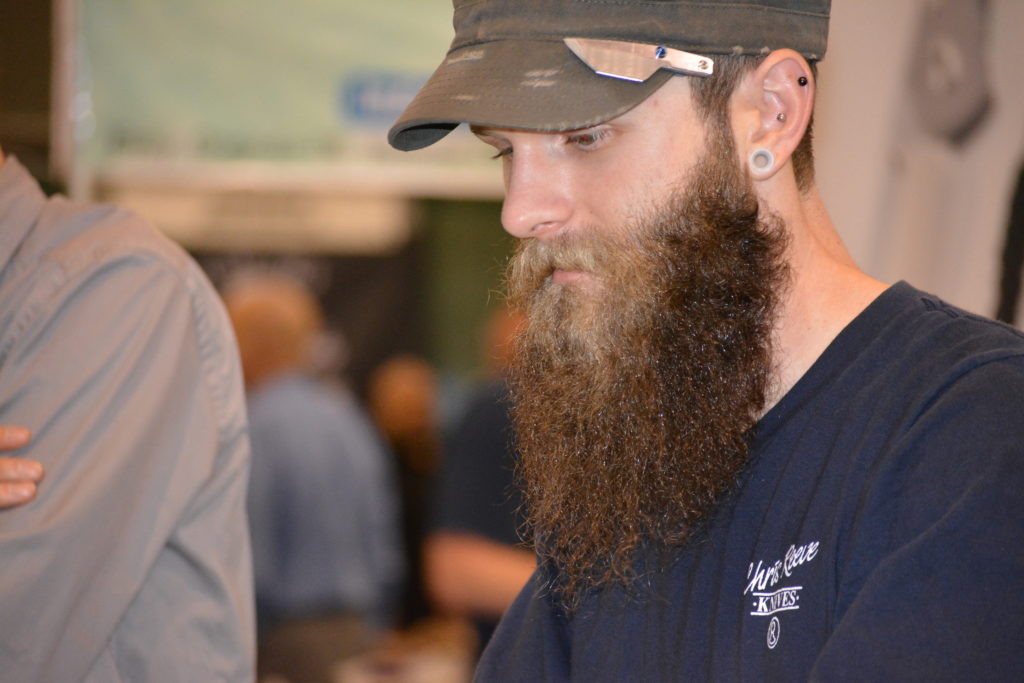
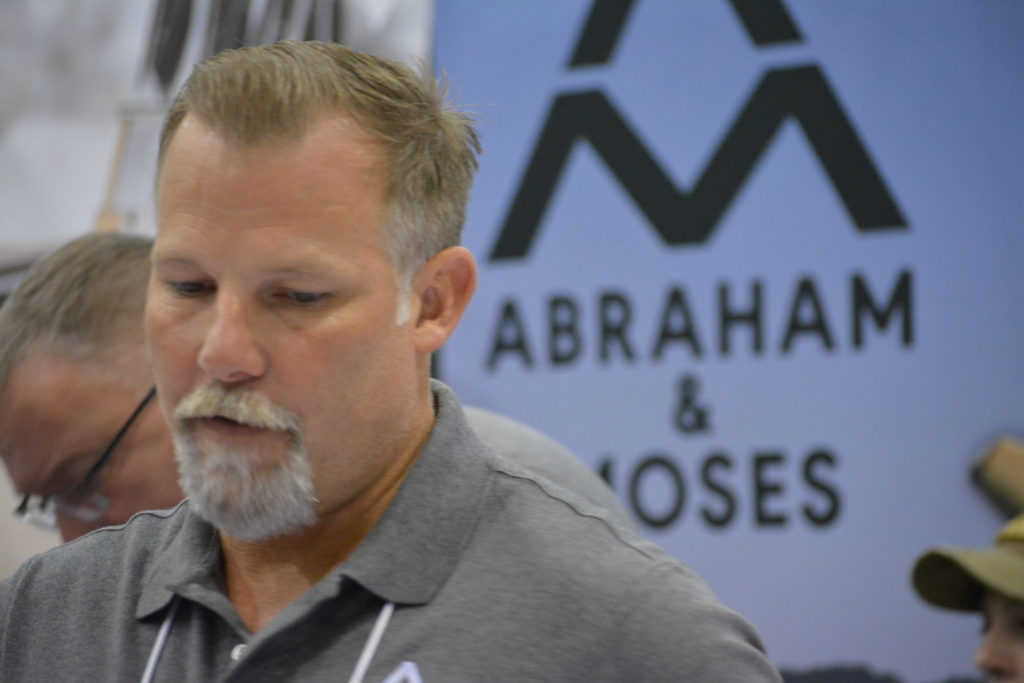
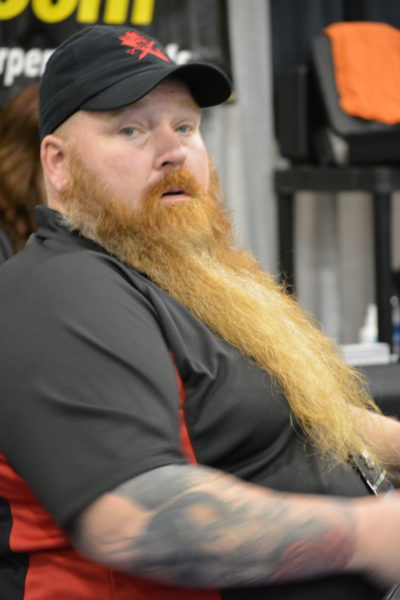
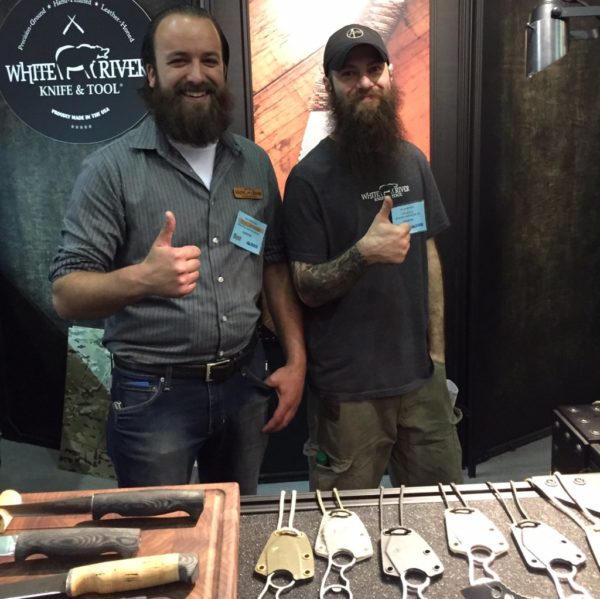
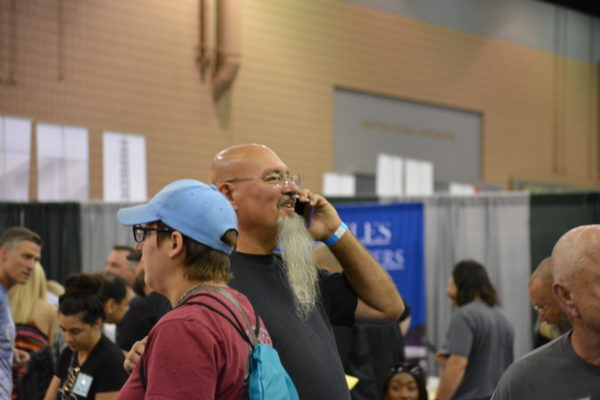
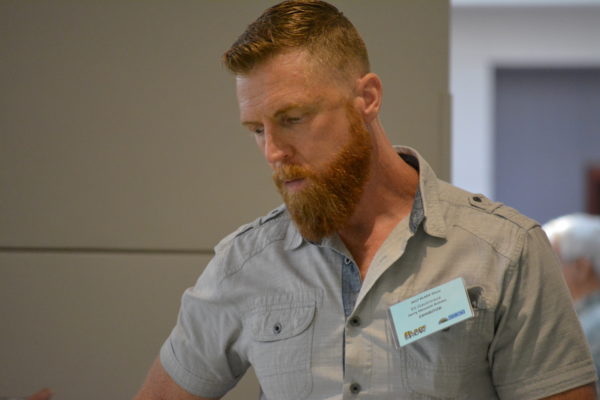
The beards of BLADE Show impressed all. This example of a full beard is combined with longer hair for a decidedly not-hipster, backwoodsy look.Another Bandholz, only this one with shorter hair, could be seen at the Chris Reeve Knives booth. We also liked the hat adornment. We guess BLADE Show had something to do with knives, but back to beards…Lou Goodman of Abraham & Moses Survival Equipment sports a neat Van Dyke, which is any mustache-beard combo but with cheeks clean-shaven.We liked the gradations of red in this full beard on Larry Roberts, “Alone” Season 2’s runner-up.Ever see a Lynyrd Skynyrd concert? We found this full beard-long hair combination, if we remember correctly, at Zombie Tools.These old-school gentlemen at Al Mar offered two styles of white whiskers and we loved them both!At Rustick Knives we found the warrior tradition expressed in a samurai-esk ponytail and full beard on the owner of Harp Leather.Dave Wenger, owner of Wenger Blades in Hudsonville, Michigan, rolled with a Hollywoodian, which from what we can figure is a trailback that meets up with sideburns. Who cares what they call it; we like it!Dan “Jake” Jaquay of KME Sharpeners chilled out on Sunday at BLADE Show with his flame-red chin tresses.Our photographer went back more than once to try to capture the wildness at White River Knife and Tool, but could never seem to catch Matt C. and Alan N. at the same time. Fortunately, they caught wind of our mission and sent this along. Double-YES!Officially a Van Dyke, the goatee on this show attendee is going as far as it wants.Eli Gautreaux of Jerry Hossom Knives checked out the Knife of the Year Award entries in the lobby.A show-goer seems to be having a good time while we admire his Hollywoodian done to full length.We found that bearded men tended to have bearded friends, so we often got twofers!A barback at Key Bar caresses the whiskers.These two show-goers worked the man buns, ear stretcher and shades.As much as we tried to capture bearded men unaware, they often knew they were being watched.This lucky winner at the Ernest Emerson Custom Knives Lottery almost looks like he is starting a French fork-style of beard. Ernie looked as debonaire as always.Ken Hunt of Attleboro Knives in Idaho sports a salt and pepper Van Dyke.Another lucky winner at the Emerson Knives Lottery, Sevag Tankian, rocks a distinctive full beard.Stephan Fowler of Fowler Blades paired his full beard with a tactikilt one day, but, well, that’s a story for another BLADE Show.This luxurious white Van Dyke was worn well by a gentleman attending the Emerson Custom Knives Lottery on Saturday.We always enjoy talking with new knifemakers…oh, and look, a beard. We hope to see this knifemaker back again next year, along with many others. Like and Follow “Erin at BLADE” on Facebook for guidance on how to get your knife into BLADE Magazine.A righteous beard! If a knife doesn’t catch your eye at BLADE Show, we’re thinking a beard or two might.Be sure to plan for BLADE Show 2018 starting now. You know there will be plenty of knives, and if there’s ever an exhibition of beards, this is the place!
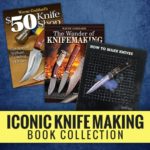
This three-book set will be referred to repeatedly by those both new and established in the knifemaking craft.
Did BLADE Show 2017 get you pumped for knifemaking? This two-paperback, one-e-book set will answer question for those new to the art, while also reaffirming or acting as a review for those more established in their craft. Included are: “How To Make Knives,” “The Wonder of Knifemaking” and “Wayne Goddard’s $50 Knife Shop, Revised.” Normally this trio would cost you $99.97, but you can get it now for $34.99.