Home Blog Page 294

Knife Store Of The Day I

(From left) Lois, Dan and Pam Delavan of Plaza Cutlery in the South Coast Plaza Mall in Costa Mesa, California.

     You’ve seen our “Knife Of The Day” entries. Now it’s time for a new feature: our “Knife Store Of The Day.”

     The first installment is Plaza Cutlery of Costa Mesa, California.

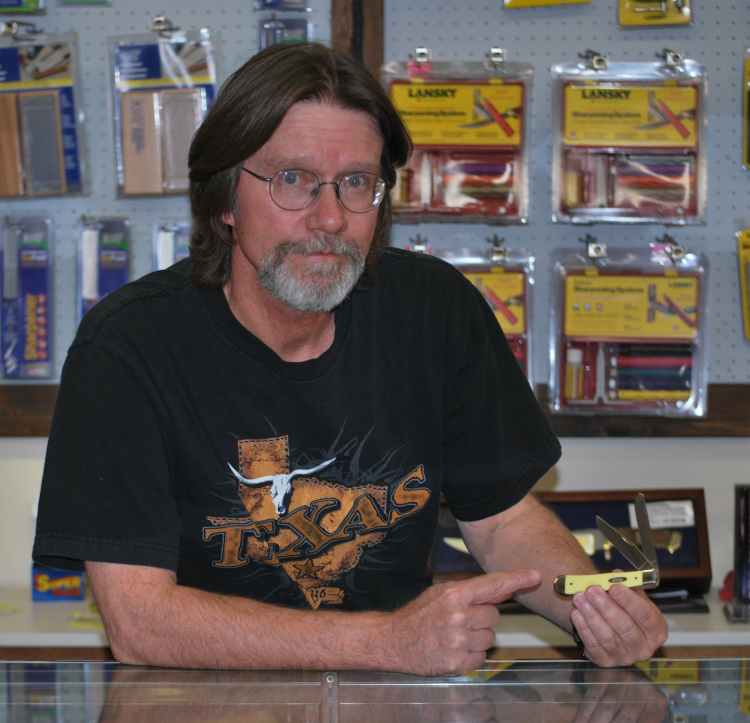
     Located in the South Coast Plaza Mall, Plaza Cutlery is owned and operated by Dan and Pam Delavan and features a wide selection of custom and factory knives. The son of former Case salesman I.A. Delavan, Dan is one of the most knowledgeable people in the business of both custom and factory knives. In addition to selling knives, swords, sharpeners, knife books and much more in store, Plaza also has a comprehensive website (www.plazacutlery.com), carries factory exclusives such as its Chris Reeve Large and Small Sebenza “Doggy Knives,” conducts a biennial knife show that draws some of the world’s top custom knifemakers, and even does special events such as “Meet The Knifemaker” days at the Plaza Cutlery store.

     For more on the latest in the hottest knives, knifemakers, knife shows, knife trends and much more, subscribe to BLADE® Magazine. For subscription information, click on http://www.shopblade.com/product/blade-magazine-one-year-subscription-us/?r+ssfb121311#BL1SU

Knife Of The Day VII

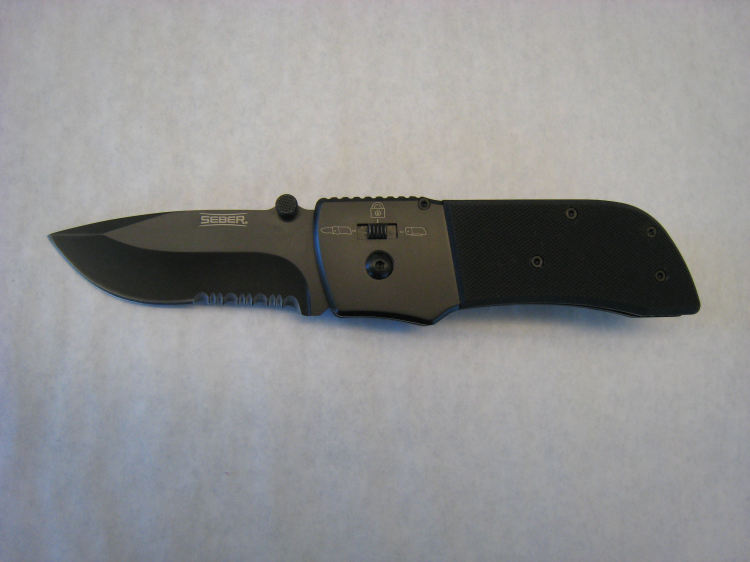
A strong, reliable, feature-packed folder designed for everyday carry, the Timberline Workhorse in a 3.25-inch blade of 440 stainless steel and a black textured G-10 composite handle is our Knife Of The Day for Dec. 12

     The gently curving handle spine is comfortable in the hand and the textured G-10 ensures slip resistance. The blade is titanium nitrate coated to enhance rust resistance and reduce glare. Ambidextrous thumb studs combined with Timberline’s Teflon™ spacer pivot system provides silky smooth action. A left/right reversible clip is included. Approximate closed length: 4.5 inches. Your price: $31.99.


     For more information click on http://www.shopblade.com/product/timberline-workhorse-combo-edge-4301/?r+ssfb121211#Y3337


2012 ABS Expo

0

The 2012 American Bladesmith Society’s All Forged Blade EXPO is the premier show for hand forged blades. From utility blades, to the finest forged and crafted art knives, the ABS EXPO has something for everyone. The show will be held in San Antonio, Texas, January 27 – 29, 2012 the home of the Alamo.See some of the world’s finest forged knives showcased in a unique and informative format for the enjoyment of the forged blade collector/enthusiast by American Bladesmith Society Mastersmiths and Journeyman Smiths.

Dan Cassidy has set up an Expo Photo Gallery so that the makers can exhibit their knives prior to the show, so that collectors may have a sneak preview of these works of art. I have asked the table holders to make knives especially for this show and to photograph them. Please post your photos in the ABS Exposition Gallery of the ABS Forum and ABS Webmaster Dan Cassidy will be available to assist you. Also post your knife photos on other knife forums so that prospective buyers may have a sneak preview to what they will see at San Antonio.

14 inch Thomas Wells Antique Bowie Progress Report.

To see previous posting,Click:Jim Batson on ABS Expo

 BLADE                                                                                                                                           A full scale pattern was made of aluminum from a tracing of the original Bowie. The blade as it was being forged could be laid on the pattern hot as an aide to forge the blade to shape. The steel in this blade was forged from a large coil spring from a rail car. Attached Image

 (Photo 1)

The blade was ground, set up for the guard, Spanish Notch filed , heat treated and finish ground. The maximum blade thickness is .355 inches at the hilt and .250 inches at the clip. The clip was ground and hand finished on one side of the blade as was the original. Attached Image

(Photo 2)
The large tang was used to give the knife a better balance and stronger handle. The tang is tapered from guard aft and from the top down. The pin holes were drilled in the tang.

GUARD
A brass 1/2 template was fabricated to the shape of the guard which fit snuggly on the blade.
Attached Image (Photos 3a & 3b)

 
The guard was hand filed from a 1/4 inch thick piece of cupro nickel 715 , hand finished and polished. Cupro nickel 715 is 30% nickel and 70% copper and is more corrosion resistant than nickel silver which has only 18% nickel.

HANDLE CONSTRUCTION                                                                                                   Photo 4 is the end view of the handle that shows the basic handle construction.
Attached Image
Photo 5 is the handle
Attached Image
and Photo 6 is an exploded view of the handle showing all its components.
Attached Image

The handle was fabricated by wrapping the tang with Teflon tape. A piece of tin .007 inches thick was wrapped around the tang and drilled for the pin holes. Two pieces of Mastodon Tusk were shaped into a trapezoidal cross-section to fit against the tin liner. Holes were drilled in the Mastodon handle scales. The scales were shaped a little over size in the plan view. These scales were super glued with gel to the tin liner using pins to align the holes and a rubber band made of an inner tube as a clamp. The assembly was removed from the tang and a dam was made at each end of the handle with masking tape. The voids at the top and bottom of the handle above and below the tang were filled with JB Weld. The handle was ground to final shape in a rectangular cross-section with each scale being of equal thickness.
The handle is a little larger at the pommel than at the guard. I went to Microsoft Word and made a drawing of the rectangular cross-sections at the front and back of the handle. I drew an ellipse in the rectangles and printed them out.

 
Attached Image (Photo 7)
I then cut out the rectangles and pasted them on the front and back of the handle. The handle was shaped with new belts from 36 grit and 80 grit on the flat platen by holding the handle vertically against the platen. The handle was hand finished to 600 grit.
The front of the handle was taped around the handle the required distance from the end as a guide for the front ferrule. A course file was used to recess the handle .032 inches. The pommel was done the same way. A piece of cardboard .032 inches thick was used to measure the circumference of the ferrule. A rectangular of dead soft German silver .032 inch thick was sawed out a little oversize. The handle was used to form the ferrule with the solder joint at the bottom. The joint was overlapped. Both ends were sawed into with a jeweler saw while held in a vise to obtain a straight joint. The ferrule was opened wide enough to allow an eight inch mill bastard file to be used to file the ends. The file is held in the vise with the face up and both ends are filed at the same time by pulling the ends along the top and bottom faces of the file with a slight pressure. The ferrule and pommel ferrule are wired up, fluxed and hard soldered. The ferrule is suspended by the top; the solder is applied to the inside and the heat to the bottom or outside. When the solder appears on the outside, it is done.
The pommel ferrule was wired to an oversize .070 inch thick plate on one end. It was fluxed and pieces of medium hard solder were laid around the joint on the inside and heated from the outside.
The top and bottom straps were made from 1/2 inch wide by .070 inch thick German silver. The bevels were ground and hand finished on each side. The ends were hand file to fit under the front ferrule and pommel cap.
CHAIN KNUCKLE BOW
After some experimenting, I found that the original chain was called a rope chain that was twisted into a flat plane.
Attached Image (Photos 8a, b & c for construction details)
Eleven gauge (.088 inch diameter) fine silver wire was wrapped around a 3/8 inch diameter rod by hand. Thirty-six turns were made. Over 4 feet of wire was used. This coil was removed from the rod, fluxed and heated to a dull red, about 1250 degrees F., for about 30 seconds allowed to cool to a black heat and quenched in water. One loop was silver soldered with medium hard solder. The chain was constructed and soldered one loop at a time. After using about 10 loops, the chain was twisted flat to insure good solder joints, The chain was completed with 31 loops. A .093 inch internal diameter tube was constructed to make the hinge attachment to the pommel cap. The chain and tube are pictured in Photo 9 below.
Attached Image

 METAL SHEATH
Attached Image (Photo 10)

The all metal sheath was constructed of .032 inch thick German silver sheet metal. After the blade was finished a pattern was made of a piece of oak about 3/4 inches thick. The pattern was made oversize to allow for the liner which is about .040 inch thick. Also make the pattern about 3 inches longer than the blade, the edges were rounded slightly. The sides were cut out of the sheet approximately 3/8 inches wider than the pattern on top and bottom. The tip was notched to allow for the bend. The sheet metal I had was in an as rolled state which was hard. I had to anneal the edges that were to be bent.

 
To shape the sides, place the sides between the pattern and a steel backing in the vice and bend the edges over with a small hammer only hitting the edge in a bending motion. You will have to reset in the vise several times. Take thickness measurements along top and bottom of the blade. Grind the edges of the sides to the require thickness, making sure you have allowed for the metal thickness, the liner thickness and 1/2 the width of the blade. Lay the side flat on the table and measure the height with the depth gage on the back of a veneer caliper.

 Once the left and right side are made, flux the inside of each at the joint. Wire the two sides together with black wire at half inch increments. Flux the outside, use a metal spring clamp on a fire brick to present a joint in the up position to be soldered. Solder both sides with medium silver solder. I use a turbo torch and wire solder. Cut and pull the black wire off. I grind the extra solder off with about 80 grit. I use 120 grit to start the finish grinding on the sheath. It is easier to get the 120 grit scratches out than the 80 grit. You want to polish to 400 grit on a wheel. I use a 10 inch smooth 40 diameter wheel with a 3 inch drive pulley.
The sheath should be pickled to clean the inside. The tip and throat pieces were fitted, constructed and soldered with medium solder. These pieces were then soldered to the sheath body with easy easy solder. The belt loop was formed and tinned with soft 4% silver solder. It was then soldered to the sheath.

WHAT’S LEFT

1. Finish chain and pommel cap attachment with hinge. Polish chain in tumbler.

2. Layout incise carving pattern on handle and carve.

3. Assemble and finish knife.

4. Layout engraving pattern on sheath and engrave.

5. Line the sheath

James Batson, Master Smith
Chairman American Bladesmith Society, Inc.

Englehart’s Dad’s World War II Knife

The author (left) holds his dad’s World War II Warther Commando Knife in the Warther knife shop in Dover, Ohio. At right is knifemaker Dale Warther, grandson of Ernest Warther. Dale passed away in 2010. (photo courtesy of Gene Englehart)


     Editor’s note: On page 114 of the December BLADE®, we ran the story “Ed’s Dad’s WWII Ek” about the knife BLADE field editor Ed Fowler’s dad carried during the Second World War. Along with the story we asked readers to send us pictures and information about their dads’ military knives. It didn’t take long for reader Gene Englehart to supply the following.

     My father, Orville Englehart of Paw Paw, Illinois, spent four years in the Navy as a chief petty officer during World War II.  He was stationed stateside, training aircraft mechanics in Michigan, Florida and Oklahoma.

     I believe it was when he was stationed in Michigan that he ordered a Commando Knife from Ernest Warther in Dover, Ohio. After Dad got the knife, he kept it in the original box and, as far as I know, never used it. It has a 7-inch blade with his name and serial number engraved on it.

     Ever since I was a little kid the knife fascinated me, and I was forbidden to touch it. In 2009, I took it with me on a trip East that included a visit to the Warther Museum and workshop in Dover. I had the good fortune to meet Ernest’s grandson, Dale, and show him the knife. He told me the copper in the sheath came from a local sheriff who had confiscated it from a moonshine still. The brass came from the kick plates on the men’s room door at the local high school. Ernest’s son Dave took it home for the war effort. Ernest made only about 1100 of these knives and sold them for about $15 apiece, which is probably less than they cost him to make.

    Ernest was a genius and an incredibly skilled carver and craftsman. Dale was very gracious to me the day I visited his shop, and I was very sad to hear of his passing about a year later.

     I consider Dad’s Warther Commando knife to be a family heirloom now.


Do you have your dad’s knife or any knife used by any family member—including you—while in the service? Send a photograph or photographs of it and/or of you or the family member holding it, any information/anecdotes about the knife and its use by the family member who owned/carried it, along with the knife’s specs—brand/maker, model, overall length, your family member’s name, rank and branch/years/theater of service, etc.—to BLADE, c/o “Knives Of Heroes,” 700 E. State St., Iola, WI 54990. If digital, the image(s) must be at least 600 K. E-mail it/them to [email protected].


To read similar stories and the latest knife news, forums, blogs and much more, subscribe to BLADE®. For subscription information, click on http://www.shopblade.com/product/blade-magazine-one-year-subscription-us/?r+ssfb111211#BL1SU

Knife Of The Day VI

Award-winning knifemaker Brian Tighe adds to his long line of stunning folders with this blue-streaked flipper model sporting a lock designed by Glenn Klecker. The custom folder is our Knife Of The Day for Dec. 10, 2011.

     For Brian’s contact information, visit his website at www.briantighe.com.

     For the latest on the hottest knives, knife trends, knifemakers, knifemaking how-to’s, knife shows and much more, subscribe to BLADE®, the World’s No. 1 Knife Publication. For subscription information, click on http://www.shopblade.com/product/blade-magazine-one-year-subscription-us/?r+ssfb101211#BL1SU

Officer of Distinction – Harjit Singh Sajjan

The CBC’s Duncan McCue profiles Canada’s first Sikh commanding officer.

How Knives Can Save Babies

     The recent tragic death of the 11-month-old infant who onlookers were unable to free from a burning car because no one had a knife to cut the baby free from a jammed seat belt is heartbreaking. First and foremost, a young life was snuffed out in a most painful, terrifying way. My thoughts and prayers go out to the child’s parents and family, as well as those on the scene who were unable to save the infant. The incident will continue to haunt all concerned for many lifetimes.

     The lack of a knife carried by any of the bystanders to cut the seat belt and free the baby was a contributing factor in the infant’s death. The fact it happened in Los Angeles with its strict anti-knife ordinances is even more detestable, where anti-knifers continue to succeed in their crusade against knives. Anti-knife laws indirectly—some might say directly—kept the child from being rescued, and no doubt will prevent others from being saved in future catastrophes as well. (For more, see “For the Want of a Knife” in the “Forum” at http://knifeshowcase.blademag.com.)

     Ordinances designed to keep people from carrying knives and, as a result, from saving the lives of others in emergency situations must be repealed. Of course, organizations like the American Knife & Tool Institute and Knife Rights and elected officials such as New Hampshire Rep. Jenn Coffey are the standard bearers in focusing on the repeal of anti-knife legislation. By joining and supporting them and speaking out on your own, writing your legislators and local newspapers, voicing your concerns on social media like Facebook, Twitter, etc., you can do your part, too. And be sure to voice your concerns in non-knife venues. You are “preaching to the choir” if you do it in pro-knife venues. It is the non-knife ones that need to hear the message.

     In a heartrending way, the infant’s horrific death in a burning automobile magnifies the folly of anti-knife laws. In fact, thousands upon thousands more fatalities occur in car accidents than because of knives.

     In place of anti-knife ordinances that exaggerate the problem, why not institute pro-knife ordinances that not only protect your right to carry knives, but also address the slaughter that occurs on our nation’s highways by enabling you to respond to emergencies such as the one in L.A.? Moreover, why not require the manufacturers of automobile baby seats to equip each of the seats with a seat-belt cutter conveniently placed for a parent or onlooker to use to cut the baby’s seat belt in an emergency? And while we are at it, why not require automobile and truck manufacturers to stock each and every vehicle with a seat-belt cutter?

     Ideally, said manufacturers would take the lead and include seat-belt cutters with their products. Not only would it be a public service, the manufacturers would add value to their baby seats and vehicles. However, in today’s cost-cutting atmosphere, most manufacturers probably will not act without some kind of legislative push.

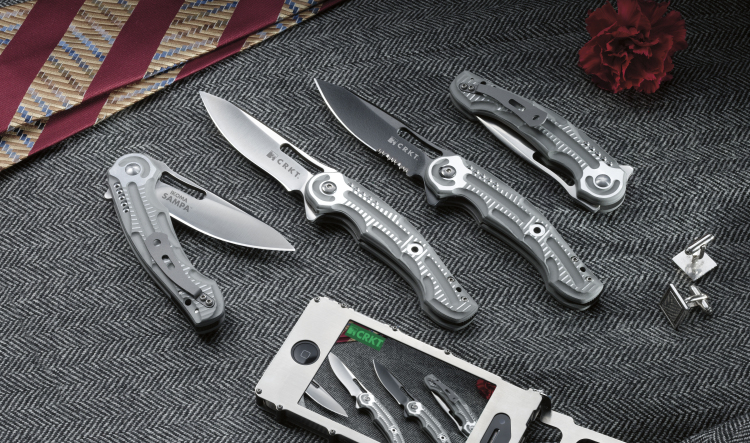
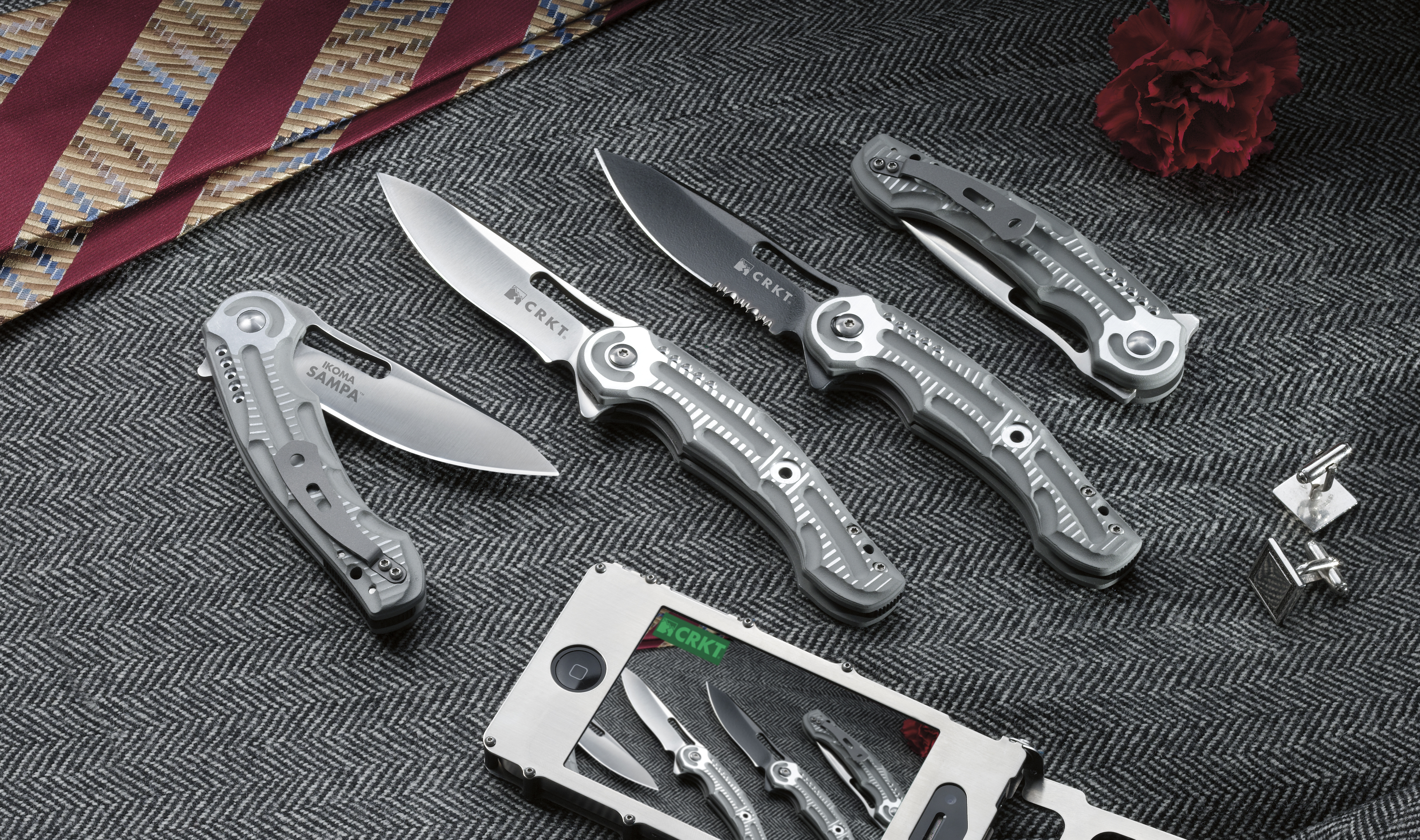
     A number of knife companies have seat-belt cutters with the edges recessed for safety. Columbia River Knife & Tool offers one—the model also has a window breaker and flashlight—that attaches to a seat belt and is thus immediately accessible in an emergency situation. Seat-belt cutters can be the next best thing to carrying a knife, and are probably better and definitely safer when it comes to cutting a person from a jammed seat belt.

     Repealing anti-knife legislation and promoting a seat-belt-cutter law would save the lives of innocents like the baby in L.A.—and, ironically, given the proper circumstances, maybe even the politically correct idiots who refuse to carry knives themselves.


To read similar stories and all about the latest knives, knife news, knife shows, knifemakers, knife manufacturers and much more, subscribe to BLADE® by clicking on http://www.shopblade.com/product/blade-magazine-one-year-subscription-us/?r+ssfb91211#BL1SU


CAPTION

Columbia River Knife & Tool’s Exitool is a seat-belt cutter, flashlight and window breaker that attaches to a seat belt—where you need it, when you need it. (CRKT photo)


Advertisement

Must Read Articles

Read this before you make a knife

Knifemaking 101 – Read This Before You Make a Knife

  by Wayne Goddard My experience has taught me that there's nothing like digging in and getting started. I've often said the hardest part of the...
how to forge damascus steel

How to Forge Damascus

Advertisement
Advertisement