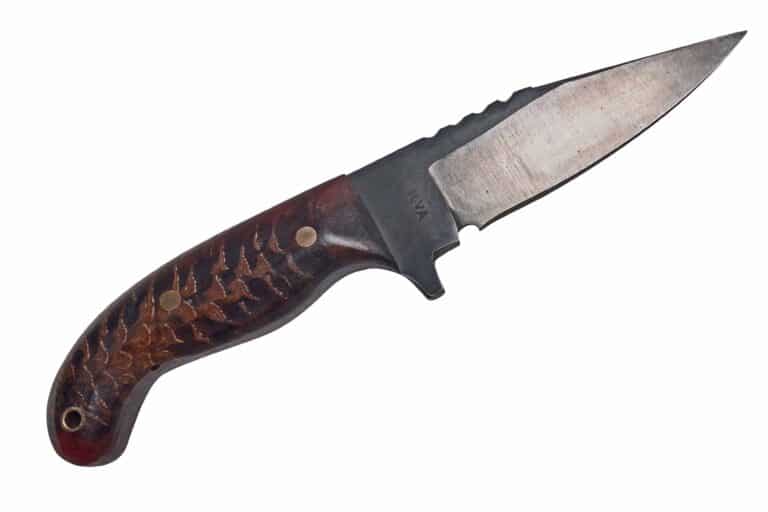
Vincent Silva’s Carver packs healthy cutting power in a compact package.
After Vincent Silva retired from the military, he came across HealingFlamesForge.org, a Tennessee-based non-profit blacksmith shop for veterans. He took to the hammers and hot steel quickly, which progressed into making knives. Creating a functional tool from a piece of steel became his goal, and the Carver is one result. It begged to be tested and I was only too happy to oblige.
Carver Light-Duty Cutting
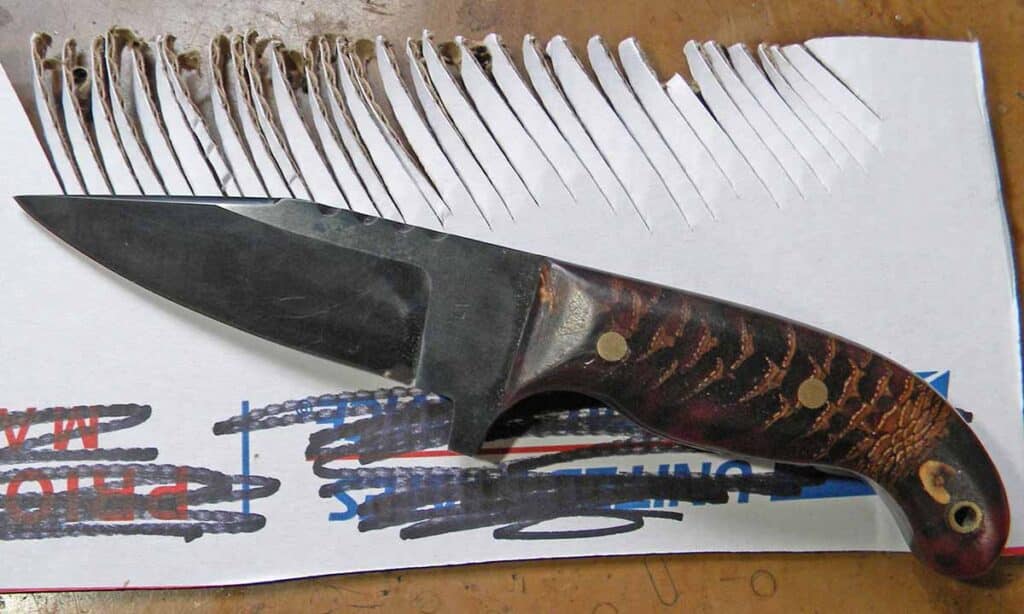
For the first edge test, the knife aggressively sliced into graphing paper even though the paper was slightly limp from the humidity. I applied smooth downward pressure and it cut cleanly. This is a well-balanced little blade.
Full-length push cuts went swiftly through the cardboard. The handle aided in blade control while keeping cuts as even as possible.
Single-walled cardboard supplied the next challenge. Full-length push cuts went quickly. It was hard to keep my fingers out of the cutting zone if I went too fast. The handle aided in control of the blade while keeping cuts as even as possible (in the cardboard, not my finger). I could hear a small crunch sound as the edge parted the material.
Carver Medium-Duty Cutting
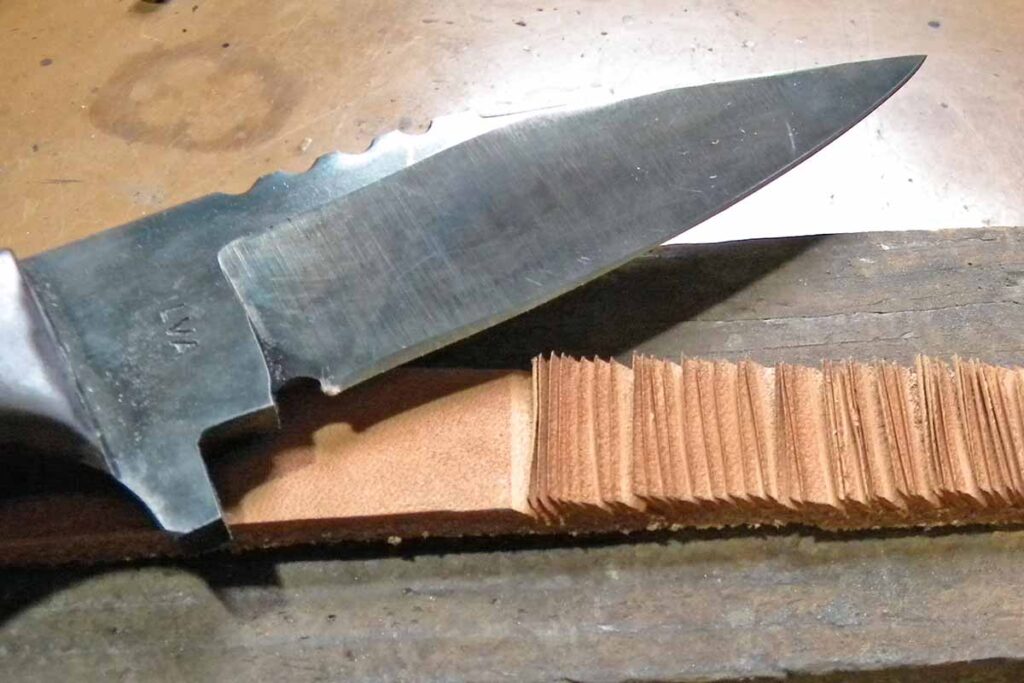
Next up: 8-ounce leather. The Carver zipped through it swiftly. The blade’s edge geometry is spot on for working leather. I used a push cut while skiving the material.
The Carver zipped through 8-ounce leather very quickly. The blade’s edge geometry is spot on for working leather. The author used a push cut while skiving the material.
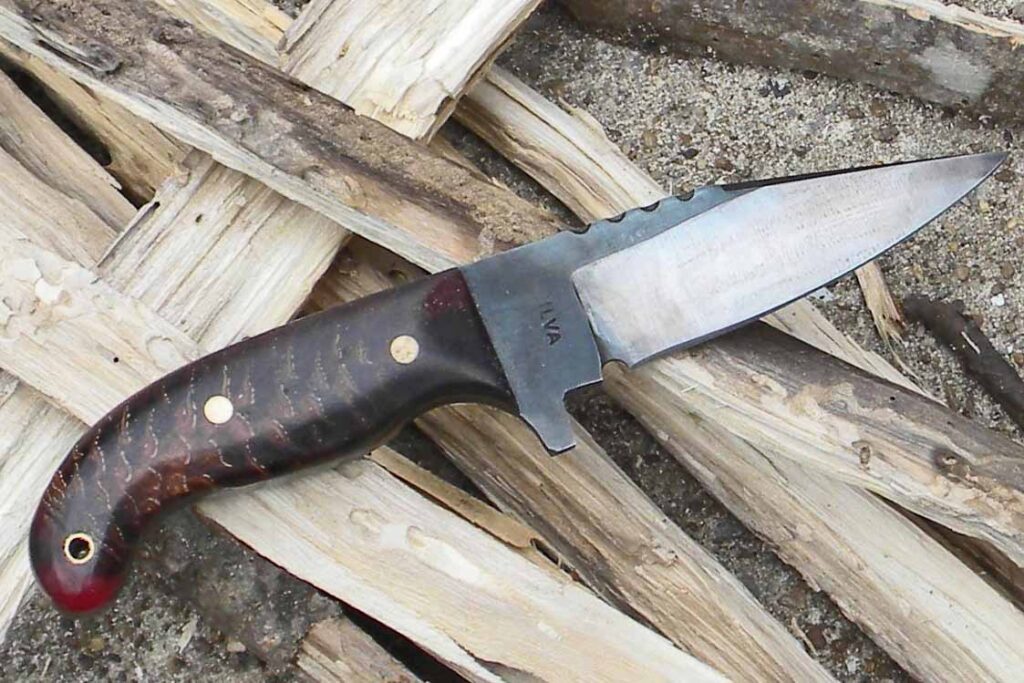
I like to be ahead of the game during camping weather, so a good supply of fire sticks is always a must. The Carver produced nice, feathered curlicues in some pine. The handle shape made it easy to control the depth of the feathering. All cuts came out smooth with just enough curl.
Carver Heavy-Duty Cutting
The Carver might be on the small side but it can handle such large jobs as splitting wood. Using a dead-blow hammer, I repeatedly pounded the blade through seasoned hackberry. A nice pile of kindling was the result. The handle was comfortable throughout and the blade was just big enough to beat on the tip to split the wood completely. There was no damage to the blued finish or the edge. Nicely done, Vincent.
It was time for my favorite cutting medium, natural rope—in this case, half-inch sisal on a cutting board. The Carver crunched its way to 192 cuts before the edge started to slide. The handle created no hot spots. The gimping was a tad sharp for my thumb but great for ferro-rod use. This is one cutting little knife!
The knife is small but can handle such larger jobs as splitting wood. Using a dead-blow hammer, the author repeatedly pounded the blade through seasoned hackberry for a nice kindling pile.
It was back to the graphing paper for the final slice test. The blade still cut very well and lost only a bit of its aggressiveness.
To push things over the edge, I conducted a brass rod test to make sure the temper was done correctly. I could see the edge flex and return to true. Verdict: the heat treatment was spot on.
CHANGES To mee, the edges could be softened a bit more, especially on the spine gimping. However, the Carver is a very well-made EDC sheath knife that performs at a higher level. It’s a sweet little blade.
Carver Specs Maker: Vincent Silva of Iron Sapper Forge Blade length: 3.5” Blade material: 1095 carbon steel Blade grind: Flat Heat treatment: Differential Handle: Pinecone resin by @sappercsmwife (Instagram) Weight: 6.5 ozs. Overall length: 75/8” Sheath: Kydex or leather pouch Maker’s list price: $250
Fabulous forged knives, new smiths, new chairman top ABS annual meeting.
Some of the finest forged knives of the year, the newest American Bladesmith Society master and journeyman smiths and a brand new chairman helped highlight the annual meeting of the ABS held during BLADE Show 2024 at the Cobb Galleria Centre in Atlanta.
ABS master smith Kevin Cashen officially began his first term as ABS chairman at the annual meeting, succeeding ABS master smith Steve Dunn who passed away unexpectedly earlier this year. It was a bittersweet transfer of the office for all concerned, though a sparkling array of award knives and an impressive group of new master and journeyman smiths that includes those from Brazil, Europe, China, New Zealand and the USA were an appropriate way to greet the new chairman and pay tribute to the former one.
ABS Annual Awards
Award Winners
W. W. Scagel Award: Butch Sheely
Paul Burke Award: Robert A. Wilson
Distinguished Service Awards: Karen Cashen, Joel Worley
W. F. Moran Award: Matthew Parkinson
Antique Bowie Award, JS: Mace Vitale
Antique Bowie Award, MS: Karis Fisher
Joe Keeslar Award: Jason Chen
B. R. Hughes Award: Fabio Barros
Chairman’s Awards: Kevin Cashen, James Rodebaugh
Fabio Barros
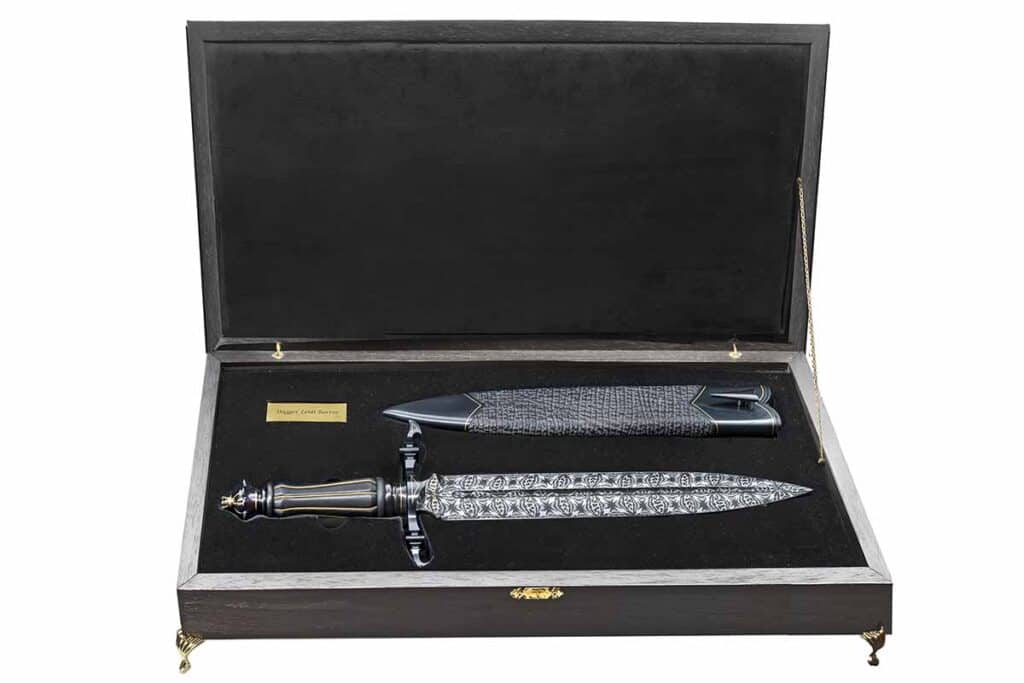
It was a weekend Brazil’s Fabio Barros probably will never forget. Not only was he the sole applicant to gain the coveted rating of ABS master smith, he also won the B. R. Hughes Award for the best knife submitted by such an applicant. In the eyes of some, that he was the only successful MS applicant might have detracted from his Hughes Award—if not for the fact that the same knife also won Best Art Knife at the concurrent BLADE Show.
B. R. Hughes Award Winner
B. R. Hughes Award Winner: Fabio Barros Knife name: Leidi Barros Dagger Maker/designer: Fabio Barros Blade material: Apricot pattern mosaic damascus w/four-sided roughing Construction: Take down Handle: Fluted ebony with gold-braid wire wrap Guard, shim and pommel: Black oxidation with gold appliqué Pommel stone: Onyx Sheath: Shark leather w/gold inlay Display: Ebony case w/exquisite finish Knife to know: The knife is named in honor of Leidiana Barros, wife of Fabio Barros; the handle design is inspired by the queen in a chess set
Karis Fisher
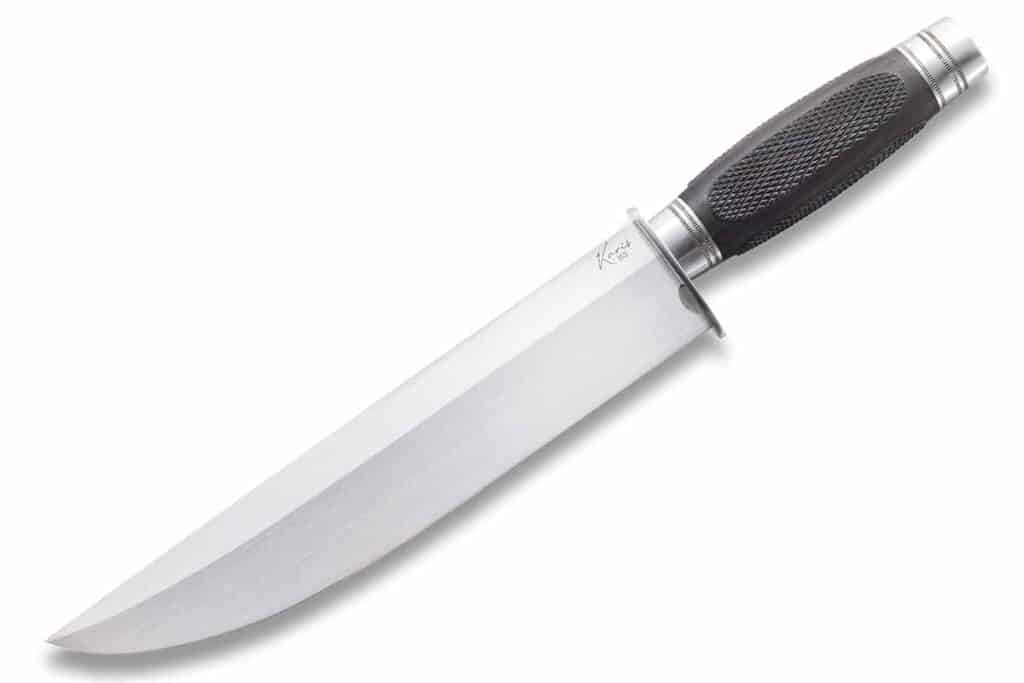
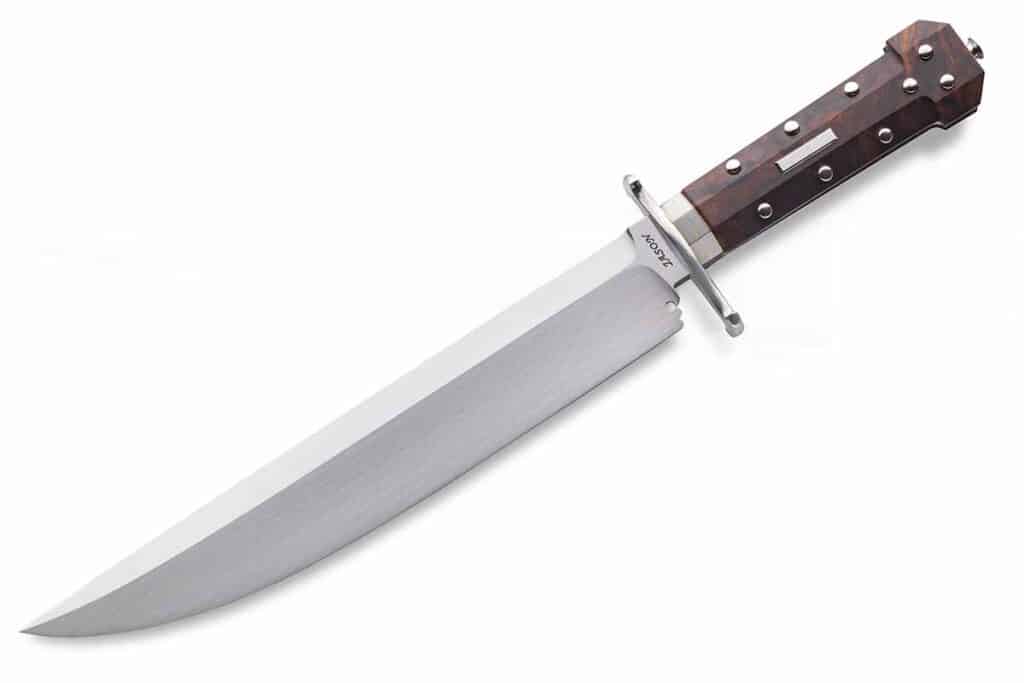
Karis Fisher added to her trophy case by winning the Antique Bowie Award for the best bowie in a 19th-century style by an ABS master smith. It was another feather in the cap of the young smith, who won for a reproduction of the Searles/Fowler bowie—with it being her first attempt at a repro to boot. Added Karis, “I’ve always wanted to try and make a reproduction, and I was drawn to the Searles bowie due to the mix of complexity and clean and timeless design.”
Antique Bowie Award, MS Winner
Antique Bowie Award, MS Winner: Karis Fisher Knife: Searles Reproduction Blade length: 9.25” Blade material: 52100 carbon steel Blade width: 2” Blade @ thickest: .25” Blade grind: Double ground Guard material: Stainless steel Handle material: African blackwood Ferrule and butt material: Stainless steel Ferrule and butt embellishment: Coined liners Overall length: 14.5” Special features: Half-moon cutout in blade and raised checkered panels on handle Knife to know: The knife is based on the Searles-Fowler bowie made by Daniel Searles in Baton Rouge, Louisiana, in 1828 Maker’s price for a similar knife: $2,500
The Challenge: “The most challenging part of this build was definitely the planning of the knife and trying to stay true to the original while building it solely off pictures.”
Matthew Parkinson
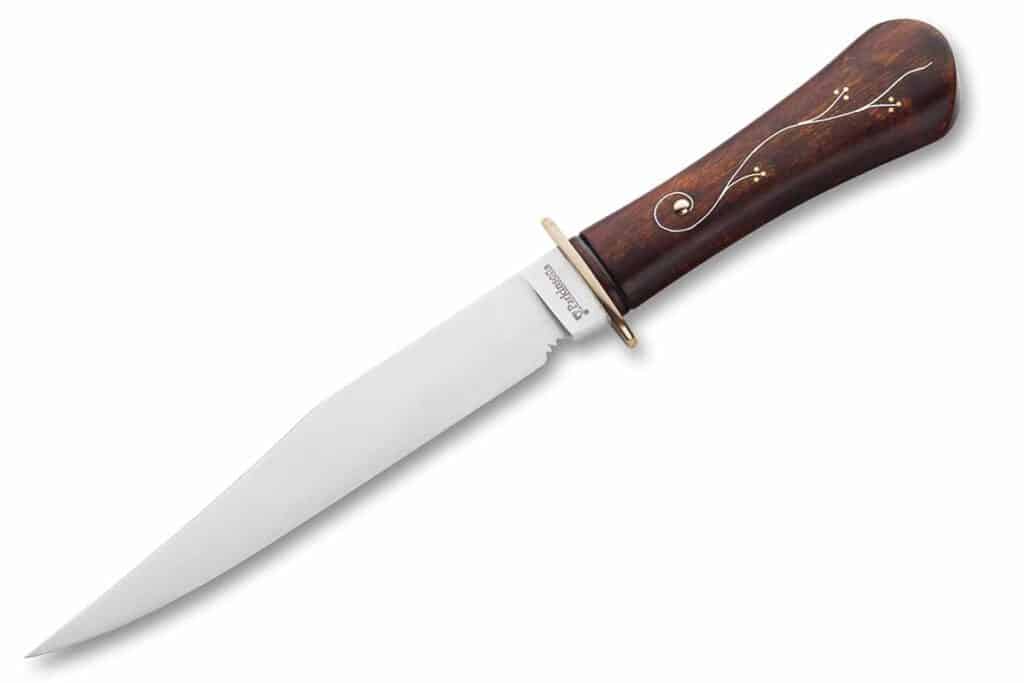
ABS journeyman smith Matthew Parkinson won the W. F. Moran Award for the best knife in the Moran style for his interpretation of a Moran fixed blade. “It wasn’t based on any one knife of his but more a general sort of impression of his body of work,” Matthew wrote. “That is to say, it is my design trying to work within his style—an interesting challenge!”
W. F. Moran Award Winner
W. F. Moran Award Winner: Matthew Parkinson Blade length: 7.25” Overall length: 12” Blade material: 1084 carbon steel Blade @ thickest: 3/16” Blade width: 1.125” Guard and pins: Bronze Handle: Maple Inlay: Sterling silver Maker’s price for a similar knife: $1,100
Maker’s remarks: “The Spanish Notch is just a detail to the choil rather than a plain rounded choil. I saw several similar examples on a knife that Mr. Moran had made and thought it might be a nice touch. The groove at the base of the handle is a carved molding. This is a detail I use frequently in knives that don’t have stabilized wood handles, as inlaid handles normally are. It helps keep a clean, even fit but still allows the wood to move, at the same time adding a nice visual feature that adds to the overall design.”
The Challenge: “I think the most challenging part of doing these is working within another maker’s aesthetic, especially one like Mr. Moran who has a huge and varied body of work. That’s the part that teaches you the most, I think. I find building one of these can give you insight into why another maker chooses one feature over another, or why a line or form is there. Those design ideas become incorporated into your own style and help you grow as a maker.”
Mace Vitale
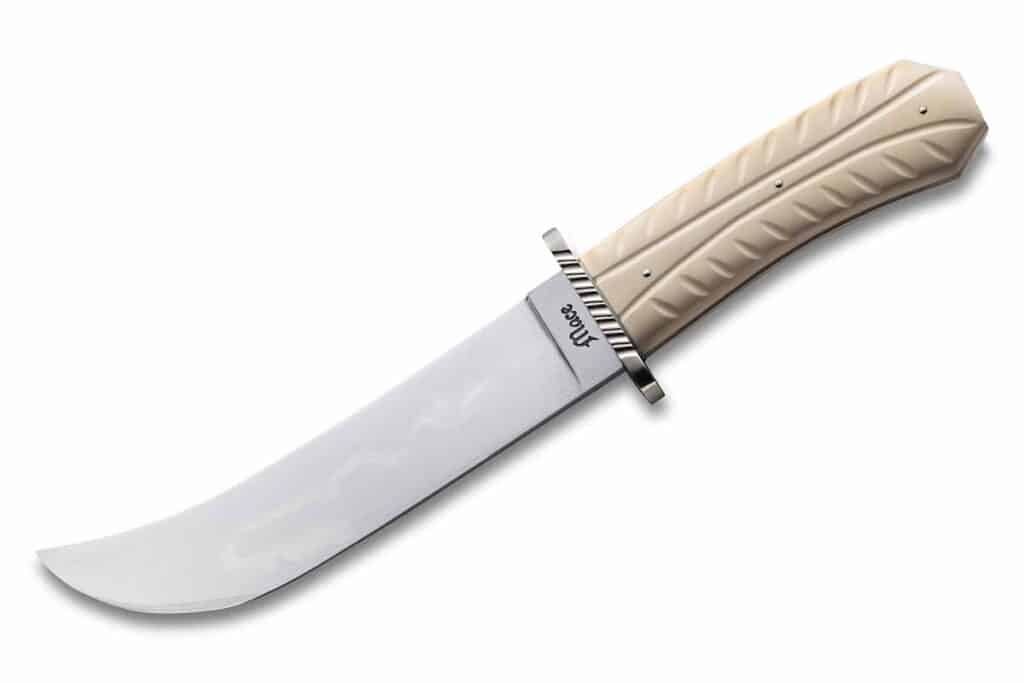
Mace Vitale captured the Antique Bowie Award for the best bowie in a 19th-century style by an ABS journeyman smith for a knife inspired by an antique piece made by Otto & Koehler of New York around 1850. The unusual knife features a markedly upturned blade tip and an ever-so-slightly downturned handle with a modified coffin-style butt featuring two carved lines and two rows of individually carved oblique divots that run its length. “The carving on the handles I’m positive were for extra grip. The knife has an excellent feel in the hand,” Mace observed. “There has been a bit of discussion as to the purpose of the original. As a knifemaker it was pretty clear to me when I picked up the original that it was very purposefully built to be a fighting knife.”
Antique Bowie Award, JS Winner
Antique Bowie Award, JS Winner: Mace Vitale Knife: Inspired by an antique fixed blade from New York makers Otto & Koehler from around 1850 Blade length: 6.5” Blade material: W2 tool steel Blade width: 1.25” Blade @ thickest: 3/16” Blade grind: Flat Fittings and pins: Nickel silver Handle: Mammoth ivory Overall length: 11”
The Challenge: “The most difficult part of building this knife was trying to keep all the parts going the way I wanted. When making a knife like this, it is put together and taken apart many, many times, and I found myself constantly putting the handle or guard on upside down. I was glad once it was done.”
Jason Chen
Newly minted ABS journeyman smith Jason Chen of YunNan, China, won the Joe Keeslar Award for the best knife submitted by a successful JS applicant for a spotless reproduction of a bowie not unlike the antique L. Kimball knife. The fact Jason prevailed over the best knives of 13 other successful JS applicants adds to the difficulty of his winning this year’s Keeslar Award. He is to be congratulated—as are all of those receiving top honors at the annual ABS meeting.
Newly minted ABS journeyman smith Jason Chen won the Joe Keeslar Award for the best knife submitted by a successful JS applicant for a bowie not unlike the antique L. Kimball knife.
New ABS Masters & Journeymen
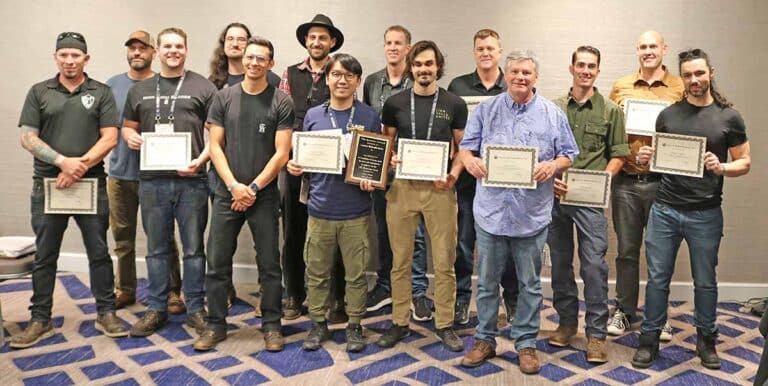
Five applicants presented for ABS master smith and one passed. Twenty-four applied for ABS journeyman smith and 14 were approved. The panels of judges were chosen by the ABS. The smiths who made the grade were: ABS master smith: Fabio Barros, Brazil; ABS journeyman smiths: Cameron Alarcio, California; Jason Chen, China; Pieter-Paul Derks, Netherlands; Zane Dvorak, Ohio; Robin Gagchian, France; Chris Gardner, Nevada; Aidan Garrity, Connecticut; Erik Greiner, Texas; Tony Lewis, Arizona; Dan Lewis, New Mexico; Tony Severio, Louisiana; Warren Thacker, Tennessee; Thiago Vidotto, Washington; and Liam
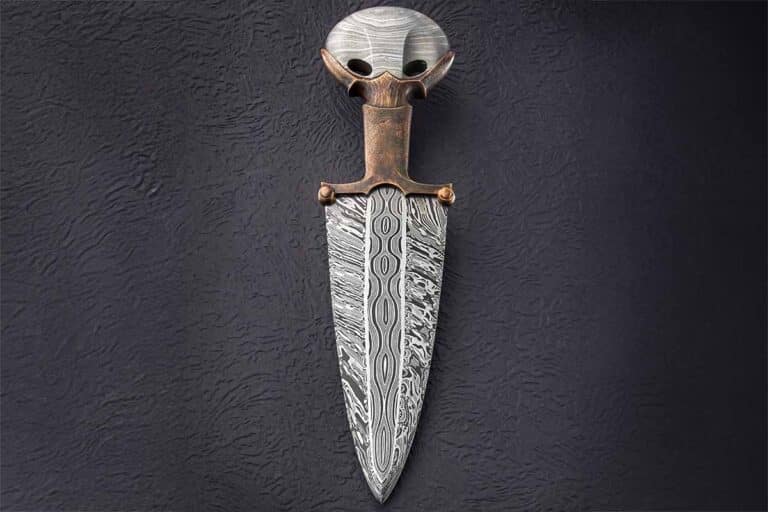
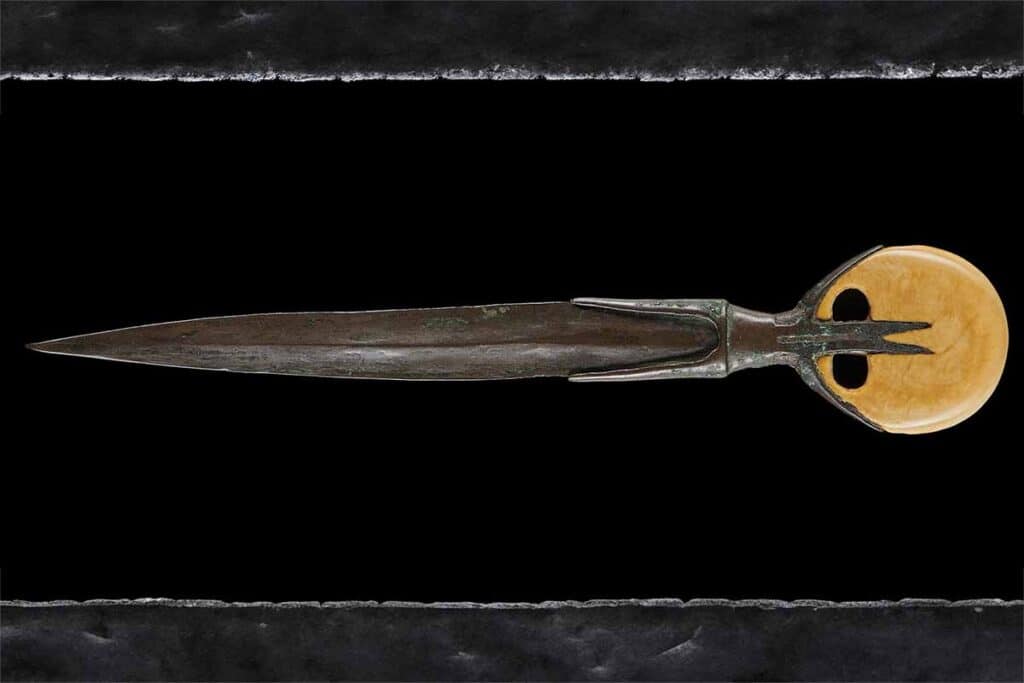
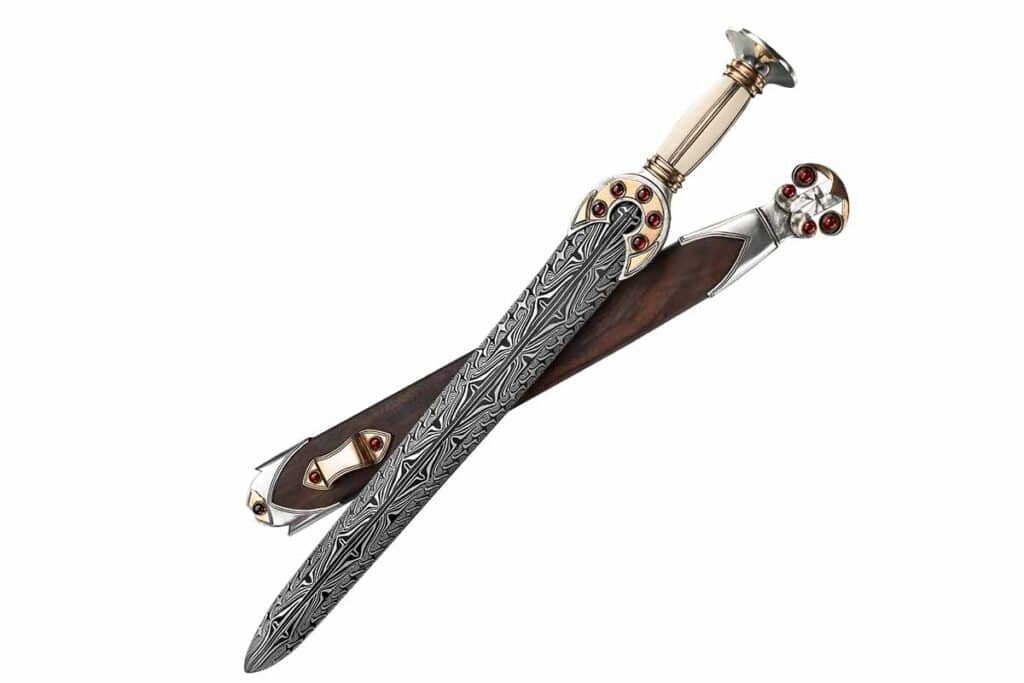
While it may appear to be an alien looking back at you, the Relic Dagger by ABS journeyman smith Ryan Breuer is inspired by Egyptian daggers from the Bronze Age that were made over 6,000 years ago.
The pommel on the originals are believed to have been made of hippo ivory.
“There’s such a striking shape to it,” Ryan said. “It very clearly looks like a human form in the handle holding up either a head or maybe the sun. It’s as if those who made the daggers thousands of years ago are looking back at me. It’s almost spooky.”
The damascus blade is a collaboration between Ryan and bladesmith Jason Morrissey, though Ryan gives Jason most of the credit for the steel. The blade is a composite mosaic damascus, with twisted mosaic edge bars of Jason’s steel and Ryan’s “eyes” mosaic in the core.
Ryan Breuer
Ryan ground, heat treated and finished the blade. The hilt is cast bronze made with the lost-wax process. The pommel is pattern-welded wrought iron and pure nickel, manipulated to imitate layers of organic ivory. Ryan drilled the two holes for the “eyes.”
Fantastic custom and factory fixed blades just hitting the market.
There’s just something about a solid fixed blade knife. At once, these knives are simple yet elegant—especially when crafted by a master. We’ve scoured the globe—or at least three continents—to bring you a dozen excellent fixed specimens. They range from fillet knives to fighters and everything in between, and each is certain to induce the expansion of wish lists.
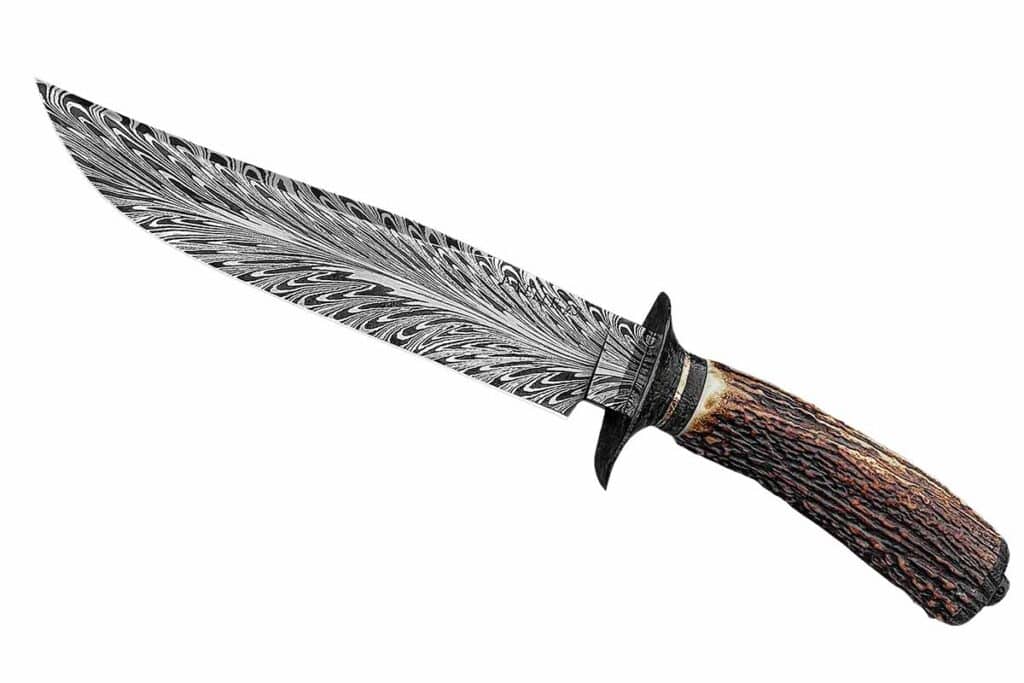
Jeremy Yelle Fighter
Blade length: 7.5” Blade material: Feather damascus forged of 1084 carbon and 15N20 nickel alloy steels Blade grind: Convex w/an unsharpened clip Handle material: Stag Furniture: Blackened 416 stainless steel Knife to know: Jeremy Yelle is a journeyman smith in the American Bladesmith Society Maker’s price for a similar knife: $1,700 Maker:Jeremy Yelle (Jocelyn Frasier image)
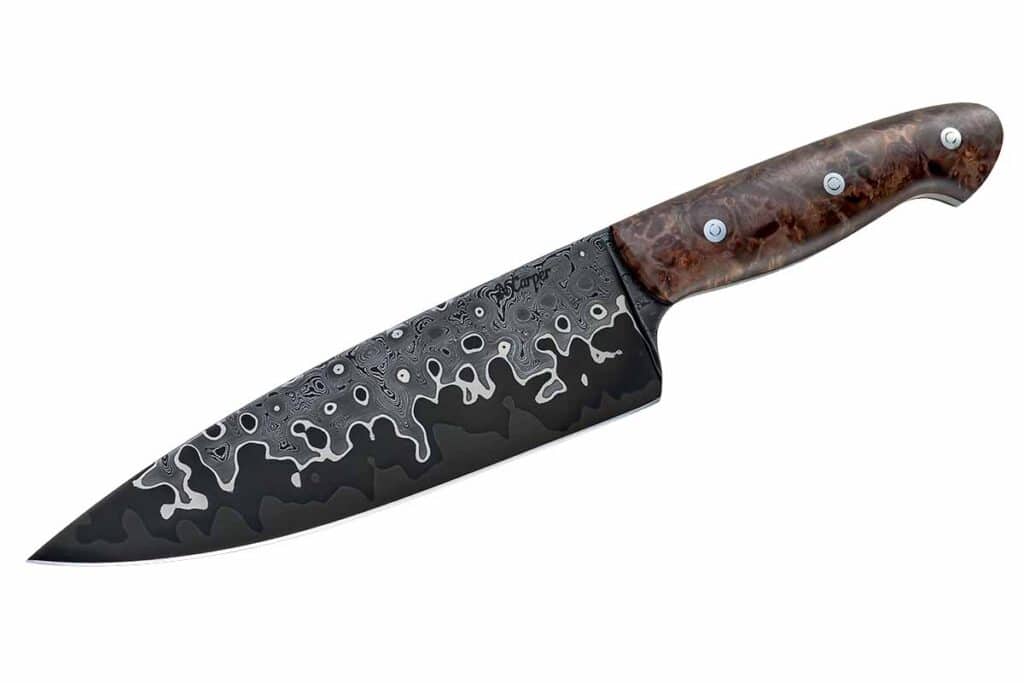
Nate Carper Custom Knives Acid Rain
Blade length: 7.25” Blade material: “I call this my Acid Rain pattern. I made a seven-layered billet using an 80CrV2 carbon steel core, 1084 carbon steel for the next two layers, nickel shim for two layers and followed up with 300 layers of a Raindrop pattern on the outside.” Blade grind: Full flat w/a tapered tang and distal taper Handle material: Dyed and stabilized maple secured w/Loveless bolts Overall length: 12” Maker’s price for a similar knife: Contact Nate Carper for more information Maker: Nate Carper Custom Knives (SharpByCoop image)
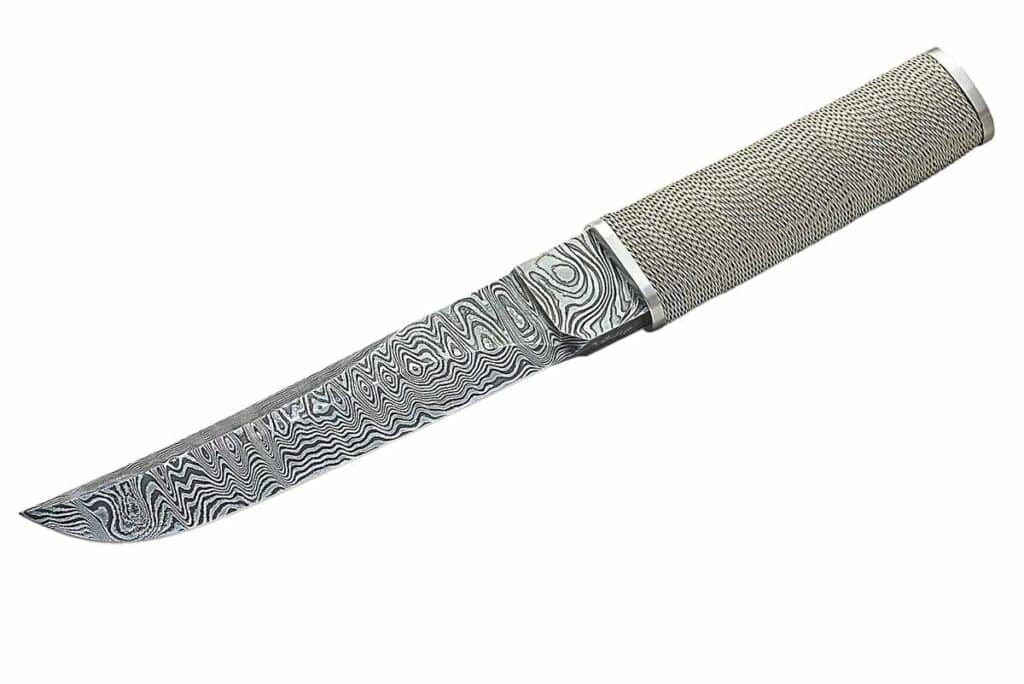
Tom Haslinger Damascus Kissaki-Moroha Tanto
Blade length: 6.7” Blade material: HCK damascus forged in 320 layers of 1080 carbon and 15N20 nickel alloy steels Rockwell hardness: 58 HRC Handle: Stainless steel wire wrap Tsuba (guard) material: Stainless steel Kashira (buttcap) material: Textured stainless steel Overall length: 12.65” Weight: 13 ozs. Saya (sheath): Lined cowhide w/koi leather overlay Maker’s price for a similar knife and sheath: $1,490 Maker:Tom Haslinger
Michael West Silver Lining
Knife type: Fixed blade Blade length: 3.93” Blade material: Damasteel twist damascus Blade grind: Freehand hollow Furniture: Argentium silver Handle material: Ebony and argentium silver Overall length: 9.6” Sheath materials: Leather and argentium silver Maker’s price for a similar knife: $3,100 Maker:Michael West (SharpByCoop image)
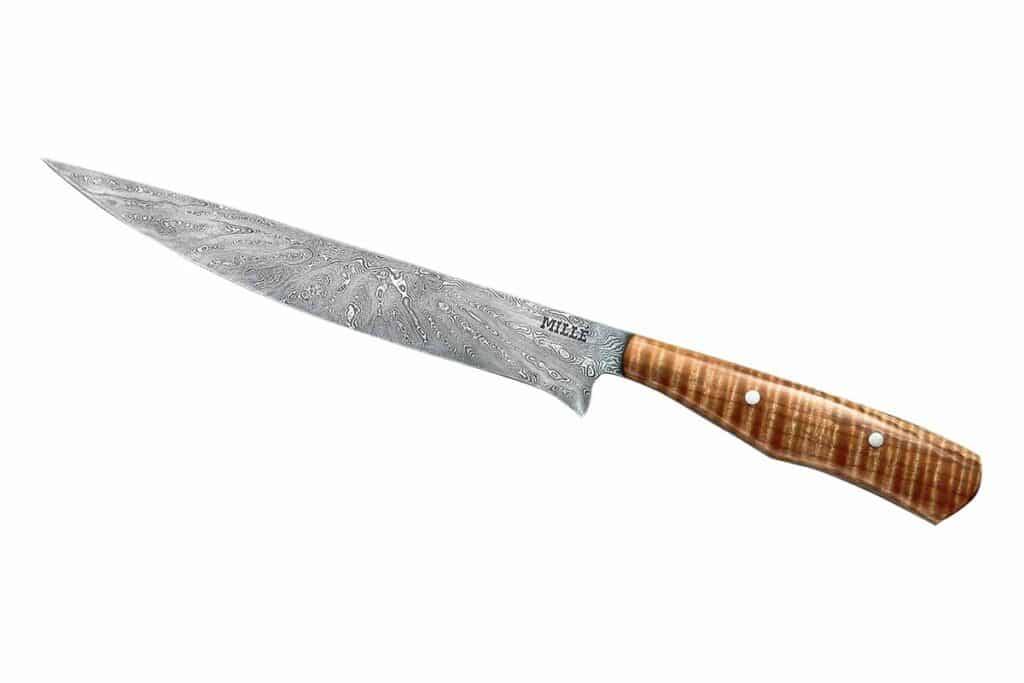
Mille Blades Fillet Knife
Blade length: 8” Blade material: Damascus forged of 1084 carbon and 15N20 nickel alloy steels Handle material: Stabilized tiger maple Overall length: 13” Maker’s price for a similar knife: Contact Adam Mille for more information Knife to know: Adam Mille is an apprentice smith in the American Bladesmith Society Maker: Mille Blades (SharpByCoop image)
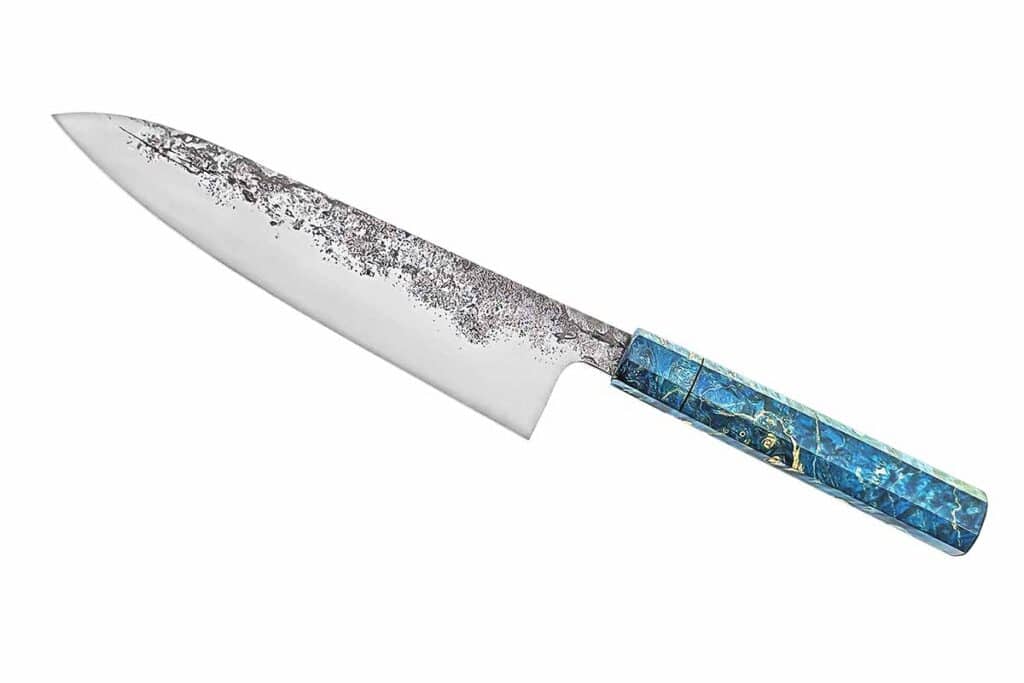
Andrew Bonavia Gyuto
Blade length: 8.5” Blade material: Forged 1084 carbon steel Blade grind: Full flat Blade @ widest: 2” Handle material: Dyed spalted maple Overall length: 14” Maker’s price for a similar knife: $531 at press-time exchange rate Knife to know: Andrew Bonavia is a member of the Australian Knifemakers Guild Maker: Andrew Bonavia (Rod Hoare image)
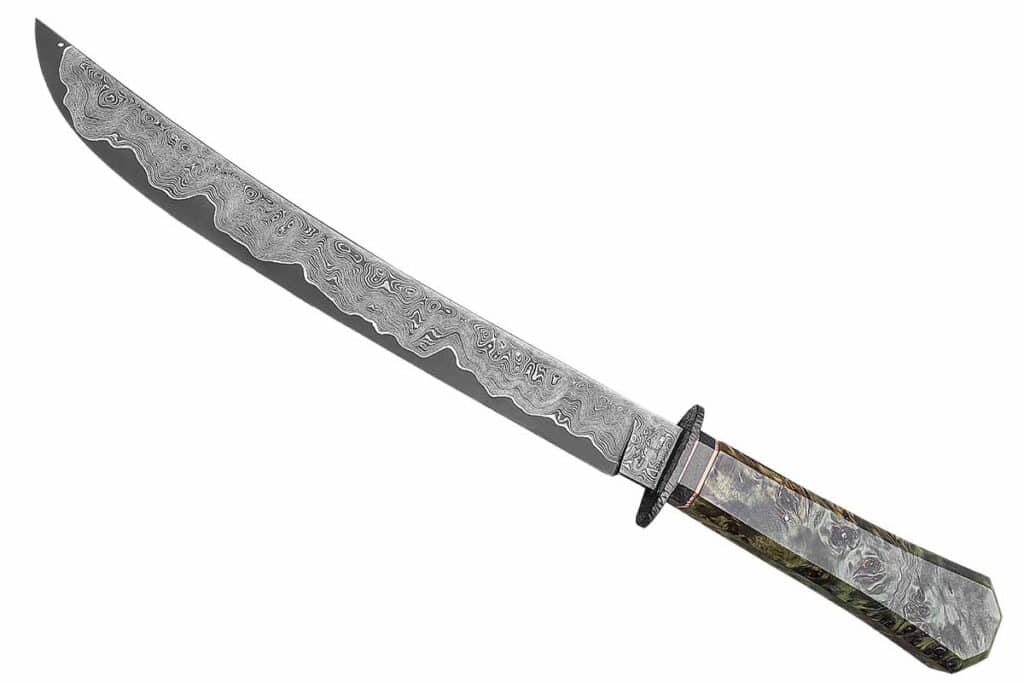
Brad Millman O-Tanto
Blade length: 11.75” Blade material: 120-layer 1095 carbon and 15N20 nickel alloy steels w/nickel cladding and an 80CrV2 carbon steel core Blade grind: Flat to convex near the edge Handle: Raffir poplar burl Bolster: Forged-finished stainless and copper Overall length: 16.25” Maker’s price for a similar knife: $1,200 Maker: Brad Millman (Jocelyn Frasier image)
Blacks Blades Mosaic Damascus Bowie
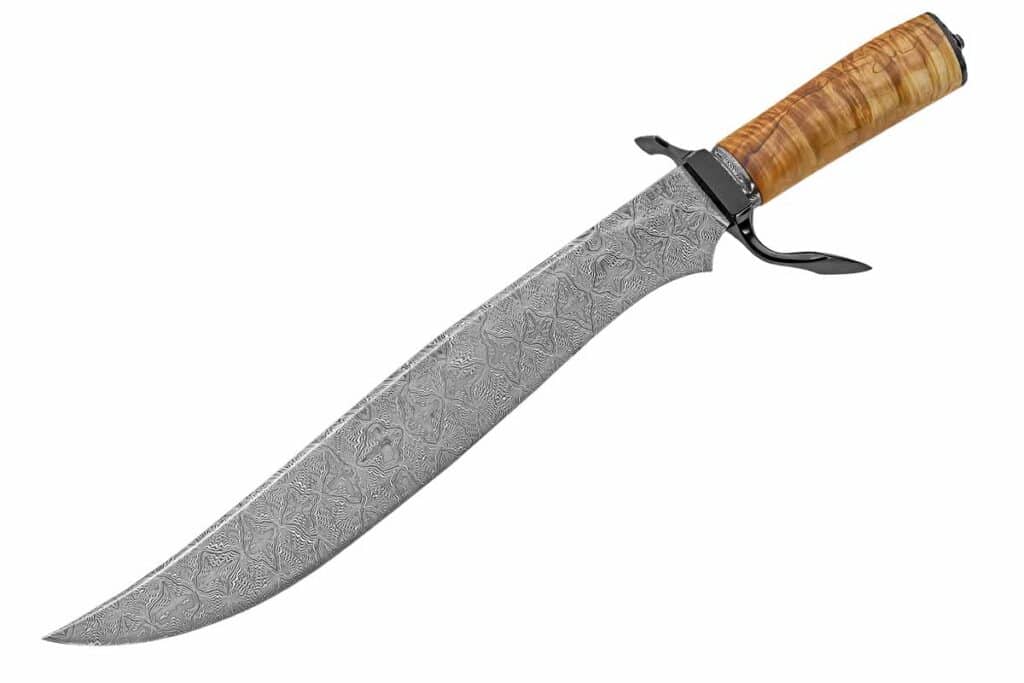
Blade length: 13.5” Blade material: Mosaic damascus Blade grind: Flat Blade thickness @ ricasso: .236” Handle material: Tassie blackwood Furniture: Hot blued mild steel Overall length: 19.5” Maker’s price for a similar knife and sheath: Contact Shane Partridge for more information Maker: Blacks Blades (Rod Hoare image)
Aimee’s Forge Boot Dagger
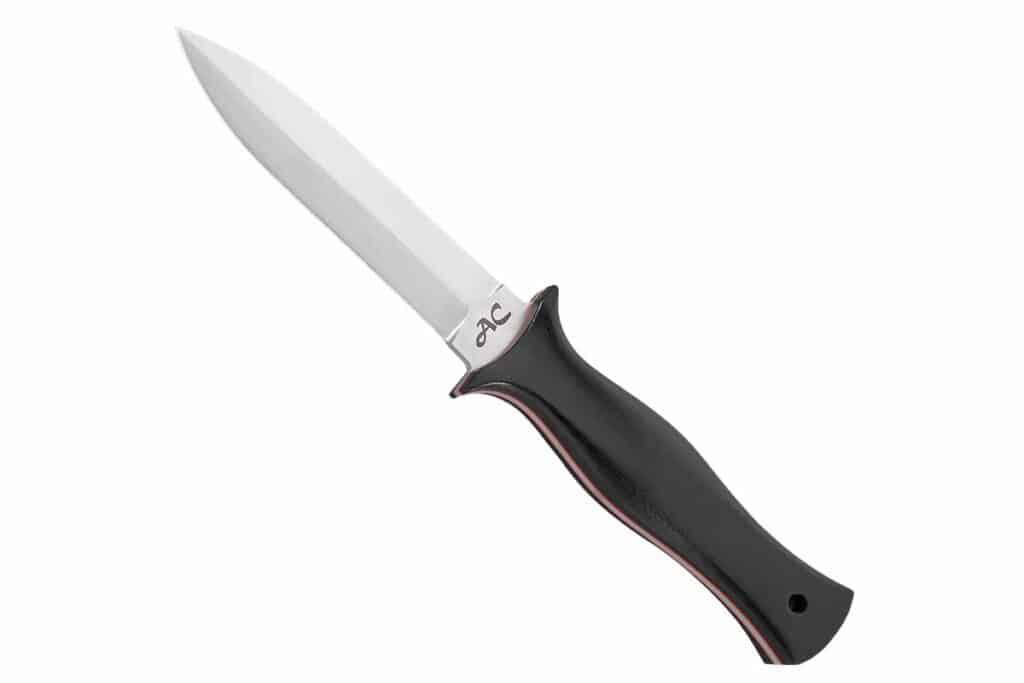
Blade length: 4” Blade steel: Nitro-V stainless Blade grind: Flat Construction: Full tang Handle material: Black and red G-10 Handle pins: Black G-10 Overall length: 8.75” Sheath: Leather w/belt clip Maker’s price for a similar knife: $431 at press-time exchange rate Knife to know: Aimee Conte is a member of the Australian Knifemakers Guild and an apprentice smith in the American Bladesmith Society Maker:Aimee’s Forge (Rod Hoare image)
Zane Dvorak Integral Hunter
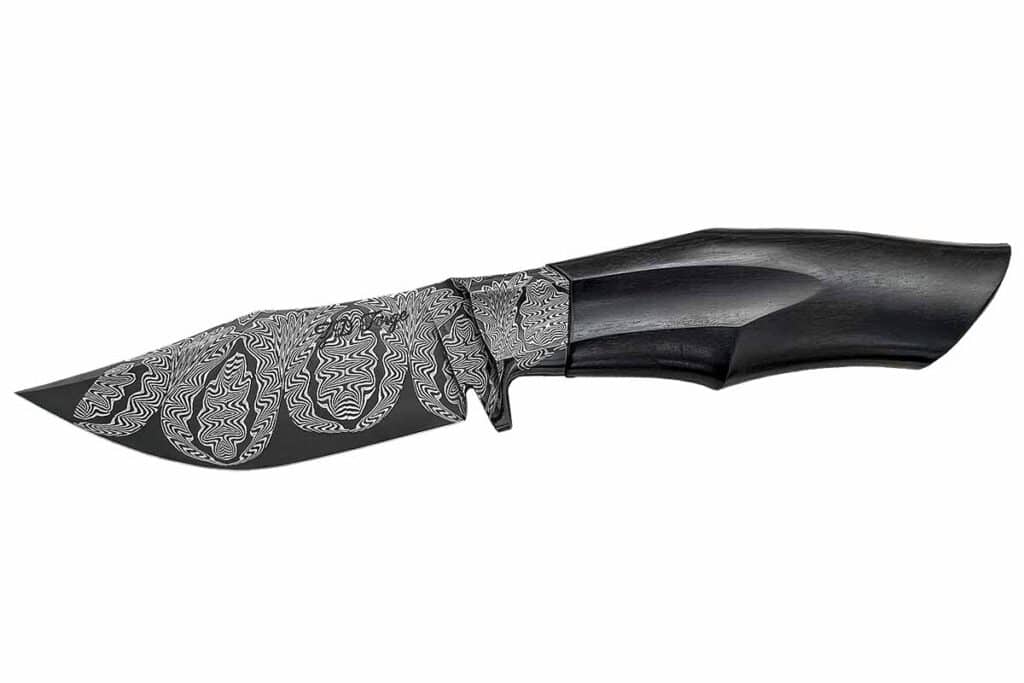
Blade length: 4.25” Blade material: Black Edge mosaic damascus forged from 1084 carbon and 15N20 nickel-alloy steels Blade grind: Flat to convex Blade pattern: Clip point Handle material: African blackwood Overall length: 9.25” Sharp stuff: Forged integral single guard; carved handle groove matches the one in the bolster Maker’s price for a similar knife: $1,400 Maker:Zane Dvorak (Jocelyn Frasier image)
Jeroen Knippenberg Integral Chef’s Knife
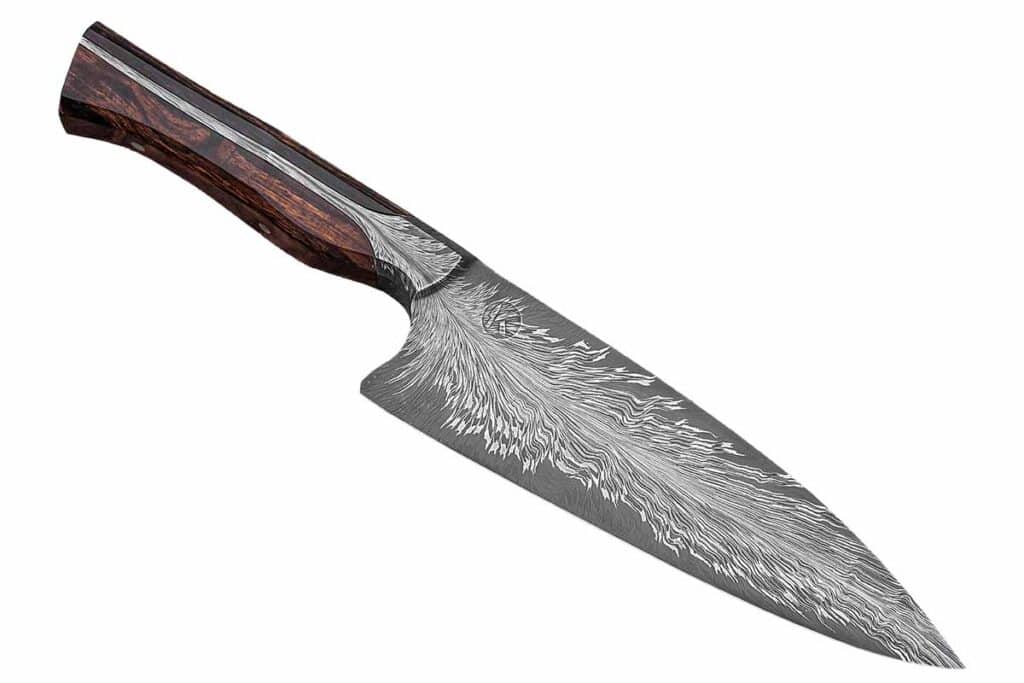
Blade length: 6.7” Blade material: A multi-color Feather damascus pattern forged from 15N20 nickel alloy and O2, O1 and 115W2 tool steels Blade grind: Convex Handle material: Desert ironwood Overall length: 11” Knife to know: Jeroen Knippenberg’s Integral chef’s knife won Best Chef’s Knife at the Dutch Knife Exhibition Maker’s price for a similar knife: $1,600-$2,140 at press-time exchange rate Maker:Jeroen Knippenberg (Jocelyn Frasier image)
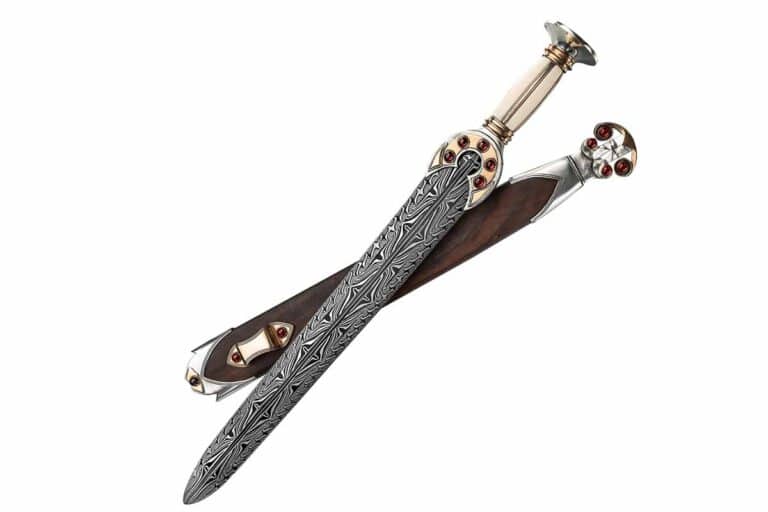
Dragon’s Breath Forge Period Piece
Blade length: 18” Blade material: 1080 carbon and 15N20 nickel alloy steels Handle material: Bronze and Elforen Bolster: Silver, bronze and garnet Overall length: 24” Maker’s price for a similar knife and scabbard: Contact Jamie Lundell for more information Maker:Dragon’s Breath Forge (SharpByCoop image)
Karambits continue to emerge as a viable EDC alternative.
The engineering is superb as the latest in karambits leverage the ever-popular “curve” appeal of the blade style. Materials, aesthetics and utilitarian aspects of this handy tool are getting noticed like crazy in the most recent offerings to hit the market. The karambit continues to emerge as a real, viable choice for everyday carry, and manufacturers are tuned into the possibilities.
According to knife designer Alessandra DeSantis, “Karambits are highly appreciated for cutting rope, cardboard and other utility tasks.” For more than a decade, Alessandra’s designs and perspective have influenced the marketplace, and the karambit is gaining momentum.
“Alessandra is the face of Hydra Design [hydra-design.it],” said Boker USA sales director Mike Gugliociello. “Her creations are characterized by a distinctive design that combines unique details with uncompromising functionality and high utility.”
Boker Plus HEL Karambit
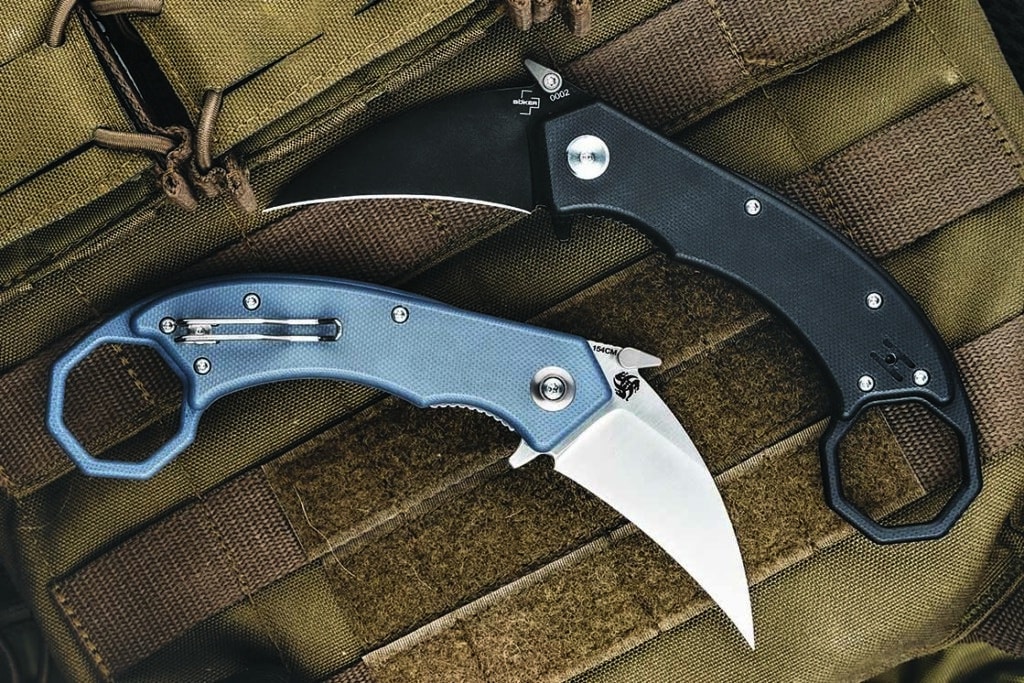
A notable feature of the Boker Plus HEL Karambit is the octagonal ring as opposed to the conventional round one. Thanks to the ring’s properly rounded corners and edges, users report no discomfort. Designer: Alessandra DeSantis.
The collaboration of Boker USA and DeSantis has produced the Boker Plus HEL Karambit. “The octagonal ring is a distinctive feature of Alessandra’s style,” Gugliociello noted. “Though some people may think that an octagonal ring can be annoying during the various knife [manipulation] tricks, actually the difference between an octagon and a circle is minimal, and with properly rounded corners and edges no discomfort is perceived.”
The striking HEL Karambit also features a screw-off feature and flipper tab to enhance everyday carry and ease of deployment. Alessandra commented, “As an alternative to smooth flipper opening, the HEL Karambit offers the screw-off thumb stud on the back of the blade. It can be removed by unscrewing the T6 Torx screw. The flipper tab also performs as a guard. Also, despite its compact size, the HEL Karambit can be gripped by either using the handle ring or not. Each karambit grip has optimal use, and each offers different maneuverability and effectiveness in various applications, so the grip depends on the intended uses.”
Hel Karambit Specs Knife Type: Folder Blade Length: 2.4” Blade Steel: 154CM stainless Handle Material: G-10 scales, liner and ring Weight: 3.28 ozs. Closed Length: 4.29” Country of Origin: China MSRP: $137.95
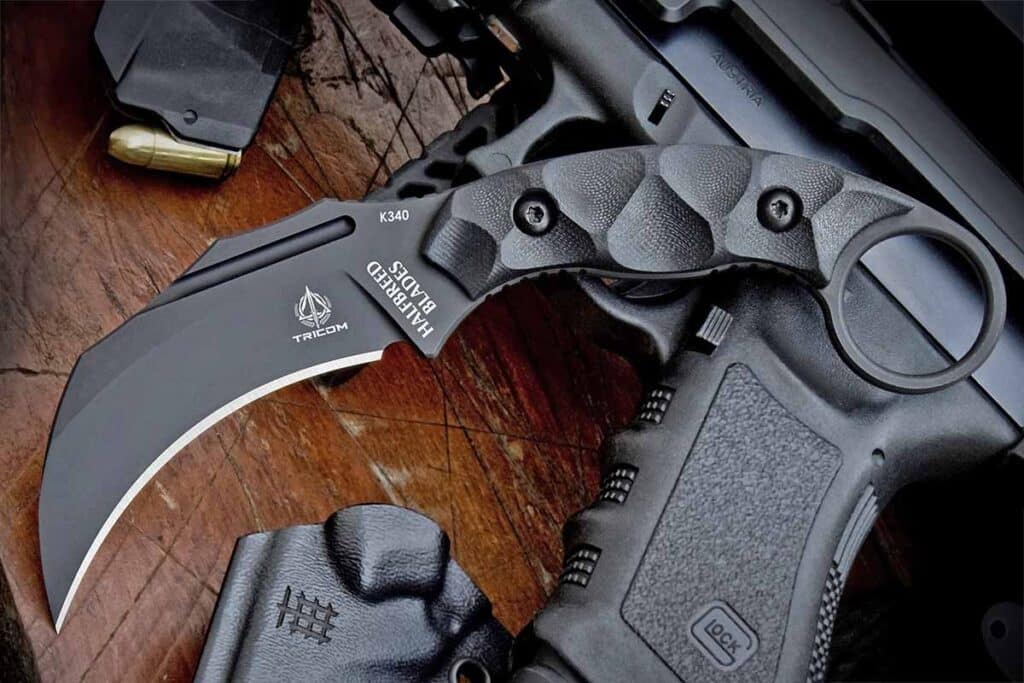
Halfbreed Blades CQC-02
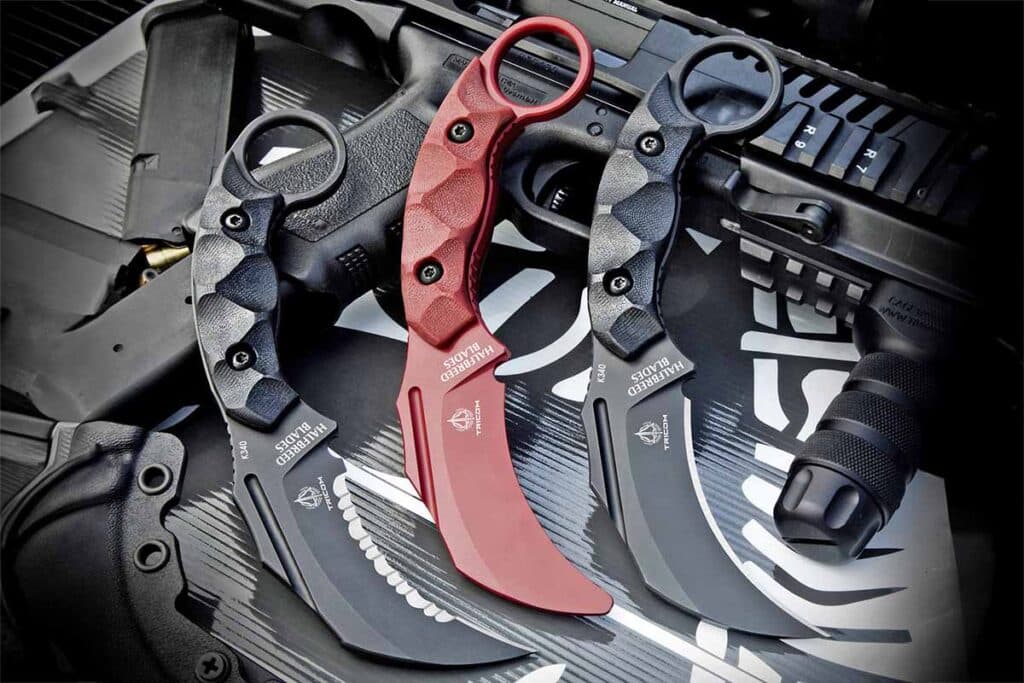
Designed by famed special operations and close quarters combat instructor Jared Wihongi in collaboration with TRICOM Training, the CQC-02 Close Quarters Combat comes in plain and serrated edge models and also a trainer.
At Halfbreed Blades, the CQC-02 Series Close Quarters Combat line is the latest partnership with famed special operations and close quarters combat instructor Jared Wihongi in collaboration with TRICOM Training, a leading global provider of premium close quarters combatives and defensive tactics training.
“In many regions worldwide, individuals carry blades for their practical use as tools,” explained Lili Ma, a director at Halfbreed. “Beyond their utilitarian purposes, knives are also carried by many for self-defense or as secondary weapons for those working with firearms or licensed to carry them. The CQC Talon series, developed with Filipino martial arts practitioners in mind, is a meticulously crafted design tailored to meet the needs of military and law enforcement professionals who rely on edged weapons in the line of duty, for example.”
Lili indicated the handle of the CQC-02 Close Quarters Combat series is designed to facilitate all popular grip styles and does not rely on the ring for carry or deployment. The ring aids retention in a high-stress clinch and the draw when the tool is concealed behind gear on a plate carrier.
“All of our tools are designed to form fit the hand. The ring, grip texture and carry system all work in unison to aid a quick deployment. We use USA-made Kydex for the fabrication of the sheath, while the retention is a molded friction lock design and mounting is via customizable DOTS attachments.”
The blade serrations appeal to a consumer segment and reflect the awareness of the Halfbreed design focus. “We like to cater to user preferences where possible,” Lili observed. “The market is divided into two groups: those that prefer a full plain edge and those that appreciate the added cutting power of serrations. In our opinion, serrations, when CNC-ground correctly, have unrivalled cutting power. They excel at cutting through clothing and other hard materials that would typically make a plain edge dull. This being said, they are not for everyone. Some believe serrations can snag or drag when cutting, and they take more effort to resharpen. These are subjective arguments, so there are pros and cons to both serration and plain edge designs.”
Like the Boker Plus HEL Karambit and RMJ Tactical Korbin, the handle of the Halfbreed CQC-02 Close Quarters Combat series is designed to facilitate all popular grip styles and does not rely on the ring for carry or deployment. Designer: Jared Wihongi.
Just below the blade spine, the CQC-02 Close Quarters Combat series is designed with a slot or fuller to reduce weight. It also allows control of the balance point of the blade while adding an aesthetic appeal in a fusion of “tactical function art” that drives the creativity of Halfbreed’s designers.
CQC-02 Close Quarters Combat Karambit Specs Knife Type: Fixed blade Blade Length: 3.54” Blade Material: Bohler K340 carbon steel Handle Material: G-10 Weight: 7.65 ozs. Overall Length: 7.48” Country of Origin: Comprises Australian and Taiwanese make MSRP: $220
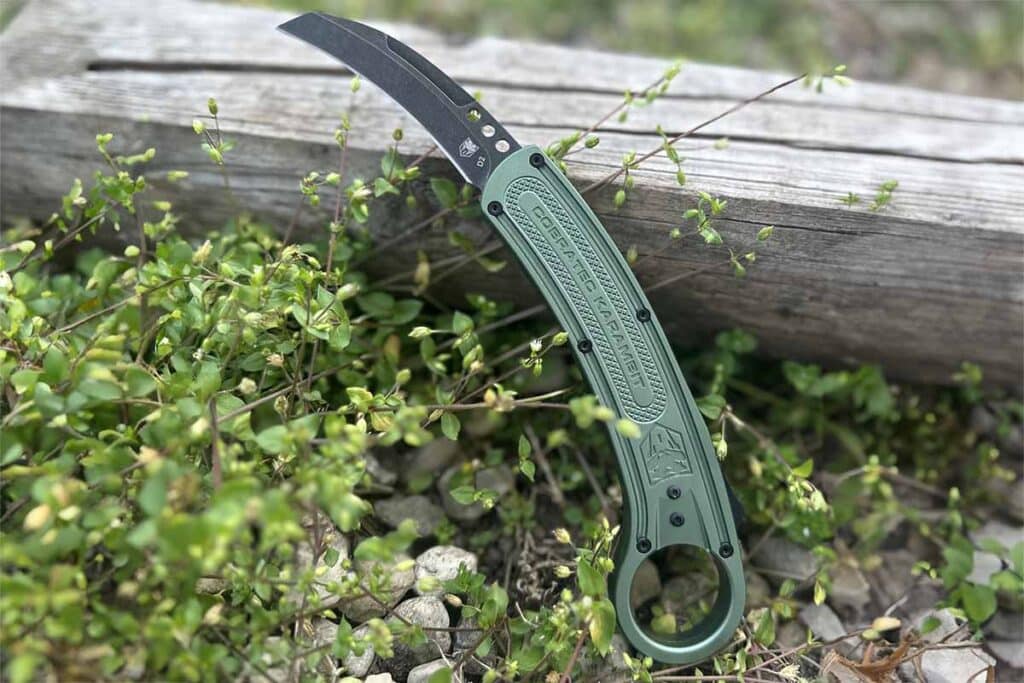
CobraTec Karambit Double Action
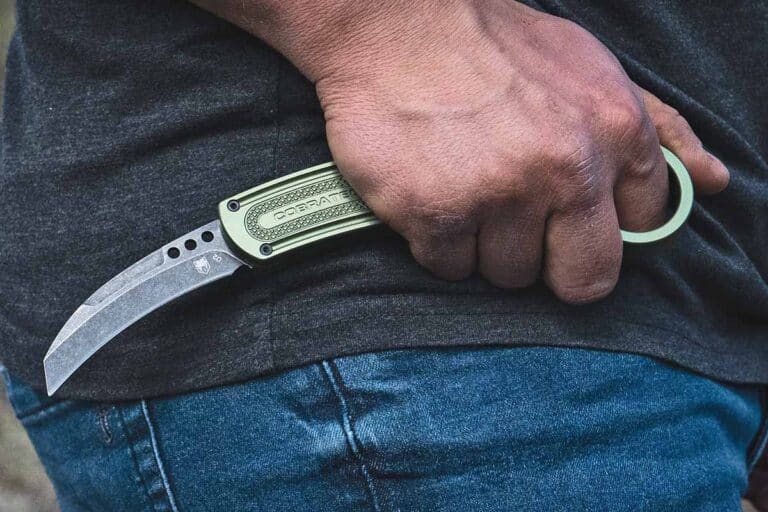
The CobraTec karambit carries in the pocket via a pocket clip with the retention ring exposed to ease deployment. Using an index finger in the retention ring, the knife easily extracts with one hand and falls into the palm ready to cut and complete chores as needed.
CobraTec is breaking new ground with its automatic entry, the Karambit in OD Green Double Action. “There were several considerations in designing the automatic karambit,” remarked company representative Eddie Johnson, “from aesthetics, function and ability to be used as a karambit, the fit and grip in the hand, along with the design of the retention ring to be used by various-sized individuals. The knife comes with two curved clips to hug the shape, and the clips are shaped to match the side of the knife you wish to carry it on.”
The automatic feature is, at the least, a conversation starter, and at best a feature that complements quick deployment and assurance of a secure lock-up. “The activation switch is located near the retention ring,” Johnson related. “As the knife is drawn for use, the index finger is through the retention ring, allowing the body of the handle to comfortably fit in the palm of your hand. The thumb naturally aligns with the activation switch, and the secure grip of the knife gives the perfect angles for activation of the blade.”
The Cobratec boasts two curved clips to hug the handle shape, and the clips are shaped to match the side of the knife you wish to carry it on. The activation switch for the double-action auto is located near the retention ring.
The CobraTec design allows the karambit to be carried in the pocket with the retention ring exposed to ease the knife’s deployment. With the index finger in the retention ring, the knife is easily extracted from the pocket and falls into the palm ready to cut and complete chores with one hand as necessary.
OD Green Karambit Spes Knife Type: Automatic Blade Length: 2.75” Blade Material: D2 tool steel Handle Material: 6061 T6 aluminum anodized green Weight: 4 ozs. Closed Length: 5.625” Country of Origin: China MSRP: $179.99
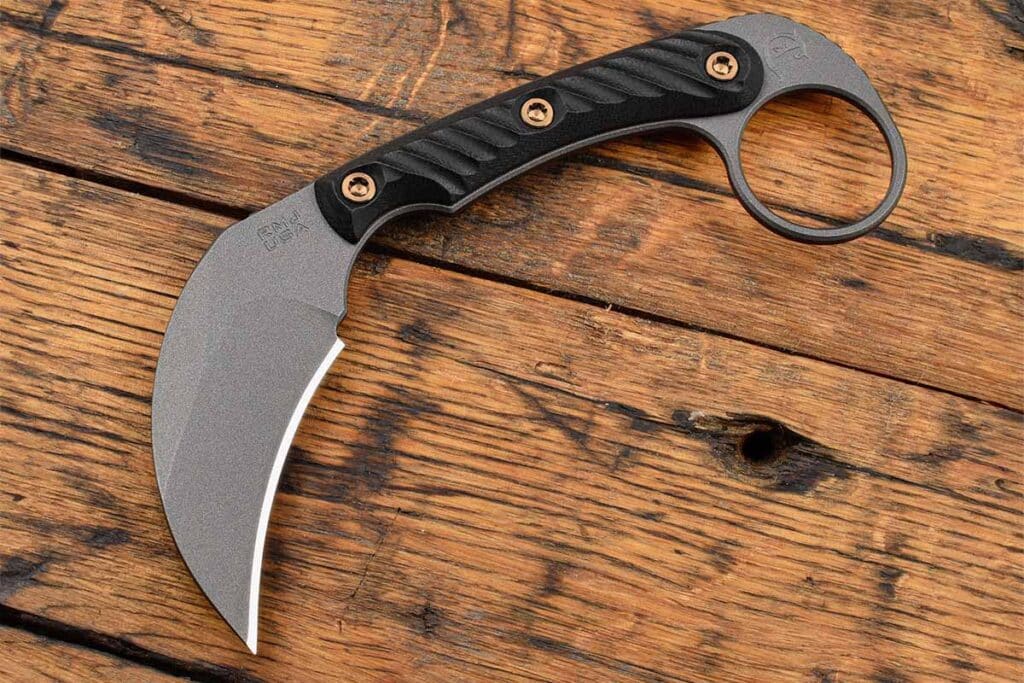
RMJ Tactical Korbin Karambit
Rob Orlando of RMJ Tactical said the Korbin “can be held in the standard grip or reverse grip, either using the finger hole or not. Either way, there is a sure grip, and there is nothing protruding from the ring to prevent good purchase.”
“It’s a defensive blade with no other purpose,” related Rob Orlando of RMJ Tactical in describing the company’s Korbin karambit. “It can be held in the standard grip or reverse grip, either using the finger hole or not. Either way there is a sure grip, and there is nothing protruding from the ring to prevent good purchase.”
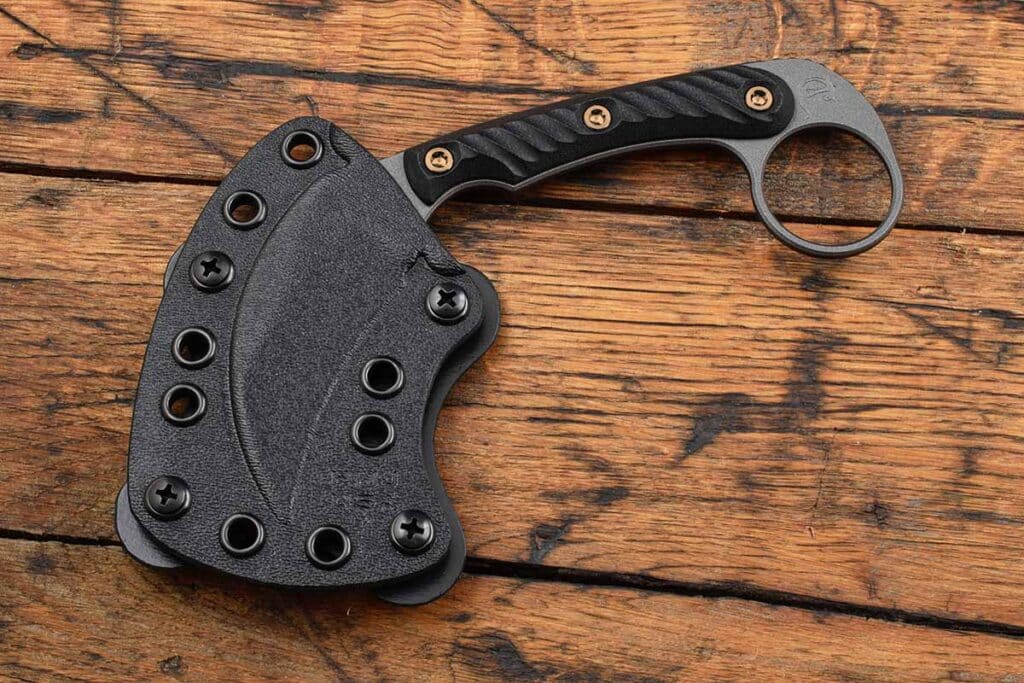
The Korbin has a Kydex sheath that includes a two-way belt adapter and allows ambidextrous vertical or horizontal carry options on a belt up to 1.5 inches wide. The sheath is also compatible with the RMJ-optional MAD straps to allow easy carry. The finger hole is 1.125 inches across and large enough to fit most finger sizes. Contoured G-10 scales allow strong grip characteristics in wet or dry conditions. Gimping on the spine both adds some traction and provides a bit of aesthetic flair.
The Korbin’s Kydex sheath includes a two-way belt adapter and provides ambidextrous vertical or horizontal carry on a belt up to 1.5 inches wide.
“The Korbin is easy to conceal,” Orlando added. “If a knife is large and heavy it will likely get left at home, but most of our everyday carry knives are deceptively light and easy to carry and conceal.”
Korbin Specs Knife Type: Fixed blade Blade Length: 3” Blade Steel: Nitro-V stainless Handle Material: G-10 Weight: 2 ozs. Overall Length: 6” Country of Origin: USA MSRP: $215
First Case/Ruple collaboration officially debuts at BLADE Show ’24.
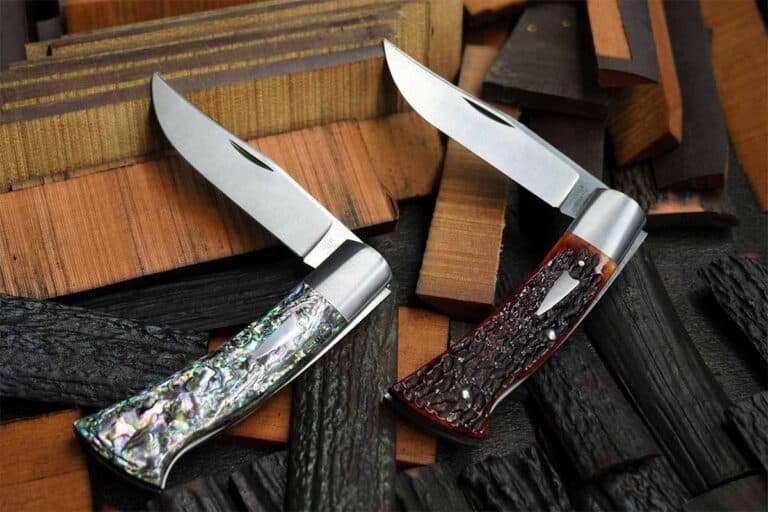
The combination of mechanical features, artistic design and choice of handle materials make the Bill Ruple x Case Axe Handle collaboration a unique knife for the user and collector.
Case Knives and BLADE Magazine Cutlery Hall-of-Fame® member Bill Ruple didn’t just bump into each other at the convenience store one day and say, “Hey, let’s do a knife collaboration.” That alone likely would have led to a great pocketknife, but no, there was a lot more planning and history that went into this new joint venture. We’ll talk about some of that but first let’s talk about the knife itself. It’s got some special character.
Case Axe Handle Design
Despite both being giants in the slipjoint field, Bill and Case sifted through some ideas and came up with a lockback pattern for an initial collaboration. It was not just one part but several features Bill combined together to make this knife unique.
Preeminent member of the Texas Slip Joint Cartel, Ruple more than understands what makes a good slippy.
As a man who had farmed the soil, he noted the end of the knife resembled the shape of an axe handle, thus the name. The upward curve of the handle butt provides some useful ergonomics but also strategically holds the tail of the lockbar. In this location, there is resistance to accidental unlocking of the blade while it’s in the open position. As well, it eliminates the need for a thumb cutout in the handle to release the blade. With an upward curve partially concealing the lockbar plus the absence of a thumb cutout, the handle makes the knife appear not to be a lockback pattern at all. In fact, since at first glance it seems to be a slipjoint, it has a bit of the trick-knife or mystery-lock character.
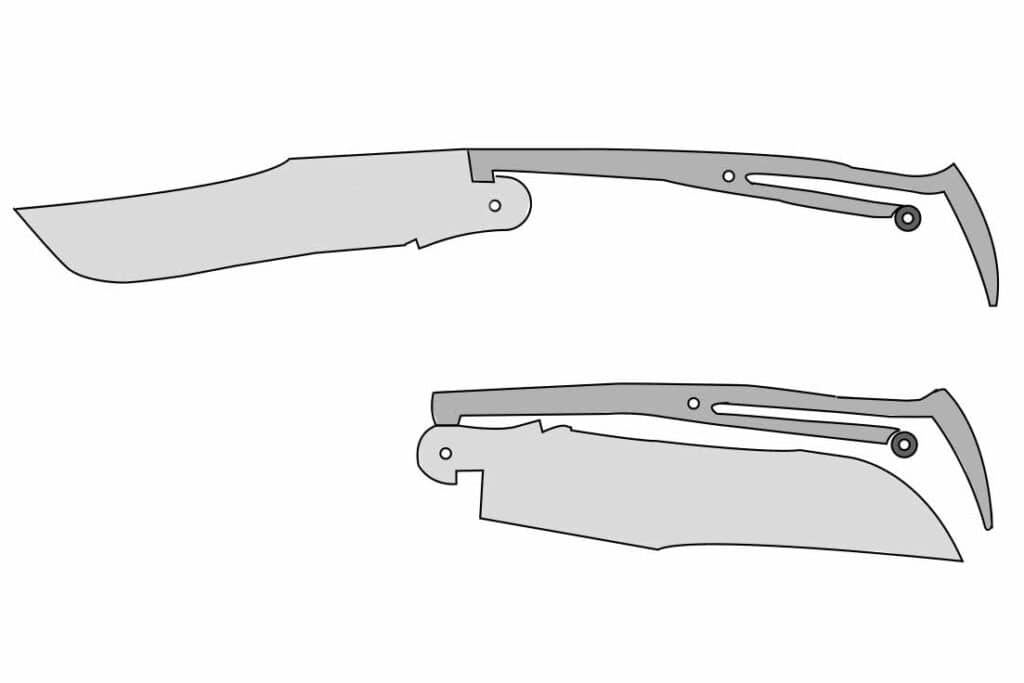
Initial prototyping by Bill in his shop hit a snag in that the slipjoint knives he’s used to creating have a rear bolster. That did not fit the artistic design for the new collaboration. However, Bill cleverly overcame the so-called snag by using a feature called a scissor spring (see illustration, page 40), which rests on a bushing to provide the needed tension to work the lockbar. Bill has prototyped knives for Case and also assisted with some aspects of manufacturing just as his Case collaboration predecessor, mentor, very close friend and fellow Cutlery Hall of Famer, Tony Bose, had done. Bill stated that nobody could replace Tony Bose and Case misses him. (Don’t be at all surprised if Case makes a commemorative knife in honor of Tony in the future.)
A few notes on Ruple’s design, the scissor spring (rear top right) is an efficient use of space with a one-piece unit of lockbar and spring. The bushing (lower fork of the spring), the spring rides on this avoiding excessive wear and taking up less room. It also acts as a rear spacer.
Both Case officials and Bill say Tony would be pleased with the new collaborative effort. The initial run will be 1,000 knives. Then the model will be made in a traditional slipjoint pattern. There is an aim at “near custom maker quality” for the first run, glibly naming the process “almost custom,” beginning with the parts being wire cut. That’s the cool way to say electrical discharge machining, or EDM. Production is assigned to a specific group of three workers only. No one else will work on the knives. That sort of consistency helps maintain quality control in manufacturing the knives.
MORE TO COME Is this collaboration just an outlier or will there be more Case/Ruple lockbacks in the future? Interest in the knife at BLADE Show 2024 (page 26), where the knife was officially introduced, was quite favorable. Both Bill and Case officials were pleased with how things have turned out, so expect to see another collaboration introduced at next year’s BLADE Show. That knife likely will be a slipjoint. Another lockback might be seen in the future, though a bit further down the road.
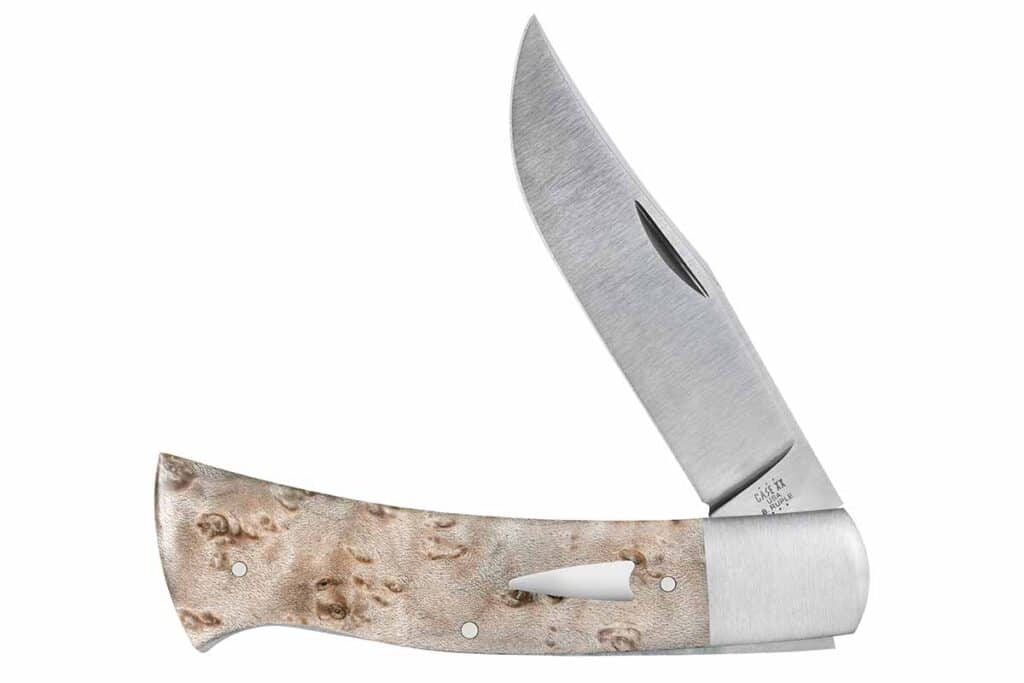
Natural birdseye maple is one of but several handle material options on the new Bill Ruple x Case Axe Handle.
As collaborative efforts go between manufacturer and custom maker, the Axe Handle knife is a superlative effort. And there is strong motivation to produce more collaborations, both commemorative and unique.
Ruple’s First Case
Does BLADE Magazine Cutlery Hall-of-Fame® member Bill Ruple remember his first Case knife? Is Texas big?
“Oh yeah,” the good-natured, award-winning knifemaker and South Texas Slipjoint Cartel trail boss said. “My dad gave me a Case knife when I was 9 or 10 years old, and it was a yellow handle Case trapper. And man, in about a month I had sharpened the blades completely out of that knife. And he gave me another one, and so he told me not to sharpen it quite as often. But yeah, a long time ago.”
Case Axe Handle Specs Knife type: Lockback Designer: BLADE Magazine Cutlery Hall-of-Fame® member Bill Ruple Blade length: 3.46” Blade material options: Wire-cut 154CM stainless steel or damascus Rockwell hardness: 57-59 HRC Blade grind: Flat taper Blade @ thickest: .126” Blade pattern: Clip point Blade finish: Satin Handle material options: Natural birdseye maple, Rogers jig chestnut bone, standard jig antique bone, marbled black carbon fiber, abalone, English walnut Lock: Lockback Opener: Nail nick Pocket clip: None Weight: 4.21 ozs. Closed length: 4.4” Carry: Suede leather taco pouch Special features: One-piece designed backspring & lock mechanism. Country of origin: USA MSRP: $599.99 to $774.99 Available: Late Summer 2024
See what sleek new slicers are available or soon will be.
When introducing their new sporting knives, the world’s leading manufacturers want as many of the people that matter to see the knives as possible. And the best place to do it year in and year out is the BLADE Show.
BLADE Show 2024 presented more factory debuts than usual June 7-9 in the Cobb Galleria Centre in Atlanta, and show patrons saw them in all their glory—fixed blades, folders, sharpeners and more—made by manufacturers from all over the planet. Unfortunately, due to BLADE®’s space limitations, each participating exhibiting company could submit only one of the multiple knives they debuted at the show for our story.
This story will be updated with more knives later this year.
Tactile Knife Chupacabra
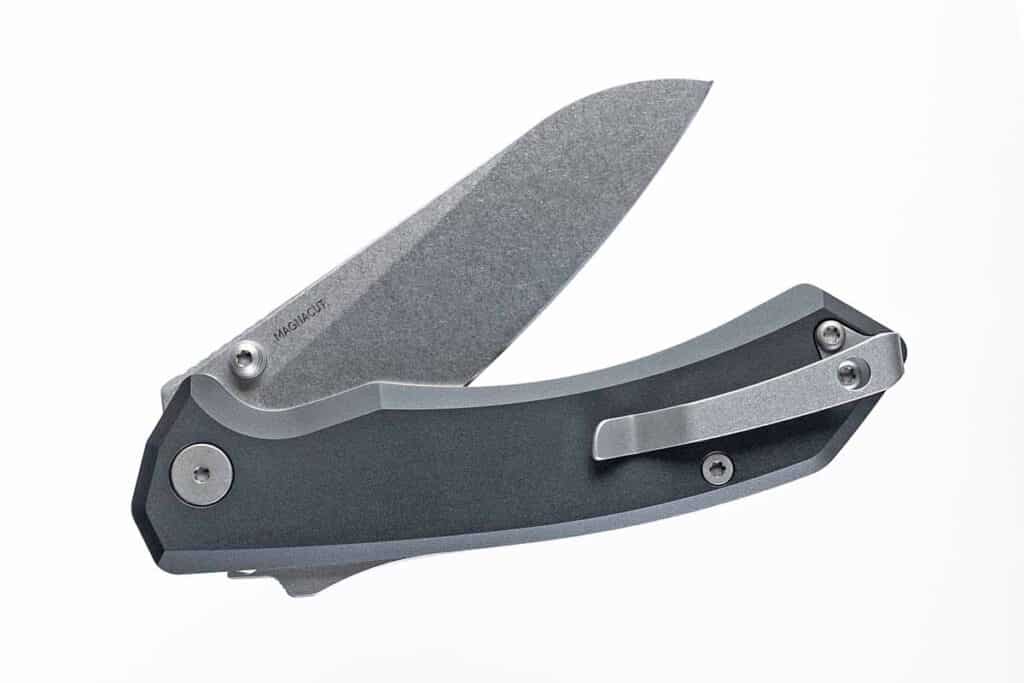
Knife type: Manual folder Designer: Matt Palmore Blade length: 3.3” Blade steel: CPM MagnaCut stainless Rockwell hardness: 63-64 HRC Blade grind: Flat Blade @ thickest: .135” Blade finish: Stonewash Handle material: 7075 aluminum Lock: Superlock Opening mechanism: Thumb stud Pivot materials: Ceramic caged bearings Pocket clip: Stainless steel, deep carry Weight: 4.72 ozs. Closed length: 4.45” Knife to know: First U.S.-made Superlock Country of origin: USA MSRP: $249 Available: NOW
Condor Tool & Knife K-Night Scullery
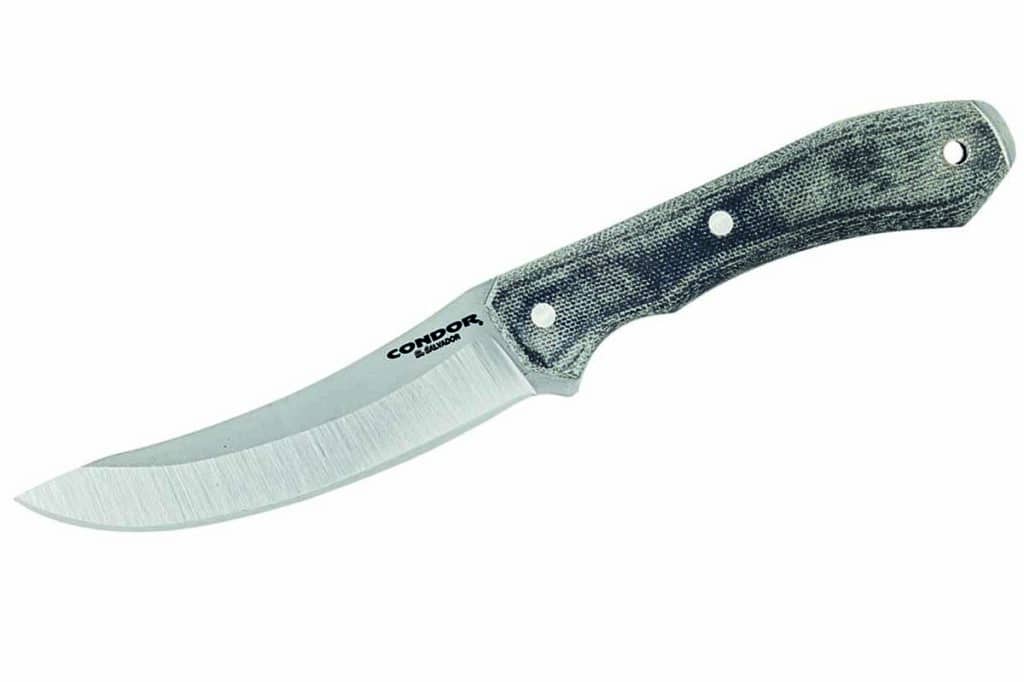
Knife type: Tactical fixed blade Designer: Jason Breeden Blade length: 4.69” Blade steel: 14C28N stainless Rockwell hardness: 55-58 HRC Blade grind: Flat w/second bevel Blade @ thickest: .12” Blade finish: Blasted satin Construction: Full tang Handle material: Black canvas Micarta® Weight: 7.06 ozs. Overall length: 9.07” Sheath: Kydex w/leather belt loop Country of origin: El Salvador MSRP: $124.98 Available: Fall ’24
Fox Knives Kronos
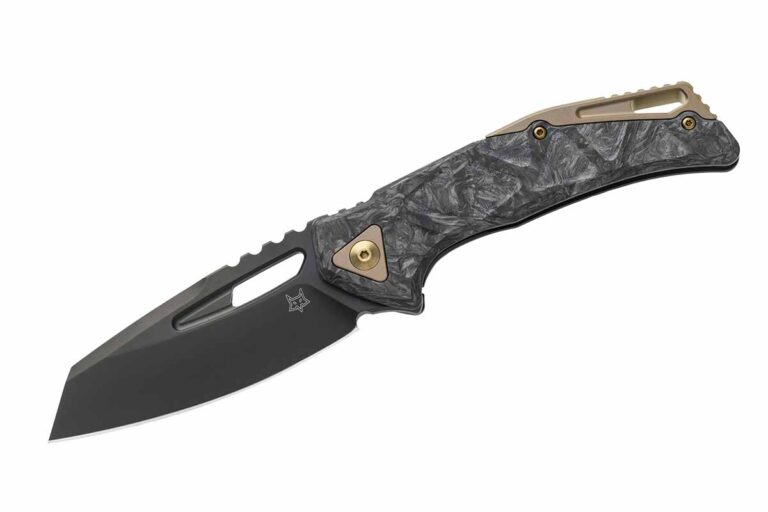
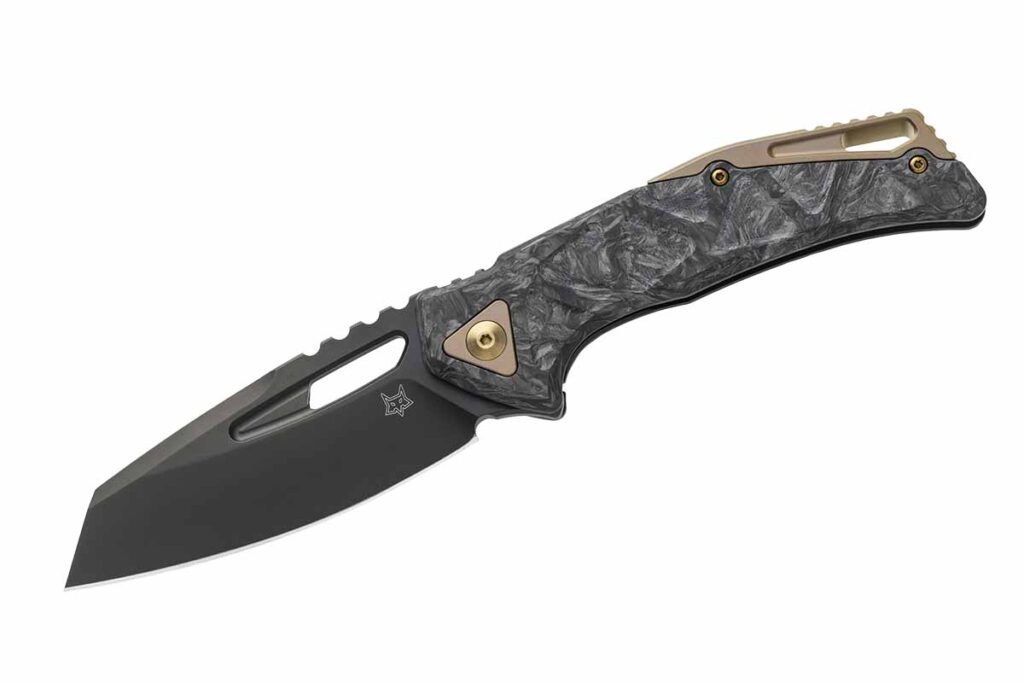
Knife type: Folder Designer: Stefan Merk Blade length: 3.54” Blade steel: CPM MagnaCut stainless Rockwell hardness: 62-64 HRC Blade grind: Flat Blade @ thickest: .16” Blade finish: Black PVD Handle material: FatCarbon Dark Matter Black Lock: Framelock Opening mechanism: Flipper w/ball bearings Pivot materials: Stainless steel Pocket clip: Right-handed; integral milled Closed length: 4.49” Sheath: Zippered nylon Country of origin: Italy MSRP: $487 Available: September ’24
Emerson Knives, Inc. COM-SEVEN
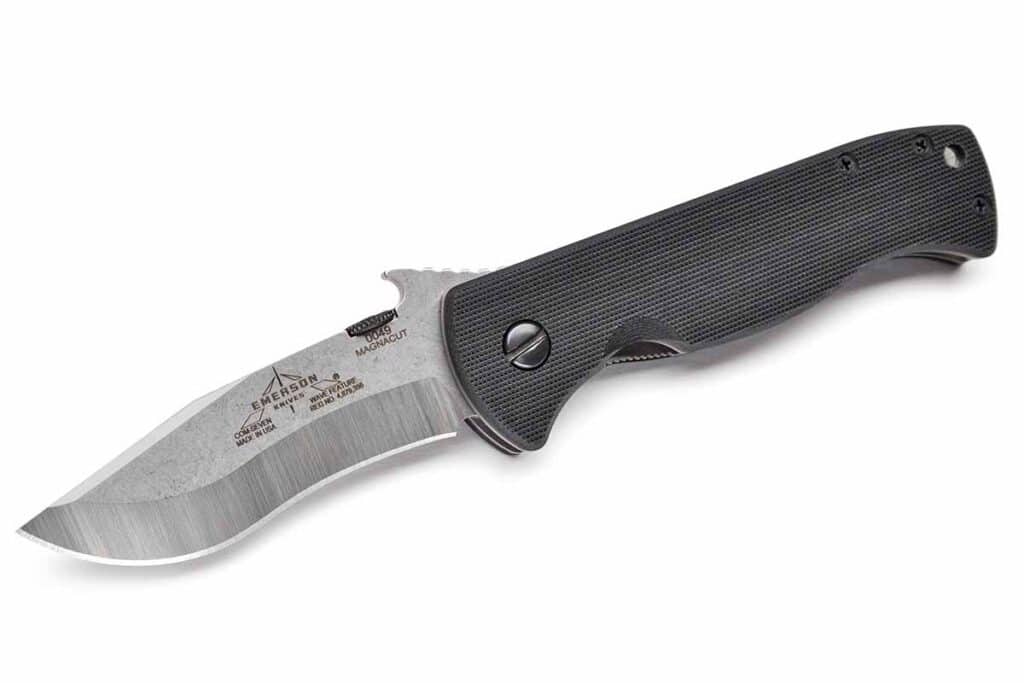
Knife type: Manual folder Designer: Ernest Emerson Blade length: 3.3” Blade steel: CPM MagnaCut stainless Rockwell hardness: 62-64 HRC Blade grind: Conventional ‘V’ Blade @ thickest: .125” Blade pattern: Recurve Blade finish: Stonewash Handle material: G-10 Lock: Titanium linerlock Pocket clip: Stainless steel Closed length: 4.7” Sharp stuff: Wave Shaped Feature Country of origin: USA MSRP: $295 Available: Sold out @ press time; more out in August ’24
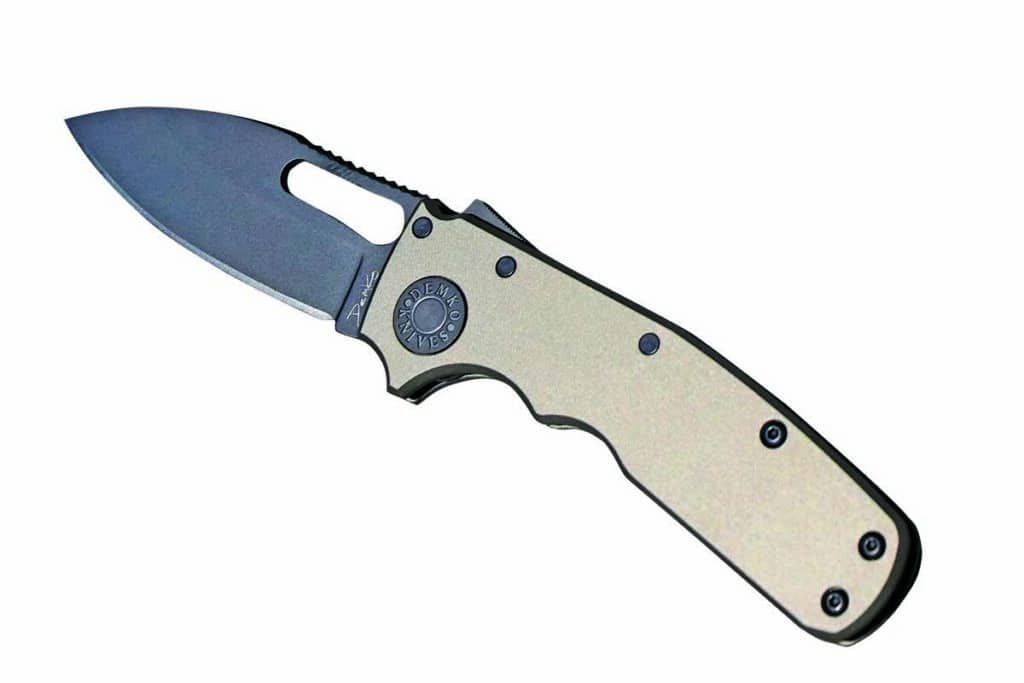
Demko Knives Shark Cub
Knife type: Folder Designer: Andrew Demko Blade length: 2.5” cutting edge Blade steel: Choice of 20CV stainless (anodized aluminum handle) and AUS10A stainless (Grivory handle) Rockwell hardness: 62 HRC Blade grind: Taper Blade @ thickest: .095” Blade pattern: Slicer Shark or clip point Blade finish: DLC/satin Lock: Shark-Lock Opening mechanism: Opening slot or thumb stud Pivot materials: Cage bearings Pocket clip: Stainless steel, deep carry, ambidextrous Weights: Aluminum/Shark Cub Slicer: 3.85 ozs.; Grivory/clip point: 3.05 ozs.; Grivory/Slicer: 3 ozs. Closed length: 4.2” Country of origin: Taiwan MSRP: $69.99 to $209.99 Available: Fall ’24
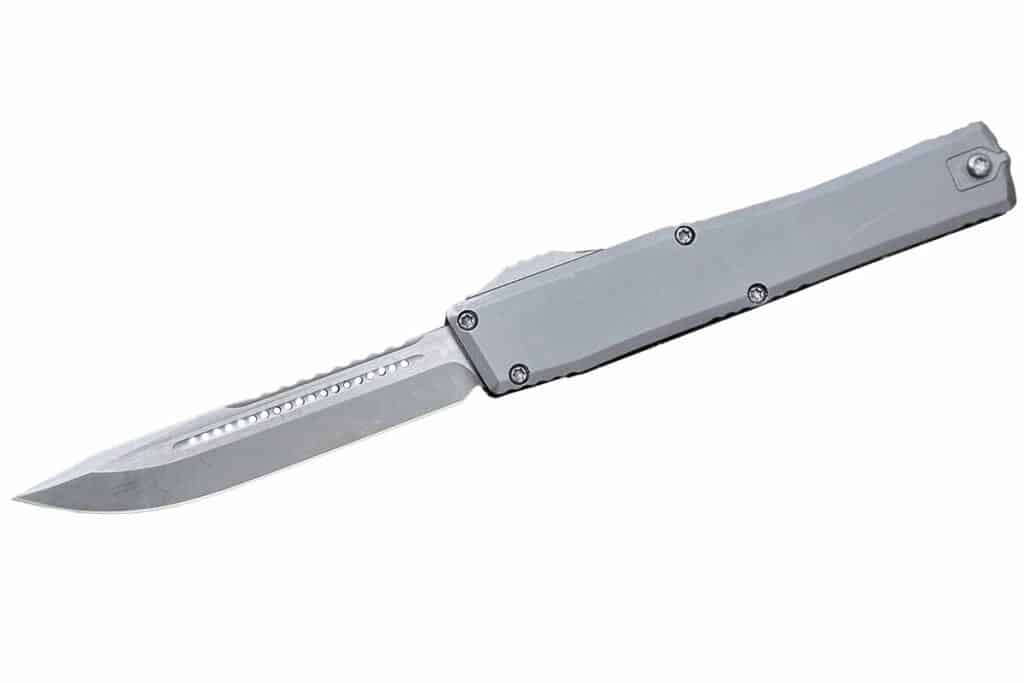
Heretic Knives OTF Auto
Designer: Anthony Marfione Blade length: 3.6” Blade steel: CPM MagnaCut stainless Rockwell hardness: Proprietary Blade grind: Machined ground (for production) Blade @ thickest: .14” Blade pattern: Clip point Blade finish: DLC Handle material: 6061 T6 aircraft aluminum Lock: Mechanical locking Opening mechanism: Out-the-front automatic Pocket clip: Stamped clip is standard; optional machined clip Closed length: 5.045” Knife to know: Fully machined; lifetime warranty Country of origin: USA MSRP: $279 Available: NOW
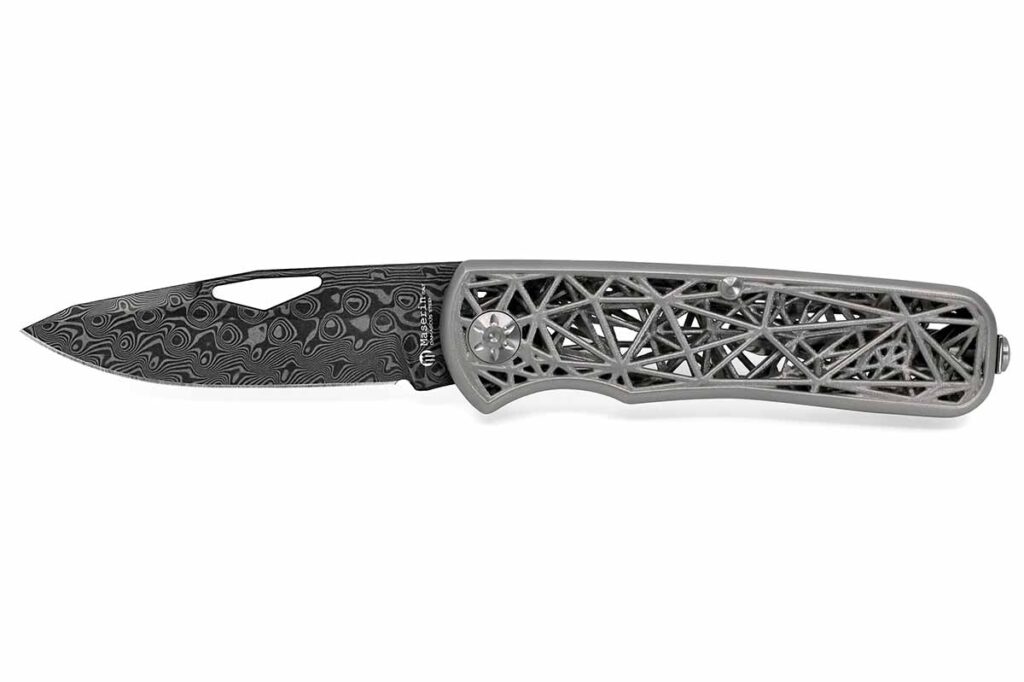
Maserin Nexus
Knife type: EDC slipjoint Designer: Maserin Maurizio Blade length: 3.22” Blade steel: Small Roses damascus pattern in 120 layers Rockwell hardness: 60 HRC Blade grind: Flat Blade @ thickest: .125” Blade pattern: Drop point Blade finish: Damascus finishing Construction: Integral Handle material: 3D printed in a single piece of AISI 316L stainless steel Pivot materials: Bronze washers Pocket clip: Polished stainless steel; reversible Weight: 5.15 ozs. Closed length: 4.25” Knife to know: Comes w/a dedicated limited-edition, recycled paper gift box; 3D printed design based on C.E. Delaunay lunar motion studies Country of origin: Italy MSRP: $1,298 @press-time rate of exchange Available: October ’24
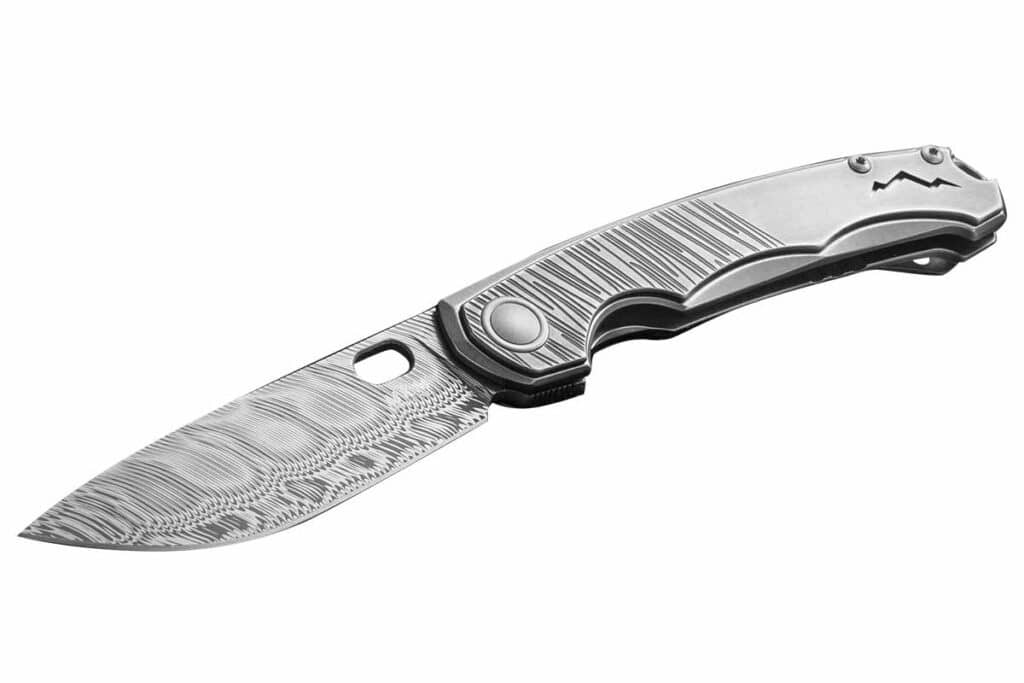
Knife type: Folder Designer: Jesper Voxnaes Blade length: 3.19” Blade steel: Fafnir pattern damascus by Damasteel Rockwell hardness: 58-60 HRC Blade @ thickest: .12” Blade pattern: Modified drop point Blade finish: Mirror polished Construction: Screw Handle material: Titanium + titanium (Ti6Al4V frame) Lock: Linerlock Opening mechanism: Thumb hole and/or flipper Pivot materials: Stainless steel screws w/titanium ring on pivot screw Pocket clip: Titanium, deep carry Weight: 3 ozs. Closed length: 4.33” Knife to know: Comes in a special wooden MKM collection box; limited and numbered edition of 100 models in damascus steel and milled titanium Country of origin: Italy MSRP: $737 @press-time exchange rate Available: NOW
QSP Knife Dolphin
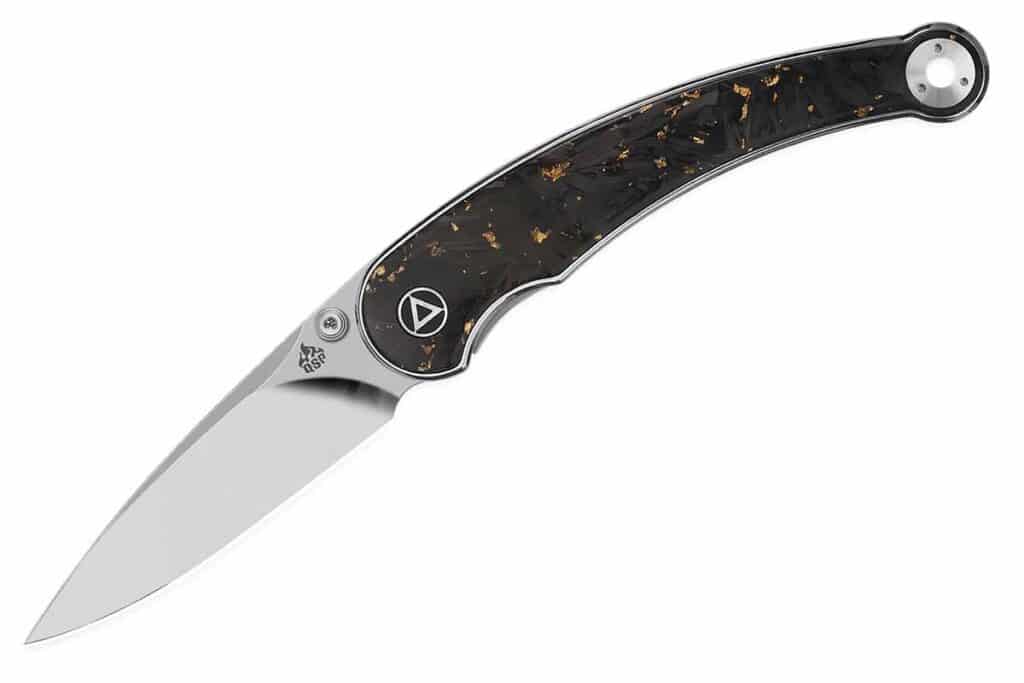
Model type: Pocketknife Designer: QSP Blade length: 3.125” Blade steel: Sandvik 14C28N stainless Rockwell hardness: 59-61 HRC Blade grind: Flat Blade @ thickest: .118” Blade pattern: Clip point Blade finish: Mirror polished Construction: Screw Handle frame: Stainless steel Handle inlay: Shredded carbon fiber and Golden Shred in clear resin Lock: Linerlock Pivot materials: Ceramic ball bearings Pocket clip: No Weight: 3.53 ozs. Closed length: 4.625” Sheath: Belt loop pouch, leather Country of origin: China MSRP: To be announced Available: November ’24
Chaves Knives Auto Chub
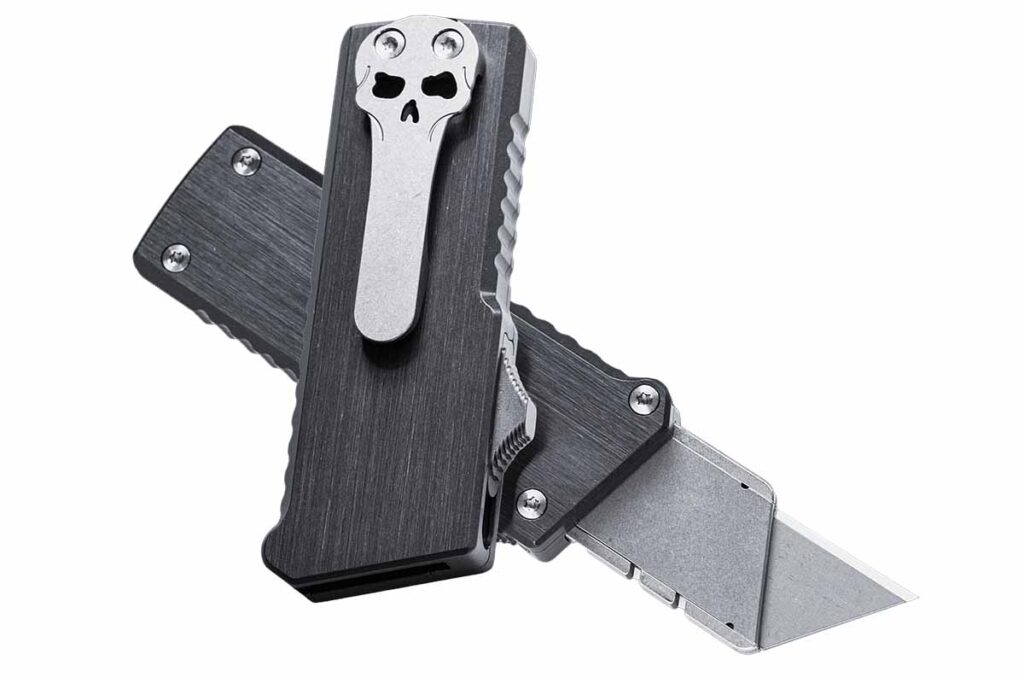
Knife type: Utility OTF Designer: Ramon Chavez Blade length: 1” Construction: Screw Handle material: Aluminum Lock: Trigger Opening mechanism: Double-action auto Pocket clip: Titanium, tip down, right-handed Weight: 3 ozs. Special features: Removable utility blade Country of origin: USA MSRP: $300 Available: First shown to public at BLADE Show 2024; website and retailer availability summer and fall ’24
Reate T1000-V2
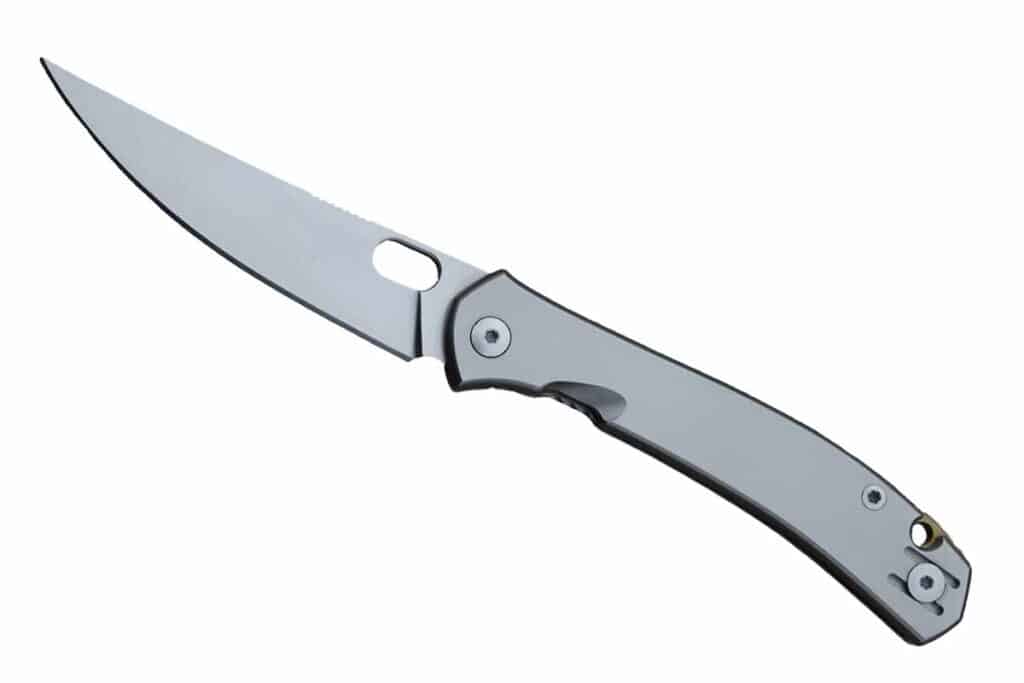
Knife type: Folder Designer: Alvin Lee Blade length: 3.6” Blade steel: M390 stainless Blade finish: Satin Handle: Titanium Weight: 10.5 ozs. Closed length: 5.2” Country of origin: China MSRP: To be announced Available: To be announced
Knife type: Persian folder Designers: Jesper Voxnaes & Jens Anso Blade length: 3.26” Blade steel: CPM MagnaCut stainless Rockwell hardness: Approximately 62 HRC Blade grind: Flat Blade @ thickest: .11” Blade finish: Satin Construction: Screw Handle material: Choice of titanium/titanium & carbon fiber Lock: Framelock Opening mechanism: Thumb hole Pivot: Ball bearings Pocket clip: Steel wire clip Weight: 2.2 ozs. and 2 ozs., depending on handle material Closed length: 4.14” Country of origin: Italy MSRP: $285 (ti) and $245 (CF) Available: August 8 launch
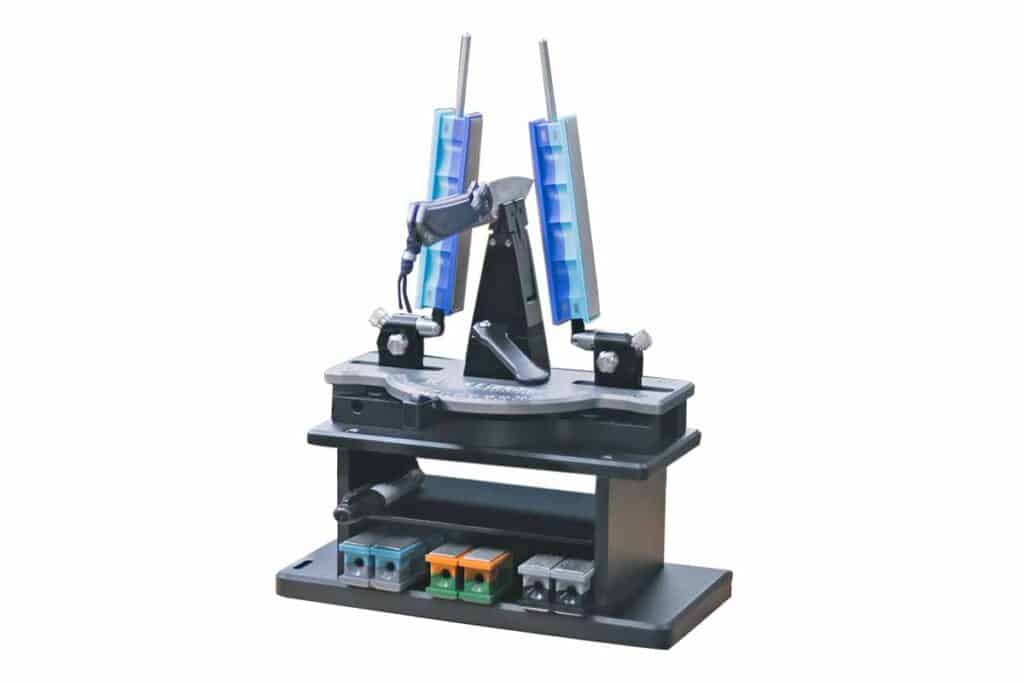
Wicked Edge Generation 4 Pro w/micro-adjusts and storage shelving
Sharpener type: Precision-angle-guided manual Designer: Wicked Edge Abrasive: Premium monocrystalline diamond stones Grit assortment: Two each of 100/200, 400/600 and 800/1000 grit Sharpener dimensions: 11.5” long, 11” tall, 6” wide Construction materials: Stainless steel and Type 2 and 3 anodized aluminum Weight: 13.1 lbs. Special features: Patented dual-sided sharpening, repeatability tools, dual-cam vise, and dual-sided angle settings w/micro-adjusts Country of origin: USA MSRP: $1,499 Available: NOW
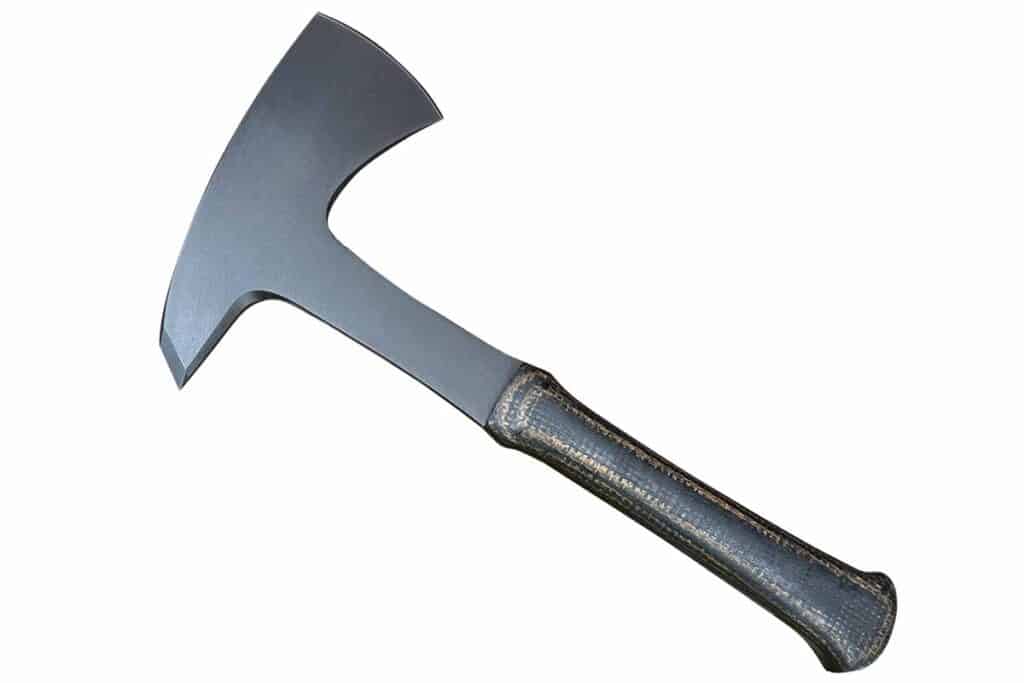
Winkler Knives Twenty 24
Model type: Hatchet Designer: Winkler Knives Blade length: 6” Blade material: 80CrV2 carbon steel Rockwell hardness: 59 HRC @cutting edge Blade grind: Flat Blade @ thickest: .248” Blade pattern: Utility Blade finish: Black oxide Construction: Full tang Handle material: Various woods and laminates Weight: 1 lb., 3 ozs. Overall length: 12” Sheath: Quick-access, lined Boltaron® Knife to know: Will be made in 2024 only and then retired Country of origin: USA MSRP: $575 base, $675 as pictured Available: NOW; watch for drops on Winkler website