From One-Day Course To One-Of-A-Kind Knives, Kurt Swearingen’s Buffalo Hunter Set Shows How Quickly The Knifemaker Has Honed His Craft
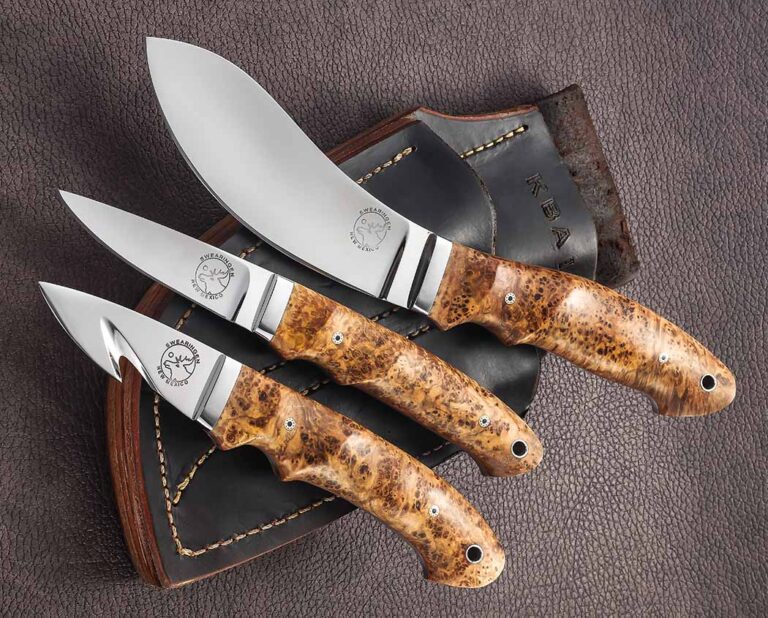
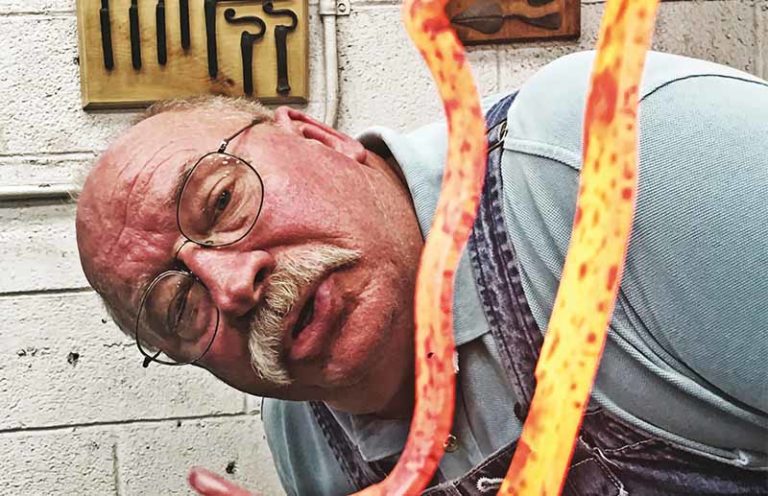
ABS Journeyman Smith/Knifemakers’ Guild member Kurt Swearingen went with tradition and what works in his three-piece buffalo hunter set.
Made for North American big game, the set includes a Green River-type skinner, caper, and gut hook in CPM 154 stainless steel blades and black ash burl grips. Kurt based the design on a similar set he’d seen from the 1800s. He chose CPM 154 because that’s what he uses on his fixed-blade hunting knives and the ash because it’s a wood native to the Great Plains, home of the American bison.
He made the sheath from three layers of stacked 9-ounce leather with two layers of welts. The sheathed set weighs 2-3 pounds so he hollow ground the blades and outfitted them with bolsters instead of guards to save on weight and size. The set wears on a belt, though Kurt modified it so you can string it on a pack or a saddle.
Who Is Kurt Swearingen?
Swearingen’s knifemaking journey began back in 2007 after taking a one-day class. From there he learned from one of the all-time greats, Lin Rhea, who helped him to perfect forging and heat treating techniques that have helped make his knives stand out from the pack.
Just seven years after that course that started it all, Swearingen earned the rank of journeyman smith. Today he specializes in hunting and camp knives of all types.
Buffalo Hunter Set Specs
Model: Buffalo Hunter Set Maker: Kurt Swearingen Patterns: Green River skinner, caper and gut hook Blade lengths: 4.75 inches, 3 inches, and 2.75 inches Blade steel: CPM 154 stainless Handle material: Black ash burl Sheath: Three layers of 9-ounce stacked leather Maker’s price for a similar set: $1,850
The Ulu knife has grown in popularity in recent times. We cover the origin of this traditional knife of the north, how it’s used and some of the best modern options.
The Ulu knife has become increasingly popular in recent years among chefs, ardent home cooks, homesteaders and more. Traditionally a food preparation knife, this unique blade has come to be used for various household, hunting, cooking, and survival tasks.
Today we’re going to take a close look at this incredibly versatile tool, including its fascinating history among the native peoples of Alaska, how it is used, and how it stacks up against other similar knives. Then we’ll take a deep dive into the top 8 best Ulu knives currently on the market.
Let’s get started.
History of the Ulu Knife
The Ulu knife has its origins as a traditional tool used by the Inuit, Iñupiat, Yupik, and Aleut people of Alaska, Canada, Greenland and far Western Russia. Throughout history, these knives were used primarily as tools around the home, including for sewing, food preparation, and butchery—depending on the size of the knife.
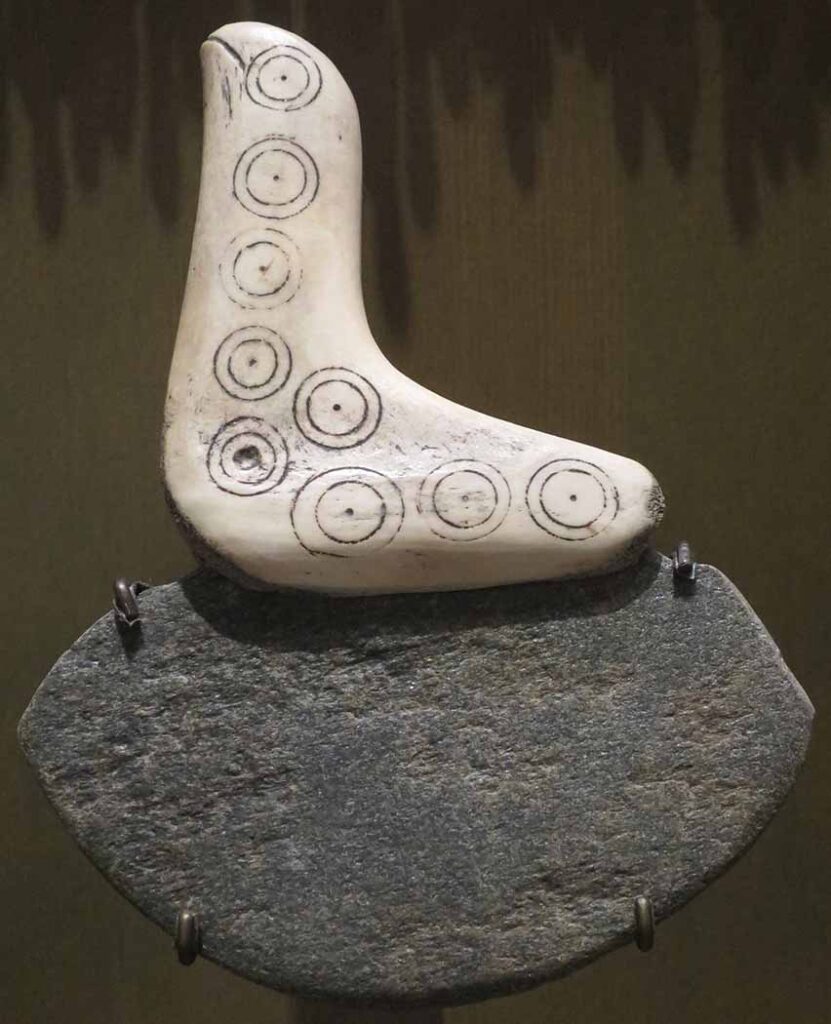
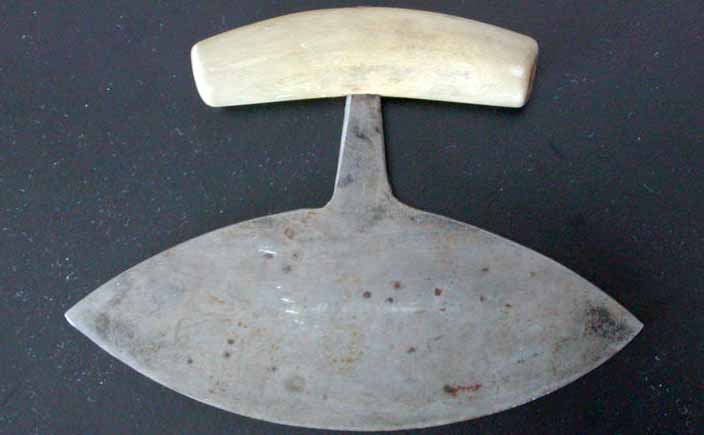
Originally made with a walrus ivory, muskox horn, or caribou antler handle with a slate blade, modern Ulu is typically made with a wooden handle and steel blade, often reforged from a bartered saw or spade blade in traditional communities.
While materials have changed, the design has remained much the same, with a wide, curved-edge blade mounted in front of where your knuckles when gripping the handle. It’s almost like a push dagger but with a wide, single-edged blade on the same axis as the handle.
There are a few regional variations where the blade is attached by a central stem to the handle, but in most versions, the handle is attached at each end of a curved blade.
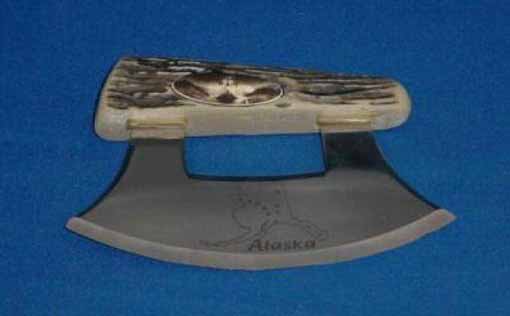
Today, the knife is growing in popularity all over the world for food preparation, while still being used every day in the indigenous communities where it was first brought into the world. The Alaskan style is most prevalent, with a wide, crescent-shaped blade attached at one or both ends to the handle, but there are definitely other versions out there as well.
Using the Ulu Knife
The Ulu knife has a curved blade designed primarily for either a scraping or in a rocking motion, but it can also effectively chop and slice much like a Western-style chef’s knife.
It is very similar to a sharpened bench scraper in some ways, and can easily be used to gather up chopped ingredients. It can also be used to break down a carcass and is very efficient at chopping through bones, much like a heavy cleaver.
Smaller versions are also traditionally used for household tasks like sewing, working with hides or leather and even wood carving. Larger versions with blades up to 12 inches are also sometimes used as everything from a cleaver to a draw knife.
For most people though, the Ulu is a kitchen tool, something to make prepping meats, fruits, vegetables, and herbs easier when getting lunch or dinner ready. It has a variety of uses beyond that, but for most, it has earned its reputation as a stellar kitchen tool.
Pros and Cons of the Ulu Knife
The Ulu knife is an extremely useful knife, and very versatile, but it can’t quite do everything. Here are some pros and cons of this awesome traditional tool.
Ulu Pros
Kitchen Prep: First and foremost, it’s great for most kitchen prep tasks. Fileting a fish or carefully deboning a chicken might be a struggle, but for everything else, it is a very fast and effective way of taking big chunks of ingredients and making them smaller.
I personally love using one to chop herbs and leafy vegetables where the wide blade and curved profile make long rocking and slicing motions feel very nice. If you frequently find yourself chopping up fresh herbs from the garden, this is a great tool to have on hand.
Game/Meat Processing: It also does a great job of breaking down animal carcasses, as well as dealing with large chunks of meat like a rack of ribs or a whole chicken. That wide cleaver-like blade may not be ideal for chopping through something like beef neck, but for smaller bones you can easily press the blade against, you’ll have no trouble at all.
It’s also very good for scraping meat off of a bone, quickly chopping up root vegetables, halving large fruits or vegetables like navel oranges when you’re making juice and things of this nature. It also makes a phenomenal pizza cutter (which is one of the primary uses mine sees).
Bushcraft: Outside of the kitchen, it is of course still a sharp piece of metal with a handle, so its use is limited only by your own creativity. They work great for a variety of camp tasks, so if you’re looking for one knife that can really do it all in the backcountry, you could certainly do worse.
Splitting small pieces of wood, making feathersticks, carving a quick replacement tent stake, cutting cordage, and other similar tasks are all well within the Ulu’s abilities.
Cutting-Style Adjustment: The biggest problem with the Ulu knife is that using it requires a bit of a different motion than your typical Western-style chef knife, or even something like a Santoku because of the handle’s placement.
The chopping or slicing motions you’re used to are going to take some adjusting if you want to use an Ulu effectively. It’s not a huge change for most people, but if you have a lot of muscle memory and knife skill with more common kitchen knives, it is definitely an adjustment.
Somewhat Limited Scope: The other big issue is that the size and shape of the knife make it unsuited for some tasks, but you can say the same thing about any knife really. Still, you’re going to have a rough time filleting a small fish with this knife.
Other than that, the handle design of the Ulu makes things like slicing through very thick material or produce difficult if not impossible, so reach for something else when carving through something like a large watermelon or what have you.
Buyers Guide: 7 Best Ulu Knives on the Market Today
Now, let’s take a look at the best Ulu knives on the market today. These are the knives that offer something beyond the competition in terms of value, features, design, or workmanship.
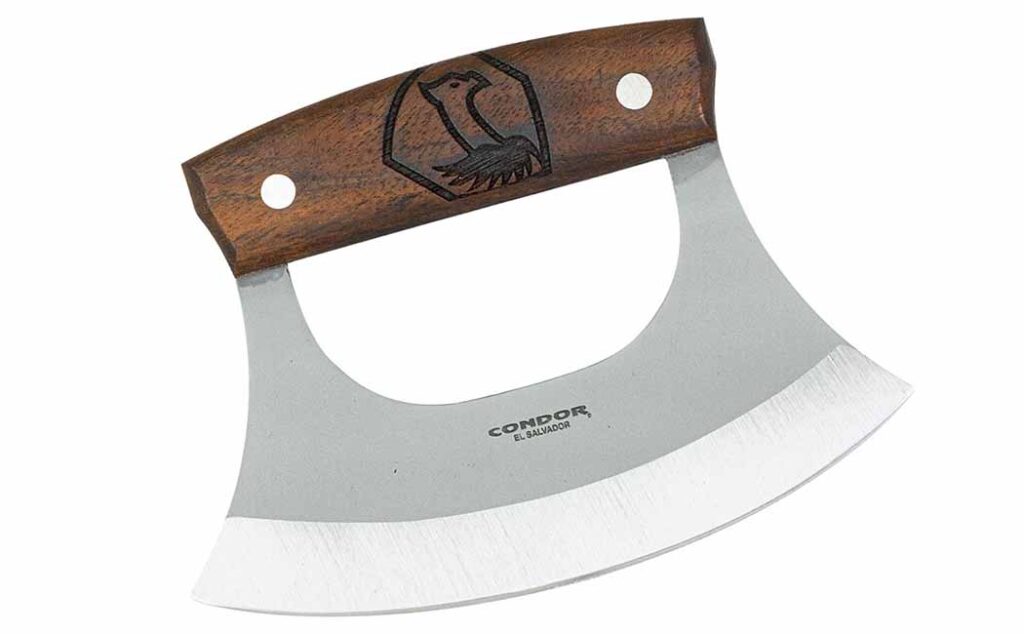
Condor Ulu Fixed Blade Knife Walnut Wood
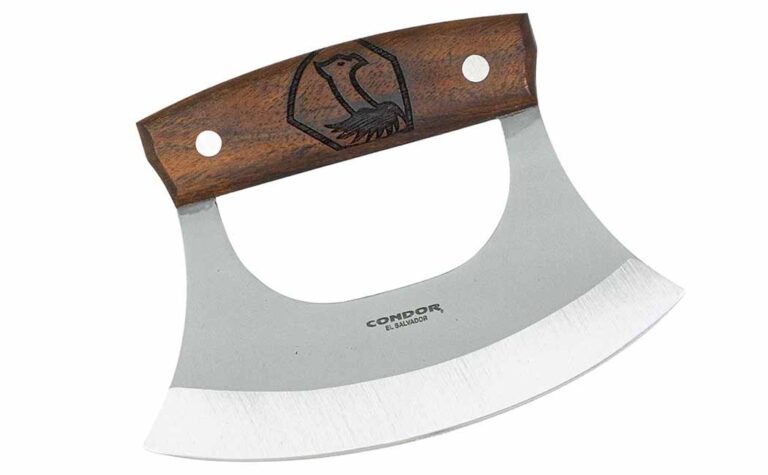
Condor Tool & Knife has made a name for itself across the knife world by providing high-quality knives to meet a variety of needs (and budgets). Their take on the Ulu is made in a very traditionally-Alaskan way, with a curved blade attached to a handle at both ends.
The beautiful walnut handle is engraved with Condor’s logo and features stainless pins attaching it to the blade. The handle is very comfortable and shaped well for most hand sizes. This may not be the knife to hand your kid when teaching them to chop veggies for the first time, but beyond that, it should work well for just about everyone.
The blade itself is 6-inches long and is made of high-carbon 1075 steel, and is hollow ground with a thin edge to facilitate chopping, slicing, dicing, and other kitchen tasks. The knife also comes with a welted leather pouch that is made by hand.
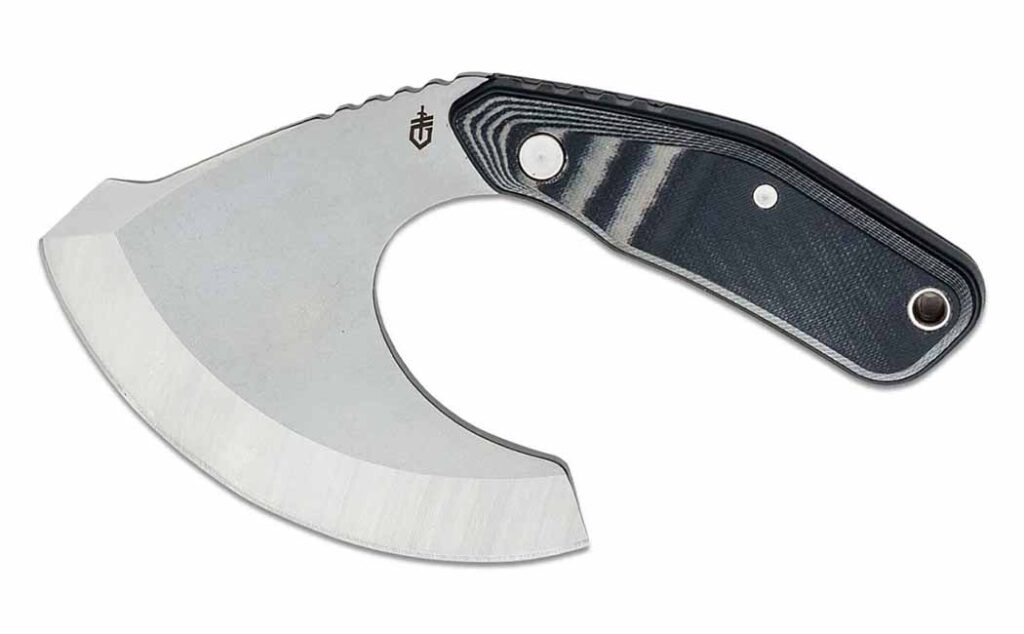
Gerber Downwind Ulu
Gerber’s budget-friendly knives often offer great value for the money, and their Downwind Ulu is a great example of this.
Made of high-chromium stainless steel like many mid-range survival knives, the Downwind Ulu is a great camp knife for folks who like cooking more involved meals in the backwoods, and it can still be used for other camp tasks.
It uses a more modern design, with a handle that is more like a cleaver or a small hatchet really, but the overall ergonomics are still very much in line with the traditional Ulu. If you’re looking for a hybrid between your typical chef’s knife and an Ulu, this is a great option.
The handle is a very grippy G10 that is comfortable in the hand, even if you have wet hands, and there is considerable jimping on the spine of the blade to give you extra grip when doing detailed work like skinning game or gutting a fish.
The blade is 3.5 inches long and made of 7Cr17MoV steel.
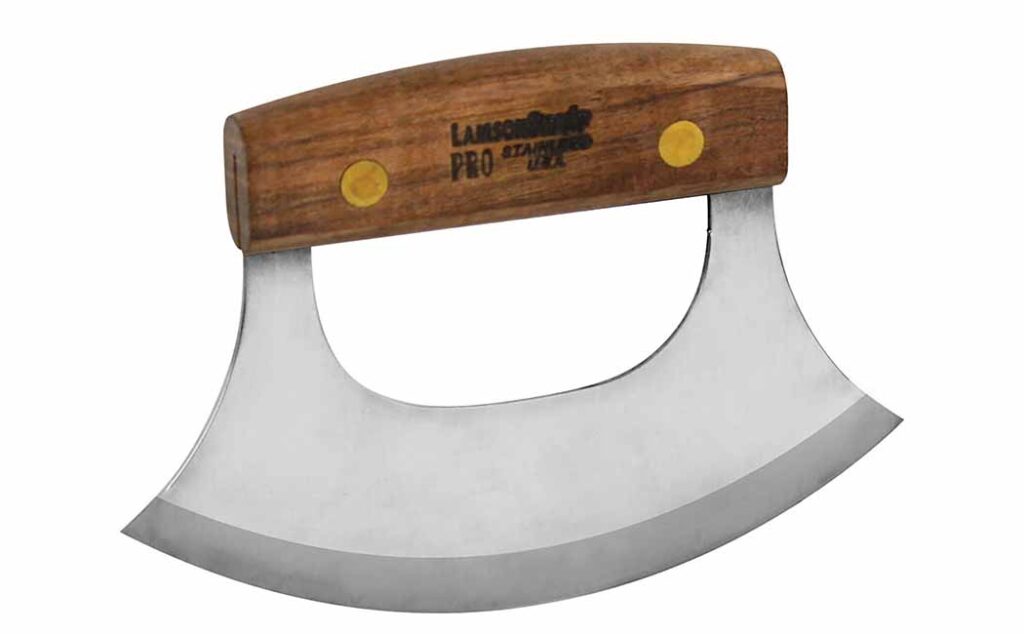
Lamson Ulu Knife
The Lamson Ulu knife is another take on the classic Alaskan Ulu and is made in America. It features a natural walnut handle that is affixed with brass rivets and uses a half-tang construction.
This particular Ulu is made in Massachusetts and is hand finished and sharpened to give it that extra bit of polish. The blade is a high-carbon stainless tempered to a 58 Rockwell hardness so it holds an edge well without being brittle or prone to rolling when cutting something tough.
It also comes with Lamson’s lifetime warranty, which covers any manufacturing defects in perpetuity, and also includes a lifetime of professional sharpening so when you do need to give the edge a touchup, you can send it to them if you don’t feel like doing it yourself.
If you’re looking for a budget-friendly Ulu to use for processing vegetables, slicing pizza, and dealing with other food-prep tasks, this is a great option that will look sharp (pun intended) in any kitchen.
The blade is 3 inches wide (on this version, there are several) and made of 420-HC LAM S/S steel.
Ezina Designs Walnut Inupiak
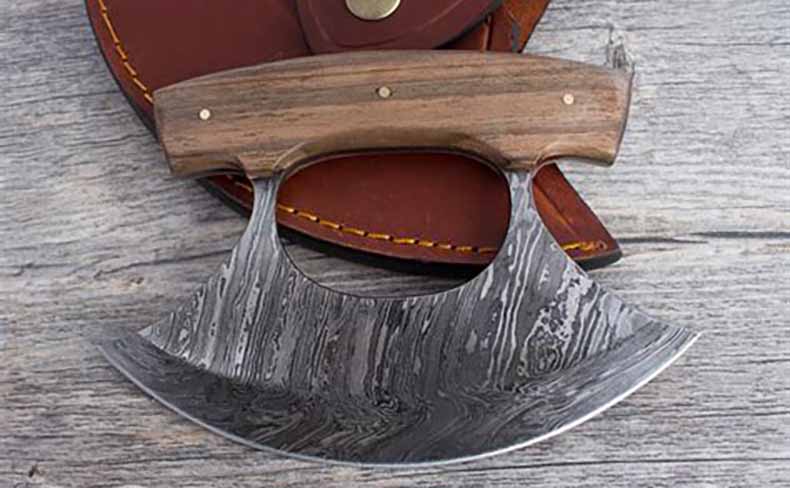
This knife by Ezina Designs is made by North Star Knife & Ulu Company and is handcrafted to be rugged and durable in real-world use. This knife is made in Alaska, and the beautiful damascus blade is made of 1074 and 15N20 carbon steel and features a high nickel content.
This high nickel percentage contracts the grain of the metal and helps it resist corrosion so it can stand up to some heavy use and abuse in the field. The gorgeous walnut scales hide a full-tang construction, and the whole handle is set together with three brass through-pins.
It also comes with a handmade leather pouch sheath that Ezina Designs will custom engrave for you with three characters of your choosing, making this a phenomenal gift for the chef or foodie in your life, especially if they also love the outdoors.
Ezina Designs Antler Mini Ulu
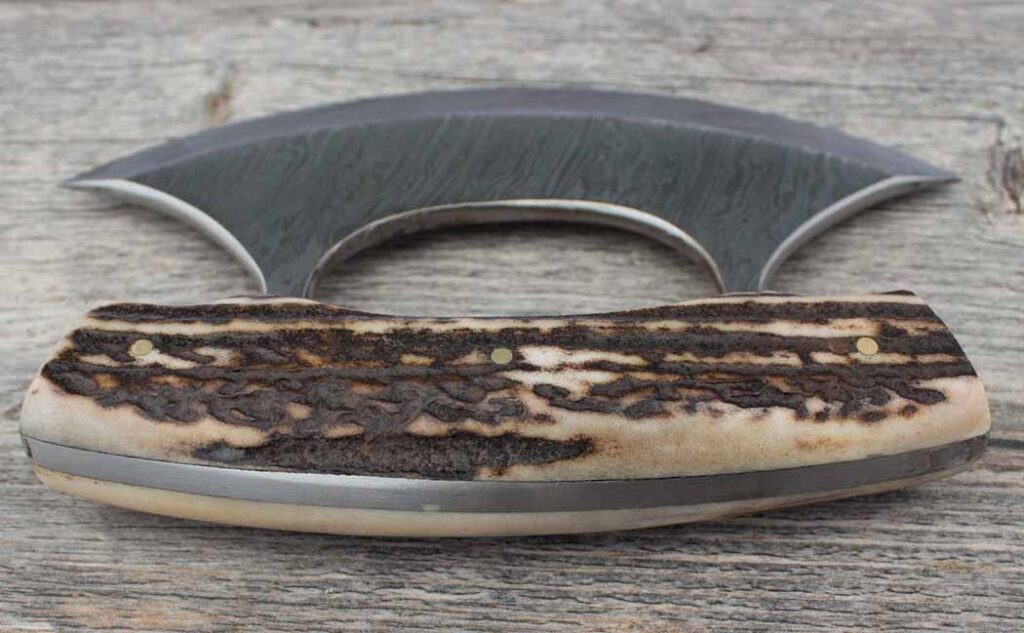
Another North Star Knife & Ulu product, this smaller Ulu has a 4” blade that makes it a bit more portable, or perfect for storing out of sight and out of mind with a small cutting board in something like a camper or boat.
It features a gorgeous antler handle, and the same awesome damascus steel featured in the above offering. Because it has such a small blade (relatively speaking at least) it utilizes the more Western style of Ulu more common in Greenland with a thick singular stem connecting the blade to the handle, as opposed to the handle being connected to both ends of the blade.
Overall, if you like the traditional aesthetic and want a small vegetable chopper or camp knife, this is a great option.
Hibben Legacy Ulu Knife
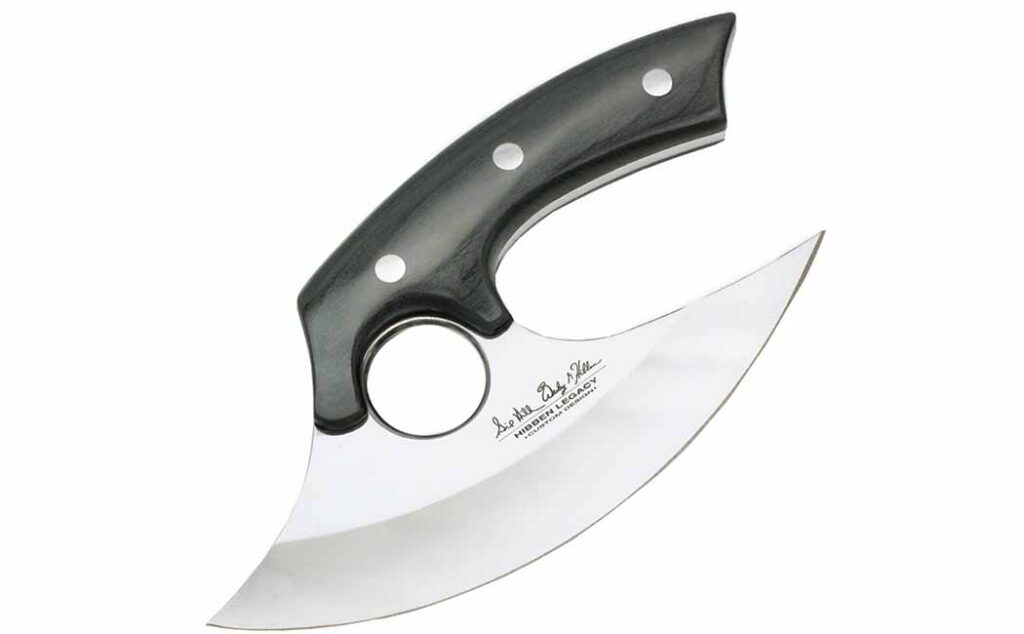
Gil and Wes Hibben are both legends in the knife world, so it’s probably no surprise that they’ve turned their attention to the Ulu. Their take on this traditional knife has a modern design, which you probably expect if you’re familiar with their work.
The stainless steel blade is attached to one end of the handle in the updated hatchet-like fashion we see with some modern Ulus and is 6.5” in length so it’s perfect for kitchen and camp tasks. The stainless doesn’t hold an edge as well as some of the carbon steel options on this list, but of course, will be more resistant to corrosion and rust.
The blade on this thing is beefy so if you’re looking for something to really hack into thick pieces of meat or chop through bones, this is a great option. It’s also durable enough for some tasks around camp, making this a great one for the backcountry cooks out there.
Bushmaster Survival Ulu
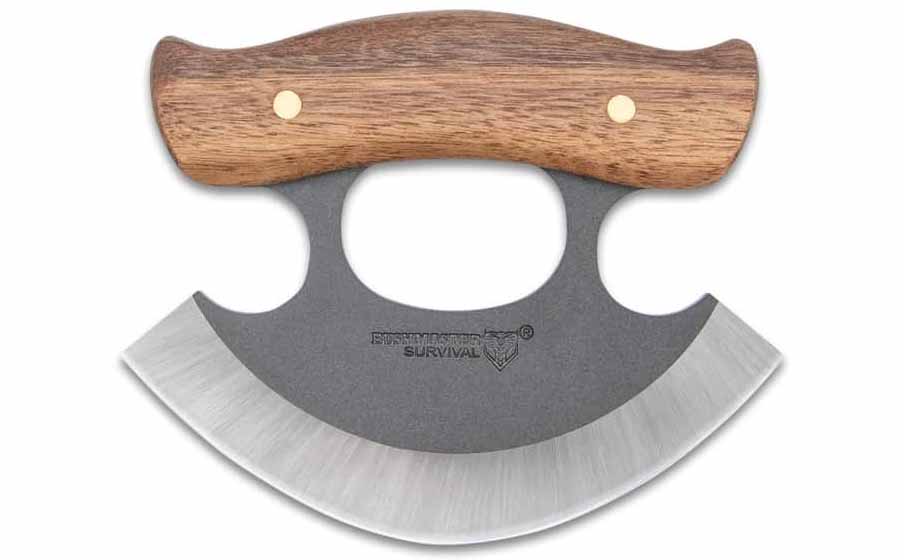
Lastly, we have the Bushmaster Survival Wilderness Ulu, which moves away from the kitchen knife style and more into a true survival or camp knife. It has a very beefy blade made of 1095 high-carbon steel.
If you’re looking to process large game, hack up a rack of ribs, or split some decent-sized logs for the fire, this is the option for you. The hardwood handles are curved to fit most hand sizes, and secured with brass pins.
This Ulu is just under 4.5-inches overall, which makes it a great choice for a variety of camp chores as it’s not too big or too small for most of what you’re likely to have to do out in the woods. At home, it still chops vegetables just as well as any other option we’ve got.
Final Thoughts on the Ulu Knife
The Ulu knife is a great example of traditional wisdom and design that still very much has a place in our modern world. The old saying “If it ain’t broke, don’t fix it” very much applies here, with this knife that is just as at home in our modern world of hustle and bustle as it was in the native communities it originated in thousands of years ago.
We’ll take a momentary break from knives to talk about how to make this ancient and useful hunting tool—the atlatl.
Over 20 years ago I attended a primitive skills event in Michigan where the Michigan Atlatl Association was having its annual competition. I was amazed at how accurate the people could be using an atlatl, not to mention how much energy they could generate throwing one. However, I don’t want to get too far ahead of myself. For starters I want to explain why I’m discussing atlatls in the first place.
One of the key points to remember during a survival situation is efficiency, because efficiency saves calories and resources. I know, many have heard of making a survival bow, but the time and resources used to make an atlatl are way less. An atlatl is simple: a throwing stick that allows you to increase your power when throwing a dart.
Imagine you were a pitcher in the major leagues and you could increase the length of your arm by half. The advantage you would create would be amazing. Similarly, not only is an atlatl easy and fast to make, it also increases your ability to throw a projectile farther and faster. Don’t get me wrong; I am not against bows by any means, but in the time it takes just to make a string for a bow, you can make an atlatl and a fist full of darts. In the end, if I were in a survival situation and needed something to hunt with, I would start with an atlatl.
How To Make An Atlatl
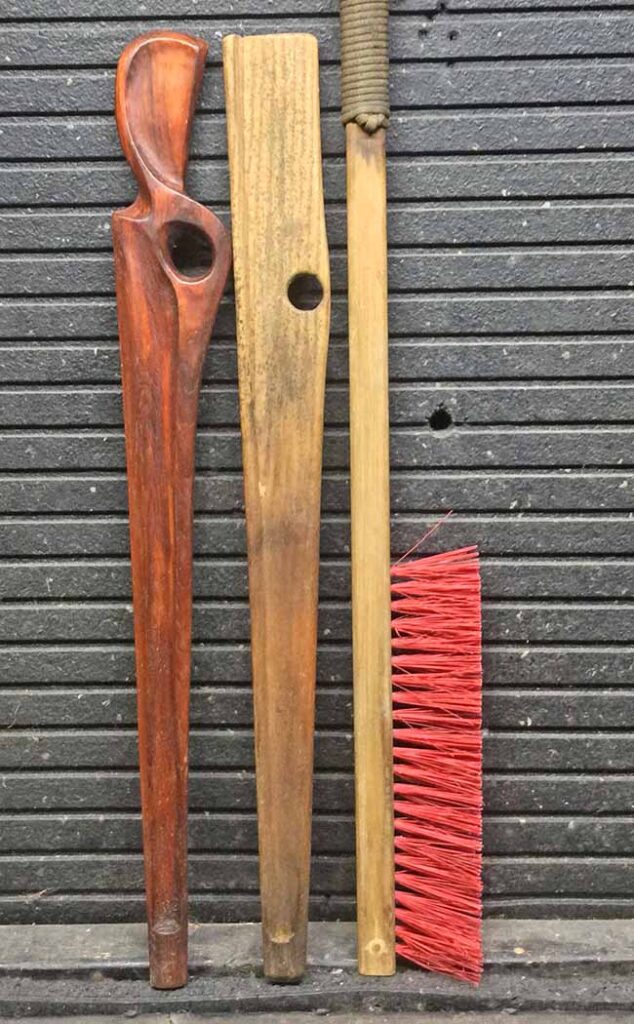
At left are two single-finger throwers. At right is a snowbrush Chris Oberg used as a thrower to win the Michigan Atlatl Association championship. A hammer-style grip works well with the snowbrush thrower as the scraper end acts as a stop.
As mentioned, the atlatl is simply a stick used to increase your throwing advantage. To start, the simplest version is a branch with a secondary branch sprouting off the main shaft.
Take a branch and cut it to the length of you forearm, being sure to leave the secondary branch near the end. Now all you need do is cut the secondary branch to a small point, or leave a pocket. Which method you use will affect how you make your darts. With the point configuration, you must put a bit of a dimple in the end of the dart so it can rest on the point of the thrower arm. Another method is to form a pocket by attaching other materials. These days most survival kits and a lot of EDC kits include duct tape. Simply cut yourself a stick, again the length of you forearm. At one end of the stick form a pocket with a piece of duct tape to cradle the back end of your dart.
There are a couple of methods to hold the atlatl. The first and easiest without having to do any more work on the atlatl itself is the hammer grip. To apply a hammer grip, grab the end of the thrower with the bottom three fingers of your throwing hand. Take your other hand and place the dart on the holder. Then rest the thrower in the palm of your hand and, with your thumb and index finger, grab the shaft of the dart, suspending it off the thrower.
A second method makes your thrower in the basketmaker’s* style. To do this you will need a bit of cord (a shoelace will work) or anything you can use to form two loops on the side of the atlatl shaft. At the end of your thrower, tie a knot that creates two loops on the handle. Insert your index finger in one loop and your middle finger in the other. Having the two loops makes it easier for you to retain the thrower throughout as it is now attached to your throwing hand. A thrower is that easy to make.
Making Spears And Darts
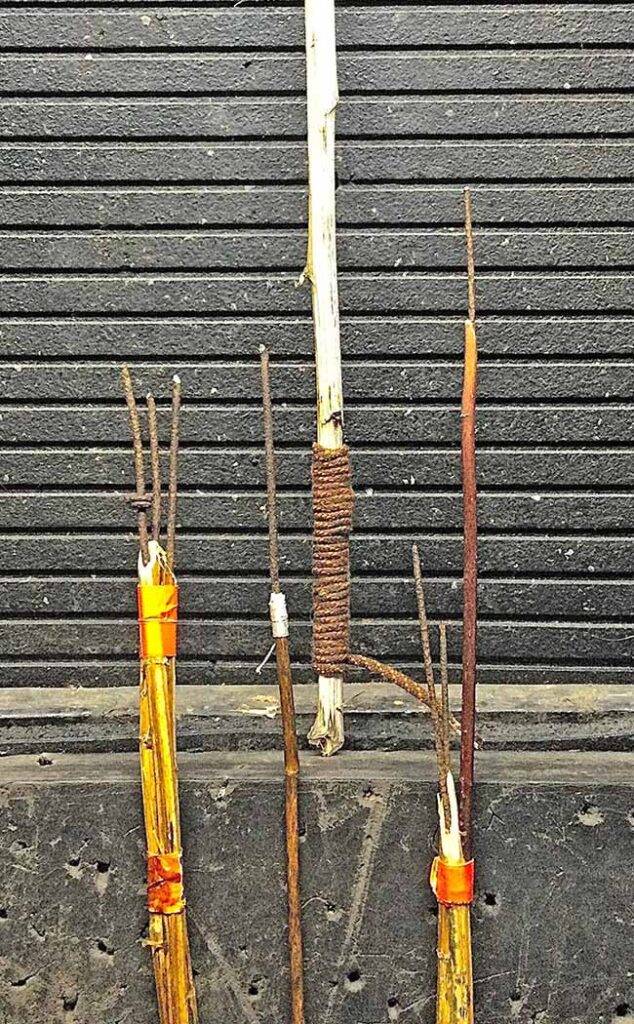
A thrower and a variety of darts illustrate the basic concepts of harvesting and utilizing various materials, including lashing smaller pieces together to make a dart.
An atlatl dart is simply a large arrow. If you can wrap your head around that, you start to see potential dart material everywhere—perhaps a piece of a broken fishing rod, the extra pole in your tent bag, a leg from a folding chair—the possibilities are pretty much endless. The mark of humanity is that there is plenty of garbage most everywhere, so remember to capitalize on any resource you run across.
For natural resources you can turn to plants and bushes that grow almost straight shaft shoots. Some examples in North America are those from mullein, rosewood cane, ragweed and dogwood. In places like Asia, bamboo is a natural selection. Since plant shafts grow in a tapered fashion, be sure to put the heavier end of your dart at the tip. Having the heavier end at the rear will cause the momentum of the heavier back to lift the tip, as the heavier end will want to pass the front.
For length, look for the dart to be at least twice that of the thrower or longer. The longer and lighter the dart, the more energy you can produce. Note: The heavier the dart, the strong the thrower must be. Start by stripping the shafts and straightening them. During the initial straightening you can bend the shafts or create friction on the concaved side, which will release the tension in the material. As time passes you might do the occasional straightening over a campfire, as the heat helps.
Now that you have the shafts straight you need to carve a small dimple in the back of each one to rest on the point of the thrower. If you are using materials that have nodes along the shaft like bamboo and mullein, be sure to carve the pocket just before a node to avoid splitting the shaft of the dart.
Now for creating drag. Just like with an arrow, to keep a dart flying straight it helps to have drag. Consequently, fletch the dart by splitting leaves and lashing them to the shaft. A more expedient way is to make fletching out of duct tape. You don’t necessarily need fletching but for throwing longer distances it helps.
For making the tip, simply sharpen the point or as mentioned earlier get creative and find something to use that has been left behind—a soda can cut and folded to form tips, for example. How does the saying go? Recycle, reduce and reuse.
What’s An Atlatl Good For?
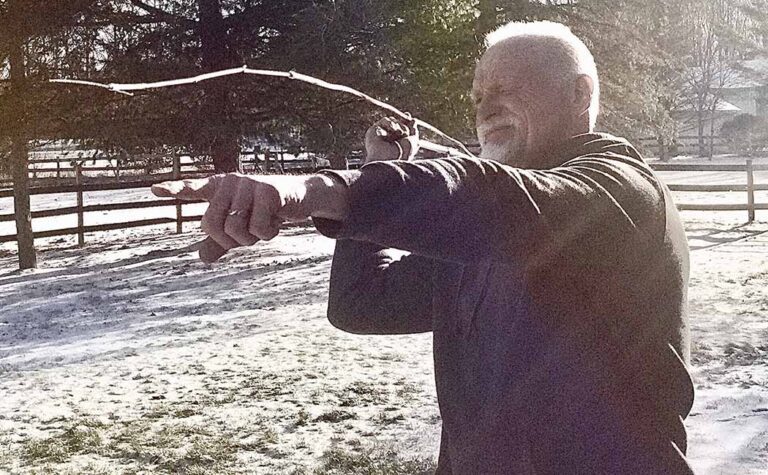
Carter Gammill takes aim. In terms of accurate throwing, the hardest part is getting your timing down as to when to release the dart. Setting up a target for practice provides an added element of challenge.
Atlatls have been in use for thousands of years as hunting tools. There are still Inuit tribes that use them to hunt narwhal to this day. It is expedient, uses little resources and best of all you can carve one with your favorite knife in no time. You will want to try making one first to get the idea. After that you will be surprised how you start to see so many things that can be made into an atlatl. The hardest part is getting your timing down as to when to release the dart when you throw it. Most importantly, knowing how to make and use an atlatl puts yet another worthwhile tool in your kit.
*The Basketmaker culture of the pre-Ancestral Puebloans began about 1500 BC and continued until about 750 AD with the dawn of the Pueblo Era in what is now the American Southwest. They used the atlatl for hunting and as a combat weapon. The culture was named Basketmaker for the large numbers of baskets found at local archaeological sites dated circa 800 BC to 200 AD.
Isaiah Schroeder’s Gyuto Comes In A Spectacular Damascus Pattern And Showcases The Maker’s Skill.
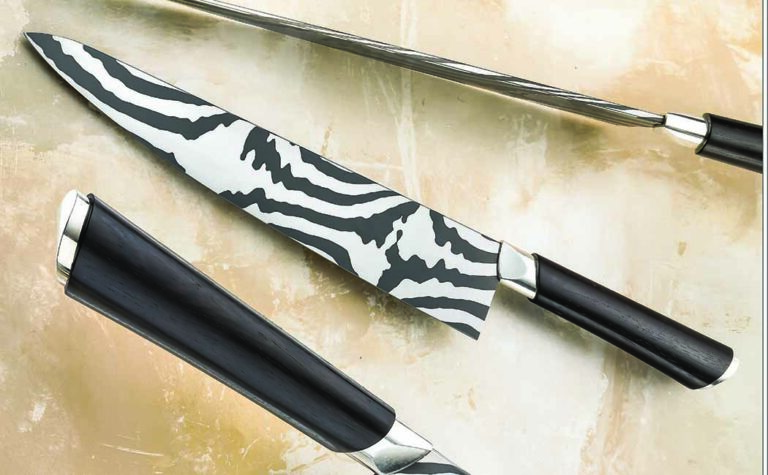
Isaiah Schroeder considers his gyuto the best knife he’s made, and the blade’s electrifying stainless damascus pattern and the ergonomic handle make it hard to argue the point.
Of the blade Isaiah said, “It’s a pretty simple pattern, one I’ve done in carbon steel quite a bit. A low-layer lazy twist is what I call it.” It consists of only 11 or so alternating layers that he twists three or four times. “That’s pretty much all it is,” he observed. “I love the way it turns out with the bold layer lines and everything. It looks kind of topographical and I always like that.” The darker steel is AEB-L stainless and the lighter parts are 154CM stainless.
He said the convex blade grind works great for food release. He is especially proud of the look and feel of his thin handle design that includes silver fittings done in the lost-wax-casting method. Combined with the 1/8-inch-thick blade, he said it’s, “Thin to win for a kitchen knife.”
A full-time knifemaker based in Madison, Wisconsin, Schroeder makes kitchen knives of all types in the Japanese style including a sujihiki, a long knife made for fine slicing of meats, fish, and precisely cutting through sinew. He also makes a petty knife as well in damascus.
Gyuto Knife Specs Pattern: Gyuto Japanese chef’s knife Blade length: 9.44 inches Blade material: Low-layer lazy twist damascus of AEB-L and 154CM stainless steels Blade grind: Convex Handle material: African blackwood Fittings: Fine silver (2 ozs. worth) Overall length: 14.44 inches Maker’s price for a similar knife: $2,000 Knife to know: Isaiah is a full-time knifemaker
Master bladesmith Lin Rhea was recently recognized as an Arkansas Living Treasure by the Arkansas Arts Council.
Knifemaker, blacksmith, teacher … Lin Rhea has many titles. Hang another one on the master craftsman—living treasure.
That honor was bestowed upon him by the folks in his home state with Rhea recently being named the Arkansas Arts Council’s 2023 Arkansas Living Treasure. The annual award—chosen through a panel of independent judges—recognizes masters of traditional crafts and folk art in the state, of which Arkansas has a rich and wide-ranging tradition. Since the award’s inception in 2002, it has honored craftsmen (and women) from basket makers to log-cabin carpenters. Given Rhea’s propensity for traditional knifemaking and blacksmithing techniques, the Arkansas native fits right in the honor roll.
“Lin Rhea is an outstanding addition to the Arkansas Living Treasure program,” Mike Mills, secretary of the Arkansas Department of Parks, Heritage and Tourism, said in a news release. “He has contributed so much to the rich creative culture of Arkansas.”
Rhea is the second bladesmith to earn Arkansas Living Treasure recognition. In 2007, James R. Cook of Nashville, Ark., was recognized for his contributions to the craft.
Rhea has been a blasdsmith for more than 20 years and earned his master bladesmith rating through the American. Bladesmithing Society. He studied the craft at the Bill Moran School of Bladesmithing, centered at Arkansas’ Old Washington State Park. And he is known as an avid and expert historian of the state’s knifemaking tradition.
Along those lines, he presented the finer points of James Black and his creation—the Bowie Knife—at the 2023 BLADE Show Texas. The seminar not only delved into the technological advancements Black introduced to knifemaking but the ethical considerations of reproducing his work. This is a hot-button topic, given Black never signed his work.
Despite rooting himself in the traditional aspect of knifemaking, Rhea also has a keen eye for advancing the craft. Perhaps one of his more notable endeavors to this end is his X-Rhea knife, which he set out as a personal challenge to create a knife—handle and all—from a single piece of steel. As always, he turned to two tools to complete the task—fire and steel.
“Moreover, I wanted it to look good and be comfortable and as structurally sound as any good knife should be, without being overly heavy,” Rhea said in a 2021 BLADE Magazine article he authored on the genesis of the X-Rhea Knife.
As for being recognized as an Arkansas Living Treasure, Rhea admits to being quite humbled.
“I’ve gone back and looked at other videos the museum (Historic Arkansas Museum) has produced of the other Living Treasures and I know one or two of them personally, and I’ve known them for quite some time,” Rhea said, in an Arkansas Times article, “But to be associated with that group is quite an honor.”
Rhea will be honored with a reception 4-7 p.m. June 17 at Little Rock’s Historic Arkansas Museum. This coincides with the reopening of the museum’s Knife Gallery, which displays several of Rhea’s creations.
Read Up On Knife History:
Last Little Mester of Sheffield: Remembering Stan Shaw
Inspired By His Time Fly Fishing In The Pacific Northwest, Joe Mangiafico’s Trout Knives Are Durable, Eye-Catching Tools.
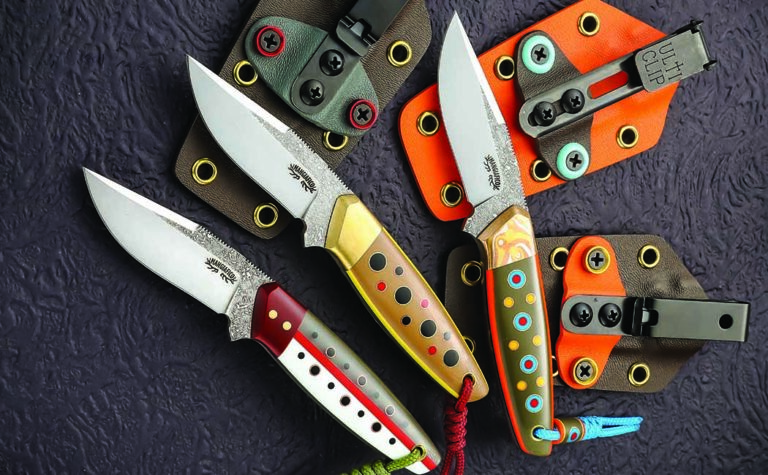
Joe Mangiafico’s trout knives not only are built to use but are cool and colorful to boot.
The 28-year-old Massachusetts maker acid etched the flat areas of the blades for a damascus look, yet it’s the handles and sheaths that really stand out.
The grips are structural mosaics of G-10, brass, and copper. For instance, the blue haloed red center pins of the model with the green handle are inlaid plugs, and the brass pins are press fit and epoxied all the way through. He designed the Kydex sheaths with centered pocket clips to attach to your pocket or waders while fishing. The red-banded model is inspired by the redband trout Joe fly fishes for in the Deschutes River Valley of central Oregon.
Who Is Joe Mangiafico
Mangiafico began making knives while still a college student several years ago. Joe makes his knives in his shop in Cotuit, on the southern coast of Cape Cod. While the majority of his work is custom knives, he does have a factory collaboration with the German company Boker Knives. His Brook fixed blade is made from VG-10 steel and, like his trout knives, showcases his deft ability to craft an eye-popping handle. It retails for $156.95 and can be found on Boker’s website.
Trout Knife Specs Model names: Brook Trout, Brown Trout and Rainbow Trout Knife type: Trout knife Blade lengths: 3 inches Blade steel: Nitro V stainless Blade grinds: Flat Handle materials: G-10, copper and brass Bolster materials: Brass, Micarta® and mokume gané Overall lengths: 6.5 inches Sheaths: Kydex Maker’s price for similar knives: $375 each
When it comes to wood cutting, the Flexcut Whittlin’ Jack takes no prisoners.
The Whittlin’ Jack by Flexcut Carving Tools is the knife I wish I had when I was growing up. It would have made my outdoor life so much easier, not to mention much less painful. Granted, the blade edges are very fine and made for wood, so they tend to chip if you cut hard stuff.
Growing up a commercial fisherman on the Great Lakes, I was always cutting twine. The Whittlin’ Jack’s sharp blades would have saved me plenty of time resharpening and in doing such outdoor chores as marking sticks on a trapline. However, the best things about the knife are the sharpness of the edges during whittling, including for super fine cuts, and a very comfortable handle shape. The backspring holds the blade open tightly enough to stop accidental foldup while cutting, yet slowly closes the blade.
Flexcut Whittlin’ Jack Edge Test
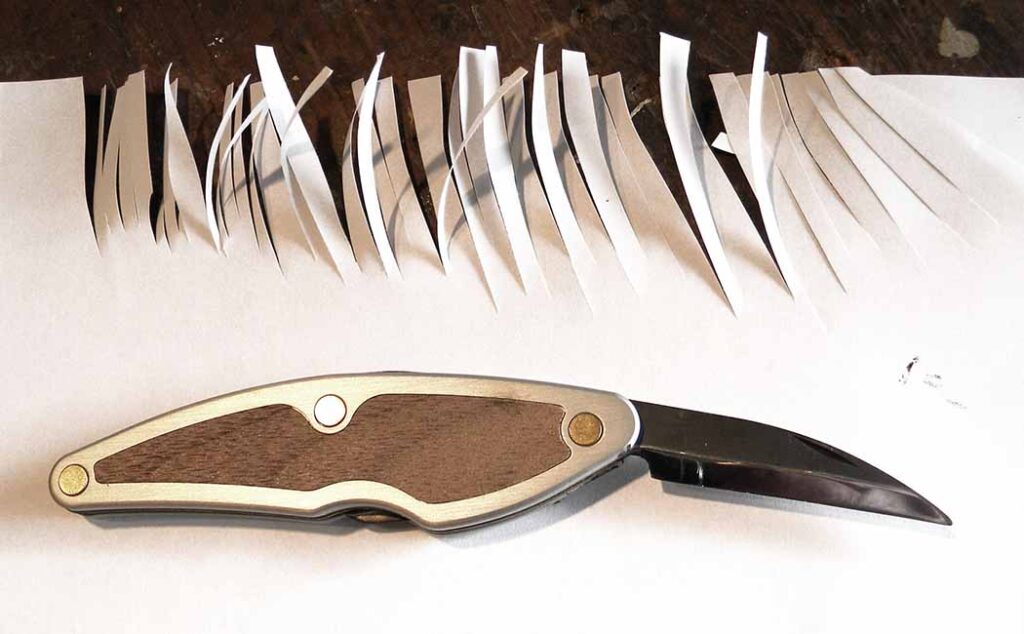
For the first edge-check medium, the author used his standard 20-pound bond copy paper. Both the roughing and detail blades zipped through the stationery way too fast. He just used the weight of the blade and pushed down.
For the first edge-check medium I used my standard 20-pound bond copy paper. Both the roughing and detail blades zipped through the stationery way too fast. I just used the weight of the blade and pushed down. I’m glad I had fingernails! Now I have four nicks in one. The knife was scary sharp from the get-go.
Whittlin’ Jack Vs Light-Duty Material
Next up was single-walled cardboard. The Whittlin’ Jack did not slow down one bit, though I did learn to move my finger faster. I could feel the blades cutting through the pockets in the cardboard. I made the longer cuts with the roughing blade.
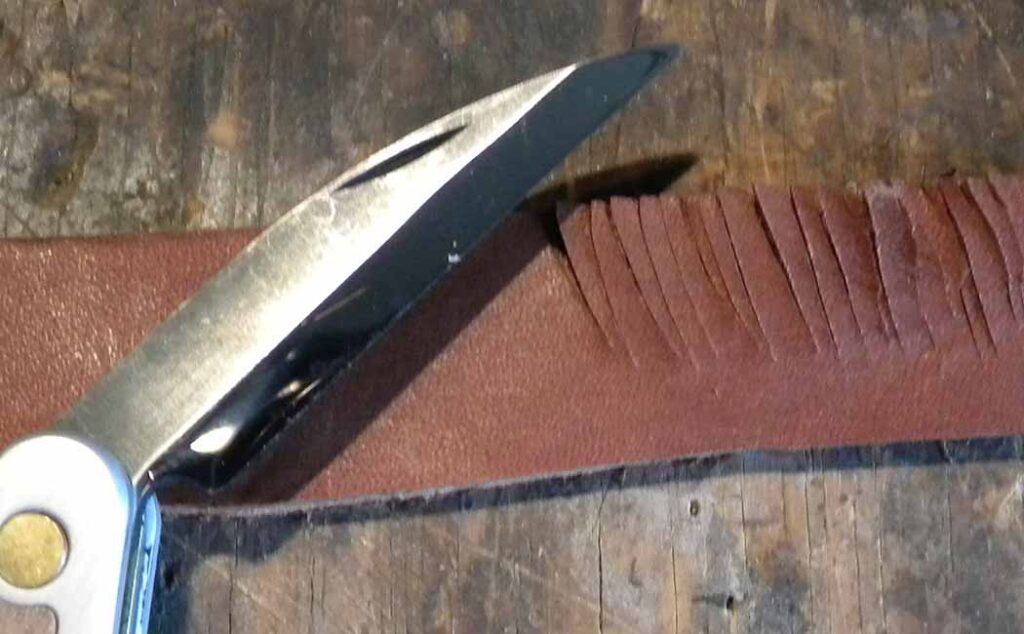
I made some straight cuts in 8-ounce leather to see how thin I could get the slices without the leather folding over. These blades are so scary sharp that I really had to watch how much pressure I was using so I didn’t cut the leather in half. Both blades were very controllable.
Cutting the end of the leftover leather at an angle, I did some skiving. I could hear a very aggressive crunching sound as the Whittlin’ Jack bit into the material. The slices were so thin I could actually see the polished bevel cutting through. Very sharp indeed!
Whittlin’ Jack Whittling
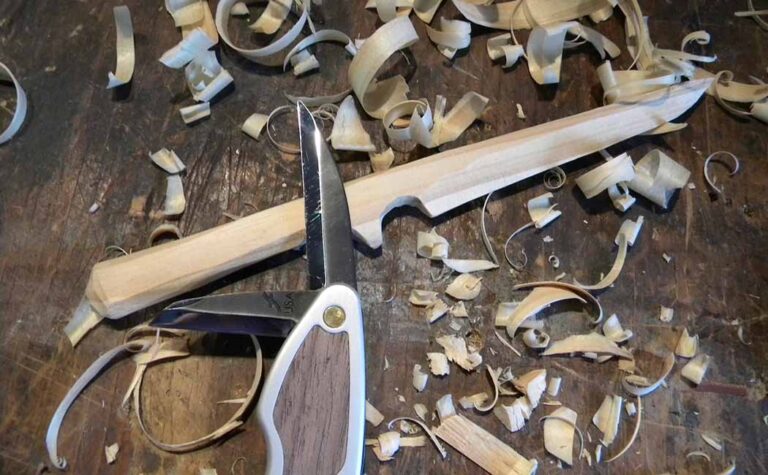
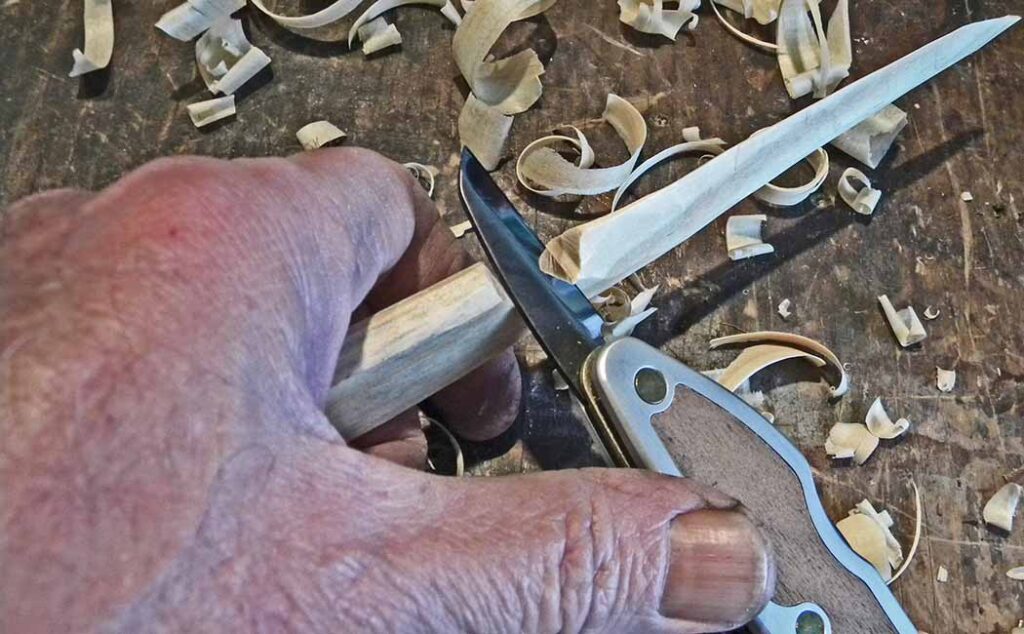
The curls were curlin’ as the author whittled a wooden tanto with the Whittlin’ Jack. Here he cuts the tanto’s choil with the detail blade.
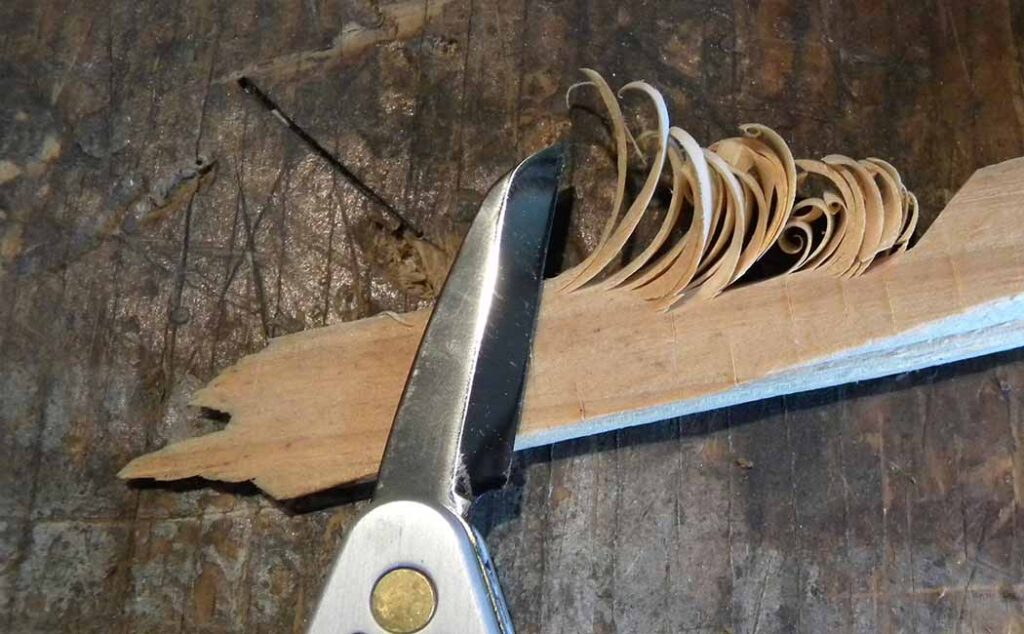
The Whittlin’ Jack is the first knife to ever give me curly curly-cues. It was amazingly simple and easy to do. Fine cuts or deeper cuts, it didn’t matter. The whittling was so smooth the blades just slid through the wood. I liked the detail blade better for making curly curly-cues. The handle shape really excels as it fills your palm, making the blades an extension of your hand. This is an outstanding design to say the least.
For some extra whittling fun, I carved a thin tanto-style knife in less than 5 minutes. The roughing blade did its job very quickly, thinning the wood and getting the overall shape. The detail blade made short work of cutting in the bevels and choil. It was amazing how smooth every cut was. Controlling the blades was easy with the handle design. The Whittlin’ Jack is the perfect knife for the job.
Whittlin’ Jack Vs Sisal Rope
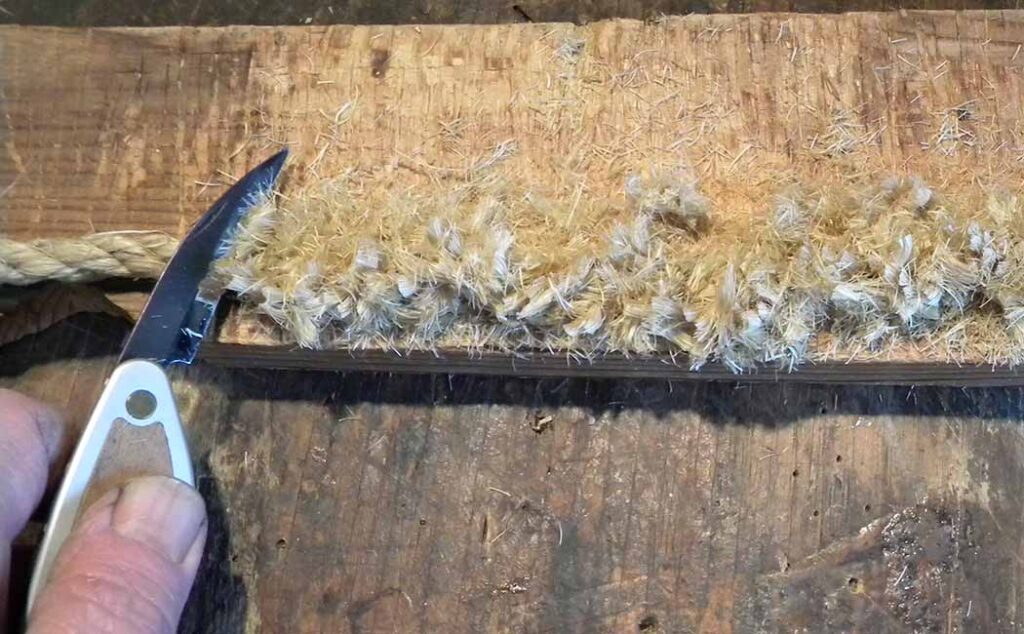
The knife crunched to 150 cuts in half-inch sisal rope in record time without any sliding. According to the author, it is the best overall Spec Sheet sisal rope cutter to date—that includes for both edge sharpness and handle comfort.
I used the roughing blade so my knuckles would clear the workbench. The knife crunched to 150 cuts in record time without any sliding. Since it would be a waste of sisal rope, I stopped cutting. The blade was still nasty sharp. This is the best overall Spec Sheet sisal rope cutter to date—that includes for both edge sharpness and handle comfort. Wow!
Recomendations
I might put a finer finish on the walnut handle inserts.
Bottom Line
The author indicated the Whittlin’ Jack was the first knife to ever give him curly-cues that were actually curly. He preferred the smaller detail blade for the purpose.
The Whittlin’ Jack really impressed me in both sharpness and handle comfort. I’ll place it in the top 1 percent of knives I’ve tested. I will be carrying one.
Flexcut Carving Tools warrants its knives against defects as long as the knife is not abused. Remember, this knife is made for wood use only and the blades do not lock in place.
Flexcut Carving Tools Whittlin’ Jack Specs Blade Patterns: Roughing and detail Blade Lengths: Roughing 2” and detail 1.5” Blade Material: In-house tool steel Blade Grinds: Flat Handle: Aluminum frame, walnut insert Non-Lock Mechanism: Slip joint Weight: 3 ozs. Closed Length: 4.125” Country Of Origin: USA MSRP: $63.95 Flexcut Tools