The Informant By Greg Wesley Is Another Quality Fixed-Blade EDC. But Just How Good Is This Small Custom Knife?
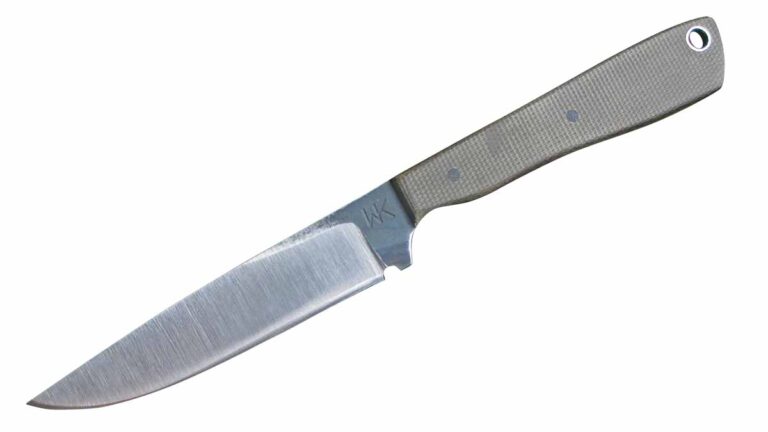
The trend for smaller EDC knives is still going strong. Set up with a leather sheath for belt or pocket carry, the Informant from Wesley Custom Knives fits the bill perfectly. Greg Wesley grinds them all by hand. This one is lean and mean.
Testing The Wesley Informant
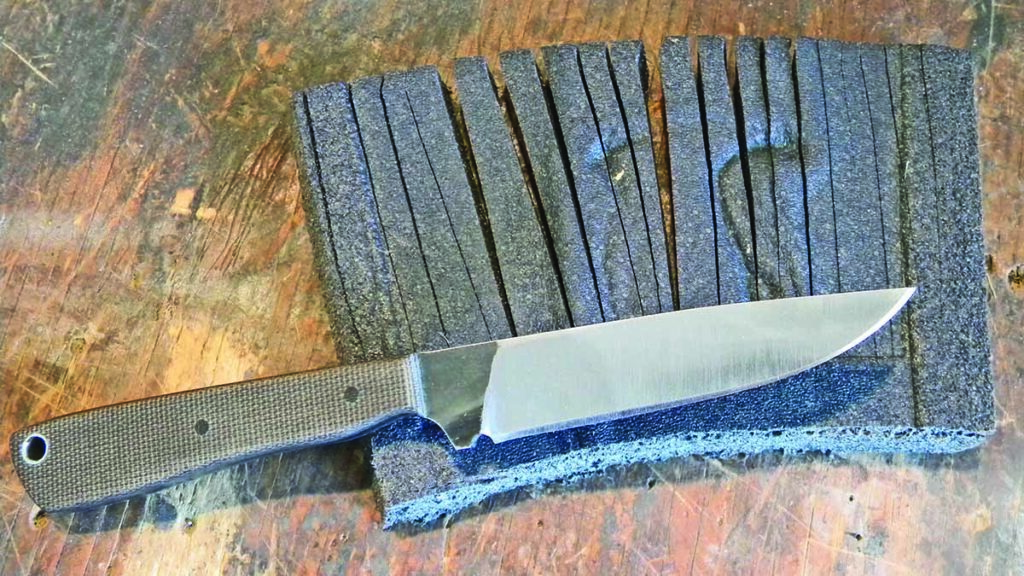
It was easy to control the width of cuts in the foam, all of which were straight without bending the medium.
I started with a piece of dense foam I use for making my Kydex sheaths. Manipulated with push and pull cuts, the knife started biting, slicing cleanly and quickly. It was easy to control the width of cuts, all of which were straight without bending the foam. Very nice.
One of my favorite tests,the 20-pound bond copy paper slice, provided little resistance. It puts a smile on my face when I hear every cut. I used a pull motion to shred the paper. The Informant came razor sharp. The balance of the blade made for a very quick test.
The knife had no challenges cutting through double-walled cardboard. I got carried away and pushed the blade too far into the cardboard, hitting the choil area and messing up the cut. The Informant is just fun to use. Cuts were mostly straight unless I took too big of a bite and the cardboard pinched the blade and slowed it down.
Plastic board was easy for the knife. It cut the plastic very quickly and I barely felt any resistance. Once I had the rhythm slicing, it was finished. This is a sharp little knife. Cuts were very controllable.
Pushing the Wesley Informant
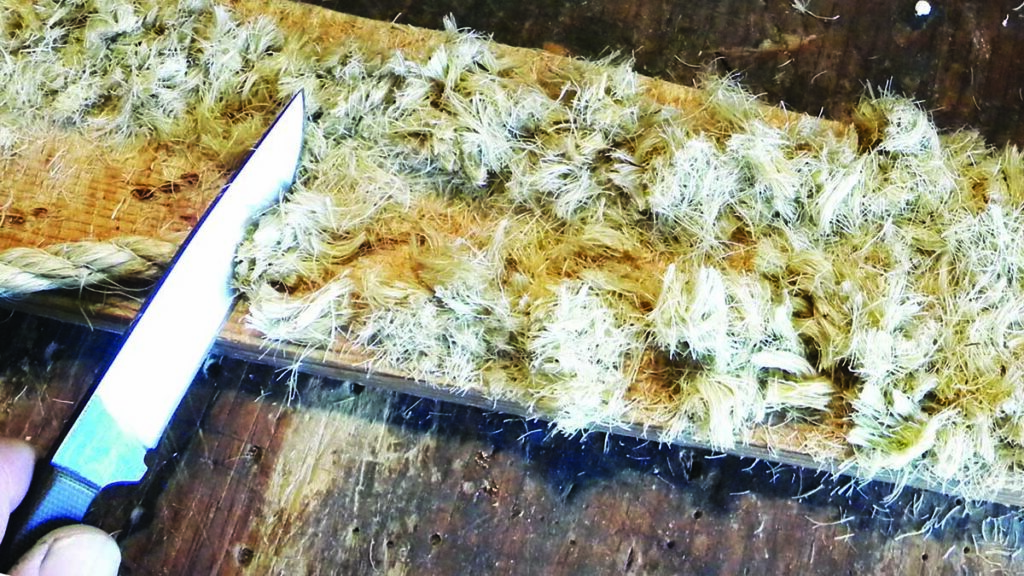
The Informant crunched its way to 188 cuts on the sisal rope before the edge started to slide a bit.
I grabbed some 8-ounce leather for skiving (thin, tapered slices). With a louder crunching sound, the Informant bit quickly. The thinness of the knife made controlling the skiving simple—I just had to move my fingers faster to keep from losing DNA. The edge remained just as sharp as when I started.
I had to whittle to get a better feel of the little fixed blade. The cuts in the wood were extremely smooth. The Informant peeled large curly-cues one after another. The blade spine was somewhat sharp on my thumb but not too bad. The handle was a great fit to my hand—no hot spots at all. Nice job, Greg.
The Informant crunched its way to 188 cuts of sisal rope before the edge started to slide a bit. Impressive! The handle was still comfortable with the extra power added for the high number of cuts. The knife’s light weight didn’t impact its cutting ability.
The last test is a little destructive at times: the antler chop. I gave a whitetail antler 20 hard chops with the Informant. I rolled a thin wire edge in a few places but the blade was still very sharp, so the heat treatment is good.
Final Thoughts
I would soften the blade spine a tad more and maybe round the scales a bit, though that’s being picky. The Informant is a small, high-performing utility tool that can handle most any knife chore. It’s a great EDC choice.
The Cutlass Is A Short Sword Used For Centuries. Today, It Is Mostly A Ceremonial Blade, But One That Continues To Inspire
A sword can be more than just a weapon of war, the cutlass is an excellent example. For centuries, the cutlass was used by fighting forces throughout Europe as a short, one-handed stabbing and slashing weapon.
For many, the cutlass is best known as the sword of the pirates in the Atlantic Ocean during the 17th and 18th centuries. In a lesser-known role, it also was regularly used in agriculture throughout the Caribbean like the machete is today. In English-speaking Caribbean countries, the word “cutlass” is used to mean a machete.
In the modern era, the cutlass has left behind its fighting phase and is almost used exclusively as a ceremonial sword by several navies. However, its popularity endures among collectors and history buffs alike, thanks to its extensive use during the pirate era and the Age of The Sail.
What Is A Cutlass?
A cutlass drill on the HMS Wolverine , 1882 (Public Domain)
The cutlass is a one-handed, single-edged sword used for close-quarters fighting that was the evolution of naval sabers into a more compact, nimble short sword. While the edge does come to a fine point, the cutlass was designed for slashing and swinging at your enemies when fighting hand-to-hand.
This is why the sword was a popular seafaring weapon. With a slightly-curved blade, usually between 28-32 inches, the cutlass is adept in the close confines of a ship. The straight handle and clipped guards of most cutlasses protected your hand when in battle. Additionally, the cutlass was robust enough to tackle general maritime tasks like slicing through heavy rope or thick fabric like canvas or even wood. And its size made it the perfect weapon for the type of in-your-face fighting that would happen on the high seas.
On land, the cutlass wasn’t as dashing, mostly used to chop sugarcane and clear tracts of land in the rainforest in the New World. Though, the same qualities that made it a great fighting implement made it adept on the farm. The short, swooping blade allowed a great deal of force to transfer from the arm to the material with every swing.
Who Uses The Cutlass Today?
Today, the cutlass is used almost exclusively as a ceremonial sword. While it was at its most popular centuries ago, the cutlass was still a standard issue sword until around World War 2 before it became wholly ceremonial.
The British transitioned the sword to ceremonial duty in 1936, and the United States followed suit in 1949. Both countries incorporate the sword into military ceremonies today. The Brits issue cutlasses to naval chief petty officers. The United States also offers chief petty officers the ability to wear a cutlass with their formal dress for ceremonies and the like.
Can I Buy A Cutlass?
Absolutely. There are many companies making cutlasses today. While they may not be as pristine as the ones issued by the military, there are numerous companies making these types of blades.
Factory Cutlass Options
Cutlasses are still made today, but, in general, they aren’t built to the same combat standard as in centuries past. The vast majority of these swords are showpieces meant to be hung on the wall and start conversations. However, if you are a true lover of the Age of Sail, these swords more than fit the bill.
Windlass English Cutlass
This 30.5-inch sword from Windlass is an elegant modern Cutlass, and, for a fee, can be sharpened into a real, proper sword. As is, the high-carbon steel blade is hand forged and mated to a solid brass guard. You’ll really feel like Blackbeard with it in your hand.
The sword comes with a leather scabbard adorned with a brass tip and throat to up the visual appeal of the piece. All told, this is a high-quality replica of the cutlass that will get people talking at your next party and look great in your office or hanging on the wall.
MSRP: $190
Condor Naval Cutlass
The Naval Cutlass from Condor Tool & Knife is a more modern take on the classic blade. The first thing you notice about it is the black epoxy powder finish to the blade. We’re pretty sure pirates of the 18th century didn’t have powder-coating technology, but would have loved to have had the extra corrosion resistance on the high seas.
The blade checks in at 24 inches in length and is made from 1075 steel ground to a razor’s edge. Yes, this sword comes sharpened right out of the box for no extra fees. The smooth hardwood handle is triple riveted, and a powder-coated guard keeps your hand protected when holding the sword. A black welted leather scabbard fits snugly around the blade and keeps everything protected even if dropped.
While it certainly doesn’t look like a sword from the movies, it’s designed to be a true, proper modern cutlass.
MSRP: $148.49
Kult Of Athena Pirate Sword
Complete with a skull and crossbones etched into the scabbard’s throat, the Pirate Sword from Kult of Athena looks like it could have been taken from the set of any swashbuckling movie set.
The 22-inch blade is made from stainless steel and comes, according to KoA, moderately sharp out of the box. That means it might need a more refined sharpening at home if you’re looking for a razor’s edge. However, the blade itself is .16 inches thick, thin enough to slice well but thick enough to hold up to some wear if used for more robust cutting tasks. But be aware, the sword is classed as “decorative”, or for display only, so keep that in mind before playing out your high seas fantasies.
The cast metal handle is surrounded by a bronze-plated cup guard which features a pirate ship design. The black leather scabbard has a cast tip and throat to complete the look.
MSRP: $49
Kingston Arms Atrim Cutlass
The Kingston Arms Atrim Cutlass shows that not all collectible blades need to be centuries old. Made in the style of a naval cutlass, the Atrim utilizes modern materials and methods to make a truly remarkable sword.
The 9260 spring field falchion-style blade is hand forged and comes in a satin finish. At 25.75 inches it’s a bit smaller than some other cutlasses, letting it move more fluidly in your hand and taking up a smaller display space. The full-tang construction terminated with a stainless steel guard and pommel around a brown leather handle that provides a strong grip.
This is the most expensive sword of all the cutlasses showcased in this piece, and it’s worth every penny for the discerning, high-end collector.
MSRP: $432.95
Cold Steel 1917 Cutlass Sword
When it comes to collector pieces outside of auctions, Cold Steel’s 1917 Cutlass Sword is a prime example of what’s being made today. While it is designed for display and collection, the 1055 steel blade does come with a serviceable edge out of the box.
In terms of size, it’s exactly what you’d expect a cutlass to be. At just under 30 inches long and 37.6 ounces, it’s a nimble sword that will feel good to hold and wield when showing off all of its intricacies. The wood handle and blued steel hand guard complete the look, and the included leather scabbard keeps the sword looking classy even when put away.
MSRP: $289.99
APOC Survival Cutlass
This option is rated for proper use rather than display. That’s abundantly clear considering it comes with a MOLLE-compatible Kydex scabbard. That doesn’t come with swords meant to be hung on the wall.
The APOC is a tactical sword that has a 21.5-inch black oxide blade made from 9260 spring steel. The black G-10 handles complete the monochromatic look and provide excellent grip in myriad conditions.
At just under 2 pounds, this is a lightweight cutlass meant to be used as a survival tool out on the trail or in more intense outdoor situations. The blade is meant to slice, of course, and the edge comes to a fine point, making this a puncturing tool as well. Versatility is the name of the game in survival equipment, and, while a machete or shorter knife might be a better option, the APOC cutlass is built for the outdoors and to handle the elements.
MSRP: $169.95
Custom Cutlass Options
There are numerous people making custom cutlasses and other swords. Whether it is for the private use and display of an individual or to be used as props in movies, at renaissance fairs, or in other forms of entertainment, there are makers and smiths crafting modern versions of the centuries-old blade.
Even the popular YouTube Series Man At Arms: Reforged did an episode about the cutlass and showed multiple ways to craft them.
Tony Swatton
Swatton runs Sword & Stone in Burbank, CA and makes arms and armor for film and television. He, and his shop, were the star of the original Man at Arms series nearly a decade ago. He’s self-educated and has been making armor since he was 17.
The first movie his work appeared in was Hook in 1991, and since then his weapons have been seen on screen in more than 300 movies including massively popular films such as Pirates of the Caribbean, Batman, and Thor. He also designed the cutlass used in Assassin’s Creed 4.
David Lisch
Lisch makes custom knives and swords exclusively from damascus steel. His 26 years of experience in the field are seen in the intricacy of his mosaic patterns and one-of-a-kind blade designs. He’s made landscapes and sunrise designs on his blades.
An example of David Lisch’s damascus work.
His knives have won awards and he teaches classes in blacksmithing and knifemaking with his wife Andrea at their school in Yelm, Washington, about an hour south of Seattle.
Collecting Cutlasses
The cutlass is collected by all sorts: sword lovers, pirate aficionados and history buffs. Specialty dealers help these collectors find the pieces they are looking for, and it helps keep the cutlass alive and in public consciousness.
Additionally, cutlasses have made it to auction houses around the world, sometimes fetching as much as $10,000 before the hammer falls at auction houses like Morphy’s, Sotheby’s, and Rock Island.
In late 2022, the 1860 naval cutlass belonging to John H. Ferrell, a Congressional Medal of Honor recipient, went to auction at Morphy’s and sold for $14,760. The sale showed how, even today, the popularity of the cutlass continues to endure in a big way.
Known By Many Names, The Balisong Is A Flipper’s Favorite Knife. These Four New Balis Are On The Cutting Edge Of The Style.
The balisong presents knife manufacturers with an excellent opportunity to express their design creativity and material preferences in a style that promotes pure enjoyment among flipping enthusiasts.
Long popular amid the knife-buying public, the balisong—aka bali, butterfly knife or simply butterfly—is a favorite of those who appreciate its mechanics, good looks and the sheer fun of flipping. With safety in mind, the manufacturers whose stock in trade includes the balisong provide new and innovative models on a regular basis.
Along with these, training versions are often available, while seminars, videos, instructional courses, and online conversations are always at hand for those learning to use the balisong for the first time, as well as seasoned veterans who want to broaden their horizons.
Squid Industries Krake Raken Bowie V2.5
Lucas Cao, president of Squid Industries, is excited with the performance of the company’s Krake Raken Bowie V2.5.
“It’s wonderful that everything about it is highly optimized for the best flipping experience possible,” he said. “Some notable special features are the machined handle texture and its unique balance profile. The mechanism is a combination of stainless-steel bushings and phosphorus bronze washers. What makes the bushings special is we manufacture them in-house on our own Citizen Cincom L12 Type 7 Swiss lathe with extreme precision. Our expert assemblers use the bushings to then create the glassy smooth swing that the Krake Raken is known for.”
The Krake Raken is available in both live and training versions, allowing users to become familiar with its operations without the worry of an injury, according to Cao. And reliability is a watchword from the factory floor to the buyer’s hand.
“All of our balisongs go through rigorous testing across a long period of time and with many different users,” Lucas explained. “Balisong flipping is highly subjective, so we make sure that the feedback we gather is from both beginners and experts inside and outside of the organization. While Squid Industries has several top-tier flippers in our own ranks, we also work with top flippers around the world to hear their thoughts on our latest developments.”
An accomplished flipper in his own right, the Squid boss sees customers in the balisong universe always on the lookout for excellent ergonomics, grip, balance and durability. The ideals are addressed at Squid with continuing revisions and upgrades to its balisong line that are generated through robust customer feedback.
Finding Squid in the marketplace is easy, and its commitment to the education and popularization of the balisong is evident in its sponsorship of the West Coast Flipping Championship, a 32-person-event live competition held each year at BLADE Show West. In addition, YouTube is well stocked with flipping and maintenance tutorial videos.
Knife Specs
Blade Length: 4.5 inches
Blade Steel: AEB-L stainless
Blade Closure: Latchless design
Handle Material: 7075 T651 aluminum
Weight: 4.33 ounces
Closed Length: 5.625”
Country of Origin: USA
MSRP: $284.99
Premium Alpha Beast Kukri
The Premium Alpha Beast Kukri is the latest from Bladerunner Systems and is another example of the continuing outreach the company provides relating to balisongs.
“Spreading the word has been part of our primary focus,” commented Bladerunner’s Edward Anthonis. “We have been active in the community, hosted online tournaments, provided video content, and partnered with retailers to spread the word about balisongs and what a fulfilling and amazing hobby and sport it is and has become.”
With the Premium Alpha Beast Kukri, Bladerunner puts its best foot forward.
“What makes any knife transcend being just a knife will always be the attention to detail given from a maker or designer that truly understands what makes a purpose-driven knife the best in actual application,” Anthonis remarked. “Our balisongs are built not only to be great knives but also to be great for balisong manipulation.”
The bushings of the Premium Alpha Beast Kukri are something special, and Edward says they are an integral component of most Bladerunner folding knives.
“We use bushings in most of our knives, and we find the action of a balisong on bushings works best for the intended application,” he stated. “Having the critical dimensions of a balisong in place combined with a well-tuned bushing system makes for the best flipping experience.”
For Anthonis and company, testing is always a part of a quality manufacturing process, particularly since he and co-owner Lawrence Ho are flippers themselves.
“Since we both flip and have our feet firmly planted in the balisong community,” Edward related, “we can test the products and also get them into the hands of other flippers to solicit their feedback.”
KnifeSpecs
Blade Length: 4.5 inches
Blade Steel: 154CM stainless
Blade Closure: Latch
Handle Material: Titanium
Pocket Clip: Yes
Closed Length: 5.375 inches
Weight: 5.3 ounces
Country of Origin: USA
MSRP: $439.99
Kershaw Moonsault 5050
“Our butterfly knives utilize four KVT-ball bearing systems,” explained Dominic Aiello of Kershaw/Kai-USA. “On each side of the two pivots is a ring of ‘caged’ ball bearings that enable the blade and handles to move quickly and smoothly.”
So it is with the Kershaw Moonsault 5050. Customer appreciation and response to knife offerings help move the company forward, and with its latest balisong the reviews have been quite positive.
“When we develop our butterfly knives, our goal is simple,” Aiello related. “We want to offer a high-quality USA-made product that is affordable and fun for everyday knife users and flippers. With that said, smooth flipping, comfortable handles, and good weight balance are keys with butterfly knives.”
For beginners interested in learning more about the fun of flipping, Kershaw offers the Lucha trainer. It closely replicates the size, weight and design of the original Kershaw Lucha bali.
Knife Specs
Blade Length: 4.6 inches
Blade Steel: 14C28N stainless steel
Blade Closure: Latch
Handle Material: Stainless steel
Weight: 6.1 ounces
Closed Length: 5.65 inches
Country of Origin: USA
MSRP: $249.99
Benchmade 85 Billet Ti Balisong
The Benchmade 85 Billet Ti Balisong is the product of modern technologies, processes and materials applied to a very traditional knife, says Vance Collver, company director of product line management. The knife’s best attributes include smooth, consistent action, and those who experience it are the best judges of that slick performance.
“If a balisong has any drag or ‘sticky’ spots in the rotation, it can affect timing during flipping,” Collver reasoned. “Durable materials—think about how often these knives get dropped when flippers are learning or trying out new or complex tricks—and style since it must look good too, are important factors. A balisong must be ‘cool,’ solid and function flawlessly.”
Benchmade folks take pleasure in walking customers through basic, fundamental flipping techniques at shows and various customer interactions, and several balisong enthusiasts and experienced flippers on staff at Benchmade put the company’s new product offerings through their paces.
“This knife is not available in a trainer version and is intended for experienced flippers or collectors only,” Collver advised. “Balisongs are part of our DNA at Benchmade. Our company was founded in the pursuit of the balisong, and to this day our logo remains a butterfly harkening back to our origin.”
In Just Over Two Weeks Time, BLADE Show Texas Will Descend Once Again On The City Of Fort Worth.
BLADE Show Texas ’23 expects to follow up on its wildly successful ’22 rendition when it rides herd on the Fort Worth Convention Center March 17-18 in Fort Worth.
Over 300 national and international exhibitors, including the best in custom and factory makers and companies, will display their hottest knives, knifemaking supplies and more. All will coalesce in the roomy Fort Worth Convention Center in the heart of downtown Fort Worth. Spanning 14 city blocks of the city’s central business district, the convention center is surrounded by four-star hotels, restaurants, shops, galleries and assorted performance venues, with free transportation provided throughout the downtown area via Molly the Trolley.
Helping make the show a reality are its sponsors, which include Smoky Mountain Knife Works, WE Knife Co./Civivi/Sencut, The Blade Bar, Nottingham Tactical, TOPS Knives, Hogue Knives, Microtech, Jantz Supply and New Jersey Steel Baron.
Beat The Line And Buy Your BLADE Show Texas Tickets Now!
BLADE Show Texas 2023 Set To Top 2022
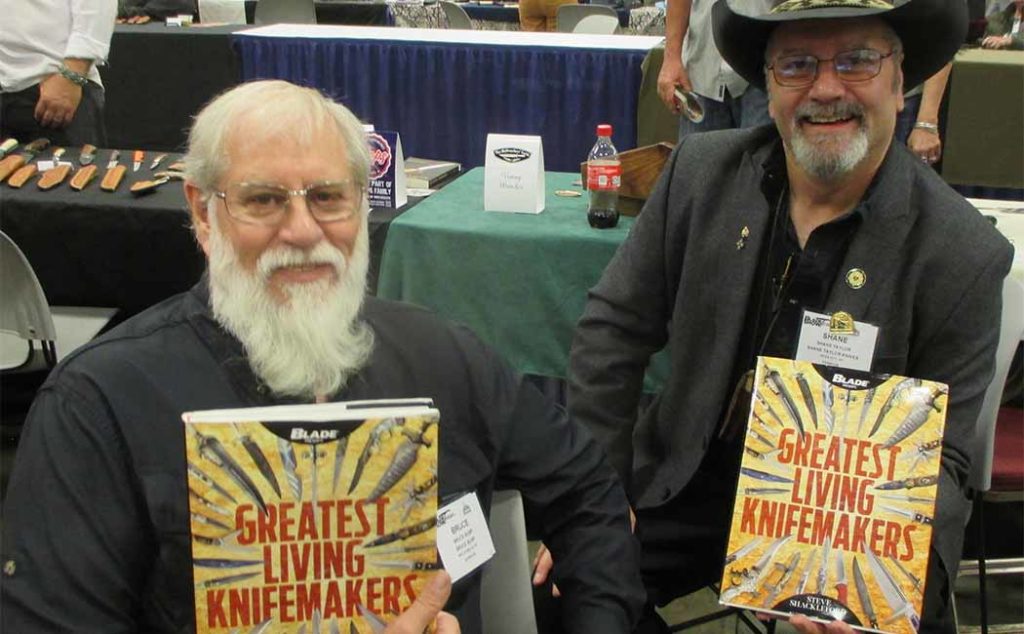
ABS master smiths Bruce Bump (left) and Shane Taylor (right), both of whom are in the book The Greatest Living Knifemakers, return to display their knives. At press time, others in the book who will be exhibiting at the show are Bill Ruple and Tom Overeynder.
While Texas long has been hailed as a hotbed of knives of all shapes, sizes and types, its knife shows haven’t always seemed to keep pace. Debuting under its new name in ’22 after several years as the International Custom Cutlery Exposition (ICCE), BLADE Show Texas seemed to buck that trend, with custom and factory exhibitors praising the event.
“The attendance was excellent and sales were awesome,” BLADE Magazine Cutlery Hall-Of-Fame® member Bill Ruple observed of BLADE Show Texas ’22. “What a great show!”
“BLADE Show Texas was a great one. Attendance was crazy good,” agreed ABS master smith Bruce Bump. “And it was good to connect with old friends and make some new ones.”
“BLADE Show Texas was a great success as far as our time there,” noted John Cammenga of White River Knife & Tool. “We sold a lot and there was great traffic.”
“One thing I personally really liked was the eclectic mix of makers throughout the show,” pitched in maker Tom Krein. “You just didn’t know who or what would be at the next table.”
This year’s array of talented artisans promises to be even better. Also on hand will be a wealth of premier custom knife purveyors, engravers and other embellishers, many more knife professionals and entrepreneurs of all stripes—and, of course, knife enthusiasts, users and collectors galore.
Award Changes
The knife judging awards for BLADE Show Texas have been especially tailored this year to address the specialties of the exhibiting makers. As a result, there are two changes, one each in the custom and factory categories.
The new category in custom is Machine Assisted Custom Knife, or M.A.C.K (see next section. Last year’s custom category of Best Fixed Blade was scratched in the middle of show judging and was broken down into three separate categories: Best Bowie, Best Fighter and Best Hunting Knife.
As a result, this year’s custom awards will be Best M.A.C.K., Best Art Knife, Best Bowie, Best Damascus, Best EDC, Best Fighter, Best Folding Knife, Best Hunting Knife, Best Kitchen Knife, Best Slip Joint and Best in Show.
To differentiate it from Best Slip Joint, Best Folding Knife will be for non-slip joints only. Each category winner will be determined in terms of how well it fits the category, quality design, construction and materials, fit and finish, line and flow, and the other intangibles that identify most top knives.
Best Tactical is the new factory category and will include both folders and fixed blades. Hence, the awards in the factory category will be Best EDC, Best Fixed Blade, Best Folder, Best Tactical and Best in Show. Each category winner will be determined in the same manner used to rate the custom winners as outlined in the preceding paragraph.
M.A.C.K.
The fastest growing and, some would say, most exciting segment in custom knives now has its own category: Machine Assisted Custom Knife.
In conjunction with a number of intrepid pioneers in the category, BLADE® Magazine and BLADE Show have created an awards segment that aims to recognize the diverse array of knifemakers whose fertile minds are dedicated to creating knives that exist in the space between the entirely handmade custom knife and the entirely machine-made custom knife.
To qualify for the category, the knife must have one or more key elements crafted by hand. It is up to the maker to determine which element(s) to handcraft, but the judges will look for makers who challenge themselves in this regard. Judges will look for a knife that is first and foremost a cutting tool.
The design must be functional, beautiful, have great ergonomics, yet still have practical applications and uses. The winning knife should be able to go from the debutante ball to the wrecking ball without changing shoes. From a technical standpoint, execution of fit and finish across the entire knife, basics such as blade centering, lock kinetics, lock feel and lock positivity/safety, etc., will all factor heavily into choosing a winner.
To reiterate, overall aesthetic design must be cohesive and beautiful without compromising the knife’s primary purpose as a cutting tool. Exhibitors should bring their best of kinetics, aesthetics and handcraft to this category. And may the best knife triumph!
Demos And Seminars
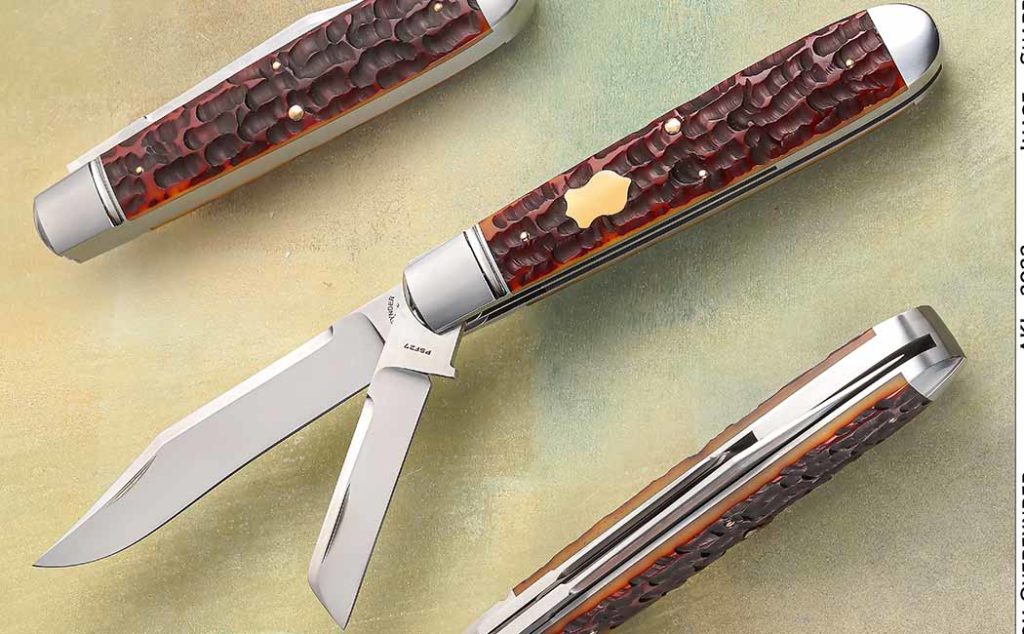
Tom Overeynder will bring an Art Knife Invitational level of talent to the show with such pieces as his 34 Big Jack slip joint in PSF-27 stainless blade steel and a new handle material—jagged bone. Closed length: 5 inches. Maker’s price: $3,250. (SharpByCoop image)
Friday
12 p.m.-Grinding Fundamentals, Room 104: Co-owner of Brodbeck Ironworks, knifemaker Vince Molina will showcase the Brodbeck grinder complete with flat platen and integral bolster attachment.
2 p.m.-Let the Pros Critique Your Knife, Room 104: Award-winning knifemakers Bill Ruple and Tom Krein and ABS master smiths Jason Knight, Steve Schwarzer and Brion Tomberlin will examine your knife and tell you the good, the not so good and how to make it better. This will be a limited-seating event. Bring one knife only. Sign up when you enter the class on a first-come, first-served basis. Questions will be entertained from attendees throughout.
3:30 p.m.-Building an 1830s Knife with Modern Tools, Room 104: It seems almost certain that James Black made a number of knives circa 1830. Though he did not mark his knives with his name, the style attributed to him is one of the most distinctive and admired of his or any era. ABS master smith Lin Rhea is a student of Black and antique bowie knives in general. His seminar will be a discussion of how to build knives in the Black style in the modern knifemaker’s shop, substituting modern techniques for those of the 1830s. In addition, Lin will outline the things to consider in recreating a historic knife style.
Saturday
10:30 a.m.-Grinding Fundamentals, Room 104: Co-owner of Brodbeck Ironworks, knifemaker Vince Molina will reprise his Friday seminar on the Brodbeck grinder complete with flat platen and integral bolster attachment.
12 p.m.-Trainer Knife for Kids, Room 104: Nicole Larkin of Bradford USA will introduce Bradford’s newest trainer for kids. Nicole will cover what makes the trainer a great first knife, outlining such topics as utility, basic safety principles and sharpening. “We wanted to build a trainer knife that will grow with your child as he or she matures beyond the need for one,” Nicole noted.
1:30 p.m.-Silver Wire Inlay in Wood, Room 104: A past Forged in Fire champion, ABS journeyman smith Allen Newberry will demonstrate silver wire inlay in wood, how to make the tools required and where to procure the needed supplies.
The official BLADE Show Texas photographer will be SharpByCoop.
Get more information about BLADE Show Texas, the foremost knife show in the Lone Star State.
Is The Versa Rescue Knife As Good As Advertised Or Does It Come Up Short Even With All The Extra Features?
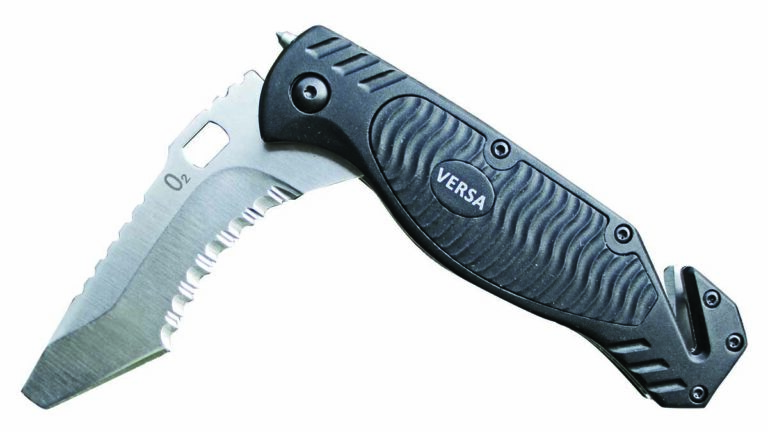
When he worked for the Central Intelligence Agency, Jason Hanson came across tool needs the average knife did not fulfill. Enter the Versa rescue knife.
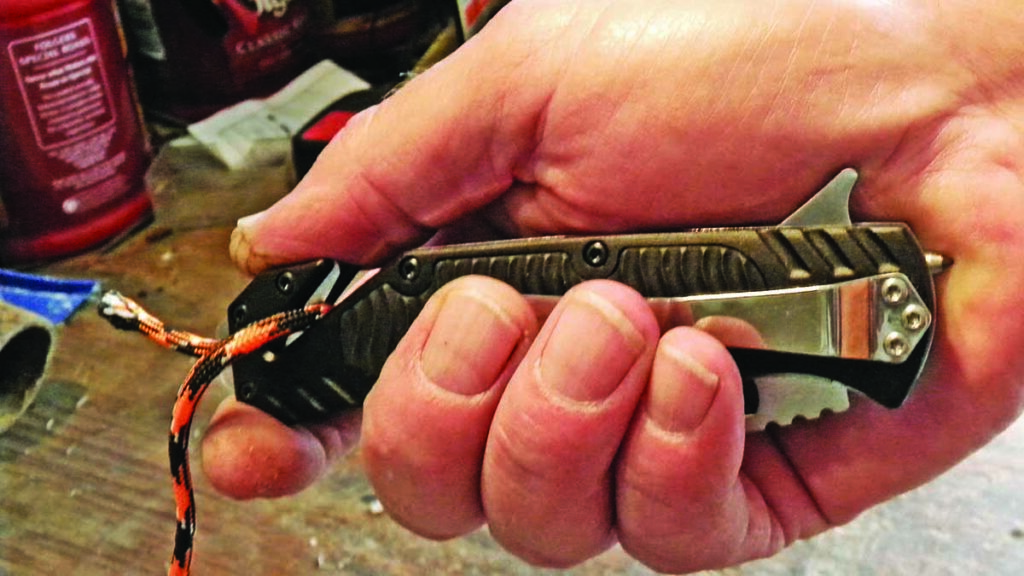
Besides the blade having two distinct edges—one short and flat, the other recurved and serrated—the tip is flattened for a screwdriver. When you close the knife, a glass breaker sticks out the front of the handle.
On the butt is a mini pry bar and a webbing/line cutter. Yes sir, there are lots of things going on with this rescue tool. However, I’m mostly concerned with testing the Versa’s cutting capabilities, so here goes.
Testing The Versa Rescue Knife
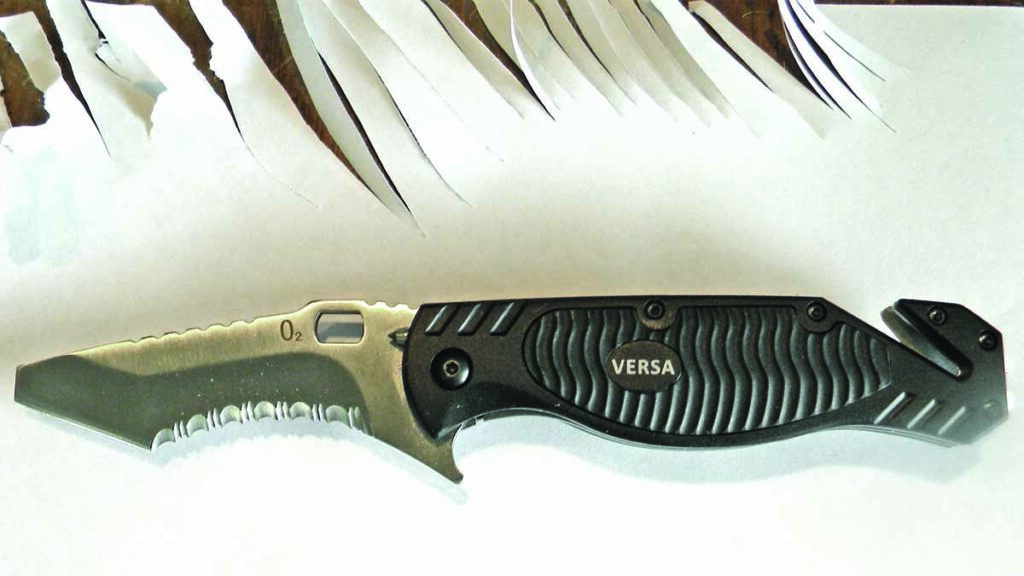
Via a push cut, the flat edge zipped through the paper smooth and clean, though it was somewhat challenging to use the flat front edge of the blade to start the cut.
Slicing 20-pound bond copy paper was first on the list. Via a push cut, the flat edge zipped through the paper smooth and clean. It was somewhat challenging to use the flat front edge of the blade to start the cut.
Onto the serrated edge, the paper tore sometimes depending on whether I started with the tips of the serrations or the bottoms during push cuts. The serrations did better used in a slight forward motion, giving cleaner cuts.
From there, the knife easily dispatched double-walled cardboard. With only a slight twisting of the blade, the serrated portion cut aggressively through the medium. Likewise, the flat edge sliced effortlessly and was very controllable, providing nice, even cuts.
The flat edge cut smooth through six-ounce leather, producing a bit of a crunching sound. It was very easy to control the cuts. The aggressiveness of the serrations really went to work on the leather, emitting loud crunching noises as it bit deep—and without need of a sawing motion at that.
To test the webbing/cord cutter, I used 550 cord. With one end of the cord locked in a vise, I held the loose end and pulled the cutter through the material. The cutter worked great with no resistance, severing the ends of the cord clean.
Carrying The Versa
Even though the glass breaker works, the author didn’t like it poking him in the hand each time he grabbed the knife.
I carried the Versa for a week to see how it rode in my pocket. It’s a bit on the heavy side for my taste. The pocket clip held the knife secure with no side-to-side movement while I climbed a tree.
Even though the glass breaker works—I’ve used the type before—I didn’t like it poking me in the hand each time I grabbed the closed knife. Clipped in your pocket, it will also poke your hip when you’re wearing shorts and sit down. The concept behind the glass breaker is sound and useful, but it suffers from the same poking problem as on all the similarly equipped knives I’ve tested.
On the other hand, the pry bar rode great without sticking me in the leg. The handle design is very comfortable and the rubber inserts are perfect for a non-slip grip—a great using design.
Versa Rescue Knife: Final Thoughts
I would reduce the Versa’s weight for pocket carry and design a glass breaker that doesn’t poke the user. (Editor’s note: Also, the flipper/blade action is sluggish and needs work to make the knife open easier and smoother).
I would carry the Versa in a pouch or stashed in my vehicle. It works/functions great.
Originally A Karambit, The New Provoke EDC From CRKT Takes The Kinematic Technology Into The Realm Of More Casual Knives.
Do you love Joe Caswell’s innovative Kinematic deployment system but don’t need a knife as aggressive as the CRKT Provoke? Say hello to the newest knife in the line: the Provoke EDC.
The knife takes all the best parts of the original Provoke but with one more casual, but massive difference: a drop point blade–the first in the line to veer from the karambit design.
Provoke EDC Blade
The drop point is just 2.56 inches long, but it really makes its money thanks to its thickness. It’s .27 inches thick, 22-percent thicker than the blade on the original Provoke and more than twice the girth of any of CRKT’s seven most-popular pocketknives.
This makes for a knife adept at heavy work, be it batoning wood or slicing through rope or even prying open anything short of a manhole cover.
At 3.6 ounces and 4.66 inches when closed, it’s light and easy to carry. The flush-mounted clip keeps it invisible in your pocket and quick to pop out. When deployed, the knife is 7.25 inches and is easy to control thanks to the handle. The handle is molded, similar to the original Provoke, so hot spots are non-existent as it sits flush in the hand when cutting.
Kinematic Action
The one-of-a-kind kinematic action is unlike any other deployment system on the market today. When released it’s fast-moving, smooth, and keeps that thick blade securely in place. It’s nearly impossible to flex the blade when deployed, a sign of a strong lock.
The action is powered by two pivoting arms connected to both the handle and the back of the blade. When released the arms swing forward, sending the blade out and locking it in place.
It is a dynamic system and is an excellent fidget, however, it may be a bit cumbersome for those with smaller hands. Since the handle was originally designed for a karambit, which is traditionally deployed in a reverse grip, it could be tricky to securely hold when trying to deploy the knife one-handed. To some, this might not prove as intuitive as a flipper or folder.
Other Provoke EDC Features
Beyond the blade, the most noticeable feature of the knife is its brilliant blue handle. The anodized aluminum visually pops and perfectly complements the satin-finished blade. And, since it’s aluminum, it is lightweight and can hold up to pretty much anything you can throw at it.
Overall, the Provoke EDC is a fresh take on everyday carry and is going to appeal to knife lovers looking for something that stands out.
No Need For Confusion, CRKT’s Bamboozled Shows Itself A Competent Light-Duty EDC Option.
There are so many assisted-opening knives for sale today that to compare them all is a fool’s errand. However, when you come across a good one you know it pretty quickly. The new CRKT Bamboozled stands out from the pack thanks to its classy, sleek lines, quality construction for a casual EDC, and its incredibly fair price.
New for 2023, the Bamboozled comes in under $100 and feels worth a lot more. Designed by Ken Onion Jr, son of BLADE Cutlery Hall of Famer Ken Onion, his first knife for the company looks straightforward because it is. It’s simply an excellent light-duty EDC.
The proof? After a few weeks of using the Bamboozled, I realized I hadn’t picked up any of my other knives. It pushed some truly excellent blades into the bullpen, and I don’t see that changing for a long time.
The CRKT Bamboozled: The Ergonomics
The first thing you notice about the knife is how nice it feels in your hand. That’s thanks to the G10 handle and stainless-steel bolster. It looks and feels clean right out of the box and even after a few months of use, it remains pleasurable to employ.
Aside from a tidy look, the ergonomics are there in the Bamboozled’s handle. The straight handle avoids any hot spots you might encounter, and fits a medium-sized hand relatively well. The G10 scale is well-textured, yet not overly aggressive. At once, this offers solid control over the knife on light tasks—even when wet—while avoiding the cheese-grater texturing found on some heavy-duty options.
As with many other CRKT models, the Bamboozled succeeds thanks to a good skeleton. The handle is great, and it’s made even better by the steel liner lock that secures the knife upon deployment. It’s easy to close one-handed although the ridges on the lock itself can dig a bit if you open and close several times in quick succession. I’ve tried for months to find a way to loosen the lock with hard use and it hasn’t budged an inch.
You can open the knife easily one-handed thanks to the assisted-opening flipper. The flipper tab is well-placed, though it does take a touch of force to get it going. But be careful. Once the assist mechanism kicks in the blade fires out at high speed.
A Blade For Everyday
The blade is made from D2 steel which holds an excellent edge (more on that later) and is known for its wear resistance. In short, it is a fairly common, yet solid choice for blades likely called into numerous roles.
In total, the Bamboozled is 7.81 inches long and has a blade of 3.34 inches in length. For the user, this means having a blade long enough to make somewhat sizable cuts and a handle long enough to keep a relaxed and secure hold while cutting. The handle’s sharp lines and small profile also work to keep you feeling relaxed while cutting as you can position your hand in a way that works for you instead of being forced into a certain grip by a more contoured and bulky handle.
This is the knife that will serve you well around the house. I wouldn’t use this for something like prying open rusty or locked boxes, though. The blade is just .11 inches at its thickest point and tapers at the tip. It can flex with your fingers.Thanks to being under four ounces, and just 4.45 inches when folded, the knife is a great casual carry option that will easily fit into a pants or a jacket pocket.
Bamboozled Vs Paper
The bamboozled cut through the paper blind with ease.
After losing some blinds to our lovable but rambunctious dog I needed to replace a busted one. I was able to get an inexpensive paper blind at a home improvement store, a great light-work test for the Bamboozled.
Nicely the Bamboozled made it through the thicker paper of the blinds–folded over a dozen times–without any frayed or torn edges. However, it took nearly a minute of intense sawing action to chew through using the entire length of the blade. So while I would call it a success I definitely would say the knife had its work cut out for it in this task.
Bamboozled Vs Leather
The 1/8-inch leather belt was no match for the folder.
Wishing to see how the Bamboozled fared against a more robust material, I pitted the blade against leather. An old belt proved the perfect foe.
Interestingly, the Bamboozled made easier work of the ⅛ inch leather than the blinds. A moderate sawing motion with the belly of the knife cut the belt into tidy strips with clean edges. Given I’d already put the blade to use on other tasks and the edge was no longer pristine, I was surprised with the results.
Bamboozled Vs Nylon Rope
The nylon rope provided the stiffest test for the Bamboozled.
A piece of ⅜-inch nylon rope was the most formidable challenger for the knife. It did cut through but it was a process. Push cuts were only good for getting the main length of the knife to bite in, but the ensuing pull cut made quick work of the rope.
However, it was hard to get a pull cut to bite and one time it took two pushes to get the knife to chew into the rope. Additionally, the cuts weren’t as clean as the paper or the leather belt. A win for the Bamboozled, but we’ll call it a split decision rather than a unanimous victory.
Not Bamboozled By Everyday Chores
My wife and I welcomed our first child a month ago, providing ample opportunity to put the Bamboozled through everyday paces. Boxes, wrappers and packaging of every sort from stacks of diapers to new furniture needed opening–which meant the Bamboozled had a legion of practical work ahead, which let me see what the knife could do.
Its straight-back blade comes to a point that is excellent at piercing, which was a plus as it easily punctured the material. The knife also was great at cutting straight down cardboard of every thickness in clean, even lines.
Beyond the cardboard, the Bamboozled easily cut through tape without taking on much of a residue and it was able to cleanly cut through foam without peeling off bits. The foam, both thick and thin, was no match for the puncturing blade.
Judging The CRKT Bamboozled
The D2 blade provides a strong edge that resists wear.
Overall, I really like this knife. It’s easy to use and comes at a great price. The edge is no joke and really does hold up against everyday usage quite well.
This is a great piece for the small speed bumps that come up in day-to-day life in suburbia or the city. Have to downsize a mountain of cardboard boxes at the office after a bunch of new product is delivered? The Bamboozled will get the job done quickly. Just don’t ask too much from this knife. The Bamboozled is well made but it’s not a heavy-use utility knife. I wouldn’t want to baton wood with it, use it for prying, or use it as my main knife in the backwoods.
What it does well it does exceptionally well; if you keep the knife in its wheelhouse it should serve you well for years. The $75 price point makes this an affordable, accessible knife that’s great for both knife lovers and someone looking to get their first blade.