Home Authors Posts by Elwood Shelton

Elwood Shelton

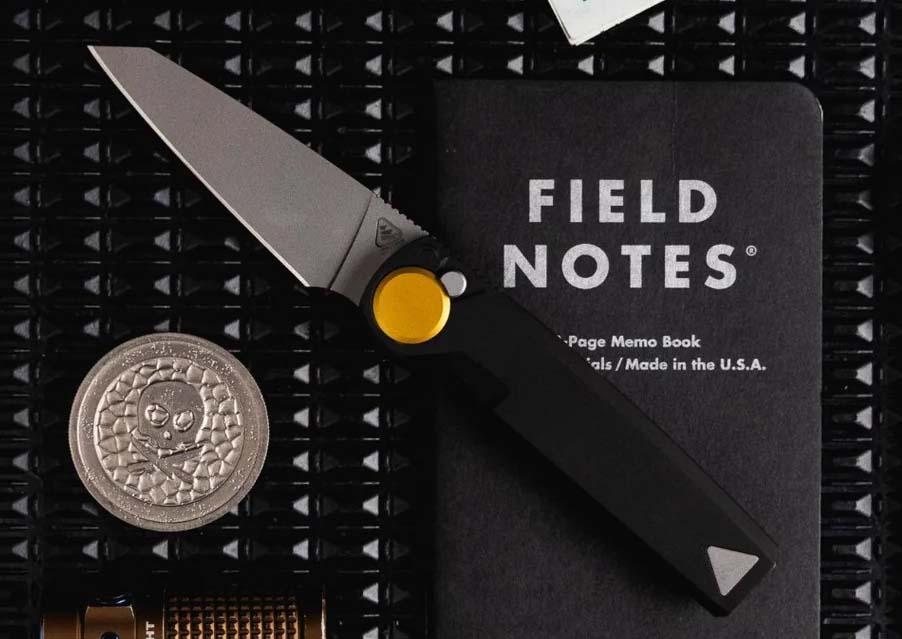
Pepperwool Merino MM Review [Field Tested]

With solid steel, bold styling, and a pocket-friendly profile, the Merino MM proves that great things really do come in small blades.

A lesson quickly learned in hunting, dressing game doesn’t require a big knife. Funny thing is, the same holds for most EDC chores for your EDC knife.

Certainly, a Crocodile-Dundee sized bowie raises eyebrows and wows crowds. What it doesn’t do is a better job of breaking down boxes and managing everyday emergencies than just the right amount of steel.

Size does matter and with a well-thought-out design and good looks to boot, Pepperwool’s Merino MM proves that more blade isn’t necessarily more better.

Merino MM Specs

Overall Length: 5.25″
Blade Length: 2.25″
Cutting Edge: 2.125″
Blade Width: 0.96″
Blade Thickness: 0.11″
Blade Material: CPM S35VN
Blade Style: Clip point
Finish: Blue
Edge Type: Plain
Handle Length: 3.00″
Handle Thickness: 0.35″
Handle Material: G-10
Color: White
Weight: 1.60 oz.
Pocket Clip: Tip-Up
Lock Type: Axis
Country of Origin: China
MSRP: $130

Pros

  • Ultra-Lightweight
  • Smart Blade Geometry
  • Ambidextrous

Cons

  • Handle May Be Too Small for Larger Hands

Merino MM Concept

The Merino's blade is terse, but punch well above its weight in most tasks.
The Merino’s blade is terse, but punch well above its weight in most tasks.

The brainchild of Pepperwool founder Beren McKay, the Merino MM takes a hack at a high-functioning micro-EDC knife.

McKay’s thought process is petite beats beastly when it offers many of the same assets and is something you never second-guess throwing in your pocket. You won’t do that because the axis-lock flipper is about as convenient as your local 7-11.

By the tape, the initial offer from the relatively new company measures in at 3-inches closed, 5.25-inches open and .35-inches thick. At 1.6 ounces, it’s about like throwing a Zippo lighter in your pocket—and as easy to forget on your person.

Merino MM Blade Steel

As is obvious as the dawn, a knife is only as good as its blade and a blade is only as good as its steel. Pepperwool has succeeded here with the cryo-treated S35VN. The steel itself is well-rounded, with good hardness and edge retention when heat-treated properly.

The former is likely the more important factor here, given the wispy thickness of the blade. Despite being as thin as a shadow, the blade is stiff enough to punch above its weight on demanding cutting and prying jobs.

Merino MM Blade Profile

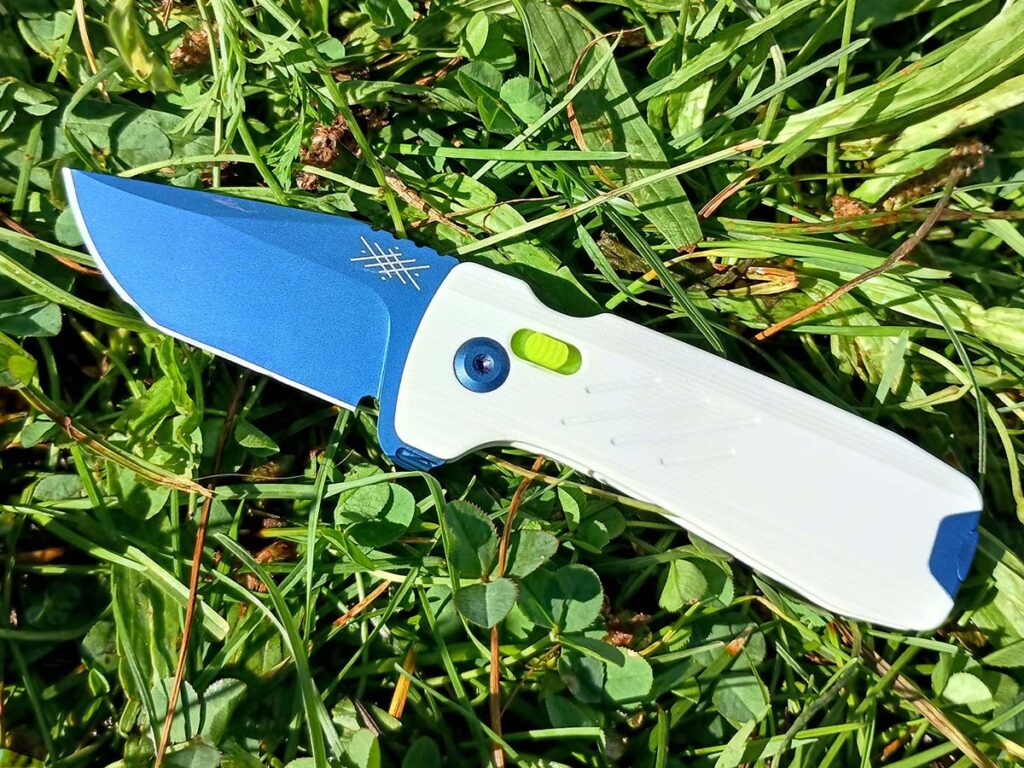
An axis lock, the Merino is ambidextrous and quick to deploy.

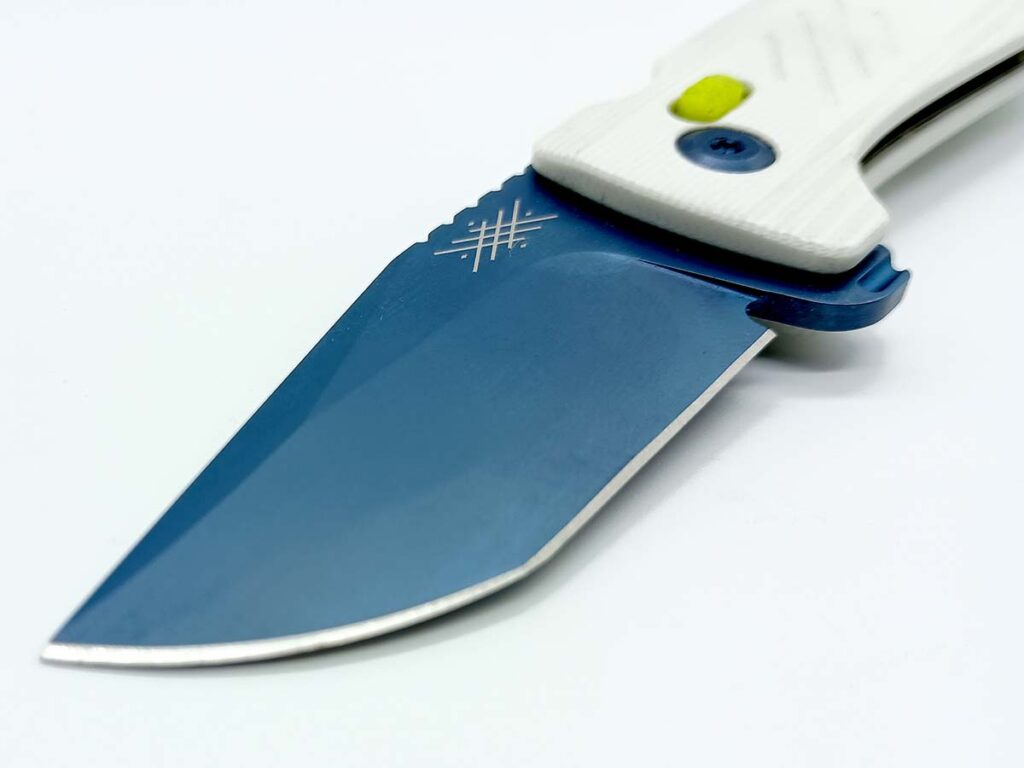
Here’s where I really like the Merino, and not simply because I’m a sucker for a clip point blade. And Pepperwool has included a dandy version on the knife with a generous upper blade a belly.

Given that the knife is natural to choke up onto the blade, it arms users with a very controllable slicing edge for very fine tasks. Still, if you need a straight edge for push or pull cuts, the Merino’s lower edge has a surprising amount of real estate.

Worth noting, Pepperwool finishes the blade with titanium nitride for an extra level of corrosion and wear resistance. As a bonus, the ceramic is a very attractive cobalt blue for added panache.

Merino MM Handle

It’s tough to go wrong with G10 for a knife handle—the stuff just seems made for the job. And it’s welcome on the Merino.

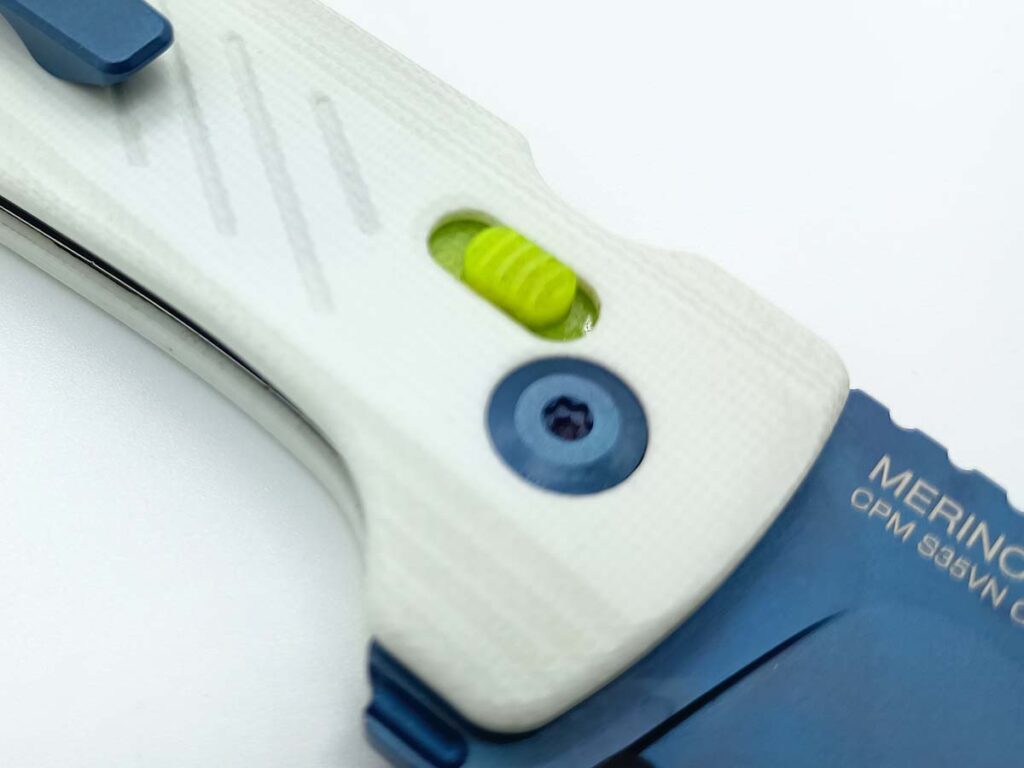
Since there isn’t a lot of knife to grip onto, the well-textured material gives the user a strong purchase on the tool. Furthermore, it’s slightly off-white, which matches up well with the blue blade—simply in the looks department.

Chamfered, the G10 also ensures there are no hotspots when the knife is in hand. This surprised me a bit, given the grip is boxy in geometry, which usually spells at least one edge that bites into your hand.

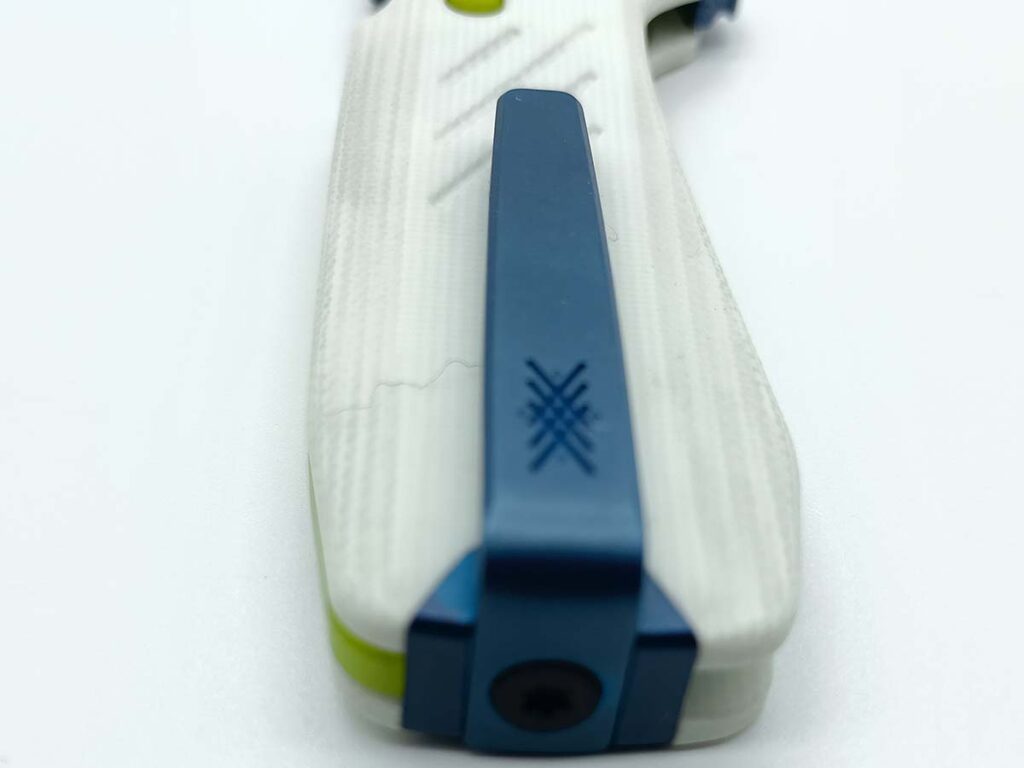
Topping everything off is a very sturdy pocket clip, also finished in dark blue. It sits level with the butt of the Marino, but is designed to sink the entire knife into your pocket, sight unseen. By the way, it is reversible from a single set screw, but the knife is strictly a tip-up carry affair.

Merino MM Lock

The pocket clip is very attractive. Good thing, because in the pocket it the only thing you'll see on the knife.
The pocket clip is very attractive. Good thing, because in the pocket it the only thing you’ll see on the knife.

This might be the belle of the ball on the knife, at least from a practicality standpoint. The axis lock isn’t anything new, but the convenience of the lock is ideal for an EDC knife. First off, it offers a quick opening and closing system to get the blade in or out of play. But more importantly, the lock makes the knife truly ambidextrous—a boon for lefties.

Testing The Merino MM

I didn’t set a challenge course of tasks for the Merino to accomplish in putting it through the wringer. Instead, for roughly two months of this summer, it was my go-to hiking and fishing knife—roles I’m certain Pepperwool figured it’d fill.

In this time, I used the knife for everything from cutting nylon cord and fishing line to prying open a paint can and, on one occasion, shaving feather sticks. On all counts, the knife proved its mettle.

The knife came sharp and until the latter part of the second month, only required the lightest touch-up to hone its edge. The blade was especially adept at finer tasks—such as trimming tags on hair rigs.

Admittedly, the handle is terse—my pinky hangs off—but with a nice tapper toward the guard, I always felt I had full control of the blade. And the action on deployment is effortless, but limited. For me, it’s always an index-finger affair; the one time I attempted with my thumb, it poked into my ring finger, due to the knife’s small size.

The knife is a solid choice for most outdoor adventures, particularly where weight might be an issue.

The best aspect of the knife, from my time with it, is that it’s absolutely a second thought to carry. Tucked away in the hip pocket, the Merino is easy to forget about given its size, and I did on more than one occasion.

The Merino MM certainly isn’t a first choice for more heavy-duty endeavors—it isn’t a bushcrafter by any stretch of the imagination. But as a piece of lightweight kit, exactly what I used it for—hiking, fishing, camping—it definitely has an edge.

Is there anything I dislike about the knife? Yes, I don’t care for the fluorescent green on the lock and liner, but that’s an eye-of-the-beholder deal. And it’s not a make-or-break feature of the knife.

Final Cut

Pepperwool’s aim was a knife you have no second thoughts about carrying. With style, function and convenience, the Merino MM scores on all points. And, I’d say it’s scored big enough that it’d make many question if it’s time to go small on their EDC.

Check Out More Outdoor Knives:

UG Tools TiNy: Knife Of The Year® Proves Sweet Indeed

The TiNy packs hefty performance into a light package.

Despite hailing from Germany, Philipp Utsch and Jan Gierse are fluent in the basest American vernacular—Twinkies and violence.

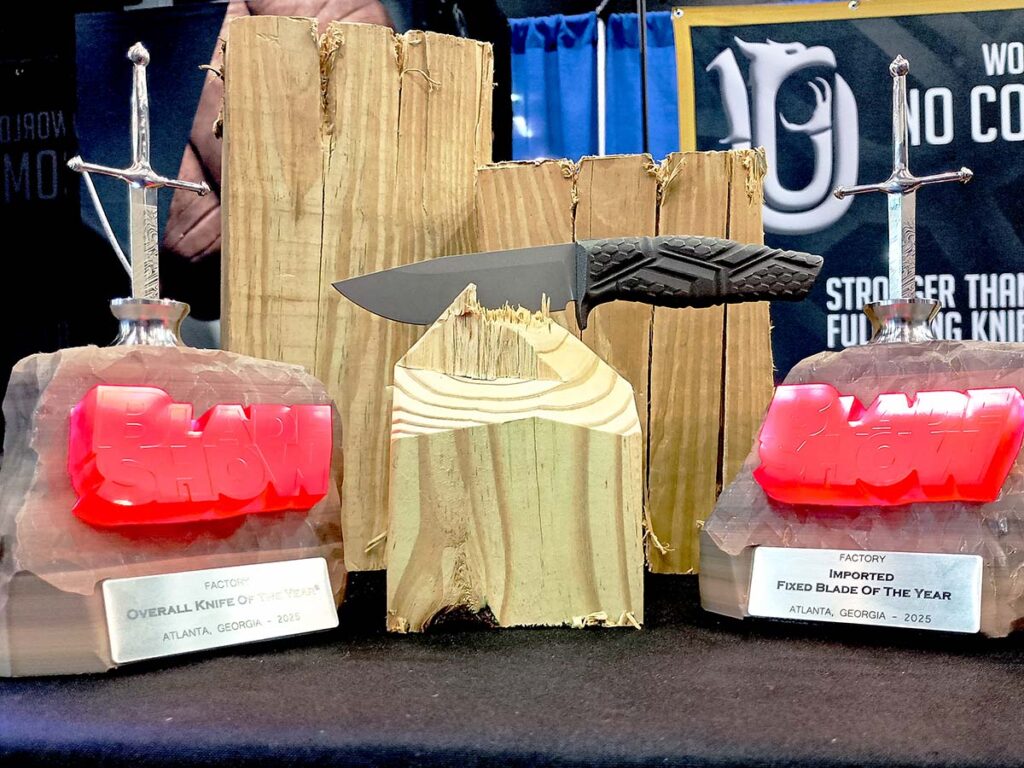
To say smashing a knife weighing all of two of the spongy confections through an 8-by-8 pine post was heard loud and clear at BLADE Show 2025 is an understatement. Aside from wowing some of the most discerning knife collectors, makers and users in the world, the tandem of Teutonic toolmakers also took home the event’s most coveted hardware.

It’s rare for fixed-blade knives to reach the pinnacle of edged tool accolades—BLADE Magazine’s Knife of the Year®. Yet, the German-made gem proved to have the edge over nearly 400 other knives clamoring for the singular honor. How?

Quite simple. Utsch and Gierse’s burgeoning knifemaking concern—UG Tools—and its award-winning knife—the TiNy—took the world’s oldest tool and firmly planted it in the 21st century.

UG Tools TiNy Specs

Total weight: 2.82 ounces
Total length: 8.27 inches
Blade length: 3.94 inches
Blade thickness: .11 inches
Blade steel: MagnaCut @65 HRC
Handle material: Titanium
Handle weight: 1.34 ounces
MSRP: ~$380

Pros

  • Extremely Lightweight
  • Superior Ergonomics and Balance
  • Exceptional Durability

Cons

  • Bordering On Expensive

Rise of UG Tools

One of the more interesting aspects of the TiNy’s meteoric rise is that this was UG Tools’ first official appearance at the BLADE Show. Utsch and Gierse were in attendance at the 2024 edge-stravaganze, but as attendees, not exhibitors.

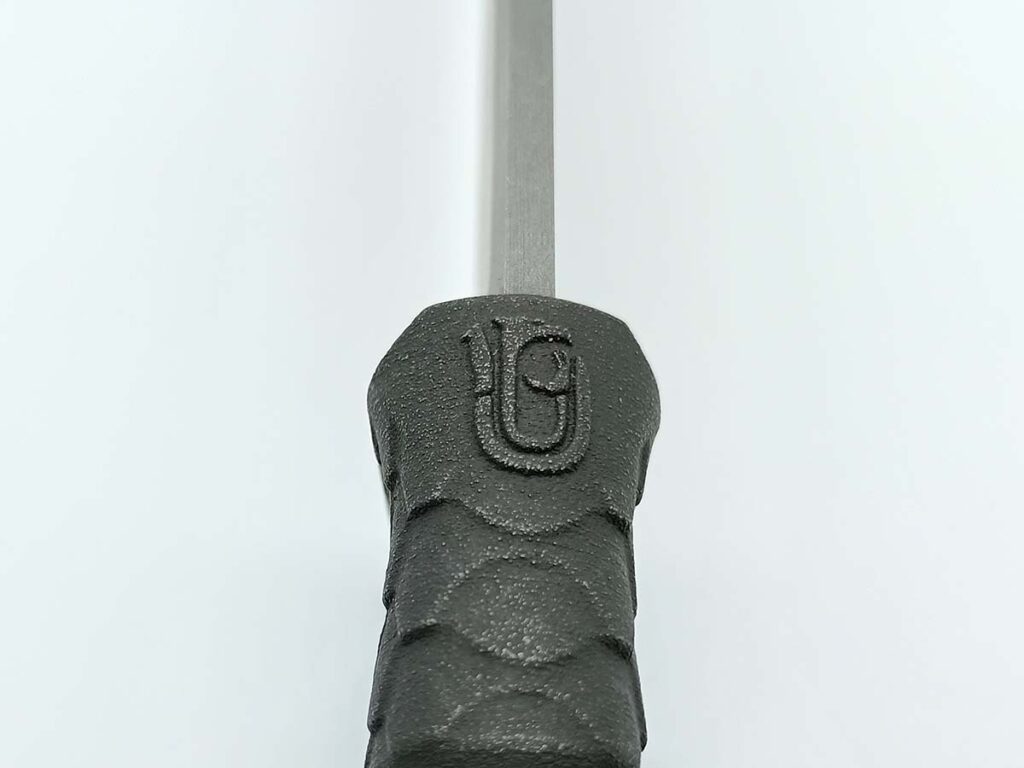
UG Tool’s mark is a combination of the founder’s last initials and some Teutonic ferocity.

The duo’s concern is also relatively new, founded in 2021. Not that knifemaking, fabrication and manufacturing were mysteries to UG’s founders.

Utsch has 20 years of knifemaking under his belt, but his daytime gig was a maintenance manager* in the founders’ hometown of Sundern. And Gierse’s career aspirations were focused on manufacturing, as he was pursuing his PhD in mechanical engineering.

It turns out, there was a lot of serendipity in those backgrounds.

Gierse’s topic focus is 3D printing—in particular, Selective Laser Melting (SLM). When he first moved into this field academically and got access to an SLM machine, a titanium knife handle was among his initial projects.

Down the line, that handle ate at him. He saw its potential, something revolutionary. He was acquainted with Utsch and approached him with the idea of teaming up to create a complete knife.

Thanks to its innovation and performance, the TiNy won both Imported Fixed Blade Knife of the Year and Knife of the year honors. It’s also stuck into some of its handy work, as the guys from UG Tools hacked through fence posts to demonstrate the knife’s resilience.
Thanks to its innovation and performance, the TiNy won both Imported Fixed Blade Knife of the Year and Knife of the Year® honors. It’s also stuck into some of its handy work, as the guys from UG Tools hacked through fence posts to demonstrate the knife’s resilience.

The bladesmith was instantly intrigued.

“[W]hen Jan suddenly sent me a photo of the first titanium handle out of the blue in 2021, I knew immediately what I was looking at. The potential was immediately clear to me,” Utsch said.

Getting A Handle On The TiNy

Funny as it might sound, the handle is the belle of the ball on the tiny. It’s where much of the innovation lies.

Additive manufactured, and hollow, the human-tool interface cuts the knife down to a scant 2.82 ounces—or two Twinkies. For a practical-tactical knife, this opens up a wealth of potential.

The old saying for backcountry hunting, military campaigns or just plain hiking is “Ounces make pounds, and pounds make pain.” At 8.27 inches in overall length, weight savings are substantial for a full-sized hunting, camping or military knife (the TiNy could fill all three roles).

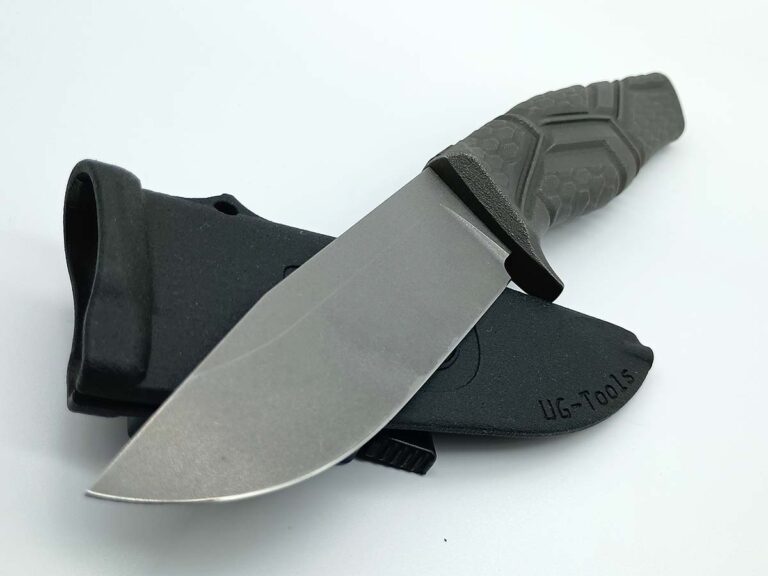
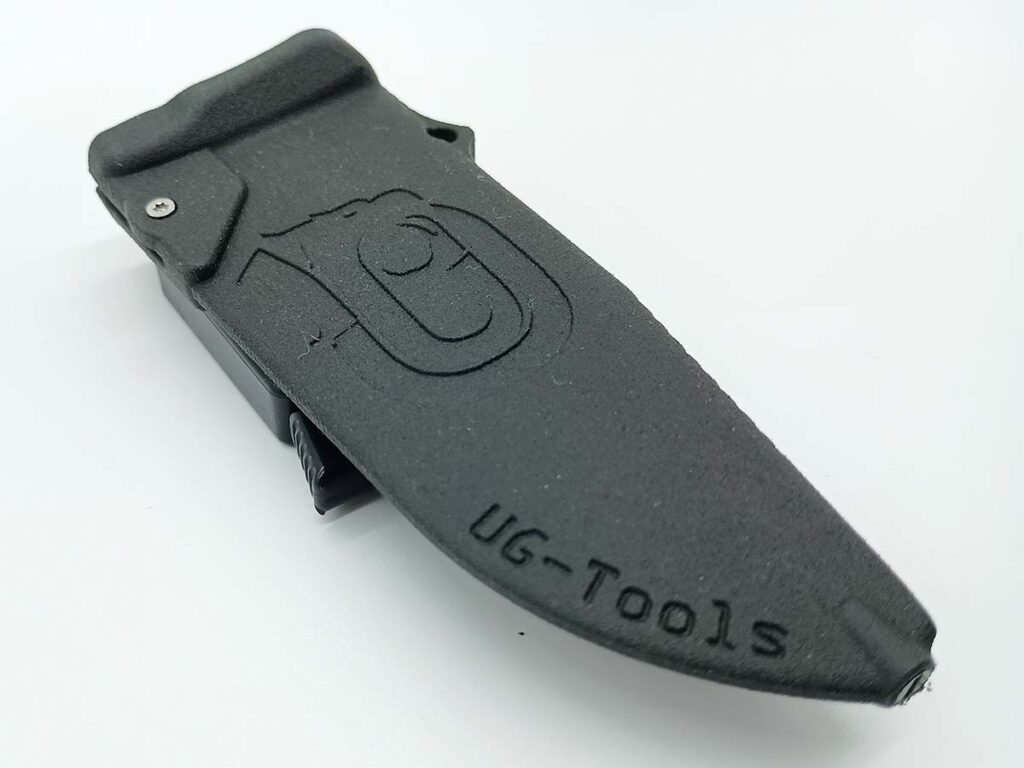
UG’s design prowess overflows to the TiNy’s sheath, a sturdy Kydex unit with a retention-adjustment screw and UltiLink for unlimited attachment/carry options. An aside, given the hollow handle, it makes a very satisfying ping when clipped all the way into its sheath.
UG’s design prowess overflows to the TiNy’s sheath, a sturdy Kydex unit with a retention-adjustment screw and UltiClip UltiLink for unlimited attachment/carry options. An aside, given the hollow handle, it makes a very satisfying ping when clipped all the way into its sheath.

However, keeping things light isn’t the only advantage of the 3D printed handle.

TiNy’s Big Ergonomics

The sky is nearly the limit when it comes to SLM manufacturing, allowing for the TiNy’s advanced—if not nuanced—ergonomics. From the Pango model, I spentd time testing, which isit’s the most enjoyable aspect of the knife.

Plain and simple, in my medium-sized mitts, it feels good to hold.

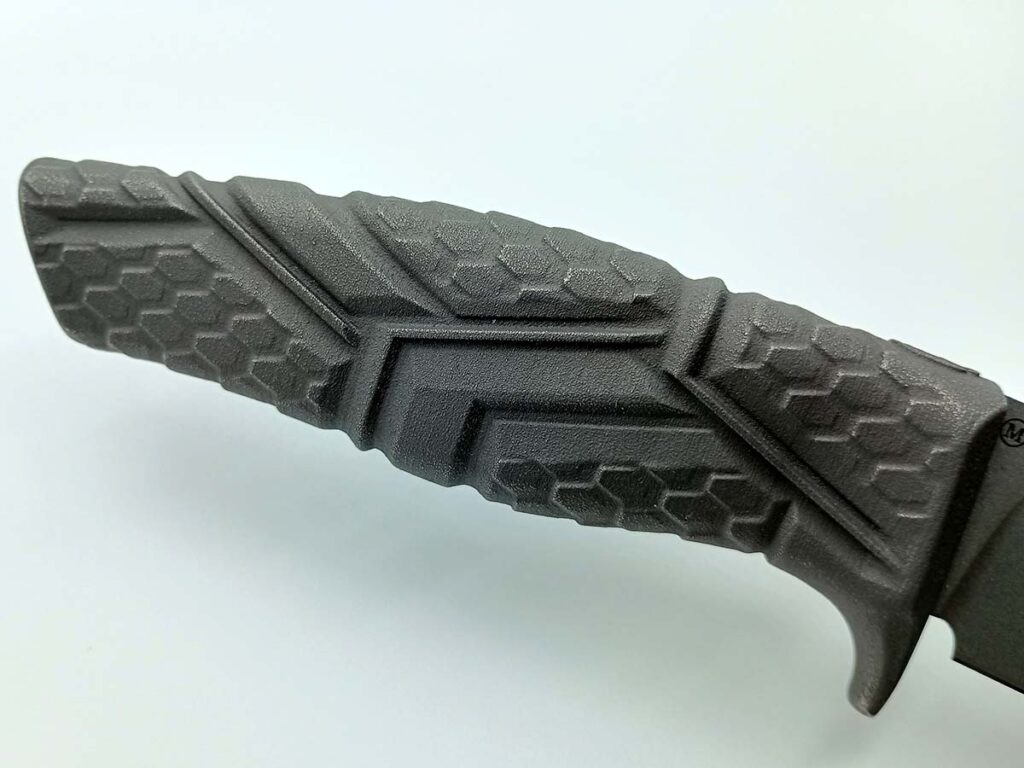
Well thought out, the handle swells and recesses at the right spots to form-fit my medium-sized hands. Yet, but for my money, the integral grip texturing gets the most accolades. A mixture of dragon scale and linear elements—with a fine pebble finish—the handle stays in place no matter what axis force is applied.

The TiNy’s 3D-printed handle isn’t only lightweight, but also as comfortable as the day is long. In testing, the Pango pattern stuck firmly to the hand without firing up a hot spot.

A final point, the knife is extremely well-balanced. Using my finger as a fulcrum, it’s right behind the guard, making the blade very agile and easy to manipulate.

TiNy Blade

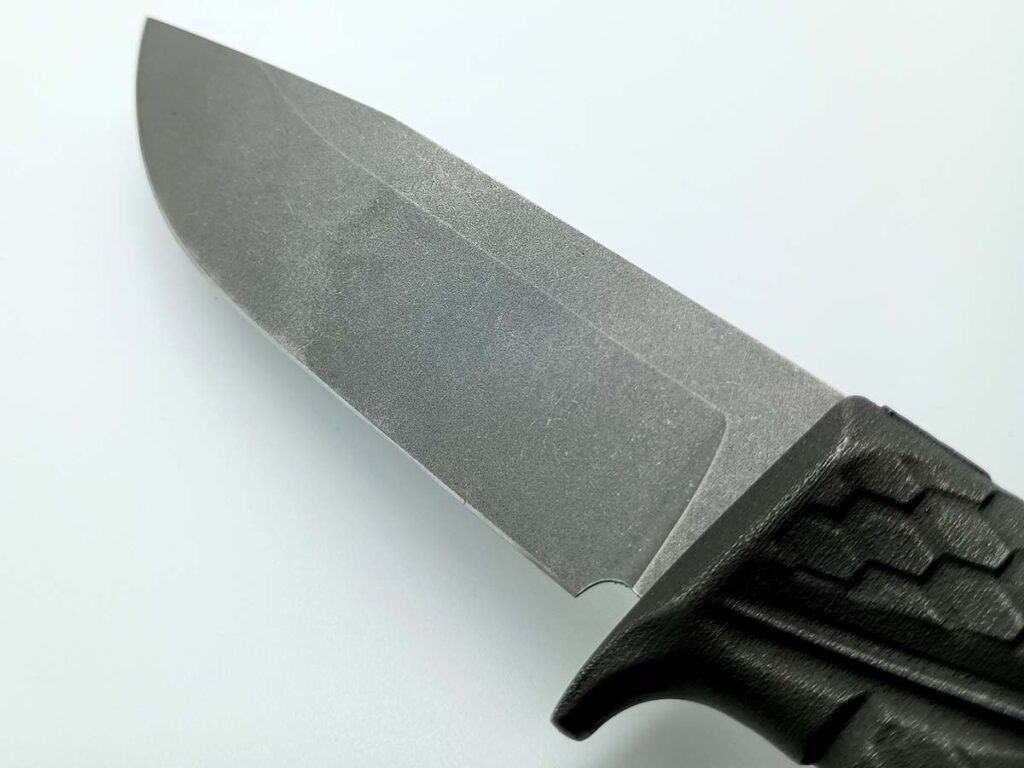
The 4-inch drop-point blade is very clean and understated, but well-formed for a general outdoor knife. Given UG pulled out all the stops and used MagnaCut steel, it’s also more than ready for hard use.

I appreciated the long, straight cutting surface just behind the belly. It is ample enough to facilitate larger push cuts and gives it plenty of edge on pull cuts.

Turning to Magnacut steel, UG produced a high-functioning cutting tool that requires little maintenance. Through general testing, the knife retained the same edge with which it came out of the box.

The drop on the point was just right for me to index when choking up on a pinch grip, like you might use field dressing a buck or the like. And the blade’s stonewashed finish gives it a level of tackiness, as well as hiding inevitable abuse.

TiNy Ruggedness

Interestingly, the TiNy is neither a full nor a classic tang knife, a fact that might get some traditionalists to clutch their pearls. Utsch and Gierse whacking it through an 8-inch by 8-inch post should put to rest any concerns about durability. But what’s going on to keep the blade and handle happily married?

“The extreme load-bearing capacity is achieved by the very precise press fit, in which the oversized blade is pressed into the undersized handle,” Gierse said. “This type of connection has been proven in industry for well over 100 years and transfers forces through a permanently elastic, form-fitting connection.”

UG’s knife made quick work battoning through a nearly 3-inch diameter elm log.

UG has done its testing on the knife, as well as sold several thousand and has yet to encounter a blade-handle separation.

“So far, we have not been able to damage the connection between the handle and the blade, even under extreme stress tests,” Gierse said. “This makes the knife behave like an ultra-light, fully integrated knife. Of course, the blade can break under excessive overload, just like any other knife. Despite the best heat treatment and steel, there are natural physical limits that even we cannot overcome.”

Testing The TiNny

I would have liked to have tested the TiNy during hunting season, to really put the knife through its paces. However, I received my test model during the summer and deadlines call.

In turn, I put it through a small, very unscientific laboratory evaluation that included:

  • Initial sharpness test on 20-pound bond paper: The tiny passed my initial sharpness test with flying colors.
  • Push-cut test on 1/8-inch thick1/8-inch-thick leather: It snapped straight through the leather with an audible pop.
  • Pull-cut test on ¼-inch double-wall cardboard: The knife made quick work of the cardboard, through 100 some cuts.
  • Durability Test Battoning Siberian Elm Log: Had no problem passing through a seasoned 3-inch diameter log, splitting it roughly a third of the way through. Will note, this did mar the blade finish some.
  • Follow-up sharpness test on 20-pound bond paper: No edge loss from the initial test.

Overall Impression

I was impressed with the cutting performance of the TiNy; however, I wasn’t too surprised given the blade material. There’s a reason why MagnaCut continues to demand respect in the marketplace and this was proven out by the blade maintaining its edge after moderate use.

I walked away most impressed with the comfort and controllability of the knife, thanks to a well-thought-out handle. I did wonder if the linear aspects of the texturing would prove hot with extended work. This wasn’t the case. I could have worked all day with the TiNy and not thought twice.

Before and after testing, the TiNy’s blade was razor sharp, able to shave through 20 bond with ease.

I’m not the only one.

James Rodebaugh met Utsch and Gierse in 2024, when they attended the BLADE Show as attendees. The duo gave the ABS Master Bladesmith and custom knifemaker a TiNy for field testing, with Rodebaugh taking it on hunting trips in both Alaska and Wyoming.

Dressing game and spatchcocking fowl, the knife proved resilient. He also tested a concern I have with any metal-handled knife—performance in cold weather.

“The printed titanium handle surprised me,” he said. “I thought it would be cold to the hand but warmed to body temp from approximately 20 degrees Fahrenheit in a heartbeat.”

Good to know you won’t take off palm flesh if you’re gutting a deer in the bowels of winter.

Final Cut

Rarely do knives—even ones deemed top-of-class—vastly change the manufacturing landscape. Is the UG TiNy one of those sea-change pieces of cutlery? Only time—and likely mimicry—will tell.

What can be said is that Utsch and Gierse have concocted a version of the age-old fixed blade that firmly plants its feet in modern manufacturing. And they’ve done so at a level that should make the TiNy a useful and trustworthy piece of kit, be it in the backwoods or battlefield.

For two Twinkies’ worth of knife that’s pretty sweet.

More Reviews:

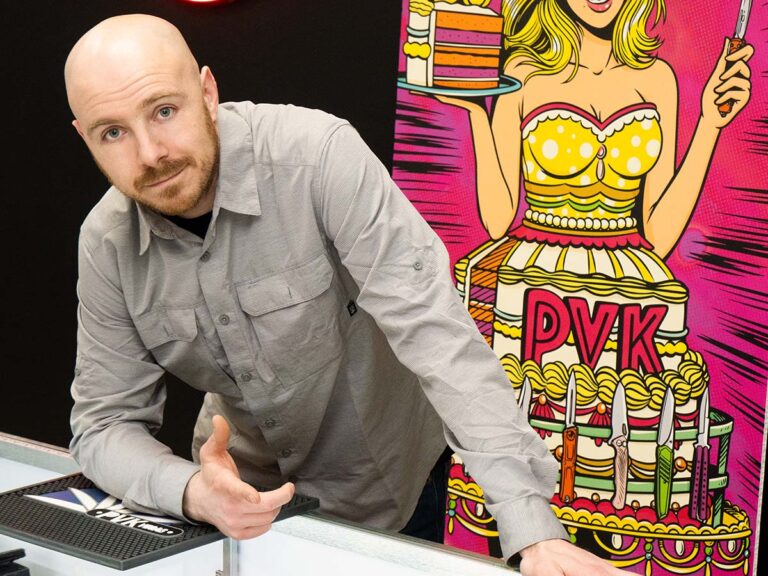
PVK: The Uncut Story – From Vegas Strip to New England Homecoming

Sponsored Content

Jeremiah Burbank shares PVK’s trek around the knife world and a return to where it all started.

From a New England gentleman’s gift shop to a legendary—if not notorious—knife outlet on the Las Vegas Strip and online edge tool maven, PVK and PVK.com has carved a unique path in the knife world. We caught up with Jeremiah Burbank, the man behind the radical retail brand, and got a behind-the-scenes look at the company’s growth, cross-country moves and PVK starting a new chapter in its story. Buckle up as he surveys the ever-changing knife landscape, shares online sales insights and his enduring passion for knives.


BLADE: Give PVK’s origin story—how did the store come together and how did it end up in Vegas?

Jeremiah: My brother, Joshua, started with a storefront in 1994 in Amherst, Mass., with Pioneer Valley Knife & Tool. It focused on gentleman’s gifts—Maglites, Leatherman, a real eclectic mix. Over that first year, he shifted to pocketknives because he sold a ton of them. He eventually dropped “Tool” from the name and exclusively focused on knives.

By 1999, he had two storefronts in Amherst, and by 2000, he moved completely online with PVK. I came on in 2001 and joined the team, helping Josh with videos of knives, doing over-the-shoulder videos while Josh talked about the knives.

A lot changed in 2013, when some friends of ours went to the USN Gathering in Las Vegas and said we had to check it out. My brother went the next year and said that it was the future of knife sales. By the next year, we had a store by McCarran International Airport, and by 2017, we moved to the Strip—Las Vegas Boulevard—and became PVKVegas. We got to sell knives to the world.

All good things come to an end. Josh passed away unexpectedly in 2021, and shortly after, our landlord informed us they were tearing down our building for the Formula One race. Now PVK is back in New Hampshire—Hudson—and we just opened our showroom last year.

There’s never been a pause with the store.


BLADE: PVK started as a gentleman’s store but ended up a knife retailer—were you and your brother knife guys to begin with?

Jeremiah: Josh was a knife guy through and through—our mother would definitely tell you he had a knife on him throughout his life and took it where he probably shouldn’t have. Josh was into balisongs and read The Advanced Balisong Manual by Jeff Imada. And PVK carried knives we all know today—Benchmade, ProTech, Microtech (we were their second or third dealer)—way before it was cool.

I was always into knives, too. There was some age difference between Josh and me, so one of my earliest memories was hanging out at the store when I wasn’t in school. Also, I think I might have brought a Master of Defense Lady Hawk to school once—I was really into that knife.


BLADE: For those who never had the chance to visit, tell us about the Vegas store—how was it set up?

Jeremiah: Excellent question because it was notorious on the Strip.

Honestly, the frontage was very small—we had 10 cases, maybe 4 1/2 feet long each… call it a 60-square-foot showroom. We had a red carpet, so it really fit into Vegas. We replaced it each month; it got so dirty. Above the cases, we had TVs showing all kinds of knife videos.

As for what we had to sell, we sold everything from $5 knives to $5,000 knives—we couldn’t just cater to knife people. And we had a 10-watt laser to engrave a knife on the spot if someone wanted to put their name or their spouse’s name on the knife.

There was a center section to the store—the VIP room—you accessed from behind the register. We actually had to move the register to get back there. It was differently lit, had a beautiful coffee table and Eames lounge chairs and ottomans. It was a very private and nice experience.

Back there, everything in the cases were customs, short-run knives and one-offs. There was an exclusivity to it. If a guy showed up in a robe and slippers but had a Rolex on his wrist or he said the right things, we’d invite him back to the VIP room. It was a thing of legend.

In the very back was inventory; it was pretty tight because we had 25 safes.

Out front of the store, I’d hang out with the guys and flip knives to get people in the store. You’d see the world in tourists walk by.


BLADE: Vegas is crazy. I imagine you had everybody from celebrities to guys who hit big at roulette come through your doors. What’s your most memorable stories from your time there?

Jeremiah: First and foremost, since I get asked about this a lot, my favorite thing about selling knives is the people—it doesn’t matter if it’s a celebrity or Joe Schmo. Either way, I love to talk about knives.

But we had a number of well-known people who came to our store. Aerosmith had a residency in Las Vegas, and they’d come in. And Post Malone came in unexpectedly with his security detail, hung out in the VIP room and bought a bunch of knives. Tim Burton, Johnny Depp, a whole range of people.

The thing is celebrities are like anyone else when they came into PVKVegas—they’re just a bunch of kids in a knife store. Steven Tyler devolved when he came in, wanting to see each knife and just having a great time.

We were Post’s first stop in the knife world—he’s big into them now. When he came in, you know what the first knife he headed for? The Swiss Champ—the Swiss Army Knife with some 70 functions. He said, “Ah man, you’ve got this?” and had us box it up.

Celebrities are cool, but it’s cooler seeing them geek out on knives. We’re all collectors.


BLADE: You guys were legendary in Vegas, beyond the knife community—was it tough to say goodbye?

Jeremiah: It was heartbreaking, and it was a hard time for me as a person, knife dealer and brother. I had high stree through it all, especially having to break ties with people around the Vegas community who were close with me—with PVK. Honestly, it really didn’t hit me until USN ‘22. Everyone from USN had something to say about the shop. Being back was a strange ripple in reality. Did that all really happen [with the shop in Vegas]? Or did I just dream it?

Closing the shop on the Strip was a flashback for me—in reverse—of when we came out West. Then it was packing up a Penske truck and driving across the country, and I was doing the same but heading for New Hampshire. Life can be very strange, very cyclical.


BLADE: PVK is now back where it started or close to it, does it feel like coming home?

Jeremiah: I love being back. I’m from New England, and the region has always been near to my heart. I love the cold weather and the passing seasons. Plus, my family is an hour away. Plus,  I’m offering something not offered anywhere else around here. I’ll also say, it’s great to sell to people face to face again.


BLADE: New Hampshire is a good place to set up shop, compared with some of the other New England states. 

Jeremiah: It is the “Live Free or Die” state. New Hampshire was the first state to repeal its ban on switchblades back in 2010, and now we’re seeing it nationwide.


BLADE: You mentioned selling face to face again; that just came about recently. What’s your new shop like in Hudson?

Jeremiah: It’s very different than Vegas, but in a good way. There is no pressure, very calm atmosphere and no VIP room… yet. We’re a 10 a.m.-5 p.m., Monday through Friday operation, which is very different than Vegas, where we were open to 2 a.m.

We opened on Black Friday last year, and it was great to see the excitement it generated. We had folks drive up from Massachusetts when we opened our doors. 

Part of what I did when I moved back was contact Nick Chuprin of NCC Knives, who was based in Brooklyn, N.Y., and offered him space. He moved his operation up here, and he has an entire machining cell in the back of the house.

It’s not a standard store; it’s multifaceted. It’s like a knife clubhouse. What other store can you come and get your knife sharpened by a custom knifemaker? And if you want to make, maintain or modify a knife, you bet your daisies I can get it done.


BLADE: Even with the new storefront, online knife sales remain PVK’s lifeblood. But it’s always been that way, correct?

Jeremiah: My brother was an early tech adopter; he had PVKnife.com online in 1997. Even before that, he was on list servers—Wreck.Knife—talking to people about knives. At first, online sales were a trickle, then in three or four years from going online, it became overwhelming. Josh went from having our parents help us ship to outgrowing their house.

He was clever. He used print media—we still do today with BLADE Magazine—to get the word out. And he mailed fliers letting customers know they could order online and have a knife delivered right to their door.


BLADE: Going from the 1990s, when there were a handful of online knife dealers, to today, when there seems to be a new store going online each week, how much more competitive is it now?

Jeremiah: I’ve been doing this a while and will say all competition is good competition. I am good with the free market; it makes us better.

The knife market has seen incredible growth and so have we. Around 2009 is when PVK saw the online market take off, and from then to 2015, our business doubled. By 2018, it tripled, and in 2019, it quadrupled. Then the pandemic hit, and everybody cared about knives.

The bad part about this is it brought a lot of part-time guys into the market who didn’t take it seriously. For better or worse, there aren’t a ton of regulations in the knife world, so there are some who take advantage of the community. That’s not good for anyone.

One of the things I always tell buyers is to make sure whoever they deal with online has a phone number on the website. If they don’t, don’t buy from them. We’ve always accepted all calls from customers and engaged with them.


BLADE: It seems, from your brother’s days on list servers and videos to your work on social media and your Bladeology podcast, PVK has also found it important to engage and build a community online. What motivates your focus on engaging with and building an online community?

Jeremiah: We’re in a disconnected world, and this is a way to make a connection with people. That’s why I find the online community so crucial. With the podcast, it’s friends talking about knives—me, Nick and Chuck Gedraitis—answering knife questions.

I also love recording history, especially with the knives we bring through the shop. You take the Marfione Dragon Slayer 1, it’s gone, it’s in someone’s collection, never to be seen again. So, I find it important to record knives so someday when someone wants to see them, there’s a video or a picture of the knife.

Same goes for the podcast but with the people in the industry. I had Mike Crenshaw of Knife Rights on six months ago, and he passed recently. But a little piece of him gets to live on.


BLADE: Let’s wrap up with something lighter. You have the choice of some pretty cherry knives to carry or fidget with. Do you have a go-to EDC choice?

Jeremy: That might be my biggest problem—my EDC tray overfloweth. But there are two knives that I go to usually. My first is a Microtech Scarab Executive. I was a huge early carrier of the Executive; there’s just something about it. The second, an exclusive Pro-Tech 3V Malibu. Love that button lock, and Dave Wattenberg makes it in an exclusive 3V. I’ve laughed with him about it before; he has been making autos for 25 years, and his best seller is a flipper. But those are my EDCs for real.


BLADE: Thank you for taking the time to speak with us.

Jeremiah: Thank you.

Read Up On Knife Buying:

First Look: Work Sharp RMX–Folder/Auto

With its first foray into knifemaking, Work Sharp cooks up a doozie–a knife that’s both a folder and an automatic.

Work Sharp has five decades of experience keeping the knife world as sharp as ever. At that time, the tool and knife sharpening implements company had never dipped its toe into knifemaking—until now.

At the 2025 BLADE Show, the Ashland, Ore., company will debut its first foray into edged tools with the introduction of the RMX EDC-style knife. And while the pocket partner might seem like just another folder at first blush, the knife’s internals make it an innovative addition to nearly anyone’s collection. Work Sharp isn’t lying when it says the RMX is “Your knife. Your Way.”

Manual Or Auto

The groundbreaking aspect of the RMX (Replaceable Mechanism Exchange) is that the knife is both an auto and a manual action. And no, it’s not just manual by muscling open an auto or flicking open a manual.

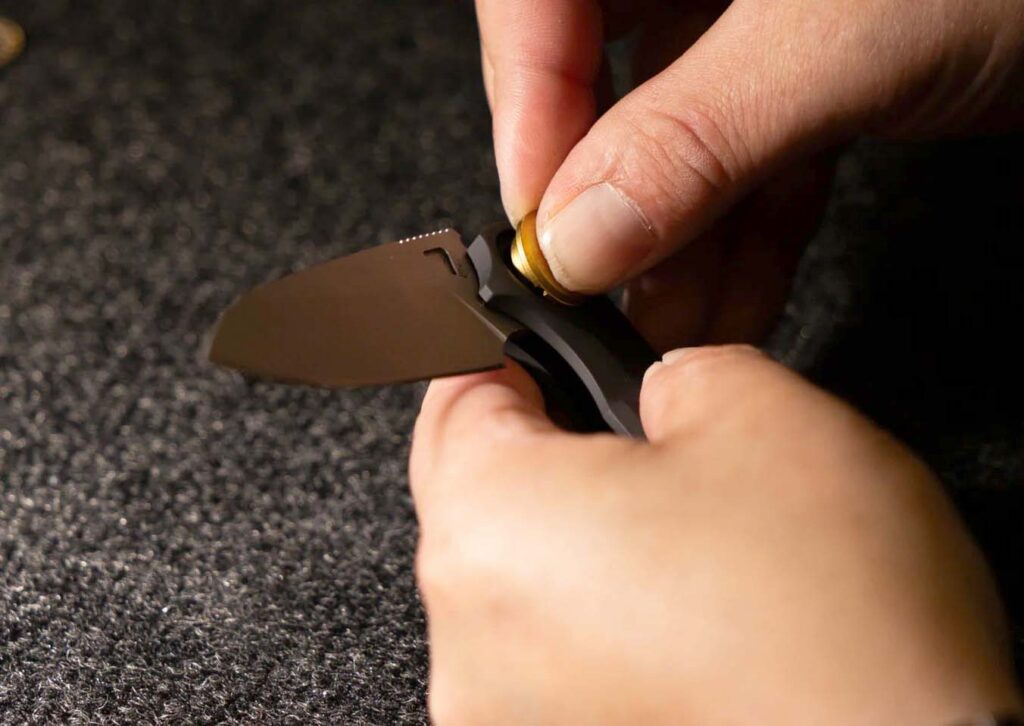
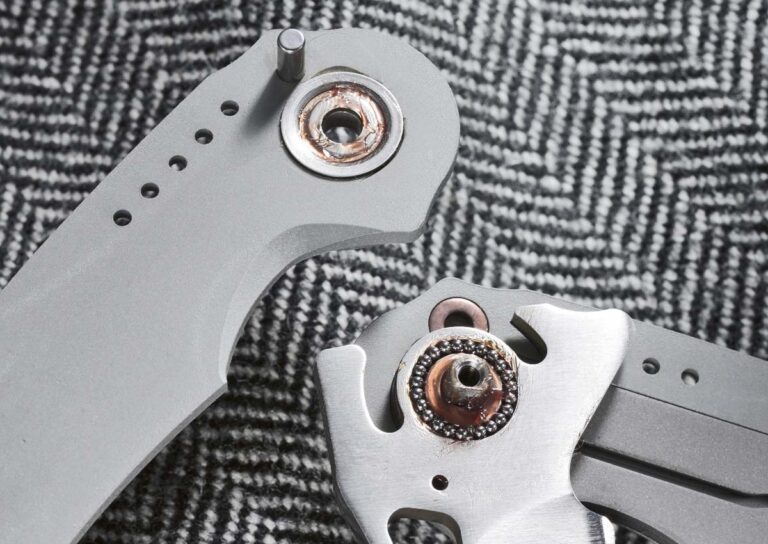
As its name suggests, the RMX utilizes what Work Sharp claims is the first-ever interchangeable pivot cartridge. Essentially, the knife comes with two pivots—one ball bearing (manual) and one spring-loaded (auto). Simply switch one out for the other via a 2mm hex head.

RMX pivot removal

Furthermore, internally, the tension is adjustable thus, the deployment of the blade in both manual and auto configurations is tunable. It’s a slick system, not only because of the implications of having two knives in one, but also legally.

Theoretically, the RMX should make shipping the sometimes automatic knife all the simpler, while also giving users more control over exactly what they’re carrying. Not to mention, it’s a plain and simple concept.

As for deployment, a push-button near the pivot kicks the blade out as an auto and acts as the release as well.

RMX Blades

The Work Sharp RMX comes in two blade styles and three sizes. The one I’ve seen making the most headlines is the full-sized 3.2-inch Reverse Tanto profile—a wicked-looking blade with an ultra-thin edge and excellent slicing properties. The company is also offering a drop-point profile in two sizes, 3.2 inches and a compact 2.4-inch option. Both come with a saber grind.

As for blade material, Work Sharp utilized Crucible Industries’ CPM 3V steel. This is a solid choice, given the metal is known for its toughness, high wear resistance and ability to hold a very fine edge.

RMX Handle

RMX knife for EDC

Interestingly, especially for a knife with auto guts, the RMX is feather light, thanks mainly to its handle. Work Sharp opted for magnesium, keeping the knife between 2.24 ounces and 2.7 ounces, depending on its configuration. Additionally, the material imparts a good deal of stiffness to the knives and, with a gray Cerakote treatment, proves plenty durable, not to mention eye-catching.

Complete Package

Even for the sheer novelty, the Work Sharp RMX is an intriguing system made even more so due to an affordable price.  The RMX compact has an MSRP of $130 and the full-sized version an MSRP of $140, making the line competitive in both the folder and auto markets—very competitive. Overall, the offering makes one wonder why it took Work Sharp so long to take a stab at knife manufacturing.

More Pocketknife Info:

5 Pocketknife Breakthroughs That Changed The Class Of Knife

The technological advancements that have redefined the pocketknife as we know it.

When I stumbled onto the knife scene in 1985, the only pocketknives I had carried up to that point were slipjoints and lockbacks. Of course, slipjoints weren’t called slipjoints back then but simply pocketknives. Today, as far as BLADE® is concerned—not that it’s any major newsflash or anything—any knife you can carry in your pocket is a pocketknife.

All of which brings me to the subject at hand: my picks of the five most important pocketknife developments of the modern sporting knife era. In rough chronological order they are:

The pocket clip: BLADE Magazine Cutlery Hall-of-Fame® member Sal Glesser’s introduction in 1981 of the Spyderco pocketknives with the hole in the blade and the pocket clip would turn the genre on its head. While the hole in the blade was a masterstroke in and of itself, it was the pocket clip that forever changed the way people would carry their pocketknives. Rather than rattling around in the bottom of a pocket with change, car keys and what have you, the closed knife was held on the pocket lip by the clip, free from pocket-bottom scratches and poised at the ready to be deployed to cut whatever needed cutting.

The linerlock: Cutlery Hall-of-Famer Michael Walker invented the linerlock in 1981, but it would take a few more years before custom knifemakers—and shortly thereafter, factory makers—began readily adopting the lock that made one-hand manual opening and closing of the pocketknife an easy reality rather than an exercise in hand contortions. Today, the argument can be made that the linerlock is used on more sporting folders than any other lock.

The flipper: While exactly who made the first folder with the flipper tab that manually deploys a folding blade with the tap of a finger may be up for debate, there is no debating that the person who popularized it was Cutlery Hall-of-Fame knifemaker Kit Carson. A simple addition to the pocketknife on its face, the flipper tab opens a blade as fast and easy as any other manual method—probably faster.

The Ikoma Korth Bearing System (IKBS): Pivot systems that helped open folding blades quickly and smoothly had been around before, but it was the IKBS conceived in 2002 that took blade opening to a new level of quick and smooth. In conjunction with the flipper especially, the IKBS transformed one-hand pocketknife opening from fast to just this side of automatic. Developed by Brazilian custom knifemakers Flavio Ikoma and Ricardo “Rick” and Paulo Lala (the latter two collectively known as Korth), the IKBS is another masterstroke of design and invention.

Material upgrades: These cover a number of materials and years, from Walker’s switch to titanium for his linerlock spring in 1983, to a wide array of other hi-tech substances in subsequent years for pocketknife handles, including titanium, thermoplastics, Micarta®, G-10, carbon fiber and other state-of-the-art materials that not only were super strong and tough but also were lightweight, reducing the weight of pocketknives to the point that they were basically unnoticeable in a pocket. Meanwhile, the advances in blade steels over that same stretch are too many to mention.

How about you? What are the most important pocketknife developments? Tell us in the comments.

More On Pocketknives:

Kronos Knives Gung Ho! Line Designed By Ken Onion

Big, Brutish and ready for action.

In ancient Greek myth, Kronos (or Cronos) was king of the Titans—the first generation of gods who ruled the cosmos. It’s a pretty weighty title to hang on a knife company, but one the new(ish) upstart affiliated with gunmaker Palmetto State Armory has done a solid job of filling. Since its founding in 2024, Kronos Knives has left its mark on the industry and recently developed a line likely to further solidify its position.

Shake hands with the Gung Ho! line designed by Ken Onion.

Always a head-turner among knife buyers in the know, Onion designs have proved sought after. However, the Kronos knives are a far cry from many of the BLADE Cutlery Hall of Fame member’s recent entries. The four knives comprising the collection are big, brutish and ready for backwoods or tactical action. Honestly, it was more than what Mike Probyn expected when he initially talked with Onion about creating the line.

“I told Ken he had free reign to do whatever he wanted,” the President of Kronos said. “When I saw what he came up with, I told him there wasn’t a thing that needed to be changed.

We’ll look a little closer at each model of the Gung Ho! line in a second, but for the sake of expediency, let’s cover the knives’ commonalities first. Each of the knives is a full-tang fixed blade constructed out of 1095 steel and boasts G10 handles. The scale is held in place by oversized torx screws and the butt of the knife has a lanyard hole. Finally, all the Gung Ho! knives are American-made.

Kronos Truedefender

Truedefender

The knife has perhaps the most unique lines of the collection, boasting a wide belly on the blade and a modified drop-point profile. The knife has a sight rake at the grip, giving the blade an aggressive edge-forward posture when in the hand. While not pegged to any one particular role, the Truedefender certainly would excel as a bushcrafter or fall into any tactical task with ease. MSRP: $228

Kronos Maxhunter

Kronos Maxhunter

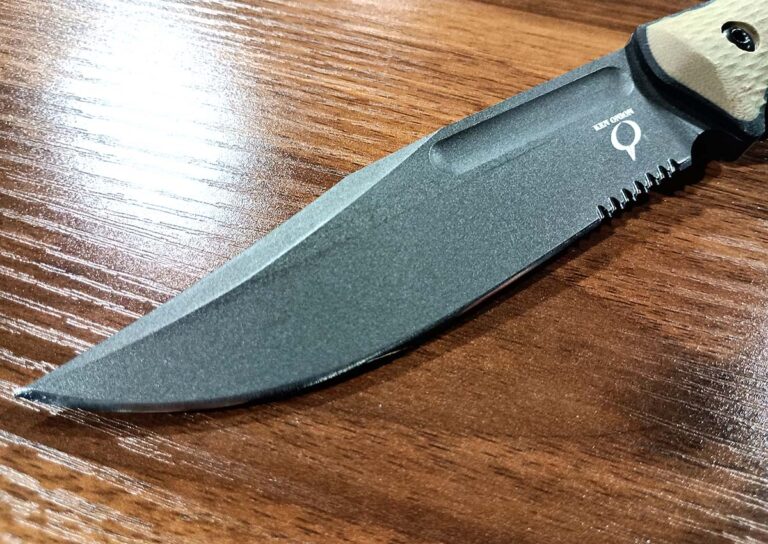
Living up to its name, the Maxhunter is a traditional hunting knife profile, with a long clip-point blade. The knife has somewhat of a dual personality. A thick spine towards the rear ensures it’s stout enough for tough chores, such as chopping or battoning. The tip comes to a sender finish, making it deft at more delicate tasks, like skinning. MSRP: $228

Kronos Elitesurvival

Elitesurvival

Aimed at bushcrafting, the Elitesurvival provides a very rugged design for those who thrive in the backwoods looking for. The drop-point blade is meaty and hardy enough to take the abuse commonly doled out in camp and survival tasks. A nice touch, the tapered grind on the spine—near the tip—provides a good striking surface for firecraft. MSRP: $256

Kronos Stiffneck

Kronos Stiffneck

Maybe the wickedest looking one of the bunch, the Stiffneck offers up a dagger profile with a single edge. The false edge on the blade, however, comes down thin enough that it would likely be no issue to grind an actual one onto it—if it’s legal in your neck of the woods. Though, it doesn’t hold like a dagger as the handle is not asymmetrical, with an aggressive rake similar to the Truedefender. MSRP: $220

Check Out More Buyer’s Guides:

Blunted Blades And Knife Bans: England Has Gone Over The Edge

England has had an uptick in knife crime in recent years, including the horrible incident costing three young girls their lives in Southport. Certainly, crime of any kind deserves scrutiny and solutions so that society can conduct its daily affairs in a safe and secure environment. Unfortunately, it’s never the calmer heads that prevail when dark winds blow.

Case in point, the utterly asinine suggestions emanating from the host of a BBC documentary on UK knife crime.

From the New York Post:

“Actor Idris Elba announced amid his forthcoming knife crime documentary that the United Kingdom must consider “innovative” prevention methods such as blunting or banning knives.”

Let that sink in… blunting or banning knives. And he’s not talking about neutering simply what might be considered “scary” knives—tactical fixed blades, karambits and the like. No, it’s the whole megillah.

He said in the Post article:

“The truth is that kitchen knives are perhaps 25% of the knives used in most terrible crimes. That’s one of the stats in the film. And those kitchen knives are usually a domestic situation,” Elba warned. “So kitchen knives… of course, it’s very difficult. They’re a domestic knife.”

This walks hand in hand with other extreme actions that have taken place in England regarding knife sales. One of the more atrocious, ID requirements and live video sales to purchase knives online. Why, the next thing you know there’ll be a proposal for licensing knives.

Well, you don’t have to wait long for that either.

Elba thinks this might be the panacea for his country’s woes, banning nearly everything, and licensing those scant few deemed worthies to own their family’s cherished sword or knife.

“So let’s ban them all, and if you have one of those knives, get a license for it,” he suggested of people wanting to keep family heirloom swords. “Simple as that.””

And if you think this sentiment is contained to one crackpot actor, well you’d be wrong.

According to The Telegraph:

“A ban on the sale of pointed kitchen knives has been backed by the Church of England, judges, top trauma doctors and psychiatrists, the police and victims as they argue that it would make life-threatening injuries far less likely.”

It’s unfortunate England has endured an uptick in knife crime, yet this isn’t the license for it or certain segments of it to go off the deep end. I know it might sound crazy, but perhaps the English should address the root of the problem—the perpetrators.

The harsh truth is this: no amount of blunted blades, banned kitchen knives, or bureaucratic licensing schemes will stop individuals hell-bent on violence. You can’t legislate evil out of existence by targeting inanimate objects. England doesn’t have a knife problem—it has a people problem. A system problem. A failure-to-act-when-it-matters problem.

Axel Rudakubana—the perpetrator of the Southport killings—wasn’t some shadowy figure hiding in the margins; he was a neon warning sign flashing in plain sight. Reported repeatedly, known to authorities, radiating red flags—and yet, nothing substantial was done. But instead of holding systems accountable for their glaring incompetence, the knee-jerk reaction is to demonize cutlery.

Blaming knives for violent crime is as absurd as blaming spoons for obesity. The issue isn’t the tool; it’s the hands that wield it—and the institutions that refuse to act until it’s too late. England doesn’t need another ban. It needs accountability, courage, and the will to confront the real problem: violent individuals, not the utensils in their kitchens.

More on Knife Laws:

Advertisement

Must Read Articles

Read this before you make a knife

Knifemaking 101 – Read This Before You Make a Knife

  by Wayne Goddard My experience has taught me that there's nothing like digging in and getting started. I've often said the hardest part of the...
how to forge damascus steel

How to Forge Damascus

Advertisement
Advertisement