Home Authors Posts by Steve Shackleford

Steve Shackleford

Knifemaker Norman Bardsley Passes Away

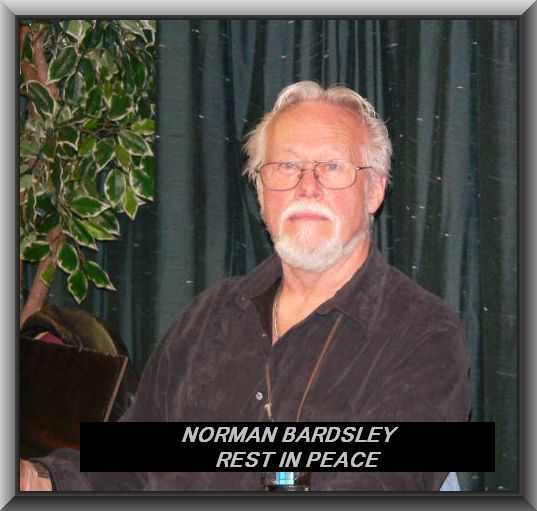
Long-time knifemaker Norman Bardsley of Pawtucket, Rhode Island, passed away yesterday.

     Probably best known for his fantasy knives, Mr. Bardsley also made working knives. His patterns included fighters, boot knives, and renaissance and native American styles in upscale and presentation fashion. He used exotic hides for his sheaths.

     Among others, Mr. Bardsley made knives for such actors as Geoffrey Lewis, known for his role as Clint Eastwood’s sidekick in Everyway Which Way But Loose, the leader of the trio that seeks revenge on the town of Lago in High Plains Drifter and other films.

     Mr. Bardsley’s funeral arrangements are pending.

Knife Of The Day V

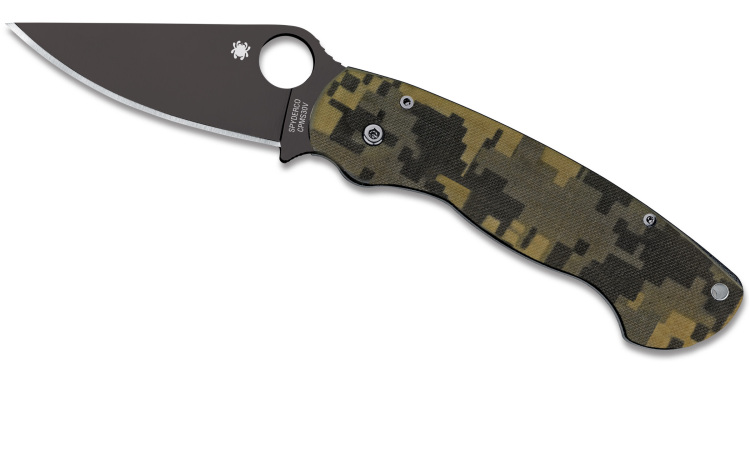
     The Spyderco Para-Military2 is our Knife Of The Day for Dec. 8. The digital camo handle pattern in G-10 is a mosaic of small connected micro-patterns designed to optically reduce the eye’s ability to detect and discern an object. The blade is CPM-S30V stainless steel. The folder boasts Spyderco’s Compression Lock and a four-way pocket clip that accommodates blade tip-up/tip-down and ambidextrous carry. The MSRP is $189.95 but BladeShop’s price is $151.96.

     For more information click on http://www.shopblade.com/product/paramilitary2-camo-g-10-black-blade-plainedge-w8517/?r+ssfb81211#W8517

3 Outstanding Knife Shows This Weekend

Knife enthusiasts have three outstanding knife shows to choose from this coming weekend.

     The Chesapeake Knife Show will be Dec. 11 at the Crowne Plaza in Timonium, Maryland. Visit http://www.knifeshows.com/shows/baltimore/index.html for more details.

     The Oregon Winter Knife Show will be Dec. 10 in the Lane County Convention Center in Eugene, Oregon. Visit www.oregonknfieclub.org for all the poop.

     Parkers’ Greatest Knife Show on Earth will be Dec. 8-10 at the Sevierville Events Center in Sevierville, Tennessee. Call Ed Henley (423-892-0448) for more info.

For the latest info on knife shows, the latest knives, knife news and much more, subscribe to BLADE® by clicking on http://www.shopblade.com/product/blade-magazine-one-year-subscription-us/?r+ssfb71211#BL1SU

Knife Test: Jason Brous Silent Soldier

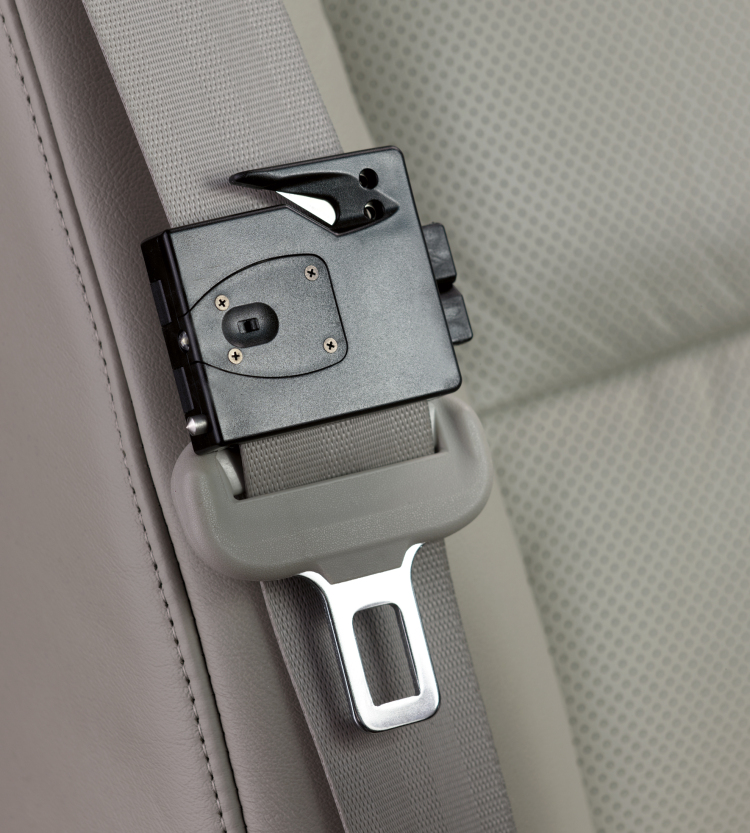
Neck knives have a place in the world of sharp. They might be small but they sure are handy. Ever try and get to your pocketknife while driving your car? You twist and turn so you can clear your pocket and seat belt at the same time. This is one of the times where neck knives rule. Water sports are another activity that they come in at No. 1.

     Most have a blade small enough that they are legal in most states (though be sure to check your state and local laws). I always had one while commercial net fishing, though not as nice as what is available today.

     The Silent Soldier by Jason Brous is a small, stout necker that can be used in a variety of different hand holds for specific cutting or for more comfort. First, some “specifics.”

Zippin’ Through

I put my index finger in the handle’s front hole, wrapped my hand around the grip and sliced a foam pool noodle. The knife was very controllable in a variety of holds. All the steel my hand contacted is nicely smoothed, so, other than the edge, I did not encounter any sharp spots. The D2 blade zipped through the noodle quickly and I had to be careful not to nick the hand holding the foam float.

     Melissa reminded me to tidy up my cardboard-box-covered workbench. No problem for the Silent Soldier; a few zips and I had a pile of cardboard strips. I did a few finer cuts to see if the blade would curl the cardboard. Nope—all cuts were clean from start to end.

     Also in the pile was some plastic board. The necker cut it cleanly but, the deeper the cut, I could feel the knife twist in my hand. The quarter-inch thickness pushed the board wider and caused drag on the side of the blade. However, it is not a big deal with the plastic board and happens on all knives with similar edge geometry.

     I grabbed some dense foam and started slicing. The steel really excelled cutting it. As fast as I could pull the knife through the dense foam, clean cuts appeared. I felt like a chef on one of those kitchen knife commercials slicing fresh bacon—zip, zip, zip! I could hardly feel any resistance as the blade parted the foam. The Silent Soldier is a sharp little boogar.

     Because of the knife’s small size, I was leery of using it to cut rope. That usually means a hot spot or I cannot get enough grip on the knife to cleanly cut the 3/8-inch sisal rope. I had to move the cutting board closer to the edge of the bench because of the wharncliffe blade style. No grinding my hand on the workbench this time! The Silent Soldier gave me 60 clean cuts. Only my thumb was a little sore from using it to exert pressure on the slot running vertically through the middle of the thumb notches. The rest of the knife worked better and was more comfortable than I figured it would be.

     Even though I knew the thickness of the quarter-inch blade stock would provide a challenge cutting wood, I had to try it. The deeper I whittled, the harder it was to push the blade into the wood. The thickness of the blade combined with the toughness of the wood made it slow going. It worked great as long as I took small shavings. Not to be put off, I followed the great advice, “When in doubt, get a bigger hammer.” The necker split the 15 inches of pine easily with a few light taps from a plastic dead-blow hammer. I split the piece into half-inch chew chunks for my cockatoo, Max.

     As painful as I thought it was going to be, I had to do a penetration test on the Yellow Pages. Using a reverse ice-pick grip, I stabbed into the phone directory four times. The necker was actually very comfortable. No shock transferred to my hand and I experienced no sore spots. All four stabs penetrated an average of 260 pages each—not bad at all.

I Would …

… keep the thumb notches straight across—in other words, eliminate the slot running vertically through them—so the notches can be more easily “softened” with an abrasive if the user so desires.

Report Card

The Silent Soldier is an excellent necker. The thicker steel results in softer curves so the handle does not gouge into your hand during use.—By MSG Kim Breed

For more information contact Brous Knives, Dept. www.blademag.com, 5940 Matthews St., Goleta, CA 93117 805-717-7192 brousblades.com

To read similar stories and the latest on knives, knife news and much more, subscribe to BLADE® magazine by clicking on http://www.shopblade.com/product/blade-magazine-one-year-subscription-us/?r+ssfb51211#BL1SU

SPEC CHART

Knife: Silent Soldier

Pattern: Neck knife

Maker: Jason Brous

Blade Material: D2 tool steel

Blade Stock: .25”

Blade Length: 2.25”

Rockwell Hardness: 59/60 HRC

Overall Length: 4.25”

Sheath: Kydex®

Maker’s List Price: $99

Knife Of The Day IV

Our Knife Of The Day for this wondermous Dec. 4 is Steve Culver’s reproduction of what’s known as the “Searles/Fowler Bowie.” The 9 1/8-inch blade is 1095 carbon steel and the blackwood handle features sterling silver pins and 24k-gold fittings. For more information visit Mr. Culver’s website at www.culverart.com or call 785-484-0146

     The original Searles/Fowler Bowie on which Culver’s repro is based was made by Daniel Searles for Rezin Bowie, brother of Blade Magazine Cutlery Hall-Of-Fame© member James Bowie, who presented it to a Henry Fowler of the U.S. Dragoons, and is on display in the Alamo.

     For more on the latest knives, knife news and much more subscribe to BLADE® by clicking on http://www.shopblade.com/product/blade-magazine-one-year-subscription-us/?r+ssfb41211#BL1SU.

Ron Lake’s Tab Lock: The Clever Lever

     When Blade Magazine Cutlery Hall-Of-Fame© member Ron Lake devised the interframe design and gave the world of knives another standard of innovation and excellence, he continued to look for ways to improve the operation of a standard lockback mechanism. He was not satisfied with pushing a bar to release the lock, particularly with one hand occupied or involved in some type of activity that demanded his full attention.

     The solution was fairly simple and came along in the early 1970s, just a few months after the historic debut of the interframe. Ron added a small steel tab at the end of the knife, offering the user a quicker and safer alternative to depressing a bar.

     “The tab lock is really not a lock mechanism,” Lake explained. “It is just a tab on the end of a lockback that offers a mechanical advantage. If it isn’t there, I just have a bar to release the lock, and depressing that bar can be hard to do when the hands are soft, cold or wet. The tab gives you a larger surface to push on.”

     Ron admits that the tab lock was something of an afterthought, trailing along behind the notion of the interframe. Sometimes the good idea can indeed be made better. As a young knifemaker, he continued to mull over the prospects for a better release.

     “I had only been making knives for six years,” he laughed. “I didn’t even know another knifemaker and didn’t know what knives were supposed to look like. I came up with the interframe design and then thought about where I could put a release mechanism. I still make interframes and that’s about all I do make, and they are with the tab.”

     While it may look like a simple endeavor, the fashioning of the tab lock is not for the knifemaker who wants to take a shortcut or go down the path of least resistance. Of course, the tab-lock style is not seen in great numbers among today’s knives, and Ron says there is a straightforward explanation for that. It just is not the easiest thing to do.

     “I can make them now with less effort than it took back then,” he advised, “but first of all I have to machine a piece of metal that goes on the end. Then I have to silver solder it on, and it’s a rough piece of metal with everything large on it. Then I remove the silver solder so you can see a nice radius, machine the sides to the right dimension and radius the corners.

    “From there, I hand sand the surfaces and polish them up. So, it takes several more hours of work than a standard knife, and about 15-to-20 percent of my time goes into that part of the knife. I also have to take the whole knife apart and put it together again two more times, which I don’t have to do on some other models. For a few years, A.G. Russell just thought I butted it up against the end of the lock and soldered it on, but that could get knocked off easily. Later, I explained the process to him, and I can tell you the tab is on there pretty tight, pressed on and silver soldered.”


Tab Release

Some years ago when Ron, along with Wayne Clay and Cutlery Hall-Of-Famer Frank Centofante, co-wrote How To Make Folding Knives, he discussed the geometry of the lockback knife. He remembers visiting Sakai Cutlery in Seki City, Japan, and sitting in the company’s offices, which incidentally included a log cabin from Montana that had been dismantled and reconstructed. The men from Sakai had eight lockback knives laid out in the office, and the geometry between the pivot and the lock was different on each one.

     “I asked them who had designed those knives,” Lake smiled, “and they said, ‘We did.’ I asked them why the geometry was different on every one of them, and they told me it was because the toolmaker had made them the way he wanted to do it. To my knowledge nobody had put the geometry of the lockback down on paper until I did. Innovation comes from one-man shops.”

     That innovation carried over to the construction of the tab lock, which Ron more aptly describes as a “tab release.” The tab lock actually does lock like any other lockback. The secret to its operation is in the release.

     Long-time friend and fellow knifemaking legend and Cutlery Hall-Of-Famer Michael Walker says he agrees that the idea seems simple enough and makes a great impact on the user when it comes to ease of release. “I can say that the tab lock addresses a big problem with the lockback design by adding length, which in turn adds leverage,” he explained, “and the tabs let you unlock without the problem of pushing on a narrow piece of metal. It also eliminates the cutout [in the handle spine], which could restrict use for someone with larger hands. It’s much more functional than the traditional construction, hence he was awarded a patent.”

     Lake says he believes his patent was awarded about 1973 and expired around 1994. It not only included the tab, but also extended to the interframe and the bushing inside the handle that spaced the blade away from the frame. Indeed, the tab was part of a larger patent and an afterthought that developed into a novel approach when his inventive mind pondered the question of an efficient and effective release.

     “I decided that having the tab at the back of the knife would have a mechanical advantage,” Ron reasoned. “You can close it not only with the thumb but anything else that could be used to press the release. It doesn’t make any difference how long the lever is. It could be in the middle of the handle with the tab on it.”

     As for the patent, Ron says he doesn’t worry too much about it. “Centofante put [the tab lock] on his knives, and we were friends,” he remembered. “Some other folks have used it, too. Centofante put his tab on one side of the lock, and the patent specified at the end of the lock lever.” Along with Clay’s lockback, Lake’s and Centofante’s versions of the tab lock both appear on the cover of How To Make Folding Knives.

     Over time, Ron says the patent has become even less meaningful to him. The drawings or blueprints are long forgotten—probably shoved into a drawer somewhere in his shop. The concept of trade dress is enough for him. A form of intellectual property, trade dress refers to the look or characteristics of an artist’s work that provide the work’s instant recognition to the consumer.

     “After you do something for so long, it does establish trade dress,” Lake commented. “For example, if you saw a lockback lying on a table with a tab on it, would you know who made it? Yes, you would know that knife is mine. That is trade dress.”

     Of course, the tab lock made an impression 40 years ago when a young Ron Lake showed it off to a who’s who from the golden age of custom knifemaking. Among those present when the tab lock debuted were Corbet Sigman, Chubby Hueske, Cutlery Hall-Of-Famers Frank Centofante, A.G. Russell, B.R. Hughes and Bob Loveless, and a number of others. Since then, the tab lock has been a quiet trademark of Lake’s knifemaking skill, standing the test of time.—By Mike Haskew


To read similar stories and all about the latest knives, knife news and much more subscribe to BLADE®. For more information, click on http://www.shopblade.com/product/blade-magazine-one-year-subscription-us/?r+ssfb21211#BL1SU


CAPTION

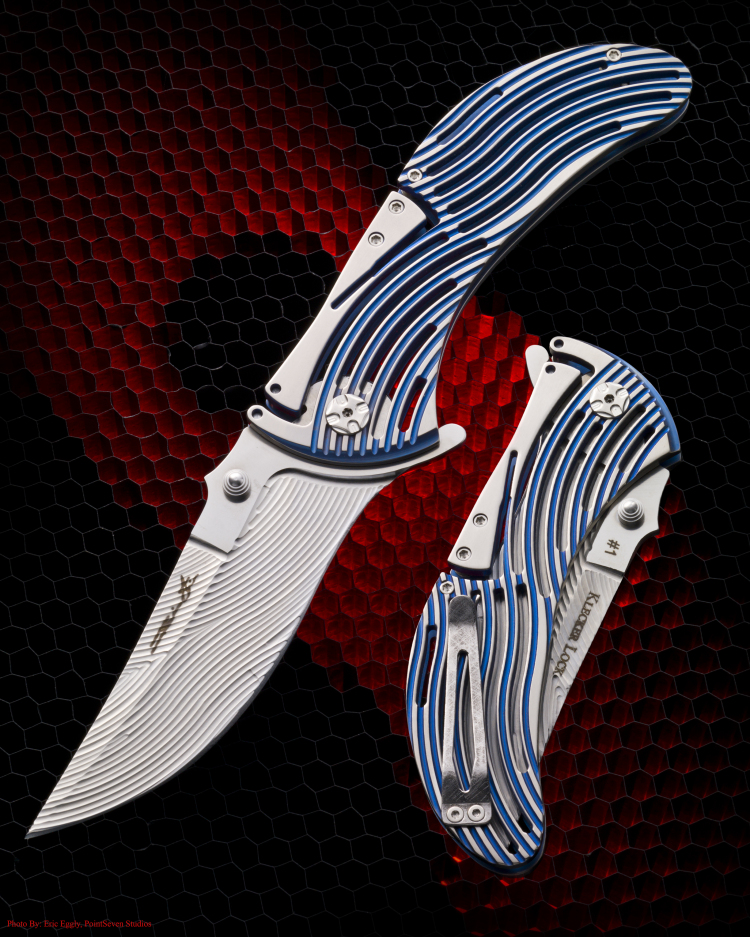
Blade Magazine Cutlery Hall-Of-Fame© member Ron Lake and one of his tab-lock interframe folders in a stag handle and leaf-and-hands engraving—some in gold—on the blade bolsters and even the tab itself by Barry Lee Hands. (SharpByCoop.com photo)

Knife Of The Day III

     The Gerber Freeman Hunter is our “Knife Of The Day” for the 1st of December.

     A past “Best Of The Best” honoree of Field & Stream magazine, the straight knife features a polished pear wood handle, a 3.25-inch blade of AUS-8 stainless steel with a full-length tang, and a single guard. Includes leather sheath. Overall length: 8.25″. Weight: 4.10 ozs. BLADE Shop’s price: $44.99.

     For more info click on http://www.shopblade.com/product/Gerber-Freeman-Fixed-Blade-Knife-w-Gut-Hook-Y6976/?r+ssfb11211#Y6976

Advertisement

Must Read Articles

Read this before you make a knife

Knifemaking 101 – Read This Before You Make a Knife

  by Wayne Goddard My experience has taught me that there's nothing like digging in and getting started. I've often said the hardest part of the...
how to forge damascus steel

How to Forge Damascus

Advertisement
Advertisement