Knife companies will debut their latest at BLADE Show 2025.
Knives and plenty of them, the BLADE Show is the Mecca for anything that cuts, hack or chops. It’s also a launching pad.
Many companies wait for the big dance in Atlanta’s Cobb County Convention center to release their latest and greatest, making the June 6-8 shindig the perfect place to pick up a brand-new, nobody-else-has design. While we’re certain there some makers have some rabbits they’ll pull out of their hats at the show, we’ve got a sneak peek of a few factory blades set to go on sale at the show.
So, without further adieu here are a bevvy of 2025 BLADE Show knife debuts you should keep an eye out for at gathering!
Work Sharp throws its hat into the knife ring with its first-ever knife: the RMX EDC folder. The 3.2-inch reverse tanto blade of full-flat-ground CPM 3V carbon steel button locks both open and closed. Comes with both a manual and auto pivot to allow you to switch between whichever mode of operation suits your needs. The magnesium handle has a reversible, tip-up, deep carry clip. Weight: 2.4 ounces Closed length: 4.3 inches Country of origin: Designed, assembled and quality checked in Ashland, Oregon, using foreign parts MSRP: $139.95 Available: BLADE Show 2025
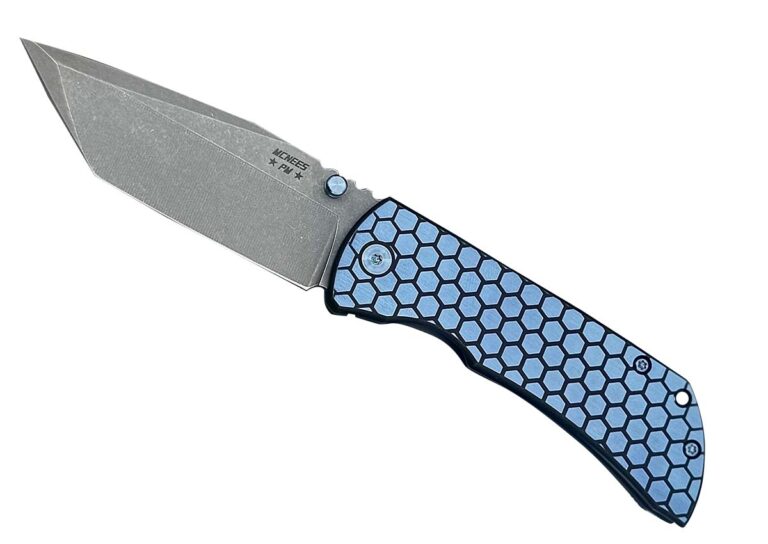
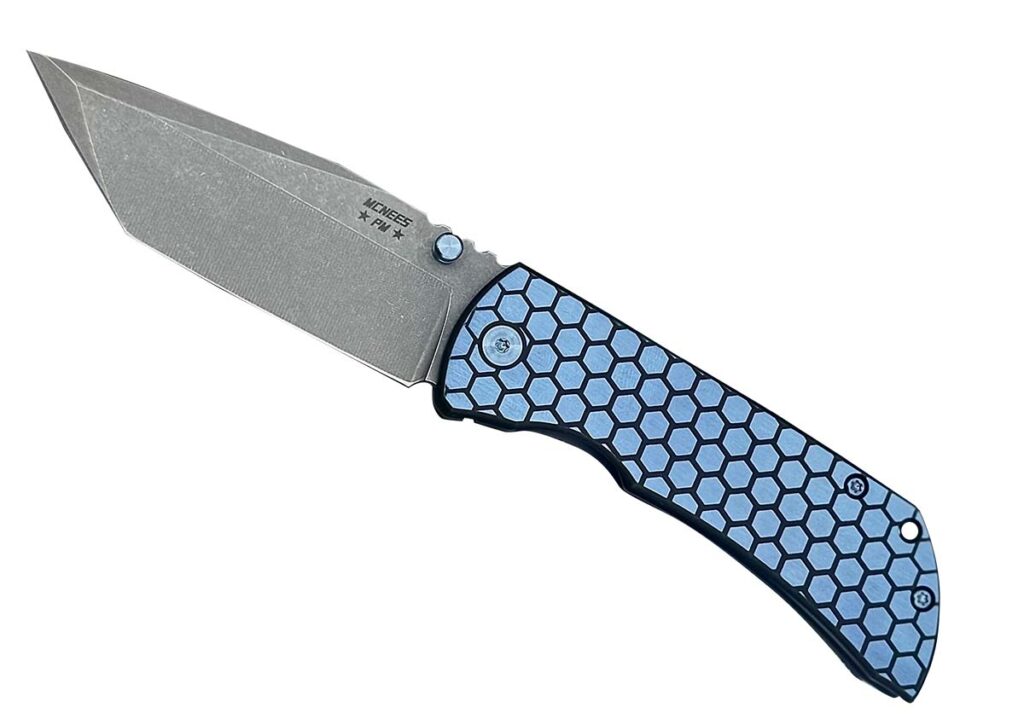
McNees Knives MAC2 3.5
McNees Knives MAC2 3.5
Titanium scales with a honeycomb look and a 3.5-inch tanto blade of hollow-ground CPM MagnaCut stainless distinguish the MAC2 3.5 tactical folder by McNees Knives. Blade opener: thumb stud. Lock: Reeve Integral Lock (aka framelock) Clip: bent titanium Weight: 26 ounces Closed length: 4.25 inches Country of origin: USA MSRP: $625 Available: BLADE Show 2025
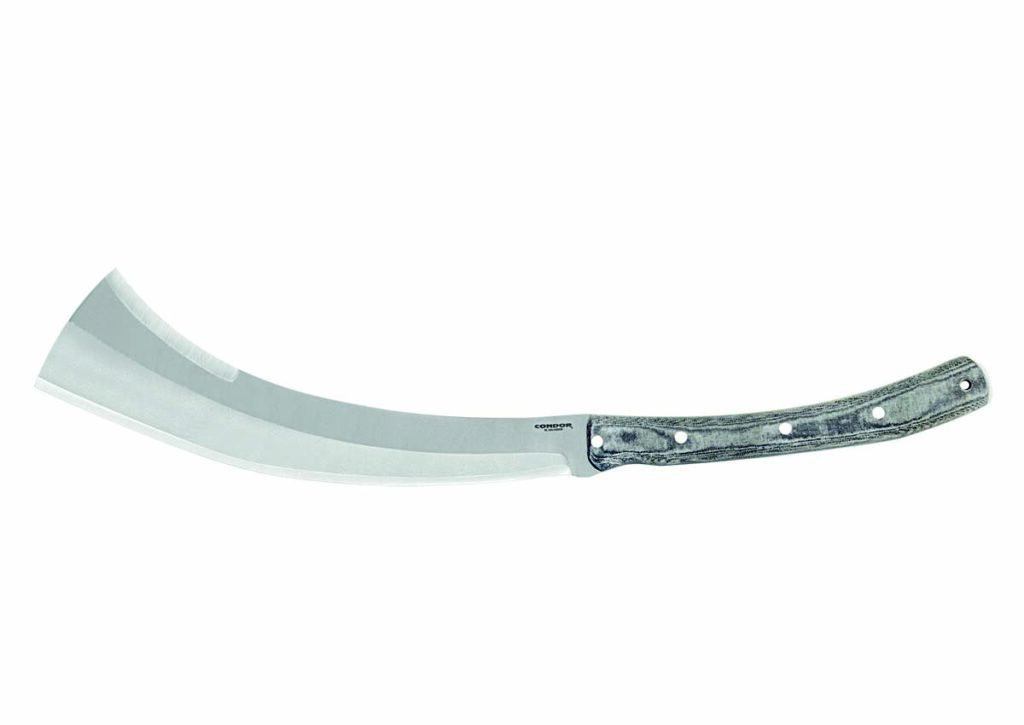
Condor Tool & Knife K-Night Panabas
Condor Tool & Knife K-Night Panabas
The K-Night Panabas from Condor Tool & Knife boasts a 14.29-inch blade of convex-ground 1075 carbon steel and Micarta® scales. Weight: 32.98 ounces Overall length: 25.35 inches Sheath (not shown): Kydex with leather belt loop Country of origin: El Salvador MSRP: $174.98 Available: NOW
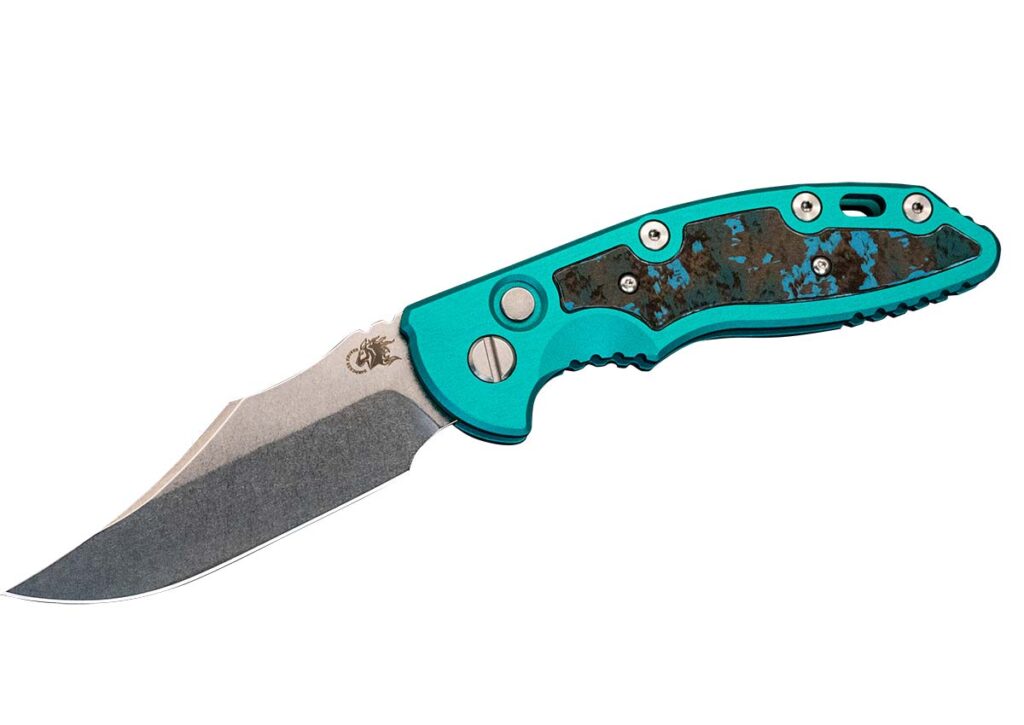
Rick Hinderer Knives Bowie
Rick Hinderer Knives Bowie
The Aluminum Automatic XM-18 3.5-inch Bowie from Rick Hinderer Knives features a 3.5-inch blade of CPM S45VN stainless steel. The aluminum handle with titanium half liners is anodized turquoise and inlaid in Arctic Storm FCF. Lock: button lock Clip: Chaos Horsehead model in stonewashed titanium Weight: 5.12 ounces Closed length: 4.75 inches Country of origin: USA MSRP: $495 Available: Late 2025
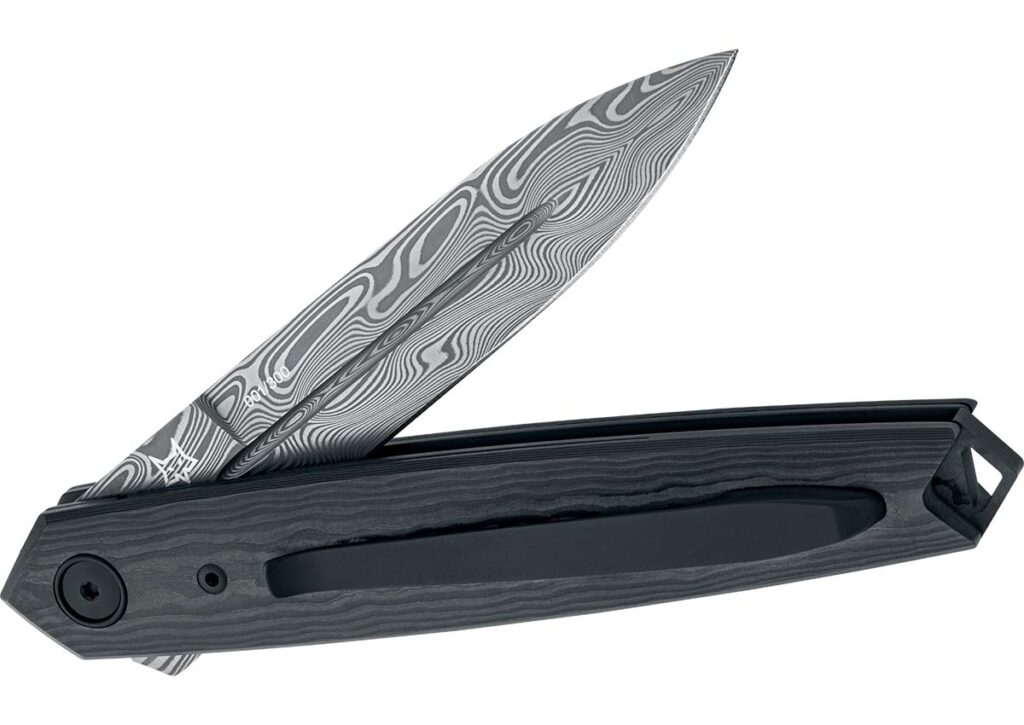
Fox Knives Pacifico EDC
Fox Knives Pacifico EDC
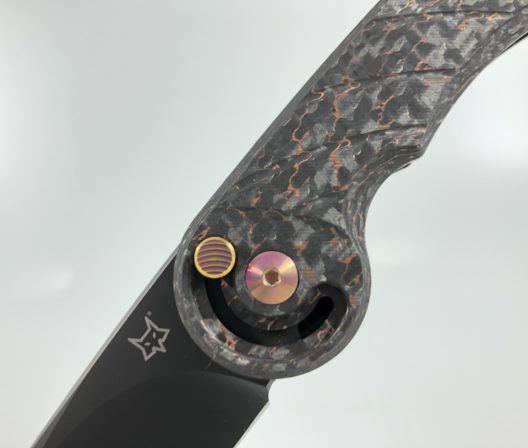
Designed by BLADE Magazine Cutlery Hall-of-Fame® member Bob Terzuola, the Pacifico EDC flipper folder by Fox has a 3.74-inch blade of Thor pattern damascus by Damasteel. The handle is black camo carbon fiber by FatCarbon®. Clip: titanium PVD-coated black Lock: linerlock Weight: 3.88 ounces Closed length: 5.31 inches Country of origin: Italy MSRP: $583 Available: July
Big Idea Design Signal
Big Idea Design Signal
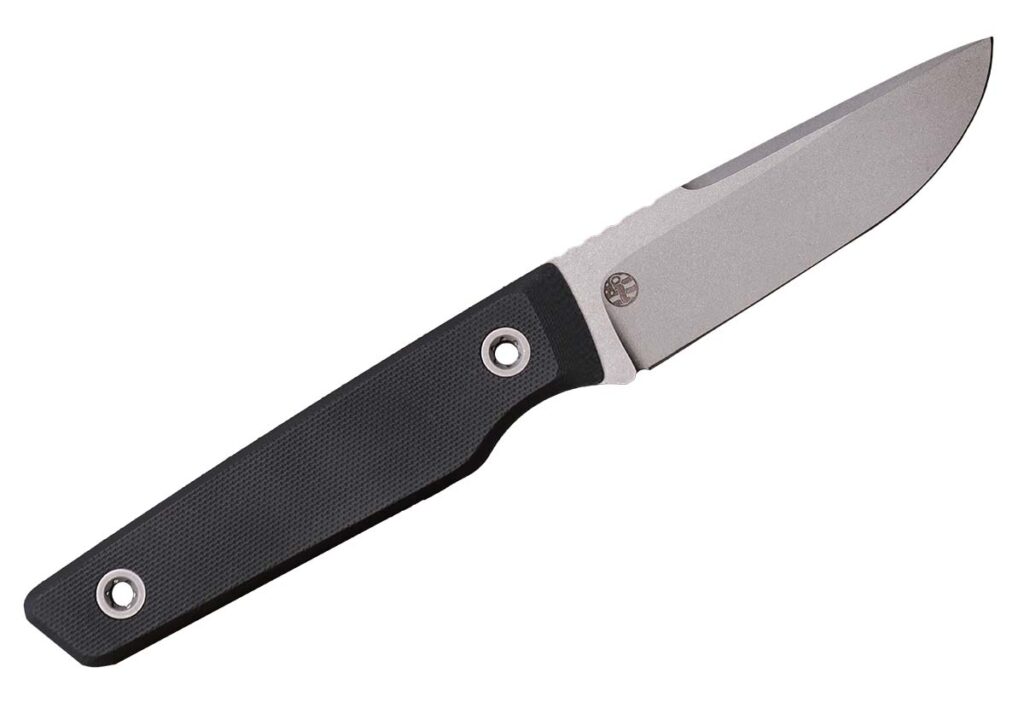
Designed by ABS journeyman smith Mak Kelsay, the Signal utility from Big Idea Design has a 3.5-inch blade of flat-ground Nitro-V stainless steel and G-10 scales with custom pass-through titanium hardware. Weight: 3.4 ounces Overall length: 7.67 inches Sheath (not shown): taco-style Kydex w/titanium pocket clip Country of origin: USA MSRP: $275 Available: May/June
Queen/Smoky Mountain Knife Works Mountain Man Trapper
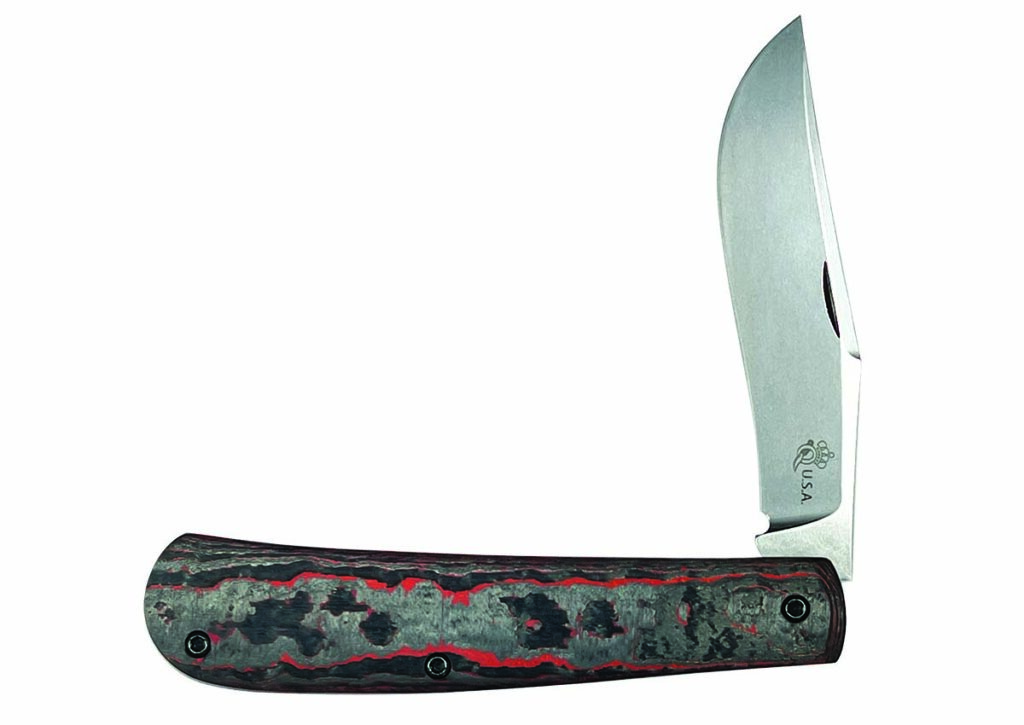
Queen/Smoky Mountain Knife Works Mountain Man Trapper
The Mountain Man Trapper from Queen/Smoky Mountain Knife Works sports a 3 3/8-inch blade of CPM MagnaCut stainless steel and Lava Flow FatCarbon® scales. Blade pattern: Clip Action: slipjoint Weight: 2.93 ounces Closed length: 4 1/8 inches Country of origin: USA MSRP: $299.99 Available: July
GiantMouse GMP13
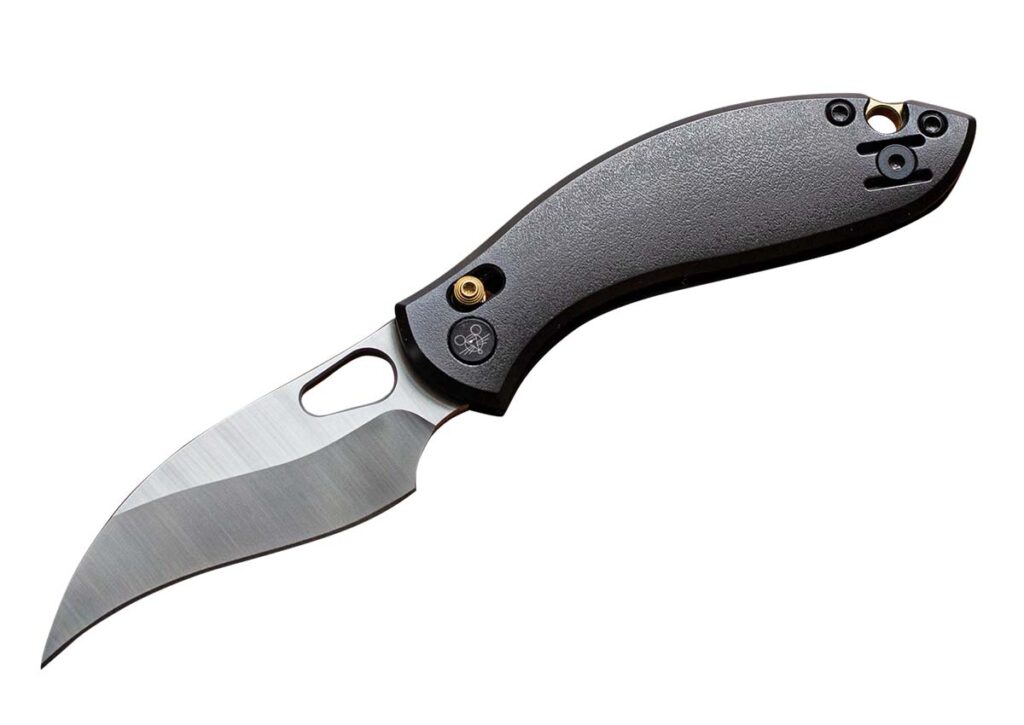
GiantMouse GMP13
A 2.4-inch blade in a distinctive modified hawkbill pattern of flat-ground CPM S90V stainless and zirconium scales highlight the GiantMouse GMP13 “defense folder.” Lock: crossbar Clip: ambidextrous Weight: 3.7 ounces Closed length: 3.67 inches Country of origin: China MSRP: $435 Available: NOW
Lionsteel ACHA
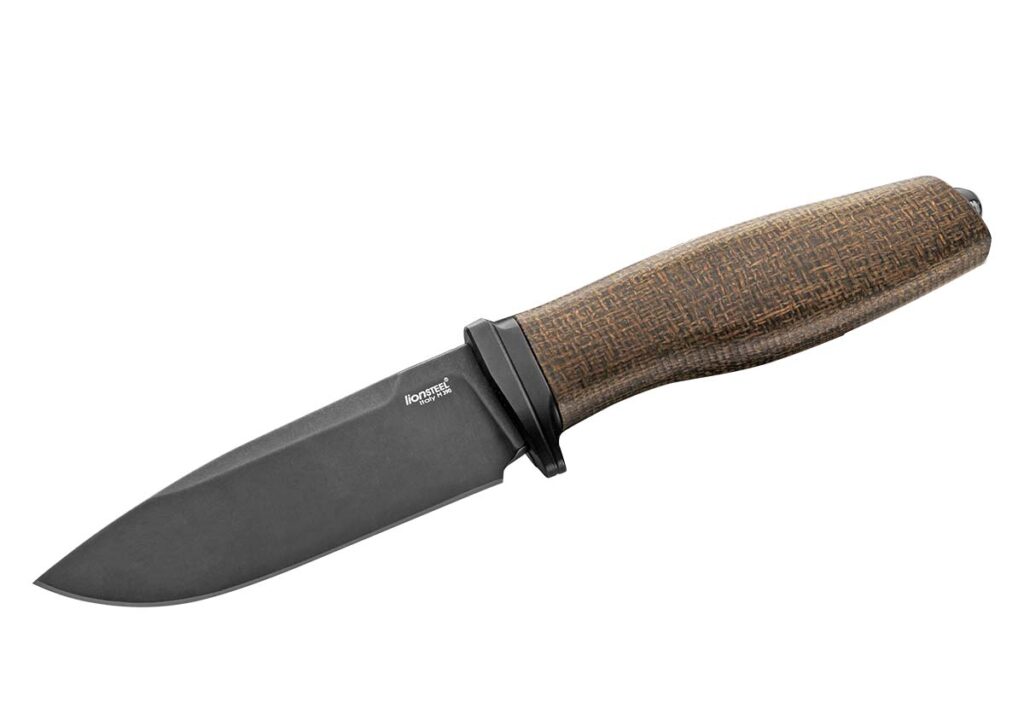
Lionsteel ACHA
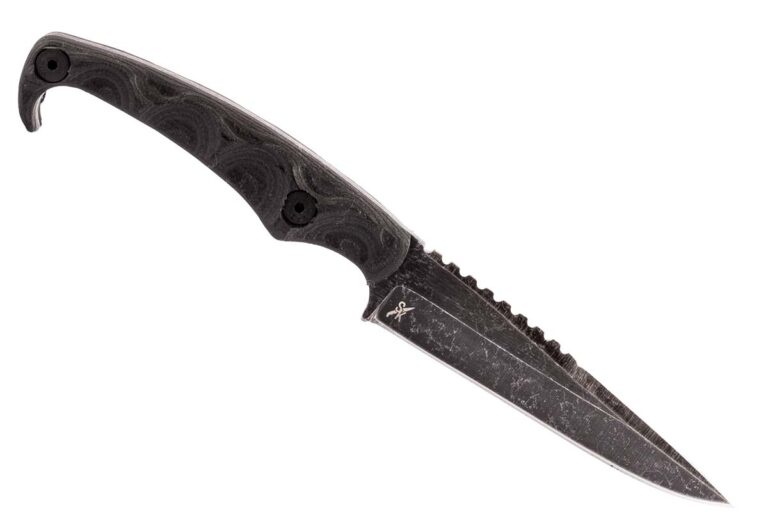
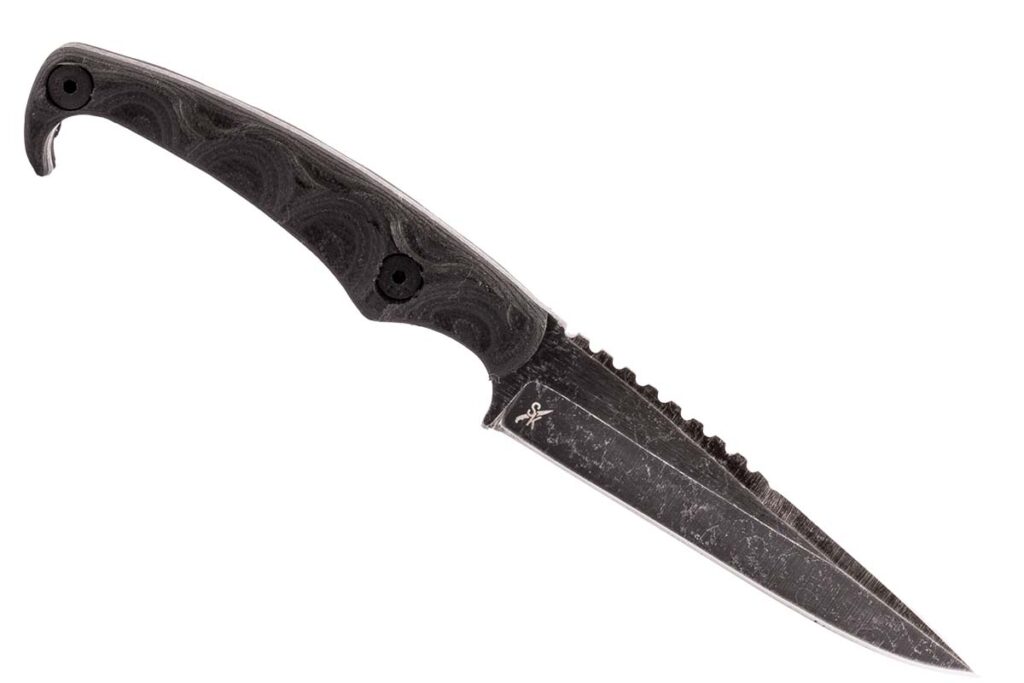
A contrasting combo of a 4.21-inch blade of M390 sintered steel in an “old black” finish and a burlap Micarta® handle in an integral construction set the Lionsteel ACHA outdoor knife apart. Blade grind: V flat Guard: titanium Sheath (not shown): Leather Weight: 6.24 ounces Overall length: 9.17 inches Country of origin: Italy MSRP: $252 at press-time exchange rate Available: NOW
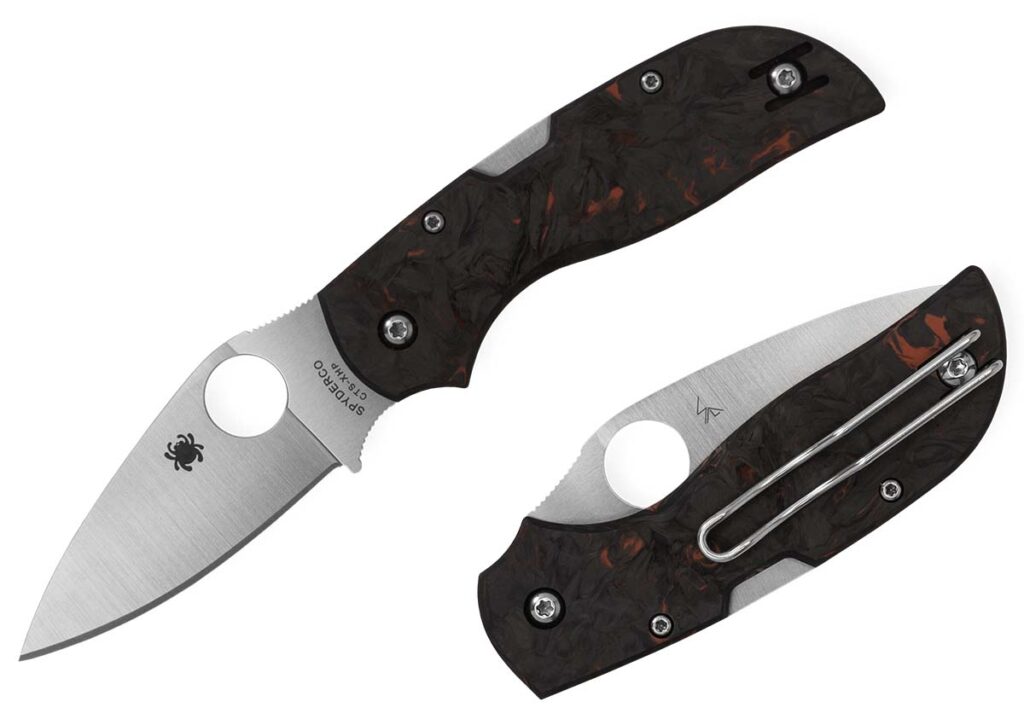
Spyderco Chaparral
Spyderco Chaparral
Dark Matter Red FatCarbon® scales and a 2.77-inch blade of full-flat-ground CTS-XHP stainless steel highlight the latest iteration of the Spyderco Chaparral back-lock folder. Clip: wire Weight: 2.2 ounces Closed length: 3.6 inches Country of origin: Taiwan MSRP: To be determined Available: To be determined
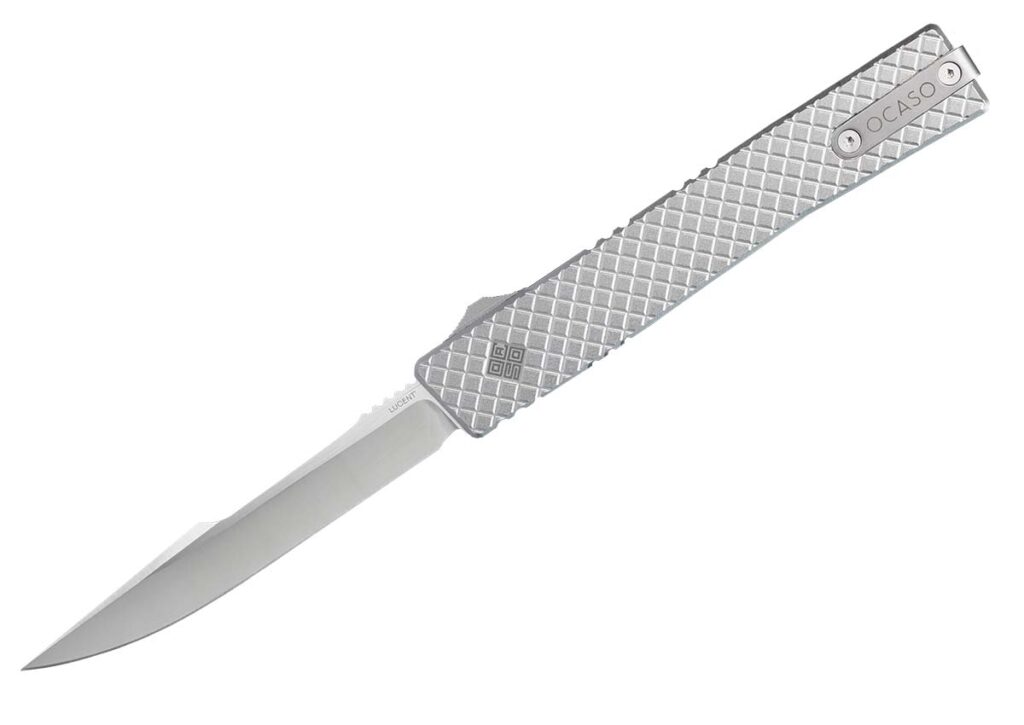
Ocaso Lucent Automatic
Ocaso Lucent Automatic
The Ocaso Lucent Automatic is a dual-action out-the-front with a 3.5-inch blade of flat-ground Bohler M390 stainless and a 6061-T6 aluminum handle with an ambidextrous deep-carry pocket clip. Weight: 2.2 ounces Closed length: 4.4 ounces Country of origin: China MSRP: $274.99 Available: July
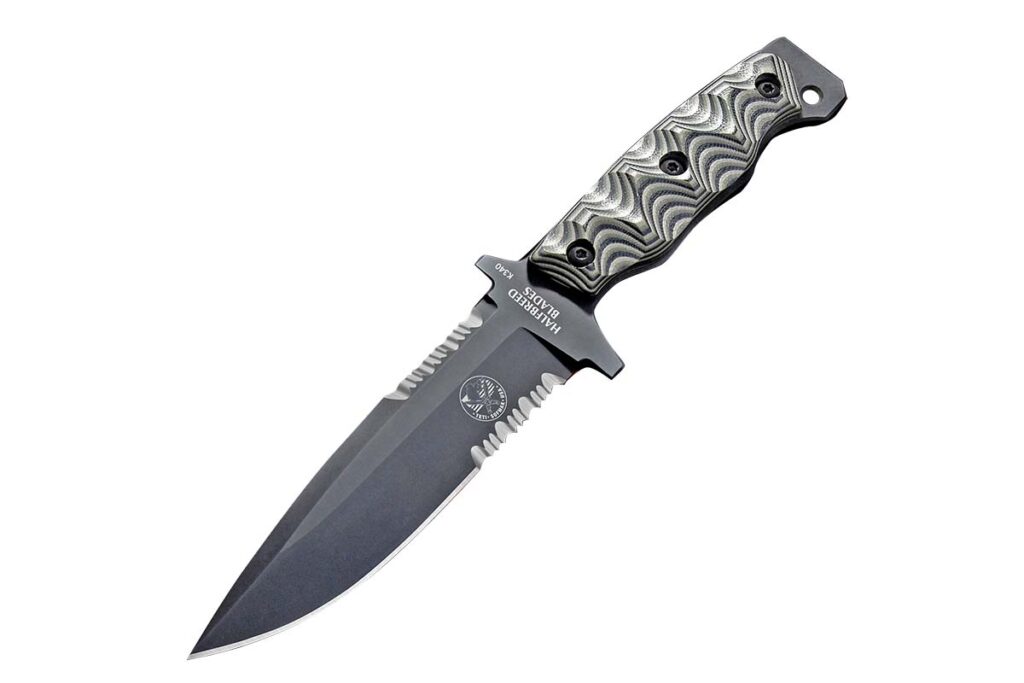
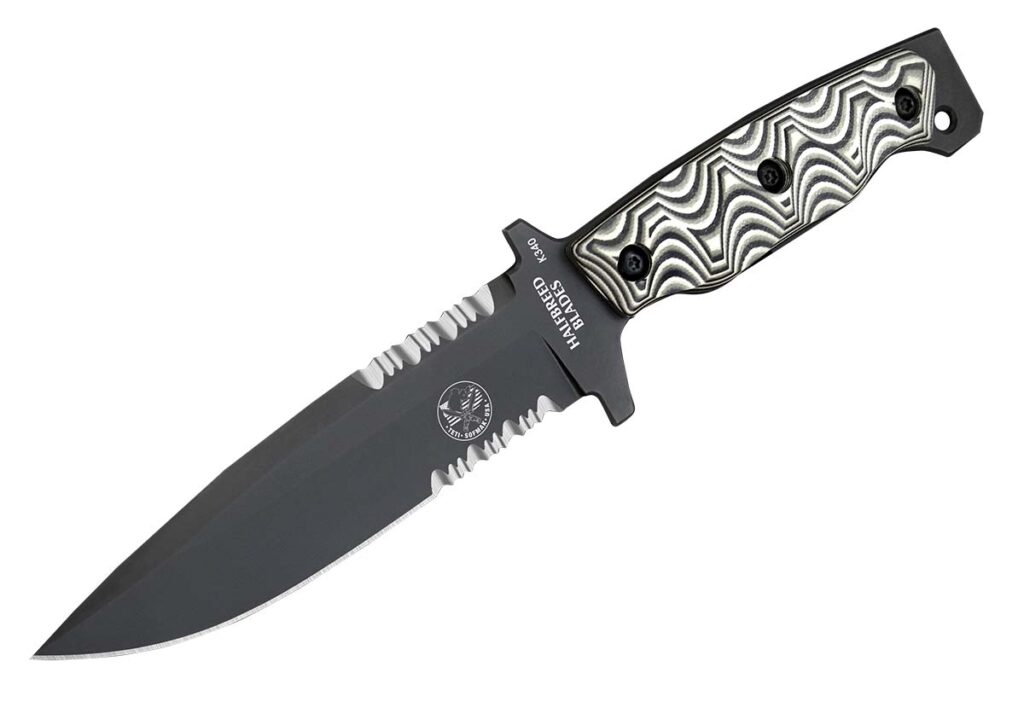
Halfbreed Blades SOFMAK
Halfbreed Blades SOFMAK
Scales of an electric G-10 and partially double-serrated blade of PVD-coated K340 ISODUR tool steel stand out on the MIK-04 SOFMAK from Halfbreed Blades. Blade length: 5.31 inches Weight: 11.14 ounces Overall length: 10.31 inches Designer: Jonathan Loftes in collaboration with Joseph Teti Sheath (not shown): Belt and PALS/MOLLE Country of origin: Comprises Australian and Taiwanese make MSRP: $275 Available: NOW
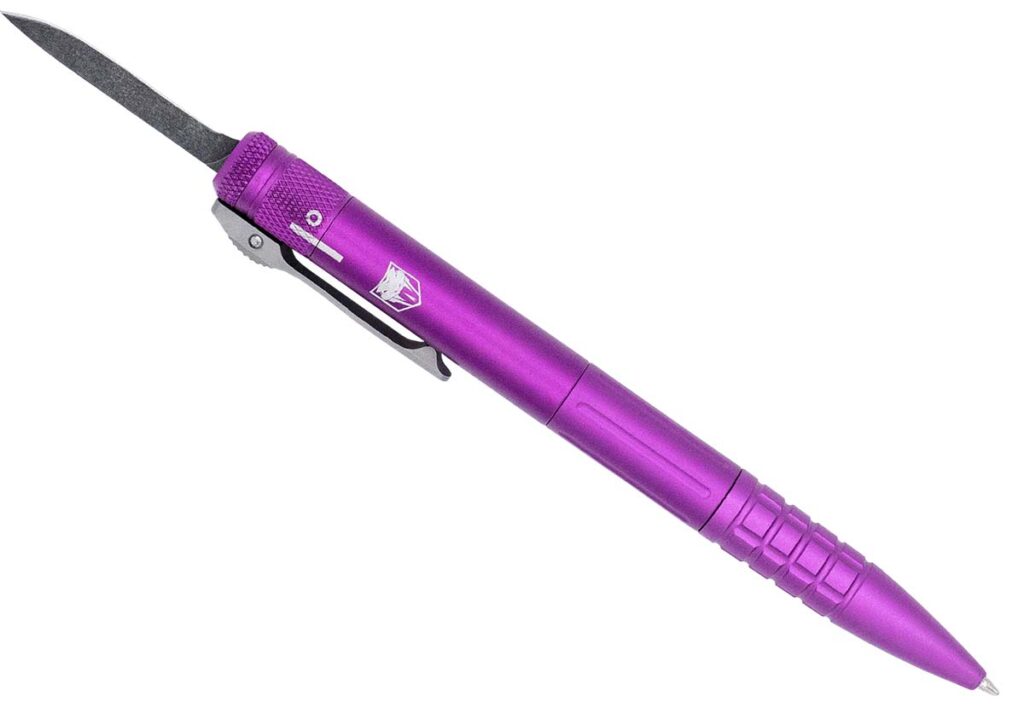
CobraTec CNC OTF Pen Knife Generation 2
CobraTec CNC OTF Pen Knife Generation 2
The CNC OTF Pen Knife Generation 2 from CobraTec sports a 1.75-inch blade of stonewashed stainless steel. The dual-action out-the-front has a handle of 6061 T6 aluminum with a titanium pocket clip/switch and a safety lock. Includes a replaceable black ink cartridge. Weight: 1.4 ounces Closed length: 5.875 inches Country of origin: China MSRP: $89.99 Available: NOW
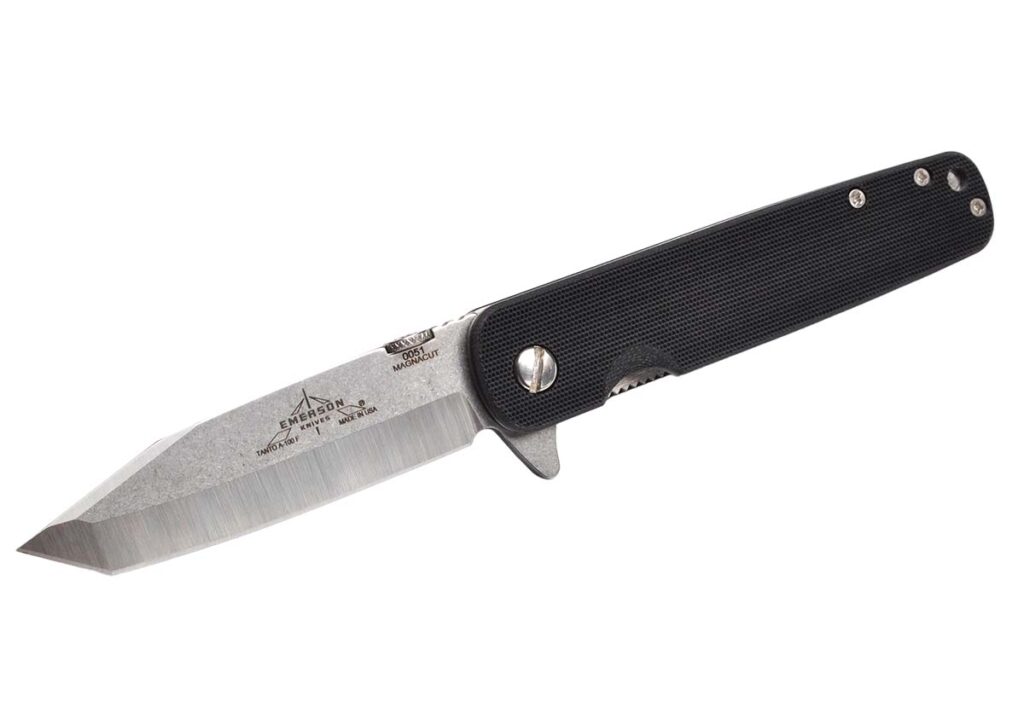
Emerson Knives, Inc. Tanto A-100
Emerson Knives, Inc. Tanto A-100
The Tanto A-100 Flipper by Emerson Knives, Inc., cuts with a 3.6-inch blade of CPM MagnaCut stainless in a conventional “V” grind. Handle: G-10 with a hole for a lanyard. Lock: linerlock Closed length: 4.8 inches Additional blade opening option: thumb disc Country of origin: USA MSRP: $295 Available: NOW
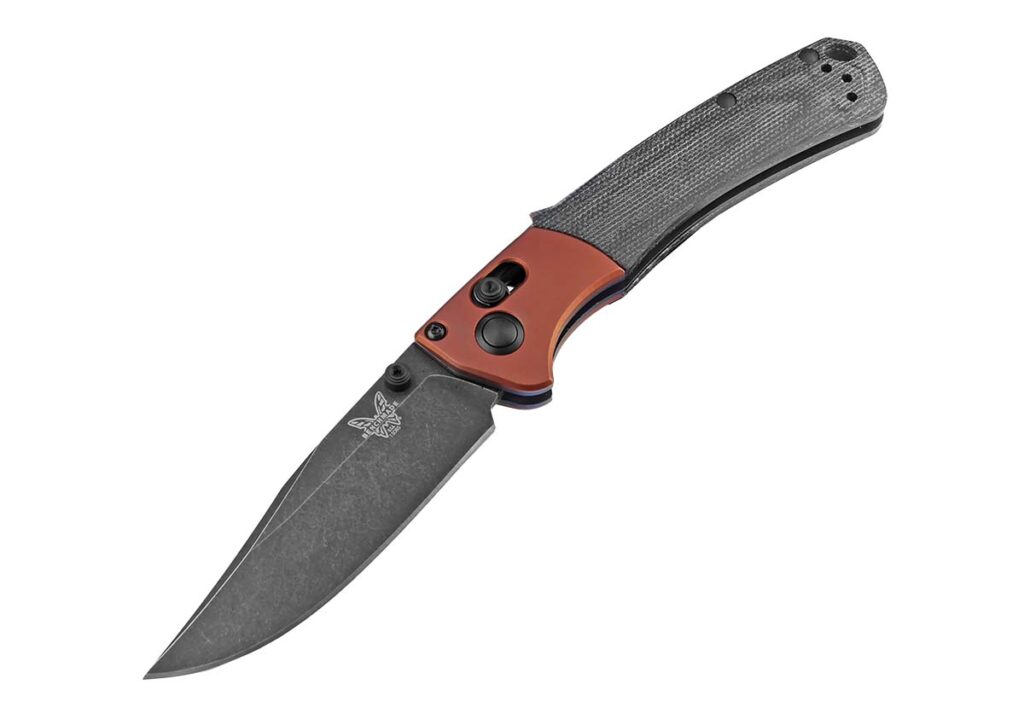
Benchmade Mini Crooked River
Benchmade Mini Crooked River
Benchmade’s Mini Crooked River folder sports a 3.4-inch clip-point blade of CPM MagnaCut stainless in a Battlewash finish. The handle is black canvas Micarta® with aluminum bolsters anodized a burnt copper. Lock: AXIS Weight: 3.2 ounces Closed length: 4.5 inches Country of origin: USA MSRP: $320 Available: July
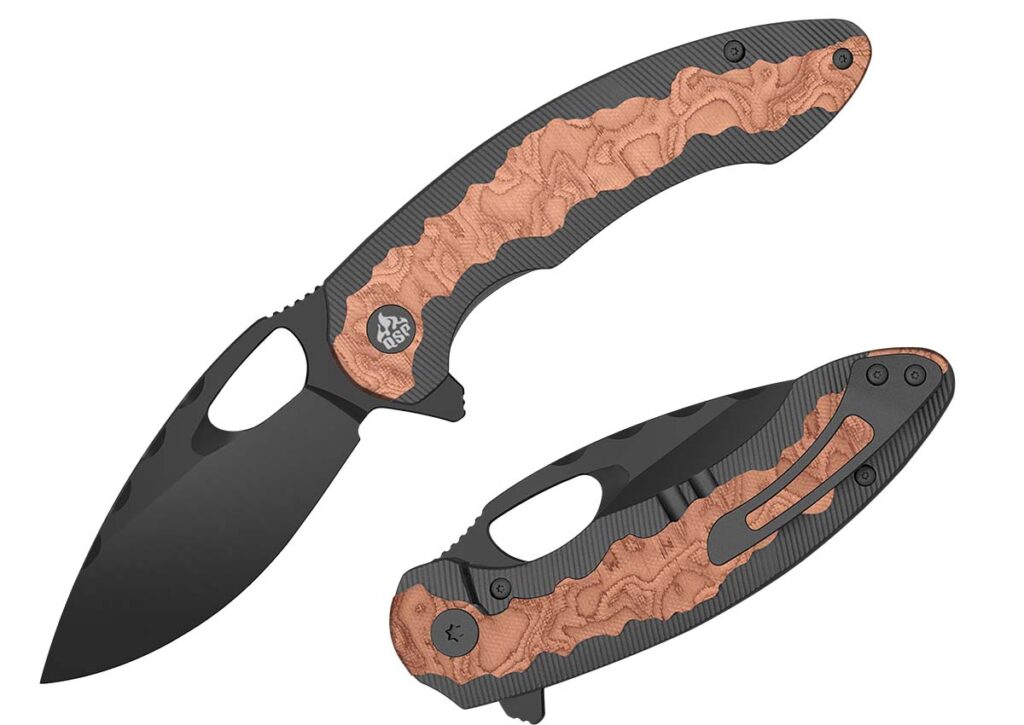
QSP Hyena
QSP Hyena
The Hyena flipper folder from QSP has a striking grip of anodized aluminum and copper-foil G-10 inlay and a 3.25-inch blade of flat-ground Bohler N690 stainless that pivots on ceramic ball bearings. Clip: Titanium, tip up. Closed length: 4.53 inches. Country of origin: China. MSRP: Contact maker for pricing. Available: September.
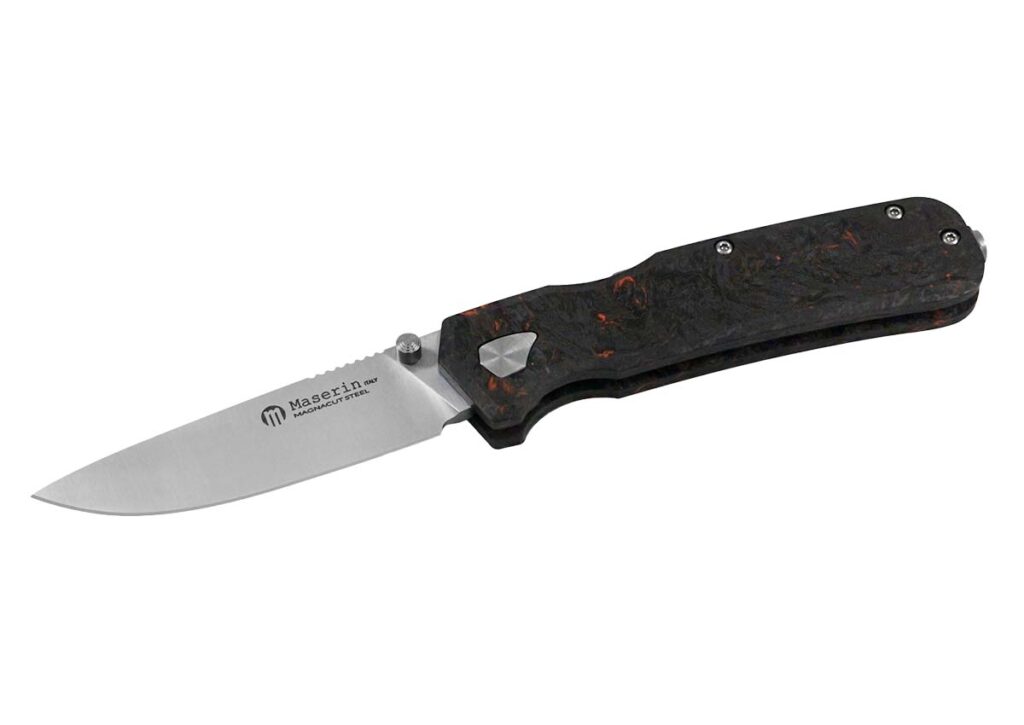
Maserin Pulse
Maserin Pulse
Black/orange FatCarbon® scales serve as the steering wheel for the 3.149-inch blade of flat-ground CPM MagnaCut stainless on the Maserin Pulse. Blade finish: stonewashed. Lock: W-Lock Clip: Stainless, reversible Weight: 3 ounces Closed length: 4.5 inches Country of origin: Italy MSRP: $219 at press-time exchange rate Available: NOW
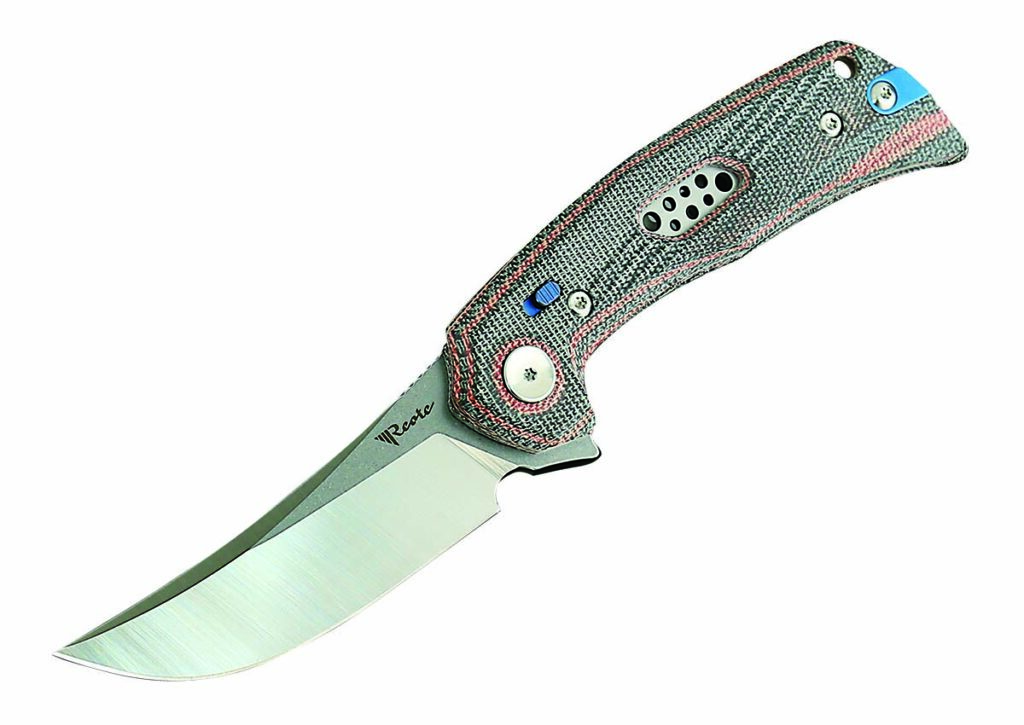
Reate PL-7
Reate PL-7
A 3.5-inch upswept blade of Nitro-V stainless in a belt-satin finish and a Micarta® handle top off the PL-7 from Reate. Weight: 4.5 ounces Closed length: 4.5 inches Country of origin: China Knife to know: The PL stands for Pivot Lock MSRP: Pending Available: Pending
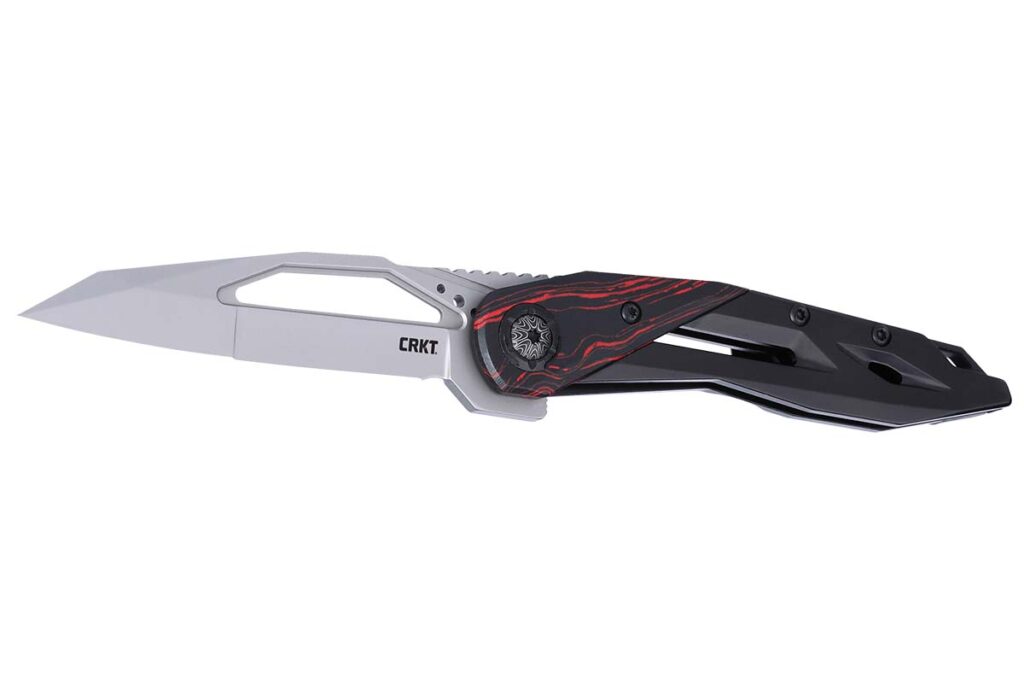
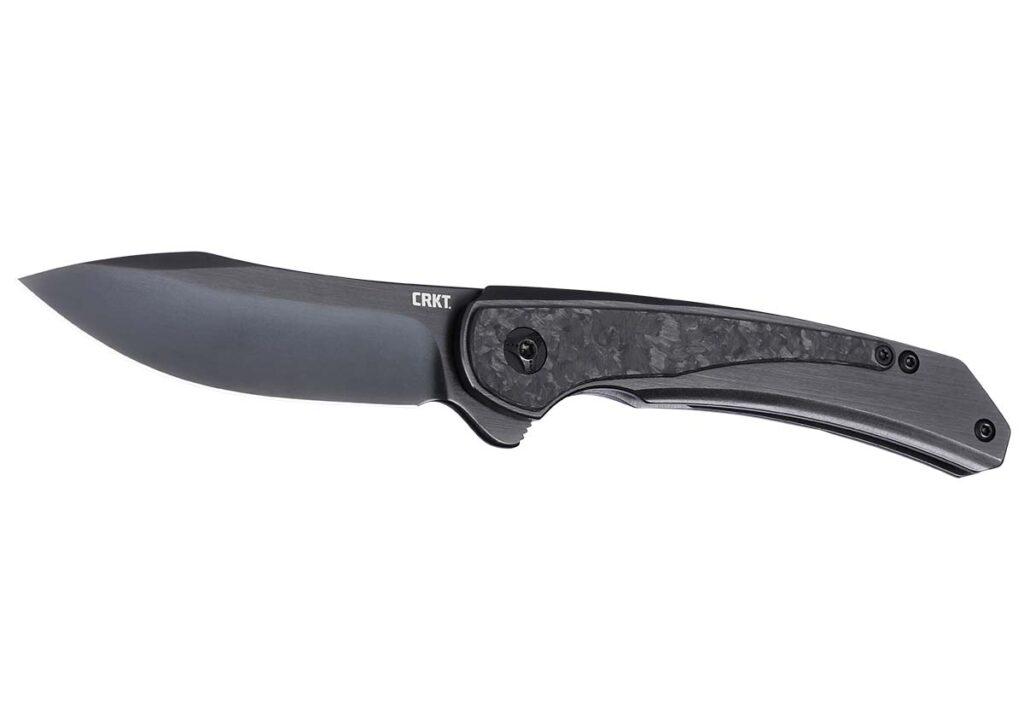
CRKT Padawan
CRKT Padawan
An EDC flipper/framelock folder, the CRKT Padawan has a 3.01-inch drop-point blade of hollow-ground 14C28N stainless. Blade finish: nitride coated Pivot: Ikoma Korth Bearing System Handle: stainless steel with carbon-fiber overlay Pocket clip: low profile, stainless Weight: 3.1 ounces Closed length: 4.14 inches Country of origin: China MSRP: $100 Available: NOW
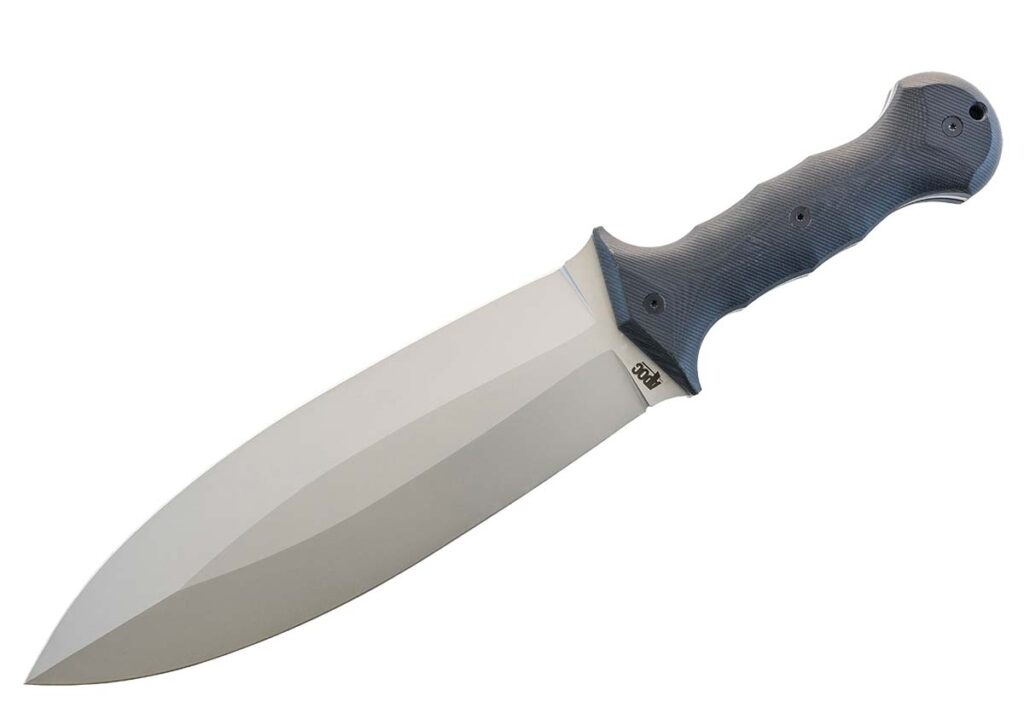
APOC/CAS Iberia Wallace Smatchet
APOC/CAS Iberia Wallace Smatchet
Designed by Mike Wallace, the Wallace Smatchet from APOC/CAS Iberia is a “historically inspired bushcraft” knife based on the classic World War II combat model. The 9 5/8-inch blade is flat-ground D2 tool steel in a titanium coat. Scales: G-10 Weight: 1 pound, 10 ounces Overall length: 15.5 inches Sheath: Kydex with drain hole Country of origin: China MSRP: $175. Available: NOW
Get your bachelor’s of state-of-the-art degree at the 11th Annual BLADE University.
The state-of-the-art in all things knife, including the latest in mosaic damascus steel, knife and handle design, and how to sharpen, make a lockback whittler, run a knife business and more will be the focus of the 11th Annual BLADE University.
Held in conjunction with the 43rd Annual BLADE Show June 7-9 at the Cobb Galleria Centre in Atlanta, BLADE University will be sponsored by Work Sharp. Classes begin Thursday, June 6, and will run through Friday, June 7, and Saturday, June 8.
While most courses will be taught in the Cobb Galleria, some also will convene under the tent in The Courtyard, aka the parking lot of the show’s host hotel, the Renaissance Atlanta Waverly.
BLADE University gathers some of the world’s best knifemakers, bladesmiths and other cutlery and steel professionals to teach a wide range of subjects for the knife user, knifemaker, knife hobbyist, knife entrepreneur, knife designer, and knife aficionado and novice alike. If you love knives or are just beginning to, BLADE University has a topic for you. The complete course schedule, with subjects, teachers, times and venues:
The Art of Selling at a BLADE Show, Tom Krein, 4 to 5 p.m., Room 104—A long-time maker of custom utilitarian fixed blades and folders, Tom Krein will outline exactly what a knifemaker who is serious about selling knives should do and how he/she should behave behind a knife show exhibitor table. Proper table etiquette and sales and customer relations strategies are just some of the subjects Tom will cover. The class will be held the day before the BLADE Show begins so attendees can put some of Tom’s recommendations into practice during the main event Friday through Sunday.
FRIDAY, JUNE 7
ABS journeyman smith Henning Wilkinson makes impeccable keyhole knife handles like this one. Join him for his class Metal and Wood Fitting Techniques for Keyhole Handles Friday at 2 p.m. (Eric Eggly/PointSeven knife image)
Fundamentals of Grinding, AmeriBrade and guest grinders, 8 to 9:30 a.m., The Courtyard—AmeriBrade and guest makers will provide a general overview on grinds, techniques and different equipment. The class will be interactive and the team will answer questions and demonstrate suggestions for common issues.
How to Run a Small Successful Knifemaking Business, Bob Kramer, 10 to 11:30 a.m., Room 103—Learn the do’s and don’ts of making the most out of your knifemaking business. ABS master smith Bob Kramer has 30 years of experience and says he’s still learning!
Thermal Cycle Steel for High Performance, Larrin Thomas, 10:30 to 11:30 a.m., Room 104—There are many different recommendations for how to heat treat steel after forging, but what is best? Can normalizing and grain-refining cycles really improve properties when compared with steel from the factory? Should stock-removal makers bother with thermal cycling? How do you thermal cycle stainless steels after forging them? Is it thermocycling or thermal cycling? Join Larrin Thomas, designer of CPM MagnaCut stainless steel, creator of the website Knife Steel Nerds, and author of Knife Engineering: Steel, Heat Treating, and Geometry, as he answers these questions and more.
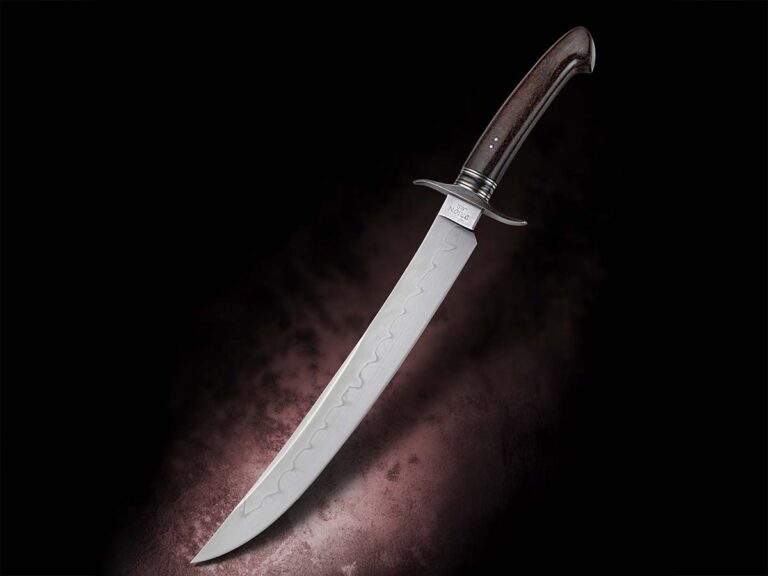
Symmetrical Quillon Dagger 101, Neels Van Den Berg, 1 to 2 p.m., Room 107—Join ABS master smith Neels Van Den Berg from Black Dragon Forge for a discussion and walkthrough of making a symmetrical quillon dagger. He will cover design, proportions, aesthetics, materials, fluting and finally the entire manufacturing process, sharing useful tips and tricks to save you time, money and frustration.
Intro to Power Forging, panel of forging authorities, 1:30 to 2:30 p.m., Room 103—Bring your forging questions to our group of expert panelists including Logan Gillihan, Will Stelter, Salem Straub, Charlie Ellis and Brian House.
Metal and Wood Fitting Techniques for Keyhole Handles, Henning Wilkinson, 2 to 3 p.m., Room 113—An ABS journeyman smith and member of the Knifemakers’ Guild of South Africa, Henning Wilkinson will outline the correct techniques for fitting metal and wood in the construction of the keyhole integral knife handle. Henning will show you how to eliminate the gaps between materials that results in the proper fit and finish collectors and those who judge knife competitions look for in an award-winning keyhole-handle knife.
Hands on Sharpening, the team at Work Sharp, 3:30 to 4:30 p.m., Room 113—What happens when a knife gets dull? How do you know when to sharpen it? Bring your own knife or borrow a demo model and learn the progression of shaping a bevel, sharpening and edge maintenance from the team at Work Sharp. You will get hands-on practice and experience sharpening your blade using a variety of sharpeners and abrasives, from whetstones to belts.
Originality: Experimentation, Innovation and Ingenuity, Lucas Cao, 4:30 to 5:30 p.m., Room 107—Why are some people more creative than others? Can creativity be learned? Lucas Cao, founder of Squid Industries, explores tools and techniques that anyone can apply to become more original.
Tim Robertson won Best Locking Folder at BLADE Show West ’22 for his lockback whittler and will cover how to make this most difficult pocketknife of all to build in his class Saturday at 9:45 a.m. (SharpByCoop image)
Elevating Your Handle Appearance: Spine Filework, Handle Shapes and Pin Placement, Kyle Daily, 8:30 to 9:30 a.m., Room 113—Enhance the appearance of your knife with distinctive features that go far beyond standard production models. Knifemaker Kyle Daily from KHDaily Knives guides you through the intricate art of filework on the spine, while also sharing insights into handle design and the pin placement on your handle. Discover Kyle’s preferred files and specialized equipment for crafting his five most popular filework patterns, ensuring your knife not only looks exceptional but also feels comfortable and functional. From laying out your pattern to a step-by-step tutorial, this class provides the essential knowledge to achieve a professional and eye-catching finish. A Q&A session at the end will ensure you leave with the skills and knowledge to take your knifemaking to the next level.
Insert Welding with Bob Kramer, 9:30 to 11 a.m., Room 104—Understand how to forge weld inserts with high precision and control to create realistic depictions of animals and patterns in this BLADE University offering. This will be an exclusive opportunity to experience the technique that Bob Kramer created with fellow ABS master smith Tom Ferry and shared with the masses.
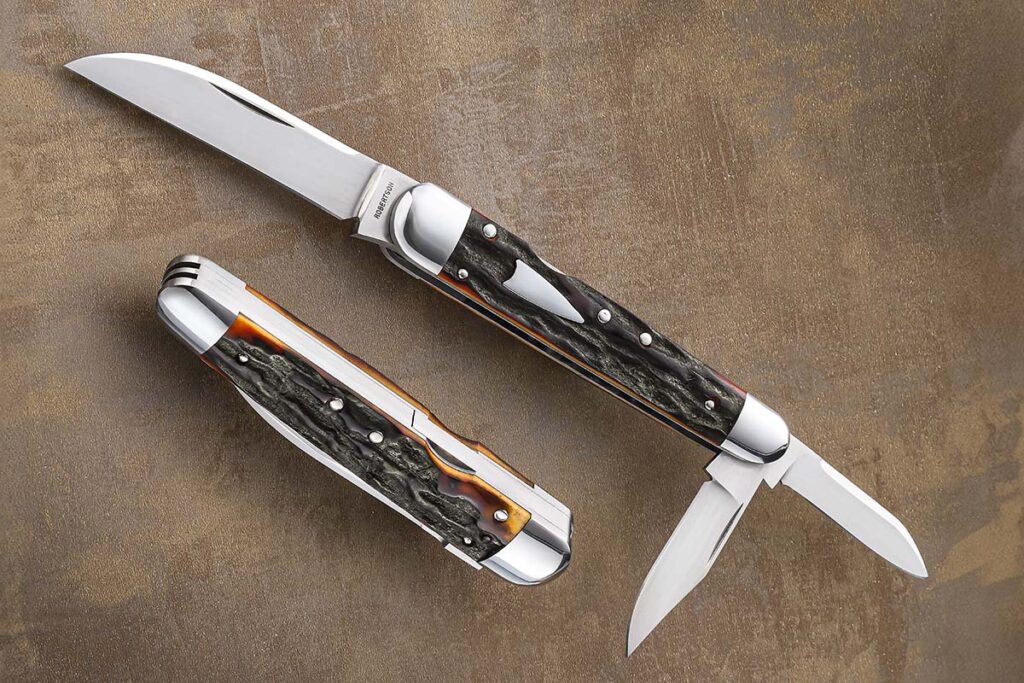
How to Make the Most Difficult Pocketknife, Tim Robertson, 9:45 to 10:45 a.m., Room 107—An award-winning maker of slipjoints and a charter member of the South Texas Slipjoint Cartel, Tim Robertson will address perhaps the most difficult pocketknife to build: the lockback whittler. He will outline what makes the classic slipjoint/lockback folder so demanding to make, with a major focus on backspring design and function, the two areas of the knife that work against each other. He also will cover the correct sequence of parts preparation and the proper order of construction steps that reduces mistakes and helps ensure a successfully completed knife.
The Process Is the Product, TJ Schwarz, 11 a.m. to 12 p.m., Room 113—TJ Schwarz is the founder of Schwarz Knives, an Idaho-based manufacturer of premium outdoor fixed blades. He has over a decade of freelance knife design experience with many models in circulation, a patent, and two BLADE Show awards to show for it. Schwarz will share his insights on how to create a successful knife business, including the key point of understanding actually what it is that you’re selling.
Let the Pros Critique Your Knife, 2:15 to 3:15 p.m., Room 114—Award-winning knifemakers David Carver, Enrique Pena and Luke Swenson and ABS master smiths Bob Kramer and Jim Rodebaugh will share decades of knowledge and experience to critique the knife you made. They will go over every square inch of it and tell you what’s good, what’s not and how to make it better. Bring one knife only. Questions from attendees will be entertained throughout.
Hands on Sharpening, the team at Work Sharp, 2:15 to 3:15 p.m., Room 113—What happens when a knife gets dull? How do you know when to sharpen it? Bring your own knife or borrow a demo model and learn the progression of shaping a bevel, sharpening and edge maintenance from the team at Work Sharp at this BLADE University class. You will get hands-on practice and experience sharpening your blade using a variety of sharpeners and abrasives, from whetstones to belts.
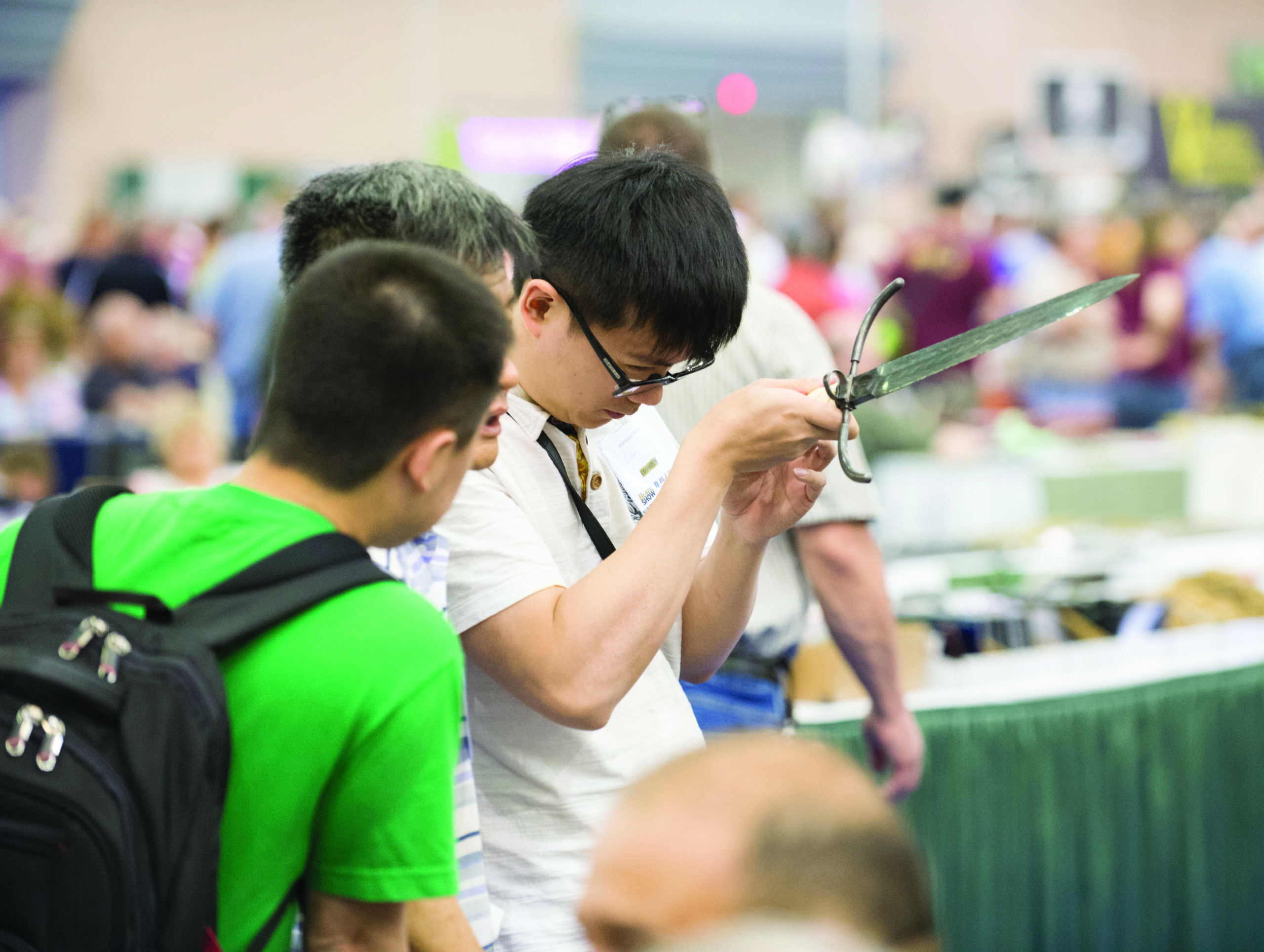
Making Scissors in a Knife Workshop, Grace Horne, 2:30 to 3:30 p.m., Room 107—Have you ever thought about making scissors but don’t know where to start? If you’re curious about scissors or just want to expand your knowledge, this session is for you. Whether you want to have a go at restoring old scissors or forging your own from scratch, the basic information is the same—and it’s notoriously poorly documented. Dr. Grace Horne will give a whirlwind tour through the early history of scissors, describe methods of producing the blanks, give inside information on the twist and the curve, and highlight critical areas to consider. Most importantly, she will describe her method of scissors making that requires no specialized tools or equipment.
Pattern Welding Panel, 4 to 5 p.m., Room 104—Salem Straub, Mareko Maumasi, Charlie Ellis, Josh Prince and Will Stelter will explain how they created their collaborative Consortium billet, including each of the steps that went into creating this wild mosaic billet, and then open up to general questions about damascus forging and pattern development.
BLADE Show Texas will kick off the ’26 show slate in style.
Knives and knifemakers planetwide and most everything else keen, utilitarian and covetable will inundate the 5th Annual BLADE Show Texas March 20-21 in the Fort Worth Convention Center.
The show will host over 400 exhibitors and thousands of knives from such countries as Australia, Austria, Belgium, Brazil, Canada, China, France, Germany, Italy, Russia, South Africa, Spain, Sweden and elsewhere, not to mention top American custom knifemakers, ABS master and journeyman smiths and knifemaking members of the Knifemakers’ Guild; the lion’s share of members of the South Texas Slipjoint Cartel; the BLADE Show Texas custom and factory knife judging awards; and some of the world’s leading factory knife companies, including current and past winners of BLADE Magazine Knife-Of-The-Year® Awards.
Get ready for some Texas steel set on sizzle.
The Fort Worth Convention Center will be crawling with cutters, with gobs of custom and factory knives—from low end to high end, stock removal to forged, fixed blade to folder—tomahawks, swords, sharpeners and more. And if the exhibiting makers don’t have what you want, the exhibiting custom knife purveyors and factory retailers probably will—and if they don’t, they can put you in touch with who does.
For knife hobbyists and novice and veteran makers alike, the show’s comprehensive selection of knifemaking supplies and suppliers will have the materials, tools and equipment to make the knife of your dreams. From the latest steels, handle materials, hardware and sheath materials to most every knife part extant, the show’s suppliers should have it.
Knife Awards
Zero Tolerance will be among the top factory exhibitors featuring the sleekest folders and fixed blades. ZT’s ultra-lightweight (1.9 ounce) 0117 Duralock folder in CPM MagnaCut stainless
steel and carbon fiber will be among them.
Country of origin: USA. MSRP: $300.
The knife judging competitions will recognize the best of the show’s custom and factory knives that are entered. The custom award categories, with last year’s winners in parentheses: Best in Show (Dionatam Franco); Best Bowie (David Lisch); Best Fighter (Dionatam Franco); Best Damascus (Pedro Fornari); Best Hunting Knife (Josh Fisher); Best Folding Knife (Tom Overeynder); Best Kitchen Knife (a Luke Dellmyer/Richard Patterson collaboration); Best M.A.C.K. (Jared Oeser); Best EDC (Evan Nicolaides); Best Art Knife (Paul DiStefano); Best of the Rest (Josh Taylor); and Best Slipjoint (Evan Nicolaides).
The factory award categories, with last year’s winners in parentheses: Best in Show (Poikiloblade); Best EDC (Dauntless Manufacturing); Best American Made (Dauntless Manufacturing); Best Imported (Poikiloblade); Best Fixed Blade (QSP); Best Folder (a Pro-Tech/Vero Engineering collaboration); and Best of the Rest (Vero Engineering). The custom and factory knife judging is reserved exclusively for show exhibitors, all of whom received packets with complete details on category descriptions, judging rules and more prior to checking into the show.
What’s Next
World-class South African knifemaker Bertie Rietveld (left) returns to help headline the international contingent of knifemakers.
BLADE Show Texas will be the first of three BLADE-Show-sponsored events for 2026, the other two being the grandaddy of them all, the 45th Annual BLADE Show June 5-7 at the newly named Cobb Convention Centre-Atlanta (formerly the Cobb Galleria Centre), and BLADE Show West 2026 at the Salt Palace Convention Center Oct. 9-10 in Salt Lake City, Utah.
See who took home the hardware at from the BLADE Show Knife-Of-The Year® Awards.
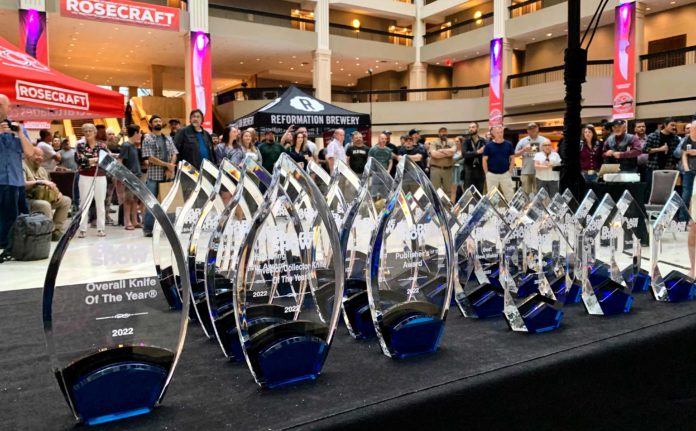
Winners were determined in 11 categories at BLADE show in Atlanta, by an expert pannel of judges. Awards ranged from Knife Of The Year to Best Kitchen Knife and everything in between.
The 2022 Overall Knife of the Year® was the Pro-Tech Malibu Operator. Pro-Tech would go on to win in two other categories. The world’s largest knife show featured attendees and exhibitors from around the world showing off the best and newest in all things knives.
Below are this year’s factory award winners from this tremendous event.
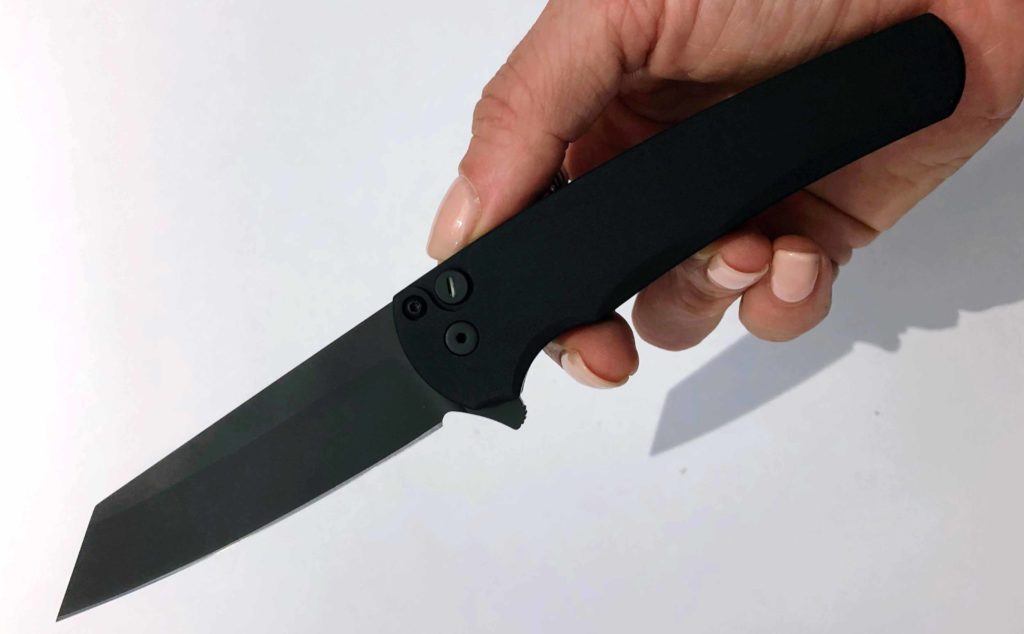
Overall Knife of the Year®: Pro-Tech Malibu Operator
Pro-Tech Malibu Operator
American-Made Knife Of The Year®: Spyderco Military 2
Spyderco Military 2
Most Innovative American Design: Asheville Steel Warlock
Asheville Steel Warlock
Imported Knife Of The Year®: MKM – Maniago Knife Makers Miura
MKM – Maniago Knife Makers Miura
Most Innovative Import Design: Civivi Orthrus
Civivi Orthrus
Accessory Of The Year: Lionsteel Eggie
Lionsteel Eggie
Best Buy: Sencut Sachse
Sencut Sachse
Investor/Collector Knife Of The Year®: Pro-Tech Ultimate Collection Terzuole ATCF Auto
Pro-Tech Ultimate Collection Terzuole ATCF Auto
Collaboration Of The Year: Pro-Tech Terzuole ATCF Auto
If you attend, a review of the following will pay dividends
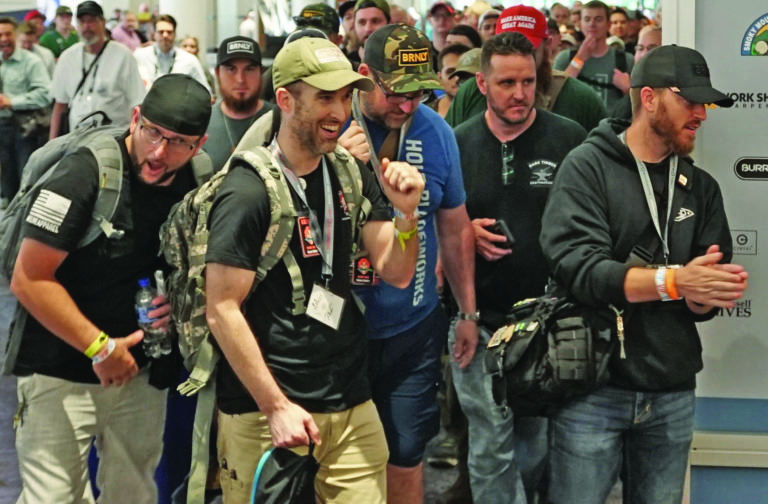
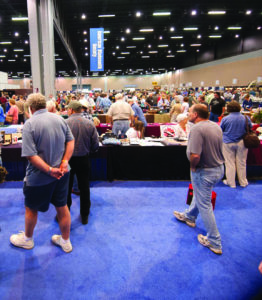
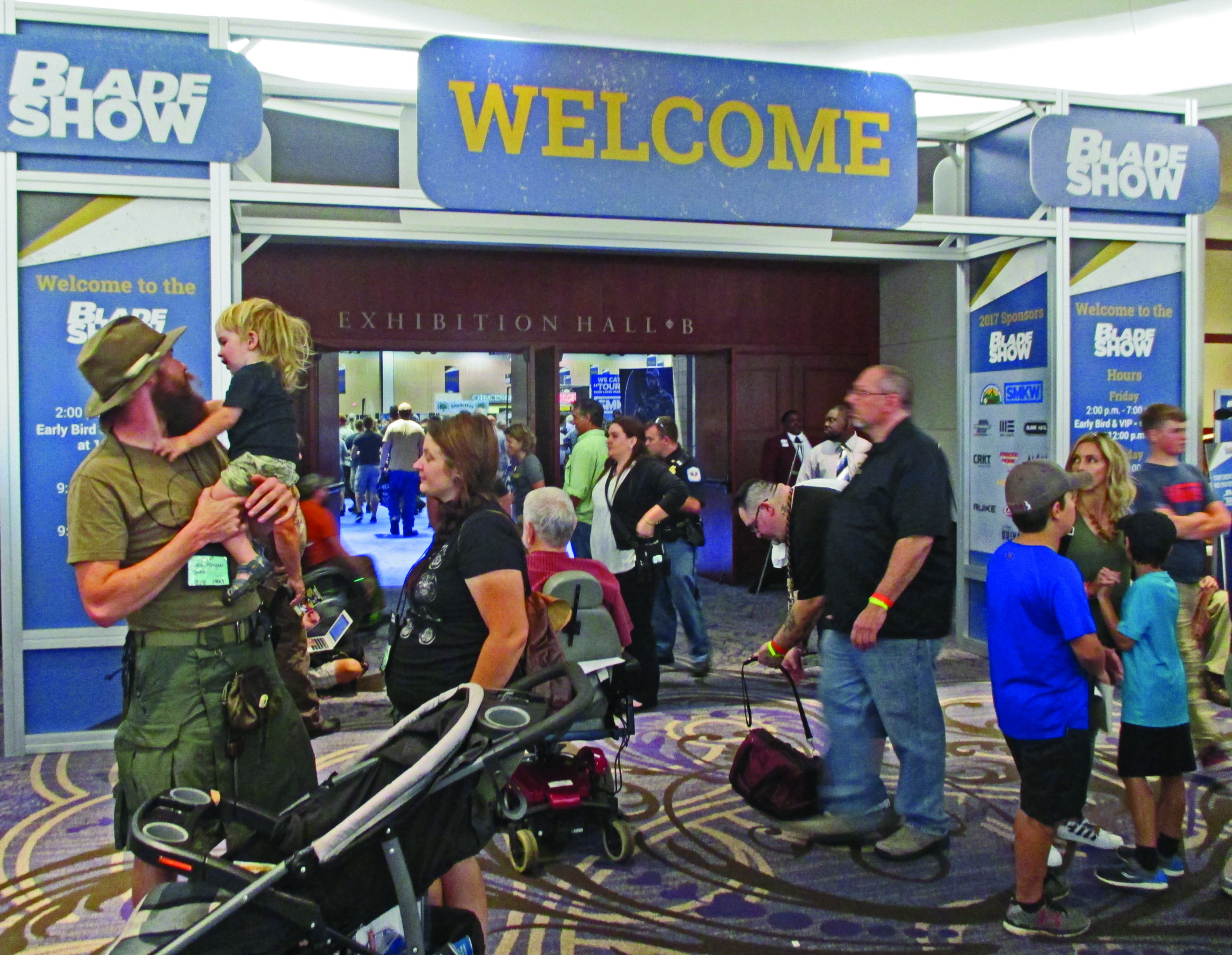
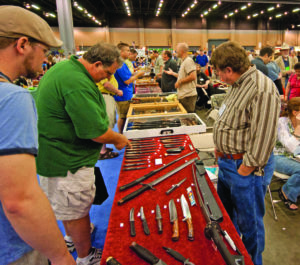
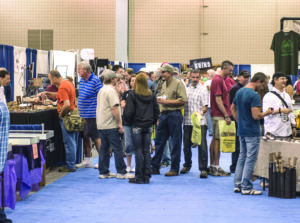
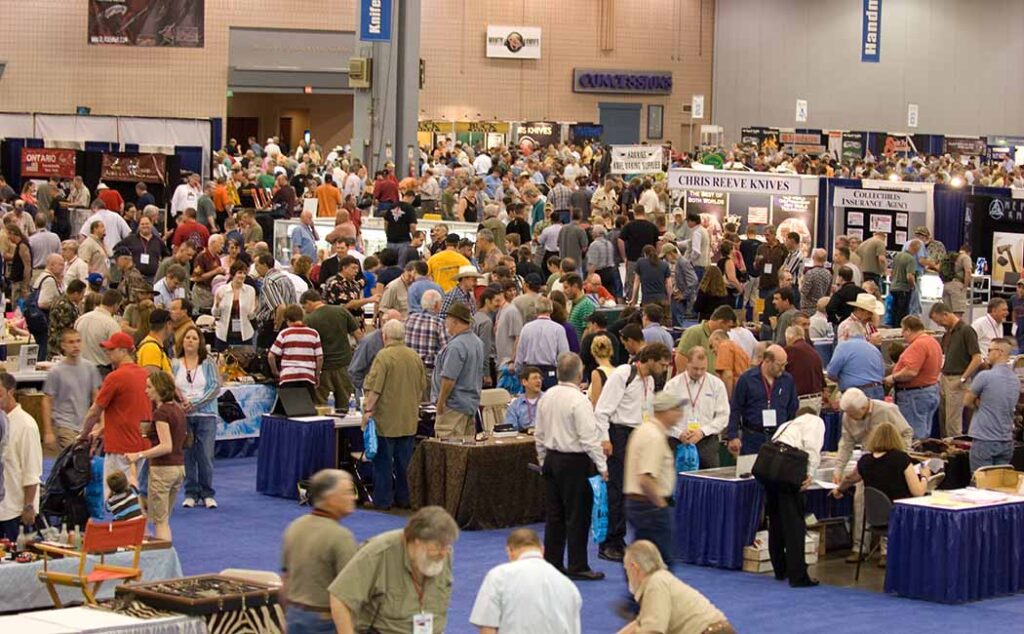
The BLADE Show is unlike anything you’ve ever seen. It’s the world’s largest knife show—period. It’s overwhelming, it’s massive and you need to pace yourself.
A major do of the BLADE Show is to enjoy yourself. (Eric Eggly/PointSeven image)
To begin with, inbound traffic is insane driving to the Cobb Galleria, so give yourself plenty of lead time. Wear comfortable shoes—the show hall floor is unforgiving—and also be sure to hydrate or you will cramp up while walking.
Wear comfortable shoes—the show hall floor is unforgiving. (Eric Eggly/PointSeven image)
There are free show programs with floor maps and exhibitor lists in the show lobby. Get two because you will lose one. The lobby also has free copies of the BLADE Show preview issue of BLADE® that you’re reading right now. (Editor’s note: The show program is newer and thus more up to date, so use its maps, lists, schedules, etc., instead of the ones in this issue of BLADE.) Assorted exhibitors and others will have cloth bags inside for free. Get a couple and use them to tote stuff if you don’t bring a small pack. Carry a small pad and a pen—you will see much you will want to return to, so mark down what the knife or accessory is, how much, the table number, etc.
There’s inexpensive food all around close to the show inside the Cobb. Local eats spots are easily Uber’d to, and using Uber, etc., is worth it—drive your car and you won’t have a space when you return.
You must see The Pit, the sunken bar in the lobby of the Renaissance Atlanta Waverly host hotel, at least for a few hours.
Yes, you must see The Pit, the sunken bar in the lobby of the Renaissance Atlanta Waverly host hotel, at least for a few hours. Again, pace yourself there—no one wants to be remembered as the sloppy drunk who dropped a thousand-dollar knife because he was hammered. Pit people are just as great as the show itself—wear your swag and favorite makers’ shirts and meet some new pals.
Cash is king. Bring as much as you can afford. Don’t screw up the mortgage but cash up before you come. The ATMs around the show get smashed fast and have a $300 limit per day anyway.
Take a ton of pictures. No one will believe you back home, and it will be sensory overload, so take photos to remember it all. Cell reception can be bad inside, so use text and times for meet ups. Soak it all in and let yourself enjoy being with thousands of likeminded folks for the weekend. However, there are some details all should know or get refreshed on as attendees, as well as table/booth holders. So, buckle up!
1 of 3
The people are just as great as the show itself—wear your swag and favorite makers’ shirts and meet some new pals.
When examining an exhibitor’s knife, always be aware of the direction in which you are pointing the blade and avoid causing damage to anyone or anything.
Always ask before touching a knife, as a customer (left) appears to be doing at the table of knifemaker Barry Dawson (right). It’s simple politeness to ask first. (Eric Eggly/PointSeven image)
PATRON ETIQUETTE
An extra swipe of deodorant goes a long way. The show hall will get hot when full and the show lasts all day. Mints are a good idea as well.
Introduce yourself to the maker at each table you visit.
Never, I repeat, never set anything on a maker’s or dealer’s table.
Always ask before touching a knife. Some makers are more intense about it than others, but it’s simple politeness to ask first.
Always ask before touching a knife, as a customer (left) appears to be doing at the table of knifemaker Barry Dawson (right). It’s simple politeness to ask first. (Eric Eggly/PointSeven image)
Remove your super cool large rings before handling knives. They leave marks, and the hand polish on the knife took hours if not days to apply.
Don’t wipe the blade off on your shirt or your own cloth from home. The owner will do it—besides, he doesn’t know what’s on your shirt/cloth.
Keep track of your kids—they should have been told not to touch any knives long beforehand.
Be aware of placement when returning something to a table, and do it slowly and carefully. Don’t toss things back on a table!
Don’t “wrist flick” a side opener—the knife doesn’t need it if it’s made correctly. Besides, it not only annoys the maker, it shows you don’t know what you’re doing.
Same line of thought: don’t shave hair, cut a piece of paper, turn toward others with a live blade or be dumb enough to run your thumb along the edge to test it out. The owner doesn’t want to clean your blood off his knife.
Never block a table to hold a conversation with someone else. Politely move aside.
Never block a table—or an aisle—to hold a conversation with someone. Politely move aside. (Eric Eggly/PointSeven image)
There are more, of course, but these are some of the most important things to learn and know for attendees—and you see it every show.
EXHIBITOR ETIQUETTE
The biggest one is speak to everyone who comes by, even if it’s just
“good morning” or “good afternoon.” Itmatters!
Don’t bring a book to the show and sit and read. That is a sale killer and rude as hell. You will see lots of makers/dealers doing it, then complain endlessly about how the show isn’t good, or the buyers just aren’t buying. As a maker/dealer, you are selling yourself as much as your knives. If your personality is bad, people will move on quickly. Engage, smile, be polite, draw them in, show your work like it’s the greatest thing ever done, explain it, sell it—and make money! Everything else aside, that’s why you really came. You pay for lodging, gas, airline tickets, food, table/booth space, etc.—make the most of it and sell you as much as your work.
At the Chad Nichols Damascus booth, I never sit* and never walk off. I engage every person who gets within five feet of me. The guy in the suit, the couple I know is just looking, the ones who can barely speak English, the guy in overalls with no top teeth—any one of them could walk up and drop a roll of cash that would choke a horse. If I screw that up, it’s not the show, the venue, the economy or the weather—it’s me.
STOP ’n SAY HI!
Enjoy the show and stop by to say hello at the Nichols Damascus Southern Circus booth. The booth looks like a KISS stage from the ’70s with six or seven makers/parts/materials guys all in one spot, including Chad Nichols/Nichols Damascus, knifemaker Steve Kelly/TiConnector Inc., Nottingham Tactical, American Metal Exchange, Matt Diskin, FiberTech-Carbon Fiber and more depending on the day—oh, and me.
See y’all there!
*If you must sit, bring padded stools if possible—it’s a lot less stress on your legs and back to rise from a stool rather than from a camping chair.
In the conclusion, consider the balance of the BLADE Show’s factory knife debuts
It’s hard to believe it’s been almost three months since BLADE Show 2024 blew the doors off the Cobb Galleria Centre in Atlanta. With all the commotion and introductions of new knives, even if you were there you couldn’t help but miss many.
Previously we featured some of the factory knives that debuted in the Cobb but, as those of you who were paying attention know, we didn’t have enough room for the balance of the few we were able to assemble. Ergo, the conclusion this time. We think you will enjoy them all. As for the many we are unable to publish in this two-part story due to space and other limitations, stay tuned to future issues of BLADE® for a goodly number of them.
Kershaw Tilt 50th Anniversary
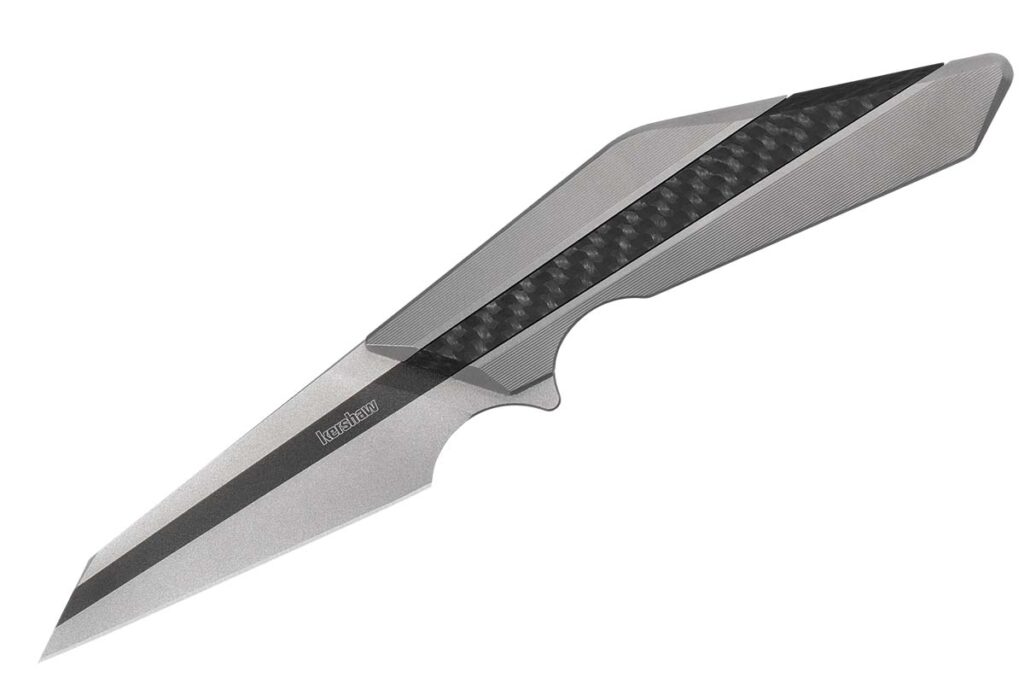
Knife type: Folder Blade length: 3.65” Blade steel: CPM CruWear, 14C28N Rockwell hardness: 60-62 HRC Blade grind: Flat Blade @ thickest: .156” Blade pattern: Composite Blade finish: Bead-blasted Blade opener: Flipper tab Handle material: Titanium Lock: Sub-Frame Pivot materials: KVT ball-bearings Pocket clip material: Titanium Weight: 5.7 ozs. Closed length: 5.8” Knife to know: Carbon fiber inlay front and bank; hidden hardware Country of origin: USA MSRP: $500 Available: NOW
A.G. Russell Knives Premium Scout
Model type: Traditional slipjoint pocketknife Designer: A.G. Russell Main blade length: 2 5/8” Blade steel: VG-10 stainless Rockwell hardness: 59-61 HRC Blade grind: Flat Blade @ thickest: .09” Blade pattern: Spear point Blade finish: Satin Blade opener: Nail nick Handle material options: Stag and red saw-cut bone Weight: 3.5-3.7 ozs. Closed length: 3 3/4” Special features: Can opener, screwdriver, caplifter & leather punch Country of origin: China MSRP: $74.95-$94.95 Available: NOW
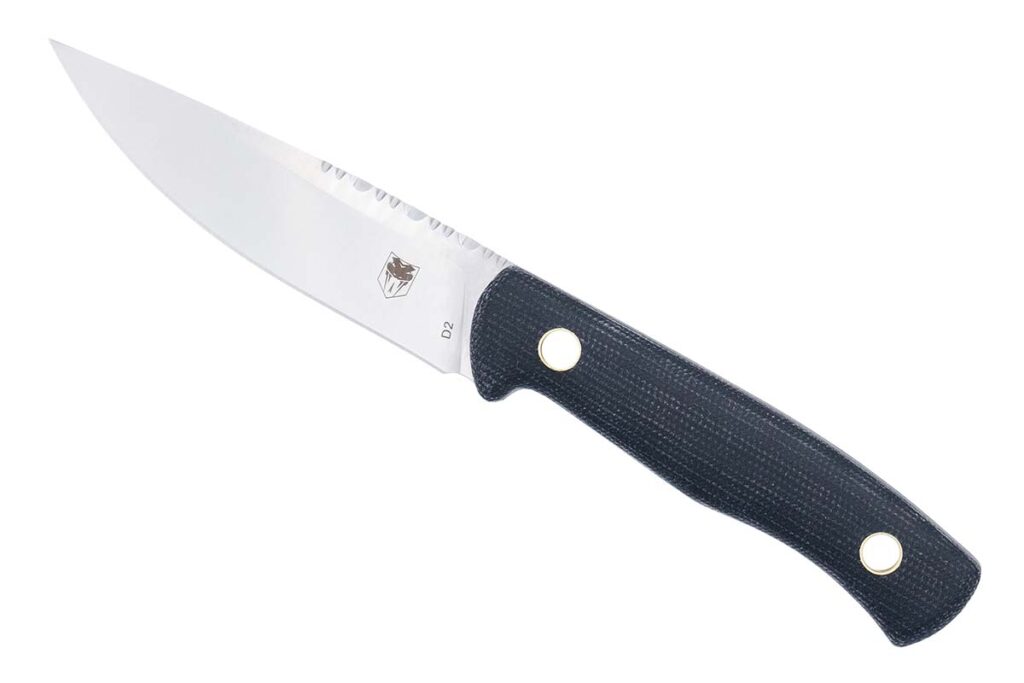
CobraTec Koonsman
Knife type: Fixed-blade hunter Designer: Chad Cochran Blade length: 4” Blade material: D2 tool steel Rockwell hardness: 61 HRC Blade grind: Convex Blade @ widest: 1.125” Blade pattern: Drop point Blade finish: Satin Construction: Full Tang Handle material: Micarta® in color options of black, green and tan Weight: 5.7 ozs. Overall length: 8.4375” Sheath type and materials: Belt/pouch and leather Country of origin: China MSRP: $79.99 Available: NOW
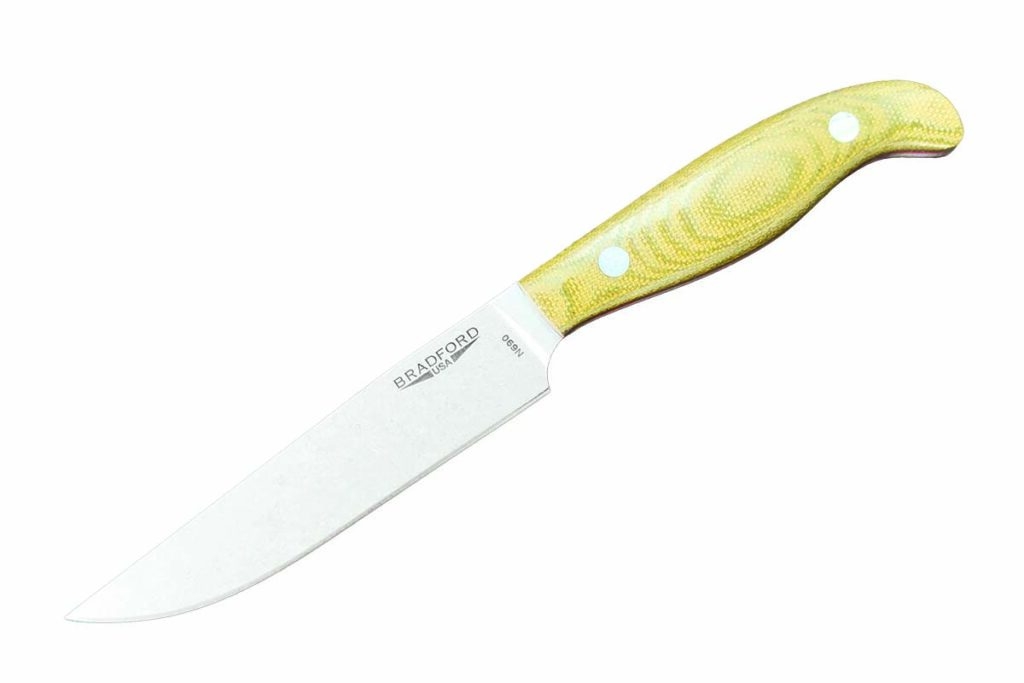
Bradford USA Gatsby
Knife type: Specialty steak knife Blade length: 4.5” Blade steel: N690 stainless Rockwell hardness: 61 HRC Blade grind: Full height flat Blade @ thickest: .11” Blade finish options: Stonewash and high polish Handle material options: Maroon, wheat, ivory canvas Micarta® and carbon fiber Overall length: 8.5” Country of origin: USA MSRP: $199 Available: NOW
Spyderco Techno 3
Knife type: Folder Designer: Marcin Slysz Blade length: 2.64” Blade steel: CTS XHP stainless Blade grind: High flat Blade @ thickest: .127” Blade pattern: Drop point Blade finish: Satin Blade opener: Flipper Handle material: Titanium Lock: Reeve Integral Lock (R.I.L.) Pivot material: Ball bearings Pocket clip material and type: Titanium, right-handed, tip-up Weight: 3.3 ozs. Closed length: 3.7” Country of origin: Italy MSRP: $400 Available: To be announced
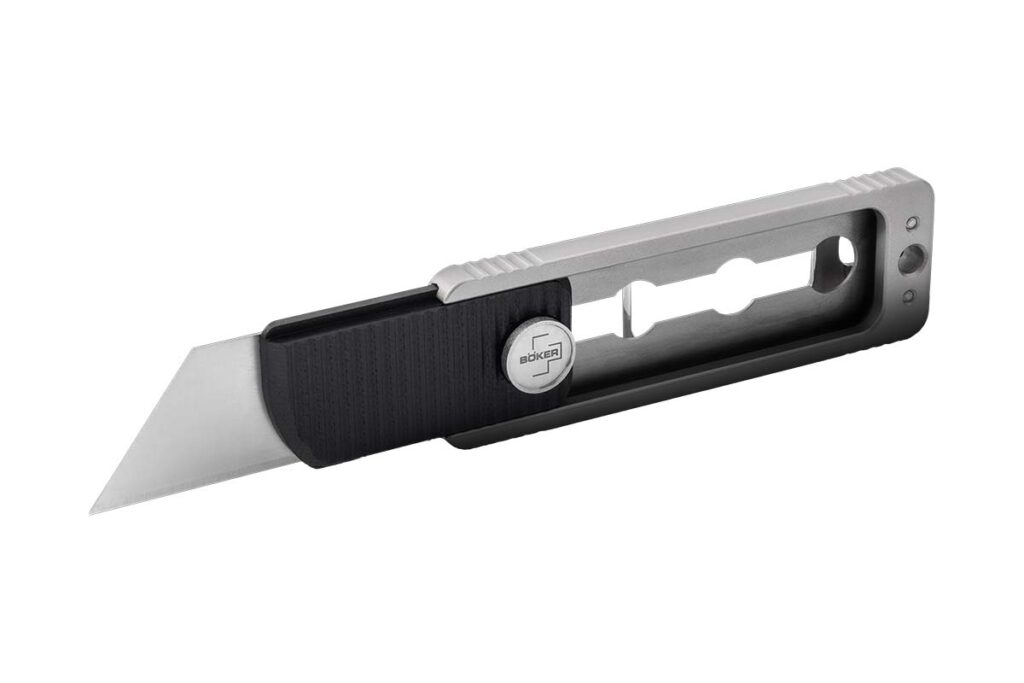
Boker Plus Cutweazle
Knife type: Utility Designer: Ben Logan/Turnback Knife Co. Blade length: 1.18” Blade steel: Standard replaceable stainless utility blade Blade grind: Flat Blade @ thickest: .03” Blade finish: Satin Handle material: G-10/stainless steel Lock: Button lock Blade opener: Thumb slide Pocket clip material and type: Stainless steel, deep carry, right-handed, tip-down Weight: 1.38 ozs. Closed length: 3.7” Special features: Push button on slide lock allows the blade to be pushed forward in stages or in a single movement and locked in the predetermined recesses; retracts into the handle when pushed again w/a sliding movement Country of origin: China MSRP: $56.95 Available: September 2024
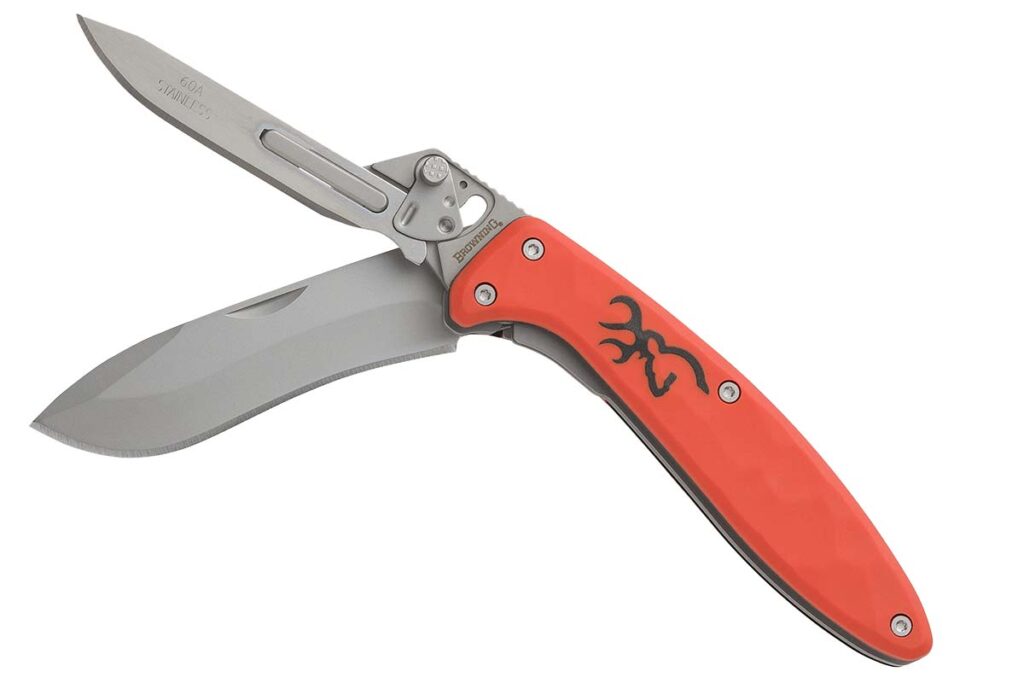
Browning Primal Scalpel 2-Blade
Main blade length: 2.75” Blade steel: 420-J2 stainless Rockwell hardness: Scalpel 50-55 HRC, drop point 55-59 HRC Blade openers: Thumb stud and nail nick Lock: Linerlock Handle: Synthetic in orange or black Pocket clip: Tip-up Closed length: 4 1/8” Country of origin: China MSRP: $59.99 Available: NOW
Stroup Knives MK2
Knife type: Fixed blade Designer: Unnamed active-duty Tier 1 Operator Blade length: 4” Blade material: 1095 carbon steel Rockwell hardness: 58 HRC Blade grind: Flat Blade @ thickest: 3/16” Blade pattern: Spear point Blade finish: Acid etched & rock tumbled Construction: Full Tang Handle material: G10 & nitrile Pocket clip: Designed by Discreet Carry Concepts, Inc. Weight: 4.2 ozs. Overall length: 8” Sheath material: Kydex Knife to know: The nitrile in the handle provides extra grip, especially when wet Country of origin: USA MSRP: $279.99 Available: NOW
Lionsteel Twain
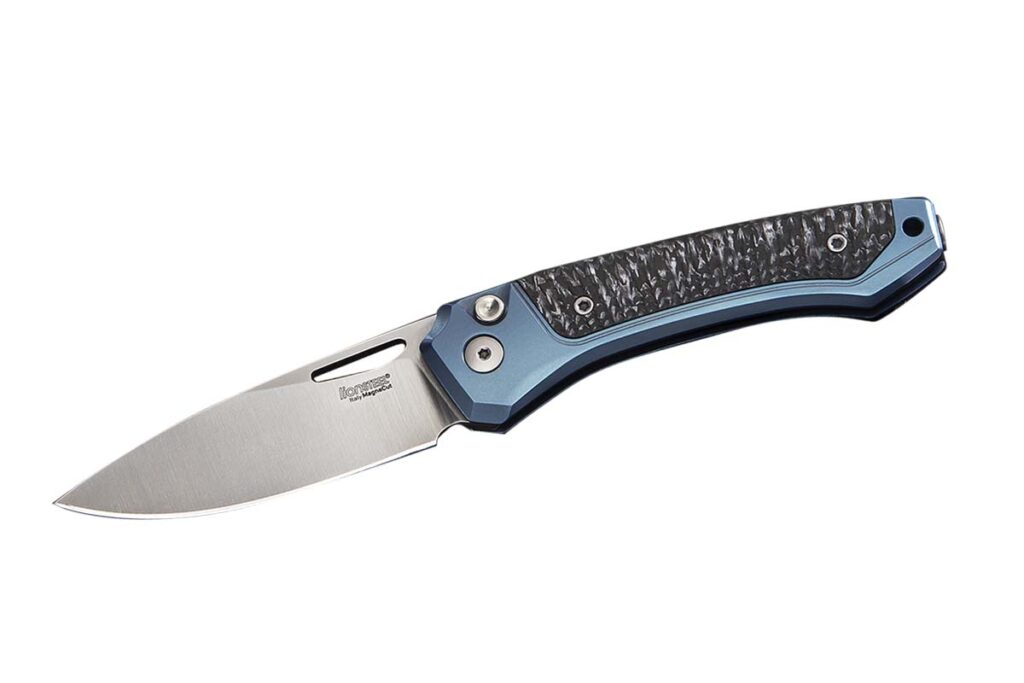
Model type: EDC folder Blade length: 3.15” Blade steel: CPM MagnaCut stainless Blade grind: Flat Handle material: Titanium + carbon fiber or Micarta® Lock: Button lock Pocket clip type and material: Bent steel Special features: Double Solid construction (integral frame and integral handle) Weight: 3.03 ozs. Closed length: 4.14” Country of origin: Italy MSRP: $380 Available: NOW
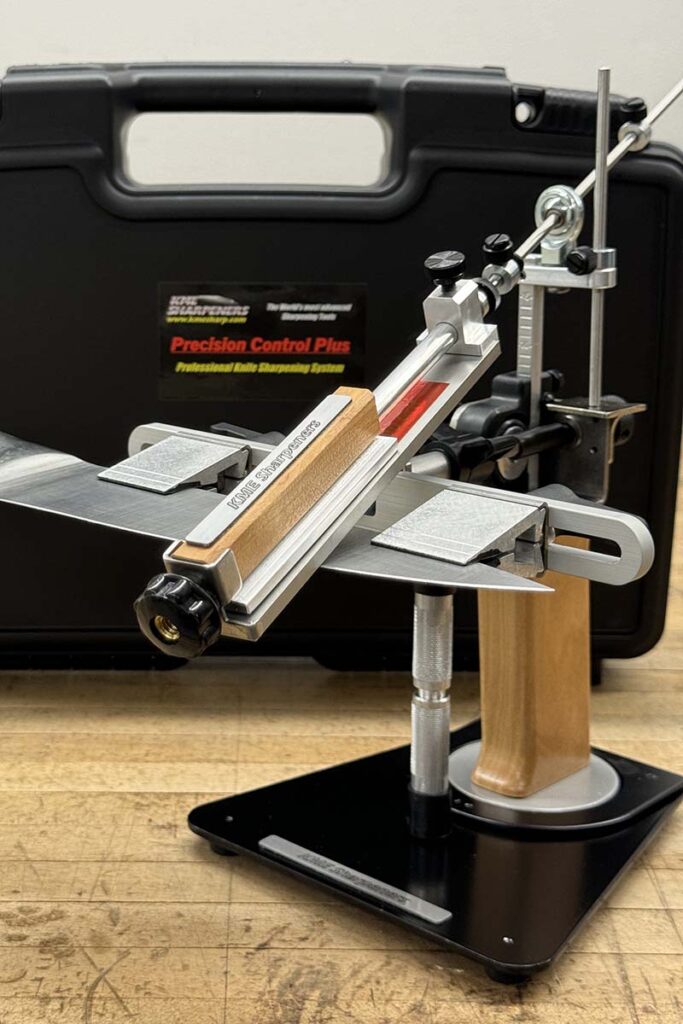
KME Precision Control Plus/Professional Knife Sharpening System
Abrasive type: Diamond-coated stones Grit assortment: 140, 300, 600, 1,500 Dimensions: 13” x 12” x 8” Construction materials: CNC-machined, anodized aluminum components, laser-cut, powder-coated steel base, CNC cherry hardwood grip, stainless-steel-backed diamond stones Weight: 2 lbs., 13.9 ozs. Blade sizes sharpened: Maximum-blade-thickness saber grind 3/8” or more and full flat grind 3/16” Angle range: 10 to 45 degrees per side Special features: Smooth friction-drive angle system w/micro adjustment feature; operates w/one hand and absolute angle control; rod end guide w/360° rotation; threaded Monopod brace provides rock-solid sharpening platform; adjustable stone carrier w/magnetic plate for angle cube sharpening uses any stone between 4” and 6”; full line of accessory stones, strops and diamond lapping films in both 4” and 6” lengths Country of origin: USA MSRP: $474.95 Available: NOW
CIVIVI Biophase
Knife type: Folder Blade length: 3.48” Blade steel: Nitro-V stainless Rockwell hardness: 58-60 HRC Blade grind: Hollow Blade @ thickest: .12” Blade finish: Black stonewash (satin finish and black stonewash w/satin flat and damascus are optional) Handle material: Aluminum & G-10 Lock: Button lock Blade opener: Flipper tab Pivot materials: Stainless steel pivot w/caged ceramic ball bearings Pocket clip material and type: Stainless steel, tip-up, ambidextrous Weight: 2.61 ozs. Closed length: 4.67” Country of origin: China MSRP: $98.70 at press-time exchange rate Available: Late summer
RoseCraft Clinch River Button Lock
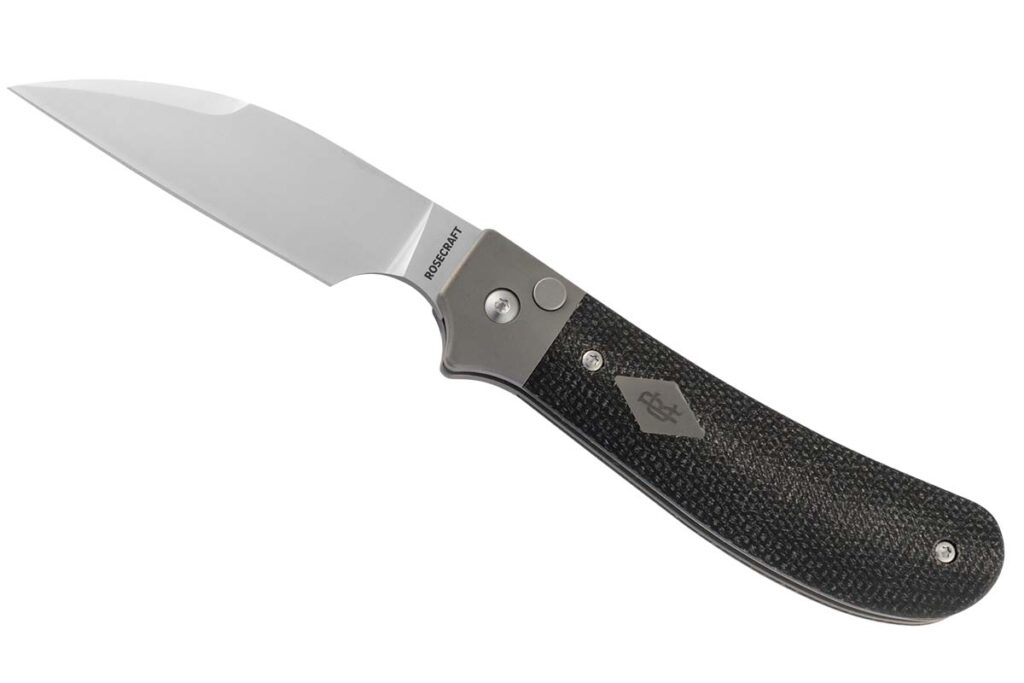
Model type: Modern/traditional pocketknife Blade length: 3.125” Blade material: M390 stainless Blade grind: Flat Handle material: Micarta® or Ultem w/titanium bolster & liners Lock: Button lock Pocket clip material: Titanium Knife to know: Modern take on the Clinch River Swayback that won BLADE Magazine 2023 Imported Knife of the Year®; opens and closes via a button lock Weight: 2.8 ozs. Closed length: 4” Country of origin: China MSRP: $129.99 Available: NOW
CRKT Nucleus
Knife type: Folder Designer: Princeton Wong Blade length: 3.19” Blade steel: 12C27 stainless Rockwell hardness: 58-60 HRC Blade grind: Flat Blade @ thickest: .13” Blade pattern: Reverse tanto Blade finish: Bead blast Construction: Screw Handle material: Stainless steel w/G-10 overlay Lock: Framelock Blade openers: Front and rear flipper tabs & blade hole Pivot material: Ikoma Korth Bearing System (ball bearings) Pocket clip material and type: Stainless steel; tip-up Weight: 3.1 ozs. Closed length: 4.19” Country of origin: China MSRP: $113 Knife to know: The knife opens three ways: front and rear flipper tabs and via the blade hole Available: NOW
Halfbreed MIK-04 SOFMAK
Knife type: Fixed blade Blade steel: K340 stainless Rockwell hardness: 59-60 HRC Blade finish: PVD coat Blade style: Drop point Blade length: 5.31” Blade @ thickest: .25” Handle material: G-10 Weight: 11.14 ozs. Overall length: 10.31” Sheath material: Injection molded plastic Mounting: Belt & PALS/MOLLE (DOTS) Country of origin: Comprises Australian & Taiwanese make MSRP: $285 Knife to know: The knife is a collaboration between Halfbreed and Joseph Teti, Force Recon Marine and Army Special Forces Green Beret veteran and former operative with the CIA Special Activities Division/Special Operations Group; MIK stands for medium infantry knife and SOFMAK for special operations forces multi-purpose assault knife MSRP: $285 Available: September 2024
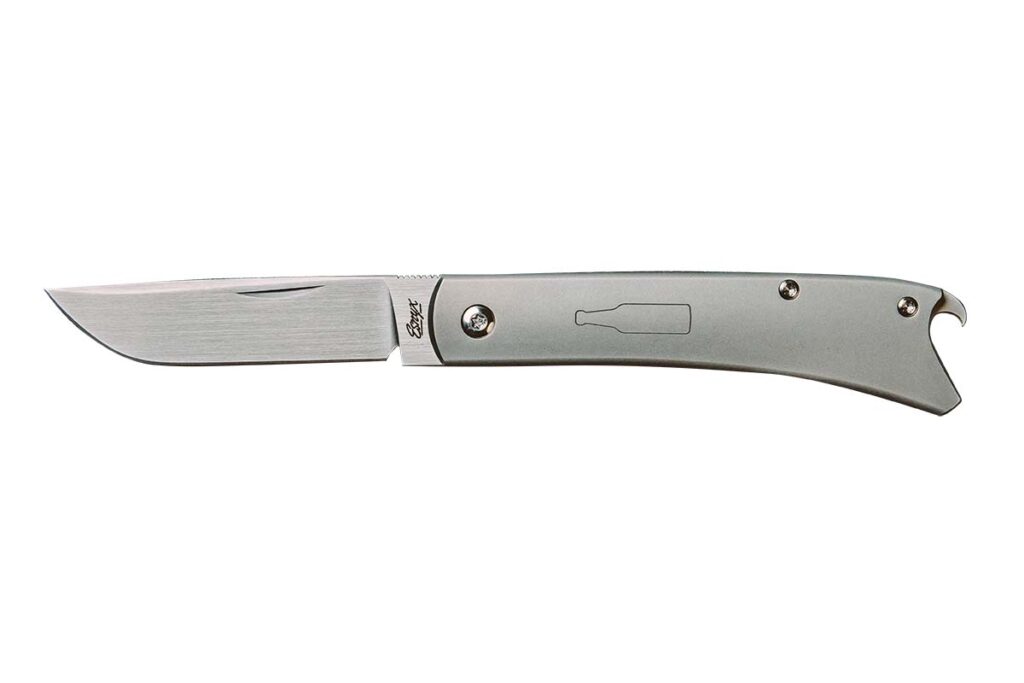
ESNYX Silver Line Beer Buster Jr.
Knife type: Slipjoint Blade length: 2.63” Blade steel: M390 stainless Blade @ thickest: .125” Blade grind: Flat Blade pattern: Drop point Blade finish: Handrubbed satin Blade opener: Nail nick Handle: Blasted titanium Weight: 2 ozs. Closed length: 3.5” Country of origin: China Knife to know: Slipjoint has half stop; bottle-shaped handle shield; bottle opener in butt MSRP: $265 Available: NOW
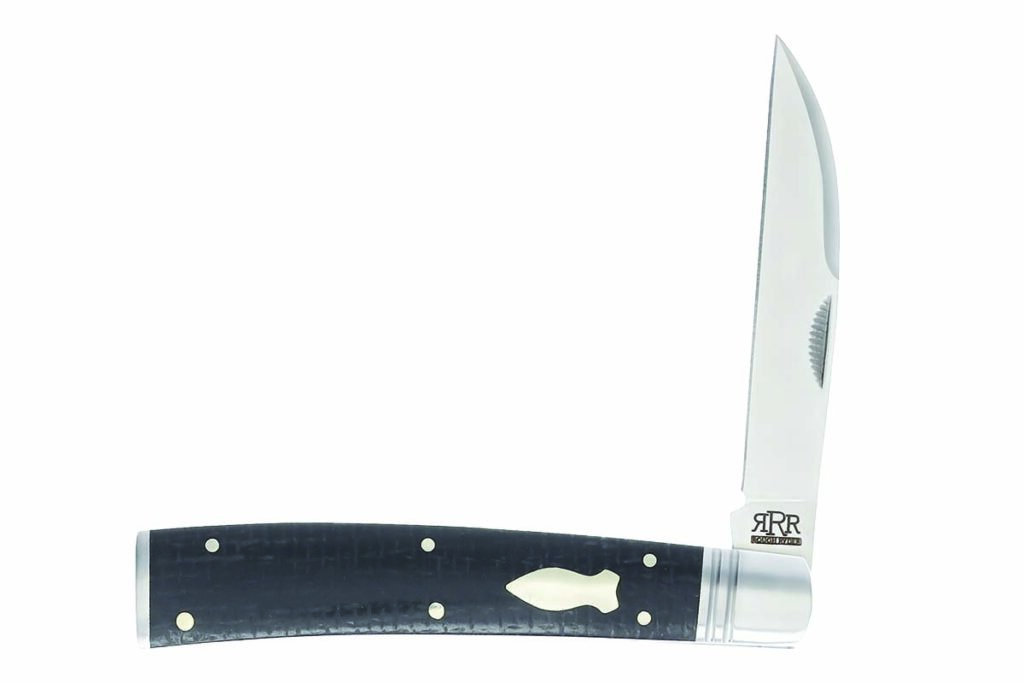
Rough Ryder Reserve Whiskey Ryder
Knife type: Swayback doctor’s knife slipjoint Designer: Brian Wilhoite Blade length: 3.5” Blade material: D2 tool steel Blade @ thickest: 3/16” Blade pattern: Wharncliffe Blade finish: Brushed satin Handle material: Black burlap Micarta® Weight: 3.2 ozs. Closed length: 4.5” Special features: Slipjoint features half stop Country of origin: China MSRP: $54.99 Available: NOW
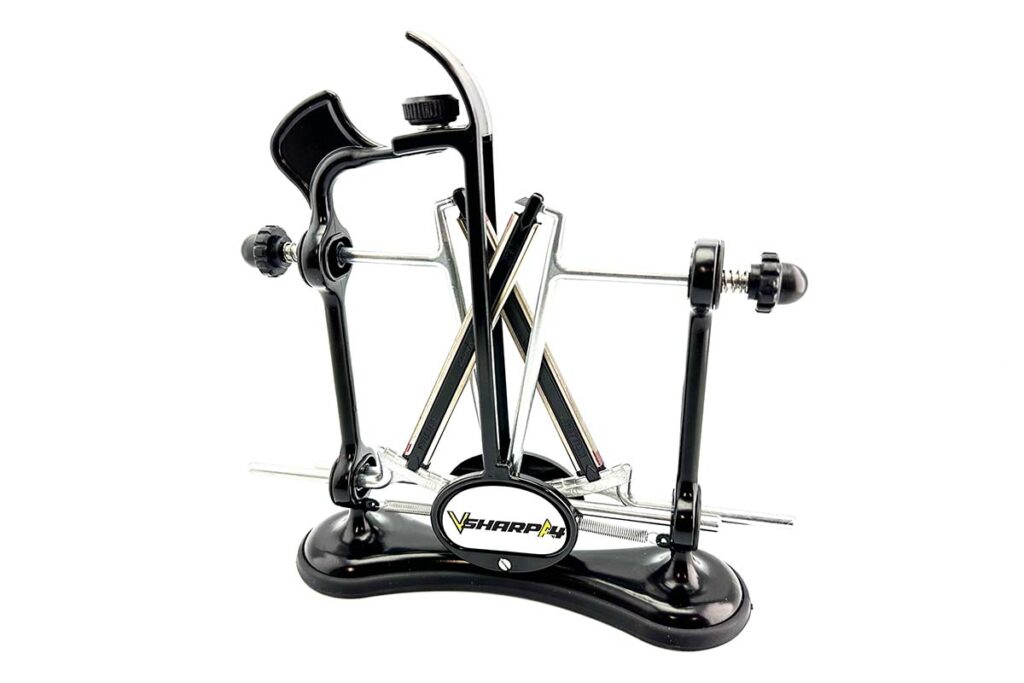
Warthog V-Sharp A4 Model
Sharpener Type: Patented V-Sharp spring-loaded pull-through Abrasive Type: Diamond-coated Grit selection: 325 grit natural diamond hone & hardened hone steel for finishing the edge (270, 325, 600, 1,000 and ceramic hones available) Dimensions: 8.75” x 8.25” x 2.25” Construction Materials: Lightweight zinc-cast metal frame, non-slip rubber base and durable powder coat finish Weight: 1.1 lbs. Special Features: Four adjustable sharpening angles: 15, 20, 25 & 30 degrees Types of blades sharpened: All plain-edge knives; serrated knives can be sharpened w/the ceramic hones Country of origin: South Africa MSRP: $109.99 Available: NOW
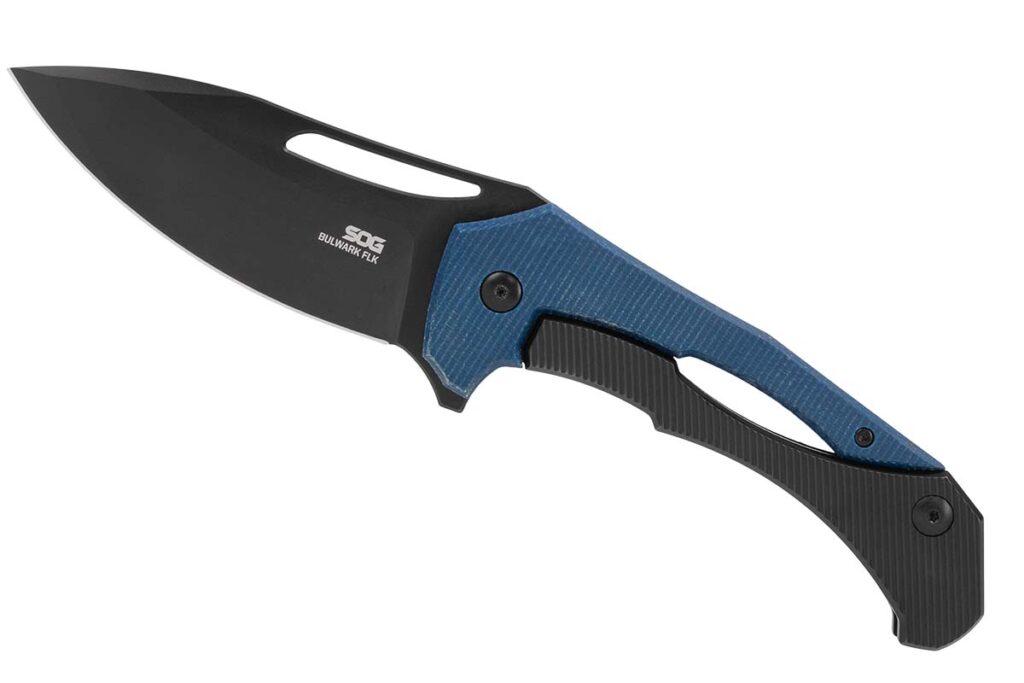
SOG Knives Bulwark
Designer: Mikkel Willumsen Knife type: EDC flipper folder Blade length: 3” Blade material: D2 tool steel Blade grind: Hollow Blade @ thickest: .14” Blade finish: Black PVD coat Blade pattern: Drop point Blade openers: Flipper tab and blade hole Handle material: Micarta® in blue and OD green color options Pocket clip: Tip-up Lock: Framelock Weight: 6.25 ozs. Closed length: 4.2” Country of origin: China MSRP: $134.99 Available: Late summer 2024
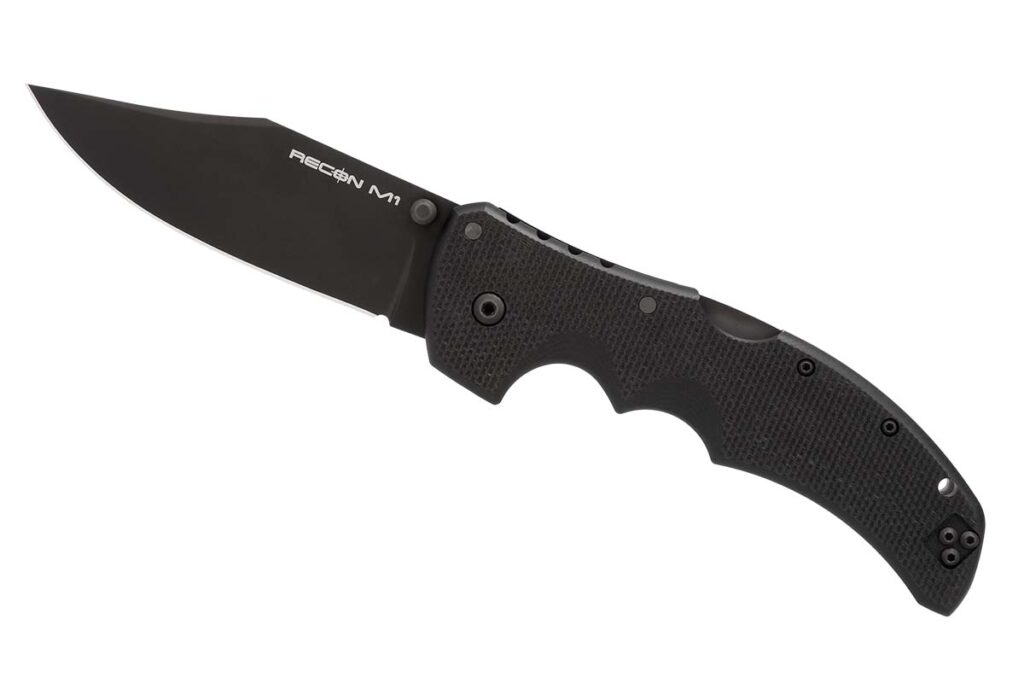
Cold Steel Recon M1
Knife type: EDC folder Blade length: 4” Blade steel: CPM MagnaCut stainless Blade finish: Stonewash Blade pattern: Clip point Handle material: G-10 Lock: Tri-Ad Pocket clip: Yes Weight: 5.2 ozs. Closed length: 5.5” Country of origin: Italy MSRP: $259.99 Available: NOW
Revel in a short list of knife industry milestones that transformed the knife world.
Editor’s Note: BLADE Magazine is celebrating its 50th anniversary of its founding this year. To recognize this milestone, we are running a series of articles looking at the changes to the knife world the publication has been privy to over its history.
Time marches on. And in the cutlery industry, the half century from the early 1970s to the present has been filled with both revolution and evolution.
From the corner of a massive hall at a gun show, the slight mention of a new style of field tool, and the basic everyday factory blade carried in the worker’s pocket, the knife industry, both custom and factory, has blazed its own trail over the past 50 or so years, emerging from a somewhat obscure existence to the mainstream. And along the way have been those moments of discovery, awareness and excitement that have marked the trail.
For reference, a few of those moments include the following.
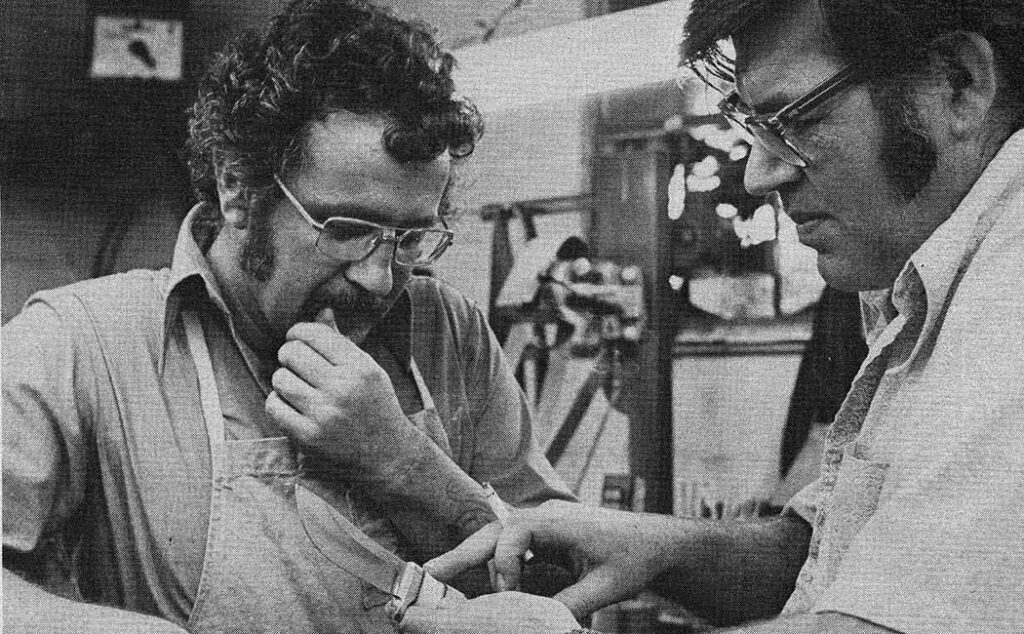
The first “meeting” of the Knifemakers’ Guild basically was the idea of A.G. Russell. What would become the Guild Show was the leading knife show for decades. A.G. (right) discusses a Harry Morseth knife with maker Lloyd Hale (left). (Sid Latham image)
1970s
Though what would become the Knifemakers’ Guild Show was first held in 1970, the show that occurred three years later is still talked about today. That was when Bill Moran reintroduced damascus steel for knife blades, kindling a revival of interest in damascus as the new “super steel” and generating a wave of collector fervor. Also in 1973, Blackie Collins founded The American Blade, a magazine for the knife industry like nothing that had been seen before. Known today as BLADE®, the publication remains a voice for the industry and a tangible contributor to the life and times of the knife enthusiast.
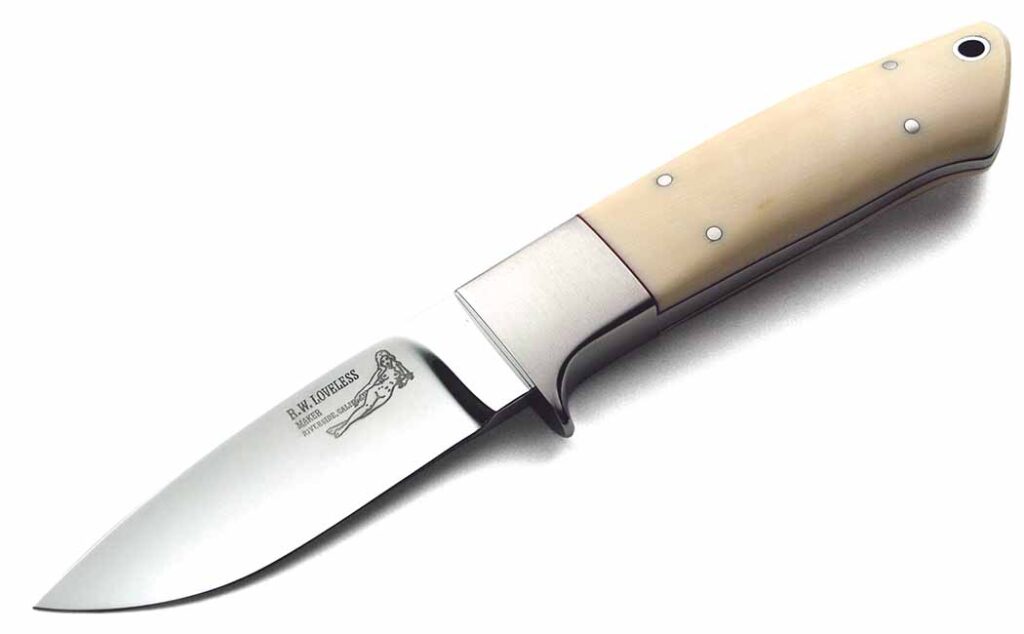
In the following decade, knife shows increased in number and attendance, including the BLADE Show, the New York Custom Knife Show, California Custom Knife Show and the Guild Show, the latter which led the pack for at least 20 years. At the same time, Guild members established industry trends, including the drop-point hunter and the popularization of super steels 154CM and ATS-34 by Bob Loveless, while A.G. Russell vigorously supported the knife industry through his advocacy, sharpeners, knives and growing catalog business.
Eric R Eggly, PointSeven Studios
In 1976, the American Bladesmith Society was formed, and those who forged their blades and worked in damascus at long last had their own organization to promote training and excellence with hammer-ins and other events that brought people together to learn the art of bladesmithing. By 1988, the ABS opened its own school, the Bill Moran School of Bladesmithing. For the first time, bladesmiths and knifemakers could take advantage of a year-round school that offered instruction in forging, bladesmithing and more.
1980s
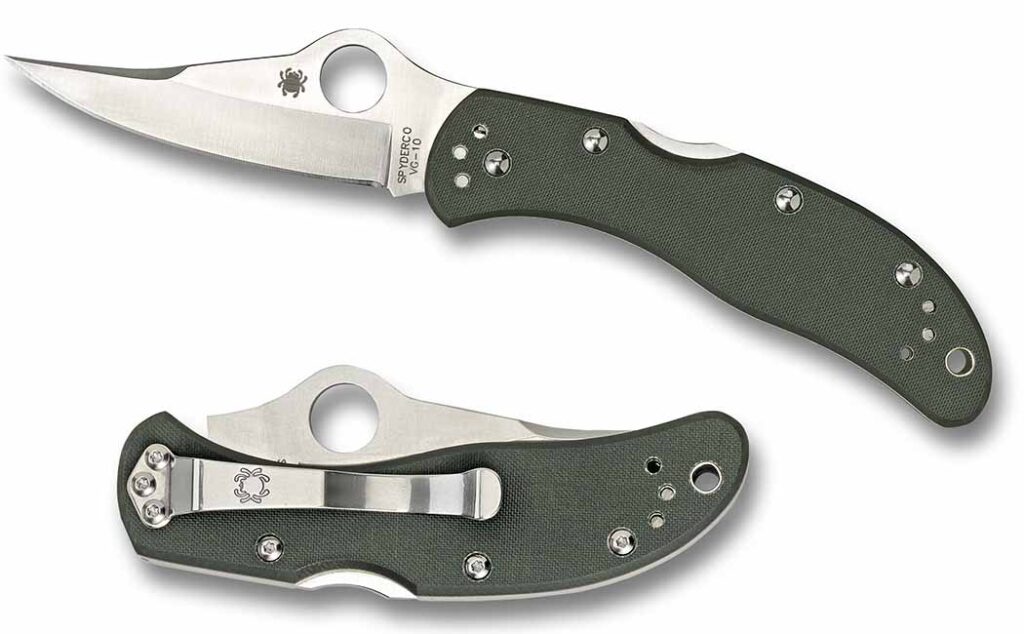
Nineteen-eighty-one saw the introduction of two watershed knife creations by Spyderco and Michael Walker. With the C01 Worker, Spyderco headman Sal Glesser introduced the first knife with both the famed hole in the blade for easier one-hand knife opening and a pocket clip for enhanced carry. Walker, meanwhile, debuted his groundbreaking linerlock folder. The innovations led to a concentration on ease of carry and deployment, focusing the industry on such elements that made the experience of knife ownership something even more special.
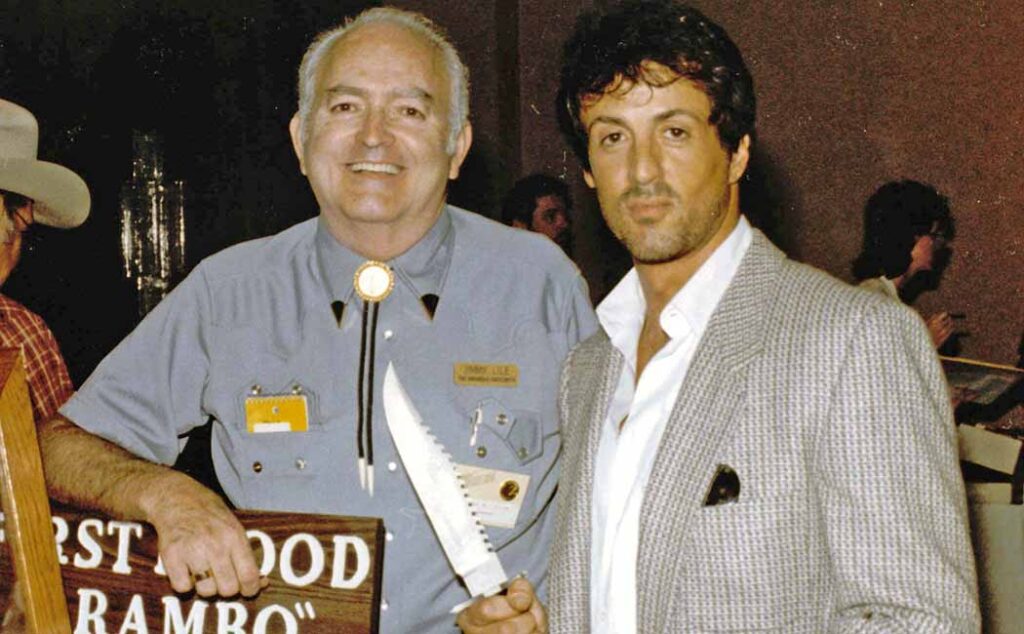
Jimmy Lile and Sylvester Stallone combined to use Lile’s survival knife in the 1982 movie First Blood, and knives were never the same again.
Hollywood took its turn in the early 1980s with the Rambo series of feature films and the knives that played starring roles. Cutlery Hall-Of-Famers Jimmy Lile and Gil Hibben became celebrities in their own right, and sure enough, other knife-and-sword-oriented films followed, including the Conan series, Commando, Predator and The Last of the Mohicans. These were just a few but the knives of custom makers profoundly influenced the marketplace. Soon enough, collaborations between custom knifemakers and factory knife companies began to flower.
1990s
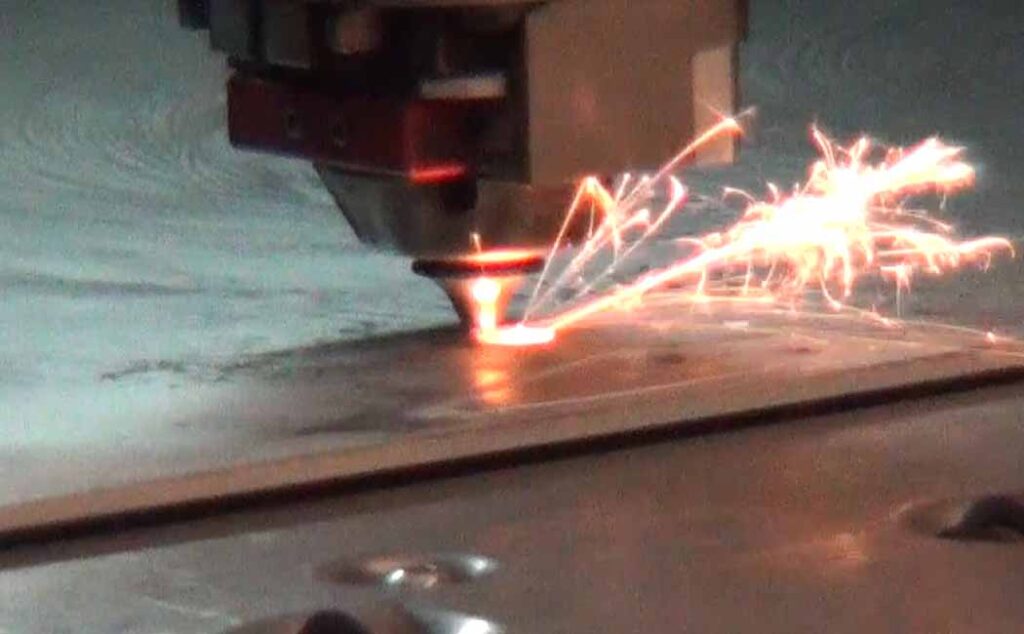
By the 1990s, equipment such as CNC, laser cutters and CAD/CAM entered the knifemaking realm and brought about rapid change in the way custom and factory knives were made. The introduction of such hi-tech equipment into the maker’s shop gave rise to a debate over the very definition of handmade—a debate that continues to this day.
As early as the 1990s, the use of laser cutters—here cutting a hole in a Spyderco blade—CNC machines and other high-tech equipment began to take hold in the making of knives.
At the same time, the emergence of the internet brought the commercial knife market to the world, as custom makers, factories, dealers, collectors and others offered knives for sale on an unprecedented scale. The global reach of the internet led to a burst of information on every aspect of the knife industry, from websites, forums for the exchange of information, how-to videos, online auctions, and even a bit of the dark side—buyer beware! Know your customer and other maxims rang true.
Along with the information explosion, competition was more robust than ever, particularly with the onrush of China’s factory presence, not only in quantity but also, later, in quality. The Chinese influence has redefined notions of affordability, value, and how knives are produced and distributed, and the resulting market conditions continue to impact the buying habits of consumers worldwide.
2000s On
Of course, there are ongoing challenges. Two significant advocacy groups, the American Knife & Tool Institute (AKTI) and Knife Rights, assumed leading roles in responding to knife laws and particularly to the zeal of government regulation, which at times has threatened the livelihood and freedom of Americans to carry one of man’s oldest tools. Pro-knife legislation and the legalization of automatics in many states are evidence of the credible work that has been done, with much of the organized response from the knife industry resulting from the defeat of the 2009 effort led by U.S. Customs to reclassify one-hand knives as switchblades/automatics.
With the C01 Worker in 1981, Sal Glesser and Spyderco introduced the first knife with both the famed hole in the blade for easier one-hand knife opening and a pocket clip for enhanced carry. Released in 2014, the company’s C01GPGR Worker Sprint Run paid homage to the original C01.
Knife Innovation
The history of the modern knife industry is one of rapid change and continuing innovation. Long-time maker Tim Britton recalls the influence of Blackie Collins and Blackie’s foray into publishing. “Blackie could sell refrigerators to Eskimos,” he commented. “The American Blade magazine was one of his favorite projects, and his input and support facilitated the start of the Knifemakers’ Guild. We had one show, the Guild Show, where we could share fellowship and technology. Names like Buster [Warenski], Henry Frank, [W.W. “Bud”] Cronk, Jim Schmidt and Bob Loveless became famous at our annual shows.
“Virgil England took us to another planet and then along came the Chinese industrial monster,” he continued. “Tactical knives were their focus and they had no hesitation in copying American designs. The American Bladesmith Society developed a business model whereby rediscovered damascus steel could be taken to all new levels. There was never any question in this group about ‘what is a handmade knife’ or who is copying whose design. Knifesmiths flourished, and Forged in Fire has taken us all to a new level. Knifemaking caught on in other countries, and those makers continue to produce some of the finest work imaginable.”
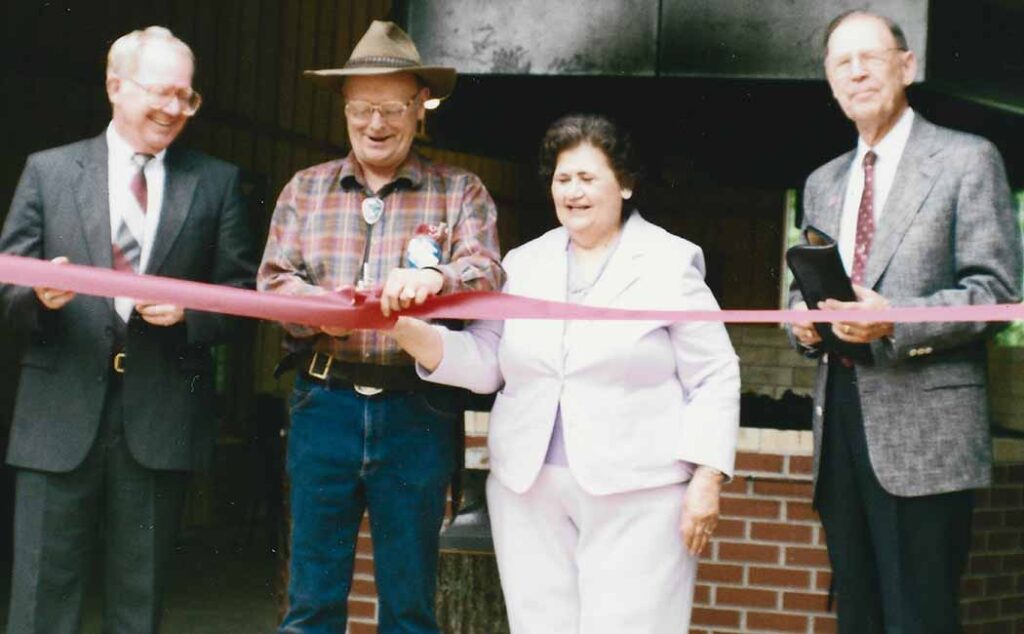
The ABS opened the Bill Moran School of Bladesmithing in 1988. The principals at the school’s ribbon cutting ceremony were, from left: Carl Nelson, president of Texarkana College, Bill Moran and Mrs. Margaret Moran, and Judge James Pilkington.
Custom knifemaker Jim Sornberger well remembers the early days of the Guild and its organization. “The Guild thing was first discussed in 1970, and that was Bob Loveless and A.G. Russell,” he said. “Actually, A.G. bought tables for a bunch of the guys and set that up. He said, ‘Let’s have a show and get a block of tables,’ and so he did that. The Guild was the best organization of knifemakers in the world, and it had the biggest knife show anywhere in the world for many years.”
As for technology, Sornberger says it is simply a fact of life. Evidence of progress and efficiency are seen in makers’ shops routinely today, including CNC equipment, mills, lathes, ingenious versions of versatile grinders and more. “You can’t reverse technology,” he reasoned. “There are always new methods of doing something.”
Ron Lake had a huge hand in the evolution of custom knives, introducing his clever tab-lock interframe folder and helping popularize 416 stainless. “It was a different world back when,” he remarked. “We had a small corner at a gun show, and Blackie Collins was sitting off by himself 30 feet away from me with a slipjoint knife, and I remember Loveless cut himself with that knife! A lot of people came and went from the knife world back in those days.”
Contributions such as the dropped hunter by Bob Loveless were among the trends started by members of the Knifemakers’ Guild in the 1970s and beyond. (Exquisiteknives.com image)
As Moran brought damascus back into the spotlight in 1973 and other developments were coming along, Lake remembers the growing ranks of the virtuoso custom knifemakers, including Billy Mace Imel, Buster Warenski and others. He also recalls the sudden impact of Spyderco. “I think maybe it wasn’t so much the hole,” he said, “but the clip. That in itself was a mind-boggling event—maybe not so much at the time, but later as people started using it.”
Ron Lake, Bob Loveless, Bill Moran and A.G. Russell
The influential journalistic career of B. R. Hughes has made its own contribution to the modern knife world. Hughes was there in the beginning of the modern era. He planned the first Gun Digest Book of Knives along with Jack Lewis, and it hit the market in 1973.
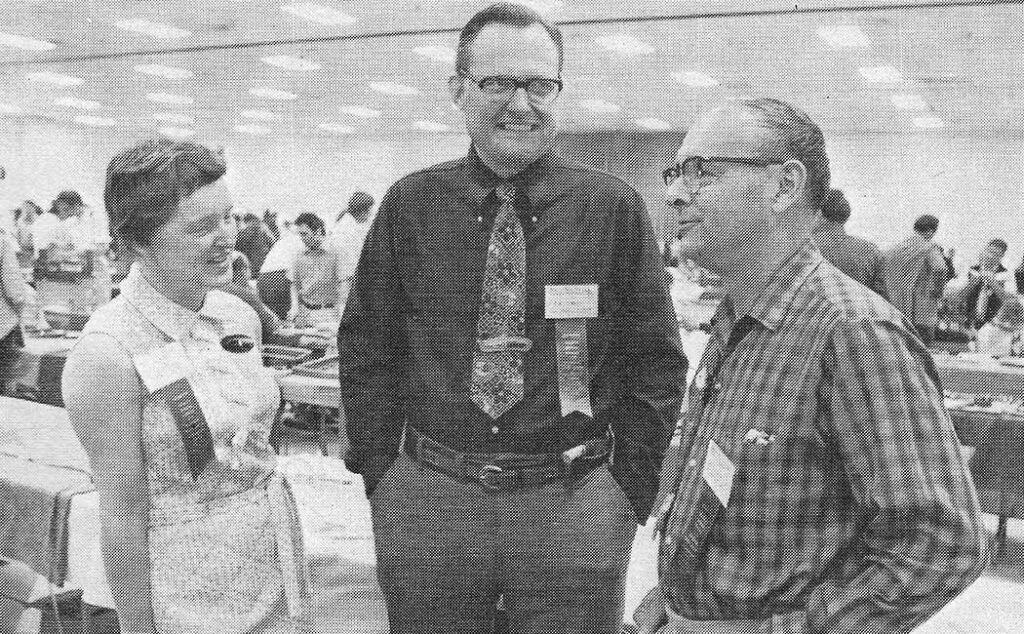
“That was a meaningful year,” Hughes remembered. “Ron Lake, Bob Loveless, Bill Moran and A.G. Russell are the most influential individuals in the history of custom knifemaking, and A.G. played a bigger role than a lot of people give him credit for. He saw the need to organize and there was a meeting in Tulsa in 1970, and the first Guild Show was in 1971, and it grew unbelievably. They met in Houston and there were about 20 or so makers, and then the next year the show was in Kansas City, and there were 40 or 50, and it just kept growing.”
According to B. R., damascus was a catalyst for revival in American bladesmithing. “The inclusion of damascus saved bladesmithing,” he said, “and there were fewer than 15 bladesmiths in America in 1973. The number was going down. There was Bo Randall and then Rudy Ruana as well, but just a few younger bladesmiths.”
The use of a wide range of new materials in the making of knives exploded in the 1990s and continues to this day. One of the latest examples is Bill Moran reintroduced damascus for knives at the 1973 Guild Show and the rest is history. Moran (right) observes another successful Guild Show with Betty and Ted Dowell at the ’74 event in Kansas City. (Sid Latham image), employed here by Gerry Michael on the blade of his Fancy Harpoon model. (Jocelyn Frasier image edit)
Then, he says, the founding of The American Blade weighed in. “That was immense,” he offered. “I started writing about knives in the early 1960s, and there were primarily just gun magazines. I wrote for Gun Week, doing some knife articles for them, but there was no knife magazine, and the people I wrote about were people I met at gun shows. Without a knife magazine, it made it tough to write about knives.”
Hughes added, “I was fortunate to be around the first meeting of the Guild and things like that.” Indeed, B. R. saw and wrote about history as it was made.
Knife Industry Ups and Downs
These days, the world of knives continues to expand, to change, to elicit praise and criticism. Britton has watched much of this evolution. “Quality Chinese repros are available at flea markets and gun shows for $15 to $40,” he observed. “Many knifemakers are designing knives for knife companies, further blurring the differences between handmade and factory/manufactured. The internet is being used extensively for marketing—from very ornate websites to knife forums. The ‘Show Calendar’ page in BLADE is crammed full of announcements of shows from San Francisco to Paris. Several knife dealers have created a secondary market, and literally thousands of knives are available for sale 24/7.”
Concurrently, Britton is excited about what he notices these days. “We’re seeing abrasive materials, grinders, CNC equipment, new steels, and exotic types of handle materials from paua shells to hippos’ teeth,” he noted. “Creative craftsmen are exploring new horizons with acrylics and phenolics and stabilized wood burls. We see something new at every show.”
Forged in Fire debuted in 2015 and since then has exposed millions of television viewers to knifemaking and bladesmithing on a weekly basis.
That, succinctly, is a strong indication of an industry, a passion, a way of life that continues to flourish despite the strain and stress that are natural byproducts of absolutely anything and everything that is alive. A half century from now there will be more milestones, more discussions and even greater achievement.
Members of the BLADE Magazine Cutlery Hall Of Fame® mentioned in the story and sidebar are Blackie Collins, Sal Glesser, Gil Hibben, B. R. Hughes, Billy Mace Imel, Ron Lake, Jimmy Lile, Bob Loveless, Bill Moran, Bo Randall, Rudy Ruana, A.G. Russell, Jim Sornberger, Bruce Voyles, Michael Walker and Buster Warenski.
25 Knife Industry Milestones
1973 Bill Moran reintroduces damascus for knife blades at the Guild Show 1973 The American Blade debuts 1976 Bill Moran, B. R. Hughes, Don Hastings and Bill Bagwell found the American Bladesmith Society 1981 Spyderco debuts the C01 Worker, the first knife with both a blade opening hole and a pocket clip 1981 Michael Walker introduces a folder with the linerlock mechanism 1982 First Blood and Jimmy Lile’s Rambo knife appear in theaters 1983 Michael Walker first uses titanium in the construction of one of his linerlocks 1987 Buster Warenski completes the King Tut dagger reproduction 1988 The Bill Moran School of Bladesmithing opens in Old Washington, Arkansas 1992 Bruce Voyles moves the BLADE Show to the Renaissance Waverly Hotel in Atlanta, where it opens to rave reviews 1990s An explosion in Crucible Particle Metallurgy and the so-called “super steels,” and such materials as carbon fiber, mosaic damascus and more revolutionize knifemaking 1990s Computer numerically controlled equipment, laser cutters and more for knifemaking begin to appear 1990s Internet knife web pages, knife discussion forums, knife instruction videos and more start making their mark Mid-1990s Tactical folders begin to dominate the custom and factory knife industries 1997 The BLADE Show moves from the Renaissance Waverly Hotel to the adjoining Cobb Galleria Centre and completes its ascendancy as the world’s most important knife event 1990s Chinese companies begin entering the factory knife business 1998 The American Knife & Tool Institute (AKTI), the oldest surviving knife advocacy group, debuts 2001 Terrorists bring down the Twin Towers and the knife industry reacts with a slew of military inspired knives, tomahawks and more 2006 The Knife Rights advocacy group debuts 2009 The knife industry unites to defeat an attempt by U.S. Customs to declare all one-hand-opening knives switchblades/automatics 2010s Social media begins taking the internet knife business to the next level 2010s Knife Rights and AKTI work to overhaul anti-knife legislation, including overturning automatic/switchblade bans and establishing knife preemption laws at the state level 2010s European knife manufacturers such as LionSteel, Fox Cutlery, Maserin and others begin winning more than their share of BLADE Magazine Knife-Of-The-Year® Awards 2015 Forged in Fire debuts and exposes millions of television viewers to knifemaking and bladesmithing for the first time 2020 The pandemic ravages the world and also the knife world, closing knife shows everywhere—including the BLADE Show 2020s The knife industry survives the pandemic, and, thanks to internet sales, even thrives in some segments—and knife shows begin to return




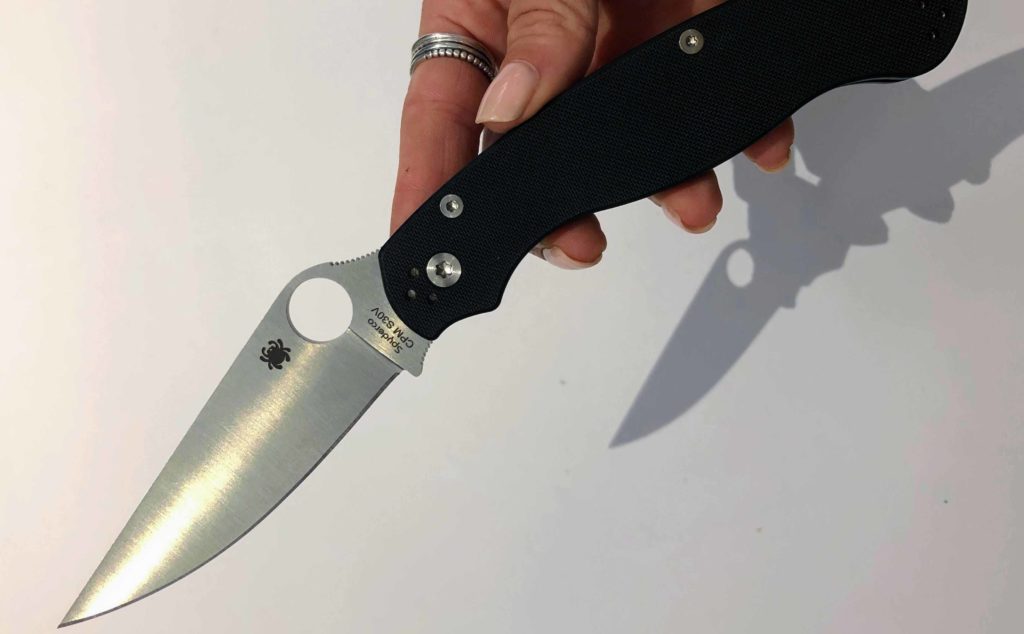 Spyderco Military 2
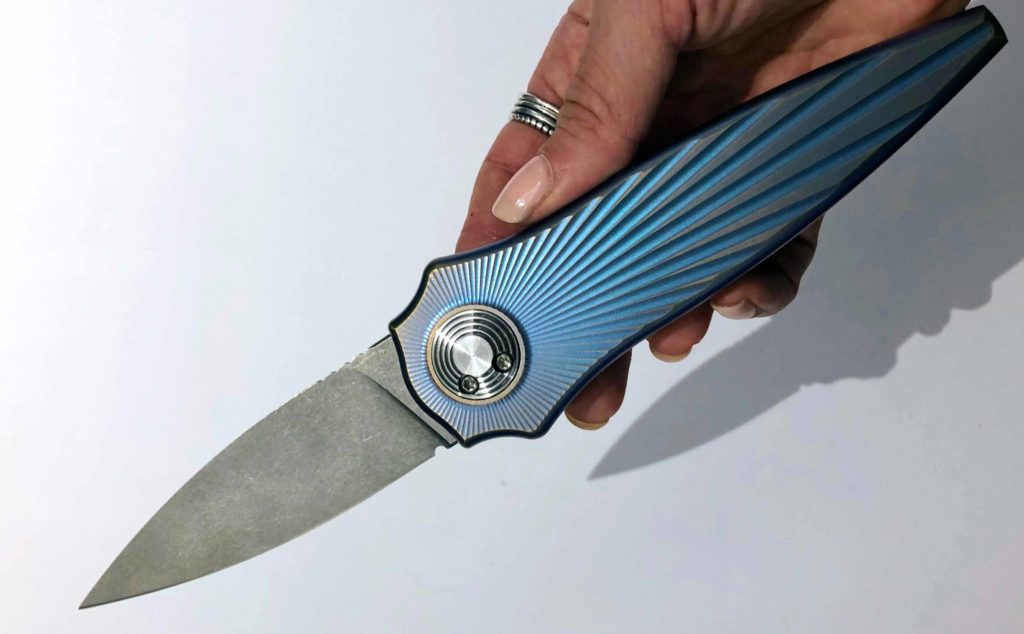 Asheville Steel Warlock
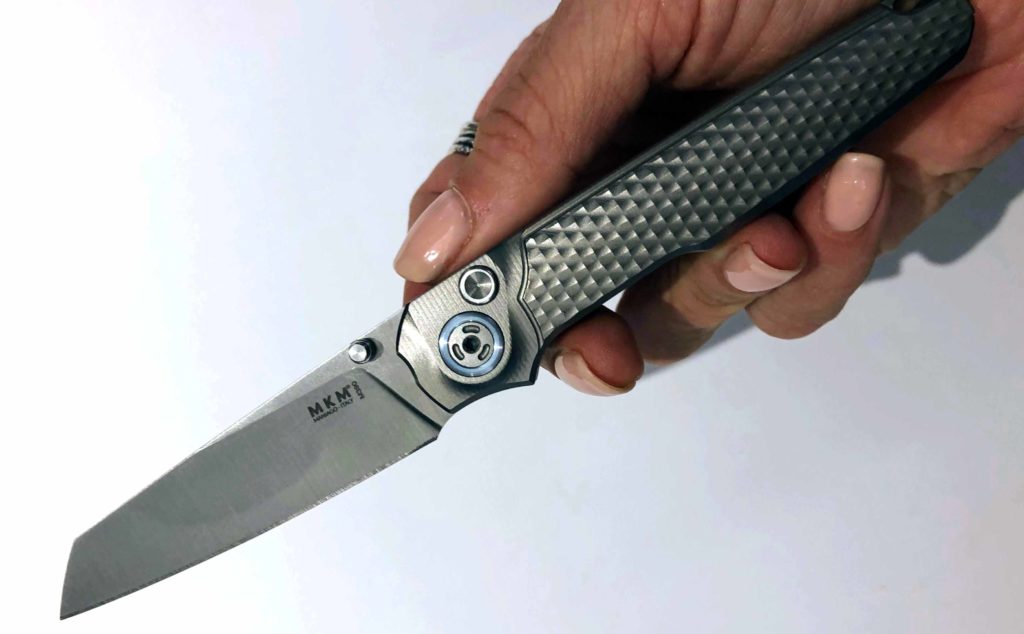 MKM – Maniago Knife Makers Miura
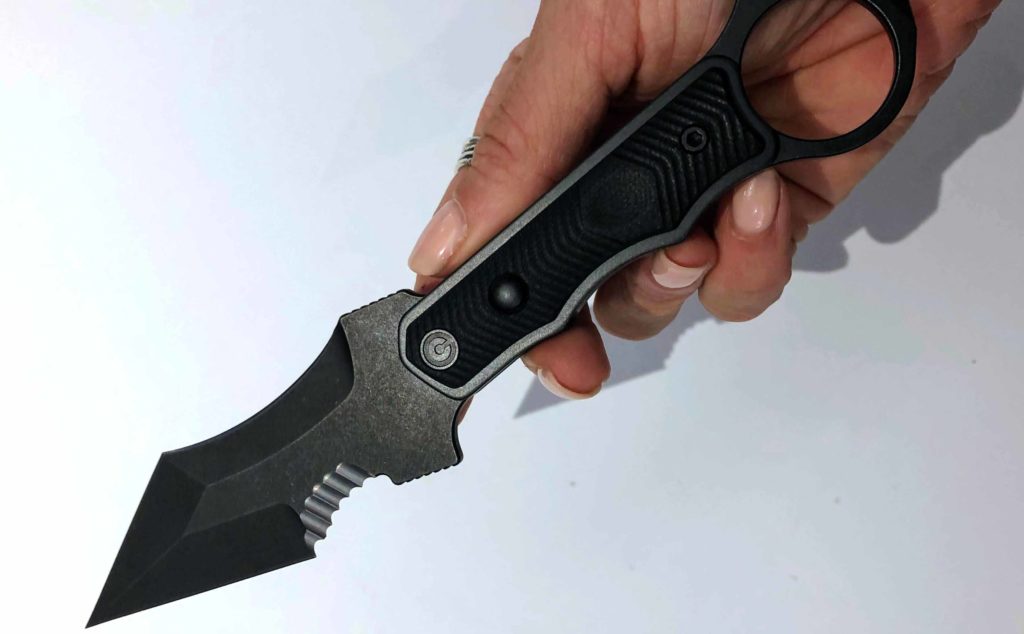 Civivi Orthrus
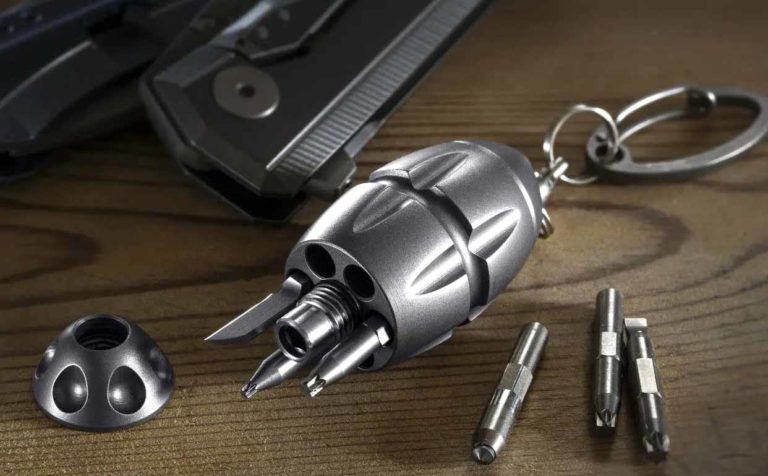 Lionsteel Eggie
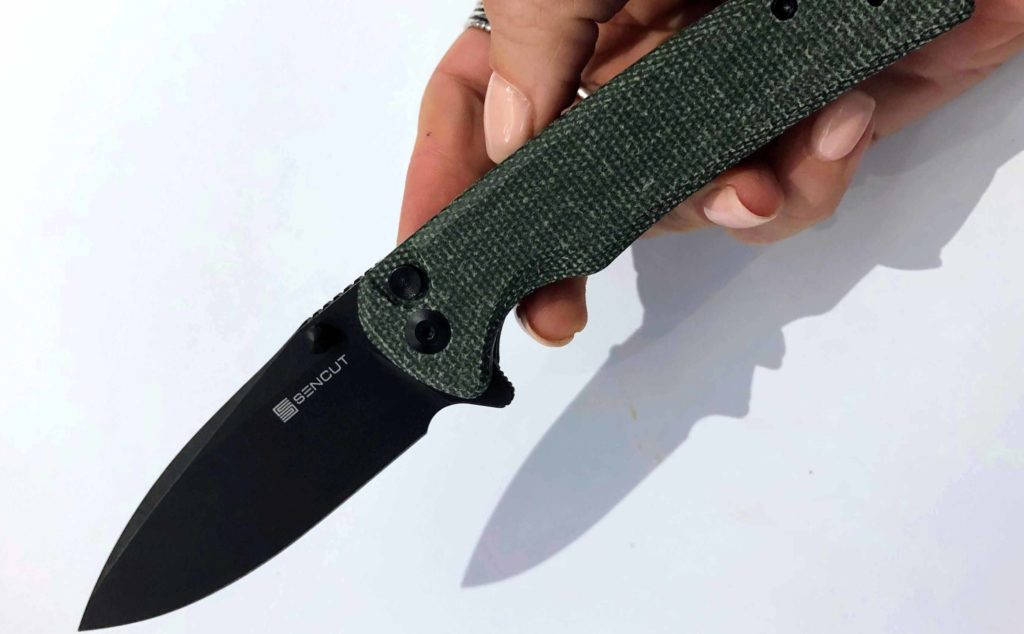 Sencut Sachse
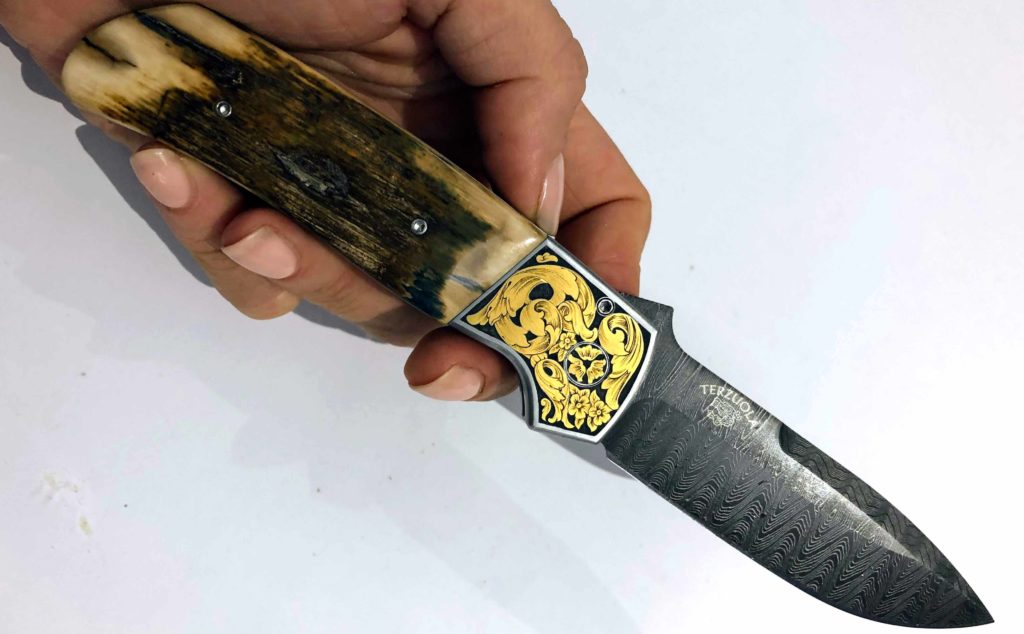 Pro-Tech Ultimate Collection Terzuole ATCF Auto
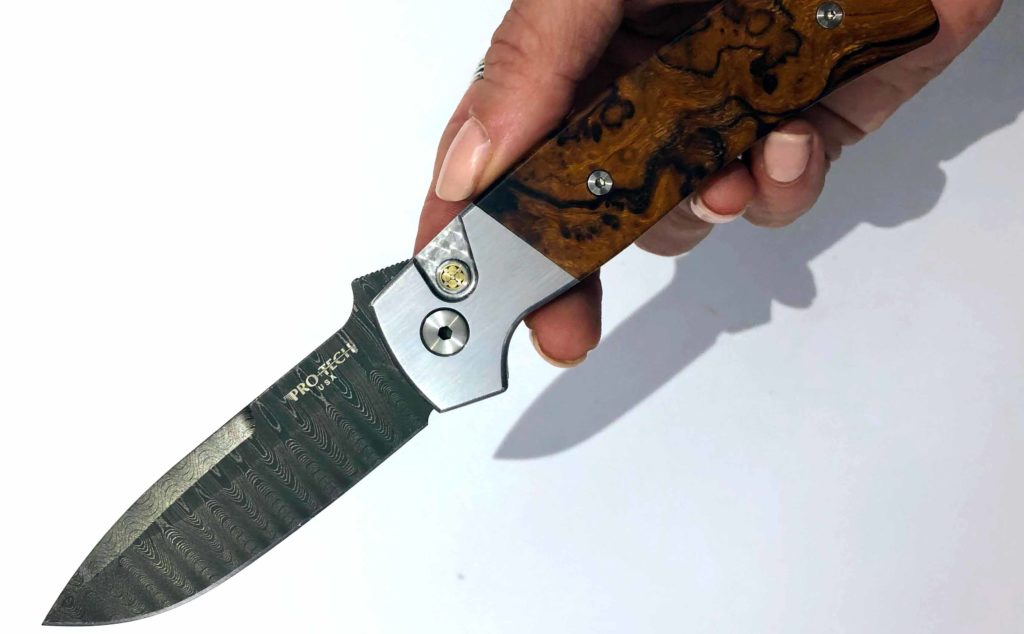 Pro-Tech Terzuole ATCF Auto
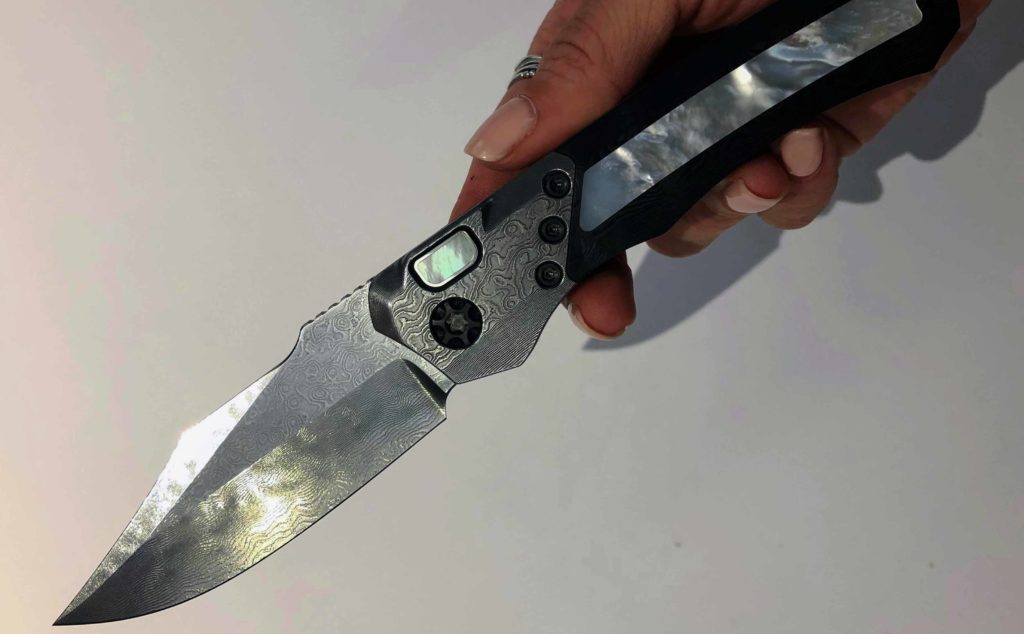 Heretic Wraith Auto
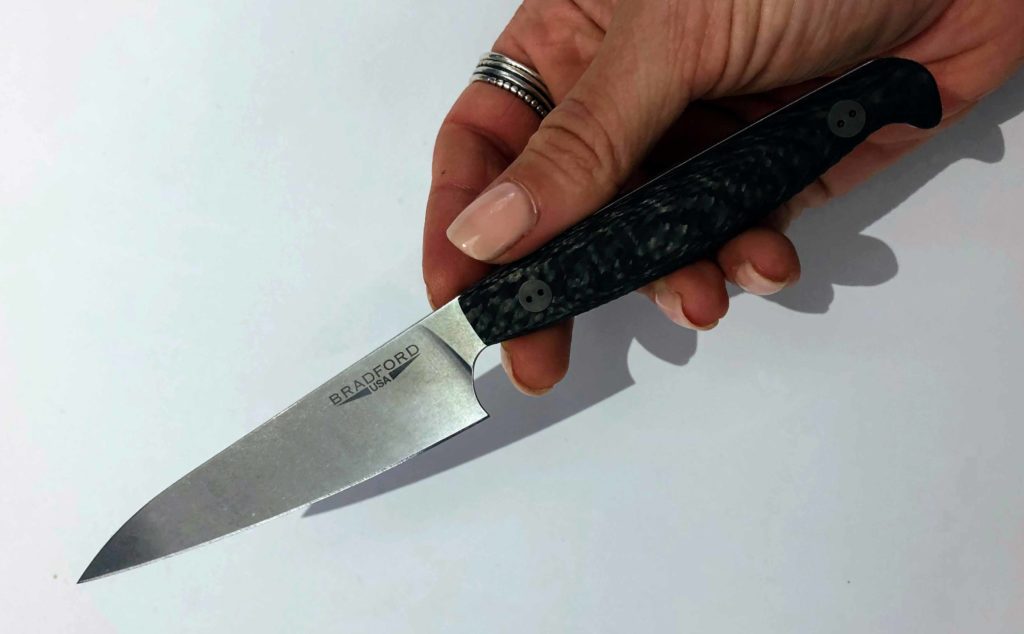 Bradford Paring Knife