
The BLADE Blogs

The blogs of theĀ BLADE editors, Steve Shackleford and Erin Healy.

Meet The Editors at The BLADE Show

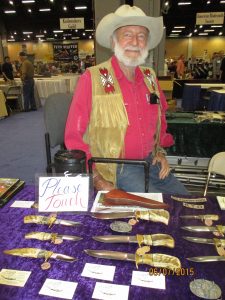
Fowler at BLADE Show
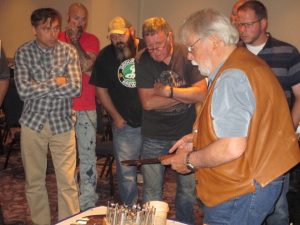
BLADEĀ® field editor Ed Fowler will hold down table 3N at BLADE Show 2017.

If you are one of thousands of knife enthusiasts worldwide who will attend the 36th Annual BLADE Show June 2-4, it’s time to start making your to-do list for the world’s largest and most important knife event.

In addition to all the knives and knife accessories, BLADE University classes, demos, cutting competitions, knife collections, knife judging competitions, BLADE Magazine Knife-Of-The-Year® awards, inductions into the BLADE Magazine Cutlery Hall Of Fame© and so much more are the people who make the show go.

There are oh-so-many—almost 1,000 booths and tables in all in the cavernous Cobb Galleria Centre show hall—including the world’s top makers, sellers and displayers of all things sharp. Among them will be three who on a regular basis help make BLADEĀ® Magazine the World’s No. 1 Knife Publication—BLADE Magazine field editors Kim Breed, Joe Szilaski and, health permitting, Ed Fowler.

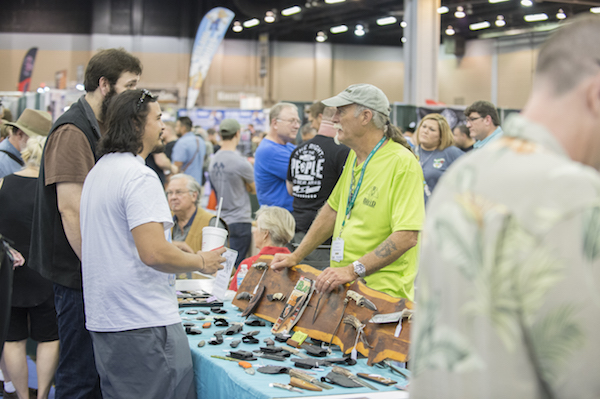
Szilaski at BLADE Show
BLADEĀ® field editor Joe Szilaski will exhibit at Table 3P for BLADE Show 2017.

A retired member of the 5th U.S. Army Special Forces group, Breed’s 20-year military career took him to various world hot spots, including the Gulf War in the early 1990s. It was while there that he wrote a letter to BLADE about his love for knives. One thing led to another and BLADE asked Kim if he would like to write for BLADE on a regular basis testing knives. He took over BLADE’s “Spec Sheet” department and has been testing and writing about knives for the magazine ever since. He also makes custom knives and will be displaying them, along with scrimshaw work by Mrs. Melissa Breed, at table 17G. Stop by and see them—and if you can, do it on June 2. That will be Kim’s birthday. Ask him how old he is—and be sure to duck afterward.

A High-Endurance Performance-Knife (HEPK) master smith, Fowler has been writing for BLADE even longer than Breed—since the late 1980s. BLADE got wind of him after reading a booklet he had written sharing his thoughts on all things knife, including how to use them, how they should be made and much more. Since then in his “Knife Talk” department he has exposed BLADE readers to his distinctive brand of writing and knifemaking, including his preference for 52100 ball-bearing steel, his multiple quenching of his blades, the HEPK courses he teaches at his Willow Bow Ranch in Riverton, Wyoming, and so much more. Visit him and his bladesmithing co-hort, Chris Amos (Chris also has written for BLADE), at table 3N. Also, be sure to attend Ed’s demo, “Choices The Maker And One Who Seeks a Knife Need To Make” show Saturday from 2:15-3:30 p.m. in Room 107. (Note: Ed has been experiencing some health problems of late but both he and we hope it will not prevent him from attending the show.)

Last among three BLADE field editors who will exhibit at BLADE Show 2017 is ABS master smith Joe Szilaski. A native of Hungary who was in-country during the Hungarian Revolution against the Soviet Union in 1956, Joe moved to America and has embraced all things USA, including bladesmithing. He has assumed the mantle of writing the BLADE “Question & Answer” department originally started by Cutlery Hall-Of-Fame member Wayne Goddard, and also teaches knifemaking and tomahawk making in his facility in New York state. In fact, he will teach the BLADE U. class “How To Filework Knives” on show Saturday from 8:30-9:30 a.m. in Room 109. His table is 3P, where he will be ably assisted by Mrs. Lori Szilaski.
Breed at BLADE Show
BLADEĀ® field editor Kim Breed (in ball cap) will be on duty at Table 17G at BLADE Show 2017.

It’s never too early to start planning your BLADE Show 2017 itinerary, and visiting three of the top BLADE field editors who also happen to be show exhibitors is as good a place as any to start. Meanwhile at least three other BLADE contributors—knifemakers Brian Goode (table 19G), David Lisch (13R) and RJ Martin (11M)—will be exhibiting. Also, other BLADE field editors who should be roaming the show hall will be Abe Elias, Dexter Ewing, Cutlery Hall-Of-Fame member B.R. Hughes and Les Robertson. Elias, in fact, on show Saturday in Room 107 will present the BLADE U. classes “Steel: The Heart Of The Knife” from 10:30 a.m.-12 p.m. and “The Best Edge For The Job” from 2-3:15 p.m.
Can You Define Knife Choil?

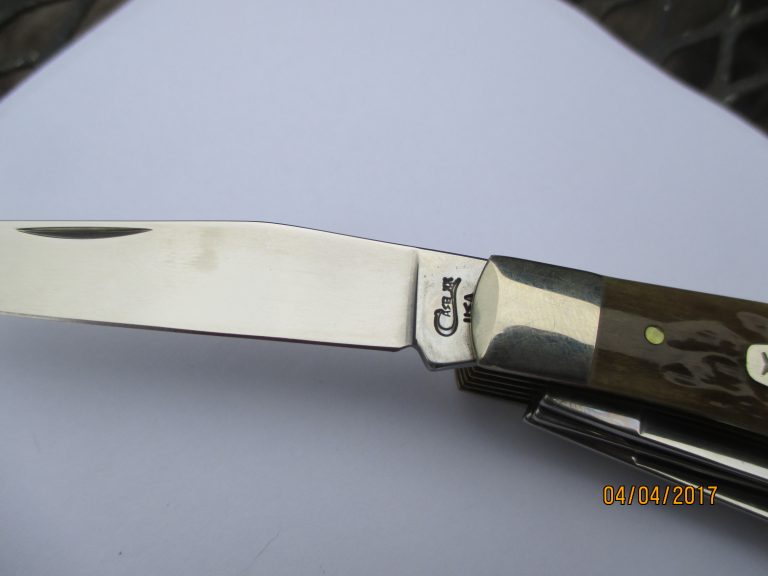
Choil on pocketknife
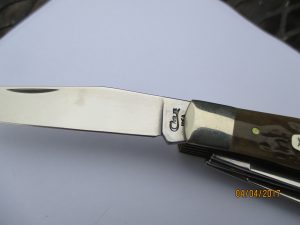
On a pocketknife blade, the knife choil is the notch between the cutting edge and the blade tang and serves to notify you where to stop sharpening the blade.
choil for the knife
When you think knife choil and pocketknives, Case immediately comes to mind.
knife choil
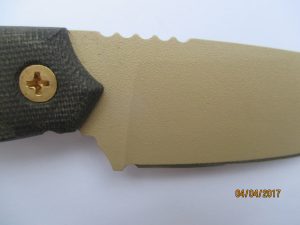
A classic example of a knife choil on a fixed blade is the notch here between the cutting edge and the ricasso or the blade tang of the Baja 3.0 by TOPS Knives.

Is a knife choil a nick, a notch, a finger groove or something else? And besides, what’s the difference between a nick and a notch?

What it is is one of those knife-specific terms that seems to evade proper definition by many, everyone from knife newbies to knife aficionados.

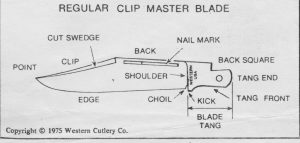
One definition for knife choil from an unknown source describes it as “a small notch between the edge and tang of the blade.” According to the “Knife Encyclopedia” on the website of A.G. Russell Knives, a knife choil is “the cut-away area between the edge and the tang of a pocketknife blade and between the edge and the guard of a straight (aka fixed-blade) knife. The choil may or may not have enough space for a finger. Its true purpose is to allow the edge to be sharpened all the way to the tang in a pocketknife and to the end of the edge in others. Any reference of choil and finger space or choil and handle is improper.” In an old issue of the American Blade, today’s BLADEĀ® Magazine, BLADE Magazine Cutlery Hall-Of-FameĀ© member Blackie Collins defined a knife choil as “the area immediately in front of the guard at the bottom of the blade. It is occasionally shaped to accept the index finger to facilitate a more secure hold on certain types of knives for various operations. It actually serves a more useful purpose as it allows the full length of the cutting edge to be properly sharpened.”

To expand on the definitions of both A.G. Russell Knives and Mr. Collins, while a knife choil may have enough space to accept a finger for certain types of cutting operations, such a capability is not the choil’s stated purpose. In some instances you may hear the term for such a feature called a finger choil. According to Russell’s definition above, such a reference is “improper.” In fact, sometimes what is incorrectly referred to as a finger choil is really more of a finger groove that spans the undersides of both the handle and the ricasso or the blade tang. Meanwhile, some new factory knives seem to be downplaying the knife choil if not eliminating it entirely.

Be that as it may, the chief purpose of the knife choil, as noted by the definitions of both Russell and Collins, is to allow the full length of the cutting edge to be properly sharpened. In other words, it is simply a small notch between where the cutting edge ends and the ricasso or the blade tang begins that indicates where you should stop when sharpening the blade with a stone, diamond-coated abrasive or what have you.


Maker Continues Laplander Culture with Sami Knives

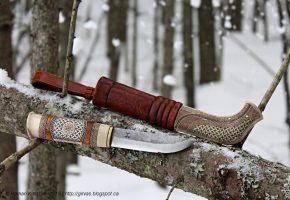
Roman Kislitsyn makes knives in Sami style. Sami people are native reindeer herders of northern Scandinavia.
This Roman Kislitsyn sheath is made in North Sami style with a pronounced hook, which interferes less when sitting. The 4-inch blade is made by Pasi Hurttila in 80CrV2 steel. The handle is reindeer antler and birch root burl.

Roman Kislitsyn grew up in Apatity in the Murmansk region of northwestern Russia. Close to Norway, parts of the area also include the lands of the Sami people (in the past referred to as Lapps or Laplanders) which traverse the Kola Peninsula of Russia, and the northern and coastal regions of Finland, Sweden and Norway. Roman and others in his family are geologists so he spent much of his childhood with outdoorsmen, hunters, fishermen and those expert at surviving in the Russian wilderness. Always an admirer of Finnish and Swedish knives, Roman was most drawn to the beauty of the knives made by the Sami, the native reindeer herders of Scandinavia.

Russian Roman Kislitsyn makes knives in the style of native Scandinavians.
Roman Kislitsyn makes Sami-style knives.

Roman’s exposure to knives and survival equipment, combined with a love of crafting things with his hands, led to his first attempt at knifemaking when he was 15 or 16. ā€œIt had a blade made of high-speed steel from a piece of mechanical saw, wooden handle made of birch burl, and simple leather sheath, but I was very proud of myself,ā€ Roman related. He made a few more knives, left to attend university and life intervened. A few years ago, he returned to knifemaking and cannot stop.

The traditional Sami lifestyle depends on reindeer herding, hunting and fishing. Roman explained that the design of their knives developed over the course of hundreds of years. They also mastered their own style of decorating things made of reindeer antler. ā€œI like to use Sami-style decoration on my knives too. Even though I’m not Sami, but this makes me feel my connection to the land where I grew up,ā€ Roman stated.

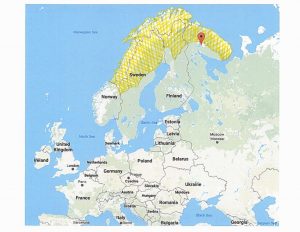
Native Scandinavians roamed the areas in yellow, approximated on this map.
Sami lands, in yellow, historically reached farther south, encompassing Roman’s home region, marked in orange.

Roman makes two types of knives, either Sami style or Finnish puukkos with Sami-style carvings. He does not make his own blades. Some Sami blacksmiths existed, but using blades made by other makers was, and still is, a common practice.

Roman works with high-carbon steel blades made by his friend Alessio Salsi in Belgium. Lately, he’s also being trying laminated and pattern-welded steels. Since Roman makes Scandinavian knives, the grinds are all Scandi. He used to employ blades made by Pasi Hurttila from Finland before Pasi stopped making knives. Roman also used blades made by Randal Graham in Nova Scotia. Randal took a hiatus from knifemaking but has now returned, and Roman hopes to resume collaborating with him.

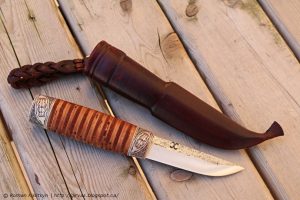
Roman Kislitsyn designed this knife with a stacked birch bard handle for feel and warmth..
Roman Kislitsyn put a stacked birch bark handle on this 3.2-inch Pasi-Hurttila-made 80CrV2 blade. Carvings on the antler are in Sami-style. Bark handles are popular for Finnish puukkos; they never get slippery or cold, even below freezing.

Roman is self-taught, learning everything about knifemaking and carving through the Internet, forums and social media. With the exception of light use of a hand-drill and a Dremel, Roman uses only hand tools. ā€œNo grinders, sanders, band saws, nothing. Only files and rasps, only hardcore!ā€ he explains. Roman’s goal is to make ā€œfunctional art,ā€ as one of his customers put it, and not a knife that just sits on a shelf. His favorite handle materials are reindeer antler in combination with birch burl and-or bark, which are all traditional materials in Sami-style knives. Maker’s list price starts at $450 US.

Roman left Russia in 2002 and now lives in Nova Scotia, but you can converse with him through forums like British Blades, Canadianknifemaker.ca and the Russian forum zadi.ru. His website and blog are at Girvas. ā€œGirvas is a name of a lake in same region where I’m from,ā€ Roman added. It is the Russian pronounciation of the Sami word hirvas, meaning “reindeer stag.” You can visit Roman on Facebook at Roman Kislitsyn or on Instagram @roman.kislitsyn. You can e-mail him at [email protected].

Ā Get Your 2017 BLADEĀ® Show Knife

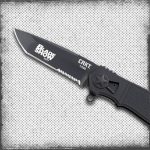
Ken Onion and CRKT collaborated on the innovative Homefront knife.
The CRKT Homefront is the 2017 BLADE Show knife, and won last year’s Most Innovated Imported Design.

The CRKT Homefront is a Ken Onion-designed knife that won Most Innovative Imported Design at last year’s BLADE Show. The field-strip technology allows for easy cleaning anywhere, without tools. Get yours now for $70 and you’ll save 30% off this true collector’s item.


Southern Grind Marine Pens Poem Of Combat

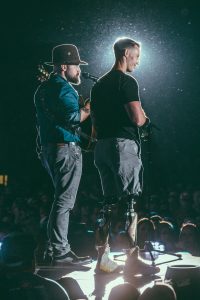
Zac Brown shares the stage with Southern Grind spokesman, Johnny Joey Jones.
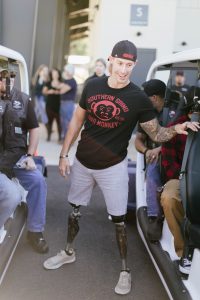
Zac Brown’s Southern Grind deploys formidable spokesman, Johnny Joey Jones, a double amputee Marine staff sergeant.

Johnny Joey Jones, Triple J to his friends and Explosive Ordnance Disposal technician to his Marine Corps brethren, wrote a poem about a particular day, a particular explosion, a particular knife, while on patrol in Afghanistan.

Jones, a double amputee and motivational speaker, is the spokesman and more for Zac Brown’s Southern Ground, which is an umbrella company that represents numerous 100-percent American-made and -sourced products, including the knife company, Southern Grind. Proceeds from the sale of these patriotic items benefit Camp Southern Ground, which strives to give kids of all races and religions, and especially those with neuro-developmental challenges, the positive influence of a camp experience. The camp also helps military families by offering the same experience to children who are dealing with a deployed, injured or deceased parent.

In May 2010, about three months before Staff Sergeant Jones would step on an IED and lose both legs above the knee, he was on patrol with a group of Marines. (In the Corps, EOD units go where they are needed, with whom they are needed.) They came to a small canal. ā€œThere is always lots of learning,ā€ Jones said, and in this case, it was that you don’t want to use foot bridges to cross waterways. Such crossings would create bottlenecks, ideal spots for the enemy to booby-trap.

Double amputee Johnny Joey Jones is a motivational speaker and Zac Brown Southern Grind spokesman.
Prior to losing both legs above the knee Johnny Joey Jones was an Explosive Ordnance Disposal technician in Afghanistan.

To get across, first the sweeper, the Marine with the metal detector, went and then the mine-detecting dog and his handler went. ā€œWe think the dog stepped on the mine,ā€ Jones said. ā€œThe Water So Coldā€ tells the story.


The Water So Cold

By Johnny Joey Jones

They say it passes

The pain so cold

Even atlas shrugged

Or so I’m told


He was out of sight

Walking on water

A fallen tree bridge

A bomb rang louder


His steps stopped so abrupt

Smoke and dirt were to breath

Gone in an instant

His bloody face screamed


I still see his face

Bloody and scared

The water so deep

Wet blood in his hair


He was screaming so loud

When I jumped in

I grabbed his body

I reached for his hand


The water a mess

Water touching my chin

I opened my mouth

The water rushed in


He yelled and screamed

I panicked and pulled

This boy would not die

In water so cold


I knew I had to do it

I was so frightened beneath

I had to reach down through it

The water so deep


I stalled for a moment

Whispered,ā€ it’s gonna be okā€

ā€œI’ve got you, they’ve got youā€

He quieted his bloody face


They came to the bank

Reached down and pulled

This time I didn’t think

Lifting him high once more


In water so cold

I grabbed at his knees

Scared and surprised

I felt legs beneath


My mind rejoiced

His bloody face still screamed

Yet, his hand, his face

Torn open and bled


In the mix of it all

His knife in my hand

I meant to cut off his gear

He was missing only a hand


The bird came loud

So fast and fluttered

The shots rang out

From afar, from cover


I couldn’t shoot back

The bird flew, scattered


Frantically I scratched


To climb out of the water


His gear still a drift

His knife in my hand

Miles still to sift

Of this mine filled land


Days later, I stalled

Reached down, nervous sweat

My legs were still their

His knife, still wet


I gave his knife to the man

ā€œTell me he livedā€ I begged

ā€œHe lost a hand and an eye-

But he’s still got his legsā€


Joey Jones mentored other recovering veterans and went on to become a motivational speaker.
Joey Jones not only took the lead in combat, he became a mentor to recovering wounded veterans like himself.

The knife was a folder issued to Marines. ā€œI was going to cut off his gear, but guys reached down to pull him out. Days later I realized I still had his knife in my cargo pocket,ā€ Jones said. ā€œI gave it to his first sergeant to give it back to him,ā€ Jones said. That first sergeant is the man in the poem of whom the speaker asks about the Marine’s condition.

Jones has had a poetic streak most of his adult life. Since separating from the service, he has earned his Bachelor’s degree from Georgetown University in public policy. ā€œI don’t go back and edit,ā€ Jones said. He wants the poems to represent him authentically, as he was at the time.

Check back to read more about this inspirational wounded warrior.

To learn more about how Jones and Brown met and the knives made by Southern Grind, be sure to subscribe to BLADEĀ® Magazine.


‘Fighting Folders’ Offers Class Instruction At Home

'Fighting Folders' is cheaper than a class and can be watched repeatedly from the comfort of your living room.
In “Fighting Folders” Michael D. Janich instructs viewers on the myths surrounding folding knives and how to employ them in a self-defense situation.

You don’t have to have been in combat to know that sometimes Plan B—the knife—can quickly become Plan A when it comes to self-defense. Often our everyday carry is a folder. This DVD can get you started on proper grip, one-handed openings and other tactics using folding knives. The $39.95 price is less expensive that a class and can be watched repeatedly in the comfort of your home.


Spyderco’s Knife That Changed Knife History

Spyderco in BLADE
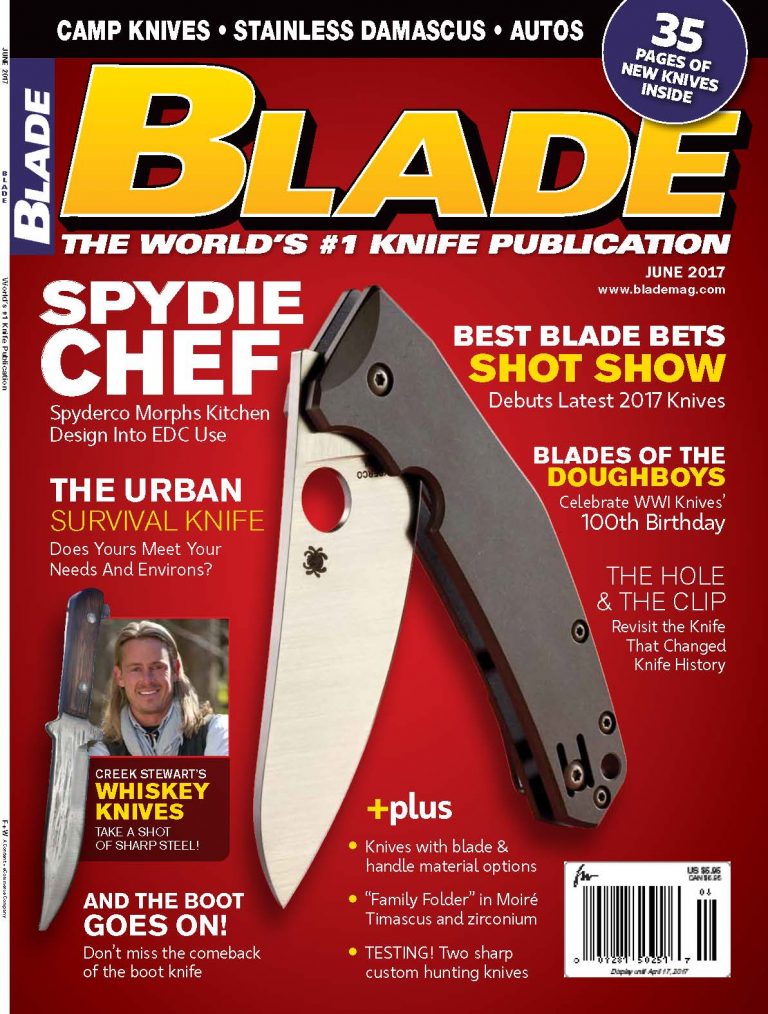
Spyderco’s knife that changed knife history is a headliner in the latest BLADEĀ®, on newsstands now!

Spyderco’s knife that changed knife history, Creek Stewart of Fat Guys In The Woods fame and his knives, the top knives of the SHOT Show and more highlight the latest issue of BLADEĀ®, on newsstands now!

Spyderco is celebrated worldwide for its signature folders with the hole in the blade and also a pocket clip and serrations. The first-ever Spyderco knife with the hole and the clip was the Worker, which debuted in 1981. Mike Haskew visited with BLADE Magazine Cutlery Hall-Of-Fame© member Sal Glesser for the back story on the knife that changed the way an industry made and used knives forever.

In addition to his TV show on The Weather Channel, Stewart is known for his survival skills—and what’s survival without knives? While Creek gave knives away to the top “survivor” at the end of each episode of his show, he decided he wanted to take things a step further and work with a small American business to produce a line of knives. Whiskey Knives from Hank Gevedon’s Reptile Toolworks are the result and the focus of Erin Healy’s “Samurai Woodsman” on page 12.

Along with the annual BLADE Show—which is set for June 2-4 at the Cobb Galleria Centre in Atlanta—the SHOT Show is the place where many factory knife companies debut their new knives for the year. Check out the hottest knives of SHOT, along with a number of new companies under new flags, in the story on page 26.

There’s much more in the latest issue, including tests of camp knives, custom hunters and the return of an old friend—the newest factory boot knives; the urban survival knife and whether yours meets the demands of your environment; those who forge and sell stainless damascus to knifemakers worldwide; on the 100th anniversary of the USA’s entry into World War I, the first of a two-part story on the knives carried by U.S. Army personnel, aka The Doughboys; and much more, all in the latest issue of BLADE, available in the digital edition and also by subscription.

Irishman uses fossilized bog oak for knife handles

Paddy Smyth of Symth Knives uses a flat grind on this utility knife.
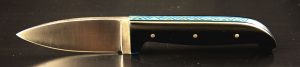
Smyth Knives’ Flat-Grind Utility Knife is made using O1 tool steel, black G10 scales, and blue liners. The blade is 3 inches, and the knife is 7.5 inches overall.

Irishman Paddy Smyth of Smyth Knives in County Roscommon, Ireland, sells 90 percent of his knives through his website to customers in the USA. The other 10 percent are purchased through The Quiet Cailin Studios in Cong, County Mayo, where ā€œThe Quiet Man,ā€ starring John Wayne and Maureen O’Hara, was filmed. Some even incorporate ancient bog oak.

Irish Eyes Will Smile Over Smyth Knives

But it was another movie that sparked a love of knives in Paddy growing up. He watched wide-eyed as the work of Gil Hibben’s was deftly wielded in ā€œRambo III.ā€ It is ā€œmy favorite knife of all time, so I have huge respect for [Hibben’s] work,ā€ Paddy commented. He had a week-long visit last year from Jeff Knox,  who trained with Hibben in the US. ā€œHe has been a great help to me also with advice and sourcing materials as its hugely difficult to get materials in Ireland,ā€ Paddy added.

Paddy Smyth of Smyth Knives feels at peace when working in his knifemaking workshop.
Paddy Smyth lives in County Roscommon in Ireland and undoubtedly with a name like Smyth has knifemaking in his blood.

He also mentioned that Walter Sorrells’ YouTube channel has been helpful and inspirational.

However, Paddy is a self-taught knifemaker and much of his learning has been by trial and error over the years. ā€œI continue to learn,ā€ he noted. He was trained as a chef and butcher and always had a keen interest in hunting, so he was intrigued by what made a high-quality knife. ā€œSo, I basically decided to have a go at knifemaking and caught the knifemaking bug,ā€ he said.

Paddy concentrates on compact pocket and neck knives, bushcrafting and hunting/skinning knives. He makes specialty chef knives to order to client specifications. His favorite steels are O1 an Niolox stainless. He appreciates the consistent finish and heat treat he gets using these steels.

He likes three grinds: Scandi for his bushcrafting blades because it’s easy to maintain an edge; and flat and hollow, according to customer preference, because they both work well for his hunting and skinning blades. For bushcrafters, he chops and batons wood to test for toughness, and then fine-carves paper to verify sharpness. Cutting heavy cardboard with its abrasive quality helps him get a feel for how long his blades will stay sharp. He does ensure his flat- and hollow-ground blades can handle the detailed work of skinning and boning.

Everyone's Irish on St. Patrick's Day, so feast your eyes on these blades from Paddy Smyth on the Emerald Isle.
The Claw by Smyth Knives, left, is 5.25 inches long, with a 2.2-inch cutting blade. It’s perfect for close skinning/boning/gutting with complete one-finger control.

ā€œMy favorite handle material is ancient Irish bog oak, which can be up to 10,000 years old. It finishes really well and has beautiful character and history,ā€ Paddy explained. ā€œIt’s very difficult to work with as it’s so hard it’s almost fossilized. And it’s becoming harder to find good pieces. It’s very hard on machinery and tools, but the work is worth the finished product.ā€

There are no knife shows currently in Ireland, so Paddy sells his work online at www.smythknives.com. Prices range from 90 to 500 Euros plus shipping with discounts for repeat customers. Also, check out the boutique artisan gallery in County Mayo where Smyth Knives are also sold on Facebook. Smyth Knives on Facebook and @smythknives on Instagram are chock full of additional photos and videos. You can call Paddy at 00353 87 6281252.

All Smyth Knives are completely handmade and heat-treated in house. Leatherwork is specific to each knife, so no two creations are the same. Paddy is a retail manager for an oil company based in the west of Ireland. He lives in Roscommontown with his wife, Edel, and their three boys, Shane, Darragh and Cian.

Patty Smyth uses detailed file work on the spine of some of his knives.
The ornate file work on the spine of this knife by Paddy Smyth in County Roscommon, Ireland, is reminiscent of a Celtic pattern.

ā€œWhen I started making knives, I realized I had found something incredibly natural to me, as if I was meant to do this or was maybe in my blood, as my family name is Smyth,ā€ Paddy noted. ā€œI’m completely at peace when I’m in the workshop.ā€


Get Your 2017 BLADEĀ® Show Knife Now!

Ken Onion and CRKT collaborated on the innovative Homefront knife.
The CRKT Homefront is the 2017 BLADE Show knife. Be sure to get yours now.

CRKT and Ken Onion took home the Most Innovative Imported Design award at the 2016 BLADE Show for the groundbreaking Homefront. Now the Homefront is the official knife of the 2017 BLADE Show. This is a limited run of 300, so hurry! And at $70 you’ll be saving almost 30 percent.

BLADE University Sets New Schedule

Hayes and flippers
ABS master smith Wally Hayes will show you how to use simple tools to make a throwing knife at the 4th Annual BLADE University. Here he teaches flipper folders at last year’s BLADE U.
4th Annual BLADE University
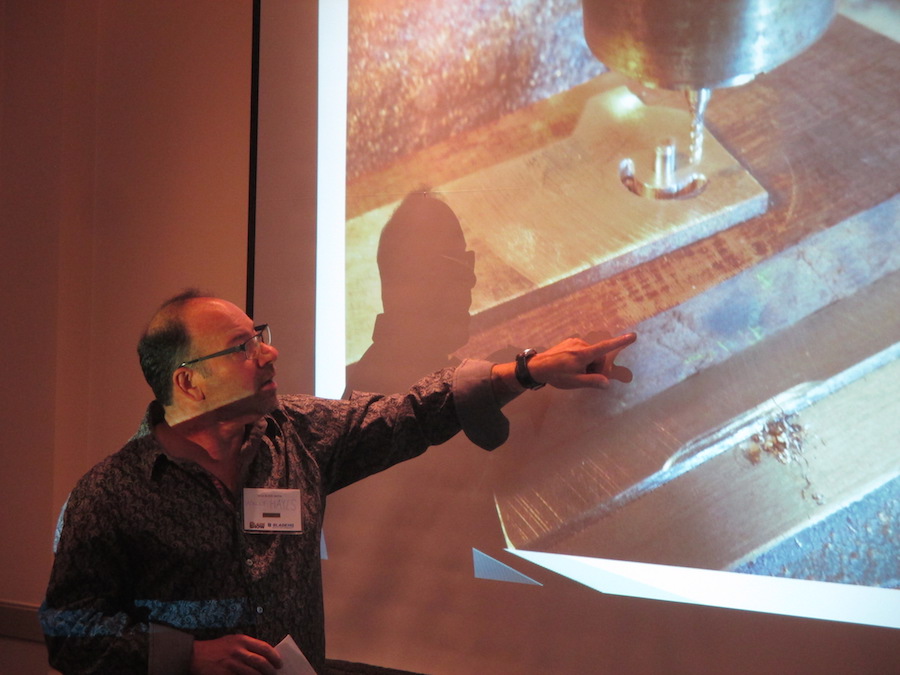
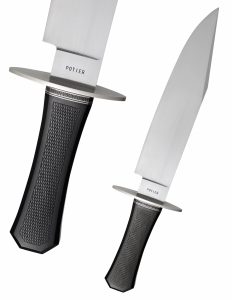
The 4th Annual BLADE University will feature such classes as how to checker knife handles taught by ABS master smith Timothy Potier.

The 4th Annual BLADE University will offer knife enthusiasts an almost completely overhauled curriculum of classes on the subject of knives and knifemaking June 1-3 in conjunction with the BLADE Show at the Cobb Galleria Centre in Atlanta.

Beginning the day before the BLADE Show and ending BLADE Show Saturday, this year’s BLADE University offers a wide-ranging selection of courses on how to make knives—including blade grinding, handle checkering, embellishment, color-case-hardening knife parts, chatoyance and others—all about blade steels, how to use knives, how to price them and much more.

ABS master smith (MS) Timothy Potier will kick off the instruction in Thursday’s “Knives The ABS Way” with his class on how to checker knife handles, followed by fellow MS Jim Rodebaugh‘s “How To Design A Purpose-Built Knife” and “How To Etch and Polish a Damascus Blade.”

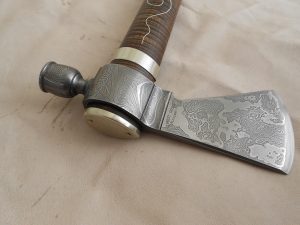
In his fourth appearance for BLADE U., MS Joe Keeslar will show you how to make a brut de forge knife, and ABS journeyman smith (JS) Butch Sheely will end the day’s classes with his tutorial on how to make a pipe tomahawk.

Friday’s instruction will begin with MS Joe Szilaski‘s class on how to filework knives and Tom Krein‘s three-part class entitled “How To Grind a Blade.

4th Annual BLADE University.
ABS master smith Joe Keeslar will teach you how to make a brut de forge knife at the 4th Annual BLADE University.

In the last two parts of his class Tom will demonstrate how it’s done on a Burr King grinder under the Burr-King-sponsored tent in “The Courtyard”—the adjoining parking lot of the BLADE Show host hotel, the Renaissance-Waverly.

Other classes will include two by knifemaker/BLADEĀ® field editor Abe Elias: one on how blade steel is made and blade geometry and how it affects edge retention, and the second on which blade edge and grind is best for which cutting job.

MS/BLADE contributor Wally Hayes will show you how to use simple tools to make a throwing knife, and MS Steve Culver will demonstrate how to design a slip joint with a half stop. Niagara Specialty Metals will wind up the day’s instruction with a class designed for the veteran knifemaker and novice knife enthusiast alike that will include a discussion on the properties of various elements in the steel, proper heat treating, tempering and what it does to the steel, CPM vs. air-melt steels and more.

Saturday’s final sessions will commence with “Knifemaking for Kids” taught by Jason Brous. (Youngsters need not be accompanied by a parent/guardian, though if the youths are so accompanied the parent/guardian will be admitted free of charge.)

Knifemaker Grace Horne of Sheffield, England, will conduct a class on how to make one of her specialties: custom scissors. Knife and sword maker Wally Hostetter will present a two-part class on how to do the Japanese handle wrap, or tsuka maki, and knifemaker/U.S. Marine veteran Les George will show you how to color-case-harden knife parts—that is, the process of adding a multi-colored hard surface to mild steel for use in various knife fittings.

make pipe tomahawks
Learn to make a pipe tomahawk in the style of ABS journeyman smith Butch Sheely at the 4th Annual BLADE University.

JS Brian Thie‘s class will cover how to give damascus blades chatoyance—an effect that exhibits an almost mirror-polished look within the damascus pattern itself. MS David Lisch will present a class on how to make the best stag handle, including sharing his “tricks” in working with the material. Knifemaker Johnny Stout‘s class will be on how to price custom knives, including actual costs in building knives, how to price the knives to make a profit (or at least break even) and more. And, finally, knifemaker L.T. Wright of  L.T. Wright Handcrafted Knives will present “Draw It, Grind It, Sharpen It: The Beginner’s Guide to Knifemaking,” which will feature knives in various stages of completion to show you how your knife should look all along the way to a finished product, with L.T.’s helpful insights and educational visuals.

Visit BLADE U. for enrollment information, dates, times, classroom locations and more.

Advertisement

Must Read Articles

Read this before you make a knife

Knifemaking 101 – Read This Before You Make a Knife

  by Wayne Goddard My experience has taught me that there's nothing like digging in and getting started. I've often said the hardest part of the...
how to forge damascus steel

How to Forge Damascus

Advertisement
Advertisement