The BLADE Blogs

The blogs of the BLADE editors, Steve Shackleford and Erin Healy.

Benchmade: Eli Gonzalez Named Program Manager, Special Operation Forces

June 10, 2010, OREGON CITY, Ore.Benchmade
Knife Company
is proud to announce Eli Gonzalez as the new Program Manager of Special Operations Forces (SOF) on their Federal Government team.

Mr. Gonzalez
brings twenty years of U.S. Army Special Operations experience to Benchmade. For the past five years, he served as Business Development Manager for ATK Tactical Systems/Eagle Industries Inc. Prior to that, Mr. Gonzalez worked with SAAB Technologies, as the Program Manager for Special Operations in charge of Special Operations Signature Management initiatives.

“I
am honored to be part of the Benchmade team. I look forward to strategically expanding Benchmade’s brand within the federal government markets,” says Mr. Gonzalez.

“Eli comes to Benchmade with many
proven successes and a solid reputation in the industry,” says Mike Nack, Fed/Gov Sales Manager. “His knowledge and expertise will be strategic to Benchmade’s growth and development among our Federal Government team.”

Eli will reside in Fayettecille, NC
outside of Fort Bragg, home of the 18th Airborne Corps and the U.S. Army Special Operations Command.

A Great Multi-Use Big Knife

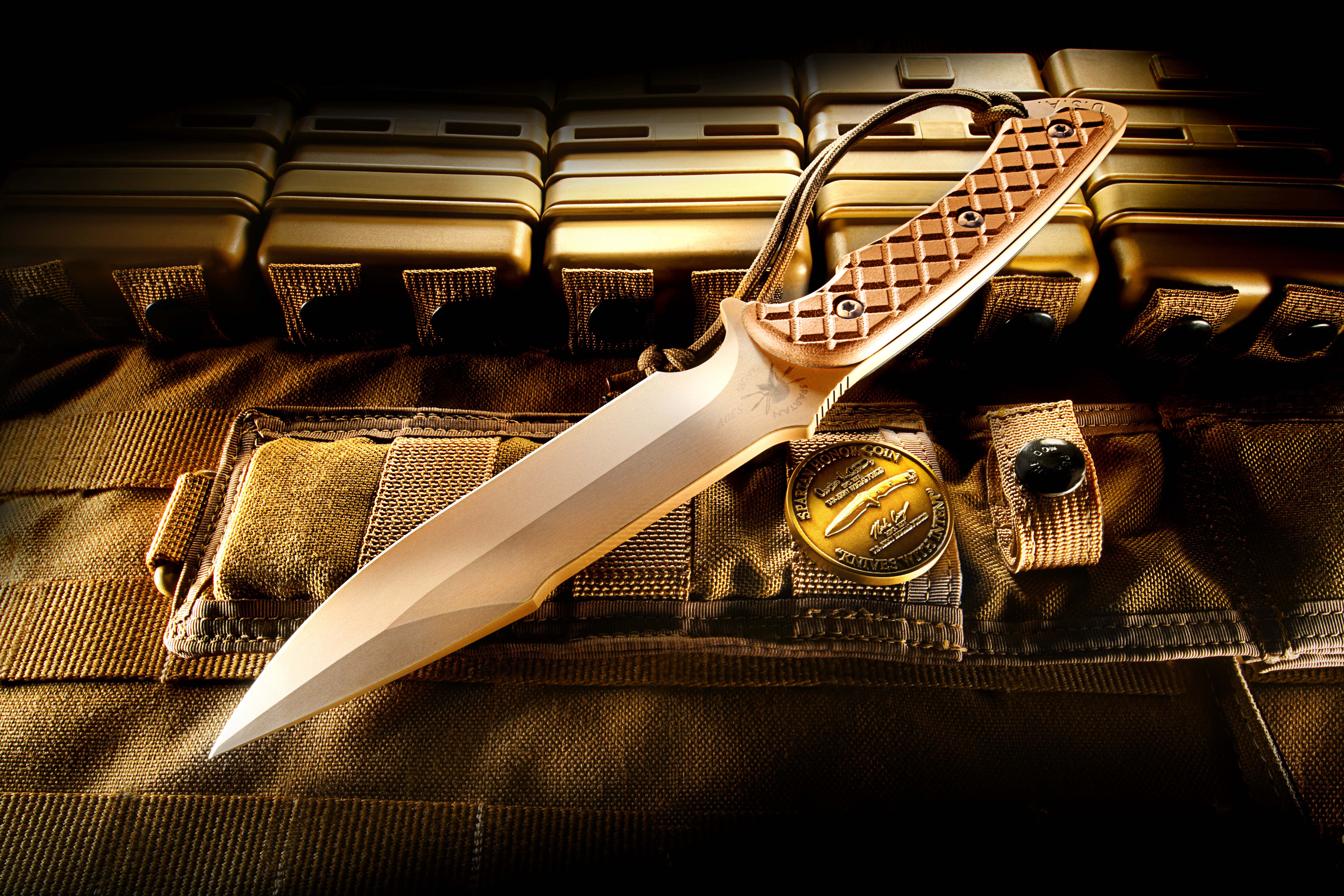
Spartan Blades’ Horkos takes everything the author dishes out—and then some.

By MSG Kim Breed, 5th Special Forces (retired)


It is always a good sign when you enjoy the feel of a knife, and that is the way it is with the Horkos from Spartan Blades. Featuring a slim handle and nothing sharp except for the edge, it was very lively in my hand. The edge was extremely sharp out of the box.


Like Peelin’ Taters

The Horkos has a finger-notch choil so you can choke up on the blade for more control. This worked perfect for slicing through plastic board. I had to move my holding hand quickly so I did not shave off part of my knuckle! It was like using a potato peeler—real smooth and fast. I went to regular cardboard and the material did not last very long under the blade’s still razor-sharp edge.

My arm wore out before the edge did on the 3/8-inch sisal rope—160 crunching cuts. Next up: the ¾-inch manila rope. I hit 50 cuts before I started to feel the edge slacken somewhat.

The finger-notch choil came in handy once again as it made whittling pine very controllable and comfortable. After I built a nice pile of curly-cues on the garage floor, I locked a piece of pine in my vise and started whacking. The Horkos chopped very well even though the balance is in mid-knife. I like a bit of blade-heavy balance for chopping. The Micarta® slabs were grippy but did not wear my hand out. There were no hot spots as all the exposed steel is softened/rounded. I like this knife.

I cut some old river cane I picked up during high water this past spring. The cane was covered with silt and sand—just what I needed to challenge the Horkos. It cut the cane with no problem and I finally managed to put a few blemishes in the very tough SpartaCoat finish.


To The Point

The edge was still holding up and it was time to work the point a little. I proceeded to stab the Horkos into and through the Yellow Pages—746 pages plus another 3/8 inch into the underlying plywood bench top. It did not damage the tip and the knife held tight in my hand.

It was time to chop the nasty ol’ seasoned oak chunk. I used the Horkos to beat and whack on the log for 15 minutes without hurting my hand, flinging wood chips all over the driveway. Using my no-mar hammer, I beat the blade into the oak. It was a bad move. The oak grabbed the blade and I had a fit trying to remove the knife from it. I marred up the hammer but not the Horkos. This is a very tough knife.

To gauge the heat treatment, I did the brass rod test. The edge flexed in both directions without chipping or deforming, a sign of excellent heat treatment.

The last step was an old edge test used mainly on forged blades—chopping into a deer antler. After a dozen or so chops, there was a small flaw in the edge. I stropped it a few times and it straightened out. The knife would still shave hair. The knife passed every test, and then some.


I Would Like To See …

… a tad more weight in the front of the knife to make it just a bit blade heavy.


Final Report

The Horkos is a great multi-use knife. Big enough for camping and handy for smaller jobs, it is an exceptional all-around knife.


SPEC CHART


Knife: Horkos

Pattern: Combat/utility fixed blade

Company: Spartan Blades

Blade Steel: CPM-S30V stainless

Blade Pattern: Drop point

Blade Finish: SpartaCoat (DLC black or ZrN flat dark earth)

Overall Length: 10 7/8”

Blade Length: 5 11/16”

Handle: Textured canvas Micarta® (green, black or tan)

Sheath: Ballistic nylon w/protective insert, MOLLE compatible

MSRP: $335 ($365 w/sheath)


    For more information contact Spartan Blades, attn: Curtis Iovito, Dept. BL4, POB 620, Aberdeen, NC 28315 910-757-0035 www.spartanbladesusa.com.


For more on the latest knives, knife legislation, knifemaking instruction, knife trends, knifemakers, what knives to buy and where and much more, subscribe to BLADE Magazine, the World’s No. 1 Knife Publication.


Click here to browse the BLADE-approved knives and tools at ShopBlade.com.

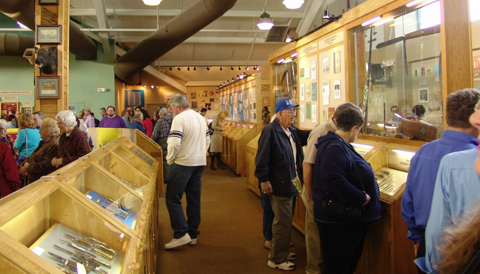
Knife Museum “Dissolved”; Collection to 3 New Venues

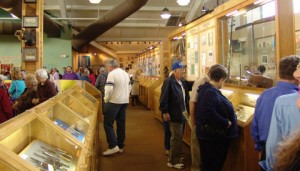
After over 30 years of operation, the National Knife Museum (NKM) is “being dissolved.” However, the old museum’s knife inventory will carry on at three separate museums, according to Lisa Sebenick, president of the National Knife Collectors Association (NKCA) and secretary of the NKM.

The only museum of its kind in the USA, the NKM had been housed on the mezzanine of Smoky Mountain Knife Works in Sevierville, Tennessee, since late 2006. The original rent for the space was all of $1 per year. “The officers, directors and staff of the National Knife Museum sincerely thank Smoky Mountain Knife Works/Kevin Pipes for giving our collection of cutlery a home these past seven years,” an NKM release stated.

National Knife Museum is dissolved. (Mike Carter image)
The National Knife Museum is being dissolved. Its knife inventory will be relocated to three new locations. (Mike Carter image)

According to Sebenick, the museum’s knife inventory will be donated to three different museums: the National Rifle Association Museum in Springfield, Missouri, the Berman Museum of World History in Anniston, Alabama, and the Janney Furnace Museum in Ohatchee, Alabama.

As for the 50 or so Bill Moran knives that were exhibited at the NKM, an official statement from the Moran Foundation was that no decision had been made for those knives at press time. At some future date, perhaps some of the Moran knives would be put on loan elsewhere, the statement concluded.

The NKM was the vision of BLADE Magazine Cutlery Hall-Of-Fame© member Jim Parker. Located in Chattanooga, Tennessee, the original museum was built in 1981 and was the creation of the NKCA as a separate, educational, non-profit corporation. It opened its doors in 1982. It was moved to Sevierville in 2006.

According to Pete Cohan in BLADE’s Guide to Knives & Their Values, 7th Edition, while many NKCA members were heavily involved in the original museum’s creation, it was the donation of three major individual knife collections—those of Cutlery Hall-Of-Famer Frank Forsyth, Dr. James Wilkison and Dr. William Rosenthal—that created the foundation for a comprehensive museum display collection.

During its run at Smoky and in addition to the many other knives it exhibited, the NKM also included the custom knife collection of Cutlery Hall-Of-Famer Joe Drouin, a number of club knives from knife clubs around the country, various knife ephemera and more.

For the latest knives, knife news, trends and more, stay tuned to blademag.com.

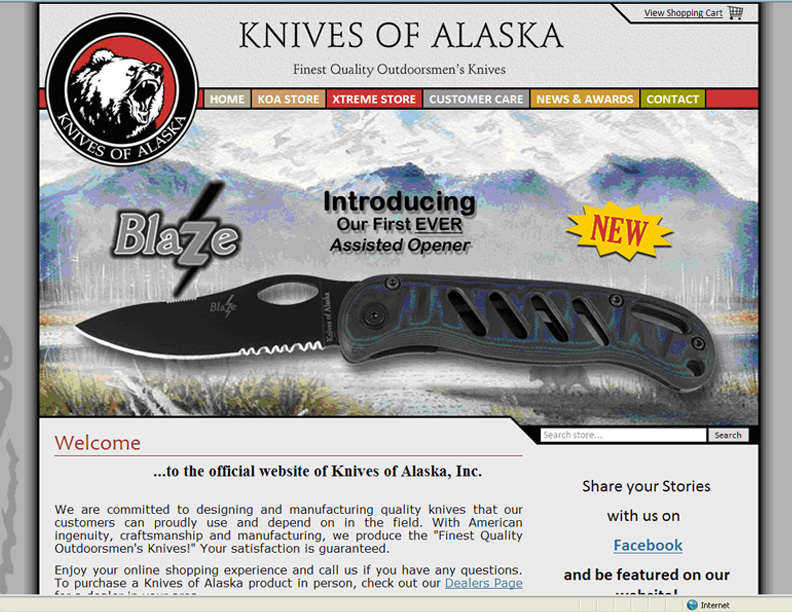
Knives of Alaska Launches New Website

0

We just launched our new website and the feedback has been outstanding! The new site features clear navigation, easy access to important information, and loads of beautiful knife photos. You can also share your hunting or knife stories with us on Facebook and have your story featured on the new site. Be sure to check it out and let us know what you think.

www.knivesofalaska.com

Is a World Ivory Ban in the Offing?

A CITES meeting that could determine whether there will be a world ivory ban begins Sept. 24 in Johannesburg, South Africa.

The 17th annual meeting of the CITES Conference of Parties is set to run through Oct. 5 and will include individuals and organizations around the globe who are for or against a world ivory ban, as well as a ban on ancient and other ivories. CITES stands for “Convention on International Trade in Endangered Species of Wild Fauna and Flora,” and is “an international agreement among governments … to ensure international trade in specimens of wild animals and plants does not threaten their survival.”

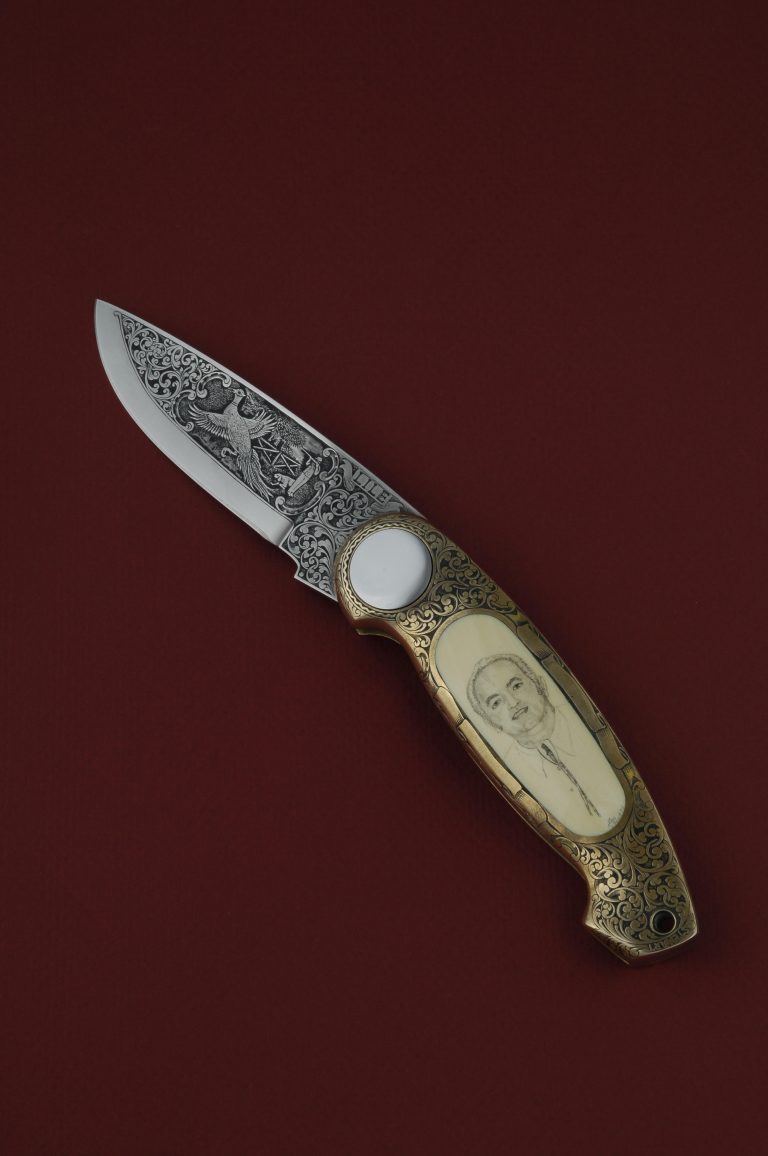
Lile ivory folder
A world ivory ban would make such classic knives as this circa 1970s folder by BLADE® Magazine Cutlery Hall-Of-Fame© member Jimmy Lile illegal. (Jack Lucarelli image)

Elephant Protection Association officials indicate they expect animal rights groups to push for terminating “sustainable use” as a means of conserving any listed or endangered wildlife, which includes elephants and the trade of ivory. For U.S. owners of legal elephant ivory, this could at the very least mean losing the narrow “De Minimis Exception” in the recent Federal Domestic Ivory Ban instituted in July. Though it allows an extremely low amount of per-person trade in elephant ivory, the De Minimis Exception does allow some of it.

Non-governmental organizations (NGOs) fighting for a worldwide elephant ivory ban want CITES to list all African elephants on Appendix I. If the NGOs are successful, it will lead to even more pressure on the U.S. Fish and Wildlife Service (FWS) to list all elephants as endangered, too. According to the Elephant Protection Association, the FWS has indicated that if CITES puts elephants on the endangered list, FWS would abolish the De Minimis Exception. But that’s not all.

The Elephant Protection Association’s Rob Mitchell reports that the petition to declare elephants endangered is already under review. “I don’t know low long before they will reach a final determination, but it won’t surprise me one bit if they try to time it to coincide with [the Sept. 24-Oct. 5 meeting],” he notes. In fact, “FWS could make the determination even if CITES does not list all elephants on Appendix I.”

For more information, stay tuned to www.elephantprotection.org. (Editor’s note: The Elephant Protection Association is building a new website. You also can stay updated on elephant ivory news by watching videos from The Conservation Imperative on the Association’s Facebook page.)


Save

Majority Opposes Ivory Ban At Meeting

Anywhere from 50-to-60 people attended the March 20 public meeting held by the Advisory Council to the Presidential Task Force on combatting wildlife trafficking, with more than twice as many voicing opposition to the ivory ban as those supporting it.

Questions remain on feds ability to tell fossil from elephant ivory and vice versa. (Ward photo)
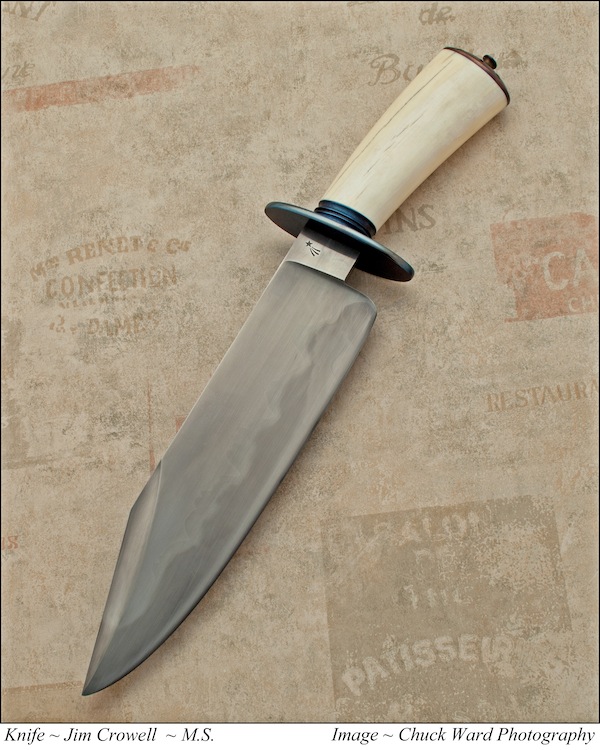
Over twice as many against the ivory ban as for it voiced concerns at the March 20 meeting. Jim Crowell’s fixed blade sports a fossil ivory handle.  (Ward photo)

Among those representing the knife industry at the meeting held in Washington, D.C., were scrimshander Sandra Brady, knifemaker Edmund Davidson and others.

“There were about 27 people who stood up to make statements and only about eight were in favor of the ban,” Brady noted. “Even though the words ‘ivory ban’ were not used at all by the committee, that is the ONLY thing that was talked about.

“We had statements from three antiques people, cane collectors, scrimshanders, musical instruments, a knifemaker and knife rights people, among others. So what I came away with is that the committee didn’t expect such a [pro-ivory] turnout. I can only imagine how many more statements were submitted via e-mail. We may have turned the tide at least a bit.”

On the other hand, the pro-ivory ban forces continued their full-court press, and there is much to be done to fight a number of punitive measures federal officials are considering, including making all illegal ivory sales felony violations. Committee members also talked about requiring violators to pay restitution and basically treat selling ivory as selling illegal drugs. “It was three hours of the ‘for-the-greater-good’ stuff, so that was the bad news,” one observer stated.

Several initiatives were mentioned by the knife industry group against the ivory ban, including finding a congress person to champion the anti-ivory ban cause and also the possibility of setting up an official fight-the-ban organization.

Craig Hoover of U.S. Fish & Wildlife said he expected someone on the advisory council to post more information, perhaps a summary video of the meeting, on its web page at some point. The link to the page is

http://www.fws.gov/international/advisory-council-wildlife-trafficking/

For further developments stay tuned to www.blademag.com.

D2 Tool Steel Just Keeps Cutting

Dr. D2, Bob Dozier
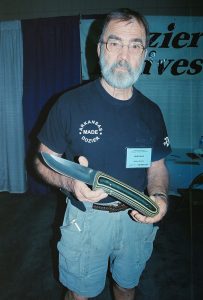
Aka “Dr. D2,” Bob Dozier long has been a proponent of D2 tool steel. Here he holds one of his specially made “over-sized” folders at a past BLADE Show.

D2 tool steel just keeps cutting. It’s been around a long time and enjoys a solid reputation among custom and factory knifemakers and knife users. As with many high-performance steels, it experiences a range of highs and lows in popularity, and at the moment seems to be enjoying a high.

A favorite steel of such long-time knifemakers as BLADE Magazine Cutlery Hall-Of-Fame© member Wayne Goddard and Bob Dozier—the latter has been called “Dr. D2” on more than one occasion—D2 is considered a “borderline stainless steel” because it contains 11.5 percent chromium. To be classified as stainless, a steel must have at least 12 percent chromium. (Note: stainless simply means a steel resists corrosion. It does not mean it is stain proof.) According to Scott Devanna of SB Specialty Metals, D2 also has a very high carbon content—1.5 percent—which lowers corrosion resistance because the carbon “grabs” a lot of D2’s chromium to form chromium carbides. The chromium carbides are good for improving wear resistance—improved wear resistance enhances edge holding—but they tie up chromium so it is not as “free,” and thus reduce corrosion resistance. Free chromium forms a chromium oxide layer at the surface, and the layer makes a steel corrosion resistant. This helps explain why D2 is not stainless.

While D2 may not be stainless, it remains a top performer due in no small part to its high wear resistance/edge-holding ability. “It will hold an edge for a very long time before it will go dull,” says Paul Tsujimoto, director of engineering at Ontario Knife Co.  Combined with its relatively inexpensive price, this makes D2 a favorite of manufacturers and custom makers alike. “For us, it’s the perfect combination of performance and an affordable price,” notes Dietmar Pohl of Pohl Force Knives. Agrees Devanna, “It’s the best bang for the buck because it’s priced reasonably and works well.”

D2 on Hornet
Pohl Force Knives uses D2 blade steel for the Hornet, a Spencer Reiter design.

On the down side, D2’s ample wear resistance also means it is difficult to sharpen. However, a diamond abrasive sharpener should do the trick. Also, the steel’s impact toughness suffers in comparison to some other steels, so D2 is not the best choice for a blade used for chopping and other impact-type cutting chores. And, since it’s not a true stainless, you should wipe it down after use to help keep corrosion to a minimum.

Nonetheless, D2 is an outstanding choice for a hard-use knife and remains popular among custom knifemakers and manufacturers, and knife users as well.

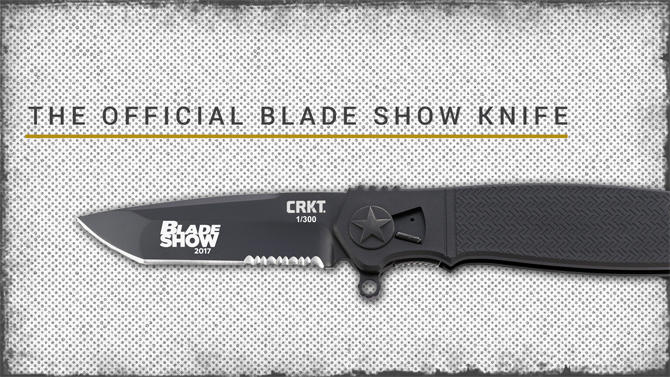
Do You Have Your Official 2017 BLADE Show Knife?

Advertisement

Must Read Articles

Read this before you make a knife

Knifemaking 101 – Read This Before You Make a Knife

  by Wayne Goddard My experience has taught me that there's nothing like digging in and getting started. I've often said the hardest part of the...
how to forge damascus steel

How to Forge Damascus

Advertisement
Advertisement