
The BLADE Blogs

The blogs of the BLADE editors, Steve Shackleford and Erin Healy.

Green Beret’s Edged-Weapon Set Up For Auction

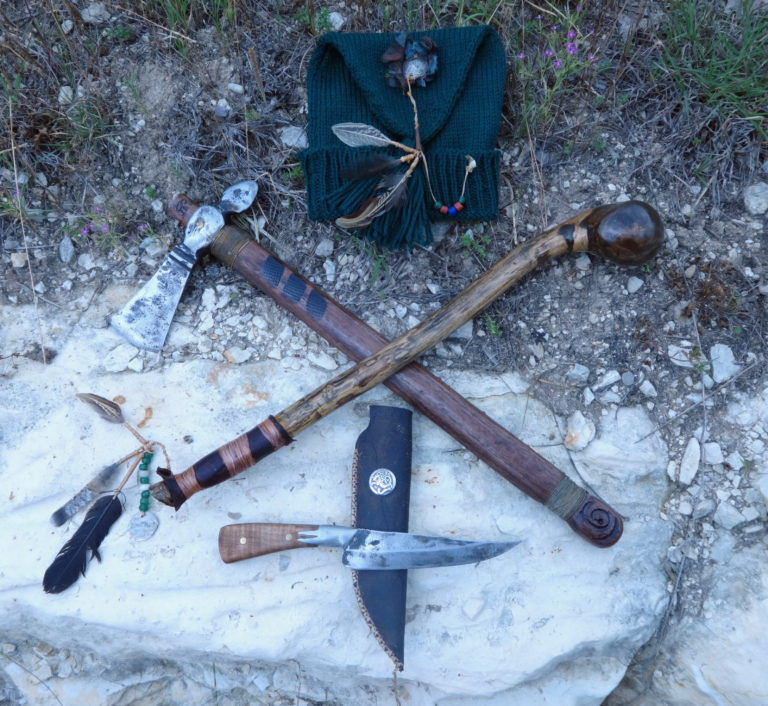
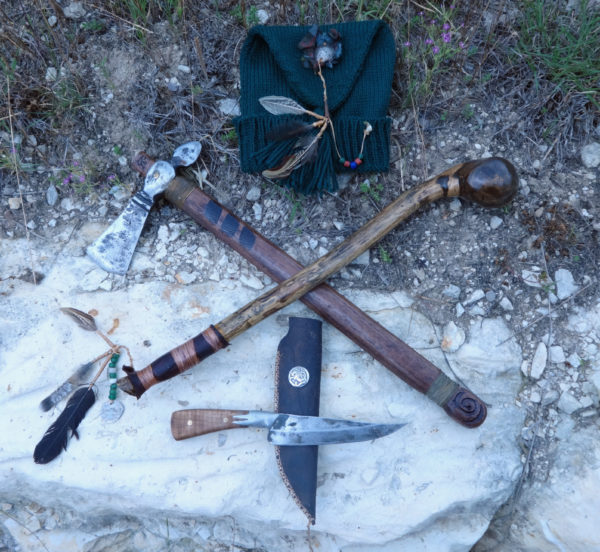
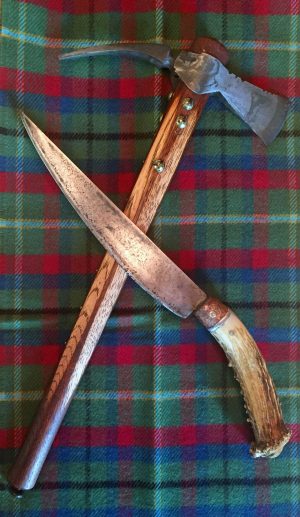
Don Shipman made an edged-weapon set that includes a knife with a sheath, a tomahawk, a bonnet and a war club.
Custom knifemaker Don Shipman’s edged-weapon set is on auction until June 30, 2017 to benefit the Green Beret Foundation. In addition to a Rogers’ Rangers bonnet, a knife and sheath, and a tomahawk, the set also includes a war club. These are all items a Ranger during the French and Indian War might have carried.

Don Shipman of Shipman Knife & Hawk and Longfear Forge in Waco, Texas, has made a Rogers’ Rangers III edged-weapon set for auction to benefit the Green Beret Foundation, which helps Special Forces members and their families. This new set includes items that the precursor to today’s U.S. Army Ranger would have carried with him in the eastern woodlands of North America during the French and Indian War, 1754-1763. The kit includes a knife and sheath, a tomahawk, a Rogers’ Ranger bonnet and an item stirring interest: a war club.  If you would like to bid on this hand-crafted and meticulously researched collection, you only have until Jun 30 to do so. As of this writing, the highest bid is $1310. You can read about Don’s decision-making process for this set in detail in the October issue of BLADE magazine. Be sure to subscribe.

Don is nothing if not thorough. Whether in love, service to country or researching and assembling his edged-weapon Heritage Sets, he strives to honor the spirit of the warrior, the frontiersman and the gentleman.
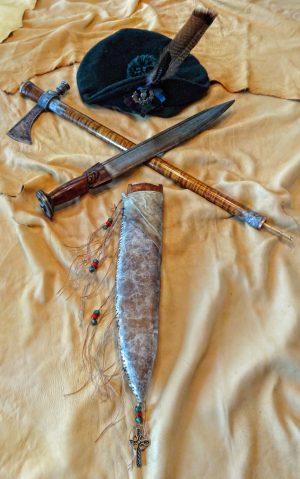
Rogers Ranger II was fashioneed by Shipman Knife & Hawk for the Green Beret Foundation.
This Rogers Rangers II set by Shipman Knife & Hawk included items a young Ranger serving under Major Robert Rogers might have carried in 1755 during the French and Indian War: a Scottish bonnet, pipe hawk and a dirk and sheath.

Take, for example, the name of his forge. In Irish Gaelic, “long” means “ship” and “fear” means “man.” But The Ship Man, as his Special Forces friends sometimes refer to him, doesn’t stop there. “I use the analogy that ‘long’ gets its meaning from the Norse ‘longships,’ which raided medieval Ireland,” Don explains. “‘Man,’ especially ‘strange men,’ is frequently associated with ‘danger’ in languages. So, ‘man’ equals ‘danger’ equals ‘fear.’ Thus, Longfear forge equals Shipman Forge. All of the above works especially well with my Norse and Irish ancestry,” he concludes.

So, on his blades, you will find the crossed-arrow Shipman logo, and if Don forged the item, you’ll also see the Longfear stamp. “The stamp is…wait for it…a Viking longship prow! Totally badass!” And that’s what it’s like talking with Don. You’re going to get an education, and you’re going to enjoy the lesson because he makes it entertaining.
The Wild Geese I was crafted for a U.S. Army Ranger and Special Forces soldier.
This kit included a pipe hawk, a Joe De La Ronde-designed spike hawk, a roach-belly blade with sheath, the family tartan, and an caubeen, or Irish beret, with three badges.

Don makes edged weapons that could have been used or made by the common man on the American frontier, no matter where that frontier may have been at that point in history. Sets can include a knife and a tomahawk, or more than one of each, along with usually a bonnet, blanket or piece of clothing. He’s working on one now that may include a gun. Each item in the set is researched thoroughly, from handle woods to clan tartans used in the headgear cockade—think rosette on a prize-winning ribbon.

First, if you don’t already know your family’s origins, Don will research your family’s heritage using Ancestry.com, the online genealogical site that assists in tracing your family tree. He establishes where your family came from and where your family settled or migrated to when they arrived in America. The frontier may have been upstate New York at the time, or Ohio, or Kentucky as westward expansion continued. If you’re of Irish or Scottish descent, for example, he’ll determine, to the best of present-day knowledge, to which clan your family belonged. Similarly, if you think you may descend from Vikings, he’ll investigate your Nordic heritage.
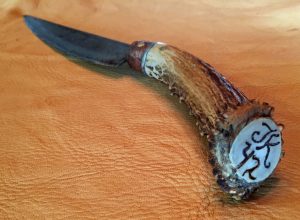
This roach-belly blade is part of a Shipman Heritage Set called Wild Geese I.
This roach-belly blade was forged out of 1095 steel by Longfear Forge. The ferrule is comprised of beaten copper and poured pewter. The handle is whitetail antler and “JK42” is engraved into the pommel using Colonial (Allegheny) font in recognition of the client’s service in Special Forces Operational Detachment (ODA) 542.

Next, he’ll research available materials in the region where your family lived once they arrived in the New World. Was that variety of maple tree growing in the area where and when your family settled? Yes. Then Don may use that wood to fashion a knife handle. What styles of knives or tomahawks were being used in that region and for what purpose? For instance, there’s the tomahawk that has a bowl in one end used for smoking tobacco and passing around, what we would think of as a peace pipe. There’s the ’hawk with the spike opposite the cutting edge, which our ancestors used in times of combat for striking their opponents. And, hawks with nubs on the back were often used as a mallet or hammer, making the weapon double as a utility tool.
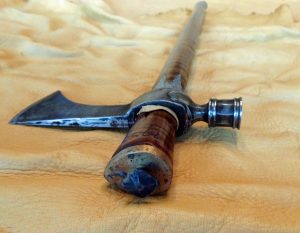
This pipe hawk is part of the Shipman Knife & Hawk Rogers' Rangers II set.
The tomahawk in the Rogers’ Rangers II set has a 22-inch curly maple shaft with a pewter inlay. The copper butt cap has a 2-inch brass mouthpiece. The head is an R.E. Davis blade in 4140 steel. Patina added to all metals.

Every facet of the collection is thus researched. If Don wants to use a turkey feather, for example, to adorn a bonnet, he first confirms if turkeys were plentiful where your family lived and at that time. The woolen bonnets are supplied by reenactment companies such as Jas. Townsend & Sons out of Pierceton, Indiana. In Scottish versions, the headgear is larger and of thicker material, but the Irish renditions are precursors to the berets used by U.S. Special Forces. And like our elite warriors wear what’s called a flash—think a shield-shaped patch adorned with symbols from their unit—on their berets, Colonial-era warriors would wear a cockade made with their clan’s tartan, say, or other emblem representative of their heritage.
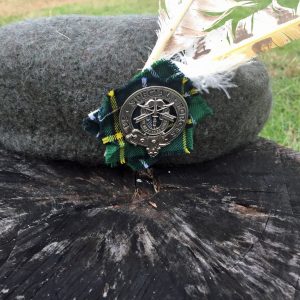
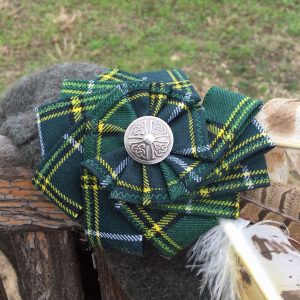
 

Forresster Tattered Cockade 2
A tattered Forrester tartan cockade was one of three cockades for this bonnet.
Shipman Knife & Hawk can also assemble bonnets for those who might not be able to afford the whole set at once.
This bonnet came with tattered, bow and rosette cockades in the client’s Forrester tartan. Due to the client’s service in elite forces the red-tailed hawk, wild turkey, ring-neck pheasant and mallard feathers are prominently displayed, his family hailing from an area where the species were prevalent.

Don will educate his clients on the proper time and place to wear certain emblems. For instance, your set may include one bonnet with multiple cockades or other adornments. There may be a tattered cockade appropriate for everyday wear, or one that should only be worn at formal occasions. The headgear may include a feather, which, Don explains, would only be appropriate for a chief of a Native American tribe to wear. However, he acknowledges that his clientele may correctly believe they have earned the honor and they will wear the feathers to military galas, for example.

Don knows more than a little something about warriors of many nations and their weaponry. He ended up serving 30 years in the U.S. Army. “All I wanted to do was not embarrass my father and be a good soldier,” Don said. His father was an Army sergeant major, and Don was born and raised in Wurzburg, West Germany (at the time) until he was 13 years old. His dad’s final duty station was at Ft. Hood, Texas, where his parents went through the process of naturalizing Don. At the time, Germany had compulsory military service. This entailed sacrificing his dual citizenship, but saved him from possible conscription into the German army.

When his father retired, the family moved back to the home state of both his parents: West Virginia. So, Don was a high-school kid in a very foreign world. How foreign? “This kid got on the school bus and he had a fat bottom lip. I’m thinking, ‘It isn’t even 9 o’clock yet and this kid’s already been in a fight.’” Thus was young Don’s introduction to chewing tobacco. On the very same day on the very same bus, a few stops along the route, three redheaded sisters get on the bus. “My eyes immediately go to the tallest one, ’cause that’s how I roll,” Don said. “She had wire-rimmed glasses, and I thought, I’m cool with that.”
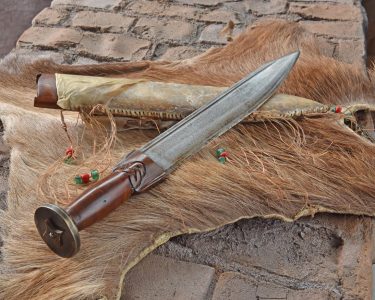
This Scottish dirk and sheath was part of the Rogers' Rangers II set.
The sheath for this 18-inch Scottish dirk has a 14-inch basswood shell wrapped in rawhide with a sinew running stitch. It is adorned with sinew fringe and green and red padre beads and a 2-inch Celtic cross.

Fortunately, through an old-timey bus driver who lined the students up by sex and height, eventually the tall girl and older boy ended up sitting beside each other. Don barely said a word. Unbeknownst to him, however, the future Mrs. Shipman, Diane, or Annie as Don calls her, took matters into her own hands, putting the word out that the seat beside her was always reserved for Don. She knew right from the get-go that he was “the one.”

Don was dating his best friend’s sister, and although he got to the point where he could talk to Diane—a lot—and wanted more than anything to be with her, he couldn’t figure out a way to break it off with his friend’s sister without hurting her. “Next thing I knew, I was in basic training,” Don says, laughing. The other attachment dissolved naturally during the separation. In another example of his thoughtfulness, when Diane wanted to skip the hassle of a wedding, he told her he understood and that she could scale the event back, but that a wedding was bigger than both of them. “I told her I couldn’t do that to my parents, and that if she thought about it, I didn’t think she could do it to her parents either.” The Shipmans have now been married 37 years. They have a son, Isaac, born when Don became a Green Beret, and a daughter, Samantha, whom Don delivered.
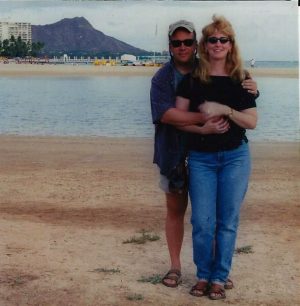
Don and Diane Shipman visited Hawaii in 2000.
Don’s favorite picture of him and Annie was taken on Oahu in 2000 with Diamond Head in the background.

Following a long family tradition, Don joined the U.S. Army in 1977 as an armored reconnaissance specialist, completing basic and advanced training at Ft. Knox, Kentucky. Although he hadn’t intended to stay, he did well and acted on the guidance of superiors, continually accumulating the schooling and assignments that allowed him to advance. When he wanted to join Special Forces, he was advised to take drill sergeant school. He did, and soon got accepted to qualify for Special Forces. The only problem was, he would have to wait for a slot in his preferred specialty: engineer, “because, yeah, I wanted to blow things up.” Or, he could go in immediately as a physician’s assistant, and have a marketable skill when he transitioned back to civilian life.

Qualifying on both the physical level and being required to “drink from a fire hose” medically speaking, Don made it through. “I was never afraid of the academics.” Because medics are limited in number and a Special Forces unit cannot deploy without one, Don deployed frequently. Honduras, twice; Somalia, pre-involvement; Kenya, four times; Tanzania; Djibouti; Egypt; Pakistan and Afghanistan, pre-involvement; Bosnia-Kosovo; Saudi Arabia; Kuwait; Iraq…in other words, he was exposed to the warrior tradition of many cultures.
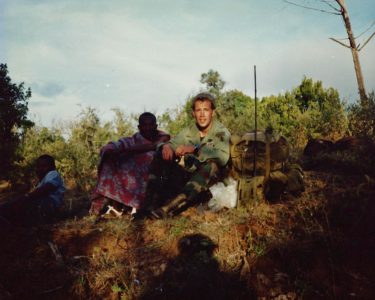
SFC Donald G. Shipman served with 5th Special Forces Group in Kenya in 1989.
In November of 1989 Don Shipman was a sergeant first class with 5th Special Forces Group on guerilla operations in Kenya.

But it was when he was face-down in the sand during Desert Storm, yelling at the next closest man, who was yelling back because neither could hear the other that Don began bargaining with God to get him and his brothers out of this. “God, family, country. I’d done a lot for my country. It was time for more God and family.”

Stateside, Don accepted a research position with a special operations medic from the Vietnam era who would encourage him to accept the Army’s offer to get his doctorate. Don finished out his career teaching at Ft. Sam Houston in San Antonio, Texas. In the course of his medical training he was made an officer and retired as a major.

In all those years, aside from an occasional fishing trip, Don had never had a hobby. Now with time and resources he could indulge his creative side. About seven years ago he was on the Military Times Hall of Valor website where you enter your surname and up pops a database of recipients of the Silver Star up to and including the Medal of Honor. There were more Shipmans than Don could count. He’s a firm believer in the line that Rudyard Kipling made famous in his poem “Recessional”: “Lest we forget—lest we forget!” No soldier truly dies unless he is forgotten.

Don wasn’t even drawn to knifemaking, not right away anyway. But in feeding the home fires, it began to bother him that hardwoods like black walnut were being burned. “It’s practically a sin,” he said. So, he fashioned a hawk handle out of one piece and enjoyed the process. He gave it away. Then representatives from the Ranger Lead The Way Fund asked Don if he would make something for them to auction off at their 2013 gala. He made Rogers’ Rangers I, a set including a bonnet with a Roger’s Ranger badge, a 23-inch tomahawk and an 18-inch Scottish dirk with sheath. In 2016, he was asked to make Rogers’ Rangers II for a Green Beret Foundation auction. He had found the perfect outlet for his love of history, his brethren and the various streams of humanity that forged our country’s beginnings.

Don’s pieces look old and homespun, in keeping with both the available technology of the era and the skill level of the common men who fashioned them. If he doesn’t forge the blade himself, he uses The R.E. Davis Company in Woodville, Ohio, which specializes in weapon reproductions. Pieces from Shipman Hawk and Knife are pitted, worn and sometimes slightly warped, because that’s what a centuries-old edged weapon should look and feel like.

‘Knives of War’ Reveals Elite Forces Use of Knives in Combat
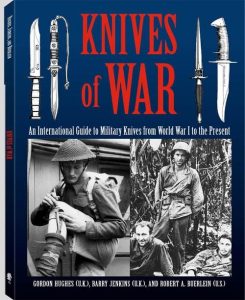
"Knives of War" explores the use of knives by elite fighting forces from WWI to the present.
“Knives of War” is the “International Guide to Military Knives from World War I to the Present,” and costs $25.

Compiled by two British and one American author, “Knives of War” is a guide to edged-weapon use from World War I to the present. Of particular interest is behind-the-scenes information on the use of the Marine Raiders Gung Ho Knife, the Gerber Mark II Combat Knife as well as the most famous fighting knife of all time, the Fairbairn-Sykes. This is a must-have for any knife lover’s library.
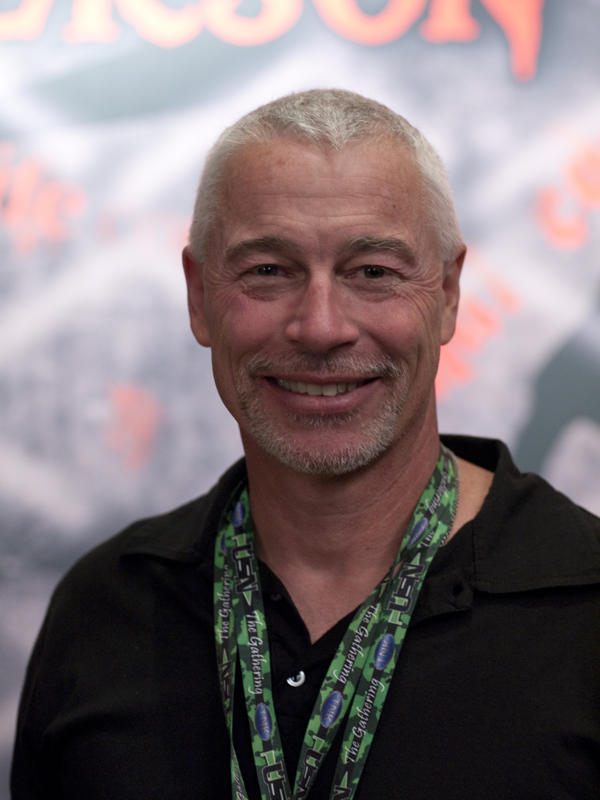
Ernest Emerson Plugs BLADE Show on Armed American Radio

Ernest Emerson talked about his knives, his seminar and more for the upcoming BLADE Show on Armed American Radio over the weekend.


Emerson (pictured), who also will display his factory knives at his show booth, extolled the virtues of the BLADE Show and his seminar, “Countering Terrorism: Get Your Mind Right,” which will be BLADE Show Saturday at 1 p.m. Originally slated for Room 110 in the host Cobb Galleria Centre, the seminar will be held at the same day and time in Room 104 instead.


According to Emerson, Armed American Radio has 166 radio affiliates and recently picked up a new one in Phoenix, Arizona, the country’s fifth largest market.


The BLADE Show will be June 10-12 at the Cobb Galleria in Atlanta. For more information, click “BLADE SHOW” on the bar at the top of this page.

Knifemaker Jack W. Crain Passes Away

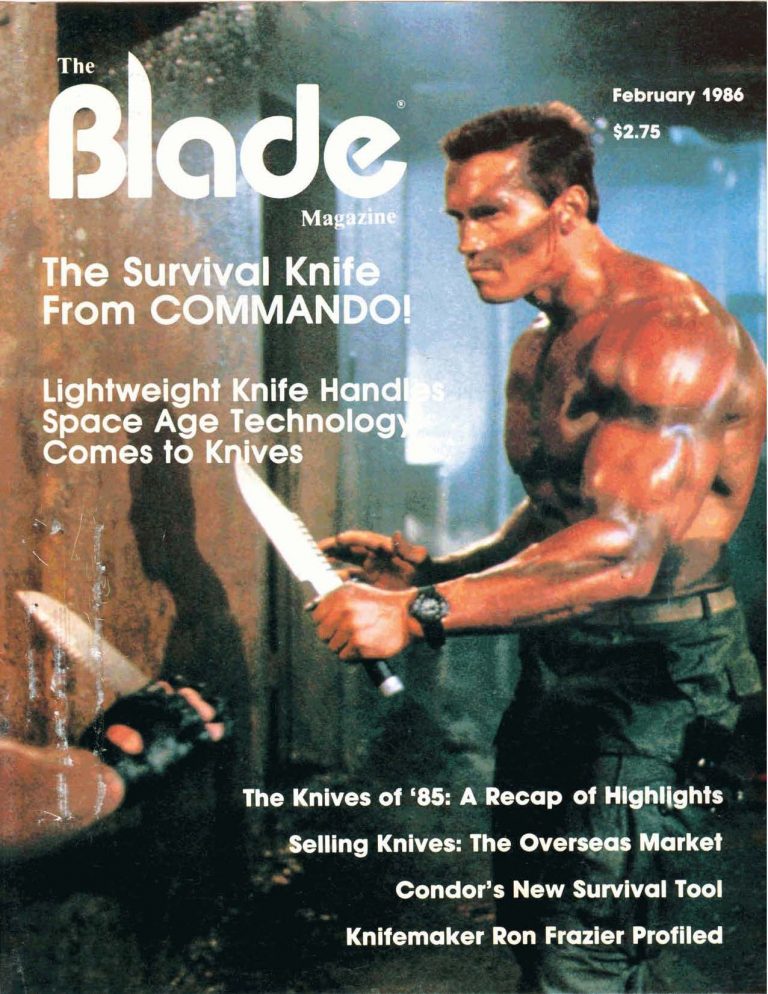
Crain/Schwarzenegger
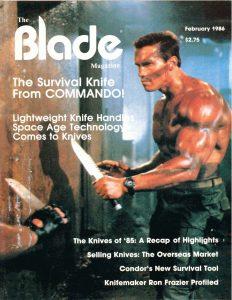
Knifemaker Jack W. Crain designed and made the LS-1 knife used by Arnold Schwarzenegger in the 1980s action flick, Commando.

Knifemaker Jack W. Crain, designer and maker of knives for such action movies as Predator, Commando and others, passed away Sept. 7. He was 70.

Arriving hot on the heels of the Rambo knife phenomenon started by BLADE Magazine Cutlery Hall-Of-Fame© member Jimmy Lile in the early 1980s, Crain also made a hollow-handle survival model with sawteeth on the back a la the Rambo knife. Called the LS-1, the knife appeared in 1985’s Commando. It was the first of several knives Crain would make for the movies, television and books. LS-1 was short for Life Support System 1, a knife Crain originally introduced in 1982. He later made a successor called the LS-2. He also made two other knives for Arnold Schwarzenegger’s character of Matrix in Commando, the Scorpion and Commando. It was the first of two ’80s Schwarzenegger action films for which Crain designed and made knives. The second, Predator, is considered a cult classic. Crain made the knife not only for Schwarzenegger’s character, Dutch, in Predator, but also a big bowie for the character of Billy played by Sonny Landham.

Crain is listed as either weapons master, knife designer and/or manufacturer in such movies as Die Hard, Road House, Die Hard 2, Predator 2, Demolition Man and Executive Decision, among others. He also designed knives for all 22 episodes of the 1988-89 TV series, War of the Worlds.

Of Weatherford, Texas, Crain was one of a generation of knifemakers inspired by 1952’s movie about Jim Bowie and his knife, The Iron Mistress. Since Crain preferred making bowies, he said in a 1985 story in BLADE® Magazine that he assumed the movie influenced him as well. He sold his first knife in 1969 and a decade later became a full-time maker and joined The Knifemakers’ Guild. Initially he forged his blades but later adopted the stock-removal method of knifemaking.

He is survived by his wife, Jane Fritts Crain, sisters, a daughter, niece, great niece and numerous extended family and friends.

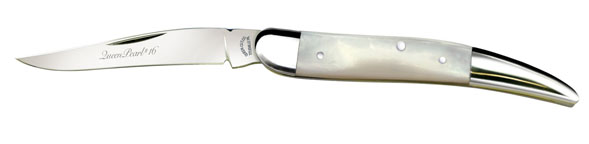
Queen Cutlery Sold to Daniels Family Cutlery

Servotronics, Inc. announced today that it has completed the sale of the assets of its subsidiary, Queen Cutlery Company, a Pennsylvania facility located in Titusville, Pennsylvania, to Kenneth R. Daniels of Daniels Family Cutlery Corporation that will be doing business as Queen Cutlery Company. 

The sale of assets was part of a previously reported long-term strategic effort to enhance profit margins through the elimination of certain select components/products. The Company is in the process of further evaluating existing product lines and the consolidation of facilities. 

The contact person at Queen is Jennie Moore, Telephone:  814-827-3673; Email: [email protected].

Servotronics, Inc. is composed of two groups – the Advanced Technology Group (ATG) and the Consumer Products Group (CPG). The ATG primarily designs, develops and manufactures servo controls and other components for various commercial and government applications (i.e., aircraft, jet engines, missiles, manufacturing equipment, etc.). The CPG designs and manufactures cutlery, bayonets, pocketknives, machetes and combat, survival, sporting, agricultural knives and other edged products for both commercial and government applications. 

Hammer Knives Are What’s Cookin’!

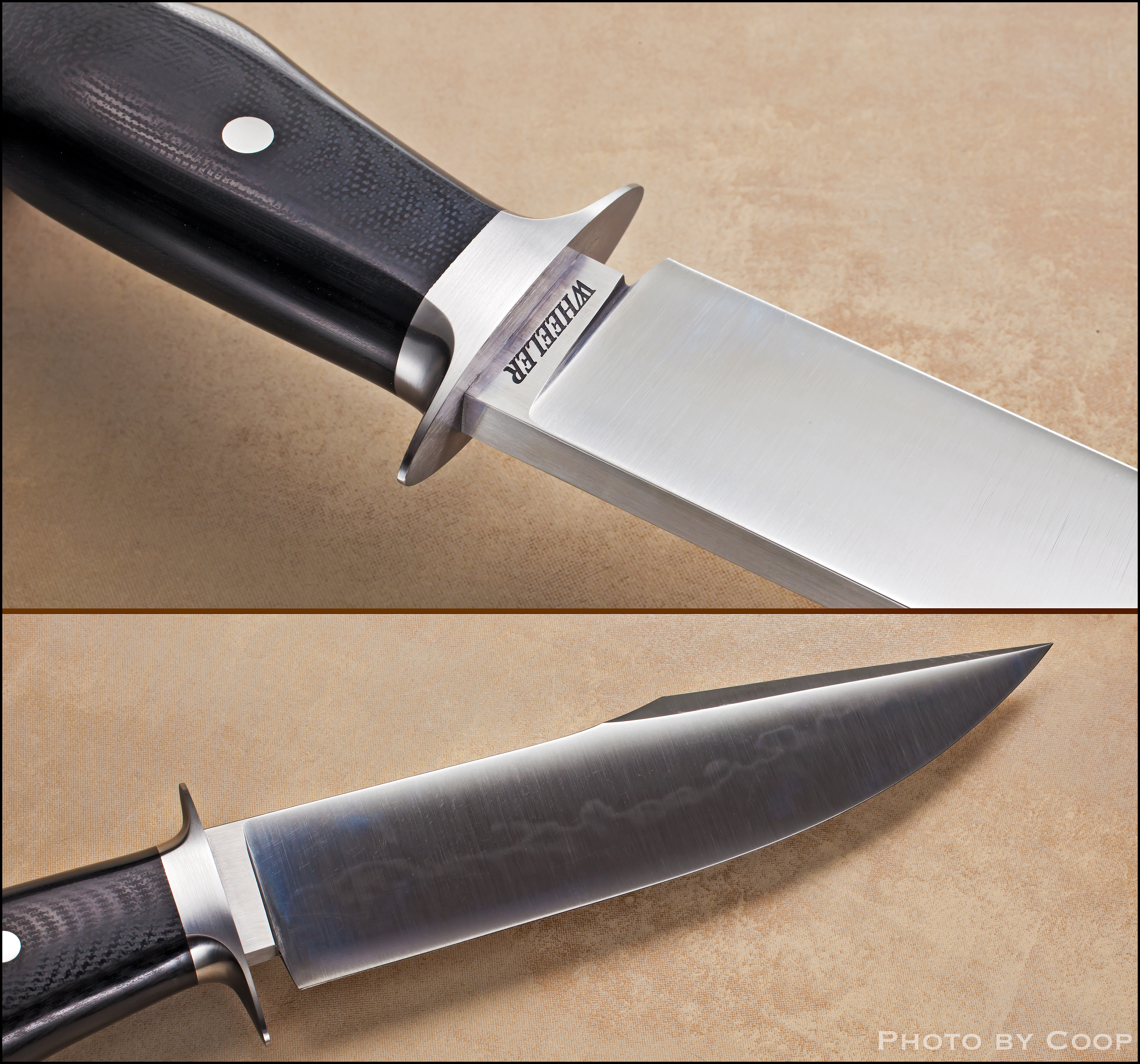
The Paranee/Wheeler fighter combines Nick Wheeler’s impeccable fit and finish and a Joe Paranee design, and is high on the list of collector Peter Gill. (SharpByCoop.com knife photos; photo of drawings courtesy of Nick Wheeler)

If you’re hungry for top handforged blades, prepare to cleanse your palate

By Mike Haskew


The selection of and appetite for handforged knives is as healthy as ever, and those who combine aesthetics with the hammer on hot steel occupy a noteworthy place among the pantheon of knifemakers. Both well-established artisans and up-and-comers are gaining attention, incorporating daring damascus and eye-popping ivory, tantalizing carbon steel and wondrous woods.

A collector for 15 years, Peter Gill said he is excited about the Founder’s Bowie series from Jason Knight, who devised the idea of selling a limited run of handforged knives to raise money to build his shop. The Founder’s Bowies include upscale handles of materials such as mammoth ivory and 10-inch blades of 1080 and 15N20 random-pattern damascus, and overall lengths of about 15 inches. Gill said each knife has sold in the $1,200 range. The Paranee/Wheeler Fighter, another limited run and a collaboration between Joe Paranee and Nick Wheeler, is a favorite of Gill and sells for around $850.

“They each make simply beautiful knives that approach perfection and are very hard to obtain,” Gill noted. “A plaque with the names of the 10 original owners of the Founders Bowies will be in Jason’s shop, and the fighter combines Nick’s impeccable fit and finish with a specific design concept from Joe.”

Collecting knives for nearly 40 years, Paul Kessler has seen his share of handforged standouts, and said the work of husband-and-wife team Adam and Haley DesRosiers is “wildly popular.” The pair is becoming known for damascus blades and high-end wood handles in a variety of knife styles. In addition, the damascus blades and fighters in the 7-to-10-inch range from Mike Ruth and the fighters and gun knives of Bruce Bump are gaining in popularity, Kessler observed.

“Tom Ferry is hot right now,” Kessler added. “He can do everything and do it well. He makes both folders and fixed blades, and his sole-authorship knives are in great demand. Cliff Parker is making a damascus gent’s folder in tortoise, stag and pearl, along with locking-liner folders, and he sells out at shows.”

According to Kessler, Wheeler has become a favorite on Internet knife discussion forums, while John White is known for his large choppers with lengths of 10 to 11 inches in premium carved stag handles and upscale damascus.

“John made a stunning dagger for me,” Kessler remarked. “It has a blade of about 9.5 inches and a beautiful reddish mammoth ivory handle. He built it with a clamshell guard that can be taken off to convert the knife to a simple dagger. He built a bowie that won Best Fighter at the BLADE Show, and my John White knife won Best Damascus at the show. I think he makes the best pattern-welded damascus, bar none. The choppers sell for $1,000 and up, and the high-end knives are $2,500 and up.”

Kessler said the Pirate folder by Don Hanson is another favorite of handforged purchasers and features a variety of handle materials with a wharncliffe or santoku-style damascus blade. Ranging from $1,700 to $1,800 depending on materials, the slip-joint Pirate folder comes with mammoth or walrus ivory and even antique ivory Micarta® scales. Hanson’s double-edged fighters with the damascus combination of 1084, 15N20, W2 and 203E steels are in demand as well.

Larry Marton and his wife, Marlene, have collected knives for more than a quarter century. They particularly prize the work of Robbin Hudson and his multi-bar damascus blades with a flame pattern etched into the edge. “We had talked with Rob about making a knife for us,” Larry said, “and he eventually sent us one with a blade twice the size of the one we had talked about. It is truly a spectacular blade.”

Also among their favorite makers and handforged knives are those by the husband-and-wife team of Van Barnett and Dellana. Marlene collects folders of about 3.5 inches in open length, and both Van and Dellana have made folders for her, while an oversized Owen Wood dagger is a prized piece in the Martons’ collection, too. With an 11.5-inch blade and mammoth tooth handle, the dagger is priced from $7,000 to $8,000, and its overall length is 16.5 inches.

Another of the Martons’ selection as a hot maker of handforged knives is Kaj Embretson. “We have two Viking daggers that he made, both with multi-bar damascus,” Larry commented. “We found the first one at the Solvang Show. That dagger has a wood handle, and the second one we got has a mammoth ivory handle. They run in the $5,000 range.”


In Big Demand

Purveyor Les Robertson said Hanson, White, Ruth and Knight are four of the handforged makers high on many buyers’ lists. Robertson singles out White’s Take Down Bowie, Ruth’s Seashell Bowie, Knight’s JK Classic and Hanson’s Mammoth Fighter as a coveted foursome. The Take Down Bowie sports a damascus blade of 15N20 and 1084 steels, along with a premium stag or ivory handle. The stag version sells for $2,250 and the ivory for $3,000 and up, Robertson notes. The Mammoth Fighter includes a frame mammoth ivory handle and DH3 damascus blade. Robertson’s price: $3,800.

For Robertson, the complexity of the Take Down Bowie is its big draw. “These knives are supplied with a matching ‘take-down tool’ with removable a damascus cap that holds spare assembly pins,” he said. “On the Mammoth Fighter, the DH3 damascus and the frame handle are in big demand, and the ivory is the icing on the cake. As [one of my] top 10 ABS master smiths, Don is an exceptional craftsman.”

Ruth’s Seashell Bowie includes a blade of Texas Wind damascus and an ancient walrus ivory handle with price points from $2,000 to $2,600 depending on such options as blade length and the ivory’s color. Robertson adds that big damascus blades are gaining favor now, and Ruth builds some of the best at value prices.

Knight’s JK Classic Bowie includes 5160, W2 or damascus blades, a handle of desert ironwood or ivory, and a stainless or blued carbon steel guard. Robertson said the knife sells for $1,200 to $2,000, depending on options, and he places Knight among his top 10 ABS master smiths. “This knife is the quintessential Jason Knight Bowie,” he related. “It has clean, crisp lines and that trademark ‘fits-like-a-glove’ handle. The knife is immediately recognizable as a Jason Knight.”

Among other handforged makers Robertson praised are Russ Andrews and Daniel Winkler. Robertson said Andrews’ Hawthorne Bowie sells for $1,100 in W2 blade steel and $1,500 in damascus. Its high-grade walnut handle and stainless steel furniture add luster to Russ’s signature bowie, and Robertson asserts collectors are always on the lookout for this “bowie that borders on being a fighter.” Winkler’s Razor Ridge hunter is complemented by a Karen Shook sheath and sells for $850, Robertson said. It has a blade of 1084 carbon steel, a stainless guard and bolster, and an elk-antler handle.

“Dan can never fill the demand for this knife,” Robertson opined. “It’s his hottest knife, made by one of [my] top 10 ABS master smiths, and is perfect for what it’s designed to do. It feels great in the hand.”

Lin Rhea, Shawn McIntyre, Scott McGhee, Tad Lynch and Phillip Patton are other makers with work to watch—and buy quickly if possible, Robertson advised. The purveyor indicated Rhea’s Sub-Hilt fighter sells for about $1,950, with a blade of W2 or damascus steel and a handle of presentation wood or ancient ivory.  McIntyre’s Black Tie hunter is fashioned with a blade of 1080 and 15N20 damascus and a black palm wood handle. Depending on materials, it sells for $550 to $750, Robertson said.

The purveyor indicated the Bushman utility knife from McGhee sells for $260 and includes a blade of Cruforge V steel with a hammer-marked finish and a paracord-wrap handle. Lynch’s Model 1 fighter comes in 5160 or W2 blade steel with a walnut handle and stainless fittings. Clean, functional and balanced, it sells for $600, Robertson said. The Drop Point camp knife from Patton is handled in Micarta or G-10 and comes with a choice of W2 or O1 blade steel. Robertson said the base knife goes for $250, and its combination of utilitarian design and handle ergonomics makes for a great field knife.


For more on the latest knives, knife legislation, knifemaking instruction, knife trends, knifemakers, what knives to buy and where and much more, subscribe to BLADE® Magazine, the World’s No. 1 Knife Publication. For subscription information click on http://www.shopblade.com/product/blade-magazine-one-year-subscripti…?r+ssfb250112#BL1SU

Prices* For Hottest Hammer Knives

Russ Andrews Hawthorne bowie $1,100-$1,500

Kaj Embretsen Viking dagger $5,000

Don Hanson Pirate folder $1,700-$1,800

Jason Knight Founder’s Bowie $1,200

Tad Lynch Model 1 fighter $600

Scott McGhee Bushman utility knife $260

Shawn McIntyre Black Tie Hunter $550-$750

Phillip Patton Drop-point camp knife $250

Lin Rhea Sub-hilt fighter $1,950

Mike Ruth Seashell bowie $2,000-$2,600

Nick Wheeler Paranee collaboration $850

John White High-end knives $2,500 and up

Daniel Winkler ` Razor Ridge hunter $850

Owen Wood Oversized dagger $7,000-$8,000


*According to the sources in the story.


Benchmade Partners With Custom Knife Maker Charles Marlowe

June 8, 2010, OREGON CITY, Ore. – Benchmade Knife Company is proud to announce a partnership with custom knife maker Charles Marlowe. Mr. Marlowe has a great passion for knives and began designing his own models eighteen years ago.

“I’ve really enjoyed developing a relationship with Benchmade,” says Mr. Marlowe. “Their attention to detail and respect for the integrity of the original custom design are what excited me about working with the company.”

The first Marlowe-Benchmade design is expected to be released in the coming weeks.

“We are thrilled to be collaborating with such a talented knife designer,” says Rob Morrison, Benchmade’s Director of Marketing and Strategic Planning.

“Through our association with world’s best custom knife makers, we continue to bring innovative and functional designs to market. This partnership with Charles will help Benchmade continue in our mission of manufacturing superior edged tools.”

Benchmade header

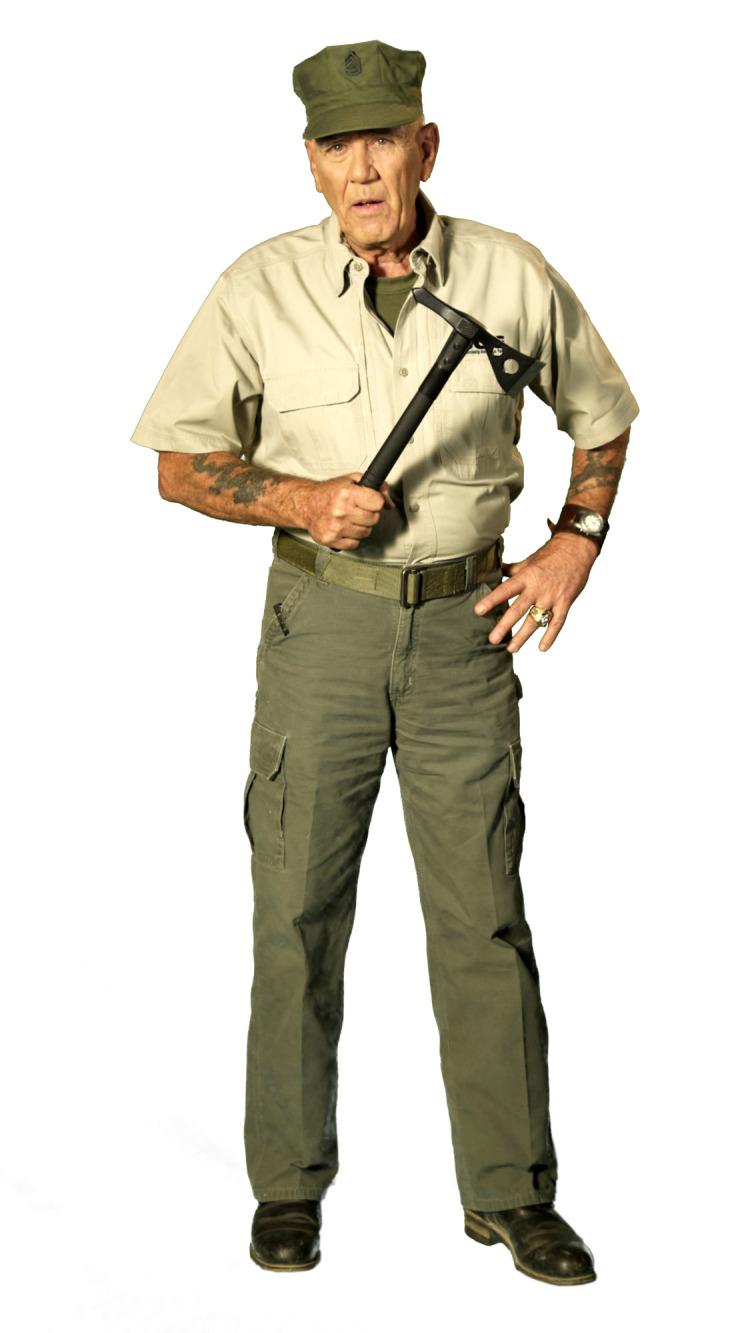
Gunny Salutes Fallen Policeman

R. Lee “Gunny” Ermey, who will appear at the 30th Annual BLADE Show June 10-12 at the Cobb Galleria in Atlanta, made a special appearance in Chattanooga, Tennessee, May 13 to speak on behalf of a local policeman killed in the line of duty.

The policeman, Sgt. Tim Chapin, was answering a robbery call when he was shot and killed. The murder has resulted in an outpouring of concern from the local citizenry, and Gunny’s appearance was a most welcome one to a grieving community.

Ermey took the stage at a benefit for the Fallen Officer’s Fund sponsored by the Shooter’s Depot to raise money for the cause, specifically designated to the Chapin Family Memorial Educational Fund.

At one point Ermey threw an autographed football to one of Chapin’s sons, and addressed the family. “I know you will all keep moving forward and trying to make the best of it,” Gunny said. “All the best to you. God bless.”

Ermey will appear at the SOG Specialty Knives & Tools booth the Saturday of the BLADE Show from 10 a.m. to 5 p.m. to sign autographs and pose for pictures.

Advertisement

Must Read Articles

Read this before you make a knife

Knifemaking 101 – Read This Before You Make a Knife

  by Wayne Goddard My experience has taught me that there's nothing like digging in and getting started. I've often said the hardest part of the...
how to forge damascus steel

How to Forge Damascus

Advertisement
Advertisement