
The BLADE Blogs

The blogs of the BLADE editors, Steve Shackleford and Erin Healy.

Take the BLADE® Quiz and Get Sharp!

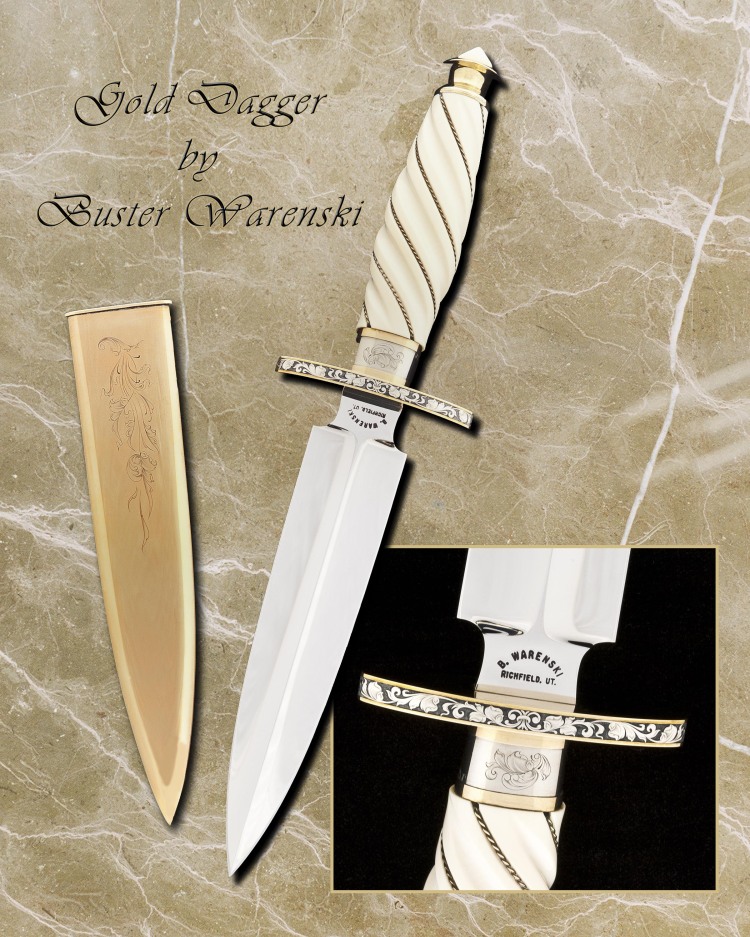
When knife enthusiasts think Knifemakers’ Guild, thoughts of Blade Magazine Cutlery Hall-Of-Fame© member Buster Warenski cannot be far behind. His gold dagger includes a gold separator band between the guard and also a gold pommel. The handle is carved antique ivory with twisted gold wire. The engraving is by Julie Warenski-Erickson. (from the Dave Nittinger collection; photo by Dave Siegel)

From One Cutlery Cradle To Another


The first BLADE Quiz focuses on Sheffield and the early days of the Knifemakers’ Guild


ARE YOU UP ON YOUR KNIFE HISTORY, especially the golden age of Sheffield and the beginnings of the Knifemakers’ Guild? Our first installment of a new BLADE® department, the “BLADE Quiz,” should let you know how schooled you are in short order. The answers appear below.

    1) The very early Sheffield knives carried the stamp “GR.” To what/whom did the initials refer and what were the knives better known as? A) Green River and Green River Knives; B) King George and Green River Knives; C) Great Britain and Green River Knives

    2) Knifemaker Ted Dowell served as a gunnery officer on which U.S. Navy ship during the Korean War? A) U.S.S. Minneapolis; B) U.S.S. Missouri; C) U.S.S. Intrepid

    3) How many cutlery factories were in Sheffield in 1910? A) 400; B) 1,400; C) 4,000

    4) Which Guild knifemaker was known early on by the moniker of “El Lobo Solo” (Spanish for “lone wolf”)? A) Chubby Hueske; B) Ruffin Johnson; C) Clay Gault

    5) Upon completion of 50 years of service, each Joseph Rodgers & Sons Ltd., employee was presented with: A) A 5-inch-tall silver statue of Vulcan holding the Rodgers trademark of a six-pointed star and a Maltese cross; B) a replica of the world-famous Rodgers “Year Knife”; C) a gold watch

    6) The obverse side of the blade is: A) the front or display side bearing the maker’s mark; B) the side without the maker’s mark; C) the blade spine

    7) Knifemaker Red Watson’s first name was A) Red; B) Herbert; C) Quinton

    8) In 19th-century Sheffield, the men who worked knife grinders feared: A) grinder’s asthma or grinder’s consumption; B) shattering grindstones, which could kill a worker; C) A and B

    9) Who stated, “Is knifemaking an art? I feel that anything done well is an art, be it a Rembrandt, a custom knife, or the Golden Gate Bridge. In short, what is art? More important, what isn’t?” A) Bud Cronk; B) Buster Warenski; C) Harvey McBurnette

    10) A cross guard has: A) Two quillons; B) one quillon; C) no quillons.

    11) According to The Knifemakers Guild Directory of the Membership, Bob Dozier is the son of: A) a blacksmith; B) an ironworker; C) a farrier

    12) The tool used by many Sheffield cutlers to put inlay holes in mother-of-pearl scales or to drill holes in scales is known as the: A) stidder or stiddy; B) parser or parsey; C) doller or dollie

    13) The first female knifemaker to apply for membership in the Knifemakers’ Guild was Carolyn Tinker, at the 1974 Guild Show. However, there was also another female maker who applied for membership at the ’74 show. Her name? A) Mary Jean; B) Ethel Waters; C) Rita Winter

    14) The term pocketknife originally referred to: A) a knife with blades opening at one end only; B) any knife that could be carried in a pocket; C) a knife that was always handy and could be used for any number of cutting chores

    15) Which of the following is not a founding member of The Knifemakers’ Guild? A) Jon Kirk; B) John Applebaugh; C) John T. Smith

    16) In old Sheffield, a bolster was cast or forged from nickel, iron or brass and had a projection used to tommy it to the liner. In this instance, to tommy means: A) to pin; B) to rivet; C) to solder

    17) Xylonite was the first of many types of imitation: A) bone; B) ivory; C) pearl

    18) Knives with handles made by burning an imitation tortoiseshell pattern into clear horn with lye were known as: A) spotted penknives; B) shell knives; C) turtle blades

    19) The Deguello, the tune Santa Anna adopted to signify no quarter would be given to the defenders of the Alamo, was originally used by: A) the Moorish invaders of Spain; B) Christopher Columbus; C) the Spanish conquistadores


Answers: 1) B; 2) B; 3) C; 4) B; 5) A; 6) A; 7) C; 8) C; 9) C; 10) A; 11) A; 12) B; 13) A; 14) A; 15) C; 16) B; 17) B; 18) A; 19) A. Scoring: 0-3—Your tongs just got gonged. 4-7—Have you considered foregoing knives and taking up Farmville? 8-12—You’re spending too much time playing mumbley-peg. 13-16—Your knife neurons are starting to fire. 17-18—You are qualified to run for mayor of The Pit at the BLADE Show. 19—You must be Pete Cohan, curator of the National Knife Museum.

For more on the latest knives, knife legislation, knifemaking instruction, knife trends, knifemakers, what knives to buy and where and much more, subscribe to BLADE Magazine, the World’s No. 1 Knife Publication. For subscription information click on http://www.shopblade.com/product/blade-magazine-one-year-subscripti…?r+ssfb050512#BL1SU.
 

Do You Like Knife Lotteries?

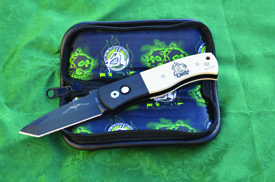
Timely articles on knives and the knife industry are what keep most enthusiasts interested, especially if issues covered in magazines and online are hot topics. Such is the case with the feature “Lotteries: Good or Bad for the Knife Industry?” by Mike Haskew that ran in the June 2014 issue of BLADE®. The gist of the article is that lotteries held at knife shows have their up and down sides, but for now they appear here to stay.emerson knife on zipper case GIII

(At left is a special Ernest Emerson G3 Model with the USN logo for the USN Gathering.)

The feature starts: Since demand routinely exceeds supply, many custom knifemakers and knife show promoters use the lottery system in an attempt to make the opportunity to buy certain custom knives available to more people.

The concept of the lottery is not new to custom knives—BLADE Magazine Cutlery Hall-Of-Fame© member Ron Lake is said to have conducted the first knife lottery in 1972, with Jess Horn following suit in a most successful manner—and the Art Knife Invitational in San Diego long has used what is basically a lottery at the table of each of its 25 elite exhibiting makers. Meanwhile, those in recent years to capitalize on the phenomenon include Tony Bose, Ernest Emerson and Rick Hinderer, and they have been joined by a number of other makers and knife shows, including the Tactical Invitational, Usual Suspect Network (USN) Gathering and the California Custom Knife Show among the latter.

While there are variations on the theme, the basic premise of the lottery is that those interested in buying a knife from a certain maker place their names in a “hat” and hope they are lucky enough to have their names drawn for the first right to buy. It’s that simple.

Amid the ongoing discussion of the merits of the lottery, there are both advocates and skeptics.

“I’m a big proponent as long as a lottery makes sense,” related Larry Brahms of BladeArt and the USN Gathering knife shows. “You’ve got a maker doing a show and he has a five-to-seven-year backlog of orders. He wants to see customers and have something there. He may have six or seven pieces and 200 people that want to buy them. There has to be a fair way to sell the knives, and the lottery is a fair way if it’s organized and cohesive.”

To read the rest of the story, see the June 2014 issue of BLADE. So what do you think? Do you like knife lotteries?

How To Photo Knives Seminar at BLADE Show

Eric Eggly of Point Seven Studios will show you how to photograph knives in a special seminar at the BLADE Show (www.bladeshow.com) and Living Ready Expo 2013 May 31-June 2 at the Cobb Galleria Centre in Atlanta.

In “How To Photograph a Knife,” Eggly will cover the foundation of knife photography and share some simple, easy-to-use tips and techniques to create your own stunning knife photos. The seminar will be the Saturday of the BLADE Show, June 1, at 4 p.m. in Room 104. All BLADE Show ticket holders are admitted free of charge (seating is limited; first come, first served).

Under the direction of Eggly, Point Seven has been the official BLADE Show photographer for many years. A full-time commercial photographer, Eggly has photographed knives for decades and often has said he does so in no small part due to his passion and love for knives and the knife community in general. He travels to a number of knife shows nationwide, including the American Bladesmith Society Knife Expo in San Antonio, Texas, and was presented with a special award for outstanding service by the ABS at the 2011 BLADE Show.

Point Seven is based in Maumee, Ohio. As Eggly notes on his website, “It’s important that I know my subjects. Without that special interaction and understanding, there’s simply no story to tell.” 


For more on the BLADE Show, visit

www.bladeshow.com and/or subscribe to BLADE® Magazine

www.shopblade.com/blade-magazine-one-year-subscription-us?icid=SHBLNCF2BL1SU-030613?lid=ssfbbl041913

Learn how to photograph knives at the BLADE Show.
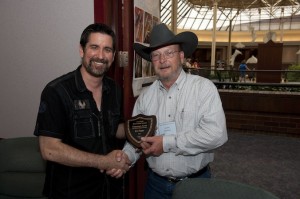
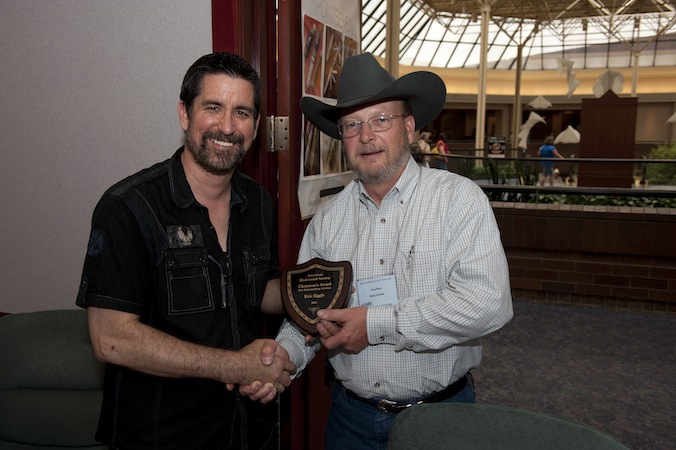
Eric Eggly of Point Seven will show you how to photograph knives at the BLADE Show. Eggly (left) is shown here receiving an award for outstanding service to the American Bladesmith Society by past ABS Chairman Greg Neely at the 2011 BLADE Show. (Point Seven photo)

Angelina Jolie- Butterfly Knife skills

She shows her Butterfly knife skills ♥

Knife Of The Day XV: O’Hare Tanto

     Our Knife Of The Day is Sean O’Hare’s tanto. It sports a flat-ground, 3.75-inch blade of CPM-154 stainless steel, a stabilized buckeye burl handle with a bird’s-beak butt, and a 416 stainless steel guard. Sean also made the leather pouch sheath. His price for a similar piece: $395.

     “This one is a bit of a departure from my norm as it is a tanto style,” Sean noted. “I was very pleased with the way it turned out. So far this is the only [tanto] I have made. It sold right away at the New York Custom Knife Show.”

     For more information contact Sean at [email protected].

     For more on the latest knives, knife legislation, knifemaking instruction, knife trends, knifemakers, what knives to buy and where and much more, subscribe to BLADE® Magazine, the World’s No. 1 Knife Publication. For subscription information click on http://www.shopblade.com/product/blade-magazine-one-year-subscripti…?r+ssfb013012#BL1SU

Eat Up These Edged Combatants

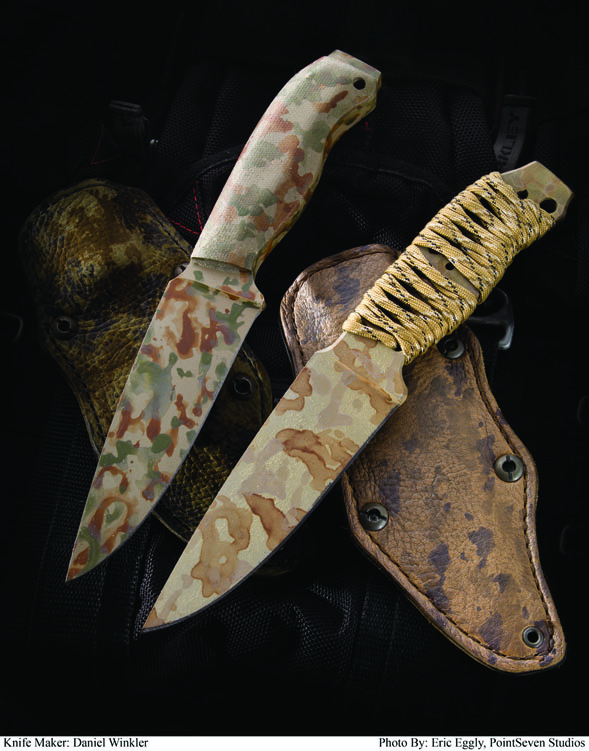
Paraded in the Knives 2013 book like dress soldiers at a welcome-home party is a pair of Daniel Winkler fixed blades in camouflage finishes, and cord-wrapped and otherwise synthetic handles. They each measure 9.75 inches overall and feature extended “striker pommels.”

Soldiers will no doubt take as much of a liking to the twosome as the Editor of Knives 2013, further catapulting them to the top of the “Editor’s Favorites from Knives 2013 Book” list. (Eric Eggly, PointSeven Studios photo)

Black Orchid Equity Buys Moteng

The private equity company, Black Orchid Equity, LLC (a South Dakota company), has acquired the assets of Moteng and has plans to grow the company’s volume dramatically.  “We are thoroughly capitalized and in the process of doing three things – stocking up on inventory, selling at the most competitive prices allowable and becoming the largest knife distributor in the country,” says Blake Whitney Thompson, one of the new owners.  The new owners of the company, based in San Diego, plan to use Moteng as a platform to acquire other distribution companies in the industry and to fund/invest in certain manufacturers that they represent.  
 
Moteng has launched its new look at www.Moteng.com <http://www.Moteng.com>  and plans a major dealer/vendor show in the fall for all of its customers.

Advertisement

Must Read Articles

Read this before you make a knife

Knifemaking 101 – Read This Before You Make a Knife

  by Wayne Goddard My experience has taught me that there's nothing like digging in and getting started. I've often said the hardest part of the...
how to forge damascus steel

How to Forge Damascus

Advertisement
Advertisement