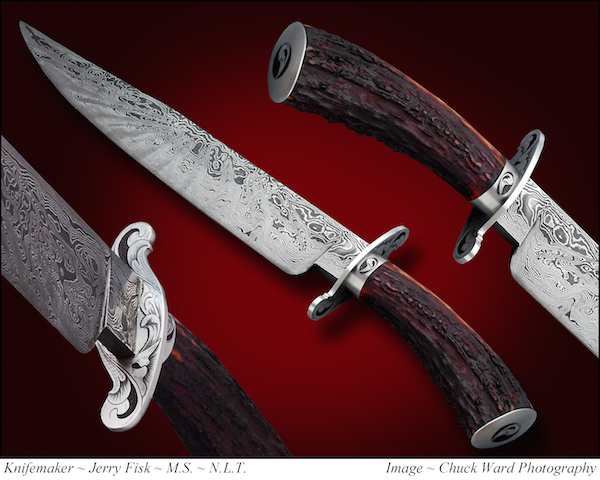
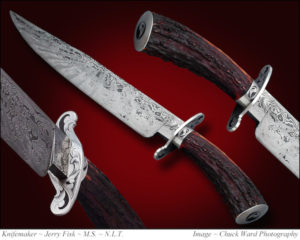
A new pro-knife law expands the blade-length limit for knife carry in Georgia, home of the BLADE Show, to 12 inches. Jerry Fisk’s bowie features a damascus blade and stag handle. (Chuck Ward image)
A new pro-knife law signed into law this week in Georgia comes just in time for the 36th Annual BLADE Show.
Signed May 8 by Georgia Gov. Nathan Deal, the new pro-knife law (HB 292) increases the legal carry length of a knife blade in the state from 5 to 12 inches.
“With the BLADE Show coming up June 2-4, attendees and exhibitors will have more freedom to carry their larger knives without fear of legal entanglements,” Knife Rights reported. It is language from Knife Rights’ Georgia Knife Law Reform bill, SB 49, that is included in the new pro-knife law.
The new 12-inch length limit became effective as soon as Deal signed the bill. Since Georgia passed Knife Rights’ Knife Law Preemption in 2012, any lesser length restrictions in cities and towns are now voided by HB 292. Moreover, neither can local jurisdictions enact prohibitions more restrictive than those in the new pro-knife law.
The BLADE Show and blademag.com express their gratitude to such organizations as Knife Rights, the American Knife & Tool Institute and others that fight for common-sense knife legislation. Both organizations will be among the exhibitors at the BLADE Show and blademag.com encourages you to stop by the booths of each for more information on how to protect your right to own and carry knives.
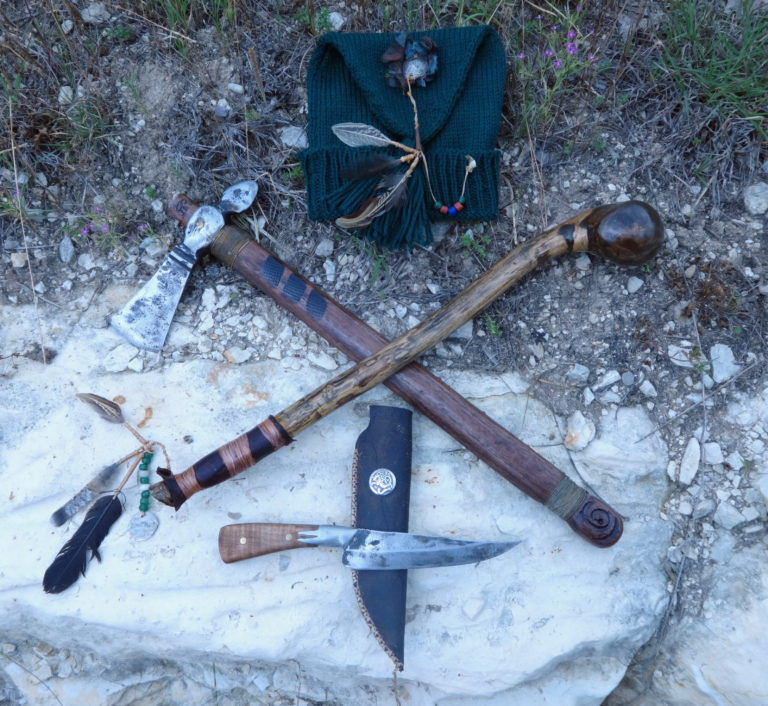
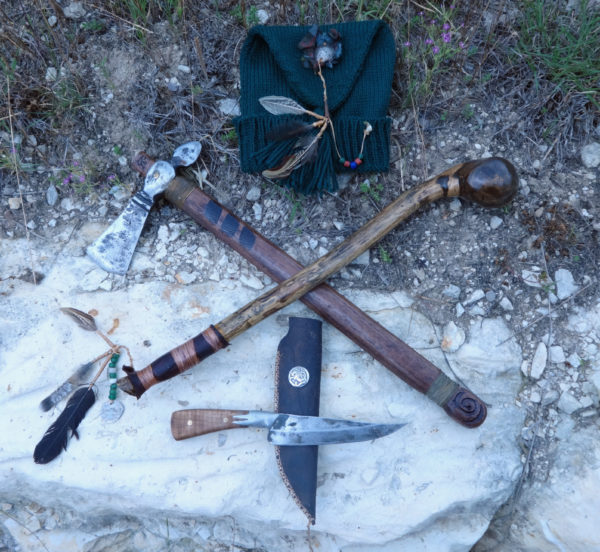
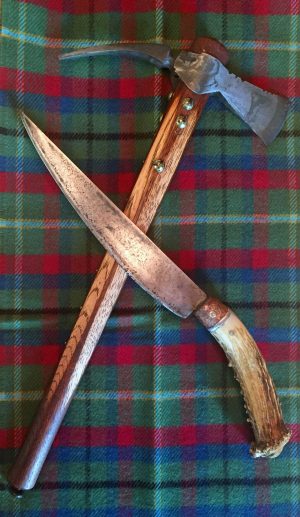
Custom knifemaker Don Shipman’s edged-weapon set is on auction until June 30, 2017 to benefit the Green Beret Foundation. In addition to a Rogers’ Rangers bonnet, a knife and sheath, and a tomahawk, the set also includes a war club. These are all items a Ranger during the French and Indian War might have carried.
Don Shipman of Shipman Knife & Hawk and Longfear Forge in Waco, Texas, has made a Rogers’ Rangers III edged-weapon set for auction to benefit the Green Beret Foundation, which helps Special Forces members and their families. This new set includes items that the precursor to today’s U.S. Army Ranger would have carried with him in the eastern woodlands of North America during the French and Indian War, 1754-1763. The kit includes a knife and sheath, a tomahawk, a Rogers’ Ranger bonnet and an item stirring interest: a war club. If you would like to bid on this hand-crafted and meticulously researched collection, you only have until Jun 30 to do so. As of this writing, the highest bid is $1310. You can read about Don’s decision-making process for this set in detail in the October issue of BLADE magazine. Be sure to subscribe.
Don is nothing if not thorough. Whether in love, service to country or researching and assembling his edged-weapon Heritage Sets, he strives to honor the spirit of the warrior, the frontiersman and the gentleman.
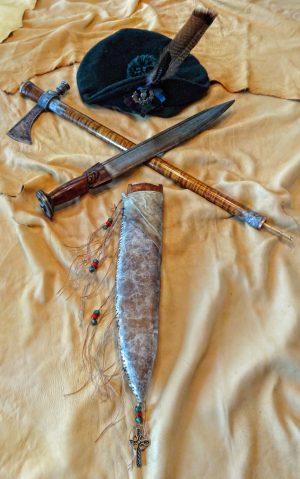
This Rogers Rangers II set by Shipman Knife & Hawk included items a young Ranger serving under Major Robert Rogers might have carried in 1755 during the French and Indian War: a Scottish bonnet, pipe hawk and a dirk and sheath.
Take, for example, the name of his forge. In Irish Gaelic, “long” means “ship” and “fear” means “man.” But The Ship Man, as his Special Forces friends sometimes refer to him, doesn’t stop there. “I use the analogy that ‘long’ gets its meaning from the Norse ‘longships,’ which raided medieval Ireland,” Don explains. “‘Man,’ especially ‘strange men,’ is frequently associated with ‘danger’ in languages. So, ‘man’ equals ‘danger’ equals ‘fear.’ Thus, Longfear forge equals Shipman Forge. All of the above works especially well with my Norse and Irish ancestry,” he concludes.
So, on his blades, you will find the crossed-arrow Shipman logo, and if Don forged the item, you’ll also see the Longfear stamp. “The stamp is…wait for it…a Viking longship prow! Totally badass!” And that’s what it’s like talking with Don. You’re going to get an education, and you’re going to enjoy the lesson because he makes it entertaining.
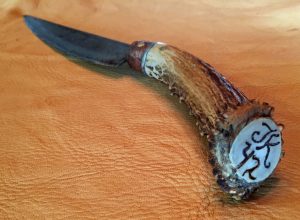
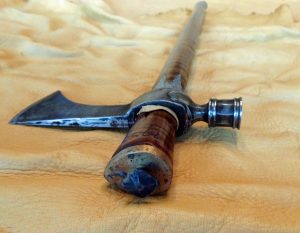
This kit included a pipe hawk, a Joe De La Ronde-designed spike hawk, a roach-belly blade with sheath, the family tartan, and an caubeen, or Irish beret, with three badges.
Don makes edged weapons that could have been used or made by the common man on the American frontier, no matter where that frontier may have been at that point in history. Sets can include a knife and a tomahawk, or more than one of each, along with usually a bonnet, blanket or piece of clothing. He’s working on one now that may include a gun. Each item in the set is researched thoroughly, from handle woods to clan tartans used in the headgear cockade—think rosette on a prize-winning ribbon.
First, if you don’t already know your family’s origins, Don will research your family’s heritage using Ancestry.com, the online genealogical site that assists in tracing your family tree. He establishes where your family came from and where your family settled or migrated to when they arrived in America. The frontier may have been upstate New York at the time, or Ohio, or Kentucky as westward expansion continued. If you’re of Irish or Scottish descent, for example, he’ll determine, to the best of present-day knowledge, to which clan your family belonged. Similarly, if you think you may descend from Vikings, he’ll investigate your Nordic heritage.
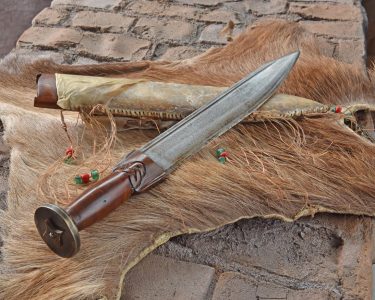
This roach-belly blade was forged out of 1095 steel by Longfear Forge. The ferrule is comprised of beaten copper and poured pewter. The handle is whitetail antler and “JK42” is engraved into the pommel using Colonial (Allegheny) font in recognition of the client’s service in Special Forces Operational Detachment (ODA) 542.
Next, he’ll research available materials in the region where your family lived once they arrived in the New World. Was that variety of maple tree growing in the area where and when your family settled? Yes. Then Don may use that wood to fashion a knife handle. What styles of knives or tomahawks were being used in that region and for what purpose? For instance, there’s the tomahawk that has a bowl in one end used for smoking tobacco and passing around, what we would think of as a peace pipe. There’s the ’hawk with the spike opposite the cutting edge, which our ancestors used in times of combat for striking their opponents. And, hawks with nubs on the back were often used as a mallet or hammer, making the weapon double as a utility tool.
The tomahawk in the Rogers’ Rangers II set has a 22-inch curly maple shaft with a pewter inlay. The copper butt cap has a 2-inch brass mouthpiece. The head is an R.E. Davis blade in 4140 steel. Patina added to all metals.
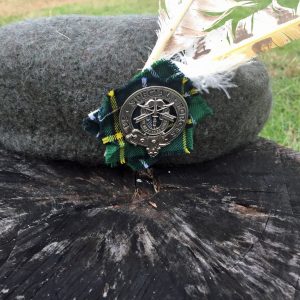
Every facet of the collection is thus researched. If Don wants to use a turkey feather, for example, to adorn a bonnet, he first confirms if turkeys were plentiful where your family lived and at that time. The woolen bonnets are supplied by reenactment companies such as Jas. Townsend & Sons out of Pierceton, Indiana. In Scottish versions, the headgear is larger and of thicker material, but the Irish renditions are precursors to the berets used by U.S. Special Forces. And like our elite warriors wear what’s called a flash—think a shield-shaped patch adorned with symbols from their unit—on their berets, Colonial-era warriors would wear a cockade made with their clan’s tartan, say, or other emblem representative of their heritage.
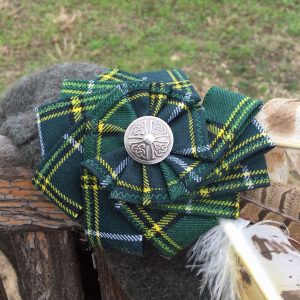
A tattered Forrester tartan cockade was one of three cockades for this bonnet.This bonnet came with tattered, bow and rosette cockades in the client’s Forrester tartan. Due to the client’s service in elite forces the red-tailed hawk, wild turkey, ring-neck pheasant and mallard feathers are prominently displayed, his family hailing from an area where the species were prevalent.
Don will educate his clients on the proper time and place to wear certain emblems. For instance, your set may include one bonnet with multiple cockades or other adornments. There may be a tattered cockade appropriate for everyday wear, or one that should only be worn at formal occasions. The headgear may include a feather, which, Don explains, would only be appropriate for a chief of a Native American tribe to wear. However, he acknowledges that his clientele may correctly believe they have earned the honor and they will wear the feathers to military galas, for example.
Don knows more than a little something about warriors of many nations and their weaponry. He ended up serving 30 years in the U.S. Army. “All I wanted to do was not embarrass my father and be a good soldier,” Don said. His father was an Army sergeant major, and Don was born and raised in Wurzburg, West Germany (at the time) until he was 13 years old. His dad’s final duty station was at Ft. Hood, Texas, where his parents went through the process of naturalizing Don. At the time, Germany had compulsory military service. This entailed sacrificing his dual citizenship, but saved him from possible conscription into the German army.
When his father retired, the family moved back to the home state of both his parents: West Virginia. So, Don was a high-school kid in a very foreign world. How foreign? “This kid got on the school bus and he had a fat bottom lip. I’m thinking, ‘It isn’t even 9 o’clock yet and this kid’s already been in a fight.’” Thus was young Don’s introduction to chewing tobacco. On the very same day on the very same bus, a few stops along the route, three redheaded sisters get on the bus. “My eyes immediately go to the tallest one, ’cause that’s how I roll,” Don said. “She had wire-rimmed glasses, and I thought, I’m cool with that.”
The sheath for this 18-inch Scottish dirk has a 14-inch basswood shell wrapped in rawhide with a sinew running stitch. It is adorned with sinew fringe and green and red padre beads and a 2-inch Celtic cross.
Fortunately, through an old-timey bus driver who lined the students up by sex and height, eventually the tall girl and older boy ended up sitting beside each other. Don barely said a word. Unbeknownst to him, however, the future Mrs. Shipman, Diane, or Annie as Don calls her, took matters into her own hands, putting the word out that the seat beside her was always reserved for Don. She knew right from the get-go that he was “the one.”
Don was dating his best friend’s sister, and although he got to the point where he could talk to Diane—a lot—and wanted more than anything to be with her, he couldn’t figure out a way to break it off with his friend’s sister without hurting her. “Next thing I knew, I was in basic training,” Don says, laughing. The other attachment dissolved naturally during the separation. In another example of his thoughtfulness, when Diane wanted to skip the hassle of a wedding, he told her he understood and that she could scale the event back, but that a wedding was bigger than both of them. “I told her I couldn’t do that to my parents, and that if she thought about it, I didn’t think she could do it to her parents either.” The Shipmans have now been married 37 years. They have a son, Isaac, born when Don became a Green Beret, and a daughter, Samantha, whom Don delivered.
Don’s favorite picture of him and Annie was taken on Oahu in 2000 with Diamond Head in the background.
Following a long family tradition, Don joined the U.S. Army in 1977 as an armored reconnaissance specialist, completing basic and advanced training at Ft. Knox, Kentucky. Although he hadn’t intended to stay, he did well and acted on the guidance of superiors, continually accumulating the schooling and assignments that allowed him to advance. When he wanted to join Special Forces, he was advised to take drill sergeant school. He did, and soon got accepted to qualify for Special Forces. The only problem was, he would have to wait for a slot in his preferred specialty: engineer, “because, yeah, I wanted to blow things up.” Or, he could go in immediately as a physician’s assistant, and have a marketable skill when he transitioned back to civilian life.
Qualifying on both the physical level and being required to “drink from a fire hose” medically speaking, Don made it through. “I was never afraid of the academics.” Because medics are limited in number and a Special Forces unit cannot deploy without one, Don deployed frequently. Honduras, twice; Somalia, pre-involvement; Kenya, four times; Tanzania; Djibouti; Egypt; Pakistan and Afghanistan, pre-involvement; Bosnia-Kosovo; Saudi Arabia; Kuwait; Iraq…in other words, he was exposed to the warrior tradition of many cultures.
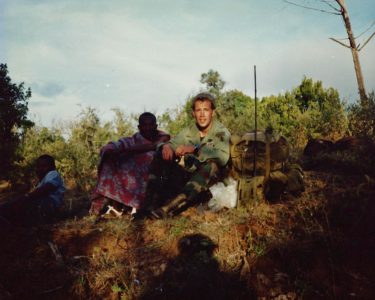
In November of 1989 Don Shipman was a sergeant first class with 5th Special Forces Group on guerilla operations in Kenya.
But it was when he was face-down in the sand during Desert Storm, yelling at the next closest man, who was yelling back because neither could hear the other that Don began bargaining with God to get him and his brothers out of this. “God, family, country. I’d done a lot for my country. It was time for more God and family.”
Stateside, Don accepted a research position with a special operations medic from the Vietnam era who would encourage him to accept the Army’s offer to get his doctorate. Don finished out his career teaching at Ft. Sam Houston in San Antonio, Texas. In the course of his medical training he was made an officer and retired as a major.
In all those years, aside from an occasional fishing trip, Don had never had a hobby. Now with time and resources he could indulge his creative side. About seven years ago he was on the Military Times Hall of Valor website where you enter your surname and up pops a database of recipients of the Silver Star up to and including the Medal of Honor. There were more Shipmans than Don could count. He’s a firm believer in the line that Rudyard Kipling made famous in his poem “Recessional”: “Lest we forget—lest we forget!” No soldier truly dies unless he is forgotten.
Don wasn’t even drawn to knifemaking, not right away anyway. But in feeding the home fires, it began to bother him that hardwoods like black walnut were being burned. “It’s practically a sin,” he said. So, he fashioned a hawk handle out of one piece and enjoyed the process. He gave it away. Then representatives from the Ranger Lead The Way Fund asked Don if he would make something for them to auction off at their 2013 gala. He made Rogers’ Rangers I, a set including a bonnet with a Roger’s Ranger badge, a 23-inch tomahawk and an 18-inch Scottish dirk with sheath. In 2016, he was asked to make Rogers’ Rangers II for a Green Beret Foundation auction. He had found the perfect outlet for his love of history, his brethren and the various streams of humanity that forged our country’s beginnings.
Don’s pieces look old and homespun, in keeping with both the available technology of the era and the skill level of the common men who fashioned them. If he doesn’t forge the blade himself, he uses The R.E. Davis Company in Woodville, Ohio, which specializes in weapon reproductions. Pieces from Shipman Hawk and Knife are pitted, worn and sometimes slightly warped, because that’s what a centuries-old edged weapon should look and feel like.
‘Knives of War’ Reveals Elite Forces Use of Knives in Combat
“Knives of War” is the “International Guide to Military Knives from World War I to the Present,” and costs $25.
Compiled by two British and one American author, “Knives of War” is a guide to edged-weapon use from World War I to the present. Of particular interest is behind-the-scenes information on the use of the Marine Raiders Gung Ho Knife, the Gerber Mark II Combat Knife as well as the most famous fighting knife of all time, the Fairbairn-Sykes. This is a must-have for any knife lover’s library.
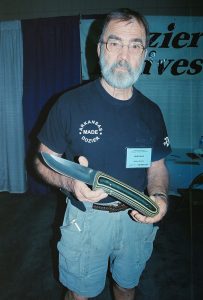
Aka “Dr. D2,” Bob Dozier long has been a proponent of D2 tool steel. Here he holds one of his specially made “over-sized” folders at a past BLADE Show.
D2 tool steel just keeps cutting. It’s been around a long time and enjoys a solid reputation among custom and factory knifemakers and knife users. As with many high-performance steels, it experiences a range of highs and lows in popularity, and at the moment seems to be enjoying a high.
While D2 may not be stainless, it remains a top performer due in no small part to its high wear resistance/edge-holding ability. “It will hold an edge for a very long time before it will go dull,” says Paul Tsujimoto, director of engineering at Ontario Knife Co. Combined with its relatively inexpensive price, this makes D2 a favorite of manufacturers and custom makers alike. “For us, it’s the perfect combination of performance and an affordable price,” notes Dietmar Pohl of Pohl Force Knives. Agrees Devanna, “It’s the best bang for the buck because it’s priced reasonably and works well.”
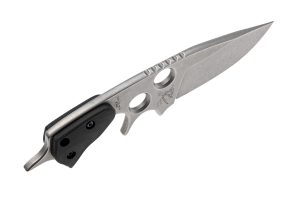
Pohl Force Knives uses D2 blade steel for the Hornet, a Spencer Reiter design.
On the down side, D2’s ample wear resistance also means it is difficult to sharpen. However, a diamond abrasive sharpener should do the trick. Also, the steel’s impact toughness suffers in comparison to some other steels, so D2 is not the best choice for a blade used for chopping and other impact-type cutting chores. And, since it’s not a true stainless, you should wipe it down after use to help keep corrosion to a minimum.
Nonetheless, D2 is an outstanding choice for a hard-use knife and remains popular among custom knifemakers and manufacturers, and knife users as well.
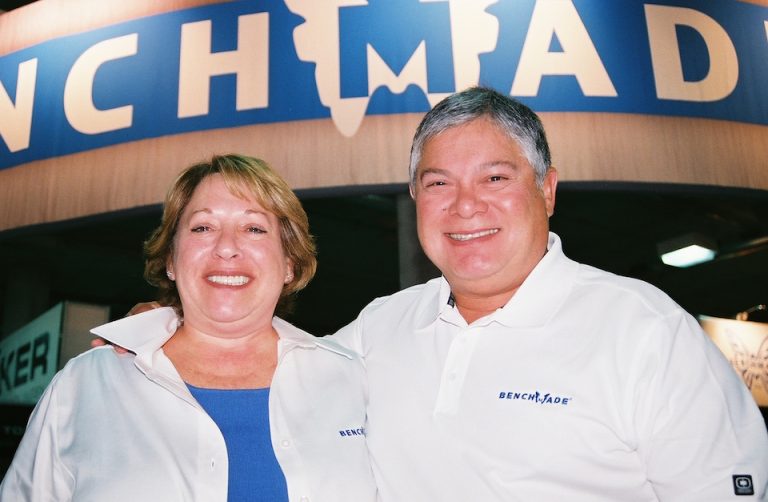
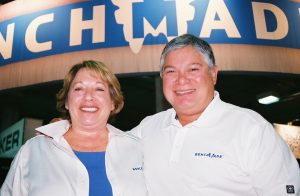
Both will be formally inducted into the Cutlery Hall Of Fame the Saturday night, June 3, of the BLADE Show at the Cobb Galleria Centre in Atlanta during the BLADE Magazine Awards Reception (tickets required). The BLADE Show will be June 2-4.
According to a fellow Cutlery Hall Of Famer, de Asis has been a major pillar in the knife industry for more than 35 years. He founded Bali-Song, Inc., which later became Benchmade Knife Co. From a fledgling business in a garage to a major force in the cutlery industry, Benchmade is among the top knife manufacturers in the world. Les was a major influence in the renaissance of the butterfly genre of knives, which continues to enjoy a large following of knife fans. He was a founder of the American Knife & Tool Institute (AKTI), one of the earliest and most successful of the organizations protecting the rights of knife enthusiasts and the knife industry, and remains a driving force in the organization. He raised the bar significantly on the quality and function of automatic knives for military, law enforcement, first responders and general use, and Benchmade remains a leading manufacturer of autos today. The AXIS™ Lock designed by William McHenry and Jason Williams and introduced into production by Les helped maintain the revolution in locks for folding knives that persists today.
James L. “Jim” Batson is one of the world’s most noted bladesmiths and authorities on both bladesmithing and Cutlery Hall-Of-Famer James Bowie and bowie knives. The Batson Bladesmithing Symposium near Bessemer, Alabama, is one of the world’s most respected and best attended annual hammer-ins, attracting bladesmiths, knifemakers and knife enthusiasts from around the world, and has been doing so for almost 30 years now. Through his symposium and his many nationwide seminars teaching the art of bladesmithing, Batson is a standard bearer of the American Bladesmith Society’s stated goal of educating any and all on how to best make knives of forged steel. He has scoured the countryside in Texas, Arkansas and the Southeast, and combed through the archives of dozens of libraries and city and town halls in search of information on bowie knives and the life and times of James Bowie. He also has written extensively on both subjects.
Batson is an award-winning master smith in the American Bladesmith Society (ABS) and two-time ABS chairman. He led the ABS through some of its most successful times in recent years and shows no signs of slowing down. In the February 2014 BLADE®, he was ranked No. 9 among the top 13 knifemakers from 1989-2000. “Jim is a great bladesmith, a great leader, a great historian, a great bowie authority, a great writer and a retired rocket scientist,” wrote one Cutlery Hall Of Famer. “I challenge anyone to match that record!”
Help us fill in our BLADE calendar. Send us the details and we’ll help spread the word.
We’ve added a calendar to BLADEmag.com. Now, we need your knife events to fill in the BLADE Calendar. We’ll take anything to do with knives: shows, seminars, workshops, hammer-ins, demonstrations, shop tours, classes, throwing competitions, open meetings at your knife club. You supply the details below. We’ll enter it onto the site and send you a link when it goes live so that you can use it on your Facebook Page, Instagram account, forum, blog or other social media outlet.
But wait, we want manufacturer and distributor events too: retail location grand openings, factory tours, celebrations. Anything the public is welcome to attend or sign up for is acceptable.
Be sure to include a photo: It can be of a past occurrence of your event; your company, show or club logo; or an image of the venue. Attach the photo to your email that provides all of the following information:
Complete name of event
Date or dates of event
Start time and end time on each day of the event
Event website or page
Event admission cost
Event organizer’s name
Event organizer’s phone number
Event organizer’s email
Description of event
Complete name of venue
Complete address of venue
Venue phone number
Venue website
Send your email to [email protected]. Be sure to submit your listing a minimum of two weeks prior to the event. We’ll do our best to help you get the word out, and we hope you refer people back to the BLADE Calendar.
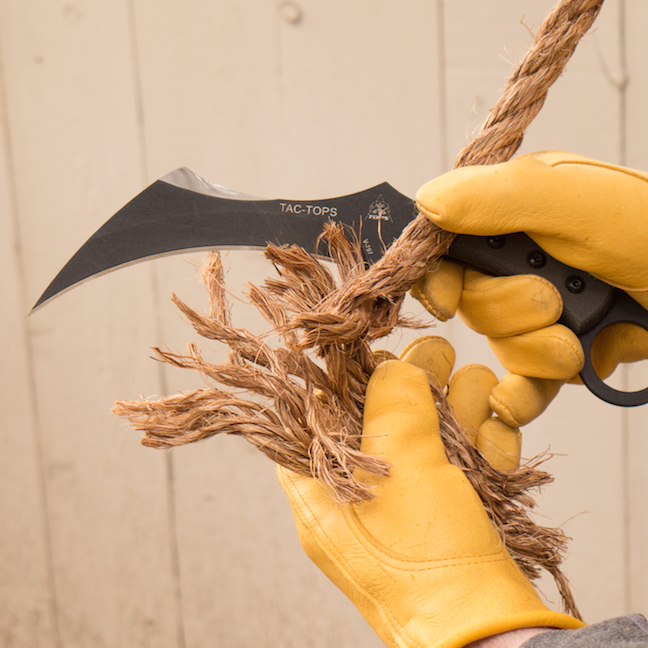
Shock and claw karambits help highlight the latest BLADE®, on newsstands NOW!
“Shock and claw” karambits, the damascus knives that changed knife history and the complete lowdown on the 4th Annual BLADE University at the 36th Annual BLADE Show are but a few of the highlights of the latest BLADE®, on newsstands NOW!
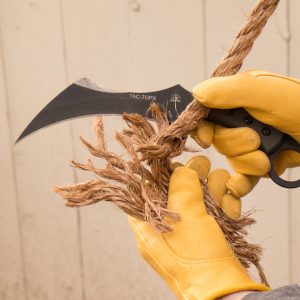
Boasting a blade shaped like a sickle, the karambit has been adapted for martial arts use today. However, it remains an effective cutting tool as well. James Morgan Ayres tests four of the latest editions in his story, “Shock & Claw.”
As the world’s biggest and most important knife event, BLADE Show 2017 attracts the best knifemakers and knife pros in existence. What better talent pool is there to select from as teachers for BLADE University, three days of knifemaking and other cutlery classes on a wide variety of sharp subjects? Check out who will be teaching what and how you can attend in “Back To Sharp School” by this writer.
Also this issue: Pat Covert’s test of four of the latest factory flipper folders; Dexter Ewing’s assessment of some of the newest factory machetes; part two of Frank Trzaska’s salute to the knives used by U.S. soldiers during World War I on the 100th anniversary of the USA’s entry into “the Great War”; the latest paring knives just in time for Mother’s Day, by Daniel Jackson; some of the top drawknives and how to use them, by Abe Elias; a farewell to ABS journeyman smith Larry “The Hammer” Harley; and much more in the latest BLADE—on newsstands now or subscribe here.
Browning’s line of Jared Wihongi Signature knives is as fierce as its SWAT operator namesake.
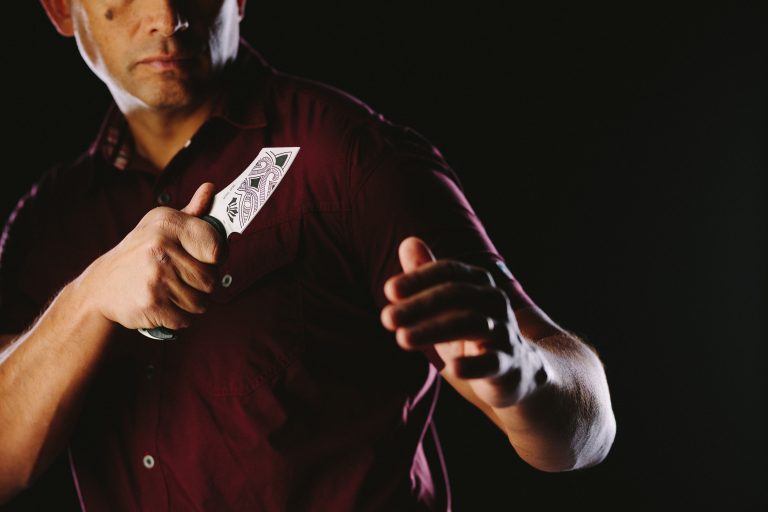
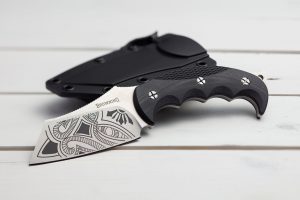
Jared Wihongi is a native New Zealander who began training in martial arts at an early age. As a young man he had the chance to live in the Philippines and study an edged-weapon style of fighting called Pekiti Tirsia Kali. Jared has spent 14 years as a law-enforcement special weapons and tactics operator. He also instructs other SWAT team members as well as elite military operatives in edge-weapon skills. He has advised Browning on its Black Label tactical family of knives and now has his own signature line, strikingly designed with Maori-inspired blade etchings. Be sure to subscribe to BLADE magazine to read about the Jared Wihongi Signature line of combat knives in the August issue, on sale May 16, 2017. To learn more about Jared Wihongi’s upbringing and training, read “Browning Launches Wihongi Line of Maori-Inspired Knives.”
The Jared Wihongi Signature Fixed has a canoe-shaped handle that is ergonomically correct in both a forward and overhand grip. The etchings are borrowed from Maori tattoo patterns.
To meet Jared Wihongi and hear him discuss his style and philosophy of knife fighting, here are some well-done videos by Funker Tactical. In the first, Jared discusses how the foot movements used in Filipino knife fighting can aid in an empty-hand or firearm scenario. In the second, Jared addresses how the skills developed through the practice of Pekiti Tirsia Kali are relevant to the reality on today’s street or battlefield. And in the last video, Jared talks about why you should train wearing what you wear in your work or your everyday life. Law enforcement and military especially need to practice wearing their equipment so they understand how their range of motion, breathing and other functions are affected by the added weight.
In “Fighting Folders” Michael D. Janich instructs viewers on the myths surrounding folding knives and how to employ them in a self-defense situation.
Micheal D. Janich covers how to use empty-hand skills, quick one-hand deployment techniques and knife-fighting tactics so you can lean on your folder as part of your self-defense kit. This DVD is well worth the $39.95 when you consider you can watch it repeatedly in the comfort of your home, practicing its demonstrated skills until you’re ready to take your training to the next level.