
The BLADE Blog w/Steve Shackleford

Knives, knife people, knife news, knife use, knife collecting, knifemakers, knife events, the BLADE Show, BLADE Magazine, and more.

Song Knife Highlights New BLADEĀ®

Song knife for BLADE.
Song Knife collaboration between Buck and country music star Craig Morgan highlights the new BLADEĀ®, on newsstands now!

Country music star Craig Morgan’s “Song Knife” for Buck, what’s “next” in custom knives, “Blades of the Bog” and much more sharp stuff highlights the new BLADEĀ®, on newsstands now!

Morgan, who also stars on the Outdoor Channel’s Craig Morgan All Access Outdoors, recently released his latest album, A Whole Lot More To Me. In collaboration with Buck, two songs from that album including the title track are downloaded on a card and paired with a special collector edition of the legendary Buck 110. Slated to go on sale in most every Walmart in America by the end of this month if not sooner, the “Song Knife” is reportedly the first promotion of its kind. Get the full story on page 28.

Tactical folders have been king of the knife hill for decades now but the question everyone wants answered is “what’s next” in terms of the knife that will replace those of the tactical kind at the top of the heap? Les Robertson has been buying and selling custom knives for over three decades and weighs in on what he thinks will be the next big thing on page 12.

Since knives are man’s oldest tool, the ways in which they have been made over the millennia are many. One was by retrieving iron ore from the bottoms of bogs and lakes and smelting it in furnaces to make blade steel. Daniel Jackson explores how today’s makers have revisited the old methods to make knives. Journey into the past on page 20.

Have you traded or sold a knife or knives you wish you had kept instead? Mike Haskew picks the brains and memories of three veteran collectors for such pieces in “Knives I Traded I Wish I Hadn’t” (page 44).

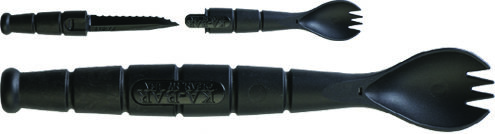
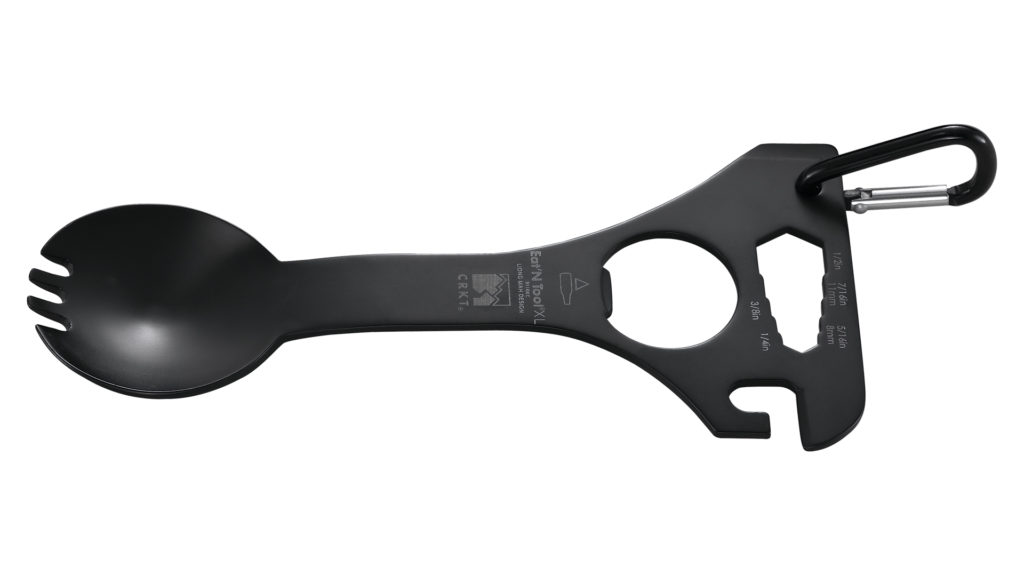
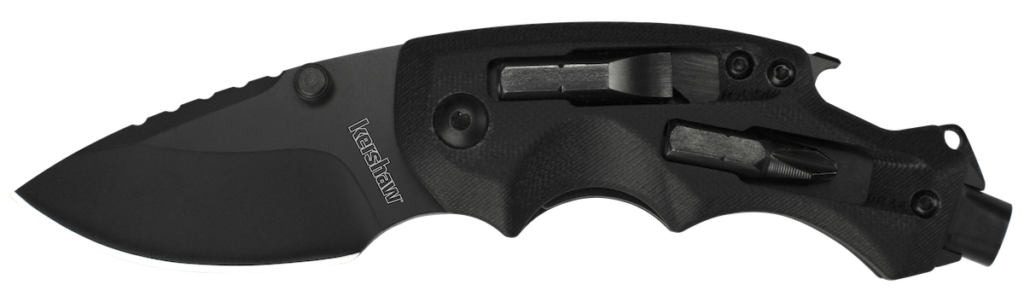
As with most things in today’s world, the more functions you can get out of an item the better. So it is with edged tools, especially today’s “gizmo knives.” Check out some of the leading examples of the genre that do more than cut  on page 78.

There’s much more in the latest BLADE—buy it on newsstands today, get the digital copy or subscribe to the digital or print editions—or both!

Save

Save

Save

Save

Save

A Revolution in Slip-Joint Construction

Unlike the traditional pocketknife in which the backspring rises and falls when the blade is opened and closed, the backbar of Tom Ferry’s model equipped with the Everflush Spring (top) remains flush when the blade is opened and closed. Ferry (above) works on a model with the mechanism in his shop.

The Everflush Spring takes the traditional pocketknife folding mechanism to the next level

By Lorien Arnold

As the traditional slip joint experiences a rebirth in favor among knife enthusiasts, there is increasing room for innovation in the knife’s classic, time-tested construction method.

    Enter Tom Ferry and Mike Vagnino.

    Innovators and educators, they have forged their paths in steel. Developing techniques and learning new skills, while at the same time teaching others, the two have collaborated on a concept that incorporates a generations-old method for assembling a slip joint, while bringing it into new worlds of materials and technology.

    ā€œ[An] idea evolved from the desire to engrave the backbar of slip-joint folders,ā€ Ferry began. ā€œThe reason this was all but impossible before was that slip-joint backbars or [back]springs are heat treated, making them difficult to engrave, and, due to timing issues, [the engraving] was not easily done prior to heat treatment.

     ā€œI had been bouncing the idea around trying to come up with a solution. One night while opening an automatic knife I noticed the internal kicker spring, which in many ways is similar in placement to a slip-joint spring. After doing some preliminary drawings, I contacted Mike for his input and assistance in developing the mechanism further. By sharing and combining forces, we cut the development time in half and have created a great working mechanism.

    ā€œIn total there have been at least five variations of the spring,ā€ Ferry continued, ā€œand Mike has taken the development further by creating the first multi-blade slip joint with the [new] mechanism. Mike coined the name the Everflush Spring because the backbar is always flush with the top of the handle.ā€

     You will notice the knives with the new spring in the accompanying photographs do not always correspond in form to the classic interpretation of the slip joint. Sporting titanium liners, bolsters and backbars, carbon fiber handles and high-alloy stainless blades, materials more common in the tactical category can be used to constitute the knives. To that end, the Everflush Spring allows for a completely solid handle configuration.

    The standard slip joint, whose backbar is a spring and must be free to move, can develop play on either side of the spring. The Everflush Spring design can incorporate pivot bearings for an action that is smooth with a crisp half stop. ā€œThe Everflush Spring is unlike common slip joints where the blade causes the spring to rise and drop as you rotate the blade from the open to closed position,ā€ Ferry observed. ā€œThis innovation allows the opportunity for engraving of the backbar as well as eliminating the timing of the blade to the handle, as all the timing is internal.

    ā€œ[By] splitting the backbar in half, thus creating a lower spring upon which the blade rides and an upper tang stop which stays flush with the handle, the backbar does not need heat treatment. This allows a wider range of material choices and embellishing options.ā€

    Being intrinsic with the backbar, the lower spring diminishes the pressure exerted upon the pin, which traditionally would be used as the spring pivot. This allows the use of more exotic or fragile handle materials without fear of them cracking at the pin. In addition, the mechanism provides the potential for assembling a slip joint using threaded fasteners that allow for easy cleaning and pivot-tension adjustments.

    ā€œThe major disadvantage is that this design will not easily fit or adapt to many traditional designs,ā€ such as folding patterns with three or more blades, Ferry noted. ā€œThe internal spring takes up more room and thereby creates issues with designing a knife for it.ā€ Conversely, it challenges makers to devise new designs, which is always good for the knife industry.

Tango Foxtrot Knives

Ferry responded to the changing market with the creation of Tango Foxtrot Knives LLC, which he characterizes as his ā€œnew venture into the realm of semi-production knivesā€ of his design.

    ā€œThe first knife from Tango Foxtrot is a tactical slip joint with the new mechanism, but I will also be introducing other models and types of knives in the future,ā€ he said. ā€œTango Foxtrot Knives was conceived years ago but the timing never seemed to be right for me to proceed with the venture.

    ā€œAs with any new design or product, you can never be sure how it will be received by the buying public. Mike and I unveiled the Everflush Spring at the 2011 BLADE Show (www.bladeshow.com) and it was very apparent the design was a success, with both of us selling out of those knives prior to the end of the show’s first day. With the confidence of having innovated a great product, I decided to launch Tango Foxtrot Knives. The company’s first release was the prototype version of the T-1 folder at the 2011 USN Show, and again the design went over well.

ā€œI am currently in production of the T-1 slip joint with the Everflush Spring,ā€ Ferry maintained, ā€œas well as designing other models of fixed blades and folders to develop a line of semi-production knives of my design. The components for the knives will be made out of shop, but all final assembly and fit and finish will be done in my shop. Most will be everyday user knives, but there will also be the occasional dressed-up model featuring my hand engraving.ā€

Another Level

The knife business tends to reward those who contribute to it. Moreover, there is always a connection to the past, as every maker builds upon the innovations, techniques and styles of those who came before. It is a rare cutler who introduces something completely new. It is an even rarer one who can take an innovation and bring it to the next level. There is always another level and, through Ferry and Vagnino’s innovation, the cutlery industry may be getting a peek at the next one.

    For more information on the Everflush mechanism, contact Tom Ferry at [email protected] or www.tomferryknives.com , or Mike Vagnino at [email protected] or www.mvknives.com.

For more on the latest knives, knife legislation, knifemaking instruction, knife trends, knifemakers, what knives to buy and where and much more, subscribe to BLADE Magazine, the World’s No. 1 Knife Publication. For subscription information click on http://www.shopblade.com/product/blade-magazine-one-year-subscripti…?r+ssfb031712#BL1SU.

Michael Krein and Tom Burch—er, Make That Michael Burch and Tom Krein

For the record: that is Michael Burch at top and Tom Krein below him. (Krein photo by Mike Searson)

    Two of the most important things about a person are his/her name and likeness. As Blade Magazine Cutlery Hall-Of-FameĀ© member Bruce Voyles stresses, ā€œI don’t care what they say about me as long as they spell my name right.ā€

    A person’s likeness is equally—some might even argue more—important than his/her name. All of which came crashing down on me on page 42 of the April BLADEĀ®.

    On that page is the likeness of knifemaker Tom Krein. Only problem is, the caption identifies him as maker Michael Burch. The knife on the page is by Michael and, for some reason I cannot quite fathom, I gave instructions for our graphic designer to insert the likeness of Tom with the knife, thinking it was Michael’s likeness. I know Tom when I see him and I know Michael when I see him. Again, I can’t explain my mistake.

    I could blame it on Mom. I have two sisters, Chris and Juli, and a brother, Pat, and, for as long as I can remember, Mom has often called each of us a smorgasbord combo of all four. ā€œUh, Chris-Juli-Pat-Steve,ā€ she goes through a checklist of all four names before finally arriving at mine, ā€œtuck your shirt in, stand up straight,ā€ etc. On the other hand, she has never mistaken me/my picture for any of my siblings/their likenesses (though on more than one occasion during my misspent youth she made me wish she had).

    Similarly, at last year’s BLADE Show I saw Gavin Hawk, talented knifemaking son of talented knifemaking father Grant, walking into the show, and for some reason I called him Grant. ā€œThat’s Gavin, Steve, Gavin!ā€ he stressed. I sheepishly ducked my head and muttered, ā€œOops! Sorry.ā€ Of course, I can understand Gavin’s frustration. He no doubt is called Grant from time to time, it being natural for people to associate him with his father, and he is no doubt extremely proud to be the son of such a creative dad. At the same time, Gavin wants to be recognized for his own achievements, and understandably so.

    In case you think I am getting old and forgetful—which, of course, I am—there have been a number of times over the years when I wasn’t so old that I misidentified people in person, too. There was the time at a Guild Show when I stopped at knifemaker Dennis Bradley’s table and carried on a conversation with him for several minutes, calling him Gayle (after knifemaker Gayle Bradley) repeatedly. Finally, when we were through talking, he said, ā€œAnd oh, by the way, I’m Dennis.ā€ Ugh. I slinked away.

    Another is production knife guru Vince Ford. On more than one occasion I have called him Paul, thinking he was knifemaker Paul Fox. Each time Vince has been gracious enough not to lose his temper, just shaking his head and giving me that funny little look he gives so well.

    On the other hand, some people in the knife industry simply look like others. I always thought in his later years Cutlery Hall-Of-Famer Bob Loveless resembled the older, heavier Peter Lorre. (And no, I never told Bob that. What, do you think I have a death wish or something?) I also think our managing editor, Joe Kertzman, looks like retired Major League Baseball catcher Mike Piazza. Heck, one time Mrs. Debbie Voyles told me I looked like Tom Hanks. Of course, that was a long time and many hair follicles ago. Or maybe it was just that I reminded her of Forrest Gump.

    Anyhow, I caught my mistake with Michael and Tom, though it was a day late and a dollar short—the day after the April BLADE went to the printer. I immediately fired off an e-mail with the subject line, ā€œMan, did I screw up!ā€ to Michael and Tom, as well as Mike Searson, the photographer of Tom’s picture that we used. Both Michael and Tom were equally gracious. ā€œNow that will be funny!ā€ Michael replied via e-mail. ā€œI always wanted to be Tom for a month.ā€ Not to be outdone, Tom e-mailed, ā€œNo worries! Michael never looked so good!ā€

    Thank you, Michael and Tom, for being good sports. And thank you, BLADE readers, for putting up with a well-meaning but often all-too-imperfect editor.

For more on the latest knives, knife legislation, knifemaking instruction, knife trends, knifemakers, what knives to buy and where and much more, subscribe to BLADEĀ® Magazine, the World’s No. 1 Knife Publication. Click on http://www.shopblade.com/blade-magazine-one-year-subscription-us for more information.

Advertisement

Must Read Articles

Read this before you make a knife

Knifemaking 101 – Read This Before You Make a Knife

  by Wayne Goddard My experience has taught me that there's nothing like digging in and getting started. I've often said the hardest part of the...
how to forge damascus steel

How to Forge Damascus

Advertisement
Advertisement