The BLADE Blog w/Steve Shackleford

Knives, knife people, knife news, knife use, knife collecting, knifemakers, knife events, the BLADE Show, BLADE Magazine, and more.

Veterans’ Knives for Veterans Day

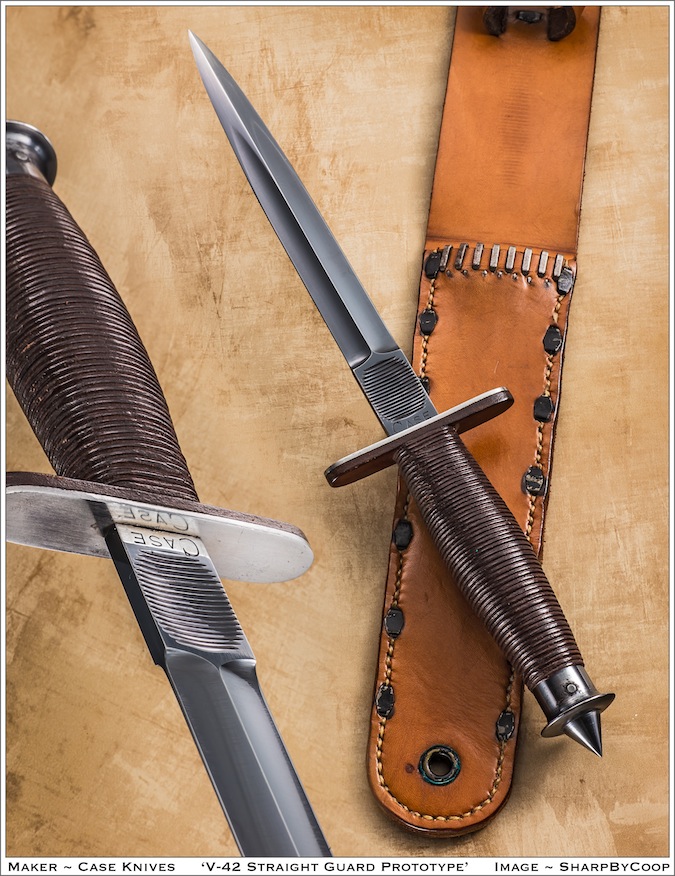
Case V-42 dagger.
The classic Case V-42 with thumbprint ricasso. (SharpByCoop image)
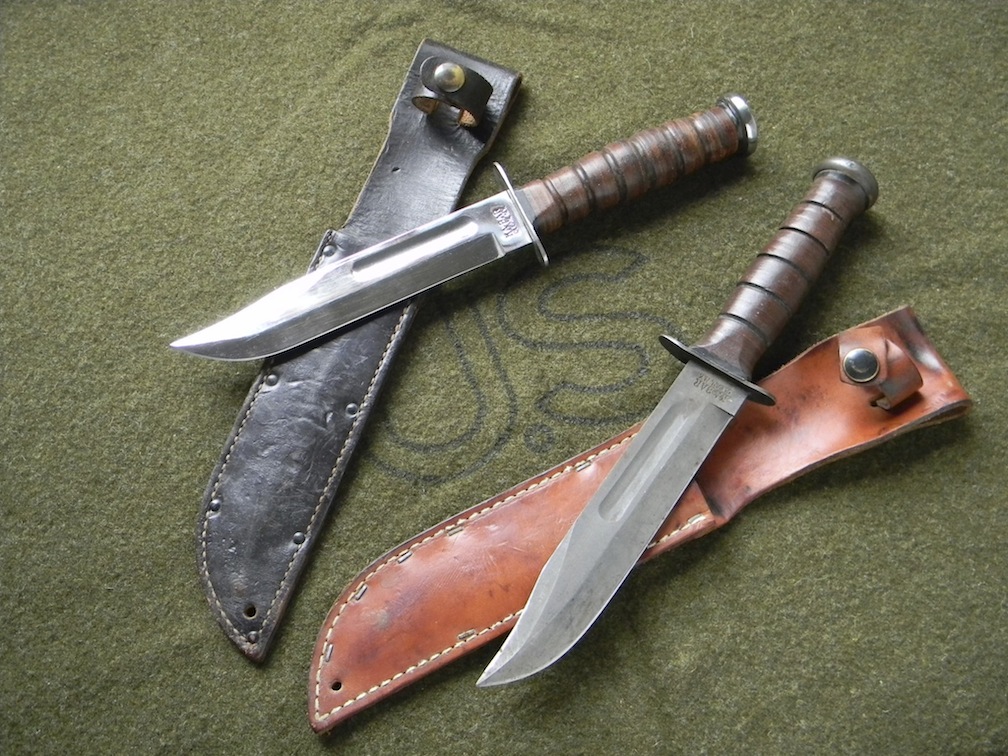
World War II Mark 1's.
Two Mark 1’s, one by Pal (top) and Robeson (bottom).

In honor of Veterans Day, here are a few of the veterans’ knives that have seen action over the past century in the service of our country:

•U.S.N. Mark 2/U.S.M.C. fighting-utility knife: Known to many simply as a KA-BAR or kabar, it was made during World War II not only by Union Cutlery/KA-BAR but also, among others, Pal, Case, Camillus, Utica, Conetta and Robeson Shuredge. The iconic picture of it on the hips of U.S. Marines on the black sands of Iwo Jima tells it all—it was there and so were the Marines, who, by the way, are also celebrating their 240th anniversary. Semper Fidelis!;

•U.S. Mark I Trench Knife: It has all the trimmings: skull crusher, dagger blade, and the four finger holes in the knuckle guard. It reeks of Doughboys, Over There and Jimmy Cagney’s The Fighting 69th;

•Randall Model #1-8: WIth its stacked-leather grip and flowing blade, slightly dropped handle, double guard and narrow tang opening into a magnificently ground clip-point blade, the Model 1 has some of the most beautiful lines of any knife ever made;

KA-BAR Mark 2's.
Two Mark 2’s stamped “KA-BAR.”

•Case V-42: Classic skull crusher, cylindrical/swell-center handle, double guard, dagger blade and the clincher, the thumbprint indentation iwth grooved lines on the ricasso alone would guarantee the V-42 a place in any pantheon of military knives;

•Gerber Mark II: The one with the “cat-tongue” handle—so-called because of the feel of the grip created by spraying molten stainless steel onto the aluminum—and the wasp-waisted blade is a favorite from the Vietnam War;

•SOG Recon: The “twin-peak” blade spine readily identifies this military classic from the Vietnam War. “SOG” comprises the last three letters in the MACV-SOG acronym, the seven which stand for Military Assistance Command Vietnam-Studies and Observations Group;

•Ulster Mountain Pocketknife: These utlilitarian pocketknives reportedly were issued to the First Special Service Force during World War II and later to the troops of the 11th Mountain Division.

Marines at Iwo.
U.S. Marines land at Iwo Jima, their U.S.N. Mark 2’s/Ka-Bar fighting/utility knives at their sides.

A Revolution in Slip-Joint Construction

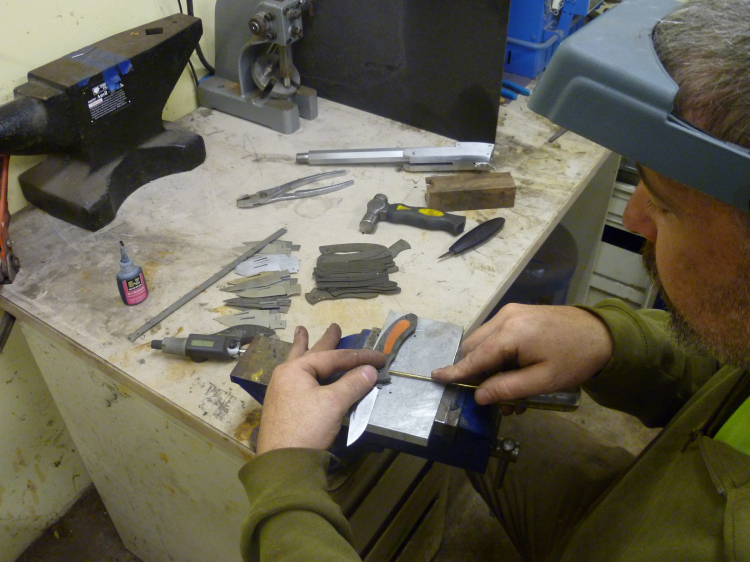
Unlike the traditional pocketknife in which the backspring rises and falls when the blade is opened and closed, the backbar of Tom Ferry’s model equipped with the Everflush Spring (top) remains flush when the blade is opened and closed. Ferry (above) works on a model with the mechanism in his shop.

The Everflush Spring takes the traditional pocketknife folding mechanism to the next level

By Lorien Arnold

As the traditional slip joint experiences a rebirth in favor among knife enthusiasts, there is increasing room for innovation in the knife’s classic, time-tested construction method.

    Enter Tom Ferry and Mike Vagnino.

    Innovators and educators, they have forged their paths in steel. Developing techniques and learning new skills, while at the same time teaching others, the two have collaborated on a concept that incorporates a generations-old method for assembling a slip joint, while bringing it into new worlds of materials and technology.

    “[An] idea evolved from the desire to engrave the backbar of slip-joint folders,” Ferry began. “The reason this was all but impossible before was that slip-joint backbars or [back]springs are heat treated, making them difficult to engrave, and, due to timing issues, [the engraving] was not easily done prior to heat treatment.

     “I had been bouncing the idea around trying to come up with a solution. One night while opening an automatic knife I noticed the internal kicker spring, which in many ways is similar in placement to a slip-joint spring. After doing some preliminary drawings, I contacted Mike for his input and assistance in developing the mechanism further. By sharing and combining forces, we cut the development time in half and have created a great working mechanism.

    “In total there have been at least five variations of the spring,” Ferry continued, “and Mike has taken the development further by creating the first multi-blade slip joint with the [new] mechanism. Mike coined the name the Everflush Spring because the backbar is always flush with the top of the handle.”

     You will notice the knives with the new spring in the accompanying photographs do not always correspond in form to the classic interpretation of the slip joint. Sporting titanium liners, bolsters and backbars, carbon fiber handles and high-alloy stainless blades, materials more common in the tactical category can be used to constitute the knives. To that end, the Everflush Spring allows for a completely solid handle configuration.

    The standard slip joint, whose backbar is a spring and must be free to move, can develop play on either side of the spring. The Everflush Spring design can incorporate pivot bearings for an action that is smooth with a crisp half stop. “The Everflush Spring is unlike common slip joints where the blade causes the spring to rise and drop as you rotate the blade from the open to closed position,” Ferry observed. “This innovation allows the opportunity for engraving of the backbar as well as eliminating the timing of the blade to the handle, as all the timing is internal.

    “[By] splitting the backbar in half, thus creating a lower spring upon which the blade rides and an upper tang stop which stays flush with the handle, the backbar does not need heat treatment. This allows a wider range of material choices and embellishing options.”

    Being intrinsic with the backbar, the lower spring diminishes the pressure exerted upon the pin, which traditionally would be used as the spring pivot. This allows the use of more exotic or fragile handle materials without fear of them cracking at the pin. In addition, the mechanism provides the potential for assembling a slip joint using threaded fasteners that allow for easy cleaning and pivot-tension adjustments.

    “The major disadvantage is that this design will not easily fit or adapt to many traditional designs,” such as folding patterns with three or more blades, Ferry noted. “The internal spring takes up more room and thereby creates issues with designing a knife for it.” Conversely, it challenges makers to devise new designs, which is always good for the knife industry.

Tango Foxtrot Knives

Ferry responded to the changing market with the creation of Tango Foxtrot Knives LLC, which he characterizes as his “new venture into the realm of semi-production knives” of his design.

    “The first knife from Tango Foxtrot is a tactical slip joint with the new mechanism, but I will also be introducing other models and types of knives in the future,” he said. “Tango Foxtrot Knives was conceived years ago but the timing never seemed to be right for me to proceed with the venture.

    “As with any new design or product, you can never be sure how it will be received by the buying public. Mike and I unveiled the Everflush Spring at the 2011 BLADE Show (www.bladeshow.com) and it was very apparent the design was a success, with both of us selling out of those knives prior to the end of the show’s first day. With the confidence of having innovated a great product, I decided to launch Tango Foxtrot Knives. The company’s first release was the prototype version of the T-1 folder at the 2011 USN Show, and again the design went over well.

“I am currently in production of the T-1 slip joint with the Everflush Spring,” Ferry maintained, “as well as designing other models of fixed blades and folders to develop a line of semi-production knives of my design. The components for the knives will be made out of shop, but all final assembly and fit and finish will be done in my shop. Most will be everyday user knives, but there will also be the occasional dressed-up model featuring my hand engraving.”

Another Level

The knife business tends to reward those who contribute to it. Moreover, there is always a connection to the past, as every maker builds upon the innovations, techniques and styles of those who came before. It is a rare cutler who introduces something completely new. It is an even rarer one who can take an innovation and bring it to the next level. There is always another level and, through Ferry and Vagnino’s innovation, the cutlery industry may be getting a peek at the next one.

    For more information on the Everflush mechanism, contact Tom Ferry at [email protected] or www.tomferryknives.com , or Mike Vagnino at [email protected] or www.mvknives.com.

For more on the latest knives, knife legislation, knifemaking instruction, knife trends, knifemakers, what knives to buy and where and much more, subscribe to BLADE Magazine, the World’s No. 1 Knife Publication. For subscription information click on http://www.shopblade.com/product/blade-magazine-one-year-subscripti…?r+ssfb031712#BL1SU.

Tactical Knife From Bin Laden Raid Up For Bid

Bids for the Emerson CQC-7 tactical knife carried by “Mark Owen,” a SEAL given the order to kill or capture Osama bin Laden, will be accepted through 8 p.m. EST today, according to Ernest Emerson.

Ernest Emerson holds one of his tactical folders.
Ernie Emerson’s CQC-7 used in the Osama bin Laden is on auction through May 15.

Owen is the pseudonym of the author of the book on the Bin Laden raid, “No Easy Day: The Firsthand Account of the Mission that Killed Osama bin Laden.”

Emerson is one of the leading names in tactical and hard use knives, both custom and factory. He is also known for his system of self-defense and knife combatives training, instructing military, law enforcement, civilian and other agencies worldwide.

He said he gave the knife to Owen in person. “I’ve known him a long time,” Emerson noted. “I gave it to him in 2005. It’s the real knife, the real deal and the real guy.”

Emerson added that he will supply letters of provenance indicating the tactical knife is what Owen says it is.

As these words were written, the latest bid was $15,400.

Emerson will have a booth at the BLADE Show (www.bladeshow.com) May 31-June 2 at the Cobb Galleria Centre in Atlanta, Georgia. He will conduct a special seminar, “Train Like A Madman,” conduct a lottery for his knives, and display a number of his new, never-before-seen custom knives—at least 12 prototypes—at the show. He also will appear on Armed Citizen Radio this Sunday discussing knives and, among others, mentioning the BLADE Show. Visit Emerson’s booth for more information on the time and location of his knife lottery.

To place your bid, visit http://www.24fundraiser.com/site/stores/5/events/5/items/114.

JULIA’S TO SELL DR. LUCIE’S COLLECTION OF WILLIAM SCAGEL KNIVES


James D. Julia Auctioneers extraordinary firearms and knife auction will be taking place on Monday and Tuesday, March 12th & 13th 2012. This auction should prove to be one of the most exciting events in knife history!


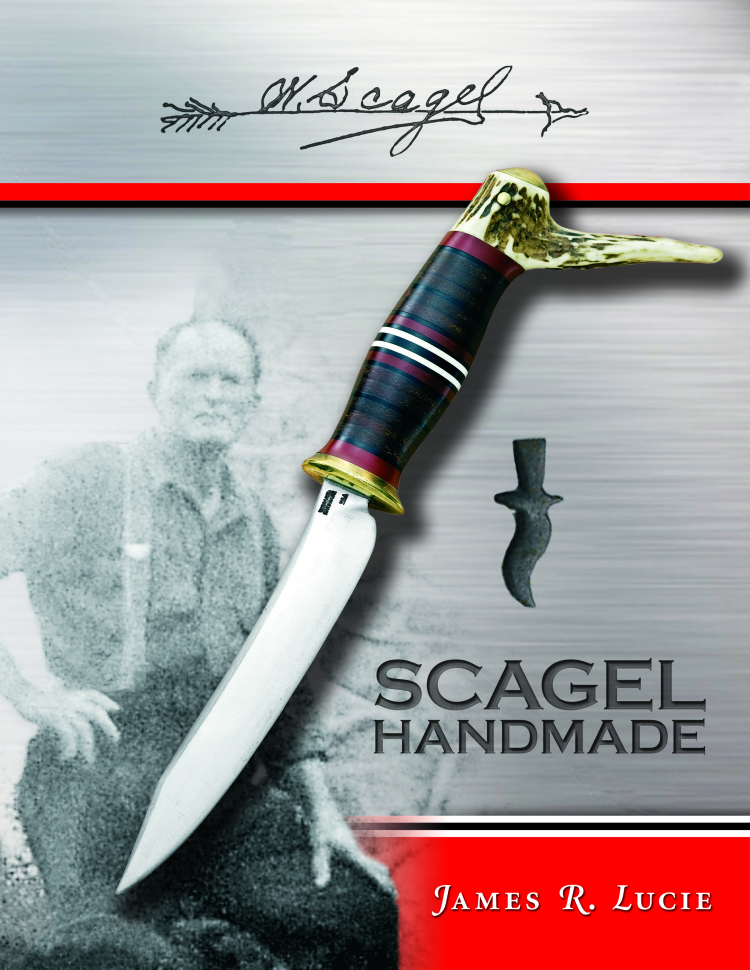
Dr. Jim Lucie, of Fruitport, Michigan recently decided to sell his lifelong collection of William Scagel knives. Dr. Lucie is today regarded as the reigning authority on Bill Scagel, his life, and the knives he produced. Dr. Lucie is a noted author of a monumental book on Scagel’s works titled, “Scagel Handmade”. He has also been a passionate collector of Scagel made things for most to his life. Dr. Lucie had the great fortune of meeting, doctoring and becoming a friend of Bill Scagel late in his life. His special relationship gave him a unique insight into this extraordinary man. Scagel was an extremely conservative, crusty and independent individual who lived life on his own terms.


Born in 1875, he lived until 1963 and for the majority of his life he used his unique skills and abilities to manufacture and craft about anything he wished. His focus however was on the production of quality knives. Although the product he produces was a simple utilitarian object he incorporated his unique artistic talent into the production of a true art form. His knives were literally a thing of beauty and he eventually began marketing them through the elite sporting goods store Von Lengerke & Antoine of Chicago. Up until 1929, his exquisite knives were featured in their catalogs and sportsmen from all parts of North America acquired his very special knives. Scagel was the first person to give art form to the American knife in the 20th century. Eventually, Bo Randall began to create artistic knives like those of Scagel’s and today the extraordinary fraternity of blade smiths throughout North America can attribute the origin of this art form to Scagel himself; he was unquestionably the genesis of this much revered and collected art form.


Dr. Lucie’s special relationship and appreciation of Scagel’s works eventually resulted in his amassing what is considered the finest collection of Scagel made products to exist today. His special knowledge and interest in Scagel, eventually led to his definitive book on Scagel products, “Scagel Handmade”. Dr. Lucie was so enthralled by Scagel’s art form that after Scagel’s death, he learned to become a blade smith himself and began producing wonderfully artistic knives in a manner similar to those of Scagel. Dr. Lucie’s knives themselves are highly collectible and he currently has a six-year waiting list for one of his masterpieces.


With the exception of a couple of items he retained for his daughters, his entire collection will be offered in this auction. There are so many great rarities, one of them is the Armond Durham camp ax with stag handle, originally made for Armond Durham. Durham had a number of pieces made, all of which he never used so everything from the Durham collection, including this ax, is essentially in near mint condition. The ax carries a conservative presale estimate of $20,000 – $28,000. Another very rare item is the D-guard fighter knife made for a Marine during WWII. On his first leave home, the marine ordered another five for members of his unit. These were the only D-guard knives ever made by Scagel and this is the only one currently known to have survived. It is estimated at $18,000 – $26,000. Another gem is the mint hunter with Heiser tooled sheath in an original V. L. & A box, the knife and Sheath are virtually new. It carries a presale estimate of $21,000 – $30,000. Another great rarity is a near mint crown stag folder knife. This pocket knife with stag handle this most unusual form is highly desirable and in its special condition, should easily generate $17,500 – $25,000. Another very rare and outstanding example of Scagel’s knives the hunter knife with folder in the handle. This very special form was exceedingly difficult to make and later in life, while corresponding with Bo Randall, he specifically stated that they were extremely difficult to make and that he only made 12 of these. This outstanding example is estimated at $20,000 – $30,000. Another exquisite Scagel knife is what Dr. Lucie refers to as the “Iron Mermaid of the Great Lakes” fish knife. This unique knife, specially crafted for the client who ordered it, is fitted with an antler handle in the form of a fish tail and is estimated at $18,000 – $27,000.


Not only were Scagel’s artistic abilities displayed in the product that he made, but sometimes his personal politics were reflected also. Scagel was never one to be beholden to one for a favor and when one was given he almost always immediately repaid it. One freezing night, while walking home, the local Democratic Party chairman stopped and insisted that he give Scagel a ride to his house. Scagel reluctantly accepted the favor and a few days later presented the Democrat with a small, hand-crafted knife and sheath as a gift. Later, a friend asked Scagel why the knife had an ivory slab on one side and a mottled mother of pearl handle on the opposite side. Scagel replied “Oh, you mean that damn Democrat knife I made? All Democrats are two-faced so I made the knife handle accordingly!” Estimate $4,200 – $6,000.


There are between 70 and 80 Scagel lots in this sale and they will be offered in consecutive order on one day. Absolutely no Scagel items from any other source will be mixed with Dr. Lucie’s collection. Julia’s catalog, considered the finest in the industry, will feature exquisite, full color photos of each lot and a detailed description provided by Dr. Lucie himself. The catalog description will also incorporate a conservative presale estimate. One unique feature about the Julia company is that unlike most auction houses who offer their goods “as is, where is”, Julia’s descriptions carry a 45-day guarantee from the date of the auction against any major discrepancy in the catalog description, thus making absentee bid participation not only easy and convenient but also safe.


In an effort to help make these rare items available for anyone interested, the Julia firm and Dr. Lucie have decided to make available special financing terms for qualified parties. If a client is approved, the terms will allow them to make payments for purchases over a period of time. Under no circumstances will terms be provided to anyone who does not apply before the auction. Customers must apply for and be approved before the auction for these special financing terms.


In addition, participation at the auction is most convenient. Some buyers attend the auction live and bid in person. Others after receiving the catalog may submit absentee bids to be bid competitively at the auction. Still others may make advance arrangements to bid over the telephone as it is being sold. And finally, anyone who has a computer will be able to bid live time during the auction by accessing the Julia catalog through “Artfact”.


This very special auction, featuring this unique collection will certainly prove to be a once in a lifetime opportunity. Not only will this be the most significant offering of Scagel knives ever offered, but the condition in general is truly outstanding. Many of the items have never been used.


One of the most difficult parts about preparing the catalog proved to be the estimates. Because of the rarity, the superb condition and in some cases the uniqueness of the items, it is impossible to predict what they might bring. However, the Julia firm and Dr. Lucie have agreed that the estimates should be realistically conservative so that all potential buyers can know that the collection is intended to be completely sold. Julia’s catalog will be available approximately four weeks prior to the auction and should be posted on their website approximately 3 weeks prior to the auction. For more information, contact Julia’s for free, detailed illustrated brochures of the sale (available four weeks prior to the auction) at (207) 453-7125 or visit their website at www.jamesdjulia.com.


To read more stories like this, subscribe to BLADE®. For subscription info click on http://www.shopblade.com/product/blade-magazine-one-year-subscription-us/?r+ssfb231111#BL1SU


Strange Blade Brews

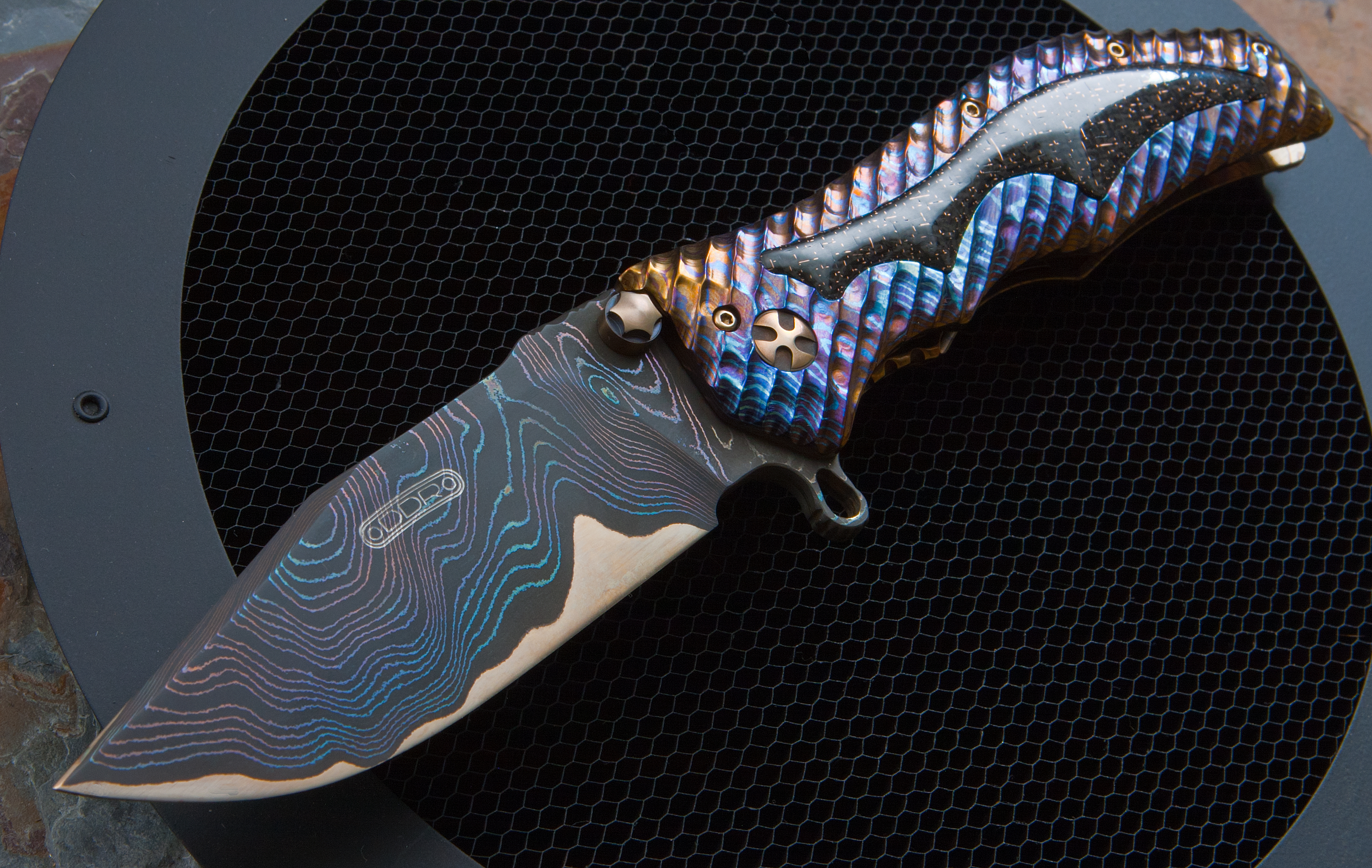
Darrel Ralph outfits his assisted-opening DDR Gun Hammer 3-D Alpha in a 3.95-inch blade of stainless damascus with a Stellite 6K core by Chad Nichols. The frame is Nichols 3-D-carved Moku-Ti titanium damascus. Ralph’s list price: $3,500. (knife photo courtesy of Darrel Ralph)

Some of today’s alternative blade materials may change the way you look at knives

By Pat Covert

TO MOST KNIFE ENTHUSIASTS, THE WORD STEELis so closely associated with blades it would be hard to describe a knife without it. After all, since its earliest known production about 4,000 years ago, in one form or another steel has ruled the roost not only in cutlery but so many other things that pervade our lives.

Simply put, steel is everywhere. Unfortunately, most versions of it rust.

Progressive thinking in the knife arena has led to a boom in the technological aspects of blades, which includes those of materials that do not rust or rust very little in comparison to stainless steel. (Stainless steel resists corrosion but is not impervious to it.) In the process, cobalt-based alloys such as Stellite®, Talonite and Cobalt Dendritic have received attention. Other materials such as laminates using titanium and carbon fiber, as well as ceramics, also have been used to good effect.

Frost on a Windowpane
Not a common metal, most of the world’s cobalt is mined in the Republic of the Congo. Today, most cobalt is used in corrosion-resistant “super alloys,” which are particularly suited for gas turbine and jet aircraft engines.

David Boye has been making knives for over 40 years. He offers fixed blades and folders for use around saltwater and other rust-inducing environments. He has used dendritic material exclusively since 1980 because he says he prefers its strength, cutting performance, ease of sharpening, and ability to cast roughly to shape.

(Editor’s Note: For a better understanding of forging various metals into blades, check out The Complete Bladesmith: Forging Your Way to Perfection, pictured at left.)

“Dendritic is the kind of pattern [damask] which naturally forms when a carbon alloy cools after smeltering,” Boye explains. “It looks like frost on a windowpane.”

According to many knifemakers, the finer the blade’s grain structure, the better it cuts. Boye supports the opposite view.

“These relatively large, rooted and fully bonded carbides produce microscopic teeth along the cutting edge, and this is what actually does the cutting,” he notes. The combined attributes of extreme cutting performance, no rusting in seawater and being non-magnetic so it does not affect a compass or electronics make the material ideal for the ocean environment. “We have used dendritic cobalt for over 15 years and have received virtually zero chips, broken blades or complaints,” Boye says, “and many customers have raved to me about the blade performance.”

He states that the material’s downside is each knife design requires a set of porcelain molds which are challenging and/or expensive to make, the mold created for each individual blade has to be discarded after only one use, the casting alloy is costly, and the waiting time for blades from the foundry can be lengthy.

Damascus Hybrid

Chad Nichols is a large supplier of damascus to the cutlery industry and has pioneered a new blend of patterned steel using cobalt 6K, commonly known as Stellite, and stainless steel—particularly AEB-L and 304. “The interesting thing about the 6K cored steel is that the cobalt alloy itself does not have to be heat treated to retain edge-hold abilities,” he observes. “The only reason the material needs to be heat treated is for corrosion resistance [for the stainless steels in the damascus] and for etching purposes.”

Nichols outlined several attributes of the hybrid damascus, “The addition of the cobalt-based alloy increases its durability and oxidation resistance,” he states. “The cutting performance of the 6K damascus is great. It’s a workhorse of a steel for cutting and can retain a razor edge even under the most vigorous conditions.” As for the disadvantages of the material, there are two. “The blade material is expensive. You already have a relatively high cost for the damascus and then you add the 6K which, pound for pound, costs more than the handmade damascus,” Nichols says, adding, “It’s not a lot of fun to make, either!”

“Won’t Crack Under Flex”

The book on modern laminate blades using metal bonded to synthetics was co-authored by knifemaker Warren Thomas (also, see page 114, August 2011 BLADE®). He indicates he began making laminate blades in 1991 using stainless steel and carbon fiber. Shortly thereafter he substituted titanium for steel, creating a lightweight, zero-magnetic knife. Thomas says he uses a “trade-secret” chemical bond that positively adheres the two materials.

“My laminates have half the weight of a steel blade, absolute zero corrosion, won’t crack under flex, and don’t micro-fracture under heavy stress along the cutting edge like steel blades do,” he explains. “To improve the performance of the blade, I weld tungsten carbide along the cutting surface to enhance the edge retention. This gives it a toothy edge that improves the cutting performance.

“There is no chance of corrosion using carbon fiber and titanium. Both materials are impervious to common destructive forces like sea salts, body sweat, and other elements that wreak havoc on steel,” he notes. “Steel knives have a very hard time cutting some synthetics, such as Kevlar™. My knives actually cut these materials quite well due to their ability to saw through them.”

Laminated blades do have their disadvantages. “In very rare circumstances, the blade can delaminate. I’ve had this happen approximately a dozen times in 20 years and have always corrected the problem for the customer,” he says. “Due to the direct cost of the state-of-the-art materials involved and the time spent fabricating the laminates, there is a higher cost for my blade over steel. However, you get what you pay for.”

That’s Edge Retention!
Ceramic blades are made by taking zirconium oxide—also known as zirconia—powder, compacting it under intense pressure, and heating it in blanks at high temperatures in the 1,400° Celsius range. The blades are much more common among kitchen knives, and for good reason. For straightforward slicing and dicing they are extremely effective, but for lateral blade movement with torque, such as for prying, they tend to snap or shatter.

Boker Knives has never shied away from thinking outside the box, and its ceramic knife line not only includes kitchen knives but tactical and everyday carries as well. “If used as intended, ceramic blades will outperform steel,” Boker USA CEO Dan Weidner says. “In an independent lab test performed comparing ceramic to steel, technicians measured the amount of pressure required to cut through a standard piece of cardboard. After 1200 cuts the pressure required to cut using the ceramic blade was the same as the first cut, while the identical task using a steel blade showed decline after 400 cuts.” Now that’sedge retention!

Ceramic blades also have other benefits over stainless steel, including corrosion resistance. “This is one of the prime advantages of ceramic,” Weidner opines. “It cannot rust, which is why it’s used so often in maritime and military saltwater environments.”

There is also good news on the economic front. “Initially the cost of ceramics was on the high side, but now there are sufficient manufacturers producing the material to put the price point in the same range as good, quality steel,” Weidner says. Moreover, ceramic blades are non-magnetic.

Is One For You?

The strange brews in blade technology are not for everyone, but they offer a wide range of features, including either no rust or a huge reduction of same, zero magnetism, weight reduction and enhanced edge holding. Granted, there are downsides in some instances, though apparently not enough to discourage enough buyers of the blade brews outlined herein.

Is there an alternative blade in your future?

For more on alternative blade materials such as Spyderco’s H1, Strider Knives’ Nitinol, and Bohler-Uddeholm’s Vanax 35 and 75, see page 68 of the April 2011 BLADE®.


Also be sure to check out BLADE’s Guide to Making Knives.


For more on the latest knives, knife legislation, knifemaking instruction, knife trends, knifemakers, what knives to buy and where and much more, subscribe to BLADE Magazine, the World’s No. 1 Knife Publication. Subscribe to BLADE magazine.


Guild Show: Granddaddy Custom Knife Event

Great custom knives always highlight the Guild Show.
Alan Snow (right) holds the Stealth III made by Kevin Hoffman (left) at a past Guild Show.

The Knifemakers’ Guild Show will hold its 44th annual rendition—the granddaddy of all custom knife shows—this weekend at the Seelbach Hilton Hotel in Louisville, Kentucky. Knifemakers, knifemaking suppliers, purveyors and more from all over the world will convene in Derby Town, where some of the best custom knives will be shown and sold.

The Guild got its start in February 1970 when the Guild’s “founding father,” BLADE Magazine Cutlery Hall-Of-Fame© member A.G. Russell, rented tables at the Sahara Gun Show in Las Vegas and invited several knifemakers to display knives there. Later that year, 11 makers met in Tulsa, Oklahoma, to form the Guild. The makers were John Applebaugh, Cutlery Hall-Of-Famer Blackie Collins, John Nelson Cooper, Cutlery Hall-Of-Famer Dan Dennehy, Ted Dowell, Chubby Hueske, John Kirk, Cutlery Hall-Of-Famer Bob Loveless, John Owens, Jim Pugh and G.W. Stone. Loveless was elected secretary—the Guild office title today is president—and A.G. Russell was made honorary president.

The purposes of the Guild are to:

1) Promote custom knives and knifemakers

2) Assist the knifemaker technically;

3) Encourage ethical and professional business conduct;

4) Sponsor an annual business meeting and knife show.

The show has been held in assorted venues over the years, including Kansas City, Dallas, Orlando, New Orleans, Las Vegas and now Louisville. Some of the earliest Kansas City shows were held at the old Muehlebach Hotel, where, in addition to Loveless and Dennehy, such Guild legends as Cutlery Hall-Of-Famers Buster Warenski, Bill Moran, Ron Lake, George Herron, D’ Holder, Frank Centofante, Gil Hibben and many others displayed their knives and kick-started an organization that continues to be recognized worldwide today. Hibben, in fact, remains active in the Guild today, and is in his seventh and final year as Guild president. He will step down this year.

Make plans now to attend the show this weekend. There will be a special President’s Gala Thursday, Sept. 19, at the Seelbach, and should be a great place to see Gil and Linda Hibben in their final show as the Guild’s first family, as well as all the other makers and their great knives show Friday, Saturday and Sunday.

For the latest in knives and knife news, keep it here at www.blademag.com.

Vote For Your Favorite Expendables 2 Knife!

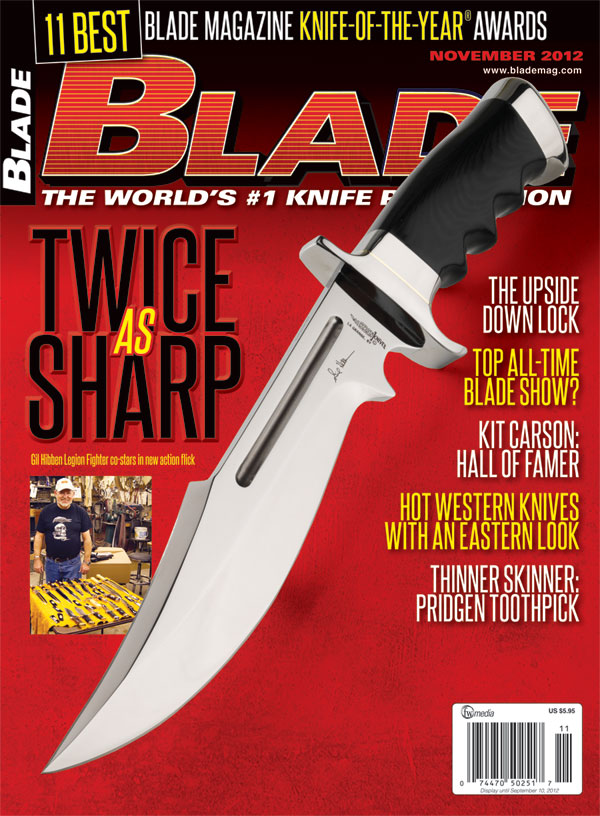
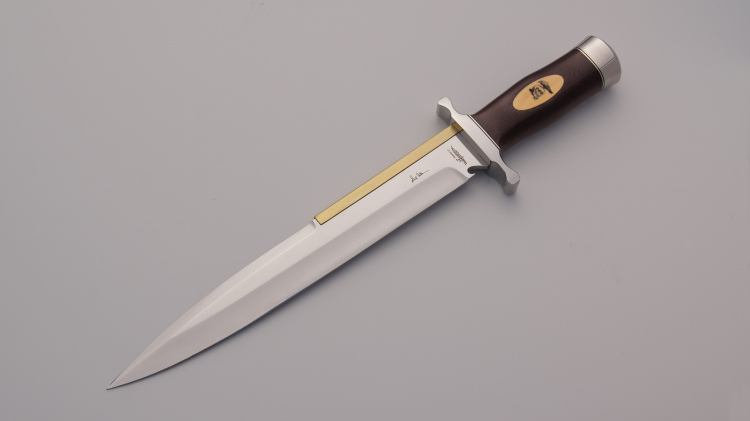
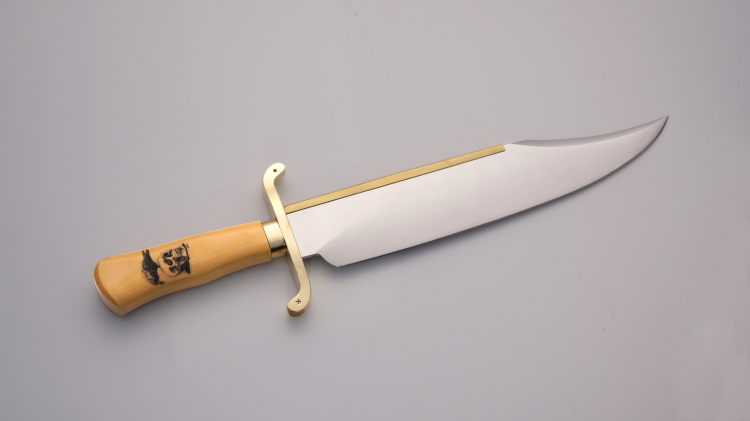
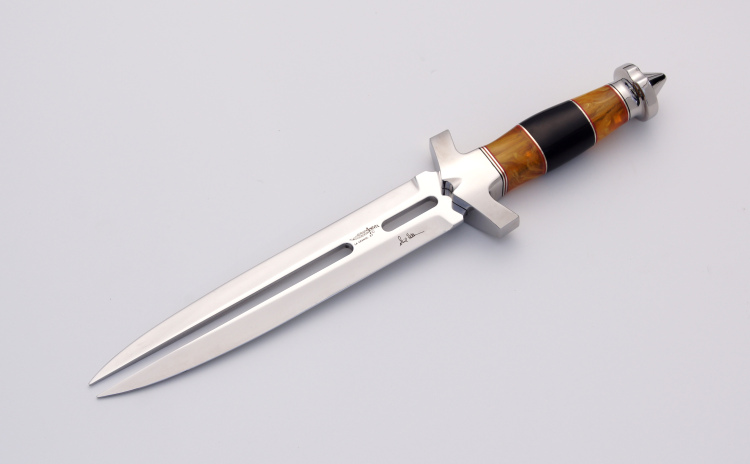
Sylvester Stallone’s Expendables 2 action blockbuster took the box office by storm this past weekend, in no small part thanks to the knives made for the movie by Blade Magazine Cutlery Hall-Of-Fame© member Gil Hibben.

    All of which got us to thinking …

    Which of Hibben’s knives in the movie is your favorite? Is it (starting from top above), the Legion Fighter on the cover of the November BLADE® (on newsstands NOW), the Toothpick, the Alamo Bowie or the Double Shadow?

    Let us know via a post, e-mail or whatever electronic means you need to use in order to vote.

    And please, only one vote per person!

    All of the above pictures except for the cover are by Mike Carter.

For the latest knives, knife trends, knifemakers, what knives to buy and where, knife legislation, knifemaking instruction, and much more, subscribe to BLADE® Magazine, the World’s No. 1 Knife Publication. Click on http://www.shopblade.com/blade-magazine-one-year-subscription-us/?lid=blss082112

Advertisement

Must Read Articles

Read this before you make a knife

Knifemaking 101 – Read This Before You Make a Knife

  by Wayne Goddard My experience has taught me that there's nothing like digging in and getting started. I've often said the hardest part of the...
how to forge damascus steel

How to Forge Damascus

Advertisement
Advertisement