

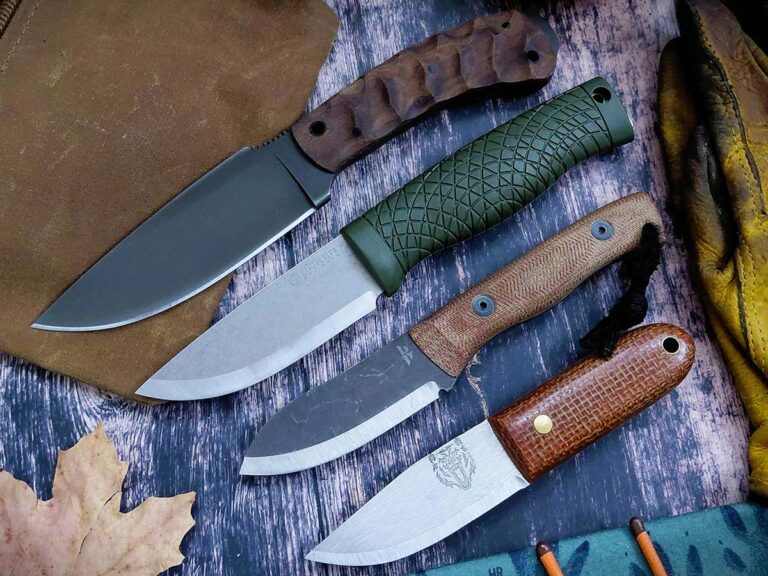
Four Blades, One Purpose: Bushcraft Mastery
A bushcraft knife is more than a cutting tool—it’s a partner in the woods. Unlike kitchen cutlery or tactical blades, bushcraft knives balance durability with precision. They carve, split and shape wood, strike sparks and handle camp chores with ease. Key traits of a good bushcraft knife include a full tang for strength, a comfortable handle for extended use and a grind suited to carving and slicing. Blade steel must retain an edge while resisting chipping and the sheath should securely hold the knife in rugged conditions. In short, bushcraft knives are built for living outdoors, not just surviving it.
Survival Knives vs. Bushcraft Knives
Survival knives feature a robust design for emergencies, allowing users to chop, pry and withstand heavy abuse. They may feature serrations, hollow handles or multi-purpose functions aimed at crisis situations. Bushcraft knives, by contrast, emphasize control and precision. They carve wood, prepare food and perform camp tasks with efficiency. Where survival knives lean on brute strength, bushcraft knives rely on finesse. The distinction lies in intent: survival knives help you endure unexpected hardship, while bushcraft knives help you thrive in the wilderness through daily, deliberate use.
Böker Bronco Mini
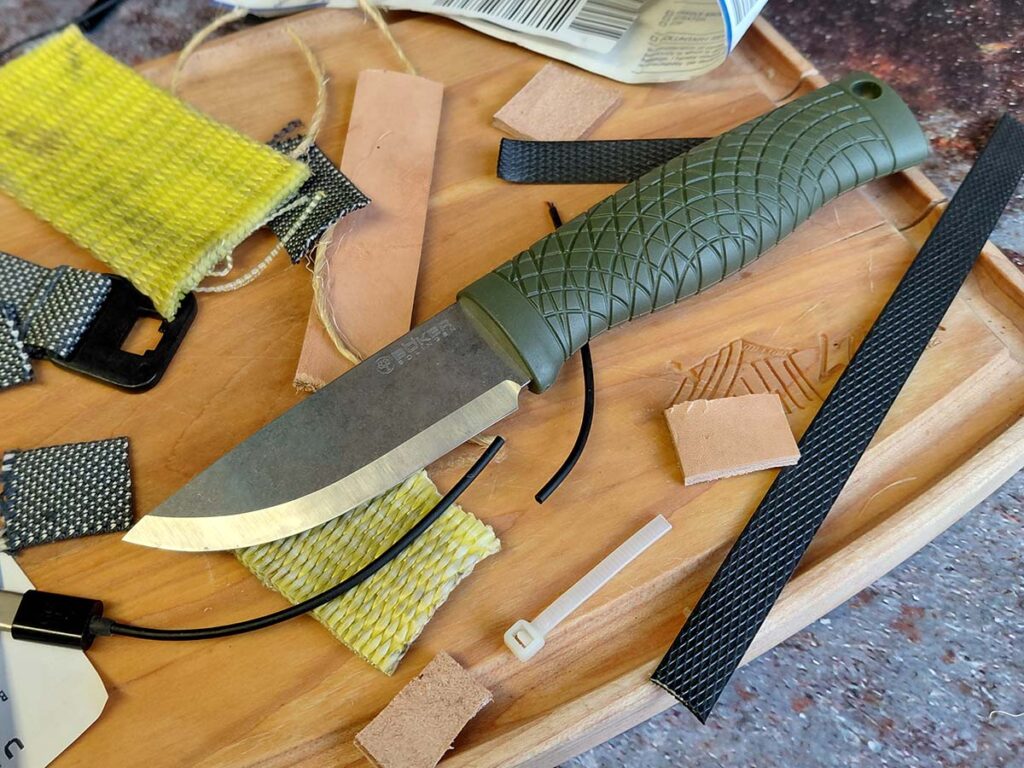
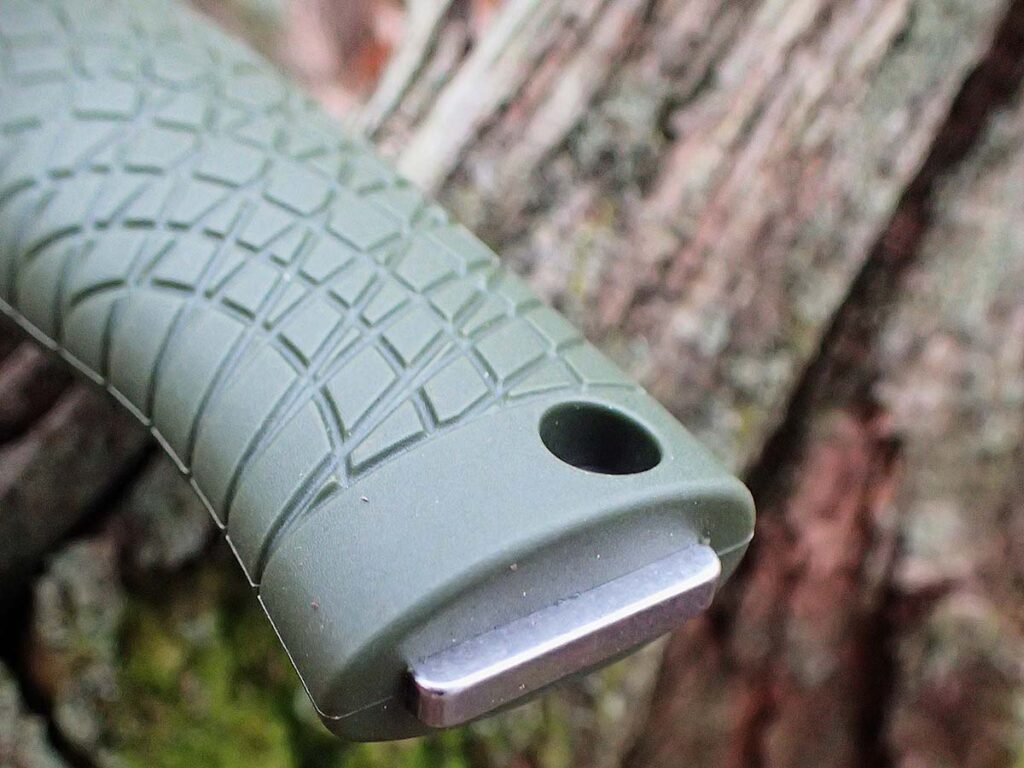
The Böker Bronco Mini Fixed Blade measures 8.23 inches overall with a 3.375-inch CPM 3V blade in a drop point profile. Finished in satin and stonewash, the blade combines toughness with clean cutting ability. A Scandi grind makes it ideal for carving wood and bushcraft tasks, giving precise control in camp chores. To ensure stability, the tang is continuous and extends slightly beyond the handle end, allowing it to withstand strong impacts, such as striking a log. Additionally, a brief segment at the back of the blade features sharp 90-degree edges on both sides. The exposed tang can be used to generate sparks with an optional fire starter. The green TPE handle is textured for grip and measures 4.625 inches, providing comfort and security during extended use. At 4.8 ounces, it balances portability with durability.
A Kydex sheath provides ambidextrous carry and locks the knife securely with a solid click. Compact yet rugged, Böker built the Bronco Mini to baton kindling, process game, and thrive as a daily outdoor companion.
Unbroken Bronco
Although the Böker Bronco Mini did all the bushcraft chores as well as any, it really shone in a utility role. I created a solid, realistic gauntlet of slicing tasks for the Böker Bronco Mini. I started with cutting heavy-duty scrap leather on a cutting board, holding it in one hand while slicing with the other. Next, I did the same with high-strength tow strapping. This task was difficult and would dull most new blade edges. This then set the stage for the lighter jobs. Old phone cord and zip ties fell victim to the Scandi blade, as did the jute twine. I cut up a lot of strong plastic package strapping, as we were close to the box-breaking-down season. Still, no issues.
With the amount of traveling I do, my life is full of luggage tags and boarding passes. If the edge wouldn’t slice these, I’d know the more robust materials dimmed it down. The Böker Bronco Mini passed the utility test like a champ. These were very realistic everyday chores that extend past the duration of this review.
Knives By Nuge Cub‑Muk
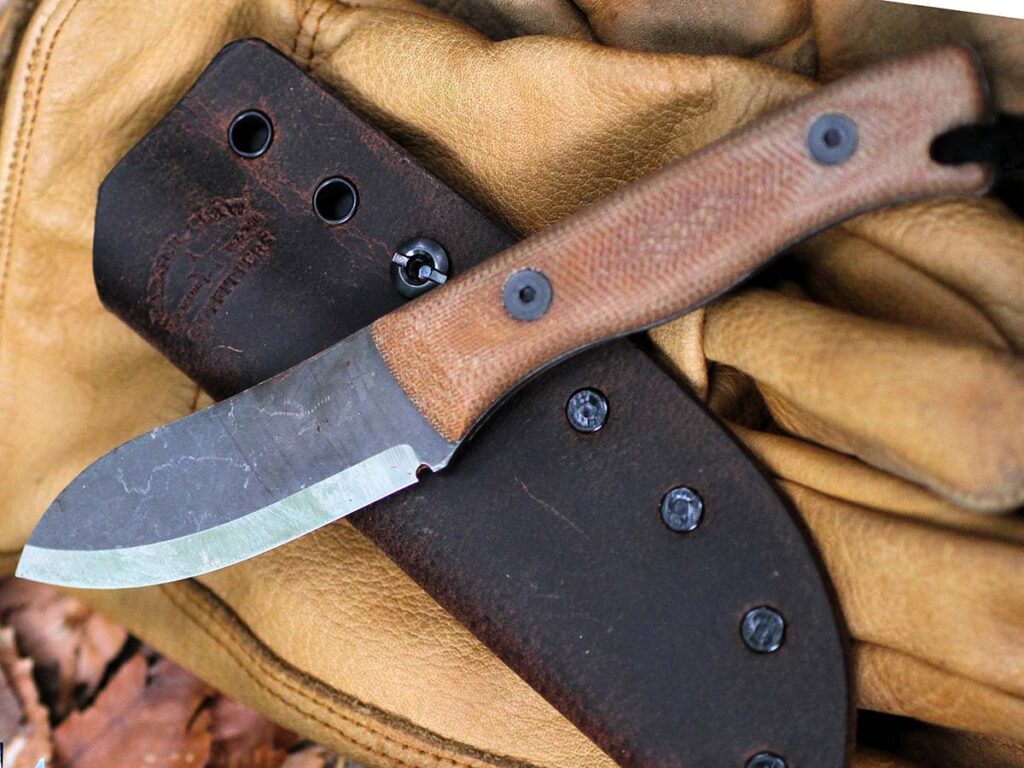
Inspired by the classic Nessmuk pattern, the Cub-Muk offers a compact yet full-featured design. Measuring 7 inches overall and featuring a 2.75-inch blade, with AEB-L stainless steel and a blackened, tumbled finish for durability. The Scandi grind, also available in Saber, excels at carving wood and shaping camp tools. Canvas Micarta scales provide a secure, weather-resistant grip, while the leather sheath adds traditional appeal and reliable retention. With its stout blade and full-sized handle, the Cub-Muk delivers agility and precision, making it a favorite for fine bushcraft work where control and efficiency matter most.
Floatplane-Camp Test
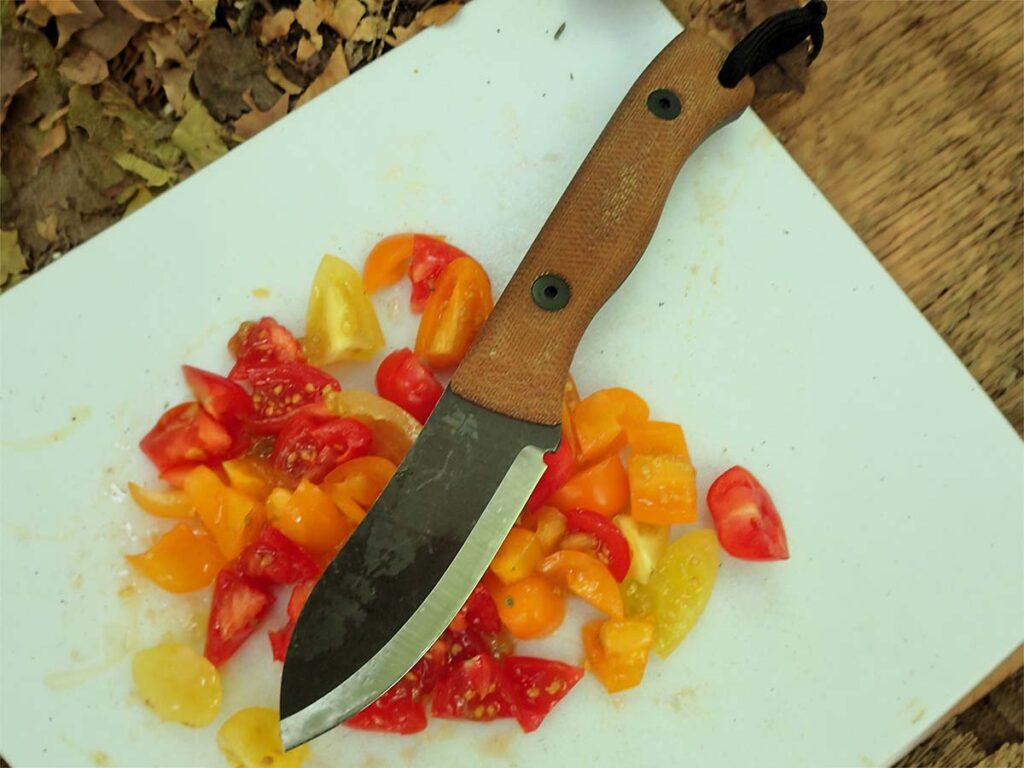
During my time in camp, the Knives By Nuge Cub‑Muk proved itself as a true workhorse. I carried it five days straight in the Adirondacks, relying on it for every small task that came up. Food prep, cordage cutting, and campcrafts were routine. The AEB‑L steel held a keen edge, and the hump‑backed spine added utility, scraping fish clean and even scooping meals when needed. Safely, of course.
Projects around camp highlighted the Nessmuk’s strengths. I carved pot hangers, stakes, and tool handles from both green and seasoned wood. Instead of chasing perfect points for stakes, I favored wedge ends that drove easily into the soil. Light taps with a stick set stop cuts for notches, giving me clean results without heavy batoning. The Scandi grind excelled at feather sticks, producing fine curls that caught quickly. Paired with a ferro rod, the squared spine showered sparks, igniting tinder in seconds.
The Cub‑Muk blends Nessmuk’s classic lines with modern materials, creating a compact knife that sees constant use. Its sharp edge, comfortable handle, and versatile design made it indispensable. From carving camp gear to starting fires, it delivered precision and reliability, proving that small knives often carry the biggest load in the woods.
Winkler Woodsman
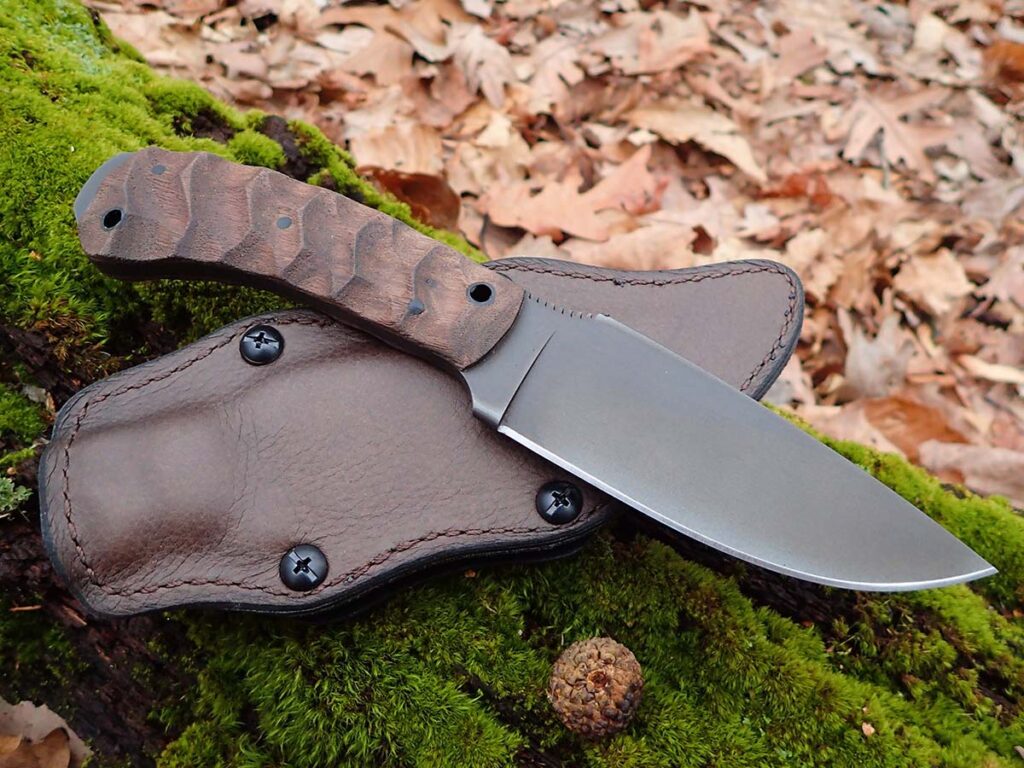
The Winkler Woodsman measures 8.75 inches overall with a 4.25-inch blade forged from 80CrV2 steel and finished in Caswell black oxide for corrosion resistance. Its flat grind and drop-point profile provide versatility for carving, slicing and light chopping. The sculpted maple or canvas laminate handle offers a secure grip, while the skeletonized tang reduces weight without sacrificing strength.
A lined Boltaron sheath with a leather overlay and a spring-steel belt clip ensures reliable carry. Built for balance and control, the Woodsman blends rugged durability with refined handling, making it a standout choice for serious bushcraft tasks.
Table To Woods
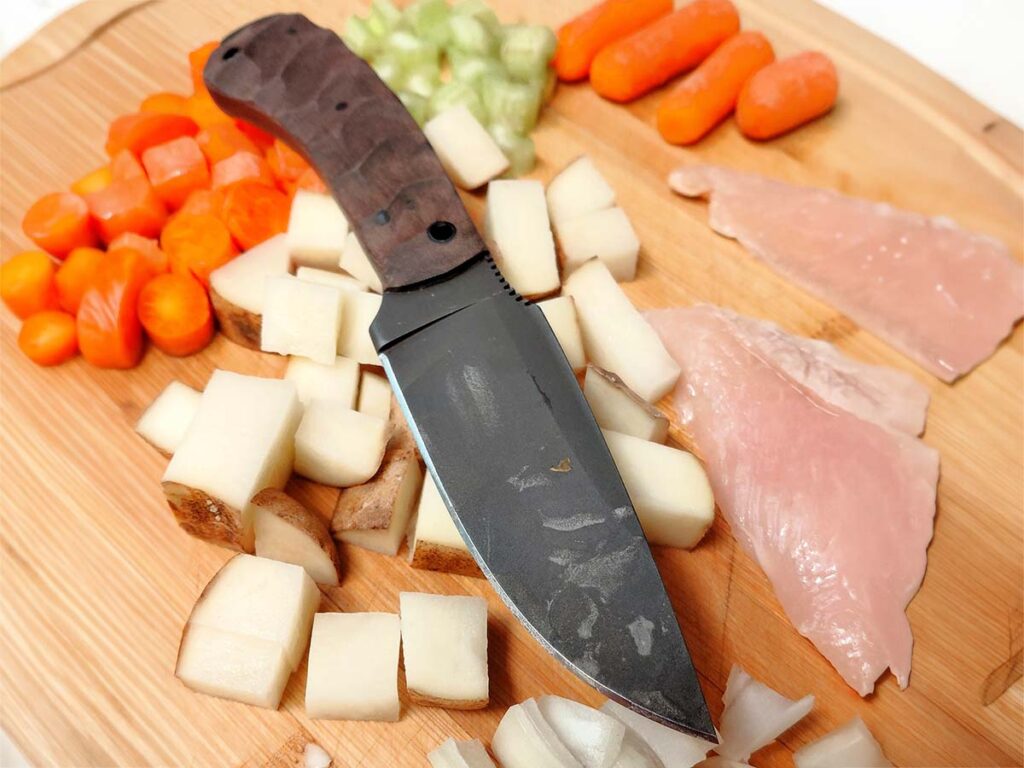
It was a cold-weather stew week when I got the Winkler Woodsman, so I put it to work right away in the kitchen. Carrots are always a more challenging task for a bushcraft knife. Typically, bushcraft knives’ thickness and Scandi grind messily wedge and split root veggies. Luckily, the Winkler Woodsman has a high saber grind, which some would call flat. It easily cut the stubborn carrots using a longer stroke. Celery and onions were just as simple with the longish bush blade, thanks to its sharpness out of the box and its grind. I used a chef’s grip (pinch grip) with comfort. The potatoes were russet, which aren’t too hard and cook rather quickly. Still, they can be difficult like carrots. No worries with the Winkler Woodsman, however.
Lastly, there was a delicate chicken breast, which I butterflied and boiled for easier, faster cooking. The blade shape was perfect for this task. I don’t think any other blade for this review could have done the same stellar job for a winter chicken stew as the Winkler Woodsman.
Bear Forest Simple 2
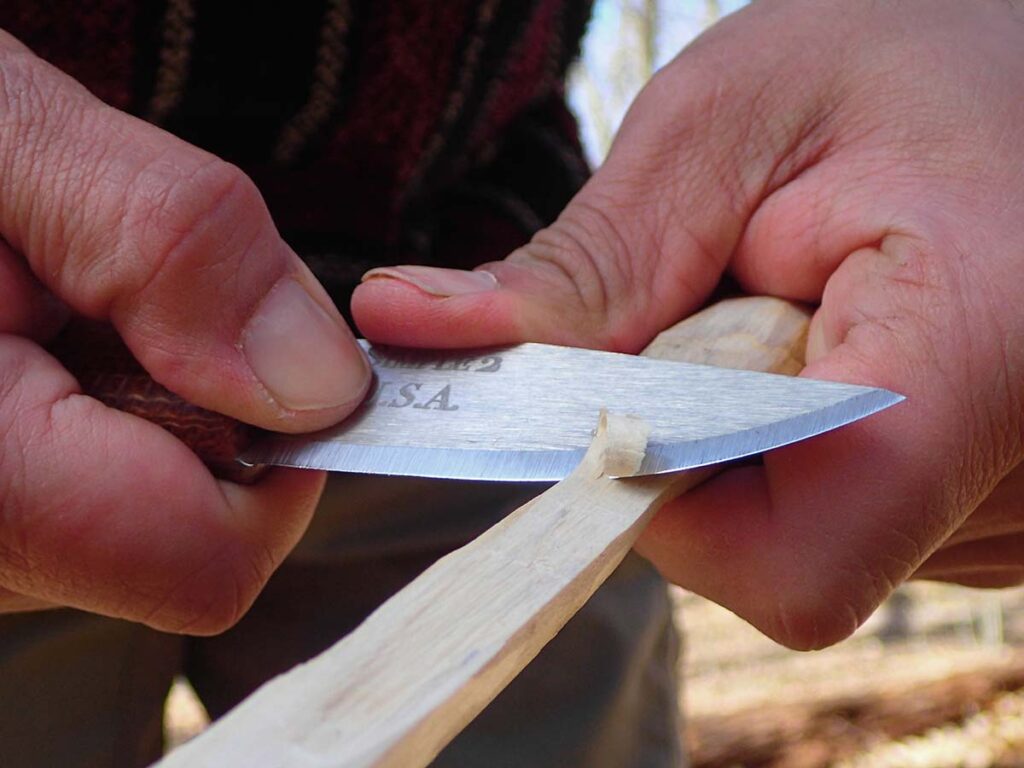
Sized down from the original Simple series (4-inch blade), the Bear Forest Simple 2 measures about 6 inches overall. It features a 3.5-inch AEB-L stainless steel blade. Its zero Scandi grind bites cleanly into wood, excelling at carving and slicing tasks. Butterscotch and Mocha paper Micarta with red burlap “bearcarta” scales give the handle a warm, secure feel.
The ambidextrous JRE leather sheath (black) allows for belt or neck carry. Lightweight yet tough, the Simple 2 blends corrosion resistance with practical design. It’s streamlined for everyday bushcraft chores, offering a reliable companion for carving, camp setup and field use without excess bulk.
Simply Qualified
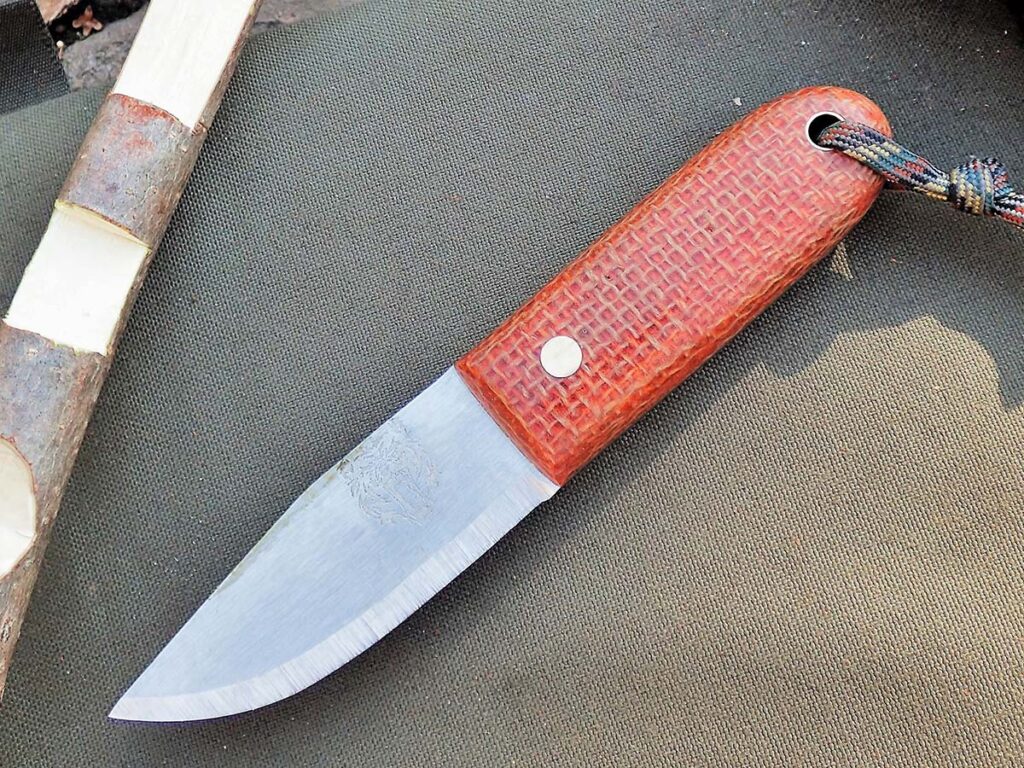
I gave each knife a project suited to its strengths. For the Bear Forest Knives Simple 2, I chose the classic try stick—a green branch about arm’s length and thumb to broomstick thick. It’s a perfect way to practice knife control and notch work. Over several months, I used the Simple 2 for fire prep, food tasks, and camp projects, including tarp stakes and a bowsaw, but the try stick demonstrated its precision. I carved 11 practical notches, from root strippers and V-notches to square reductions, latch notches, and lashing crosscuts. In the middle, I shaped double flats and pierced a square hole with the pointed tip, cradling the handle in my palm for control. I added a saddle notch, a round reduction, a pot hook and a rounded end for digging sticks or stakes.
The thin edge bit deeply, shaving clean curls for tinder. The belly of the blade handled reductions, while the sharp spine proved useful for peeling bark. The oval handle stayed comfortable, with a rounded butt that anchored the grip. Compact yet capable, the Simple 2 excelled at fine carving and practical camp work, proving itself a reliable bushcraft companion.
Bushcraft Breakdown
You can’t go wrong with any of the bushcraft blades here. They have their strengths without many drawbacks!
More Reviews:
- Mike Bradshaw’s Large Hunter Review: Large And In Charge
- Pepperwool Merino MM Review [Field Tested]
- KSW Custom Knives Bushcrafter Review: Upcycled Edge
- Hults Bruk Spika Review: Backwoods Beast
 NEXT STEP: Download Your Free KNIFE GUIDE Issue of BLADE Magazine
BLADE’s annual Knife Guide Issue features the newest knives and sharpeners, plus knife and axe reviews, knife sheaths, kit knives and a Knife Industry Directory.Get your FREE digital PDF instant download of the annual Knife Guide. No, really! We will email it to you right now when you subscribe to the BLADE email newsletter.





