Knife collecting is an extremely rewarding experience for knife enthusiasts. There truly is a knife for everyone. Many increase or hold their value throughout the years, making collecting knives something to pass on to the next generation of knife collectors.
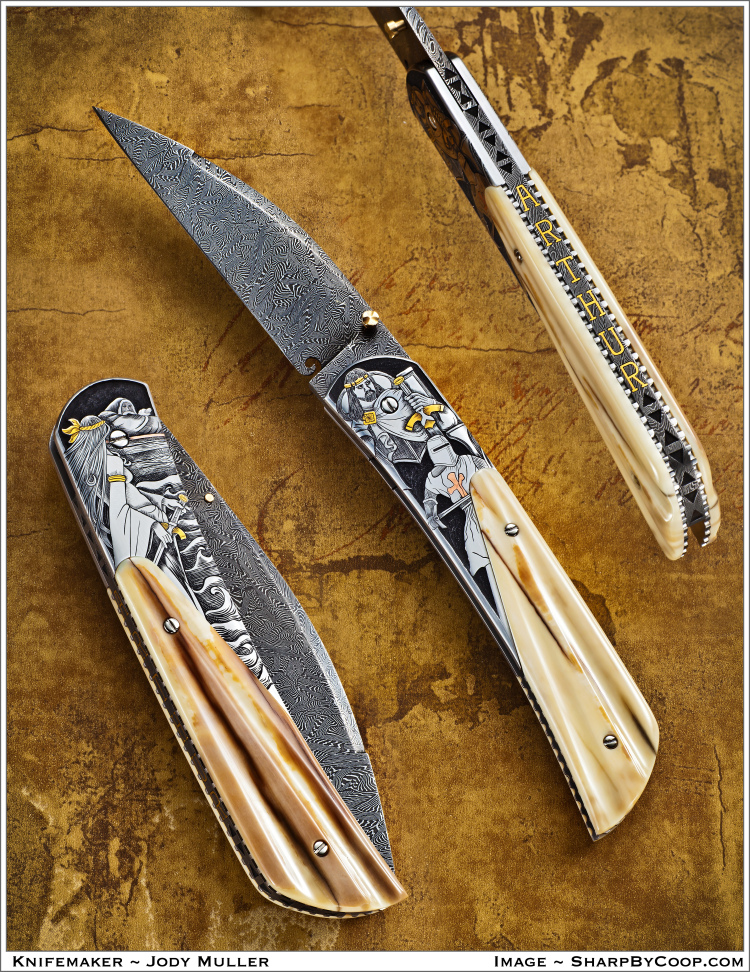
As Mel Brooks says in The History Of The World, Part I, “It’s good to be the king.” And Jody Muller’s “King Arthur” dress locking folder, the 25th installment in our “Knife Of The Day” series, resembles Brooks’s remark.
Boasting damascus forged by Jody, a handle of carved ancient walrus ivory, and 24k-gold and copper inlays, the knife gives Camelot a whole new dose of cool.
For more on the latest knives, knife legislation, knifemaking instruction, knife trends, knifemakers, what knives to buy and where and much more, subscribe to BLADE® Magazine, the World’s No. 1 Knife Publication. Click on http://www.shopblade.com/blade-magazine-one-year-subscription-us for more information.
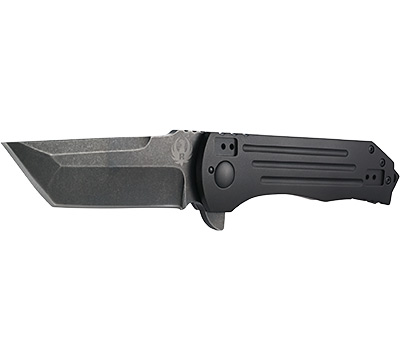
The tactical folder in the line is the 2-Stage, a Robert Carter design with a tanto blade.Ken Steigerwalt’s new Ruger/CRKT design is the Crack Shot: Compact.
Sturm, Ruger & Co. and CRKT announce new knives designed by a selection of award-winning custom knifemakers.
The designers include Ken Steigerwalt, Ryan Johnson of RMJ Tactical, Bill Harsey, Matthew Lerch and Robert Carter.
CRKT has the knives produced under license from Ruger. They include a selection of EDC, tactical, hunting and utility patterns in an assortment of sizes and materials.
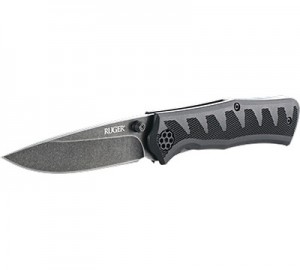
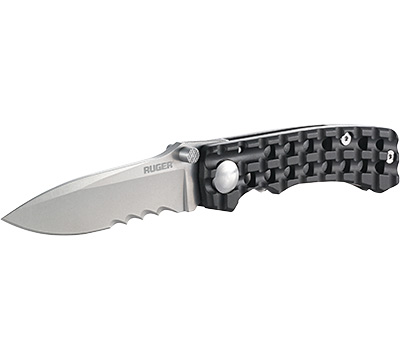
Of the five designers, Harsey designed the most knives: three. His are the “Go-N-Heavy” folder highlighted by a hard-anodized, sure-grip handle and a 3.5-inch blade, the “All-Cylinders” folder with a black, stonewashed 4-inch blade and a “revolver cylinder-style” pivot, and the “Accurate,” a fixed-blade hunter with a reinforced nylon-fabric sheath. The folders have drop-point blades with a choice of plain edge or Veff serrations. The Go-N-Heavy stores in a nylon-fabric sheath.
Bill Harsey’s Go-N-Heavy is highlighted by a hard-anodized sure-rip handle.
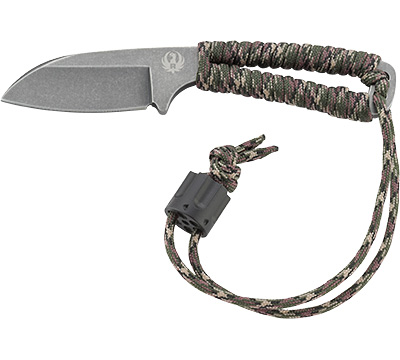
Johnson’s designs are the “Cordite: Compact” straight knife sporting a 2.5-inch drop-point blade and a paracord-wrapped handle with a “revolver cylinder style” bead, and the “Powder-Keg” fixed-blade survival knife featuring a 4.75-inch blade and rubber overmold full-tang handle with an inset Ruger medallion. The former has a glass-reinforced nylon sheath, the latter a leather sheath.
The Cordite: Compact has a 2.5-inch drop-point blade and paracord-wrapped handle.
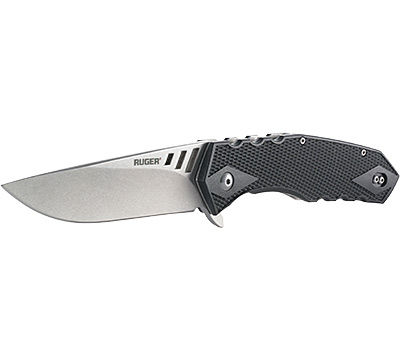
Lerch’s design is the “Follow-Through” flipper folder with a Ruger-inspired, diamond-checkered, glass-reinforced nylon handle.
The locking liner knife has a 3.75-inch drop-point blade and a two-position pocket clip. Steigerwalt’s design is the “Crack Shot: Compact” assisted opener with a 3.5-inch drop-point blade and a Ruger American Rifle-inspired, glass-reinforced nylon grip with pocket clip.
The blade is stonewashed and available in a plain or serrated edge. Carter’s design is two sizes of the “2-Stage,” a tactical flipper folder with a choice of a 4- or 3.58-inch (the “2-Stage: Compact”) tanto blade in a plain edge or with Veff serrations. Each knife has a machined/hard-anodized aluminum and stainless steel handle, and four-position pocket clip.
Matthew Lerch’s Follow-Through flipper folder includes a Ruger-inspired, diamond-checkered glass-reinforced nylon handle.
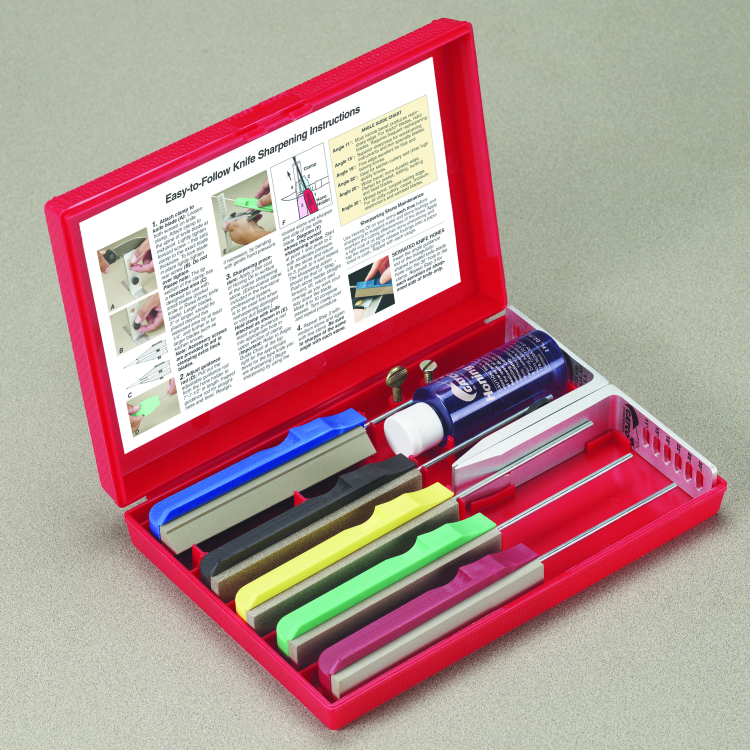
The first in our Knife Sharpener Of The Day series is the GATCO Edgemate Professional Knife Sharpening System.
Employing the GATCO exclusive knife clamp/angle guide to help attain a precise, razor-like edge on your blade, the system includes the clamp/angle guide, extra-coarse, coarse, medium and fine sharpening hones, a serrated blade sharpening hone, honing oil and a custom carrying case. The system sharpens most all sizes and types of kitchen, sport and utility cutlery.
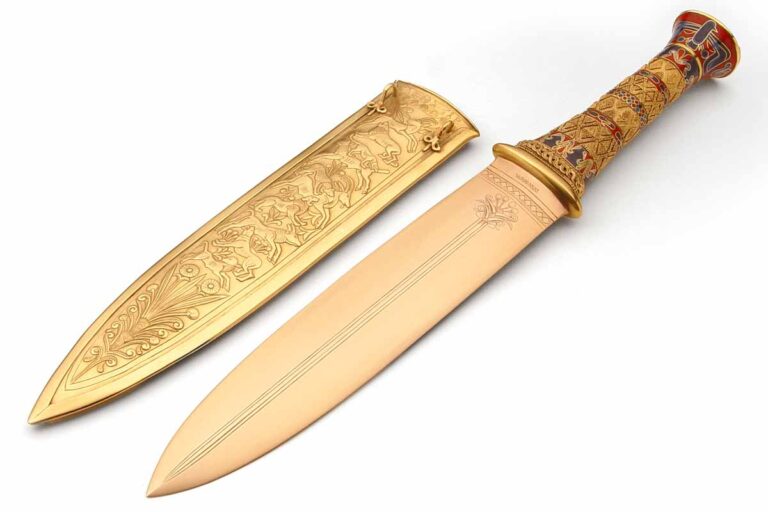
A chance phone call out of the blue leads to the author’s opportunity to see and hold the iconic Warenski King Tut Dagger.
While in San Diego in summer 2015 for a work conference, I saw a flyer advertising a King Tut exhibit at the San Diego Museum of Natural History. The exhibit focused on recreating the experience of Howard Carter, the British archaeologist who found the lost tomb of Egyptian King Tutankhamun in 1922.
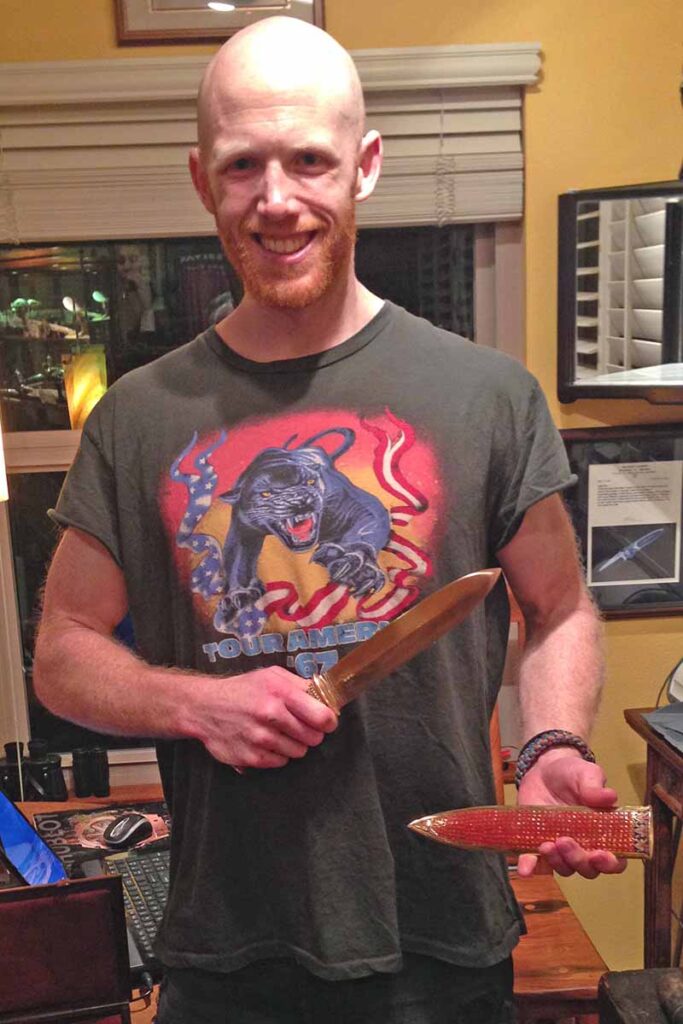
The author holds Buster Warenski’s reproduction of the King Tut Dagger and sheath in the home of Phil and Judy Lobred. (image of Warenski’s Tut Dagger by SharpByCoop; image of the author by Phil Lobred)
The promotional materials advertising the exhibit indicated it would feature recreations of many of the artifacts found in the original tomb. Having been exposed to custom knives all my life through my father, Rick Royster, and being familiar with BLADE Magazine Cutlery Hall-Of-Fame® member Buster Warenski’s work, I wondered if Buster’s famous reproduction of the King Tut Dagger would be part of the exhibit.
I called the museum and asked the young lady who answered if Buster’s reproduction was in the exhibit. She said it was not, but my inquiry grabbed her attention. She didn’t go into much detail but alluded to the fact that the owner of the reproduction lived in the area. We hung up and I went about my trip not thinking anything else of it.
Later that day while visiting the San Diego Zoo I got a call from a strange number, and it was Cutlery Hall-Of-Famer Phil Lobred, owner of the King Tut Dagger reproduction. Apparently, the young lady from the zoo knew Phil and had reached out to him. Phil and I talked on the phone and I told him how my father had worked closely with Buster through the years on several custom pieces, and Phil invited me over to look at the knife. I told my girlfriend we had to hurry up at the zoo because I had somewhere more important to go.
Visiting The King Tut Dagger
I went to Phil’s house that evening. His wife, Judy, let me in and took me to him. We went upstairs to what must have been Phil’s corner of the house. Not only did he have dozens of knives, he also had tons of collectibles. What I remember most were the Eskimo artifacts. He knew what everything he had was and had a story to tell about how he got each one and what it was used for.
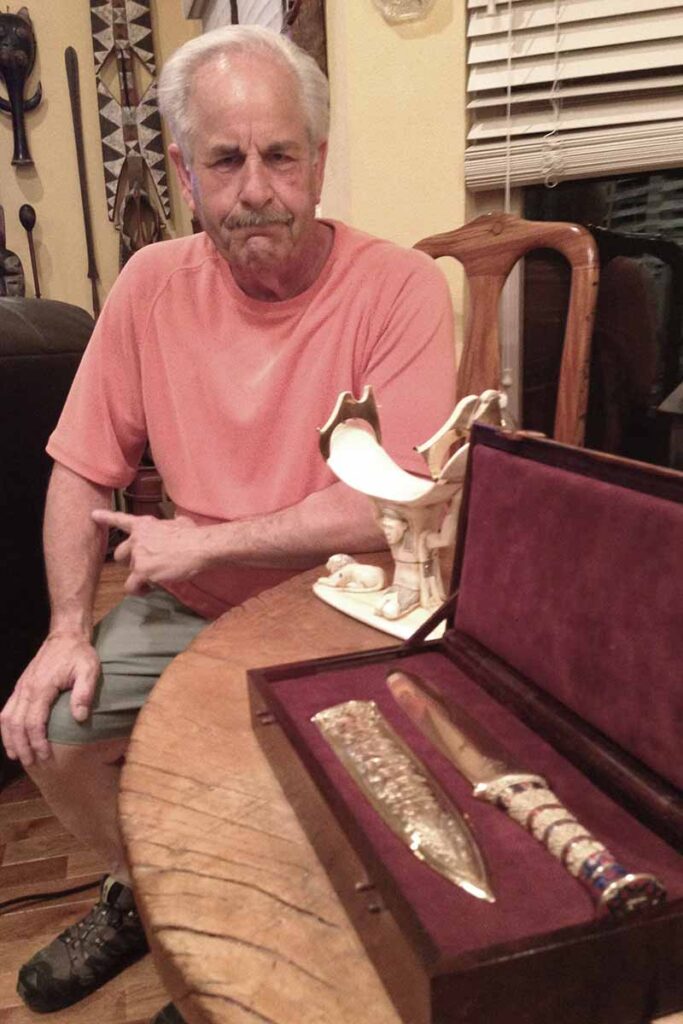
Phil Lobred sits by the King Tut Dagger reproduction and sheath in the presentation case, as well as the knife’s display cradle. On the wall at left are examples of the African art in his collection.
Then we got to the knives and finally the most extravagant of them all—the Warenski Tut Dagger. I couldn’t believe what I was seeing. It was a marvel to behold, a true masterpiece, something not many people in the world would ever have the opportunity to see up close. I was shocked when Phil asked if I wanted to hold it. He even photographed me holding it, the image of which appears with this story.
I must have been at Phil’s house several hours with him showing me all of his collectibles and talking about them. It was easy to lose track of time. He was a very nice man. It was very gracious of him to invite a total stranger to his house, and let me see and hold a one-of-a-kind piece of art.
Great knives have face. I’m not talking about a face like on a Halloween mask, but a knife with a design or style that’s recognizable by a large number of knife enthusiasts as having been made first by one knifemaker and one knifemaker only.
The face, in this instance, is the unmistakable knife design or style of the maker in question.
There are at least two provisos: 1. To fully qualify as a knife with face the knife must be recognizable by a large number of knife enthusiasts. Now, there no doubt are great knives made by makers that one or a few enthusiasts may recognize as being the knives of specific makers, but the ones that really fill the bill are the ones many enthusiasts can look at and say, “Yep, that’s so-and-so’s knife.” It’s effective in terms of a conversation starter among knife enthusiasts who are friends, or as a conversation icebreaker among those who have just met. They don’t know each other but they do know great knives with face.
2. Some of the makers of knives with face have had their designs with face emulated by many others. Even so, if the knife has face those who recognize it will say that it’s in the style of the maker who originated it.
Following is a selection of great knives with face and why they qualify. Enjoy!
The Bob Loveless dropped or drop-point hunter. The Loveless drop-point hunter is one of the great knives with face on this list that meets Proviso 2 above. While it may not appear to be all that unusual, the drop-point style of the blade—where the blade tip falls below the plane of the spine—is something Loveless popularized in the 1970s and ’80s, and it remains his signature style to this day.
The Bill Moran style. Actually, as with Loveless, any number of Moran knives have face, though I’ve chosen one of my favorites: the ST-24. The flowing blade with a long clip point and ergonomically contoured dropped handle with silver wire inlay is unmistakably a Moran.
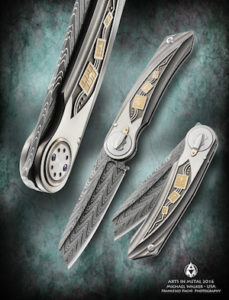
The Michael Walker style. Walker’s linerlock folder changed knives forever but he also makes models unlike anyone else. Outfitted with any number of his clever and innovative locks, each of which gives the handle a notably different look at the pivot, Walker’s knives use the latest and most exotic materials, are embellished in any number of creative and ornate ways, and usually have some of the most interesting blade shapes you’ll ever see.
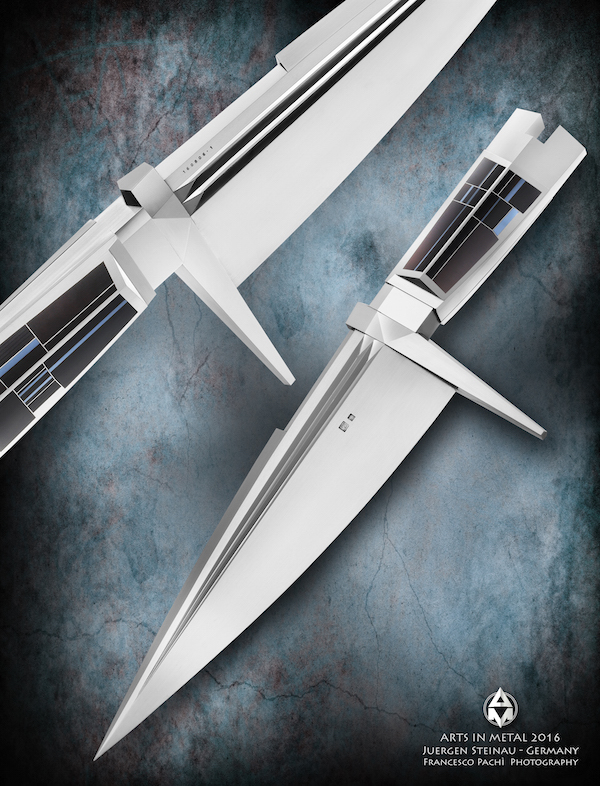
The Jurgen Steinau style. When I first saw one of Jurgen Steinau’s knives, at first I wasn’t even sure I was looking at a knife. The designs, angles and materials of his knives are like something from a book on intergalactic architecture. Suffice it to say, Steinau’s great knives have face—and then some!
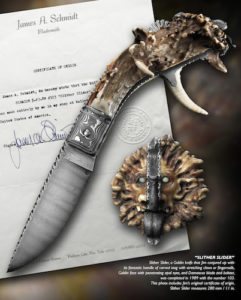
Jim Schmidt’s Goblin Folder. Schmidt’s Goblin Folders have face in more ways than one. Not only do they have the face of a goblin on the handle’s stag butt, but that face makes the knife unmistakable as the style originally made by Mr. Schmidt. A number of his other models have face as well.
There are others who make great knives with face. Which ones make your list?
1 The Loveless dropped or drop-point hunter has face in large part because of the drop-point blade with the tip that drops below the plane of the spine. An original is shown at bottom here, with a Schrade repro at top.
4 Jurgen Steinau’s great knives have face for their design, angles and materials that look like something straight out of a book on intergalactic architecture.
3 Michael Walker’s spectacular folders have face for any number of reasons, from their distinctive pivots to their exotic materials, creative embellishments and standout blade shapes.
2 Bill Moran’s ST-24 has face thanks to the long, flowing blade and ergonomic dropped handle with silver wire inlay—not to mention his distinctive sheaths. Those who know great knives recognize the Moran style immediately.
5 Jim Schmidt’s Goblin Folder has face in more ways than one—it actually has the face of a goblin on the handle butt!
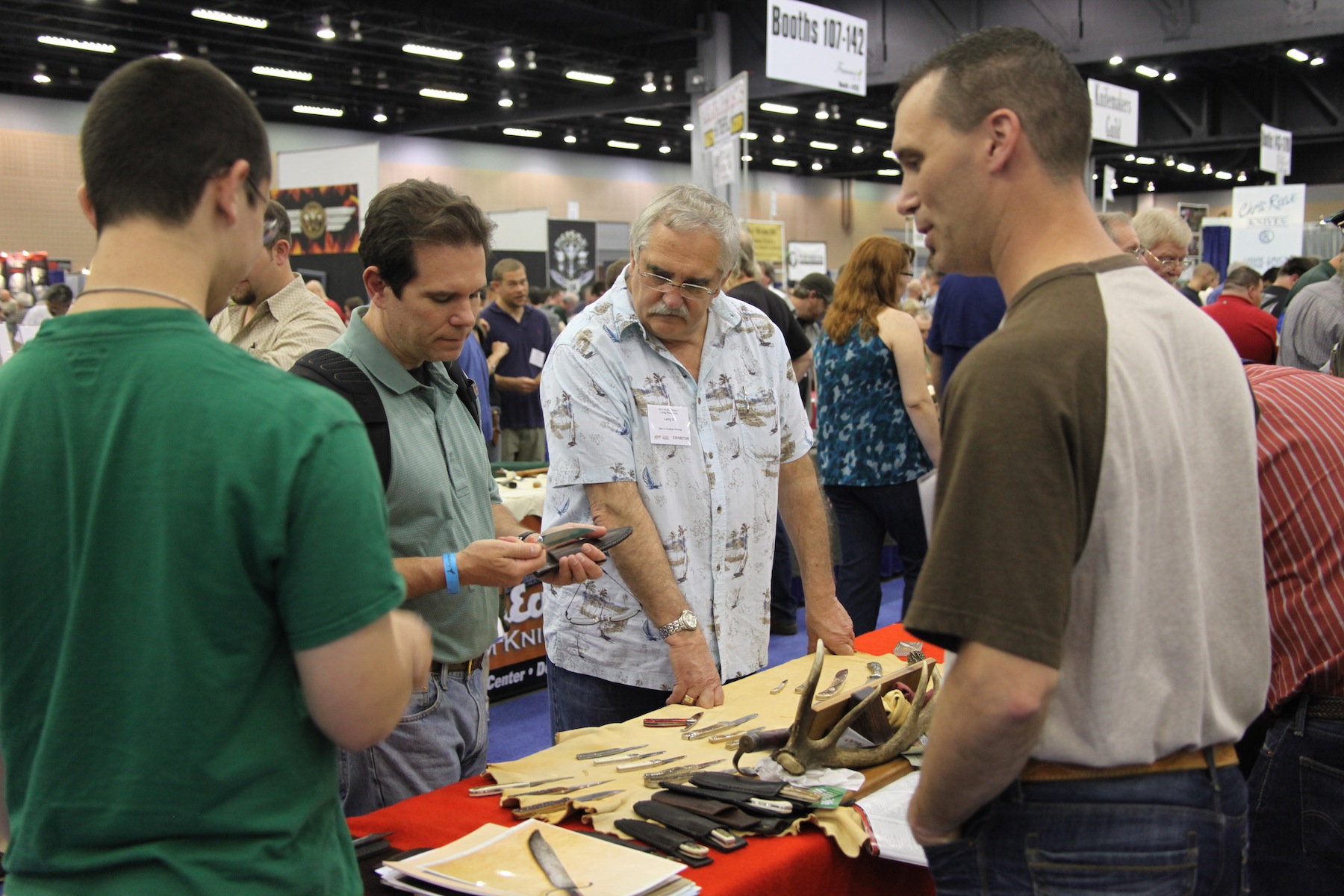
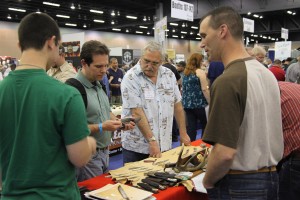
DO attend as many knife shows as possible—such as here at the BLADE Show (www.bladeshow.com)—to handle knives and meet the makers.
The do’s and don’ts of knives are many. Knowing them will make your knife experience much more rewarding and satisfying. Here are but a few:
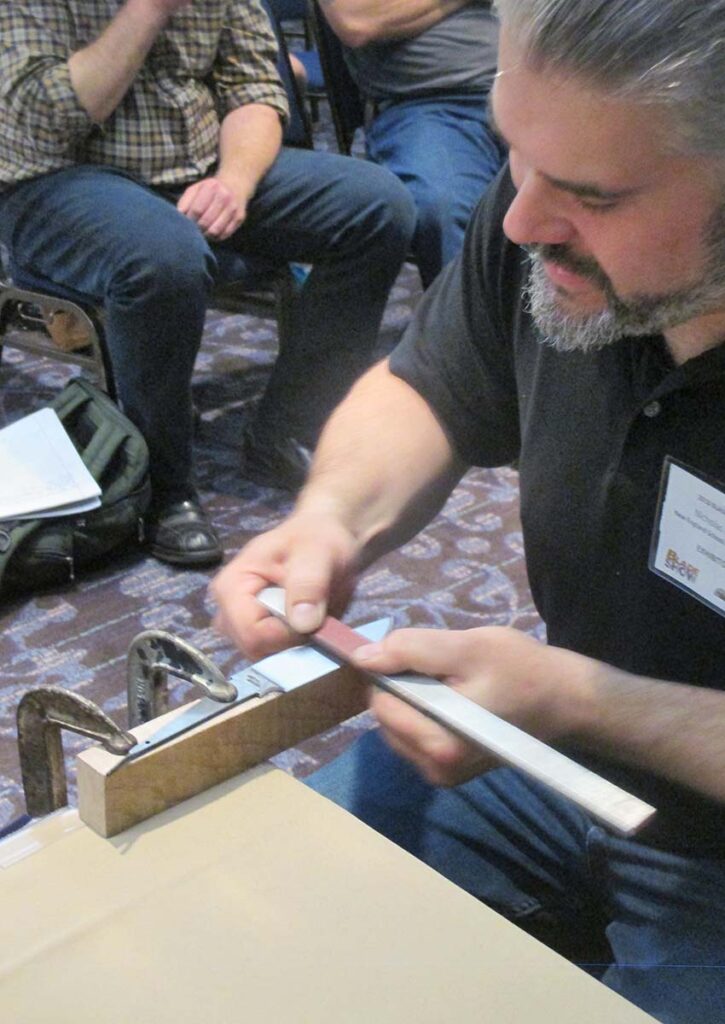
DO use a sharpener to touch up the edge of your knife after each use or at the end of each day of use.
DON’T use your knife as a pry bar (unless it has a pry tip and is designed for such use).
DO rinse off and dry your non-stainless carbon steel knife after each extended use or at the end of day of each use (it’s probably not a bad idea to do the same no matter what the blade material is).
DON’T store your knife in a leather sheath for extended periods.
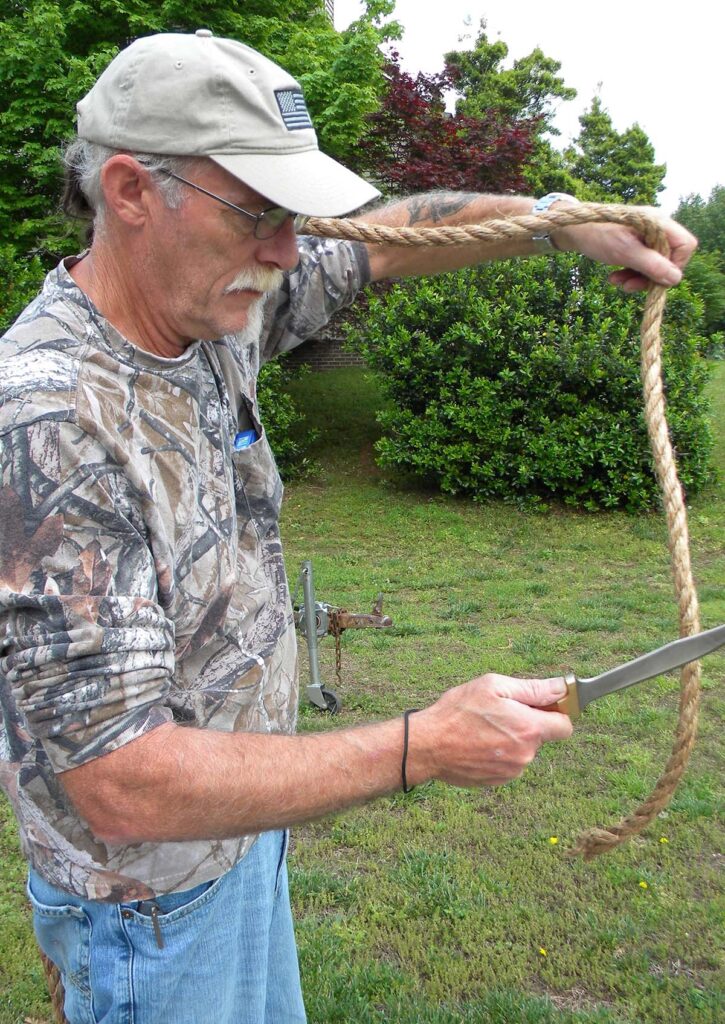
DO cut away from other people/your body when cutting rope, cardboard boxes open, etc.
DON’T show off flipping your folding knife open and closed at knife shows in crowds of people or around any area crowded with people, for that matter.
DO ask a maker’s permission to pick up a knife from his table at a knife show.
DON’T open more than one blade at a time on a multi-blade folder (it puts unnecessary pressure on the backsprings; besides, it’s a good way to get accidentally cut).
DO carry a knife whenever possible where it is legal to do so (and when the knife meets local legal requirements).
DON’T pull out a loupe/magnifying glass to closely inspect a new custom or handmade knife at a knife show (it’s just not considered good form; besides, unless you’re legally blind, if you can’t see what’s right or wrong with a knife with the naked eye, then it’s not worth worrying about).
DO attend as many knife shows as you can and view knives up close and personal and meet the makers who build them.
DON’T interrupt a conversation between a maker and someone he or she is talking to at his or her table at a knife show. It’s rude.
DO read as much as you can about knives, their history and their makers.
DON’T take everything you read about knives as gospel. Always look for at least one additional opinion on the subject.
One final DO is to check out these knife dealsBLADE‘s lined up for you at ShopBlade.com.
How to get the most from your knives on social media platforms.
It’s immediate. It’s visual. It’s effective.
These are just a few of the attributes that describe the impact of social media on modern life. Whatever the topic, some form of social media allows participants, observers, critics and commentators to weigh in, expressing their views and—of course—buying and selling.
For instance, the platform of Instagram has become a prominent factor in the marketing of many custom knifemakers, purveyors and collectors, and the reasons for the phenomenon are varied. They center around the immediacy, visual quality and effectiveness in showcasing and selling, developing a following, and generally in raising a knifemaker’s profile in the all-important marketplace. Setting up an Instagram account is simple, cost-effective and for many generates the desired results.
“Instagram and other social media platforms are an excellent way to put yourself in the public’s eye,” noted purveyor/ABS master smith Dave Ellis of exquisiteknives.com. “Through good knife photography, clear and precise descriptions of the same, and reasonable follow-up you can publicize your products as well as introduce your website. TikTok is rapidly gaining popularity, and YouTube is an excellent way to achieve your goal of spreading the gospel of custom knives.”
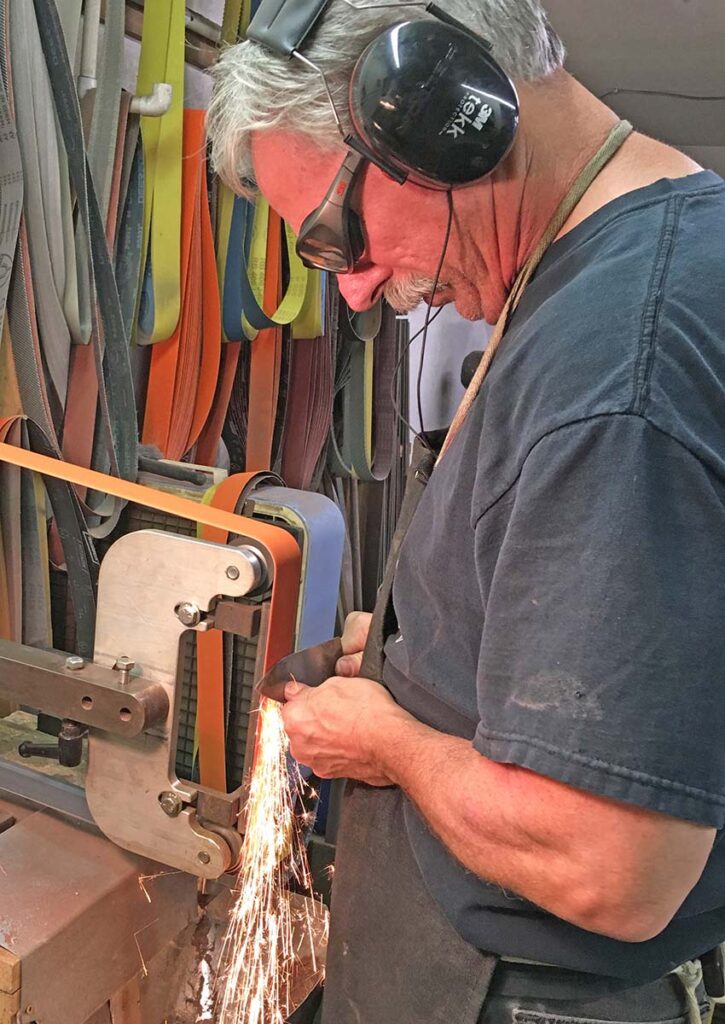
“I do videos and tutorials and just basically little blurbs of me building a knife,” Kim Breed commented. “Tutorials let people know this is why I charge what I charge, the little steps that you do when you’re making a knife.” ABS master smith Steve Randall grinds a blade in his shop. (Steve Randall image)
Kim Breed, knifemaker and BLADE® field editor, uses Instagram to generate sales and promote awareness among the buying public while also offering some insights into the knifemaking process. The value of experience is levered through the visual, and everybody gains.
“I do videos and tutorials and just basically little blurbs of me building a knife,” Kim commented. “I show the blade when I’m finished grinding and then the final product. That’s when it is put up for sale. Tutorials let people know this is why I charge what I charge, the little steps that you do when you’re making a knife. For example, when you’re forging you can show that process.”
Breed, whose videos are available on Instagram at kimbreed1911, advises that would-be Instagram users monitor their posts, beware of hashtags that are too generic, and frequently assess the return on their investment of time.
“A lot depends on the hashtags,” he said. “People can copy stuff, come up with a fake account, or hack into anything. Once you start, you’ve got to stay on it. I’ve gotten messages that don’t make sense, and you can catch situations where people have set up fake accounts and used your pictures to get people to send money first when they are scamming. Check every hashtag you do and make sure it’s going to a knife site. That was something I’ve picked up in the five or six years I’ve been doing Instagram.”
For those who choose to display their wares on Instagram or any other social media, Ellis recommends, “Scammers are everywhere, so do your due diligence and look deeper into anything that looks too good to be true. Haters are very common, so expect some negative comments and take them in stride. Getting into a heated battle only fuels the folks that like to fan the flames, so keep a cool head and remember that your goal is to promote the use and collecting of custom knives as an art form and tool.”
Knife Makers & Knife Collectors Connect
ABS master smith Neels van den Berg, who runs Black Dragon Forge based in South Africa, keeps his Instagram use in perspective. There are obvious positives and potential pitfalls, but he sees an incredible opportunity to raise visibility.
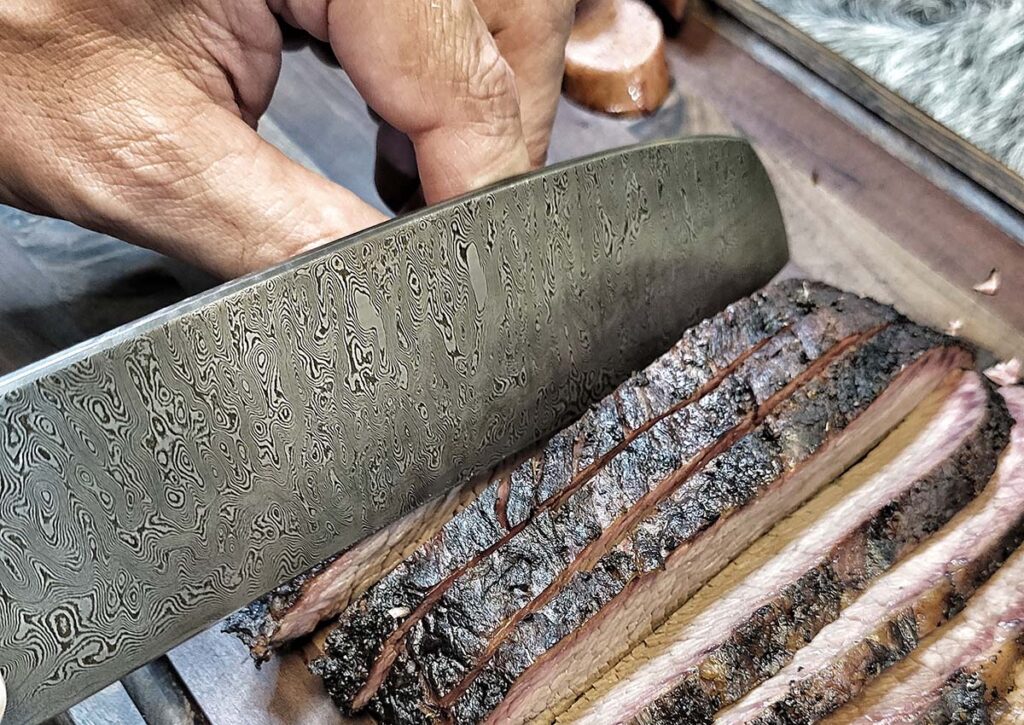
Showcase your knives as tools for culinary use, outdoor adventures or collectible art. The BBQ Chef’s Knife by Matt Williams has a 9-inch blade of 400-layer damascus forged from 1084 carbon and 15N20 nickel-alloy steels. Overall length: 15 inches.
“Instagram is a free platform designed primarily for sharing photos and videos to foster social interaction,” Neels commented. “Users can reasonably expect to engage with its 2.11 billion users worldwide by uploading and interacting with content through likes, comments and direct messages [DMs#]. However, it’s important to understand that Instagram’s core purpose isn’t sales, it’s connection. Social media users should approach the platform as a tool for storytelling, networking, and building a community rather than expecting it to function as a direct sales engine. Understanding this distinction is critical when crafting a marketing strategy for your business.”
According to van den Berg, Instagram can amplify a knifemaker’s reach, create brand awareness and build credibility, which may lead to sales. But these are byproducts of fostering genuine engagement and building relationships through the platform.
“For a knife business or hobby, this means showcasing the passion and craftsmanship behind your work,” Neels remarked. “People will follow you for who you are—your skills, values and story—not just for what you have to sell. Social media users are often turned off by hard sales pitches, so the focus should be on creating content that resonates emotionally or intellectually with your audience. While sales might be part of the eventual outcome, it shouldn’t be the primary intent. Instead, aim to captivate your audience by showing the process behind your craft: the highs and lows, the struggles and triumphs, and the sheer joy of creating. When you build this level of connection, your products naturally become a way for followers to support you rather than a commodity you’re trying to sell.”
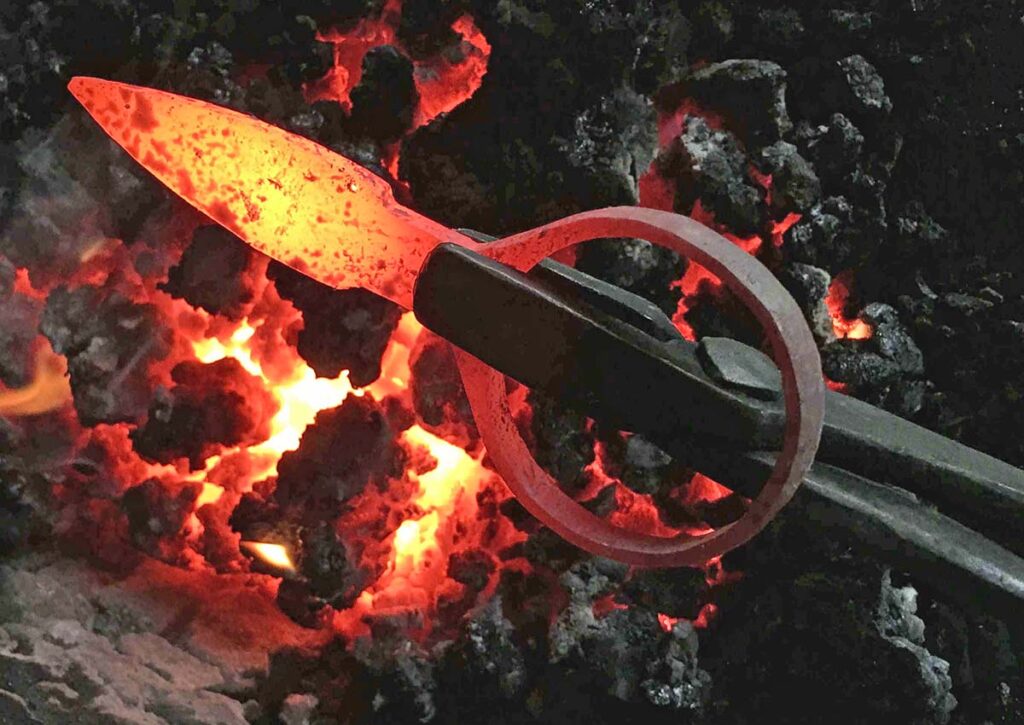
Videos of forging are another great way to demonstrate how knives are made and build interest among viewers. (Lin Rhea image)
The secret to Instagram and social media success is certainly influenced by the delivery. Setting up a presence and presenting a perspective on the maker’s work and creative journey do make a difference.
“Users should expect to display their point of view in a clear and cohesive way,” related ABS master smith Nick Rossi of Vassalboro, Maine-based Nick Rossi Knives. “That means who they are, what they make, and why they make it. Social media is a relatively efficient way to project that to a potential customer. Sales and cultivating a customer are byproducts of that action.”
Setting Social Media Goals
Finding the right combination of social media outlets depends on the knifemaker’s perspective. Analyzing what the maker hopes to achieve drives the investment of time and attention.
“The best social media platform depends entirely on your goals, audience and the type of content you want to share,” van den Berg observed. “Each platform serves different purposes and attracts unique demographics, so a thoughtful combination works best.
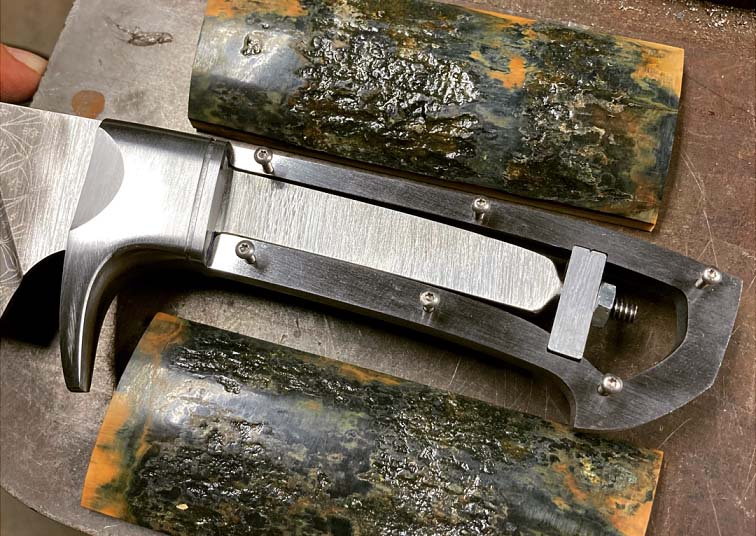
According to Neels van den Berg, using in-progress shots can sidestep direct visual triggers while still highlighting a maker’s work. In his version of frame handle construction, bladesmith Salem Straub uses a threaded fastener in an internal slot in the frame to mechanically lock all the parts together tightly. (Salem Straub image)
“I have three primary goals on Instagram: 1) Showcasing my craftsmanship—I aim to highlight the intricate details and artistry of my creations, emphasizing their quality and uniqueness. This draws attention to the skill and effort behind each piece, making my work stand out in a crowded marketplace; 2) Building my brand identity—My goal is to establish a recognizable and authentic brand that resonates within the knifemaking community. This isn’t about a logo or maker’s mark, it’s about the story, values and personality behind my work; 3) Engaging with my community—Social media is about relationships. By actively participating in discussions, responding to DMs and comments and sharing insights, I foster a sense of community among knife enthusiasts and artisans.”
To achieve his goals, Neels relies on high-quality visual content, educational posts, consistent branding, and authentic interaction through responses to comments or joining a relevant conversation.
Ellis commented, “For retail sales, I prefer TikTok and YouTube. By utilizing every media that you can, your products are constantly put in front of not only the buying public, but you are also promoting yourself to show promoters and attendees.” Instagram and Facebook are the priorities for Rossi “because that’s what most of my customers use.”
He added, “I only have time to manage two platforms on top of being a professional craftsperson. For collecting and very niche topics, Facebook groups provide a wealth of knowledge. I have a private Facebook group for only my online and in-person students that has worked very well for advice and troubleshooting.”
“I want people to think of me as a skillful knifemaker with a focus on forging, a maker of interesting and innovative knives, and an experienced educator,” noted ABS master smith Nick Rossi, here giving a class on how to hand rub a blade to a satin finish in a BLADE University class.
Variations of content help keep social media posts entertaining and business related, and encourage a possible exchange of information.
“We live in a world of short, informative, and, let’s face it, lively. Clicks mean interaction, potential video formats,” Rossi observed. “Attention spans have grown shorter, and social media users have come to expect shorter, action-packed video. If you are going to have narration, subtitles are important. Users want the option of viewing without sound. Choosing popular songs may help your videos pop up in the algorithm more readily. I want people to think of me as a skillful knifemaker with a focus on forging, a maker of interesting and innovative knives, and an experienced educator. Each post focuses on one of those three things.”
Social Media Do’s And Don’ts
An awareness of certain standards provides knifemakers with extra assurance that their posts meet the chosen platform’s guidelines and minimize the risk of being flagged or taken down. Though Breed said he has done well with Instagram sales, the limitations of filters can have negative effects on viewership.
“Filters can hurt a knifemaker, so before you might get 100,000 or 200,000 views,” he said, “but you can’t do that if you picture a knife as an item of war, and watch out what you say about politics and whatever. Stay away from there.” Ellis agrees. “Stay away from animals or any violent visuals when posting,” he added. “Stick to the art or utilitarian uses for custom knives, and you should be OK.”
For van den Berg, compliance and creative communication are essential to success when visualizing or discussing knife-related topics on social media.
“The key is to reframe how your work is presented, ensuring that it aligns with platform guidelines while still engaging your audience,” he remarked. “Avoid flagged terms like ‘knife,’ ‘blade,’ or ‘weapon,’ and instead use neutral or creative alternatives such as ‘tool,’ ‘craft,’ or ‘functional art.’ These terms emphasize the artistry and utility of your pieces, shifting focus away from their potential as weapons. Repositioning your knives within broader contexts is another effective tactic. Showcase them as tools for culinary use, outdoor adventures or collectible art. Using in-progress shots, close-ups of handles, or images that emphasize materials and craftsmanship can sidestep direct visual triggers while still highlighting your work.”
Another knifemaker option is to place the work in context.
Knifemaker/BLADE® field editor Kim Breed advises that would-be Instagram users monitor their posts, beware of hashtags that are too generic, and frequently assess the return on their investment of time.
“To further circumvent restrictions, use storytelling and indirect messaging,” Neels encouraged. “Instead of explicitly saying, ‘Check out my new knife,’ share the inspiration behind the design or challenges faced during its creation. Platforms like Instagram and TikTok, which favor storytelling and visual diversity, are ideal for this approach. Additionally, private groups, email newsletters, or niche forums provide safer spaces to share uncensored content with your core audience.”
Reaching as many followers, shoppers, and potential buyers as possible, custom knifemakers who take advantage of social media routinely find that the reward is in lock step with the attention and time devoted to originate and maintain a strong presence. For those who manage it well, social media exists in the present and will remain a formidable asset in the future.